World Maritime University
The Maritime Commons: Digital Repository of the World
Maritime University
World Maritime University Dissertations Dissertations
2000
Developing an effective mechanism of oil pollution
management in the Niger Delta
Ja'afaru Labaran Daura World Maritime University
Follow this and additional works at:http://commons.wmu.se/all_dissertations Part of theEnvironmental Engineering Commons
Recommended Citation
Daura, Ja'afaru Labaran, "Developing an effective mechanism of oil pollution management in the Niger Delta" (2000).World Maritime University Dissertations. 193.
WORLD MARITIME UNIVERSITY
Malmö, Sweden
DEVELOPING AN EFFECTIVE MECHANISM OF
OIL POLLUTION MANAGEMENT IN THE
NIGER DELTA
By
JA’AFARU LABARAN DAURA
NigeriaA dissertation submitted to the World Maritime University in partial fulfilment of the requirements for the award of the degree of
MASTER OF SCIENCE
In
MARITIME ADMINISTRATION AND ENVIRONMENTAL PROTECTION
2000
DECLARATION
I certify that all the material in this dissertation that is not my own work has been identified, and that no material is included for which a degree has previously been conferred on me.
The content of this dissertation reflects my own personal views, and is not necessarily endorsed by the University.
(Signature) ………,
(Date) ……….
Supervised by:
PROFESSOR PARDO FERNANDO
Associate Professor, Maritime Administration and Environmental Protection World Maritime University
Assessor:
PROFESSOR Mc FERLAND
Professor, Maritime Administration and Environmental Protection World Maritime University
Co-assessor:
JOHN OSTERGAARD Office:
ACKNOWLEDGEMENT
I should like to acknowledge with thanks the following distinguish personalities for their assistance in various ways during the period my studies at the World Maritime University: Professor P. K. Mukherjee and J. R. F. Hodgson, Associate Professor Maritime Administration and Environmental Protection. My sincere regard to Captain Fernando Pardo for his stewardship and supervision during the preparation of this work as well as all other Professors and Lecturers of the University.
I also want to extend my gratitudes to Dr. K. Laubstein, Rector, World Maritime University, Lundahl Lyndell, the Student Officer, Susan Wangeci-Eklöw, Assistant Librarian and Cecilia Denne, Librarian.
Abstract
Title of Dissertation: Developing an Effective Mechanism of Oil Pollution Management in the Niger Delta
Degree: MSc
From the beginning of the last century, large data were collected and recorded on some important accidents related to transport of oil. Particular attention was focused on the consequence of spilt oil in marine environment. It was convincingly gathered that unless drastic measures are taken, substantial part of marine resources that plays key role in supporting life on earth are at the brink of being destroyed. The uniformity and harmony of regulations created under the IMO was said to be the reason behind the success of it conventions. As a result of this, there was generally a sharp decrease in the quantity and rate of occurrence of oil spill.
Nigeria as a nation and as an exporter of crude oil is presumed to be potential place of accidental oil spill. Some possible causes of this include loading/discharging of oil, bunkering, fire & explosion and routine ship operations. There have been some efforts by the government to address at least some of these problems, such as membership of IMO, and establishment of Ministry of Environment.
Despite this strive, there have been continuous reports of oil spill particularly in the Nigerian coast of Niger delta. Since export of oil is crucial to Nigerian economy, the exploitation and exploration will have to continue to the detriment of the environment. Consequently, by sustainable development, the sharp effect of this could be abetted. This include adequate regulations to act as preventive measures, critical examination of existing and new projects on how they would affect the environment and program of response to possible accidents. These are the issues discussed in this dissertation with particular attention to Nigerian coast of Niger Delta.
TABLE OF CONTENTS
Declaration ii
Acknowledgement iii
Abstract iv
Table of Contents v
List of Tables vii
List of Figures vii
List of Abbreviations viii
1. Introduction: Nigeria’s Maritime Potentials 1
1.1 Relevance of the Topic to the Field of Study 6
1.2 Research Methodology 6
1.3 The Scope 7
2. Review of current situation 9
2.1 Oil Exploration and Exploitation 10
2.2 Shipping, Ports and Oil Loading Terminals in the Niger 11
delta Region
2.3 Nature of Threat to the Environment 13
2.4 Oil Pollution Regulatory and Organisational Arrangements 17
3. A Comparative analysis with other Countries 21
3.1 Danish Arrangement 21
3.1.1 The BONN Agreement 24
3.1.2 The Helsinki Convention 24
3.2 The Norwegian Arrangement 25
3.2.1 Bilateral and Regional Agreements 27
3.3 The Brazilian Arrangement 27
3.3.1 The OPRC Convention Implementation in Brazil 28
3.3.2 Oil Spill Response and Contingency Planing 30
3.3.3 Equipment and Training 31
4 International Prescriptions 34
4.1 The United Nations Convention on Law of Sea 35
4.2 The Work of the International Maritime Organization 36
4.2.1 Marine Environment Pollution Prevention 36
4.2.2 Response to Marine Oil Pollution 40
4.2.3 Compensation and Reinstatement Regime 41
4.2.4 Piracy/Armed Robbery and Oil Spill 42
4.2.5 International Response to Piracy/Armed Robbery 44
4.3 The Impact of International Regulations on Shipping 45
and Marine Environment
5 Action Plan for Improvement 47
5.1 Contingency Plan for Oil Spill Emergencies in 48
the Marine Environment
5.2 Potential Environmental Threat and Effect of Oil on 49
Marine Ecology of the Niger Delta
5.2.1 Identification and Securing of Spill Site 51
5.2.2 Measures to Eliminate or Reduce Further Spills 51
5.2.3 Monitoring and Tracking of Spilt Oil 52
5.2.4 Protection of the resources at risk 52
5.2.5 Recovery of the spilled oil 53
5.2.6 Equipment and Clean up of Contaminated Areas 53
5.2.7 Remedial and Restoration Works to Damaged 54
Sites and Resources
5.3 Incident Command System 54
5.4 Government Policies and Regulations 57
5.5 Environmental Impact Assessment and Evaluation Reports 58
5.6 Training Requirement 59
6 Conclusion and Recommendations 61
List of Tables
Table 2.1 Oil Loading Terminals, Location and Capacity
Table 2.2 Breakdown of Oil Pollution Regulations and Clean up Arrangement Table 3.1 Status of OPRC in Brazil, Denmark, Nigeria and Norway
Table 3.2 Status of International Conventions in the West Africa Sub-region Table 4.1 Number of World wide Piracy and Armed Robbery Attacks Between
List of Abbreviations
CLC International Convention on Civil Liability for Oil Pollution Damage DEPA Danish Environmental Protection Agency
DPR Department of Petroleum Resource EER Environmental Evaluation Report EIA Environment Impact Assessment IMO International Maritime Organisation
IOPC International Oil Pollution Compensation Fund ISU International Salvage Union
ITOPF International Tanker Owners Pollution Federation
LR Low Range
MARPOL International Convention for the Prevention of Pollution from Ships MOE Ministry of Environment
MRCC Marine Rescue Co-ordination Centre MOU Memorandum of Understanding NMA Nigerian Maritime Authority NIO Nigerian Institute of Oceanography NNPC Nigeria National Petroleum Company NOSCC National Oil Spill Control Committee
OPRC International Convention on Oil Pollution Preparedness, Response and Co-operation
SUA International Convention for the Suppression of an Unlawful Act SWOT Strength, Weakness, Opportunity and Threat
ULCC Ultra Large Crude Carrier
UN United Nations
Chapter 1
Introduction: Nigeria’s Maritime Potentials
The maritime zone of Nigeria constitutes that which has been defined in the 1982 United Nations Convention on Law of Sea, i.e. the Territorial Sea, Contiguous Zone and Economic Exclusive Zone.
The coastline is a culmination of varieties of natural features and good favourable climatic conditions that make life and living feasible. This was the situation prior to the present developmental activities that started some decades ago. The coastline stretched to approximately nine hundred kilometres. One of the most important parts of this coastline is the Niger delta region. It is basically a place where the economic life-wire of the nation lies. Crude oil prospecting, exploration and exploitation, a shipping, port as well as fishing and boating are the main significant activities taking place there which consequently pose a potential threat to the well being of the environment in the surrounding area. The developments related to oil prospecting were a sequel to Nigeria’s economic boom which was a result of the multiplication of crude oil prices in the world market in the mid seventies. The level of threat has been increasing ever since.
Figure 1.1 Nigeria and Neighbouring Countriesin the West Africa Subregion
(Source: Shell Nigeria, 1999)
the legislature is to debate and scrutinise proposals whenever tabled before it by the executive or other user organisation. The National Maritime Authority (NMA) mission statement was rather designed focusing more on economic policies, particularly those pertaining to shipping, ships and general maritime safety, hence it has not been receiving any subvention from the government for running its daily activities. The Ministry of Environment on the other hand was established a year ago to deal with issues related to marine environment policies among other things.
Nigeria is a member of the International Maritime Organisation (IMO), a United Nations specialised agency charged with the safe operation of ships and the marine environment. A couple of treaties like Oil Pollution Preparedness, Response and Co-operation convention have been ratified by Nigeria, though not yet incorporated as binding national law. Also ratified is the 1982 United Nations Convention on the Law of the Sea (UNCLOS).
Under the existing structure, the Ministry of Transport oversees under its power the running of affairs of all the ports in the country, namely the Nigerian Port Authority. However, some degree of autonomy is exercised in the field of revenue generation. While some percentage of this is allowed for the port’s day-to-day keep up, a substantial amount usually ends up in the federation account.
ultra-large crude carriers call and load their cargo in the six loading terminals all located in the Niger delta. There are no reception facilities in either the ports or oil loading terminals. Nigeria has a substantial reserve on shore and offshore of oil that can last up to fifty years. The present export capacity is two million barrels per day. This has made the country the sixth largest oil exporter in the world. The Ministry of Petroleum Resources oversees the oil industry. Exploration and exploitation is achieved through contractual agreement with multi-national oil companies, currently numbering about five.
Recently, there has been a growing number of piracies and armed robbery cases in the territorial sea. Although this is not a new phenomenon as in the eighties, a joint team of scrutiny operation set up by the federal government and comprising of the navy, police and customs were able to disperse and restore normalcy.
Another threat to the marine environment is the introduction of alien marine species by tankers that call to load cargoes at the oil loading terminals. Most of the tankers calling are coming in to Nigeria on ballast voyages, naturally before loading; they will have to discharge the ballast water. An unfortunate condition is consequently created, where undesirable species are introduced.
Recognising the abundant resources found in the Nigerian maritime zone, particularly the Niger delta region, there are ample opportunities and a basis for sustainable development projects (some of which have already taken up). These include:
• The Expansion and technical upgrading of artisanal fisheries and the creation of a national fisheries capability at an industrial level. The aim of this will be to increase production of fish and the by-products, domestic consumption and export sales. The advantages are an increase in employment opportunities and protein consumption. This implies the construction of some fishing ports to be equipped with relevant modern facilities.
• The Development of a centre for the loading and processing of natural gas and petroleum offshore. The discovery of gas and oil offshore opens new prospects to the energy sector. In addition to satisfying the domestic need, the surplus will go to export, thus it will make a substantive contribution to the national economy.
• The Modernisation and expansion of maritime transport and improvement of navigational safety. The increase in imports and exports of goods calls for the need to build or improve and upgrade port facilities. This will be aimed at coping with the expected increase in volume of cargo and cross-trading activities as well as traffic associated with the offshore industry.
• The Development of a Marine Park in the reef conservation zone. Apart from an increase in tourism, there is an opportunity for the preservation of the natural characteristics of reef areas thus providing a natural laboratory and an area of scientific research. This project may include the mapping of the park area and formulation of a management plan encompassing the control of human settlement, regulation of beach use and protection of reefs from pollution.
and aim of achieving a set of given goals within a specific period of time(J. F. R. Hugdson, 1999). While a vision is a statement indicating the overall aim of an organisation for a long time to come. These are important managerial tools used as yardsticks to measure the objectives and progress achieved by an organisation and a guidance to keep tuning into the right track.
1.1 Relevance of the Topic to the Field of Study
The Niger delta region is one of the most important coastline areas of Nigeria. Considerable maritime activities such as the exploration and exploitation of crude oil, shipping, ports operations, fishing and boating are taking place there. As these activities have negative tendencies on the marine environment, there is a need to have proper monitoring in terms of regulations. These would have to be designed focusing on prevention and response in the case of marine pollution.
To address the problem of marine pollution, IMO has been to the rescue of its members by making some relevant prescriptions such as MARPOL and OPRC. Maritime Administration and Environmental Protection is therefore crucial in this instance. The personnel in Maritime Administration are responsible for overseeing the effectiveness of maritime regulations on behalf of the government. As training facilitates awareness, hence therefore the relevance of this topic to the field of study.
1.2 Research Methodology
newspapers. Studies based on the publications from the Maritime Administrations is made extensively. Other organisations referred to for information were used including the Nigerian Institute of Oceanography responsible for marine aspects and the Maritime Academy of Nigeria responsible for manpower development.
In a nutshell following are the summary of material used:
• ITOPF, Technical information papers no. 1-13
• IMO, Manual on oil pollution, London
• Federal environmental protection agency publications
• Nigerian Environmental laws
• Nigerian Shipping Law by Mbanefo Periodicals:
• Marine policy
• Marine pollution policy
• Third World Quarterly Other sources:
• Government reports and publications
• Oil industry papers
• Conference and seminar papers
1.3 The Scope
• Examine the existing current environmental situation in the Niger delta, to cover the climatic conditions and the development especially those akin to the prospecting for oil. This will be discussed within the framework of chapter two
• Identify the nature and extent of the threat to the environment as a result of oil and gas exploration activities currently taking place in the Niger delta.
• Examine the effectiveness of the existing regulatory and organisational regime for restricting marine oil pollution in the Niger delta.
• Chapter five will suggest ways of implementing an appropriate and effective contingency plan in case of oil spill emergencies based on the provision of the OPRC convention. This would include the need for a sensitivity-map exercise based on the priority of environmentally sensitive areas.
• Take a look at the purpose of examining a similar set-up elsewhere of successful maritime administrations specifically with regard to strategy and organisation for oil spill response. This is in order to draw appropriate techniques and lead to a comprehensive solution to the problem of marine oil pollution in the Niger delta.
• To examine training and development requirements with a view to ensuring availability of the necessary skills of oil spill management.
Chapter 2
Review of Current Situation
The Niger delta is that part of Nigerian coast adjacent to the Atlantic Ocean. It is the region where the river Niger forms a confluence with the Atlantic Ocean. An aerial plan of the delta is triangular or “bird-foot” in shape. It comprises and forms boarders by a chain of about twenty small barrier islands of approximately two hundred square kilometers. It is through these barrier channels, which separates the islands, that tides and water from the Atlantic Ocean surge to the one million five hundred thousand hectares of mangrove forest and swamp laid inland. It is by statistics the third largest in the world. This lies within the Equator and Tropic of Cancer, signifying all year round sunshine with an average annual temperature of thirty degrees and an annual total rainfall of over 3800mm.
addition, large amounts of marine non-living resources are found. These consist of hydrocarbons of significant commercial quantity, both on and offshore.
Out of the approximate total of nine hundred kilometers of Nigerian coastline, the Niger delta occupies one fourth. The main principal towns in the Niger delta are Warri, Sapele, Burutu, Port harcourt Degema, Okrika and Bonny having a total population of about seven million with an estimated annual growth rate of three percent (Shell, 1999).
2.1 Oil Exploration and Exploitation
Nigeria’s national development plan focuses on a number of inter-related activities. These include the development of gas deposits offshore and the eventual creation of a center for the loading and processing of natural gas and petroleum.
The expedition in quest for the oil and its derivatives in the Niger delta region started some fifty years ago. The exploration and exploitation started initially on shore and is gradually moving and/ or has moved to the offshore. The process of exploration and the production of crude oil normally consists of four basic stages; geophysical survey, drilling, establishing & construction of production facilities and field closure.
One important bi-product of crude oil production in the Niger delta is gas. A Substantial amount, approximately one thousand standard cubic feet, is produced with every barrel of oil (Shell, 1999). Considerable amounts of such associated gas produced (95%) is being flared.
The estimated on and offshore oil reserve is about twenty billion barrels. There is currently a total of two hundred and fifty oil fields and two hundred more fields with undisclosed reserves of oil and gas.
2.2 Shipping, Ports and Oil Loading Terminals in the Niger Delta Region
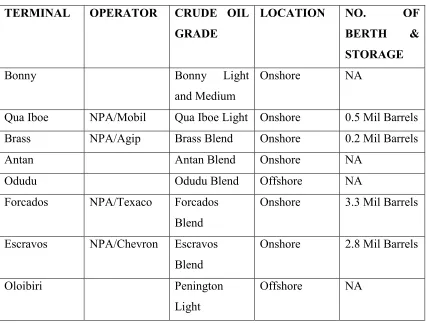
Under the Nigerian national development planning in the maritime transport sector, five out of nine seaports in Nigeria were located in the Niger delta region. They include the port of Port Harcourt, Onne, Warri, Koko, and Sapele. There are also eight oil-loading terminals both on and offshore.
Port Harcourt is the third largest port in the country with a maximum draft of 7.6 meters. It has thirteen berths, mooring and tanker buoys (NPA, 1996). Cargoes being handled include general cargoes, petroleum crude/refined products, vegetable oil, coal and explosives.
Table 2.1: Oil Loading Terminals, Location and Capacity
TERMINAL OPERATOR CRUDE OIL
GRADE
LOCATION NO. OF
BERTH & STORAGE
Bonny Bonny Light
and Medium
Onshore NA
Qua Iboe NPA/Mobil Qua Iboe Light Onshore 0.5 Mil Barrels
Brass NPA/Agip Brass Blend Onshore 0.2 Mil Barrels
Antan Antan Blend Onshore NA
Odudu Odudu Blend Offshore NA
Forcados NPA/Texaco Forcados
Blend
Onshore 3.3 Mil Barrels
Escravos NPA/Chevron Escravos Blend
Onshore 2.8 Mil Barrels
Oloibiri Penington
Light
Offshore NA
(Source: NNPC, Nigeria)
2.3 Nature of Threat to the Environment
The ultimate consequences of human activities in the Niger delta have portrayed a growing concern and mark of environmental degradation. Apparently, the activities related to oil exploration constitute a substantial part of the problem.
As a result, the following impacts were observed: the process of seismic activities include land clearance along the path of the identified field and soil destabilization, thus culminating in a loss of vegetation and soil erosion.
As was the practice in the region, the second stage of oil exploration is drilling to verify field locations and assessment of production potentials. The process includes construction of a pad of a size normally between five and twenty thousand square meters. The associated bi-product of drilling includes clay mud and the flushing out of rock cuttings. Other bi-products include the generation of dredge spoils and increase in turbidity of the surface water along the Niger and its tributaries. The Dredging of the river channels is essential and is usually employed to increase the size and width of river channels. This allows for conveyance of materials in and out of the site.
The impact as a result of this is land acquisition and its transformation for access roads and canal dredging and/or sand filling. The consequence will be an increase in turbidity of water in the Niger tributaries, loss of some sensitive vegetation as well as accidental oil spills.
The third stage is the establishment of production facilities. In this process, a mixture of oil, water and gas is produced. These are transported to the production facilities and coastal terminals by means of pipelines. There are altogether about four thousand drilled sites of which more than three-quarters have undergone the aforementioned process.
Prior to the establishment of the Federal Environmental Protection Agency in the late 1980s, (now Federal Ministry of Environment), there has not been any requirement in the national legislation for Environmental Impact Assessment (EIA) on new projects. This means that all the existing facilities and infrastructures are without a well defined EIA. However, this is now mandatory for all new projects. For the existing ones, it is required that Environmental Evaluation Report (EER) be prepared and made available for scrutiny.
Out of these stages/ processes of oil exploration and exploitation, oil spills constitute a substantial percentage of the potential threat to the ecosystem of the Niger delta. There is recently a growing number of cases and complaints connected to oil spills. It seems as though there is an improper check and monitoring of the environment. The responsible authority seldom takes corrective measures. In addition, there is insufficient scientific study and an absence of adequate and reliable baseline data for assessing the impact of oil spills in the region. Most of the cases are reported much later after the spill, hence rendering any response to be weak, inaccurate and difficult to monitor.
One of the earliest of such reported cases happened between 1967 and 1970, during Nigeria’s civil war, called the Ebubu spill (Shell, 1999). It was caused as a result of sabotage and vandalisation of Agbada to Bamu oil trunk pipeline. An Exact or approximate estimated quantity of the oil spilled is not known but it is believed to be quite substantial.
Sketchy reports of minor spills are being received moment by moment. In April 1984, a barge sank in the Bonny estuary and spilled about two hundred barrels of crude oil (Snowden & Ekweozor, 1987). This was after the reported Funiwa 5 blowouts of 1980. Other oil related pollution as a result of spills is that of the Orhionmwon river of September 1999, the continued dumping of waste crude oil and refined products into Ubeji river by the Warri petrochemical refinery (Vanguard Nigeria, Aug & Oct 1999).
Action taken by the regulatory body is difficult to explain as no official result of the impact is being produced, therefore making the present arrangement very much ineffective. Over eleven thousand barrels of crude oil was lost along the Escravos-Warri refinery pipeline due to line breaks at Benneth Island. Similarly, two million four hundred thousand barrels of crude oil was pumped through Escravos-Warri refinery including the opening stock but, the actual volume received at the plant was two million three hundred thousand barrels. The shortfall is considered to have leaked out into the environment.
In a similar situation, crude oil pumped from the Chevron operated Escravos terminal to the Warri and Port Harcourt refineries was three million five hundred thousand barrels in September 1999. A standard deviation of one hundred and ten barrels was recorded and was considered to have been lost enroute. For the last fifteen years, a total of about two thousand seven hundred and ninety nine oil spill accidents have occurred. Out of this, a total estimated quantity of over two million one hundred and five thousand three hundred and ninety eight barrels of oil was said to have been spilled (Ogbonna, 1999).
The inherent danger of oil spill related pollution is environmental degradation. The endangered resource in the Niger delta includes changes in water quality parameters and traces of toxic metals. The magnitude and adverse effect depends on the location and the quantity of the oil spilled. A baseline survey carried out on the effect of oil spill that occurred in April 1984 shows “ a considerable reduction in both fidler crab and polychaete density in the post spill period”. Also discovered was that “oiling of prop roots at the spill-site was higher at the outer edge of the mangrove zone (29.6%) than at 10m inside the edge of the zone (20.7%)” (I. K. E. Ekweozor, 1987).
The strategic location of the Nigerian coast can make it vulnerable to potential oil pollution. There is a possibility of spilt oil to drift resulting from accidental discharge by tanker movements in and out of neighbouring countries like Cameroon and Angola, even though there has not been a case of paramount magnitude related to such an incident.
2.4 Oil Pollution Regulatory and Organisational Arrangements
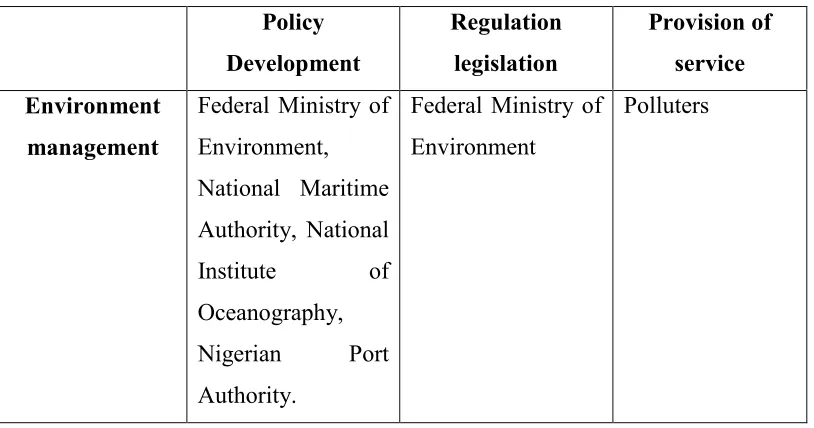
Table 2.2: Breakdown of the Oil Pollution Regulations and Clean-up Arrangements Policy Development Regulation legislation Provision of service Environment management
Federal Ministry of Environment, National Maritime Authority, National Institute of Oceanography, Nigerian Port Authority.
Federal Ministry of Environment
Polluters
(Source: J. F. R. Hogdson, WMU (as modified))
In principle, the National Maritime Authority is the maritime administration responsibilities for implementing government policies related to shipping and marine environment protection. The formulated policy that forms a statutory function of the authority comprises the following;
• To ensure that Nigerian national carriers exercise fully Nigeria’s carrying rights of at least forty percent of the freight in the revenue and volume of the total trade to and from Nigeria.
• Ships registration.
• To monitor the activities of vessels of the companies granted national carrier status. • To grand assistance to indigenous companies in order to boost their fleet and
expansion of ship ownership.
• To examine seafarers.
• To carryout inspections and surveys of vessels.
The Nigerian Institute of Oceanography (NIO) is a research institution established by the government. The aim is to undertake research of Nigerian ocean space and provide useful data such that when translated into information will facilitate sustainable exploitation of the ocean resource.
The Federal Ministry of Agriculture has the Fisheries division to look after. However, the regulation and survey of fishing vessels are the responsibility of the Maritime Safety Division of the National Maritime Authority. The Federal Ministry of Environment is responsible for safeguarding the marine environment against pollution. This is a newly established Ministry. Before then, marine environment affairs were under the Federal Environmental Protection Agency.
In a nutshell, it is a widely accepted fact that the sea is a source of life and the ocean is the main producer of oxygen, therefore as the population of the earth increases the sea’s resources of food is also increasingly becoming important. “But infinite as the sea may seem, only one tenth of it is productive. Plant and animal life are generated only where the temperature is right-and where there is an abundance of light and food. That is largely on the continental shelves. But these vital areas are also the most vulnerable” (DEPA, 1999). The ocean is certainly vulnerable, as it is vast, since all pollution sooner or later finds its way to the sea. Oil in water kills birds and shellfish, it pollutes the beaches and damages or destroys the minute organisms that are the very basis of marine life.
hydrocarbon. The exploration, exploitation and consequent transportation of oil poses a great threat to other resources and the marine environment of the area.
Some effort has been made to reduce this to the lowest possible level. This includes input from the oil exploration companies operating in the area in terms of clean-up and compensation and from government, policy, planning and logistics.
It seems though, from the foregoing, despite all the measures put in place to tackle the problem, the same cannot be said of achieving significant success. However, measuring success of this nature is, in most cases, a relative term, that is, with logical comparison of other countries having a similar situation, then areas of weakness can be traced. This, therefore can lead to the adoption of a reasonable solution, even though the organizational structure and set-up of different countries as well as available resources may differ.
The existing regulations pertaining to oil pollution in Nigeria are; • Decree forty two on toxic waste 1988
• DPR Petroleum and Drilling act 1969
Chapter 3
A Comparative Analysis with other Countries
The purpose of making this comparison is to workout modalities of measuring the effectiveness of related organisations as obtained in other countries. The ultimate goal is to facilitate the taking up of appropriate improvement measures in order to mend areas of weakness. Three countries where considered for this purpose; Denmark, Norway and Brazil. The climatic condition of their coastlines is similar or worse than that in the Niger delta. The idea therefore is to figure out what is lacking or has been over emphasised in the Niger delta so as to apply appropriate corrective measures by learning from these States and applying an effective control and management of oil pollution in the Niger delta. In making a comparison of this nature, the following factors are very important; planning, regulations, implementation and monitoring.
3.1 Danish Arrangement
Oct, 1999). Most of the spills occur near the shoreline. The characteristic rough climatic conditions of the area associated with poor visibility have always a tendency of drifting any spill to the nearest coastal areas, which implies the necessity for immediate clean-up. This should be by mechanical recovery as provided in the national regulations. Among the earlier notable spills is the IBN ROCHD (1984).
The Ministry of Environment is the executive arm of the government assigned to deal with the issues of marine environment pollution. The responsibilities consist of drafting a plan of action to prevent and co-ordinate contingency planning. The idea was sought having in mind the tendency and potential of the Danish maritime zones to be subject to activities, especially those related to the oil pollution. Apart from shipping, there are a lot of other activities related to the exploration and exploitation of marine resources particularly hydrocarbon of which crude oil is the cheap product. To facilitate a smooth flow of operation of its assigned undertakings the Ministry has delegated the planning and operational aspects to the Danish Environmental Protection Agency (DEPA).
The overall co-ordination of the response arrangement rests on the shoulders of the DEPA. This includes maintaining the national contingency planning in addition to that for offshore operations, refineries, power stations, ports, municipalities and counties.
The organisations assigned with the responsibility of combating and cleaning of oil and chemical spills in the sea is the Marine Rescue Co-ordination Centre (MRCC). Others participate in the following structured pattern:
• Danish Armed forces
• Emergency Management Centre
However, an initial response is required from the polluter, for example if there should be pollution in a refinery or port areas, the authority of the port or refinery is required to act within their contingency planning to overcome the problem, otherwise assistance may be requested from the proximate county, municipality, armed forces, MRCC in that order.
MRCC is a specialised agency established solely for combating, among other things, oil pollution in the marine environment. It is made up of two divisions, strategically located in two different places, with sufficiently trained personnel.
The Emergency Management Centre has six divisional offices all stock piled with response equipment and personnel that are put on 24-hourcall. In addition, there is another stockpile of equipment and dedicated vessel held and maintained at a naval base.
Private participation is not left out in the oil clean-up response. Commercial contractors are available and can be hired to perform a clean-up operation. Moreover, commercial tug operators for towage and salvage operation to salve vessels in distress and in danger of polluting the marine environment can be hired.
The Danish Environmental Protection Agency (DEPA) also has the responsibility of establishing contingency planning on behalf of ports and refineries. In order to effectively discharge its duty and responsibility the DEPA has adopted two approaches; preventive measures and oil pollution contingency organisation. It is charged to make approval and supervision in connection with exploration and appraisal wells, discharge into the sea of substance/materials in connection with exploration and production of an oil and contingency plan.
Five potential sources of oil pollution are identified in Denmark as:
• Accidental spill from ships
• Operational discharges from offshore production
• Accidental spills from offshore production and
• Land based discharges.
In choosing the approaches for abetting oil pollution, international co-operation was considered to be very important. Preventive measures are applied at the source. This is to minimise the impact of the pollution to a minimum possible. Furthermore, to strengthen the International Maritime Organization’s conventions and protocols, (MARPOL 1973/78) was signed and adopted.
3.1.1 The Bonn Agreement
The experience of the previous oil spill in the region prompted the need to have a joint effort for effective oil spill combating, especially when it is likely to constitute a serious threat to the coastline areas. Members are the North Sea coastal states (United Kingdom, Denmark, Norway, Germany, Netherlands, Belgium, Sweden and France). Information and experience are shared on a continuous basis to ensure response to potential oil pollution incident remains consistent, effective and appropriate and to help each other in the event of oil spill and carrying out surveillance for the purpose of detecting violators of regulations. The strategies adopted include the publication of technical aspects of the work in the form of manuals and handbooks.
Some of these publications that are related to oil pollution include:
• Bonn Agreement Counter- Pollution manual: A compilation of information on counter-pollution operation and procedure.
• Bonn Agreement Aerial surveillance handbook: A guide specifically for aerial surveillance to track downs and quantifies the magnitude of pollution.
• Manual on gathering of evidence: Intended for use in conjunction with Oil Pollution at Sea manual to provide guidance on how to bring polluters to book.
3.1.2 The Helsinki Convention
Apart from IMO conventions, other regional organisations were also considered to be of paramount importance. Of most significance is the convention on the protection of the marine environment of the Baltic Sea area (HELSINKI Commission). This is a regional grouping of coastal states of Baltic Sea namely, Sweden, Denmark, Finland, Germany, Lithuania, Russia, Estonia and Poland. The common goal/purpose of this is to provide unified international co-operation for the protection of the Baltic Sea. It covers all sources of pollution; ships and land based. The result of this co-operation led to the declaration of the Baltic Sea as a special area by IMO. This implies that there will be no operational discharge by ships except in the reception facilities provided by the ports in the area.
Further on the matter, various committees were established:
(i) Environment Committee: Covers all aspects of the marine environment by gathering data, analysing and sharing the same.
(ii) Technological Committee (iii) Maritime Committee
(iv) Combating Committee
3.2 The Norwegian Arrangement
• MARPOL
• Intervention
• OPRC
• CLC
• Fund
In addition to ratification of these conventions, there have been in place the following national regulations;
• Regulations concerning discharge of oil-contaminated drill cuttings from petroleum activities on the continental shelf.
• Regulations concerning storage of oily mixture and other harmful substances on ships.
• Regulations concerning experiments with oil.
The Ministry of Environment (MOE) has been appointed by the government as a competent authority and was assigned with this responsibility.
The preventive measures against oil pollution are dealt with at the ministerial level. Usually a proposal is made to the executive and consequently to the legislature for scrutiny and endorsement. It is then returned to the judiciary for careful use of suitable interpretation commensurate with the existing laws. The policing against violators is partly carried out by the MOE. This is based on past experience that oil spills and their pollution are associated with shipping and ports/terminal operations. The relevant conventions adopted for prevention are the MARPOL and Intervention convention.
Norcontrol keeps copies of inter-community contingency plans and other important data like coastline sensitivity maps. It keeps as well marine resource stakeholders such as Fisheries Department informed of any impending danger or case of spill. In addition, it is responsible for carrying out of training and the maintenance of oil spill response technology at the National Training Centre for oil pollution control.
The response to an oil spill is made up of three stages; Private, Municipal and Government contingency planning. The plans of the various stages are collected and amalgamated into a simple response plan.
The private otherwise first stage of response is limited to ports/terminals and the immediate community in whose area the spill occurs. Oil industries are required to make available to the competent authority their contingency plans. If, however, it was discovered that the spill is worse than the first stage can cope with, reinforcement may be required from the second stage.
The second stage is concerned with municipality. In this respect Norway is zoned into thirty-four maritime units. The scope of this response stage is a bit wider than private. It covers up response beyond the capability of private or first stage, and up to four nautical miles from shoreline. Participants are drawn from interested parties such as Local Authorities, Civil Defence Force or Army.
The government provides subsequent response, which is the third stage. It is in the form of provision of equipment, materials, vessels and personnel. The system allows the required flexibility such that when a particular stage is call upon for help, it can contribute without any hindrance.
3.2.1 Bilateral and Regional Agreements
Norway is party to the following regional and bilateral agreements:
• Norbrit plan (Bilateral contingency plan with the UK)
• Copenhagen agreement (with Denmark, Finland, Iceland and Sweden)
• Bilateral agreement (with the Russian Federation for the Barents sea)
3.3 The Brazilian Arrangement
Recognising the danger of oil spill, preventive measures were the first option considered against future spill occurrence. This, therefore, is the basis for adoption of MARPOL by Brazil. Relative to other South American countries, Brazil is one of the most developed. It occupies an area of eight million five and eleven thousand, nine hundred and sixty five (8,511,965) square kilometres with a coastline of approximately eight thousand kilometres. This lies adjacent to the Atlantic Ocean. The Bulk of the Brazilian trade is transported by sea. The Brazilian potential to marine oil pollution has in every respect a similar scenario as to other developing countries.
The subsequent step taken against oil pollution is the process of response action. Brazil sought to implement the Oil Pollution Preparedness, Response and Co-operation Convention (OPRC) as a step towards tackling possibility of marine oil spill pollution and this was developed in stages for successful result.
The OPRC provided an established standard procedure and guideline for co-operation in order to deal with oil pollution casualties. There is emphasis on technical co-operation between States by bilateral/ multilateral co-operation for preparedness and response to oil pollution accidents, as well as a research and development program.
3.3.1 The OPRC Convention Implementation in Brazil
The idea of the International Convention on Oil Pollution Preparedness, Response and Co-operation, 1990 originates as a result of a growing fear of the danger associated with oil spills by the industrialised nations. Experience from the previous oil spills shows the menace and difficulty of the problem. In addition, it has been observed that external assistance and co-operation for the response operation among nations plays the required vital role. Hence, therefore, the call for the adoption of this convention.
Brazil is producing sixty percent of its petroleum needs, exploited from its territorial waters. A Substantial amount is, however, imported; up to ninety five million tons in 1998 (PETROBRAS, 1998). By record, the level of oil spills in Brazil is not considerably alarming. For instance, out of the twenty-seven accidents registered in 1998, hardly any one of these reached two tons. This cannot, however, be taken for granted, as there is a more probable increase of future occurrence.
Brazil has very much recognised the danger attached to this, therefore the strive for the adoption of the OPRC convention as a measure of safeguard. Statistics carried out show that most of the oil spills in Brazilian territorial waters constitute a discharge of dirty ballast water and oily mixture by ships in transit. This markedly exceeds the most pronounced accidental tanker spills.
The strategy employed for the implementation of the OPRC convention is a plan of response and co-ordination at three levels namely; regional, municipal and state. Provision is also made to invite the Navy when the need arise.
the Brazilian government promulgated an inter-ministerial working group. The responsibility charged to them was to propose the organisations that will be involved.
After the draft proposal was made, a workshop was organised to address the responsible organisations and the stakeholders. Invited also were similar organisations in countries such as Canada and Uruguay. This is to solicit and facilitate a forum of mutual and multi-lateral co-operation.
The workshop also noted the following important points;
• Examination of existing facilities including human resource to be utilised.
• Proposal for establishment of a fund to complement government effort for the procurement of equipment, maintenance and pursuing the necessary legislative back up.
• Establishment of legislation pertaining to use of dispersants in combating of marine oil pollution.
• Sensitivity mapping of a suitable scale for areas susceptible to marine oil pollution damage as well as locating and deployment at strategic place of adequate equipment to each chosen area.
• Follow-up for the speedy adoption by legislatures of the laws pertaining to oil pollution. This includes all the relevant IMO conventions.
3.3.2 Oil Spill Response and Contingency Planning
• Tier two-Area/ Regional councils.
• Tier three-National/ Ministry of environment.
In the event of an accident involving an oil spill, the polluter is required to notify the authority; in this case it could either be the Ministry of Environment, Science and Technology or Marine Department.
With a given notification, the clean up exercise is followed immediately by the first tier, second tier and/or third tier in that order. The first tier will call upon the second tier only when the magnitude and the scale of the incident is such that all the resources and facilities before them prove ineffective and exhausted.
The National Oil Spill Control Committee (NOSCC) was assigned to co-ordinate the activities of all the three tiers of response. It is also to see to the speedy response action necessary to any reported case of oil spill. In addition, it is also to advise any of the response tiers on logistics and their primary responsibilities.
The committee recommended that the On-Scene Commander (OSC) can be any Commanding Officer of a government vessel that is first to arrive at the spill location. Powers were vested in such a commander in order to combat oil spill pollution. Apart form OSC, there is a Shore Clean-up Co-ordinator (SCC). He will act as a subordinate to OSC, though will be appointed by the NOSCC. His task to act according to the provision made in the contingency plan, which is to act in a situation where oil pollution reaches the beach.
3.3.3 Equipment and Training
this figure/amount. It is also noted that the equipment when used will be effective in a reasonable time framework of response.
In the event of a big disaster, arrangements and agreements for assistance with other countries and interested bodies/organisations within the framework of the OPRC convention will be made through the NOSCC.
At the national and regional levels, the Ministry of Environment is responsible for the co-ordination and training in oil spill response management and equipment operation. At the first tier level, the industries will be responsible. The training will be followed by exercises at least once a year. This is in view of updating the response capability of each tier.
3.4 Making Comparison
In conclusion, the ratification of international conventions dealing with marine oil spill pollution is of paramount importance. All avenues that stress a need for co-operation among countries is provided therein. This need arises due to the costs and financial implications involved in putting in place the provisions of the conventions, for example establishment of a national contingency plan, regular exercises and maintenance of equipment in the case of OPRC. Ratifying a convention also means having in place the reception facilities and vigilance in the maritime zones to ensure compliance with the discharge limits by ships as stipulated in MARPOL.
Table 3.1: Status of OPRC in Brazil, Denmark, Nigeria and Norway
Prevention and Safety
Oil Spill Response
Compensation
CLC Fund
Countries
MARPOL Inte
rv
en
tion
Sa
lva
ge
OPRC
‘69 Prot.
‘76
‘92 ‘71 Prot.
‘76
‘92
Brazil Y NA Y Y Y N/A - N/A N
Denmark Y NA Y Y - N/A Y - N/A Y
Nigeria N N Y Y Y N/A - Y N/A
-Norway Y NA Y Y - N/A Y - N/A Y
Note: OPRC was ratified by Nigeria, though not yet enforced. Prot= Protocol, Y= Ratified, N= Not ratified, NA= (Data) Not available
Chapter 4
International Prescriptions
Statistics of the global marine environment pollution trend show a considerable increment of occurrence every now and then. However, land-based pollution is shown to have a higher percentage among the various sources. This includes; bi-products of industries, run-off from agricultural pesticides and herbicides and effluent discharged from urban areas. Furthermore, other forms of pollution are attributed to shipping and marine activities. The most important of these is oil, which is a result of ship operation and tanker accidents. Consequently, significant amounts of oil continue to gets into the marine environment as a result of incidents occurring during the terminal operations. This was found to be greater by volume compared to spill incidents as a result of tanker accidents.
4.1 The United Nations Convention on Law of Sea
The United Nations Convention on the Law of the Sea (UNCLOS) serves as an umbrella of all the treaties concerning the use of the sea. It comes into effect in 1982. Subsequent international conventions or agreements, especially those related to shipping, are complementary to the provisions of UNCLOS.
The relevant part of UNCLOS dealing with pollution is section five; “International Rules and National Legislation to Prevent, Reduce and Control Pollution of the Marine Environment”. Countries signatory to the convention are called upon in article 211 to:
Establish international rules and standards to prevent, reduce and control pollution of the marine environment from vessels and promote the adoption, in the same manner, wherever appropriate, of routing systems designed to minimize the threat of accidents which might cause pollution of the marine environment, including the coastline, and pollution damage to the related interests of coastal states.
Also required is the establishment of regulations by flag states in their national legislation for vessels flying their flag. Such rules are required in effect to be standard such that they could be internationally acceptable. Port and coastal states are also required to establish the same to include vessels exercising innocent passage. Apart from this, flag and port states are, by section six, required to enforce such rules.
4.2 The Work of the International Maritime Organization
The International Maritime Organization (IMO) is a United Nation’s specialised agency charged with the responsibility on matters relating to the safety and the protection of marine environment from pollution as a result of shipping activities. In order to discharge its duties, IMO normally convenes international treaties otherwise known as conventions. The member countries signatory to such conventions then adopt and make them part of their national legislation and enforce them.
IMO conventions relating to pollution of the marine environment have been fashioned out in the following way:
• Prevention
• Response
• Compensation and reinstatement
4.2.1 Marine Environment Pollution Prevention
The first acknowledged problem with respect to marine environment pollution was in the late 1950s. Naturally, after the discharge of cargo, tankers need to clean their tanks using a jet of hot water to prepare for the next round ballast voyage, this will also allow for loading the next cargo. This is known as tank washing. The washed oily mixture is then thrown over board, usually into the harbour. This has caused enormous oil pollution problems in port areas around the world.
According to statistical analysis, as much as about eight hundred tons of oil is saved and prevented from entering the marine environment for each tank washing on large tankers.
In 1973 a milestone was reached when a treaty was developed for the adoption of more rules in addition to strengthening previous regulations dealing with marine oil pollution. It was followed up by a protocol in 1978, together known as the International Convention for the Prevention of Pollution from Ships (MARPOL 73/78). The essential regulatory provisions of condition for discharge of oily mixture from tankers provided in annex one of the convention are as follows:
(i) the tanker is not within a special area;
(ii) the tanker is more than 50 nautical miles from the nearest land; (iii) the tanker is proceeding en route;
(iv) the instantaneous rate of discharge of oil content does not exceed 30 litres per nautical mile;
(v) the total quantity of oil discharged into the sea does not exceed for existing tankers 1/15000 of the total quantity of the particular cargo of which the residue formed a part, and for new tankers 1/30000 of the total quantity of the particular cargo of which the residue formed a part; and (vi) the tanker has in operation an oil discharge monitoring, control system,
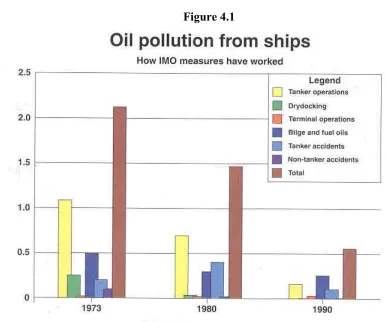
Figure 4.1
(Source: IMO News, 1999)
Also required in the convention is the international oil pollution prevention certificate, oil record book, ship oil pollution emergency plan and reception facilities at oil loading terminals, repair ports and in other ports in which ships have oily residue to discharge. Another instrument relating to prevention of oil pollution in the marine environment is the International Convention Relating to Intervention on the High Seas in Cases of Oil Pollution Casualties (1969). This convention was triggered by the grounding of the tanker Torrey Canyon off the coast of the United Kingdom.
or eliminate grave and imminent danger to their coastline or related interest from pollution or threat of pollution of the sea by oil, following upon a maritime casualty or acts related to such a such, which may reasonably be expected to result in major harmful consequence”. In addition, the convention also addressed the question of public international law. This is in line with the provisions of the Law of Sea convention on the same subject matter.
Further efforts to suppress the menace of marine oil pollution were made through the mechanism of 1989 international conference on salvage. Protection of the environment was one of the items considered to be addressed. This includes “substantial physical damage to human health or marine life or resources in coastal or inland waters or areas adjacent thereto.”
Coastal States are by this convention mandated (based on the principle of international law) to take action against pollution or threat of pollution along their coasts by authorisation for salvage operations in case of maritime casualty.
Originally, a threat to the marine environment was sought during the grounding of the tanker Amoco Cadiz. According to a report, had it been that the tanker was salved, the incident would never have happened.
In order to encourage potential salvors should accident occur in future, they are entitled to be compensated for the effort made based on the value of the salved property. This, however, depends on the success of the salvage operation.
Bunkers convention is distinctly different from other treaties because it is designed to deal with the operation and management of ships unlike CLC which is dealing with the incidental spill of cargoes. A registered ship owner will be held responsible and liable for any spill connected with Bunkers. The convention employs the principle of strict liability, hence therefore, the proposal for the requirement of compulsory insurance.
4.2.2 Response to Marine Oil Pollution
The increase rate of occurrence of oil spills in the marine environment and the recognition of its severity as well as its devastating negative effect leads to the convening of a response treaty known as the International Convention on Oil Pollution Preparedness, Response and Co-operation (OPRC) in 1990.
The aim of the convention is to facilitate an international co-operation to tackle oil pollution incidents by consideration of regional agreements and arrangements in various parts of the world.
It is believed that an early response has the tendency of reducing further damage that may occur. Also in consideration is the need for international co-operation by States and information exchange of previous incidents, measures taken to prevent and/or respond, equipment used as well as the shortcomings and difficulties encountered. By such an exchange, States are able to put themselves in a state of readiness and alert to prevent/respond promptly. The provision contained in various articles of the convention includes the requirement of:
• Oil pollution emergency plans
• Oil pollution reporting procedure
• Action on receiving an oil pollution report
• Research and development
Other important related resolutions are:
• Establishment of oil pollution combating equipment stockpiles
• Promotion of technical assistance
• Development and implementation of a training program for oil pollution Preparedness and response
4.2.3 Compensation and Reinstatement Regime
It is significant to note that this aspect is one of the early moves made by the international community to provide a system of mending damage and payment of compensation for the work undertaken to safeguard the marine environment. The idea come up in 1967 as a result of an incident involving a Liberian registered tanker, Torrey Canyon. The question that arose is who is to pay or be held liable for the damage and reinstatement of the marine environment.
Obviously this matter partly deals with private law, which to larger extent is hinged to the marine environment issue. A convention was thought to be well suited if it applied Worldwide, bearing in mind the international nature of shipping.
The proposal of the IMO Legal Committee was to have an International Convention on Civil Liability for Oil Pollution Damage (CLC).
This requirement is to every seagoing ship with the capacity to carry two thousand and above tons of oil as cargo, fully laden or on ballast voyage not withstanding. The scope of the convention covers damage suffered in the territorial sea and economic exclusive zone of the state party.
The idea of the International Oil Pollution Compensation Fund come up as it appears obvious that the financial remedy provided under the CLC is grossly inadequate for any given incident to satisfactorily compensate the victims. Two purposes will be served; relieving the ship owner from the full burden of responsibility imposed on him by the regime of CLC and at the same time reinforce and give additional compensation where insurance cover required in CLC appears to be insufficient or difficult to pursue. This simply means the victims of oil pollution can obtain compensation beyond the ship owner’s liability. Another important advantage is that where the ship owner is not guilty of being liable for the oil spilt, the International Oil Pollution Compensation Fund (IOPC) will be on hand to pay up in place of CLC. The scope of the IOPC Fund covers damages suffered in the territorial sea and beyond of the States party. The contribution to the fund is derived from the Government or persons who receive or import oil consignments.
4.2.4 Piracy/Armed Robbery and Oil Spill
Ships are exposed to many dangers associated with oil spills in the marine environment either on the high seas, territorial waters or in ports areas, the types of ship not withstanding. Prominent among these dangers is piracy/armed robbery.
Apart from the danger to the ship’s crew, there was the spectre posed by a ship steaming at full speed, unattended, in a confined waters (W. A. O’Neil, 2000).
As a result of the Exxon Valdez disaster some eleven million gallons of oil was spilled in the sea from its damaged cargo tank. This was devastating ecologically and the environmental pollution affected about one thousand eight hundred miles of coastline. The reason for this is never connected to piracy. Nevertheless transpose and compare this scenario to a situation where an unmanned ship bridge as a result of piracy/armed robbery is allowed to steam in a particularly sensitive area carrying dangerous cargo in busy traffic for some say thirty minutes. Obviously the ship could run a ground or collide with another. The end result would be oil spill if the ship happen to be a tanker. Such is the potential disaster with piracy/armed robbery against ships. However, so far there has not been on record a case of an oil spill incident as a result of piracy/armed robbery.
The hotspots of piracy/armed robbery attack around the world are West Africa, Malacca Strait, South China Sea and South America. In West Africa it was recorded that 1982 to 1986 were the years when the highest number of cases of about twenty-five attacks were reported (Focus on IMO, January 2000). This was mainly against ships at anchor awaiting berth.
One other development, was when seven cases were recorded prior to 1989 in the Malacca strait. From thereon, there was a significant rise in the number of attacks, from twenty-eight to fifty annually by 1991. In most of these instances, a typical attack is carried out when the ship is steaming at night. After boarding, the attackers then make their way to the ship’s bridge to carry out their assault.
incidents. Furthermore, out of two hundred and ten cases reported worldwide in 1998, ninety-eight occurred in this region.
For South America, attacks are most often conducted on ships at anchorage or in port areas. A total of thirty-eight attacks were reported in 1998.
Table 4.1: Number of Worldwide Piracy and Armed Robbery attacks between 1991 and 1999
Year 1991 1992 1993 1994 1995 1996 1997 1998 1999
Total 107 106 103 90 188 228 247 202 285
(Source: J. Abhyanker, 1999)
4.2.5 International Response to Piracy/Armed Robbery Attacks
4.3 The Impact of International Regulations on Shipping and the Marine Environment
The Torrey Canyon incident, which attracted huge media attention, has marked the starting point of many international treaties to curtail the amount of oil pollution into the marine environment. Most of the IMO member States are party to this, signifying a unified international approach to the problem. As a result, there was a drastic reduction in the quantity of oil entering the marine environment.
The International Salvage Union (ISU) annual pollution survey shows that in the four years; 1994 to 1997 its members salved nearly six million and seven hundred thousand tonnes of oil, chemicals and bunkers. In 1997 alone, nearly one million tonnes of oil from twenty crude carriers was recovered, the largest having over two hundred and fifty thousand tonnes on board.
The International Convention for the Prevention of Pollution from Ships helps very much in preventing ship source pollution. Some vulnerable areas that are hitherto considered endangered have now been accorded full protection by designating them as special areas. Ports and oil terminals, as well as ship design and construction are all subject to the requirement of the conventions, for example, requirement for reception facilities in ports, and double hull approach, oil water separators, and slop tankers on ships.
The area of response to oil pollution incidents, is meant to be addressed by the International Convention on Oil Pollution Preparedness, Response and Co-operation. States party to the convention are ever on alert, in readiness with effective contingency plan in case of a marine casualty that may involve an oil spill.
Chapter 5
Action Plan for Improvement
In designing a contingency plan for marine environment emergencies, some assumptions have to be made. As oil has the tendency to causing devastating damage to the marine environment and is not always stationary, it present a difficulty and hindrance to clean-up and reinstatement program in most cases.
It was argued that it is worthwhile focusing on preventative measures instead of response, considering the enormous cost associated with the latter. The cost of correction and reinstatement is normally about thrice as much compared to that required for prevention.
Obviously disaster in the marine environment is bound to happen without advance notice as long as shipping continues. It is therefore important not to ignore contingency for response action, since the possibility of occurrence cannot be ruled out. A well organised contingency planing has the advantage of being time and cost effective. Another advantage is using the contingency planning to draw up and locate high-risk areas requiring priority in terms of prevention from further possible damage.
marine environment. They are by law required to have their response action plan in readiness.
By definition, this is referred to as first-tier response. In an ideal situation, this arrangement will only address a disaster of a smaller magnitude. The international prescriptive standard suggests three tiers of response and is the practice in most countries.
Considering Nigeria in the West Africa sub region and the enormous activities related to oil exploration, exploitation and transportation, beginning to develop a contingency plan to cover the three tiers of response is a notoriously difficult task. This can, however, be made easy by identifying existing hazards and the resources that are at risk from these hazards. Once a contingency plan has been put in place, it is necessary to keep reviewing and updating it to facilitate it effectiveness. A Contingency plan can only be adhered to if reinforced with a national legislation. The adoption of international conventions into national legislation can no doubt help especially when they focus on developmental projects and industrialisation.
5.1 Contingency Plan for Oil Spill Emergencies in the Marine Environment
A marine emergency contingency plan means having in place a well-trained manpower and the right equipment, as well as response organisations. Some equipment is required to combat oil spills of a larger scale, which is capital intensive. Where they are available, their transportation to the spill site is another difficult task. Regional co-operation among states is vital in this instance because the cost of preparation for responding to a catastrophic accident can greatly be reduced.
arrangement nevertheless, has the advantage and capability of dealing with any smaller emergency situation.
5.2 Threat and Effect of Oil on Marine Ecology of the Niger Delta
Human activities linked to developments in all its facets are associated with direct or indirect pollution of the environment. The concept of contingency planning was therefore devised to deal with incidents that directly pollute the environment. In order to be followed to effectively handle emergency situations resulting from an accident, at least three questions need to be addressed.
The first is with regard to the particular kind of pollutant. The second is the resources likely to be affected and, finally, the kinds of response actions appropriate to each resource, taking into account the time, weather conditions and location of the endangered resources.
The study of the trends, behaviour and effect of persistent oil when spilled in the marine environment is so far not conclusive. Further research is needed for a detailed investigation into the effect of oil on the ecosystem. Nevertheless, the magnitude of damage is solely dependent on the quantity or volume of oil spilled, time and condition of the year as well as type and changes in the behaviour of marine organisms. The extent of damage is therefore a combination of these or their variation. Some of the prescribed remedies to marine casualties involving oil spills are:
• Aerial recognisance (some spill of minor quantity doesn’t require response, it get clean up naturally).
• Mechanical recovery (not suitable for open sea condition).