DEVELOPING A PERSONALIZED RECOMMENDER
TO ENHANCE AND OPTIMIZE E-LEARNING
ENVIRONMENT BASED ON STUDENT’S
PREFERENCES
Aadi Dhandha
ABSTRACT
Monitoring and interpretation of sequential activity learning can improve adaptation and customization in the educational environment. We can discover new semantically meaningful information to learners, to model the learner's problem modelling solution, to use the model at the target, ultimately to automate clustering, we present an approach based on. The plan is applicable to different levels to detect the resolution of the problem of predefined style. To recognize the issue of goals style by investigating student's conduct as indicated by the known component of learning, we will set up to find how self-loader learning measurements and robust model of critical thinking. In this article, the methodology itself clarifies the practicality of applying to this present reality information and address parts of the method that can be changed in accordance with various learning settings. At long last, we examine the adjustment cycle to the suitable mediation in the discourse procedure, the joining of the proposed methodology in the information accumulation framework.
INTRODUCTION
35 succession designs. Gathering can be connected at three levels as per the reason for admission. - To distinguish maps/conduct characterized styles from students thinking as level I (concentrating on examples), demonstrating their aptitudes, highlights, information, and so forth, - Level II (base measurements), semi consequently recognize settings may, in any case, identify with activities related with explicit learning measurements that are obscure. - Automatically lessens human intercession during the time spent level III (open revelation), to distinguish potential learning measurements and exact activities, centers around surveying the legitimacy and helpfulness of the aftereffects of the framework I am relying on you. To show the attainability of the methodology, we connected certifiable information to the area of critical thinking. Critical thinking is a significant piece of the learning procedure in customary learning conditions and eLearning. Students' essential styles of thinking are on various levels, yet they are clarified similarly as the most outstanding learning style, and by and large (see, for instance, [Lefrancois, 2006]) you can see. To take care of issues, molecules are connected to problems of various degrees of the intricacy of multifaceted nature. While examining Behavior for critical thinking is finished utilizing for the most part measurable learning to study styles dependent on client movement information, which is actually explored and can't be demonstrated without progressively nitty-gritty succession data when proper for the proposed methodology. For the reasons for the work depicted in this report, we have built up a custom format to catch the arrangement of understudy exercises engaged with critical thinking in a specific scholarly training framework (ITS). We set up a goals succession understudy issue that uses these models, contingent upon the over three levels, at that point for bunching, (a) Detects the goals of the style of the predefined issue (s). (B) Get familiar with another form of critical thinking, as indicated by preset learning measurements. Also, (c) finds a conceivably fascinating learning measurement and related essential thinking style.
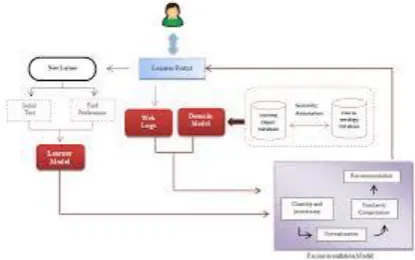
Fig 1: Functional Models for the proposed system
RELATED WORK
37 semantic data behind the exercises of more clients. When all is said in done, all exercises are checked. Examination anyway, for instance, separating significant parts and supporters basic to "apprenticeship of activity" as "outline of showing materials," "task sidestep," "change material" or "minutes of the draft meeting." In [Vialardi et al., 2009], the creators characterize another way to deal with information mining with regards to the instructive framework with the point of foreseeing the appropriateness of explicit courses to explicit understudies’ dependent on forecast The achievement of the framework for each course) will give customized proposals. Shockingly, the creators don't give a point by point portrayal of the database records they use., We can, in any case, infer that they will work with aggregated information practically identical to those expressed in Romero et al. (Counting, for instance, the number of courses the understudies are taken a crack at), there from the guidelines produced by the grouping framework. We utilized it in work depicted in this report, 2008]. One methodology portrays tree-based strategies and choice trees of fitting learning content (objects) given by calculated creators, in this issue exhibited and united in [Sue et al., 2011] Learners Requirements and explicit learning/association setting. This methodology is explicitly intended to coordinate the "client demand" of substance components (likewise embodying equipment highlights, learning and inclinations of system conditions) inside the archive of articles Learning. In [Anaya and Boticario, 2009], the creators investigate information mining in the instruction framework with specific accentuation on the synergistic learning process. The goals of their methodology are as per the following. Uncovering student's cooperation will give data when the district is free and after the procedure is finished. This methodology is connected with understudies from Distance Education National University (UNED) in Spain, utilizing the learning condition dotLRN[.LRN, 2010]. Partaking understudies approached dialogue gatherings, and other device examinations, for example, FAQs, news, schedules, and so on are constrained to measurable associations in the discussion without thought of semantic data. It was. Measurable pointers were utilized as pursues Foundation for removing data on helpful practices of students and gathering them as needs be. In this issue, the paper by a similar creator [Anaya and Boticario, 2011], by describing helpful conduct, by presenting measurements dependent on factual pointers with grouping with astounding execution. The methodology will exhibit a progressively complete and thorough view Learner. [Beer et al., 2006], we discover ways to deal with a grouping of student commitment dependent on different information sources. We will likewise investigate an incorporated way to deal with obtaining data, including understudy and educator's note self-report inspiration profile.
CONCLUSION
E-Learning condition speaks to a critical job in the present training. With the development of accessible learning assets, giving customized asset suggestion is significant usefulness for the present e-Learning frameworks. Thus, the suggestion frameworks are probably the best instrument to manage the issue of over-burden data which will help clients to discover ideal intrigued things.
beginning issue by acquainting the underlying level test with characterizing the underlying profile of the new student. In this exploration, the framework assesses student's degree of information, student's learning exercises and less fatty's exhibitions. At that point, the framework introduces the proposal rundown as indicated by the consequences of the student's assessment and profile.