Open Access
Research
Gender differences in perceived environmental correlates of
physical activity
Enrique Garcia Bengoechea
1, John C Spence*
2and Kerry R McGannon
3Address: 1Alberta Centre for Active Living, Faculty of Physical Education and Recreation E-424 Van Vliet, University of Alberta, Edmonton, Alberta, Canada, 2Faculty of Physical Education and Recreation, E-424 Van Vliet, University of Alberta, Edmonton, Alberta, Canada and 3Department of Health and Sport Studies, University of Iowa, Iowa City, USA
Email: Enrique Garcia Bengoechea - [email protected]; John C Spence* - [email protected]; Kerry R McGannon - [email protected]
* Corresponding author
Abstract
Background: Limited research has been conducted on gender differences in perceived environmental correlates of physical activity (PA). The purpose of this study was to explore the potential role of gender in the link between perceived environment and PA.
Methods: Using a telephone-administered survey, data was collected on leisure time physical activity (LTPA), perceptions of the neighbourhood environment, and self-efficacy in a representative sample of 1209 adults from the province of Alberta, Canada. LTPA was regressed on ten measures of perceived neighbourhood environment and self-efficacy in a series of logistic regressions.
Results: Women were more likely than men to perceive their neighbourhood as unsafe to go for walks at night (χ2 = 67.46, p < 0.001) and to report seeing people being active in their
neighbourhood (χ2 = 6.73, p < 0.01). Conversely, women were less likely to perceive easy access
to places for PA (χ2 = 11.50, p < 0.01) and availability of places to buy things within easy walking
distance from home (χ2 = 4.30, p < 0.05). Adjusting for age, education, income, and place of
residence, access to places for PA (OR = 2.49) and interesting things to look at in the neighbourhood (OR = 1.94), were associated with higher levels of LTPA in men. Access to places for PA (OR = 2.63) and reporting seeing people being active (OR = 1.50) were associated with increased LTPA among women. After controlling for sociodemographic variables and self-efficacy, the presence of shops and places to buy things within easy walking distance from home (OR = 1.73), interesting things to look at in the neighbourhood (OR = 1.65), and access to places for PA (OR = 1.82) were associated with higher levels of LTPA in men. Among women, no significant relationships were observed between perceived environment and LTPA after adjusting for self-efficacy.
Conclusion: The results provide additional support for the use of models in which gender is treated as a potential moderator of the link between the perceived environment and PA. Further, the results suggest the possibility of differential interventions to increase PA based on factors associated with gender.
Published: 13 September 2005
International Journal of Behavioral Nutrition and Physical Activity 2005, 2:12 doi:10.1186/1479-5868-2-12
Received: 15 April 2005 Accepted: 13 September 2005
This article is available from: http://www.ijbnpa.org/content/2/1/12
© 2005 Bengoechea et al; licensee BioMed Central Ltd.
Background
A growing body of scientific evidence has brought to pub-lic attention the negative effects of physical inactivity on health and the benefits of a physically active lifestyle [1,2]. Despite the well-documented physical, psychological, and social benefits of regular physical activity (PA) [3,4], physical inactivity remains pervasive. It is estimated that upwards of two-thirds of the industrialized world does not achieve minimum PA guidelines [5,2]. Physical inac-tivity thus constitutes a major public health concern [2] with related social and economic costs [6,7].
In an effort to solve the PA participation problem, research in the past two decades has employed theoretical perspectives to better understand the factors that enhance and detract from PA participation. In particular, social cognitive models that emphasize the interaction of intrap-ersonal factors, micro-environmental influences and PA behavior, have gained empirical support. This has allowed researchers to identify cognitive (e.g., efficacy beliefs), affective, and social influences on the individual's choice to be active and to aid in the development of interven-tions to increase PA levels [8]. Despite being identified as contributing toward behavior change, such individually-focused factors have generally been found to account for a modest proportion of the variance in PA behavior.
In recent years, it has been suggested that wider use of eco-logical models, which emphasize PA as being the result of multiple influences (i.e., intrapersonal, interpersonal, environmental, organizational and policy levels), hold great promise for addressing the PA participation problem [8-10]. The foregoing is underscored by significant changes observed over the past 50 years in the North American environment which promote decreased PA at the level of the individual. For example, in the United States, while daily vehicle miles traveled per person increased by 224% between 1950 and 2000, the propor-tion of trips to work by walking decreased 71% between 1960 and 2000 [11]. Transport systems and urban design (e.g., number and quality of pathways and cycleways, availability of buses and bus stops) play an important role in supporting or discouraging PA [12]. Urban sprawl increases distances between differential land use so that roads are more available than cycling paths or sidewalks [13-15].
Consistent with an ecological perspective [9,16], research-ers have attempted to document and undresearch-erstand how dif-ferent aspects of the physical environment may influence the extent to which individuals are more or less physically active [17-19]. Distribution and quality of local sport and recreational facilities, community clubs and churches, as well as features of the physical environment have all been shown to be associated with PA participation [20,21].
Researchers have begun to use models that allow selected demographic and personal characteristics such as socioe-conomic status [22,23], gender [24-26] and weight status [27] to act as potential moderators of the effect of the per-ceived environment rather than as confounding variables. This is also consistent with an ecological perspective, which posits that there are interactions among levels in the system linking individuals with their environments [9,16].
Understanding the role of gender in the relationship between the perceived environment and PA participation is of particular importance since women typically exhibit lower levels of PA than their male counterparts [24,28]. Research that has attempted to elucidate gender differ-ences in PA determinants has also revealed that women may face different barriers (e.g., lack of time due to multi-ple roles, perceptions of safety, and environmental access) than men, which can limit their PA participation [29,30]. For instance, in a survey of 3,032 U.S. adults [16], psycho-logical factors such as mastery, exercise self-efficacy, and perceived control over health explained educational dif-ferences in PA among women.
environment between genders for both low and high walking groups.
These studies contribute to the literature that documents significant cross-sectional associations of perceived envi-ronmental attributes with PA [31]. However, more studies are needed to further elucidate relevant gender differences in PA participation [24]. In particular, little is known yet about how gender may interact with perceptions of the environment in order to influence PA participation. For instance, in relation to PA, it is likely self-efficacy beliefs vary by gender [16] and thus may account for much of any gender differences in perceived environment. Further-more, no studies have been published on how percep-tions of neighbourhood environment relate to PA in Canada. Consequently, the purposes of this study were to determine: a) if gender differences in perceptions of the physical environment exist; b) how these differences may have an impact on leisure time physical activity (LTPA) patterns of individuals in a representative sample of adults from the Province of Alberta; and c) if these gender differences are explained by PA self-efficacy.
Methods
Design and Sample
Participants included a representative sample of 1,209 adults (Males = 600; Females = 609) aged 18 years and over residing in the Province of Alberta, Canada. Data were collected by telephone interview between October 29, 2002, and December 1, 2002. Three separate subsam-ples represented Edmonton, Calgary, and the rest of the province. A random-digit dialling approach ensured that respondents had an equal chance of being contacted whether or not their household was listed in a telephone directory. Approximately 54% of the total number of valid households responded to the survey. A random sample of 1,209 is considered accurate within +/- 2.8, 19 times out of 20.
Measures
Leisure-Time Physical Activity
The Godin Leisure-Time Exercise Questionnaire [32] was used to estimate LTPA levels. Self-reported weekly fre-quencies of strenuous, moderate, and light activities were multiplied by their estimated value in METs (nine, five, and three respectively). Total weekly LTPA was calculated by adding the products of the separate components. Albertans were considered sufficiently physically active if they expended 38 METs a week for men or 35 METs a week for women. These cutoff values were derived based upon the work of several researchers [33-35]. According to Jacobs et al. [34], these values equal 300–400 MET-min-utes per day. This number of MET-minMET-min-utes is equivalent to a weekly energy expenditure of 2,000 kcals [33]. An energy expenditure of 2,000 kcals or more per week is
associated with a reduced risk of heart disease [35]. Based on this criterion, we created a dichotomous variable for LTPA: inactive or active.
Perceived environment
Nine questions from the International Physical Activity Prevalence Study Environmental Survey Module [36] were used to assess respondents' perceptions of neighbour-hood characteristics that may influence LTPA. The module consists of a series of items that reflect current thinking in assessment of environmental factors for walking and bicy-cling in one's neighbourhood and for which reliability and validity have been assessed [36]. Since walking (82%) is the primary source of LTPA among Canadians and bicy-cling is reported by a significant proportion (45%) of the population [37], the environment scale was deemed to be an appropriate measure of neighbourhood influences on LTPA.
Specifically, respondents were asked to indicate how much they agree or disagree with the following items, on a 4-point scale where 1 means strongly disagree and 4 means strongly agree: "Many shops, stores, or other places to buy things I need are within easy walking distance of my home"; "There are sidewalks on most of the streets in my neighbourhood"; "In and around my neighbourhood, there are facilities for bicycling such as special bicycle lanes, bicycle paths, and shared use trails for cyclists and pedestrians"; "My neighbourhood has several free or low cost recreation facilities, such as parks, walking trails, bike paths, playgrounds, and recreation centres"; "The crime rate in my neighbourhood makes it unsafe to go for walks at night"; "There is so much traffic on the streets that it makes it difficult or unpleasant to walk in my neighbour-hood"; "I see many people engaging in physical activity in my neighbourhood doing things like walking, jogging, cycling, or playing sports and active games"; "There are many interesting things to look at while walking in my neighbourhood." In addition, respondents were asked to rate on the same 5-point scale their agreement with the following statement: "I have easy access to places where I can get physical activity." For the purposes of this study, the responses to each of the environmental variables were collapsed into categories of disagree (1 or 2) or agree (3 or 4).
Sociodemographic
Self-Efficacy
Based upon previous research [38], a self-efficacy score was derived by averaging the respondents' ratings on three items assessing their confidence in overcoming, respec-tively, fatigue, bad weather, and time constraints to partic-ipating in moderate LTPA. The Cronbach's alpha coefficient for these three items was 0.77.
Statistical Analyses
All data were cleaned and edited following standard qual-ity control procedures. The analyses were conducted with the Statistical Package for the Social Sciences (SPSS), ver-sion 13.0. Data were weighted to account for the circum-stance that the sample sizes of completed interviews for Edmonton, Calgary, and other Alberta, were not propor-tional to the Alberta population. Specifically, the area samples were multiplied by a weighting factor to account for the slight over representation of residents from Edmonton and Calgary and the slight under representa-tion of residents from other parts of Alberta. However, according to the index of dissimilarity [39], little differ-ence existed between the age groupings of our sample and that of the Alberta population [40]. In addition, the pro-portion of men and women in our sample was very simi-lar to that of the Canadian and Alberta populations [40].
Thus, the sample adequately reflected the population from which it was drawn.
Descriptive statistics were calculated for sociodemo-graphic variables, self-efficacy, and LTPA. Differences between women and men were tested with chi-square analysis, in the case of categorical variables, and t tests in the case of continuous variables. Gender differences in responses to each environmental item were tested with chi-square analysis. Because PA scores are typically not normally distributed [41], non-parametric procedures were adopted to analyse the LTPA data. Specifically, unconditional logistic regression analyses, with LTPA as the dependent variable, were used to calculate unadjusted and adjusted ORs and the 95% CIs for each environmen-tal variable. To calculate the adjusted ORs, LTPA was regressed on the sociodemographic variables (age, educa-tion, income, and location) and, then, self-efficacy was entered on the second step. The decision about which var-iables to include in the regression analysis was guided by ecological models of PA [9,16] and other research show-ing relations between sociodemographic variables and LTPA [42-44]. Conducting separate analyses for males and females allowed us to examine unique patterns of associ-ation between the environmental variables and LTPA.
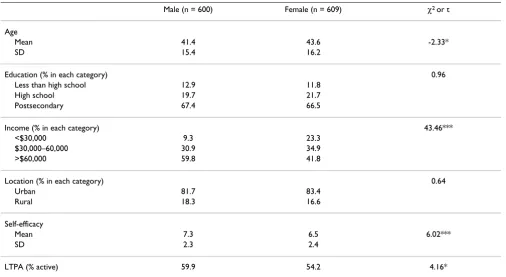
Table 1: Characteristics of Participants
Male (n = 600) Female (n = 609) χ2 or t
Age
Mean 41.4 43.6 -2.33*
SD 15.4 16.2
Education (% in each category) 0.96
Less than high school 12.9 11.8
High school 19.7 21.7
Postsecondary 67.4 66.5
Income (% in each category) 43.46***
<$30,000 9.3 23.3
$30,000–60,000 30.9 34.9
>$60,000 59.8 41.8
Location (% in each category) 0.64
Urban 81.7 83.4
Rural 18.3 16.6
Self-efficacy
Mean 7.3 6.5 6.02***
SD 2.3 2.4
LTPA (% active) 59.9 54.2 4.16*
Results
Based on the cut-off values described earlier, 59.9% of men and 54.2% of women were considered physically active. As Table 1 also shows, men displayed significantly higher levels of self-efficacy (t = 6.02, p < 0.001) and had higher annual household income than women (χ2 =
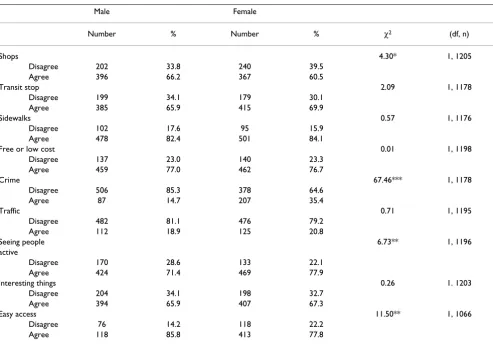
43.46, p < 0.001). Men were also slightly younger than women (t = -2.33, p < 0.05). As seen in Table 2, women were more likely than men to perceive their neighbour-hood as unsafe to go for walks at night (χ2 = 67.46, p <
0.001) and to report seeing people being active in their neighbourhood (χ2 = 6.73, p < 0.01). Conversely, women
had lower perceptions of easy access to places for PA (χ2 =
11.50, p < 0.01) and of availability of places to buy things within easy walking distance from home (χ2 = 4.30, p <
0.05).
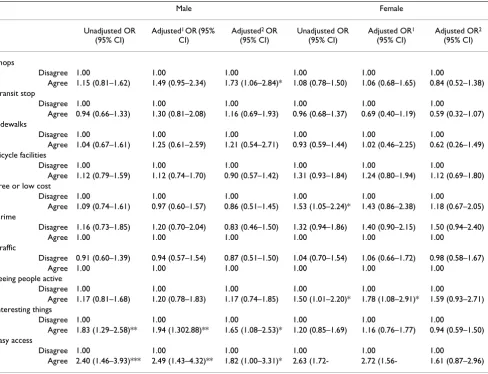
The results revealed some interesting differences between men and women in terms of the perceived neighbour-hood characteristics that are associated with an increased likelihood of being physically active. As table 3 shows,
men who perceived many interesting things to look at while walking in their neighbourhood were 83% more likely to be physically active than those who did not. This association remained statistically significant even after adjusting for sociodemographic variables (OR = 1.94) and self-efficacy (OR = 1.65). When adjusting for sociodemographic variables and self-efficacy, perceptions of presence of shops and places to buy things within easy walking distance from home, were associated with increased LTPA among men as well (OR = 1.73). Among women, perceptions of availability of free or low cost rec-reational facilities were linked with higher levels of LTPA (OR = 1.53). However, this relationship did not remain statistically significant after adjusting for sociodemo-graphic variables and self-efficacy. Seeing many people engaging in PA in their neighbourhood also increased the likelihood of being physically active in women (OR = 1.50). This association remained statistically significant after adjusting for sociodemographic variables (OR = 1.78) but not after self-efficacy was included in the model.
Table 2: Gender Differences in Perceptions of the Physical Environment
Male Female
Number % Number % χ2 (df, n)
Shops 4.30* 1, 1205
Disagree 202 33.8 240 39.5
Agree 396 66.2 367 60.5
Transit stop 2.09 1, 1178
Disagree 199 34.1 179 30.1
Agree 385 65.9 415 69.9
Sidewalks 0.57 1, 1176
Disagree 102 17.6 95 15.9
Agree 478 82.4 501 84.1
Free or low cost 0.01 1, 1198
Disagree 137 23.0 140 23.3
Agree 459 77.0 462 76.7
Crime 67.46*** 1, 1178
Disagree 506 85.3 378 64.6
Agree 87 14.7 207 35.4
Traffic 0.71 1, 1195
Disagree 482 81.1 476 79.2
Agree 112 18.9 125 20.8
Seeing people 6.73** 1, 1196
active
Disagree 170 28.6 133 22.1
Agree 424 71.4 469 77.9
Interesting things 0.26 1. 1203
Disagree 204 34.1 198 32.7
Agree 394 65.9 407 67.3
Easy access 11.50** 1, 1066
Disagree 76 14.2 118 22.2
Agree 118 85.8 413 77.8
Perceptions of easy access to places for PA were associated with higher levels of LTPA in both men and women (OR = 2.40 and OR = 2.63, respectively). For men, the relation-ship was still statistically significant after adjusting for sociodemographic variables (OR = 2.49) and self-efficacy (OR = 1.82). For women, the association was still signifi-cant after adjusting for sociodemographic variables (OR = 2.72), but not after self-efficacy was entered in the model.
Discussion
This study explored gender differences in perceptions of the physical environment and in environmental correlates of LTPA in a representative sample of adults from the province of Alberta. Our results are consistent with a growing body of literature that suggests the existence of a link between several dimensions of the perceived environ-ment and self-reported LTPA [20,31]. Further adding to
this literature, our analyses show that other studies may have overlooked an important moderating effect of gen-der in the relationship between the perceived environ-ment and LTPA.
Unlike previous work concerned with gender differences in the association between PA and environmental varia-bles [26], women and men in our study did not differ, at least to a statistically significant degree, in perceptions of traffic as a potential problem for walking. Consistent with this research [26], women were more concerned than men about the safety of walking at night. Nevertheless, percep-tions of low safety were not significantly associated with lower levels of LTPA in women, which is in-line with results from previous studies assessing specific correlates of PA in women [45-47].
Table 3: Perceived Environmental Correlates of Being Active Versus Inactive
Male Female
Unadjusted OR (95% CI)
Adjusted1 OR (95%
CI)
Adjusted2 OR
(95% CI)
Unadjusted OR (95% CI)
Adjusted OR1
(95% CI)
Adjusted OR2
(95% CI)
Shops
Disagree 1.00 1.00 1.00 1.00 1.00 1.00
Agree 1.15 (0.81–1.62) 1.49 (0.95–2.34) 1.73 (1.06–2.84)* 1.08 (0.78–1.50) 1.06 (0.68–1.65) 0.84 (0.52–1.38) Transit stop
Disagree 1.00 1.00 1.00 1.00 1.00 1.00
Agree 0.94 (0.66–1.33) 1.30 (0.81–2.08) 1.16 (0.69–1.93) 0.96 (0.68–1.37) 0.69 (0.40–1.19) 0.59 (0.32–1.07) Sidewalks
Disagree 1.00 1.00 1.00 1.00 1.00 1.00
Agree 1.04 (0.67–1.61) 1.25 (0.61–2.59) 1.21 (0.54–2.71) 0.93 (0.59–1.44) 1.02 (0.46–2.25) 0.62 (0.26–1.49) Bicycle facilities
Disagree 1.00 1.00 1.00 1.00 1.00 1.00
Agree 1.12 (0.79–1.59) 1.12 (0.74–1.70) 0.90 (0.57–1.42) 1.31 (0.93–1.84) 1.24 (0.80–1.94) 1.12 (0.69–1.80) Free or low cost
Disagree 1.00 1.00 1.00 1.00 1.00 1.00
Agree 1.09 (0.74–1.61) 0.97 (0.60–1.57) 0.86 (0.51–1.45) 1.53 (1.05–2.24)* 1.43 (0.86–2.38) 1.18 (0.67–2.05) Crime
Disagree 1.16 (0.73–1.85) 1.20 (0.70–2.04) 0.83 (0.46–1.50) 1.32 (0.94–1.86) 1.40 (0.90–2.15) 1.50 (0.94–2.40)
Agree 1.00 1.00 1.00 1.00 1.00 1.00
Traffic
Disagree 0.91 (0.60–1.39) 0.94 (0.57–1.54) 0.87 (0.51–1.50) 1.04 (0.70–1.54) 1.06 (0.66–1.72) 0.98 (0.58–1.67)
Agree 1.00 1.00 1.00 1.00 1.00 1.00
Seeing people active
Disagree 1.00 1.00 1.00 1.00 1.00 1.00
Agree 1.17 (0.81–1.68) 1.20 (0.78–1.83) 1.17 (0.74–1.85) 1.50 (1.01–2.20)* 1.78 (1.08–2.91)* 1.59 (0.93–2.71) Interesting things
Disagree 1.00 1.00 1.00 1.00 1.00 1.00
Agree 1.83 (1.29–2.58)** 1.94 (1.302.88)** 1.65 (1.08–2.53)* 1.20 (0.85–1.69) 1.16 (0.76–1.77) 0.94 (0.59–1.50) Easy access
Disagree 1.00 1.00 1.00 1.00 1.00 1.00
Agree 2.40 (1.46–3.93)*** 2.49 (1.43–4.32)** 1.82 (1.00–3.31)* 2.63 (1.72- 2.72 (1.56- 1.61 (0.87–2.96)
* p < .05., **p < .01., ***p < 0.001.
Note1: Adjusted by age, education, income, and location (urban vs. rural).
Several interesting differences emerged between women and men in terms of the dimensions of the perceived envi-ronment that were linked with increased LTPA participa-tion. The perceptions that "there are many interesting things to look at while walking" and that "there are many places to buy things within easy walking distance from home", were significantly associated with higher levels of LTPA in men but not in women. This is somewhat incon-sistent with a recent study [24] that found both men and women reporting positive changes over time in aesthetics and convenience in their neighbourhood were at least twice as likely to increase their walking. Likewise, another recent study [26] found that convenience (i.e., availability of shops within walking distance) was positively associ-ated with high levels of walking (>150 mins/week) among women. One possible explanation for our findings is that perceived environments indeed have a differential impact on LTPA according to gender. Another possible explanation is that the role of perceived environment in relation to behaviour may be moderated by cultural and national factors that vary by country and region.
Conversely, since men reported higher levels of LTPA than women, interpretations that PA can affect perceptions of the environment are plausible as well [45]. Offering some support for this hypothesis, we found that men were higher than women in perceptions of easy access to places for PA and of availability of places to buy things within easy walking distance from home. Thus, it could be sug-gested that individuals who are physically active may be more likely to perceive that they have access to places where they can get PA, or to places where they can buy necessary things, and that they can reach by physically active means (e.g., walking) [48]. Alternatively, these find-ings may have been due to chance, thus replication of them is necessary. In any case, the unexpected results sug-gest that the interaction between environmental influences and individual difference characteristics may be more complex than previously thought.
Perceiving that one's neighbourhood has several free or low cost recreation facilities was associated with higher levels of LTPA in women but not in men. This finding makes some sense when taking into account that the aver-age annual household income of the women in our sam-ple was lower than that of men. Studies have found that low amounts of leisure-time PA are strongly associated with low income [49,50], low education [51], and low socio-economic status [52,53]. Moreover, the lowest par-ticipation rates have been found amongst the poor and women of child-rearing age, many of whom are the same people [54]. In fact, low-income women identify a lack of access to PA in their community as a major factor inhibit-ing the development of healthy lifestyles for themselves and their families [54]. Thus in the case of our results,
hav-ing access to places where one can participate in PA for free or at a low cost may have been an incentive (i.e., facil-itator) for women to get involved in PA.
Likewise, seeing many people being active in one's neigh-bourhood was associated with increased levels of LTPA only in women. The positive impact of physically active role models on women's participation patterns has been documented in other studies investigating the influence of characteristics of the neighbourhood environment on PA [45,46]. Bandura's [55] social cognitive theory explains how role modelling can influence behaviour by enhanc-ing an individual's sense of self-efficacy. Women in our sample had lower self-efficacy to overcome barriers to PA than men. Consistent with previous research showing the importance of self-efficacy on women's LTPA [16,47], this may help explain why physically active role models seem to have been more influential for women in our study. However, the circumstance that neither having access to places where one can participate in PA for free or at nei-ther a low cost, nor seeing many people being active in one's neighbourhood reached statistical significance when adjusted by self-efficacy points to an interesting phenomenon. It seems indeed as if self-efficacy to over-come barriers to PA participation "in spite of" an environ-ment that may facilitate or hinder participation was more influential among women in our sample than self-efficacy "because of" a supportive environment (i.e., one in which role models and low cost facilities are available).
encour-age women to become more physically active, interven-tions could be designed to increase awareness and use of environmental supports [57] such as places were people can engage at low or no cost in PA while seeing socially and economically similar others doing the same.
This study has several limitations. First, our data is cross-sectional and therefore we cannot make causal inferences. We also relied on a telephone survey format, which may have resulted in some segments of the population (e.g., low income individuals lacking access to telephones) being underrepresented. Additionally, we used self-report measures of both LTPA and perceptions of the physical environment. It is thus possible that the data may have been subject to biases. Since it is not clear yet whether the actual or perceived environment is more influential [9,45,58], it is important that future studies include assessments of both dimensions in their designs.
Conclusion
To date, few studies have explored gender differences in perceptions of the environment and how these differences may have an impact on PA patterns of individuals. We found several gender relevant differences in the ways indi-viduals perceive their physical environments and on the dimensions of these environments that are associated with LTPA. Thus, the results from this study add to the knowledge base of gender differences in environmental correlates of PA. Our findings provide further support for the need of using models in which gender is treated as a potential moderator of the link between the perceived environment and PA. Further, these results suggest the possibility of designing interventions to increase PA that address differentially both structural (e.g., income dispar-ities) and social cognitive (e.g., self-efficacy) factors typi-cally associated with gender.
Competing interests
The author(s) declare that they have no competing interests.
Authors' contributions
EGB participated in the conception and design of the study, performed the statistical analyses and drafted the manuscript. JCS participated in the conception and design of the study, took a coordination role, and helped to draft the manuscript. KRM coordinated the design of the survey and helped to draft the manuscript. All authors read and approved the final manuscript.
References
1. Ruhling RO: Why not exercise? Quest 2004, 56:208-225. 2. US Department of Health and Human Services: Physical activity and
health: A report of the Surgeon General Atlanta Centers for Disease Control and Prevention; 1996.
3. Bouchard C, Shephard RJ, Stephens T: Physical activity fitness and health: International proceedings and consensus statement Champaign: Human Kinetics; 1994.
4. Gauvin L, Spence JC, Anderson S: Exercise and psychological well-being in the adult population: Reality or wishful think-ing? In Textbook of medicine exercise nutrition and health Edited by: Rippe JM. Malden: Blackwell; 1999:957-966.
5. Oja P: Descriptive epidemiology of health-related physical activity and fitness. Res Q Exerc Sport 1995, 214:303-312. 6. Colditz GA: Economic costs of obesity and inactivity. Med Sci
Sports Exerc 1999:663-667.
7. Katzmarzyk PT, Gledhill N, Shephard RJ: The economic burden of physical inactivity in Canada. CMAJ 2000, 163:1435-1440. 8. King AC, Stokols D, Talen E, Brassington GS, Killingsworth :
Theo-retical approaches to the promotion of physical activity: Forging a transdisciplinary paradigm. Am J Prev Med
2002:15-25.
9. Spence JC, Lee RE: Toward a comprehensive model of physical activity. Psychol Sport Exerc 2003, 4:7-24.
10. Saelens BE, Sallis JF, Frank LD: Environmental correlates of walk-ing and cyclwalk-ing: Findwalk-ings from the transportation, urban design, and planning literature. Ann Behav Med 2003, 25:80-91. 11. Brownson RC, Boehmer TK, Luke DA: Declining rates of physical activity in the United States: What are the contributos? Ann Rev Public Health 2005, 26:421-443.
12. Frank LD, Engelke PO, Schmid TL: Health and community design: The impact of the built environment on physical activity Washington: Island Press; 2003.
13. Ewing R, Schmid T, Killingsworth R, Zlot A, Raudenbush S: Relation-ship between urban sprawl and physical activity, obesity, and morbidity. Am J Health Prom 2003, 18:47-57.
14. Frank LD, Andresen MA, Schmid TL: Obesity relationships with community design, physical activity, and time spent in cars. Am J Prev Med 2004, 27:87-96.
15. Frank LD, Schmid TL, Sallis JF, Chapman J, Saelens BE: Linking objec-tively measured physical activity with objecobjec-tively measured urban form Findings from SMARTRAQ. Am J Prev Med 2005,
28(Suppl 2):117-125.
16. Grzywacz JG, Marks NF: Social inequalities and exercise during adulthood: Toward an ecological perspective. J Health Soc Behav 2001, 42:202-220.
17. Bauman A, Smith B, Stoker L, Bellew B, Booth M: Geographical influences upon physical activity participation: Evidence of a 'coastal effect'. Aust New Zeal J Public Health 1999, 23:322-324. 18. Corti B, Donovan RJ, Holman CDJ: Factors influenceing the use
of physical activity facilities: Results from qualitative research. Health Prom J Aust 1997, 7:16-21.
19. Rutten A, Abel T, Kannas L, Von Lengerke T, Luschen G, Diaz JA, Vinck J, Van der Zee J: Self-reported physical activity, public health and perceived environment: Results from a compara-tive European study. J Epidemiol Community Health 2001,
55:139-146.
20. Humpel N, Owen N, Leslie E: Environmental factors associated with adults' participation in physical activity: A review. Am J Prev Med 2002, 22:188-199.
21. Sallis JF, Kraft K, Linton LS: How the environment shapes physi-cal activity: A transdisciplinary research agenda. Am J Prev Med 2002, 22:208.
22. Parks SE, Housemann RA, Brownson RC: Differential correlates of physical activity in urban and rural adults of various socio-economic backgrounds in the United States. J Epidemiol Com-munity Health 2003, 57:29-35.
23. van Lenthe FJ, Brug J, Mackenback JP: Neighbourhood inequalities in physical activity: The role of neighbourhood attractive-ness, proximity to local facilities and safety in the Netherlands. Soc Sci Med 2005, 60:763-775.
24. Humpel N, Marshall AL, Leslie E, Bauman A, Owen N: Changes in neighborhood walking are related to changes in perceptions of environmental attributes. Ann Behav Med 2004, 27:60-67. 25. Humpel N, Owen N, Leslie E, Marshall AL, Bauman AE, Sallis JF:
Associations of location and perceived environmental attributes with walking in neighborhoods. Am J Health Prom
2004, 18:239-242.
26. Foster C, Hillsdon M, Thorogood M: Environmental perceptions and walking in English adults. J Epidemiol Community Health 2004,
Publish with BioMed Central and every scientist can read your work free of charge "BioMed Central will be the most significant development for disseminating the results of biomedical researc h in our lifetime."
Sir Paul Nurse, Cancer Research UK
Your research papers will be:
available free of charge to the entire biomedical community
peer reviewed and published immediately upon acceptance
cited in PubMed and archived on PubMed Central
yours — you keep the copyright
Submit your manuscript here:
http://www.biomedcentral.com/info/publishing_adv.asp
BioMedcentral
27. Blanchard CM, McGannon K, Spence JC, Rhodes RE, Nehl E, Baker F, Bostwick J: Social ecological correlates of physical activity in normal weight, overweight, and obese individuals. Int J Obes
2005, 29:720-726.
28. Pinto BM, Marcus BH, Clark MM: Promoting physical activity in women: The new challenges. Am J Prev Med 1996, 12:395-400. 29. Eyler AA: Personal, social, and environmental correlates of
physical activity in rural Midwestern white women. Am J Prev Med 2003:86-92.
30. Jaffee L, Lutter JM, Rex J, Hawkes C, Buccacio P: Incentives and barriers to PA for working women. Am J Health Prom 1999,
13:215-218.
31. Duncan MJ, Spence JC, Mummery WK: Perceived environment and physical activity: A meta-analysis of selected environ-mental characteristics. Int J Behav Nutr Phys Act 2005, 2:11. 32. Godin G, Shephard RJ: A simple method to assess exercise
behavior in the community. Can J Appl Sport Sci 1985,
10:141-146.
33. Elosúa R, García M, Aguilar A, Molina L, Covas MI, Marrugat J: Vali-dation of the Minnesota Leisure Time Physical Activity Questionnaire In Spanish Women. Med Sci Sports Exerc 2000,
32:1431-1437.
34. Jacobs DR, Ainsworth BE, Hartman TJ, Leon AS: A simultaneous evaluation of 10 commonly used physical activity questionnaires. Med Sci Sports Exerc 1993, 25:81-91.
35. Paffenbarger RS, Wing AL, Hyde RT: Physical activity as an index of heart attack risk in college alumni. Am J Epidemiol 1978,
108:161-175.
36. International Physical Activity Prevalence Study Environ-mental Survey Module [http://www-rohan.sdsu.edu/faculty/sallis/ IPAQIPS.pdf]
37. Candian Fitness Lifestyle Research Institute: Physical Activity Monitor
Ottawa, ON; 2000.
38. Rodgers WM, Sullivan MJL: Task, coping, and scheduling self-effi-cacy in relation to frequency of physical activity. J Appl Soc Psych 2001, 31:741-753.
39. Duncan OD, Duncan B: Residential distribution and occupa-tional stratification. Am J Sociol 1955, 60:493.
40. Statistics Canada: . 2001 Census of Canada 2002 [http://www12.stat can.ca/english/census01/home/index.cfm]. Ottawa ON
41. Thomas JR, Thomas K: Physical activity data: Odd distributions yield strange answers. In Physical activity assessments for health-related research Edited by: Welk GJ. Champaign, IL: Human Kinetics; 2002:73-80.
42. Clark DO: Racial and educational differences in physical activ-ity among older adults. Gerontologist 1995, 35:472-480. 43. Potvin L, Gauvin L, Nguyen NM: Prevalence of stages of change
for physical activity in rural, suburban and inner-city communities. JComm Health 1997, 22:1-13.
44. Powell LM, Slater S, Chaloupka FJ: The relationship between community physical activity settings and race, ethnicity and socioeconomic status. Evidence-Based Prev Med 2004, 1:135-144. 45. King AC, Castro C, Wilcox S, Eyler AA, Sallis JF, Brownson RC:
Per-sonal and environmental factors associated with physical inactivity among different racial-ethnic groups of U.S. mid-dle-aged and older-aged women. Health Psychol 2000,
19:354-364.
46. Wilcox S, Castro C, King AC, Housemann R, Brownson RC: Deter-minants of leisure time physical activity in rural activity com-pared with urban older and ethnically diverse women in the United States. J Epidemiol Community Health 2000, 54:667-672. 47. Eyler AA, Matson-Koffman D, Young DR, Wilcox S, Wilbur J,
Thomp-son JL, SanderThomp-son B, EvenThomp-son KR: Quantitative study of corre-lates of physical activity in women from diverse racial/ethnic groups: The Women's Cardiovascular Health Network Project – summary and conclusions. Am J Prev Med 2003:93-103. 48. Huston SL, Evenson KR, Bors P, Gizlice Z: Neighborhood environ-ment, access to places for activity, and leisure-time physical activity in a diverse North Carolina population. Am J Health Prom 2003, 18:58-69.
49. Stachenko SJ, Reeder BA, Lindsay E, Donovan C, Lessard R: Smok-ing prevalence and associated risk factors in Canadian adults.
In Canadian Medical Association JournalVolume 146. Canadian Heart Health Surveys Research; 1992:1989-1996.
50. Steenland K: Passive smoking and the risk of heart disease. JAMA 1992, 267:94-99.
51. Sternfeld B, Ainsworth BE, Quesenberry JCP: Physical activity pat-terns in a diverse population of women. Prev Med 1999,
28:313-323.
52. Blanksby B, Anderson M, Douglas GA: Recreational patterns, body composition and socioeconomic status of Western sec-ondary school students. Ann Human Biol 1996, 23:101-112. 53. Mensink GBM, Losse N, Oomen CM: Physical activity and its
association with other lifestyle factors. Eur J Epidemiol 1997,
13:771-778.
54. Frisby W, Crawford S, Dorer T: Reflections on participatory action research: The case of low-income women accessing local physical activity services. J Sport Management 1997,
11:8-28.
55. Bandura A: The explanatory and predictive scope of self-effi-cacy theory. J Soc Clin Psychol 1986, 4:359-373.
56. Brownson RC, Baker EA, Housemann RA, Brennan LK, Bacak SJ:
Environmental and policy determinants of physical activity in the United States. Am J Public Health 2001, 91:1995-2003. 57. Addy CL, Wilson DK, Kirtland KA, Ainsworth BE, Sharpe P, Kimsey
D: Associations of perceived social and physical environmen-tal supports with physical activity and walking behavior. Am J Public Health 2004, 94:440-443.