
Iranian Journal of Chemical Engineering Vol. 11, No. 4 (Autumn 2014), IAChE
Catalytic Pyrolysis of General Purpose PolyStyrene
Using Red Mud as a Catalyst
M. Rezvanipour, F. Alikhani Hesari*, M. Pazouki
Materials and Energy Research Center, Meshkin Dasht, Karaj, Iran
Abstract
In this work, the influence of Red Mud in the pyrolysis of general purpose polystyrene (GPPS) has been studied. The catalytic pyrolysis experiments were carried out using an unstirred semi-batch stainless steel 6.28 liter reactor under nitrogen atmosphere (air free) with Red Mud as a catalyst. The reaction effluents (oil and gases) were condensed in water-cooled condenser. The condensate was weighted to determine the total yield. Gas Chromatography-Mass Spectroscopy (GC-MS) analysis was used to characterize the condensed liquid organic compounds. According to the GC-MS results, styrene, benzene and its derivatives, toluene, naphthalene and a small amount of the other hydrocarbon compounds were identified in condensate liquid. Density, specific gravity, API gravity, kinematics and dynamic viscosity, flash point, fire point, cloud point and pour point of condensate were also measured. Under optimum reaction condition, the yield of pyrolysis reaction was above 90%. The air free reaction condition showed good catalytic pyrolysis of polystyrene with less than 1% coke formation and above 90% selectivity towards formation of aromatic compounds. The specifications of condensate, i.e. density, API gravity, viscosity and flash point observed showed that the liquid obtained can safely be classed as a kerosene. The specific gravity value was close to the specific gravity value of diesel.
Keywords: Waste Polystyrene, Catalytic Pyrolysis, Red Mud
1. Introduction
Used general purpose polystyrene (GPPS) from household and industries is recognized to be a major environmental problem. There are several methods for disposal of municipal and industrial GPPS wastes, i.e. landfill, incineration, true material recycling, and chemical recovery. Landfill treatment and destruction by incineration are quite expensive and pose serious air pollution problems due to the release of airborne
Corresponding author: [email protected]
particles and carbon dioxide into the atmosphere [1].
Pyrolysis is an effective chemical recycling method. It has been employed to convert waste plastic into useful products such as fine chemicals, transportation fuels, and lubricant oils. Pyrolysis is also classified as the chemical and energy recovery system known as cracking, gasification and chemolysis methods.
In the pyrolysis process (heating in an oxygen free atmosphere), the materials (containing organic components) with higher molecular weights are decomposed, generating liquid and gaseous products that can be used as a fuel and/or as sources of raw chemicals. The inorganic materials like fillers and metals remain practically unaltered during pyrolysis process and free of the binding organic matter; therefore, metals could be separated and the remaining solid may be reused as additive, filler or pigment. Lopez et al. [7] defined pyrolysis is an especially appropriate recycling technique for waste streams containing different plastics and other materials, for which mechanical recycling is not feasible.
Thermal and catalytic degradation of plastic wastes are two kinds of chemical recycling processes. The main drawbacks of thermal degradation are its wide product distribution and requirement of high temperature, especially from 500 up to even 900C. Since
thermal degradation demands relatively high temperature and its products require further quality upgrading processes, catalytic degradation of polymer wastes offers considerable advantages over thermal degradation [8–14]. Yield and distribution of products can be easily controlled as well as significantly reducing the reaction temperature by use of suitable catalysts in
catalytic degradation [15].
Over the past two decades, a large number of plastics catalytic pyrolysis results have been published in the literature. A wide range of catalytic materials have been studied in various research works (homogeneous catalysts [16, 17], acid mesoporous materials [18,19], non-acid mesopores solids [20, 21], FCC catalysts [22, 23], zeolites [24, 25], metallic oxides [26, 27]), etc.
From industrial implementation point of view, the use of expensive catalysts may restrict the economy of catalytic processes and also choice of continuous or batch operating plant. Ali et al. [28] concluded that the catalyst cost (type and amount) is a key factor when the economy of both technologies (catalytic cracking and thermal cracking) is compared. Additionally, Cardona and Corma [29] concluded that a plastic waste catalytic pyrolysis process could only be supported if the catalyst cost was practically zero. For this reason, the search for “cheap catalysts” for plastic wastes catalytic pyrolysis is the key factor of the process.
chemical structure of polymers. The effects of these parameters must be investigated in the presence of catalyst [32].
Red Mud (by-product of the alumina production in Bayer process) has been used in hydrogenation reaction as catalyst. Fe2O3
is the main component of red mud along with other components like SiO2, Al2O3 or TiO2
[33–36] which can be used as a catalyst in plastic waste cracking. A few studies have been conducted using Red Mud as a catalyst in pyrolysis [17, 37, 38]. In this work, we studied the effect of Red Mud in a catalytic pyrolysis of GPPS.
2. Experimental
2-1. Sample and catalyst
For preparation of polystyrene sample, polystyrene cups were cut into small pieces by scissor for reaction. Some of the properties of the PS polymer samples are given in Table 1.
Synthesized Red Mud was used as a catalyst in all experiments as it was without any activation or alteration. Red Mud catalyst was thoroughly mixed with PS sample in a proportion of 15 wt% in all the experiments (15 g of catalyst/100 g of plastics).
Table 1
General properties of used polymer samples.
Properties PS
Grain size (mm) 4-6
MFI (Mold FlowIndex) (g (10 min)-1) 11a Density (g cm-3) 1.04
Humidity (%) <0.1
a At (200
C/5kg)
2-2. Thermogravimetricanalysis and pyrolysis
experiments
Thermogravimetric analysis of polystyrene sample was performed using a Mettler
Toledo DSC/TGA1 type instrument. About 10 mg of sample was heated at a rate of 10C/min from 40 to a final temperature of
600C. The sample temperature was directly
monitored with thermocouple at the vicinity of crucible very close to the sample. The flow of nitrogen gas was maintained at 5 dm3
min−1 during the analysis. The TGA analytical information gave thermal degradation of PS sample in the absence of catalyst.
2-3. Experimental procedure
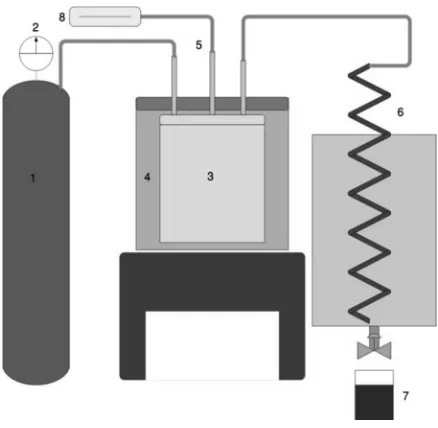
The catalytic pyrolysis experiments were carried out in a semi-batch unstirred stainless steel reactor (6.28 liter) operated at atmospheric pressure with Red Mud catalyst. The catalyst was mixed with the PS sample in a proportion of 15 wt% in all the experiments (15 g of catalyst/100 g of PS sample). The pyrolysis set up is shown in Fig. 1.
In a typical run, 200 g of PS sample were thoroughly mixed with 30 g of Red Mud catalyst and charged into the reactor. The reactor was heated with an electrical furnace at a rate of 5C min−1 to the desired
temperature. The reactor temperature was controlled and monitored by a set of temperature controller and thermocouple. Nitrogen gas flow was maintained at a rate of 1 dm3 min−1 in the reactor in order to have oxygen free atmosphere. The effluent gases were cooled in a condenser unit to separate condensable gases from non-condensable gases. The condensable gases were then collected in the form of liquid for chemical analysis. The solids, liquids and gaseous products were collected after each experimental run and then characterized. 2-4. Characterization methods
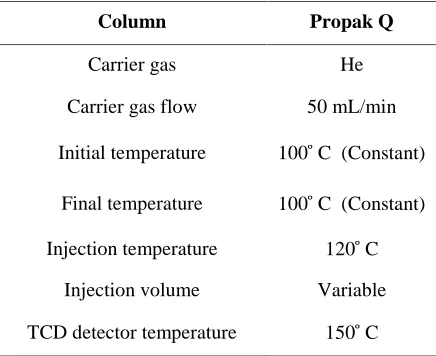
Condensable gases in the form of liquid were analyzed by Agilent 6890 gas chromatography coupled with mass spectrometry detector (GC–MS). The set up parameters are given in Table 2. Agilent 5973 gas chromatograph (Sigma 3B) coupled with thermal conductivity detector (GC-TCD) was used to analyze non condensable gases. The set up parameters are given in Table 3.
Table 2
GC–MS method characteristics.
Column HP5MS
Carrier gas He
Carrier gas flow 1.0 mL/min Initial temperature/initial time 50 ̊ C/2 min Heating rate 10 ̊ C/min
Final temperature/final time 300 ̊ C/10 min Injection temperature 250 ̊ C
Injection volume < 1.0 µL
Detector temperature (quad/source) 150 ̊ C/230C
Table 3
GC–TCD method characteristics.
Column Propak Q
Carrier gas He
Carrier gas flow 50 mL/min
Initial temperature 100 ̊ C (Constant)
Final temperature 100 ̊ C (Constant)
Injection temperature 120 ̊ C
Injection volume Variable
TCD detector temperature 150 ̊ C
The Flash point was determined by Cleveland open cup method ASTM-D92-81. Density and API gravity (ASTM-D-257-82), kinematic viscosity (ASTM-D-445), cloud point (ASTM-D2500-81) and pour point (ASTM-D-97) were also determined according to ASTM standard methods for fuel.
3. Results and discussion
3-1. Thermogravimetric analysis of
polystyrene
Fig. 2 shows polystyrene thermal decomposition weight losses at different temperatures under linear heating rate. This figure shows that the decomposition is gradually started from 175 up to 400C. The
curve shows that maximum weight loss related to volatilization of hydrocarbons occurred between 400 and 450C (99.0%
weight change). The weight change was steep, from 400 to 450C. This shows the
styrene polymer combustion produced excess heat momentarily. The residue weight was 0.02% and was found constant up to 600C.
Figure 2. TGA curve of polystyrene.
3-2. Synthesis of red mud (catalyst)
Fe2O3, Al2O3, TiO2, SiO2 and CaO powders
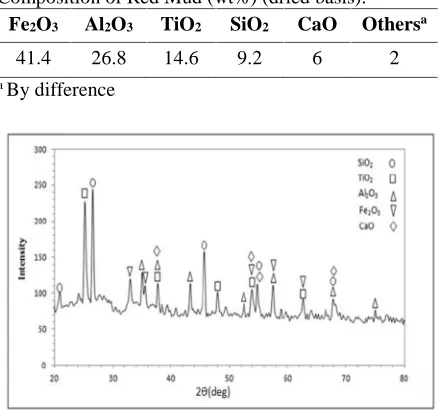
were used as precursors for synthesis of Red Mud. The powders were proportionally mixed in ethanol for 4 h and the slurry was then dried at 100ºC for 1 h. Subsequently, the obtained powder was ground to get fine powder appropriate for catalyst. X-ray diffraction analysis was used for phase analysis of the synthesized Red Mud, using a Cu Ká monochromatized radiation source. Synthesized Red Mud composition is presented in Table 4. As can be seen, it is mainly composed of Fe2O3 and Al2O3 with
other oxides. The XRD pattern of synthesized Red Mud is shown in Fig. 3.
Table 4
Composition of Red Mud (wt%) (dried basis). Fe2O3 Al2O3 TiO2 SiO2 CaO Othersa
41.4 26.8 14.6 9.2 6 2 a By difference
Figure 3. XRD pattern of synthesized Red Mud.
3-3. Pyrolysis yields
The liquid (condensable gases), gas and solid yields (wt%) obtained at the different temperatures are shown in Table 5. The solid yield was almost constant in all the experiments. The gas and liquid yields were strongly influenced by reaction temperature. The ratio of gas to liquid yield was increased at higher temperature. As reaction temperature increased, gas yield was also increased while liquid yield was decreased. This has also been reported by many other authors (e.g. [39–41]). It is attributed to stronger C–C bonds cracking at higher temperatures. This yields higher hydrocarbons with shorter carbon chains. Table 5 shows that a small quantity (0.7-1.0 wt%) of solid products was obtained in all the experimental runs’ although the original
sample did not contain any inorganic matter (char formation). This is attributed to the secondary re-polymerization reactions of polymer products. Char formation in polymeric wastes pyrolysis is a well documented fact that has been reported by many research groups (e.g. [42–47]).
Table 5
Effect of temperature on pyrolysis yields (wt%).
Temperature (C) Liquids Gases Solids
350 93.0 6.0 1.0
400 86.0 13.2 0.8
450 80.0 19.3 0.7
3-4. Pyrolysis liquids
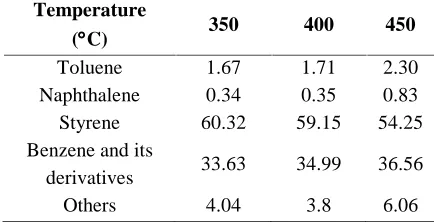
due to the response differences of organic compounds in GC–MS analysis. Table 6 shows that styrene is the most abundant product with percentage areas ranging from 54% to an area of almost 60%. Subsequent abundant products are benzene and its derivatives (33-36% area) and toluene (1.67-2.30% area). As the reaction temperature increased, the styrene % area was decreased while other components % area increased. Broadly speaking, any change in styrene yield is approximately counterbalanced by benzene and toluene yields (aromatic products). Onwudili et al. [11] suggested that benzene and toluene may be formed by the reaction of styrene itself, rather than from the direct degradation of the original sample. This study also proved Onwudili et al’s
suggestion. As seen in Table 6, the proportion of styrene with aromatic compounds changes as the reaction temperature increases. It is also worth noting that styrene yield decreases from 350 to 450 ̊ C which indicates that styrene was formed at lower temperatures and then was decomposed to other chemicals, mainly benzene and toluene. The results obtained by other authors in vatalytic pyrolysis of polystyrene [48, 49] also indicated that the decrease of styrene yield is due to secondary reactions. It is also worth noting that proportion of naphthalene (0.83% area) in the experiment carried out at 450 ̊C, which contributed to the proportions of poly aromatic hydrocarbons (PAH) present in the liquid obtained at this temperature.
3-5. Gas composition
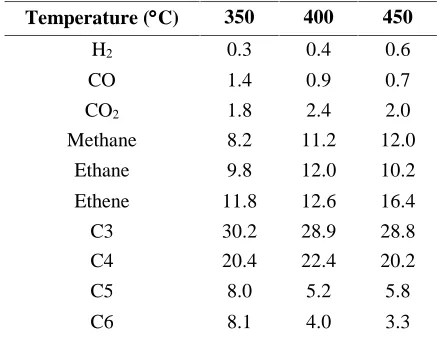
Table 7 shows that pyrolysis gases are composed of hydrocarbons ranging from C1 to C6, hydrogen and some carbon dioxide
and monoxide. It can be seen that percentage area of C1–C3 gases (67.4 wt%) was increased at 450 ̊C as compared to C4–C6 gases (29.3 wt%). Basically, as reaction temperature was increased the percent area of C4–C6 gases was deceased.
Table 6
Main components of the pyrolysis liquids determined by GC–MS (% area).
Temperature
(C)
350 400 450
Toluene 1.67 1.71 2.30
Naphthalene 0.34 0.35 0.83 Styrene 60.32 59.15 54.25 Benzene and its
derivatives 33.63 34.99 36.56
Others 4.04 3.8 6.06
This is in accordance with the stronger cracking that is produced at the highest temperature. This tendency to produce lighter hydrocarbons can be clearly observed in methane and ethylene yields, which vary from 8.2 and 11.8 wt% at 300 ̊C to 12.0 and 16.4 wt% at 450C respectively. This
behavior was also observed by Mastral et al. [50] in the pyrolysis of polyethylene in a fluidized bed reactor. It is also observed from Table 7 that the gases derived from the experiment carried out at 450C produced
more hydrogen than runs carried out at lower temperature. This is attributed to the hydrogen release from aromatic formation reactions which is favored at high temperatures.
3-6. Pyrolysis solids
solids may seem at first sight a useless product of the pyrolysis process. At best, the inorganic material and the catalyst could be recovered and the organic fraction could be used for energy recovery. Bernardo et al. [51, 52] have recently published some works warning about the potential ecotoxicology of pyrolysis derived chars due to their content in heavy metals and organic contaminants. A pretreatment step is suggested to improve the material quality which would probably be necessary prior to their final disposal.
Table 7
GC-TCD analysis (wt%) of pyrolysis gases.
Temperature (C) 350 400 450
H2 0.3 0.4 0.6
CO 1.4 0.9 0.7
CO2 1.8 2.4 2.0
Methane 8.2 11.2 12.0
Ethane 9.8 12.0 10.2
Ethene 11.8 12.6 16.4
C3 30.2 28.9 28.8
C4 20.4 22.4 20.2
C5 8.0 5.2 5.8
C6 8.1 4.0 3.3
3-7. Characterization of obtained liquid from Polystyrene Catalytic Pyrolysis
The obtained liquid from catalytic pyrolysis was characterized as it was without any further processing. The fuel properties like density, specific gravity, API gravity, viscosity, kinematic viscosity, flash point and freezing point of the obtained liquid were measured, as given in Table 8. Also, the standard parameters of gasoline, diesel and kerosene were shown in Table 9 [15]. The density of obtained liquid was about 0.82 g/cm3 which can be classified as kerosene (densities 0.78-0.82 g/cm3) or Diesel (0.834 g/cm3). Specific gravity value of the obtained
liquid was about 0.83, as shown in Table 8. This value falls in the range of diesel specific gravity (0.85). The API gravity value was found to be 39.81 for obtained liquid. This API gravity value is in the range of Kerosene API gravity (39.66-41.7) as shown in Table 8. Viscosity and kinematic viscosity values of obtained liquid were 1.267 centipoises and 1.536 mm2/s respectively. Viscosity value is in the range of kerosene (0.9-1.5 centipoise). The obtained liquid kinematic viscosity value is close to kerosene value. The obtained liquid flash point value was 36C which
corresponds to the gasoline flash point value (20.8-38C). The freezing point value in
Table 8 is -50C which is in close agreement
with kerosene freezing point value.
Table 8
Fuel properties of liquid yield from catalytic pyrolysis of polystyrene sample.
S. no. Parameters Oil derived with
Red Mud catalyst
1 Density (g/cm3) 0.825 2 Specific gravity 0.830
3 API gravity 39.81
4 Viscosity (centipoise) 1.267
5 Kinematic viscosity
(mm2/s) 1.536
6 Flash point (C) 36 7 Freezing point (C) -50
4. Conclusions
Catalytic pyrolysis is an attractive alternative for plastic waste recycling. The reaction conversion was about 90 wt% and reaction yield consists of liquid (condensable gases), gases and solid.
match with kerosene. The density, viscosity, API gravity and freezing point of liquid yield fall in the range of kerosene standard parameters. The specific gravity, kinematic viscosity and flash point of liquid yield was different from standard parameters of kerosene. This shows the obtained liquid can be directly used as a fuel or blend with kerosene or diesel oil.
Table 9
Standard parameters of gasoline, diesel and kerosene oil [19].
S.
no. Parameters Gasoline Diesel Kerosene
1 Density (g/ml)
0.736/0.72
5 0.834
0.780-0.82
2 Specific
gravity 0.70 0.85 0.78
3 API gravity 65 23-30 41.7-39.66
4 Viscosity (centipoise)
0.7750-0.8394
2.0-4.5 0.9-1.5
5
Kinematic viscosity
(mm2/s)
5.0
3.77-5.0 2.2
6 Flash point (C)
20.8-38 55-60 50-55
7 Freezing point (C)
-58 -54 -50
The obtained gases can be redirected to the pyrolysis processes or as a feed for further processing plants.
The use of catalysts significantly improved conversion to 90% at temperature range of 350 to 450C. Red Mud (inexpensive
by-product of aluminum refining industry) showed a noticeable activity in catalytic plastic waste pyrolysis.
As pyrolysis temperature was increased, gas yield was significantly increased at the expense of liquid yields. The optimum temperature was found to be 450C for this
catalytic pyrolysis in terms of both conversion and quality of the pyrolysis liquids. The standard parameters of liquid product were comparable with the standard of kerosene and diesel fuel oil. From the density, API gravity, viscosity and flash point tests it was observed that the liquid obtained can be safely classed as kerosene or blended with kerosene. The specific gravity, density and viscosity values of liquid yield were close to diesel.
It is concluded that catalytic pyrolysis of GPPS leads to valuable resource recovery and reduction of waste problem.
References
[1] Mohammad N. S. and Halim H. R., "Catalytic coprocessing of waste plastics and petroleum residue into liquid fuel oils", J. Anal. Appl. Pyrolysis., 86, 141 (2009). [2] Gonzalez, J. F., Encinar, J. M., Canito, J. L.
and Rodriguez, J. J., “Pyrolysis of
automobile tyre waste, influence of operating variables and kinetics study”, J.
Anal. Appl. Pyrolysis., 58, 667 (2001). [3] Kaminsky, W. and Mennerich, C.,
“Pyrolysis of synthetic tyre rubber in a
fluidized bed reactor to yield 1, 3-butadiene, styrene and carbon black”, J.
Anal. Appl. Pyrolysis., 58, 803 (2001). [4] Jakaband, E. and Blazso, M., “The effect of
carbon black on the thermal decomposition of vinyl polymers”, J. Anal. Appl.
Pyrolysis., 64, 263 (2002).
[5] Ucar, S., Karagoz S., Karayildirim, T. and Yanik, J., "Conversion of polymers to fuels in a refinery stream", Polym. Degrad. Stab., 75 (1), 161 (2002).
[7] Lopez, A., de Marco, I., Caballero, B. M., Laresgoiti, M. F. and Adrados, A., "Influence of time and temperature on pyrolysis of plastic wastes in a semi-batch reactor", Chem. Eng. Jour., 173, 62 (2011). [8] Schirmer, J., Kim, J. S. and Klemm, E., "Catalytic degradation of polyethylene using thermal gravimetric analysis and a cycled-spheres-reactor", J. Anal. Appl. Pyrol., 60, 205 (2001).
[9] Masuda, T., Kushino, T., Matsuda, T., Mukai, S. R., Hashimoto, K. and Yoshida, S. I., "Chemical recycling of mixture of waste plastics using a new reactor system with stirred heat medium particles in steam atmosphere", Chem. Eng., 82, 173 (2001). [10] Aguado, J., Serrano, D. P., Escola, J. M.
and Garagorri, E., "Catalytic conversion of low density polyethylene using a continuous screw kiln reactor", J. Therm. Acta., 55, 392 (2002).
[11] Sakata, Y., Uddin, M. A., Muto, A., Kanada, Y., Koizumi, K. and Murata, K., "Catalytic degradation of polyethylene into fuel oil over mesoporous silica (KFS-16) catalyst", J. Anal. Appl. Pyrol., 65, 185 (2002).
[12] Jalil, P. A., "Investigations on polyethylene degradation into fuel oil over tungstophosphoric acid supported on MCM-41 mesoporous silica", J. Anal. Appl. Pyrol., 65, 196 (2002).
[13] Fernandes, G. J. T., Fernandes, V. J. and Araujo, A. S., "Catalytic degradation of polyethylene over SAPO-37 molecular sieve", J. Catal. Today., 75, 233 (2002). [14] Karagoz, S., Yanik, J., Ucar, S., Saglam,
M. and Song, C., "Catalytic and thermal degradation of high-density polyethylene in vacuum gas oil over non-acidic and acidic catalysts", J. Catal. Today., 75, 257 (2002). [15] Jasmin, Sh., Rasul, J., Fazal, M. and Farah, J., "Catalytic pyrolysis of LDPE leads to valuable resource recovery and reduction of waste problems" Energy Conversion and Management, 51, 2791 (2010).
[16] Kaminsky, W. and Nunez, I. J., "Catalytical and thermal pyrolysis of polyolefins", J. Anal. Appl. Pyrol., 79, 368 (2007).
[17] De Marco, I., Caballero, B. M., Lopez, A., Laresgoiti, M. F., Torres, A. and Chomon, M. J., "Pyrolysis of the rejects of a waste packaging separation and classification plant", J. Anal. Appl. Pyrol., 85, 384 (2009).
[18] Serrano, D. P., Aguado, J. and Escola, J. M., "Catalytic conversion of polystyrene over HMCM-41, HZSM-5 and amorphous SiO2–Al2O3: comparison with thermal cracking", Appl. Catalysis B: Environm., 25,181 (2000).
[19] Aguado, J., Serrano, D. P., San Miguel, G., Escola, J. M. and Rodriguez, J. M., "Catalytic activity of zeolitic and mesostructured catalysts in the cracking of pure and waste polyolefins", J. Anal. Appl. Pyrol., 78, 153 (2007).
[20] Sakata, Y., Uddin, M. A. and Muto, A., "Degradation of polyethylene and polypropylene into fuel oil by using solid acid and non-acid catalysts", J. Anal. Appl. Pyrol., 51, 135 (1999).
[21] Chaianansutcharit, S., Katsutath, R., Chaisuwan, A., Bhaskar, T., Nigo, A., Muto, A. and Sakata, Y., "Catalytic degradation of polyolefins over hexagonal mesoporous silica: Effect of aluminum addition", J. Anal. Appl. Pyrol., 80, 360 (2007).
[22] Akpanudoh, N. S., Gobin, K., Manos, G. and Mol, J., "Catalytic degradation of plastic waste to liquid fuel over commercial cracking catalysts: Effect of polymer to catalyst ratio/acidity content", J. Mol. Catal. A: Chem.., 235, 67 (2005).
[23] Olazar, M., Lopez, G., Amutio, M., Elordi, G., Aguado, R. and Bilbao, J., "Influence of FCC catalyst steaming on HDPE pyrolysis product distribution", J. Anal. Appl. Pyrol., 85, 359 (2009).
Cabrita, I., "Pyrolysis of plastic wastes: 2. Effect of catalyst on product yield", J. Anal. Appl. Pyrol., 51, 57 (1999).
[25] Aguado, J., Serrano, D. P., Escola, J. M. and Peral, A., "Catalytic cracking of polyethylene over zeolite mordenite with enhanced textural properties", J. Anal. Appl. Pyrol., 85, 352 (2009).
[26] Zhou, Q., Lan, W., Du, A., Wang, Y., Yang, J., Wu, Y., Tang, K. and Wang, X., "Lanthania promoted MgO: Simultaneous highly efficient catalytic degradation and dehydrochlorination of polypropylene/ polyvinyl chloride", Appl. Catal. B: Environ., 80, 141 (2008).
[27] Siddiqui, M. N. and Redhwi, H. H., "Pyrolysis of mixed plastics for the recovery of useful products", Fuel Process. Technol., 90, 545 (2009).
[28] Ali, S., Garforht, A. A., Harris, D. H., Lawrence, D. J. and Uemichi, Y., "Polymer waste recycling over “used” catalysts",
Catal. Today., 75, 247 (2002).
[29] Cardona, S. C. and Corma, A., "Tertiary recycling of polypropylene by catalytic cracking in a semibatch stirred reactor: Use of spent equilibrium FCC commercial catalyst", Appl. Catal. B: Environ., 25, 151 (2000).
[30] Sharratt, P. N., Lin, Y. H., Garforth, A. A. and Dweyer, J., "Investigation of the catalytic pyrolysis of high-density polyethylene over a HZSM-5 catalyst in a laboratory fluidized-bed reactor", Ind. Eng. Chem. Res., 36, 5118 (1997).
[31] Murata, K., Hirano, Y., Sakata, Y. and Uddin M. A., "Basic study on a continuous flow reactor for thermal degradation of polymers", J. Anal. Appl. Pyrol., 65, 71 (2002).
[32] Miskolczi, N., Bartha, L., Deak, G. and Jover, B., "Thermal degradation of municipal plastic waste for production of fuel-like hydrocarbons", Polym. Degrad . Stabil., 86, 357 (2004).
[33] Legarreta, J. A., Caballero, B. M., De
Marco, I,. Chomon, M. J. and Uria, P., "Comparison of the effect of catalysts in coal liquefaction with tetralin and coal tar distillates", Fuel, 76, 1309 (1997).
[34] Eamsiri, A., Jackson, R., Pratt, K. C., Chiristov, V. and Marshall, M., "Activated red mud as a catalyst for the hydrogenation of coals and of aromatic compounds", Fuel, 71, 449 (1992).
[35] Llano, J. J., Rosal, R., Sastre, H. and Diez, F. V., "Catalytic hydrogenation of anthracene oil with red mud", Fuel, 73, 688 (1994).
[36] Alvarez, J., Ordonez, S., Rosal, R., Sastre, H. and Diez, F.V., "A new method for enhancing the performance of red mud as a hydrogenation catalyst", Appl. Catal. A: General, 180, 399 (1999).
[37] Yanik, J., Uddin, M. A., Ikeuchi, K. and Sakata, Y., "The catalytic effect of Red Mud on the degradation of poly (vinyl chloride) containing polymer mixture into fuel oil", Polym. Degrad. Stab., 73, 335 (2001).
[38] Karayildirim, T., Yanik, J., Yuksel, M., Saglam, M., Vasile, C. and Bockhorn, H., "The effect of some fillers on PVC degradation", J. Anal. Appl. Pyrol, 75, 112 (2006).
[39] Li, A. M., Li, X. D., Li, S. Q., Ren, Y., Chi, Y., Yan, J. H. and Cen, K. F., "Pyrolysis of solid waste in a rotary kiln: influence of final pyrolysis temperature on the pyrolysis products", J. Anal. Appl. Pyrol. , 50, 149 (1999).
[40] Aguado, J. and Serrano, D. P., "Feedstock Recycling of Plastic Wastes. The Royal Society of Chemistry", Cambridge (UK), (1999).
[41] Hernandez, M. R., Gomez, A., García, A.
[42] Grittner, N., Kaminsky, W. and Obst, G., "Fluid bed pyrolysis of anhydride-hardened epoxy resins and polyether–polyurethane
by the Hamburg process", J. Anal. Appl. Pyrol., 25, 293 (1993).
[43] Williams, E. A. and Williams, P. T., "Analysis of products derived from the fast pyrolysis of plastic wastes". J. Anal. Appl. Pyrol., 40, 347 (1997).
[44] Van Krevelen, D. W. and TeNijenhuis, K., "Properties of Polymers", Elsevier, Amsterdam (Netherlands), (2009).
[45] Buekens, A. G. and Huang, H., "Catalytic plastics cracking for recovery of gasoline range hydrocarbons from municipal plastic wastes", Resources, Conservation and Recycling, 23, 163 (1998).
[46] Salari, D., Niaei , A., Towfighi, J. and Nakhostin Panahi, P., "Coke Inhibition During Naphtha Pyrolysis", Ir. J. Chem. Eng., 6, 12 (2009).
[47] Salari, D., Niaei, A., Towfighi, J., Nakhostin Panahi, P. and Nabavi, R., "Investigation of coke Deposition and Coke inhibition by organosulfur compounds in the pyrolysis of naphtha in the jet stirred reactor system", Ir. J. Chem. Eng., 3, 4051 (2006).
[48] Onwudili, J. A., Insura, N. and Williams, P. T., "Composition of products from the pyrolysis of polyethylene and polystyrene in a closed batch reactor: effects of temperature and residence time', J. Anal. Appl. Pyrol., 86, 293 (2009).
[49] Demirbas, A., "Pyrolysis of municipal plastic wastes for recovery of gasoline range hydrocarbons", J. Anal. Appl. Pyrol., 72, 97 (2004).
[50] Mastral, F. J., Esperanza, E., Garcia, P. and Juste M., "Pyrolysis of high density polyethylene in a fluidised bed reactor. Influence of temperature and residence time", J. Anal. Appl. Pyrol., 63, 1 (2002). [51] Bernardo, M. S., Lapa, N., Barbosa, R.,
Gonçalves, M., Mendes, B. and Pinto, F.,
Gulyurtlu I. "Chemical and ecotoxicological characterization of solid residues produced during the co-pyrolysis of plastics and pine biomass", J. Haz. Mat., 166, 309 (2009).
[52] Bernardo, M. S., Lapa, N., Barbosa, R., Gonçalves, M., Mendes, B. and Pinto, F.,
![Table 9 Standard parameters of gasoline, diesel and kerosene oil [19].](https://thumb-us.123doks.com/thumbv2/123dok_us/8887272.1823186/8.595.71.291.285.524/table-standard-parameters-gasoline-diesel-kerosene-oil.webp)
