Elvira Tarsitano (Correspondence)
[email protected]
+
1Department of Veterinary Medicine, University of Bari, Bari, Italy
Abstract: The succession of great emergencies, with the consequent inevitable interventions in the public veterinary health field, has led our country in this last twenty year period, to pay significant attention to the emergencies bound with the diffusion of pathogenic agents correlated with climate changes and environmental interactions
Keywords: Climatic changes, Biodiversity, Biological cycles, Urban ecosystem
1. Introduction
Factors that have favoured in the last ten years the enlargement of the spectrum and the diffusion of
pathogenic agents and zoonosis include
environmental and climate changes such as the deforestation and the increase in temperature and in trade exchanges; the new intensive farming techniques; the enlargement of species of animal kept for company; the increase in recreational activities in wooded environments. On the basis of these emergencies there are high intrinsic evolutionary capabilities of microorganisms and their dynamics of interactions with man, animals and environment, which may lead to the creation and the rapid occupation of new ecological niches. An important infection rate, considered today emerging or remerging, is the capacity of a microorganism to make the so called “cross the species barrier”, that is to say the passage from a host animal to another and/or to man, represents one of the factors which contribute most to the emergence of a pathogen [6,7,8]. What is considered really important, is the integration of diagnosis, control and monitor activities and research on the most important pathogenic agents, responsible for the epidemic events which have characterized and characterize the public health scenario in the last years [37,38,39]. The bird flu, the SARS Coronavirus, transmissible viruses from arthropod vectors, such as the West Nile encephalitis virus, the Chikunguya virus (recently appeared in Italy) and other viruses which are not present in Italy yet, but widespread in the Balkan Countries (Crimean Congo Hemorragic Fever virus). In Italy, at regional and national level, the research on the evolutionary dynamics of pathogenic agents is at the moment splitted, with divisions working on a lot
of aspects (organisms, host and cycles of
transmission). These barriers have prevented an integrated approach to the research and hindered progresses in the prevention and control of diseases of animal origin. For this purpose, it is necessary to
use adequate diagnostic instruments and monitoring systems based on an integration activity among biological, medical and environmental sectors, in order to favour a continuous and rapid exchange of information about the superiority of different agents and about the characteristics of strains circulating in the different species of animal reservoirs and in the human population [6,7,8]. In the last ten years in Italy it is recorded variations in temperature with an increase of the maximum temperature of about 0.6° in the North and of 0.8 in the South. Precipitation variations with a tendency in all the regions of an increase in the precipitation intensity and a decrease of the duration in terms of rain days. Sea level variation with the recording of an anomaly of the Mediterranean Sea, which does not increase in its level like oceans, it is observed, on one hand, an increase in the evaporation due to the global warming and, on the other hand, due to the reduction in precipitations, a decrease of water contribution of rivers and inland waters with the consequent increase in the salinity of the Mediterranean Sea. Soil quality variation at risk of desertification due to the climatic changes and the impact of human activities which exert a strong anthropic pressure on the territory, so that it is recorded a progressive biodiversity lost. The intensity of certain disasters in areas at risk results amplified and it is the consequence of the changes in the soil erosion due to the impacts of human settlings, with a consequent increase of the destructive strength of the event. Extreme events occur with more frequency and higher intensity. It is calculated that more than 2,6% are areas at risk of flooding and landslides [4,13,15,17,18,24,41,42, 43,50].
The future scenarios for Europe, Italy and regions which overlook on the Mediterranean Basin are not so rosy. Extreme events with falls on the productive,
agricultural, urban and touristic systems.
Displacement toward the North of the natural
Effects of Climate Changes on the Spread of Pathogens: Risk to Biodiversity
http://www.ijSciences.com
Volume 2 - October 2013 (10)
57
biodiversity loss and increase in desertification with repercussions on the whole economic systems and social tissue with an increase of the gap between the North and the South with problems of equity within a local population. The effects of climate changes on health are considerable. Direct impacts on health are due to the heat wave, flood, landslides and strong wind. Indirect impacts, on the contrary, concern the increase in allergic diseases, in transmissible diseases from vectors as described before. Increase water borne diseases to due the rise in inundations and damages of sewers with potable water and sewages contamination. Increases in temperature make record rises in salmonella infections, endemic disease in Italy. The risk of poisoning for algae and cyan bacterium potentially toxic and present in waters in concentrations more abundant, as it is reported by recent news in a lot of Italian regions [16,18,29,49].
2. Effects of climate changes
Climate changes, environmental modifications in urban setting, the globalization, the intensification of trade exchanges and travels are contributing to modify the speed, beyond the dynamics, through which transmissible diseases may spread [24, 34, 36]. The increase in average seasonal temperatures, recorded at a global level, and the numerous situations of environmental deterioration are among the most important causes of the increase of cases of infections transmitted by arthropods to men and animals [9]. In particular, the diffusion of the “tiger
mosquito”(Aedes Albopictus) and other annoying
insects is a problem always more present in our cities as potential cause of new medical emergencies [9]. The risk of diffusion of infectious and parasitic diseases in Italy, included zoonoses, as consequences of the global climate change, has led to the development of a scientific method to identify pathologies that could be correlated to climatic changes and the risks associated to them have been classified. In particular, a predictive system of
climate global changes, with its relative
consequences for the West Europe, has been valued. The countries in the Mediterranean Sea might face high temperatures characterized by insufficient rain precipitations which would cause a change in local vegetation and ecosystems. Those diseases whose evolution might be influenced by climate changes have been found and the epidemiology and the modalities of transmission have been studied [9,27,28,30,31,49].
The global heating may influence in a different way disease transmitted through the air, water and the anthropods going to affect their ecology and
diffusion. For these diseases the possible
epidemiological consequences (probability of
introduction, increase and decrease, medical impact for human beings and pets) and the economical impact in case of animal kept for company or for
animal husbandry income, as well as for all the community. On the contrary, ticks need wetter conditions. Thus, it is necessary to monitor populations of these anthropods and the periodicity of their biological cycles. The recent introduction of vectors and exotic virus in Europe may have determined a change of epidemiology and diffusion of diseases transmitted by arthropods even if their consequences are difficult to predict. Medical and
economical consequences of environmental
modifications, of the introduction of exotic vectors have been estimated for each disease. In addition, the diffusion in space and in time of numerous parasitic anthropod vectors of diseases is continuously
changing as consequence of environmental
modifications, of the introduction of exotic vectors, of climate changes and of the behaviours of society. This phenomenon will likely have a significant impact on health and on animal well being and, in certain cases, on public health. The control of these insects has been historically given to pesticides. On the other side, considerable concerns are linked to the use of pesticides, considering the fact that they may involve problems manage the problem of pathologies transmitted by them [9,10,14,30,33,46)].
It is, indeed, particularly remarkable the vectorial role of some anthropods in the urban environment. In the urban environment flea, tick and mange mite infestations typical of animals and contracted, either in infested places where there are infested animals or for direct contact with them, are frequent. The ectoparasites, are important in that, beyond determining a direct damage, are often biological or passive vectors, bacteria, emoprotozoi, cestodes and nematodes. The pathogen role of the parasitic anthropods is at the same time correlated to processes which they feed with and to some phases of their
biological cycle (passage among different
evolutionary stages, reproductive phase) [12]. Most of the anthropods of health interests, is ematofoga (ticks, fleas, some muscids, mosquitoes, lice), others carry out their pathogen action in that they feed of cells or interstitial liquids of skin(mange mite). Since
beyond the twenty years from its first entrance, Aedes
Effects of Climate Changes on the Spread of Pathogens: Risk to Biodiversity
http://www.ijSciences.com
Volume 2 - October 2013 (10)
58
development. Other mosquitoes in particular the species belonging to the Culex kind, may be vectors
of virus belonging to Flaviviriadae family,
responsible of the West Nile disease. In the autumn 2008 different cases in the province of Ferrara have been recorded. The answer the most efficient to medical risks due to the vectorial role of some anthropods in urban environments, is not only in disinfestations, which does not solve alone the problem, rather in an integration of methods linked together with a prevention which analyzes the basis of the problem and prevents the negative implications; that is to say the transmission of pathologies to man [19,20,21]. Recent studies, besides have emphasized how the environmental interactions and climatic changes, may influence the evolutionary dynamics of Calicivirus in humans and animals. The Calcivirus family includes small virus without envelope of about 35nm of diameter with a RNA genome in a single stranded molecule of about 7.4-8.3kb. the family is divided into 4 types, Vesivirus, Lagovirus, Norovirus and Sapovirus. The members inside each type show an organization of the genome similar to a high homology sequence. The organization of genome of two kinds (Vesivirus and Norovirus), whose genome encodes for 3 open reading frame (ORF) is different from the organization of the genome observable in the Lagovirus, which has only two ORF. The genome of Sapovirus may contain 2 (genogroups GGIIand III) or 3 ORF ( genogroups GGI,IV and V). The type Vesivirus and Lagovirus include pathogen animal
responsible of different patologies, such as
gastroenteritis, vesicular lesions, respiratory
infections, reproductive or hemorrhagic disease. Norovirus and Sapovirus infect mainly man, despite some animal pathogen have been included in these types. Norovirus are the principal cause of epidemic gastroenteritis, not bacteric, in all the world in men of all ages. Vesivirus are only Calcivirus capable to repeat in cell culture, apart from porcine enteric Sapovirus, which has been adapted with success on primary cells and continous line of pig kidney and murine norovirus 1(MNV 1) which provides a model in vitro of cultivation for Norovirus. A lot of Norovirus are definitely of marine origin, but have come out cyclically as pathogens of non marine animals and the best documented case is represented by the swine rash vesicular virus, which is also the prototype of Calcivirus. The ecology for Calcivirus is widely unexplored, but there are a lot of clues that suggest la possibility of transmission of virus among different animal species between animal and man. The infection due to Vesivirus has been documented in man in ore than one occasion and with a great number of clinic forms (encephalitis, hepatitis, myocarditis, pneumonia, miscarriage and dermatitis). Besides, antibodies for vesivirus (san Miguel Seal virus or SMSV and feline calcivirus) and genome sequences SMSV in the blood of donor have been
found. Enteric Calcivirus (Norovirus and Sapovirus) have been identified in swines and in bovines and such viruses are genetically correlated to human calcivirus , while antibodies for bovine norovirus have been identified in man. The Calcivirus evolution is guided by mechanisms of genetic point and recombination variation. The recombination among different calcivirus may generate new viruses, through an exchange of RNA in small nucleotide sequences highly held, in particular at level of junction between the polymerase and the VP1. the recombination is frequent among correlated viruses, that is to say belonging to the same genotype or genetic cluster. Human norovirus GGIIb/Hilversum are an example of calcivirus with a high rate of recombination and may show a variety of capsid genotypes, such as Mexico/1989 (GGII.3), Snow Montain/1976 (GGII.2), Haway/1971 (GGII.1) and Lordsdale/1993 (GGII.4), inside the genogroup GGII. But, the recombination may take place among viruses not genetically correlated. Human sapovirus of genogroup GGIV, SW278 and Ehimel 1107, are likely the result of inter-genogroup recombination between human sapovirus GGII and animal sapovirus GGIV. The man may be exposed to infection of calcivirus after an environmental contamination or food contamination. The infections of food origin are the principle cause of disease and hospitalization in man’s world. Calciviris are capable to persist in the environment and in the mollusc tissues. Human norovirus have been repeatedly implicated in hotbeds bound with the consume of raw molluscs. Both human and animal calcivirus may be concentrated and be infected in molluscs. The presence at the same time of human enteric and animal calcivirus in food represents a conjunction ring extremely favourable to give rise, through infection/co-infection, to the appearance of new viruses thanks to mechanisms of recombination. The molecular study of calcivirus is important to understand the ecology of these viruses in the different animal species and in man [11,22].
In the last years it has been pointed out how climatic
changes and environmental interactions may
Effects of Climate Changes on the Spread of Pathogens: Risk to Biodiversity
http://www.ijSciences.com
Volume 2 - October 2013 (10)
59
overlap with nutritional, water deficiencies, little cultivation and aeration. The urban green areas and avenues have become points of reference for all friends of the “lonely man of cities”, that are pats. It is not by chance that here there are their excrements, colonized immediately by diptera and other insects. In the same environments it is found stagnant water of small lakes and fountains, which constitute permanent hotbeds of mosquitoes, creating, in this way, inevitable interconnections between public green and public health. The condition of tree weakness or malaise favours groups of insects’ attacks which accelerate the deterioration or the condition of malaise making them an easy prey of fungi or corticicoli insects. On the contrary, plants in good health conditions are more vigorous and, passed the initial adaptation phase, resist to removals of a great quantity of green organs and/or sap. It is necessary to maintain them, as far as possible, in the best conditions. What is apparently extremely easy, requires a great experience and a lot knowledges and it is conditioned by the choice of species and suitable varieties, made when the implantation is installed. To make a list of species detrimental for trees of the parks and city avenues would not be useful. Indeed, today also for the public green it is necessary to consider how those pests, which result for a determined area and at a certain level “key species”, are really detrimental. Species bound with plants to which in the field of natural population floatings, provide damages worse than others and whose control requires repeated interventions. Arboreal plants in cities have important tasks such as climatic-environmental regulation, attenuation of noises and dust and gas intercepts. These plants are often subjected to pests among which there are a lot of species of Lepidoptera, insects known to the most part of people above all for their beauty and colours, that can be related to butterflies. Green areas in bad vegetation and agronomic conditions are easily attacked by pests against which, because of intense plant attacks and public health dangerousness, are necessary frequent antiparasitic interventions. Today the Public Administration and private citizens face the problem in two different ways, which not always are correct: either they kill the specimen already dead or considered dangerous, or they use chemical products in a more or less random way. Chemical interventions, which do not solve the problem, may be detrimental, with the consequent impoverishment of an ecosystem already vulnerable. Thus, in the urban area, in virtue of problems deriving from the protection of public health, it would be necessary that there was an integrated control of detrimental species
together with a constant monitoring.
Phytopathological plant problems in urban
environments have to be analysed in a wider context and their control has to consider all the aspects which condition the efficiency. Green care spaces and their use , the growth of sensitivity to respect the “things
of nature” will lead to an improvement of plants and animals and man [45,47,48].
The environmental interactions and modifications connected with them are responsible for a series of pathologies due to conditioning processes and have a negative influence on the Immunitary System. It represents a bulwark for infections of different origin. Its capacity and competence are essential to protect from viral infections. It offers a wide range of answers to these pathogens aiming at eliminating the pathogen from the body and developing a specific memory capable to protect our body in amore efficient way. Pathologies are numerous and are divide into infectious, parasitic and not infectious. For years it has been a common knowledge that stress may modify the immunitary condition. Recently the mechanisms trough which stress, of social and
psychological or physical-environmental type,
modify the immunity have been studied. A series of researches on this topic has led to important interpretative hypothesis. In particular, it is stated the it is necessary to distinguish these following conditions: Stress due to physical- environmental conditions, and the consequent activation of the hormonal system and specifically of the hypophisis-adrenal axis. In this kind of stress it is involved the nervous system together with a specialised network of neuro-endocrine mediators and above all of catecholamine. The effects sometimes may be also salutary. Stress due to social and psychic conditions , and the consequent activation of the hypophisis – adrenal cortical axis and glucocorticoid production and immunosuppressive effects. Acute stress during which mechanisms of reactions take place. Chronic stress during which there are phenomena of resistance (adaptation) and collapse (breakdown). In concrete situations the first two types of stress (physical- environmental and social and psychic) interweave. Between acute stress and chronic one, phases of transition exist and during chronic stress it is possible to have acute phases [1].
In animals during stress conditions, there are complex activations and retroactions, which concern not only the hormonal system and the nervous one, both correlated and interdependent. One of the most emerging aspect for pathologies due to conditioning situations is that of Infectious Immune Circuits caused by stress. For instance, an animal infected by a latent infection of Herpes virus, a situation of stress may lead to the reactivation of the viral infection which causes an aggression to the Immunitary
System together with the induction of
Effects of Climate Changes on the Spread of Pathogens: Risk to Biodiversity
http://www.ijSciences.com
Volume 2 - October 2013 (10)
60
situations, difficult [1,47,48].
3.Conclusions
Scenarios on the impact of climate changes on health are evident : the era of disease caused by climate changes is arrived and the effects on health are very complex. The environmental interactions , the delicate mechanism of evolutionary dynamics of pathogen agents have been described as well as it has been touched on the role played by stress on the Immunitary System. These effects seem to be negative on health. This means that in a short period, the Health systems will have to adopt measures which allow an adequate adaptation. In a long period, health may protected only maintaining the integrity of ecosystems and in the prevention and control activities the draft of guide lines to minimize risks are necessary. Methodologies for health integrated plannings have to plan: risk analysis; innervations to control the environmental quality; applications of auto control systems; adhesion to programs of healthy cities; the implementation of Agenda 21 processes. The consequent approach is of an efficient integration of operative structures which have to face problems, public services of prevention, Health Care, departments ISPRA; local authority.; research authority. The methodology has to be that of planning for objectives with planning, programming, execution and check of interventions with indicators of efficiency and efficacy which have not to regardless from the improvement of the inter professional
collaboration between medical operators and
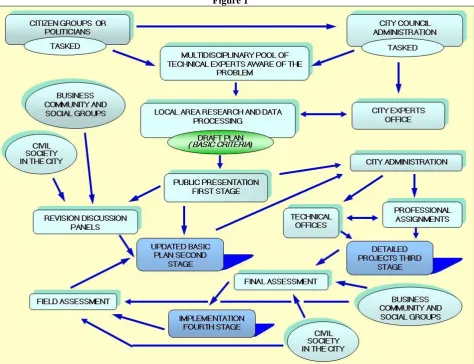
operators of the sector [3,32,48]. One of the primary objective of the experts of urban ecology, urban hygiene, pest management is that to provide information that the political and administration community may use to control and manage environmental and health risks produced by an anthropic activity. One of the major difficulty in the application of these criteria consists in the overcoming of language barriers among disciplines so different. The expert has to learn to produce results that may be understood and properly used at different level. Objective evaluation criteria of the potential risks about health problems have to be analyse din general terms until to arrive to details. A major level of protection of public health is obtained considering the ancient logicity according to which when a pathology appears, the etiological and pathogenic aspects are privileged over those of Public Health [32,48]. It is paid major attention to disease and overlook the general aspects which has determined the coming, different aspects should not be considered singularly, but integrate each other. The formulation of adequate criteria of indicators should be based on a set of data to which should be applied “factors of security” which allow the extrapolation of experimental values at a level considered protective for the environment and public health. The strategy proposed to face problems here described is that of a
kind of control “Integrated - Partecipatory” (Figure 1). The integrated and participatory planning is the newest instrument of planning tool and organisation of all human interventions on a mixed territorial area: Urban and extra urban. Basic element is the detailed analysis of territory of material and energy fluxes which cross it, in order to define the general renovation and reconversion of territory itself, under all the aspects: social, productive, infrastructural, housing and environmental, in an integrated and participated way [47,48]. For “integrated” is meant that the control of a system is faced in its complexity, in order to consider a re-harmonization of all components respecting all the environmental and socio-cultural balance. For “participatory” is meant a planning which considers an intensive and active collaboration of social, productive strength of all citizens. The plan is not only the result of experts, but it develops with the full participation of citizens and
it is subjected to testing, modifications
rearrangements. Healthy Information has to be detailed and aiming at a complete divulgation on potential risks connected with climate changes, often connected with bad habits and lack of information. A strict collaboration between local health authorities and would be useful in prevention and control activities. An active and rapid preservation system which allows to find promptly epidemic hotbeds, is essential to monitor the potential risk linked to environmental interactions and climate changes. Thus, the objective has to be promote the preservation, valorisation a very good allocation of territorial resources, intended as single entities or as complex balance. The economic development has to be compatible with the charge capacity of the planet ecosystems and harmonic with the objectives of a democratic and fair society. The protection of the cultural and historical identity, the preservation of the landscape quality, of its environmental components and its social and productive use, within the principle of a lasting development and less unsustainable are
possible for a self-sustainable development
[25,26,47,48]. The climate is changing now. The saying has to be: act now in order to prevent and mitigate.
References
1) Ballarini, G. 2003. [Pathologies conditioning in urban setting]. In [Urban Parasitology: Cities, animals and public health] (V. Puccini & E. Tarsitano, eds). Il Sole 24 ORE Edagricole, Bologna, Italy, 37-39.
2) Bradley C.A.& Altizer S. 2007. Urbanization and the ecology of wildlife diseases. Trends. Ecol. Evol., 22, 95-102. 3) Burger, J. 2002. Restoration, stewardship, environmental health, and policy: understanding stakeholders' perceptions. Environ. Manage30, 631-640.
4) Burger J., Myers O., Boring C.S., Dixon C., Jeitner, J.C., Leonard J., Lord C., McMahon M., Ramos R., Shukla S. & Gochfeld, M. 2003. Perceptual indicators of environmental health, future land use, and stewardship. Environ. Monit. Assess. 89, 285-303.
Effects of Climate Changes on the Spread of Pathogens: Risk to Biodiversity
http://www.ijSciences.com
Volume 2 - October 2013 (10)
61
carriers and spreaders of Cryptococcus neoformans and other zoonotic yeasts.. Med Mycol., 44 (6), 485-492.
6) Childs J. E. 2004. Zoonotic viruses of wildlife: hither from yon. Arch. Virol. Suppl. 18, 1-11.
7) Childs J.E., Richt J.A. & Mackenzie, J.S. 2007. Introduction: conceptualizing and partitioning the emergence process of zoonotic viruses from wildlife to humans. Curr. Top. Microbiol. Immunol., 315, 1-31.
8) Cleaveland S., Haydon D.T.& Taylor, D. 2007. Overviews of pathogen emergence: which pathogens emerge, when and why? Curr. Top. Microbiol. Immunol., 315, 85-111. 9) Colwell D.D., Dantas-Torres F. & Otranto D. 2011. Vector-borne parasitic zoonoses: Emerging scenarios and new perspectives. Vet. Parasitol., 182 (1), 14-21.
10) Dantas-Torres F., Figueredo L.A. & Otranto D. 2011. Seasonal varation in the effect of climate on the biology of
Rhipicephalus sanguineus in southern Europe. Parasitol., 138 (4), 527-536.
11) De Martino B., Di Profio F., Ceci C. & Marsilio F. 2011. Evidence for recombination in neboviruses. 153 (3-4), 367-372.
12) Genchi C., Rinaldi L., Mortasino M., Genchi M. & Cringoli G. 2009. Climate and Dirofilaria infection in Europe. Vet. Parasitol., 163, 286–292
13) González C O., Wang S.E., Strutz C., González-Salazar V., Sánchez-Cordero S. & Sarkar S. 2010. Climate change and risk of leishmaniasis in North America: predictions from ecological niche models of vector and reservoir species. PLoS Negl. Trop. Dis., 4, 585.
14) Hales S., de Wet N., Maindonald J. & Woodward A. 2002. Potential effect of population and climate changes on global distribution of dengue fever: an empirical model. Lancet,360, 830-834.
15) Hancock T. 2002. Indicators of environmental health in the urban setting. Can. J. Public Healt,93, 45-51.
16) Jardine C. 2003. Risk management frameworks for human health and environmental risks. J Toxicol. Environ. Health B Crit. Rev.,6, 569-720.
17) Jardine C., Hrudey S., Shortreed J., Craig L., Krewski, D., Furgal C. & McColl S. 2003. Risk management frameworks for human health and environmental risks. J. Toxicol. Environ. Health B Crit. Rev., 6, 569-720.
18) Khasnis A.A. & Nettleman M.D. 2005. Global warming and infectious disease. Arch. Med. Res., 36, 689-696.
19) Kleine-Tebbe J., Heinatz A., Graser I., Dautel H., Hansen G.N., Kespohl S.,. Rihs H.P, Raulf-Heimsoth H.P., Vater M. G., Rytter M. and Haustein UF. 2006. Bites of the European pigeon tick (Argas reflexus): Risk of IgE-mediated sensitizations and anaphylactic reactions. J. Allergy Clin. Immunol., 117, 190-195.
20) Kulasekera V. L. 2001. West Nile virus infection in mosquitoes, birds, horses, and humans, Staten Island, New York, 2000. Emerg. Infect. Dis.7, 722-725.
21) Marfin A. A. & Gubler D. J. 2001. West Nile encephalitis: an emerging disease in the United States. Clin. Infect. Dis.33, 1713-1719.
22) Martella V., Decaro N., Lorusso E., Radogna A., Moschidou P., Amorisco F., Lucente MS., Desario C., Mari V., Elia G., Banyai K., Carmichael LE. & Buonavoglia C. 2009. Genetic heterogeneity and recombination in canine noroviruses. J. Virol., 83
(21), 11391-11396.
23) May P. H., Dabbs A. W., Fernandez-Davila P., Da Vinha V. & Zaidenweber N. 2002. A corporate approach to social monitoring and assessment for development in a fragile environment. Environ. Monit. Assess., 76, 125-134.
24) May R.M & Anderson R. M. 1979. Population biology of infectious diseases: Part II. Nature,280, 455-461.
25) McCool S.F. & Stankey G. 2004. H. Indicators of Sustainability: Challenges and Opportunities at the Interface of Science and Policy. Environ. Manage,33, 294-305.
26) McDowell N. 2002.Ecological footprint forecasts face sceptical challenge. Nature, 419, 656.
27) McMichael A.J. & Beaglehole R. 2000. The changing global context of public health. Lancet,356, 495-499.
28) Parr T. W., Sier A.R., Battarbee R.W., Mackay A. &
Burgess J. 2003. Detecting environmental change: science and society-perspectives on long-term research and monitoring in the 21st century. Sci Total Environ., 310, 1-8.
29) Perlino E. & Tarsitano E. 2011. Water, cancer and public health. In An International Forum for Research and Debate on Human Settlements (D. Borri & L. Grassini, eds). Antinomos, June 2011. Plurimondi Press, IV (8), 189-199.
30) Petney T.N. 2001. Environmental, cultural and social changes and their influence on parasite infections. Int J Parasitol.,
31, 919-932.
31) Poglayen G. 2003. [Zoonoses by environmental faecalization]. In [Urban Parasitology: Cities, animals and public health] (V. Puccini & E. Tarsitano, eds). Il Sole 24 ORE Edagricole, Bologna, Italy, 110-117.
32) Puccini V. & Tarsitano, E. 2003. [Introduction to Urban Parasitology]. In [Urban Parasitology: Cities, animals and public health] (V. Puccini & E. Tarsitano, eds). Il Sole 24 ORE Edagricole, Bologna, Italy,1-13.
33) Reperant L.A., 2010. Applying the theory of island biogeography to emerging pathogens: toward predicting the sources of future emerging zoonotic and vector-borne diseases.
Vector Borne Zoonotic Dis., 10, 105–110.
34) Rodrigues A. S. 2004. Effectiveness of the global protected area network in representing species diversity. Nature,
428, 640-643.
35) Romi R. & Majori G. 2008. An overview of the lesson learned in almost 20 years of fight against the tiger mosquito.
Parassitologia, 50, 117–119.
36) Rosenthal J. 2009. Climate change and the geographic distribution of infectious diseases. Ecohealth, 6, 489–495. 37) Sachs J. D. 2004. Sustainable development. Science,
304, 649.
38) Sala O. E. 2000. Global biodiversity scenarios for the year 2100. Science,287, 1770-1774.
39) Schmidt C.W. 2002. The down-to-earth summit-lessening our ecological footprint. Environ. Health. Perspect,110, 682-685.
40) Spiewak R., Lundberg M., Johansson G. & Buczek A. 2006. Allergy to pigeon tick (Argas reflexus) in Upper Silesia.
Poland. Ann. Agric. Environ. Med., 13, 107-112.
41) Sutherst R.W. 2001. The vulnerability of animal and human health to parasites under global change. Int J Parasitol.,31, 933-948.
42) Sutherst R.W. 2004. Global change and human vulnerability to vector-borne diseases. Clin. Microbiol. Rev., 17, 136-173.
43) Tabachnick W.J. 2010. Challenges in predicting climate and environmental effects on vector-borne disease episystems in a changing world. J. Exp. Biol., 213, 946-954.
44) Tampieri M.P. 2006. Mycetes and urban areas.
Parassitologia, 48, 121-124.
45) Tarsitano E. & Bottalico A. 2001. Pianificazione del verde urbano e prevenzione dello sviluppo della fauna sinantropica.
In “La Regolamentazione del verde urbano”. Proc. Symposium, Bari, 28 Settembre, 2001. Facoltà di Agraria, Università di Bari Press, 20-21.
46) Tarsitano E. 2003. [Urban Ecosystem]. In [Urban Parasitology: Cities, animals and public health] (V. Puccini & E. Tarsitano, eds). Il Sole 24 ORE Edagricole, Bologna, Italy, 21-36. 47) Tarsitano E. 2003 [Management, prevention and integrated control of urban parassitosis]. In [Urban Parasitology: Cities, animals and public health] (V. Puccini & E. Tarsitano, eds). Il Sole 24 ORE Edagricole, Bologna, Italy, 331-341.
48) Tarsitano E. 2006. Interaction between the environment and animals in urban settings: Integrated and Participatory Planning. Environ. Man., 38, 799-809.
49) Tarsitano E., Greco G., Decaro N., Nicassio F., Lucente M. S., Buonavoglia C. & Tempesta M. 2010. Environmental Monitoring and Analysis of Faecal Contamination in an Urban Setting in the City of Bari (Apulia Region, Italy): Health and Hygiene implications. Int. J. Environ. Res. Public Health,7, 3972-3986.
Effects of Climate Changes on the Spread of Pathogens: Risk to Biodiversity
http://www.ijSciences.com
Volume 2 - October 2013 (10)
62
Figure 1
Brief history of integrated-participatory planning
The aim of integrated-participatory planning is to understand and protect the natural environment which is so vital to the maintenance of life; to protect the quality of life in cities. It follows that the basis for planning must be the ability for life to maintain itself. Cities are true ‘organisms’ and as such they form part of a more complex system, the surrounding or catchment area. As organisms, cities can be studied from a methodological point of view in terms of their growth mechanisms, their transformation and their decline by making use of an innovative approach as a discipline. The principles of the development and growth of an ecosystem can be applied to planning, i.e., the principles can be applied to the establishment of a rational regional planning policy. Appropriate strategies must be chosen to combat environmental deterioration, by planning and applying rules governing human settlements both inside cities and outside them which will themselves generate a new and lasting environmental equilibrium [47,48].