20
Copyright © 2018. IJEMR. All Rights Reserved.
Volume-8, Issue-1 February 2018
International Journal of Engineering and Management Research
Page Number: 20-24
Study of Solar System with Possible Modification to Increase the
Efficiency of PV Panel
Aishwarya Sharma1, Namish Mehta2 and Nilesh Diwakar3
1M.E. Scholar, Thermal Engineering,Truba Institute of Engineering and Information Technology, Bhopal, (M.P.), INDIA 2
Professor and Head, Department of Mechanical Engineering, Truba Institute of Engineering and Information Technology, Bhopal, (M.P.), INDIA
3Principal, Truba College of Science and Technology, (M.P.), INDIA
1
Corresponding Author:[email protected]
ABSTRACT
The present research paper work has been undertaken to study the feasibility, stability and commercial analysis of storing solar energy and using fins for reducing the PV Panel temperature as much as possible to increase the power generation and efficiency. PV cells convert a certain wavelength of the incoming irradiation that contributes to the direct conversion of light into electricity, while the rest is dissipated as heat. Only 15-20% of incident solar energy is converted into electricity. The remaining part of the solar energy is converted into heat, which causes heating of the solar cell in PV panels. The surface of the PV panels can be heated up to 40 °C above ambient temperature. Increasing the temperature of the solar cell causes drop of the electrical efficiency of a photovoltaic panel, Conversation efficiency of PV panel decreased by 0.4% to 0.65% for every increased degree of PV cells temperature.
Keywords— Solar energy, Heat-transfer, photovoltaic, fins, efficiency
I.
INTRODUCTION
Cooling of photovoltaic cells is one of the main concerns when designing concentrating photovoltaic systems. Cells may experience both short-term (efficiency loss) and long-term (irreversible damage) degradation due to excess temperatures. Design considerations for cooling systems include low and uniform cell temperatures, system reliability, sufficient capacity for dealing with „worst case scenarios‟, and minimal power consumption by the system. Solar cell performance decreases with increasing temperature, fundamentally owing to increased internal carrier recombination rates, caused by increased carrier
concentrations. The operating temperature plays a key role in the photovoltaic conversion process. Both the electrical efficiency and the power output of a photovoltaic (PV) module depend linearly on the operating temperature. The various correlations proposed in the literature represent simplified working equations which can be apply to PV modules or PV arrays mounted on free-standing frames, PV-Thermal collectors, and building integrated photovoltaic arrays, respectively. The electrical performance is primarily influenced by the material of PV used.
21
Copyright © 2018. IJEMR. All Rights Reserved.
determine the thermal response time have used indoor measurements, controlling the wind flow over the surface of the panel with fans or conducting the experiments in darkness to avoid radiative heat loss effects. In real operating conditions, the effective PV panel temperature is subjected to randomly varying ambient temperature and fluctuating wind speeds and directions; parameters that are not replicated in controlled, indoor experiments. A new thermal model is proposed that incorporates atmospheric conditions; effects of PV panel material composition and mounting structure, Effect of temperature on the power drop in crystalline silicon solar cells. The influence of temperature and wavelength on electrical parameters of crystalline silicon solar cell and a solar module are presented. At the experimental stand a thick copper plate protected the solar cell from overheating, the plate working as a radiation heat sink, or also as the cell temperature stabilizer during heating it up to 80°C. A decrease of the output power (−0.65%/K), of the fill-factor (−0.2%/K) and of the conversion efficiency (−0.08%/K) of the PV module with the temperature increase has been observe
The electrical efficiency of a photovoltaic system drops as its operating temperature rises and PV cooling is necessary. . In the present work, air cooling of a commercial PV module configured as PV/T air solar collector by natural flow is presented, where two low cost modification techniques to enhance heat transfer to air stream in the air channel are studied. The considered methods consist of thin metal sheet suspended at the middle or fins attached to the back wall of the air-channel to improve heat extraction from the module.Fin‟s attached to the back wall of the air-channel to improve heat extraction from the module. A numerical model was developed and validated against the experimental data obtained from outdoor test campaigns for both glazed and unglazed PV/T prototype models studied. The validation results show good agreement between predicted values and measured data and thus could be used to study analytically the performance of these PV/T air collectors with respect to several design and operating parameters. The modified systems present better performance than the usual type and will contribute to better performance of integrated PV systems for natural ventilation applications in buildings, both space cooling and heating..
II.
REVIEW OF HYBRID PVT SYSTEM
WITH FINS COMPARATIVE STUDY
Heat transfer by convection between a surface and the fluid surrounding can be increased by attaching to the surface thin metallic strips called Fins. The heat conducting through solids, walls or boundaries has to be continuously dissipated to the surrounding or environment to maintain the system in a steady state condition. In many engineering applications large quantities of heat need to be dissipated from small area. The fins increase the effective
area of the surface there by increasing the heat transfer by convection. The fin is generally used when the convection heat transfer coefficient is low, especially under free convection. In the field of industry the fin is used widely, for instance, in cooling of electronic accessories, motorcycle engine and in air cooling of molecules with in a material.
Types of fins
1) Rectangular fin 2) Triangular fin 3) Cylindrical fin 4) Trapezoidal fin 5) parabolic fin
TABLE I Properties of Aluminum S. No. Property Value 1 Atomic Number 13 2 Atomic Weight
(g/mol)
26.98
3 Valency 3
4 Crystal Structure FCC 5 Melting Point
(°C)
660.2
6 Boiling Point (°C)
2480
7 Mean Specific Heat (0-100°C) (cal/g.°C)
0.219
8 Thermal
Conductivity (0-100°C) (cal/cms. °C)
0.57
9 Co-Efficient of Linear Expansion (0-100°C) (x10-6/°C)
23.5
10 Electrical
Resistivity at 20°C (Ω.cm)
2.69
11 Density (g/cm3) 2.6898
12 Modulus of
Elasticity (GPa)
68.3
13 Poisson Ratio 0.34
22
Copyright © 2018. IJEMR. All Rights Reserved.
investigated experimentally. Longitudinal fins were used inferior the absorber plate to increase the heat exchange and render the flow fluid in the channel uniform. The effect of mass flow rate of air on the outlet temperature, the heat transfer in the thickness of the solar collector, and the thermal efficiency were studied. Experiments were performed for two air mass flow rates of 0.012 and 0.016 kg s_1. Moreover, the maximum efficiency values obtained for the 0.012 and 0.016 kg s_1 with and without fins were 40.02%, 51.50% and 34.92%, 43.94%, respectively. A comparison of the results of the mass flow rates by solar collector with and without fins shows a substantial enhancement in the thermal efficiency. Longitudinal fins for an absorber plate have to be created to in order to increase; heat exchange surface, outlet temperature, and thermal efficiency. Increases in the mass flow rates affect the temperature of the bottom plate and the temperature of an absorber plate by rates between 4 and 6 0C, for the solar air collector without using fins and with using fins. The efficiency of the type with fins is found to be higher than the type without using fins by rates of 5.1% and 5.83%, respectively; the mass flow rates of 0.012 and 0.016 kg s_1. The maximum thermal efficiency values obtained were 34.4% and 50.33%.
III.
PROBLEM STATEMENT AND
GAPS IN RESEARCH
The main problem is overheating of the panel which decreases the performance of system. Our work will continue to make the better idea for integrated technology to build hybrid PVT System which can be easily operate in lower temperature also with good efficiency in both aspects as power output as well as hot water that is thermal energy output. The technical prediction and approach is determined from literature study and research papers, this analysis is mainly proposed for Indian climatic conditions. The main problem is overheating of the panel which decreases the performance of system. Our work will continue to make the better idea for integrated technology to build hybrid PVT System which can be easily operate in lower temperature also with good efficiency in both aspects as power output.
IV.
METHODOLOGY AND PLAN FOR
PROPOSED SYSTEM
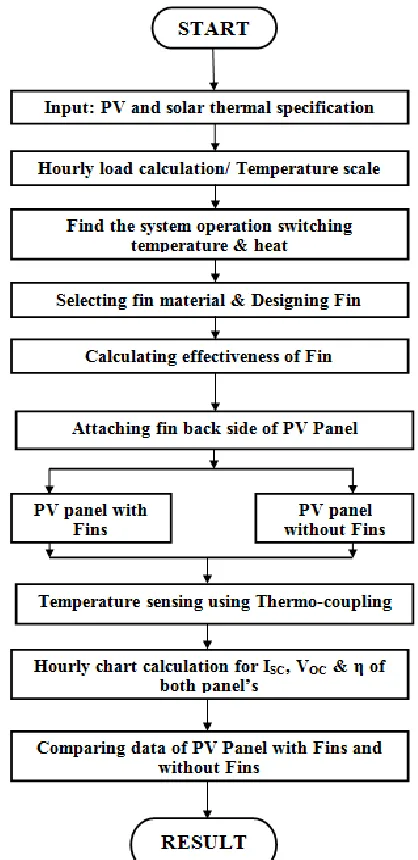
Figure 1: Flow chart for the project operation
23
Copyright © 2018. IJEMR. All Rights Reserved.
the system efficient fin is cooled through the ambient air, heat gained by the fin from the solar panel is transfer to the ambient
V.
PRIOR APPROACH
The review covers the description of flat plate and concentrating, water and air PV/T collector types, analytical and numerical models, simulation and experimental work and qualitative evaluation of thermal/electrical output. The parameters affecting PV/T performance, such as covered versus uncovered PV/T collectors, optimum mass flow rate, absorber plate parameters (i.e. tube spacing, tube diameter, fin thickness), and absorber to fluid thermal conductance and configuration design types are extensively discussed. Based on an exergy analysis, it was reported that the coverless PV/T collector produces the largest available total (electrical + thermal) exergy. From the literature review, it is clear that PV/T collectors are very promising devices and further work should be carried out aiming at improving their efficiency and reducing their cost, making them more competitive and thus aid towards global expansion and utilization of this environmentally friendly renewable energy device.
VI.
PROPOSED MODEL & APPROACH
FOR EFFICIENCY IMPROVEMENT
In present study a model using the solar power cells and panels (poly-crystalline) is proposed. Since solar cells were first developed in 1954, there has been enormous effort put into increasing their efficiency, developing new types of solar cells, and reducing the cost of manufacturing cells. The solar cells start losing their efficiency, when they are subjected to sunlight for long hours, as the temperature of the solar panel increases, there is a reduction in power output. The PV system and solar panels is effective tool for it. We utilize the fins to reduce the excessive heating of solar cells (poly-crystalline) and the analysis is carried out for poly-crystalline panel. This may of optimum utilization of easily available solar energy can bring a revolution in the lives of the people. Polycrystalline silicon, also called poly-silicon, is a material consisting of small silicon crystals. It differs from single-crystal silicon, used for electronics and solar cells, and from amorphous silicon, used for thin film devices and solar cells. Polycrystalline is composed of a smaller crystals or crystallite. Polycrystalline silicon (or semi-crystalline silicon, poly-silicon, Poly-Si, or simply “poly”) is a material consisting of multiple small silicon crystals. Polycrystalline cells can be recognized by a visible grain, a “metal flake effect”. Semiconductor grade (also solar grade) polycrystalline silicon is converted to "single crystal" silicon – meaning that the randomly associated
crystallites of silicon in "polycrystalline silicon" are converted to a large "single" crystal. Single crystal silicon is used to manufacture most Si-based microelectronic devices.
Modification in existing solar panel
An increase in temperature causes reduction in band gap which in turn, causes some increase in photo-generation rate and thus a marginal increase in current. . Due to this, the cell voltage decreases by approximately 2.2mV per °C rise in operating temperature, depending on the resistivity of the silicon used –higher the silicon resistivity, more marked is the temperature effect. Also, the fill factor decreases slightly with temperature. Hence the efficiency of the solar panel starts decreasing as the temperature increases. There is a need to manufacture solar panel according to the climate condition or certain measures has to be taken for improving the efficiency of the European manufactured solar panels that can also works efficiently in our country.
Measure taken by us is for a 240 watt polycrystalline solar panel. The panel‟s back portion is attached with number of extended surface which is also known as fins which takes away the heat generated within the solar panel as the temperature increases which will helps in maintaining the temperature well within the limit. It is not necessary that the temperature of the panel is maintained with this because as the temperature of the ambient atmosphere is about 30oC which is normal temperature for the Indian climate, the solar panel temperature will be about 43-47 °C. The point to be noted is that for summer condition the ambient temperature is about 45-47oC in some parts of our country which is more important issue for which the work is to be carried out. The solar plant working in the summer condition the panel temperature is round about 62-70oC at which the fins are transfer to the excess amount of heat to the ambient. To keep plant working efficiently in this season it is necessary to cool the solar panel by providing some cooling arrangement such as the extended surface from the panel which helps to maintain the temperature of the panel.
VII. RESULT AND CONCLUSION
24
Copyright © 2018. IJEMR. All Rights Reserved.
REFERENCES
[1] Sanaz Ghazi, & Kenneth. (2014). The effect of weather conditions on the efficiency of PV panels in the southeast
of UK. Available at:
http://dx.doi.org/10.1016/j.renene.2014.03.018.
[2] K. Srinivasan, R Anandalakshmi, & T Bhattacharyya. (2016). Heat Transfer Analysis on Finned Plate Air Heating Solar Collector. Available at: doi: 10.1016/j.egypro.2017.03.086.
[3] Elias Roumpakias & Olympia Zogou. (2014). Correlation of actual efficiency of photovoltaic panels with air mass. Available at: http://dx.doi.org/10.1016/j.renene.2014.07.051.
[4] Foued Chabane, Noureddine Moummi, & Said Benramache. (2014). Experimental study of heat transfer and thermal performance with longitudinal fins of solar air heater, Algeria. Available at:
http://dx.doi.org/10.1016/j.jare.2013.03.001.
[5] Ebru Kavak Akpina & FatihKoçyiğit. (2010). Experimental investigation of thermal performance of solar air heater having different obstacles on absorber
plates. Available at:
https://doi.org/10.1016/j.icheatmasstransfer.2009.11.007. [6] Ben Slama Romdhane. (2007). The air solar collectors: Comparative study, introduction of baffles to favour the heat transfer. Tunisia. Available at: https://doi.org/10.1016/j.solener.2006.05.002.
[7] A.P. Omojaro & L.B.Y. Aldabbagh. (2016). Experimental performance of single and double pass solar air heater with fins and steel wire mesh as absorber.
Turkey. Available at:
https://doi.org/10.1016/j.apenergy.2010.06.020.
[8] A Hachemi. (1999). Experimental study of thermal performance of offset rectangular plate fin absorber-plates. France. Available at: https://doi.org/10.1016/S0960-1481(98)00115-3.
[9] N Moummi, S Youcef-Ali, A Moummi, & J.Y Desmons. (2004). Energy analysis of a solar air collector with rows of fins. France. Available at: https://doi.org/10.1016/j.renene.2003.11.006.
[10] A.A.Mohamad. (2012). High efficiency solar air heater. Turkey https://doi.org/10.1016/S0038-092X(96)00163-6.
[11] H.-M. Yeh, C.-D. Ho, & J.-Z. Hou. (2002). Collector efficiency of double-flow solar air heaters with fins attached. Taiwan Energy, 27, 715e727.
[12] Matteo Greppi & Giampietro Fabbri. (2017). Experimental characterization of a hybrid industrial solar tile. Italy Energy Procedia, 126 (201709), 621–627. [13] Ahmad El Maysa & Rami Ammara. (2017). Improving Photovoltaic Panel Using Finned Plate of Aluminum, France. Energy Procedia, 119, 812–817. [14] Pritesh Gokhale, Bavin Loganathan, Ashwin Date, & Abhijit Date. (2017). Theoretical and experimental study to determine the solar concentration limit with passive
cooling of solar cells. Australia Energy Procedia, 110, 286 – 291.
[15] Rudra Nandan Pramanika, Sudhansu Sekhar Sahoo, Ranjan Kumar Swain, Tara Prasad Mohapatra, & Ashis Kumar Srivastava. (2017). Performance analysis of double pass solar air heater with bottom extended surface. India
Energy Procedia, 109, 331 – 337.
[16] Varghese Panthalookaran & Jino P George. (2016). Experimental study on cooling of solar collectors using air-water mixture. India Energy Procedia, 91, 303 – 311. [17] Álvaro Campos-Celador, Gonzalo Diarce, Jon Terés Zubiaga, Tatyana V. Bandos, Ane M. García-Romero, L.M. López, & José M. Sala. (2014). Design of a finned plate latent heat thermal energy storage system for domestic applications. Spain Energy Procedia, 48, 300– 308.
[18] Po-Chien Hsu, Bin-Juine Huang, Po-HsienWu, Wei-Hau Wu, Min-Jia Lee, Jen-Fu Yeh, Yi-Hong Wang, Jon-Han Tsai, Kang Li, & Kung-Yen Lee. (2017). Long-term energy generation efficiency of solar pv system for self-consumption, taiwan. Energy Procedia, 141, 91–95. [19] Sarwar, J., McCormack, S., Huang, M.J., & Norton, B. (2016). Numerical validation of experimental temperature evolution in photovoltaic cells with varying ambient conditions. Available at: http://www.tara.tcd.ie/bitstream/handle/2262/67168/PVSA T-7_095_Paper_Sarwar.pdf?sequence=1.
[20] Ali M. Rasham & Mustafa M.M. Alaskari. (2017). Thermal analysis of double-pass solar air collector with different materials of absorber plate and different dimensions of air channels. International Journal of
Science and Research, 6(8), 901-910.
[21] A.P. Omojaro & L.B.Y. Aldabbagh. (2010). Experimental performance of single and double pass solar air heater with fins and steel wire mesh absorber. Applied
Energy, 87(12), 3759-3765.
[22] Chii-Dong Ho , Hsuan Chang, Rei-Chi Wang, Chun-Sheng Lin. (2013). Performance improvement of a double-pass solar air heater with fins and baffles under recycling operation. Applied Energy, 100(11), 155-163.
[23] Al-Jumaily, K.E.J. & M.K.A. Al-Kaysi. (1998), The study of the performance and efficiency of flat linear Fresnel lens collector with sun tracking system in Iraq.
Renewable Energy, 14(1-4), 41-48.
[24] Radziemska, E. (2003). The effect of temperature on the power drop in crystalline silicon solar cells. Renewable
Energy, 28(1), 1-12.