Knowing more than you think you know:
Maximising preserved memory in people with
acquired memory deficits to enhance everyday
learning and recall.
Mary Todd
A thesis submitted in partial fulfilment of the
requirements of the University of Bolton for
the degree of Doctor of Philosophy
ABSTRACT
Implicit memory is generally preserved in people with organic memory damage and has been
shown in laboratory studies to mediate diverse unconscious memory abilities. These include
procedural skill acquisition and ‘priming’ which results in the recall of episodic information
based purely on recent exposure - information which is differentially facilitated by the type of
cue presented at retrieval. The work described in this thesis explores the optimisation of these
retained aspects of memory, which have proved difficult to apply to the everyday lives of
people with organic memory difficulty: first in the learning of new useful skills and secondly in
the enhancement of episodic recall during everyday conversation. The first study, employed
error-free learning, spaced repetition and individual coaching to teach two people with memory
impairments to touch type to 30 words a minute, providing ecological validity to laboratory
studies of skill learning in this group of people. The second study explored the hypothesis that
implicit skill acquisition, gained under error-reduced conditions, may be further facilitated if
explicit verbal instruction was withheld. There was no significant effect of omitting instructions.
In a departure from skill-learning, a third study explored the effect of imaginal context
reinstatement on free recall of a recent event. Also, for the first time, it investigated the cueing
effect of different types of questions and verbal exchanges during a dyadic ‘questioning’ phase
of a conversation about a recent event. There was no effect of context reinstatement on free
recall. However, significantly more items where recalled in the dyadic phase using a protocol
with predominantly open questions, over one containing a preponderance of closed questions.
Across both conditions open questions were most effective as cues. Results provide ecological
validity to laboratory findings from priming and cueing studies, suggesting that natural cues
which arise spontaneously during conversation, can be manipulated to engender more recall.
Theoretically, results of the cueing study indicate episodic memory failure is at least in part due
to poor retrieval. Practically, tentative guidelines are presented for use by potential
‘conversation partners.’
ACKNOWLEDGEMENTS
The author would like to thank especially Dr Corinne Barrow for her supervision, advice and
invaluable support throughout the preparation of this thesis and Professor Rob Ranyard of the
University of Bolton for his input and guidance.
She would also like to thank the clients of the Brain and Spinal Injury Centre in Eccles, Greater
Manchester for teaching her so much about what it is like to live with memory problems and
for their forbearance in taking part in the studies reported in this thesis.
In particular the author would like to pay tribute to the courage and humour of A.K. and D.G.
two participants in the studies who have since sadly lost their lives as a result of brain injury
complications.
She would also like to acknowledge the contribution of her colleagues at BASIC and her family
for their support and patience during the production of this work.
TABLE OF CONTENTS
CHAPTER ONE
INTRODUCTION
1.1 Rationale for the Thesis……… page 1
1.2 Ethical Approach……….. page 2
1.3 Thesis Structure – Overview of Present Studies……… page 3
1.3.1 Teaching memory - impaired people to touch type……….. page 3
1.3.2 To tell or not to tell: Instruction-free learning as an adjunct to error-reduction page 4
1.3.3 It’s not what you say, it’s the way that you say it:
Using conversational cues to enhance recall………. page 5
1.4 Publications arising from the thesis………. page 6
CHAPTER TWO
LITERATURE REVIEW
2.1 Brain Injury and Memory Impairment – Current Position... page 7
2.2 Memory research... page 8
2.3 Memory rehabilitation research... page 12
2.4 Objectives of the thesis... page 17
CHAPTER THREE
STUDY ONE
Teaching memory - impaired people to touch type: The acquisition of a useful complex perceptual -
motor skill
3.1 Introduction ... page 18
3.2 Method ... page 22
3.3 Results ... page 28
CHAPTER FOUR
STUDY TWO
To tell or not to tell: Instruction-free learning as an adjunct to error-reduction in perceptual motor
skill learning for people with explicit memory impairments.
4.1 Introduction ... page 36
4.2 Method ... page 43
4.3 Results ... page 49
4.4 Discussion ... page 52 CHAPTER FIVE
STUDY THREE
It’s not what you say, it’s the way that you say it: Using conversational cues to enhance episodic
recall of a Laurel and Hardy film clip in people with memory difficulties.
5.1 Introduction ... page 56
5.2 Method ... page 72
5.3 Results ... page 81
5.4. Discussion... page 91
CHAPTER SIX
GENERAL DISCISSION
6.1 Summary and interpretation of findings... page 101 6.2 Contribution to knowledge ... page 101 6.2.1 Skill learning – the touch typing and golf putting studies... page 101 6.2.2 Conversational cueing... page 102 6.3 Alternative interpretations of results... page 104 6.4 Methodological issues ... page 105 6.5 Future directions ... page 106 6.5.1 Skill learning... page 107 6.5.2 Conversational cueing... page 108 6.6 Conclusion ... page 109
References ... page 110-‐134
APPENDICES
Appendix I Golf pilot study
Appendix II PAR-‐Q © (2002) The Physical Activity Readiness Questionnaire. Appendix III Sample page of golf score sheet
Appendix IV Cued conversation pilot study
Appendix V Sample page of cued conversation storyboard Appendix VI Sample page of cued conversation score sheet Appendix VII Sample of cued recall table
Appendix VIII Memory skills questionnaire
LIST OF FIGURES
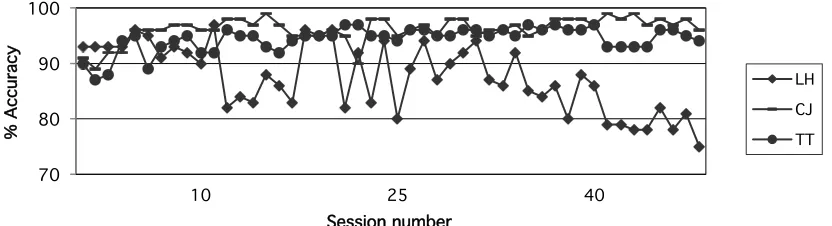
Fig 3.1: Speed in words per minute over 48 trials... page 30 Fig 3.2: Percentage accuracy over 48 trials... page 30 Fig 4.1 Mean number of successful putts out of 50 by participants in the instruction
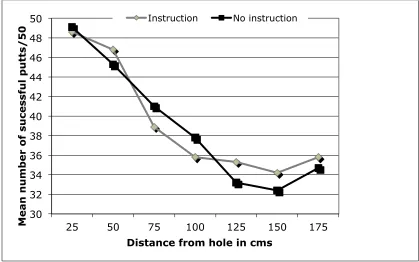
and no-‐instruction groups, demonstrating a quadratic trend... page49 Fig 5.1. Verbatim extract from the dyadic phase of the cued conversation with, C.H. ... page 87 Fig 5.2 Verbatim extract from the dyadic phase of the cued conversation with. J.D….... page 88 Fig 6.1 Mean number of idea units recalled across conditions by memory group…... page 104
LIST OF TABLES
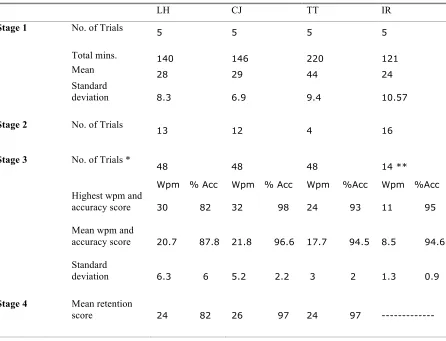
Table 3.1: Psychometric Details of Participants ... page 24 Table 3.2: Performance during three stages of touch-typing acquisition and retention ... page 29
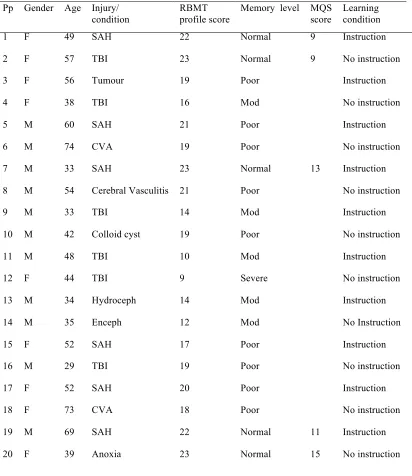
Table 4.1: Characteristics of participants paired by learning condition... page 47
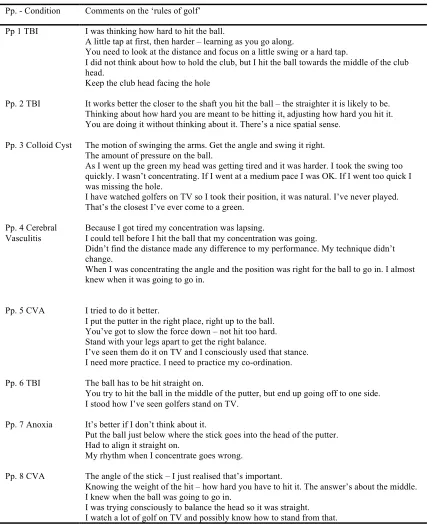
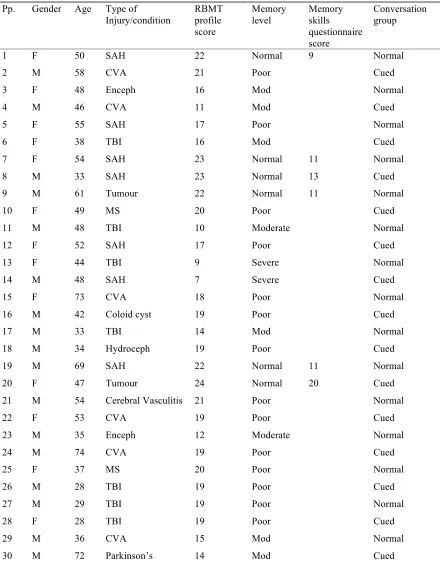
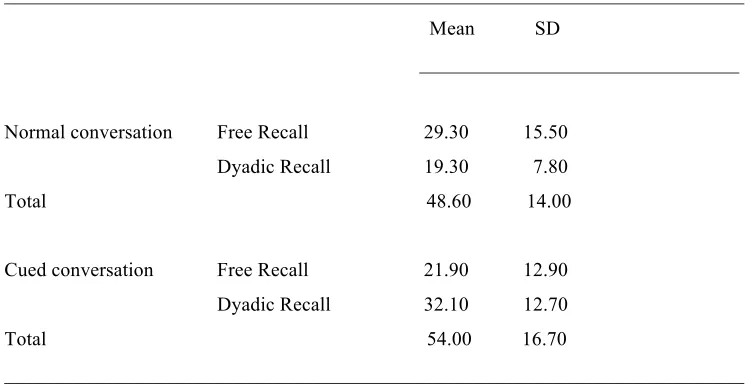
Table 4.2 Comments on the ‘rules of golf’……….... page 51 Table 5.1: Characteristics of participants paired by conversation condition... page 74 Table 5.2: Means and standard deviations of total, free recall and dyadic recall scores
across normal and cued conversation conditions ………... page 82 Table 5.3 RBMT profile scores of participants…... page 82 Table 5.4 Estimated marginal means for the MANCOVA
including RBMT-11 scores as a covariate. ...page 83 Table 5.5 Chi-Square Crosstabulation of Conversation type by Idea unit type.…………. page 85 Table 5.6: Number of words in free and dyadic recall phases of the
cued and normal conversations ……….. page 89 Table 5.7: Number of words in the context setting preamble of the cued conversation
APPENDIX I Golf pilot study
1
PILOT STUDY
To tell or not to tell: Instruction-free learning as an adjunct to error-reduction in motor skill
learning for people with explicit memory impairments.
An exploratory pilot study involving participants with normal memory was carried out in
advance of the planned study: The research objective was to test the hypothesis that giving
explicit instructions during the error-free learning of a perceptual motor skill task (golf
putting) would affect the acquisition and retention, of the task. The effect on learning was
to be analysed by comparing the putting scores at various distances from the hole and the
effect on retention by comparison of the scores from the final learning trial and the test
phase ten minutes later.
Aims and Rationale
1.
To observe difference in performance (scores during learning and at test) between
the explicit group, who will receive explicit verbal instructions before and during
the task, and the implicit group who receive no explicit instructions.
2.
To test the efficacy of the scoring system.
3.
To ascertain how arduous the task may be for the target group.
4.
To determine if any changes in the method need to be made, for example inclusion
of rest periods, or fewer learning trials.
Participants
Four people with normal memory (one of whom had a brain haemorrhage 20 years ago)
volunteered to take part in the pilot study.
Method
Four participants carried out the same putting task under error-free conditions. The error
free conditions were induced by using a protocol which begins learning trials from very
near the hole (25cms) and gradually moves further from the hole at 25 cm increments. This
method induces error free learning by reducing errors to a minimum.
The participants putted the ball 50 times for each trial from distances of 25, 50, 75, 100,
125, 150 and 175 cms. At the conclusion of the trials the participants rested for ten minutes
before the test phase, which involved 50 attempts to putt the ball into the hole from a
distance of 175 cms. Scores in the form of number of holes missed were recorded at each
stage.
The participants were divided into two groups. The explicit group were given standardised
verbal instructions seven times: before the first trial and subsequently between each
learning trial, but not before the test phase. No attempt was made to answer questions or to
enter into dialogue on how the task was to be carried out. If asked questions the
experimenter said : “This is all I am able to tell you.”
The instructions were:
Explicit instructions
1. Keep your feet shoulder width apart and knees slightly bent.
2. Place your right hand below your left hand when gripping the club handle.
3. Move the club back a short distance then swing the club forward with a smooth action along a straight line. 4. Allow the club to continue swinging a short distance after contact with the ball.
5. Adjust the speed of your movement so that the correct amount of force is applied.
APPENDIX I Golf pilot study
2
The second group – the implicit group – were given no explicit instructions on how to carry
out the task. They were told just to do their best to get the ball into the hole as many times
as possible.
The experimenter retrieved the balls and placed them at the correct distance for each shot.
Materials
A practice golf putting mat, marked for the various trial distances, standard golf balls and
putter were used. Score sheets were used to record missed holes.
Results
Raw data are shown at Table 1:
Table 1: Scores of individual participants out of 50 for individual trials and test and out of a
possible 400 overall score (including test).
Condition Explicit
Implicit
Trial
Exp1 Exp2 Imp1
Imp2
25cm
46
50
49
49
50cm
44
48
50
46
75cm
41
48
45
43
100cm
33
39
44
38
125cm
26
40
42
46
150cm
16
39
44
38
175cm
23
41
36
41
TEST
29
41
34
41
TOTAL
258
346
344
342
Scores at test were higher for the implicit pair 34/50 and 41/50 than for the explicit group
who scored 29/50 and 41/50. The participants with both the highest (346/400) total overall
score and the lowest (258/400) overall score were both in the explicit group.
APPENDIX I Golf pilot study
3
These results may be in the normal range, or may reflect the imposition of explicit
instructions. It is worth noting that SB, though reporting no memory problems, was the
only volunteer in the group to have sustained brain injury and this may have been a factor
in her result.
Scoring system
The score sheets which had been devised to aid scoring were found to be adequate.
Changes to methodology
The golf protocol takes around 45 minutes to administer and involves standing and moving
the arms and torso when using the putter. To address the possible fatigue imposed by the
requirements of the study it was decided that the following steps would be taken based on
observation from the pilot study:
1.
Before the study:
a.
The participants will be given written information pointing out the time
needed to complete the study.
b.
Pariticipant were to be told they can ask for a break at any time, sit down
between trials or withdraw from the study at any point.
c.
They should be told to wear comfortable, low heeled shoes and
non-restrictive clothing.
2. During the study:
a)
Participants will be offered the chance to sit down and rest between learning
trials at 100 cms and 125 cms even if they have not asked for a break.
b)
They will also rest for ten minutes between the completion of the trials and
the test phase.
The number of learning trials should not be decreased, because it is essential that the study
include enough trials to enable perceptual motor learning to take place.
3. At the conclusion of the study:
APPENDIX II
PAR-Q Health Questionnaire
RD 122Please read the questions carefully and answer each one honestly, ticking the appropriate box or
adding information if necessary. Your responses will of course be kept in the strictest confidence.
Name: __________________________________________ Postcode: ____________________
Contact tel no (mobile preferred) email
Has your doctor ever said that you have had a heart problem?
No
Yes
In the past month have you had any chest pain when…
You were doing any activity
No
Yes
You were resting No
Yes
Are you currently taking medication for…
A heart condition
No
Yes
Any other problems
No
Yes
Do you suffer from any bone or joint problems?
No
Yes
In the past year have you had any major illness or major surgery?
No
Yes
Have you ever been diagnosed with…
Diabetes No
Yes
Asthma
No
Yes
Epilepsy No
Yes
Other problems No
Yes
Are you pregnant?
Have you recently had a baby?
No
Yes
EDD
No
Yes
How long ago?
Do you ever…
lose your balance because of dizziness or lose consciousness
No
Yes
Are you feeling unwell at present due to cold, etc
No
Yes
If you have answered YES to one or more questions we may need you to contact your
doctor before starting to exercise. If your health changes so that you may then answer
YES to any of these questions, tell a member of staff as soon as possible.
I have read, understood and completed this questionnaire.
Any questions that I had were answered to my full satisfaction.
CHAPTER ONE
INTRODUCTION
“ You have to begin to lose your memory, if only in bits and pieces, to realise that memory is what makes our lives…Our memory is our coherence, our reason, our feeling, even our action. Without it, we are nothing.” Luis Buñuel, Spanish film maker (1900-1983).
1.1
Rationale for the thesisWhen the ability to remember is affected by brain damage the main casualty is explicit memory for information and events, encountered since the injury, which normally could be brought to mind and described. Yet despite their having difficulties with fact-based learning and everyday recall, laboratory work has revealed over decades that even people who are severely disabled in this way retain implicit memory abilities which continue to function normally, or near normally, below their level of awareness (e.g. Milner, 2005; Schacter,1987; Squire, 2004; Wilson, 2009). The work described in this thesis makes an original contribution to knowledge by exploring the practical and social
application of some aspects of this retained implicit memory, a so far untapped resource (Cavaco, Malec & Berquist, 2005), which has proved difficult to apply to the real life problems encountered by people with memory difficulties (Wilson, 2009). It is suggested that because implicit memory is unconscious, so that the rememberer is unaware of its effects, people with memory problems may, to their surprise, know more than they think they know.
exceptions, for example in Parkinson’s Disease and Huntington’s Disease, simple motor skills may be acquired in the laboratory without any memory of the learning process in people with amnesia (e.g. Butters, 1987; Eslinger & Damasio, 1986; Milner, 1962; Milner, Corkin & Teuber, 1968; Starr & Phillips, 1970). Additionally robust results from priming experiments demonstrate that people with amnesia give accurate responses on word stem completion tests, though they are unaware that they are remembering and may attribute their correct answer to a ‘lucky guess’ (e.g. Graf et al., 1982; Hamann et al.,1995; Mayes & Meudell, 1981; Tulving, et al., 1982; Warrington & Weiskranz, 1974).
Importantly, the observation that people with amnesia give a comparable number of correct answers to controls when they are asked to respond with the first word that comes to mind, rather than being asked to consciously remember, adds weight to the suggestion that this is a function of implicit verbal priming mechanisms and suggests that recall depends crucially on the participants’ reaction to the way in which they are prompted (Graf & Mandler, 1984; Graf & Schacter, 1985). It is highly unlikely that the implicit memory functions underlying perceptual motor skill learning and priming, are mere artefacts of research. These functions must operate in everyday life but not necessarily in an optimal fashion. In terms of rehabilitation the task is to find ways in which they can be channelled and put to practical use for people with memory problems and those who interact with them.
1.2 Ethical Approach
The high level of commitment required by the participants in the studies described in this thesis influenced the ethical approach of the researcher, which is characterised by a strong emphasis on designing-in elements which may be expected to contribute to successon the task rather than on strict control of individual variables. This approach, based on optimising the possibility of achievement, does not seek to answer questions about the precise contribution of the various strategies employed where the existing research base provided evidence for their individual efficacy.
The studies gained ethical approval from the Academic Research Degrees Board of the University of Bolton following discussion of issues of vulnerability, capability and the effort of taking part in repeat trials. All participants were considered to be capable of giving formal informed consent and did so. They were in additionreminded of this during eachcontact with the researcher and the purpose of the research was reiterated at the beginning of each study. Pilot studies were carried out on two of the tasks, using participants with normal memory, to test the appropriatenessof the methodology in terms of the amount of effort required on the part of the participants and suitability of the scoring systems. (See appendices I & II).
gain or retain employment following brain injury. They consisted of a heterogeneous sample of people, of a wide range of ageswhose brain injuries arose from differentaetiologies, selected and/or matched solely on the basis of their scores on memory tests and their physical ability to carry out the tasks.
1.3 Thesis Structure.
Chapter Two summarises the background and current position in memory research and memory rehabilitation and contains reviews of the relevant literature. The thesis concludes at Chapter Six with a general discussion of the work as a whole and the conclusions which may be drawn from it.
Three empirical studies are reported at Chapters, Three, Four and Five. The first two investigate the optimisation of everyday motor skill learning. The third differs in that it focuses on the possible contribution of different forms of questions and verbal exchanges which may be used as cues to benefit the recall of a recent event. Each study is prefaced by its own introduction and detailed literature review and concludes with a specific discussion. The studies are briefly summarised below.
1.3.1 Teaching people with memory impairments to touch type: The acquisition of a useful complex perceptual - motor skill.
The proposition under scrutiny in this study was whether or not people with memory impairment due to brain injury are capable of learning the complex perceptual-motor skill of touch typing to a useful level: in other words whether the observations of preserved abilities in perceptual motor skill learning using simple laboratory tasks (e.g. Brooks & Baddeley, 1976; Cohen, 1984; Cohen & Squire, 1980; Corkin, 1968; Gauggel & Fischer, 2001; Starr & Phillips, 1970;) apply to learning a real-world perceptual-motor skill, and crucially whether the skill proves robust and resistant to deterioration over time, in contrast to some other forms of implicit learning (Evans, Wilson, Schuri, Andrade, Baddeley, Bruna, Canavan, Della Sala, Green, Laaksonen, Lorenzi, & Taussik, 2000). It was hypothesised that touch typing could be especially useful to people with memory impairment, since it provides a sound basis for learning to use computers at work and at home, and as compensatory memory aids (Hunkin, Squires, Aldrich, & Parkin, 1998).
current empirical evidence. To achieve this the methodology included the use of errorless techniques (Campbell, Wilson, McCann, Kernahan & Rogers, 2007; Lloyd, Riley & Powell, 2009; Maxwell, Masters & Poolton, 2008; Sohlberg & Turkstra, 2011). Learning conditions would also include, individual coaching (Clegg & Rowe, 1996; Maxwell, Masters, Kerr & Weedon, 2001; Wulf, Shea, & Whitacre, 1998), standardised repetition of sessions (Wickens, 1989), saturation of learning
(Hauptmann, Reinhart, Brandt & Karni, 2005) and distributed practice (Baddeley & Longman, 1978; Duke & Davis, 2006; Ofen - Noy, Dudai & Karni, 2003; Shea, Lai, Black & Park, 2000).
1.3.2 To tell or not to tell: Instruction-free learning as an adjunct to error-reduction in perceptual motor skill learning for people with explicit memory impairments.
Observation of participants in the touch-typing study and of others taught subsequently using the same methodology, suggested performance was disrupted when anything more than minimal verbal explanation was given by the instructor. It was therefore hypothesised that verbal instruction, which those with normal memory may find useful, could detrimentally affect skill acquisition in those with explicit memory deficits.
Explicit memory is primarily a verbal system and, in normal skill learning, works in concert with the type of ‘learning by doing’ mediated by implicit memory. Normal learning of motor skills is thought to proceed through the process of cognitive procedural learning (Beaunieux, Hubert, Witowski, Pitel, Rossi, Danion, Desgranges & Eustache, 2006) : that is, initially through verbally based explicit learning before passing on to an automated or implicit phase when the verbal rules are forgotten and processing becomes unconscious. It is suggested here that when explicit memory is compromised, repeatedly telling the learner what to do may act to overload verbal working memory (Maxwell et al., 2001; Poolton, Masters & Maxwell, 2005; Orrell, Eves & Masters, 2006) and/or promote a spurious reliance on defective explicit recall.
A search of the literature showed a small body of evidence suggesting that providing explicit instructions, at least during the early learning stages of a motor skill, may not be the optimal approach for both normal learners and some stroke patients (Boyd & Winstein, 2004; Boyd & Winstein, 2006; Orrell et al., 2006; Poolton et al., 2005; Wulf & Weigelt, 1997). This study tested the proposition that ‘instruction free’ learning when combined with error-reduced methodology, may further optimise skill acquisition in participants with explicit memory difficulties following brain injury by fostering implicit skill learning. Two groups of people were taught the perceptual motor-skill of golf putting, using an error-reduced paradigm devised and validated by Maxwell et al.(2001). One group was given verbal instructions on how to carry out the task between learning trials and the other told just to ‘do their best.’ Their performance was compared.
1.3.3It’s not what you say, it’s the way that you say it: Using conversational cues to enhance episodic recall of a Laurel and Hardy film clip in people with memory difficulties.
Social isolation has been identified as the most common long-term psychosocial problem after brain injury and a major source of distress for both sufferers and their families (e.g. Kozloff, 1987; Morton, & Wehman, 1995; Weddell, Oddy & Jenkins, 1980; Hoofien, Gilboa, Vakil & Donovick, 2001; Verhaeghe, Defloor & Grypdonck, 2005). For example, over a third of those taking part in the Hoofien et al. study (2001) reported having no friends at all, and eight per cent were living in total isolation. Within families, also, a lack of meaningful social communication has been shown to be a significant source of stress, yet the availability of any intervention to aid this situation is rare (Boschen, Gargaro, Gan, Gerber & Brandys, 2007).
Many of our interactions with others involve the ability to tell coherent stories of our personal experiences which are recognised as important for a variety of social and psychological functions (Edwards,1997; Norrick, 2000; Ochs & Capps, 2002). It is suggested in this work that one contributory factor to social isolation for those with acquired memory difficulty is their relative inability to recall the detail of their post injury experiences which hampers them from playing a satisfactory part in everyday conversations with friends and acquaintances. An intervention, therefore, which improves the ability to recall more detail of daily happenings, leading to more productive conversations, may contribute in a small way to ameliorating the problem of loneliness and loss of friends which is common in this population. At the time this study was embarked upon, however, no guidance was available on how this could be achieved.
which must be learned and applied not by people with memory disabilities, but by the people who interact with them: the effort of learning the technique is in effect shifted to those most capable of acquiring it.
The study also examined for the first time, the effect, on participants with memory problems, of a recognised technique for boosting free recall in other populations - imaginal environmental context reinstatement (see Smith & Vela, 2001 for review) which involves encouraging participants to mentally reconstruct the external environment and internal thoughts and feelings about a witnessed event prior to free recall. The proposed effectiveness of environmental context reinstatement is predicated on the finding that recall is enhanced if the environmental context present at the original learning is reproduced at recall (Godden & Baddeley, 1975; Smith, Glenberg & Bjork, 1978; Smith, 1988) and provides an explanation for why revisiting a place can aid memory for what happened there, or why we fail to remember who someone is when he or she is encountered in an unfamiliar context (Smith & Vela, 2001).
1.4 Publications arising from the thesis
The touch typing study (Chapter Two) was publishedduring the preparation of this thesis (Todd & Barrow, 2008). Since then it has been variously cited by authors researching ways to optimise the learning of skills by those with memory difficulty, ranging from the use of assistive technology to remembering daily routines (e.g. Ferland, Larente, Rowland & Davidson, 2013; Powell, Glang, Sohlberg & Albin, 2012; Ptak, Van der Linden & Schnider, 2010; Sohlberg, 2011; Sohlberg &
Turkstra, 2011). It has been referred to as adding to the mounting evidence that with extensive training, even people with amnesia are capable of acquiring relatively flexible real world complex knowledge which shows some generalisation; that constraining errors in the acquisition phase of highly
CHAPTER TWO
LITERATURE REVIEW
2.1Brain Injury and Memory Impairment – The Current Position
Each year in the UK an estimated 2,500 people join the list of those already living with the consequences of severe traumatic brain injury (Wilson, 2009) and most, if not all, will develop a memory problem (Goldstein & Levin, 1995). The diverse range of conditions affecting the brain means that accurate statistics are hard to come by, however memory problems can be experienced following brain haemorrhage, brain tumour, anoxia, mild traumatic brain injury and a range of neurological illnesses such as multiple sclerosis, and are present in an estimated seventy per cent of those who have suffered encephalitis and ten per cent of people with epilepsy (Wilson, 2009). The scale of the problem is growing as improved medical procedures result in better survival rates. Memory difficulties, ranging from mild forgetfulness to dense amnesia are among the most debilitating effects of brain injury and can seriously affect a person’s ability to function (Glisky, Schacter & Tulving, 1986a). Yet despite being the most commonly complained of consequence of brain injury, most sufferers and their families get little or no professional help or guidance on memory management (Wilson, 1987, 2009), arguably as a result of a lack of people working in the field, and the time consuming nature of memory intervention training.
For people with memory difficulties and their families the picture can be a confusing one. On the one hand the prevailing opinion of many medical professionals is that, after a period of spontaneous recovery, little, if anything, can be done to restore lost memory function (Wilson, 2009), while at the same time the internet abounds with ‘brain training’ programmes which lead people to conclude that their memory can be improved with repetitive drills and games unrelated to their everyday lives; a strategy which in the past has shown very little generalisation to real world tasks (Ptak et al., 2010). However, this dispiriting picture is offset by developments in rehabilitation which demonstrate that, while currently memory cannot be restored, much can be done to compensate for everyday
forgetfulness and learning difficulties by employing the types of strategies and instruction techniques described for example by (Wilson, 2009) and Sohlberg and Turkstra (2011) given, crucially, that the resources exist to disseminate that knowledge and facilitate the training.
Thoene & Glisky, 1995) or a method, in which elements to be remembered are incorporated into a story
(Crovitz, 1979, Wilson, 1987). With few exceptions, for example electronic reminder systems such as Neuropage© (Wilson, Evans, Emslie & Malinek, 1997; Wilson, Elmslie, Quirk, Evans & Watson, 2005) and arguably the ‘method of vanishing cues,’ (Glisky, Schacter & Tulving, 1986b), [See 2.3], memory techniques require an element of new explicit learning for how and when to use them. Efficient use of external memory aids involves motivation, planning, problem solving, concentration, learning and memory, all of which can be affected in brain injury so that the people who need to use them most have the most difficulty learning how to use them (Wilson, 2009). Also internal mnemonics have a limited usefulness, work best in people with mild memory impairment and crucially,
generalisation - the extent to which the person uses the technique without prompting to do so in other areas of their life - is poor (Wilson, 1987). In either case, extensive practice is needed, preferably in the context where they are to be used, before the use of external aids, mnemonics or visualisation
techniques become automatic, at which stage, presumably, implicit memory, which underlies the formation of habits, comes into play and the behaviour becomes routine. People with memory difficulties can learn, but there is no doubt that the process is time consuming and effortful and unless symptoms are mild, the learning tends to be highly specific and not to generalise to other tasks or transfer to everyday life (Glisky, 2005). It is suggested in this work that this is unsurprising and, perhaps, inevitable because damage to explicit memory impedes both the learning of ways to ameliorate memory deficits and their implementation. On the other hand it is contended that implicit learning, optimally employed, should require no more effort, time and labour than would be expended by a person with normal memory (Wilson, 2009). While not replacing traditional forms of memory training, implicit methods may prove a useful adjunct with two other major advantages: they are applicable to people with more severe memory problems and can avoid problems with transfer and generalisation.
2.2 Memory Research
Short-term memory, formerly considered a relatively passive precursor to long term memory, has long been subsumed into a much wider general theory of working memory, which emphasises combined processing and storage (Baddeley & Hitch, 1974). In this model working memory is conceptualised as a limited capacity system which temporarily maintains, stores and manipulates information, acts as the interface between perception, long term memory and action and facilitates a range of cognitive functions (Baddeley, 1986; Baddeley, 2003). Working memory has been
hypothesised as fractionated into sub-components or ‘slave systems’: the phonological loop, which deals with verbal information; its visual equivalent, the visuo-spatial sketchpad and most recently the
episodic buffer (Baddeley, 2003) which allows information from the different slave systems to be integrated and linked to long term memory. These systems are envisaged as under the control of a component known as the central executive: “the most important but least understood” part of working memory (Baddeley, 2003 p.835) which guides their operation. Roughly equating to attention, the central executive builds on the concept of attentional control originally proposed by Norman & Shallice (1986) which postulates an attentionally limited supervisory activating system which comes into play when habit patterns or routines are insufficient to cope with novel experiences. Work on the central executive and other elements of working memory continues and looks set to identify still more components as research progresses. Baddeley (2003) has also called for more research into wider questions, such as the emotional and motivational control of working memory and a proposed link between working memory and consciousness.
Long-term memory, which refers to all memory of longer duration than a few seconds or minutes (Markowitsch, 2000; Squire & Zola, 1998), has come to be classified into major components with differing characteristics. The first is explicit memory, which refers to the abilities that the general public would consider to be the whole of memory, encompassing memory for events (episodic memory) and generic facts (semantic memory) which can be consciously brought to mind and expressed. The second major component of long-term memory is implicit memory, which does not require conscious recollection of the learning process to function and often cannot be verbalised. Implicit memory includes, among other attributes, procedural memory for motor skills and the phenomenon of priming, described as a higher likelihood of re-identifying stimuli perceived at a previous point in time (Tulving & Markowitsch, 1998).
Episodic memory, which requires self-conscious reflection, is the most complex memory system (Markowitsch, 2000). It is distinguished by its time travel effect - the ability to re-experience a specific event (Tulving, 1983, 2002). Semantic memory, on the other hand, is context-free memory for facts, for example the meaning of the word ‘bottle’ or that the sun is hot which can be used across a wide variety of situations (Shimamura & Squire, 1987; Tulving, 1989; Wilson & Baddeley 1988).
between explicit and implicit memory tasks, or “unaware representations of retention,” (Roediger, 1990, p.1045). Experimentally, explicit and implicit memory are classified according to performance on different types of memory tasks (Graf & Schacter, 1985; Schacter 1987; Schacter et al., 1993). Explicit memory requires conscious recollection or recognition, for example of items on a previously studied list. The participant is required to recall the learning episode in order to express what has been experienced. In contrast, implicit memory is memory without awareness (Jacoby & Witherspoon, 1982) - characterised by an unintentional and unconscious change in recall or skill performance based on prior exposure and there is no requirement for the person performing the task to consciously recall the occurrence of prior study or skill learning. In the laboratory re-presenting word-fragment completion tests, mirror reading and pursuit rotor tasks in which participants are required to track a target by moving the position of a pointer, are commonly used to assess the effects of prior presentation and thus test implicit memory performance (Schacter et al., 1993). While there is still much to learn there can be no dispute that theoretical questions about the processes involved in implicit learning have been pursued with rigour. For example, Roediger (1990), has posited that just one component of implicit memory - priming- consists of three separate components, adding that dissociations observed by those investigating amnesia indicated up to 25 different memory systems might be implicated in priming alone while “the number of dissociations between tests is likely to increase inexorably” (Roediger, 1990, p.1053).
auditory or visual modality and (though the effect was smaller) when tested across these modalities (Graf, Shimamura, & Squire, 1985). In addition to tests of implicit memory based on perceptual information, people with amnesia have demonstrated priming on conceptual tasks which involve naming “the first eight exemplars that came to mind,” (Graf et al. 1985, p. 391) from a previously studied list when a category was given as a cue, for example ‘bird’. The fact that people with amnesia perform normally on such tasks when they are structured appropriately demonstrates that priming is a distinct form of memory, separate from other functions that are impaired in amnesia (Schacter & Buckner, 1998; Tulving & Shachter, 1990; Squire, 2004).
Prior to the dissociations between implicit and explicit memory tasks in people with organic amnesia, which began to emerge in the middle of the last century, cognitive psychologists interested in learning and memory focused on explicit recall and recognition tests in their work and theories of memory were based on these results, (Gabrieli, Fleischman, Keane, Reminger & Morrell, 1995). The apparent late discovery of the power of priming is explained by the fact that it is non-conscious and it is “difficult to study a phenomenon whose existence one does not suspect” (Tulving & Schacter, 1990 p.302). However, priming is now considered a ubiquitous phenomenon, performing a more important role in everyday life than was previously assumed and it is acknowledged that although priming is typically observed under carefully controlled conditions in the laboratory, similar conditions frequently occur naturally, in the outside world (Tulving & Schacter, 1990)
However memory deficits seldom map one to one onto memory tasks because few memory deficits, if any, involve a single memory system (Tulving, 2002). There is good evidence that all cognitive systems are supported by intricately interconnected brain regions of “almost infinite richness and flexibility” (Mesulam 1990, p. 597) and that the same brain regions can be activated in response to different cognitive demands (Cabeza & Nyberg, 2000), therefore the probability of the kind of brain damage that applies solely to one memory system and spares another in such a complex system is small. Most of the time the damage affects the components or connections between multiple systems, resulting in the typical diffuse impairment of memory for facts and events which results in disability for people with memory impairments (Squire, 1992). Also recent evidence has emerged on the interaction between implicit and explicit memory which has shifted the focus of some research away from isolating one type of memory from another to studying their interaction (Moscovitch, 2008). Investigators looking to establish the independence of implicit memory have traditionally used tasks which ensured implicit task performance was not contaminated by explicit processes (Roediger & McDermott, 1993).
process: priming represents a pre-semantic perceptual representation system (PRS) which exists separately but interacts closely with other memory systems. The PRS is concerned with identification of perceptual objects, including words, and is not critically dependent on the brain regions necessary for semantic and episodic memory.
People with amnesia and less severe memory problems can suffer variable amounts of retrograde amnesia i.e. difficulty recalling facts and events prior to pathology. However, for the vast majority their greatest handicap is anterograde amnesia: difficulty in forming or accessing new explicit memories: both episodic memories for events that have occurred since injury (e.g. Baddeley & Wilson, 1986; Wilson & Baddeley, 1988; Wilson, 2009) and semantic memories, for facts and terms about the world (Gabrieli, Cohen, & Corkin, 1988) though there is evidence that in some rare cases, anterograde semantic memory can remain selectively intact (Baddeley, Khadem & Mishkin, 2001; Vargha-Khadem, Gadian & Mishkin, 2002).
The classic view of episodic memory is that it contains knowledge of events and facts acquired in the recent past or over the lifespan, though some researchers propose a separate autobiographical memory system which is “the knowledge base of the self,” (Conway, 2002, p.56) constituting a longer term accumulation of episodic memories and semantic knowledge. Whichever view is taken, the greatest handicap for people with memory impairments remains a difficulty making new explicit memories for the time since their injury (Wilson, 2009) and the remediation of episodic and semantic memory therefore has been the main focus of rehabilitation. On the other hand most people with amnesia perform normally or near normally on implicit tasks including priming and motor skill learning. However their abilities in these areas have been difficult to apply to the everyday
problems of people with memory difficulties (Wilson, 2009) and remain a widely neglected and untapped resource (Cavaco, Malec & Berquist, 2005).
2.3 Memory rehabilitation research
the interconnectedness and dynamic interactions between the implicit and explicit memory systems may prove valuable in that it may eventually produce novel approaches into ways in which both memory systems can be optimised.
Historically there have been various opinions about what constitutes memory
rehabilitation. Some see restoration or improvement in overall memory function as the goal, using improvements in post treatment test scores as a measure of success, while others look to train people with memory problems to use aids to compensate for their deficits with the goal of improving everyday functioning (Rohling, Faust, Beverly & Demakis, 2009). The first approach focuses on restitution, or at least amelioration, of lost function by capitalising on neural plasticity. The assumption is that cognitive processes which have been partially damaged can be directly re-trained by fostering reconnection or reorganisation of damaged neural circuits through exposure and practice (Robertson, & Murre, 1999). The second approach emphasises interventions involving the learning of specific strategies which can be used in everyday life to compensate for chronic defects (Rohling et al, 2009). There is some evidence of effectiveness for stimulation-based treatments in the rehabilitation of brain injury-induced deficits such hemiplaegia, aphasia and attention (Robertson, & Murre, 1999) and the possibility cannot be completely ruled out that in future ways may be found to stimulate damaged memory circuits, especially in the light of findings indicating that the normal brain may be more susceptible to local plasticity than was previously thought (Ogden, 2000; Maguire, Gadian, Johnsrude, Good, Ashburner, Frackowiak & Frith, 2000). However, currently, episodic memory is viewed as a special case among cognitive functions, for which only compensatory strategies such as structure, external cueing, and use of memory aids and mnemonics are appropriate (Robertson, & Murre, 1999; Wilson, 1998). Indeed, past attempts to restore memory which obliged the trainee to spend hours practising computer-based exercises in order to remember random words, and objects (Glisky, 2005) have singularly failed to provide any general benefit to overall memory function (Benedict, Brandt, & Bergey, 1993; Berg, Koning-Haanstra & Deelman, 1991; Godfrey & Knight, 1985). However, this approach did reinforce the idea that people with memory problems do get better at the specific tasks they practice. Therefore it makes sense that they should spend time practising useful skills which they want to learn (Glisky, 2005) and, also, though it may take many hours to achieve and in most cases does not generalise, acquisition of specific knowledge pertaining to the person’s everyday life is possible under the right conditions (Glisky, 2005).
disorders (Glisky et al, 1986a) and two important teaching techniques have emerged in recent years to aid some types of learning in people with memory problems, both of which aim to capitalise on preserved implicit memory to teach skills or facts. The first is error-free, or errorless learning, in which the person receiving instruction is prevented as far as possible from making mistakes, (e.g. Wilson, Baddeley, Evans, & Sheil, 1994; Hunkin, Squires, Aldrich, & Parkin 1998; Evans et al., 2000).
highly proceduralised tasks for people with moderate to severe explicit memory impairments (Sohlberg & Turkstra, 2011), such as route recall (Lloyd, Riley & Powell, 2009) and individualised memory interventions (Campbell, Wilson, McCann, Kernahan & Rogers, 2007). In particular, during the acquisition of motor-skills by those with normal memory, error reduction appears to confer advantages over practice in which mistakes are made by rendering the skill robust in the face of interference (Maxwell et al., 2008).
Another learning aid, the method of ‘vanishing cues’ to teach vocabulary (e.g. Glisky et al., 1986a, 1986b) is aimed at capitalising on preserved implicit memory, specifically the ability of people with amnesia to respond to the priming of words in stem completion tasks, as demonstrated in research on direct priming (Cermak, Talbot, Chandler & Woolbarst, 1985; Diamond & Rozin, 1984; Graf Mandler,1984; Graf & Schacter, 1985; Schacter, 1985; Warrington & Weiskrantz, 1974). Probably the
cues learning (Kessels & Haan, 2003) which found a significant effect size for error free learning and a small non-significant effect for vanishing cues
More recently the advantage of error-free learning in the acquisition of certain tasks has been questioned on the basis that it conflicts with key findings from non-clinical populations, stretching back over a century, that effortful retrieval from long term memory bolsters the likelihood of successful remembering in the future and that retrieval failure (i.e. making mistakes) can actually lead to deeper encoding of target information (Middleton & Schwartz, 2012). It is a well-accepted principle in research on normal learning and memory that retrieving information from long term memory (retrieval practice) is a “learning event in its own right” (Middleton & Schwartz, 2012 p.139). However, retrieval practice has also been found to be effective in the first published study of people with neurologically based memory difficulty, using 16 participants with multiple sclerosis (Sumowski, Chiarvalloti & DeLuca, 2010), demonstrating a strong advantage of retrieval practice through re-testing over
restudying the material to be remembered. In normal memory the testing effect - referring to the recall advantage gained when material is tested over that which is presented for additional study - has been found to be productive in long-term retention of paired associates (Allen, Mahler & Estes, 1969; Kuo & Hirshman, 1996). Normal memory appears to be enhanced by the ‘spacing effect,’ i.e. with spaced repetition of the information to be learned over a period of time being more effective than massed practice (Dempster, 1996), and spacing is also included as a part of a package of advised instruction techniques for people with memory problems along with error reduction (Elhardt, Sohlberg, Kennedy, Coelho, Ylvisaker, Turkstra & Yorkston, 2008). Normal memory appears to be most enhanced when the two techniques of testing and spacing, are used in combination (Carpenter & DeLosh, 2005), however this does not appear to have been investigated in people with brain injury.
In explanation for the enhanced learning effect of testing, Middleton and Schwartz (2012) hypothesise that retrieval is the most important factor in achieving robust learning. Further, they suggest that the testing effect is likely to arise because of two factors: retrieving information from long term memory changes memory in a way that bolsters the likelihood of successful future retrieval and that initial failure to retrieve information leads to deeper encoding which can subsequently be used as feedback, compared to a situation where no test is provided. The proposal that memory is in fact boosted by deeper encoding, ensuing from initial failure to retrieve information, appears to contradict the very basis of error-free learning which, by preventing mistakes, precludes these initial abortive attempts at remembering. It is proposed here that the difference lies in the distinction between tasks. Error free learning is effective when learning and teaching new tasks, particularly motor skills and highly proceduralised tasks. In contrast, effortful retrieval, it is suggested here, may enhance to some extent the spontaneous episodic recall necessary for remembering recent events, especially if used as a follow-up stage to priming. This is consistent with Moscovich’s (2008) proposal that explicit
output can contribute to performance on a variety of tasks including those that are implicit and semantic. The other is slower, more effortful and is one in which the individual becomes consciously aware of this output and can make it explicit (Moscovich, 2008).
2.4 Objectives of the thesis
CHAPTER THREE
3.1
Teaching memory - impaired people to touch type: The acquisition of a useful complex perceptual - motor skill.INTRODUCTION
The proposition under scrutiny in this paper was whether or not people with memory
impairment are capable of learning the complex perceptual-motor skill of touch typing to a useful level: in other words whether the observations of preserved abilities in perceptual motor skill learning using simple laboratory tasks (e.g. Brooks & Baddeley, 1976; Cohen, 1984; Cohen & Squire, 1980; Corkin, 1968; Gauggel & Fishcher, 2001; Starr & Phillips, 1970) apply to learning a real-world perceptual-motor skill, and crucially whether the skill is retained over time thus proving robust and resistant to deterioration, in contrast to some other forms of implicit learning (Evans et al., 2000). Touch typing could be especially useful to people with memory impairment, since it provides a sound basis for learning to use computers which, in addition to being ubiquitous at work and at home, have long been recognised as having great potential as compensatory memory aids (Hunkin et al.,1998). Since
decreased capacity for learning is extremely detrimental to the aspirations of memory-impaired people, an exception, provided by their ability to acquire functional motor skills, could have the potential to improve their everyday lives and job prospects. The aim of this study was to capitalise on the reported preserved abilities in motor skill learning to teach two people with memory impairments to touch type, on the basis that touch typing, while complex, is a perceptual - motor skill that theoretically could be acquired by people with preserved procedural memory, especially if they are taught in ways which maximise acquisition.
impairment (Brooks & Baddeley, 1976; Cohen & Squire, 1980; Corkin, 1968; Gupta & Cohen, 2002; Van der Linden& Coyette, 1995; Wilson, 2003). However, although all implicit memory functions are considered to show relative preservation in amnesia, there is evidence that these functions may not be unitary and may be manifestations of different implicit systems (Evans et al., 2000).
Motor skills are the most concrete examples of procedural learning (Anderson, 1983) and are thought to be acquired through implicit memory, which also mediates other types of largely non-conscious learning such as classical conditioning and verbal and visual priming. Maxwell et al. (2001) note that acquisition of perceptual - motor skills does not require the same level of cognitive resources as the acquisition of skills involving elements of decision making and problem solving - the types of skills which are conceptualized for example by models such as the Adaptive Control of Thought (ACT) theory (Anderson, 1983), S-mode learning (Berry & Broadbent, 1984, 1988) and the initial phases of the process of cognitive procedural learning (Beaunieux et al., 2006).However, traditionally, motor skills have been considered to be acquired in a similar manner to that of cognitive procedural learning: that is, initially through verbally based explicit learning before passing on to an automated or implicit phase when the verbal rules are forgotten and processing becomes unconscious. The performer was assumed to learn through making judgements about how to perform the task - hypothesis testing - intuitively referring back to prior errors so that they would not be repeated (Anderson, 1983). More recent research challenges the assumption that motor skill learning must necessarily proceed from the explicit to the implicit. Evidence is emerging that motor skills need not rely on input from explicit memory; that employing learning strategies which actively minimise the accrual of explicit knowledge may benefit motor skill learning and that it is possible for learning to be achieved through relatively passive aggregation of action-outcome contingencies gained through simple exposure (Maxwell et al., 2001; Poolton et al., 2005; Orrellet al., 2006).
The support for the claim that people with memory difficulties can learn perceptual-motor skills is either anecdotal or based on laboratory tasks using relatively easy and quickly-learned tasks such as manual tracking and finger tapping (Corkin, 1968); finger mazes (Starr & Phillips, 1970); pursuit rotor tasks (Brooks & Baddeley, 1976); reading reversed writing (Cohen & Squire, 1980); mirror drawing (Cohen, 1984) and pegboards (Gauggel & Fishcher, 2001). People with memory impairment have also been taught to use a computer keyboard, but where this has been done the motor skill aspect of typing has been either: restricted to a small set of words or paragraph (Glisky et
al.,1986a; Hunkin et al., 1998); achieved very slowly as an adjunct to learning other computer functions (Van der Linden & Coyette, 1995), or was a retained skill from prior to brain injury (Glisky & Shacter, 1987).
few reported studies in which people with memory impairments have learned new, useful or complex motor skills which are applicable to their everyday lives, and none in which they have been taught to touch type. Winter (2002) gives an account of a young man who became expert at the computer game of Tetris and Wilson (2003) refers anecdotally to a young man with amnesia who taught himself to type, but the manner in which these tasks were acquired was not investigated.
The performance of skilled touch typists using manual typewriters has been thoroughly investigated by psychologists interested in the acquisition of automatic skills which remain resistant to interference under dual task conditions (Salthouse, 1986). Nowadays the QWERTY keyboard remains the main interface between computer and user and its efficient use is considered a primary ability in the hierarchy of computer skills (Johnson, 1992). Yet touch typing, which results in high speed, accurate use of the keyboard, is not routinely taught. Most novice computer users gain facility with the keyboard by ‘picking it up as they go along,’ through a strategy aptly described as ‘hunt and peck,’ an ad hoc
method of learning to type which involves visually searching the keyboard for the letter to be typed and striking it with any finger. It is argued here that this improvised strategy may be problematic for people with memory impairment because: it requires input from episodic memory to recall the position of the key from one session to another at least in the early stages of learning; it makes demands on working memory as the learner must hold the word to be typed in mind while executing a complex process (remember the word to be typed, scan the keyboard for the next key, locate the key, strike the key, look back at the screen etc.) and finally it renders the learner vulnerable to making mistakes, while ideally people are thought to learn some tasks best under conditions where mistakes are kept to a minimum (Evans et al., 2000; Hunkin et al., 1998; Wilson et al., 1994). A principal reason why learning is problematic for memory-impaired people is assumed to be the loss of the spontaneous ability to correct errors while learning. Baddeley and Wilson (1994) suggest that explicit learners can look back and correct errors they made previously, whereas implicit learners cannot, and so repeat their prior mistakes. This tendency is addressed to some extent if the learner is taught under errorless conditions where mistakes are reduced or eliminated during learning. However the impact of errors may depend on the particular task involved (Evans et al., 2000).
with memory impairment because here typing is acquired in a manner which lends itself to efficient motor skill learning: facility is acquired in a structured manner through the repetition of sequences of actions which become automised through extensive practice (Anderson, 1983).
In touch typing the typist is trained not to visually scan the keyboard; instead each of the eight fingers is schooled to execute the correct ‘finger reach’ for a specific key by touch while the typist focusses either on the material to be copied, or on the screen. In this way the learner builds ‘finger memory’ for the keys which equates to the motor component of skilled performance on a musical instrument and is defined as an acquired, unconscious bias in human movement which transpires in sequence learning and in motor skills, allowing faster movements in response to a target (Keisler & Willingham, 2007). So touch-typing training may be apposite for those with impaired memory because as an exact skill, in which the typist must use the correct finger reach to get the correct result, it lends itself to an errorless style of instruction in which the learner can be verbally or physically prompted to use the correct keystroke. It is important in the rehabilitation of amnesia that consideration is given to the task to be learned; some procedural tasks involve cognitive input from working and episodic memory in the primary and intermediate stages of learning, so that people are prevented from reaching the final autonomous stage which is when the task becomes purely procedural, a reason postulated for their failure (Beaunieux et al., 2006).
It was recognised that learning to touch type to a level of automaticity, as with other complex motor skills, could take weeks or months of patient, deliberate practice to achieve (Bower, 2000). Since lessons for the participants in this study were voluntary and were carried out in a non - clinical setting and over an extended period of time, the outcome depended on the commitment of the learners. Therefore attempts were made to provide participants with the best chance of success in order to boost motivation and encourage continued attendance at learning sessions. This was done, in the context of a number of practical constraints, by attempting to create optimal conditions for learning, based on current empirical evidence. Learning conditions therefore included individual coaching, errorless techniques, standardised repetitions of sessions, saturation of learning and distributed - rather than massed - practice (the rationale and evidence for introducing these conditions is described below in the Method section). No attempt was made to investigate the relative contribution of theseconditions to skill acquisition. The performance of two participants, one with severely impaired memory and one with moderately impaired memory, was compared with that of two normal learners throughout the training on dimensions of acquisition, consolidation and transfer, speed and accuracy and retention to evaluate their progress.
METHOD
Design
A quasi - experimental design in which two participants with memory impairment were compared with two normal learners training to touch type was adopted which took into consideration the nature of the task (Foster & Parker, 1995), the extended period of time necessary to complete the training, and the naturalistic conditions in which the study was carried out. At key points throughout the training, data, in the form of the number of sessions taken by each participant to reach predetermined criterion levels and scores on speed and accuracy trials were collected by the researcher. Retention levels one year later were also assessed. The study planned a final criterion of 20 wpm with over 90% accuracy as a yardstick of functional typing ability, however, the participants were keen to continue beyond this level, and consequently the results of this extended practice are reported as they may provide useful data on the capacity for skill learning in this group of people.
In order to optimise skill acquisition a number of learning principles were employed based on empirical evidence.
Distributed practice. There is ample evidence that distributed practice benefits motor skill learning in normal learners. Spacing training sessions across days has been shown to be effective across a number of tasks: typing skills (Baddeley & Longman, 1978), balancing and key pressing tasks (Shea et al., 2000), digital piano keyboard sequences (Duke & Davis, 2006), mirror - reading (Ofen - Noy et al., 2003). Performance enhancements between spaced sessions, indicating that learning continued after the cessation of practice sessions (which may be attributable to memory consolidation during sleep) have been observed in simple and complex motor skills spaced across days (Duke & Davis 2006; Fischer, Hallsmid, Elsner & Born, 2002; Hauptmann et al., 2005) unlike cognitive procedural skills where distributed practice, separated by 24 hours was shown to hamper the transition to the automatic phase in the learning process (Beaunieux et al., 2006).
Saturation of learning. Gains in performance appear to occur in spaced learning, without additional practice (Hauptmann et al., 2005). Investigating the conditions necessary for triggering the delayed gains phenomenon, Hauptmann et al. (2005) concluded that the levelling off of performance in a within session trial is predictive of this effect and the amount needed will obviously vary from person to person.
training sessions was facilitated by the use of a CD-ROM instructional package. A good case can be made for using this type of computer package for those who need repetitious learning because the software provides the same practice situation over long periods of use.
Individual coaching. Individual coaching, has been shown to be effective in computer training with people who had brain injury (Clegg & Rowe, 1996), while physically guided practice has been found to be superior in motor skill learning to non-guided practice (Maxwell et al., 2001), perhaps because it allows the learner to experience the target movement at an earlier stage in learning than would normally be the case (Wulf et al.,1998). The role of the coach included providing errorless teaching in the form of verbal or physical prompts, cues and corrections to the learner.
Materials and Apparatus
Each participant was provided with a personal CD-ROM of the "KAZ" Keyboard A - Z Learn to touch type in just 90 minutes for Microsoft Windows and Macintosh (Gotham New Media, 2001). The system is designed to teach the keyboard to people with normal memory. The software provides the option of being run using computer generated spoken instructions or a text - only version where written instructions appear on screen. In this study the software was run using the text - only version, on a Microsoft PC using Windows 98. An off - the - peg CD - ROM training package was chosen, rather than an instruction manual or classroom approach because it is cheap and needs no adaptations however, one drawback is that the software can be difficult to follow for people with brain injuries because it requires the learner to draw on additional attention and memory functions to navigate the package and follow on - screen instructions (Clegg & Rowe, 1996). This is obviated if the learner has support from a coach to navigate the software on the learner’s behalf and explain the on - screen instructions.
Participants
Table 3.1: Psychometric Details of Participants
LH CJ
WAIS- III
Full Scale IQ 90 82
Verbal IQ 89 82
Performance IQ 94 85
WMS Subtests Verbal Comprehension 84 82
Perceptual Organisation 99 91
Working Memory 97 86
Processing speed 86 93
NART
Estimated Full Scale IQ 94 92
Estimated Verbal IQ 92 90
Estimated Performance IQ 98 97
RBMT Screening score 5 (Moderately
Impaired)
2 (Severely Impaired)
Profile score 17 (Poor Memory) 9 (Severely Impaired)
Camden Memory Test % ile % ile
Words Below chance <5
Faces Below chance <5
Rey Figure Score % ile Score % ile Copy 31 <1 27 <1 Immediate 13.5 2 5.5 <1 Delayed 14 2 4 <1
Stroop Score % ile Score % ile
Colour 112 100 112 100 Colour/word 84 5-6 85 24
TEA Score % ile Score % ile
Visual elevator (accuracy) Visual elevator (speed) Elevator count with
distraction 10 75 3.9 25-50 4 10
9 50 4.1 50
CJ.
CJis a 55 - years - old woman who underwent left temporal lobe surgery for severe epilepsy six months before the start of this study, which resulted in a deterioration of her memory. CJ suffered frequent epileptic seizures since her early teens, which disrupted her education. She has never had paid employment, but has run a home and cared for two children. Post - operatively, her WAIS Full Scale IQ (Wechsler, 1997) was in the 'low average' range. Her memory assessed using the RBMT (Wilson, Cockburn & Baddeley, 1991) was ‘severely impaired.’ She remembered 2 out of a possible 21 ‘ideas’ in both immediate and delayed recall of the Story Recall component of the test and could not name the current Prime Minister. CJ scored in the abnormal range in both the Camden Memory Test
(Warrington, 1996) and the Rey Figure (Rey, 1941). Her performance on the TEA (Robertson, Ward, Ridgeway, & Nimmo - Smith, 1994) Elevator Count with Distraction was at the 10 - 25th % ile. CJ considers that her ability to read and spell and understand the meanings of words has been substantially affected since the operation and reports severe difficulties remembering recent events and facts as well as demonstrating some retrograde amnesia for such things as the names of neighbours and recipes for favourite family meals. After six months of twice weekly training sessions with the same researcher she still could not reliably remember the researcher’s name and many practice phrases she had typed hundreds of times during the course of her training remained unfamiliar to her. Before the study, CJ had never typed or used a computer. Both CJ and her family expressed severe doubts about her being able to learn to touch type.
LH.
LH is a 38 - years - old former self - employed builder who suffered a sub - arachnoid haemorrhage two years before the start of the study resulting in left hemisphere lesions. He had been unable to work since the haemorrha