Table 1. Focus groups and methods of data collection employed in the three studies
Introduction
Intimate partner violence is a major public health issue globally. Studies report higher rates of partner violence for women than men [1]. Nearly 20% to 40% of women in North America and Europe experience physical assault in their lifetime [1]. At the same time, partner violence is not limited to aggressive physical acts. Controlling behaviours of the perpetrator often precede or accompany violent acts [2-4]. From the public health perspective, concurrent emphasis on intimate partner violence and control (IPVC) is needed for its early detection, harm reduction and prevention [5].
Abused women experience many acute and chronic health consequences [6,7] resulting in frequent visits to healthcare providers [4,
8-10]. There exists a system-level opportunity to inquire about IPVC and offer timely support, safety assessments and referrals to the victims of abuse. Studies of abused women report that IPVC assessment by concerned health care providers reduces their feelings of isolation and improves their sense of self-worth, knowledge about resources, and willingness to seek help [11-14]. Longitudinal studies demonstrate that use of tailored counseling services benefits the victims of abuse by helping them learn to reduce emotional or physical violence, postpartum depression and improve their quality of life [15-17]. In addition, women’s access to employment and social support reduces re-victimization [17].
Although universal screening is under debate due to insufficient quantitative evidence
[18-What do we know about interactive computer-assisted screening for intimate
partner violence and control in clinical settings? A systematic review
Farah Ahmad, Sadia Mahmood
Dalla Lana School of Public Health, University of Toronto, Canada
Correspondence to: Farah Ahmad, 155 College Street, Room 582, Toronto, Ontario M5T 3M7 Canada. E-mail: [email protected]
Abstract
Background: Intimate partner violence is a major public health issue, particularly among women. Abused women experience many acute and chronic health consequences resulting in frequent healthcare visits. There exists a system-level opportunity to intervene, yet abused women refrain from spontaneous disclosure of their experiences of victimization due to embarrassment. Meanwhile providers often fail to ask due to lack of time, priority of acute medical problems and discomfort. Missed opportunities to detect intimate partner violence and control (IPVC) can be availed by computer-assisted interactive screening
Aim: The purpose of this paper is to critically review current scientific knowledge on the use of enhanced Web 2.0 interactive computer-assisted screening for IPVC in clinical settings.
Methods: A systematic review of peer-reviewed published literature was conducted using Medline and PsychInfo data bases from 1996 to 2010. Eligibility criteria were applied to the identified records. Additional studies were identified by searching reference list and contacting authors. Eight eligible studies were appraised for the study characteristics and IPVC related outcomes for the process-of-care, patient, and provider.
Results: The selected studies (descriptive, randomized trial, and qualitative) were conducted in the emergency and family medicine settings on two programs of research which used similar interactive computer screen, Promote Health. The reviewed evidence supports the effectiveness of computer screening for improving provider-patient communication on IPVC in both settings and compromised mental health in family medicine. However the management of detected cases of IPVC by time-pressed frontline clinicians needs a more supportive environment. The need for such system-level support is greater for the emergency setting.
Conclusions: The use of computer-assisted screening in similar settings can enhance the detection and disclosure of IPVC, although a coordinated multiservice response is needed to address it comprehensively. Future studies should examine the development of a coordinated response and the role of context on the success or failure of such program.
20], many professional associations recommend routine inquiry about partner violence among adult women [21-24]. This is based on available evidence about the burden of partner violence, the benefits of provider referral for help, and the low risk associated with asking [25]. However, IPVC remain under-detected in clinical settings. Abused women refrain from spontaneous disclosure of their experiences of victimization due to feelings of shame and uncertainty about providers’ reactions [6, 26, 27]. Providers often fail to ask due to lack of time, priority of acute medical problems, discomfort, concerns about patients’ negative reactions, and a lack of familiarity with available resources [28-33]. Yet, direct inquiry by providers remains the most significant predictor of women’s disclosure [34-36].
Missed opportunities to detect IPVC can be availed by computer-assisted interactive screening. In these models of eHealth innovation, patients complete a computer-based survey in privacy while waiting to see their clinician. The interactive program then prints individualized risk reports for the clinicians and recommendation sheets for the patients prior to the consultation. There has been a recent surge of such eHealth models of care due to Web 2.0 innovations. The Web 2.0 technologies are World Wide Web applications with core features for interactive information sharing, user centered designs and ability to change website content. Enhanced Web 2.0 technologies also allow collaboration and co-empowerment of multiple users. Thus, enhanced Web 2.0 interactive computer screen can assist both clinicians and patients and is considered to facilitate their communication in a meaningful manner [37]. To patients, it offers a non-judgemental and anonymous way of reporting socially sensitive risks with privacy and time to reflect before disclosure. The theory of which is supported by existing studies demonstrating the superiority of computer-based surveys over personal interviews for the disclosure of socially sensitive information such as behaviours related to sex, alcohol, street drugs, HIV and violence [38-41]. Further, computer printed tailored recommendations are likely to educate patients by raising their critical awareness about personal risks and available services. Through these ‘teachable moments’, patients can be empowered to become active participants in their medical consults [42-44]. For clinicians, the computer screen is expected to save time by shifting their focus from screening to management of the disclosed risks. Potential organizational benefits include tailored questioning and response
accuracy contributing to speed and efficiency, accountability and quality improvement [45]. To summarize, interactive computer-screening can likely improve the process-of-care, along with provider comfort, patient satisfaction, and timely access to needed services.
The primary purpose in this paper is to systematically review and summarize current scientific knowledge on the use of enhanced Web 2.0 (i.e. assisting both patients and providers) interactive computer-assisted screening for IPVC. The main research question is: what is the impact of such screening on IPVC outcomes related to provider practice, patient receipt of care, and process-of-care? It is anticipated that the international scientific community, health care providers and policy makers will benefit through this knowledge translation. Technological advances (e.g. touch-screen, mobile and hand-held tablet computers) have enhanced the potential utility of such interactive Web 2.0 computer screening across diverse healthcare settings.
Methods
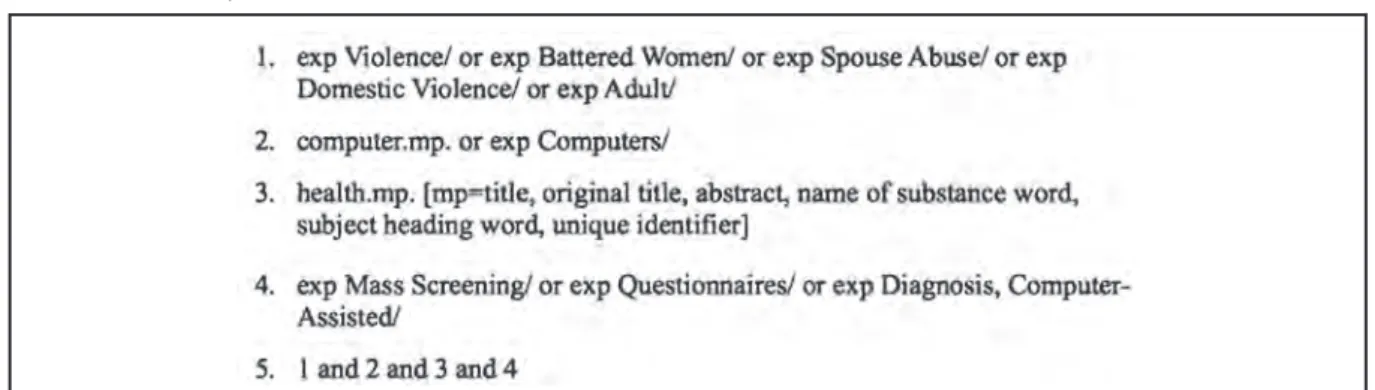
A systematic review of peer-reviewed published literature was conducted. Using pre-established search terms, the electronic data bases of Medline (Ovid) and PsychInfo were searched for the time period of 1996 to 2010. The key search terms were partner violence/abuse, health, computer, and screen (Box 1). The search was limited to English language articles and studies with adult populations. This search led to the identification of 1657 records. After removing duplicates, two reviewers read the titles and abstracts of the identified records to apply pre-specified inclusion criteria: primary evaluative study (qualitative or quantitative), enhanced Web 2.0 computer interactive screen, and a focus on partner violence. Any discrepancy between the reviewers was resolved by discussion until a complete consensus was reached. Eleven studies were identified as potentially eligible (Figure 1). On review of the full-text articles, five studies met all of the inclusion criteria [46-50]. The selected studies involved two programs of research in the emergency and family medicine settings, both of which used similar interactive computer-assisted screening for IPVC. The reference lists of the selected studies were hand searched and specific authors were contacted, leading to the inclusion of three related studies [37, 51, 52] and results of an in-progress publication for a related chart review to include multiple types of evidence.
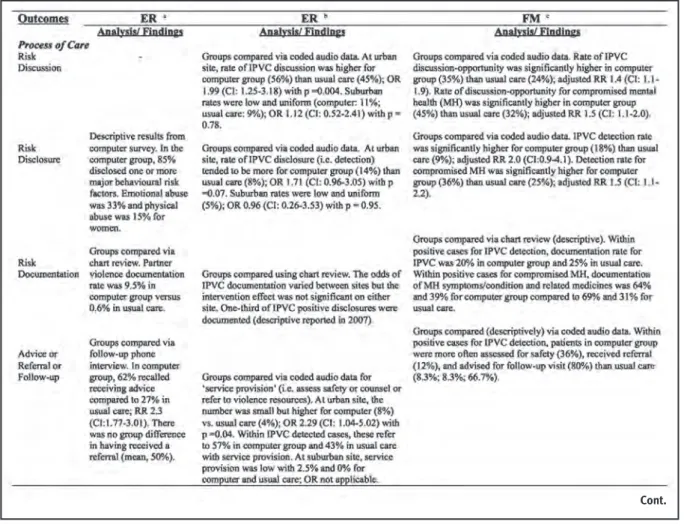
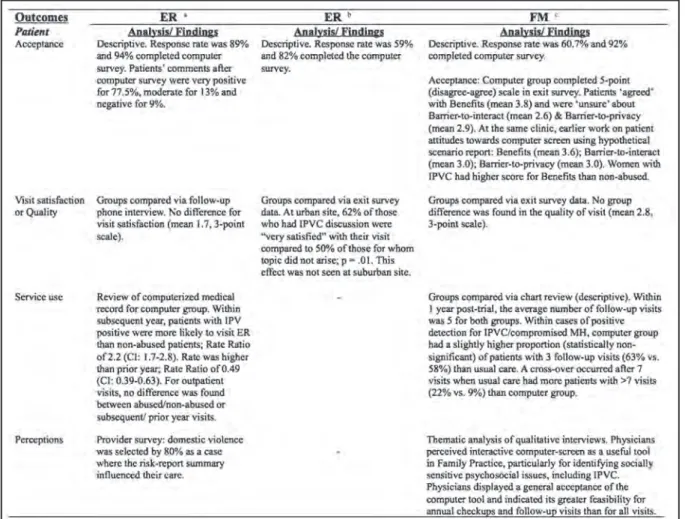
to examine the study design and limitations, participants, points of data collection, nature of intervention, and outcomes [53]. The evidence was qualitatively synthesized and involved the creation of summary tables to describe the study characteristics (Table 1) and findings (Table 2) in relation to outcomes grouped as: process-of-care outcomes (e.g., rates of IPVC disclosure, detection, documentation, advice, referral and follow-up), patient outcomes (e.g., acceptance, visit satisfaction, and service use), and provider outcomes (e.g. comfort and perceptions). This conceptual grouping of the outcomes is based on the dyadic nature of provider-patient relationship.
Thus, the process-of-care outcomes are those which require simultaneous contributions from both patient and provider and occur during an encounter. For example, risk disclosure in a medical visit requires not only truthfulness and readiness of the patient but also the humane and professional behaviour of the healthcare provider. The patient outcomes or provider outcomes are those which occur on the side of the patient or provider after an encounter.
Results
We first describe the development of an interactive computer-assisted program, Promote Figure 1. Flow diagram of study selection.
Health, and the methods used in the parent trial studies. Then, participants and evaluated outcomes are presented for the emergency and family medicine contexts.
Interactive computer screen
Rhodes and colleagues first developed Promote Health in 1998 for a hospital emergency (ER) department in Chicago [37, 46, 47]. This
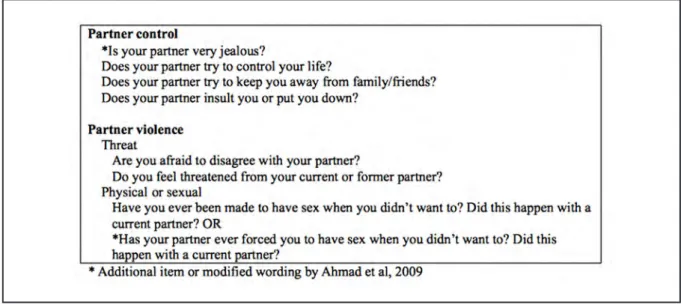
multi-risk computer survey used questions from validated and recommended scales, including questions for IPVC [54-57] (Box 2).
Other content areas were depression, substance use, sexual health, road and home safety, anxiety and anger, cardiovascular risks and some socio-demographic factors. The researchers state that the inclusion of IPVC questions in a multi-risk survey reduces the social sensitivity or perceived Table 1. Summary of included studies.
stigma associated with violence and the possible perception of ‘labelling’ among respondents [37]. A question-skip pattern was built into the program for items that did not apply to a respondent. In their earlier work, Rhodes et al computer-tested and modified the questions by conducting qualitative interviews with 141 patients. The reading level of the survey was assessed as equivalent to 5th grade. The computer program also included additional health information on several topics to be optionally searched and printed by patients after taking the survey. The original computer survey for the ER setting had 145 questions with a completion time of 15 to 18 minutes. Subsequently, Rhodes et al used the computer survey in a large trial in an urban and suburban ER setting [48]. More recently, Ahmad et al used a shorter version with 79 questions, completed in 7 minutes on average, within a family medicine (FM) clinic in Toronto [49].
In both settings, the interactive program generated reports for the patient and provider, qualifying the criterion of enhanced Web 2.0 technologies. Patients had the option to review and/or print an individualized and
simple language recommendation sheet after completing the survey. This recommendation sheet summarized patients’ self-disclosed risks and provided information on related services as cues-to-action. The 1-page risk report generated for the provider was printed by the project-staff and attached to the patient’s medical chart before the medical consultation. The provider report listed the patient’s risks under “Health Risk by Category” with subsections for general health, social network, conflict in relationships, substance abuse, sexual health, and safety. This report also printed city-specific referrals and contacts.
Methods of the parent trials
The included ER studies were five published articles on two clinical trials. The first trial was conducted in 1999-98 and used a controlled design with alternate assignments to the computer screen and usual care group [37, 46, 47]. The usual care group refers to participant patients who received standard medical care without additional screening prior to the medical consultation. The randomization was not concealed; patients
Table 2. Interactive computer-assisted screen for IPVC in Emergency (ER) and Family Medicine (FM) settings.
and providers were not blinded, however, the follow-up assessor was blinded to the group assignment. Some imbalance was found between the two groups, in that the computer group was slightly younger than the usual care group. Most of the analyses used descriptive statistics and some Relative Risks (RR) were estimated with no control for group differences.
The second ER trial selected in this review was conducted in 2001-02 using a randomized controlled design within an urban and suburban site [48, 51]. In this study, randomization was concealed, patients and providers were not blinded, but the audiotape data coders were blinded to the group assignment. Within each site, the computer and usual care groups were balanced and had similar demographics. The Odds Ratio (OR) was estimated within the site using mixed logistic regression, where clustering of patients within a primary provider was controlled by entering the provider as a random effect. Potential confounders were not controlled. Rhodes et al also conducted other linked studies, such as a post-trial medical chart review and a
follow-up survey with the providers.
The FM studies by Ahmad et al included in this review are 3 published articles and one unpublished work. The parent trial in FM was a randomized controlled trial conducted in 2005 with concealed randomization, blinded patients and providers with respect to the purpose of study, and blinded audiotape-data coders about group assignment [49]. The computer and usual care groups were balanced with similar demographics. The RR was estimated using binomial regression models with log link with and without adjustment for covariates (place of birth, education, employment status, self-rated health). Results were reported by re-sampling both patients and providers to demonstrate the influence of clustering of patients within providers, which was minimal. Other linked studies in FM included a pre-trial survey with patients [50], a post-trial medical chart review (unpublished), and follow-up qualitative interviews with the providers [52].
Participants and outcome evaluation in Table 2. Interactive computer-assisted screen for IPVC in Emergency (ER) and Family Medicine (FM) settings. (Cont).
emergency department
Rhodes’s earlier quasi-experimental trial was conducted from July 1998 to January 1999 with 542 adult patients with non-urgent conditions visiting an urban ER that predominantly received African American patients [37, 46, 47]. Patient eligibility criteria included consent for a follow-up phone interview. Eligible men and women gave verbal consent and were alternatively assigned to a computer intervention (n = 248) or usual care (n = 222). In the computer group, participants’ qualitative comments were gathered after they completed the computer survey. After one week, 396 trial participants were successfully contacted for a follow-up phone interview. The authors found that 89% of the eligible patients agreed to participate and 94% assigned to the computer screen were able to complete it before being called into the treatment room. Eighty-five percent of patients in the computer group disclosed one or more major behavioural risk factors such as current smoking (32%), untreated hypertension (13%), problem drinking (19%), use of street drugs (13%), major depression (35%), and unsafe sexual behaviour (33%) [46]. The disclosure rates for emotional and physical partner violence were 33% and 15% for the participant women, respectively [47]. Based on qualitative comments from 124 participants about the computer screen, 77.5% perceived it as extremely positive, 13% as moderately positive and 9% as negative [37]. Further, 95% of patients in the computer group sought additional health information provided by the computer program. In the follow-up phone interview, 62% of the patients in the computer group recalled receiving advice to improve their health compared to 27% in the usual care [46]. The RR for advice receipt was 2.3 (95% Confidence Interval [CI]: 1.77 to 3.01). There was no group difference in the visit satisfaction and the frequency of having received a referral. Following the controlled trial, 36 participant ER physicians were surveyed. Overall, the responding 33 physicians appreciated the concept of having the patient “pre-screened” and 80% selected “domestic violence” when asked where the risk report influenced their care [37]. The research team also conducted a retrospective chart review to examine the documentation of IPVC [47]. The selected ER setting had charts with check boxes for six psychosocial risk factors: tobacco use, alcohol abuse, drug use, risk of sexually transmitted infection, psychiatric symptoms and domestic violence. This study revealed an improved physician documentation of partner violence in
the computer group compared to the usual care group (9.5% versus 0.6%). Yet, this accounts for only 19 out of 83 positively screened patients in the computer group. For 248 patients in the computer group, Rhodes and colleagues also examined the computerized medical records for the number of visits in the one-year prior and subsequent to the index visit [37]. For the prior year, patients with experiences of IPVC were less likely to visit the ER (rate ratio of 0.49; 95% CI: 0.39-0.63) and outpatient department (rate ratio of 0.73; 95% CI: 0.63-0.85) than non-abused patients. For the subsequent year, patients with experiences of IPVC were 2.2 times more likely to visit ER than non-abused patients (rate ratio 2.2; 95% CI: 1.7-2.8) while no change was seen for the outpatient visits.
their visit had a higher rate of visit satisfaction compared to those without such a discussion. However, this impact of computer screening was limited to the urban site.
Participants and outcome evaluation in family medicine
Between March and September of 2005, Ahmad et al conducted a randomized controlled trial at a family medicine clinic with a multidisciplinary team affiliated with a teaching hospital in Toronto, Canada [49]. Female patients were eligible to participate if they were at least 18 years of age and in a current or recent intimate relationship (within the last 12 months). Patients provided written consent and were randomized into the computer screen or usual care group with an allocation ratio of 1:1. Methods of data collection were audio-taping of the visit, an exit survey, chart review, and post-trial qualitative interviews with physicians and patients. Out of 586 eligible women, 314 consented, yielding a response rate of 60.7%. The opportunity to discuss IPVC arose for 35% of the computer-screened group and 24% of the usual care group, with an adjusted relative risk [RR] of 1.4 (95% CI: 1.1 to 1.9). Detection of IPVC occurred in 18% of the computer-screened group and 9% of the usual care group, with an adjusted RR of 2.0 (95% CI: 0.9 to 4.1). This analysis excluded three patients with missing covariates and two patients for whom the outcome was coded as ‘other’ because it was ambiguous to the coders using the audio-taped data for the medical visit. With regards to the descriptive analyses for positive IPVC detection, physicians assessed patient safety in 36% of the computer-screened group (9 of 25 participants) and 8.3% of the usual care group (1 of 12 participants). Within positive IPVC detection cases, 12% of patients in the computer-screened group and 8.3% in the usual care received referrals. During these visits, physicians asked 80% of the computer-screened patients (20 of 25 participants) to set up a follow-up appointment compared to 66.7% in the usual care group (8 of 12 participants). Computer screening was associated with statistically significantly more opportunities for discussing and detecting mental health disorders, with an adjusted RR of 1.5 for both (95% CI: 1.1 to 2.0; 95% CI: 1.0 to 2.2). Participant patients recognized the benefits of computer screening but reported being ‘unsure’ about privacy and interference with physician interactions. This was similar to an earlier study using a hypothetical scenario to measure attitudes towards computer screening [51].
After the trial, 10 participant physicians who had seen at least 5 of the participant patients were interviewed [52]. Three overarching themes emerged in relation to interactive computer screening: perceived benefits, perceived concerns or challenges, and feasibility (i.e. future use). Physicians unanimously acknowledged the potential of computer-assisted screening to open dialogue on socially sensitive psychosocial health risks, such as partner violence, substance abuse and poor mental health. They also appreciated the general facilitative role of the tool, such as time-efficiency in a visit, by asking questions on health risks prior to the consultation and triggering patients’ self-reflections on those risks. However, in the context of ongoing physician-patient relationships, some physicians expressed concerns about the impact of computer-assisted assessments on visit time, patient readiness to talk about psychosocial issues when the purpose of the visit was different, and the suitability of such risk screening for all visits to detect ‘new’ risk-information. In contrast, other physicians discussed solutions to overcome these challenges. For example, by asking patients about their priority concerns and arranging follow-up visits. In terms of future use, physicians displayed a general acceptance of the risk assessment tool but considered it most feasible for annual physical checkups and follow-up visits to address the perceived challenges and the need for resources to implement such programs. They discussed resources at the clinic level (staff training, space and confidentiality), organizational level (time, commitment and financial support) and system level (provider incentive for prevention and counselling).
Discussion
The reviewed studies generate evidence on the facilitative role of enhanced Web 2.0 computer screening in improving provider-patient communication on IPVC and compromised mental health. Yet, the management of detected cases of IPVC requires a comprehensive supportive environment for frontline clinicians. The need for such system-level support seems greater for emergency departments. The reviewed trial in the emergency department reported no statistically significant change in IPVC discussion and detection for the suburban setting and reached a trend with p value of .07 for the urban setting. This is not surprising as the nature of work in emergency departments is focused on acute care, requiring only brief contact between patient and provider. This limits the opportunity to develop trust in provider-patient relationships, which is essential for the management and care of the chronic and complex issue of IPVC. Family practice or other primary care settings seem favourable for such screening because of the clinicians’ focus on comprehensive care, health promotion, and early detection in the context of ongoing provider-patient relationships. This differential impact of the clinical setting is evident in the reviewed studies. In the recent emergency department study, the computer screen improved the rate of IPVC detection at one site but it did not reach statistical significance. In the family practice study, the change in the rate of detection was moderate and reached a statistical significance. Future studies should examine the role of context on interventions to uncover the underlying mechanisms of program success and failure.
We recommend caution in generalizing and interpreting the results of the selected studies. The recent trial by Rhodes et al had a response rate of 56% and included a high proportion of African American patients, only half of whom had greater than high school education. These patients might had high level of reservations in truthfully sharing their experiences of victimization with the clinicians in emergency department due worries about stereotypes for African American subpopulation in the United States. The trial by Ahmad et al had a response rate of 61% and two-thirds of the participants had greater than high school education. These patients might have had a higher level of comfort in sharing their experiences with the family physician than patients who participated in the emergency department trial by Rhodes et al. Both of these trials used audio-taping in order to collect the
data. Compared to self-reporting, audio-taping is an objective method to measure disclosure and detection but it might have caused hesitation among participant patients to discuss the issue of partner violence. However, audio taping was used for both study arms (i.e., intervention and usual care) in the trials by Ahmad et al and Rhodes et al. This could have reduced the group difference in outcomes and, hence, the reported estimates of the intervention effect might be underestimated. At the same time, an overestimation of the intervention effect may exist due to biases arising from the convenience based selection of clinical sites and the participating providers, who may have been more likely to ask about lifestyle health risks because of volunteer bias, the academic setting, training for the study, and non-masking of the intervention. These studies could not assess how many women utilized the services to which they were referred. Future longitudinal research should evaluate the long-term health outcomes subsequent to screening and detection. Such longitudinal studies should include an assessment of the changes in their quality of life, functioning and mental health after accessing support services. A focus on the reduction of violence as an outcome could be problematic because it is the behavior of the perpetrator, which is not under the victim’s control. We would also like to acknowledge some limitations of this systematic review. We searched only two electronic databases due to limited resources. Nonetheless, our stepwise systematic approach added transparency and rigor.
for our aging and diverse society.
The emerging Web 2.0 eHealth tools can also contribute to new models of care by linking clinic-care and self-care. For example, computer-assisted screening (augmenting clinic-care) could be offered in conjunction with “virtual clinics” and “e-messaging” to patients (encouraging self-care). This evolving area holds the potential to improve timely access to health care with fewer
errors, leading to increased patient empowerment and cost savings.
In conclusion, interactive computer screening is a promising approach and needs to be tested in multiple healthcare settings and countries. When used in healthcare settings to address intimate partner violence and control, a coordinated multiservice response should be incorporated.
References
1) Krug EG, Dahlberg LL, Mercy JA, Zwi AB, Lozano R. Violence by intimate partners. Violence and Health. Geneva: World Health Organization; 2002:89-121.
2) O’Leary KD. Psychological abuse: A variable deserving critical attention in domestic violence. Violence Vict 1999;14(1):3-23. 3) Sackett LA, Saunders DG. The impact of different forms of psychological abuse on battered women. Violence Vict 1999;14(1):105-19.
4) Wagner PJ, Mongan PF. Validating the concept of abuse: Women’s perceptions of defining behaviors and the effects of emotional abuse on health indicators. Arch Fam Med 1998;7:25-9.
5) Tjaden P. Defining and measuring violence against women: Background, issues and recommendations. UN Division for the Advancement of Women 2005. Available from: http://www. un.org/womenwatch/daw/ [Accessed february 2010].
6) Plichta SB, Falik M. Prevalence of violence and its implications for women’s health. Womens Health Issues 2001;11(3):244-58. 7) Hegarty K, Gunn J, Chondros P, Small R. Association between depression and abuse by partners of women attending general practice: Descriptive, cross sectional survey. BMJ 2004;328(7440):621-4.
8) Kernic MA, Wolf ME, Holt VL. Rates and relative risk of hospital admission among women in violent intimate partner relationships. Am J Public Health 2006;90:1416-20.
9) Dearwater SR, Coben JH, Campbell JC, Nah G, Glass N, McLoughlin E, et al. Prevalence of intimate partner abuse in women treated at community hospital emergency departments. JAMA 1998;280:433-8.
10) Sansone R, Wiederman MW, Sansone LA. Health care utilization and history of trauma among women in a primary care setting. Violence Vict 1997;12(2):165-72.
11) Gerbert B, Abercrombie P, Caspers N, Love C, Bronstone A. How health care providers help battered women: the survivor’s perspective. Women Health 1999;29:115-35.
12) Warshaw C. Limitations of the medical model in the care of battered women. Gender Soc 1989;3:506-17.
13) Zink T, Elder N, Jacobson J, Klostermann B. Medical management of intimate partner violence considering the stages of change: precontemplation and contemplation. Ann Fam Med 2004;2(3):231-9.
14) Hathaway JE, Zimmer B, Willis G, Silverman JG. Perceived changes in health and safety following participation in a health care-based domestic violence program. J Midwifery Womens Health 2008;53:547-55.
15) Parker B, McFarlane J, Soeken K, Silva C, Reel S. Testing an intervention to prevent further abuse to pregnant women. Res Nurs Health 1999;22:59-66.
16) Tiwari A, Leung WC, Leung TW, Humphreys J, Parker B, Ho PC. A randomised controlled trial of empowerment training for Chinese abused pregnant women in Hong Kong. BJOG 2005;112(9):1249-56.
17) Bybee D, Sullivan CM. Predicting re-victimization of battered women 3 years after exiting a shelter program. Am J Community Psycho 2005;36(1/2):85-96.
18) Ramsay J, Richardson J, Carter YH, Davidson LL, Feder G. Should health professionals screen women for domestic violence? Systematic review. BMJ 2002;325(314):317.
19) Wathen CN, MacMillan HL. Interventions for violence against women: Scientific review. JAMA 2003;289(5):589-99. 20) Nelson HD, Nygren P, McInerney Y, Klein J. Screening women and elderly adults for family and intimate partner violence: A review of the evidence for the US Preventive Services Task Force. Ann Intern Med 2004;140(5):387-404. 21) American Academy of Family Physicians. Violence position paper: AAFP policy and advocacy statement. American Academy of Family Physicians 2005. Available from: http://www.aafp. org/x7132.xml. [Accessed february 2010].
22) Brown R. Roadmaps for clinical practice: Case studies in disease prevention and health promotion - Intimate partner violence. Chicago, IL: American Medical Association, 2002. 23) American College of Obstetricians and Gynecologists. ACOG issues technical bulletin on domestic violence. Am Fam Physician 1995;52(4):1209.
24) Cherniak D, Grant L, Mason R, Moore B, Pellizzari R, Society of Obstetricians and Gynecologists of Canada. SOGC clinical practice guidelines: Intimate partner violence consensus statement. J SOGC 2005;27(4):365-88.
25) Cole TB. Is Domestic Violence Screening Helpful? JAMA 2000;284(5):551-3.
26) Bauer HM, Rodriguez MA, Quiroga S, Flores-Ortiz YG. Barriers to health care for abused Latina and Asian immigrant women. J Health Care Poor Underserved 2000;11(1):33-44. 27) Rodriguez MA, Quiroga SS, Bauer HM. Breaking the silence. Battered women’s perspectives on medical care. Arch Fam Med 1996;5(3):153-8.
28) Sugg KN, Inui T. Primary care physicians’ response to domestic violence. Opening Pandora’s box. JAMA 1992;267(23):3157-60.
29) Rodriguez MA, Bauer HM, McLoughlin E, Grumbach K. Screening and intervention for intimate partner abuse: practices and attitudes of primary care physicians. JAMA 1999;282(5):468-74.
30) Garimella R, Plichta SB, Houseman C, Garzon L. Physician beliefs about victims of spouse abuse and about the physician role. J Womens Health Gend Based Med 2000;9(4):405-11. 31) Brown JB, Lent B, Sas G. Identifying and treating wife abuse. J Fam Pract 1993;36(2):185-91.
32) Waalen J, Goodwin MM, Spitz AM, Petersen R, Saltzman LE. Screening for intimate violence by health care providers - Barriers and interventions. Am J Prev Med 2000;19(4):230-7. 33) Bradley F, Smith M, Long J, O’Dowd T. Reported frequency of domestic violence: cross sectional survey of women attending general practice. BMJ 2002;324(7332):271.
factors associated with disclosure of intimate partner abuse to clinicians. J Fam Pract 2001;50(4):338-44.
35) Titus K. When physicians ask, women tell about domestic abuse and violence. JAMA 1996;275(24):1863-5.
36) Gerbert B, Bronstone A, Pantilat S, McPhee S, Allerton M, Moe J. When asked, patients tell: disclosure of sensitive health-risk behaviors. Med Care 1999;37(1):104-11.
37) Rhodes KV. The promise and problems with using information technology to achieve routine screening for intimate partner violence. Family Violence Prevention Fund and Health Practice 2005;1(3):e14.
38) Turner CF, Ku L, Rogers SM, Lindberg LD, Pleck JH, Sonenstein FL. Adolescent sexual behaviour, drug use, and violence: increased reporting with computer survey technology. Science 1998;280:867-73.
39) Locke SE, Kowaloff HB, Hoff RG, Safran C, Popovsky MA, Cotton DJ, et al. Computer-based interview for screening blood donors for risk of HIV transmission. JAMA 1992;268(10):1301-5. 40) Lucas R, Mullin P, Luna C, McInory D. Psychiatrists and a computer as interrogators of patients with alcohol-related illnesses: a comparison. Br J Psychiatry 1977;131:160-7. 41) Tourangeau R, Smith TW. Asking sensitive question. The impact of data collection mode, question format, and question context. Public Opin Q 1996;60:274-304.
42) Becker D, Gomez E, Kaiser D, Yoshihasi A, Hodge R Jr. Improving preventive care at a medical clinic: how can the patient help? Am J Prev Med 1989;5(6):353-9.
43) Roter D. Patient participation in the patient-provider interaction: the effects of patient question asking on the quality of interaction, satisfaction and compliance. Health Educ Monogr 1977;5(4):281-315.
44) Cortes DE, Mulvaney-Day N, Fortuna L, Reinfeld S, Alegria M. Patient--provider communication: understanding the role of patient activation for Latinos in mental health treatment. Health Educ Behav 2009;36(1):138-54.
45) Flower J. Beyond the digital divide. Health Forum J 2003;46(1):8-13.
46) Rhodes KV, Lauderdale DS, Stocking CE, Howes DS, Roizen MF, Levinson W. Better health while you wait: A controlled trial of a computer based intervention for screening and health promotion in the emergency department. Ann Emerg Med 2001;37(3):284-91.
47) Rhodes KV, Lauderdale DS, He T, Howes DS, Levinson W. “Between me and the computer”: Increased detection of intimate partner violence using a computer questionnaire. Ann Emerg Med 2002;40(5):476-84.
48) Rhodes KV, Drum M, Anliker E, Frankel RM, Howes DS, Levinson W. Lowering the threshold for discussions of domestic violence: a randomized controlled trial of computer screening. Arch Intern Med 2006;166(10):1107-14.
49) Ahmad F, Hogg-Johnson S, Stewart D, Skinner H, Glazier R, Levinson W. Computer-assisted screening for intimate partner violence and control: A randomised trial. Ann Intern Med 2009;151(2):93-102.
50) Ahmad F, Hogg-Johnson S, Stewart D, Levinson W. Violence involving intimate partners: Prevalence in Canadian family practice. Can Fam Physician 2007;53(3):460-8.
51) Rhodes KV, Frankel RM, Levinthal N, Prenoveau E, Bailey J, Levinson W. “You’re Not a Victim of Domestic Violence, Are You?” Provider-Patient Communication about Domestic Violence. Ann Intern Med 2007;147(9):620-8.
52) Ahmad F, Skinner HA, Stewart DE, Levinson W. Perspectives of Family Physicians on Computer-assisted Health-risk Assessments. J Med Internet Res 2010;(in press).
53) Liberati A, Altamn DG, Tetzlaff J, Mulrow C, Gotzsche PC, Ioannidis JPA, et al. The PRISMA statement for reporting systematic reviews and meta-analysis of studies that evaluate health care interventions: explanation and elaboration. Ital J Public Health 2009;6(4):354-91.
54) McFarlane J, Parker B, Soeken K, Bullock L. Assessing for abuse during pregnancy. Severity and frequency of injuries and associated entry into prenatal care. JAMA 1992;267(23):3176-8. 55) Norton LB, Peipert JF, Zierler S, Lima B, Hume L. Battering in pregnancy: an assessment of two screening methods. Obst Gynecol1995;85(3):321-5.
56) Feldhaus KM, Koziol-McLain J, Amsbury HL, Norton IM, Lowenstein SR, Abbott JT. Accuracy of 3 brief screening questions for detecting partner violence in the emergency department. JAMA 1997;277(17):1357-61.