Lessons Learned through Review of Telemedicine Research in
Mental Health
By
Mandrill Taylor, M.D.
A Master’s Paper submitted to the faculty of the University of North Carolina at Chapel Hill
in partial fulfillment of the requirements for the degree of Master of Public Health in
the Public Health Leadership Program
Chapel Hill
2013
Advisor [Print & Signature]
Date
Second Reader [Print & Signature]
Abstract
This paper will serve as a systematic review in investigating the question of whether
telemedicine services can resolve the growing global burden of mental illness. Based on
disability-adjusted life years (DALYs), unipolar major depression is projected to become the
leading cause of disability in the world by 2030 (WHO, 2008). Regrettably, depression is seen
nearly 3 to 5 times more often in those persons diagnosed with post-traumatic stress disorder
(Kessler et al, 1995). In the setting of natural disaster, terrorism and war-related violence, both
diseases must be addressed as a source of increasing concern for every global citizen. In addition
to this analysis, discussion and recommendations on further areas of research will be provided.
Through a computerized literature search of telepsychiatry across either geopolitical borders or
cultural divides in the past ten years, 142 articles were identified. Of those 142 articles, 5 articles
met the eligibility criteria of having been screened under the gold-standard diagnostic criteria of
either the Diagnostic and Statistical Manual of Mental Disorders (“DSM-IV”) or International
Statistical Classification of Disease and Related Health Problems (“ICD-10”).
The major flaw of this review was the low statistical power based on the limited amount of
research which adhered to gold-standard diagnostic criteria. Along with the 5 articles selected,
33% of the original 142 articles published in the last ten years were also within the past 2 years.
Of the 5 articles which met criteria, none were conducted across national borders.
In conclusion, future research is needed in the area of cross-border telepsychiatry, specifically in
the area of transnational clinical management. In the interim, future systematic reviews may need
to include studies of non-DSM/ICD depression and PTSD in order to increase statistical power
Introduction
Recent advancements in information and communication technology have allowed the
structural equipment involved in telemedicine to become more affordable and, thereby, more
accessible to both clinical providers and the general public. In the setting of rising health care
costs and increased patient expectations, telemedicine services provide an excellent source for an
alternative mode of health care delivery (Mair & Whitten, 2000). Since diagnostic evaluation and
therapeutic management of mental disorders are mainly obtained through audio and visual
means, psychiatry and psychological counseling are particularly well-suited for utilization of
telemedicine (Wootton et al. 2003). Evidence has shown visual-based diagnostic batteries, such
as the Abnormal Involuntary Movement Scale (AIMS), performed through videoconferencing
possess the same degree of reliability than evaluations conducted by direct observations
(Amarendran et al, 2011; Hubble et al, 1993). Just within the past few years, psychiatry’s use of
telecommunications has begun a transition from the clinically supervised settings of hospitals
and health maintenance organizations to the clinically unsupervised setting of private practice
offices (Shore, 2013).
With this ever growing shift in utilization, a comprehensive analysis of the barriers that
limit telepsychiatry as an effective health delivery system is needed to better understand the
necessary strategies which must be implemented to ensure its success. In addition to providing
relevant background information, this paper will attempt to address the implications of
transnational telepsychiatry by systematically reviewing transcultural and cross-state border
research articles on the management of both the most prevalent mental disorder, unipolar
stress disorder. By highlighting significant studies, deductions drawn can facilitate proactive
change through implementation of concluded recommendations.
Background
As outlined in Dr Vikram Patel’s recent article in the Harvard Review of Psychiatry, the
core agenda of global mental health is to scale up services for people with mental disorders and
promote their human rights. The World Health Organization has attempted to address this
challenge by instituting international and region-specific guidelines of management through the
actions of mhGAP, the Mental Health Gap Action Programme.
In the 2004 update of the World Health Organization’s Global Burden of Disease (GBD)
Report, neuropsychiatric disorders were found to account for over one third of years lived with
disability (YLD) among adults aged 15 years or older (WHO, 2008). Based on
disability-adjusted life years (DALYs), unipolar major depression is projected to become the leading cause
of disability in the world by 2030 (WHO, 2008). Depression is particularly debilitating due to its
high prevalence, impact on functionality and early age of onset (Ustun, Ayuso-Mateo, Chatterji,
Mathers & Murray, 2004). Depression is seen nearly 3 to 5 times more often in those persons
diagnosed with post-traumatic stress disorder [PTSD] (Kessler et al, 1995). This finding is most
unfortunate due to the historically difficult nature in assessing PTSD within a global context.
Fortunately, recent research has provided several concise diagnostic instruments to increase its
usage as a screening device; such as The Trauma Screening Questionnaire (abridged version of
the PTSD Symptom Scale) and PTSD-8 (abridged version of the Harvard Trauma Questionnaire)
(Brewin et al, 2002; Foa, Cashman, Jaycox & Perry, 1997; Hansen et al, 2010; Mollica et al,
2004 revision of the WHO Global Burden of Disease report, clinical utilization of these
previously mentioned abridged assessment tools did not exist prior to this latest WHO study.
Therefore, we are not currently in possession of an accurate epidemiological picture of PTSD.
However, in the setting of natural disaster, terrorism and war-related violence; both major
depression and post-traumatic stress disorder must be addressed as a source of increasing
concern for each and every citizen within our global community.
Unfortunately, disparities within quality and access of healthcare exist along the
developmental spectrum of nation-state populations. For example, World Health Organization
reports that its European region has 200 times as many psychiatrists as seen in Africa (WHO,
2011). Therefore, in May 2012, the 65th World Health Assembly adopted a resolution which
seeks to draft a coordinated response to address the global burden of mental disorders
(http://apps.who.int/gb/ebwha/pdf_files/EB132/B132_8-en.pdf). The comprehensive mental
health action plan drafts six cross-cutting principles; universal access and coverage, human
rights, evidence-based practice, life-course approach, multisectoral approach and empowerment
of persons with mental disorders and psychosocial disabilities. The main objectives outlined in
the plan were to strengthen effective leadership, provide integrated responsiveness, implement
promotional and preventative strategies as well as strengthen evidence and research. In targeting
the disparity of access, the WHO plan specifically sets the goal of reducing the treatment and
service gap for mental health by 20% by the year 2020. Based on their data, 85% of the world’s
population of six billion people live in low- and middle-income countries. In fact, the majority of
countries in South-East Asia and Africa spend less than 1% of their health care budget on
of global disability by the year 2030, the urgency in confronting limited access to mental health
care is becoming necessity.
Health care technology can help address the inequity of mental health service delivery. In
1994, South Australia’s Rural and Remote Mental Health Service (RRMHS) became one of the
first large-scale programs to establish a model to provide psychiatric care via
telecommunications. Within its first four years of operation, RRMHS offered over 2,000 clinical
consultations, which included emergency services, inpatient liaison and post-discharge follow-up
(Freuh et al, 2000). Today, there are multiple examples of case reports researching the use of
telepsychiatry in countries outside of the United States. However, there are much fewer studies
and projects which highlight clinical psychiatric management across borders. Within the United
States, the Federation of State Medical Boards has released a legislative review of each state’s
policy on practicing cross-border telemedicine. Based on the most recent 2012 edition, ten out of
the fifty states allow physicians to practice across state lines with use of telemedicine. The World
Health Organization (WHO) released the results from their Global eHealth Survey, which
provides a more accurate understanding of the global climate. In addition to this survey, the
WHO also released a report titled “Building Foundations for eHealth” (2007), which provides a
framework for both governmental and non-government agencies to pursue resources available
for cross-border telemedicine.
Currently, there is limited data on the dynamics of cross-border telepsychiatry. Therefore,
abstractions based on results from telepsychiatry studies which conducted research across state
borders as well as across cultural divides are needed to determine strategies to future
Methods
Literature Search
Computerized literature searches were performed in MEDLINE to identify clinical trials
as well as case and cohort studies published from March 2003 through February 2013. The
search criteria for combined search terms regarding telepsychiatry (telepsychiatry, telemedicine,
telecommunication, eHealth, mobile health, telehealth, telemental*, teleconfererenc* or
videoconferenc*) with global health (global health, world health, international health,
ethnopsychiatr*, cultural psychiatry, transcultural psychiatry or trans-cultural psychiatry) and
either depression (depressi*, MDD or melancholia) or post-traumatic stress disorder
(post-traumatic stress, post(post-traumatic stress disorder*, (post-traumatic stress disorder*, combat disorder*,
combat stress disorder*, combat neurosis, combat neuroses, war neurosis, war neuroses, shell
shock or PTSD). Associated search terms were chosen based on already associated Medical
Subject Headings [MeSH] terms listed through the MEDLINE database. All terms were searched
in both titles and abstracts.
Eligibility Criteria
Evidence included in this review was selected based on the following criteria: (1) design:
usage of videoconference for management of post-traumatic stress disorder and/or major
unipolar depression; (2) intervention: direct patient management; (3) outcomes: clinical
evaluations and/or surveys. Exclusion criteria consisted of telemedicine research not based in
both audio and visual real-time interaction as well as studies with cohorts who are under the age
To be included, articles must describe research on the mental disorders of either major
unipolar depression or traumatic stress. Research conducted by American investigators must
include cohorts who meet criteria set forth by the fourth edition of the Diagnostic and Statistical
Manual of Mental Disorders (“DSM-IV”). Therefore, use of the Structured Clinical Interview for
DSM-IV (“SCID”) and other assessment tools based on DSM-IV criteria were allowed as part of
the inclusion criteria for this review. Research published in non-American journals must include
cohorts who meet criteria set forth by either the tenth revision of the International Statistical
Classification of Disease and Related Health Problems (“ICD-10”) or the DSM-IV. Therefore,
the use of the Mini International Neuropsychiatric Interview (“MINI”) and other assessment
tools based on ICD-10 criteria were allowed as part of the inclusion criteria for this review as
well. Articles with participant cohorts who had not been diagnosed by either the DSM-IV or
ICD-10 criteria were excluded from the study.
Selected articles on cross-border telepsychiatry must include research on clinical
management conducted amongst participant cohorts across geopolitical and/or cultural borders.
International investigators conducting telemedicine research within their same nation-state were
excluded from the study.
Quality Assessment
Quality of selected articles is based on methodological criteria set by the National Health
and Medical Research Council to assess the effectiveness of interventions. The highest level of
evidence [Level I] is a systematic review of randomized controlled trials (RCTs), which are the
next highest level of evidence [Level II]. Aside from systematic reviews and RCTs,
without [Level III-3] concurrent controls are the next highest levels of evidence. The lowest level
[Level IV] are case studies
Other measurements of quality, include (1) directness: evidence based directly in global
cross-border telepsychiatry research was given a higher priority than research based in either
domestic telepsychiatry or non-specific global telemedicine; (2) year of publication: more recent
evidence is more likely to have used information and communication technology more akin to
current standards; (3) sample size: larger cohort samples decrease likelihood of error within
outcomes.
Results
One hundred and forty two articles resulted from preliminary search, see Figure 1.
Five Articles remained after application of eligibility criteria, see Figure 1.
o Gros, D. F., Yoder, M., Turek, P. W., Lozano, B. E., & Acierno, R. (2011).
Exposure Therapy for PTSD Delivered to Veterans via Telehealth: Predictors of Figure 1
5 Articles
142 Articles
137 Articles
Excluded
due to lack
of DSM/ICD
Treatment Completion and Outcome and Comparison to Treatment Delivered in
Person. Behavioral Therapy. 42, 276-283.
In this cohort study with controls, 89 combat veterans diagnosed with
PTSD had 12 sessions of exposure therapy either by real-time
videoconference across state lines or in person.
o Yeung, A., Halis, K., Chang, T., Trinh, N.H. & Fava, M. (2011). A study of the
effectiveness of telepsychiatry-based culturally sensitive collaborative treatment
of depressed Chinese Americans. BMC Psychiatry, 11, 154.
In this cohort study with controls, 120 Chinese Americans with expressed
language preference of either Mandarin or Cantonese who were diagnosed
with MDD received initial assessment either by real-time videoconference
or in person.
o Chong, J., & Moreno, F. A. (2012). Feasibility and Acceptability of Clinic-Based
Telepsychiatry for Low-Income Hispanic Primary Care Patients. Telemedicine
Journal and e-Health, 18, 297-304.
In this cohort study with controls, 147 American Latinos at Community
Health Center diagnosed with MDD had monthly psychiatric sessions
either by real-time videoconference or in person.
o Gros, D. F., Price, M., Strachan, M., Yuen, E. K., Milanak, M. E., & Acierno, R.
(2012) Behavioral activation and therapeutic exposure: an investigation of relative
symptom changes in PTSD and depression during the course of integrated
behavioral activation, situational exposure, and imaginal exposure techniques.
Behavioral Modification, 36, 580-599.
In this cohort study, 117 combat veterans diagnosed with PTSD had 8
sessions of exposure therapy either by real-time videoconference across
state lines or in person.
o Moreno, F. A., Chong, J., Dumbauld, J., Humke, M., & Byreddy, S. (2012). Use
of standard Webcam and Internet equipment for telepsychiatry treatment of
In this cohort study with control, 167 American Latinos at Community
Health Center diagnosed with MDD had monthly psychiatric sessions
either by real-time videoconference or in person.
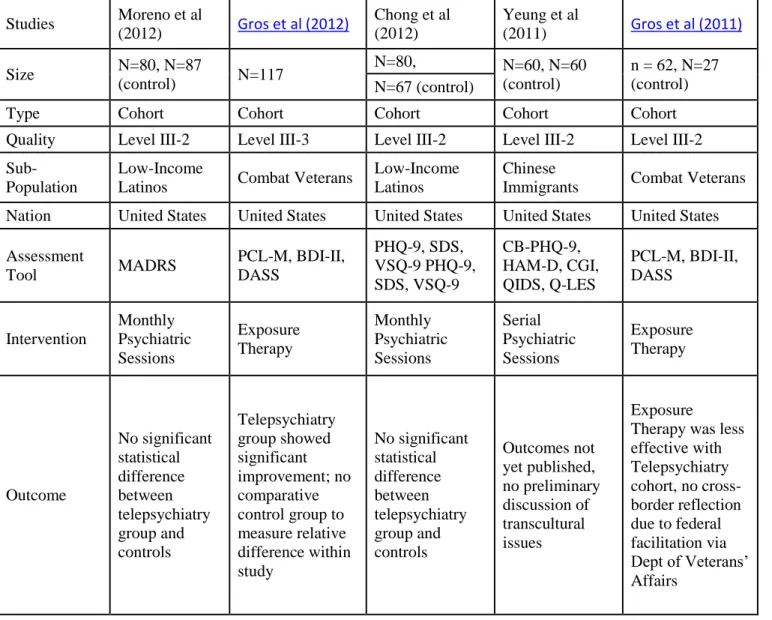
Table 1. Description of Studies Reviewed
Studies Moreno et al
(2012) Gros et al (2012)
Chong et al (2012)
Yeung et al
(2011) Gros et al (2011)
Size N=80, N=87
(control) N=117
N=80, N=60, N=60 (control)
n = 62, N=27 (control) N=67 (control)
Type Cohort Cohort Cohort Cohort Cohort
Quality Level III-2 Level III-3 Level III-2 Level III-2 Level III-2
Sub-Population
Low-Income
Latinos Combat Veterans
Low-Income Latinos
Chinese
Immigrants Combat Veterans
Nation United States United States United States United States United States
Assessment
Tool MADRS
PCL-M, BDI-II, DASS PHQ-9, SDS, VSQ-9 PHQ-9, SDS, VSQ-9 CB-PHQ-9, HAM-D, CGI, QIDS, Q-LES PCL-M, BDI-II, DASS Intervention Monthly Psychiatric Sessions Exposure Therapy Monthly Psychiatric Sessions Serial Psychiatric Sessions Exposure Therapy Outcome No significant statistical difference between telepsychiatry group and controls Telepsychiatry group showed significant improvement; no comparative control group to measure relative difference within study No significant statistical difference between telepsychiatry group and controls Outcomes not yet published, no preliminary discussion of transcultural issues Exposure
Therapy was less effective with Telepsychiatry cohort, no cross-border reflection due to federal facilitation via Dept of Veterans’ Affairs
Discussion
Although the research question focused on the role of cross-border global telepsychiatry,
borders. From the articles in which transnational telepsychiatry was conducted, patients had not
been adequately diagnosed under DSM-IV or ICD-10 criteria, which is a standard in psychiatric
practice. As a result of setting professional diagnostic criteria, only 5 of the 142 articles
discovered were chosen for the analysis. Unfortunately, articles selected only showed
telepsychiatry research across state borders or cultural borders not national borders. Perhaps,
more articles with stronger direct evidence may have been obtained through use of different
databases, like PsycINFO or PILOTS [Published International Literature On Traumatic Stress].
Of the five articles within the eligibility criteria, three were filtered as being transcultural
and two were filtered as being across state lines. Of those transcultural studies, the articles never
specifically identify if the cultural groups are non-American born or raised. This lack of detail
affects the quality of the results gained as perception of acculturation can vary based on
generational degrees of immigration. First generation immigrants may see more of a cultural
divide than a fourth generation immigrant of the same ethnicity. Of the interstate studies, both
were conducted under the federal agency of the Department of Veterans Affairs. Therefore, the
selected article did not highlight any difficulties in practicing medicine across state borders due
to the research being facilitated by a national agency. Due to this fact, no significant information
can be abstracted regarding barriers of geopolitical borders.
The major flaw in abstracting from this review is the low statistical power. With future
analysis of this topic, excluding non DSM or ICD based studies will be repealed to increase
significance in more accurately addressing the topic of cross-border telepsychiatry. Of the 142
articles, many highlighted psychiatric research across national borders and cultural divides.
However, virtually all of the articles were excluded due to the DSM and ICD eligibility criteria.
concerning the issue, another systematic review with less strenuous criteria to draw more
accurate abstraction will need to be performed. Another reason why a future review of this
content is necessary is secondary to the growing body of evidence; 33% out of the 142 articles
published in the past ten years were within the past two years. Due to the ascension of medical
technology, communication and collaboration have begun to play a more pivotal role in
reduction of global burdens of health. Therefore, telemedicine research will continue to manifest
at a faster rate which will result in high statistical power with future systematic reviews.
Recommendations
As already noted, the density of psychiatrists within patient population is lower in
developing countries (WHO, 2011). Therefore, quality mental health care has grown from local
necessity to global commodity. Due to current levels of worldwide burden, developed nations
find themselves in a position to provide health care services to other countries in need. Review
literature on regulation of global telemedicine continued to present two basic questions; which
legal statutes and jurisdiction should be respected in cross-border encounters, and how should
health-care professionals register and be monitored across borders (Wootton et al, 2006).
In addressing the first question of jurisdiction, one must ask which nation’s laws should
be followed in cross-border telemedicine; are they meant for the citizen or the individual who
occupies that territory? As technology develops, definitional issues continue to complicate our
traditional understanding of law and ethics. What would happen if our traditional definition of
territory were to disappear? Would laws apply to citizens who violated them while not occupying
their native soil? Traditionally, the United States has allowed foreign governments to charge
Therefore, it appears that both citizenship and political land may play a role in cross-border
jurisdiction. However, what if an American clinician was still occupying his or her own native
soil while breaking a foreign law (i.e. practicing without a local license)? If another nation wants
to punish that clinician, what right does that nation have to pursue an offensive? Does that
nation’s law affect the clinician’s alienable rights while he or she is still living in the United
States? In whose courtroom will they stand trial? Could a global court pursue charges since
virtual no unanimous global policy exist in the realm of telecommunications? Should a global
policy for telemedicine exist? Which nation-states would determine the criteria and what entity
would provide the enforcement? As you can see, there are many theoretical questions that
surround the regulatory complexities within cross-border telemedicine. Based on information
collected through this review, there will a growing need for both structure and incentive to assist
in furthering research and project implementation of cross-border telemedicine. Although
international governmental organizations, like the WHO, traditionally have difficulty in
enforcing global policy, a framework is needed to increase effective cross-border clinical
utilization of this growing technology. Without a structured framework, improper or
unsustainable investments may unknowingly sabotage well-meaning efforts to improve public
health. Therefore, a global authority like the World Health Organization would be a prime
candidate for structuring future clinical and research recommendations in the growing field of
telemedicine.
In order for us to conceptualize these future dilemmas, psychiatrists and other mental
health professionals must receive the proper training in telemedicine to provide both education
and clinical management. Usage of telepsychiatric services in the United States has expanded to
Freuh et al, 2000). For example, the University of Virginia Office of Telemedicine began
outreach clinical management and education to improve and promote health in underserved
communities since 1994. Today, resident psychiatric physicians are provided training in
implementing clinical management as part of their core education. However, technology training
is only half of the equation as transcultural competency is greatly needed to ensure a more
globalized comprehension of mental disorders. Based on rates and patterns seen in cross-national
epidemiologic surveys, we know major depression disorder differs in its presentation among
individuals of various cultures (Weissman et al, 1996). Therefore, it is of critical importance that
clinical programs incorporate learning objectives that addresses the diverse nature of ethnicity,
tradition and customs. It is worth noting that true cultural competency within global mental
health has no true end goal. Though the World Health Organization has created the Composite
International Diagnositc Interview [CIDI] based on ICD and DSM criteria for transnational and
transcultural evaluations, the assessment tool has received some criticism upon review (Kessler
and Ustun, 2004). In short, transcultural mental health care remains in its infancy but the
growing need to address the global burden of these psychiatric conditions continues to grow.
In conclusion, this topic of cross-border telepsychiatry will need further exploration to
ensure proper implementation of its associated transcultural and geopolitical dimensions. A more
expansive review based on the discussion provided will follow this paper. Although there is a
scarcity of research on the topic, the need for further mental health care in globally underserved
area continues to grow. We must understand that there exist both technical and adaptive
challenges in the field of health technology. Mental health professionals must continue to
educate themselves beyond standard clinical practice in order to address the cultural needs of an
pursuit of clinical research based on diagnostic criteria utilized in their practice. If participating
in said research is an impractical reality, service providers should remain up to date in current
practices and guidelines. If service providers can uphold that level of professional standard, the
goal of reducing the treatment and service gap for mental health by 20% by the year 2020 may
References:
Brandling-Bennett H. A., Kedar I., Pallin D. J., Jacques G., Gumley G. J., & Kvedar J. C. (2005). Delivering Health Care in Rural Cambodia via Store-and-Forward Telemedicine: A Pilot Study, Telemedicine Journal and e-Health, 11(1), 56-62.
Bria W. F., & Finn N. B. (2009). Telemedicine, Digital Communication in Medical Practice (pp. 59-73). London: Springer London.
Centre for Global eHealth Innovation. (n.d.). Retrieved from: http://www.ehealthinnovation.org/
Chong, J., & Moreno, F. A. (2012). Feasibility and Acceptability of Clinic-Based Telepsychiatry for Low-Income Hispanic Primary Care Patients. Telemedicine Journal and e-Health, 18, 297-304.
Cleland, R. L. (2002) Cross-Border Telemedicine: An Uncertain Future, Health Law Symposium
Ewell, C.R. (2003) Telemedicine: Overcoming Obstacles on the Road to Global Health Care
Finlayson, A. E. T. et al (2010). An international, case-based, distance-learning collaboration between the UK and Somaliland using a real-time clinical education website. J Telemed Telecare, 16, 181 - 184.
Froehlich W. et al (2009). Case report: an example of international telemedicine success J Telemed Telecare, 15, 208 - 210.
Gjelten, T. (2010, December 7). Secret Cable: China Said To Coordinate Google Attacks. National Public Radio. Retrieved from: http://www.npr.org/2010/12/07/131863666/secret-cable-china-said-to-coordinate-google-attack
Govtrack.us (n.d.) Retrieved from: http://www.govtrack.us/congress/billsearch.xpd?q=telehealth
Global Survey for eHealth (n.d.). Retrieved from World Health Organization: http://www.who.int/goe/data/en/
Gros, D. F., Price, M., Strachan, M., Yuen, E. K., Milanak, M. E., & Acierno, R. (2012).
Behavioral activation and therapeutic exposure: an investigation of relative symptom changes in PTSD and depression during the course of integrated behavioral activation, situational exposure, and imaginal exposure techniques. Behavioral Modification, 36, 580-599.
Gros, D. F., Yoder, M., Turek, P. W., Lozano, B. E., & Acierno, R. (2011). Exposure Therapy for PTSD Delivered to Veterans via Telehealth: Predictors of Treatment Completion and
Outcome and Comparison to Treatment Delivered in Person. Behavioral Therapy. 42, 276-283.
Jacobson P. D. & Selvin E (2000). Licensing Telemedicine: The Need for a National System, Telemedicine Journal and e-Health, 6(4), 429-439.
Kessler, R. C. and Ustun, T. B. (2004) The World Mental Health (WMH) Survey Initiative Version of the World Health Organization (WHO) Composite International Diagnostic Interview (CIDI), International Journal of Methods in Psychiatric Research, 13, 93-121.
Maheu M. M., Whitten P., & Allen A. (2001). E-Health, Telehealth and Telemedicine: A Guide to Start-up and Success. New York, NY: John Wiley and Sons, Inc.
Mair F. & Whitten P. (2000) Systematic review of studies of patient satisfaction with telemedicine. British Medical Journal 320, 1517-1520.
McLean, T. R. & McLean. A. B. (2008). Hageseth's principle of extraterritorial jurisdiction andinternational telemedicine. J Telemed Telecare, 14(6), 282 - 284.
Moreno, F. A., Chong, J., Dumbauld, J., Humke, M., & Byreddy, S. (2012). Use of standard Webcam and Internet equipment for telepsychiatry treatment of depression among underserved Hispanics. Psychiatric Services, 63, 1213-1217.
Mucic, D. (2008). International telepsychiatry: a study of patient acceptability, J Telemed Telecare, 14(5), 241 - 243.
Patel, V. (2012). Global Mental Health: From Science to Action. Harvard Review of Psychiatry, 20, 6-12. Retrieved from http://www.ncbi.nlm.nih.gov/pmc/articles/PMC3335087/
Patterson V., Hoque F., Vassallo D., Roberts M. F., Swinfen, P., & Swinfen, R. (2001). Store-and-forward teleneurology in developing countries, Journal of Telemedicine and Telecare, 7(Suppl 1), 52-53.
Perednia, D. A., & Allen A. (1995). Telemedicine Technology and Clinical Applications, JAMA, 273(6), 483-488.
Shim, R., Ye, J., & Yun, K. (2012). Treating culturally and linguistically isolated Koreans via Telepsychiatry, Psychiatric Services, 63, 946.
University of North Carolina at Chapel Hill (UNC) (n.d.). Distance MPH in Leadership. Retrieved from: http://www.sph.unc.edu/phlp/distance_leadership_mph_2081_2071.html
Weill-Cornell Medical College in Qatar (n.d.). Overview. Retrieved from: http://qatar-weill.cornell.edu/aboutUs/overview/wcmcq.html
Weinstein J. (2006, April 20). Cornell, Qatar and Hamas. Cornell Daily Sun.
Wootton R., Yellowlees P. & McLaren P. (2003) Telepsychiatry and E-Mental Health. Royal Society of Medical Press Ltd, London.
Wootton R., Craig J. & Patterson V. (Eds.) (2006). Introduction to Telemedicine. London, UK: Royal Society of Medicine Press.
World Health Organization. (2007). Building Foundations for eHealth. Retrieved from http://www.who.int/entity/goe/publications/bf_FINAL.pdf
WHO (2007) Research capacity for mental health in low- and middle-income countries: Results of a mapping project. Retrieved from http://www.who.int/mental_health/MHRC_FullText.pdf
WHO (2008) The Global Burden of Disease, 2004 Update. Retrieved from
http://www.who.int/healthinfo/global_burden_disease/GBD_report_2004update_full.pdf
WHO (2011) Mental Health Atlas 2011. Retrieved from
http://whqlibdoc.who.int/publications/2011/9799241564359_eng.pdf
Yellowlees, P. M., Odor, A., & Parish, M. B. (2012) Cross-Lingual Asynchronous Telepsychiatry: Disruptive Innovation?. Psychiatric Services, 63, 945.
Yeung, A., Halis, K., Chang, T., Trinh, N.H. & Fava, M. (2011). A study of the effectiveness of telepsychiatry-based culturally sensitive collaborative treatment of depressed Chinese