Initial Evaluation of the Pediatric PROMIS
®Health Domains in
Children and Adolescents with Sickle Cell Disease
Carlton Dampier, MD1, Vaughn Barry, PhD1, Heather E. Gross2, Yang Lui, PhD3, Courtney
D. Thornburg, MD4, Darren A. DeWalt, MD2,5, and Bryce B. Reeve, PhD2,6
1Department of Pediatrics, Emory University School of Medicine and AFLAC Cancer and Blood
Disorders Center, Children's Healthcare of Atlanta, Atlanta GA
2Cecil G. Sheps Center for Health Services Research, University of North Carolina at Chapel Hill,
Chapel Hill, NC
3School of Social Sciences, Humanities, and Arts, University of California, Merced, Merced, CA
4Department of Pediatrics, University of California, San Diego, Rady Children‟s Hospital, San
Diego, CA
5Division of General Medicine and Clinical Epidemiology, School of Medicine, University of North
Carolina at Chapel Hill, Chapel Hill, NC
6Department of Health Policy and Management, Gillings School of Global Public Health,
University of North Carolina at Chapel Hill, Chapel Hill, NC
Abstract
Background—The Patient Reported Outcomes Measurement Information System (PROMIS®) has developed pediatric self-report scales measuring several unidimensional health attributes (domains) suitable for use in clinical research, but these measures have not yet been validated in sickle cell disease (SCD).
Procedure—A convenience sample of SCD children, aged 8-17 years, from two Sickle Cell programs was recruited at routine clinic visits, including some for hydroxyurea monitoring or monthly transfusions. Children completed PROMIS pediatric items using an online data collection platform, the PROMIS Assessment Center website.
Results—A total of 235 participants (mean age 12.5 ± 2.8 years, 49.8% female) participated in the study. Adolescents (ages 12-17 years) reported significantly higher pain interference and depressive symptoms, and worse lower extremity physical functioning domain scores compared to younger children (ages 8-11 years). Female participants reported significantly higher pain
interference, fatigue, and depressive symptoms, and worse lower extremity physical functioning
Corresponding Author: Carlton Dampier MD, Department of Pediatrics, Emory Children's Center, 2015 Uppergate Dr NE, Atlanta, GA 30322, phone: 404.727.4510, Fax: 404.778.4455, [email protected].
Conflict of Interest: BR was an unpaid member of the Board of Directors for the PROMIS Health Organization during the writing of
this manuscript.
HHS Public Access
Author manuscript
Pediatr Blood Cancer
. Author manuscript; available in PMC 2017 June 01.Published in final edited form as:
Pediatr Blood Cancer. 2016 June ; 63(6): 1031–1037. doi:10.1002/pbc.25944.
A
uthor Man
uscr
ipt
A
uthor Man
uscr
ipt
A
uthor Man
uscr
ipt
A
uthor Man
uscr
domain scores compared with their male counterparts. Participants with hip or joint problems that limited usual activities reported significantly higher pain, fatigue, and depressive symptoms scores, and worse upper/lower extremity physical functioning scores as did participants who had experienced sickle pain in the previous seven days.
Conclusions—PROMIS pediatric measures are feasible in a research setting and identify expected differences in known group comparisons in a sample of SCD children. The large domain score differences between those with or without SCD-related complications suggest the potential usefulness of these measures in clinical research, but further validation studies are needed, particularly in clinical practice settings.
Keywords
Health-related quality of life; PROMIS; sickle cell disease
Introduction
Patient or parent reports of symptom intensity or frequency, particularly of pain, are used routinely in the clinical management of children with sickle cell disease (SCD) [1], and are being increasingly used as outcome measures in clinical trials of new therapies for vaso-occlusion [2]. Additional assessment of other aspects of health-related quality of life (HRQOL) such as physical function, psychological/emotional function, and social function may provide a more complete picture of the impact of the many possible SCD complications on an individual and their family [3].
A number of studies have examined the HRQOL in children and adolescents with SCD [4]. Most of these studies used the Peds QL ver 4.0™ [5], often with its additional
Multidimensional Fatigue Scales [6], given its availability and prior use in healthy childhood populations [7,8] and a large variety of chronic diseases and conditions [9]. The largest of these SCD studies enrolled 1,772 participants (53% males) in their baseline state of health with a mean age of 9.6 years (SD 4.7) and a typical distribution of sickle hemoglobinopathy types [10]. Multiple regression models controlling for hemoglobinopathy type, sex, and age suggested that parent reports of physical functioning and sleep/rest fatigue worsened in response to pain or avascular necrosis of hips/shoulders (AVN), while school functioning worsened in response to pain or asthma. Prior occurrence of sickle pain, and to a lesser extent asthma, negatively influenced child reports on almost all functioning and fatigue scales. Peds QL scale scores are sensitive to changes in acute SCD complications such as pain [11] and to social/demographic variables such as family income [12]. A modified version of the Peds QL is now available with additional SCD specific questions [13].
To provide the next generation of standardized patient-reported outcome (PROs) measures in pediatric and adult health with improved reliability and validity, the National Institutes of Health (NIH) funded the Patient Reported Outcomes Measurement Information System (PROMIS®; www.nihpromis.org) as part of the NIH Roadmap for Medical Research Initiative [14]. The PROMIS Pediatric multisite initiative, similar to the adult PROMIS project, created pediatric self-report scales measuring the unidimensional health attributes (domains) of depressive symptoms, anxiety, anger, pain interference, peer relationships,
A
uthor Man
uscr
ipt
A
uthor Man
uscr
ipt
A
uthor Man
uscr
ipt
A
uthor Man
uscr
fatigue, physical functioning - mobility, physical functioning - upper extremity, and asthma impact [15]. The items for these domains were initially developed through an extensive review of the literature, expert review, and qualitative methods (focus groups and cognitive interviewing) [16-18]. Subsequent quantitative analyses utilized item response theory (IRT) methods to develop item banks on a common metric suitable for computerized adaptive testing (CAT), in addition to creating unidimensional static (fixed-length) short forms suitable for multiple modes of administration [15]. These measures are publically available at no cost, offer flexible modes of administration, provide parent-proxy report scales for those unable to provide self-report [19] including children 5-7 years old [20], can be
customized to the unique features of the disorder [21], and potentially can provide the ability to link measures across pediatric and adult age groups [22], a unique advantage for lifespan researchers.
As part of a larger validation study of the PROMIS pediatric measures in a variety of illnesses experienced by children and adolescents including cancer, kidney disease, asthma, obesity, arthritis, or disability requiring long-term rehabilitation care [23], we evaluated the PROMIS pediatric measures in a sample of SCD children and adolescents, aged 8- to 17-years old, with a range of SCD-related symptoms during routine non-acute care healthcare encounters.
Methods
This study was approved by the Institutional Review Boards (IRB) for Emory University, University of North Carolina, Chapel Hill, Duke University, and the Children's Healthcare of Atlanta prior to participant enrollment.
Recruitment
A convenience sample of SCD patients aged 8-17 years followed at 2 large Sickle Cell programs (Children's Healthcare of Atlanta and Duke University) was recruited over an 8 month period at the time of routine clinic visits. To facilitate the known group comparisons, individuals were recruited who were likely to be relatively asymptomatic including patients presenting for monthly transfusions or who were not sufficiently symptomatic for
hydroxyurea. Similarly, individuals presenting to clinic for monthly hydroxyurea monitoring were recruited as they were expected to have a range of symptomatology reflecting their degree of response to hydroxyurea treatment.
Eligible children and their parent/guardian had to be able to read and speak English, possess functional computer skills (defined as able to see and interact with a computer screen, keyboard, and mouse), and be willing to give written assent/permission for study participation. Exclusion criteria were children and adolescents who had any concurrent medical or psychiatric condition which precluded study participation, cognitive or other impairment (e.g., visual) that interfered with completing a self-administered computer-based questionnaire.
A
uthor Man
uscr
ipt
A
uthor Man
uscr
ipt
A
uthor Man
uscr
ipt
A
uthor Man
uscr
Enrollment and data collection
After consent/assent was obtained by study staff, parents completed the demographic and SCD-related medical history items on the computer and then children completed the PROMIS pediatric measures. Participants completed the PROMIS measures using a laptop in a private clinic exam room or a nearby conference/consultation room. Parents were invited to remain with their child if they preferred; however, if they remained they were asked not to assist their child with responding to the items and instead allow the study team member who remained in the room to assist if needed. Each child or adolescent received a $10.00 gift certificate to help compensate for their time.
Each assenting child and adolescent was assigned a unique identification number using a computer-based system. No other identifiers were collected using the computerized assessment method. Only de-identified data were used in the analysis. The online data collection platform, the PROMIS Assessment Center secure website, was supported by the PROMIS Technology Center at the Department of Medical Social Sciences at Feinberg Northwestern School of Medicine, Chicago, IL.
Measures
In order to reduce respondent burden, we created a sampling plan such that each participant was administered between 97 and 107 PROMIS items from both the full bank (all PROMIS items that measure a single HRQOL domain) and short form measures (a small set of representative PROMIS items from each bank). Three questionnaire forms were used in this study: the first form (98 PROMIS items) had full item banks included for mobility, pain interference, and fatigue and short forms for upper extremity functioning and depression; the second form (107 PROMIS items) had the full item banks for pain interference, fatigue, anxiety, and peer relationships and short forms for upper extremity functioning and depression; the third form (97 PROMIS items) had the full item banks for upper extremity functioning and depression and short forms for mobility, pain interference, fatigue, anxiety, peer relationships, and anger. As only one form had the anger item short form, a lower number of participants completed the anger measure (see Supplemental Table I for the sampling matrix of the measures). The three questionnaire forms were randomly assigned by the computer for each participant and the actual sequence of the measures was also
randomly determined. The study team member working with the participant did not know which form was being administered.
Parents completed a 16-item demographic form online and a 15-item form detailing their child's SCD treatment, occurrence of chronic complications in the previous 6 months, and frequency of acute complications. An affirmative response by the parent to the question, “Was your child treated for pain at home in the last 7 days?” was used to indicate the presence of pain experienced by their child during the previous 7 days. No distinction was made between pharmacologic or non-pharmacologic treatments. Sickle hemoglobinopathy type, the occurrence of chronic transfusion in the previous 12 months, and the usage of hydroxyurea during the previous 6 months (but not adherence) were verified from medical records.
A
uthor Man
uscr
ipt
A
uthor Man
uscr
ipt
A
uthor Man
uscr
ipt
A
uthor Man
uscr
Eight PROMIS pediatric measures (Physical Mobility, Physical Functioning-Upper Extremity, Pain Interference, Fatigue, Depressive Symptoms, Anxiety, Peer Relationships, and Anger) were assessed. These measures elicit responses based on the previous 7 days using a 5-point response option ranging from “never” to “almost always” in most measures and from “with no trouble” to “not able to do” for physical functioning measures. Higher scores indicate more of the measured HRQOL domain being assessed, which signifies worse severity for depression, anxiety, anger, fatigue, and pain interference and better functioning for physical functioning-mobility, physical functioning-upper extremity, and peer relationships. Each participant's completed PROMIS pediatric measure was scored on a T-score metric with a mean of 50 and a standard deviation of 10 based on the original reference sample of a diverse group of children and adolescents [24].
These and other PROMIS pediatric measures are available at no cost for download at
www.nihpromis.org or www.healthmeasures.net after a simple registration process. These websites also provide the characteristics of the measures, which are also available in
associated publications [25-30]. Guidance for their use and scoring as fixed short forms or as computer adapted tests are available at these websites, as well as www.assessmentcenter.net, which provides a software platform for administration and scoring as used in our study.
Statistical Analysis
Average IRT scores for each of the eight measures were calculated both overall and by different demographic and clinical characteristics. Mean differences were compared using t-tests. Unadjusted linear regression was used to examine the relationship between each measure and, in the previous 6 months, the number of parent reported: 1) home-managed pain episodes, 2) emergency department-managed pain episodes, and 3) hospitalizations.
Simultaneous adjusted regression with full information maximum likelihood (FIML) estimation was used to determine whether age, sex, genotype, hip pain, or pain in the past week were associated with any PROMIS measures. Simultaneous regression – which had all eight PROMIS pediatric measures being regressed at the same time upon the five
characteristics – was used, because each PROMIS measure was correlated to some degree with each other in bivariate analyses. FIML estimation was used so that all available data for each PROMIS measure were included. FIML estimation also assumed that missing data was related to some of the observed data (MAR) as opposed to missing completely at random (MCAR), which is a more likely scenario for this dataset as the sampling plan had
participants complete forms for only certain PROMIS measures. Analyses were conducted using SAS version 9.3 (SAS Institute, Cary, North Carolina).
Results
Study Participants
A total of 235 participants (mean age 12.5 ± 2.8 years, 49.8% female) participated in the study (Emory 169, Duke 66). Most participants had an SS genotype (76.5%), while 16.7% had SC, 4.7% had Sickle B+thalassemia, and 1.0% had Sickle B0thalassemia (Table I). Almost all participants were self-identified by parents/guardians as African American and
A
uthor Man
uscr
ipt
A
uthor Man
uscr
ipt
A
uthor Man
uscr
ipt
A
uthor Man
uscr
not of Hispanic ethnicity. At the time of the study 19% were receiving chronic transfusions, almost all for primary stroke prevention while 43.0% had been prescribed hydroxyurea (66% of those participants with SS or SB0thalassemia not on chronic transfusion) for at least 6 months. Age or sex was not statistically significantly different (p>0.05) between the individuals receiving chronic transfusion, hydroxyurea, or supportive care (Table I).
Additional medical comorbidities were not uncommon, with 26% reporting a physician diagnosis of asthma and 9% reporting chronic pain (Table I). Similarly, a parent report of recent hip or other joint problem that interfered with usual activities was reported for 17% of participants. In the prior 6 months, participants were reported to have had 4.9 ± 9.1 (mean ± standard deviation) home-managed painful episodes; 1.2 ± 2.9 ED managed painful episodes; and 0.7 ± 1.7 hospitalizations for pain. Thirty-one percent of participants reported some type of pain treatment was used at home in the previous 7 days (Table I). As expected, the individuals receiving chronic transfusions reported the fewest number of vaso-occlusive complications (Table I).
PROMIS Domain Scores
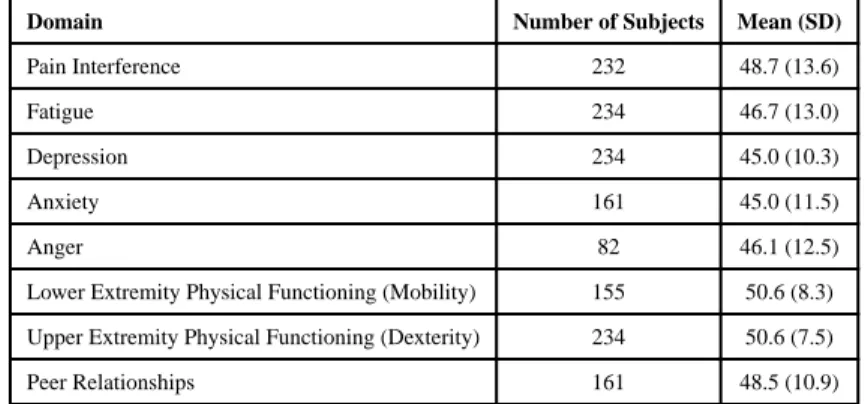
Domain scores for the sample and the number of participants completing each item bank are shown in Table II. Overall PROMIS pediatric scores for the children with SCD largely mirror values seen in the normative sample consisting of both healthy children and those with chronic illnesses attending general pediatric clinics with PROMIS mean scores of 50. The exception is that this sample of SCD children had depression and anxiety domain scores one-half standard deviation (5 points) better than the normative sample.
Known Group Comparisons
Adolescents (ages 12-17 years) reported significantly higher pain interference and depression scores, and worse lower extremity physical functioning (mobility) scores compared to younger children (ages 8-11 years) with SCD (Table III). Female participants reported significantly higher pain interference, fatigue, and depressive symptoms scores, and worse lower extremity physical functioning (mobility) scores compared with their male counterparts (Table III). There were no significant differences in any domain scores between participants with different genotypes (all p-values >0.05), likely reflecting that many participants with the more severe SS or SB0thalasemia were receiving disease-modifying therapies. Significantly higher pain, fatigue, and depressive symptoms scores, and worse lower extremity (mobility) and upper extremity (dexterity) physical functioning scores were reported by participants with hip or joint problems that limited usual activities (Table III, all p<.05), and participants who received parent-reported pain treatment at home in the past seven days (Table III, all p<.01). There were no significant differences in any domain scores between children with and without asthma (all p-values >0.05).
Simultaneous linear regression modeling (Table IV) suggested that recent vaso-occlusive pain, rather than age, sex, or sickle genotype, was the dominant factor explaining differences in reported mood symptoms (anxiety, depression) and lower extremity functioning
(mobility). Similarly, pain, either from recent acute vaso-occlusive pain or from persistent bone/joint disease equally impacted pain interference and fatigue scores, consistent with the
A
uthor Man
uscr
ipt
A
uthor Man
uscr
ipt
A
uthor Man
uscr
ipt
A
uthor Man
uscr
impact of clinical severity observed in other pediatric chronic diseases [23]. The paradoxical impact of SC and SB+thalassemia hemoglobinopathy types on pain interference scores likely reflects the ameliorating effect of concurrent hydroxyurea or blood transfusion in most of the participants with SS or SB0thalassemia.
The number of pain episodes managed at home, number of emergency department visits for pain, and number of hospitalizations in the past 6 months were all significantly and
positively associated with an increase in pain interference and fatigue as well as worse mobility scores (Table V), consistent with the impact of recent hospitalizations observed in other pediatric chronic diseases [23]. The frequency of hospitalizations was also associated with lower peer relationships domain scores.
Discussion
PRO measures help to give a voice to children and adolescents so that they can communicate the personal impact of disease manifestations or consequences from its treatment. Our findings establish the preliminary validity of PROMIS pediatric measures in children and adolescents with SCD, and illustrate important patient-level consequences of SCD complications as perceived by these patients. Similar PROMIS scores across
hemoglobinopathy types were not unexpected given the wide range of symptomatology seen in pediatric SCD, and the amelioration of pain frequency provided by the hydroxyurea or transfusions that most of the SS and SB0thalassemia participants were receiving [31]. While relying only on self-report, our findings in individuals with recent or frequent acute pain, and in those with chronic bone complications of SCD provide important preliminary support for known-groups discriminant validity of the PROMIS pediatric measures, similar to previous findings with the Peds QL [10]. Our results also highlight the impact of symptomatology other than pain in children and adolescents with SCD, such as fatigue, physical functioning, and mood, consistent with other recent studies of fatigue in children [6] and adults [32] with SCD, and health-related quality of life studies using disease-specific measures [13,33]. Our findings suggest that the PROMIS pediatric measures are potentially sensitive to age and sex differences in outcomes reported in other SCD studies [32,34,35], such as differences generally indicating females report or experience outcomes such as pain interference, fatigue, and depression more frequently or intensely than do males.
There are a number of limitations to our study. Consistent with our known group analysis strategy, participants in our study were recruited to represent a convenience sample that was intentionally diverse in age, sex, hemoglobinopathies, treatments and symptomatology. Thus our sample was not a probability sample and findings cannot be generalized to the broader SCD population. This selection strategy and the cross-sectional nature of the study design likely reduced our ability to detect any differences related to sickle genotypes or the impact of transfusion or hydroxyurea treatment. Since only about 35% of the sample responded to the anger measure, we may have been underpowered to identify modest relationships between anger domain scores and clinical variables. The modest sample size also precluded studies of the influence of less frequent SCD complications or co-morbidities, or the impact of subtle cognitive impairments on the PROMIS pediatric measures scores. Similarly, a number of potential confounders such as race/ethnicity and socioeconomic status were not
A
uthor Man
uscr
ipt
A
uthor Man
uscr
ipt
A
uthor Man
uscr
ipt
A
uthor Man
uscr
examined. Several comparisons relied on results from parental reports that have their own limitations [36,37].
At the time this study was started, only the English versions of the PROMIS pediatric measures had been developed and as a result, only English-speaking participants were enrolled. While versions of the Pediatric PROMIS measures are now available for Spanish-speaking individuals, these are translated versions and have not been extensively validated in Hispanic populations, including those with SCD.
Lastly, measure validation is an extensive process, and our results provide initial evidence for only the known-groups validity of PROMIS pediatric measures in children with SCD. Assessment of the responsiveness of the PROMIS pediatric measures to disease-related or treatment-related changes over time is another important attribute of the validity of the measures and will need to be studied. Similarly, additional longitudinal studies will need to examine the relationship of PROMIS pediatric measures with SCD clinical outcomes to establish score levels consistent with changes in meaningful clinical severity, or that suggest the need for clinical intervention.
In conclusion, PROMIS pediatric measures are feasible in a research setting and are valid indicators of PROs among children aged 8–17 years with SCD. The large differences between those with or without reported SCD-related complications for many of these measures suggests their potential usefulness in clinical trials and in clinical practice, but further studies are needed.
Supplementary Material
Refer to Web version on PubMed Central for supplementary material.
Acknowledgments
PROMIS® was funded with cooperative agreements from the National Institutes of Health (NIH) Common Fund Initiative (Northwestern University, PI: David Cella, PhD, U54AR057951, U01AR052177; Northwestern University, PI: Richard C. Gershon, PhD, U54AR057943; American Institutes for Research, PI: Susan (San) D. Keller, PhD, U54AR057926; State University of New York, Stony Brook, PIs: Joan E. Broderick, PhD and Arthur A. Stone, PhD, U01AR057948, U01AR052170; University of Washington, Seattle, PIs: Heidi M. Crane, MD, MPH, Paul K. Crane, MD, MPH, and Donald L. Patrick, PhD, U01AR057954; University of Washington, Seattle, PI: Dagmar Amtmann, PhD, U01AR052171; University of North Carolina, Chapel Hill, PI: Harry A. Guess, MD, PhD (deceased), Darren A. DeWalt, MD, MPH, U01AR052181; Children's Hospital of Philadelphia, PI: Christopher B. Forrest, MD, PhD, U01AR057956; Stanford University, PI: James F. Fries, MD, U01AR052158; Boston University, PIs: Alan Jette, PT, PhD, Stephen M. Haley, PhD (deceased), and David Scott Tulsky, PhD (University of Michigan, Ann Arbor), U01AR057929; University of California, Los Angeles, PIs: Dinesh Khanna, MD (University of Michigan, Ann Arbor) and Brennan Spiegel, MD, MSHS, U01AR057936; University of Pittsburgh, PI: Paul A. Pilkonis, PhD, U01AR052155; Georgetown University, PIs: Carol. M. Moinpour, PhD (Fred Hutchinson Cancer Research Center, Seattle) and Arnold L. Potosky, PhD, U01AR057971; Children's Hospital Medical Center, Cincinnati, PI: Esi M. Morgan DeWitt, MD, MSCE, U01AR057940; University of Maryland, Baltimore, PI: Lisa M. Shulman, MD, U01AR057967; and Duke University, PI: Kevin P. Weinfurt, PhD, U01AR052186). NIH Science Officers on this project have included Deborah Ader, PhD, Vanessa Ameen, MD (deceased), Susan Czajkowski, PhD, Basil Eldadah, MD, PhD, Lawrence Fine, MD, DrPH, Lawrence Fox, MD, PhD, Lynne Haverkos, MD, MPH, Thomas Hilton, PhD, Laura Lee Johnson, PhD, Michael Kozak, PhD, Peter Lyster, PhD, Donald Mattison, MD, Claudia Moy, PhD, Louis Quatrano, PhD, Bryce Reeve, PhD, William Riley, PhD, Peter Scheidt, MD, Ashley Wilder Smith, PhD, MPH, Susana Serrate-Sztein, MD, William Phillip Tonkins, DrPH, Ellen Werner, PhD, Tisha Wiley, PhD, and James Witter, MD, PhD.
A
uthor Man
uscr
ipt
A
uthor Man
uscr
ipt
A
uthor Man
uscr
ipt
A
uthor Man
uscr
The contents of this article uses data developed under PROMIS. These contents do not necessarily represent an endorsement by the US Federal Government or PROMIS. See www.nihpromis.org for additional information on the PROMIS® initiative.
CD has received consulting fees from Pfizer, and grant support for performance of clinical trials from Pfizer, AstraZeneca, and Lilly.
References
1. McGann PT, Nero AC, Ware RE. Current management of sickle cell anemia. Cold Spring Harb Perspect Med. 2013; 3(8):1–17.
2. Singh PC, Ballas SK. Emerging drugs for sickle cell anemia. Expert Opinion on Emerging Drugs. 2014; (0):1–15. [PubMed: 24344917]
3. Treadwell MJ, Hassell K, Levine R, Keller S. Adult sickle cell quality-of-life measurement information system (ASCQ-Me): conceptual model based on review of the literature and formative research. Clin J Pain. 2014; 30(10):902–914. [PubMed: 24300219]
4. Panepinto JA, Bonner M. Health-related quality of life in sickle cell disease: past, present, and future. Pediatr Blood Cancer. 2012; 59(2):377–385. [PubMed: 22522407]
5. Varni JW, Limbers CA. The pediatric quality of life inventory: measuring pediatric health-related quality of life from the perspective of children and their parents. Pediatr Clin North Am. 2009; 56(4):843–863. [PubMed: 19660631]
6. Panepinto JA, Torres S, Bendo CB, McCavit TL, Dinu B, Sherman-Bien S, Bemrich-Stolz C, Varni JW. PedsQL Multidimensional Fatigue Scale in sickle cell disease: feasibility, reliability, and validity. Pediatr Blood Cancer. 2014; 61(1):171–177. [PubMed: 24038960]
7. Varni JW, Burwinkle TM, Seid M, Skarr D. The PedsQL™* 4.0 as a pediatric population health measure: feasibility, reliability, and validity. Ambulatory Pediatrics. 2003; 3(6):329–341. [PubMed: 14616041]
8. Varni JW, Burwinkle TM, Seid M. The PedsQL 4.0 as a school population health measure: feasibility, reliability, and validity. Qual Life Res. 2006; 15(2):203–215. [PubMed: 16468077] 9. Varni JW, Limbers CA, Burwinkle TM. Impaired health-related quality of life in children and
adolescents with chronic conditions: a comparative analysis of 10 disease clusters and 33 disease categories/severities utilizing the PedsQL 4.0 Generic Core Scales. Health Qual Life Outcomes. 2007; 5:43. [PubMed: 17634123]
10. Dampier C, Lieff S, LeBeau P, Rhee S, McMurray M, Rogers Z, Smith-Whitley K, Wang W. Health-related quality of life in children with sickle cell disease: a report from the Comprehensive Sickle Cell Centers Clinical Trial Consortium. Pediatr Blood Cancer. 2010; 55(3):485–494. [PubMed: 20658620]
11. Brandow AM, Brousseau DC, Pajewski NM, Panepinto JA. Vaso-occlusive painful events in sickle cell disease: impact on child well-being. Pediatr Blood Cancer. 2010; 54(1):92–97. [PubMed: 19653296]
12. Panepinto JA, Pajewski NM, Foerster LM, Sabnis S, Hoffmann RG. Impact of family income and sickle cell disease on the health-related quality of life of children. Qual Life Res. 2009; 18(1):5– 13. [PubMed: 18989755]
13. Panepinto JA, Torres S, Bendo CB, McCavit TL, Dinu B, Sherman-Bien S, Bemrich-Stolz C, Varni JW. PedsQL sickle cell disease module: feasibility, reliability, and validity. Pediatr Blood Cancer. 2013; 60(8):1338–1344. [PubMed: 23441057]
14. Reeve BB, Burke LB, Chiang YP, Clauser SB, Colpe LJ, Elias JW, Fleishman J, Hohmann AA, Johnson-Taylor WL, Lawrence W, Moy CS, Quatrano LA, Riley WT, Smothers BA, Werner EM. Enhancing measurement in health outcomes research supported by Agencies within the US Department of Health and Human Services. Qual Life Res. 2007; 16(Suppl 1):175–186. [PubMed: 17530449]
15. Varni JW, Magnus B, Stucky BD, Liu Y, Quinn H, Thissen D, Gross HE, Huang IC, DeWalt DA. Psychometric properties of the PROMIS (R) pediatric scales: precision, stability, and comparison of different scoring and administration options. Qual Life Res. 2014; 23(4):1233–1243. [PubMed: 24085345]
A
uthor Man
uscr
ipt
A
uthor Man
uscr
ipt
A
uthor Man
uscr
ipt
A
uthor Man
uscr
16. DeWalt DA, Rothrock N, Yount S, Stone AA. Evaluation of Item Candidates: The PROMIS Qualitative Item Review. Medical care. 2007; 45(5 Suppl 1):S12–S21. [PubMed: 17443114] 17. Walsh TR, Irwin DE, Meier A, Varni JW, DeWalt DA. The use of focus groups in the development
of the PROMIS pediatrics item bank. Qual Life Res. 2008; 17(5):725–735. [PubMed: 18427951] 18. Irwin DE, Varni JW, Yeatts K, DeWalt DA. Cognitive interviewing methodology in the
development of a pediatric item bank: a patient reported outcomes measurement information system (PROMIS) study. Health Qual Life Outcomes. 2009; 7:3. [PubMed: 19166601]
19. Irwin DE, Gross HE, Stucky BD, Thissen D, DeWitt EM, Lai JS, Amtmann D, Khastou L, Varni JW, DeWalt DA. Development of six PROMIS pediatrics proxy-report item banks. Health Qual Life Outcomes. 2012; 10:22. [PubMed: 22357192]
20. Varni JW, Thissen D, Stucky BD, Liu Y, Magnus B, Quinn H, Irwin DE, DeWitt EM, Lai JS, Amtmann D, Gross HE, DeWalt DA. PROMIS(R) Parent Proxy Report Scales for children ages 5-7 years: an item response theory analysis of differential item functioning across age groups. Qual Life Res. 2014; 23(1):349–361. [PubMed: 23740167]
21. Hahn EA, Cella D, Bode RK, Gershon R, Lai JS. Item banks and their potential applications to health status assessment in diverse populations. Medical care. 2006; 44(11):S189–S197. [PubMed: 17060827]
22. Olino TM, Yu L, McMakin DL, Forbes EE, Seeley JR, Lewinsohn PM, Pilkonis PA. Comparisons across depression assessment instruments in adolescence and young adulthood: an item response theory study using two linking methods. J Abnorm Child Psychol. 2013; 41(8):1267–1277. [PubMed: 23686132]
23. DeWalt D, Gross H, Gipson D, Selewski D, DeWitt E, Dampier C, Hinds P, Huang IC, Thissen D, Varni J. PROMIS® pediatric self-report scales distinguish subgroups of children within and across six common pediatric chronic health conditions. Quality of Life Research. 2015:1–14.
24. Irwin DE, Stucky BD, Thissen D, Dewitt EM, Lai JS, Yeatts K, Varni JW, DeWalt DA. Sampling plan and patient characteristics of the PROMIS pediatrics large-scale survey. Qual Life Res. 2010; 19(4):585–594. [PubMed: 20204706]
25. Varni JW, Stucky BD, Thissen D, Dewitt EM, Irwin DE, Lai JS, Yeatts K, Dewalt DA. PROMIS Pediatric Pain Interference Scale: an item response theory analysis of the pediatric pain item bank. J Pain. 2010; 11(11):1109–1119. [PubMed: 20627819]
26. Irwin DE, Stucky B, Langer MM, Thissen D, Dewitt EM, Lai JS, Varni JW, Yeatts K, DeWalt DA. An item response analysis of the pediatric PROMIS anxiety and depressive symptoms scales. Qual Life Res. 2010; 19(4):595–607. [PubMed: 20213516]
27. DeWitt EM, Stucky BD, Thissen D, Irwin DE, Langer M, Varni JW, Lai JS, Yeatts KB, Dewalt DA. Construction of the eight-item patient-reported outcomes measurement information system pediatric physical function scales: built using item response theory. J Clin Epidemiol. 2011; 64(7): 794–804. [PubMed: 21292444]
28. Irwin DE, Stucky BD, Langer MM, Thissen D, DeWitt EM, Lai JS, Yeatts KB, Varni JW, DeWalt DA. PROMIS Pediatric Anger Scale: an item response theory analysis. Qual Life Res. 2012; 21(4): 697–706. [PubMed: 21785833]
29. Dewalt DA, Thissen D, Stucky BD, Langer MM, Morgan Dewitt E, Irwin DE, Lai JS, Yeatts KB, Gross HE, Taylor O, Varni JW. PROMIS Pediatric Peer Relationships Scale: development of a peer relationships item bank as part of social health measurement. Health Psychol. 2013; 32(10):1093– 1103. [PubMed: 23772887]
30. Lai JS, Stucky BD, Thissen D, Varni JW, DeWitt EM, Irwin DE, Yeatts KB, DeWalt DA.
Development and psychometric properties of the PROMIS((R)) pediatric fatigue item banks. Qual Life Res. 2013; 22(9):2417–2427. [PubMed: 23378106]
31. Beverung LM, Strouse JJ, Hulbert ML, Neville K, Liem RI, Inusa B, Fuh B, King A, Meier ER, Casella J, DeBaun MR, Panepinto JA. for the SITti. Health-related quality of life in children with sickle cell anemia: Impact of blood transfusion therapy. Am J Hematol. 2014
32. Ameringer S, Elswick RK Jr, Smith W. Fatigue in adolescents and young adults with sickle cell disease: biological and behavioral correlates and health-related quality of life. J Pediatr Oncol Nurs. 2014; 31(1):6–17. [PubMed: 24378816]
A
uthor Man
uscr
ipt
A
uthor Man
uscr
ipt
A
uthor Man
uscr
ipt
A
uthor Man
uscr
33. Keller SD, Yang M, Treadwell MJ, Werner EM, Hassell KL. Patient reports of health outcome for adults living with sickle cell disease: development and testing of the ASCQ-Me item banks. Health Qual Life Outcomes. 2014; 12:125. [PubMed: 25146160]
34. Platt OS, Thorington BD, Brambilla DJ, Milner PF, Rosse WF, Vichinsky E, Kinney TR. Pain in sickle cell disease. Rates and risk factors. N Engl J Med. 1991; 325(1):11–16. [PubMed: 1710777] 35. Sogutlu A, Levenson JL, McClish DK, Rosef SD, Smith WR. Somatic symptom burden in adults
with sickle cell disease predicts pain, depression, anxiety, health care utilization, and quality of life: The PiSCES project. Psychosomatics. 2011; 52(3):272–279. [PubMed: 21565599]
36. Panepinto JA, O'Mahar KM, DeBaun MR, Loberiza FR, Scott JP. Health-related quality of life in children with sickle cell disease: child and parent perception. Br J Haematol. 2005; 130(3):437– 444. [PubMed: 16042695]
37. Chambers CT, Reid GJ, Craig KD, McGrath PJ, Finley GA. Agreement between child and parent reports of pain. The Clinical journal of pain. 1998; 14(4):336–342. [PubMed: 9874013]
A
uthor Man
uscr
ipt
A
uthor Man
uscr
ipt
A
uthor Man
uscr
ipt
A
uthor Man
uscr
A
uthor Man
uscr
ipt
A
uthor Man
uscr
ipt
A
uthor Man
uscr
ipt
A
uthor Man
uscr
ipt
Table I
Characteristics of SCD Sample Cohort by Treatment Strategy
N (%)
Characteristic
Prescribed Hydroxyurea (n=101) Transfusions (n=45)
No Disease-Modifying Therapy (n=89)
Total (N=235)
Age (in years)
8 – 9 17 (16.8) 4 (8.9) 22 (24.7) 43 (18.3)
10 – 11 22 (21.8) 13 (28.9) 16 (18.0) 51 (21.7)
12 – 13 21 (20.8) 12 (26.7) 20 (22.5) 53 (22.6)
14 – 15 16 (15.8) 10 (22.2) 16 (18.0) 42 (17.9)
16 – 17 25 (24.8) 6 (13.3) 15 (16.9) 46 (19.6)
Mean age (SD) 12.7 (3.0) 12.6 (2.4) 12.1 (2.8) 12.5 (2.8)
Median age (Range) 13 (8 – 17) 13 (9 – 17) 12 (8 – 17) 12 (8 – 17)
Gender
Male 55 (54.5) 20 (44.4) 43 (48.3) 118 (50.2)
Female 46 (45.5) 25 (55.6) 46 (51.7) 117 (49.8)
Genotype
SS or SB0 thalassemia 93 (92.1) 42 (93.3) 47 (52.8) 182 (77.5)
SC or SB+ thalassemia 6 (5.9) 3 (6.7) 41 (46.1) 50 (21.3)
Other 1 (1.0) 0 (--) 1 (1.1) 2 (0.9)
Unknown 1 (1.0) 0 (--) 0 (--) 1 (0.4)
Parent report of hip or joint problems at time of visit*
No 79 (78.2) 39 (88.6) 76 (85.4) 194 (82.9)
Yes 22 (21.8) 5 (11.4) 13 (14.6) 40 (17.1)
Number of home-managed pain episodes in past 6 months**
0 20 (20.0) 20 (44.4) 27 (30.3) 67 (28.6)
1 – 2 33 (33.0) 7 (15.6) 31 (34.8) 71 (30.3)
3 – 6 22 (22.0) 11 (24.4) 17 (19.1) 50 (21.4)
≥ 7 25 (25.0) 7 (15.6) 14 (15.7) 46 (19.7)
Mean home-managed pain episodes (SD)
5.7 (8.3) 3.1 (4.2) 5.0 (11.4) 4.9 (9.1)
Median home-managed pain episodes (Range)
2 (0 – 45) 1 (0 – 20) 2 (0 – 90) 2 (0 – 90)
Number of Emergency Department (ED) managed pain episodes in past 6 monthsˆ
0 53 (53.0) 33 (76.7) 47 (52.8) 133 (57.3)
A
uthor Man
uscr
ipt
A
uthor Man
uscr
ipt
A
uthor Man
uscr
ipt
A
uthor Man
uscr
ipt
N (%)
Characteristic
Prescribed Hydroxyurea (n=101) Transfusions (n=45)
No Disease-Modifying Therapy (n=89)
Total (N=235)
≥ 3 19 (19.0) 1 (2.3) 8 (9.0) 28 (12.1)
Mean ED-managed pain episodes (SD) 1.8 (4.1) 0.4 (0.8) 0.9 (1.4) 1.2 (2.9)
Median ED-managed pain episodes (Range)
0 (0 – 25) 0 (0 – 4) 0 (0 – 10) 0 (0 – 25)
Number of hospitalizations for pain in past 6 monthsˆˆ
0 59 (59.6) 29 (65.9) 62 (69.7) 150 (64.7)
1 – 2 26 (26.3) 13 (29.5) 26 (29.2) 65 (28.0)
≥ 3 14 (14.1) 2 (4.5) 1 (1.1) 17 (7.3)
Mean # hospitalizations (SD) 1.1 (2.4) 0.5 (1.0) 0.4 (0.7) 0.7 (1.7)
Median # hospitalizations (Range) 0 (0 – 20) 0 (0 – 5) 0 (0 – 3) 0 (0 – 20)
Any treatment for pain at home in past 7 days~
No 63 (63.0) 35 (77.8) 64 (71.9) 162 (69.2)
Yes 37 (37.0) 10 (22.2) 25 (28.1) 72 (30.8)
SD=Standard Deviation; ED=Emergency Department;
*1 missing,
**1 missing,
ˆ3 missing,
ˆˆ3 missing,
A
uthor Man
uscr
ipt
A
uthor Man
uscr
ipt
A
uthor Man
uscr
ipt
A
uthor Man
uscr
ipt
Table II Domain Scores for SCD Cohort
Domain Number of Subjects Mean (SD)
Pain Interference 232 48.7 (13.6)
Fatigue 234 46.7 (13.0)
Depression 234 45.0 (10.3)
Anxiety 161 45.0 (11.5)
Anger 82 46.1 (12.5)
Lower Extremity Physical Functioning (Mobility) 155 50.6 (8.3)
Upper Extremity Physical Functioning (Dexterity) 234 50.6 (7.5)
Peer Relationships 161 48.5 (10.9)
A
uthor Man
uscr
ipt
A
uthor Man
uscr
ipt
A
uthor Man
uscr
ipt
A
uthor Man
uscr
ipt
T ab le III Domain Scores Associated with Demographic and Clinical Characteristics
Mean (SD) Mean (SD) Domain Age Sex Genotype Curr
ent hip or joint issues
P
ain in past 7 days
8–11 y ears 12–17 y ears Male F emale SS/SB0 thalassemia SC/SB+ thalassemia Y es No Y es No P ain interference 45.8 (14.0) 50.5 (13.0) ** 46.4 (12.7) 51.0 (14.1) * 48.1 (13.5) 51.0 (14.0) 57.0 (15.1) 46.9 (12.6) ** 56.1 (11.8) 45.4 (13.0) ** F atigue 44.6 (14.4) 48.0 (11.9) 44.6 (12.4) 48.7 (13.3) * 46.6 (12.8) 47.1 (14.0) 54.5 (13.6) 45.0 (12.4) ** 53.7 (12.2) 43.6 (12.2) ** Depression 43.2 (9.7) 46.2 (10.5) * 43.1 (8.8) 46.8 (11.3) ** 44.7 (10.3) 46.3 (10.4) 51.1 (10.5) 43.7 (9.8) ** 48.3 (9.6) 43.6 (10.3) ** Anxiety 46.3 (12.6) 44.1 (10.7) 43.3 (11.3) 46.6 (11.5) 44.7 (11.3) 46.7 (11.9) 49.4 (14.6) 44.1 (10.6) * 50.1 (13.0) 43.1 (10.4) ** Anger 46.3 (13.1) 46.0 (12.1) 45.5 (12.1) 46.7 (12.9) 45.3 (11.4) 48.3 (14.9) 49.1 (13.3) 45.7 (12.3) 46.1 (11.6) 46.1 (12.8) Mobility 52.5 (7.7) 49.2 (8.5) * 51.6 (8.3) 49.6 (8.3) 50.4 (8.6) 51.0 (7.5) 43.8 (9.2) 51.9 (7.6) ** 46.9 (9.8) 52.4 (6.8) ** Upper de xterity 48.4 (8.1) 52.0 (6.6) ** 51.9 (6.9) 49.2 (7.8) ** 50.7 (7.5) 50.2 (7.6) 48.1 (8.2) 51.1 (7.2) * 48.5 (8.3) 51.4 (6.9) ** Peer relationships 49.0 (11.2) 48.1 (10.7) 47.4 (10.7) 49.6 (11.1) 48.7 (11.1) 47.9 (10.6) 47.3 (9.8) 48.7 (11.1) 47.7 (9.4) 48.6 (11.3) ** p-v
alue < 0.01,
*p-v
alue <0.05;
SD=Standard De
A
uthor Man
uscr
ipt
A
uthor Man
uscr
ipt
A
uthor Man
uscr
ipt
A
uthor Man
uscr
ipt
T
ab
le IV
Results of Simultaneous Regr
ession Model
Regr
ession Coeff
icient (SE)
Regr
ession Outcome
N
Age
F
emale vs. Male
SC/SB
+thalassemia vs. SS/SB 0thalassemia
Hip pain vs. No hip pain
P
ain 7 days vs. no pain 7 days
P
ain interference
227
0.7 (0.3)*
3.9 (1.6)*
4.8 (2.0)*
5.8 (2.2)*
9.3 (1.8)**
F
atigue
229
0.2 (0.3)
3.5 (1.5)*
1.6 (1.9)
5.9 (2.2)*
8.8 (1.7)**
Depressi
v
e symptoms
229
0.3 (0.2)
3.3 (1.3)*
2.3 (1.6)
5.5 (1.8)**
3.4 (1.4)*
Anxiety
158
-0.8 (0.3)*
3.0 (1.7)
2.5 (2.1)
3.9 (2.3)
6.7 (1.9)**
Anger
82
-0.1 (0.5)
1.9 (2.7)
3.2 (3.3)
4.6 (3.8)
-0.6 (3.0)
Mobility
153
-0.3 (0.2)
-1.9 (1.2)
0.1 (1.5)
-6.2 (1.7)**
-4.4 (1.3)**
Upper e
xtremity functioning
229
0.9 (0.2)**
-2.2 (0.9)*
0.3 (1.1)
-3.1 (1.2)*
-2.6 (1.0)*
Peer relationships
158
0.3 (0.3)
2.2 (1.7)
-0.6 (2.1)
-1.3 (2.4)
-1.2 (1.9)
A
uthor Man
uscr
ipt
A
uthor Man
uscr
ipt
A
uthor Man
uscr
ipt
A
uthor Man
uscr
ipt
T ab le V Unadjusted Regr ession Coefficients Estimating Relationship between Domain and Clinical Characteristics
Regr ession Coeff icient (SE) Domain N Age
# home-managed pain episodes in past 6 months
# ED-managed pain episodes in past 6 months
# hospitalizations in past 6 months
P ain interference 227 0.8 (0.3) ** 0.3 (0.1) ** 1.0 (0.3) ** 1.2 (0.5) * F atigue 229 0.4 (0.3) 0.4 (0.1) ** 0.9 (0.3) ** 1.2 (0.5) * Depressi v e symptoms 229 0.4 (0.2) 0.2 (0.1) * 0.4 (0.2) -0.0 (0.4) Anxiety 158 -0.6 (0.3) 0.2 (0.1) 0.6 (0.3) * 0.2 (0.5) Anger 82 -0.2 (0.5) 0.1 (0.1) 0.5 (0.6) 0.2 (0.6) Mobility 153 -0.4 (0.2) -0.2 (0.1) ** -1.0 (0.3) ** -0.8 (0.3) * Upper e xtremity functioning 229 0.8 (0.2) ** -0.1 (0.1) -0.2 (0.2) -0.5 (0.3) Peer relationships 158 0.2 (0.3) -0.1 (0.1) -0.4 (0.3) -1.2 (0.4) ** ** p-v
alue < 0.01,