50
GENETICALLY MODIFIED FOODS: SOME BENEFITS AND RISKS
BONEA Dorina (1) and Viorica URECHEAN (2) (1) University of Craiova, Faculty of Agronomy, Department of Agricultural and Forestry Technology, Dolj, Romania; email: [email protected] (2) Agricultural Research and Development Station Simnic, Dolj, Romania(corresponding author); e-mail [email protected]
Keywords: benefits, GM foods, risks, transgenesis
ABSTRACT
Scientists from all over the world have demonstrated by numerous laboratory studies that GM foods are safe for consumption. Nevertheless, “genetic modified organisms (GMO) are still a controversial subject, especially among Europeans. In this paper we attemp to summarize some benefits and potential risks of GM foods. Genetic modified (GM) foods have the potential to solve problems related with malnutrition, under-nutrition and environment protection.
INTRODUCTION
A series of successes recorded by molecular genetics between 1950-1970, including: deciphering the DNA structure and its replication model; RNA structure, genetic code, enzymes of restriction and modification, DNA ligase, artificial synthesis of gene, recombinant DNA technology, etc. have allowed the developing of genetic engineering techniques.
After Badea (2003), the genetic engineering techniques is also called „genetic modification”, „genetic transformation” or „transgenesis” and obtained products are called „genetically modified organisms” (GMO) or „transgenic organisms”.
GMO is defined as follows by WHO (World Health Organization): “Organisms (i.e.
plants, animals or microorganisms) in which the genetic material (DNA) has been altered in a way that does not occur naturally by mating and/or natural recombination” (WHO, 2016).
The transfer of gene from one organism to another can conduct to the obtaining of
cisgenic organisms – if the organisms are sexually compatible and transgenic – if the
organisms are not sexually compatible. As a result, by cisgenesis there are not overcome the genetic barriers between species, the cisgenic organisms being very similar with the ones obtained by conventional breeding. The genetic fund is not affected and, as a consequence, they do not show any risk for man or environment (Ghiorghita, 2015).
The main categories of food that are genetically modified are the plants, the microorganisms and genetically modified animals.
51
In this paper, starting from the surface cropped by GMO we have approached the main motivations for obtaining GM food as well as some benefits and risks associated with them.
Surfaces cultivated with biotech crop
Despite the opposition of environment activists, the surface cropped by GMO crops reached 185.1 million hectares, being cultivated by 18 million farmers from 26 countries, of which 19 developing countries and 7 industrialized ones (ISAAA, 2016).
Countries which cultivate GMO on a large scale, over 10 million hectares are: USA, Brazil, Argentina, Canada and India.
According ISAAA (2016), four biotech crops (soybean, maize, cotton and canola) comprised the most amount of hectares. Soybean occupied 50% (91.4 million hectares) of the global biotech crop hectarage, maize occupied 33% (60.6 million hectares), cotton occupied 12% (22.3 million hectares), canola occupied 5% (8.6 million hectares) and others biotech crops (alfalfa, sugar beet, papaya) occupied <1%(1.7 million hectares) (Figure 1).
Fig. 1. Global Area of Biotech Crops, 2016: by Crop (%) Source: ISAAA, 2016
During the 20 year period 1996 to 2016, herbicide tolerance has consistently been the dominant trait grown by farmers (Figure 2). Herbicide tolerance occupied 86.6 million hectares or 47% of the 185.1 million hectares of biotech crops planted in 2016. Stacked traits increased to 75.4 million hectares or 41%, biotech crops featuring insect resistance occupied 23.1 million hectares or 12% and other (virus resistance, biotic stress resistance) occupied <1%.
Fig. 2. Global Area of Biotech Crops, 2016: by Trait (%) Source: ISAAA, 2016
50%
33% 12%
5% 1%
soybean
maize
cotton
canola
others
47%
41% 12%
1%
herbicide tolerance
stacked traits
insect resistance
52
In the European Union, în 2016, four countries – Spain, Portugal, Slovakia and Czechia – cultivated MON810, the only biotech event, the total area was estimated at 136,363 hectares (Table 1.)
Table 1. Biotech crop area (maize MON810) in the European Union (2016)
No. Country Hectares
1 Spain 129,081
2 Portugal 7,069
3 Slovakia 138
4 Czechia 75
Total 136,363
Source: ISAAA, 2016
Nowadays, the maize introduced by Monsanto, respectively MON 810 which is resistant to insecticides is the only GMO cropped in EU. The GM potato Amflora (developed by German chemicals firm BASF) has been banned by General Court of the EU in 2013 after being, initially, approved by European Commission (General Court of EU, 2013).
Since 1998, there are now 95 biotech events approved for food, feed and processing in EU: 48 maize, 15 soybean, 12 canola events, 11 cotton, 1 potato and 1 sugar beet. For cultivation approvals there are 7 carnation events, 2 maize events – Mon 810 and T25 (but only MON810 is actually cultivated) and 1 potato. In 2016, 18 approvals were granted by the EU commission for food and feed. These were the maize IR/ HT stacked traits (Bt11 x MIR162 x MIR604 x GA21; Bt11 x MIR162 x MIR604; Bt11 x MIR162 x GA21; MIR162 x MIR604 x GA21; MIR162 x GA21 and Bt11 x MIR162); maize IR stacked MIR162 x MIR604; soybean stacked HT + PQ – modifed oil/fatty acid MON87705 x MON89788; and soybean stacked HT FG72 (ISAAA, 2016).
Although the EU is reticent at biotech crops, it imports high quantities of GM maize and soybean as feed for animals, especially from Argentina, Brazil, Canada, the top producers of biotech GMO.
Recently, by EU Directive 2015/412, of the European Parliament and of the Council European Food Safety Authority (EFSA) has permitted the member states to decide whether to ban or approve the cultivation of GMO on their territory. As a result, 19 member states have renounced to the cultivation of GMO: France, Germany, Austria, Belgium (in Walloon), Bulgaria, Croatia, Cyprus, Denmark, Greece, Hungary, Italy, Latvia, Lithuania, Luxembourg, Malta, Netherlands, Poland, Slovenia and the United Kingdom (in Scotland, Wales and Northern Ireland). Even Serbia, which is not member of EU has announced that does not want to crop GMO.
Romania has not officially renounced to the cropping of MON 810 maize, despite the fact that in 2016 the cultivated surface with this plant was nil (Table 2).
Table 2.
Surfaces cultivated with MON810 in Romania
Years 2007 2008 2009 2010 2011 2012 2013 2014 2015 2016 Hectares 332,5 6130,44 3243,52 822,6 588,18 216,9 834,62 770,7 2,5 0 Source: MADR, 2017
53
2015). Within EU there were adopted a series of regulations about GMO and derived food products, respectively, the Directive of EC 2001/18/EC and Regulation no. 1829/2003. These regulations stipulates the evaluation of the impact of GM food before trading aiming the secure of the market, the presence on the market of only safe GMO for humans, animals and environment (Zainol et al., 2011). The monitoring of them by diverse methods is the object of several studies(Rosculete et al., 2015).
What are GMOs and GM foods?
Nowadays, there are two major challenges that the entire world are facing with: the increasing rate of world population and the reduction of arable land.
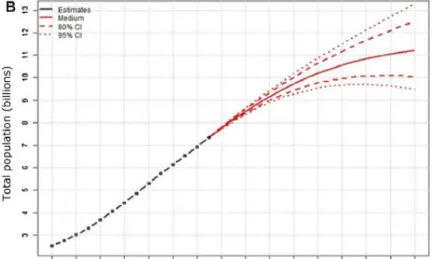
Although in recent years, the annual rate of increasing has been of only 1.18% there is expected that the annual increase to be of 83 million people. There is estimated that in 2030 the world population will reach 8.5 billion people and 9.7 billion in 2050 (Figure 3). This increasing of the number of population is one of the causes of malnutrition and under-nutrition. FAO has reported that in 2016, 795 million people were undernourished at world scale, of which 780 million in developing countries (FAO, IFAD and WFP, 2015).
In order to satisfy the feeding increasing needs of population the world plant production has to double till 2050, respectively, to record an annual increase of at least 2.4% (Ray et al., 2013). After Zhang et al. (2016), this is a daunting task, which seems only achievable by means of optimization of crop genetics joint with quantitative improvements in management of the agricultural system.
FAO estimated that the finite amount of arable land available for food production per resident will decrease from the current 0.242 ha to 0.18 ha by 2050 (Alexandratos, 2012). Solving this problem is greater yield per hectare, which in turn must come from greater agriculture inputs, water, pest and weed control, such as fertilizer and/or genetic improvement (Oliver, 2014).
Benefits of GM foods
GM foods have the potential to solve the problems related with the malnutrition, under-nutrition and to protect the environment by increasing the yield per hectare and the reduction of the dependency of synthetically pesticides.
There were obtained a high variety of transgenic plants, genetically modified, for: the transfer of gene for resistance to diverse biotic and abiotic factors, improved content in nutrients, the slowing of the maturation process of fruits by using antisense RNA technology, the synthesis of products of medical nature (vitamins, vaccines, etc.).
Fig . 3 Population of the world: estimates, 1950–2015, medium-variant projection and 80% and 95% confidence intervals, 2015–2100.
54
Brookes and Barfoot (2017) raported for the period 1996–2015 they estimatet hat biotechnology was responsible for additional global production of 180.3 million tons of soybeans, 357.7 million tons of maize, 25.2 million tons of cotton, 10.6 million tons of canola and 1.1 million tons of sugar beet.
In order to control weeds and pests from crops farmers use high quantities of synthetic pesticides that possess a high danger for the environment and for humans. The repeated uses in addition to the extreme stability of pesticides have led to their accumulation in plants, animals and soils, thus effecting prevailing contamination of the environment (Bonciu, 2012). By transgenesis there were found efficient solutions that more friendly to the environment and they consists of transfer of gene of resistance to glyphosate or ammonium gluphosinate (herbicide active ingredients) or through producing by plants of toxic proteins to the insects. Also, with the case of Bt maize, there is significantly reduced the contamination of grains by mycotoxins (Qaim, 2009).
In 1996-2015, the use of pesticides on the GM crops area was reduced by 618.7 million kg active ingredient (8.1% reduction), and the environmental impact (associated with herbicide and insecticide use on these crops), as measured by the EIQ indicator (Environmental Impact Quotient), fell by 18.6%. In absolute terms, the largest environmental gain has been associated with the adoption of GM insect resistant (IR) technology (Brookes and Barfoot, 2017)
By transgenesis the yield of some crops was higher. For example, the transfer of specific gene of photosynthesis from maize to rice determined the increasing of yield by 30% as a result of converting the energy in starch (Ghiorghiță, 2015).
The vitamin A deficit is still a major health problem (malnutrition) that affects the developing countries. Globally, there is estimated that about 157.000 annual deaths of children is determined by the lack of vitamin A (De Moura et al., 2016). A major achievement of transgenesis is the obtaining in 2000 of Golden Rice 1, a rice variety of yellow color that contains a higher quantity of ß-carotene (precursor of A vitamin), respectively 1.6 μg β-carotene per gram of dry rice in comparison with the usual rice. Subsequently, (2005), there was obtained Golden Rice 2 which produces a quantity of carotene 23 times higher than the first one (up to 37 μg/g) (Kramkowska et al., 2013).
Transgenesis can be, also, used for facilitating the food processing. For example, “FlavrSavr” tomato variety can be stored a longer period due to maturation delaying. As a result, this tomato variety can be transported a longer distance.
For the medical system, the transgenic foods offer the possibility to be used as oral vaccines in order to increase the immunity. For example, there was obtained a GM rice variety that is used as vaccine against allergic diseases (asthma, atopic dermatitis, seasonal allergies). Also, this way of vaccination can be used against some human diseases as cholera and B hepatitis (by eating transgenic bananas/tomatoes) or against animal diseases as typhoid fever of bovines (by the consumption of transgenic sugar beet) (Lemaux, 2008; Panda, 2009 cited by Ghiorghiță, 2015).
Potential risks of GM foods
The main risks associated with the GM food on human health are allergenic influence, toxicity and effects passed on to our next generations
The possibility for human to be exposed at new allergenic factors by consuming GM food is not excluded, but it is difficult to demonstrate because among us there are people who are more sensible than general population to some natural agents that produce allergies as pollen, wheat proteins, rice, peanuts, etc (Lemaux, 2008 cited by Ghiorghiță, 2015).
55
allergenic substances in GMO which were approved for cultivation and there are not proofs that GMO are more or less allergenic than their unmodified homologues (Xu, 2015). Many more scientists have tested diverse types of genetically modifications on plants (potato, sweet pepper, tomato and maize) and their studies have found no proofs that these GMO generates toxicity at the level of some organs or other harmful effects on human health (Rhee et al., 2005; Chen et al., 2003; Stagg et al., 2012).
In order to demonstrate that the GMO foods do not affect the future generations, a group of researchers have monitored mice fed by Bt maize, during gestation and lactation. It was concluded that the Bt maize diet had no measurable or observable effect on fetal, postnatal, pubertal, or adult testicular development (Brake et al., 2004). Snell et al. (2012), following the review of 12 long-term studies (of more than 90 days, up to 2 years in duration) and 12 multigenerational studies (from 2 to 5 generations) concerning the effects of diets containing GM maize, potato, soybean, rice, or triticale on animal health, reported that no signs of toxicity were found in analyzed parameters (biochemical analyses, histological examination of specific organs, hematology and the detection of transgenic DNA).
There are also concerns surrounding the ability of the modified DNA to transfer to the DNA of whomever eats it or have other toxic side effects, but, the International Life Sciences Institute reviewed this aspects and found that GMO-DNA was completely indistinguishable from traditional DNA, and thus is no more likely to transfer to or be toxic to a human (Megan, 2015).
Due to the advanced scientific knowledge and due to control very carefully, the plants obtained by the modern biotechnology (genetic modification) may be even more safe than those produced by conventional breeding techniques (Bonciu and Sărac, 2016).
There have been done more that 3000 of studies that have assessed the safety of biotech crops in terms of human health and environmental impact. These studies, have enabled a solid and clear scientific consensus: GM crops have no more risk than those that have been developed by conventional breeding techniques. More than 275 science and health organizations have issued statements that attest to safety of biotech crops, among them: American Medical Association-Chicago, National Academy of Sciences (USA), Health Canada, Food Standards Australia New Zealand, British Medical Association and the French Academy of Sciences (Norero, 2017).
CONCLUSIONS
Because experiments on humans would be unethical, to monitor the toxicity of GM foods, the laboratory like mice and rats were used. There have been done thousands of studies that have proven that the GMO foods are safe for human consumption.
Foods and ingredients derived from O.M.G. are the most studied products that people have ever consumed. This type of foods is not distributed on the market, without meeting all the criteria established by the competent authorities.
Most of european countries have a reduced confidence in their governments and their ability to protect the populace and, probably this is the reason why GMO are not accepted in Europe.
Many people feel that genetic engineering is the inevitable wave of the future and that we cannot afford to ignore a technology that has such enormous potential benefits
(Bawa and Anilakumar, 2013).
BIBLIOGRAPHY
56
2. Badea E.M., 2003. Plantele transgenice în cultură. Bucuresti, p. 11.
3. Bawa A.S. Anilakumar K.R., 2013. Genetically modified foods: Safety, risks and public concerns—A review. J. Food Sci. Technol., 50:1035–1046.
4. Bonciu E., 2012. Cytological effects induced by Agil herbicide to onion. Journal of Horticulture, Forestry and Biotechnology, 16(1): 68-72.
5. Bonciu E., Sărac I., 2016. Implications of modern biotechnology in the food security and food safety. Annals of the University of Craiova - Agriculture, Montanology, Cadastre Series, XLVI (1): 36-41.
6. Brake D.G, Thaler R., Evenson D.P., 2004. Evaluation of Bt (Bacillus thuringiensis) corn on mouse testicular development by dual parameter flow cytometry. J Agric Food Chem., 52(7):2097-102.
7. Brookes G., Barfoot P., 2017. GM crops: global socio-economic and environmental impacts 1996-2015. PG Economics Ltd, UK Dorchester, UK .
8. Busines Press, 2015. Fermierii români, prin vocea preşedintelui LAPAR, solicită
dreptul de a cultiva soia organică. Nr. 131 (mai-iunie 2015).
http://www.businesspress.ro/fermierii-romani-prin-vocea-presedintelui-lapar-solicita-dreptul-de-a-cultiva-soia-organica/ , accessed 1.09.2017
9. Chen Z.L., Gu H., Li Y., Su Y, Wu P., Jiang Z., Ming X., Tian J., Pan N., Qu L.J., 2003. Safety assessment for genetically modified sweet pepper and tomato. Toxicology, 188(2–3):297–307.
10. De Moura F.F., Moursi M., Angel M.D., Angeles-Agdeppa I., Atmarita A., Gironella, G. M., Muslimatun S., Carriquiry A., 2016. Biofortified β-carotene rice
improves vitamin A intake and reduces the prevalence of inadequacy among women and young children in a simulated analysis in Bangladesh, Indonesia, and the Philippines. Am. J. Clin. Nutr. 104: 769–775.
11. Directive (EU) 2015/412 of the European Parliament and of the Council of 11 March, 2015. Text with EEA relevance. Official Journal of the EU, 68:1–8 http://data.europa.eu/eli/dir/2015/412/oj
12. FAO, IFAD and WFP., 2015. The State of Food Insecurity in the World 2015. Meeting the 2015 international hunger targets: taking stock of uneven progress. Rome, FAO., http://wwwfaoorg/3/a-i4646epdf accesed 16.10.2017.
13. General Court of the European Union, 2013. PRESS RELEASE No 160/13 December, Luxembourg, http://europa.eu/rapid/press-release_CJE-13-160_en.htm accesed 16.10.2017.
14. Ghiorghiță G., 2015. Organismele modificate genetic și implicațiile lor. Editura
Pim, Iasi.
15. ISAAA, 2016. Global Status of Commercialized Biotech/GM Crops: 2016. ISAAA Brief No. 52. ISAAA:Ithaca, NY.
16. Kramkowska M., Grzelak T., Czyzewska K., 2013. Benefits and risks associated with genetically modified food products. Ann. Agric. Environ. Med., 20 (3): 413–419.
17. Qaim M., 2009. The economics of genetically modified crops. Annual Rev. Resour. Econ., 1:665-693.
18. MADR, 2017, Suprafețe cultivate cu porumb modificat genetic MON 810 în
România: http://www.madr.ro/organisme-modificate-genetic.html accesed 10.10.2017. 19. Megan N., 2015. Will GMOs Hurt My Body? The Public’s Concerns and How
Scientists Have Addressed Them. http://sitn.hms.harvard.edu/flash/2015/will-gmos-hurt-my-body/ accessed 26.9.2017.
57
21. Oliver M.J., 2014. Why we need GMO crops in agriculture. MO Med., 111(6):492–
507.
22. Ray D.K., Mueller N.D., West P.C., Foley J.A., 2013. Yield trends are insufficient to double global crop production by 2050. PLOS ONE, 8(6):e66428. doi: 10.1371/journal.pone.0066428.
23. Rhee G.S., Cho D.H., Won Y.H., Seok J.H., Kim S.S., Kwack S.J., Da Lee R., Chae S.Y., Kim J.W., Lee B.M., Park K.L., Choi K.S., 2005. Multigeneration reproductive and developmental toxicity study of bar gene inserted into genetically modified potato on rats. J. Toxicol. Environ. Health., 68(23–24): 2263–2276.
24. Roșculete E., Soare R., Bonea D., Roșculete C.A., Teleanu E., 2015. Detection and quantification of genetically modified soybean in food and feed traded in the Romanian market. Journal of Biotechnology, 208: S73.
25. Snell C., Bernheim A., Berge J.B., Kuntz M., Pascal G., Paris A., Ricroch A.E., 2012. Assessment of the health impact of GM plant diets in long-term and multigenerational animal feeding trials: a literature review. Food Chem Toxicol., 50:1134–1148.
26. Stagg N.J., Thomas J., Herman R.A., Juberg D.R.. 2012. Acute and 28-day repeated dose toxicology studies in mice with aryloxyalkanoate dioxygenase (AAD-1) protein expressed in 2,4-D tolerant DAS-40278-9 maize. Regul. Toxicol. Pharmacol., 62 : 363-370.
27. World Health Organization, 2016, http://wwwwhoint/foodsafety/areas work/food-technology/faq-genetically-modified-food/en/ accessed 6.10.2017.
28. Xu C., 2015. Nothing to sneeze at: allergenicity of GMOs. Available from: http://sitn.hms.harvard.edu/flash/2015/ allergies-and-gmos/ . Accessed 10.10. 2017.
29. Zainol Z.A., Amin L., Rusly S.N., Akpoviri F., Sidik M.N., 2011.The need for biosafety in developing countries: benefits and controversies. African J. of Biotechnol.,10 (58):12389-12394.