Fakultät HW
Bereich Empirische Humanwissenschaften
Cognitive Load Measurement While Learning with
Multimedia
Dissertation
zur Erlangung des akademischen Grades eines
Doktors der Philosophie
der Fakultät HW
Bereich Empirische Humanwissenschaften
der Universität des Saarlandes
vorgelegt von
Andreas Korbach
aus Saarbrücken
Saarbrücken
Dekan: Prof. Dr. Cornelius König, Universität des Saarlandes Berichterstatter 1: JProf. Dr. Babette Park, Universität des Saarlandes Berichterstatter 2: Prof. Dr. Hubert Zimmer, Universität des Saarlandes Berichterstatter 3: Prof. Dr. Florian Schmidt-Borcherding, Universität Bremen
I
Table of Contents
List of Tables III
List of Figures IV
List of Abbreviations V
Overview of relevant publications VI
Cognitive load measurement while learning with multimedia 1
-1. Introduction 1
-2. Recent Models of Cognitive Load Theory 4
-2.1 Three-Factorial Model 4
-2.2 Two Factorial Model 7
-2.3 Cognitive Load Theory and the Cognitive Theory Of Multimedia Learning 8
-3. Cognitive Load Measurement 11
-3.1 Subjective Measures 11
-3.2 Objective Measures 13
-3.3 Combined Measures 18
-4. Experimental Variations of Cognitive Load 19
-4.1 Seductive Details 19
-4.2 Mental Animations 22
-5. Empirical Studies 24
-5.1 Publication I: Do Learner Characteristics Moderate the Seductive Details Effect? A Cognitive Load Study using Eye Tracking (Park, Korbach, & Brünken, 2015) 25 -5.2 Publication II: Measurement of Cognitive Load in Multimedia Learning: A Comparison
of Different Objective Measures (Korbach, Brünken, & Park, 2017) 33
-5.3 Publication III: Learner Characteristics and Information Processing: A Moderated
Mediation of the Seductive Details Effect (Korbach, Brünken, & Park, 2016) 39 -5.4 Publication IV: Differentiating Different Types of Cognitive Load: A Comparison of
Different Measures (Korbach, Brünken, & Park, 2017) 48
-6. Discussion and Future Directions 54
-7. References 64
-Appendix 74
-Publication I: Do learner characteristics moderate the seductive-details-effect? A
-II
Publication II: Measurement of Cognitive Load in Multimedia Learning: A Comparison
of Different Objective Measures 74
-Publication III: Learner Characteristics and Information Processing in Multimedia
Learning: A Moderated Mediation of the Seductive Details Effect 74
-Publication IV: Differentiating Different Types of Cognitive Load: A Comparison of
-III
List of Tables
Table 1. Means and standard deviations for all dependent variables 29
-Table 2. Means and standard deviations for learning performance 36
-Table 3. Means and standard deviations for fixation duration 36
-Table 4. Means and standard deviations for the number of fixations 37
-Table 5. Means and standard deviations for the number of transitions 37
-Table 6. Means and standard deviations for fixation duration 42
-Table 7. Means and standard deviations for eye movements 43
-Table 8. Mediation on retention moderated by task condition and spatial ability 44 -Table 9. Mediation on transfer moderated by task condition and spatial ability 45 -Table 10. Mediation on retention moderated by task condition and prior knowledge 46 -Table 11. Mediation on transfer moderated by task condition and prior knowledge 46
-Table 12. Means and standard deviations for learning performance 51
-Table 13. Means and standard deviations for cognitive load measures 52
-IV
List of Figures
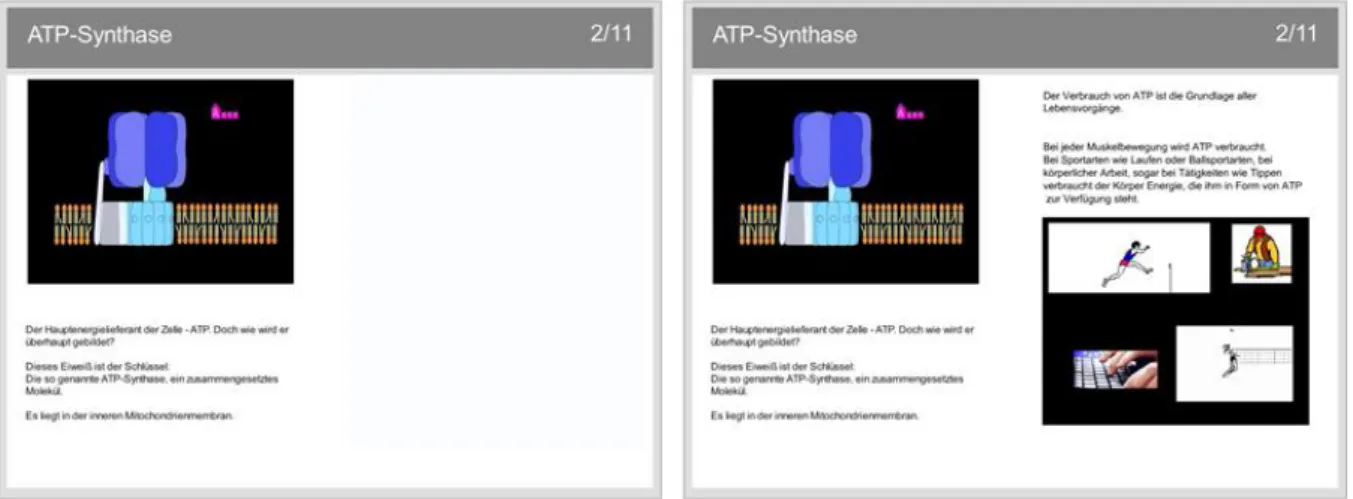
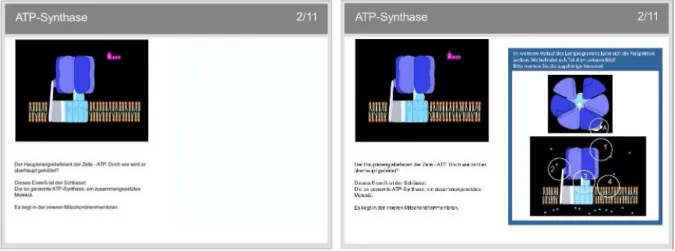
Figure 1. Example slide of the learning instruction with and without seductive details. 27
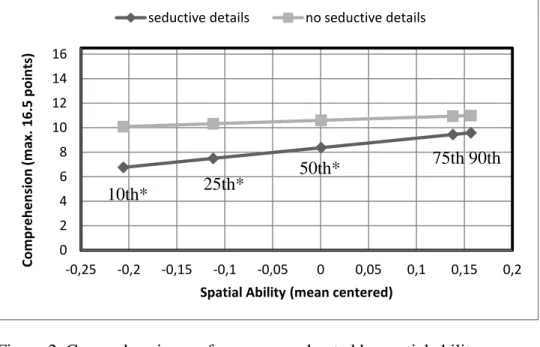
-Figure 2. Comprehension performance moderated by spatial ability. 30
-Figure 3. Comprehension performance moderated by prior knowledge. 30
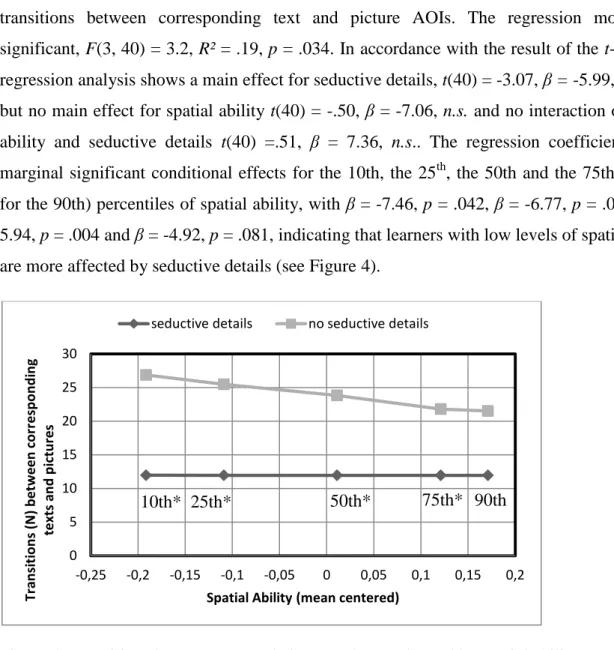
-Figure 4. Transitions between text and picture AOIs moderated by spatial ability. 31 -Figure 5. Transitions between text and picture AOIs moderated by prior knowledge. 32
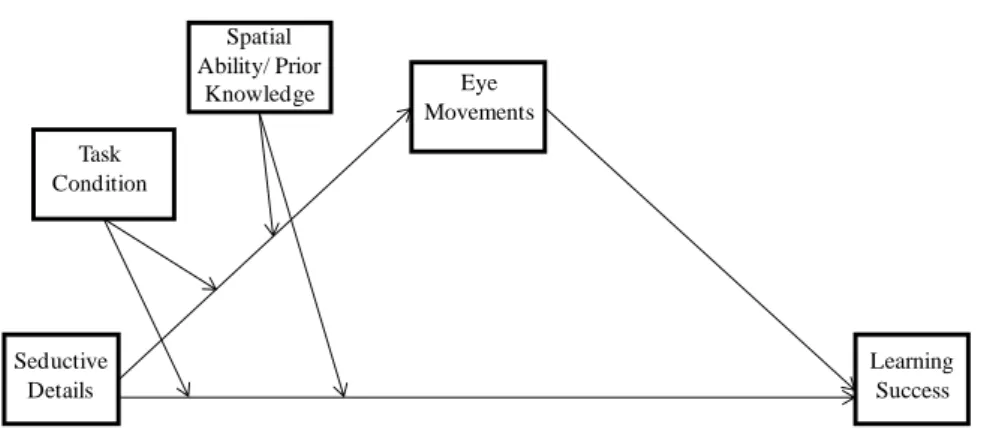
-Figure 6. Conceptual model of the moderated mediation. 39
-Figure 7. Mediation on retention moderated by task condition and spatial ability. 43 -Figure 8. Mediation on retention moderated by task condition and prior knowledge. 45 -Figure 9. Example slide of the learning instruction with and without mental animation
-V
List of Abbreviations
AOI Area of Interest
ATP Adenosine Triphosphate
CATLM Cognitive Affective Theory of Learning with Media
CLT Cognitive Load Theory
CTML Cognitive Theory of Multimedia Learning
ECG Electro Cardiogram
EDA Electro Dermal Activity
EEG Electro-Encephalography
fMRI Functional Magnetic Resonance Imaging
ICA Index of Cognitive Activity
ISM Inventory of School Motivation
MANCOVA Multivariate Analysis of Covariance
MANOVA Multivariate Analysis of Variance
NASA TLX NASA Task Load Index
t1 measuring time one
VI
Overview of relevant publications
The present dissertation is a cumulative dissertation that is focused on cognitive load while learning with multimedia instructions and the comparison and validation of methods for cognitive load measurement. The dissertation comprises three empirical studies (publications I, III, & IV) that were published in international scientific peer-reviewed journals and one publication that is submitted to an international scientific journal for peer review (publication II).
Publication I
Park, B., Korbach, A., & Brünken, R. (2015). Do learner characteristics moderate the seductive-details-effect? A cognitive-load-study using eye-tracking. Journal of Educational Technology & Society, 18, 24-36.
Publication II
Korbach, A., Brünken, R., & Park, B. (accepted). Measurement of Cognitive Load in Multimedia Learning: A Comparison of Different Objective Measures. Instructional Science.
Publication III
Korbach, A., Brünken, R., & Park, B. (2016). Learner Characteristics and Information Processing in Multimedia Learning: A Moderated Mediation of the Seductive Details Effect. Learning and Individual Differences, 51, 59-68.
Publication IV
Korbach, A., Brünken, R., & Park, B. (accepted). Differentiating Different Types of Cognitive Load: A Comparison of Different Measures. Educational Psychology Review.
Personal contribution of the PhD candidate
Publication I: Data analysis and writing of the scientific publication
Publication II: Data acquisition, analysis and writing of the scientific publication
Publication III-IV: Formulation of research questions, data acquisition, analysis and writing of the scientific publications
Note
This research was supported by the German Federal Ministry of Education and Research (BMBF, 01PL12057).
- 1 -
Cognitive load measurement while learning with multimedia
1. Introduction
Cognitive load theory (CLT; Choi, van Merriënboer, & Paas, 2014; Plass, Moreno, & Brünken, 2010; Sweller, Ayres, & Kalyuga, 2011) is one of the most influential theories for research on learning and instruction, especially for learning with multimedia learning instructions. The former model of CLT (Sweller, van Merriënboer, & Paas, 1998) thereby assumes the existence of intrinsic cognitive load that is based on task complexity, extraneous cognitive load that is based on the presentation format and germane cognitive load that is based on cognitive processes relevant to learning. The recent model of CLT (Choi et al., 2014; Kalyuga, 2011) only considers intrinsic and extraneous cognitive load, including the learning-relevant cognitive processing in the intrinsic cognitive load factor. Cognitive load and the efficient use of available cognitive capacities are essential for learning and one big goal of cognitive load research is to derive practical implications for the design of learning instructions that support the efficient use of the learner’s cognitive capacities. To this end, the use of valid and reliable methods of cognitive load measurement is very important (Brünken, Seufert, & Paas, 2010) and the present lack of appropriate standardized methods is highly relevant for cognitive load research. The present dissertation pays attention to the problem of cognitive load measurement, not only because of the importance for research on learning and instruction but also because of the need for evidence concerning the basic theoretical assumptions of CLT. The first study (publication I) therefore reviews eye-tracking as a method to assess cognitive load while learning with multimedia. The second (publication II) as well as the fourth study (publication IV) focus on a comparison between different methods of cognitive load measurement. For the development of learning instructions that save cognitive resources by optimizing information presentation and at the same time foster generative cognitive processing in accordance with the cognitive theory of multimedia learning (Mayer, 2001; 2005), methods are required to identify cognitive load in relation to the corresponding cognitive processes. Furthermore, to determine the unique contribution of certain cognitive processes to different cognitive load aspects, it is important to answer significant theoretical questions concerning the model construction of CLT with either three (Sweller et al., 1998) or two (Choi et al., 2014; Kalyuga, 2011) different kinds of cognitive load and the interrelationship of the single cognitive load factors. Therefore, different objective methods of cognitive load measurement will be validated concerning their
- 2 - suitability to measure total cognitive load. Moreover, the methods will be reviewed concerning their suitability to differentiate between different cognitive load factors. This was already shown for subjective cognitive load ratings in recent studies by Leppink and colleagues (Leppink & Van den Heuvel, 2015; Leppink, Paas, Van der Vleuten, Van Gog, & Van Merrienboer, 2013; Leppink, Paas, Van Gog, Van der Vleuten, & Van Merrienboer, et al., 2014). The studies show that the different cognitive load factors can be distinguished and measured separately. Thereby the studies switch from a subjective rating scale for the former three-factorial model to an adjusted rating scale for the recent two-factorial model of CLT and finally support the assumption of the two factors, intrinsic and extraneous cognitive load. These studies support the assumption of unique cognitive processes related to the single cognitive load factors and raise the question whether these cognitive processes can also be identified with objective methods. Given the assumptions of Schnotz and Kürschner (2007) concerning cognitive load and the zone of proximal development, instructional designs should rather aim at a moderate level of cognitive load that lies within the learner’s zone of proximal development. That means efficient generative processing as a function of task difficulty and expertise for the zone of proximal development neither needs very high nor very low cognitive load. As there are no standardized measures for cognitive load and the zone of proximal development is a highly individual function, it is hard to determine an individual moderate level of cognitive load. Even methods for differentiating cognitive load measurement of the single cognitive load factors may not solve the problem. However, if at least extraneous and intrinsic cognitive load could be measured separately, this would help to distinguish the unique contributions of the single cognitive load factors to the total amount of cognitive load and to make assumptions concerning a cognitive overload or a cognitively unchallenging learning situation. The total amount of cognitive load is of course not only caused by the learning instruction but also by learner characteristics. The cognitive affective theory of learning with media (Moreno, 2009) as well as the updated model of cognitive load theory (Choi et al., 2014; Kalyuga, 2011) pay attention to learner characteristics and consider moderating effects for cognitive processing, corresponding cognitive load and resulting learning success. Thereby, cognitive load is assumed to result as a function of task-learner-interaction that not only affects the efficiency of resource consumption but also the individual capacity limitations. The task-learner-interaction is based on the assumption that cognitive processing depends on individual learner characteristics that offer possibilities to compensate for inappropriate instructional designs or high task complexity and that may offer strategies for efficient learning. Thus, not only the total amount of cognitive load but also the nature of
- 3 - cognitive load depend on learner characteristics. A recently discussed factor for determining cognitive load concerning the task-learner-interaction is element interactivity (Chen, Kalyuga, & Sweller, 2016; Kalyuga & Singh, 2015; Sweller, 2010). Based on Sweller’s (2010) assumptions that element interactivity depends on intrinsic, extraneous and germane cognitive load, element interactivity is discussed as the main source of working memory capacity consumption. The number of active elements that must be activated and maintained in working memory can for example be increased by a high task complexity, a spatially or temporally separated information presentation as well as by a high engagement in schema acquisition. Moreover, the element interactivity effect indicates that, in general, cognitive load effects depend on element interactivity (Sweller et al., 2011) and do not occur in low element interactivity learning situations. As the learners’ prior knowledge is a crucial factor for individual levels of element interactivity, Chen et al. (2016) even suggest to assume the expertise reversal effect as a variation of the element interactivity effect and to analyze element interactivity between different instructional designs to review the efficiency of the instructional procedures. Another learner characteristic that is at first sight not related to element interactivity — but still is important for learning success while learning with multimedia learning instructions — is the learner’s spatial ability. High spatial ability learners seem to profit more from concurrent presentations of text and corresponding picture information (Gyselinck, Ehrlich, Cornoldi, De Beni, & Dubois, 2000; Mayer & Sims, 1994) and have advantages concerning the construction of three-dimensional mental representations out of two-dimensional visual figural information (Mayer, 2001; Münzer, Seufert, & Brünken, 2009). Thereby, spatial ability is assumed to support efficient generative processing and to save cognitive resources for handling high task complexity or high extraneous cognitive load. The present work considers learner characteristics especially concerning the efficient use of cognitive capacity when dealing with high extraneous cognitive load to provide explanations for contradicting results of cognitive load research. The first study (publication I) and especially the third study (publication III) focus on the task-learner-interactions and use analysis of moderation and moderated mediation to show the influence of prior knowledge and spatial ability. Even though spatial ability is not directly related to element interactivity, the results of both studies will finally be discussed with regard to the element interactivity effect. In summary, the goals of the present dissertation are to compare and to validate different methods of cognitive load measurement and to make conclusions concerning the basic theoretical assumptions of CLT. Thereby, the interrelations between the single cognitive load factors and the impact of individual learner characteristics will be considered to review
- 4 - the basic theoretical assumptions of CLT. Furthermore, the results of the different cognitive load measures will be reviewed concerning their sensitivity to cognitive processes that indicate a unique contribution to the single cognitive load factors.
2. Recent Models of Cognitive Load Theory
Cognitive Load Theory (Choi et al., 2014; Plass et al., 2010; Sweller et al., 2011) is a commonly used theoretical framework in empirical research on learning and instruction. One basic assumption of cognitive load theory is that the available cognitive capacity is limited by working memory capacity and that knowledge acquisition is an active process that is fostered by an efficient use of available resources. The objective of CLT is to provide explanations for learning performance as a function of resource consumption and to support the design of efficient learning instructions. At first, CLT focused mainly on resource consumption by instructional methods (Sweller, 1989); over time, additional resource consumption due to task demands (Sweller, 1994) and cognitive activity for schema acquisition (Sweller et al., 1998) were added to the theory and merged within the additivity hypothesis (Paas, Renkl, & Sweller, 2003).
2.1Three-Factorial Model
The three-factorial model of CLT (Plass et al., 2010; Sweller et al., 2011) assumes three components: (1) intrinsic, (2) extraneous, and (3) germane cognitive load (Sweller et al., 1998) that add up to the total amount of cognitive load (Brünken, Moreno, & Plass, 2010; Moreno & Park, 2010; Park, 2010). Intrinsic cognitive load is determined by the given complexity of the learning task and results from element interactivity. Element interactivity is defined by the number of interacting information elements that belong to the learning task and that have to be processed simultaneously in working memory. The more complex the learning task, the higher the element interactivity and the resulting intrinsic cognitive load. To some extent, intrinsic cognitive load can be reduced by instructional design that reduces element interactivity (Pollock, Chandler, & Sweller, 2002) but primarily, intrinsic cognitive load is a function of individual prior knowledge and expertise (Kalyuga, Chandler, & Sweller, 1998; Paas et al., 2003). Schemata that already have been learned and automated by the learner thereby reduce the number of interacting elements because multiple elements that were already integrated into a schema can further be handled as a single element. Extraneous
- 5 - cognitive load is caused by the instructional design, hinders the learning process and should therefore be reduced to a minimum. As the extraneous cognitive load factor was the origin of CLT, most cognitive load effects and design principles focus on the objective to reduce extraneous cognitive load and to free cognitive capacity for schema acquisition (Moreno & Park, 2010). An increase in extraneous cognitive load means an increase in cognitive capacity due to the compensation of poor instructional design that does not foster schema construction. Extraneous cognitive load is increased, for example, if corresponding information is presented at high spatial distance to another (Spatial Contiguity Effect, e.g. Moreno & Mayer, 1999) or is temporally delayed instead of simultaneously presented (Temporal Contiguity Effect, e.g. Mayer & Sims, 1994). Both effects cause cognitive load to keep the corresponding information up in working memory over an unnecessary long period of time instead of saving resources for mentally integrating the corresponding information. In contrast, germane cognitive load is the amount of load that is directly dedicated to schema acquisition and automation. An increase in germane cognitive load within the limitations of working memory capacity thereby means an increase in learning performance. Free cognitive capacity should be used to handle the intrinsic cognitive load and to organize and integrate the interacting elements into coherent schemata (Sweller, 2010). Given a learning content of high intrinsic cognitive load, the goal of a proper instructional design should be a low extraneous cognitive load and a redirection of the free capacity towards germane cognitive load. According to this conclusion, instructional techniques to foster germane cognitive load should be aimed at the redirection of free cognitive resources to the cognitive processes of schema construction. Criticism on CLT mainly addresses the three-factorial structure and the additivity hypothesis. Concerning the additivity of the single cognitive load factors especially intrinsic cognitive load seems not to be simply additive. On the one hand, intrinsic cognitive load has to be distinguished from extraneous and germane load by its nature because — in contrast to these loads — intrinsic cognitive load is assumed to be solely inherent to the material. On the other hand, a close relation and even an interaction between intrinsic and germane cognitive load must be assumed because germane load is devoted to handle intrinsic load (De Jong, 2010). Both assumptions question a simple additivity of the three cognitive load factors. Research on the additivity hypothesis supports this concern as there is no evidence for a simple additive relation of intrinsic, extraneous and germane cognitive load (Park, 2010; Park, Moreno, Seufert, & Brünken, 2011). Furthermore the distinctiveness and the unique contribution to total cognitive load of the single cognitive load factors is problematic and widely discussed. Schnotz and Kürschner (2007) state that it is a function of the educational objective as well as
- 6 - of the learners’ expertise whether a load is intrinsic or extraneous. Thereby, a high intrinsic load for experts may foster learning performance in contrast to novices who cannot handle the large number of interacting elements and the intrinsic load in turn becomes extraneous load that hampers learning performance. Germane load should further not be considered to be a requirement for learning because implicit learning can also occur without involvement of working memory as defined for schema acquisition within CLT and so without germane cognitive load. This is not only true for evolutionary primary knowledge but also for culturally mediated secondary knowledge (Geary, 2007, 2008) that is the concern of CLT. Based on these assumptions, Schnotz and Kürschner (2007) suggest that germane cognitive load should be defined as additional load due to additional cognitive processes that improve learning. De Jong (2010) states a close relation between extraneous and germane cognitive load, as a reduction of extraneous load by a well integrated design may also lead to an increase in germane load. Furthermore, the distinction between germane and extraneous cognitive load may depend on learner characteristics, as that holds true for the expertise reversal effect. The same instructional techniques that foster schema construction for novices hamper schema construction for experts and turn out to be germane load or extraneous load as a function of the learners’ prior knowledge (Kalyuga, Ayres, Chandler, & Sweller, 2003). Sweller (2010) states element interactivity as the main source for working memory capacity consumption and as a common factor for intrinsic, extraneous and germane cognitive load. Thereby, the suggestion to distinct intrinsic and extraneous cognitive load is two-fold. First, the difference between extraneous and intrinsic depends on the effect of changing element interactivity. If changes in element interactivity alter the learning objective, the concerned resource is intrinsic; if not it is extraneous. Second, the difference between extraneous and intrinsic depends on the learning objective itself as an element can be intrinsic if it is part of the learning objective and the same element can be extraneous if it is no part of the learning objective. Germane cognitive load is defined as a function of intrinsic and extraneous cognitive load. Thereby, the resources that were not consumed by extraneous load can be distributed to handle the intrinsic load that results from element interactivity. This close interaction of intrinsic and germane cognitive load leads Kalyuga (2011) to the conclusion that these two factors can essentially not be distinguished. Intrinsic cognitive load is defined by element interactivity and the real load results from processing these elements that were part of the learning objective. The processing of these elements leads to schema acquisition that is at the same time considered to cause the germane cognitive load. Thus, intrinsic and
- 7 - germane cognitive load at least share the cognitive processes that were due to schema acquisition and therefore the three-factorial structure is to some extent redundant.
2.2Two Factorial Model
Based on the criticism about missing unique characteristics needed to distinguish between intrinsic and germane cognitive load, an updated model of CLT considers only two of the three components: intrinsic and extraneous cognitive load (Choi et al., 2014; Kalyuga, 2011). The deletion of germane load was due to the close relationship between intrinsic and germane cognitive load, which manifested in the inability to separate a unique contribution of each factor to the overall cognitive load. Germane cognitive load is now considered as germane resources that reflect the actually allocated amount of working memory capacity for learning and the learners’ engagement in the learning activity (Sweller, 2010). Germane cognitive resources can be increased by instructional techniques that increase the learners’ engagement in the learning activity. The cognitive load that is caused by schema acquisition is incorporated into the intrinsic cognitive load factor as intrinsic cognitive load represents the essential processing of the learning task. Instructional techniques to foster schema acquisition and to increase former germane cognitive load are assumed to raise the number of interacting elements and to belong to intrinsic cognitive load within the updated model. Element interactivity remains the crucial factor for intrinsic cognitive load and the cognitive demands of the learning task. However, the task characteristics are further redefined according to the intrinsic task difficulty, the type of task and the manner of instructional design and distinguished from the physical learning environment. The physical learning environment is considered as a surrounding situational factor that interacts with the learner and the task characteristics and has cognitive, physiological and affective effects on learning (Choi et al., 2014). The effects of the physical learning environment can cause additional extraneous cognitive load, for example via seductive noise that has to be ignored and affects the focus of attention, but they can also foster germane cognitive resources, for example by providing a motivating learning environment. In sum, the updated model not only reduced the number of capacity consuming load factors but also adapted to cognitive-affective, motivational and evolutionary perspectives and theories.
One more criticism that led to the updated two-factorial model of CLT is the problem of differentiating measurements of the single cognitive load factors. Due to a lack of differentiating methods of cognitive load measurement, many studies only quantify total cognitive load and interpret the results according to the learning performance as intrinsic,
- 8 - extraneous or germane cognitive load (De Jong, 2010). The post-hoc explanation thereby allocates high cognitive load in combination with high learning success to germane cognitive load and in turn high cognitive load in combination with low learning success to extraneous cognitive load. However, high cognitive load in combination with high learning success can also be due to high intrinsic cognitive load (Schnotz & Kürschner, 2007). In fact, the feasibility to methodologically distinguish between germane and intrinsic cognitive load is highly problematic and there is a lack of studies that prove a unique contribution of germane load that cannot be explained by intrinsic load (Kalyuga, 2011). Considering synergetic effects of instructional techniques that influence more than one load factor, for example by decreasing extraneous and increasing germane load at the same time, demonstrates the insufficient reliability of the approach to quantify only total cognitive load. Although the updated model includes only intrinsic and extraneous cognitive load, there is still a need for methods of cognitive load measurement to distinguish at least between these two factors of CLT. Synergetic effects of instructional techniques can also be assumed for the updated model of CLT with a decrease in extraneous and a simultaneous increase in intrinsic cognitive load due to intense information processing. The reunion of intrinsic and germane cognitive load may provide an advantage for methods of cognitive load measurement but the methodological problem to distinguish between the two factors remains. There may be no need to further distinguish intrinsic load solely according to task performance and germane load according to essential learning performance. However, there is a need for valid and reliable methods to distinguish between intrinsic and extraneous cognitive load to disentangle effects of instructional techniques on cognitive load considering the moderating interaction of task demands and learner characteristics.
2.3Cognitive Load Theory and the Cognitive Theory Of Multimedia Learning
The Cognitive Theory of Multimedia Learning (CTML; Mayer, 2001, 2005) is based on three theoretical assumptions. First, the dual channel assumption that assumes separate channels for visual/pictorial and auditory/verbal information processing. This assumption is related to the dual coding theory (Paivio, 1986) as well as to theories of working memory (Baddeley, 1986, 1998) and considers the sensory modality that is visual or auditory as well as the presentation mode that is pictorial or verbal. Thereby, the sensory modality is essential to the perceptual processing and the presentation mode is essential to the construction of verbal or pictorial mental models in working memory. Furthermore, the assumption of cross-channel representations (Paivio, 1986) includes the possibility to transfer information presented to one
- 9 - channel to be also represented in the other channel.Second, the limited capacity assumption is based on theories about working memory (Baddeley, 1998, 2002; Chandler & Sweller, 1991) and considers a limited cognitive capacity that can be used for information processing. This assumption is congruent with CLT (Sweller, 1999), however with regard to the dual channel assumption CTML assumes separate capacities for the single processing channels. Third, the active processing assumption that is also identically featured in CLT (Sweller, 1999) and assumes that learning is an active cognitive process in order to construct a coherent mental model (Wittrock, 1990). The essential cognitive processes for active learning are, according to CTML, the selection of the relevant information, the organization of the relevant material and the integration of the selected material with existing knowledge. The relevant cognitive system for active processing is the working memory and information that shall be organized or integrated must first be transferred from sensory memory and activated from long-term memory. Mayer (2005) assumes five essential processes for meaningful learning, which are (1) selecting relevant words, (2) selecting relevant pictures, (3) organizing selected words, (4) organizing selected pictures and (5) integrating the verbal and pictorial representations with each other and with prior knowledge. Selecting thereby means to pay attention to the most important parts of the presented information so that they can be transferred to working memory via the corresponding processing channel. The information selection is necessary because of the limited capacity of working memory that only allows processing a limited number of information elements at once. Organizing means the construction of a coherent representation out of the selected information and is also subject to the capacity limitations for the different processing channels. According to the sensory modality and the presentation mode the organization leads to a verbal or a pictorial model whereas verbal information that was presented visually can be transferred to a verbal model that is processed in the auditory channel. The final integration of the verbal and the pictorial models means to build relations and to map the corresponding information of each representation to each other and to prior knowledge. The process of integration can be assumed to be highly demanding and therefore an efficient use of the available cognitive capacity is necessary for meaningful learning. Successfully integrated new information will be transferred and stored in long-term memory in form of schemata that can be used as prior knowledge for the further learning process. This model of CTML (Mayer, 2001, 2005) was expanded to the Cognitive Affective Theory of Learning with Media (CATLM; Moreno, 2005, 2006, 2007, 2009) by adding motivational and affective aspects to close the gap between affective and cognitive processes. CATLM includes three more assumptions which are the affective mediation assumption, the metacognitive
- 10 - mediation assumption and the individual differences assumption. These assumptions consider affective and motivational processes, metacognitive functions and individual learner characteristics to mediate the cognitive processing while learning with media.
In sum, at least the limited capacity assumption and the active processing assumption are identical between CLT and CTML/CATLM. CLT (Sweller, 1999) thereby differs between intrinsic, extraneous and germane cognitive load, whereas CTML/CATLM differs between extraneous, essential and generative processing. However, the three different types of load and processing can easily be related to each other, CLT and CTML/CATLM do not specify the detailed cognitive processes that are unique to extraneous, intrinsic and germane cognitive load or extraneous, essential and generative processing. For CTML/CATLM Mayer and Moreno (2007) assign the selecting of information to essential processing and organizing and integrating information to generative processing. The problems concerning the suggested categorization thereby are similar to CLT and the differentiation between intrinsic and germane cognitive load. For one, selecting information might also be related to extraneous processing; secondly, there might be interactions between essential and generative processing comparable to interactions between intrinsic and germane cognitive load for CLT.
Concerning the mediation assumptions of CATLM (Moreno, 2006; Moreno & Mayer, 2007) especially the former model of CLT (Plass et al., 2010; Sweller et al., 2011) does not pay much attention to motivational, affective and metacognitive aspects or individual learner characteristics. In contrast, the updated model of CLT (Choi et al., 2014; Kalyuga, 2011) comes close to these mediation assumptions and considers such additional factors within the revised germane cognitive resource concept. To map the different theories to each other, extraneous cognitive load can be related to extraneous cognitive processing, intrinsic cognitive load to essential cognitive processing and germane cognitive load to generative cognitive processing for the three-factorial model of CLT (Plass et al., 2010; Sweller et al., 2011). With regard to the two-factorial model of CLT (Choi et al., 2014; Kalyuga, 2011), essential and generative cognitive processing can be both assigned to intrinsic cognitive load and the concept of germane cognitive resources pays attention to the mediation assumptions of CATLM (Moreno, 2006; Moreno & Mayer, 2007). In sum CLT, CTML and CATLM share several commonalities including the problem of identifying unique cognitive processes at witch this problem is essential to CLT because CTML and CATLM do not want to explain learning in terms of cognitive load (Moreno, 2010). However the information selection, organization and integration can be assumed as the essential cognitive processes for learning. Moreover the proper classification of the causal cognitive processes is very important for a
- 11 - valid and reliable measurement of cognitive load and a differentiation of the single cognitive load factors.
3. Cognitive Load Measurement
In general, there is a lack of standardized, reliable and valid measures for CLT research especially for the differentiated assessment of the three respectively two main constructs (Kirschner, Ayres, & Chandler 2011; Moreno, 2010). Many studies do not assess cognitive load directly but interpret cognitive load effects indirectly according to measures of learning success. The use of self ratings for cognitive load is widespread in the field of cognitive load research; however, rating scales are criticized because of methodological problems (Brünken, Plass, & Leutner, 2003; Brünken et al., 2010; Clark & Clark, 2010; Moreno, 2006). Furthermore physiological measures can be used to assess cognitive load and emerging technologies like eye-tracking provide a detailed insight into human information processing. Brünken et al. (2010) provide a classification of cognitive load measures according to the source of information about the resource consumption that distinguishes subjective, objective or combined methods. This classification is used in the following to describe the currently used methods of cognitive load measurement.
3.1Subjective Measures
Subjective methods commonly used are ratings of perceived mental effort, task difficulty or engagement, which are completed by research participants. Two examples for widely used subjective rating scales are the scale introduced by Paas (1992) and the NASA Task Load Index (NASA TLX; Hart & Staveland, 1988). The self-report scale of Paas (1992) is probably the most frequently used scale for a fast and easy assessment to perceived cognitive load. The scale is a one item scale that asks for the perceived mental effort on a 7- to 9-point Likert scale. The item is often combined with a rating of perceived task difficulty (Paas, Tuovinen, Tabbers, & Van Gerven, 2003). The advantage of subjective methods is that ratings provide valid and reliable information about the individual learning experience. In addition, subjective rating scales are very easy to implement and can be used in different learning contexts with diverse learning contents and groups of participants. Several studies show the suitability of rating scales for cognitive-load measurement (Gopher & Braune, 1984; Paas & van Merriënboer, 1994). Specifically, the ratings for task difficulty seem to provide valid
- 12 - information about the intrinsic cognitive load based on element interactivity as defined for the three-factorial model of CLT (Ayres, 2006).
However, rating scales are criticized because of methodological problems concerning the quality criteria of objectivity, validity and reliability (Brünken et al., 2003; Brünken et al., 2010; Clark & Clark, 2010; Moreno, 2006). In particular, evidence for content validity is critical, as it is difficult to distinguish between different types of cognitive load with a universal subjective rating scale. The ratings of perceived task difficulty for example can also be influenced by changes in germane and extraneous cognitive load because changes in all three factors of CLT may cause a perceived higher task difficulty. Considering task-learner interactions and synergetic effects between different cognitive load factors, these subjective ratings may rather provide information about total cognitive load for the commonly used learning environments. Nevertheless, subjective rating scales are assumed to be the only way to distinguish the single cognitive load aspects, using multi-dimensional questionnaires to separately assess intrinsic, extraneous and germane or rather intrinsic and extraneous cognitive load, respectively (Leppink & Van den Heuvel, 2015; Leppink et al., 2013; Leppink et al., 2014).
Another disadvantage is that ratings are generally requested after the learners have finished the learning task. Rating scales provide no continuous information about the actual cognitive load during the learning process. Given a complex learning task with fluctuating task demands depending on task-learner-interactions subsequent ratings provide only a global scaling across the perceived cognitive load of the whole learning task (Brünken et al., 2010). In contrast, frequent intermediate ratings may interrupt the learning process for several times and thereby hamper the schema construction especially when multidimensional questionnaires should be used within a complex learning task. Furthermore, there is an effect of timing for cognitive load ratings (Schmeck, Opfermann, Van Gog, Paas, & Leutner, 2015; Van Gog, Kirschner, Kester, & Paas, 2012) with delayed ratings of mental effort and task difficulty indicating higher cognitive load than immediate ratings. These findings underline the strong subjective aspects of cognitive load ratings concerning perception, introspection and retrospection. However, given these drawbacks, subjective ratings of cognitive load are still often used in research examining learning and instruction because of the important benefits concerning usability. Nevertheless, there is a need to complement subjective methods with additional objective methods especially concerning a continuous measurement of cognitive load during the learning process.
- 13 - 3.2Objective Measures
Objective methods of cognitive-load measurement include measures of learning outcomes, task difficulty and behavioral data (Brünken et al., 2010). The interpretation of learning outcomes is based on the experimental manipulations of the cognitive load factors by different instructional designs and effects on learning outcomes are assigned according to the theoretical assumptions for the independent variable. As for the practical implications of examined instructional techniques, the measurement of learning outcomes is important for cognitive load research. However, it is not a valid measure for cognitive load because concurrent factors cannot be excluded from affecting the learning outcomes and cognitive load can neither be quantified nor can effects on the single factors be distinguished. The approach to use task complexity as a measure for cognitive load is very close to the measurement of learning outcomes. The basic assumption is that task difficulty varies the cognitive load consumption with easy tasks consuming less cognitive resources than difficult tasks (Ayres, 2006). However this approach does also not provide detailed information about cognitive load, because the learning outcome as well as the task difficulty depend on prior knowledge (Kalyuga, 2003) and both methods cannot be used to continuously measure cognitive load. In contrast, many methods to measure behavioral data provide much more detailed information about cognitive load and allow a continuous measurement. Behavioral data include the analysis of time on task, physiological data such as pupil dilation, heart rate or data from methods of neuroimaging, secondary-task performance and eye-tracking data. Except for time on task, each of these mentioned objective methods is essential due to the continuous nature of the measurement and provides highly detailed information about cognitive load during the learning process.
Time on task is easy to measure and directly related to the invested effort and engagement for the learning task. The basic assumption is that cognitive processes need time to be performed and that the time on task increases according to the amount of cognitive processes that are performed within a learning task. However, time on task does also not measure cognitive load directly. In contrast, some physiological measures can directly indicate cognitive load. Whelan (2007) argues that functional magnetic resonance imaging (fMRI) not only can measure cognitive load directly but also can differentiate between the single load factors by showing specific neuronal activation patterns for intrinsic, extraneous and germane cognitive load. As a further development of the electro-encephalography (EEG) that also can be used to measure cognitive load, the fMRI provides much more detailed information due to a higher resolution. The disadvantage of these techniques is the complexity of the instrument and the
- 14 - low flexibility for a use in combination with common multimedia learning environments. The electro cardiogram (ECG) can also be used to detect individual changes to cognitive load by a learning task. However, the differences seem to be very small and hard to show (Paas & Van Merrienboer, 1994). Another method to detect cognitive load is the electro dermal activity (EDA) that is based on perspiration resorption (Schwalm, 2009). A study by Verwey and Veltman (1996) showed an increase in cognitive load during a driving simulation by adding an additional cognitive task. In general, the problem with neuroimaging techniques is usability — especially considering a large sample size or a natural learning environment. The measurement of secondary-task performance as a direct measure of cognitive load is based on the CLT’s limited capacity assumption. Given a primary task that is a learning task with a certain amount of capacity consumption due to the instructional technique, the measurement of secondary-task performance provides information about the amount of cognitive capacity that is not used to perform the primary task. The prerequisite is that the secondary-task relies on the same cognitive resource as the primary task (Brünken et al., 2003). The dual-task approach has a long tradition in psychological research on working memory capacity and research on related cognitive components and processes according to task demands (e.g. Baddeley, 1986). Thereby, “dual-task” means that the participants have to perform two concurrent tasks and performance of both tasks is measured to identify common cognitive processes and resources. In research on learning and instruction the first task is of course the learning task. The established secondary-tasks are mostly fulfilled by auditory or visual cues in the learning instruction and use reaction time on these up-coming cues within the learning material as a measure for secondary-task performance and cognitive load. The dual-task method thereby allows direct measurement of cognitive load. A series of studies provides evidence that secondary-task performance produces reliable and valid results for cognitive load measurement (e.g. Brünken et al., 2003; DeLeeuw & Mayer, 2008). A special kind of secondary-task is the rhythm method that is a dual-task analysis with a rhythmic foot-tapping task as secondary-task (Park & Brünken, 2015). It measures cognitive load in a direct and continuous way using an intra-individual behavioral measure. The rhythm method uses no external cues and therefore avoids sensory interferences between the learning instruction and the secondary-task (Park & Brünken, 2015). This new method was validated in a study where the participants’ primary task was to work with a multimedia-learning program and the secondary-task was to tap a previously presented and practiced rhythm with their foot. Because both tasks rely on the same cognitive resources, the performance of the secondary-task provides information about the amount of available cognitive capacities. For example,
- 15 - better performances on the secondary-task indicate that less cognitive capacities are consumed by the primary task. The given limitations are that secondary-task performance does also not provide an absolute estimation of resource consumption (Brünken et al., 2010), cannot distinguish between single cognitive load factors and often requires laboratory settings. Given the additivity hypothesis of cognitive load theory and the theoretical explanation that rhythm production is specifically dealing with inhibition processes associated with executive control (Park & Brünken, 2015), the sensitivity of this method should be associated with a general sensitivity for total cognitive load. Furthermore, the dual-task induces cognitive load by itself and there may be an impairment of the learning process dependent on possible interferences between the demands of the learning and the secondary-task. However, the dual-task approach provides continuous, valid and reliable information about cognitive load consumption for learning tasks.
Another possibility to measure cognitive load in a less intrusive way lies within the pupillometric analyses. The techniques to record eye movements achieved large improvements concerning usability over the last years. The pupil size and the pupil dilation also provide information about cognitive activity and cognitive load (Beatty, 1982). Laeng, Ørbo, Holmlund, & Miozzo (2011) replicated the Stroop effect with an increase in pupil size and larger pupil dilations for color incongruent distractors. Hyönä, Tommola and Alaja (1995) found the pupil size to be an indicator for cognitive load during word translation. However, the tasks of both studies are very simple compared to a multimedia learning instruction. Two more studies found pupil size to be an indicator for cognitive load during tasks that are closer to a complex learning task with mixed media presentation. Just and Carpenter (1993) found evidence for the sensitivity of the pupil size concerning the cognitive load during sentence reading and text comprehension, with larger mean pupil dilation for complex sentences. Moreover, Van Orden, Limbert and Makeig (2001) found a relation between pupil size and task difficulty in a target identification task, with an increase in pupil size for tasks with a higher level of difficulty. In this experiment, the task demands called for the processing of pictorial and textual information, presented together on a single slide. In addition, both studies analyzed larger time intervals and extend the often used event related pupil response within very close time intervals of about one or two seconds. The disadvantage of pupillometric analysis is that pupil size can be influenced by illumination effects and is also sensitive to other factors like emotion or arousal (Holmqvist, Nyström, Andersson, Dewhurst, Jarodzka, & Van De Weijer, 2011). This problem is not only true for pupillometric analysis but for
- 16 - EEG, ECG and EDA because the measured arousal cannot clearly be ascribed to cognitive load and so there is also the question of construct validity.
A method that was developed to exclude effects of illumination and emotional arousal for pupillometric analysis is the index of cognitive activity (ICA) introduced by Marshall (2007). The ICA is based on the short and large reactions in pupil dilation due to changes in cognitive activity that are identified by wavelet analysis and automatically calculated by designated analytics software (EyeWorksTM, EyeTracking Inc.). The advantage of the ICA is that the large dilations in pupil size due to effects of illumination are automatically identified and excluded from analysis. Marshall, Pleydell-Pearce, and Dickson (2002) demonstrated that the ICA is not influenced by illumination and that the ICA reliably indicates cognitive load under high and low illumination conditions. Some recent studies support the usability of the ICA for driving tasks (Demberg, Sayeed, Mahr, & Müller, 2013; Schwalm, Keinath, & Zimmer, 2008) or mathematical tasks (Schwalm, 2009), but not for learning within a multimedia instruction. Debue and van de Leemput (2014) used the ICA for cognitive load measurement concerning information processing with different types of online newspapers. However, the ICA values did not conform to the results of subjective cognitive-load ratings or performance measures. As there are only few studies that used the ICA to measure cognitive load in a context that is comparable to complex learning with multimedia learning instructions, it is not certain if the ICA is a valid and reliable method for research on learning and instruction. However, there is evidence for its quality and advantages in the context of simple cognitive tasks that do not concern learning and the ICA should be adapted to instructional research and validated for cognitive load measurement within the context of complex learning.
Closely related to the pupillometric analysis is the analysis of gaze behavior and eye movements. The eye-tracking analysis offers many different measures that provide detailed information about information processing, the allocation of attention and cognitive activity. When used alone, eye-tracking provides information about the perceptual processing while learning; but in combination with measures of learning performance, it also provides information about the focus of cognitive activity and cognitive information processing (Folker, Ritter, & Sichelschmidt, 2005; Mayer, 2010). Measures like the total fixation time and the total number of fixations on relevant information, the time to the first fixation on relevant information or the transitions between related sections of relevant information can show the learners’ focus of attention during perceptual processing. The established eye-tracking indicators for cognitive load or cognitive activity are fixations (Haider & Frensch, 1999; Jarodzka, Scheiter, Gerjets, & van Gog, 2010). As it is indicated by several studies,
- 17 - there is evidence for a close relation between eye-movement measures and cognitive activity that supposes e.g. long fixation time as an indicator for high cognitive activity (Just & Carpenter, 1976; Rayner, 1998). Especially during learning with text and graphic, total fixation time on the relevant graphic is hypothesized to cause cognitive processing and to serve as a measure of cognitive performance (Mayer 2010; Rayner, Li, Williams, Cave, & Well, 2007; Reichle, Rayner, & Pollatsek, 2003). Another measure of perceptual processing is the total number of fixations on the relevant picture. Just as the total fixation time the total number of fixations can be hypothesized as a reference for cognitive processing indicated by the perceptual processing engaged in the learning process. For both measures it is assumed that long fixation times and a large number of fixations indicate high cognitive activity (Canham & Hegarty, 2010; De Koning, Tabbers, Rikers, & Paas, 2010). Another measure, which is supposed to be closely related to cognitive processing, are the transitions between related sections of relevant information. In detail, transitions between text and related graphic information are assumed to represent integrative cognitive processes and to be directly related to schema construction out of textual and graphical information. Therefore, a large number of transitions is assumed to be associated with high cognitive engagement in integrating verbal and pictorial information (Schmidt-Weigand, Kohnert, & Glowalla, 2010). Cook, Wiebe, and Carter (2008) used the analysis of transitions between macroscopic and molecular representations to show differences between high and low prior knowledge students in their allocation of visual attention. Thereby, the different transition patterns are related to differences in the learning process due to their different states of prior knowledge. Johnson and Mayer (2012) differentiate several kinds of transition-based measures to identify related cognitive processes concerning the spatial contiguity effect. The group that worked with the integrated version of the learning instruction showed more integrative and corresponding transitions than the group that worked with the non-integrated design. According to the results, the difference in transition patterns is assumed to represent a difference in meaningful learning. All aspects considered, the analysis of eye movements provides detailed information about the allocation of visual attention that can be used to show differences in information processing between different instructional designs. However, eye movements as long fixation times and a large number of transitions are no unique indicators for high cognitive load and it is very difficult to get the link between the observable eye movements and the cognitive processes related to the single cognitive load factors. As the same eye movements can be caused by different aspects of an instructional design and depend on learner characteristics as well as on task-learner-interactions, the experimental design is of crucial importance
- 18 - (Brünken et al., 2010). One possibility to enrich the analysis of eye movements are retrospective interviews in which learners were asked to report their cognitive processes during the learning activity while they were watching the video of their recorded eye movements (Jarodzka et al., 2010). The research on characteristic eye-movement patterns for the CLT related cognitive processes is still in its infancy but the outlook is promising and in combination with other cognitive load measures they may increase the ability to disentangle the cognitive activity according to the single cognitive load factors. However, eye-tracking technology is still quite expensive and often limited to a laboratory setup that limits its application to experimental setups with a large sample size.
3.3Combined Measures
Combined measures of cognitive load calculate efficiency measures for the learning process (Paas & Van Merrienboer, 1993; Paas et al., 2003). The approach can be used to model the efficiency of the learning performance as a function of mental effort and learning performance. First, the values of the mental effort ratings and the learning performance are transformed to a comparable scale. Second, the difference between the standardized scores is calculated and divided by the root of two. The resulting score is the efficiency measure for the learning instruction and can be used to compare different learning instruction. A high instructional efficiency means that the perceived cognitive load is lower than expected for the resulting learning outcomes and vice versa. A three-dimensional approach combines two measures of mental effort with the values of learning performance (Tuovinen & Paas, 2004). The advantage of efficiency measures is that this method is easy to use and provides useful information concerning one goal of cognitive load research that is to improve learning instructions according to CLTs theoretical assumptions. However, it provides no absolute values for cognitive load and no possibility to differentiate between the single cognitive load factors. Furthermore, the criticisms for subjective rating scales are also true for the combined method because the ratings are part of the calculation.
There are many methods of cognitive load measurement that all come with different advantages and disadvantages and the benefits of each method have to be considered according to the research question at hand and the appropriate experimental design. Modern techniques allow to collect physiological data such as heart rate and electro dermal activity wirelessly and with less effort; eye-tracking and pupillometric analysis have become less and less intrusive within the last years, so these measures should be taken into account according to the developments concerning their usability. The methods that claim to provide absolute
- 19 - values for cognitive load are the neuroimaging techniques EEG and fMRI as well as the ICA as a subtype of pupillometric analysis. Given the high complexity of EEG and fMRI, the ICA is probably a chance for cognitive load research on learning and instruction. However, the ICA is rarely used for cognitive load measurement in the multimedia learning context and needs validation. For all other measures, the experimental design is of crucial importance in order to make conclusions about cognitive load concerning the theoretical assumptions of CLT. A future goal of cognitive load research might be to develop standardized methods for differentiated cognitive load measurement, to identify the related cognitive processes and to show evidence for the main constructs of CLT.
4. Experimental Variations of Cognitive Load
To analyze the suitability of different cognitive load measures, it is necessary to vary cognitive load in an experimentally controlled way. To get further information about the possibility to methodologically distinguish between the single cognitive load factors, it is also necessary to experimentally manipulate the individual types of cognitive load. Concerning the three-factorial model of CLT, the essential load factors are germane and extraneous cognitive load because intrinsic cognitive load can be assumed to be relatively constant according to individual task difficulty. According to the two-factorial model of CLT, extraneous and intrinsic cognitive load should be varied. In order to manipulate cognitive load in the recent studies (publications I to IV), seductive details were used to induce additional extraneous cognitive load and mental animation tasks were used to foster learning by an increase in germane/intrinsic cognitive load.
4.1Seductive Details
Seductive details consist of additional information which is highly interesting, but not necessary to achieve the learning goal (Mayer, 2005). Seductive details can consist of additional irrelevant pictures, graphics, written or spoken text, background sounds or music that is added to a learning content. The goal of this additional information is to enrich the basic learning content in order to foster situational interest (Park, Flowerday, & Brünken, 2015) and to evoke learning-conducive affective processing in multimedia learning (Park, Plass, & Brünken, 2014; Plass, Heidig, Hayward, Homer, & Um, 2014; Um, Plass, Hayward, & Homer, 2012). Such additional, non-redundant and interesting but irrelevant information is
- 20 - called “seductive details”. Seductive details are often used to make the learning material more interesting and attractive to learners of all ages and every type of school including higher education at universities (Park, Flowerday, & Brünken, 2015); however, they can be harmful to the learning performance and decrease the learning success. This negative effect on learning performance is called “seductive details effect”. Research on the seductive details effect is somehow contradicting. Several studies have shown a detrimental effect of seductive details (Garner, Gillingham, & White, 1989; Harp & Maslich, 2005; Harp & Mayer, 1998; Lehman, Schraw, McCrudden, & Hartley, 2007;), whereas others have shown non-significant results (Garner & Gillingham, 1991; Hidi & Baird, 1988; Mayer, Bove, Bryman, Mars, & Tapangco, 1996; Mayer, Griffith, Jurkowitz, & Rothman, 2008; Schraw, 1998). One explanation for the contrasting results is based on differences between these studies concerning task difficulty. Some studies that found a seductive details effect were using scientific texts that were probably more difficult in contrast to non-scientific text that were used for some studies having found no detrimental effect of seductive details. As task difficulty is an important factor for cognitive load consumption, it may seem logical to assume that the learners’ cognitive capacity plays a crucial role for the impact of seductive details. Moreover, task difficulty is highly dependent on the learners’ prior knowledge (Kalyuga et al., 2003) and learners with high prior knowledge can be assumed to experience a lower task difficulty and lower cognitive load in contrast to participants with low prior knowledge. A study by Park et al. (2011) showed that controversial results in seductive details research can be explained by an effect on cognitive load as the detrimental effect on learning performance was at first present under cognitive high loading conditions. Even though there is some inconsistence in literature, research on seductive details provides four explanations for the negative effect of seductive details: (1) cognitive overload, (2) diversion, (3) disruption or (4) distraction. A meta-analysis by Rey (2012) which compares 39 experimental effects concerning the four explanations suggests that a simple cognitive overload assumption might be insufficient and that the seductive details effect cannot be fully explained by one single explanation. A study by Harp and Mayer (1998) supports the diversion hypothesis that assumes an activation of inappropriate prior knowledge by seductive details and that new information is organized around the activated inappropriate schemata. The diversion hypothesis was tested in some studies by manipulating the presentation order of seductive details in the way that seductive details were presented at the beginning, interspersed or at the end of the learning material (Harp & Mayer, 1998). The results show that seductive details only had a detrimental effect on learning when presented before or within the learning session
- 21 - and thus support the assumption of schema interference. However, the results do not necessarily exclude the alternative explanations of disruption and distraction. The activation of inappropriate prior knowledge is perhaps only one part of the explanation or may even enable a disruption or a distraction in the learning process. Some studies could show a disruption of and a distraction from the learning process (Lehman et al., 2007; Rey, 2014; Sanchez & Wiley, 2006) and support the disruption hypothesis with a coherence disruption of the relevant information processing by seductive details. The distraction hypothesis assumes a distraction from the relevant information processing and a study by Lehman et al. (2007) supports the disruption hypothesis with a reduced reading time of relevant sentences in scientific text and a decreased recall of main ideas. A study by Sanchez and Wiley (2006) gives further support for the distraction hypothesis, as the results show that the learners’ attention control is a crucial factor for the detrimental effect of seductive details. A study by Rey (2014) also supports the distraction hypothesis. Results show that seductive details distract the learners’ attention and cause a perfunctory processing of the relevant information that indicates a distraction of the relevant information processing and the learning process. Of course neither the disruption nor the distraction hypothesis need the activation of inappropriate prior knowledge and the diversion hypothesis is no requirement for these explanations. The results of these studies support the assumption of a combined explanation (Rey, 2012) and suggest a combination of cognitive load, disruption and distraction explanation for the seductive details effect with an increase in extraneous cognitive load due to additional information processing and a distraction as well as a disruption of relevant information processing. The increase in extraneous cognitive load thereby relies on the learner’s individual cognitive capacity and so the learner characteristics are of great importance to explain the seductive details effect.
The central assumption from a cognitive load perspective is that differences in performance are caused by different amounts of resource consumption when learning with or without seductive details, with higher extraneous cognitive load induced by the additional processing of the irrelevant information. The seductive details are easy to understand, can be processed independently from the relevant information and therefore should not affect task difficulty according to an increase in total element interactivity. A relatively constant intrinsic load as well as a synergetic effect with an increase in extraneous and a concurrent decrease in germane cognitive load can be considered for the three-factorial model of CLT. The assumptions concerning germane and intrinsic cognitive load concern only the former model of CLT (Plass et al., 2010; Sweller et al., 2011). With regards to the updated model (Choi et