comm
en
t
re
v
ie
w
s
re
ports
de
p
o
si
te
d r
e
se
a
rch
refer
e
e
d
re
sear
ch
interacti
o
ns
inf
o
rmation
The impact of chromatin modifiers on the timing of locus
replication in mouse embryonic stem cells
Helle F Jørgensen
*
, Véronique Azuara
*†
, Shannon Amoils
*
,
Mikhail Spivakov
*
, Anna Terry
*
, Tatyana Nesterova
‡
, Bradley S Cobb
*
,
Bernard Ramsahoye
§
, Matthias Merkenschlager
*
and Amanda G Fisher
*
Addresses: *Lymphocyte Development Group, MRC Clinical Sciences Centre, Imperial College School of Medicine, London W12 0NN, UK. ‡Developmental Epigenetics, MRC Clinical Sciences Centre, Imperial College School of Medicine, London W12 0NN, UK. §Developmental Epigenetics, University of Edinburgh, Western General Hospital, Edinburgh EH4 2XR, UK. †Current address: Institute of Reproductive and Developmental Biology, Imperial College School of Medicine, London W12 0NN, UK.
Correspondence: Helle F Jørgensen. Email: [email protected]. Amanda G Fisher. Email: [email protected]
© 2007 Jørgensen et al.; licensee BioMed Central Ltd.
This is an open access article distributed under the terms of the Creative Commons Attribution License (http://creativecommons.org/licenses/by/2.0), which permits unrestricted use, distribution, and reproduction in any medium, provided the original work is properly cited.
Regulation of replication timing in ES cells
<p>A panel of mutant embryonic stem (ES) cell lines lacking important chromatin modifiers was used to dissect the relationship between chromatin structure and replication timing, revealing the importance of several chromatin modifiers for maintaining correct replication of satellite sequences in pluripotent ES cells.</p>
Abstract
Background: The time of locus replication during S-phase is tightly regulated and correlates with chromatin state. Embryonic stem (ES) cells have an unusual chromatin profile where many developmental regulator genes that are not yet expressed are marked by both active and repressive histone modifications. This poised or bivalent state is also characterized by locus replication in early S-phase in ES cells, while replication timing is delayed in cells with restricted developmental options.
Results: Here we used a panel of mutant mouse ES cell lines lacking important chromatin modifiers to dissect the relationship between chromatin structure and replication timing. We show that temporal control of satellite DNA replication is sensitive to loss of a variety of chromatin modifiers, including Mll, Eed, Dnmt1, Suv39h1/h2 and Dicer. The replication times of many single copy loci, including a 5 Mb contiguous region surrounding the Rex1 gene, were retained in chromatin modifier mutant ES cells, although a subset of loci were affected.
Conclusion: This analysis demonstrates the importance of chromatin modifiers for maintaining correct replication of satellite sequences in pluripotent ES cells and highlights the sensitivity of some single copy loci to the influence of chromatin modifiers. Abundant histone acetylation is shown to correlate well with early replication. Surprisingly, loss of DNA methylation or histone methylation was tolerated by many loci, suggesting that these modifications may be less influential for the timing of euchromatin replication.
Background
DNA labeling experiments have shown that replication pat-terns are faithfully inherited through multiple cell divisions
[1]. Individual genes replicate at similar times in each cell of a given type but locus replication timing often differs between cell types. In embryonic stem (ES) cells, the timing of DNA
Published: 17 August 2007
Genome Biology 2007, 8:R169 (doi:10.1186/gb-2007-8-8-r169)
Received: 6 March 2007 Revised: 26 June 2007 Accepted: 17 August 2007 The electronic version of this article is the complete one and can be
replication of several genes is altered in response to differen-tiation [2,3], which reflects changes in both gene expression and the decline in developmental potential that accompanies lineage commitment [4]. More generally, replication timing is influenced by both chromosome context [5,6] and underlying nucleotide composition [3]. Genome-wide and single gene analyses have shown that early replication timing correlates with transcriptional activity (reviewed in [7]) as well as with chromatin accessibility, or permissivity [8], and is often asso-ciated with enrichment of acetylated histones [9-11]. The exact relationship between chromatin structure and time of locus replication in S-phase remains unresolved.
Chromatin structure depends on both the action of sequence-specific DNA binding proteins and epigenetic features such as post-translational modifications of histones, the extent of DNA methylation and nuclear location (reviewed in [12]). Proteins capable of changing these parameters, chromatin modifiers, are important for establishing and maintaining particular chromatin configurations. For example, enzymes that methylate Lys4 on histone H3 or acetylate histone H3 or H4 are thought to be important for retaining accessibility whereas histone deacetylases (HDACs) and histone methyl transferases (HMTases) that target histone H3 Lys9, Lys27 and histone H4 Lys20 are important for the formation of repressive chromatin. Other factors, including DNA methyl-transferases, methyl-DNA binding proteins, polycomb repressor complexes (PRCs), nucleosome remodeling com-plexes and Dicer-dependent short interfering RNA (siRNA), also induce or stabilize repressed chromatin states.
Recently, we showed that many genes encoding key develop-mental regulators replicate early in ES cells, despite being inactive at this stage [4]. Importantly, the promoters of these genes displayed an unusual chromatin profile, being enriched for both marks of active (H3K9ac, H3K4me2/3) and repres-sive (H3K27me3) chromatin [4,13]. This bivalent structure is interpreted as representing a 'poised' yet non-expressed state, in which H3K27 methylation is key to ensure repression [4,14,15]. Upon differentiation, many lineage inappropriate genes switch from early to late replication [2,3], suggesting that early replication of lineage specifiers in undifferentiated ES cells is actively maintained. Here, a genetic approach was used to analyze the impact of different chromatin modifiers on the replication timing profile of mouse ES cells. We show that, while early replication in ES cells correlates with peaks of increased histone acetylation, the replication times of many, but not all, single copy genes was preserved, even in mutant cells where polycomb group (PcG)-, H3K9me- or CpG methylation-mediated repression was abrogated. This con-clusion is based on analysis of multiple individual genes and extended chromosome walking. The replication timing of repetitive DNA was consistently altered in many mutant ES cell lines and we demonstrate that DNA methylation is partic-ularly important for the temporal regulation of pericentric DNA duplication in ES cells.
Results and discussion
Replication timing of many genes is unchanged in mutant ES cells
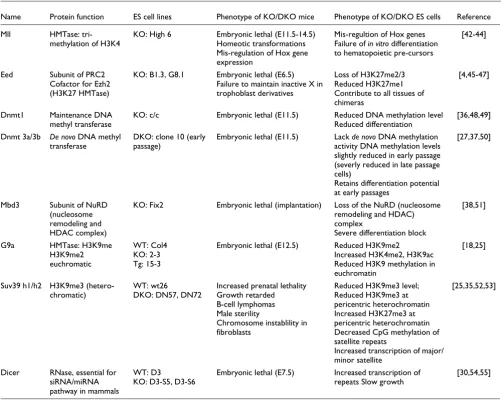
Mutation of chromatin modifiers in vivo often results in embryonic lethality and impaired development (Table 1). Despite this, murine ES cell lines lacking individual modifiers have been established and, in many cases, shown to retain multi-lineage potential. Using a panel of mutant ES cell lines (described in detail in Table 1) we examined whether a lack of specific histone methyltransferases, DNA methyltrans-ferases, the NuRD nucleosome remodeling complex or Dicer activity was sufficient to alter the temporal profile of locus replication in ES cells. All ES cell lines examined displayed ES cell morphology, expressed markers that are characteristic of murine ES cells (such as Oct4, alkaline phosphatase and SSEA-1) and had cell cycle profiles that were comparable with wild-type ES cells (supplementary Table 1 in Additional data file 1, and supplementary Figure 1 in Additional data file 2).
comm
en
t
re
v
ie
w
s
re
ports
refer
e
e
d
re
sear
ch
de
p
o
si
te
d r
e
se
a
rch
interacti
o
ns
inf
o
rmation
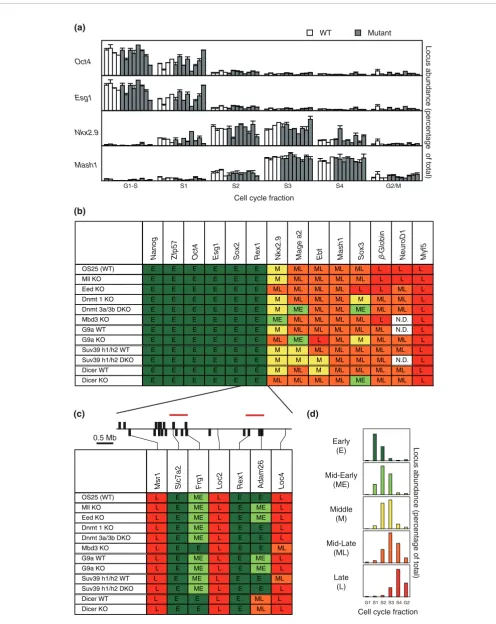
later in Eed-deficient ES cells. Mage a2 was sensitive to loss of G9a (supplementary Figure 3 in Additional data file 2). This gene is transcriptionally regulated by G9a [18] (supple-mentary Figure 2 in Additional data file 2), and belongs to the Mage genes that are DNA methylated in adult somatic tissues [19]. Replication of Ebf, a gene that replicates earlier in pro-and pre-B cells than in ES cells [17], showed slight shifts in replication in G9a, Suv39 h1/2 and Dicer-deficient ES cells. From a total of 14 loci analyzed in Figure 1b, four showed a temporal shift in one or more mutant ES cell lines. We ana-lyzed the sequence context of the genes (supplementary Table 2 in Additional data file 1) but neither GC content nor Line density was obviously different between genes that change replication timing or those that remain unchanged in the mutant cells. Bivalent genes were represented among loci that showed shifts in response to loss of chromatin modifiers (such as Nkx2.9 and Msx1) as well as those that did not change their timing of replication (such as Math1 and Sox1;
[image:3.612.54.555.115.516.2]supplementary Figure 2 in Additional data file 2). Some rep-lication timing changes were in the predicted direction (that is, an advance upon loss of a repressive chromatin modifier) whereas others were counter-intuitive, which we cannot explain. Importantly, however, we did not observe consistent shifts towards earlier or later replication in response to removal of a specific chromatin modifier. These results sug-gest that while some loci may be more sensitive to chromatin changes than others, none of the chromatin modifiers studied here is capable of overt de-regulation of the temporal order of gene replication in ES cells. This was true even for cells lack-ing Eed (and hence devoid of methylated H3K27), a factor previously shown to be important for transcriptional repres-sion and chromatin bivalency in ES cells [15]. Thus, our data do not support a model where methylation of specific histone residues or CpG dinucleotides confers replication at a certain time in S-phase. To explore this further, we also analyzed a large contiguous region surrounding Rex1 (Figure 1c), a gene
Table 1
Characteristics of chromatin modifiers and mutant ES cells
Name Protein function ES cell lines Phenotype of KO/DKO mice Phenotype of KO/DKO ES cells Reference
Mll HMTase:
tri-methylation of H3K4
KO: High 6 Embryonic lethal (E11.5-14.5)
Homeotic transformations Mis-regulation of Hox gene expression
Mis-regultion of Hox genes Failure of in vitro differentiation to hematopoietic pre-cursors
[42-44]
Eed Subunit of PRC2
Cofactor for Ezh2 (H3K27 HMTase)
KO: B1.3, G8.1 Embryonic lethal (E6.5)
Failure to maintain inactive X in trophoblast derivatives
Loss of H3K27me2/3 Reduced H3K27me1 Contribute to all tissues of chimeras
[4,45-47]
Dnmt1 Maintenance DNA
methyl transferase
KO: c/c Embryonic lethal (E11.5) Reduced DNA methylation level
Reduced differentiation
[36,48,49]
Dnmt 3a/3b De novo DNA methyl
transferase
DKO: clone 10 (early passage)
Embryonic lethal (E11.5) Lack de novo DNA methylation
activity DNA methylation levels slightly reduced in early passage (severly reduced in late passage cells)
Retains differentiation potential at early passages
[27,37,50]
Mbd3 Subunit of NuRD
(nucleosome remodeling and HDAC complex)
KO: Fix2 Embryonic lethal (implantation) Loss of the NuRD (nucleosome
remodeling and HDAC) complex
Severe differentiation block
[38,51]
G9a HMTase: H3K9me
H3K9me2 euchromatic
WT: Col4 KO: 2-3 Tg: 15-3
Embryonic lethal (E12.5) Reduced H3K9me2
Increased H3K4me2, H3K9ac Reduced H3K9 methylation in euchromatin
[18,25]
Suv39 h1/h2 H3K9me3
(hetero-chromatic)
WT: wt26 DKO: DN57, DN72
Increased prenatal lethality Growth retarded B-cell lymphomas Male sterility
Chromosome instablility in fibroblasts
Reduced H3K9me3 level; Reduced H3K9me3 at pericentric heterochromatin Increased H3K27me3 at pericentric heterochromatin Decreased CpG methylation of satellite repeats
Increased transcription of major/ minor satellite
[25,35,52,53]
Dicer RNase, essential for
siRNA/miRNA pathway in mammals
WT: D3
KO: D3-S5, D3-S6
Embryonic lethal (E7.5) Increased transcription of
repeats Slow growth
[30,54,55]
Figure 1 (see legend on next page)
OS25 (WT) L E ME L E E L
Mll KO L E ME L E ME L
Eed KO L E ME L E ME L
Dnmt 1 KO L E ME L E E L
Dnmt 3a/3b DKO L E ME L E E L
Mbd3 KO L E E L E E ML
G9a WT L E ME L E ME L
G9a KO L E ME L E ME L
Suv39 h1/h2 WT L E ME L E E ML Suv39 h1/h2 DKO L E ME L E E L
Dicer WT L E E L E ML L
Dicer KO L E E L E ML L
Msr1 Slc7a2 Frg1 Loc2 Rex1 Adam26 Loc4
Esg1
Nanog Zfp57 Oct4 Sox2 Rex1 Nkx2.9 Mage a2 Ebf Mash1 Sox3 β-Globin NeuroD1 Myf5
` `
Esg1 Oct4
Nkx2.9
Mash1
Locus abundance (percentage of total)
(a)
(b)
(d) (c)
G1 S1 S2 S3 S4 G2 Cell cycle fraction
G1-S S1 S2 S3 S4 G2/M
Cell cycle fraction
Locus abundance (percentage of total)
Early (E)
Mid-Early (ME)
Middle (M)
Mid-Late (ML)
Late (L)
WT Mutant
0.5 Mb
OS25 (WT) E E E E E E M ML ML ML ML L L L
Mll KO E E E E E E M ML ML ML ML L L L
Eed KO E E E E E E ML ML ML ML L L ML L
Dnmt 1 KO E E E E E E M ML ML ML M ML ML L
Dnmt 3a/3b DKO E E E E E E M ME ML ML ME ML ML L
Mbd3 KO E E E E E E ME ML ML ML ML L N.D. L
G9a WT E E E E E E M ML ML ML ML ML N.D. L
G9a KO E E E E E E ML ME L ML M ML ML L
Suv39 h1/h2 WT E E E E E E M M ML ML ML ML ML L
Suv39 h1/h2 DKO E E E E E E M M M ML ML ML N.D. L
Dicer WT E E E E E E M ML M ML ML ML ML L
comm
en
t
re
v
ie
w
s
re
ports
refer
e
e
d
re
sear
ch
de
p
o
si
te
d r
e
se
a
rch
interacti
o
ns
inf
o
rmation
that is expressed and early replicating in ES cells, but switches to late replication in differentiated cells and con-comitantly looses histone acetylation as the gene is silenced [2]. Chromosome walking has previously identified two domains within this 5 Mb region that replicate early in ES cells and switch to late replication upon differentiation (marked by red lines in Figure 1c) [2] (P Perry and VA, unpub-lished). Analysis of this entire region in each of the chromatin modifier mutants showed that the boundaries of early and late replication were retained.
An explanation for why the replication times of several loci are unchanged in mutant ES cells might be that other modifi-cations compensate for this loss - for example, increased DNA methylation might compensate for loss of Eed-mediated repression. To address this possibility we knocked-down Eed (using short hairpin RNA) in ES cells that already lacked Dnmt1 (supplementary Figure 4a in Additional data file 2) but were unable to detect additional changes in the replica-tion profiles of early (Oct4, Rex1), middle (Nkx2.9) or later replicating loci (Sox3, Mash1, β-Globin) (supplementary Fig-ure 4b in Additional data file 2). Collectively, these data sug-gest that only a minority of loci (5/23; supplementary Figure 2 in Additional data file 2) change their replication timing in response to severe reduction of DNA methylation (Dnmt 1 knock out (KO)), methylation of H3K27 (Eed KO), euchro-matic H3K9 methylation (G9a KO) or NuRD activity (Mbd3 KO), despite being sensitive to changes that occur during nor-mal differentiation [2,4,16].
Histone acetylation and replication timing in ES cells
To assess whether histone acetylation levels are indicative of early replicating regions in ES cells, as has been suggested for other cell types [9,11], we compared the abundance of histone acetylation at the candidate loci using the chromatin-immu-noprecipitation (ChIP) assay. Replication timing domains are very large (0.2-2 Mb) compared to promoter regions that are conventionally analyzed by ChIP. We therefore applied cus-tom-made tiling arrays to examine approximately 200 kb regions surrounding the loci for enrichment of acetyl-H3K9. Early replicating loci, such as Sox2, Nanog and Rex1, con-tained numerous peaks of acetylation (eight- to ten-fold enrichment relative to H3; Figure 2a and Additonal data file 3). Loci that replicated in the second half of S-phase showed much fewer peaks and the enrichment was less pronounced (one- to two-fold). Basal histone acetylation levels were,
how-ever, relatively constant across each of the regions analyzed, irrespective of whether they replicated early or late.
To assess whether enhanced histone acetylation was suffi-cient to determine early replication, we treated ES cells for 24-48 h with doses of the HDAC inhibitor Trichostatin A (TSA), which raised the global levels of histone acetylation in nuclei (as judged by immunofluorescence; data not shown) without compromising cell viability, proliferation or mor-phology. TSA treatment of wild-type OS25 ES cells did not affect the replication timing of any of the loci tested, including the region surrounding Rex1 (Figure 2b). Similar treatment has been reported to advance replication of the cystic fibrosis transmembrane conductance (CFTR) gene in cell lines [20]. The failure of TSA treatment to impact on replication of these genes in ES cells suggests that either temporal shifts are highly gene specific or that HDAC inhibition by TSA treat-ment merely increases histone acetylation at sites that are already acetylated and early replicating in ES cells. Consistent with the latter explanation, TSA treatment was recently shown to increase histone acetylation and expression of genes such as Hox B1 and Brachyury that replicate early in ES cells (L Mazzarella and HFJ, unpublished) [21].
Altered replication of satellite sequences in ES cells lacking specific chromatin modifiers
Next we assessed the replication of three different murine repeat sequences. X141 is a complex X-linked repeat that is constitutively late replicating and heterochromatic [6,22]. Minor and major satellites are simple direct repeats located around the centromeres of mouse chromosomes that, in wild-type ES cells, replicate in mid-early and mid-late stages of S-phase, respectively (Figure 3a). In mutant ES cells, late repli-cation of X141 was retained but the timing of both minor and major satellites was altered. Minor satellite replication was selectively delayed in ES cells lacking Mll, which catalyses methylation of H3K4, an activating histone mark. The repli-cation of both satellite sequences was delayed in Eed deficient ES cells, which lack repressive H3K27me3 (Figure 3a). Retarded replication of the major satellite was also seen in cells lacking the Suv39h1/h2 HMTases compared with matched wild-type controls. In contrast, major satellite repli-cation was advanced in Dnmt1 KO and G9a KO ES cells. Inter-estingly, a comparison of matched mutant and wild-type ES cells showed advanced replication of major satellite sequences in the absence of Dicer, consistent with the
pro-Replication timing of many genes is unchanged in ES mutants Figure 1 (see previous page)
posed role of siRNA in silencing repetitive elements [23]. In a recent study, an advance in the replication of the major satellite in Suv39h1/h2 double knockout (DKO) relative to wild-type fibroblasts was reported [24], although the authors noted that this advance was, in fact, not statistically signifi-cant. The apparent discrepancy between their observation and ours could be the result of intrinsic differences in the mutant cell lines used, or reflect secondary adaptations to loss of chromatin components. In this regard, compensatory chromatin modifications have been previously described, including an increase in H3K27me3 levels in Suv39h1/h2 deficient ES cells [25].
Minor and major satellites both carry DNA methylation and share some histone marks [26], but their chromatin structure is remarkably dissimilar. Major satellite DNA replicates in
mid to late S-phase in ES and somatic cells and is character-ized by hypoacetylation, trimethylation of H3K9 and H4K20 and DNA methylation [25,27,28]. The minor satellite con-tains the centromeric H3 variant CenpA, lacks appreciable amounts of the repressive H3K9me3 and does not bind HP1 [28,29]. Instead, this repeat carries the permissive H3K4me2 mark [28] and it replicates in the first half of S-phase (Figure 3). We show that the replication timing of major and minor satellites responds very differently to mutation of Mll, Dnmt1, Suv39h1/h2, Dicer and G9a, supporting the view that the two repeats are regulated differently.
Earlier replication of the major satellite in Dicer KO cells might reflect increased repeat RNA accumulation, as has been reported in some cells upon loss of Dicer [23,30], prompting us to measure transcript levels of the repeats in
[image:6.612.56.557.87.459.2]Histone acetylation and replication timing in ES cells Figure 2
Histone acetylation and replication timing in ES cells. (a) The level of acetyl-H3K9 relative to total H3 is shown for each probe in >200 kb regions surrounding the candidate loci (values represent log2{acetylH3K9/H3}). The peaks of histone acetylation were identified using the hidden Markov model and are marked in blue. The location of candidate genes are shown (black box) relative to other genes (white box) within each region. Arrows show the position of the primers used for the replication timing analysis and the size bars (black) represent 25 kb. Raw data are available in Additional data file 3. (b) The replication timing of candidate loci in untreated ES cells (white bars) and after incubation with 10 nM (black bars) or 20 nM (gray bars) TSA is shown as histograms. The mean values and standard error from at least two (two to three) independent experiments are shown.
Esg1 Nanog
Oct4 Zfp57
Nkx2.9 Sox2
Rex1
Mage a2
Mash1 Ebf
Sox3
b-Globin
Myf5 NeuroD1
2 G 4 S 3 S 2 S 1 S 1 G 2
G 4 S 3 S 2 S 1 S 1 G
OS25
OS25 + 10 nM TSA OS25 + 20 nM TSA
(b)
Cell cycle fraction Cell cycle fraction (a)
G1 S1 S2 S3 S4 G2
Cell cycle fraction
Slc7a2
Loc2 Frg1 Msr1
Adam26
Loc4
Locus abundance (percentage of total)
Nanog
Nkx2.9 Sox2
Rex1
Mash1 Sox3
Myf5
Histone acetylation level [Log(acetylH3K9/H3)]
3
1
3
1
3
1
3
1
3
1
3
1
3
1
Locus abundance (percentage of total)
Locus abundance (percentage of total)
comm
en
t
re
v
ie
w
s
re
ports
refer
e
e
d
re
sear
ch
de
p
o
si
te
d r
e
se
a
rch
interacti
o
ns
inf
o
rmation
each of the mutant cell lines (Table 2). Despite variation among different lines of wild-type ES cells (major 0.7-4, minor 0.1-5), a significant increase in major satellite tran-script levels was seen in Dicer KO cells (17 compared with 4 in matched wild-type cells). Increased minor and major satellite transcripts were also seen in Eed deficient ES cells but not in other mutant lines that also change satellite replication tim-ing (for example, Dnmt 1 KO). These data suggest that while chromatin modifiers can influence satellite transcript levels, precocious replication is not an invariable consequence of satellite transcription.
To determine whether satellite sequences are particularly sensitive to loss of chromatin modifiers or if this is a general repeat-associated feature, we analyzed long interspersed nuclear elements (LINEs) and short interspersed nuclear
ele-ments (SINEs), which are found as single copies interspersed with genes and other unique sequences at many locations in the genome, as well as the tandemly repeated rDNA array. In wild-type ES cells, SINE B1 replicates early whereas LINE 1 elements show replication in all fractions of the S-phase (Fig-ure 4), consistent with the known genomic distribution of these repeats; SINEs are primarily associated with gene rich regions (which replicate early), whereas LINEs are enriched in AT-rich, gene poor regions (which often replicate late, but can change replication timing depending on the cell type [3]). The rDNA sequence, which in fibroblasts comprises an early replicating active and a late replicating silent fraction [31], replicated synchronous very early in S-phase in wild-type ES cells (Figure 4), possibly reflecting a high demand for biosyn-thesis in these rapidly dividing cells. Analysis of these three repeat sequences in the mutant ES cell lines revealed only
[image:7.612.54.555.86.450.2]Satellite replication in ES cells is altered by mutation of chromatin modifiers Figure 3
Satellite replication in ES cells is altered by mutation of chromatin modifiers. (a) Summary of replication timing of repeat sequences in mutant ES cell lines. Top, ideogram of the acrocentric mouse chromosome X, showing the position of minor satellite (Minor sat), major satellite (Major sat) and the X-linked X141 repeat. (b) Examples show replication timing of repeats in wild type (WT, white bars (OS25 for Mll, Eed and Dnmt1; matched wild-type lines for G9a, Suv39 h1/h2 and Dicer)) compared to ES cells mutant for the indicated chromatin modifier (black bars). The mean values and standard error of at least two (two to five) independent experiments are shown.
Minor sat
G1 S1 S2 S3 S4 G2
Cell cycle fraction
Locus abundance (percentage of total)
X141
Major sat
Mll
G9a
Suv39 h1/h2
Dicer
Minor sat
Major sat
G1 S1 S2 S3 S4 G2
Dnmt 1 Eed
WT Mutant
OS25 (WT)
ME
ML
L
Mll KO
M
ML
L
Eed KO
ML
L
L
Dnmt 1 KO
ME
ME
L
Dnmt 3a/3b DKO
ME
ML
L
Mbd3 KO
ME
ML
L
G9a WT
ME
ML
L
G9a KO
M
ME
ML
Suv39 h1/h2 WT
ME
ML
L
Suv39 h1/h2 DKO
ME
L
L
Dicer WT
ME
L
L
Dicer KO
M
ML
L
very small changes with respect to wild-type cells. Replication of rDNA was extended in Eed deficient cells and slightly delayed in ES cells lacking Dicer.
DNA methylation selectively affects major satellite replication timing
Our data show that loss of Dnmt1 in ES cells (which causes genome-wide loss of CpG methylation; Table 1) results in early replication of the pericentric major satellite sequence without widespread changes in the replication timing of euchromatic loci or other repeat elements (Figures 3 and 4). To verify that reduction in DNA methylation is sufficient to precipitate this advance in major satellite replication, we experimentally demethylated wild-type ES cells. Exposure for three days to the Dnmt inhibitor 5-azacytidine reduced DNA methylation (from 0.88 in untreated to 0.21 in 5-azacytidine-treated cells, compared to 0.11 in the Dnmt1 KO ES cell line; Figure 5b) and caused an advanced replication of the major satellite (Figure 5a). The replication timing of the minor sat-ellite as well as single copy genes (α-Globin, Mash1 and Myf5) was unaffected in treated cells. Collectively, these results sug-gest that DNA methylation per se is important for maintain-ing the correct temporal replication of the major satellite.
[image:8.612.56.559.118.282.2]A role for DNA methylation in replication of heterochromatic foci has been previously observed in fibroblasts and during development [32]. Here we show that DNA methylation is important in maintaining late replication specifically of major satellite repeats in undifferentiated ES cells. As DNA methyl-ation of the major satellite is also reduced in Suv39h1/h2 DKO ES cells (Table 1), it is perhaps surprising that these mutant cells have delayed major satellite replication (Figure
Table 2
Relative transcript levels* of repeats in ES cell lines
Minor satellite Major satellite X141
WT (OS25) 0.4 ± 0.1 1.8 ± 0.5 1.8 ± 0.3
Eed KO 7.2 ± 6.5† 18.5 ± 17.0† 1.8 ± 0.2
Dnmt1 KO 0.3 ± 0.1 2.1 ± 0.0 2.0 ± 1.3
Dnmt3a/3b DKO 0.1 ± 0.0 5.7 ± 2.4 1.5 ± 0.9
G9a WT 0.1 ± 0.0 0.7 ± 0.1 0.5 ± 0.7
G9a KO 0.4 ± 0.4 1.0 ± 0.2 ND
Suv39 h1/h2 WT 4.9 ± 0.8 2.5 ± 1. 6 1.1 ± 0.3
Suv39 h1/h2 DKO 4.0 ± 1.3 2.2 ± 0.7 2.1 ± 0.5
Dicer WT 0.2 ± 0.0 4.1 ± 0.0 2.7 ± 0.0
Dicer KO 0.9 ± 0.6 17.4 ± 5.5 4.1 ± 1.2
C2C12 dif 100 100 100
*Levels of repeat sequence RNA were normalized to a house keeping gene (Ube) and expressed as a percentage of the levels detected in differentiated mouse myocytes derived from C2C12 (C2C12 dif), samples in which high levels of major and minor satellite transcripts have previously been detected [56]. Controls without reverse transcriptase were analyzed in parallel to dismiss contamination with genomic DNA.
†Four independent samples showed variable but increased transcript levels: major satellite, 8.2%, 8.7%, 13.4%, and 43.8% of C2C12; minor satellite,
2.6%, 7.1%, 11.8%, and 13.8% of C2C12. ND, none detected.
Replication timing of repetitive elements in wild-type and mutant ES cell lines
Figure 4
Replication timing of repetitive elements in wild-type and mutant ES cell lines. The replication timing was determined for retrotransposons (LINE and SINE B1) and rDNA repeats in wild-type OS25 ES cells and in mutant ES cells lacking Eed, Dnmt 1, Dnmt 3a/3b, G9a or Dicer. The mean values and standard error of at least two independent experiments are shown.
WT (OS25)
Dnmt 3a/3b DKO
G9a KO Dnmt 1 KO
Dicer KO Eed KO
rDNA SineB Line
Locus abundance (percentage of total)
G1 S1 S2 S3 S4 G2 G1 S1 S2 S3 S4 G2 G1 S1 S2 S3 S4 G2
[image:8.612.56.299.372.663.2]comm
en
t
re
v
ie
w
s
re
ports
refer
e
e
d
re
sear
ch
de
p
o
si
te
d r
e
se
a
rch
interacti
o
ns
inf
o
rmation
3). It is possible that other chromatin modifications compensate for the loss of H3K9me3 to ensure heterochro-matin formation in Suv39h1/h2 deficient cells, an idea that is consistent with enhanced H3K27me3 at pericentric regions in these cells [25].
Conclusion
We show that the timing of mouse satellite replication is altered in ES cells lacking specific repressive chromatin mod-ifiers. In particular, replication was advanced by mutation of Dnmt1, G9a or Dicer, consistent with their repressive nature. Earlier replication of major satellite was also induced by 5-azacytidine treatment, demonstrating the importance of DNA methylation for correct timing of this sequence. The sensitiv-ity of satellite repeats to chromatin modifiers may be a reflec-tion of their complexity and size. Genome-wide studies have shown that replication timing of non-repetitive sequences is constant over large 0.2-2 Mb regions [7], which often include multiple loci that are regulated by different mechanisms. Repetitive regions, on the other hand, have a more uniform chromatin structure, which may make them more vulnerable to loss of specific chromatin modifiers. Consistent with this idea, the major and minor satellites comprise simple direct repeats with high copy numbers (50-200,000) [26] whereas the stable X141 is part of a much more complex repetitive region and is represented only 80-90 times in the mouse
genome [22]. Interestingly, the size of the late replicating fraction of the tandemly repeated rDNA array in fibroblasts was shown to depend on NoRC, an ATP-dependant chroma-tin remodeling complex [33].
Of the single copy genes examined in the study, we show that the replication timing of some loci are more sensitive to the loss of individual chromatin modifiers than others. Overall, the apparent stability of gene replication profiles in mutant ES cell lines suggests that for many single copy loci, replica-tion timing is not primarily controlled by methylareplica-tion of spe-cific histone residues or DNA methylation, but, in agreement with previous studies [4,8,9,11], histone acetylation is shown to be a good predictor of replication timing. These data are consistent with a mechanistic link between early origin firing and acetylation in mammalian cells, as has been previously demonstrated in yeast [10].
Materials and methods
ES cell culture and drug treatment
ES cells used in this study were wild-type OS25 [34], G9a knock out (KO) clone 2-3, G9a wild-type clone col4 (G9a WT), G9a transgene rescue clone 15-3 (G9a tg) [18], Suv39 h1/h2 double KO (DKO) clones DN57/DN72 and wild-type litter-mate clone wt26 (Suv39 h1/h2 WT) [35], Eed KO clones B1.3/ G8.1 [4], Dnmt1 c/c (Dnmt1 KO) [36], Dnmt3a/Dnmt3b DKO
[image:9.612.53.556.87.354.2]Major satellite replication is specifically advanced by 5-azacytidine treatment Figure 5
Major satellite replication is specifically advanced by 5-azacytidine treatment. (a) Replication timing of 5-azacytidine treated (black bars) and untreated ES cells (white bars). The mean values and standard error of at two independent experiments are shown. (b) Demethylation index (HpyCh4IV digested to undigested genomic DNA) of the major satellite in untreated (OS25), 5-azacytidine-treated and Dnmt1 KO ES cells. Sox2 (no HpyCh4IV site) serves as an internal control. Diagrams show the positions of primers and HpyChIV site. The standard deviation is shown in brackets.
OS25 + 5AzaC OS25 - 5AzaC
Major sat
Minor sat
X141
α-Globin
Mash1
Myf5
Methylation Index
(digested/undigested)
Major sat
Control
(
Sox2
)
HpyCh4IV
OS25 -5AzaC
OS25 +5AzaC
Dnmt1 KO
0.88
(0.05)
0.21
(0.05)
0.11
(0.05)
0.99
(0.10)
1.13
(0.06)
1.13
(0.08)
(a)
G1 S1 S2 S3 S4 G2 G1 S1 S2 S3 S4 G2 Cell cycle fraction
Locus abundance (percentage of total)
clone 10 (Dnmt3a/3b DKO) [27,37], Mbd3 KO clone Fix2 [38], Dicer KO clones D3-S5/D3-S6 and Dicer wild-type clone D3 (described below). ES cells were derived from Dicer flox/flox blastocysts [39] and transfected with the CRE-ER transgene to produce the Dicer flox/flox ES clone D3 (Dicer WT). The Dicer KO clones (D3-S5, D3-S6) were established after tamoxifen treatment (800 nM; Sigma, Poole, UK) of the D3 clone. Deletion of both alleles was confirmed by genotyping.
The ES cell lines were maintained in the undifferentiated state by culturing on gelatinized plates in KO-DMEM (Invit-rogen, Carlsbad, CA, USA) supplemented with leukemia inhibitory factor (LIF), 10% ES-tested fetal calf serum (GlobePharm, Surrey, UK), L-glutamine, 2-mercaptoethanol, non-essential amino acids and antibiotics. For Eed KO and Dicer cells (WT and KO), a feeder layer of mitotic inactivated fibroblasts was used and the medium was additionally sup-plemented with 5% knockout serum replacement (KSR, Inv-itrogen). OS25 cells were grown on gelatinized plates in Glasgow-MEM (Invitrogen) supplemented with LIF, FCS-gold (PAA, Yeovil, UK), L-glutamine, 2-mercaptoethanol, non-essential amino acids, sodium pyruvate, sodium bicarbo-nate and antibiotics. All ES cell lines examined in this study were Oct4 positive as determined by immunofluorescence (>92 %, data not shown). Undifferentiated ES cells (OS25) were treated with 10 nM (Sigma) for 48 h, 20 nM TSA for 24 h or 15 μM 5-azacytidine (Sigma) for 72 h.
Replication timing assay
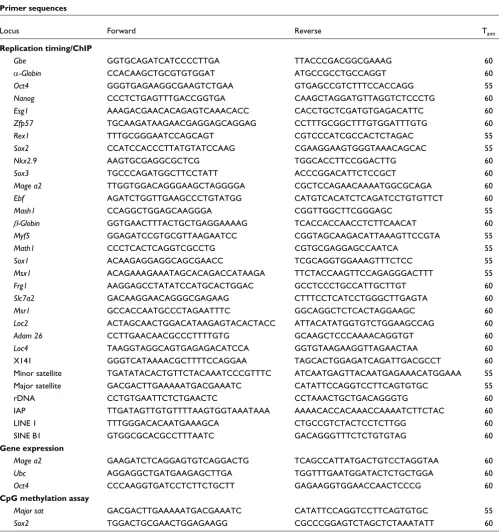
The protocol described by Azuara et al. [6] was used. Briefly, asynchronous cell populations were pulse labeled with bro-modeoxyuridine (BrdU; 30 minutes), fixed in 70% ethanol, stained with propidium iodide and fractionated according to DNA content by fluorescence assisted cell sorting (FACS). For ES cells grown on a feeder layer, the feeder cells were removed by differential attachment; less than 1% fibroblasts remained after 20-25 minutes plating in non-gelatinized plates. Pre-plating of feeder-dependent ES cells in this way may result in a slight delay in the apparent time of replication for genes that normally replicate very early in S-phase. Six cell cycle fractions were collected, G1-S, G2 and four fractions covering phase, S1-S4, where S1 corresponds to early S-phase and S4 to late S-S-phase. An equal amount of BrdU labeled Drosophila DNA was added to each fraction to control for equal recovery. After isolation of total genomic DNA, the DNA was sheared by sonication, denatured and newly repli-cated, BrdU-labeled DNA was immunoprecipitated using anti-BrdU antibody (BD, Franklin Lakes, NJ, USA). After purification, quantitative real-time PCR (qPCR) was employed to determine the relative quantity of specific loci in each fraction. The sequences of primers for qPCR analysis are given in Table 3. Locus replication was categorized based on the peak fraction(s) as early (peak in G1 or S1), middle-early (peak in S2), middle (peak in S2 and S3), middle-late (peak in S3) or late (peak in S4 or G2).
Note regarding replication timing of repeated sequences
As mentioned above, we assessed the proportion of a specific DNA sequence within newly replicated DNA for each cell cycle fraction relative to the total from all six fractions. This means that for single copy genes, a change in one allele will give a shift for 50% of the signal whereas for a multi-copy locus, only a small fraction (1% for a sequence repeated 100 times) will shift. Changes in single copy loci are, therefore, much more readily detected than changes in repeated sequences. Variability in locus replication among multi-copy loci would be predicted to result in a spread-out signal detected across multiple cell cycle fractions.
ChIP
Exponentially growing wild-type ES cells (OS25) were para-formaldehyde (1%) fixed for 10 minutes at room temperature, lysed and chromatin immuno-precipitated essentially as described [40]. Briefly, chromatin (50 μg) was pre-cleared 2 h at 4°C, incubated with antibodies (2 μl IgG (Z0259, DAKO, Copenhagen, Denmark); 2 μl anti-H3 (ab-1791-100, binds H3 independent of modification state, Abcam, Cambridge, UK), 5 μl anti-H3K9me2, 10 μl anti-H3K9me3 or 5 μl anti-H3K9ac (07-441, 07-442, 07-352, Upstate/Millipore, Billerica, MA, USA) at 4°C over night (ON) and the immune-complexes col-lected by adding protein-A sepharose (Sigma) (incubated 2 h at 4°C). Unbound chromatin was removed by washing 4× in ChIP wash buffer (0.1% SDS, 1% Triton X-100, 2 mM EDTA, 150 mM NaCl, 20 mM Tris.Cl pH 8.1 and protease inhibitors) and 1× in high salt ChIP wash buffer (0.1% SDS, 1% Triton X-100, 2 mM EDTA, 150 mM NaCl, 20 mM Tris.Cl pH 8.1 and protease inhibitors) after which 250 μl elution buffer was added (1% SDS, 0.1 M NaHCO3, 100 μg/ml RNaseA, 500 μg/ ml Proteinase K). After incubating at 37°C for 2 h and at 65°C ON, DNA was purified using a Gel purification kit (Qiagen, Crawley, UK), using 2 × 40 μl of 10 mM Tris.Cl pH 8 for elution. ChIP samples were analyzed by qPCR (sequences of primers are given in Table 3) or microarray hybridization.
Microarray analysis
comm
en
t
re
v
ie
w
s
re
ports
refer
e
e
d
re
sear
ch
de
p
o
si
te
d r
e
se
a
rch
interacti
o
ns
inf
o
rmation
Analysis of transcript levels
RNA was isolated from 3-5 × 10⁶ cells using the RNAeasy mini
prep kit (Qiagen) with on-column DNase treatment. To remove residual genomic DNA, RNA (1.2 μg) was treated with RNAfree (Ambion, Austin, TX, USA) for 50 minutes before reverse transcription using SuperScript III (Invitrogen) and random primers in 20 μl reactions according to the manufac-turer's instructions.
qPCR analysis
The sequence of primer pairs used in this study is given in Table 3. All primer pairs were tested for efficiency (>1.95) and linearity (R2 > 0.99). Reactions (30 μl) were set up using a
[image:11.612.55.554.101.633.2]Qiagen SYBR green kit with the appropriate template (2 μl (corresponding to 200 cell equivalents) for replication tim-ing, 1.5 μl of 1:5 diluted cDNA for gene expression, 2% of eluted DNA for ChIP, 2 μl (corresponding to 1.7 ng) genomic
Table 3
Primer sequences
Locus Forward Reverse Tann
Replication timing/ChIP
Gbe GGTGCAGATCATCCCCTTGA TTACCCGACGGCGAAAG 60
α-Globin CCACAAGCTGCGTGTGGAT ATGCCGCCTGCCAGGT 60
Oct4 GGGTGAGAAGGCGAAGTCTGAA GTGAGCCGTCTTTCCACCAGG 55
Nanog CCCTCTGAGTTTGACCGGTGA CAAGCTAGGATGTTAGGTCTCCCTG 60
Esg1 AAAGACGAACACAGAGTCAAACACC CACCTGCTCGATGTGAGACATTC 60
Zfp57 TGCAAGATAAGAACGAGGAGCAGGAG CCTTTGCGGCTTTGTGGATTTGTG 60
Rex1 TTTGCGGGAATCCAGCAGT CGTCCCATCGCCACTCTAGAC 55
Sox2 CCATCCACCCTTATGTATCCAAG CGAAGGAAGTGGGTAAACAGCAC 55
Nkx2.9 AAGTGCGAGGCGCTCG TGGCACCTTCCGGACTTG 60
Sox3 TGCCCAGATGGCTTCCTATT ACCCGGACATTCTCCGCT 60
Mage a2 TTGGTGGACAGGGAAGCTAGGGGA CGCTCCAGAACAAAATGGCGCAGA 60
Ebf AGATCTGGTTGAAGCCCTGTATGG CATGTCACATCTCAGATCCTGTGTTCT 60
Mash1 CCAGGCTGGAGCAAGGGA CGGTTGGCTTCGGGAGC 55
β-Globin GGTGAACTTTACTGCTGAGGAAAAG TCACCACCAACCTCTTCAACAT 60
Myf5 GGAGATCCGTGCGTTAAGAATCC CGGTAGCAAGACATTAAAGTTCCGTA 55
Math1 CCCTCACTCAGGTCGCCTG CGTGCGAGGAGCCAATCA 55
Sox1 ACAAGAGGAGGCAGCGAACC TCGCAGGTGGAAAGTTTCTCC 55
Msx1 ACAGAAAGAAATAGCACAGACCATAAGA TTCTACCAAGTTCCAGAGGGACTTT 55
Frg1 AAGGAGCCTATATCCATGCACTGGAC GCCTCCCTGCCATTGCTTGT 60
Slc7a2 GACAAGGAACAGGGCGAGAAG CTTTCCTCATCCTGGGCTTGAGTA 60
Msr1 GCCACCAATGCCCTAGAATTTC GGCAGGCTCTCACTAGGAAGC 60
Loc2 ACTAGCAACTGGACATAAGAGTACACTACC ATTACATATGGTGTCTGGAAGCCAG 60
Adam 26 CCTTGAACAACGCCCTTTTGTG GCAAGCTCCCAAAACAGGTGT 60
Loc4 TAAGGTAGGCAGTGAGAGACATCCA GGTGTAAGAAGGTTAGAACTAA 60
X141 GGGTCATAAAACGCTTTTCCAGGAA TAGCACTGGAGATCAGATTGACGCCT 60
Minor satellite TGATATACACTGTTCTACAAATCCCGTTTC ATCAATGAGTTACAATGAGAAACATGGAAA 55
Major satellite GACGACTTGAAAAATGACGAAATC CATATTCCAGGTCCTTCAGTGTGC 55
rDNA CCTGTGAATTCTCTGAACTC CCTAAACTGCTGACAGGGTG 60
IAP TTGATAGTTGTGTTTTAAGTGGTAAATAAA AAAACACCACAAACCAAAATCTTCTAC 60
LINE 1 TTTGGGACACAATGAAAGCA CTGCCGTCTACTCCTCTTGG 60
SINE B1 GTGGCGCACGCCTTTAATC GACAGGGTTTCTCTGTGTAG 60
Gene expression
Mage a2 GAAGATCTCAGGAGTGTCAGGACTG TCAGCCATTATGACTGTCCTAGGTAA 60
Ubc AGGAGGCTGATGAAGAGCTTGA TGGTTTGAATGGATACTCTGCTGGA 60
Oct4 CCCAAGGTGATCCTCTTCTGCTT GAGAAGGTGGAACCAACTCCCG 60
CpG methylation assay
Major sat GACGACTTGAAAAATGACGAAATC CATATTCCAGGTCCTTCAGTGTGC 55
Sox2 TGGACTGCGAACTGGAGAAGG CGCCCGGAGTCTAGCTCTAAATATT 60
DNA for analysis of DNA methylation) and analyzed on Chromo4™ Real-Time PCR Detector (Bio-Rad, Hercules, CA, USA) with Opticon Monitor™ software.
DNA methylation assay
Triplicate reactions of genomic DNA with or without the methylation sensitive restriction enzyme HpyCh4IV (New England Biolabs, Beverly, USA) were incubated for 3 h and the extent of digestion analyzed by qPCR. The primers for the major satellite span a HpyCh4IV site. The Sox2 primers, which do not span a HpyCh4IV site, were used to control for equal DNA content.
Additional data files
The following additional data are available with the online version of this paper. Additional data file 1 contains supple-mentary materials and methods, legends to supplesupple-mentary Figures 1-4, and supplementary Tables 1 and 2. Supplementary Table 1 contains the percentages of cells pos-itive for ES cell markers and Supplementary Table 2 contains coordinates, GC content and Line density of the genes ana-lysed in Figure 1b. Additional data file 2 contains supplemen-tary Figures 1-4. Supplemensupplemen-tary Figure 1 shows alkaline phosphatase staining and cell cycle profiles of the mutant ES cell lines analysed. Supplementary Figure 2 contains replication timing profiles of all loci analysed in each of the mutant ES cell lines analysed. Supplementary Figure 3 shows analysis of the Mage a2 gene. Supplementary Figure 4 shows analysis of short hairpin RNA mediated knockdown of Eed in Dnmt1 mutant ES cells. Additional data file 3 is an archive containing microarray data for the histone acetylation analysis.
Additional data file 1
Supplementary materials and methods, legends to supplementary Figures 1-4, and supplementary Tables 1 and 2
Supplementary Table 1 contains the percentages of cells positive for ES cell markers and supplementary Table 2 contains coordinates, GC content and line density of the genes analyzed in Figure 1b. Click here for file
Additional data file 2 Supplementary Figures 1-4
Supplementary Figure 1 shows alkaline phosphatase staining and cell cycle profiles of the mutant ES cell lines analyzed. Supplemen-tary Figure 2 contains replication timing individual profiles of all genes in each of the mutant ES cell lines analyzed. Supplementary Figure 3 shows analysis of the Mage a2 gene. Supplementary Fig-ure 4 shows analysis of short hairpin RNA mediated knockdown of Eed in Dnmt1 mutant ES cells.
Click here for file Additional data file 3
Microarray data for the histone acetylation analysis Microarray data for the histone acetylation analysis. Click here for file
Abbreviations
BrdU, bromodeoxyuridine; ChIP, chromatin immunoprecip-itation; DKO, double knock out; Dnmt, DNA methyl transferase; ES, embryonic stem; HDAC, histone deacetylase; HMTase, histone methyl transferase; KO, knock out; LINE, long interspersed nuclear element; PRC, polycomb repressor complex; qPCR, quantitative real-time PCR; SINE, short interspersed nuclear element; siRNA, short interfering RNA; TSA, trichostatin A.
Authors' contributions
HFJ, VA and AGF designed the study described in this report. HFJ performed the experiments, analysed the data, and was responsible for writing the initial versions of the manuscript. SA performed cell culture experiments. MS and AT were involved in performing the microarray analysis. MS analysed the microarray data. TN, BSC and BR contributed material/ reagents/analysis tools. MM and AGF supervised and over-saw the completion of the studies as well as the writing of the
manuscript. All authors read and approved the final version of the manuscript.
Acknowledgements
We thank Brian Hendrich, Thomas Jenuwein, Yoichi Shinkai and En Li for kind gifts of mutant ES cell lines and Rosalind John for advice on culturing Eed KO cells. Pascale Perry and Luca Mazzarella are thanked for sharing unpublished information. Eric O'Connor and Eugene Ng are acknowledged for FACS sorting and Ingrid Devonish for administrative help. This study was supported by the MRC, the EU Epigenome Network of Excellence, the Parkinson's Disease Society (VA) and HEROIC, High-throughput Epigenetic Regulatory Organisation in Chromatin, an Integrated Project funded by the European Union (LSHG-CT-2005-018883).
References
1. Jackson DA, Pombo A: Replicon clusters are stable units of chromosome structure: evidence that nuclear organization contributes to the efficient activation and propagation of S phase in human cells. J Cell Biol 1998, 140:1285-1295.
2. Perry P, Sauer S, Billon N, Richardson WD, Spivakov M, Warnes G, Livesey FJ, Merkenschlager M, Fisher AG, Azuara V: A dynamic switch in the replication timing of key regulator genes in embryonic stem cells upon neural induction. Cell Cycle 2004, 3:1645-1650.
3. Hiratani I, Leskovar A, Gilbert DM: Differentiation-induced repli-cation-timing changes are restricted to AT-rich/long inter-spersed nuclear element (LINE)-rich isochores. Proc Natl Acad Sci USA 2004, 101:16861-16866.
4. Azuara V, Perry P, Sauer S, Spivakov M, Jorgensen HF, John RM, Gouti M, Casanova M, Warnes G, Merkenschlager M, et al.: Chromatin signatures of pluripotent cell lines. Nat Cell Biol 2006, 8:532-538. 5. Ofir R, Wong ACC, McDermid HE, Skorecki KL, Selig S: Position effect of human telomeric repeats on replication timing. Proc Natl Acad Sci USA 1999, 96:11434-11439.
6. Azuara V, Brown KE, Williams RR, Webb N, Dillon N, Festenstein R, Buckle V, Merkenschlager M, Fisher AG: Heritable gene silencing in lymphocytes delays chromatid resolution without affect-ing the timaffect-ing of DNA replication. Nat Cell Biol 2003, 5:668-674. 7. Donaldson AD: Shaping time: chromatin structure and the DNA replication programme. Trends Genet 2005, 21:444-449. 8. Lin CM, Fu H, Martinovsky M, Bouhassira E, Aladjem MI: Dynamic
alterations of replication timing in mammalian cells. Curr Biol 2003, 13:1019-1028.
9. Schubeler D, Lorincz MC, Cimbora DM, Telling A, Feng YQ, Bouhas-sira EE, Groudine M: Genomic targeting of methylated DNA: influence of methylation on transcription, replication, chro-matin structure, and histone acetylation. Mol Cell Biol 2000, 20:9103-9112.
10. Vogelauer M, Rubbi L, Lucas I, Brewer BJ, Grunstein M: Histone acetylation regulates the time of replication origin firing. Mol Cell 2002, 10:1223-1233.
11. Zhang J, Xu F, Hashimshony T, Keshet I, Cedar H: Establishment of transcriptional competence in early and late S phase. Nature 2002, 420:198-202.
12. Ai Leen L, Dorothy EP, Beth AS: Control of gene expression and assembly of chromosomal subdomains by chromatin regula-tors with antagonistic functions. Chromosoma 2005, 114:242-251.
13. Bernstein BE, Mikkelsen TS, Xie X, Kamal M, Huebert DJ, Cuff J, Fry B, Meissner A, Wernig M, Plath K, et al.: A bivalent chromatin structure marks key developmental genes in embryonic stem cells. Cell 2006, 125:315-326.
14. Boyer LA, Plath K, Zeitlinger J, Brambrink T, Medeiros LA, Lee TI, Levine SS, Wernig M, Tajonar A, Ray MK, et al.: Polycomb com-plexes repress developmental regulators in murine embry-onic stem cells. Nature 2006, 441:349-353.
15. Jorgensen HF, Giadrossi S, Casanova M, Endoh M, Koseki H, Brock-dorff N, Fisher AG: Stem cells primed for action: polycomb repressive complexes restrain the expression of lineage-spe-cific regulators in embryonic stem cells. Cell Cycle 2006, 5:1411-1414.
comm en t re v ie w s re ports refer e e d re sear ch de p o si te d r e se a rch interacti o ns inf o rmation
induction promotes large-scale chromatin reorganisation of the Mash1 locus. J Cell Sci 2006, 119:132-140.
17. Roessler S, Gyory I, Imhof S, Spivakov M, Williams RR, Busslinger M, Fisher AG, Grosschedl R: Distinct promoters mediate the reg-ulation of Ebf1 gene expression by interleukin-7 and Pax5. Mol Cell Biol 2007, 27:579-594.
18. Tachibana M, Sugimoto K, Nozaki M, Ueda J, Ohta T, Ohki M, Fukuda M, Takeda N, Niida H, Kato H, et al.: G9a histone methyltrans-ferase plays a dominant role in euchromatic histone H3 lysine 9 methylation and is essential for early embryogenesis. Genes Dev 2002, 16:1779-1791.
19. Sigalotti L, Coral S, Nardi G, Spessotto A, Cortini E, Cattarossi I, Col-izzi F, Altomonte M, Maio M: Promoter methylation controls the expression of MAGE2, 3 and 4 genes in human cutaneous melanoma. J Immunother 2002, 25:16-26.
20. Englmann A, Clarke LA, Christan S, Amaral MD, Schindelhauer D, Zink D: The replication timing of CFTR and adjacent genes. Chromosome Res 2005, 13:183-194.
21. McCool KW, Xu X, Singer DB, Murdoch FE, Fritsch MK: The role of histone acetylation in regulating early gene expression patterns during early embryonic stem cell differentiation. J Biol Chem 2007, 282:6696-6706.
22. Nasir J, Fisher EM, Brockdorff N, Disteche CM, Lyon MF, Brown SD: Unusual molecular characteristics of a repeat sequence island within a Giemsa-positive band on the mouse X chromosome. Proc Natl Acad Sci USA 1990, 87:399-403.
23. Lippman Z, Martienssen R: The role of RNA interference in het-erochromatic silencing. Nature 2004, 431:364-370.
24. Wu R, Singh PB, Gilbert DM: Uncoupling global and fine-tuning replication timing determinants for mouse pericentric heterochromatin. J Cell Biol 2006, 174:185-194.
25. Peters AH, Kubicek S, Mechtler K, O'Sullivan RJ, Derijck AA, Perez-Burgos L, Kohlmaier A, Opravil S, Tachibana M, Shinkai Y, et al.: Par-titioning and plasticity of repressive histone methylation states in mammalian chromatin. Mol Cell 2003, 12:1577-1589. 26. Martens JH, O'Sullivan RJ, Braunschweig U, Opravil S, Radolf M,
Stein-lein P, Jenuwein T: The profile of repeat-associated histone lysine methylation states in the mouse epigenome. EMBO J 2005, 24:800-812.
27. Okano M, Bell DW, Haber DA, Li E: DNA methyltransferases Dnmt3a and Dnmt3b are essential for de novo methylation and mammalian development. Cell 1999, 99:247-257. 28. Sullivan BA, Karpen GH: Centromeric chromatin exhibits a
histone modification pattern that is distinct from both euchromatin and heterochromatin. Nat Struct Mol Biol 2004, 11:1076-1083.
29. Guenatri M, Bailly D, Maison C, Almouzni G: Mouse centric and pericentric satellite repeats form distinct functional heterochromatin. J Cell Biol 2004, 166:493-505.
30. Kanellopoulou C, Muljo SA, Kung AL, Ganesan S, Drapkin R, Jenuwein T, Livingston DM, Rajewsky K: Dicer-deficient mouse embryonic stem cells are defective in differentiation and centromeric silencing. Genes Dev 2005, 19:489-501.
31. Berger C, Horlebein A, Gogel E, Grummt F: Temporal order of replication of mouse ribosomal RNA genes during the cell cycle. Chromosoma 1997, 106:479-484.
32. Selig S, Ariel M, Goitein R, Marcus M, Cedar H: Regulation of mouse satellite DNA replication time. EMBO J 1988, 7:419-426.
33. Li J, Santoro R, Koberna K, Grummt I: The chromatin remodeling complex NoRC controls replication timing of rRNA genes. EMBO J 2005, 24:120-127.
34. Billon N, Jolicoeur C, Ying QL, Smith A, Raff M: Normal timing of oligodendrocyte development from genetically engineered, lineage-selectable mouse ES cells. J Cell Sci 2002, 115:3657-3665.
35. Peters AH, O'Carroll D, Scherthan H, Mechtler K, Sauer S, Schofer C, Weipoltshammer K, Pagani M, Lachner M, Kohlmaier A, et al.: Loss of the Suv39h histone methyltransferases impairs mamma-lian heterochromatin and genome stability. Cell 2001, 107:323-337.
36. Li E, Bestor TH, Jaenisch R: Targeted mutation of the DNA methyltransferase gene results in embryonic lethality. Cell 1992, 69:915-926.
37. Jackson M, Krassowska A, Gilbert N, Chevassut T, Forrester L, Ansell J, Ramsahoye B: Severe global DNA hypomethylation blocks differentiation and induces histone hyperacetylation in embryonic stem cells. Mol Cell Biol 2004, 24:8862-8871.
38. Kaji K, Caballero IM, MacLeod R, Nichols J, Wilson VA, Hendrich B: The NuRD component Mbd3 is required for pluripotency of embryonic stem cells. Nat Cell Biol 2006, 8:285-292.
39. Cobb BS, Nesterova TB, Thompson E, Hertweck A, O'Connor E, Godwin J, Wilson CB, Brockdorff N, Fisher AG, Smale ST, et al.: T cell lineage choice and differentiation in the absence of the RNase III enzyme Dicer. J Exp Med 2005, 201:1367-1373. 40. Baxter J, Sauer S, Peters A, John R, Williams R, Caparros ML, Arney
K, Otte A, Jenuwein T, Merkenschlager M, et al.: Histone hypomethylation is an indicator of epigenetic plasticity in quiescent lymphocytes. EMBO J 2004, 23:4462-4472.
41. Ji H, Wong WH: TileMap: create chromosomal map of tiling array hybridizations. Bioinformatics 2005, 21:3629-3636. 42. Ayton P, Sneddon SF, Palmer DB, Rosewell IR, Owen MJ, Young B,
Presley R, Subramanian V: Truncation of the Mll gene in exon 5 by gene targeting leads to early preimplantation lethality of homozygous embryos. Genesis 2001, 30:201-212.
43. Yagi H, Deguchi K, Aono A, Tani Y, Kishimoto T, Komori T: Growth disturbance in fetal liver hematopoiesis of Mll-mutant mice. Blood 1998, 92:108-117.
44. Yu BD, Hess JL, Horning SE, Brown GA, Korsmeyer SJ: Altered Hox expression and segmental identity in Mll-mutant mice. Nature 1995, 378:505-508.
45. Montgomery ND, Yee D, Chen A, Kalantry S, Chamberlain SJ, Otte AP, Magnuson T: The murine polycomb group protein Eed is required for global histone H3 lysine-27 methylation. Curr Biol 2005, 15:942-947.
46. Faust C, Lawson KA, Schork NJ, Thiel B, Magnuson T: The Poly-comb-group gene eed is required for normal morphogenetic movements during gastrulation in the mouse embryo. Devel-opment 1998, 125:4495-4506.
47. Wang J, Mager J, Chen Y, Schneider E, Cross JC, Nagy A, Magnuson T: Imprinted X inactivation maintained by a mouse Poly-comb group gene. Nat Genet 2001, 28:371-375.
48. Lei H, Oh SP, Okano M, Juttermann R, Goss KA, Jaenisch R, Li E: De novo DNA cytosine methyltransferase activities in mouse embryonic stem cells. Development 1996, 122:3195-3205. 49. Tucker KL, Talbot D, Lee MA, Leonhardt H, Jaenisch R:
Comple-mentation of methylation deficiency in embryonic stem cells by a DNA methyltransferase minigene. Proc Natl Acad Sci USA 1996, 93:12920-12925.
50. Chen T, Ueda Y, Dodge JE, Wang Z, Li E: Establishment and main-tenance of genomic methylation patterns in mouse embry-onic stem cells by Dnmt3a and Dnmt3b. Mol Cell Biol 2003, 23:5594-5605.
51. Hendrich B, Guy J, Ramsahoye B, Wilson VA, Bird A: Closely related proteins MBD2 and MBD3 play distinctive but inter-acting roles in mouse development. Genes Dev 2001, 15:710-723.
52. Lehnertz B, Ueda Y, Derijck AA, Braunschweig U, Perez-Burgos L, Kubicek S, Chen T, Li E, Jenuwein T, Peters AH: Suv39h-mediated histone H3 lysine 9 methylation directs DNA methylation to major satellite repeats at pericentric heterochromatin. Curr Biol 2003, 13:1192-1200.
53. Peters AH, Mermoud JE, O'Carroll D, Pagani M, Schweizer D, Brock-dorff N, Jenuwein T: Histone H3 lysine 9 methylation is an epi-genetic imprint of facultative heterochromatin. Nat Genet 2002, 30:77-80.
54. Bernstein E, Kim SY, Carmell MA, Murchison EP, Alcorn H, Li MZ, Mills AA, Elledge SJ, Anderson KV, Hannon GJ: Dicer is essential for mouse development. Nat Genet 2003, 35:215-217.
55. Murchison EP, Partridge JF, Tam OH, Cheloufi S, Hannon GJ: Char-acterization of Dicer-deficient murine embryonic stem cells. Proc Natl Acad Sci USA 2005, 102:12135-12140.
56. Terranova R, Sauer S, Merkenschlager M, Fisher AG: The reorganisation of constitutive heterochromatin in differenti-ating muscle requires HDAC activity. Exp Cell Res 2005, 310:344-356.