
http://dx.doi.org/10.4236/ajps.2016.77106
How to cite this paper: Getachew, G., Putnam, D.H., De Ben, C.M. and De Peters, E.J. (2016) Potential of Sorghum as an Al-ternative to Corn Forage. American Journal of Plant Sciences, 7, 1106-1121. http://dx.doi.org/10.4236/ajps.2016.77106
Potential of Sorghum as an Alternative to
Corn Forage
Girma Getachew1, Daniel H. Putnam1, Christopher M. De Ben1, Edward J. De Peters2*
1Department of Plant Sciences, University of California, Davis, CA, USA 2Department of Animal Science, University of California, Davis, CA, USA
Received 13 February 2016; accepted 17 May 2016; published 20 May 2016
Copyright © 2016 by authors and Scientific Research Publishing Inc.
This work is licensed under the Creative Commons Attribution International License (CC BY). http://creativecommons.org/licenses/by/4.0/
Abstract
Climate change, which is currently characterized by increased atmospheric CO2, rising ture, and altered pattern of precipitation, is affecting agricultural productivity. Rising tempera-tures and shifting precipitation patterns will alter the ability to meet crop water requirements, water availability, crop productivity, and costs of water access across the agricultural landscape. Searching for alternative crops with lower water requirements increased yield or organic matter per unit of water are important for agricultural sustainability. Sorghum is one of the world’s im-portant crops; a crop that is adapted to a variety of agronomic and environmental conditions, par-ticularly to areas with low rainfall or limited access of irrigation water. Forage Sorghum is able to produce comparable yield to corn suggesting that there is a potential for Sorghum to replace corn in areas where water supply is limited. But, there is a cost since corn silage, because of its high grain content, which is typically superior in digestible energy content to Sorghum forages. There is also a lack of information on the feeding value of Sorghum silages in high producing dairy cows as well as strategies that may be used for sorghum silage to replace a portion of the corn silage in dairy cattle diets.
Keywords
Sorghum, Climate Change, Drought Tolerance, Salinity
1. Introduction
The aim of this review is to summarize the literature related to Sorghum as forage for livestock and assess its role as silage compared with corn silage. Sorghum forage has predominantly been a minor silage forage for
vestock in the United States. Due to climate change and predictions for drier conditions (lower rainfall and less water for irrigation) in some regions, for example California with its large dairy and beef cattle industries, there is a search for alternative forages that require less water, fit the production system that integrates forage produc-tion and manure management, and maintains agricultural sustainability [1]. In California, In California, water policy is driven by the needs of often competing entities, for example agriculture, human population, and natural animal and plant species. Sorghum is currently of interest as forage because of drought conditions in various dairy regions, but a comprehensive review on Sorghum forage is not available. A goal of this review of Sorg-hum is that it will serve as a reference guide to livestock and dairy producers, nutritionists, nutrient management planners, and policy makers.
Sorghum is in the subfamily Panicoideae and the tribe of Andropogoneae (the tribe of big bluestem and sugar cane). It is one of the major cereal crops grown in the world, along with wheat, oats, corn, rice, and barley. Sorghum ranks fifth among the world’s most important crops [2]. In traditional form, Sorghum is a towering plant that grows over 1.8 m tall, although many recent cultivars designed for cultivation are dwarf varieties, spe-cially developed for ease of harvest. In Africa, however, traditional tall Sorghum is still grown, and the stalks are put to a variety of uses (e.g. fuel or construction). Sorghum belongs to an annual grass group that is drought tolerant and is an excellent choice for livestock feed in arid and relatively dry regions. This tolerance offers po-tential in areas where water is and will continue in the future to be in decreasing supply, for example the Central Valley of California.
Sorghum varieties are grown for various purposes. In many parts of the world, especially in areas where moisture is a limiting factor, Sorghum is grown for grain for human consumption. In Texas and Oklahoma where annual precipitation is low, sorghum is grown for grain that is used for feeding livestock and poultry. More recently sweet Sorghum is being used for biofuel production. Sorghum grain is also used around the world to brew beer. Broom Sorghum is cultivated for the manufacture of traditional straw brooms.
Sorghums in general can be classified into two broad types: forage types and grain types. The forage Sorg-hums are further grouped into four types: 1) hybrid forage Sorghum; 2) Sudangrass; 3) Sorghum x Sudan hybr-ids (also known as Sudan hybrhybr-ids); 4) sweet Sorghum.
In United States when grain and hay crops are considered, Sorghum ranks in the top 10 crops based on land area of cultivation. When Sorghum area planted for all purposes was considered, in the 2014 cropping season, Kansas was the leading state followed by Texas with an area of 2.8 million and 2.5 million acres, respectively, allocated to Sorghum [3]. In fact, the United States is the largest producer and along with Argentina and Aus-tralia, is one of the largest exporters of Sorghum grain. However, in United States, the area under Sorghum cul-tivation is much smaller (3.1% of the total land area devoted to grain and hay crops) compared with corn, which covers 42% of the area. About 2.5 million hectares were devoted to corn for silage whereas 153,780 hectares were used for Sorghum silage (Table 1). Grain type Sorghum has become a popular rotation crop in the Great Plains [4]. Although Sorghum is able to thrive and produce a reasonable yield in marginal areas, it is surprising that Sorghum forage has not received more interest in areas where water availability is low and soil fertility is marginal. Discussion of the potential of Sorghum forages for livestock feeding is a topic of this review.
Various types of forage Sorghums and their corresponding agronomic and nutritional characteristics were re-viewed and are summarized. The rere-viewed studies covered different genetic materials, various agronomic con-ditions, and the impact on production performance with the inclusion of forage Sorghums in diets of various classes of livestock.
2. BMR Sorghum
Two main types of forage Sorghum hybrids, brown midrib (bmr) and non-bmr, are utilized most often for silage production. Brown midrib phenotypes in corn plants were first described by Jorgensen [5] as having brown pigmentation in the leaf midrib, stem, tassel, cob, and roots. The bmr gene was associated with lower plant lig-nin [6]. As single-locus mutants identified in a number of grass species, bmr varieties offer a rapid and effective approach to genetically modify the nutritional value of forage plants. As single locus recessive mutations, they can be backcrossed readily into elite lines [7].
The bmr hybrids are characterized by the expression of a bmr gene associated with lower lignin concentration than comparable non-bmr hybrids. Reduced lignin content was associated with increased overall apparent diges-tibility of the fiber component by ruminants, and thus the overall nutritive value of the bmr forage was improved
Table 1. Crop area planted and harvested in the United States during the 2013 crop season.
Grain and Hay Crops Area Harvested (hectares) % of the Area
Barley 1,214,070 1.35
Corn for grain 35,478,360 39.31
Corn for silage 2,531,740 2.81
Hay, all 23,576,030 26.12
Alfalfa 7,188,510
Others 16,387,520
Oats 416,830 0.46
Proso millet 258,190 0.29
Rice 998,770 1.11
Rye 112,500 0.12
Sorghum for grain 2,642,630 2.93
Sorghum for silage 153,780 0.17
Wheat, all 18,274,590 20.25
Winter 13,112,770
Durum 575,060
Other spring crop 4,586,760 5.08
Total 90,244,250 100.00
Source: Crop Production 2013 Summary (January 2014), USDA, National Agricultural Statistics Service.
stage. Lodging was influenced more by variety than bmr genotype. When harvested at early heading stage of growth, there was no difference in lodging between bmr-101 and conventional variety FS-5 whereas when har-vested soft dough stage lodging was 28% and 58% in FS-5 and bmr101, respectively [9]. However, others re-ported that lodging was not increased in bmr cultivars compared with the nonbmr cultivars when harvested at the soft-dough stage and there was little correlation between lodging and lignin content, grain yield, or plant height [6][10].
Brown midrib mutations both in Sorghum and corn are phenotypically characterized by the presence of brown vascular tissue in the leaf blade and sheath as well as in the stem. The bmr phenotype becomes visually apparent once plants have reached the four-leaf stage and tends to begin to fade as plants approach physiological maturity
[11]. Agronomic traits attributed to bmr can be summarized as follows: o Dwarfing gene (bmr-6) increases leaf to stem ratios
o Adapts to heavier grazing pressure o Excellent disease resistance o Rapid growth and regrowth o Drought stress tolerant o Improved tillering capacity
o Increased leafiness allows for faster dry-down for hay o Adaptable to various soil pH ranges including acidic soils
Nutritional attributes of bmr mutants when present in homozygous recessive state include:
o Reduced lignification which contributes to reduced cell-wall concentration, increased digestibility [12], and increased voluntary intake by ruminants [7]
o Improved animal performance with increased rate of gain [13] and increased milk yield in dairy [14]
o No prussic acid or hydrogen cyanide (HCN) risk
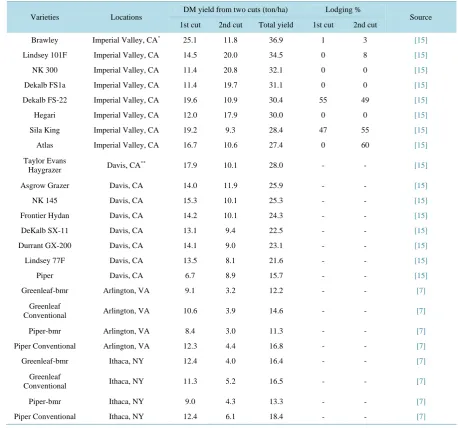
qual-ity by affecting digestibilqual-ity of cell wall polysaccharides. However, as lignin contributes to the structural com-ponent of plant, it also plays a role in contributing rigidity that reduces lodging in plants. There were wide varia-tions (0% to 60%) in the extent of lodging of Sorghum varieties [15]. The contrasting roles of plant lignin create challenging issues for the development of bmr varieties. Lower lignin content enhances forage quality but can reduce agronomic performance. Lodging is a serious issue when forage is mechanically harvested because of associated costs of labor and time as well as the loss of harvested organic matter. An optimum balance must be found when the bmr gene is introduced into forage varieties of Sorghum, Sudangrass, and Sorghum x Sudan-grass hybrids.
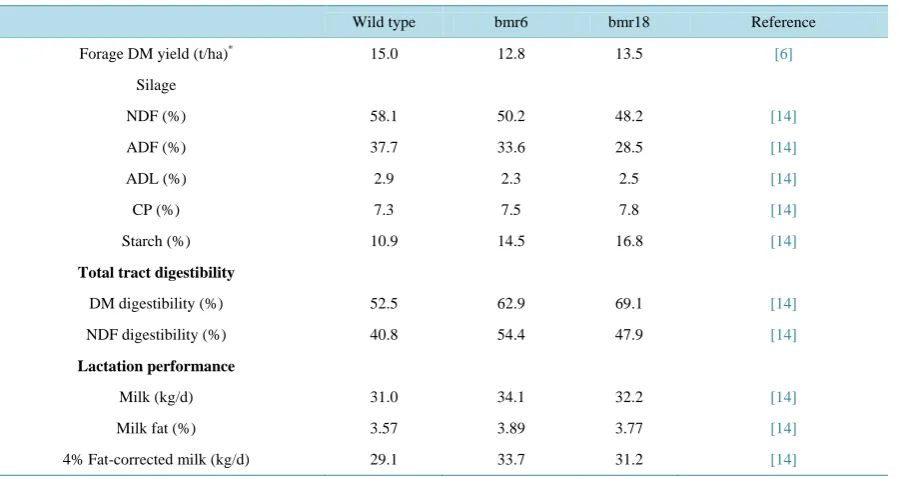
The characteristic bmr mutant coloration of the leaf mid-veins was associated with reduced lignin content and altered lignin composition, traits useful to improve dry matter digestibility for livestock based on in vitro ana-lyses [12] (Table 2). Brown midrib phenotype was correlated with two homologous loci in maize (bm1 and bm3) and Sorghum (bmr6 and bmr12) [12]. In corn, the bmr phenotype was associated with increased apparent DM digestibility in ruminants but at a cost of significant reduced forage and grain yields. In Sorghum, yield reduc-tions were apparent in near isogenic lines, but were ameliorated through construction of hybrids that maintain reduced lignin content and increased digestibility [12]. Forage DM yield was lower for bmr Sorghum compared with the wild type, however, with respect to animal performance, digestibility and milk yield were higher in bmr varieties compared with the wild type [12].
Reduced tillering and plant height of the bmr plants appeared to be mechanisms accounting for reduced fo-rage yield [7]. Predicted net returns from feeding Sudangrass hay were similar for first harvest conventional and bmr lines, but net return was severely depressed for bmr lines in second harvest, due to significant reductions in plant yield [7]. In a yield and lodging study, yield of different varieties of Sorghum ranged from 12 to 16 ton DM/ha in two harvests [15]. In some Sorghum varieties [15], lodging was as high as 60% (Table 3).
3. Forage Sorghum
[image:4.595.93.548.470.709.2]Forage Sorghum is a warm season annual crop and is an excellent choice for a one-cut system (similar to corn for silage). However, in contrast to corn, forage Sorghum is better adapted to production systems under marginal agronomic conditions. For forage production, Sorghum used about 30% less water than corn and also required less nitrogen fertilizer than corn [16]. Forage Sorghums were similar to grain types but were taller and had high-er forage quality [16].
Table 2. Yield, chemical composition, and nutrient digestibility of bmr forage Sorghum silage.
Wild type bmr6 bmr18 Reference
Forage DM yield (t/ha)* 15.0 12.8 13.5 [6]
Silage
NDF (%) 58.1 50.2 48.2 [14]
ADF (%) 37.7 33.6 28.5 [14]
ADL (%) 2.9 2.3 2.5 [14]
CP (%) 7.3 7.5 7.8 [14]
Starch (%) 10.9 14.5 16.8 [14]
Total tract digestibility
DM digestibility (%) 52.5 62.9 69.1 [14]
NDF digestibility (%) 40.8 54.4 47.9 [14]
Lactation performance
Milk (kg/d) 31.0 34.1 32.2 [14]
Milk fat (%) 3.57 3.89 3.77 [14]
4% Fat-corrected milk (kg/d) 29.1 33.7 31.2 [14]
Table 3. Yields and lodging of forage Sorghums grown in different locations.
Varieties Locations DM yield from two cuts (ton/ha) Lodging % Source
1st cut 2nd cut Total yield 1st cut 2nd cut
Brawley Imperial Valley, CA* 25.1 11.8 36.9 1 3 [15]
Lindsey 101F Imperial Valley, CA 14.5 20.0 34.5 0 8 [15]
NK 300 Imperial Valley, CA 11.4 20.8 32.1 0 0 [15]
Dekalb FS1a Imperial Valley, CA 11.4 19.7 31.1 0 0 [15]
Dekalb FS-22 Imperial Valley, CA 19.6 10.9 30.4 55 49 [15]
Hegari Imperial Valley, CA 12.0 17.9 30.0 0 0 [15]
Sila King Imperial Valley, CA 19.2 9.3 28.4 47 55 [15]
Atlas Imperial Valley, CA 16.7 10.6 27.4 0 60 [15]
Taylor Evans
Haygrazer Davis, CA
** 17.9 10.1 28.0 - - [15]
Asgrow Grazer Davis, CA 14.0 11.9 25.9 - - [15]
NK 145 Davis, CA 15.3 10.1 25.3 - - [15]
Frontier Hydan Davis, CA 14.2 10.1 24.3 - - [15]
DeKalb SX-11 Davis, CA 13.1 9.4 22.5 - - [15]
Durrant GX-200 Davis, CA 14.1 9.0 23.1 - - [15]
Lindsey 77F Davis, CA 13.5 8.1 21.6 - - [15]
Piper Davis, CA 6.7 8.9 15.7 - - [15]
Greenleaf-bmr Arlington, VA 9.1 3.2 12.2 - - [7]
Greenleaf
Conventional Arlington, VA 10.6 3.9 14.6 - - [7]
Piper-bmr Arlington, VA 8.4 3.0 11.3 - - [7]
Piper Conventional Arlington, VA 12.3 4.4 16.8 - - [7]
Greenleaf-bmr Ithaca, NY 12.4 4.0 16.4 - - [7]
Greenleaf
Conventional Ithaca, NY 11.3 5.2 16.5 - - [7]
Piper-bmr Ithaca, NY 9.0 4.3 13.3 - - [7]
Piper Conventional Ithaca, NY 12.4 6.1 18.4 - - [7]
*Cut at flowering stage; **Cut at soft dough stage of maturity.
4. Sudangrass
Sudangrass has finer stems, tillers more profusely, and is leafier than hybrid forage Sorghums. It produces few seeds, and its rate of regrowth after cutting or grazing is generally superior to that of hybrid forage Sorghums. For these reasons, Sudangrasses are often used for temporary rotational grazing. Furthermore, Sudangrass ac-cumulates less of the poisonous compound prussic acid (HCN; hydrocyanic acid) than forage Sorghums.
5. Hybrid Forage Sorghums
reduced water availability.
Hybrid forage Sorghums are commonly referred to as forage Sorghum and grow from 1.8 to 3 m in height and have relatively large stem diameters. These varieties were selected for a single cut system for either hay or silage. In some instances forage Sorghum produced DM yields similar to silage corn, but the forage quality was gener-ally lower than corn [8]. Forage Sorghums can produce a forage crop containing up to 50% grain by weight, de-pending upon the hybrid and stage of maturity at harvest. These Sorghum grain yields approach levels asso-ciated with corn varieties. Corn forage harvested for ensiling is typically kernel processed to enhance fermenta-tion during ensiling as well as fermentafermenta-tion in the rumen when fed. However, Sorghum’s small seed size is a de-triment to digestion by ruminants unless it is physically processed. Although technology exists for kernel pro- cessing of corn for silages, there was no information in the literature on kernel processing for Sorghum grain in forage used for silage. Sorghum grain is processed in the feed mill industry, typically steam-flaked (heat to gela-tinize the starch and rolling to disrupt the starch granules), prior to feeding to cattle (beef and dairy). Careful se-lection of bmr hybrids and timing of harvest may help in maximizing total energy yield of forage. Highest crude protein (CP) content and apparent DM digestibility will usually be obtained by harvesting in the vegetative growth stage, whereas DM yield will increase as the plant matures. Even though the maximum total gross ener-gy harvested per hectare occurs with harvesting Sorghums when the grain is in the hard-dough stage, lower di-gestible energy concentration per unit of DM is achieved by livestock. This relationship between forage digesti-bility and organic matter yield as maturity progresses is common among most forage species. As a winter cereal forages matured from bloom to hard dough, the NDF concentration decreased but lignin concentration increased
[18]. In vivo and in vitro DM digestibility decreased with advancing physiological maturity with plant lignifica-tion although empirical equalignifica-tions based on fiber concentralignifica-tion would inaccurately predict a higher digestible energy content. The relationship between digestibility and forage yield will impact agronomic practices and the development of new Sorghum forage cultivars.
In the southeastern United States, Sorghum and Sudangrass hybrids are commonly used as a forage crop for stocker cattle and dry cows (non-lactating cows). Sorghum and Sudangrass forage crops are designed for mul-tiple harvests and can be used as hay, silage, pasture, or green chop. However, the hybrids dry slowly, even if an impeller (flail) or roller-crimper conditioner is used during crop harvest. The waxier leaf surface that favors growth with restricted water possibly hinders field drying of the forage for hay. Consequently, hay production from these species is at greater risk of damage in areas with an unpredictable rain pattern as drying of plant ma-terial becomes more difficult, but the agronomic advantage of Sorghum and Sudangrass is forage production under limited water.
The hybrids have an excellent planting period so these forages fit well into many crop rotation systems with winter-grown small grain or vegetable crops. Crop rotation with Sorghum is often practiced in the Central Val-ley of California to utilize residual fertilizers from previous crops as a nutrient management method. Sorghum also utilizes nutrients associated with manure application as a component of the nutrient management program of a dairy farm. Some vegetable producers use Sorghum as cover crops to increase soil organic-matter content, retain soil nutrients, and reduce weed and pest populations. The hybrids work well in this rotation for dairy and beef cattle operations where high-quality grazing, green chop or silage is needed.
6. Factors Affecting Forage Yield
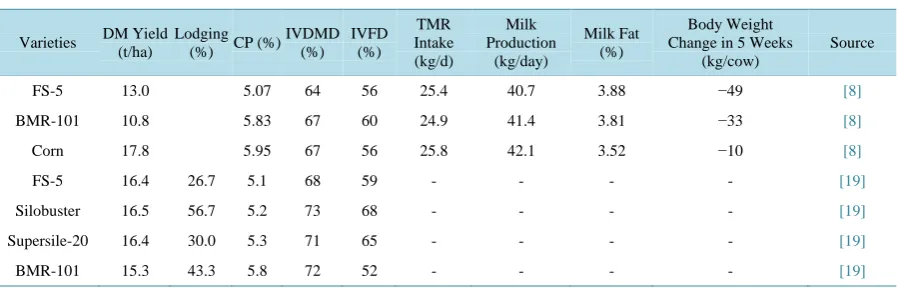
Table 4. Yield, lodging and nutritional value of Sorghum varieties.
Varieties DM Yield (t/ha)
Lodging (%) CP (%)
IVDMD (%)
IVFD (%)
TMR Intake (kg/d)
Milk Production
(kg/day)
Milk Fat (%)
Body Weight Change in 5 Weeks
(kg/cow)
Source
FS-5 13.0 5.07 64 56 25.4 40.7 3.88 −49 [8]
BMR-101 10.8 5.83 67 60 24.9 41.4 3.81 −33 [8]
Corn 17.8 5.95 67 56 25.8 42.1 3.52 −10 [8]
FS-5 16.4 26.7 5.1 68 59 - - - - [19]
Silobuster 16.5 56.7 5.2 73 68 - - - - [19]
Supersile-20 16.4 30.0 5.3 71 65 - - - - [19]
BMR-101 15.3 43.3 5.8 72 52 - - - - [19]
CP, Crude Protein; IVDM, In Vitro Dry Matter Digestibility; IVFD, In Vitro Fiber Digestibility; TMR, Total Mixed Ration.
360 g for Sorghum, a 30% reduction in intake with Sorghum silages, reflecting the lower performance with Sorghum silage. Data summarized from different studies and locations (Table 3) indicate considerable varia-tions (mean and standard deviation of 23.2 t/ha and 7.47 respectively) in forage DM yield of Sorghum varieties (11.3 to 37 t/ha) in agreement with the findings of others [20] (Table 5). A recent three-year multi-location study indicated that corn for silage yielded 23 ton DM/ha with a low variance for yield whereas Sorghum and millet varieties had DM yields of 3 - 5 ton/ha lower than silage corn yields and again there was considerable va-riability in yields within years and locations for Sorghum [21]. Thus, when considering Sorghum for forage, consideration must be given to the large expected variation in yield of DM, chemical composition, and subse-quent animal performance with Sorghum. This variation will also impact nutrient budgeting on dairy farms since large variation in DM yield will result in large variation in estimates of nutrient uptakes from soil application of dairy manure.
7. Soil Types and Fertility
A positive attribute of Sorghum is that it is adapted to a variety of soil types. Sweet Sorghums, for example, were more tolerant of soil salinity than other forage crops [22]. Though Sorghum grows best on deep, fertile, well-drained loamy soils, Sorghum is also much more tolerant of shallow soil and drought conditions than corn. Sorghum can be successfully grown on clay, clay loam, or sandy loam soils.
Strong crusts, typically 0.64 to 1.27 cm thick, hinder a plant’s ability to emerge. Soil crusts typically form af-ter heavy rain combines with warm temperature, low humidity, and high winds to promote rapid soil drying. Soils with high content of fine sand and silt more readily form crusts than coarse sand and clay textured soils. Light tillage with a rotary harrow or sprinkler irrigation can sufficiently weaken crusts to allow the plants to emerge. Cropping systems that leave large amounts of plant residue on the soil surface, such as no-till or con-servation tillage, help reduce soil crusting. Traditionally Sorghum has been grown on soils with pH of > 6.5, but soil acidity (pH 5.42) reduced grain yield by 10% [4].
The time from planting to emergence (usually 5 to 10 days) depends on the growing conditions including soil temperature and moisture, the depth of planting, and to some extent, seed vigor. Slow emergence often results in uneven, skimpy plant stands and decreased forage yield. Before emergence, the plant is dependent on food re-serves in the seed from the endosperm for survival. Slow emerging plants risk depleting these rere-serves, which are important to early plant growth in the days immediately following emergence. In addition to soil type and crusting, temperature influences emergence and early plant growth.
Table 5. Agronomic and nutritional quality of corn and Sorghum silages ([20]).
Dry matter yield (t/ha) ADF (%) DDM (%) DMI (g) ADG (g)
Corn
Morden 77 9.0 23.6 69.1 905 91.0
Golden Jewel 9.9 28.7 61.8 867 75.3
NK Opaque 13.9 29.5 64.1 889 64.3
MN 8803-05 9.9 25.1 66.5 806 78.3
AES 101 11.6 25.7 69.0 783 109.6
Mn Syn 16 9.8 29.1 63.3 811 65.7
Oh 5 x Oh 43 13.0 27.0 65.6 819 72.7
Mn hy 5301 15.0 27.9 62.9 780 63.9
Pioneer 3558 15.3 29.8 62.9 769 58.7
Penn E Syn 2 11.4 32.9 60.3 698 45.4
Cargi 1 HS 50 13.2 32.7 63.0 663 49.1
Average1 12.0 28.4 64.4 799.1 70.4
SD1 2.22 2.93 2.84 74.00 18.36
Sorghum
NK 133 11.6 27.2 61.4 836 59.9
Robusto 10.5 29.0 61.2 748 2.1
Duet 12.8 25.7 59.3 729 41.1
Grace 22F 13.4 31.3 60.6 660 −0.5
Trudan 11 10.7 37.1 53.4 723 26.9
Sumax 14.4 33.4 58.9 612 20.0
Pay. 401R 14.9 33.3 56.4 617 32.2
NK 318 13.0 34.3 55.3 610 26.3
Dekalb FS1a 12.1 37.2 55.2 588 12.8
NK 325 11.5 36.2 52.5 598 16.2
NR 367 15.7 42.4 53.9 554 −22.9
MRA FS 500 16.6 36.0 53.5 583 14.6
Sweet Sioux 12.5 39.8 49.2 595 8.3
Pioneer 931 14.4 41.1 51.8 516 −8.7
Average1 13.2 34.6 55.9 640.6 16.3
SD1 1.85 5.02 3.84 87.71 20.98
ADF, Acid Detergent Fiber; DDM, Digestible Dry Matter; DMI, Dry Matter Intake by Sheep; ADG, Average Daily Gain; 1Average and Standard Deviation (SD) calculated by the authors.
An advantage for the use of Sorghum as forage rather than corn is the ability of Sorghum to grow in soils moderately saline or alkaline [15]. Although forage yield may decrease under these conditions, the Sorghum fo-rage plant can produce a crop in areas where corn as a silage crop would fail [15].
8. Water-Requirements
In-creasing irrigation level from 20 mm to 180 mm increased DM yield from 16.5 t/ha to 30.1 t/ha (Table 6). Pro-tein yield also increased in response to irrigation from 1.13 t crude proPro-tein/ha vs. 2.42 t proPro-tein/ha; a 114% in-crease [24]. Even though Sorghum is drought tolerant, forage DM yield was increased by as much as 100% in response to increased irrigation water application ([24]). The increased forage DM yield was associated with in-creased CP content but reduced in vitro DM digestibility [24]. The decreased in vitro DM digestibility reflected the increased NDF content and the lower in vitro NDF digestibility associated with the great DM yield (Table 6).
Although Sorghum will respond to irrigation like most crops, a significant advantage of Sorghum compared with corn for forage is the water requirement for plant growth. Sorghum was able to survive and produce com-parable DM yield with half the amount of irrigation water that was applied to corn (250 vs. 550 mm) [8].
Water-use efficiency of sweet Sorghum was higher when water stress occurred during the early stage of growth compared with the later phases [25]. These authors suggested that irrigation strategies should consider the growth phase of the plant with respect to points of the growth phase that are more or less sensitive to water stress. Water-use efficiency of sweet Sorghum was reported to be high for C4 crops under well-watered condi-tions as well as water-stressed condicondi-tions [26]. When several forage varieties under different water availability conditions from 2005 to 2009 were compared, a wet year had 120% of normal annual rainfall while a dry year had 80% [27]. During a normal year, water use efficiency (62 kg/ha/mm) and DM biomass yield (23.1 t/ha/yr) for corn exceeded Sorghum hybrid Sudangrass (24 kg/ha/mm and 7.7 t/ha/yr), respectively [27]. However, in dry years the water-use efficiency for Sorghum hybrid Sudangrass was 28 kg/ha/mm compared with 26 kg/ha/ mm for corn and biomass yield of DM was the same for Sorghum hybrid, Sudangrass and corn (10.6 t/ha/yr) demonstrating the superiority of Sorghum production under low water available conditions. Corn production required water for high yields of DM. However, chemical composition of the forage crops was not reported, and this would be an important aspect to consider with respect to water allocation during the growing season for Sorghum [27]. The frequency of irrigation was found to be more effective than the amount of water in increas-ing the DM yield; more frequent irrigation was more effective than sincreas-ingle or less frequent irrigation. Averaged over two growing seasons, maximum DM yields of 16.3, 11.8, and 10.5 t/ha were reported for frequent (10 irri-gations), intermediate (7 irriirri-gations), and infrequent irrigation (5 irriirri-gations), respectively [28].
[image:9.595.89.538.490.709.2]Even though Sorghum is able to grow and survive in regions where rainfall is relatively low or where frequent dry periods occur, plant growth and forage yield were still closely linked to available water. Water-use estimates for Sorghum typically range from about 38 - 76 cm of water to produce 25 to 37 tons of forage DM/ha [16]. Across this range of water use, bmr forage Sorghum showed an increase in DM yield of approximately 1.86 t/ha for each additional 2.54 cm of water use, from about 22.4 t/ha at 38 cm of water use to about 49.3 t/ha at 76 cm of water use [16]. Yield of Sorghum forages increased with water availability, DM yields per unit of water use
Table 6. Effect of irrigation level on yield and forage quality of forage Sorghum [24].
Irrigation levels (mm)
cuts 20 100 180
DM yield (t/ha) 1st cut (early heading) 8.26 12.3 11.1
2nd cut (soft dough) 8.27 13.9 19.0
total 16.5 26.2 30.1
CP (%) 1st cut (early heading) 7.36 8.41 9.14
2nd cut (soft dough) 6.37 6.41 7.41
6.87 7.41 8.28
IVDM (%) 1st cut (early heading) 0.74 0.72 0.61
2nd cut (soft dough) 0.65 0.63 0.63
NDF (%) 1st cut (early heading) 61.5 62.5 65.8
2nd cut (soft dough) 63.3 64.8 65.8
NDFD (%) 1st cut (early heading) 0.72 0.69 0.62
2nd cut (soft dough) 0.62 0.57 0.62
were similar between Sorghum and corn. However, a primary advantage of Sorghum is that it produced higher forage DM yield with less water than corn. Therefore, in regions where water availability is low, because of lack of rainfall or irrigation water is either not available or available only in limited amounts, Sorghum offers an at-tractive alternative to corn for forage production. But, lower yields for Sorghum than corn for silage must be expected with the genetic base of Sorghums currently available. In California dairy production systems where double and triple cropping are options, Sorghum forage could integrate well in a system that produces corn for silage with Sorghum planting following corn harvest and Sorghum harvesting occurring prior to planting of winter cereals. In areas where water is not available to support corn production then different cropping scenarios will evolve over time and experiences.
9. Temperature
A quantitative definition of temperature stress in Sorghum, as in any crop, is difficult to provide since it will depend on a number of factors, which include the duration of exposure of either high or low temperature, the ac-tivity or stage of growth of the exposed tissue, and finally the thermal adaptation of the particular Sorghum cul-tivar [29]. The adaptation productivity of a Sorghum crop will be most affected when temperature stress coin-cides with critical stages of growth [30]. Heat stress is a major factor influencing the productivity and adaptation of many wild and cultivated plants. Many crop species of tropical and subtropical origin are sensitive to high temperature in the range 30˚C - 55˚C [29][30]. However, Sorghum is less tolerant to cold temperature compared with corn. The growth and yield responses of Sorghum to high temperature depend on a number of factors. These factors include the duration of exposure of either high or low temperature, the activity or stage of growth of the exposed tissue at the time of temperature stress, and finally the thermal adaptation of the particular Sorg-hum cultivar. Plants prefer warm, moist soil for germination and emergence. In contrast cool, wet soils promote the development of diseases. Temperature for Sorghum germination and emergence was 21˚C and leaf appear-ance increased linearly with air temperature from 13˚C to 23˚C [29]. Although germination can occur at temper-atures below 10˚C, emergence is delayed. For optimum germination and emergence, delay planting until the 5-day average daily soil temperature at the 5 cm depth reaches 15.6˚C. In central and south Texas, predomi-nantly dark color soils and higher frequency of warm spring temperatures allow growers to begin planting when soil temperatures are around 10˚C to 12.8˚C. If planting in cool, wet soils cannot be avoided, plant shallow and use fungicide seed treatments.
10. Chemical Composition
A short coming of Sorghums is their protein content, which is often lower than corn for silage. In one study [8]
the highest CP content (DM basis) achieved was 5.8% in bmr and the lowest was 5.1% in variety FS-5 [8]
(Table 4). The low CP forage was also associated with low forage digestibility reflecting the relationship be-tween nutrient content and forage digestibility with advancing maturity. The bmr forage had the highest in vitro
forage DM digestibility (72%) while FS-5 had the lowest (68%). In one study, Sorghum varieties produced yields of DM similar to corn [20]. However, the corn hybrids have changed dramatically since 1976 with respect to dry matter yield per acre as well as the amount of grain produced in some hybrids used for silage. Indeed, more recent work [8] reported higher yields of DM for corn than two Sorghum varieties (Table 4).
When corn and Sorghum silages were fed to milking cows, apparent digestibility of dry matter, crude protein and digestible energy were comparable for both Sorghum and corn silages [33] (Table 7). However fat corrected milk yield significantly higher for corn silage than Sorghum silage. In a University of California study that con-sisted of five Sorghum lines and four corn lines, Sorghum forage was slightly higher in CP content, 7.9% com-pared with corn at 7.5% although calculated protein yield would favor corn (1.85 vs. 1.72 t/ha) (Table 8). Pro-tein is an expensive component of diets. However, national energy policies for ethanol production from corn grain increased the amount of corn distillers’ grains as a feedstuff. In addition, nutrient management to meet regulations for N are incentives for dairy producers not to over feed protein so a lower protein content of Sorg-hum forages if this occurs is not a critical issue.
[image:11.595.90.539.302.425.2]When choosing a Sorghum hybrid for silage production both yield and nutritive value potential should be considered. Stage of harvest for Sorghum will depend on a balance between forage DM yield and forage nutrient and energy concentrations, and how these factors fit the overall nutritional needs of the dairy herd as well as the cropping system used. Double and triple cropping can be time critical for planting so harvest time can be im-pacted by factors other than the quality of forage at harvest time. Each feed commodity in a dairy ration plays a different role. Sorghum’s role in the ration will vary for each dairy farm. In recent years there has been a decrease
Table 7. Apparent digestibility of dry matter and crude protein, and intake energy, yield of fat corrected milk and body
weight gain when Sorghum silage or corn silage based diets were fed to lactating cows [33].
Components Experiment 1 Experiment 2
Corn Sorghum Corn Sorghum
Dry matter digestibility (%) 59.1 59.6 65.0 57.3
Crude protein digestibility (%) 43.3 36.7 47.6 48.9
Energy digestibility (%) 58.9 61.3 66.0 57.1
Digestible Energy (kcal/g) 2.82 2.94 2.95 2.54
Daily FCM production (kg/d) 18.7 17.3 15.2 12.4
Daily body weight gain (kg) 0.06 0.35 0.33 0.18
DM, Dry Matter; CP, Crude Protein; FCM, Fat Corrected Milk.
Table 8. Comparison of corn and Sorghum in forage yield and chemical composition in studies conducted at UC Davis in
2012 growing season§.
Variety Type Yield (t/ha) Crude Protein
* ADF* aNDF*
%
NK 300 Sorghum Multiple-Use 21.8 8.2 28.3 45.1
Silo 700D Sorghum Forage type (tall) 19.6 8.3 29.5 49.4
Silo 700D Sorghum Forage type BMR 13.3 8.1 31.4 51.0
Sorghum 4 Sorghum Evergreen PS 26.3 7.5 37.5 63.5
Sorghum 5 Sorghum Evergreen PS BMR 22.9 7.2 33.8 59.3
Average for Sorghum 22.0 7.9 32.1 53.7
S.D. 4.83 0.48 3.67 7.50
TMF2H699 Corn Med. Maturity (110 days) 27.2 7.3 26.2 45.9
F2F622 Corn Med. Maturity BMR (109 days) 22.0 7.9 25.1 44.4
TMF2L871 Corn Late Maturity (117 days) 27.4 7.0 25.7 45.0
F2F622 Corn Late Maturity BMR (115 days) 22.7 7.9 29.2 50.1
Average for corn 24.7 7.5 26.5 46.4
S.D. 2.87 0.45 1.82 2.57
§Unpublished data. *Crude protein, ADF, and aNDF values were from fermented corn and Sorghum silage estimated used the near-infrared
[image:11.595.90.538.472.703.2]in alfalfa hay fed to dairy cows in California [34] as hay costs have increased and silages have played a more important role in management of nutrients from dairy manure. Alfalfa hay played a role in high corn silage based total mixed-rations by supporting fiber mat development in the rumen to support normal rumen function that promotes dry matter digestibility and high production performance. With the decrease in the amount of al-falfa hay fed, straws are often fed at 0.45 to 0.9 kg of DM per cow daily. However, straws are not nutrient and energy dense. Sorghum silage could provide fiber with physical characteristics needed for proper rumen func-tion along with providing higher nutrients and energy than straws. Likewise, Sorghum silage could replace a portion of the cereal silage fed to lactating cows. Sorghum silage may also be fed to dry cows and growing hei-fers since these animals do not require high intakes of protein and energy. Sorghum silage will likely not replace corn silage in dairy rations since the energy value associated with corn silage’s grain content would be difficult to match. But, Sorghum silage could play a role in the nutritional program of animals due to its agronomic cha-racteristics that support the overall sustainability of the dairy farm.
11. Intake, Digestibility, and Animal Performance
In general research data show that Sorghum appears to be inferior to corn in total DM digestibility. The mean average daily gain (ADG) for sheep fed corn silage (65.2 g) was more than three times higher than the ADG for sheep fed Sorghum silage (18.1 g). The poor performance of sheep on Sorghum silage was attributed to the presence of compounds such as tannins or HCN [35][36] that may negatively have affected the utilization of nutrients in the Sorghum silage. Significantly lower in vitro DM digestibility (52%) for Sorghum silage com-pared with corn silage (65%) was reported [32]. The in vivo DM digestibility of a corn silage based diet (71%) was also higher than a Sorghum based diet (65%) in cattle [32].
Total mixed-rations containing bmr hybrid Sorghum silage (bmrSS) or corn silage (CS) at either 35% or 45% of dietary DM were fed to Holstein dairy cows to determine the effect on lactation performance and nutrient di-gestibility [37]. Dry matter intake was greatest when cows were fed the 35% CS (23.4 kg/d) and 45% CS (23.2 kg/d) diets, was least when cows were fed the 45% bmrSS diet (17.6 kg/d), and was intermediate when cows were fed the 35% bmrSS diet (20.1 kg/d). Increasing the amount of Sorghum silage in the diet of lactating cows was associated with decreased DM intake. However, this difference in DM intake was not reflected in sol-id-corrected milk yield.
Forage intake was influenced by the DM content of silages. Intake of Sorghum silage was increased as DM content of the silage increased. Increasing DM content from 20% to 40% resulted in increased intake from 1.8 to 2.9 kg/100kg [38]. These researchers attributed the lower DM intake of the higher moisture Sorghums to higher concentration of volatile organic acids that once consumed might reduce DDM intake. Dry matter intake of a Sorghum silage based diet was similar with corn silage, although in vitro DM digestibility was higher for the corn based diet [8]. When the average net return from bmr Sorghum and conventional varieties were compared as hays, the average net return ($/ha) from conventional was higher than its brown midrib counter parts [7]
(Table 9).
[image:12.595.89.539.569.709.2]When a bmr Sudangrass hay was compared with a conventional non-bmr variety in dairy cattle, rumen and total tract apparent digestibility of DM, organic matter, NDF, and energy did not differ as the bmr forage replaced
Table 9. Milk production and net return of four brown-midrib Sudangrass lines and two conventional Sudangrass lines [7].
Sudangrass lines Average milk production* kg/t hay (DM basis) Average net return* (land basis, $/ha)
FG96-1-2 1016 934
FG96-1-9 962 1111
FG96-101-3 975 1081
FG96-101-13 1058 996
Greenleaf conventional 793 1180
Piper conventional 518 1141
Brown-midrib average 1002 1030
Conventional average 651 1160
*
the non-bmr forage in the diet [39]. However, there was a trend for high intake of digestible energy and for in-creased amounts of total tract organic matter digestion as bmr replaced non-bmr forage [39].
12. Milk Yield and Body Weight Gain
Incorporation of 65% of the diet with standard Sorghum, bmr Sorghum, and corn silage resulted in fat-corrected milk yield of 29.0, 24.5, 23.7, and 20.7 kg/day for corn silage, alfalfa, bmr Sorghum, and standard Sorghum based diets, respectively [40]. When silage of normal Sorghum, bmr Sorghum, corn, and alfalfa based diets were fed to mid-lactation cows, milk yield was not different for bmr Sorghum silage (26.0 kg/d), corn silage (26.4 kg/d), and alfalfa silage (30.1 kg/d), but cows fed normal Sorghum silage produced less milk (20.3 kg/d) [13]. Intake of DM was highest for bmr Sorghum silage (25.3 kg/d) and lowest for normal Sorghum silage (20.4 kg/d) and alfalfa silage (19.6 kg/d) with corn silage intermediate (23.1 kg/d) [14]. When forage Sorghum silage from normal and bmr varieties was compared with corn silage, fat-corrected milk yield was highest for corn silage (33.3 kg/d) and bmr-6 silage (33.7 kg/d) and lowest for normal Sorghum silage (29.1 kg/d) with bmr-16 silage intermediate (31.2 kg/d). Intake of DM was not different for any silage type and averaged across treatments, 24 kg/d [14].
Brown midrib phenotypes in Sudangrass and/or hybrids could potentially produce positive economic returns compared with non-bmr genotypes [7]. However, determination of possible linkage and/or epistatic relationship between the bmr-6 locus and loci controlling adaptation and agricultural fitness will be a key component for fu-ture progress. Genotype by environment interactions will also be important as they reveal adaptive limitations to specific alleles or allele combinations [7].
When sweet Sorghum silage based TMR was compared with alfalfa silage based TMR for lactating dairy cows, sweet Sorghum silage decreased milk yield, which the authors attributed to the increased NDF content of the TMR. However 4% fat-corrected milk yield (35.0 kg/d for alfalfa silage and 35.3 kg/d for sweet Sorghum silage) was not affected by silage type [41]. When total mixed rations containing corn silage (CS), whole plant grain Sorghum silage (WPGS), or forage Sorghum silage (FSS) based diets were fed to lactating cows, yields of fat-corrected milk 25.6, 25.8, and 24.1 kg/day in CS, WPGS, and FSS, respectively [31]. The DM intake was slightly lower for FSS compared with the other two groups [31]. However, the diets were not equal in forage content. Corn silage was 41.5% of the diet DM, WPGS was 36.7% of the diet DM, and FSS was 28.0% of the diet DM, which complicates interpretation of the production responses. In an earlier study where BMR Sorghum silage was compared with corn silage, the extent of DM degradability was higher for corn silage (49.5%) than BMR Sorghum silage (40.8%), but there were no differences in DM intake (24.4 vs. 25.4 kg/d, respectively) and 4% fat-corrected milk yield (33.4 vs. 33.9 kg/d, respectively) [42]. However, corn silage was fed at a higher proportion of the diet DM than was Sorghum, which again complicates comparison of the forages. To date the scientific literature indicates that Sorghum silage can substitute for corn silage in dairy rations with no signifi-cant impact on milk production for lower production potential dairy cows.
However, with respect to the potential of Sorghum silage for high producing dairy cows and for dairy cows in early lactation, there is a paucity of information. There is also a lack of research information for the new bmr type forage Sorghum hybrids fed as silage. In the recent study [31] DM intake for cows fed corn silage was 20.0 kg/d compared with 18.2 kg/d for forage Sorghum silage, a decrease that was significant at a P = 0.07. The same was true for fat-corrected milk yield with 25.5 kg/d for corn silage and 24.1 kg/d for forage Sorghum, different at P = 0.07. However, these levels of performance do not provide sufficient information to predict what would happen if Sorghum silages were fed to high producing dairy cows in light of the fact that DM intakes were low in general for most previously published research and that DM intakes decreased for cows consuming the Sorg-hum silage diets. The potential for SorgSorg-hum silage in the diets of high producing dairy cows has not been ade-quately studied.
13. Anti-Nutritional Factors
of tannins in Sorghum grain was reported to be a predominant factor that influenced its nutritional value [43]. From an agronomic perspective, bird resistance in Sorghum varieties was related to the concentration of phenol-ic compounds in the grain with higher tannin associated with better bird resistance [44]. In many parts of Africa, birds are the main cause for post-harvest loss of grain. To overcome this problem, bird resistant varieties of grain Sorghum have been developed through intensive selection and breeding programs. Bird resistance in Sorghum was associated with higher concentration of tannins in seeds, which in turn was negatively associated with nutritional value of Sorghum for human consumption.
Forage Sorghum can carry some risk of toxicity to livestock, especially when grazed at an early stage of growth. Toxicities can be attributed to the glucoside dhurrin [45], which releases HCN when plant tissue disrup-tion allows the glucoside found in the epidermal tissue to mix with the enzymes occurring in either the meso-phyll tissue [46] or in rumen fluid [47]. This well-known attribute of forage Sorghum may cause fatal poisoning of cattle and, more commonly, the induction of sulfur deficiency [36]. This may be the limitation of utilization of Sorghum for grazing while it is still young and digestible.
14. Summary
Sorghum forages offer potential for growing regions with low water availability and soils that are somewhat sa-line as occurs in different areas of the Central Valley in California that is home to 1.8 million dairy cows. Re-search results indicate that Sorghum, although inferior in forage yield and quality to corn when growing condi-tions are optimum, has potential for areas of low precipitation or limited irrigation water supply. Generally, the conventional Sorghum varieties yield higher forage DM but are somewhat inferior in forage quality compared with bmr varieties. The choice for a particular variety may depend on the locations and the associated agro- ecological conditions. Although forage DM yield and quality of forage Sorghum is slightly inferior to corn, its ability to thrive and produce reasonable yield in areas of low precipitation or limited access of irrigation water, makes Sorghum more attractive to many farmers in different parts of the world particularly in areas of limited water availability or lower soil quality. Forage Sorghum offers potential in the Central Valley of California where water availability can be restricted. Forage Sorghum is also suited for double and triple cropping systems. Development of new cultivars that are more forage types and higher yielding in digestible DM shows promise for the future of Sorghum forages. However, there is a paucity of information on the feeding value of Sorghum silages in the diets of high producing dairy cows in controlled studies that measure production performance. Un-til such time that data become available, it is difficult to assess the true potential of Sorghum silages for high producing dairy cows.
References
[1] Marsalis, M.A. (2011) Advantages of Silage Crops for Quality: What Is Most Important? 2011 Western Alfalfa & Fo-rage Symposium,Las Vegas, 11-13 December 2011, 69-74.
[2] Srivastava, A., Naresh Kumar, S. and Aggarwal, P.K. (2010) Assessment on Vulnerability of Sorghum to Climate Change in India. Agriculture, Ecosystems & Environment, 138, 160-169. http://dx.doi.org/10.1016/j.agee.2010.04.012
[3] USDA NASS (2015) Crop Production 2014 Summary. National Agricultural Statistics Services.
[4] Butchee, K., Arnall, D.B., Sutradhar, A., Godsey, C., Zhang, H. and Penn, C. (2012) Determining Critical Soil pH for Grain Sorghum Production. International Journal of Agronomy, 6, 1-6.
[5] Jorgensen, L.R. (1931) Brown Midrib in Maize and Its Linkage Relations. Journal of American Society of Agronomy,
23, 549-557. http://dx.doi.org/10.2134/agronj1931.00021962002300070005x
[6] Oliver, A.L., Pedersen, J.F., Grant, R.J. and Klopfenstein, T.J. (2005) Comparative Effects of the Sorghum bmr-6 and bmr-12 Genes: I Forage Sorghum Yield and Quality. Crop Science, 45, 2234-2239.
[7] Casler, M.D., Pedersen, J.F. and Undersander, D.J. (2003) Forage Yield and Economic Losses Associated with the Brown-Midrib Trait in Sudangrass. Crop Science, 43, 782-789. http://dx.doi.org/10.2135/cropsci2003.7820
[8] Miron, J., Zuckerman, E., Adin, G., Solomon, R., Shoshani, E., Nikbachat, M., Yosef, E., Zenou, A., Weinberg, Z.G., Chen, Y., et al. (2007) Comparison of Two Forage Sorghum Varieties with Corn and the Effect of Feeding Their Si-lages on Eating Behavior and Lactation Performance of Dairy Cows. Animal Feed Science and Technology, 139, 23-
39. http://dx.doi.org/10.1016/j.anifeedsci.2007.01.011
New Forage Sorghum Varieties. Journal of the Science of Food and Agriculture, 86, 140-147.
http://dx.doi.org/10.1002/jsfa.2269
[10] Bean, B.W., Baumhardt, R.L., McCollum Iii, F.T. and McCuistion, K.C. (2013) Comparison of Sorghum Classes for Grain and Forage Yield and Forage Nutritive Value. Field Crops Research, 142, 20-26.
http://dx.doi.org/10.1016/j.fcr.2012.11.014
[11] Porter, K., Axtell, J., Lechtenberg, V. and Colenbrander, V. (1978) Phenotype, Fiber Composition, and in Vitro Dry Matter Disappearance of Chemically Induced Brown Midrib (bmr) Mutants of Sorghum. Crop Science, 18, 205-209.
http://dx.doi.org/10.2135/cropsci1978.0011183X001800020002x
[12] Sattler, S.E., Funnell-Harris, D.L. and Pedersen, J.F. (2010) Brown Midrib Mutations and Their Importance to the Uti-lization of Maize, Sorghum, and Pearl Millet Lignocellulosic Tissues. Plant Science, 178, 229-238.
http://dx.doi.org/10.1016/j.plantsci.2010.01.001
[13] Grant, R.J., Haddad, S.G., Moore, K.J. and Pedersen, J.F. (1995) Brown Midrib Sorghum Silage for Midlactation Dairy Cows1. Journal of Dairy Science, 78, 1970-1980. http://dx.doi.org/10.3168/jds.S0022-0302(95)76823-0
[14] Oliver, A.L., Grant, R.J., Pedersen, J.F. and O’Rear, J. (2004) Comparison of Brown Midrib-6 and -18 Forage Sorg-hum with Conventional SorgSorg-hum and Corn Silage in Diets of Lactating Dairy Cows*. Journal of Dairy Science, 87, 637-644. http://dx.doi.org/10.3168/jds.S0022-0302(04)73206-3
[15] Prato, J.D., Marble, V.L., Smeltzer, D.G. and Worker, G.F. (1963) Sorghum Forages for Silage in California. Calfonia Agriculture, 17, 10-11.
[16] Newman, Y., Erickson, J., Vermerris, W. and Wright, D. (2013) Forage Sorghum (Sorghum bicolor): Overview and Management. University of Florida, Gainesville.
[17] Clark, A. (2007) Managing Cover Crops Profitably. 3rd Edition, Sustainable Agriculture Network, Beltsville.
[18] DePeters, E.J., Medrano, J.F. and Bath, D.L. (1989) A Nutritional Evaluation of Mixed Winter Cereals with Vetch Uti-lized as Silage or Hay. Journal of Dairy Science, 72, 3247-3254.http://dx.doi.org/10.3168/jds.S0022-0302(89)79484-4
[19] Miron, J., Zuckerman, E., Sadeh, D., Adin, G., Nikbachat, M., Yosef, E., Ben-Ghedalia, D., Carmi, A., Kipnis, T. and Solomon, R. (2005) Yield, Composition and in Vitro Digestibility of New Forage Sorghum Varieties and Their Ensi-lage Characteristics. Animal Feed Science and Technology, 120, 17-32.
http://dx.doi.org/10.1016/j.anifeedsci.2005.01.008
[20] Schmid, A.R., Goodrich, R.D., Jordan, R.M., Marten, G.C. and Meiske, J.C. (1976) Relationships among Agronomic Characteristics of Corn and Sorghum Cultivars and Silage Quality. Agronomy Journal, 68, 403-406.
http://dx.doi.org/10.2134/agronj1976.00021962006800020051x
[21] Wosnitza, A. and Hartmann, S. (2012) Determination of Region-Specific Data of Yield and Quality of Alternatives to Silage Maize in Fodder Crops: Field Trails with Forage Gras and Clover Grass Mixtures, Sorghum as well as Whole Plant Silage of Grain. Proceedings International Conference on the German Diabrotica Research Program, Berlin, 14-16 November 2012, 147-182.
[22] Vasilakoglou, I., Dhima, K., Karagiannidis, N. and Gatsis, T. (2011) Sweet Sorghum Productivity for Biofuels under Increased Soil Salinity and Reduced Irrigation. Field Crops Research, 120, 38-46.
http://dx.doi.org/10.1016/j.fcr.2010.08.011
[23] Bean, B. and Marsalis, M. (2012) Corn and Sorghum Silage Production Considerations. High Plains Dairy Conference, Amarillo, 7-8 March 2012, 1-7.
[24] Carmi, A., Aharoni, Y., Edelstein, M., Umiel, N., Hagiladi, A., Yosef, E., Nikbachat, M., Zenou, A. and Miron, J. (2006) Effects of Irrigation and Plant Density on Yield, Composition and in Vitro Digestibility of a New Forage Sorg-hum Variety, Tal, at Two Maturity Stages. Animal Feed Science and Technology, 131, 121-133.
http://dx.doi.org/10.1016/j.anifeedsci.2006.02.005
[25] Mastrorilli, M., Katerji, N. and Rana, G. (1999) Productivity and Water Use Efficiency of Sweet Sorghum as Affected by Soil Water Deficit Occurring at Different Vegetative Growth Stages. European Journal of Agronomy, 11, 207-215.
http://dx.doi.org/10.1016/S1161-0301(99)00032-5
[26] Steduto, P., Katerji, N., Puertos-Molina, H., U¨nlu¨, M., Mastrorilli, M. and Rana, G. (1997) Water-Use Efficiency of Sweet Sorghum under Water Stress Conditions Gas-Exchange Investigations at Leaf and Canopy Scales. Field Crops Research, 54, 221-234.http://dx.doi.org/10.1016/S0378-4290(97)00050-6
[27] Pan, G., OuYang, Z., Luo, Q., Yu, Q. and Wang, J. (2011) Water Use Patterns of Forage Cultivars in the North China Plain. International Journal of Plant Production, 5, 181-194.
[28] Saeed, I.A.M. and El-Nadi, A.H. (1998) Forage Sorghum Yield and Water Use Efficiency under Variable Irrigation.
Irrigation Science, 18, 67-71.http://dx.doi.org/10.1007/s002710050046
Proceed-ings of the International Symposium on Sorghum,Patancheru, 2-7 November 1981, 143-159.
[30] Wilson, G.L. and Eastin, J.D. (1982) The Plant and Its Environment. Sorghum in the Eighties: Proceedings of the In-ternational Symposium on Sorghum, Patancheru, 2-7 November 1981, 101-119.
[31] Colombini, S., Galassi, G., Crovetto, G.M. and Rapetti, L. (2012) Milk Production, Nitrogen Balance, and Fiber Diges-tibility Prediction of Corn, Whole Plant Grain Sorghum, and Forage Sorghum Silages in the Dairy Cow. Journal of Dairy Science, 95, 4457-4467.http://dx.doi.org/10.3168/jds.2011-4444
[32] Abdelhadi, L.O. and Santini, F.J. (2006) Corn Silage versus Grain Sorghum Silage as a Supplement to Growing Steers Grazing High Quality Pastures: Effects on Performance and Ruminal Fermentation. Animal Feed Science and Tech-nology, 127, 33-43.http://dx.doi.org/10.1016/j.anifeedsci.2005.08.010
[33] Lance, R.D., Foss, D.C., Krueger, C.R., Baumgardt, B.R. and Niedermeier, R.P. (1964) Evaluation of Corn and Sorg-hum Silages on the Basis of Milk Production and Digestibility. Journal of Dairy Science, 47, 254-257.
http://dx.doi.org/10.3168/jds.S0022-0302(64)88635-5
[34] Castillo, A.L., Silva-del-Rio, N., St-Pierre, N. and Weiss, W.P. (2010) Composition of Diets Fed to Different Groups of Lactating Cows on California Dairies. ADSA 2010, Abstract #: T306.
[35] Fisk, J. (1980) Effects of HCN, Phenolic Acids and Related Compounds in Sorghum bicolor on the Feeding Behaviour of the Planthopper Peregrinus maidis. Entomologia Experimentalis et Applicata, 27, 211-222.
http://dx.doi.org/10.1111/j.1570-7458.1980.tb02968.x
[36] Wheeler, J., Mulcahy, C., Walcott, J. and Rapp, G. (1990) Factors Affecting the Hydrogen Cyanide Potential of Forage Sorghum. Australian Journal of Agricultural Research, 41, 1093-1100.http://dx.doi.org/10.1071/AR9901093
[37] Dann, H.M., Grant, R.J., Cotanch, K.W., Thomas, E.D., Ballard, C.S. and Rice, R. (2008) Comparison of Brown Mi-drib Sorghum-Sudangrass with Corn Silage on Lactational Performance and Nutrient Digestibility in Holstein Dairy Cows. Journal of Dairy Science, 91, 663-672.http://dx.doi.org/10.3168/jds.2007-0521
[38] Ward, G.M., Boren, F.W., Smith, E.F. and Brethour, J.R. (1966) Relation between Dry Matter Content and Dry Matter Consumption of Sorghum Silage. Journal of Dairy Science, 49, 399-402.
http://dx.doi.org/10.3168/jds.S0022-0302(66)87882-7
[39] Ledgerwood, D.N., DePeters, E.J., Robinson, P.H., Taylor, S.J. and Heguy, J.M. (2009) Assessment of a Brown Mi-drib (BMR) Mutant Gene on the Nutritive Value of Sudangrass Using in Vitro and in Vivo Techniques. Animal Feed Science and Technology, 150, 207-222.http://dx.doi.org/10.1016/j.anifeedsci.2008.10.001
[40] Aydin, G., Grant, R.J. and O’Rear, J. (1999) Brown Midrib Sorghum in Diets for Lactating Dairy Cows. Journal of Dairy Science, 82, 2127-2135.http://dx.doi.org/10.3168/jds.S0022-0302(99)75456-1
[41] Amer, S., Seguin, P. and Mustafa, A.F. (2012) Short Communication: Effects of Feeding Sweet Sorghum Silage on Milk Production of Lactating Dairy Cows. Journal of Dairy Science, 95, 859-863.
http://dx.doi.org/10.3168/jds.2011-4884
[42] Colombini, S., Rapetti, L., Colombo, D., Galassi, G. and Crovetto, G.M. (2010) Brown Midrib Forage Sorghum Silage for the Dairy Cow: Nutritive Value and Comparison with Corn Silage in the Diet. Italian Journal of Animal Science, 9, 273-277.
[43] Etuk, E.B., Okeudo, N.J., Esonu, B.O. and Udedibie, A.B.I. (2012) Antinutritional Factors in Sorghum: Chemistry, Mode of Action and Effects on Livestock and Poultry. Journal of Animal and Feed Research, 2, 113-119.
[44] Reed, J.D., Tedla, A. and Kebede, Y. (1987) Phenolics, Fibre and Fibre Digestibility in the Crop Residue from Bird Resistant and Non-Bird Resistant Sorghum Varieties. Journal of the Science of Food and Agriculture, 39, 113-121.
http://dx.doi.org/10.1002/jsfa.2740390204
[45] Conn, E.E. (1980) Cyanogenic Compounds. Annual Review of Plant Physiology, 31, 433-451.
http://dx.doi.org/10.1146/annurev.pp.31.060180.002245
[46] Kojima, M., Poulton, J.E., Thayer, S.S. and Conn, E.E. (1979) Tissue Distributions of Dhurrin and of Enzymes In-volved in Its Metabolism in Leaves of Sorghum bicolor. Plant Physiology, 63, 1022-1028.
http://dx.doi.org/10.1104/pp.63.6.1022

![Table 5. Agronomic and nutritional quality of corn and Sorghum silages ([20]).](https://thumb-us.123doks.com/thumbv2/123dok_us/7935672.749936/8.595.78.538.100.580/table-agronomic-nutritional-quality-corn-sorghum-silages.webp)
![Table 6. Effect of irrigation level on yield and forage quality of forage Sorghum [24]](https://thumb-us.123doks.com/thumbv2/123dok_us/7935672.749936/9.595.89.538.490.709/table-effect-irrigation-level-forage-quality-forage-sorghum.webp)
![Table 7. Apparent digestibility of dry matter and crude protein, and intake energy, yield of fat corrected milk and body weight gain when Sorghum silage or corn silage based diets were fed to lactating cows [33]](https://thumb-us.123doks.com/thumbv2/123dok_us/7935672.749936/11.595.90.538.472.703/table-apparent-digestibility-protein-corrected-weight-sorghum-lactating.webp)
![Table 9. Milk production and net return of four brown-midrib Sudangrass lines and two conventional Sudangrass lines [7]](https://thumb-us.123doks.com/thumbv2/123dok_us/7935672.749936/12.595.89.539.569.709/table-milk-production-return-midrib-sudangrass-conventional-sudangrass.webp)
