ScholarWorks @ Georgia State University
ScholarWorks @ Georgia State University
Middle-Secondary Education and Instructional Technology Dissertations
Department of Middle-Secondary Education and Instructional Technology (no new uploads as of Jan. 2015) 2-6-2007
High School Language Arts Teachers' Experiences with
High School Language Arts Teachers' Experiences with
Integrating Technology after Participating in a State-Mandated
Integrating Technology after Participating in a State-Mandated
Technology Professional Development Course
Technology Professional Development Course
Stacy Rae Byous
Follow this and additional works at: https://scholarworks.gsu.edu/msit_diss
Part of the Education Commons
Recommended Citation Recommended Citation
Byous, Stacy Rae, "High School Language Arts Teachers' Experiences with Integrating Technology after Participating in a State-Mandated Technology Professional Development Course." Dissertation, Georgia State University, 2007.
https://scholarworks.gsu.edu/msit_diss/11
This Dissertation is brought to you for free and open access by the Department of Middle-Secondary Education and Instructional Technology (no new uploads as of Jan. 2015) at ScholarWorks @ Georgia State University. It has been accepted for inclusion in Middle-Secondary Education and Instructional Technology Dissertations by an authorized administrator of ScholarWorks @ Georgia State University. For more information, please contact
ACCEPTANCE
This dissertation, HIGH SCHOOL LANGUAGE ARTS TEACHERS’ EXPERIENCES WITH INTEGRATING TECHNOLOGY AFTER PARTICPATING IN A STATE-MANDATED TECHNOLOGY PROFESSIONAL DEVELOPMENT COURSE, by STACY RAE BYOUS, was prepared under the direction of the candidate’s Dissertation Advisory Committee. It is accepted by the committee members in partial fulfillment of the requirement for the degree Doctor of Philosophy in the College of Education, Georgia State University.
The Dissertation Advisory Committee and the student’s Department Chair, as representatives of the faculty, certify that this dissertation has met all standards of excellence and scholarship as determined by the faculty. The dean of the College of Education concurs.
______________________________ ______________________________ Joyce E. Many, Ph.D. Laurie B. Dias, Ph.D.
Committee Chair Committee Member
______________________________ ______________________________ Ewa McGrail, Ph.D. Dana L. Fox, Ph.D.
Committee Member Committee Member
______________________________ Date
______________________________ Joyce E. Many, Ph.D.
Chair, Department of Middle and Secondary Education and Instructional Technology
____________________________ Ronald P. Colarusso, Ed.D.
AUTHOR’S STATEMENT
By presenting this dissertation as a partial fulfillment of the requirements for the
advanced degree from Georgia State University, I agree that the library of Georgia State University shall make it available for inspection and circulation in accordance with its regulations governing materials of this type. I agree that permission to quote, to copy from, or to publish this dissertation may be granted by the professor under whose direction it was written, by the College of Education’s director of graduate studies and research, or by me. Such quoting, copying, or publishing must be solely for scholarly purposes and will not involve potential financial gain. It is understood that any copying from or publication of this dissertation which involves potential financial gain will not be allowed without my permission.
NOTICE TO BORROWERS
All dissertations deposited in the Georgia State University library must be used in
accordance with the stipulations prescribed by the author in the preceding statement. The author of this dissertation is:
Stacy Rae Byous 50 Taylor Road Suwanee, GA 30024
The director of this dissertation is:
Dr. Joyce E. Many
Department of Middle and Secondary Education and Instructional Technology
Vita
Stacy Rae Byous 50 Taylor Road Suwanee, GA 30024
EDUCATION:
Ph.D. 2006 Georgia State University Teaching and Learning
MST 1992 State University of New York at Potsdam College Education
B.S. 1990 Southern Vermont College
Business Administration
PROFESSIONAL EXPERIENCE:
1999-Present Business Education Teacher
Collins Hill High School, Suwanee, GA 1996-2000 Business Education Teacher
Gwinnett Technical Institute, Lawrenceville, GA 1996-1999 Middle School Reading Teacher
Lilburn Middle School, Lilburn, GA 1993-1996 Third Grade Teacher
Panola Way Elementary, Lithonia, GA 1996 Reading Teacher
Dekalb Technical Institute, Atlanta, GA .
PRESENTATIONS:
Byous, S. (2002, March). Literature circles and book clubs. Staff development training at Kanoheda Elementary School, Lawrenceville, Georgia.
Byous, S. (2001, January). Elementary school teachers using literature circles in the classroom. Workshop presented at Georgia Read-Write Now Conference, Atlanta, Georgia.
State University Reading Consortium’s 2000 Reading Forum, Atlanta, Georgia.
Byous, S. (2000, February). Better than book reports. Workshop presented at the Georgia Read-Write Now Conference, Atlanta, Georgia.
Stephenson, J., Byous, S., Eickholdt, L., Gleason, K., Miller, A., Regan, K., & Rubano, G. (2000, February). Literature circles and book clubs. Workshop presented at the Georgia Read-Write Now Conference, Atlanta, Georgia.
AWARDS:
2006 Gwinnett County Retired Educators Association Scholarship GCREA 2005 Horace Mann Scholarship Horace Mann 2005 Teacher of the Year Accent Gwinnett Magazine 2003 Teacher of the Month Collins Hill High School 2000 Educational Excellence Award Phi Delta Kappa 2000 Target Teacher Scholarship Collins Hill High School 1999 Nominated for Honor Teacher Award – AJC Lilburn Middle 1998 Principal’s Award for Excellence Lilburn Middle 1997 Instructor of the Year Gwinnett Tech 1997 Positive Course Evaluation Award Gwinnett Tech 1997 Excellence in Instruction Gwinnett Tech 1996 Red Apple Award for Innovative Teaching Methods Panola Way Elem.
AFFILIATIONS:
1996-present Georgia Business Educators Association 1996-present Gwinnett Reading Council
1996-present International Reading Association
1996-present National Business Educators Association 1993-present Phi Delta Kappa
ABSTRACT
HIGH SCHOOL LANGUAGE ARTS TEACHERS’ EXPERIENCES WITH INTEGRATING TECHNOLOGY AFTER PARTICIPATING IN A STATE-MANDATED TECHNOLOGY PROFESSIONAL DEVELOPMENT COURSE
by
Stacy Rae Byous
Georgia has invested millions of dollars for technology and teacher technology
training in order to prepare students for a technological society (Brackett, Henry, &
Weathersby, 1999; Hinton, 2003). While technology affects all teachers, language arts
teachers are also challenged to teach multiple literacies (Leu, Kinzer, Coiro, & Cammack,
2004). This study investigated the extent that professional development programs impact
the language arts teachers’ classroom practice (Bebell, Russell, & O’Dwyer, 2004;
Young & Bush, 2004).
This case study research explored three high school language arts teachers’
experiences with integrating technology after having participated in a state-mandated
professional development course on technology. Rogers’ (1995) Adoption and Diffusion
Model was used as a framework in order to understand the factors that influence adoption
of innovations and to explore factors that act as barriers or enhance the adoption process.
An emergent qualitative research design was used to investigate the following
research questions: (1) In what ways do high school language arts teachers integrate
technology into their curriculum after completion of said course? (2) To what extent are
language arts classroom?
Data sources included formal interviews, video-taped lessons, observational
field notes, teacher portfolios, and other written communications to supplement face to
face interviews. A constant comparative method (Glaser & Strauss, 1967; Lincoln &
Guba, 1985) was used throughout the study by assigning each piece of data a code and
category, which was revised and modified as new data were incorporated (Bogdan &
Biklen, 1992).
Rigor was established through member checks and triangulation of the data. Four
themes emerged from the data: (a) technology was adopted as a tool, (b) TAFT resulted
in engagement and enthusiasm for using technology, (c) restrictions on time impacted
technology integration, and (d) available technology sat idle.
Although technology was not used to its fullest potential, the discussion
emphasizes that technology training led to technology implementation and impacted
classroom practice. The teachers’ perceived attributes of the technologies, and their
stance and perceptions of literacy and technology affected their technology integration
HIGH SCHOOL LANGUAGE ARTS TEACHERS’ EXPERIENCES WITH INTEGRATING TECHNOLOGY AFTER PARTICPATING IN A STATE-MANDATED TECHNOLOGY PROFESSIONAL DEVELOPMENT COURSE
by Stacy R. Byous
A Dissertation
Presented in Partial Fulfillment of Requirements for the Degree of
Doctor of Philosophy in
Language and Literacy Education in
the Department of Middle and Secondary and
Instructional Technology in
the College of Education Georgia State University
Copyright by Stacy Rae Byous
DEDICATION
This dissertation is lovingly dedicated to my Grandmother, Rita “Chick Pea” Dumond. You are greatly loved and missed.
The completion of this degree would have not been possible without the help, love, support, patience, and encouragement from my family, friends, colleagues, and mentors. This work is lovingly dedicated to my husband, Ken. You gave me your love, encouragement, patience, and inner strength when mine failed. You encouraged me each time I hit a bump in the road. You made me laugh at myself and helped me to have perspective on what was truly important in life. This dissertation is as much yours as it is mine. In the future, I promise not too much jibber-jabber.
I especially thank you, my parents, Gary and Angel Carpenter, for a lifetime of love and support and for the lessons of life you have taught me. I am blessed to have parents who have supported me when I wanted to give up and who were always willing to lend a sympathetic ear and a helping hand. You were always willing to help with whatever needed to be done so that I could work on school work.
I appreciate the friendships I have made along the way. A sincere thank you to my friend, Dr. Cassie Race for your knowledge and support were an inspiration to me. You led the way and I followed your path. Your willingness to guide me with helpful suggestions, your constant laughter, your energy, and pizza at Little Italy were needed during my many times of self-doubt. I would not trade a single conversation or slice of pizza. I am truly indebted to you.
To all my friends and family, I thank you for your understanding when my professional priorities superseded my personal relationships. This is finally over, so look out Joan and Verna. What am I to do with all this time on my hands?
I thank my committee members for their leadership and support. I am especially grateful to Dr. Joyce E. Many. As my teacher and advisor, you encouraged me every step of the way of this challenging process. You taught me, hosted me in your home, and supported me during my course work and dissertation. My other committee members, Dr. Laurie B. Dias, Dr. Ewa McGrail, and Dr. Dana L. Fox all have contributed to the success of this dissertation. You each brought your own expertise to help guide me.
My gratitude goes to my colleagues who put up with my grumbles throughout the dissertation process. You encouraged and supported me and now it is my turn to help you. Carolyn Garner and Mary Taylor, thank you for editing this piece of writing. Participants, thank you for allowing me to observe your technology lessons and for giving up valuable time for interviews. I appreciate your honesty and have learned a lot from all of you.
All of you have made this journey bearable and I am a better person for knowing all of you.
TABLE OF CONTENTS
Abbreviations ... ix
Chapter 1 INTRODUCTION...1
Rationale...3
Purpose of the Study ...8
Research Questions ...8
Overview of the Study...9
Significance ...9
Terms and Definitions ...11
2 BACKGROUND...13
Framework for the Study...13
Adoption and Diffusion Model ...13
Adoption and Diffusion of Technology Research...16
Related Literature ...20
Professional Development Defined...21
History of Staff Development and Technology...22
Characteristics of Effective Technology Staff Development...25
Impact of Staff Development in the Classroom ...29
Technology Integration ...32
Technology and Literacy...39
Technology in the Language Arts Classroom ...46
Teacher Perceptions ...52
Summary ...53
3 METHODOLOGY...55
Design of the Study ...55
Context ...56
Participants ...60
Role of the Researcher ...62
Data Sources...64
Data Collection...64
Data Analysis ...72
Establishing Rigor ...77
Limitations ...79
4 RESULTS...81
The Case Studies ...81
Gavin’s Background...81
Gavin’s Classroom ...84
Gavin’s Use of Technology...85
Gavin’s Stance toward Literacy and Technology ...87
Ashley’s Background ...97
Ashley’s Classroom...98
Ashley’s Use of Technology ...100
Ashley’s Stance toward Literacy and Technology ...102
Amber’s Background ...111
Amber’s Classroom...112
Amber’s Use of Technology ...114
Amber’s Stance toward Literacy and Technology ...116
Cross Case Analysis ...126
Theme 1: Technology Learned in a State-Mandated Course was Adopted and Diffused ...127
Theme 2: TAFT Resulted in Engagement and Enthusiasm ...131
Theme 3: Restrictions on Time Impacted Technology Integration ...134
Theme 4: Available Technology Sat Idle...135
5 DISCUSSION AND CONCLUSIONS...139
Training Predicted Implementation...140
Training Was Not Used To Its Fullest Potential ...144
Technology Learned in a State-Mandated Course Was Adopted and Diffused ...147
Technology Use Was Affected by Participants’ Stance Toward Literacy and Technology...151
Technology Use Was Affected by Participants’ Perceptions of Literacy and Technology...156
Recommendations for Future Research...157
Implications for Professional Development ...158
Conclusion...163
References ...165
Appendixes ...182
Appendix A: A Two-Level Approach to an Inservice Program...182
Appendix B: Seven Stances Toward Technology ...183
Appendix C: Consent Form...184
Appendix D: Interview Questionnaire Survey ...186
Appendix E: Interview Questions ...191
Appendix F: Sample of Categories and Themes ...192
Appendix G: Data Reduction ...193
Appendix H: Chinese and Japanese Poetry Project...196
Appendix I: Parody Project for Dante’s Inferno ...197
Appendix J: Persuasive Research Paper...198
LIST OF TABLES
Table
1 Technology Sets of Equipment...60
2 Individual Technology Equipment ...60
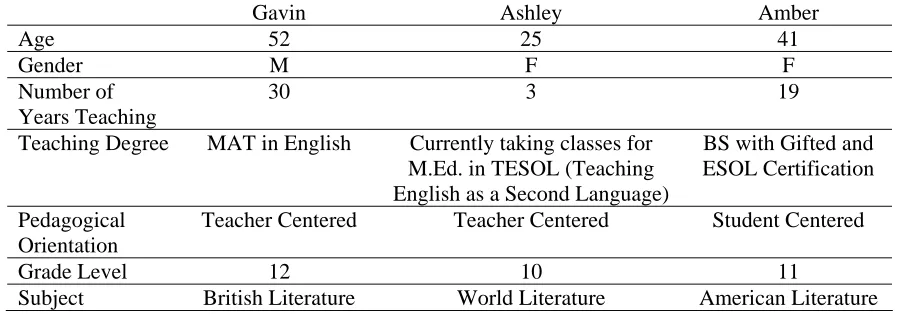
3 Demographic Information for Participants ...62
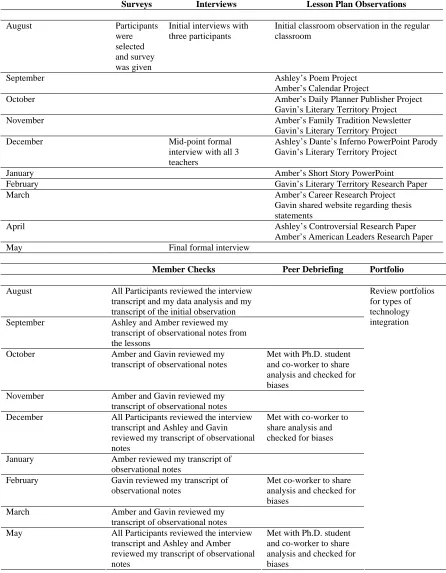
4 Schedule for Data Collection ...68
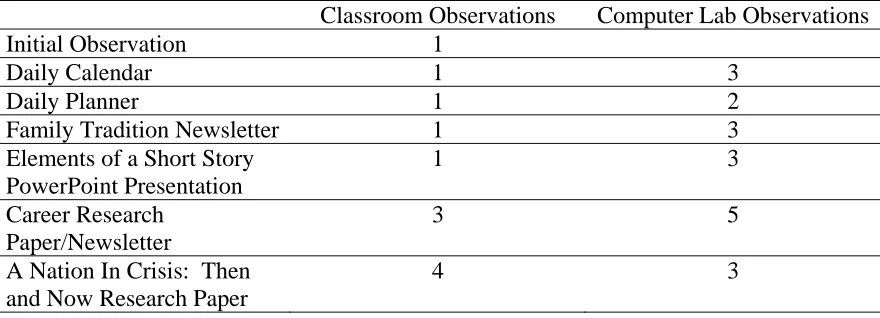
5 Gavin’s Initial Observation and Observations for Literary Territory Project...70
6 Ashley’s Initial Observation and Observations for Three Technology Projects...70
7 Amber’s Initial Observation and Observations for Six Technology Projects...71
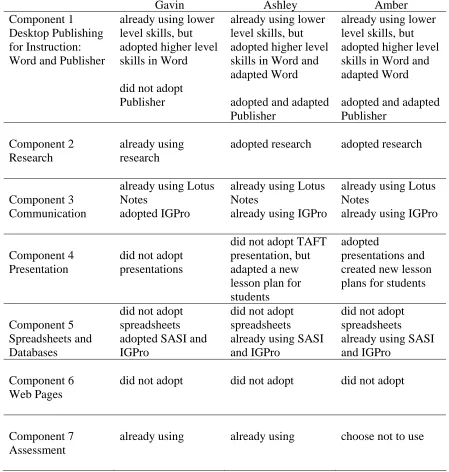
8 Components Adopted and Adapted Directly From TAFT ...128
9 TAFT Competencies Implemented...133
ABBREVIATIONS
AKS Academic Knowledge and Skills
ImPact Implementing Partnerships Across the Curriculum with Technology IRA International Reading Association
LSTC Local School Technology Coordinator NCES National Center for Educational Statistics NETS National Educational Technology Standards
NETS*S National Educational Technology Standards for Students PT3 Preparing Tomorrow’s Teachers to Use Technology TESOL Teaching English to Speakers of Other Languages
TST Technology School Technician
TTL Teacher Technology Leaders
CHAPTER1
INTRODUCTION
Georgia has invested millions of technology dollars into its educational school
systems (Brackett, Henry, & Weathersby, 1999; Hinton, 2003) because technology is
regarded as a powerful learning tool to improve teaching and student learning (Grabe &
Grabe, 1998; Jonassen & Reeves, 1996; Whale, 2006).
As advances in technology race ahead, we must ensure that the nation’s students
become technologically literate. Not to meet this challenge will mean that
American students will only fall further and further behind. With reading,
writing, and arithmetic, technology has become the nation’s ‘new basic.’ Our
children’s future, the future economic health of the nation, and the competence of
America’s workforce depends on meeting this challenge. (U. S. Department of
Education, 1996, p.4)
Technology use has become essential in conducting day-to-day operations and even
menial labor jobs now involve the use of computers. Students entering the workforce
need the necessary skills to interact at the business level (National Educational
Technology Standards [NETS], 2002; Policies Commission, 1993); however, the rapid
move to place computers in the classroom left a large number of teachers with little or no
computer training in their preservice coursework (Bauer & Kenton, 2005; Stapes,
Pugach, & Himes, 2005; Yaghi, 1996). There is a need, therefore, for additional
preparation in technology in order to integrate technology into the classrooms.
In the larger picture, while all teachers are affected by technology, language arts
teachers must learn not only to teach the literacies of reading and writing, but they must
also teach the new literacies. These new literacies include teaching how to effectively
use new technologies for information gathering and teaching about new methods
communication (Cunningham, 2000; International Reading Association [IRA], 2002;
Leu, Kinzer, Coiro, & Cammack, 2004; Leu, Mallette, & Karchmer, 2001; Luke 2000;
Reinking, McKenna, Labbo & Kieffer, 1998). These literacies include using word
processors, email, presentation software, and the Internet (IRA, 2002; Teale, Labbo,
Kinzer & Leu, 2002). Consequently, there is a need to make sure teachers have the skills
needed to prepare students to live and work in a technological society (Pope & Golub,
2000).
Over the last ten to fifteen years, vast amounts of money has been spent on
technology and technology training (Brackett et al., 1999; Hinton, 2003; Lewis, 1999;
Young & Bush, 2004). At the same time, we still do not know to what extent
professional development and technology integration actually impacts language arts
teachers’ classroom practice (Bebell, Russell, & O’Dwyer, 2004; Young & Bush, 2004).
This is because there is not a clear understanding of how teachers adopt technologies
learned in a professional development course into their classroom practice. In addition,
we do not know what technologies teachers do not adopt nor the reasons behind their
investigated the transfer of technology training in professional development to actual
classroom practice (Reichstetter, 1999; Thompson, 2005). Deleted line
Rationale
Although vast amounts of money have been spent on technology and teacher
training (Brackett, et al., 1999; Lewis, 1999; Young & Bush, 2004), research has not
adequately documented what teachers do with the skills they have learned (Bebell et al.,
2004; Young & Bush, 2004). We do not have a clear understanding which skills teachers
adopt (Russell, Bebell, O’Dwyer, & O’Connor, 2003) after participating in a
state-mandated technology professional learning course. Also, after a thorough review of the
literature, there are very few qualitative studies that focus on high school language arts
teachers, in terms of the adoption and diffusion of technology integration.
Several reports and studies have discussed in detail school technology
expenditures. According to the 2001 United States Census Bureau report, schools have
spent over 500 million dollars on computers, software, and teacher training. The report
“A Nation Online: How Americans are Expanding Their Use of the Internet,” stated that
there were two million new Internet users per month and that half of our population was
on-line. The report indicated that children and teenagers were the most frequent users
and by age 10 they used the Internet more than those 25 and older. One-fifth of
elementary children used computers for school. Also in 2001, the Pew Internet and
American Life Project reported on today’s computer use and student perceptions. One
hundred thirty-six students from 36 high schools across the county participated in the
study. In the report, students said they completed homework quicker, were less likely to
sources. Students also admitted they multitasked on-line; they conducted research,
downloaded music, instant-messaged, and prepared PowerPoint presentations all at the
same time. However, students critiqued their class work stating that teachers choose
Internet assignments of low quality and that were uninspiring (Pew, 2001). With
students’ increased access to information and the necessity of teaching students new
technological literacies to compete in an emerging information age, many believe teacher
training will need to be reshaped (Harvey & Purnell, 1995; Jonasson, 1993).
In order to understand the challenges of preparing teachers to use technology,
RAND Critical Technologies examined efforts to assist educators to use technology and
to define the barriers (Harvey & Purnell, 1995). As a result, the United States
Department of Education enacted GOALS 2000: Educate America Act - a plan to use
technology effectively. The plan contained several objectives. The objective most
closely related to this study was for schools to use technology for students and for
teachers to improve education. The following list was the criteria for that objective:
1. All teachers will have the training and support they need to help students learn using computers and the Internet.
2. All teachers will have modern computers in their classrooms.
3. Every classroom will be connected to the Internet. (GOALS 2000, 1994)
After legislation implemented the GOALS 2000 Act, several states enacted their
own mandates. Georgia, in particular, created the Statewide Education Technology Plan
(1997). The purpose of the technology plan was for “improving student performance and
enhancing the teaching/learning process through the effective use of technology” (p. iii).
The Georgia Lottery contributed immensely to the technology plan. Between 1994 and
programs (Hinton, 2003). More than $231,253,025 was allotted for computers. Within
the 83,000 plus classrooms in Georgia, $33,087,500 was spent on software, $5,244,236
for technology centers, $31,238,000 for instructional technology, and $40,187,500 for
media center computers. In addition to spending large amounts of money on hardware
and software, the state of Georgia also recognized the need for preparing teachers to be
able to integrate technology. In 1999, the lottery provided funding for training teachers
and administors on how to use technology at a cost of $660,000 (Brackett et al., 1999).
At this time, Georgia also formed an Education Reform Study Commission for the sole
purpose of studying how to improve the schools by having teachers and students use
technology. Based on the results of the study from the Commission, the governor
enacted the A Plus Education Reform Act of 2000. One of the initiatives of the Reform
Act mandated that all teachers must demonstrate computer competency in order to renew
their teaching certificate. The act states that teachers must demonstrate:
satisfactory proficiency on a test of oral and written communication skills, a test
of computer skill competency, and an assessment to demonstrate satisfactory
on-the-job performance appropriate to the applicant’s field of certification.
Successful completion of the phase one InTech model training at a state education
technology training center or by a State Board of Education approved redelivery
team shall be acceptable for certificate renewal purposes. (p. 65)
Following this state mandate, Jefferson County Public School System (pseudonym)
initiated the Technology Academy For Teachers (TAFT). TAFT is a State Board of
to meet state recertification requirements. The course was offered at a variety of sites,
dates, and times so that teachers could be taught by their peers in their own school.
In Dias’ (2000) study, she emphasized that “Integrating technology is a difficult
task for teachers, even if they have had training” (p. 6). Therefore, with the vast amounts
of money spent on technology and technology training, research studies focusing upon
attempts at technology integration in the classroom are needed (Deacon, 1999; Lewis
1999). Such studies can describe the challenges faced by teachers as they attempt to
apply what they have learned, and as a result, can be of benefit in improving the chances
of integration into classroom practice.
Previous research which has examined teachers and technology is available.
Many of these quantitative studies involved having teachers complete surveys and
investigated frequency of computer use or barriers to implementing technology. For
example, one self-reporting study found that teachers use technology to prepare lessons,
for email, to deliver instruction, to accommodate individual needs, for student use, for
student projects, and for grading. The study indicated that teachers mostly use
technology for preparation and email (Bebell et al., 2004). Several researchers have
investigated barriers to integrating technology. For instance, lack of adequate teacher
training and lack of time to develop lesson plans that integrate technology are two of the
greatest obstacles in integrating technology into the school’s curriculum (Beaver, 1992;
Brand, 1998; Brooks & Kopp, 1990; Ertmer, Addison, Lane, Ross, & Woods, 1999;
Hadley & Sheingold, 1993; Ingram, 1992; Kinnaman, 1990; Rosen & Weil, 1995;
Sheingold & Hadley, 1990; US Congress, 1995; Vagle & College, 1995; Wedman &
include the following: problems scheduling a computer lab, too few computers for the
numbers of students, inadequate financial support for computers, too few printers, and
not enough help supervising students (Hadley & Sheingold, 1993; Jaber & Moore, 1999;
Kinzer & Leu, 1997; Sheingold & Hadley, 1990).
In the few studies conducted with self-reporting measurements, what the teachers
said they did with technology and what the researchers observed differed considerably
(Cuban, 2001). Sheingold and Hadley (1990) suggested it is more informative to know
how teachers use technology than to know how often they use technology. Also, none of
the above mentioned studies take into account the cognitive variables that influence the
successful or unsuccessful implementation of professional development goals (Marsh,
1992). Research designed using a qualitative case study approach would allow those
factors to be explored in a classroom context.
Ray’s (2001) quantitative study looked at the impact of professional development
training on technology integration in secondary school teachers’ classrooms. She found
that teachers in all content areas made use of the skills after attending the class, but the
study did not specifically state which skills. Nor did the study address if the skills were
adopted as is or if they were changed in some way. While there has been some
substantial research on personal factors that have led to adoption or rejection of
technology in the classroom (Cuban, 2004, 2001; Tyack & Cuban, 1995), there is not a
clear understanding of how or why teachers implement certain technologies from a
professional development course. Nor do we know what technologies teachers do not
implement or what they modify to fit their needs. Developing effective professional
influence the use and implementation of technology (Farquhar & Surry, 1994). Little
research has investigated the transfer of technology training in professional development
to actual classroom practice (Ketterer, 2000; Reichstetter, 1999).
Because of changes in society, high school language arts teachers are challenged
to embrace a wider range of literacies (Downes & Fatouros, 1995). With technology
changing what it means to be literate, studies involving technology integration in the
language arts classrooms are becoming more pertinent. Only a few qualitative studies
have looked at language arts teachers and their experiences with technology in the
classroom (Baker, 2001; Karchmer, 2001). Past and current research has not adequately
explained how teachers use technologies in the language arts classroom (Hughes, 2000;
Young & Bush, 2004).
Purpose of the Study
In light of the need for research focusing on technology integration in the
classroom, the purpose of this qualitative study was to describe the stories of high school
language arts teachers as they embarked on a journey to integrate technology into a
language arts classroom after taking a technology professional development course that
was required by legislature called Technology Academy For Teachers (TAFT). The
study focused on how language arts teachers integrate technology into the classroom by
understanding their instructional decisions and classroom culture.
Specifically, the following research questions were addressed:
1. In what ways do high school language arts teachers integrate technology into their existing curriculum after having participated in a professional development course focusing on technology?
3. What are teachers’ perceptions of technology integration in the language arts classroom?
Overview of the Study
This qualitative case study explored three high school language arts teachers’
experiences with integrating technology after having participated in a state-mandated
professional development course on technology. To understand the factors that
influenced technology adoption and to discover factors that acted as barriers during the
adoption process, Rogers’ (1995) Adoption and Diffusion Model was utilized as the
framework for the study.
Data sources included formal interviews, video-taped lesson, observational field
notes, and teacher portfolios. A constant comparative method (Glaser & Strauss, 1967;
Lincoln & Guba, 1985) was employed throughout the study by assigning codes and
categories to each piece of data. Rigor was established through triangulation of the data
and member checks.
Significance
In the years since the implementation of the A Plus Education Reform Act (2000),
all practicing Georgia teachers have been trained to meet the technology requirements
stipulated by law and to retain their certification and/or teaching position. However,
given the constant changes to technology requirements for teachers, the need for
educators to learn new technologies across their career is likely. The results of this study
should provide pertinent information to school systems in the future as they continue to
provide technology training and consider the follow through of training in classroom
type of research may help school systems adequately address shortcomings in the use of
computer technology by teachers after training has been completed. The results from this
study may also be used to inform other high schools that have similar demographics and
socio-economic factors (Reichstetter, 1999).
In addition, the results of this research will inform those employed in school
systems who are in charge of teacher training programs. These school leaders will
benefit by knowing if there is a transfer of knowledge from a state-mandated professional
development technology training class to actual classroom practice. Learning how
teachers are using technology in the classroom, learning what and how teachers adopt
technologies from a professional development course, and learning what teachers do not
adopt from a training course may lead to suggesting types of hardware or software
purchases that might assist with integration (Ray, 2001). Schools and teacher education
programs are looking for models that have effectively taught their teachers to
successfully integrate technology into their classroom (Becker, 1998; National Center for
Educational Statistics (NCES), 2000).
On a national level, the No Child Left Behind Act (2002) charged the Secretary of
Education with developing the nation’s National Education Technology Plan. The plan
was to support the effective use of technology in the classroom and to prepare students
for the 21st century. The plan sought input from a variety of audiences including
educators and researchers. The National Educational Technology Plan wants to build “on
what has been proven to work and what has been accomplished through previous efforts”
(Bush, 2002, p. 2). This study can identify policy issues and provide opportunities for
Terms and Definitions
The following definitions will clarify to the reader the meaning of specific terms
as used in this study.
Adaptation: Adaptation is the process by which the participants in the study took the
information they learned in a staff development course and used those new skills in
different ways.
Adoption: Rogers’ Adoption and Diffusion Model is used for the framework of the
study. The term adoption is the process by which the participants in the study took the
information they learned in a staff development course and adopted or utilized those
skills in the classroom.
Inservice: Inservice programs are short awareness programs to inform teachers about
new ideas (Bellanca, 1995).
Literacy: In this study, literacy refers to the ability to read, write, listen, speak, and
function in modern society (Bruce & Rubin, 1993; Lankshear, 1997).
Professional Development: The term professional development refers to a
comprehensive program to improve teachers’ ability to design and implement new
lessons that produces a change in the classroom (Bellanca, 1995).
Staff Development: Staff development provides teachers with opportunities to learn new
methods of instruction (Bellanca, 1995).
Technology: Technology in the broadest term could mean transparencies, audio tapes,
video tapes, television, laser discs, digital video discs, word processing, email,
could encompass hundreds of different contexts, the term needs to be narrowed for this
study. For this study, technology requires the use of the computer.
Technology Fluency: The term of technology fluency refers to teachers’ use of
technology where teachers are comfortable with technology and can focus on integrating
technology into their content area.
Technology Integration: Technology integration contributes to teaching and learning by
letting students learn with computers as they study, expand, and enhance their content
area objectives (Antifaiff, 2000). The integration could be hardware or software based
CHAPTER 2
BACKGROUND
The following section provides the background for this study. There are two
sections. The first section is the theoretical framework that provides the underpinnings
for the research. The framework for this study is based upon Rogers (1995) Adoption
and Diffusion Model. The second section provides a review of the research in relevant
areas such as characteristics of effective staff development, technology staff
development, technology and literacy, and technology in the language arts classroom.
Framework for the Study
Adoption and Diffusion Model
Developing effective professional learning does not guarantee technology will be
integrated. A myriad of adoption factors such as trialability, observability, rate of
adoption, complexity, and compatibility influence the use and implementation of
technology (Farquhar & Surry, 1994). For this study, an adoption and diffusion model
(Rogers’ 1995) will be used as the theoretical framework to guide data collection and
inform data analysis.
A variety of models have been created to explain the adoption process; for
example Bhola (1984), Fullan (1985), Hall and Hord (1987, 2001), Sherry, Billig,
Tavalin, and Gibson (2000), and Stockdill and Morehouse (1992) all have designed
adoption models. One of the most popular models of the adoption process is that of
Rogers (1995). Rogers’ book Diffusion of Innovations was first published in 1960 and is
now in its fourth edition (1995). This particular study was framed from Rogers’
Adoption and Diffusion Model for four reasons. First, researchers say that Rogers is one
of the most often cited authors of adoption models. Secondly, Rogers (1995) argued that
87% of adoption of new technology is explained by the attributes that he developed.
Third, the attributes that Rogers created, along with the terminology used, is recognized
in several studies and across different disciplines (Al-Ghatani, 2003; Surry & Farquhar,
1997). Finally, because I believe that Roger’s (1995) Adoption and Diffusion Model is
the most thorough model to describe the process of how teachers decide what to adopt,
not adopt, or change as they integrate technology into the classroom, this is the viewpoint
from which I will approach this research.
Rogers discussed four widely-used diffusion theories: Innovation Decision
Process; Individual Innovativeness; Rate of Adoption; and Perceived Attributes. The
Innovation Decision Process Theory explains that potential adopters of technology move
through five distinct stages. The stages are as follows: (a) Knowledge – the adopters
learn about the technology; (b) Persuasion – the adopters must be persuaded about the
value and merit of the technology; (c) Decision – the adopters decide to adopt the
technology; (d) Implementation – the adopters implement the technology; and (e)
Confirmation – the adopter reaffirms or rejects the decision (Rogers, 1995). This
particular theory has been cited in numerous pieces of instructional technology literature
(Surry & Farquhar, 1997). In fact, Sachs (1993) wrote, “after looking at [the literature] in
about how to encourage the adoption of innovations or how to be better change agents is
that there are five stages to the innovation adoption process” (p. 1).
The Individual Innovativeness Theory (Rogers, 1995) explained that those
individuals who are risk takers or who are usually innovative in their actions will adopt
the innovation earlier than those who are not. There are two groups of individuals on
opposite ends of the spectrum. The innovators will take risks and adopt an innovation
early in the diffusion process. The laggards will resist adopting the innovation. They
may adopt very late in the process, or they may never end up adopting at all.
Another widely used diffusion theory developed by Rogers (1995) is the Theory
of Rate of Adoption. The adoption of an innovation takes place over time. The process
resembles an s-curve. The innovation starts off slow with gradual growth. Then the
innovation moves through a stage of dramatic and rapid growth. Eventually, the
innovation’s rate of adoption will taper off by stabilizing and finally declining.
The Theory of Perceived Attributes states that adopters will judge an innovation
based on their perceptions of five attributes. The attributes are as follows: trialability,
observability, relative advantage, complexity, and compatibility. Trialability allows the
adopter to experiment and try out the innovation on a limited basis before the actual
adoption process. The idea behind trying the innovation first is to dismiss uncertainty
about the innovation. The rate of adoption is positively influenced by the adopter’s being
able to use the innovation. In observability, the results of using the innovation are easily
observed, visible, or communicated to others. The rate of adoption is positively
influenced when the adopter is able to observe the innovation. Relative advantage means
quo. Sometimes relative advantage is expressed in terms of economic profitability, social
prestige, or other benefits. The rate of adoption is positively influenced when the benefits
outweigh the cost. Complexity refers to the degree to which the innovation is difficult to
use and/or understand. New ideas fall somewhere on a spectrum between simple and
complex. The rate of adoption is negatively influenced by the complexity of the
innovation. With the last attribute, compatibility, the adopter must see the innovation as
compatible with existing values, practices, needs, and circumstances. The rate of
adoption is positively influenced when adopters find the innovation fits closely with their
lives. The important thing to remember is that it is the adopter’s perceptions of the
attributes that count, and this is what affects the rate and diffusion of an innovation.
Of the four diffusion theories, the one that is most closely related to this study is
the Theory of Perceived Attributes. This theory seems most applicable to the choices
high school language arts teachers make when deciding to integrate technology.
Approaching this research study within the framework of Rogers’ (1995) Diffusion of
Innovations facilitates understanding the factors that influence adoption of innovations,
and instructors and stakeholders can account for factors that act as barriers or enhance
those factors that facilitate the process. Rogers’ (1995) Adoption and Diffusion Model
informs this study because the model helps in understanding the reasons behind the
choices that teachers make regarding technology integration in the classroom after
participating in a technology professional development course.
Adoption and Diffusion of Technology Research
Isleem (2003) stated,“While many researchers have studied the diffusion of
purposes by public school teachers” (p. 27). The following are researchers who have
studied adoption and diffusion in the same context as this study.
Hoerup’s (2001) study examining computer technology integration and the role of
collaboration was centered in Stewart County, Virginia, at an elementary school. She
chose Rogers’ (1995) theory as a framework for her qualitative study. Hoerup looked at
integration of technology, the characteristics of the adopters, and how collaboration
shapes the process. The participants of the study included seven fifth-grade teachers, a
computer resource teacher, and the researcher herself. Her data sources included
observations, interviews, and field notes. The most significant finding in her study was
that the success of an innovation depends mostly on how innovative the individual
adopter is.
Bussey, Dormody, and VanLeeuwen’s (2000) study identified the factors that
influence the adoption process of technology education teachers and industrial arts
teachers in New Mexico. Of the 310 teachers, a sample size of 169 was selected. The
mailed questionnaire was made up of Likert-type questions and was based on the work of
Rogers (1995). The questions pertained to the level of adoption of technology education,
perceptions of the attributes of technology education, and the influence of change agents
on adoption. The questionnaire also contained three checklists to provide a second
analysis for the main objective. The checklist measured items important in helping
teachers adopt technology education, items that prevented technology adoption, and
suggestions to strengthen the adoption of technology education. The results indicated
that three of Rogers’ (1995) attributes were present: relative advantage, compatibility,
followed by the influence of change agents. Therefore, in order to encourage adoption of
technology education, change agents should focus their efforts on increasing teacher
perceptions of the innovation.
Blankenship (1998) used diffusion of innovations theory by Rogers (1995) as the
framework for studying the factors related to teacher use of computers in classroom
instruction. His study utilized both qualitative and quantitative methods and focused on
241 K-12 teachers in Carroll County, Virginia. The factors he analyzed included the
following: attitude, access, training, support, age, grade level, gender, and numbers of
years remaining before retirement. Blankenship found that training was the most
common predictor for adoption. The remaining predictors, in descending order were
training, attitude, support, access, and age of the teacher.
Jacobsen (1998) incorporated mixed methods to investigate the adoption patterns
and characteristics of faculty who integrate computer technology for teaching and
learning in higher education. She used Rogers’(1995) theory as an analysis tool to
investigate the differences between early adopters and the mainstream faculty in their
plans for computer use, computer experience, self-efficacy, participant information,
changes to teaching and learning, incentives to integrate technology, barriers to
implementing technology, and evaluating the outcomes of using technology. Jacobsen’s
results showed that computer experience was the most significant factor in adopting
technology. She also made some other interesting findings. She learned that the different
groups preferred different ways of learning about technology, different types of training
concluded that colleague-supported training was a positive way to encourage the
adoption of technologies.
Isleem (2003) sent self-reporting questionnaires to 1,228 technology education
teachers in Ohio Public Schools to identify the extent to which technology education
teachers use computers for instructional purposes. He examined five factors in relation to
the computer use. He looked at teachers’ perceived expertise in computer use, teachers’
perceived access to computers, teachers’ attitudes toward computers as tools for
instructional purposes, teachers’ perceived support for computer use, and selected
characteristics such as age, gender, grade level taught, geographic location, and
educational background of technology education teachers. There were four main findings
from the study. The most frequent use of the computer was email, followed by classroom
management and then word processing. The least amount of computer use was for
multimedia authoring. Isleem found high levels of use in mainstream applications, but
low levels in specialized software. Technology education teachers perceived they had
expertise in email, Internet and word processing. There was an absence of expertise in
multimedia authoring software. The correlation was significant between computer use
and expertise. Eighty-four percent of teachers had access to computers at home and 77%
had access in the classroom. There was a significant correlation between computer use
and access to computers. Ninety-two percent of the technology education teachers had
positive attitudes regarding using computers for instructional purposes and stated that
computers made learning easier and more efficient. Computer use and attitude had a
significant correlation. Finally, 93% of the teachers were in agreement that
Isleem did not find enough sufficient evidence for a correlation between computer use
and support.
To summarize the findings of the above studies, both Isleem (2003) and Jacobsen
(1998) found experience or expertise to be the most influential factor in adopting an
innovation. Isleem (2003) and Blankenship (1998) both agreed that attitude was a
significant factor in determining the rate of adoption. Bussey et al., (2000) determined
that Rogers’ (1995) perceptions of attributes was most significant while training was
second. Blankenship (1998) found training to be the most significant. Blankenship
(1998), Jacobsen (1998) and Hoerup (2001) all found support to be a predictor in the
adoption process; however, Isleem (2003) stated that his study contradicted that finding.
The difference that Isleem did not mention is that the other studies cited support from
colleagues as one of their factors. On the contrary, in Isleem’s (2003) study, his support
factor was related to support from the administration. Overall, research indicates support
from colleagues is important to promote adoption, while support from administration is
inconclusive.
Related Literature
In the following section, I will discuss the history of staff development and
technology and the characteristics of effective staff development as well as how teachers
integrate technology after having participated in a technology professional development
course. In addition, this literature review provides information on technology integration
in the language arts classroom and explains how literacies have changed since the
integration of computers in the classroom. Finally, this section will describe teacher
Professional Development Defined
The terms inservice, staff development, and professional development were used
interchangeably throughout the literature. However, the terms have evolved over the
years and are not synonymous. For this review of literature, the term used in the
paragraph is the one that the author of the cited material used.
Historically, inservice days usually occurred at the beginning of a new semester
and teachers usually heard motivational speakers. Other times during the year, principals
occasionally provided a three-day workshop to remedy teacher deficiencies (Bellanca,
1995; Orlich, 1989). In this approach, although teachers heard new ideas and
innovations, they rarely received support to carry them out. In contrast to inservice
sessions, the move to a staff development approach often led to the inclusion of
scheduled speakers and breakout sessions to the agenda. In this model, teachers
frequently could choose which breakout sessions to attend based on their interest. Goals,
strategies, time lines, and responsibilities were carried out to ensure changes in
curriculum, instruction, and assessment (Bellanca, 1995).
Different from inservice and staff development, the primary goal of professional
development was to help the participants learn, implement, and assess their instructional
practices by improving knowledge, skills, and attitudes. According to Gall and Renchler
(1985), professional development education was defined as “efforts to improve teachers’
capacity to function as effective professionals by having them acquire new knowledge,
attitudes, and skills” (p. 6). Grant (2000) expanded on that definition to include
[The] definition of professional development includes support for teachers as they
encounter the challenges that come with putting into practice their evolving
understandings about the use of technology to support inquiry-based learning.
Current technologies offer resources to meet these challenges and provide
teachers with a cluster of supports to help them continue to grow in their
professional skills, understanding, and interests. (n.p.)
The approach in the TAFT course, which was taken by teachers in this study, is
most closely related to the term professional development; therefore that term will be
used in the methodology section. In the TAFT course, teachers were provided hands on
opportunities to learn technologies and to consider ways to integrate these in their
curriculum.
History of Staff Development and Technology
A growing concern about the effectiveness of staff development became evident
in the 1970’s (Sparks & Loucks-Horsley, 1989). By 1977, there had been very few
articles relevant to staff development research because most of the literature was
descriptive or conceptual and only a few articles mentioned existing studies (Showers,
Joyce, & Rolheiser-Bennett, 1987). In the 1980’s, staff development became the “focus
of countless conferences, workshops, articles, books and research reports (Sparks &
Loucks-Horsley, 1989, p. 40). Then came efforts to integrate technology into staff
development courses (Schaffer & Richardson (2004).
At first, technology staff development courses focused on learning about
computer hardware. The problem at this stage was that teachers were not learning how to
development began in the mid-1990s. During these courses, teachers learned software
applications (Schaffer & Richardson, 2004). The problems at this phase were that
teachers did not have the same software in their school, the software was too difficult to
use, or the software had no relevance to what they taught on a daily basis (Kinnaman,
1990; Reinen & Plomp, 1993). Currently, schools are at the third juncture of technology
staff development, called technology fluency (Schaffer & Richardson, 2004). Teachers
are seeking ways to integrate technology into their content areas and to maximize student
learning (Cradler, 2002; Schaffer & Richardson, 2004).
Teachers realize the importance of using technology in the classroom (Littrell,
Zagumny, & Zagumny, 2005), yet, only 20% of public school teachers say they feel
prepared to integrate technology into the classroom (Cradler, 2002; NCES, 2000;
Norman, 2000). Technology is not always a key component in teacher preparation
programs. When technology is introduced into teacher education programs, the emphasis
is often on teaching about technology instead of teaching with technology (Schaffer &
Richardson, 2002); therefore, teachers have difficulty integrating technology into the
content areas (Voogt, Almekinders, van den Akker, & Moonen, 2005). The Milken
Exchange on Education Technology and the International Society for Technology in
Education reiterated that obstacle by stating, “in general, teacher-training programs do
not provide future teachers with the kinds of experiences necessary to prepare them to use
technology effectively in their classrooms” (1999, p. i).
Because of this situation, local, state, and national policy makers are trying to find
ways to strengthen technology staff development (Garet, Porter, Desimone, Birman, &
Tomorrow’s Teachers to Use Technology (PT3) grant. In 1998, the United States
Department of Education developed this project to help faculty and higher education
institutions infuse technology into teacher education programs because many teachers
were uncomfortable integrating technology into their classroom (Thompson, 2005).
Since 1999 the PT3 has provided more than 400 grants and has invested $337.5 million
dollars to “help transform teacher preparation programs so that teachers can make more
effective use of technology as an instructional tool” (Russell, et al., 2003, p. 298).
Teachers who participated in teacher education programs with help from PT3 are now
beginning their teaching careers. Findings from the data suggest that the PT3 had a
positive impact on technology integration. “More than one million teachers and future
teachers, several million K-12 students, and thousands of teacher education faculty have
been positively affected by the work of PT3” (Thompson, 2005, p. 332).
One such grant not only assisted future educators, but supported the faculty at the
University of North Carolina and the faculty collaborating schools by having the grant
provide professional development for them. The Teacher Technology Leaders (TTL)
three-year project used a team approach with a student teacher, collaborating teacher, and
faculty member (Ludwig & Taymans, 2005). For the student teachers, the project helped
to redesign classroom curriculum and integrate technology into the student teaching
experience. For the faculty at the university and the collaborating school, the grant
assisted in redesigning the curriculum, supported the team approach, and expanded
technology use and mastery of components (Ludwig & Taymans, 2005).
Another PT3 project entitled Implementing Partnerships Across the Curriculum
schools in Tennessee served the teacher education program as placement sites for student
teachers. Professional development was the most important feature of the model to create
an organization of highly skilled teachers. The mentor teachers received training in five
three-hour sessions throughout one semester. The teachers received a variety of teaching
approaches such as curriculum based, hands-on, long-term projects, and modeling of
technology integration. There were face-to-face instruction, small group instruction, and
large group instruction. At the end of the training, the teachers developed “technology
enhanced lessons that align with state curriculum standards and ISTE’s National
Education Technology Standards for Students (NETS*S)” (O’Bannon & Judge,
2004-2005, p. 202). The teachers took a pre-test and post-test consisting of a comparison of
technical skills with various technology tools. The results of the projects show that all
participants integrated technology significantly more than they did before the beginning
of the project and that their confidence level increased. Project ImPact was effective in
changing the student teacher education and in developing the mentor teachers who have a
crucial role in the development of new teachers.
Characteristics of Effective Technology Staff Development
There is a need to evaluate and apply characteristics of effective staff
development to the technology professional development programs used to prepare
inservice teachers (Glenn & Carrier, 1989). Therefore, research relevant to this study
focused on effective technology staff development characteristics. This section will
address the effective characteristics of technology staff development from 20 years ago to
present day. In their 1985 study, Stasz and Shavelson collected surveys from 60
successful users of technology by their colleagues and principals. The researchers
reported important factors for successful staff development. They stated the need for
support during the staff development activities and during the actual implementation of
technology into the classroom. They also discussed the need for sufficient time for
planning the activities for integrating the technology.
The research by Stecher and Solorzano (1987) was one of the largest studies
conducted to determine characteristics of effective technology staff development. Eight
school districts and 30 individuals from around the country were asked for nominations
to participate in the study. They were asked to select school districts that were doing an
outstanding job of training teachers to use computers. The suggestions resulted in 50
organizations made up of 30 school districts, 12 colleges, and six regional education
centers. Interviews and observations were used for data collection and the study resulted
in several effective practices for staff development. The study revealed that a balance
between lecture and guided practice with extensive practice offered in a comfortable and
relaxed atmosphere where a knowledgeable instructor could give individualized attention
were predictors for successful staff development. Other characteristics included detailed
curriculum guides and lessons plans with clear objectives and relevant materials.
Furthermore, other components would be intensive voluntary participation and peer
interaction.
One of the most comprehensive published books regarding effective technology
staff development programs came from Bailey and Lumley (1994). Although the
characteristics were not based on their own research, they had a complete list of
effective characteristics. Their findings stated that teachers needed the commitment and
support from the central office, principal leadership with technology, incentives and
rewards, and comprehensive staff development that included effective trainers who know
how to teach adults, development of a curriculum geared towards participants’ interests,
and which incorporated time to work collaboratively with other teachers. They also
contended that participation in school improvement was important, but not necessary if
each participant believed that personal development was important and they could set
their own goals and objectives.
Carrier, Glenn, and Sales (1985) and Carrier and Glenn (1991) felt that
individualized instruction based on the teachers’ level of experience with computers was
an important factor. They expanded on the need for individualized instruction by
designing a two-level approach for a technology staff development program. They
suggested having a beginners program, including very basic instruction in computer use,
and an advanced program to meet the needs and varying levels of competencies of the
teachers (see Appendix A for detailed information on beginner and advanced programs).
Because teachers have varying levels of experience with computers, this design attempted
to address those concerns. This type of design helped teachers with different experiences
and interests. Ultimately, all the teachers would integrate technology into the classroom
(Carrier & Glenn, 1991).
Not much has changed over the past 20 years. Several authors and researchers
have written about effective characteristics of professional development to help teacher
trainers. Gess-Newsome, Blocher, Clark, Mesasco, and Wills (2003) drew across the
development, and Anderson (2004) published a list of hints for successful professional
development in what was called the “Educator’s Resource Kit” (p. 36). Kanaya, Light,
and Culp (2005) conducted a study with 237 K-12 teachers. The researchers had the
teachers complete a survey about the professional development training they had
experienced. The survey asked about their satisfaction with the training, their judgments
about how prepared they are to use technology, and their perceptions of the training
goals. All of the above authors found three main effective characteristics of professional
development with the most important being that the approach include individualized
learning plans based on the teachers’ needs. “Professional development must be
grounded in the context of the teacher’s classroom” (Gess-Newsome et al., 2003 p. 328).
In other words, teachers should be engaged in meaningful and relative activities that they
can transfer to their classroom (Kanaya et al., 2005).
A second important characteristic came from the article written by
Gess-Newsome et al., (2003) and the study from Kanaya et al., (2005). Collaboration played
an essential role in professional development. In almost all studies that involved
professional growth and classroom change, the interaction of colleagues was a consistent
predictor of success (Gess-Newsome et al., (2003). Teachers who worked in the same
schools, grade levels, or departments and shared their knowledge and activities with the
group experienced more success when they returned to their classroom than teachers who
did not experience the same opportunity (Kanaya et al., 2005).
Time was the third characteristic. An intense 40-hour course over a period of
three months seemed to have the longest lasting effects (Garet et al., 2001; Kanaya et al.,
literature are as follows: shared on-site and off-site learning opportunities for teachers,
shared success stories at faculty meetings (Technology, 2002), shared a rationale for the
course and activities with the teachers (Anderson, 2004; Garet et al., 2001), and offered
incentives and motivations to the teachers (Kanaya et al., 2005). While we may know
what effective characteristics help to promote successful staff development, we do not
know what skills the teachers use, do not use, or change once they return to the
classroom.
Impact of Staff Development in Classrooms
There were two studies in recent years that researched the impact of staff
development training on technology integration in the classroom (Ray, 2001) and
follow-up on implementation after training (Reichstetter, 1999). Ray (2001) used a qualitative
study to investigate the impact of staff development training on technology integration in
secondary school teachers’ classrooms. The main focus of her study was to find out if
teachers who took a teacher technology training staff development course at the
Professional Learning Center would integrate technology in their teaching as a result of
the course. The Professional Learning Center was created in 1998 in an effort to promote
technology integration in the classroom through staff development. The center provided
over 9,000 teachers and educators with knowledge and skills to integrate technology.
Ray (2001), who had been through the training, reported that the setting for the
Professional Learning Center exemplified effective characteristics of staff development.
Twelve secondary teachers from four school districts representing English, science,
history, and business classes were selected to participate in the study. Data collection
perceptions of their competency level in using technology and the importance they placed
on experiences connected with technology. Ray (2001) used conversational interviewing
techniques to discuss the impact of professional development in learning how to
incorporate technology. She had the teachers converse about their role as a teacher, about
technology, and technology training. Ray (2001) observed the teachers in their
classrooms to validate their responses on the survey and in the interviews. Ray
transcribed only the parts of the tape where the participants responded directly to the
question. The interviews were coded and divided into categories. Code sheets were
made for each participant and “trees were used to group responses into themes” (p. 49).
Interview discussions were then compared to the survey and observational field notes.
The results indicated that all 12 teachers made use of the skills they learned in the staff
development class, and they used technology to research information they presented in
their classrooms. The training helped them to create their own webpage, to design
multimedia presentations, and to utilize virtual tours to enhance the learning process.
However, only 10 of the 12 participants integrated technology into their teaching. These
10 teachers envisioned their roles as a teacher to extend beyond teaching just their
content area. They felt responsible for teaching skills needed in life beyond the
classroom context. They believed technology had an impact on the students’ lives and
they wanted students to be life long learners, so they made an effort to provide creative
opportunities to use technology in their classroom (Ray, 2001).
Reichstetter (1999) incorporated a quantitative study to find out if there was a
relationship between the amount of technology training received and the frequency of