ScholarWorks @ Georgia State University
ScholarWorks @ Georgia State University
English Dissertations Department of English
1-12-2007
Communication Strategies as a Basis for Crisis Management
Communication Strategies as a Basis for Crisis Management
Including Use of the Internet as a Delivery Platform
Including Use of the Internet as a Delivery Platform
Gordon Alan Harrison
Follow this and additional works at: https://scholarworks.gsu.edu/english_diss
Part of the English Language and Literature Commons
Recommended Citation Recommended Citation
Harrison, Gordon Alan, "Communication Strategies as a Basis for Crisis Management Including Use of the Internet as a Delivery Platform." Dissertation, Georgia State University, 2007.
https://scholarworks.gsu.edu/english_diss/22
COMMUNICATION STRATEGIES AS A BASIS FOR CRISIS MANAGEMENT INCLUDING USE OF THE INTERNET AS A DELIVERY PLATFORM
by
GORDON A. HARRISON
Under the Direction of George Pullman
ABSTRACT
Eighty per cent of small companies without a comprehensive crisis plan
vanish within two years of suffering a major disaster—a remarkable and ominous
statistic. Crises are occurring more often in all organizations, and when they occur,
they are leaving a wake of financial, operational, and reputational damage. Why this
trend, now? There are five important reasons: 1) a more volatile workplace involving
financial, legal, or management issues within the organization; 2) an extreme
production mentality often obscuring the conditions under which crises might
otherwise be recognized, addressed, or mitigated; 3) enhanced technological
platforms for information delivery, such as the Internet, generating a revolving
information door thus promoting organizational stress and crisis; 4) fast-paced and
invasive journalism practices that eliminate invisibility for decisionmaking or
reaction; and, 5) lack of strategic planning for crisis. There is an increasing body of
evidence suggesting that crises in an organizational environment, whether created by
act-of-God or manmade circumstances, have defined and predictable characteristics
often relating to communication problems in the discourse community.
It is also evident that solutions exist to reduce the incidence and the intensity
vulnerability assessments, messaging strategies, forensic media tactics, and dedicated
efforts to build relationships with important stakeholders.
Each of these has as its foundation a vigorous strategic communication plan.
Crisis plans are necessary in today’s business environment, and effective
communication is an essential element of any crisis plan. This dissertation will focus
on communication methodology as a means of crisis avoidance and crisis mitigation.
COMMUNICATION STRATEGIES AS A BASIS FOR CRISIS MANAGEMENT INCLUDING USE OF THE INTERNET AS A DELIVERY PLATFORM
by
GORDON A. HARRISON
A Dissertation Submitted in Partial Fulfillment of the Requirements for the Degree of
Doctor of Philosophy
In the College of Arts and Sciences
Georgia State University
Copyright by Gordon Alan Harrison
COMMUNICATION STRATEGIES AS A BASIS FOR CRISIS MANAGEMENT INCLUDING USE OF THE INTERNET AS A DELIVERY PLATFORM
by
GORDON ALAN HARRISON
Major Professor: George Pullman
Committee: Tom McHaney
Baotong Gu
Electronic Version Approved:
Acknowledgements
_____________________________________________________________________
Tremendous thanks to my committee chair, Dr. George Pullman, for his direction and friendship during the last three years. He took on a task indeed when he agreed to steer the course for my doctoral program. Also, my sincere appreciation to Dr. Tom McHaney and Dr. Baotong Gu, who participated on my committee with wonderful stewardship and enlightened guidance. I look forward to our friendship in the future.
Thanks also to Corrin Sorteberg and Lesli Cotton in the HR Department of Georgia State University who contributed mightily to me by pulling me through the
bureaucratic maze of graduate school.
To my friend Robert Hobbs, the great leader of the state’s budget: my appreciation for prompting me to start the journey and to stay the course. To President Rob Watts: thanks for allowing a bit of flexibility in my work schedule to write my dissertation. To Speaker of the House of Representatives Terry Coleman: you do not know how much that big office in the LOB helped me.
My acknowledgement to Kennesaw State University with consideration that a PhD examination of organizational crisis and discourse community collapse would have escaped me but for my tenure at KSU. At Crisis U., I have seen it all.
Lastly, I appreciate my family for late nights, early mornings, and binge writing amid a litter of espresso cups and Diet Coke cans. My dear wife Frances, a Masters degree holder in composition and wonderful intuitive editor, did not read or edit the first word of my papers. However, she was my crutch, and she put up with me (no small task)! And to my golf buddies who just did not care—I appreciate that too.
Dedication
_____________________________________________________________________
This dissertation is dedicated to two individuals eternally important to me—my best friend and wife Frances and my remarkable friend, poet Sam Hamill. Sam, your poems give me perspective
and help me to appreciate the good things around me. We are two of a kind, looking to the river for peace. I hope our paths cross someday near the Yangtze. Namaste.
And to Frances, it is indeed our time.
Like the river and its banks we are two islands
TABLE OF CONTENTS
ACKNOWLEDGEMENTS v
TABLE OF CONTENTS vii
LIST OF TABLES ix
LIST OF CHARTS x
CHAPTER
I OBJECTIVES, RESEARCH QUESTIONS, AND METHODOLOGY 1
II CRISIS MANAGEMENT IN CONTEXT 7
PART I MODERN DEFINITION OF CRISIS AND CRISIS
COMMUNICATION 7
PART II HISTORICAL CONTEXT: CHANGES IN THE
INFORMATION LANDSCAPE 14
PART III CRISIS COMMUNICATION IN CONTEXT
TO RHETORIC 37
PART IV CRISIS COMMUNICATION IN CONTEXT TO CRISIS
MANAGEMENT 71
PART V CRISIS COMMUNICATION IN CONTEXT TO
MEDIA AND PUBLIC RELATIONS 100
PART VI THE WEB IN CONTEXT WITH OTHER DELIVERY
PLATFORMS 126
PART VII EXAMINATION OF ONLINE ORGANIZATIONAL
COMMUNICATION 159
III EXAMINATION OF THE DISCOURSE COMMUNITY:
STRATEGIC PLANNING FOR CRISIS MANAGEMENT 182
PART I MESSAGING TO, FROM, AND WITHIN
THE DISCOURSE COMMUNITY 188
PART II DEVELOPMENT OF A CRISIS PLAN 198
IV THE WEB AS A DELIVERY PLATFORM
FOR CRISIS COMMUNICATION 237
V CONCLUSIONS, AREAS OF FURTHER STUDY 315
WORKS CITED 323
APPENDICES
I SURVEY INSTRUMENTS 337
II KEY WORDS AND DEFINITIONS 342
FIGURES
Figure # Issue Page #
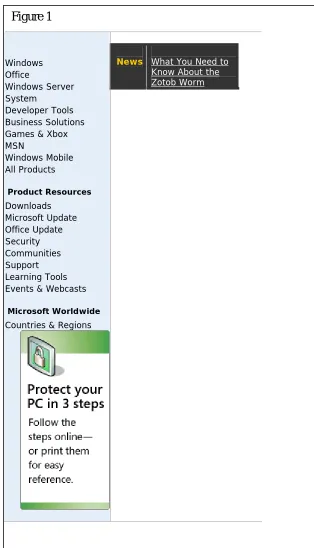
Figure 1 Microsoft Zolob Worm Crisis Site 266
Figure 2 MS Zolob Worm Removal Tool 267
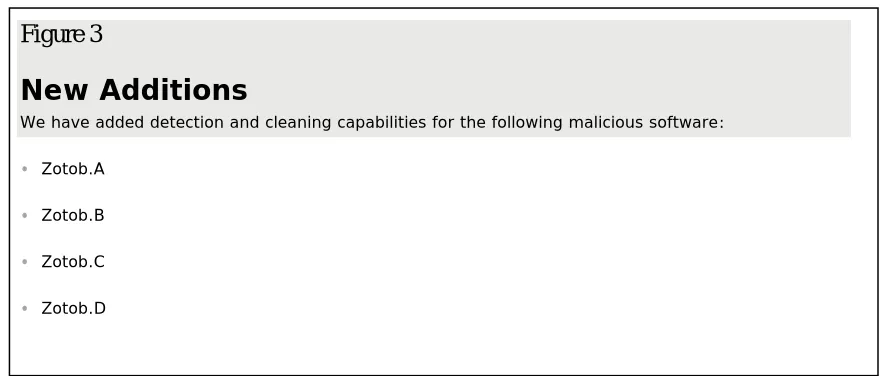
Figure 3 MS Historical Worm Infections 268
Figure 4 MS Zolob Worm Glossary of Terms 268
Figure 5 MS Zolob Worm Links 269
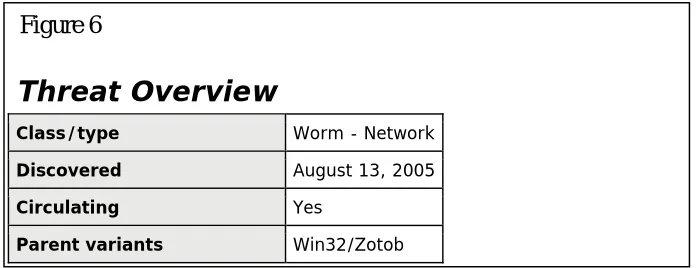
Figure 6 MS Zolob Threat Overview 269
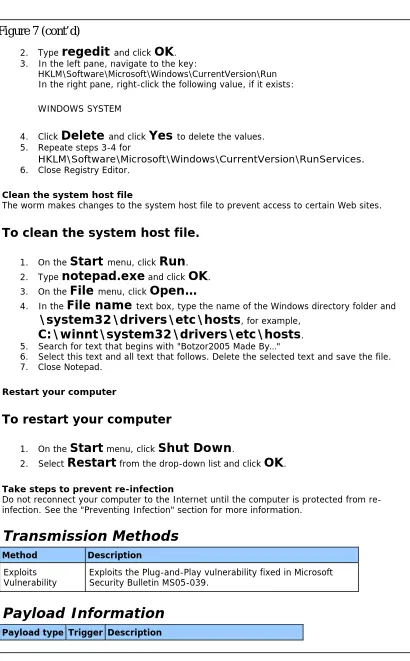
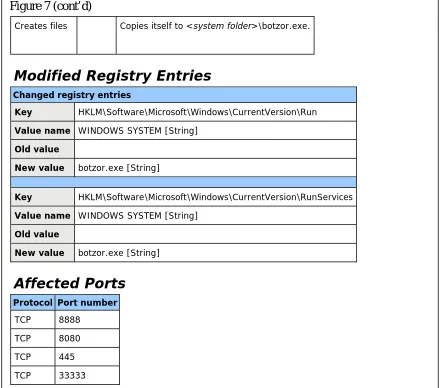
Figure 7 MS Virus Information 270
Figure 8 MS Contextual Crisis Statements 274
Figure 9 MS Contextual Crisis Statements 275
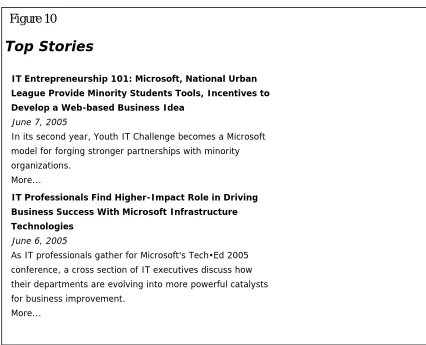
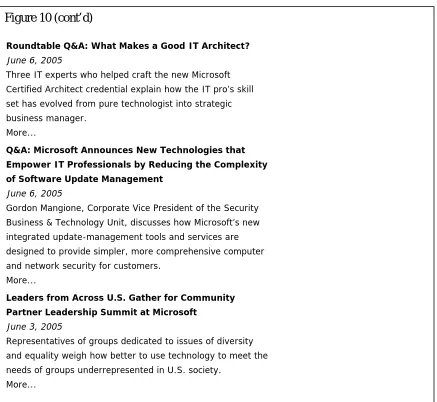
Figure 10 MS Newsroom Briefs 276
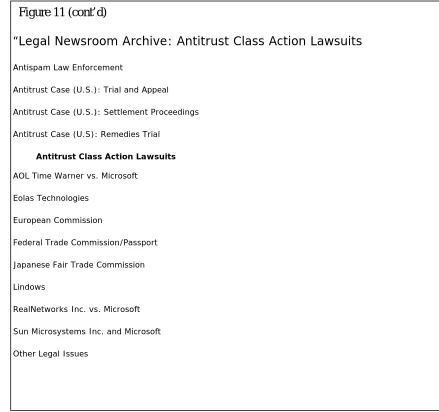
Figure 11 MS Crisis and Legal Pages 277
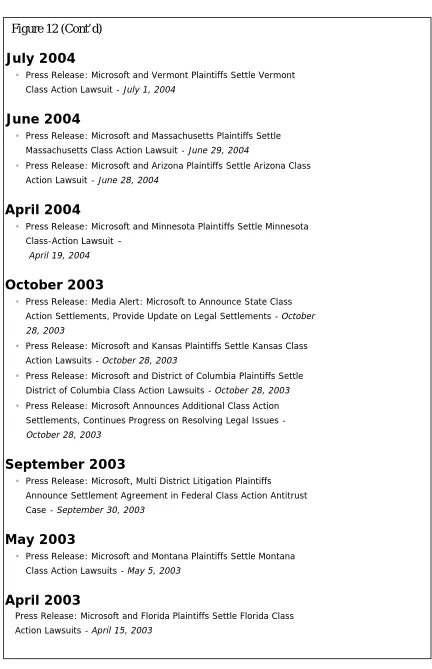
Figure 12 MS Legal Media Releases 278
Figure 13 MS Homepage 280
Figure 14 MS Legal Cases 281
Figure 15 Shell Oil Crisis Example 287
Figure 16 Shell Oil Crisis Example 291
Figure 17 Shell Oil Contextual Crisis Sites 295
Figure 18 Cobb School System Crisis Site 302
Figure 19 MDJ Response 309
Figure 20 MDJ Letter on Cobb School System Crisis 311
Figures
Figure # Issue Page #
1 Organizational Discourse Communities 182
2 Crisis Plan Development 198
3 Examination of Media Stakeholders 222
CHAPTER I: DISSERTATION OBJECTIVES, RESEARCH QUESTIONS& METHODOLOGY
_____________________________________________________________________
Lying in hammocks, we speak so solemnly of distant thunder, distant rain –Issa, translated by Sam Hamill
Statement of Concept
Research in the field of crisis management suggests that crisis planning has
the potential to reduce the incidence and the intensity of crisis. Crisis planning
strategies can be applicable to most organizations, including private companies,
non-profits, and higher educational institutions. Crisis planning methodology includes:
a. Specialized messaging to multiple stakeholders;
b. Communications strategies involving the discourse community;
c. Crisis forecasting and crisis prevention strategies;
d. Formation of crisis management teams;
e. Vertical and horizontal organizational strategy, including the relative
positioning and influence of the chief communications officer;
f. Use of the Internet in crisis communication and crisis management.
The greatest barrier to these strategies seems to be the unwillingness of
management executives to, first, recognize the new information landscape that has
created a business environment increasing the frequency and intensity of crisis; and,
second, to devote time, energy, and money in the task of crisis planning.
In today’s volatile business environment, the failure to make this investment is
financial base, its reputation, its production, or other important areas of activity. The
following are specific objectives I hope to accomplish in this dissertation:
• Dissertation Objective 1: Description of the Field of Crisis Management: It is
my intention to describe the history of crisis management and its relative position
within more understood areas of management, media, and organizational dynamics.
This part of the dissertation will show the context in which crisis management and
crisis communication are affected by communications, journalism, marketing,
rhetoric, public relations, and other fields of study.
• Dissertation Objective 2: Crisis Management and Crisis Communication
Strategy. An organizational crisis management plan has several features that
transcend the size or the type of organization, number of employees, number
of divisions, or the volume of sales. This section of the dissertation will
include a discussion of short-term and long-term messaging strategies, the
implementation of structural functions such as crisis management teams and
crisis assessment functions, and a proactive management plan for vulnerability
analysis and improving relationships with stakeholders. Additionally, this
section will suggest a relationship between an organization’s discourse
community and its ability to deal with crises. In this context, the dissertation
will offer vertical and horizontal communication strategies that have both
will also suggest concepts of crisis-media and crisis management plans
consistent with currently accepted research.
• Dissertation Objective 3: Use of Web as a Delivery Platform for Long-
and Short-term Crisis Management Strategy: Many organizations,
especially large technological corporations, are routinely using the Internet as
a primary method of communication in crisis strategies. As part of this
dissertation, I intend to show examples of the employment of the Internet for
crisis management and offer a conceptual strategy for using the Internet as a
delivery platform in various organizations.
Research questions
The following questions are relevant to this discussion.
1. By definition, what is a crisis?
2. What are some existing strategies for organizational crisis management?
What might be considered as an alternative or alternatives for these strategies?
3. How can technology play a role in crisis management and communication?
4. What are some existing strategies for communication during the various
stages of crisis?
5. In crisis management, what type of planning should organizations administer
when things are running smoothly and no crisis exists?
6. What is a crisis management team (CMT)? Who should be on the team?
7. What type of organization can benefit from crisis preparation? Is crisis
planning restrictive to large organizations?
8. Can crises be forecasted?
9. What are current crisis communication strategies to multiple publics that
recognize increased access to organizations because of intensified media
scrutiny, access via the Internet, and other information platforms?
10.What is the influence of communication within the hierarchy of an
organization?
11.What are examples of communication issues within an organization in the
context of current technology?
12.What role does communication play in the culture of an organization and how
does the culture of an organization influence the potential for a crisis?
(Organizational culture in this sense reflects both the internal and external
discourse communities).
13.What role does the communication officer play in the overall context of an
organization and in crisis management?
14.Is there a role for the Web in crisis management?
15.When a crisis occurs, how can the damage be mitigated or minimized?
Methodology
The qualitative methodology I will use to develop responses and conclusions
1. Case study analysis. Many case studies examine issues of crisis
management. My objective is to review a spectrum of case study work to
show how organizations handle crisis management.
2. Literature review. Using selected key words noted in this proposal, I will
review a variety of books and scholarly journal articles with the intent to
evaluate current academic thought on communication policy and crisis
management.
3. Empirical research reviews. There are a number of empirical studies by
scholars on a variety of subjects involving crisis management,
organizational dynamics, crisis communication, and using the Internet as a
crisis management platform. I will use these studies in my examination of
the subject matter. Also, as part of my PhD course work, I have
conducted one empirical research project on the subject of crisis
communication policy and organizational dynamics. In my research, I
sent survey forms to corporate leaders, higher education institution chief
communication officers, and journalists seeking information from them on
their use or potential use of the Web as a delivery or inquiry platform for
crisis information. I intend to glean information from this project and to
use other empirical research projects as necessary and appropriate.
4. Personal Interviews. I intend to use a study included as part of my
research involving personal interviews with several individuals in the
journalists who write for various publications in Atlanta and the region.
Portions of these interviews are included in the Appendices.
Summary
Planning for crisis presents two interrelated opportunities for organizations of
all kinds. First, an organization that develops strategic plans for crisis does a better
job of handling crisis events when they occur. This increased efficiency often offers
the potential of reducing the duration of a crisis, the overall financial impact, and the
potential reputational damage to the organization.
Second, by planning for crisis, research shows, organizations become more
efficient in their overall operations. Vulnerability analysis, examination of
stakeholder messaging, and a dedication to the development of critical relationships
represent a proactive approach to crisis planning, but these strategies also make an
organization more competent in production, communication, and administration.
This dissertation presents more questions than answers, with much research
remaining to be performed. When the hypothesis essentially takes the position that
we will look at predictive strategies for events that may or may not happen using
experimental methodologies, then conclusions are at best tenuous.
Having said this, it is my hope that by presenting a variety of scholarly
conclusions and bringing into the discussion accepted best practices in organizational
dynamics, media and public relations, advertising, and other disciplines, I make a
CHAPTER II: CRISIS MANAGEMENT IN CONTEXT
_____________________________________________________________________
Part I: Modern Definition of Crisis
Definitions of crisis are plentiful in the scholarly descriptions of
organizational management. “Crises arise when there is a major incongruence
between the expectation of a corporation and what happens in the environment”
(Egelhoff and Sen 443). Pearson and Clair defined crisis as, “Highly ambiguous
events that necessitate a decision or judgment that will result in change for better or
worse” (60). Fink defined crisis as, “A situation that has reached a critical phase. A
crisis is an unstable time or state of affairs in which a decisive change is impending—
either one with the distinct possibility of a highly undesirable outcome or one with the
distinct possibility of a highly desirable and extremely positive outcome” (15).
Burnett concluded that a crisis is composed of, “A continuum, beginning with an
incident, followed by a conflict, and ending with a crisis, the most serious form of
disruption” (476). Shrivastava and Mitroff wrote, “Crises are caused by the
simultaneous interaction of failures inside corporations and in their environments
“(1987 6). Penrose wrote, “A crisis occurs when an event increases in intensity, falls
under close scrutiny of the news media or government, interferes with normal
business operations, devalues a positive public image, and has an adverse effect on a
business’s bottom line” (156).
Shrivastava, Mitroff, Miller, and Miglani’s definition provided a more
“Crises are caused by two interacting sets of failures. Inside
organizations, a complex set of Human, Organizational, and
Technological (HOT) factors lead to the triggering event. These in
turn, interact with Regulatory, Infrastructural, and Preparedness (RIP)
failures in the organizations’ environments. Human factors include
operator and managerial errors, purposive acts such as sabotage and
terrorist attacks or acts of war. Organizational factors include policy
failures, inadequate resource allocations for safety, strategic pressures
that allow managers to overlook hazardous practices and conditions,
communication failures, misperceptions of the extent and nature of
hazards, inadequate emergency plans, and cost pressures which curtail
safety (Miller and Freisen, 1980; Miller and Freisen, 1984; Turner,
1978). Technological systemic factors include faulty design, defective
equipment, contaminated or defective materials and supplies, and
faulty technical procedures (Perrow, 1984). Crises may also be
triggered by acts of nature such as floods, earthquakes, lightning,
tornadoes, etc.” (1988 290).
A common theme in these definitions is that a crisis is not an event; rather it
results from an event. “The word crisis evolved from the Greek word “krisis”
indicating a “turning-point of a disease” (Millar & Heath 153). This early definition
serves as a basis for concepts in modern day organization crisis management.
The crisis may result from a hurricane, a legal scandal, an accounting
combination of incidents that might affect an organization. Sometimes the event is
known only to employees of an organization, and if contained, is invisible to
outsiders, perhaps even to stakeholders such as stockholders, trustees, or board
members. If not contained by actions of management, or if circumstances out of the
control of management escalate a crisis event out of obscurity, it can become evident
to individuals or groups that are not stakeholders, or in worse cases, the entire world.
On the other hand, some crisis events are immediately known as catastrophic
to even the casual observer. Clearly, crisis management takes a different form in
these circumstances. When these types of events occur, outsiders often judge the
handling and messaging aspects differently than those caused by man.
A number of scholars point to varying perceptions of organizations
undergoing crisis based on their reputations, both human and corporate. Sympathy by
the public or other stakeholders can become a significant factor. Even the handling of
past crises weigh in on public perception and whether the crisis is a blip on the map
or earthshaking. Coombs (2004) wrote, “Specifically, SCCT [Situational Crisis
Communication Theory] suggests that the information about past crises can shape
perceptions of the current crisis, the reputational threat presented by the current crisis,
and, hence, should guide the optimal communication responses for protecting the
organizational reputation (Coombs & Holladay, 2002)” (266). He concluded,
“Results showed a direct, negative relationship between crisis history and
organizational reputation” (284). In other words, if an organization has one crisis, the
next one that occurs with a similar theme will be more negatively received than the
A second commonality in the examination of crises is that a crisis event by its
very nature is unpredictable. Seeger refers to organizational crisis as, “Specific,
unexpected and non-routine” (332), and, agreeing with Sellnow et al, “Making
accurate predictions about the risk associated with a crisis, particularly when systems
are behaving in chaotic ways, may simply be impossible.” (332). I interpret Seeger’s
discussion of crisis planning to be that crises approach so suddenly that the
possibility exists planning will only worsen a situation because management may take
a predetermined programmed course of action, perhaps steering the organization
directly into conflict instead of avoiding it (329-337). Seeger’s “Chaos Theory” of
crisis management emphasizes the lack of predictability in system behavior,
unexpected and non-linear interactions between components, suggesting that a crisis
not only is a function of the organization’s discourse community, but also dependent
upon other factors such as reputation, prior behavior and the commonality and
community of the organization (329-337).
Crisis is often defined by the type and intensity of an event. We can discuss
human failings, technological breakdowns, non-human errors and acts of God, or
levels of crises based on the level of scrutiny. When government regulators or the
media are involved, the stakes usually go up. When stakeholders are involved,
likewise the issues become larger.
Thus, scholars and practitioners characterize crises in many ways, often with
the definition emanating from personal perspective, the causal elements of crisis, or a
valid ideas from a number of scholars, concentrates on a defining event with
subsequent phases of decision-making and a period of action.
A crisis is a critical period following an event that might negatively
affect an organization in which decisions have to be made that will
affect the bottom line of an organization. It is a time of exploration
requiring rapid processing of information and decisive action to
attempt to minimize harm to the organization and to make the most of
a potentially damaging situation.
This definition is in keeping with Egelhoff and Sen that an event is described
as being something out of the ordinary. It also resembles Penrose’s, Pearson and
Clair’s, and Fink’s definition in emphasizing the need for decisionmaking within a
window of opportunity. Likewise, it implicitly observes that something has gone
wrong, perhaps a system failure within an organization—as noted by Shrivastava and
Mitroff. However, the collective reasoning of these and other scholars, resident in my
definition, is that an event has happened, decisions have to be made, and actions must
be taken.
Crisis Communication
If we accept the above definition of crisis as reasonable, then crisis
communication might be explained simply as the act of messaging during and after a
crisis event. That is not quite right; at least it does not encompass the wide range of
issues that confront administrators in a crisis management strategy. My research
management and that it is an ongoing, long-term process involving a range of
organizational dynamics and management functions. As Ogrizek and Guillery
reasoned, “Crisis management and crisis communication are very tightly interwoven.
In addition, the complex nature of a crisis process includes, to a certain extent,
corporate communication itself. As Joseph Scanlon (1975) quite rightly emphasizes:
‘Every crisis is also a crisis of information….Failure to control this crisis of
information results in failure to control the crisis’” (xi).
This reasoning is derived from several concepts that are often discussed in this
dissertation. First, from the perspective of the discourse community (See Appendix 4,
Key Words and Definitions, #11), it is well documented in anecdotal evidence that an
organization determined to be efficient and effective in its messaging fares better in
diminishing the incidence and the duration of crisis (Egelhoff and Sen 446, 448, 454,
463). This is clearly a function of the organization requiring planning, skill and
excellent communication methodology.
Second, research shows that the incidence and duration of crisis is lessened
when an organization has positive and productive prior relationships with important
stakeholders, “If organizations are going to be successful, they need to look beyond
just their stockholders and expand their critical relationships” (Ulmer 591). These
relationships are often established through a well-defined public relations plan with
specific objectives involving the establishment of strategic relationships, upon which
communication is a key element.
Finally, in full crisis mode in an organization, research shows that
acute crisis period, and is a significant critical factor in crisis planning. In effect,
while much of crisis planning is formula driven, reactive, and an extremely
ambiguous time for an organization, excellent communication helps the organization
meet crisis objectives, and poor communication makes the crisis more dangerous and
damaging to the organization.
The health and culture of an organization prior to the crisis event therefore
can relate to the financial situation, management, production orientation, or some
other function of organizational design. Wise examined the issues of corporate
culture, crisis communication, and crisis management, and concluded:
“Too many managers treat crisis communication plans as a simple and
singular solution to a crisis, and that other variables such as
communication culture—were better predictors of how well an
organizations manages a crisis…Throughout the prevailing
contemporary literature, attitudes place corporate culture as the main
factor in affecting crisis outcome” (Wise 463).
Wise notes, in discussing the work of Penrose, Rondeau & Wagar, Grunig,
Grunig & Dozier and others, that successful crisis planning involves examination and
action relating to organizational discourse, messaging, and communication. I
interpret this to mean that messaging is important in passing important information,
CHAPTER II: CRISIS MANAGEMENT IN CONTEXT
_____________________________________________________________________
Part II: Changes in the Information Landscape
Statistics are staggering relative to crisis in American corporate organizations,
“89% of responding Fortune 500 CEO’s agreed that ‘a crisis in business today is as
inevitable as death and taxes,’ but fully 50%...admitted that they do not have a
prepared crisis management plan,” (Fink 67). Fink also found, “Of those companies
that reported having had a crisis in the past, 42% still do not have any sort of crisis
management plan in the event another crisis hits…overall there was a general
consensus among all respondents that their companies are at least somewhat
vulnerable to the following types of crises: industrial accidents, environmental
problems, union problems/strikes, product recalls, investor relations, hostile
takeovers, proxy fights, rumors/media leaks, government regulatory problems, acts of
terrorism or embezzlement”(67, 68).
Researchers (Fink, Egelhoff & Sen, Penrose, and others) tend to examine big
business for data. Finding crisis case studies on AT&T, Microsoft, Exxon and other
huge multinationals is easy—and they have numerous crises. Likewise, the word
“crisis” conjures for most people images of natural disaster or financial scandals like
the collapse of the savings and loan industry. If you asked a local shop owner what
crises come to mind, he might suggest the bombing of the World Trade Center, the
December 2004 tsunami, and the war in Iraq. If you asked a local corporate
executive the same question, he might list the top corporate crises since the turn of the
antitrust litigation against Microsoft, if he could remember that far back. What then
would the average American say was the most important religious crisis in the past
few years, sports crisis, political crisis, environmental crisis?
Unless you were directly affected, few would mention the warehouse fire at
the Acworth, Georgia, Tip Top Sock Manufacturing Company in 1990, or the e-coli
contamination at White Water Amusement Park in Marietta, Georgia in 1996, or the
shooting at the Kennesaw, Georgia Town Center Quality Inn in 2003. Most of us can
recall troublesome events in schools, corporations, universities, and non-profits over
the past dozen years that have caught the eye of the media (which is mostly why we
can remember them). However, most people do not tend to classify these events as
“crises.” They are “tragedies,” “accidents,” “scandals,” or any one of a dozen other
nouns denoting challenging times and events. Including those directly involved, few
would consider these events as being self-contained with a beginning, an end, and an
identifiable succession of events in the middle, even though they might be random
and chaotic to the casual observer. My conclusion, after reading Fink’s and other
researcher’s statistics is that we are a society in denial of crisis, mostly without an
understanding of crisis cause and effect.
Crisis events are the rule and not the exception of modern day communication
departments and executive organizational dynamics because of the changing
landscape of organizational dynamics and information delivery. Potential crises lie in
wait for every manager and every employee of every organization.
Recently I had the opportunity to be in Beijing and Nanchang PRC to present
were officials of the prefecture governments, some were managers in the Chinese
National government, a few were Communist party officials, and a few were business
executives, whose participation became available only very recently in China, once
solely a Communistic society.
This visit was instructive in my research not so much because these were
Chinese. The participants were highly educated public servants intent on performing
their jobs and being productive citizens, very much like their counterparts elsewhere
in the world. However, it was important to me to be able to introduce the concept of
crisis management to a set of individuals who admittedly had never before considered
the methodology of crisis as a discipline.
Of course, they had crisis events occur perhaps as often as executives in other
nations did. Like American executives, their posture was usually reactive and not
proactive. Notwithstanding the fact that the media is not nearly the formidable power
in China as in the West, the chain of events of crisis is the same, and in fact, the
public pressure for accountability is very similar. I presented the participants with a
set of inquiries concerning their own organizations. Then we set about to examine
their organizations from the perspective of crisis management.
The purpose of these exercises was not to seek empirical data, however; it was
instructive for me to observe the participants work through a progression of crisis
management case studies and to note the evolution of the executives’ thinking as the
training seminar advanced. In the initial stages, their thoughts were that because
media is extremely limited in the PRC, their organizations were mostly inoculated
As the Chinese put on the hats of a crisis management team, it became evident
that the practical application of crisis management examinations achieved results.
They relished the idea of plowing through the topics in their organizations to identify
priorities and seek solutions. After several case study exercises using their own
crises, their thought process became more systematic in approaching crisis prevention
and crisis mitigation.
For example, one Chinese executive was a director with the Bureau of Dams
in Nanchang. Nanchang is a large metropolitan city on the banks of the Gan Jiang
River with numerous lakes in the area, many formed by dams. Travel in and around
Nanchang will reveal a countryside with hundreds of rice paddies, fishing ponds and
recreational lakes, all the result of dams off tributaries to the river. The director of the
Bureau of Dams in Nanchang is a busy man.
This Director had many struggles with dam maintenance, especially since
most of the dams were earthen structures built decades and perhaps centuries ago. He
occasionally encountered dam breaks, sometimes with loss of life and property. In
our assessment, he addressed chain of authority during a dam break, notification of
family members, public response, emergency response, liaison to emergency
officials, liaison to non-emergency officials and more. He looked at types of dam
breaks given certain circumstances and response to government officials relative to
organizational responsibilities. He said that he and his staff had always dealt with
these issues. It was in fact their primary work assignment. However, they had never
systematically planned for crisis using a crisis management plan and a formula-driven
My interest here is not to comment on Chinese management techniques, rather
to suggest that the avoidance of commonly accepted crisis strategy seems to be
human nature, and not an ideological or cultural phenomenon. Executives apparently
chart their existence for production and profiteering, not planning for crisis.
Information Flow and the Media
Several persistent elements create the need for managers to better understand
and adopt principles of crisis. These include changing patterns and speed of
information flow, changing organizational dynamics, more volatile financial markets
caused by greater stakeholder access to information, and societal changes, including a
public that demands more information. All of these are related to the volume and
speed of information to which we are all accustomed and that are consistently present
in the modern work environment. Individually and collectively, these elements
require that modern managers adopt a different set of operating principles as
managers in the past.
Two thousand years ago, information dissemination was word of mouth.
Populations in different nations scarcely knew of each other, thus intercontinental
discourse was through trade excursions delivered by sailors and an occasional
participant in academic or business interaction. Two hundred years ago, it took days
to get information from New York to San Francisco by horse drawn mail wagons. A
hundred years ago it took hours, using telegraph, and even then the information was
not widely dispersed. Today the information flow is instantaneous and it
In the recent past, three networks determined what the public saw on the
evening news in a sixty-minute time slot. Now, the networks are often trying to catch
up with the cable networks when events happen—whether they are in New York or in
Baghdad. We traverse global news with our fingertips using the Web, on a hundred
cable channels, and through a dozen types of media hitting at us throughout the day.
What then characterizes a crisis? Is it simply what the media mass displays in our
various information platforms, or is it something more methodical, identifiable with a
systematic process and life cycle?
The current media adventures of Congressman Tom Delay come immediately
to mind. Delay is the Majority Leader of the United States House of Representatives
and is the whipping boy of the liberals and the poster child of the conservatives. No
matter what he says or does, he is the fodder of many types of media.
Delay is being tormented on a number of issues. Some would say he brings
the attention on himself by becoming embroiled in so many controversial political
issues and taking hard-line stands that even members of his own political party would
probably pass on. It is doubtful his transgressions are any more or less serious than
countless other politicians of the past 50 years. Yet societal changes, technology, and
instantaneous information flow will probably form enough “mass” to insure either his
fall from prominence or at least to diminish his importance in the political arena. He
may simply not be able to withstand the pressure from all the media sources.
These media-induced phenomena happen to people and organizations on a
daily basis. It happened to Senator Trent Lott in his quest to be Majority Leader of
Gingrich with his righteous incriminations of the left wing, while at the same time
participating in a marriage-ruining affair, and to Monica Lewinski-plagued President
Bill Clinton. It happened to Martha Stewart (see Chapter 2: Part 3), to Harvard
President Lawrence Summers with his statements on gender diversity, to Ken Lay,
the infamous President of Enron with his financial transgressions, to Supreme Court
justice nominee Robert Bork, on accusations of his right-wing leanings, and it is
happening as I write to Atlanta-Fulton County Sheriff Myron Freeman in the wake of
the tragic courthouse shootings in Atlanta, and it may have even happened to former
Iraq President Saddam Hussein in his downfall. It is an often-asked question as to
why Saddam was targeted by the U.S. government instead of a host of other despots
across the globe. Was he responsible for his own demise by creating so much
media-hype that he was the logical choice for extermination as opposed to the next dictator
down the road?
Executives must learn to contend with crisis events and the power of
information delivery platforms. Once the information platforms are moving and there
are stakeholders (antagonists or protagonists) willing to carry the cause, the
momentum is hard to stop and there are few places to hide. It is an age-old quandary
for public figures immensely sped up and significantly enhanced with modern day
information delivery. It is almost as if the story develops as much of a life as the
crisis itself for the “victim.”
Consider the case of Richard Jewell, the first accused perpetrator in the
Centennial Park bombing in the 1996 Atlanta Olympics. Later to be completely
attention for months. He lost his job, his family doubted his veracity, and his friends
deserted him as a zealot and a murderer. Yet the world media relentlessly hounded
him in the face of literally no evidence. This is the type of environment that is
created when there is virtually no accountability from journalists and their
“everything-to-gain-and nothing-to-lose-mentality.”
These may seem like entirely distinct issues from those involving the speed
and intensity of information patterns surrounding business or other organizations and
the media. They may also sound like an ethical issue important only from the
perspective of a journalist. In fact, my research shows that these new elements in the
modern workplace need to be considered and dealt with in crisis planning. The
interaction of the media and the speed of communication represent a paradigm in the
new information landscape that affects most organizations in their lifetime.
The importance of the array of information platforms and speed of
information flow in the modern world cannot be overstated in terms of the frequency
and the intensity of a crisis. Some might immediately consider journalistic and media
coverage as the single most important element that creates crisis events, but this is
only part of the story. Stakeholders and the public have instantaneous access now
where once they did not. Whether we are talking about acts-of-God-type crisis
events, financial corruption, corporate profit losses, or any other type of “crisis,”
people know about it immediately and they react. The time span between a crisis
event and the outside response may be considered as a window of opportunity.
attention. And when the world knows about it, there can be considerable
consequence, most of it bad.
I have had reporters dream up very inventive angles on even the most
mundane topics. For example, as the Chief Administrative Officer for the House of
Representatives, my office created a more efficient Website that allowed easier user
interface and more data flow to the public. Instead of accolades on increased
usability, reporters swamped my office asking who paid for it and how much it cost,
suggesting that the Website was politically motivated. The reality and opportunities
of a better Website was lost as reporters dreamed up titillating fodder for their articles
that would be a flash-in-the-pan column on government waste. The ultimate insult of
this instance was that I had greater access to and from the media in mind with the new
Website design and function. All the press could think about was political
expediency.
Accelerated information exchange and aggressive journalists necessitate
different approaches to management by people in the work environment. Crisis
events are the rule and not the exception of modern day communication departments
and executive organizational dynamics. Potential crises lay on the desk of every
manager and every employee of every organization in the nation. When a call from
the media comes on an issue concerning your organization (or you as an executive),
your employees or your organization, preparation is better than remediation—and it is
a prerequisite for crisis management. One way of preparing for a call is to know to
For example, as a VP of a university, I received a call from a reporter from
one of Atlanta’s weekly free newspapers called Creative Loafing concerning an issue
involving some litigation against the institution. The reporter threw me off guard
when he said he had known me in the past and that we had shared similar
experiences, including going to the same university.
Typically, I am very aware of what I say to reporters, especially those with
whom I have no apparent prior relationship. However, this reporter immediately
developed a friendly demeanor with me, and I felt that I could trust him. The result
was that I gave him information “off the record” that I felt would help him better
understand my on-the-record comments. After about an hour of interview, we
concluded the conversation. I momentarily felt a little queasy over the interview, but
again referred back to my instinct that the reporter was someone I could trust and
someone with whom I could be candid.
It was an erroneous assumption. In the next edition of Creative Loafing, the
reporter not only included my background comments, he used my casual tone against
me. I had been taken for a long ride with a reporter who knew how to get me to talk.
It was a bad mistake I was not to make again. Not only did we hurt our legal case,
our stakeholders were furious with me, and I was angry with myself for making such
a novice mistake. A prior relationship with this reporter would have better prepared
me, and reduced the chances of a damaging conversation.
Knowing the journalists who report on you and your organization is a
necessary strategy in crisis management and crisis communication. “It's vital for PR
company executives to develop these relationships. Once the executive is well
founded in dealing with the press and analysts, there is no such thing as off the
record.” (Marken 28).
Before dealing with reporters now, if I am not acquainted with them already, I
always perform a little background work. What is their style? Are they hostile to
their interviewees in newspaper copy? Do they have an ax to grind? Relationship
building with the media should be part of any crisis management plan. The plan
should incorporate strategic examination of publishers, reporters, writing styles and
previous behavior as well as tracking of successful and unsuccessful media
experiences. I have developed a sample media plan as part of this dissertation that
suggests methods of adapting to various types of journalists and media organizations
(Chapter III).
Hostile and aggressive reporters working for modern news outlets represent
the delivery platform for the changed media landscape in the modern day business
world. However, journalists and news delivery outlets do not perform their functions
in a vacuum. The public wants and even demands more information and there is an
ever-spiraling flow to and from journalists.
The implications of establishing a strategic media plan to address these issues
cannot be overstated. In my opinion, the desire to sell media is often more important
than the desire to produce quality reporting. Reporting has become forensic and
pervasive. Reporters who want to become the next Bob Woodward are frantic to
write exciting copy for print and broadcast media, and fight for every morsel of shelf
pique the public’s collective interest, journalists feel compelled to invent one. Berry
noted that some journalistic organizations denounce objectivity in reporting as “worse
than useless, even harmful” (15). He noted, “Other critics subscribe to Overholser’s
belief that objectivity ‘often produces a report bound in rigid orthodoxy, a deplorably
narrow product of conventional thinking,’ in which officialdom is given too much
legitimacy and the voices of others given too little” (15). However prominent this
viewpoint is, the consequence of such a mentality is, as Berry notes, “Devil-may-care
bloggers and the facts-be-damned TV cable shout fests” (15). Add newspaper and
other types of journalists to the list of potentially subjective journalists, and a climate
is created for media crisis in every organization.
Crises are not simply a matter of negative news media and aggressive
reporting. Fast moving and sometimes uncontrollable information flow can
erratically influence the financial balance of an organization. Stocks and financial
portfolios are volatile and reactive. It does not take long for stockholders, banks and
other ancillary financial organizations to become nervous when real or perceived
crisis events strike. If there is not a direct impact on the bottom line of the operation,
by the time the media, stockholders, or regulatory groups have gotten their hands on
it, the price of the stock will have taken a hit; law enforcement is on your front
doorstep; the public will be staying away from your store; or worse, Nightline is on
Historical Notes on Crisis
My research leads me to conclude that the crisis management discipline is
arguably thirty years old, give or take a few years. Its origin is linked to technology
enhancements relating not only to the ability of and the speed with which the
consumer and public receive information but also the effects of advanced technology
in the modern business environment. Seeger, Sellnow, and Ulmer noted,
“Technology introduces new variables and is often so tightly coupled that a change in
one part of a system can have unforeseen consequences in another” (50). Thus,
technology enhancements, while permanently integrated into the workplace, foster an
environment beset by an increased flow of information, and an organization
sometimes teetering on instability because of its intrinsic technology strength. Crisis
management became important with the confluence of increased communication
speed and volume, a society consumed with information technology, and a world
population seemingly captivated with scandal and crisis.
My research on the historical aspects of crisis indicated a rise in the incidence
and severity of crisis as information technology became more sophisticated. As the
speed of the flow of information increased, so did the issues of crisis management.
Each technological innovation added to the flow of communication, thus enhancing
the ability of the public to gather information and become part of the chain of events.
Organizational Context
What role does communication play in a crisis? In many instances, dealing
that organization at risk. It would seem that given the attention media gives crises,
recognizing the financial and other consequences that might occur because of a crisis,
managers would develop better planning processes. However, statistics show that
organizations are busy doing whatever they do and seldom consider the evils that
might befall them. Egelhoff and Sen wrote, “The incidence of corporate crises is
increasing at an alarming rate. A recent survey of 114 of the Fortune 1000 companies
found such large companies now face, on average 10 major crises per year” (Egelhoff
& Sen 443). Penrose reported that “About 40% of Fortune 1000 industrial companies
still do not have an operational crisis plan and that smaller, lesser-known companies
must heed the fact that 80% of companies without a comprehensive crisis plan vanish
within 2 years of suffering a major disaster” (Penrose 155). These are remarkable
statistics and should instigate self-analysis by all organizations.
The retirement of the manager of the local Macy’s store is probably not a
crisis to the public, but it is assuredly sets up an important strategic process for
corporate management. Decisions that followed would substantially influence the
profits of that particular store. My definition of crisis works well here. It is an event
requiring decisive action upon which much depends.
Was there a plan to allow an efficient transfer of power to a new manager?
Did he or she leave the store in good order? Was there a plan for media coverage of
the new President to grab a tiny little opportunity for a market advantage? Did the
departing President leave with good feelings? Was there a non-compete clause in his
contract? You never know when a competitor will hire this fellow and pit him
bring employees in on the selection process? Was one of them passed over creating
tension in the organization? Who wrote the copy for all of this? Who approved the
copy? These are all questions that an effective crisis management plan might address.
The absence of such a strategy, whether or not it is called a crisis plan, leaves
important considerations to chance. One of the most vital aspects of crisis planning is
the undertaking of a proactive set of actions with the intent of understanding and
itemizing potential non-routine situations. “Organizational responses to crisis are
most often designed to avoid liability, shift blame, diffuse responsibility, transcend
the crisis, bolster image, and, occasionally, to accept blame and compensate victims.
Organizations typically focus on getting beyond the crisis with as little cost and
disruption as possible” (Seeger, Sellnow, and Ulmer 50). Once the issues are
understood, resources may be devoted to mitigating them or in some cases completely
abating their potential to become a problem.
The Discourse Community: Communications with Stakeholders
Most organizations have a product or service to offer to someone, they have
people employed in some type of hierarchical structure, and they have a myriad of
stakeholders occupying multiple discourse communities. Within the organizational
framework of these organizations is a multitude of divisional structures, including
production, sales, human resources, support, and maintenance. Not only does each of
these organizations have a confined discourse community, but also each organization
exists within a much larger discourse community. The environmental specialists are
tied to the regulators, to the neighborhoods, and to the activist groups. Production
organizations, and educational institutions. Each of the individuals in an organization
represents a singular yet linked element of a larger group of individuals that
constantly converses with each other.
Because each person and each group of an organization is so intricately tied to
internal and external discourse communities, organizations should probe their
communication links and orchestrate links with each one. “Organizations cannot
evolve and sustain themselves without the support of their larger environments”
(Seeger, Sellnow & Ulmer 66). These are often complicated examinations that in
some organizations might well be considered an infringement of personal rights, for
example in academic institutions. Therefore, managers might well take special care
in preparing employees and other stakeholders for such a plan.
All stakeholders should be included in a strategic plan to communicate with
internal and external discourse communities. Who are the stakeholders of an
organization that belong to a discourse community? Coombs concluded,
Any person or group that has an interest, right, claim, or ownership in
an organization. Stakeholders have been separated into two distinct
groups: primary and secondary. Primary stakeholders are those people
or groups whose actions can be harmful or beneficial to an
organization. Failure to maintain a continuing interaction with a
primary stakeholder could result in the failure of the organization.
Typical primary stakeholders include employees, investors, customers,
suppliers, and the government. Secondary stakeholders or influencers
of an organization. Typical influencers include the media, activist
groups, and competitors. Influencers cannot stop an organization from
functioning but still can damage an organization (20).
The word crisis conjures for most people images of natural disasters or
financial scandals, like the collapse of the savings and loan industry. But all
organizations have issues confronting them that affect the bottom line and in which
the discourse community plays a role in success or failure of a crisis communication
strategy. Caillouet and Allen, in their empirical studies on employee interviews with
the media during a crisis, found that there is a tendency for employees to be frontline
communicators, and outside of the framework of strategic messaging.
“Denouncements, ingratiation and excuses are most likely to occur.
Justification, due to an employee’s need to protect his or her self image, is the most
likely strategy to occur” (215). Unfortunately, the authors also found that employee
personal experiences and perceptions often fall outside of the message desired by
management. Behavior such as this exists in every organization. Executives rarely
offer such flexibility to employees, especially in crisis, where, unwittingly, corporate
messaging can be easily undermined. A strategic plan would be specific in employee
expectations during a crisis plan. Not only would the plan serve the purpose of
identifying roles and responsibilities of managers and staff in an organization, it
would also put on the table reasons for personal accountability during times when
discretion is advised. No organization is too small for such consideration.
Egelhoff, analyzing earlier work by Quarantelli, found, “Certain
studies of disasters and from this he hypothesizes about the problem areas of
information flow during crises” (445). Noting research by Galbraith (1977), Egelhoff
concluded, “There is empirical evidence that organizations must organize to facilitate
information processing between appropriate interdependent subunits if they are to
succeed in implementing their strategies or coping with their environments” (448).
Marra found, “The underlying communication culture of an organization and the level
of autonomy or power of the public relations department within an organization can
easily prevent (or enhance) practitioners from implementing the best crisis
communication plan.” Further, he noted, “Some organizations encourage two-way
communication while others rarely or grudgingly disseminate information to its
relevant audiences.” He found agreement with Sriramesh and Grunig, “Culture
influences pubic relations by providing a broad base of worldview, meaning, and
values that affect all decisions in the organization, including the choice of a model of
public relations” (48).
Kennesaw State University (KSU) is a resident institution in the northern
suburbs of Atlanta, with a student population of around 18,000 and an employee
population of approximately 1,250. It was originally created as a commuter two year
college but local growth and local wealth combined to move the institution more into
the mainstream and into becoming a university with a large student and employee
population. When I was hired as AVP for External Affairs at the institution, the role
of chief communications officer and spokesperson went along with the job.
It was not long after my arrival that I sensed some problems at the university.
newspapers. I spent what seemed an excessive amount of time in court listening to
plaintiffs who were litigating against the institution. Many employees were unhappy
and constantly fussing with each other and administrators over what seemed like
frivolous issues. I attended a dinner event one evening when a local clinical
psychologist noted in passing the number of patients from KSU who needed
counseling on coping with work issues. My antennae were appropriately raised after
a month on the job.
In the following weeks, I spent time in interviews with my colleagues to find
out what was going on. A senior administrator and member of the cabinet declared to
me, “We have never been a team and we never will be.” Another said, “You work
hard here and nobody cares. You don’t work hard here and nobody cares.” Another
pointed fingers at top management as the source of the problem, “They don’t respond
to us or include us in their management process.” Still another pointed at a faculty
out of control, “They always seem to be out to get us.” My assessment was that the
staff felt valueless to management, and management felt the staff was disloyal.
In this organization, there were numerous what I call “gripe sessions” and
venues for complaints. There were town hall meetings that always resorted to gripes
about the minutiae of management. We had arbitration personnel, legal counsels for
racial/gender diversity mediation, for faculty or staff members that were just unhappy
with the work environment; we had students and faculty ombudsmen, and we had a
ladder that allowed complaints to rise to the top. In this process, staff were brought
another. All of these were referred to by staff as a place for future litigants to begin
their legal process.
Rather than deal with the debilitating relationship and discourse issues in the
organization, top management had institutionalized discord. Rather than face hard
decisions on where the real problems lay, the fix had come to roost on an unworkable
process, built on pointing a finger at others. Much of this had to do with a leadership
team seemingly incapable of creating an environment of trust and harmony, however;
the most pressing issue was a discourse community that had fallen into serious
disrepair. Rather than work on real solutions, management chose to deal with
abstractions that only further inflamed the problems. As a result, employees typically
felt undervalued and underutilized. Management felt isolated and persecuted. Media,
oversight groups and lawyers for the plaintiffs surrounded the campus like vultures
looking for scraps. This was, in effect, a crisis breeding ground. I was working at
Crisis University!
There are solutions to this type of situation, including an examination of the
discourse community for flaws and subsequently taking a strong management
approach to solutions. Because the President of the institution was seemingly intent
on not “rocking the boat” by taking hard stances, her solutions were seen as
unrealistic from both the internal or external members of the community. Meetings
with key stakeholders inevitably began with a discussion of the President’s tenure, a
discussion I was not interested in pursuing.
Three outcomes were almost guaranteed: first that employee-employer
employees of the institution were on the frontline vigorously maligning and defaming
administrators in a classic case of warrior mentality (see definitions in Appendix II);
and third, that stakeholders were invariably perceiving problems in management. We
had communication problems in all areas of our discourse community.
In keeping with the independent findings of Marra, Sriramesh, Grunig, and
others as noted on several occasions in this dissertation, lack of adequate information
processing between appropriate interdependent elements of the organization placed
the organization in jeopardy of stress and duress. Without the leadership of a skilled
administrator willing to take leadership stances and make hard decisions, it was
virtually impossible to get the organization on an even keel.
Fortunately, not all organizations have this degree of discord and dysfunction.
But all organizations do have multiple discourse communities that significantly
influence their ability to function efficiently and that are vital to the production
capacity. Organizations that have exemplary vertical and horizontal messaging
channels find ways of dealing with the difficult, crisis-producing issues and events in
an effective way. The converse of this is that organizations become cannibalistic.
Employees and management consume themselves with distrust and disloyalty,
questioning decisions by decisionmakers, making clandestine meetings with reporters
trying to set the record straight according to their own personal views, and they tend
to deal with the environment of dissonance rather than the issues themselves. As a
result, the crisis becomes lengthier, more divisive, and more influential to the health
My research shows that best practices methodology is dynamic due in part to
the fact that crisis management is a function of the flow of information, much of
which is discussed in this dissertation. With high-speed communication technology
scarcely a decade old, many organizations simply have not had time to develop
effective strategies that deal with crisis. When a strategy finally is developed, it can
be immediately obsolete as a different type or speed of communication has come
along. This is significant complexity in crisis management.
It is within this context that the subject matter of crisis management and crisis
communication is examined. An organization is comprised of humans, whose actions
or lack of action can solve, lessen, or increase the impact of a crisis. Much the same
as a human, an organization is alive with multiple opinions, skills, capabilities,
experiences, and knowledge. Guiding that organization on a path of safety in the
midst of a crisis event requires very human action. Each action has a reaction. Each
time a decision is made, the lives of both people and the organization are affected.
Knowing the right decision when the variables keep changing is a difficult and
perplexing proposition.
Are the complex issues of organizational management those only of modern
day managers? Of course not! As long as humans have been associating for the
purpose of commerce, issues of interdependency have challenged productivity.
However, combined with complexities involved with the modern
informational landscape, issues of organizational dynamics have been magnified.
When access to an from an organization was limited, managers were somewhat free
and move on with their business. Today, managers must contend with issues of
organizational dynamics and the informational landscape as they plan their business
strategies. It is within this context that crisis has become more prominent in the
CHAPTER II: CRISIS MANAGEMENT IN CONTEXT
_____________________________________________________________________
Part III: Crisis Communication in Context to Rhetoric
Introduction
My research for this dissertation has primarily involved an examination of
literature describing various methodologies of crisis management and crisis
communication. While these topics spanned a variety of disciplines in the areas of
business, communication, and human behavior, issues of classical rhetoric constantly
seemed to find their way into my writing and my thinking. Rhetoric indeed forms an
underlying principle of how people communicate with one another in the modern
world, in modern business situations, and in crises.
I am not the first researcher to consider the relationship between rhetoric and
contemporary communication issues. “I felt as though ancient rhetoric had a great
deal of plausible advice for contemporary communicators, be they technical writers,
or journalists, or politicians” (Pullman 1). Pullman, a professor at Georgia State
University, fumed over the lessening size of his classical rhetoric classes, perhaps
even considering the demise of ancient rhetoric (1). His writings and this dissertation
intersect, essentially in considering how and if rhetoric still applies to people in
modern communications.
Indeed, some scholars believe that crisis management processes create a new
organizational environment, one that is more efficient in many contexts. Seeger,
Sellnow, and Ulmer characterize the process as creating, “Fundamentally new