The nature of peer-‐feedback in a MOOC:
A Case Study
Denisse López Benavides
Doctoral Programme in E-‐Research and Technology Enhanced Learning
This thesis is submitted in partial fulfilment of the requirements for the
degree of Doctor of Philosophy.
Department of Educational Research,
The nature of peer-‐feedback in a MOOC: A Case Study
Denisse López Benavides
This thesis results entirely from my own work and has not been offered previously for any other degree or diploma.
The word count for this thesis excluding references is of 46,645 words.
Signature
Denisse López Benavides
The nature of peer-‐feedback in a MOOC: A Case Study
Doctor of Philosophy, March 2018
Abstract
The present research study aimed to describe the nature of peer-‐feedback in a Massive Open Online Course (MOOC) offered by a German University. The MOOC was team-‐based, it offered the support of different actors, and allowed learners to participate in two different roles: students or supporters. Considering participants’ diversity and voluntary participation in the MOOC, three aspects of feedback were explored: 1) the quantity and quality of feedback provided throughout the course; 2) the feedback provided by students and supporters; and 3) the feedback provided by females and males in their roles as students and supporters. For this purpose, the method of content analysis and a regression model with a Poisson distribution were employed.
Findings from the research study indicate a positive trend in the quantity of peer-‐ feedback provided throughout the course, a constant use of those types of feedback expected to support the formative function of assessment, and an alternate use in other types of feedback identified as quality feedback. A statistically significant difference could be established between both roles. Supporters used a set of types of feedback more often than students. Finally, although no statistically significant differences could be established between both genders, differences could be
Acknowledgements
The completion of this piece of work was possible thanks to the support and encouragement of different individuals. Firstly, I would like to acknowledge the professional guidance and always valuable feedback provided by my supervisors, Dr. Kyungmee Lee and Dr. Don Passey (TEL Programme Director). Also, I would like to thank Christian Friedrich and his team at the Leuphana Digital School for supporting me with all necessary information and data that made this study possible.
I am particularly grateful to my husband Lars and my son Finn, who have supported me unconditionally throughout my years of study. I am very fortunate to have them in my life.
I would like to express gratitude to my parents, who have always been there for me and who have followed with interest this journey, to my brothers and my parents-‐in-‐ law. I am especially grateful to my brother Mario, who supported and encouraged my research and thanks to whom I feel I have grown as a research scientist. Special thanks goes to Dr. Ibis Alvarez, who has been an example and inspiration for me and for my research. She has motivated me to initiate my academic journey and to keep on striving towards my goals. Finally, I would like to thank my fellow doctoral students from Cohort 7 and friends for supporting me along the way with their best wishes.
Thanks for all your encouragement! It is true that words cannot express how grateful I am for having had you around during my studies.
Contents
Abstract ... iii
Acknowledgements ... v
Contents... vi
List of Figures ... x
List of Appendix Figures ... xi
List of Tables ... xi
List of Appendix Tables ... xii
Chapter 1 Introduction ... 1
1.1 Problem statement ... 3
1.2 Purpose of the study ... 4
1.3 Research questions ... 4
1.4 Contributions of this study ... 6
1.5 Contextual background – “Managing the Arts: Marketing for Cultural Organizations”... 10
1.5.1 The assessment process in LDS’ MOOCs ... 11
Chapter 2 Literature Review... 17
2.1 An Introduction to MOOCs ... 17
2.2 Learning with and from MOOCs’ diversity ... 21
2.3 Peer-‐feedback as an assessment strategy ... 25
2.3.1 Functions and foundational elements of feedback ... 27
2.3.2 Perceptions regarding the value of peer-‐feedback ... 29
2.4.1 Learners’ attributes ... 32
2.4.2 Information attributes ... 37
2.5 Useful types of feedback... 39
2.5.1 Usefulness of feedback from an author’s perspective ... 42
2.5.2 Usefulness of feedback from a participant’s perspective ... 45
2.6 The semantic dimension of peer-‐feedback in a MOOC ... 48
2.7 Hypotheses and justification... 50
Chapter 3 Methodology ... 54
3.1 Research Design ... 54
3.2 Context ... 57
3.2.1 The course ... 57
3.2.2 Participants and sampling... 58
3.2.3 Data and ethical considerations ... 59
3.3 Analytical strategy – data gathering and analysis ... 60
3.4 Levels of analysis ... 68
3.4.1 First level of analysis (Phase 2) -‐ Identifying the nature of feedback in the MOOC ………68
3.4.2 Second level of analysis (Phase 3) -‐ Describing the evolution of feedback in terms of quantity and of quality ... 70
3.4.3 Third level of analysis (Phase 4) -‐ Differences in the use of feedback between students and supporters ... 70
3.4.4 Fourth level of analysis (Phase 5) -‐ Differences in the use of feedback between female and male participants in their respective role ... 71
3.5.1 First level of analysis: Identifying the nature of feedback in the MOOC ... 71
3.5.1.1 Inter-‐rater reliability process ... 78
3.5.2 Second level of analysis: Describing the evolution of feedback in terms of quantity and of quality ... 81
3.5.3 Third and fourth level of analysis: Reporting on differences in the use of feedback in relation to reviewers’ role and in relation to reviewers’ gender in their respective role ... 86
3.6 Critical reflection on the methodology and methods employed ... 88
Chapter 4 Findings ... 92
4.1 First level of analysis (Phase 2) -‐ Identifying the nature of feedback in the MOOC ……….92
4.2 Second level of analysis (Phase 3) -‐ Describing the evolution of feedback in terms of quantity and of quality ... 101
4.2.1 The evolution of peer-‐feedback in terms of quantity ... 102
4.2.1.1 Feedback functions... 104
4.2.1.2 Feedback aspects ... 107
4.2.2 The evolution of feedback in terms of quality ... 109
4.3 Third level of analysis (Phase 4) -‐ Differences in the use of feedback between students and supporters ... 123
4.4 Fourth level of analysis (Phase 5) -‐ Differences in the use of feedback between female and male participants in their respective role ... 129
Chapter 5 Discussion ... 142
5.1 Summary of results and interpretation ... 142
5.1.1 Description of the evolution of feedback in terms of quantity and quality .... 142
5.1.2.1 Limitations, practical implications and suggestions for future research ... 159
5.1.3 Differences in the use of feedback between female and male participants in their respective role ... 162
5.1.3.1 Limitations, practical implications and suggestions for future research ... 168
5.2 Conclusion ... 172
5.3 Study implications ... 177
References ... 179
Appendix One Supportive actors within LDS’ MOOCs ... 194
Appendix Two Descriptions and examples of original coding system... 195
Appendix Three Examples of the types of feedback used in the set of guidelines. ………197
Appendix Four Flow diagram created to support evaluators during the process of inter-‐rater reliability ... 199
Appendix Five Differences for feedback types. Student versus Supporter ... 200
Appendix Six Differences for feedback functions and aspects. Female versus Male ……… 201
Appendix Seven Differences for feedback functions and aspects. Gender within roles ………. 202
Appendix Eight Differences for feedback types -‐ cognitive function. Gender within roles ……… 203
Appendix Nine Differences for feedback types -‐ motivational function. Gender within roles ……… 204
Appendix Ten Differences for feedback types in aspects. Gender within roles 207
List of Figures
Figure 1.1 Assessment template for “Managing the Arts: Marketing for Cultural
Organisations”. ... 13
Figure 3.1 Phases of the present investigation. ... 57
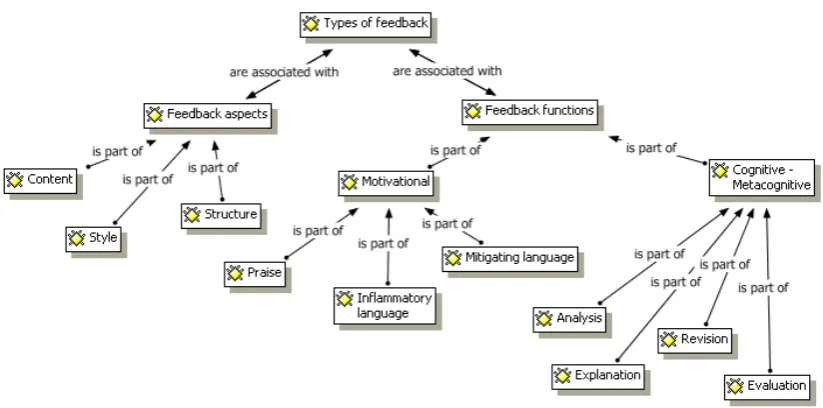
Figure 3.2 Coding system for the identification of types of feedback in a MOOC developed by López-‐Benavides (2015). ... 74
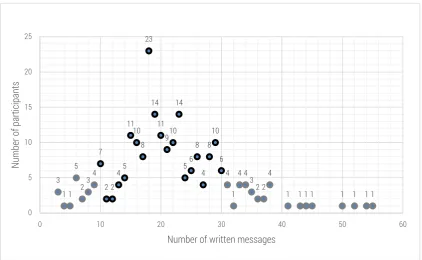
Figure 3.4 Number of messages distributed over the sample (n=235). Axis X displays the number of written messages and axis Y the number of participants writing the messages. The darker area represents the ranges of reference taken for the first part of the procedure described for the definition of the quality criterion. 84 Figure 4.1 Coding system for the identification of types of feedback in a MOOC. .... 93
Figure 4.2 Evolution of feedback per learning phase. ... 103
Figure 4.3 Feedback types within motivational function. ... 105
Figure 4.4 Feedback types within Cognitive Function. ... 107
Figure 4.5 Feedback types within Content aspects. ... 108
Figure 4.6 Feedback types within Presentation aspects. ... 109
Figure 4.7 Average frequency of use (LS means ± SEM) for feedback types per learning phase (n=235). ... 113
Figure 4.8 Average frequency of use (LS means ± SEM) for feedback functions and aspects in all phases -‐ Roles: Student and Supporter (n=235). ... 124
Figure 4.9 Average frequency of use (LS means ± SEM) for feedback types) in all phases -‐ Roles: Student versus Supporter. ... 126
Figure 4.10 Average frequency of use (LS means SEM) for feedback functions and aspects in all phases -‐ Gender: female and male (n=218). ... 132
Figure 4.12 Average frequency of use (LS means ± SEM) for feedback types in all
phases -‐ Gender in roles (n=218). ... 135
List of Appendix Figures
Appendix Figure 1 Flow diagram created to support evaluators during the process of inter-‐rater reliability ... 199List of Tables
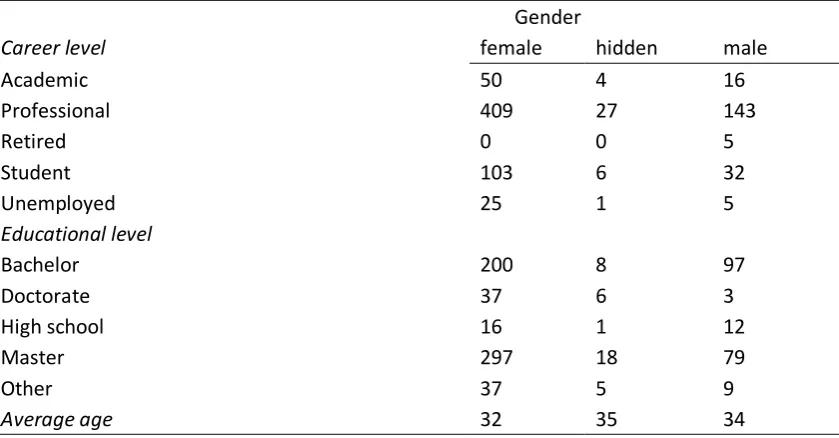
Table 1.1 Guiding criteria for evaluating peer-‐work: MOOC “Managing the Arts”. ... 14Table 3.1 MOOC participants’ demographic information (N = 824). ... 59
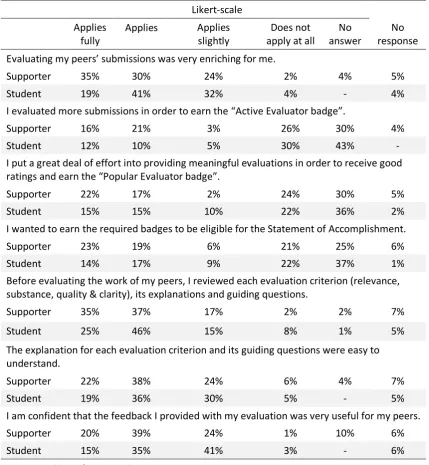
Table 3.2 Students’ answer to statement: The evaluations helped me and my team to improve our work in the following learning phases. (n= 190) ... 62
Table 3.3 Students’ answer to question: During which learning phase(s) did you receive the most useful evaluations? (n= 190) ... 62
Table 3.4 Questions and answers about feedback addressed to students and supporters. ... 63
Table 3.5 Data required for the first dataset. ... 64
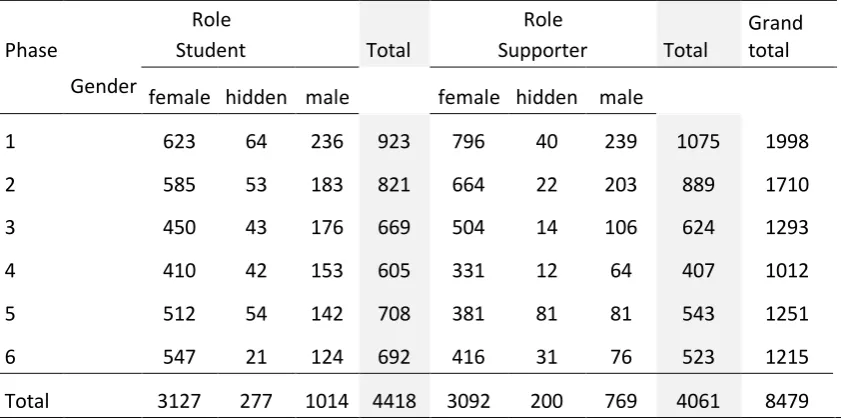
Table 3.6 Number of messages written during all learning phases (N=824). ... 66
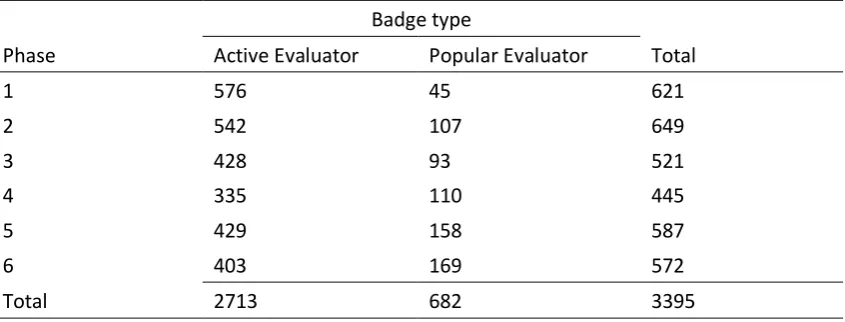
Table 3.7 Number of badges awarded during the course per learning phase. ... 67
Table 3.8 Number of messages written during all learning phases (n=235). ... 68
Table 3.9 Details on participants who met the quality criterion. ... 85
Table 4.1 Number of Thematic Units (TUs) per learning phase... 93
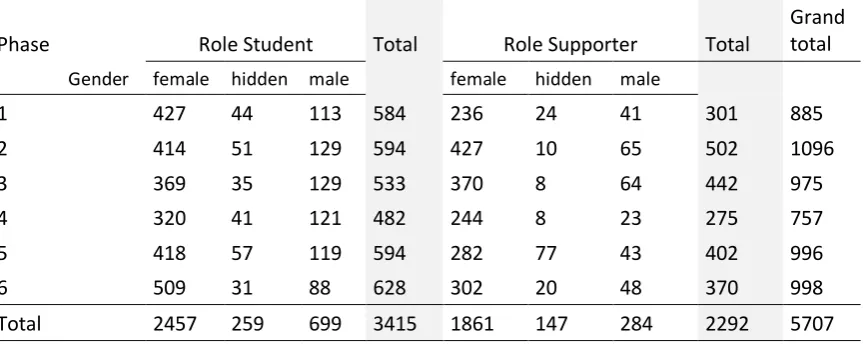
Table 4.2 Number of participants with gender and roles (n=235)... 102
Table 4.3 Frequency of use means for participants meeting the criterion of quality. ... 111
List of Appendix Tables
Appendix Table 1 Types of peer-‐feedback in a cMOOC -‐ Coding system (López-‐
Benavides, 2015)... 195
Appendix Table 2 Learning phases in the MOOC “Managing the Arts: Marketing for Cultural Organizations” ... Fehler! Textmarke nicht definiert.
Appendix Table 3 Differences for feedback functions and aspects Student versus Supporter ... Fehler! Textmarke nicht definiert.
Appendix Table 4 Differences for feedback types Student versus Supporter ... 200
Appendix Table 5 Differences for feedback functions and aspects. Female versus Male. ... 201
Appendix Table 6 Differences for feedback functions and aspects in gender within roles. ... 202
Appendix Table 7 Differences for feedback types -‐ cognitive function in gender within roles. ... 203
Appendix Table 8 Differences for feedback types -‐ motivational function in gender within roles. ... 204
Chapter 1
Introduction
Traditionally the educational process consists of a cycle of three steps: teach, learn, and assess (Frederiksen & Collins, 1989), the third step being a crucial one for further guiding instruction and verifying learning (Costello & Crane, 2013; Hattie &
Timperley, 2007; Suen, 2014; Topping, 1998). However, whilst the first two steps appear to be easily transferable across learning settings and to remain less affected, the third one can be seriously affected. An example of this may be seen in Massive Open Online Courses (MOOCs). The scale of these courses makes difficult the possibility of providing one-‐on-‐one feedback and support. In other words,
assessment has become a concern that instructional designers have addressed by introducing manifold assessment strategies of qualitative and quantitative nature. Peer-‐assessment/feedback is an example of the former, where learners from a same course are asked to assess each other’s work. In fact, peer-‐feedback has become one of the essential features of many MOOCs and some authors argue that this trend will continue in order to compensate the massive aspect of the courses (O’Toole, 2013; Pilli & Admiraal, 2017).
2) efficient in execution, without occupying much time;
3) limited in that each student rater [assessor] is asked to rate [assess] no more than a handful of other students’ assignments. (p. 4)
Nevertheless, considering participants’ diverse characteristics in a MOOC, the very first requirement appears difficult to meet. According to Popov et al. (2012), and Popov, Biemans, Kuznetsov and Mulder (2014), this diversity presumably implies different attitudes, behaviours and expectations towards the activities that are proposed in any course.
Up to now, the main focus of studies regarding assessment on MOOCs has been on quantitative approaches that aim at scaling peer-‐assessment (e.g. Balfour, 2013; Kulkarni, Bernstein, & Klemmer, 2015; Kulkarni et al., 2013; Piech, Chen, Koller, & Ng, 2013; Suen, 2014). Notwithstanding, studies with qualitative approaches are also found. These have focused on participants’ experiences and perceptions as
participants in their respective MOOCs but there has been a lack of studies that examined peer-‐feedback or assessment (e.g. Aharony & Bar-‐Ilan, 2016; Cho & Byun, 2017; Veletsianos, Collier, & Schneider, 2015; Zheng, Rosson, Shih, & Carroll, 2015).
As pointed out by various authors, many variables underpinning the intricacies of peer-‐assessment (e.g. gender, culture, learning styles, reception and use of
1.1 Problem statement
Despite the aforementioned concerns when employing peer-‐assessment/feedback strategies in MOOCs, little is known about what peer-‐feedback actually looks like in such courses. As Luo, Robinson and Park (2014) note, empirical approaches exploring peer-‐feedback in a MOOC in its different dimensions have yet to be undertaken. Thus, a research study investigating those characteristics of concern together with other variables, and a method for exploring peer-‐feedback’s actual content has never been more significant and necessary.
Currently, research studies on MOOCs appear to be limited to specific data collection and analysis methods, naming the increased use of quantitative, clickstream and observational data as an example of this (Veletsianos et al., 2015; Veletsianos & Shepherdson, 2016). However, as these authors point out qualitative approaches and a combination of methods are still required to understand learning and participation in open online learning environments. By doing so, findings can be triangulated, methods exploited, and phenomena analysed from different perspectives taking into account the context surrounding it. An over-‐reliance on computational methodologies may be misleading for those in charge of the techno-‐ pedagogical design of the online learning offers. Findings may not provide a
Due to the quick developments of MOOCs, researchers have searched for alternative and faster publication outlets than traditional academic journals. These outlets include conference proceedings and journals that issue special editions on MOOCs. It was there, in one of those outlets, that the study by Krogstie, Horgen and Hjeltnes (2015) was found. That study inquired into peer-‐feedback in a MOOC with the purpose of measuring peer-‐feedback quality in a qualitative way. Yet, the
characteristics of the environment and its participants were of no actual concern for using peer-‐feedback as an assessment strategy, as previously discussed.
1.2 Purpose of the study
The purpose of this study is to describe the nature of peer-‐feedback in a MOOC. To this aim, empirical evidence was gathered to explore: 1) the quantity and quality of peer-‐feedback provided throughout the course; 2) the feedback provided by
participants in their respective roles (as students or supporters); and 3) the feedback provided by female and male participants in their respective roles.
1.3 Research questions
Three research questions were formulated to address the purpose of the study. These resulted after having recognised important gaps in the MOOC literature and from having access to field data of a specific course.
1. How does feedback evolve over time in terms of quantity and quality?
3. How does the nature of feedback differ between female and male participants in their respective roles as students or supporters?
This research study employs a couple of terms that are presented below to better understand the context of the research questions.
1. Assessment: “the process of evidencing and evaluating the extent to which a candidate has met or made progress towards the assessment criteria” (Busuttil-‐Reynaud & Winkley, 2006, p. 12), whereby the emphasis is placed on the product and outcome rather than the process (Topping & Ehly, 1998).
2. Feedback: “qualitative information about their [learners’] performance given to students after an assessment” (Busuttil-‐Reynaud & Winkley, 2006, p. 51).
3. Participants’ roles: The MOOC enabled two ways of participation.
-‐ Students1: aimed at obtaining a university certificate that represents 5 ECTS (European Credit Transfer System). Within their role, a set of requirements needed to be fulfilled. These are explained in sub-‐ section 1.5.
-‐ Supporters: were interested in the course and its progress, and could freely determine their degree of participation in it. Their
principal role was to support students and their groups to become better throughout the course.
1.4 Contributions of this study
This study presents a type of MOOC that emphasized on peer-‐to-‐peer and mentored project-‐based learning by using a case-‐study method as the over-‐arching type of task. MOOCs of this type are scarcely found in the literature, thus of interest for practitioners who seek alternative perspectives of course design that can help enrich the current MOOC didactical landscape. Besides a rich variety of didactical elements that are included in the design of the analysed course to support teaching and learning, a great value has been placed on assessment. Scaffolding elements that make up for the scale of the courses have been included and peer-‐feedback is an example of this. Peer-‐feedback as an assessment and learning strategy –although not new– has become commonly employed in manifold learning contexts. However, its use has been thought to fulfil logistical functions over formative ones, and this can be seen in the pedagogical design of the courses. The increasing number of MOOCs and the greater demand for inclusion of peer-‐feedback in their pedagogical design of MOOCs, justify the need of exploring its content by taking into account participants’ characteristics. Different groups of persons can benefit from this study:
feedback in their pedagogical concepts, the results of this study will be valuable for comparing, reflecting on and evaluating the pedagogical design of their courses.
Instructional designers who are conceiving a MOOC for the first time can greatly benefit from the present study. By acknowledging the many variables involved in the provision of peer-‐feedback, they can carefully focus on the elements they consider that can better support the provision of feedback and plan specific moments in the learning phases when these can be introduced. Instructional designers with
experience in the conception, design and implementation of MOOCs can benefit from this study in mainly two ways. First, by employing the derived instrument of this study. They can analyse, evaluate and reflect on the nature of feedback in their courses, and so be able to review and adapt aspects of the course’s pedagogical design (e.g. assessment criteria, learning tasks). Second, by considering the practical recommendations herein presented they can create learning experiences that can be considered more meaningful to the course participants and that can motivate them to engage in the proposed activities.
Researchers of higher education and online education will benefit from the empirical data provided in this study, the derived instrument, the practical
New researchers can benefit from the different chapters of this study by using them as a guide for their own research topics.
MOOC participants who show an interest in the dynamics of such a course, can gain an understanding of the development of peer-‐feedback in a MOOC. Moreover, findings can help them self-‐evaluate their readiness for or commitment to
undertaking such an activity in the future. Additionally, they can identify the types of feedback that they employ or that can be employed to support the formative
purpose of feedback.
Participants who are new to MOOCs and who are confronted with a course in which peer-‐feedback is proposed or demanded can understand the purpose of this learning strategy as well as the requirements that it poses. This way they can better prepare for their role and input (if they can choose).
Finally, besides contributing to the previous groups, the group of developers of the tool for qualitative analysis that was employed for this study benefited as well. Based on the particular way of coding undertaken by the researcher during content
analysis, developers had a case from which they could further enhance the product.
participation), in this course an effort has been made to integrate all three steps of the educational process’ cycle: teach, learn and assess, and make sure each step is addressed properly.
The following section provides detailed information about the studied case that is crucial for making sense of the different chapters in this document.
1.5 Contextual background – “Managing the Arts: Marketing for Cultural Organizations”
Leuphana Digital School (LDS) is a sub-‐division of the Leuphana University of Lüneburg in Germany that has been in charge of developing online education formats for global learners since its establishment in 2012. LDS’ offerings include Massive Open Online Courses (MOOCs) as a way of reaching out to diverse cultures; creating a name; experimenting with innovative concepts in online teaching and lastly, building a profile and collecting experience for future offerings, i.e.
programmes. With the idea of further developing MOOCs, LDS created the concept of Mentored Open Online Courses. Just like most of the MOOCs, this type aims at contributing to “open up education and provide free access to university level education for as many students as possible” (Yuan & Powell, 2013, p.6). The design of LDS MOOCs draw on sociocultural approaches to learning (Eun, 2010). They are built on the concepts of peer-‐learning and problem-‐based learning, where
cooperation in small groups up to a maximum of five persons is required, so as to allow for scaffolding by different supporting actors. One of these actors is the mentor, from which the courses receive the name. This actor provides guidance, support and encouragement to participants in all content-‐related matters. See Appendix One for more details on all supportive actors.
The courses run in English and consist of consecutive learning phases and
of participants. However, as a means to meet the expectations of the ‘massive’ aspect from a MOOC, the courses allow two ways of participation: as a student and as a supporter.
Whilst students are required to participate actively in the course by completing all assignments successfully in a group, supporters do not need to fulfil any such requirement.
However, both types of participants enrol in the course for learning’s sake
(Veletsianos, 2013), and so are willing to help create and sustain a learning community where support is offered to each other and where collaboration is an essential element (Lewis & Allan, 2004). This commitment is based on the learning benefits that they find in the different possibilities of interaction present in the environment (Wenger, McDermott, & Snyder, 2002). Both students and supporters have access to all the learning materials, assignment descriptions, discussion forums, and the assignments submitted by the groups in each of the learning phases. They also may establish contact with anyone in the learning community at any time.
During the learning phases students in their groups are encouraged to share drafts of their assignments with the learning community so as to benefit from their comments before handing in their final submissions.
1.5.1 The assessment process in LDS’ MOOCs
community and are ready to undergo the process of assessment. The products are assessed in two forms: formally and informally.
Whilst mentors are responsible for the first form of assessment and only their evaluation counts towards the final grade of the students, the second form of assessment is voluntary and can be undertaken by anyone participating in the course. It is the latter form of assessment, namely the one of peers, which is the focus of the present study and that will be examined.
In a learning community participants progressively create a common sense of responsibility, a safe environment, and they reach a certain degree of dependence (Charalambos, Michalinos, & Chamberlain, 2004). However, this does not guarantee that participants will assume more responsibilities than those to which they signed up for. In other words, participants must not assess the work of their peers and provide them with feedback if not wished. For this reason, mechanisms that
motivate participants to get involved in the process of voluntary assessment, as well as benefiting from being involved in it, have been initiated. LDS’ courses have
introduced two types of rewards: badges of two types and a Statement of Accomplishment. These are explained at the end of this section.
Unlike other MOOCs that rely only on peer-‐feedback mechanisms as a way of
algorithm created for the latter ensures that there is an equal number of reviewers for each group. Apart from the suggestions received, everyone is free to assess any group of their preference and as many as they wish.
A single template generated by the learning platform is used for both forms of assessment. (see Figure 1.1).
[image:25.595.146.397.257.519.2]
Figure 1.1 Assessment template for “Managing the Arts: Marketing for Cultural Organisations”.
Three evaluation criteria were used in the course: Relevance, Substance, and Clarity
and coherence. Whilst mentors used further criteria and specifically designed rubrics
(mentors and participants) were allowed a maximum of 1000 characters for writing their feedback for each criterion. Moreover, they could add a title to their feedback using up to 255 characters. Finally, they could score the work of the groups using a ruler with values between 1 and 10.
Table 1.1 Guiding criteria for evaluating peer-‐work: MOOC “Managing the Arts”.
Relevance • Did the team properly address the tasks at hand?
• Are all claims backed with sound argument? Does the
submission present valid, well-‐grounded insights?
• Are the conclusions drawn grounded in data and/or
theory? Are subjective opinions clearly discernible as
such?
• Are positions/statements that conflict with the team’s
position/thesis considered and properly addressed?
Substance • Did the team allow for frameworks that foster the co-‐ existence of multiple sources, materials and claims? • How deeply did the team penetrate the material to
answer questions and solve problems?
• Are arguments built upon valid deductions, salient examples and/or theoretical frameworks?
• Is reference made to academic or other appropriate
sources or positions in the broader discourse (also:
Clarity & coherence
• Does the submission show internal coherence?
• Is the argument structured in a clear and concise
manner?
• Can an outside reader understand the submission,
being unfamiliar with the team and its communication
habits?
• Are there any elements in the problem’s context left
out without adequate justification?
• Is the process of creating a coherent answer made
visible?
Formal and informal assessments –namely the feedback provided as well as the authors’ name (as used in their profile)– are made visible to everyone in the learning community and remain so until the completion of the course.
All participants involved in the assessment process may be rewarded with badges and a Statement of Accomplishment, representing symbolic recognitions for the effort and time invested during the course. When assessing the works, two types of badges acknowledging the quantity and quality of the feedback provided are
four or five stars are awarded with this type of badge. The Statement of
Accomplishment may be earned only after having obtained six Active Evaluator badges and three Popular Evaluator badges.
Chapter 2
Literature Review
The essential expectation underpinning this study is that any MOOC participant who has worked on solving a similar task under the same conditions as other participants is thought to be capable of offering feedback to her or his peers, regardless of their gender. However, sociocultural factors and personal skilfulness may play a key role regarding the nature of feedback provided and more importantly, the way feedback is perceived by the students receiving it. Based on this, this chapter is divided into seven sections. The first section aims at presenting MOOC features and the implications these bring to its participants. The second section discusses MOOCs’ cultural diversity from a sociocultural lens, highlighting the learning possibilities and limitations that are entailed by this diversity. In the following section peer-‐feedback as an assessment strategy is presented underlining its essential elements and functions. Subsequently, the conditions for fulfilling the formative function of
feedback are described. The fifth section focuses on feedback content and how it has been reported in the literature. The sixth section sets the stage for the present investigation that focuses on the exploration of the content of peer-‐feedback in a MOOC. Finally, the last section presents and justifies the hypotheses used for this study.
2.1 An Introduction to MOOCs
MOOCs have attracted the interest of hundreds of thousands of people around the world. However, they have been apparently benefiting mostly those who already enjoy or have enjoyed higher education (Christensen et al., 2013; Dillahunt, Wang, & Teasley, 2014; Emanuel, 2013; Liyanagunawardena, 2015; Liyanagunawardena, Williams, & Adams, 2013).
With the aim of creating a definition for MOOCs the European Commission –in one of their reports– listed a set of features underlying these courses. These features provide an indication of the implications of MOOCs (European Commission, 2014, p. 2):
• ‘Massive’ in the sense of no limit to attendance
• ‘Open’ in the sense that it can be accessed by anyone anywhere as long as they have an internet connection
• Free of charge (not including the certificate of completion)
• Online
• Structured around a set of learning goals in a defined area of study
• Executed according to a specific time frame and completion point
• Offers possibilities for interaction, such as social media channels, forums, blogs or RSS feeds that contribute to building a learning community
• Provides course materials such as videos, readings, and others, are provided free of charge by the course designers, teachers, facilitators or even students
themselves (cMOOCs)
These features indirectly set requirements for potential participants, which may range from technological to meta-‐cognitive aspects. Some of those features are discussed below.
In a current review on MOOCs Liyanagunawardena (2015) argues that these courses have indeed increased access to higher education, but have not broadened access. She suggests that those currently benefiting from these courses have better ‘access’ to MOOCs, have acquired adequate self-‐directed learning skills, wish to update their skills and continue their professional development, or are leisure learners.
Warschauer (2003) suggests that ‘access’ does not only imply having a technological device or a connection to the Internet, but that it comprises manifold factors such as “physical, digital, human and social resources, and relationships” (p. 6). Studies carried out by Fini (2009) and Kop, Fournier and Mak (2011) on MOOCs go in line with Warschauer’s claim and bring up the following additional factors to be considered under ‘access’: time available, command of the language in which the courses are delivered, ICT skills, confidence level at the course start, trust and comfort levels, power relations in the course, the use of tools and language, among others. It is evident that when potential participants are affected by any or a
environmental issues need to be considered. This author claims that the value that learners place on learning, on the investment they feel to be making for their own future –be it for refreshing skills; extending knowledge on areas that are already familiar or for entering new areas– directly reflects learners’ degree of autonomy.
This said, although the courses are open, free, online and most of them may not require previous knowledge on the topics treated, they indeed require an additional set of skills and knowledge that cannot be assumed from a wide population.
According to some studies (Daniel, 2012; Rodriguez, 2012; Yuan & Powell, 2013), the concept of MOOCs has been driven by two diverging pedagogical directions:
xMOOCs and cMOOCs. Whilst the former follows behaviourist approaches to learning with more individualistic learning, the latter place an emphasis on
connected, collaborative learning and has connectivism as the underlying learning theory. However, as courses rapidly developed, it became obvious that a binary classification was not useful nor characteristic, and that MOOC pedagogy needed to be seen at the “micro level of individual course design” (Bayne & Ross, 2014, p. 8). This observation had been already noted by Clark (2013) and later by Sanchez Gordon and Luján Mora (2014). The former acknowledged the differences in the existing MOOCs and attempted to offer a categorisation of them into eight –not-‐ mutually exclusive– types. The MOOC serving as the case study for this investigation has characteristics of four of the following types:
• madeMOOCs, are innovative in the use of video, are quality driven in the design of material and the design of challenging learning assignments, harness peer-‐ work and uses peer-‐assessment techniques;
• groupMOOCs, focus on collaboration in small groups and have mentors;
• connectivistMOOCs, rely on the connections across a network of peers
This study only focuses on one aspect of those features underlying MOOCs, namely: peer-‐assessment. The following sections help to develop an understanding of peer-‐ assessment in the context of MOOCs from different perspectives.
2.2 Learning with and from MOOCs’ diversity
Despite the various requirements that MOOCs posit on potential participants, these courses still take place and their main characteristic is participants’ cultural diversity (Suen, 2014). Besides differences in terms of age, gender, level of education and experience, the underpinning differences lie on language and culture. Popov et al. (2012) note that diversity in its different degrees is a reality that creates benefits but that also poses challenges for all actors involved in the learning process.
Whilst courses in other learning settings have a certain degree of homogeneity (e.g. assume learners to have a similar level of education and knowledge on specific topics), MOOCs welcome anyone that is interested in the topic offered (Liu et al., 2014), thus increasing this way its heterogeneity. Some authors referring particularly to online environments, including MOOCs, claim that the probability of
al., 2013; Mak, Williams, & Mackness, 2010; Reeder, Macfadyen, Roche, & Chase, 2004). Miscommunication is problematic as it can modify the function, meaning and interpretation of information that is exchanged among participants in a course, such as feedback. As Popov et al. (2014) note, miscommunication may emerge from different attitudes, styles of communication and behaviour patterns for acting and interacting, which are distinct in each culture. In fact, individuals are a result of the multiple realities of their cultures and according to Alfred (2002) this is what is brought into the classroom.
One of these realities regards the cultural expectations that are connected to sex categories (e.g. female, male) (Risman, 2004; West & Zimmermann, 1987) and hence gender. Gender is here understood as a “social system that restricts and encourages patterned behavior” (Risman & Davis, 2012, p.8). Thus, gender – assumed as a structure – discriminates possibilities and limitations in relation to a certain sex category (Risman, 2004).
In the context of education and specially in online learning, gender-‐based differences have attracted the interest of various researchers (e.g. Yukselturk & Bulut, 2009). Differences have been reported to be found in participation, contribution and interaction styles of female and male participants (Gunn & McSporran, 2003; Price, 2006; Yukselturk & Bulut, 2009), their language styles (Herring, 1993), and voices (Blum, 1999; Rovai, 2001), to name a few. However, the studies had characteristics in common that differed from the of the present study and that may give an
and online phases, the sizes of the classes were rather small, and participation was compulsory, the principal characteristic was that there were minimal cultural differences between the participants. If cultural expectations were said to be connected to both sex categories –as commented on previously– then it appears understandable that differences would emerge for each sex category. Some of the studies noted that access to and confidence with technology may have played an important role in the findings. Nevertheless, the contextual characteristics of a learning setting such as a MOOC can challenge findings from other traditional learning settings, and gender differences may be one of them.
Apparently, among the diversity of topics that have been studied regarding feedback in online learning environments, studies combining feedback and gender seem scarce. Notwithstanding, as an example, it is worth mentioning a study carried out by Read, Francis and Robson (2005), where gender in written feedback was explored in different disciplines, which reported similarities between genders in the way they presented feedback.
Vygotsky’s sociocultural theory assumes that beliefs and attitudes are instilled from a sociocultural context, and that these shape the way in which learning and
development may happen (Vygotsky, 1978). This study builds on the assumption that all individuals have the same capabilities and recognises that the sociocultural
Vygotsky stresses that learning and development are processes that require
intentional involvement of a person in a larger sociocultural context, and that these are supported by dialogue and social mediation, with language as its backbone (Alfred, 2002; Vygotsky, 1978; Wertsch, 1991). At the same time, the theory identifies the different experiences and perspectives of individual persons as
opportunities to enrich and benefit the learning experience of a community (Alfred, 2002; Leber, 2013; López-‐Benavides, 2014; Nasir, Rosebery, Warren, & Lee, 2005; Niewolny & Wilson, 2006).
Some authors (Gutierrez & Rogoff, 2003; Kulkarni, 2014; Kulkarni et al., 2016; Nasir et al., 2005; Nkuyubwatsi, 2014) suggest that a way of addressing cultural diversity is by designing meaningful and flexible learning experiences where learners can relate to, adapt and transfer to their own cultural settings and realities while still being exposed to diversity. Nevertheless, language –as indicated previously– still continues to be a latent challenge, especially in the MOOC context.
information is interpreted and understood by each course participant is decisive in the learning process. The present study focuses on two specific characteristics of the participants: the role they performed in the course (student or supporter) and their gender.
In the following section, the importance of the information delivered in a message containing feedback is discussed.
2.3 Peer-‐feedback as an assessment strategy
Acknowledging that social interaction can shape learners’ experiences and that learners’ perspectives and experiences are enriching and beneficial opportunities for learning in community, then feedback as an assessment strategy appears to be an ideal option to support this notion. This strategy can –under different conditions and settings– address what Vygotsky (1978) introduced as a Zone of Proximal
Development (ZPD), which is:
the distance between the actual developmental level as determined by independent problem solving and the level of potential development as determined through problem solving under adult guidance, or in
collaboration with more capable peers. (p. 86)
(Shute, 2008). Its sole use may consequently hinder assessed-‐learners from reaching ZPD.
Because of the importance of assessment, LDS’ MOOCs have introduced different supportive actors in its courses. The role of the mentor, for instance, has been especially conceived to support students reach ZPD. This, however, does not
undervalue peers or their feedback. Having mentors reassures students in that they can rely on continuous and rich feedback despite the varied types of learning tasks they are expected to accomplish; this reassurance would not otherwise be possible when peer-‐assessment is voluntary. Rich feedback is interpreted here as useful and valuable information that learners understand and can use to enhance their
products.
understandings that will enable them to offer well-‐grounded arguments for the latter. The types of tasks can play a significant role when considering undertaking peer-‐assessment. In fact, Neubaum, Wichmann, Eimler and Krämer (2014) have reported that the willingness to engage in the process of assessment and the degree of elaboration of the feedback in MOOCs is influenced by the task, the length of the product to be assessed and its content. Whilst those tasks involving theoretical aspects may be perceived as abstract to many assessors, the practical tasks in which real or fictional situations are presented may facilitate the transmission and
understanding of ideas, making it easier to digest and more appealing to others.
2.3.1 Functions and foundational elements of feedback
Whether the tasks to be assessed are appealing or not, feedback must be provided and it should be rich. Black and Wiliam (1998) highlight the importance of delivering rich feedback in order to support learning so that feedback is formative.
According to those authors, feedback has two functions: 1) to identify the
weaknesses and to point out what needs to be revised (directive), and 2) to offer comments and suggestions that learners can use as a guidance for their own revision and understanding (facilitative). The first one evidently reflects the view of
As claimed by Kulhavy and Stock (1989) and Narciss (2006, 2008) the types of information that learners are provided with formative feedback include verification and elaboration. Whilst the former provides a quick indication on whether the created product or parts of it have met specified requirements, the latter provides relevant information that guide the learner in the process of meeting those
requirements. Elaboration is a type of information that can be combined in different ways, and can include verification. This combination can meet the directive and
facilitative purposes of feedback highlighted by Black and Wiliam (1998).
Nevertheless, it is important to consider that the topic to be learned and the learning goals, determine the types of information that are required in the feedback.
Besides acknowledging the functions of feedback, assessors undertaking assessment, or here specifically peer-‐assessment, are also required to understand the criteria that guides the assessment and to engage with the product in terms of analysis and comprehension. The former appears to be the foundation for being able to
undertake assessment and thus support learners’ further development.
Having in mind the characteristics of MOOCs and its prticipants, these two
conditions may become problematic. As previously mentioned, peer-‐assessment is a voluntary and non-‐monitored activity, and as such it may not be taken seriously (Krause, 2013; Suen, 2014) or may even be ignored. Moreover, the quantity and quality of feedback provided may be affected if in those environments the
enabling the process of assessment is language, which is used for reading, understanding, interpreting and finally writing.
2.3.2 Perceptions regarding the value of peer-‐feedback
Feedback is said to fulfil logistic, pedagogic, cognitive, metacognitive and
motivational functions (Admiraal, Huisman, & van De Ven, 2014; Butler & Winne, 1995; Narciss & Huth, 2004; Nicol & Macfarlane-‐Dick, 2006; Topping, 1998; Tseng & Tsai, 2007), yet the value of implementing peer-‐feedback as an assessment method is debatable. Whilst some authors doubt the predictability of peer-‐feedback (Chen, Wei, Wu, & Uden, 2009), its efficiency (Boud, 2000) or its validity (Strijbos &
Sluijsmans, 2010), there are advocates of this method that have presented positive evidence. Different methods of qualitative and quantitative nature have been employed to measure positive evidence, which in most of the cases report on participants’ perceptions. Nevertheless, Evans (2013) who carried out a literature review on assessment in higher education, reported that those studies addressing peer-‐feedback were rather small scale, opportunistic and regarding a single topic, and that these conditions put into question the validity and reliability of the findings of the studies. This observation is shared by Hounsell, McCune, Hounsell and Litjens (2008) and Poulos and Mahony (2008).
minimal cultural differences), the sizes of the classes were manageable, and training in peer-‐feedback was provided. However, there are also studies which -‐ under similar conditions as the previously mentioned ones -‐ report a rather negative acceptance, rating feedback as ambiguous and irrelevant (e.g. Tsai, Lin, & Yuan, 2002). Van Zundert et al. (2010) notify that the amount of published studies
regarding positive perceptions or attitudes towards peer-‐feedback are considerably higher than those with contrary findings. However, in the context of online learning, this appears to be the opposite.
Discrepancies regarding students’ perceptions exist. Some examples of studies report negative findings and categorise the peer-‐feedback received as questionable, unattractive, unfair and inaccurate (Cheng & Warren, 1997; Davies, 2006; Kaufman & Schunn, 2011; Liu & Carless, 2006; Rushton, Ramsey, & Rada, 1993) also in MOOCs (e.g. Suen, 2014), while some others affirm the contrary (e.g. Prins, Sluijsmans, Kirschner, & Strijbos, 2005) also in MOOCs (Neubaum et al., 2014). In summary, peer-‐feedback may prove positive for many, but not for all (Fund, 2010), and the learning setting and other variables may play a role in this perception.
2.4 Providing rich feedback
As in many other learning activities, peer-‐assessment requires training and practice (Black & Wiliam, 1998; Boud, 2000; Evans & Waring, 2011; Falchikov, 2005; Nicol, 2008; Sadler, 1998; Sluijsmans et al., 2002; Topping, 2010; van Zundert et al., 2010; Vickerman, 2009). Topping (2010) claims that the preparation received by the learners will most likely be reflected in the results of peer-‐feedback use and in their perception towards the method. Most MOOCs are courses structured around a topic with a specific timeframe for completion, and training on peer-‐assessment is not stipulated. Based on the information provided by the participants when enrolling in LDS’ courses, it can be said that the great majority have enjoyed higher education to different degrees. This information may be misleading for those creating and
organising MOOCs, as in many cases it is implied that participants bring experience to some extent as receptors, or even better as feedback providers. However, as noted by Scott et al. (2011), it may not be taken into consideration that those participants coming from workplace environments may find it difficult to cope with higher education practices, such as engaging with and undertaking peer-‐assessment.
In any case, having enjoyed higher education does not imply being familiar with the method of peer-‐assessment, having been trained on it, or having collected
experiences of any kind with it. The complexity of peer-‐assessment in MOOCs increases even more as learners are not required to bring any knowledge on the course’s topic.
(Costello & Crane, 2013; Nicol, Thomson, & Breslin, 2014; Strijbos, Pat-‐El, & Narciss, 2010; Tuzi, 2004; van den Berg, Admiraal, & Pilot, 2006).
According to some authors, rich feedback is defined by its validity, reliability and
usefulness (Falchikov & Goldfinch, 2000; Hattie & Timperley, 2007), and for others by
its content and /or style characteristics (Cho & MacArthur, 2010; Gielen et al., 2010; Kim, 2005; Prins, Sluijsmans, & Kirschner, 2006; Sluijsmans et al., 2002).
In either perspective, it is necessary to understand what it takes to produce and deliver this kind of feedback. Thus, the requirements that need to be met by the persons creating it, and the qualitative information that is delivered, need to be carefully considered. Once the requirements have been outlined, the focus will be placed on the content that feedback requires to be considered rich.
2.4.1 Learners’ attributes
Although an agreed definition on critical thinking does not appear to exist in the literature, there are different approaches to it. Considering these approaches, Moon (2005) defines critical thinking as:
a capacity to work with complex ideas whereby a person can make effective provision of evidence to justify a reasonable judgment. The evidence, and therefore the judgment, will pay appropriate attention to context. (p. 7)
This author argues that the capacity of thinking in a critical way essentially depends on learners’ understanding of knowledge as relative and not as absolute. It also appears that that understanding is directly influenced by the nature of the discipline learners study. Developing this understanding requires undergoing four different stages, which Baxter Magolda (2007) refers to as: absolute, transitional,
independent, and contextual. Progressing through the different stages evidently indicates a shift towards becoming thoughtful and autonomous. This becomes clearer when understanding the characteristics of each stage.
The first phase sees knowledge as absolute or dualist, where only correct or
incorrect answers exist. Students in this stage rely completely on the knowledge or information that is transmitted by the teacher. In the second stage students start to discover incongruences and start questioning the possibility of knowledge not being as absolute as they first thought. Teachers are seen here as those helping to
them to explore and try out. In the final stage students recognise that knowledge is relative and that it is constructed. This empowers them to develop own beliefs and opinions, stand up for them and distinguish them from others’. Teachers are no longer seen as the only experts holding knowledge, but as partners with whom knowledge can be co-‐constructed.
The journey to reaching thoughtfulness and autonomy, which allows students to become critical thinkers, requires students to trust themselves and build contextual knowing.