Scholarship@Western
Scholarship@Western
Electronic Thesis and Dissertation Repository
12-13-2013 12:00 AM
Coordinating over time: The micro-processes of integrating
Coordinating over time: The micro-processes of integrating
creativity and control in a dramatic television production
creativity and control in a dramatic television production
Esther R. Maier
The University of Western Ontario Supervisor
Oana Branzei
The University of Western Ontario
Graduate Program in Business
A thesis submitted in partial fulfillment of the requirements for the degree in Doctor of Philosophy
© Esther R. Maier 2013
Follow this and additional works at: https://ir.lib.uwo.ca/etd
Part of the Business Administration, Management, and Operations Commons
Recommended Citation Recommended Citation
Maier, Esther R., "Coordinating over time: The micro-processes of integrating creativity and control in a dramatic television production" (2013). Electronic Thesis and Dissertation Repository. 1843.
https://ir.lib.uwo.ca/etd/1843
This Dissertation/Thesis is brought to you for free and open access by Scholarship@Western. It has been accepted for inclusion in Electronic Thesis and Dissertation Repository by an authorized administrator of
COORDINATING OVER TIME:
THE MICRO-PROCESSES OF INTEGRATING CREATIVITY AND CONTROL IN A DRAMATIC TELEVISION PRODUCTION
(Thesis format: Monograph)
By
Esther R. Maier
Graduate Program in Business Administration
A thesis submitted in partial fulfilment of the requirements for the degree of
Doctor of Philosophy
The School of Graduate and Postdoctoral Studies The University of Western Ontario
London, Ontario, Canada
ii ABSTRACT
The pressures of continuous innovation in response to shorter product lifecycles and changing customer tastes or requirements create a constant challenge for firms expected to deliver
predictable growth. Yet, the creativity needed for new product development projects often emerges in unpredictable and non-linear ways. Projects such as software development, new drug exploration, and filmmaking are knowledge-intensive undertakings where creativity is not
confined to the conceptual stage of the project, but required for its duration. Different groups are often involved at different stages of the project and their creative contributions need to be
conjunctive. Consequently, formal controls are required to coordinate their creative inputs. My research explores how the competing tensions of creativity and control are balanced through coordinating mechanisms over time in large-scale creative collaborations (LSCCs).
Given the long implicit function of the budget as a coordinating mechanism, it became the focal point of this exploration. My dissertation is focused on answering two related research questions.
First, how are budgets used to accomplished coordination over time? Second, how are budgets used to mediate the tensions between creativity and control?
In this study, I used a qualitative approach to build new theory. My enquiry is situated in
the film and television industry where creative aspirations must be continually balanced within the parameters of time and money. Using an in-depth, single case study design, I studied the coordinating practices of the crew of a dramatic television series production in ‘real time’ as they
created and produced each script of the season. In the film and television industry, each product is a new creation that comes to fruition through the collaborative efforts of teams of artists,
iii
There were three main findings from this research. First, I identify the coordinating practices of four distinct groups that each practiced time differently. Second, I identify four
specific micro-processes that make it possible to coordinate creativity over these largely non-overlapping groups. Finally, I reveal how the changing relationship between creativity and
control through each of the four processes allows for progressively more precise coordination and seamless transitions across the different groups.
Keywords: collective creativity, large-scale creative collaborations, temporal coordination,
iv
ACKNOWLEDGEMENTS
This dissertation would not have been possible without the encouragement and support of so
many people I encountered on this journey. It is simply not possible to name them all, but there are a few individuals who played a significant role in shaping the trajectory of this thesis. Some
accompanied me for part, and others for the duration, of this journey and I am most certainly grateful for their contributions.
My advisor, Dr. Oana Branzei, provided unwavering support through the many trials that
I encountered during this process. She encouraged me to explore new literatures that profoundly changed my thinking on time and temporality. Her mentoring was essential through the
numerous stages of data analysis that are inherent in interpretative research and I will not forget her dedication through this process.
Dr. Dean Neu provided me with a comprehensive overview of the ‘alternative’
accounting research that allowed me to draw on that literature in this study. I must also thank Dr. Mark Zbaracki for the countless hours of conversation and feedback that shaped my ideas for
this project when it was still in its infancy. I would also like to thank my committee members, both present and past, for helping me crystalize my thoughts and develop a more interesting dissertation.
Qualitative research relies on the insights and shared experiences of the participant in the study. When ethnographic methods such as observation are used, it also requires the willingness
v
Finally, this dissertation would not have been possible without all of the personal support I received through this process. Both Dorothy and Leah provided counsel and wisdom that gave
me the courage to take one more step when I no longer thought it was possible. Marge and Caroline were always there to remind me of everything I have come through and who I continue
to be. Matt, my partner of 16 years, was always there and it was his love that brought me through the fears and the tears in the final stages. Without his support, and the unconditional love of Nelson and Simone, our two canine companions, completing this journey would not have been
vi
TABLE OF CONTENTS
ABSTRACT... ii
ACKNOWLEDGEMENTS ... iv
LIST OF TABLES ... ix
LIST OF FIGURES ... x
LIST OF APPENDICES ... xi
CHAPTER 1 – INTRODUCTION ... 1
1.1 Managing interdependencies through coordinating mechanisms ... 1
1.2 Restoring the links between coordination and controls ... 4
1.3 Conceptions of time in organizations ... 6
1.4 Time from a practice-based perspective ... 8
1.5 Temporal coordination in practice ... 10
CHAPTER 2 – COORDINATING THROUGH TEMPORAL STRUCTURES ... 15
2.1 Creativity in organizations: From the individual to the collective ... 15
2.2 Large-scale creative collaborations: From a fleeting phenomenon to an ongoing process... 18
2.3 Temporal coordination in organizations ... 19
2.4 Temporal structures ... 21
2.5 Temporal structures as coordinating mechanisms in LSCCs ... 23
2.6 The role of control in temporal coordination ... 24
CHAPTER 3 – MANAGEMENT CONTROL ... 27
3.1 Levers of control framework ... 27
3.2 The enabling dimension of management control ... 28
3.3 Budgets in organizations ... 30
3.4 Decomposing budgets through inscriptions ... 33
3.5 Budgets as temporal structures ... 36
vii
4.1 Case study strategy ... 39
4.2 Single case study ... 40
4.3 Case selection ... 42
4.3.1 Purposeful sampling ... 43
4.3.2 Data collection ... 44
4.3.3 Archival data and secondary sources ... 46
4.3.4 Observation and semi-structured interviews ... 47
4.3.4 Member checks ... 49
4.4 Data analysis and theory development ... 50
CHAPTER 5 – RESEARCH CONTEXT ... 52
5.1 The film and television industry: creativity and control ... 52
5.2 Coordination in the film and television industry... 53
5.3 From film to television ... 55
5.4 The Research Setting: Series X ... 57
CHAPTER 6 – TEMPORALITIES ON SERIES X ... 62
6.1 Blueprinting ... 66
6.2 Detailed planning ... 73
6.3 Preparing the floor ... 80
6.4 Executing the schedule ... 87
6.5 Summary: Parallel temporalities ... 93
CHAPTER 7 – COORDINATING ACROSS TEMPORALITIES ... 97
7.1 Preview of the emergent model ... 97
7.2 Conceptualizing ... 99
7.3 Visualizing ... 108
7.4 Materializing ... 117
7.5 Monetizing ... 125
viii
7.7 Linkages across guiding, meshing, morphing and fine-tuning (conceptualizing) ... 136
7.8 Linkages across completing the image, picturing the whole, seeing the parts and picture-perfect (visualizing). ... 138
7.9 Linkages between the DNA, the Ballast, the Mise-en-scene and the Reality (materializing). ... 140
7.10 Linkages across Habitual meshing, habitual synergies, habitual interconnections and habitual embracing (monetizing) ... 142
7.11 Summary: A process model of creativity and control ... 144
CHAPTER 8 – CONCLUSION... 147
8.1 Overview ... 147
8.2 Insights from the grounded model ... 151
8.2.1 The changing relationships between creativity and control ... 151
8.2.2 The project budget as a social accomplishment ... 153
8.3 Summary of contributions ... 155
8.4 Limitations ... 157
8.5 Future research directions ... 160
8.6 Implications for practice ... 161
8.7 Concluding thoughts ... 162
BIBLIOGRAPHY ... 163
APPENDICES ... 174
ix
LIST OF TABLES
Table 4-1: Description of Interviewees ... 49
Table 5-1: Series X Production Calendar ... 60
Table 6-1: Key Temporal Structures on Series X ... 64
Table 6-2: Group-level Temporalities on Series X ... 65
Table 6-3: Representative Quotes Underlying Second Order Themes (Blueprinting) ... 68
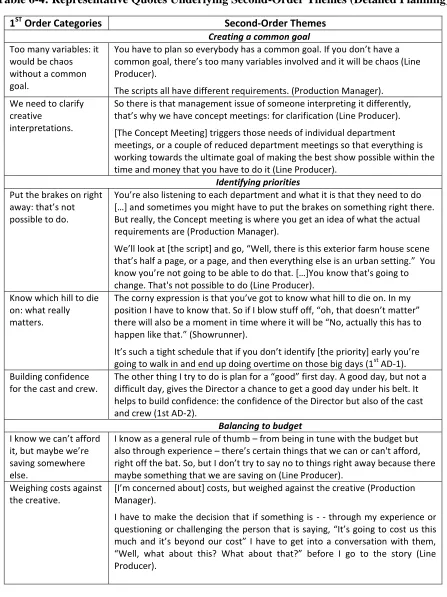
Table 6-4: Representative Quotes Underlying Second-Order Themes (Detailed Planning) ... 75
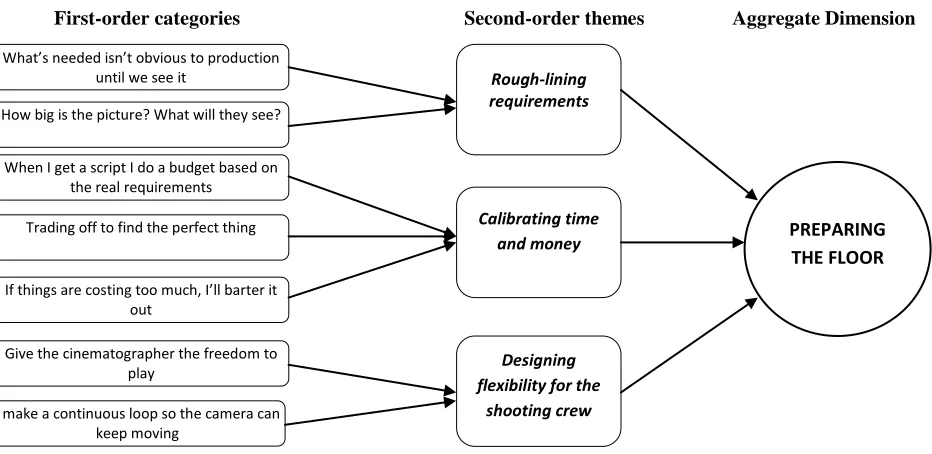
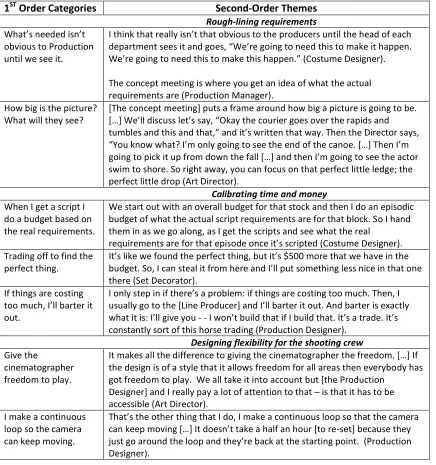
Table 6-5: Representative Quotes Underlying Second-Order Themes (Preparing the Floor) ... 82
Table 6-6: Representative Quotes Underlying Second-Order Themes (Executing the Plan) ... 89
Table 7-1: Micro-processes of creativity and control ... 98
Table 7-2: Representative Quotes Underlying Second-Order Themes (Conceptualizing) ... 101
Table 7-3 Representative Quotes Underlying Second-Order Themes (Visualizing) ... 110
Table 7-4: Representative Quotes Underlying Second-Order Themes (Materializing) ... 119
x
LIST OF FIGURES
Figure 1.1: The Dynamic Relationship of Creativity and Control ... 13
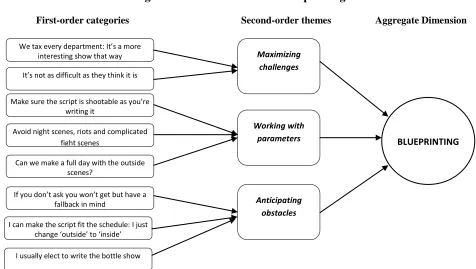
Figure 6.1: Data Structure - Blueprinting ... 67
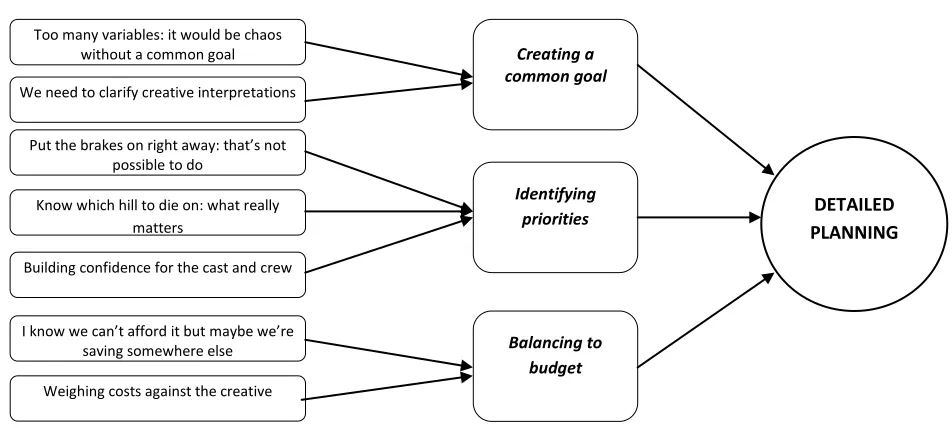
Figure 6.2: Data Structure - Detailed Planning ... 74
Figure 6.3: Data Structure – Preparing the Floor ... 81
Figure 6.4: Executing the Plan ... 88
Figure 6.5: Parallel Temporalities ... 94
Figure 7.1: Data Structure - Conceptualizing ... 100
Figure 7.2: Data Structure - Visualizing ... 109
Figure 7.3: Data Structure - Materializing ... 118
Figure 7.4: Data Structure - Monetizing ... 126
Figure 7.5: Emergent Framework ... 135
Figure 7.6: Linking subcomponents of Conceptualizing ... 136
Figure 7.7: Linking subcomponents of Visualizing ... 138
Figure 7.8: Linking subcomponents of Materializing ... 140
Figure 7.9: Linking subcomponents of Monetizing ... 142
xi
LIST OF APPENDICES
Appendix A. Levers of Control Framework ... 175
Appendix B. Key Roles on a Dramatic Series Production ... 177
Appendix C. UWO Ethics Approval ... 178
Appendix D. Interview Protocols... 181
CHAPTER 1 – INTRODUCTION
1.1 Managing interdependencies through coordinating mechanisms
Coordination has long been recognized as a fundamental concern in organizational theory (e.g. Lawrence & Lorsch, 1967; March & Simon, 1958; Thompson, 1967). Coordination theory
explains the management of interdependencies between tasks and/or activities (Malone & Crowston, 1994; Okhuysen & Bechky, 2009) as well as the flow of knowledge (Faraj & Sproul, 2000; Faraj & Xiao, 2006). From a macro-level perspective, coordination is often strategic: it
aligns goals and means, internal resources, administrative infrastructure and specific courses of action (Farjoun, 2002).
Our early theories of coordination emerged at a time when manufacturing and production activities dominated the organizational landscape of developed economies (Okhuysen & Bechky, 2009). Standardization was seen as an important coordinating mechanism in the production of
physical products where processes could be easily decomposed into sequential steps and progress towards completion easily measured (e.g. Thompson, 1967). While these early theories
emphasized hierarchy and rule-based systems that could be designed for optimal organizational performance, they also recognized that there is no ‘one best’ way to organize (Adler, 1995; Malone & Crowston, 1994; Thompson, 1967).
The organizational landscape in developed economies has radically shifted in the last few decades and the large manufacturing concerns that shaped our early theories of organizations no
longer dominate (Davis, 2009). The greatly reduced manufacturing sectors in advanced
economies are now characterized by flexible production arrangements that emphasize the need to continually adapt to changing customer requirements (cf. Simons, 1995). The focus on
now much more prevalent than manufacturing concerns (Okhuysen & Bechky, 2009). In these organizations, processes are not necessarily linear or easily decomposed and standardization is
not desirable (or even possible) since the ways in which a service or technology is delivered cannot necessarily be formalized (Faraj & Xiao, 2006). At the same time, interdependencies have
grown increasingly complex and thus require more focused and sustained efforts on coordinating mechanisms (Thrift, 2004). This is particularly true in large-scale collaborative projects that often span multiple constituencies or organizations and have become a pervasive form of
organizing in our current economy (Cattani, Ferriani, Fredericksen & Taube, 2011). These large-scale projects are often contained within temporary or project-based
organizations that bring together a team of specialists who contribute their expertise to bring the project to fruition (Bechky, 2006). Project-based organizations offer the flexibility required to manage the complex activities associated with the generation of new ideas and the development
of new products (Cattani et al., 2011). In larger organizations, projects are often viewed as a coordinating mechanism in their own right, but they also require and rely on a series of
coordinating mechanisms within the project in order to achieve their objective (Nightingale & Brady, 2011).
Coordinating mechanisms – the tools, technologies and interactions that bring
interdependent elements in organizations together (Okhuysen & Bechky, 2009) – have long been recognized as the “the most basic elements of structure” (Mintzberg, 1989, p.101). The role of
standards, rules, schedules, and procedures in aligning and integrating interdependent tasks has been the focal point of coordination research (Jarzabkowski, Le & Feldman, 2012; Okhuysen & Bechky, 2009). In contrast with traditional views of coordinating mechanisms as reified
1995; 2005; Jarzabkowski et al., 2012; Orlikowski & Yates, 2002). In conditions of uncertainty, novelty and change, where tasks are often uncharted and uncertain, coordinating mechanisms
need to allow for experimentation as people find ways to coordinate their activities (Jarzabkowski et al., 2012).
This flexibility is particularly important for large-scale projects where the path to the goal or objective cannot be specified in advance (Gersick, 1994). For instance, Adler (1995) shows how as software development projects progress through various stages over time, the nature of
interdependencies change and different coordinating mechanisms are enacted by different groups. The changing nature of coordinating mechanisms over time was also highlighted by
Jarzabkowski and colleagues (2012) in their study of a corporate restructuring project brought about by regulatory changes in the broader industry.
The emergent nature of coordinating mechanisms and their inherent flexibility (Okhuysen
& Bechky, 2009) have yet to be assimilated within the traditional project management literature which remains “rooted in a mechanistic paradigm of control” (Nightingale & Brady, 2011, p.85).
As a result, the literature tends to emphasize the importance of rigorous formal methods in practice but this has done little to mitigate the high rate of failure in many projects (e.g. lengthy delays and cost overruns) as Nightingale and Brady (2011) point out. Despite calls for a more
nuanced approach to control, especially one that draws directly on the experience of project managers who face a continual stream of unpredictable problems in practice, there remains a
need to more fully theorize control in project-based organizing (Nightingale & Brady, 2011). An explanation of how controls can become sufficiently flexible to not just accommodate, but actually encourage experimentation in large-scale projects is still missing. My dissertation
1.2 Restoring the links between coordination and controls
While the focus on how coordinating mechanisms arise in practice through the day-to-day
actions of organizational members has reinvigorated coordination theory, it also reflects a theoretical shift away from the traditional interconnections between coordination and
management control (e.g. Thompson, 1967). For instance, coordinating mechanisms such as standards, rules, schedules and procedures have also been identified as important control mechanisms in organizations (e.g. Cardinal, Sitkin & Long, 2004). The separation of
coordination and control by organization theorists may be a reflection of an academic division of labour where concerns about organizational controls have largely become the province of
management accounting researchers. Regardless of the cause, the consequence is that our understanding of control in organization theory also remains entrenched in classic theories of control.
Classic management control theories emerged from the same era as our early theories of coordination where production processes could be easily decomposed (cf. Okhuysen & Bechky,
2009). Accordingly, these theories emphasize specific targets within the production process that are typically categorized into input, output and behavioural controls (Cardinal et al., 2004). In the traditional view, which is rooted in theories of social constraint that emphasize the ‘heavy hand’
of managerial agency, both coordination and control are critical components of organizational design (Dougherty, 2008).
However, this rather mechanistic view of control mechanisms is problematic for large-scale collaborative projects where coordinating mechanisms are emergent and controls require flexibility. As Dougherty (2008) illustrates, large-scale collaborative projects that rely on the
attention. In these projects, the path to the goal or objective cannot be specified in advance but emerges as the project unfolds (Gersick, 1994). Further, the complex nature of the
interdependencies between individuals and groups necessitates the use of formal controls to coordinate creative inputs over time (Adler & Chen, 2011).
In these environments, controls need to be focused on charting the path forward and the interpretation of emergent objectives, which requires some degree of fluidity (Dougherty, 2008). Controls are required to constrain certain behaviours and actions while simultaneously
encouraging others (e.g. experimenting and creativity). This dual-nature of controls is also
central in Simons’ (1990; 1995) levers of control framework where the constraining and enabling
dimensions of controls combine to create productive tensions. Adler and Chen (2011) extend this framework to theoretically argue that creativity and control can and should be combined, at least in some project-based organizations.
Large-scale creative collaborations (LSCCs) are projects that require creativity from
project members from conception to completion, not just in the design phase (Adler & Chen,
2011). Consequently, coordinating mechanisms in LSCCs must accommodate the tensions between the need for creative freedom (Amabilie & Conti, 1999) and the need for clear
structures and processes (Adler, 2005). In other words, in order to create and sustain necessary
productive tensions, coordination in LSCCs requires both creativity and control.
Since these large-scale projects also unfold over time, and different individuals or groups
are involved at different phases or stages, there is also a temporal dimension to both coordination and control. Further, the (creative) inputs emerging from different groups at different times throughout the course of the project also need to come together seamlessly in the final product
management accounting literature, I also explore coordinating mechanisms in large-scale projects through a temporal lens.
While the literature on temporary and project-based organizing considers temporality in relation to the ephemeral nature of these organizations (e.g. DeFillippi & Arthur, 1998), time is
usually considered an objective phenomenon or as a resource that needs to be managed. Project success is usually defined in terms whether it is delivered on time and on budget, and not on whether its goals or objectives were achieved (Nightingale & Brady, 2012). However, a temporal
lens requires an understanding of time as something more than an objective phenomenon: time is also subjectively experienced by organizational actors.
1.3 Conceptions of time in organizations
The importance of time as an organizing structure dates back to the origins of organization theory. From Fredrick Taylor’s scientific management practices to the assembly lines of Fordist
production models, time was considered to be an objective phenomenon, existing independently of human action. When viewed objectively, time is homogenous, linear and uniform in its flow
(Orlikowski & Yates, 2002). Thus, time becomes a resource that, like money, can be saved, spent, wasted, budgeted and invested. This view still predominates in much of organization theory where popular conceptions of ‘clock time’ as ‘real’ time are assumed, if not ignored
altogether (Lee & Liebenau, 1999).
The dominance of objective – or chronological time – in organization theory is not
surprising given the significance of the development of standard time on industrialization
practices (Okhuysen & Bechky, 2009). It is linked to a mechanical view of the world where time is absolute, unitary and quantitative (Orlikowski & Yates, 2002) and activities are precisely
a social construction emerging from the need to synchronize over 500 different versions of ‘true
time’ calibrated to the local position of the sun into four distinct zones within the contiguous
United States (Bluedorn, 2002). The widespread adoption of standard time made it possible to coordinate train schedules across the country (Okhuysen & Bechky, 2009; Shih, 2004).
While standard time has since become reified and is now considered ‘correct time’ (Bluedorn, 2002; Lee & Liebenau, 1999), its socially constructed origins pave the way for an introduction to other subjective conceptions of time. These are neither fixed nor invariant, but
based on the shared perceptions of specific groups or communities (Orlikowski & Yates, 2002). For example, in agricultural communities, the passing of the seasons guides cycles of planting
and harvesting. The pacing of activity is entrained to the natural rhythms of the seasons, the timing of which can only be generally, but not precisely, known (e.g. the dates of the last and first frosts change from year to year).
Subjective conceptions of time are based on how time is experienced by different
individuals and groups. Temporality or temporalities is how an individual or group belonging to
a specific community experiences time: past, present and future (Vesa & Franck, 2013). Within organizations, group-level temporalities arise from the temporal nature of the activities
performed by different functional subgroups (Blount & Leroy, 2007). Different activities in
organizations shape, and are shaped by, different orientations to, or conceptions of, time. These can range from more open-ended orientations that extend far back into the past and forward into
the future, to more closed orientations that focus on the immediate present and proximal future (Bluedorn, 2002). For instance, scientists typically have a more open-ended experience of time as their work is drawn continuously forward by posing new questions that may not have a fixed
other hand, are often more focused on the short-term expectations of profits as they are accountable to investors.
The way that people understand time (i.e. past, present and future) has an influence on the range of options they perceive and the actions that they take (Emirbayer & Mische, 1998). The
way we understand time can exert a powerful influence on day-to-day activities, particularly when they become closely associated with specific social practices (Orlikowski & Yates, 2002). However, agency also emerges through temporal orientations as actors draw on schemas
developed through past experience, project different hypothetical pathways to the future, and adjust their actions to the exigencies of the situation emerging in the present (Emirbayer &
Mische, 1998).1
1.4 Time from a practice-based perspective
A practice-based perspective brings together both objective and subjective conceptions of time
by recognizing that time is instantiated in practice (Bourdieu, 1977). Practices contain particular temporal metrics and orientations that are often crystallized in objects that allow directed action
to happen (Thrift, 2004). In organizations, people experience time through the temporal
structuring of their day-to-day activities and multiple conceptions of time exist simultaneously in organizational life (Dougherty et al., 2013; Orlikowski & Yates, 2002).
Temporal structures provide rhythm, tempo and directionality (Bourdieu, 1977) and
enacting these structures provides people with a way to “make sense of, regulate, coordinate, and account for their activities” (Orlikowski & Yates, 2002, p.686). Temporal structures have both
1
enabling and constraining dimensions and encompass some obvious tools that make coordination over time possible (Okhuysen & Bechky, 2009). For instance, project schedules are often used to
coordinate the activities of different groups and provide for choreographed transitions across phases (Brown & Eisenhardt, 1997). While project schedules may be rooted in objective time
(e.g. calendar), they also impact how time is experienced by different groups (Staudenmeyer, Tyre & Perlow, 2002). Consequently, temporal coordination requires more than just measuring time (Yakura, 2002).
Although the importance of the fiscal year in structuring particular organizational
activities has been highlighted in the literature on temporal coordination (e.g. Ancona & Chong,
1996; Orlikowski & Yates, 2002), the influence of the project budget on the activities of project members has received little, if any, attention from researchers. Yet Caves (2000), highlights how project budgets are inextricably linked to project schedules in the film industry, an important
research context for project based organizing that I also chose for this dissertation. Project budgets are objects that contain various temporal metrics, but they are also
temporal structures that shape, and are shaped by, the internalization of these metrics by project participants. As a temporal structure, the project budget is more than something objectively given to project members; it is something they enact as they chart the path forward (cf.
Orlikowski & Yates, 2002). This is particularly important in LSCCs where the path to goal emerges through the course of the project. While different groups on the project may internalize
1.5 Temporal coordination in practice
From a practice-based perspective, coordination is defined as “a temporally unfolding and
contextualized process of input regulation and interaction articulation to realize a collective performance” (Faraj & Xiao, 2006, p. 1157). My dissertation draws on and extends coordination
theory by (re)introducing the concept of control, but through a more nuanced lens that better reveals this temporal unfolding. The complex interdependencies that characterize LSCCs require the coordination of multiple creative inputs, arising from different individuals and groups and
thus necessitate a more nuanced understanding of control (Adler & Chen, 2011).
Budgets are a prominent feature in the traditional control literature, where they are have
been categorized as both an output and a behavioural control (e.g. Cardinal et al., 2004). Consequently, the project budget is the focal point of my enquiry in this study. Along with schedules and plans, budgets are omnipresent and necessary in all projects, but their role in
(temporal) coordination has been largely taken for granted (but see Frow, Marginson & Ogden, 2010; and Marginson & Ogden, 2005 for exceptions). Yet project budgets contain the unique
assumptions that inform other coordinating mechanisms, particularly schedules and plans. My theoretical perspective is informed by my prior experience as a corporate finance executive. In practice, project budgets are commonly used to establish and update (explicit and
implicit) links to critical aspects such as project milestones and delivery timelines. Thus, my first research question is intended to reveal the unique, but so far, taken-for-granted role that budgets
play as a coordinating mechanism. I was specifically interested in how budgets enable the temporal unfolding of practices in LSCCs (Faraj & Xiao, 2006):
Research Question 1: How do budgets facilitate the accomplishment of coordination
My second research question follows from the recognition of the project budget as a coordinating mechanism. Coordinating in LSCCs requires a combination of creativity and control. These are often viewed as antithetical in the organizational literature on creativity, but
recent research in the management accounting literature suggests that budgets may be drawn on by organizational actors to mediate the tensions between them (Jeacle & Carter, 2011). My
second question guides my exploration of the specific roles budgets play in integrating creativity and control, and to specifically explain how this integration is collectively accomplished over
time.
Research Question 2: How are budgets used to integrate creativity and control over
time?
To explore these research questions, I draw on existing literature in coordination, creativity, and management control from the perspective of time and temporality. These three
distinct strands of literature inform our understanding of LSCCs (e.g. software development, new drug formulations, airplane design and filmmaking) where creativity is not limited to the concept or design phase (Adler & Chen, 2011). I use an in-depth single case study of a dramatic
television series production to explore in ‘real time’ how individuals integrate creativity and
control as they coordinate their contributions over time. This in-depth case study design is
aligned with both my research questions and the practice-based approach to research discussed more fully in the methodology section (Chapter 4).
Three main findings emerge from this research.2 I first identify four distinct groups on the
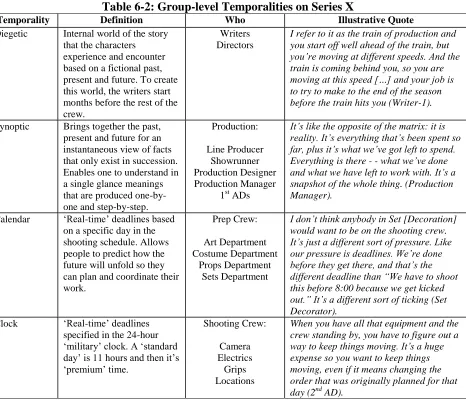
project that experience time differently: diegetic; synoptic; calendar; and clock. The latter two
2
are familiar conceptions of objective time in the literature, and their relevance to day-to-day coordinating practices is reinforced through this study. However, my findings reveal how
calendar and clock time are subjectively experienced by different groups on the project. Diegetic and synoptic time, on the other hand, are two different conceptions of subjective time that I
introduce to the literature and develop through this study.
More specifically, diegetic time emerges from the nature of the product. In film theory, diegetic time refers to the flow of time in the world of the story. It impacts the pacing of how the
story unfolds in order to build tensions and engage audiences. Since film and television products are experiential goods, diegetic time is the foundation on which they are structured.
Synoptic time, on the other hand, refers to an experience of time that brings together the past, present and future for an instantaneous view of facts. Like a map or chart of the weather, this provides a snapshot of an evolving phenomenon. Consequently, this experience of time is
inherently fragile and requires continuous updating throughout the course of the project.
Second, I also identify four specific micro-processes through which creativity and control
are balanced: conceptualizing; visualizing; materializing; and monetizing. These micro-processes reveal a more nuanced view of control and reveal how they are an integral part of creative
practice. They also highlight how discipline is an inherent aspect of the creative process
(Andriopolous, 2003; Townley & Beech, 2010).
Third, I show how the dynamic tensions between creativity and control inherent in these
on the project. It also reveals the complementary functions of creativity and control in temporal coordination.
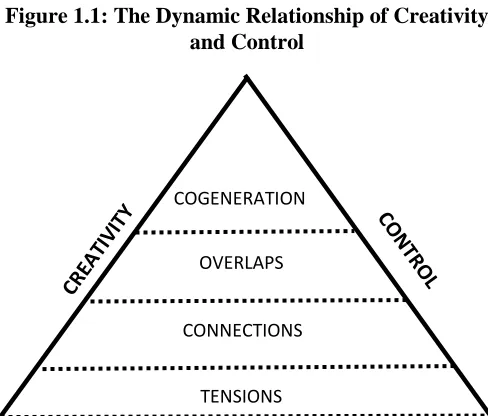
Figure 1.1 provides an overview of the dynamic nature of the relationship between creativity and control. At the base of the figure, creativity and control lie in tension, which is
consistent with current conceptions in the literature. However, as the base of the triangle is flexed, creativity and control come closer together. Ultimately, creativity and control are
cogenerated as more precise coordination is required.
Effective product development projects require a subtle balance of freedom and control,
flexibility and precision, as well as individualism and teamwork (Adler & Chen, 2011; Clark & Fujimoto, 1991). Dougherty (2008) argues that constraints are necessary because the creative
work required for innovation must be orchestrated over time. By adopting a more nuanced view of control that departs from the traditional mechanistic paradigm, my research presents insights into what is commonly conceived as an antithetical relationship between creativity and control as
something that is not only possible, but often necessary.
Figure 1.1: The Dynamic Relationship of Creativity and Control
COGENERATION
OVERLAPS
CONNECTIONS
This dissertation is organized as follows. Because coordinating mechanisms are not fixed entities, but dynamic social practices (Jarzabkowski et al., 2012), I first argue that creativity is
required by the people doing the coordinating (Chapter 2). I then draw on the management accounting literature for a more nuanced view of controls, particularly in relation to LSCCs.
Controls are not opposed to creativity, but rather are often embedded in the coordinating mechanisms that people enact in practice (Chapter 3). In Chapter 4, I present the methodology used in my enquiry and provide an overview of the research setting in Chapter 5. The
coordinating practices described in Chapter 6 reveal the different ways creativity and control are balanced within each temporality, while Chapter 7 highlights four micro-processes used to
balance creativity and control that provide for seamless transitions across these largely non-overlapping groups. In Chapter 8, I discuss my contribution to temporal coordination theory and develop the implications of this research for theory and practice as well as outline possibilities
CHAPTER 2– COORDINATING THROUGH TEMPORAL STRUCTURES
2.1 Creativity in organizations: From the individual to the collective
Our understanding of creativity has moved a long way from the romantic myth of the lone genius toiling in isolation, endowed by the spark of divine inspiration available to only a few gifted
individuals (Hargadon & Sutton, 2000). Creativity is defined as the generation of ideas that are novel and deemed useful or appropriate by a group of peers (Amabile, 1988; Ford, 1996; Oldham & Cummings, 1996) and has been conceptualized as both an outcome (e.g. Cattani &
Ferriani, 2008) and a process (e.g. Lingo & O’Mahony, 2010). In this dissertation, I adopt the latter view, since creativity in LSCCs emerges through the interactions of project members
(Hargadon & Bechky, 2006).
In LSCCs, creativity is often an organization-wide requirement, especially when tasks are uncertain and their execution requires problem-solving (Adler & Chen, 2011). Creativity is no
longer conceived as a character trait belonging to a select few, but rather as an essential, if often implicit, set of organizational practices required to bring forward a new product, process or
service (Amabile, 1988).
Over the last few decades several different theoretical models rooted in psychology have proposed distinct ways to facilitate or enhance micro-creativity within organizations by drawing
attention to the factors that background, contextualize or leverage individual creativity in
organizations (e.g. Amabile, 1998; Amabile & Conti, 1999; Zhou & George, 2003). For instance,
(cultural or symbolic aspects) and the field. It is contingent on individual contributions fitting in or aligning with domain rules and whether or not they are accepted by those in the field.
Three conditions are key to these organizational extensions of micro-creativity: (1) intrinsic motivation (Amabile, 1998); (2) supportive leadership styles (Oldham & Cummings,
1996); and especially, (3) freedom from constraint (Amabile, 1988; 1998). Many forms of creativity that are both intrinsic to, and implicit in, daily organizational practices but not ‘animated’ by individual actors (e.g. identifying improvements for standard procedures) are ‘unsung’ and under-developed by these extensions (Unsworth, 2001).
The organization-level extensions of macro-creativity, on the other hand, focus on
innovation, which is the implementation of new ideas generated through the creative process (Amabile, 1988). These extensions welcome constraints and examine the social practices and dynamics that help organizations overcome or work around these constraints (Dougherty, 2008;
Dougherty & Takacs, 2004).An effective product development organization is characterized by creativity and freedom as well as a disciplined use of resources and controls over scheduling and
product quality (Brown & Eisenhardt, 1997; Clark & Fujimoto, 1991). The contrast between these two bodies of work which have largely evolved independently until now centers on the place and role of controls in organization-level creativity.
While both the micro-level studies of creativity and the macro-level studies of innovation have contributed significantly to our understanding of these phenomena in organizations, a full
Kumaraswamy, 2011) and problematize their ability to coordinate within organizations (e.g. Dougherty et al., 2013).
Creativity and innovation in organizations is rarely the product of a single mind, but emerges through the interactions of various individuals and groups (e.g. Adler, 2005; Brown &
Eisenhardt, 1997). For instance, in their comparative study of professional service firms, Hargadon and Bechky (2006) highlight how solutions to complex problems are generated in fleeting moments when individuals with diverse experiences come together. Their multiple
perspectives and their integration (coordination) are key to formulating a creative solution to issues that no individual could have solved alone.
Adler and Chen (2011) emphasize the distinct processes of collective creativity by drawing on the example of a symphony orchestra. They highlight how individual musicians cannot rely on face-to-face or mutual adjustment in the same way a small, improvisational jazz
group can. Rather, the performance relies on hierarchical authority in terms of the conductor and the formal procedures provided by the score. Since the score underdetermines the performance,
individual creativity is required, but never enough. An effective performance requires more than ‘just playing the notes’ in the score: the creative contributions of individual musicians are
conjunctive allowing the orchestra to function as a cohesive unit (Adler & Chen, 2011).
Catmull (2008, p.66) similarly highlights how a movie is actually the product of a collective mind: each Pixar product “contains literally tens of thousands of ideas” which can
through industry socialization into specialized film production crafts (Mintzberg, 1979) and role functions (Bechky, 2006).
2.2 Large-scale creative collaborations: From a fleeting phenomenon to an ongoing process
Large-scale creative collaborations (LSCCs) are common in the creative settings described
above, but also essential in traditional industries such as aircraft design, new drug discoveries
and software development. Any project that requires multiple individual contributors and the coordination of their creative inputs to a product or service is an LSCC (Adler & Chen, 2011).
These complex and large-scale projects stand out by their longduration, often extending over a period of years (e.g. Dougherty et al., 2013). Thus, in LSCCs, creative engagement
unfolds over time. As projects progress through various stages, different interdependencies emerge among different groups that shape their interactions with a variety of coordinating mechanisms (Adler, 1995). While some of these interdependencies can be anticipated
(Dougherty, 2008), others only become apparent over time (Adler, 2005).
Because the creative inputs in LSCCs are distributed over specialties, discipline is often
required for synthesis (Adler & Chen, 2011), particularly since the intensity of engagement of different individuals and groups ebb and flow over time. This is common in large-scale building projects and filmmaking, for instance, where some of the creative contributions from different
groups evolve sequentially as the project progresses through various stages. Other creative contributions are non-linear and cannot be precisely timed (Dougherty et al., 2013). Yet both
must be accommodated in successful projects.
The sheer size, complexity and longevity of these projects necessitate a reliance on formal controls to effectively coordinate their inputs (Adler & Chen, 2011). Combining
in the opening section of this chapter, controls are seen by some creativity theorists to undermine the intrinsic motivation required for individual creativity (e.g. Amabile, 1996; Shalley, Gilson & Blum, 2000) and by others as necessary ‘evils’ that mobilize dispersed talent. Yet, these seeming
antithetical or opposing forces can happily co-exist. For example, by imposing discipline on the
more routine aspects of their tasks and processes, software developers revealed and thus awarded greater flexibility to the less routine parts of their projects (Adler, 2005). Controls even created occasion for synthesis, helping different functional groups involved in the project overcome ‘siloed isolation’ and figure out how to be “all playing the same piece of music” (Adler, 2005, p.
415). The effective use of controls increased cohesion and confidence among team members by
providing a sense that their individual contributions were both important and consistent with the overarching goals of the project.
For Adler and Chen (2011), LSCCs use ‘control’ and ‘coordination’ interchangeably. In
other words, at least some aspects of controls are embedded in coordinating mechanisms, and vice-versa. To perform creativity collectively individuals need to both simultaneously control
and coordinate their individual inputs. Since LSCCs unfold over time, there is also a temporal dimension to coordinating mechanisms as different groups rely on different mechanisms at different stages in the project (e.g. Adler, 1995). Thus, the following two sections review what
we know about temporal coordination in organizations. I then expand on the concept of temporal structures introduced in Chapter 1 and explain their roles as coordinating mechanisms in LSCCs.
2.3 Temporal coordination in organizations
quarterly sales targets (Ancona & Chong, 1996). While these structures originate in the external (institutional) environment, they have a powerful influence on shaping action within
organizations (Gersick, 1994). For example, the quarterly sales cycles distribute sales activities across four quarters. This helps sales people adjust to the seasonal buying patterns of their
customers as they need to engage with different time orientations as they conduct their day-to-day activities (Orlikowski & Yates, 2002).
Temporal coordination involves mapping activities to time and multiple activity maps
exists within a single organization as each department or group typically has their own map (Ancona et al., 2001). When the activity maps of different groups mesh with each other,
coordination happens through entrainment since these groups share the same temporal
parameters (Ancona & Chong, 1996). When the activity maps of different groups do not overlap, coordination becomes more complex as different groups may not experience time in the same
way (Yakura, 2002).
Thus, temporal coordination not only unfolds over time but also across groups who may
not experience time in the same way (Ancona et al., 2001; Yakura, 2002). For example, some groups may have a culture of speed and a need to focus on the present (e.g. emergency room doctors), while other groups work at a slower pace and are more oriented to the future (e.g.
rehabilitation units). In these instances, transitions across groups can be accomplished through scheduling a “crossing time” where members of the two different units interact for a smooth
transition (Ancona et al., 2001, p. 526). Brown and Eisenhardt (1997) similarly highlight the importance of time-based pacing to choreograph smooth transitions across project teams.
Gersick (1994) highlights the importance of temporal coordination in the presence of
significant control over their own actions; and (3) the path to the final goal or outcome cannot be specified in advance. Thus, the need to adapt along the way is an inherent aspect of temporal
coordination as it is expected that learning along the way will continue to shape the trajectory of the project (Gersick, 1994). Since the learning events cannot be precisely timed, temporal
coordination also involves balancing the tensions between time- and event-based pacing (Dougherty et al., 2013).
This is perhaps nowhere more evident than in LSCCs where the time-based pacing of
project schedules (Brown & Eisenhardt, 1997) often lies in tension with the emergence of unpredictable insights that cannot be timed or scheduled (Dougherty et al., 2013). Yet, Gersick (1994) shows how temporal structures can help the ‘alarm clocks’ of time-based pacing
complement the ‘thermostats’ of event-based pacing. The ability of temporal structures to
accommodate both objective and subjective conceptions of time is also highlighted in the
theoretical contribution by Orlikowski & Yates (2002).
2.4 Temporal structures
Defined as a patterned way that individuals organize time (Wu, 2010), temporal structures allow people to manage and coordinate their activities. The schedules, sequencing patterns and
deadlines of temporal structures generate implicit rhythms and cycles of behaviour that are
situated in cultural norms about time (Blount & Janicik, 2001). As with other social structures, temporal structures simultaneously constrain and enable the activities of the people who enact
In organizations, temporal structures encompass taken-for-granted ‘things’ such as weekly or periodic meeting schedules, financial reporting periods (e.g. quarterly or annual) and academic calendars that are both the medium and the outcome of people’s practices (Giddens,
1984; Orlikowski & Yates, 2002). They can be based on objective time (calendar or clock),
subjective time (event-based) or a combination of the two, such as people scheduling vacations in the summer when schools are not in session (Orlikowski & Yates, 2002). Temporal structures are central to our interpretation of events (Bourdieu, 1977).
Temporal structures can be explicit like the deadlines in project schedules, or implicit and only known when people have a deeper understanding of their workplace (Blount & Janicik, 2001). The ‘banana time,’ ‘peach time’ and ‘window time’ that Roy’s (1960) machine operators
used to break up the monotony of their day highlight how an implicit temporal structure can qualitatively change the experience of time. At the other end of the spectrum, Perlow’s (1999) introduction of ‘quiet time’ to a group of engineers reveals how an implicit temporal structure
can enhance collective performance.
The repeated use of temporal structures (e.g. fiscal years, quarterly financial cycles, and project schedules) imparts a taken-for-granted quality that makes them seem objectively given (Orlikowski & Yates, 2002). For instance, coordinating activities by the clock with regularly
scheduled meal breaks is a deeply embedded temporal structure that would be difficult to change (Evans, Kunda & Barley, 2004; Orlikowski & Yates, 2002). Temporal structures are notoriously difficult to alter once established (Barley, 1988), as illustrated by the engineers in Perlow’s
Ancona and colleagues (2001) draw on two well-known studies to highlight how temporal structures can be understood from different perspectives. For Zerubavel (1979), ‘hospital time’ is a type of time that provides round-the-clock coverage of doctors, nurses and
residents. In contrast, Brown and Eisenhardt (1997) focus on the temporal perceptions of project
members in new product development firms who used fixed project calendars to predict how the future would unfold in order to plan and coordinate their work. Both of these perspectives are important for understanding the role of temporal structures as coordinating mechanisms.
2.5 Temporal structures as coordinating mechanisms in LSCCs
Gersick (1994) identified how time-based and event-based temporal structures coexist in new
product development projects with the mid-point of the former often providing a powerful heuristic for the latter. Project deadlines and milestones may be oriented in objective time, but they also impact the subjective experience of time for project members (Staudenmayer, Tyre &
Perlow, 2002). For instance, Brown and Eisenhardt (1997) argue that the rhythm of predictable time intervals put forward in project schedules gives people a sense of confidence as they pace
their work and synchronize their energies (if not their activities) with one another. Ultimately, this creates a sense of ‘flow’ for organizational or project members where their focused attention
enhances collective performance.
In LSCCs, work is typically structured around project schedules and project members work toward completion of project goals without specific instructions on how to accomplish
these goals (Shih, 2004). The temporal structure of project deadlines makes coordination between different groups possible and helps project members regulate their progress (Gersick, 1994). Project deadlines are typically augmented by regularly scheduled project meetings,
provide the opportunity to integrate insights and knowledge (Brown & Eisenhardt, 1997; Orlikowski & Yates, 2002).
In addition, temporal structures can bridge different groups with different perspectives on time. For instance, Dougherty and colleagues (2013, p.242) show how scientists involved in
long-term drug discovery projects view milestones as learning events that deepen knowledge of how a drug will behave in the body (a learning event), while senior managers view these
moments as finding discrete answers to the question of whether or not it is a “good drug target.”
Despite their different understandings, the milestones provided a common referent point and initiated a different set of activities for each group.
2.6 The role of control in temporal coordination
While the importance of temporal coordination is not new to organization theory (e.g. Thompson, 1967), the role of controls has been overlooked by researchers focused on
coordinating mechanisms. This neglect by organization theorists may emerge from the close association of controls with theories of social constraint that emphasize managerial agency and
the use of a heavy hand to constrain the activities of others (Dougherty, 2008). Social constraint theories posit that coordination is difficult, costly and dependent on the internal congruence of the administrative infrastructure (Thompson, 1967).
In contrast, theories of social action see coordination as a natural activity that can be easily accomplished (Doherty, 2008). Organizations can be temporary and coordination can be
emergent because people come together with a vision of the work that needs to be done (Bechky, 2006; Jarzabkowski et al., 2012). People take responsibility for the practices that form their day-to-day activities and contribute their own expertise as they effectively carry out their work,
A third view brings together theories of social constraint and social action by viewing them as two sides of the same functional whole with a combination of both necessary in
successful LSCCs (Dougherty, 2008). For instance, Brown and Eisenhardt (1997) show how limited structures (controls) provide the basis for people to effectively coordinate their work over
time and across projects. Controls are necessary because work must be orchestrated in a way that makes it easy for people (who may have never met) to work together effectively, but they must also have sufficient flexibility to allow people to respond in the moment to the unpredictable
issues that inevitably surface as projects evolve (Dougherty, 2008).
In LSCCs, controls need to map out possible flows and pathways to the future as well as
surface problems in the present in order to address them proactively (Dougherty, 2008). Thus, the primary aim of controls is not to eliminate variation or to coercively punish those who have gone astray (Jelinek & Schoonhoven, 1990), but to focus on how objectives can be achieved.
Since the objectives in LSCCs emerge and evolve over time, coordination comes from a common ground and coherent vision of the work to be accomplished (Dougherty, 2008;
Okhuysen & Bechky, 2009). Too little control makes coordination difficult, while too much makes it impossible to adapt developing projects to changing circumstances (Brown & Eisenhardt, 1997).
In Chapter 3, I review an emerging stream of studies from the management accounting literature that explores the enabling and constraining dimensions of controls, including those tied
to budgets, in organizations. While the enabling dimensions of budgets may be viewed as something of a paradox by organizational theorists, the management accounting literature
CHAPTER 3 – MANAGEMENT CONTROL
3.1 Levers of control framework
Every organization has a management control system. Management control systems are
structures designed to support decision making and enhance organizational effectiveness. In this view, the purpose of management control is to reduce, if not eliminate altogether, variation in
order to foster productivity and efficiency (Davila, Foster & Oyon, 2009; Revellino & Mouritsen, 2009).
Control has traditionally been conceived as a constraint, often seen as antithetical to creativity. Simons’ (1990; 1995) levers of control framework introduces the concept of the
dual-nature of controls, arguing that controls have both enabling and constraining functions in organizations. The former promotes creativity and the latter emphasizes predictability (see Appendix A for further elaboration). While management controls aim to provide predictability
and control with respect to organizational goals, they can also encourage creativity and innovation in order to identify opportunities or solve problems as they arise (Henri, 2006;
Mundy, 2010; Simons 1994). These competing roles create the dynamic tensions required for effective control (Simons 1995; Tessier & Otley, 2012). Thus, control is about balancing
tensions between freedom and constraint, experimentation and efficiency and top-down direction
with bottom-up creativity (Bisbe & Otley, 2004; Davila, Foster & Oyon, 2009; Simons, 1995). Simons’ model is seen by some as a paradigm shift. For others, it is the target of criticism
2010). I use Simons’ framework not as a typology, but as an invitation to conceptualize a more
nuanced view of management control that makes room for (rather than rules out) creativity. I build on Simons’ distinction between the dual role of controls (i.e. constraining and enabling) and Adler and Chen’s (2011) notion of the quality of controls (e.g. coercive equals bad controls
while enabling equals good controls)3 as these are sometimes conflated in the literature (Tessier & Otley, 2012). For me, controls come in various forms and are not inherently good or bad because they promote certain actions and discourage others. Rather, the quality of a control
depends on when and how it is used and any control can be a ‘bad’ control if used at the inappropriate time or in an inappropriate way.
3.2 The enabling dimension of management control
Our traditional theories of management control emerge from the same era as many of our
theories of coordination when control could be easily achieved through standardization, which is
not desirable – or even possible – for firms focused on continuous innovation. However, Simon’s framework has engendered a reconceptualization of management controls as something more
than constraint. For instance, in their study of a new product development process that unfolded over several years, Revellino & Mouritsen (2009) show how the vision (belief system) proposed a possible future that guided action in the present. Although the initial concept of the project
comprised a set of loosely formulated visions for the final product, these coalesced into a coherent narrative as the project progressed. As the project transitioned through more advanced
phases, additional control mechanisms were established that were more focused on managing the alignments with external partners in order to ‘make the innovation productive.’
3
The importance of a common vision was also evident in Ditillo’s (2004) comparative
study of three software development teams. In the project teams studied, Ditillo found
coordinating mechanisms centered on creating a common vision were far more effective controls than any efforts to codify tacit knowledge. Further, the plans, schedules and forecasts used to
coordinate the activities of development teams served as both control mechanisms and
knowledge integration mechanisms. While boundary systems played a vital role in each of these projects (e.g. through the specification of development parameters), the regularity of face-to-face
meetings (i.e. interactive use of controls) was also a common feature.
Jorgensen and Messner’s (2010) study of new product development practices in an
organization that designs technology products for quality control in the agriculture,
pharmaceutical and chemical industries also shows that management control practices varied at different stages of the project. Projects were separated into three distinct phases: conceptualizing
new product design ideas; physically realizing the components of new design ideas (i.e. materializing); and integrating the components into a fully functioning product. In the
conceptualizing phase, management control practices were centered on maintaining open dialogue through meetings and discussions in order to shape the direction of the emerging product. As the projects progressed through later stages of development, control practices
became more focused on coordinating mechanisms.
Ahrens and Chapman (2007), illuminate another aspect of the enabling dimension of
controls in their study of menu design as a control practice. Although they did not deploy Simons’ framework in their analysis, they refer to an enabling use of controls (cf. Adler &
Borys, 1996). Their description of the scheduled weekly meetings between individual restaurant
meetings were focused on restaurant operations and covered a variety of perspectives, including food margins, operating income, human resources and pricing. The review of past performance
was focused on constructing plans for future action which were developed collaboratively with individual restaurant managers.
In addition to highlighting how controls are not merely devices of constraint, these studies begin to reveal the fluid and adaptive nature of management controls in contexts
characterized by uncertainty and the need for innovation (Adler & Chen, 2011; Jeacle & Carter,
2012), especially over time (different phases). I adopt the dual-natured role of controls and the practice-based perspective common across these studies (Ahrens & Chapman, 2007; Jorgensen
& Messner, 2010; Revellino & Mouritsen, 2009) to conceptualize management control as a practical activity that is distributed across people and throughout the organization (Ahrens & Chapman, 2007). These controls shape, and are shaped by, the day-to-day activities of people in
the organization as they formulate plans, write reports and discuss project or customer needs (Faure & Rouleau, 2011). In this view, management controls are a key part of, but insufficient
for, broader organizing processes including those connected to strategic concerns (Jorgensen & Messner, 2010).
3.3 Budgets in organizations
Budgets are often considered to be ‘the pivotal’ organizational control mechanism (Marginson & Ogden, 2005) and they are certainly one of the most widely researched topics in the management
accounting literature. They are most commonly conceived as a diagnostic control as they can, and do, signal the need for corrective action when results diverge from standards or plans. However, budgets (like many control mechanisms) can also be used interactively to explore
other financial forecasts as a way for people to project themselves into the future making it possible to identify potential issues and opportunities (Davila, Foster & Li, 2009). Whether used
interactively or diagnostically, budgets often incorporate the boundary and belief systems of an organization. Boundary systems may be reflected in the budget through resource allocations in
terms of project funding (e.g. Canonico & Soderlund, 2010; Mundy, 2010) or capital asset acquisitions (Simons 1995). Belief systems, on the other hand, are linked to the budget through the strategic planning process as objectives are translated into operating goals and performance
measures that may then be monitored (Mundy, 2010).
Although a full review of the vast literature on budgets is beyond the scope of this
chapter, it is important to point out that much recent attention in the management control literature has focused on the negative aspects of budgets.4 In response to these criticisms, other researchers have emphasized the multiple purposes that budgets are used for in organizations. In
the empirical work that led to the development of the levers of control framework, Simons (1990) observed that budgets were not used strictly as financial documents, but provided an
agenda for discussion of a wide range of topics from new marketing ideas to product
development plans. As a communication device, budgets provide a common vocabulary in the familiar form of numbers for disparate organizational groups (Czarniawska-Jorges & Jacobsson,
1989), even though the interpretation of these numbers may mean different things to different groups.
Budgets also play an integral role in communicating and coordinating strategic priorities by translating them into financial terms (Abernethy & Brownell, 1999). For example, in their study of a technology service company, Frow and colleagues (2010) show how strategic
4
priorities were cascaded down into the high level financial targets that individual managers used to develop their budgets. Given the inherent unpredictability of new product development
processes, these targets were not seen as sacrosanct, but were reassessed and adjusted in light of changing circumstances. Resources were reallocated to projects closest to launch in order to preserve the ‘business case’ (e.g. unit sales and revenue forecasts) when design changes or other
issues posed the potential to delay completion.
In a study of a multinational communications firm focused on new technology
development, Marginson and Ogden (2005) found that budget targets provided a beacon of clarity in a world of shifting priorities. In this organization, rewards were in no way tied to the
attainment of budget targets, yet the visibility of these targets was sufficient for commitment. In a fluid and changing environment, meeting the budget was a way for managers to signal
competence and their attempts to achieve budget targets provided a sense of security and
self-worth. While this organization promoted empowerment as a core value, this was accompanied with role ambiguity for mid-level managers given the pressures of constant innovation. By
committing to budget targets, managers were able to carve out a sense of purpose and direction to help navigate the fog of uncertainty.
Jeacle and Carter’s (2012) study of a high fashion retailer provides an in-depth view of
how budgets impact the day-to-day activities of mid-level managers. Their study traces how the budget (e.g. cost and sales forecasts) was implicated in garment design decisions as the designer
and buyer worked together to create the most cost effective product without sacrificing either quality or design. The buyer worked with the merchandiser to allocate the budget across the range of different garments for the season and to forecast the quantities to be purchased to
were considered, they were only one data point in the calculus for purchasing decisions in an industry where past performance was no guarantee of future success.
The lack of direct involvement by accountants or accounting actors is notable in these last two studies. At the same time, these studies begin to get inside the ‘lived experience’ of the
people ‘doing’ the budget (cf. Jarzabkowski, 2005; Samra-Fredricks, 2003). The mid-level
managers that were the focal point of these studies do not inhabit finance or accounting
departments but are responsible for a particular set of organizational activities. As they draw on
budgets to shape these activities, which in turn shape the budget, the representational faithfulness of the numbers is less important than their ability to provide possibilities for future action
(Ahrens & Chapman, 2007; Bower, 1970).
The preceding paragraphs also show how budgets are implicated in a number of
organizational practices that collectively function as management controls. While budgets instill
a financial discipline in the decisions and actions of organizational members, they do not operate in isolation. Rather, they are often integrated into coordinating mechanisms, such as plans and
schedules, which also function as controls. They provide managers with the autonomy and flexibility to respond to changing circumstances (Frow et al., 2010). Further, these studies also reveal how budgets are deeply ingrained in the fabric of organizational life (Scapens & Roberts,
1993) and cannot be as easily dismissed as their critics sometimes suggest (Otley, 1999). At the same time, the links between coordination and control tend to be implicit in this literature and
one of the central aims of this project is to make those links explicit.
3.4 Decomposing budgets through inscriptions
The concept of inscriptions, used extensively in the management accounting literature, can help