Comparative Analysis of Encrypted Video
Streaming in Cloud Network
1
Sangeeta Gupta, Research Scholar, Suresh Gyan Vihar University,
Jaipur, Rajasthan, India
2
Lalit Kishor, Assistant Professor, Apex Group of Institution Jaipur, Rajasthan, India
3
Dinesh Goyal, Associate Professor, Suresh Gyan Vihar University,
Jaipur, Rajasthan, India
Abstract: Digital data is readily available in the form of pictures, videos, and over the internet. Therefore, the significance of increasing digital contents demands new challenges to ensure the distribution of the digital content. This dissertation addresses various encryption techniques for videos while streaming them in cloud environment. In these encryption techniques the video frames are chosen accordingly from the original host video in addition to reference frames. Before streaming the video over the cloud the content is encrypted and communicated to the client as per his/her request.
I. INTRODUCTION
In the present era digital data is available at a large scale which can be easily copied and spread rapidly. One can easily get a copy of digital media: it could lead to large-scale illegal copying which influence the development of the publishing industry. The content owners use a number of protective mechanisms such as encryption and watermarking. Because a copy of the video and can be tempered very easily in order to protect the data communicated in terms of video is important and urgent in case of multi-component digital encryption technology. In recent years, video-based applications like video conferencing, wireless video, video broadcasting, set-top boxes, video-on-demand, video telephony and Internet multimedia are becoming more and more popular and add to the security needs of video distribution. In fact any image encryption technique may be extended to video encryption but in reality video encryption technology such as selective video encryption technology needed to meet the imbalance of large amount of data, its encoding, motion and stationary between regions and other challenges like some special attacks from averaging, frame exchange. Statistical analysis of real-time features than image encryption scheme.
Encryption is to encode into unreadable mode the signal that leads information within the data, such as images, audio and videos [1, 2].The inclusion should not be an overly distorted signal reception. At the same time the encrypted signal should be complex & fast to unintentional or malicious operations.
II. VIDEO ENCRYPTION AND DECRYPTION TECHNIQUES
In today’s scenario the communication of multimedia have grown dramatically in recent years. Today, we are even witnessing an increasing demand for remote video communication. The development of encryption systems aims to provide a secure and reliable way for
information exchanges. However, the security aspects of video exchanges have yet to be fully addressed. Existing video coding standards do not incorporate requirements to have encryption capabilities.
In many cases, the compressed video data is treated like any other types of data and encryption is carried out only after the video encoding process is fully completed, while decryption takes place at the receives side before the start of the video decoding process (Bergeron and Catherine, 2005). One of the well-known methods used is the Naïve algorithm, which is the most straight -forward method to encrypt every byte in Moving Picture Experts Group (MPEG) files (Agi and Gong, 1996).
Currently, researchers are focusing a lot of attention on secure digital media over the network. The field of multimedia security is growing extremely fast. In order to deal with the problem of processing overhead and to meet the security requirements of real -time video applications with high quality video compression, A variety of encryption algorithms to ensure that the video stream has been proposed ( Salah , 2003 ; Habib and
Pong , 2006 ; Halawa and Elkamchouchi, 2008), as
follows:
• Pure replacement algorithm: It is simply the number of the scrambled MPEG stream of bytes in a frame by arranging them. It is very useful in the case of hardware decoding video, but decryption must be done by software.
• randomly arranged in a zigzag arrangement used instead of 8 × 8 random arrangement corresponding list ( secret key ) used in the Z -shape 8 to each of the vector sequence 1x64 8 × 8 block is mapped to 1x64 vector.
new H.264 sign bit selective encryption algorithm , encryptes transform coefficients and motion vectors , and to decrypt the secure transcoding. Yajun , et al. ( 2007 ) designed a new selective encryption scheme based on H.264 .
III. DIGITAL VIDEO
It is a combination of video and audio in digital sequence rather than analog signal. Digital video means a set of data comprising audio and video in discrete units. In analog data case recording is done on video tapes, signals are transmitted as electron signals provided with a carrier signal of different amplitude or frequency. But in case of digital media the conversion from analog signal to digital signal is done by storing the media in from of a series of “0” and 1” , “low” and “high” or “+” and “-“.
Digital video offers many features than analog which are: • Easy sharing and storage.
• Replication
• Simple and inexpensive replication. • Multicast capability.
3.1.1 Types Of Video Formats
When digital video, and suddenly appeared dazzling video formats - WMV, ASF, RM, MOV, MPEG, compressed files. In fact, many of these standards have its own sub standard (MPEG-1, MPEG-2, etc.).[4]
3.1.2 Containers and codec
Digital video format that may be relevant to the most confusing thing is that there is a "container" and "Decoder" idea - you might think it's enough to make you yearn for the day when you can start recording tape in the camera. Today there are many more choices all of them are taking advantage of - from high-end HD video display on the top line of home theatre surround sound from your phone's video streaming - video everywhere, there are several format grasp that will ensure that your video needs the best way to get it.[4]
3.1.3 Container
Container usually associates with the file format it contain several components of video ie images in stream , sounds. It is a metafile format which describes how several types of data and metadata can simultaneously exist within a file. Few are given below:
1. MPEG-4Part14 or MP4: MPEG-4 Part 14 is an
instance of the more general ISO/IEC 14496-12:2004 (MPEG-4 Part 12: ISO base media file format) which is directly based upon the QuickTime File Format [5] [6] [7] [8] [9].Mp4 store audio and video data not the code of it that’s why it is mostly used for streaming over the web. 2. AVI: Audio Video interleaved: it is a container
format for multimedia launched by Microsoft in 1992 for windows 3.1. It contains audio and video both data types which serves synchronous audio-with-video requests.AVI files are also used in multiple streaming but this feature is used very rarely.
3. Flash Video: Flash was developed by
macromedia and adobe bought it in 2005. It is a container which is used to provide video on
internet with Adobe Flash Player version 6 or upper. Flash video is currently the standard of video streaming (over RTMP) .Flash has a drawback that it cannot play on iOS devices such as iPad or iPhone.
4. Matroska Multimedia Container: It is an open standard, flexible, popular file container format which is use to deliver high definition videos over the internet. It is popular alternate of AVI and Mp4 format as it provides multiple audio tracks, subtitles in many languages, rich metadata consisting cover art, information and ratings.
5. QuickTime File Format (QTFF): It is a file
format used by QuickTime framework.It is a multimedia file format that consists of tracks and each track can store different type of data ie it can store video, audio ,text. Every track stores either a media stream or a reference to the media placed at another location. These tracks are organized in a hierarchical tree like data structure.
6. Windows Media (WMV): It is a Video
compression codec developed by Microsoft and used widely for streaming applications.WMV provides physically existing formats like HD DVD and Blu-ray Disc.
3.1.4 Container codec
If things are not confusing enough, some of the codec’s container has the same name.
a.) MPEG-1: MPEG-1 Video CD (VCD), which is
particularly popular in some parts of the world, but never in the United States video quality, lower than almost exclusively for the DVD.
b.) MPEG-2: (H.262), MPEG-2 is a container format, but with the same name, most of the H.262 codec, so it is not so confusing. While we are talking about something H.262 world, has been more confusing than it should be. Using MPEG-2 for DVD, almost nothing else than broadcast HDTV. [4]
3.1.5 CODEC
Codec is made up of “Coder or Decoder” or we can say "compressor-decompressor”. A codec encodes a data stream or signal for transmission, storage or encryption, or decodes it for playback or editing. Codecs are used in videoconferencing, streaming media and video editing applications. [10, 11, 12].
• Windows Media Video (WMV): Once people realize that the Internet is a car video and stuff, people started trying to figure out a way to share videos, do not take up a lot of bandwidth and disk space. A major step forward "Video streaming" idea - on your computer to download the video is just one part, and start play while downloading continues - which means you do not have to wait for two-hour movie, you can download before start watching. Over the years has grown to include 720 and 1080 HD video support WMV format. To make things complicated the final document. WMV ASF containers are usually stored in the.
• H.264: Not only do you need to call the MPEG-2
compression of the H.262 codec, you have to keep Blue-ray discs, as well as a large number of network video compression using H.264, confusion. H.264 is a very good thing about is that you can use it in a very low and very high bit rates. Highly compressed H.264 will send a low-resolution whole network video, and then gleefully high bit rate encoding transferred to the high-definition television high definition movies. This is a very common codec, video cameras and digital video cameras. Its container is AVCHD. [5]
IV. COMPARATIVE ANALYSIS OF VIDEO ENCRYPTION ALGORITHM
4.1. Fully layered Encryption
In this case, the entire contents of the video after it is first compressed, being slow, encryption, real-time weight calculation and encryption scheme using standard algorithms like DES, RSA, etc. AES · shooting not suitable for video applications.
4.2. Selective Encryption
Multimedia consists of a plurality of conditions, the communication security for multimedia streaming very difficult to achieve. Such limitations are the channel real-time processing is not the only high bit rate and different multimedia or limited bandwidth. In this way, not only to apply the conventional encryption algorithm, multimedia audio encryption of communication, many video and has established a binary sequence of them. Includes a thorough analysis, which determines the best way of encryption. This study is focused on the use of property in the form of specific multimedia format many standard In order to achieve the desired performance . This is known as selective encryption . The encryption of this type , these algorithms may not be able to be accelerated by dedicated hardware , decompression algorithms and compression obviously keep up with the required almost bit rate is preferred . In some cases , the decoding algorithm and the encryption may be hardware accelerated . However , in many cases , a software implementation is preferred due to low cost and its flexibility . This video frame using a non- selective encryption algorithm for each byte of the video is encrypted encoded . Selective encryption is a technique to
save computational power overhead , speed , and time . Selective encryption is faster than the encryption of the full data .
Selective encryption can be done in three ways: 1. Region based selective encryption 2. Block-based selective encryption 3. Chaotic map based selective encryption
This map is chaotic based selective encryption performed which encrypts and compresses the data. In this technique, in two first encryption key is based Chaos and with, secondly, generating selective encryption. In the concentration of selective encryption is not in the picture, but only on a single frame is to be encrypted and coded according to selection.
Chaotic Map is specifically designed for color images, the 3D arrays are designed from data streams. The reason for this transfer of huge amount of content along with video content and secure is more important is the explosion of network. There are conventional approaches to encode the data to perform the encryption bit stream of data. The proposed algorithm shows several interesting features, such as selective encryption is the main objective or aim of the selective encryption for reducing the amount of data to be encrypted. The general approach for the selective encryption is in two parts, the public and private part exposed part, that part is separately protected. Chaos map is to encrypt the entered data to provide security.
4.3. Naïve Encryption
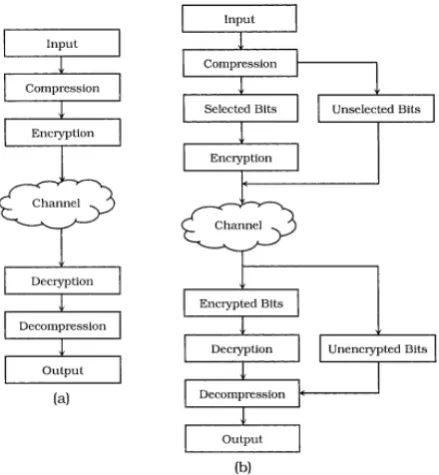
Naïve approach used to encrypt multimedia streams entirely using encryption standard methods in many cases. Is generally suitable for text, simple approach is transmission bit rate of the video file small audio, images, and over a high-speed dedicated channel at times. The linear technique to encode each byte in the stream throughout H.264/AVC can be performed using standard encryption techniques such as DES or AES. The thought of Naive algorithm is to take care of the MPEG bit stream as text data and not use the particular structure.
The Naïve algorithm, is encoded as H.264/AVC stream every bite of all, it provides safety advantages, the algorithm, not possible as AES or Triple-DES break at all. In particular, if we use a Triple DES is very slow, for a great video, it is not a solution appropriate. Delay increases with encryption and overload becomes unacceptable for video coding in real time. This is an application of a simple technique, a time Transport Protocol - Real secured. Packetized in SRTP multimedia data, it is encrypted using the AES each individual packet. Using a Naïve Approach, allowing the same level of security as in the conventional cipher. Unfortunately, encrypting the bit stream of the whole, if the transmission is not in the multimedia higher, in particular the bit rate is not possible - usually dedicated channels.
Figure 1. Logical Stages during Video or Multimedia Encryption using
(a) Naïve Encryption Technique (b) Selective Encryption Technique
V. CLOUD COMPUTING
History before cloud computing: The customary business provisions like SAP, Microsoft and Oracle utilization to be entangled and costly. They require capacity server farm, consistent power, aerating and cooling, data transmission, systems, servers, and office region. Complex programming with a group of specialists to introduce, arrange, and run. They have to create, test, run, generation and nature's turf. When you reproduce these necessities with tens or several provisions, it is straightforward why the enormous organizations with the best IT offices are not getting what they require with requisitions result to which little organizations and new businesses don't stand a possibility. Cloud processing is a saying used to portray a few procedures included in conveying facilitating administrations by means of Internet. The motivation originated from Internet image which is regularly utilized within charts and stream graphs and given the idea of cloud figuring. Wonderful developments in virtualization and conveyed figuring, and also an enthusiasm toward cloud registering and urge to get high velocity Internet access assumes an imperative part in enhancing the feeble economy which is have to be pushed. Cloud processing in a finer manner to run your business exchange to running your provisions yourself they run on an imparted server farm. When you utilize any provision that Run on the cloud client simply need to log in , redo it , and begin utilizing it,this is the force of cloud registering. Commercial enterprises are running a few sorts of provisions in the cloud nowadays , for example, client relationship administration, human assets , bookkeeping, and custom requisitions. Cloud-based requisitions can without much of a stretch be made and primed to use inside short compass
of time, which is incomprehensible with customary business programming. The expense is less in light of the fact that you don't have to pay for everything- the individuals, items and offices to run them. Additionally, the way that they are more adaptable, more secure, and more solid than generally requisitions. Also it overhauls consequently to deal with provision security and execution upgrades and new peculiarities. Cloud-based requisitions are not quite the same as the way you pay, purchasing servers and programming is not needed in this. At the point when your provision is running in the cloud client don't buy anything. Everything comes up in a reasonable month to month arrange, so you have to pay for what you are really utilizing. Cloud registering permits purchasers and organizations to utilize requisitions without establishment and access their particular records at any workstation associated with the Internet. This system permits more effective figured by the concentrated stockpiling, memory, transforming and data transfer capacity.
Figure 2: Cloud computing logical diagram
Cloud registering is Internet ("cloud") improvement and utilization of workstation engineering ("processing"). Theoretically, it is a standard transformation whereby points of interest are from individuals who master in dynamic are no more needed, through the "cloud" help control their innovation foundation might be kept up. Cloud figuring portrays another supplement, utilization and conveyance model of IT administrations focused around the Internet and it normally includes the procurement of rapidly versatile Internet administrations, frequently virtualized assets. Regular cloud figuring suppliers to give normal business requisitions are continuously gotten to from a Web program, while the product and information are put away on the server on the web.
Cloud administrations need to independent from the customary host three different attributes.
• It is might be offer by the moment or hour.
• It is adaptable - on the grounds that client characterizes benefit as much or little regarding time.
V. WINDOWS MULTIPOINT SERVER
WINDOWS MULTIPOINT SERVER: Windows multi-point-server 2012 is the first generation of server which has features of windows server. It is mainly used in education areas, hospitals, billing counters that allow multiple users to share a single computer at that same instant. Windows Multi Point Server 2012enables more users to access technology at a lower total cost of ownership. It is mainly designed for non-technical users as it is simple to manage and use. Unlike other similar solutions in the market, Windows Multi Point Server 2012 is based on the latest Windows technology and thus can run Windows applications.
5.1 Implementation
Here we do the practical analysis of performance of video encryption & streaming in various scenario that is video streaming in cloud over LAN & Wi-Fi, we analyze the delay, frame rate & bit rate of video streaming in cloud while streaming and encryption at server side.
5.2Results for MPEG codec:
5.2.1 Video Encryption of MPEG Video using Selective Video Encryption:
First of all MATLAB code of Selective video Encryption technique is implemented on MPEG video codec and which the streaming delay comparison is made by comparing the time of encryption at server then on LAN connection then on Wireless i.e. Wi-Fi connection. Exact time figures are available below for reference, then frame per second and Bit-rate was also calculated.
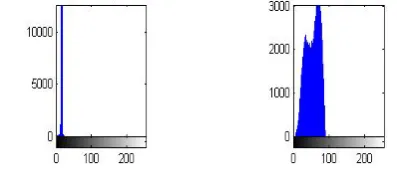
Fig. 3. Encryption Histogram of Selective Encryption Frame for MPEG Video
5.2.2 Video Encryption of MPEG Video using Naive Video Encryption:
In this streaming First of all MATLAB code of Naive video Encryption technique is implemented on MPEG video codec and which the streaming delay comparison is made by comparing the time of encryption at server then on LAN connection then on Wireless i.e. Wi-Fi connection. Exact time figures are available below for reference, then frame per second and Bit-rate was also calculated.
Fig. 4. Encryption Histogram of Naïve Encryption Frame for MPEG Video
5.2.3 Video Encryption of MPEG Video using Layered Video Encryption:
First of all MATLAB code of Layered video Encryption technique is implemented on MPEG video codec and which the streaming delay comparison is made by comparing the time of encryption at server then on LAN connection then on Wireless i.e. Wi-Fi connection. Exact time figures are available below for reference, then frame per second and Bit-rate was also calculated.
Fig. 5. Encryption Histogram of Layered Encryption Frame for MPEG Video
5.3 Results for AVI codec:
5.3.1 Video Encryption of AVI Video using Selective Video Encryption:
First of all MATLAB code of Selective video Encryption technique is implemented on AVI video codec and which the streaming delay comparison is made by comparing the time of encryption at server then on LAN connection then on Wireless i.e. Wi-Fi connection. Exact time figures are available below for reference, then frame per second and Bit-rate was also calculated.
Fig. 6. Encryption Histogram of Selective Encryption Frame for AVI Video
5.3.2 Video Encryption of AVI Video using Naive Video Encryption:
In this streaming First of all MATLAB code of Naive video Encryption technique is implemented on MPEG video codec and which the streaming delay comparison is made by comparing the time of encryption at server then on LAN connection then on Wireless i.e. Wi-Fi connection. Exact time figures are available below for reference, then frame per second and Bit-rate was also calculated.
5.3.3 Video Encryption of AVI Video using Layered Video Encryption:
First of all MATLAB code of Layered video Encryption technique is implemented on MPEG video codec and which the streaming delay comparison is made by comparing the time of encryption at server then on LAN connection then on Wireless i.e. Wi-Fi connection. Exact time figures are available below for reference, then frame per second and Bit-rate was also calculated.
Fig. 8. Encryption Histogram of Layered Encryption Frame for AVI Video
5.4 Analysis
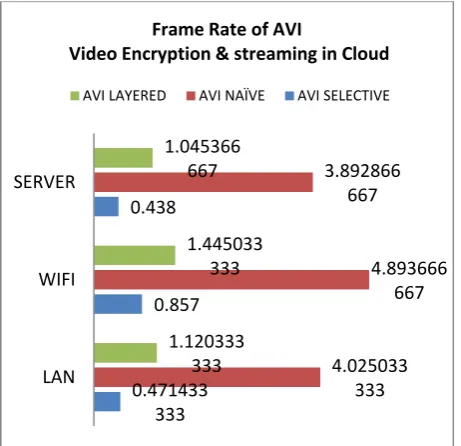
Below tables and graphs shows comparison of Video streaming delay, frame per second and BIT-Rate for two formats MPEG and AVI.
Video Technology LAN WIFI SERVER
MPEG SELECTIVE 16.243 26.74 15.945
MPEG NAÏVE 124.353 156.11 113.788
MPEG LAYERED 35.56 45.785 33.391
Graph 1: Comparison of Video streaming delay in cloud environment on various MPEG video Encryption techniques.
Video Technology LAN WIFI SERVER
MPEG SELECTIVE 0.541433 0.891333 0.5315
MPEG NAÏVE 4.1451 5.203667 3.792933
MPEG LAYERED 1.185333 1.526167 1.113033
Graph 2: Comparison of Video streaming delay in cloud environment on various MPEG video encryption techniques (frame rate no.of frames per second).
Video Technology LAN WIFI SERVER
AVI SELECTIVE 14.143 25.71 13.14
AVI NAÏVE 120.751 146.81 116.786
AVI LAYERED 33.61 43.351 31.361
Graph 3 Comparison of Video streaming delay in cloud environment on various AVI video encryption techniques
Graph 4 Comparison of Video streaming delay in cloud environment on various AVI video encryption techniques (frame rate no .of frames per second).
16.243 26.74 15.945
124.353 156.11 113.788
35.56 45.785 33.391
LAN WIFI SERVER
Time Taken by Various Video Streaming in
Cloud
MPEG LAYERED MPEG NAÏVE MPEG SELECTIVE
0.541433 333 0.891333
333 0.5315
4.1451 5.203666
667 3.792933
333
1.185333 333 1.526166
667 1.113033
333
LAN WIFI SERVER
Frame Rate of MPEG Video Encryption &
streaming in Cloud
MPEG LAYERED MPEG NAÏVE MPEG SELECTIVE
14.143 25.71 13.14
120.751 146.81 116.786
33.61 43.351 31.361
LAN WIFI SERVER
Time Taken for Video Streaming over
Cloud
AVI LAYERED AVI NAÏVE AVI SELECTIVE
0.471433 333 0.857 0.438
4.025033 333
4.893666 667 3.892866
667
1.120333 333 1.445033
333 1.045366
667
LAN WIFI SERVER
Frame Rate of AVI
Video Encryption & streaming in Cloud
CONCLUSION
In this work performance is analyzed for streaming two video formats i.e. MPEG and AVI. While streaming two sample video in cloud environment are encrypted by three different techniques which are Selective Video Encryption, Layered Video Encryption & Naïve Video Encryption following conclusions have been inferred:
1. The selective video encryption is the fastest. 2. The stream rate in cloud increases as the data size
increases
3. The selective takes the minimum time while naïve encryption takes the most.
4. Layered Video encryption is optimum.
FUTURE WORK
1. This work has been carried out to analyse the performance of encryption and streaming of video formats in cloud, in future based on the results researchers shall attempt some kind of new encryption techniques which is faster, bigger payload and less lossy.
2. The work can also be analyzed using other video formats too.
REFERENCES
1. Su- Wan park, Sang-Uk shin. “ Efficient Selective Encryption
Scheme for the H.264/Scalable Video Coding(SVC)” , Fourth International Conference on Networked Computing and Advanced Information Management, Volume 01, pp 371-376 , 2008.
2. Iain Richardson, “An Overview of H.264 Advanced video coding”.
2007 white paper. http://www.vcodex.com/files/H.264_overview.pdf (retrieved March 02, 2009).
3. Yuanzhi Zou, Tiejun Huang, Wen Gao, Longshe Huo. Nov, “H.264
video encryption scheme adaptive to DRM”. IEEE Transactions on Consumer Electronics, pp. 1289 – 1297, 2006.
4. Lian, S., Liu, Z., Ren, Z., and Wang, Z., “Selective Video
Encryption Based on Advanced Video Coding,” Lecture Notes in Computer Science, Springer-Verlag 3768, 281–290 (2005).
5. Z. Shahid, M. Chaumont, W. Puech,“Fast Protection of H.264/AVC
by Selective Encryption of CAVLC and CABAC for I & P frames”, Journal of IEEE transactions on circuits and systems for video technology.
6. A A Muhit, M R Pickering, M R Frater and J F Arnold, “Video
Coding using Elastic Motion Model and Larger Blocks,” IEEE Trans. Circ. And Syst. for Video Technology, vol. 20, no. 5, pp. 661-672, 2010.
7. A A Muhit, M R Pickering, M R Frater and J F Arnold, “Video
Coding using Geometry Partitioning and an Elastic Motion Model,” accepted for publication in Journal of Visual Communication and Image Representation.
8. S. Lian, J. Sun, G. Liu and Z. Wang, "Efficient video encryption scheme based on advanced video coding," Multimedia Tools Appl, Vo138, No.1, pp.7S-89, May. 2008.
9. T.Wieg. Draft ITU-T Recommendation H.264 and Draft
ISO/IEC 14496-10 AVC. Joint Video Team of ISO/IEC JTC 1/SC29IWG 11 & ITU-T SG16/Q6 Doc.JVT -GO5O, 2003.
10. J Ahn, H. 1. Shim, B. Jeon and I. Choi, "Digital Video
Scrambling Method Using Intra Prediction Mode," in Pacific Rim Conf. Multimedia, Tokyo, Japan, pp.386-393, 2004.
11. Lingling Tong, Gang Cao, Jintao Li, “Layered Video Encryption
Utilizing Error Propagation in H.264/AVC,” in IEEE Symposium on Electrical & Electronics Engineering (EEESYM), 2012.
12. M. Abomhara, Omar Zakaria, Othman O. Khalifa, A.A Zaidan, B.B
Zaidan, “Enhancing Selective Encryption for H.264/AVC Using Advanced Encryption Standard,” in International Journal of Computer Theory and Engineering, Vol. 2, No. 2 April, 2010.
13. Jay M. Joshi, Upena D. Dalal, “Selective Encryption using
ISMACryp in Real Time Video Streaming of H.264/AVC for DVB-H Application,” World Academy of Science, Engineering and Technology 55 2011.
14. Rajinder Kaur, Er. Kanwalpreet Singh, “Comparative Analysis and
Implementation of Image Encryption Algorithms,” International Journal of Computer Science and Mobile Computing (IJCSMC), Vol. 2, Issue 4, April 2013, Pg.170-176.
15. Ibrahim S. I. Abuhaiba, Hanan M. Abuthraya, Huda B. Hubboub,
Ruba A. Salamah, “Image Encryption Using Chaotic Map and Block Chaining,” International Journal of Computer Network and Information Security, July, 2012, Pg. 19-26.
16. Nidhi S Kulkarni, Balasubramanian Raman, and Indra Gupta,
“Selective Encryption of Multimedia Images,” XXXII National Systems Conference, NSC 2008, December 17-19, 2008.
17. MP4 Registration authority. "References, MPEG-4 Registration
authority". Retrieved 2009-06-14.
18. ISO (April 2006). ISO Base Media File Format white paper -
Proposal. archive.org. Archived from the original on 2008-07-14. Retrieved 2009-12-26
19. ISO (October 2005). MPEG-4 File Formats white paper - Proposal.
archive.org. Archived from the original on 2008-01-15. Retrieved 2009-12-26.
20. ISO (October 2009). ISO Base Media File Format white paper -
Proposal. chiariglione.org. Retrieved 2009-12-26. 21. Apple Computer. "MPEG-4 Fact Sheet".