Infrastructure Cloud Using Virtual Machine
P. Keerthana1, B.G.Geetha2
P.G. Student, Department of Computer Engineering, K.S. Rangasamy College of Technology, Namakkal, Tamilnadu,
India1
Head of Department, Department of Computer Engineering, K.S. Rangasamy College of Technology, Namakkal,
Tamilnadu, India2
ABSTRACT: Providing a safe and efficient access to archived data on a large scale is an important part of the cloud computing.We describe conditions for data and operational safety of IaaS, consisting of protocols for a trusted introduction of virtual machines and domain-based storage. Trusted Computing provides an important basis for the design of cloud services, better resistance against these threats. Data confidentiality and integrity protection mechanism provide the infrastructure-as-a-service (IaaS) clouds, based on Trusted Computing principles of transparent storage separation between IaaS customers.TCCP allows infrastructure-as-a-service (IaaS) provider for a closed box execution environment that guarantees confidential version of virtual machines. In addition, it allows users to testify to the IaaS offerings and determine whether or not the service is safe before you start your virtual machines.
KEYWORDS: Cloud Computing, Virtual Machine, Domain based Storage, Trusted Cloud Computing.
I. INTRODUCTION
Trusted Cloud Computing Platform(TCCP) describes the confidentiality and integrity of the calculations that are outsourced, IaaS services. TCCP ensure the abstraction of a closed box execution environment for a customer VM, the guarantee that no cloud provider privileged administrator can inspector tamper with its content. TCCP allows customers reliably and on the distance to determine if the service is running a trusted TCCP back-end implementation. A VM is started from the virtual machine image(VMI) load from the CM. Once a VMislaunched, user scan login to it using normal tools. Site are interface to every user, CM exports servicescan be used to perform administrative tasks such as adding and removing VMI users. The Trusted Computing Group (TCG) proposes a number of hardware and software technologies to providethe construction of trusted platforms.Cloud-based services provide customers and suppliers with scalable license by any type of service without the need to rely on the underlying physical infrastructure. Attacker would be able to compromise the interfaces of the IaaS cloud and abuse of the cloud resources from other tenants. The confidentiality of the data protection and insulation of data between IaaS cloud-client is underlined by the attention that he has received from the research community.
II. SCOPE OF PAPER
III. LITERATURE SURVEY
AmitSahai, 2007,describes ciphertext policy attribute-based encryption. It enables a new kind of encrypted access control where user's private key are displayed by a series of attributes and a party to encrypt data, you can create a policy that have these attributes to specify which users are able to decrypt. Our system allows policy to be expressed as any monotonous tree on the structure and is resistant to collusion attacks, in which an attacker may have multiple private keys. See the attribute-based encryption systems with different types of expressibility. While Key-Policy ABE and Cipher Text Key-Policy ABE capture two interesting and free types of systems are there are other types of systems. The primary challenge in this line of work is a new systems with elegant forms of expression that are more than a combination of techniques.
S. Kamara and K. Lauter, 2010,describes cloud infrastructures can be broadly categorized as either public or private. Private cloud is the infrastructure, managed and owned by the customer and on-premise (i.e. in the region of the customer). In particular, this means that the access to the data of the customer under his control and will only be granted the parties trusts. Public cloud is the infrastructure, managed and owned by the cloud service provider and is located off-premise (i.e., in the region of the service provider of control). This means that the customer data is out of your control and may be granted to untrusted parties. Cryptographic techniques, recently allows the specification of a decryption policy to be connected with a ciphertext. More specifically, in a (cipher text policy) attribute-based encryption for each user in the system is available with a decryption key, has a number of attributes is assigned.
A. Sahai, B.waters,2005,describes Identity based encryption (IBE) allows sender to encrypt message to an identity without access the public key of a certificate. The ability to do public key encryption without certificates has many practical applications. Example, a user will send an encrypted message to a receiver without existence of a public key infrastructure or recipients are on-line at time of creation. Identity based encryption system describes the identities as a sequence of characters. We propose a new kind of identity based encryption to call fuzzy identity based encryption that identities a series of descriptive attributes. Fuzzy IBE is used for application that we used tocall "attribute-based encryption". In application a party want to encrypt a document for all users to a specific set of attributes.
SenyKamara,CharalamposPapamanthou, 2013,describes the searchable symmetric encryption (SSE) for a client to outsource a collection of encrypted documents in cloud and ability to implement the key word search without disclosure of information about the documents and queries. Due to the fact that onlya method to achieve sub linear time search is the inverted index approach, requires the search algorithm for the access to a number of storage locations, each of which is unpredictable and at the same location in the sequence. Searchable Symmetric Encryption (SSE) describe a client have the collection of encrypted documents via remote access while retaining the ability to have a key word searches for any information about the content of the documents or queries. Inverted index approach provides the most efficient size to date, it has at least two important limitations.
Figure 1: Trusted Cloud Service
S. Graf, P. Lang, S. A. Hohenadel, and M. Waldvogel, 2012,describes stream-based key graph approaches in the field of data storage. The distributed architecture proposed by us with versioning not only in connection with the storage of data, but also in relation to the key graph enables changes within the clients without the need of re-encryption of data. Changes to the key graphics update the descendants of the modified node. Virtual node furthermore enable us to ensure that the scalability in terms of the nodes adjacent to the updated. The updates will be introduced itself as the key trail representing the edges within the key graph. Because the key is encrypted and we use the high availability of non-trusted cloud-based services propagating material changes within the clients. The access to earlier versions is either by means of a separate shadow structure of the data and graph or by the use of the distributed architecture of our approach.
N. Santos, Krishna P. Gummadi, R. Rodrigues, 2009, describes the TCCP to improve current IAAS back ends to enable Closed Box semantics without a significant change in the architecture. Trusted Computing Base of the TCCP describes two components: a trusted TVMM (Virtual Machine Monitor), and a trusted coordinator (TC). Each node of the Back ends performs a TVMM hosting customer VMs and prevents that the privileged users of check or change it.
IaaS Perimeter
U
serPublic Network
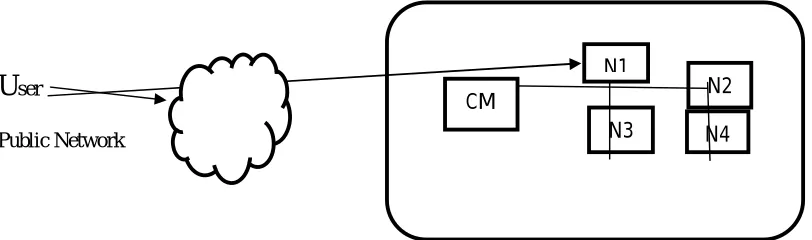
Figure 2: Simplified Architecture of Trusted Machine
Public Network and Nodes can access by user. CM share the information or data between the nodes. Every nodes share the information. User can get information or data at any time we needs. There will be no data losses. Security is provided to use the information.
Data Owner End User
Storage Service Provider
CM
N1
N3 N4
The TVMM protects its own integrity in time and accordance with TCCP protocol. Node embedded a certified TPM chip and undergo a secure boot process for installing the TVMM. Due to lack of space we will not go into detail on the design of the TVMM, and we refer the reader to for an architecture that can be used to a TVMM, forces the local closed box protection against a malicious system admin. The TC manages the set of nodes that a customer VM. We call this node trusted nodes.
ETE IaaS Perimeter
User
Figure3: Components of Trusted Computing
A. Michalas, N. Paladi, and C. Gehrmann, 2014,describes the Domain based storage protection (DBSP) in a public IaaS cloud. DBSP is based on a set of protocols that enable an IaaS customers to shift the responsibility for the confidentiality and integrity of data to an external TTP away from IaaS offerings. This approach is based on two protocols: Initial data write operation and subsequent data to read and write. The idea of this approach is that information to save the derivation of the decryption key for certain amount of data in a header attached to the tape itself. The decryption key can only be derived by the TTP with the help of the stored information to write times in the data carrier head and TTP-own private key.
T. Garfinkel, B. Pfaff, J. Chow, M. Rosenblum, and D. Boneh Dan Boneh, 2003,describes the concept oftrusted virtual machine monitors the developers with the semantics of real closed-box-platforms. VMs a raw-hardware interface with virtual network cards, video cards, hard disks, etc. Secure VMs can show that their content through the signed certificates through a direct interface to the TVMM. TVMM provides the Management VM for interfaces to manage VMs and connect with virtual appliances. We describe these interfaces and the way it is implemented by TVMM.
IV. CONCLUSION
The Cloud Security model still does not hold against threat models developed for the traditional model in which the host and will be operated by the same organization. However it is a continued progress toward a strengthening of IaaS security model. In this work we presented a framework for trusted infrastructure cloud implementation, with two main points: VM deployment on trusted hosts to calculate and domain-based protection of stored data. We detail the design, implementation and assessment of the safety of protocols for trusted start the VM and domain-based storage. The solutions are based on requirements by way of a public health authority have been implemented in a popular open-source IaaS platform and tested on a prototype implementation of a distributed EHR system. In the Security Analysis, we conducted a series attacks to demothe protocols for specified threat modal. Trust in the semantic properties of the security protocols that we have modeled and verified with prove. Finally, our performance tests have shown that the introduction of a minor protocols performance overhead.Our results show that it both possibleand practicalto provide a strong platform software integrity, IaaS tenants and more effectively isolate your data via cryptographic tools established.
TC N1 N2
N3 N4
REFERENCES
[1] Santos, N., Gummadi, K.P., and Rodrigues, R., “Towards trusted cloud computing”, proceedings of the 2009, conference of Hot Topics, Cloud Computing, Hot Cloud’09.
[2] Paladi, N., Michalas, A., and Gehrmann, C., “Domain based storage protection with secure access control for cloud”, proceedings of the 2014on International Workshop on Security in Cloud Computing.
[3] Jordon, M., “Cleaning updirty disks in cloud”, Network Security, 2012.
[4] Michalas, A., Paladi, N., and Gehrmann, C., “Security aspects of e-health systems migration to the cloud”, 16th International Conference on E-health Networking, Application & Services, Oct2014.
[5] Bertholon, B., Varrette, S., and Bouvry, P., “Certicloud: novel based approach to ensure the cloud IaaS security”, Cloud Computing, 2011. [6] Aslam, M., Gehrmann, C., Rasmusson, L., and Bjorkman, M., “Securely launching virtual machines on trustworthy platform in public cloud -
an enterprise’s perspective”, 2012.
[7] Cooper, A.,and Martin, A., “Towards a secure of tamper proof of grid platform”,Cluster Computing and Grid, 2006. [8] Wang, W., Li, Z., Owens, R., and Bhargava, B., “Secure and efficient access to outsource data”, Proceedings of the 2009. [9] Song, D., Shi, E., Fischer, I., and Shankar, U., “Cloud data protection for masses”,IEEE Computer, 2012.
[10] Graf, S., Lang, P., Hohenadel, S.A., and Waldvogel, M., “Versatile key management to secure cloud storage”,Proceedings of the 2012. [11] Santos, N., Rodrigues, R., Gummadi, K.P., and Saroiu, S., “Policy Sealed Data: A New Abstraction for Building Trusted Cloud Services”, in
21st USENIX Security Symposium, 2012.
[12] Sadeghi, A.R., and Stuble, C., “Property-based attestation for computing platforms: Caring about properties, not mechanisms”, Proceedings of the 2004.
[13] Sahai, A., “Ciphertext-policy attribute-based encryption”, Proceedings of the IEEE Symposium on Security and Privacy, 2007. Kamara, S., and Lauter, K., “Cryptographic cloud storage”, Financial Cryptography and Data Security, 2010.
[14] Sahai, A., and Waters, B., “Fuzzy identity-based encryption”, Advances in Cryptology–EUROCRYPT2005, Springer, 2005.
[15] Kamara, S., Papamanthou, C., “Parallel and dynamic searchable symmetric encryption”, Financial Cryptography and Data Security, Springer, 2013.
[16] Paladi, N., Gehrmann, C., Aslam, M., and Morenius, F., “Trusted Launch of Virtual Machine Instances in Public IaaS Environments”, Information Security and Cryptology (ICISC’12),Springer,2013.
[17] Paladi, N., Gehrmann, C., and Morenius, F., “Domain-Based Storage Protection (DBSP) in Public Infrastructure Clouds”, Secure IT Systems, Springer, 2013.
[18] Waldspurger, C., and Rosenblum, M., “I/O virtualization”,Communications of the ACM, 2012.