• No results found

Improving Fat Utilization by the Weaned Pig: Effect of Diet Physical Form, Fatty Acid Chain Length, and Emulsification.

N/A
N/A
Protected

Academic year: 2020

Share "Improving Fat Utilization by the Weaned Pig: Effect of Diet Physical Form, Fatty Acid Chain Length, and Emulsification."

Copied!
73
0
0

Loading.... (view fulltext now)

Full text

(1)

ABSTRACT

PRICE, KATHRYN LEIGH. Improving Fat Utilization by the Weaned pig: Effect of Diet

Physical Form, Fatty Acid Chain length, and Emulsification. (Under the direction of Jack

Odle.)

Previous research indicates that dietary fat utilization by the newly-weaned pig is

low, while fat digestive capabilities prior to weaning are very high. Sow milk contains

approximately 40% fat, whereas nursery diets are rarely formulated to contain more than 5%.

The aim of this experiment was to determine if emulsification (plus or minus Tween-80),

physical form of the diet (liquid vs dry) or fatty acid chain length (medium (MCT) vs long

chain triglyceride (LCT)) effect fat utilization by the newly weaned pig. Two replicates were

performed in the summer of 2006 at the NCSU Swine Educational Unit. Pigs (N= 96) were

weaned at 20 ± 0.30 d of age (6.8 ± 0.04 kg) and fed one of eight dietary treatments for 14 d

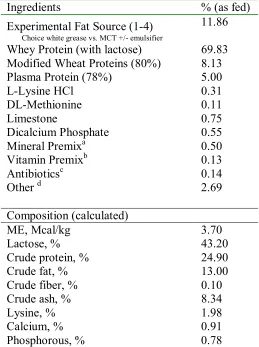
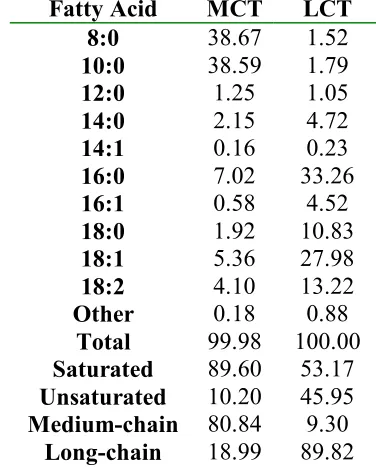
according to a 2x2x2 factorial design. The MCT fat contained primarily C8 and C10 fatty

acids while the LCT fat was supplied by choice white grease. Each fat was spray dried with

or without the inclusion of Tween-80 emulsifier (at 2% w/w) and comprised 12% of the final

diets. Diets were otherwise formulated to exceed NRC nutrient requirements. Liquid diets

were reconstituted with water to 13% dry matter and were offered ad libitum via

milk-replacer feeders (Kane Manufacturing).

(2)

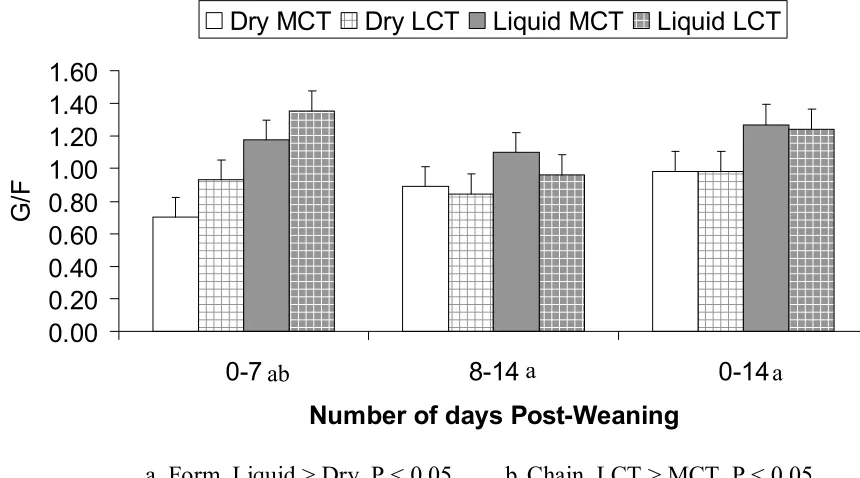
pigs and was 21% greater for pigs fed LCT vs MCT. Accordingly, gain:feed was improved

by 29% in liquid-fed pigs (P < 0.05).

A comparison of two digestibility markers, C 36 alkane and Co-EDTA, was

examined in this trial. The use of Co-EDTA resulted in a statistically (P < 0.05) greater

digestibility over the C 36 marker. However, it is unclear as to which marker is the more

accurate when trying to determine fat digestibility. C 36 was used to determine all

digestibility data and diet physical form had no effect (P > 0.1) on digestibility. The

digestibility of the fat was higher (P < 0.05) in the MCT fat over the LCT fat (98.42% vs

93.39%, respectively). Emulsification increased the digestibility of the LCT fats and this

effect was more evident in the long chain saturated fatty acids (P < 0.05).

Ileal and Jejunal morphology showed increases in the villus height as the pigs aged (P

< 0.05). Emulsification of the fat resulted in an increased Ileal villus height (P < 0.05) in all

diets except for the liquid MCT fed pigs that were 14days post weaning.

Plasma ketone body concentrations were significantly (P < 0.05) greater in the MCT

fed pigs and interaction between chain length and diet physical form was observed. Pigs

consuming the dry MCT diet had a higher plasma ketone body concentration followed by

liquid MCT, liquid MCT, and finally dry LCT fed pigs.

(3)

Improving Fat Utilization by the Weaned pig: Effect of Diet Physical Form,

Fatty Acid Chain length, and Emulsification

by

Kathryn Leigh Price

A thesis submitted to the Graduate Faculty of

North Carolina State University

in partial fulfillment of the

requirements for the Degree of

Master of Science

Animal Science

Raleigh, North Carolina

2007

APPROVED BY:

__________________________

_________________________

Dr.

Eric

van

Heugten

Dr.

Peter

Ferket

__________________________

Dr. Jack Odle

(4)

BIOGRAPHY

Kathryn Leigh Price was born on February 23, 1983 in High Point, North Carolina to

Allen and Leigh Price of Madison, North Carolina. Kathryn was an active member of the

local 4-H club in Rockingham County where she gained her appreciation for animals. She

graduated from McMichael High School in Madison, North Carolina in 2001. Kathryn

attended North Carolina State University and completed her Bachelors of Science degrees in

Animal Science and Poultry Science, with concentrations in Feed Mill Management and

Agricultural Business Management in December, 2005. During this time, she discovered her

interest in swine research while working as a lab research assistant. After graduation,

(5)

ACKNOWLEDGEMENTS

I would like to thank Dr. Jack Odle for his continuing guidance and support over the

past 5 years. I have learned an incredible amount about research, scientific writing, and life

from him. Dr. Robert Harrell was also instrumental in inspiring my passion for research. I

would also like to thank Dr. Eric van Heugten and Dr. Peter Ferket for serving on my

committee. Thank you to the Fats and Proteins Research Foundation (FPRF) for funding this

research project and to Milk Specialties, Co for making my diets for the trials.

Thank you to the Odle laboratory, Swine Educational Unit employees and other

volunteers: Bayley Crane, Holly Hess, Ashley Ikard, Christopher Lassiter, Tina Herfel and

Dr. Kwan Seob Shim and James Lupton. Mike from the SEU was instrumental in ensuring

that my research trials ran as smoothly as possible. I am forever indebted to Dr. Xi Lin for

his assistance with lab procedures, his knowledge about the GC, and for the many laughs we

have had over the past 2 years.

I would like to thank all of my friends who gave me an outlet during the more

stressful times: Anna Austin, Claire Saunders, Stacy Sink, Kari Young, Danielle McLaurin,

Krystal Pittman, and Sarah Walters. All of these friends have influenced me in ways beyond

measure. I would also like to extend a special thank you to Dr. Sheila Jacobi for not only

being a good friend, but also an invaluable colleague.

(6)
(7)

TABLE OF CONTENTS

LIST OF TABLES

vi

LIST OF FIGURES

vii

LIST OF APPENDIX TABLES AND FIGURES

viii

LITERATURE REVIEW

1

Introduction

2

Production aspects of weaning

3

Fat digestion

8

Factors affecting fat digestibility

9

Intestinal development

18

Digestibility markers

21

Literature cited

23

IMPROVING FAT UTILIZATION IN THE WEANED PIG:

EFFECT OF DIET PHYSICAL FORM, FATTY-ACID-CHAIN

LENGTH AND EMULSIFICATION

28

Introduction

29

Materials and methods

30

Results

35

Discussion

38

Implications

43

Literature cited

44

(8)

LIST OF TABLES

Table 1. Diet formulation and calculated composition

47

Table 2. Analyzed fatty acid profiles of MCT and LCT diets

(% w/w of total fatty acids)

48

Table 3. Effect of diet physical form, fatty acid chain length and

emulsification on jejunal mucosal morphology

49

Table 4. Effect of diet physical form, fatty acid chain length and

(9)

LIST OF FIGURES

Figure 1. Schematic of dietary treatments

51

Figure 2. Effect of diet physical form and fatty acid chain length

on growth performance of weanling pigs

52

Figure 3. Effect of diet physical form and fatty acid chain length

on ADG of weaned pigs

53

Figure 4. Effect of diet physical form and fatty acid chain length

on ADFI of weaned pigs

54

Figure 5. Effects of diet physical form and fatty acid chain length

on G/F of weaned pigs

55

Figure 6. Effect of dietary marker on fatty acid digestibility

56

Figure 7. Effect of fatty acid chain length and emulsification on apparent

ileal fatty acid digestibility in piglets at 7 days post weaning

57

Figure 8. Effect of fatty acid chain length and emulsification on apparent

ileal fatty acid digestibility in piglets at 14 days post weaning

58

Figure 9. Effect of diet physical form and fatty acid chain length

(10)

LIST OF APPENDIX TABLES AND FIGURES

Table 1. Effect of diet physical form, fatty acid chain length and

emulsification on growth performance in weaned pigs

61

Table 2. Effects of diet physical form, fatty acid chain length and

emulsification on apparent ileal fatty acid digestibility by

(11)

CHAPTER I:

LITERATURE REVIEW

Introduction

Research has shown that the newly weaned pig is less capable of utilizing fat than a

suckling pig. Typical weanling pig diets include fat at 3-6% of the diet to aid in the pelleting

process (Maxwell and Carter 2001) and to increase the energy density of the diet (Stahly 1984).

On the other hand, sow’s milk contains roughly 40% fat (DeMan et al., 1963). The literature is

inconsistent on the value of added fat in nursery diets. There have been several experiments that

show no improvement or negative effects on growth performance when increasing the level of

fat in the diet (Peo et al., 1957, Eusebio et al., 1957); however, there are also studies showing an

increase in growth performance when using a diet high in fat (Oliver et al., 2005, Allee, et al.,

1971 and Sewell and Miller 1965).

According to the NAHMS 2006 survey a total of 13.8% of suckling pigs and 9.8% of

weaned pigs died due to starvation. Therefore, in an attempt to increase survivability research

into the supplementation of medium-chain triglycerides (MCT) in weanling pig diets has shown

that MCTs are more readily oxidized and absorbed by the young pig (Odle 1997). Both in vivo

and in vitro analyses using rats have shown that the hydrolysis of MCT occurs at a much quicker

rate than the hydrolysis of long-chain triglycerides (LCT, Greenberger et al., 1966).

(12)

The use of added emulsifying agents in weanling pig diets is one method researchers are

investigating in attempt to increase the digestibility of LCT diets. However, the literature is

inconsistent as to which emulsifier and the amount needed to improve growth performance.

Tween-80 has been shown to be a more effective emulsifier at improving plasma concentrations

of medium-chain fatty acids when compared to soy-lecithin or gum-arabic (Wieland et al., 1993).

The use of either lysolecithin or lecithin increased digestibility for the first 10 days after weaning

when added at 0.02%, while piglet performance was improved when lysolecithin was added at

0.01% of the diet (Xing et al., 2004). However, in another study a decrease in digestibility was

observed when lysolecithin was included in the diet and lecithin tended to increase the

digestibility when either emulsifier was included at 5%, 10% or 30% of the fat (Jones et al.,

1992). Growth performance decreased when lecithin was included at a level greater than 5% and

when any level of lysolecithin was used. In older pigs (between 11 and 35 days post weaning)

ADG and ADFI increased when either emulsifier was included above 5% in the diet, resulting in

similar feed efficiencies among treatments (Jones et al., 1992).

(13)

Methods to improve fat utilization by examining diet physical form (liquid vs dry), fatty

acid chain length (MCT vs LCT) and emulsification (added Tween-80 or no Tween-80) were

investigated during this research trial and will be discussed in this review of the literature.

Production aspects of weaning pigs

(14)

There are major dietary changes at weaning that the piglet must adjust to with the main

change being in diet physical form. Prior to weaning the piglet is on an all milk diet and at

weaning the form of the diet changes to a dry pellet. The main sources of protein, energy and

carbohydrate change as well. The protein source changes from casein or whey protein source to

a soy or corn protein source. The main energy source becomes carbohydrates instead of fat and

the main carbohydrate source transitions from being lactose to starches (corn). Another major

change in the diets of weaned pigs is the amount of fat included in the diet. Sow milk has as

much as 40% fat on a dry matter basis, however; weanling diets rarely include more than 6% fat.

Fat inclusion in swine nursery diets is typically added to aid in the pelleting process. However,

in addition to improvements in pellet quality, a greater fat content in the diet increases the energy

density of the diet. Adding more fat to weanling pig diets is thought to aid newly weaned piglets

especially immediately after weaning when they are consuming little to no feed (Stahly 1984).

As will be discussed later in this review, the digestive capabilities of the newly weaned pig may

be insufficient to adequately digest the standard dry weanling diet and are not thought to be fully

functioning until the pig is 4 weeks of age (Maxwell and Carter 2001).

Wolter et al. (2002) concluded that suckling pigs given access to milk replacer grew

faster and had fewer preweaning deaths than sow reared piglets. During the postweaning (up to

14kg) and finishing (65-110kg) phases no detectable effect was observed between pigs fed a

milk replacer diet or a dry starter diet. However, a significant increase in body weight was

observed during the grower (25-65kg) phase in pigs that had been fed a milk replacer diet during

the weaning period. Even though differences were not observed during the weaning and

(15)

New research attributes the decrease in growth performance at weaning to aggression in

piglets. Aggression in weaned piglets is thought to be caused by the piglets creating new

hierarchies once they have been arranged with their new pen mates. The more time the piglets

spend fighting means they are not consuming feed. Therefore, this could contribute to the

reduction in body weight seen immediately after weaning (Jensen et al., 2002). Studies by

Newberry et al. (2000) and D’Eath et al. (2005) determined that piglets that were commingled

with other litters during the suckling phase resulted in less fighting and the development of

hierarchies quicker. A study by Weghe et al. (2006) examined the activity of piglets that were

either commingled or not socialized prior to weaning and its effects prior to and after weaning.

They concluded that immediately after weaning and until 4 hours post weaning that piglets not

socialized showed more aggressive behavior than the commingled piglets (Weghe et al., 2006).

They hypothesized that the piglets that were commingled during the suckling phase had already

developed hierarchies resulting in less aggression during weaning.

Diet Physical Form

Conventional weaning programs transfer weaned piglets on to a dry starter diet but the

abrupt change in diet appears to cause a loss of weight and/or a decrease in feed intake

(16)

Providing newly weaned pigs with a readily available energy source is essential to improving

both survivability and growth performance (NAHMS 2006 and Kim et al., 2001). Liquid fed

pigs can increase their body weight gains in the first three days post weaning by four fold

compared to dry fed pigs. Diet physical form had less of an impact once the pigs were older than

15 days post weaning but dry fed pigs never out performed liquid fed pigs. Pigs in this

experiment reached market weight about 4 days earlier when fed a liquid diet compared to a dry

diet (Kim et al., 2001). It has been suggested that both the piglet and the sow can limit the

piglets ability to maximize their growth. The theory is that the sow is not stimulated enough to

produce milk at her maximum therefore, piglet growth is limited. Weaning pigs too early, close

to 10 days of age, generally results in poor growth performance which is mainly due to the diet

being fed in a dry form (Odle & Harrell 2003).

Value of added fat in nursery pig diets

Fat in weanling pig diets is mainly added to help in the pelleting process and increase the

energy density of the diet. However, research is inconsistent on the value of adding fat to

nursery diets. Sow milk contains 40% fat (DeMan and Bowland 1963) which is 97% digestible

(Lucas and Lodge 1961), however, typical weanling diets are only 3-6% (Maxwell and Carter

2001) fat which is between 85% and 93% digestible (Cera et al., 1988, Hamilton and McDonald

). Adjusting the source of fat and amount of fat included in nursery diets is one way researchers

can attempt to maximize piglet growth performance at weaning.

(17)

containing soybean oil gained significantly less than pigs weaned onto the control diet (no fat) or

the coconut oil diet. Piglets fed the control diet (no added fat) outperformed piglets weaned onto

a diet containing dietary fat. Peo et al. (1957) conducted 4 trials with pigs weaned at 7.9 days of

age onto a diet containing stabilized lard. Over the 9 experiments conducted by both Eusebio et

al. (1970) and Peo et al. (1957) a decrease in total weight gain and feed efficiency was observed

when the level of fat inclusion exceeded 5%. When fat was added between 0 and 5% growth

performance was not significantly effected. Gain:Feed (G:F) was not significantly affected and

in most cases a decrease in G:F was observed when higher levels of fat were included in the diet

(Eusebio et al., 1960 and Peo et al., 1957).

(18)

Fat digestion

Chemical digestion of fat is generally thought to begin in the stomach; however, research

shows that the breakdown of fat may actually start in the mouth. Chewing the food to break it

into smaller particles and salivary secretions may start the breakdown of fat. Lingual lipase and

gastric lipase are two enzymes secreted from the serous glands and the gastric mucosa,

(19)

the LCT products are re-formed into long chain phospholipids and triglycerides and then made

into a chylomicron. The chylomicron will then enter into the lymphatic system and travel

through the heart to the liver where their fate is dependent on the nutritional state of the animal

(oxidized to ketone body’s or stored). On the other hand, MCT pass from the stomach straight

through the intestine into the portal vein. Once in the blood stream MCT reach the liver quicker

than an LCT due to the lymph system having a much slower flow rate. The portal vein system

flows directly to the liver while the lymphatic blood flows through several organs prior to

reaching the liver (Odle 1997 and Playoust et al., 1964 and Azain 2001). Finally a small amount

of lipid digestion takes place in the large intestine when hydrogenation of unsaturated fatty acids

occurs by the action of the microflora in the intestine (Azain 2001).

Factors affecting fat digestibility

There are several factors that can affect the digestibility of fat, such as fatty acid chain

length, the degree of saturation of the fat source, whether the fat is emulsified and the stage of

development of the intestine. Increasing the digestibility of the fat source may increase fat

utilization in the newly weaned pig. If the newly weaned pig is more efficient at digesting its

diet one theory is that there will be less of a reduction in body weight just after weaning.

Fatty acid chain length

(20)

(Jekendrup and Aldred 2004). According to USDA (2000) survey a total of 12.5% of suckling

pigs and 17.6% of weaned pigs died due to starvation (NAHMS, 2000). Therefore, research into

the use of MCT supplementation in an attempt to increase survivability has shown that MCTs are

more readily oxidized and absorbed by the young pig (Odle 1997).

(21)

and pancreatic lipase are needed for efficient hydrolysis of triglycerides (Greenberger et al.,

1966).

Cera et al. (1988) examined three different LCT fat sources: corn oil, tallow and lard, for

their effects on digestibility in 21 day old weaned pigs when fed at 8% of the diet. The corn oil

source (vegetable) was only 15% saturated fatty acids and 85% unsaturated fatty acids, while the

lard and tallow fat sources (animal fat sources) were 35% saturated fatty acids and 65%

unsaturated fatty acids. During the experiment they observed a higher apparent fat digestibility,

in the corn oil fed pigs throughout the entire 4 week study compared to the tallow and lard

groups. The digestibility of the tallow and lard group remained similar to each other throughout

the entire trial. By the end of the 3

rd

week the digestibilities of the 2 animal fat sources had

approached similar levels of digestibility as the vegetable fat source but they never reached the

same digestibility. The digestibility of the corn oil increased from 79% at week 1 to 88.8% at

week 4, lard increased from 68.1% to 84.9% and tallow increased from 64.8% to 82.5%. While

on study, feed intake and body weight each week were similar among groups indicating that

another factor may have affected growth performance (Cera et al., 1988).

(22)

week period, the digestibility of each fat increased over time; coconut oil increased from 81.7%

to 87.3%, corn oil went from 76.5% to 84.8% and tallow increased from 75.4% to 81.8% (Cera

et al., 1989).

Cera et al. (1989) also examined the effect of feeding one fat source or mixing fat sources

at a ratio of 1:1. The fat (included at 8% of the diet) sources used were coconut oil, corn oil,

tallow, coconut:tallow, coconut:corn oil and a mixture of corn oil:tallow. Pigs fed the diet

containing coconut oil had the greatest daily body weight gain throughout the entire trial. The

pigs on the 1:1 mixture of tallow and corn oil performed the worst. The diets containing only

tallow or corn oil had the lowest daily gain throughout the length of the trial (Cera et al., 1989).

(23)

by butter (86.3%), lard (84.2%), coconut oil (83.8%), vegetable oil (82.4%), and the control

(44.6%) diet had the lowest digestibility (Frobish et al., 1970).

In a review paper on medium chain triglycerides by Marten et al. (2006), they report that

diets containing LCT had greater weight gains compared to those on a MCT diet. The diets were

isoenergetic to prevent weight gain differences due to differing energy values among diets.

Subjects on the MCT diet had less fat deposition than those on the LCT diet. They attribute

some of the reduced weight gains to the thermogenic effect of MCT observed in rodents. In

humans, greater expenditure of energy was observed after consuming a diet high in MCT and

persisted for hours after the meal (Marten et al., 2006). An additional explanation for the lower

weight gains in MCT fed rats could be due to MCT having a more satiating effect which would

lead to lower feed intake (Marten et al., 2006).

Degree of saturation

The digestion of long chain fats is affected by the ratio of unsaturated fat (U) to saturated

fat (S); whereas, the digestibility of medium and short chain fats are not as affected by the degree

of saturation (Stahly 1984). A diet high in saturated fat is less digestible than one high in

(24)

According to a study by Ockner et al. (1972), long chain unsaturated fatty acids are

absorbed in the proximal portion of the small intestines while long chain saturated fatty acids are

more likely to be absorbed in the distal portion of the intestines. They also concluded that long

chain saturated fatty acids require a greater surface area for absorption and they depend more on

bile salts than do long chain unsaturated fatty acids. (Ockner et al., 1972)

Emulsification

Dietary fat source is one of many variables being studied in an attempt to improve fat

digestibility and growth performance of weanling pigs, but the use of added emulsifiers in

weanling pig diets is becoming more popular. However, the literature is inconsistent as to which

emulsifier and the amount needed to improve growth performance of the newly weaned pig. As

shown by Cera et al. (1989) and Caliaria et al. (1996) digestion and utilization of fat is limited

for the first couple of weeks after weaning and it is theorized that including emulsifiers in the

diet may improve fat utilization. The addition of emulsifiers in the diet may assist the

emulsification process performed by the body during fat digestion (Augur et al., 1947).

In an experiment involving suckling pigs, Wieland et al. (1993), determined that the rate

of MCT hydrolysis to medium chain fatty acids (MCFA) was increased by using Tween-80 as an

emulsifier. They examined the effects of added emulsifier or no emulsifier to MCT oil. The

MCT oil contained two primary fatty acids, 75% octanoate (C8) and 25% decanoate (C10).

Three different emulsifiers were tested in two trials, Tween-80, soy-lecithin and gum arabic.

Pigs fed the Tween-80 treatment had a 20 fold increase in plasma C8 concentrations 2 hours post

feeding compared to pigs fed the supplement with no added emulsifier. Pigs fed the diet

(25)

contained greater C10 concentrations both 1 and 2 hours post feeding compared to gum-arabic

and non-emulsified fed pigs. In the second experiment, Tween-80 once again resulted in higher

plasma concentrations compared to gum-arabic, lecithin or non-emulsified fed pigs. During the

experiments conducted by Wieland et al. (1993), Tween-80 was more effective at increasing

plasma concentrations. Therefore, suggesting that Tween-80 is a better emulsifier compared to

soy-lecithin or gum-arabic (Wieland et al., 1993).

Xing et al. (2004) examined the effects of an added emulsifier (lysolecithin) on growth

performance of weanling (21d) pigs over a 35 day trial. Their fat source for the trial was lard.

Fat was added at either 0% or 5% of the diet and lysolecithin was added at 0.02% or 0.01% of

the lard. The diet containing 5% lard and no added lysolecithin had the lowest final body weight

and average daily gains (ADG) for the entire length of the trial. The pigs fed 0.01% lysolecithin

+ 5% lard were the heaviest at the end of the trial followed closely by the pigs fed the diet with

no added fat. Pigs fed the 0.01% and 0.02% lysolecithin diets were 12.6% and 10.1% heavier at

the end of the trial than the 5% lard + no emulsifier fed pigs. During the first half of the trial

(d0-10), the 0.02% lysolecithin + 5% lard fed pigs had a higher fat digestibility of 75.9% while

the 5% pigs fed the lard diet had a fat digestibility of 68.6%. The piglets fed the 0.01%

lysolecithin + 5% lard diet had the lowest fat digestibility (64.6%). However, during the second

half of the study the digestibility of the fat in the pigs fed 5% lard with no added lysolecithin and

pigs fed the 0.02% lysolecithin + 5% lard were not significantly different (77.6 and 77.7,

respectively). The 0.01% lysolecithin + 5% lard fed pigs had the lowest fat digestibility of

73.9%. Added emulsification increased digestibility for the first phase of the trial when added at

0.02% while piglet performance was improved for the entire length of the study when

(26)
(27)

in the diet. Only during the last phase of the trial did ADG increase when lecithin or lysolecithin

were included at levels above 5%. Pigs fed the diets with added emulsifiers tended to have

greater ADG than those fed tallow but they also ate more causing the gain:feed ratios to be

similar among those treatments (Jones et al., 1992). Gain:feed during of the pigs fed the tallow

with added emulsifiers was around 0.71 overall (Jones et al., 1992) while Xing et al. (2004)

reported a gain:feed ratio of 0.55 when lard was the experimental fat source and an emulsifier

was included in the diet.

Overland et al. (1993) performed several experiments comparing the effects of lecithin

and soy oil on growth performance and digestibility. Diets contained 0% or 2% of fat as lecithin

or 0% or 6% soy oil for the first experiment. The digestibility of the fat was increased when

lecithin or soy oil were added to the diet; however, lecithin did not improve the digestibility of

the diets containing soy oil. In a second experiment studying the growth performance of lecithin

and soy oil, ADG and ADFI were similar among treatment groups during the first week of

weaning. The piglets on both 2% lecithin and 6% soy oil had a better gain:feed ratio for the

second week of the trial and for the entire 35 day trial followed closely by the piglets fed 5% soy

oil and no added lecithin. Piglets fed the diet containing 2% added lecithin and no soy oil

performed better than those fed 0% lecithin or soy oil. Even though gain:feed was increased

when the piglets were fed soy oil, lecithin or a mixture of both the final weight gains were not

significantly affected (Overland et al., 1993).

(28)

Spray drying (encapsulation)

Spray drying, encapsulation, of fat is a relatively new processing technique that involves

encapsulating the fat in milk proteins (Keogh et al. 1999). The theory is that by spray drying the

fat, the fats’ physical structure may be altered which could aid in the digestion of the fat (Xing et

al., 2004). Encapsulation of the fat also improves the handling and flow capabilities of the diet

(Keogh et al., 1999). An increase in the digestion and absorption of fat may be achieved by

spray drying the fat included in weanling pig diets (Xing et al., 2004). Although fat

encapsulation did not affect final body weight, differences in ADG and G:F were observed.

During the first two weeks of the trial ADG was slightly lower in pigs fed encapsulated fat;

however, ADFI was significantly lower resulting in an increase in feed efficiency. During the

second phase of the trial (d15-28) ADG and G:F was increased in the pigs fed the encapsulated

fat. They concluded that spray drying fat may be beneficial in nursery pigs especially during the

earlier stages of weaning. Xing et al. (2004) also examined the pellet quality of the various diets

and were able to conclude that the encapsulated fat was not negatively altered during pelleting

nor was pellet quality adversely affected, therefore, suggesting that spray drying fat may be good

alternative to traditional methods of adding fat to weanling pig diets (Xing et al., 2004).

Intestinal Development

Digestive enzyme development

(29)

weaning. Gastric lipase was the only enzyme that did not appear to be affected by weaning the

pigs onto a dry diet. Gastric lipase experienced the greatest increase in activity between 2 and 3

weeks of age which was prior to weaning (Lindemann et al., 1986). A similar increase in

enzymes was observed in an experiment conducted by Corring et al. (1978). Pigs in this

experiment were offered creep feed at 10 days of age and were weaned at 8 weeks of age which

also coincided with the end of the trial. Creep feed intake levels did not begin to increase until

about 4 weeks of age. Corring et al. (1978) opted to wean pigs at a later age so they could study

the development of pancreatic lipase which has been shown to be much slower (low levels until

35 days after birth) at development than other digestive enzymes (Kitts et al., 1956). Pancreatic

lipase activity steadily increased between birth and 6 weeks of age with the greatest increase

occurring between weeks 3 and 4 after birth. Pancreatic lipase activity peaked 6 weeks after

birth and at 8 weeks enzyme activity level had decreased. Amylase activity increased between

birth and 6 weeks of age. At 8 weeks of age the activity level of amylase was not significantly

different from the activity level at 6 weeks of age. On the other hand, trypsin and chymotrypsin

decreased from birth until 4 and 3 weeks of age, respectively, when both enzyme activity levels

began to increase. Lindemann et al. (1986) observed a decrease in chymotrypsin and trypsin

activity when pigs were weaned at 4 weeks of age. It appears that major changes in diet affect

digestive enzyme levels and a recovery period for the enzyme levels to rebound is present.

Intestinal morphology

(30)

of carbohydrates to a low fat and high carbohydrate diet. Lactose is the main carbohydrate in

milk and at weaning starch becomes the main carbohydrate in weanling pig diets (Maxwell and

Carter 2001).

Diet physical form has been shown to have a major impact on villus height in newly

weaned pigs with the greatest impact on intestinal morphology being in the duodenum and with

less of an effect in the ileum (Zijlstra et al., 1996). Zijlstra et al. (1996) examined villi heights in

pigs weaned at 21 days of age onto a liquid or dry diet. Morphology samples were collected at

both 18 and 25 days of age. A larger duodenal villus height was observed in liquid fed pigs

compared to pigs left on the sow (900 µm v 500 µm, respectively). An even greater difference in

duodenal villi heights was observed in liquid fed pigs compared to pigs fed a dry starter diet (900

µm v 400 µm, respectively). A decrease in duodenal villus height was present in both dry fed

and sow suckled pigs when comparing measurements taken at days 18 and 25. Jejunal

morphology measurements showed a villus height just over 1000 µm in liquid fed pigs, 800 µm

in sow suckled pigs and 600 µm in dry fed pigs. Jejunal villi heights in the dry fed pigs

remained lower than day 18 measurements (Zijlstra et al., 1996). The results from the trial by

Zijlstra et al. (1996) agree with Kelly et al. (1991) that villus heights are reduced for 3 days post

weaning.

Kelly et al. (1991) examined the development of the digestive system in pigs that were

weaned at 14 days. They determined that within the first 3 days of weaning there was

(31)

lack of nutrition. Therefore, concluding that a reduction in feed intake at weaning causes a

decrease in villus height (Kelly et al. 1991). However, Hampson (1986) hypothesized that an in

vivo reduction in digestive capacity might explain why there is a low feed intake during

weaning. Hampson determined that when there is a reduction in villi height there is also a

decrease in amino acid transport by the villi (Hampson 1986).

Integrity of the intestinal mucosa is maintained via the epithelial cells which derive a

portion of their energy from glucose (Mallet et al. 1986). Including glucose as the main energy

source in weanling diets could result in increased feed intakes and enhance intestinal

morphology. However, lactose is the main energy substrate in suckling pigs (Darragh &

Moughan 1998) and liquid fed pig diets. A high lactose diet requires the enzyme lactase to

cleave the lactose (occurs in the brush border membrane) to allow glucose and galactose to be

absorbed by the enterocytes. Spreeuwenberg et al. (2001) was able to show that high lactose

(lower protein) in the diet resulted in greater villus heights.

Spreeuwenberg et al. (2003) examined the effects of including glucose, lactose or starch

as the main energy source and their effect on the morphology of the small intestine. They saw

no significant differences in mucosal morphology between the diets. They observed a similar

decrease in villus heights lasting for 3 days post weaning as Kelly et al. (1991). Although their

results did not show one energy source being able to lessen the reduction in intestinal

(32)

Digestibility Marker

Co-Edta vs C-36

(33)

LITERATURE CITED

1. Allee, G. L., D. H. Baker and G. A. Leveille. 1971. Fat Utilization and Lipogenesis in the

Young Pig. J. Nutr. 101:1415-1422.

2. Augur, Virginia, Hilda S. Rollman and Harry J. Deuel, Jr. 1947. The Effect of Crude Lecithin

on the Coefficient of digestibility and the Rate of Absorption of Fat. J. Nutr. 33: 177-186.

3. Azain, M. J. 2001. Feeding the Weaned Pig In Swine Nutrition 2

nd

Edition, Lewis, A. J. and

L. L. Southern, Eds., CRC Press, Boca Raton, FL. 691-715.

4. Brooks, P. H., C. A. Moran, J. D. Beal, V. Demeckova and A. Campbell. 2001. Liquid

feeding for the young piglet. Pgs 151-178 in The Weaner Pig. Nutrition and

Management. M. A. Varley, and J. Wiseman, ed. CAB Int., Wallingford. UK.

5. Caliaria, S., L. Benini, C. Sembenini, B. Gregori, V. Carnielli and I. Vantini. 1996.

Medium-Chain triglyceride absorption in patients with pancreatic insufficiency. Scandanavian J.

Gastroenterology. 31: 90-94.

6. Carlson, W. E. and H. S. Bayley. 1968. Utilization of fat by young pigs: fatty acid

composition of ingesta in different regions of the digestive tract and apparent and

corrected digestibilities of corn oil, lard and tallow. Can. J. Anim. Sci. 48: 315-322.

7. Cera, K. R., D. C. Mahan and G. A. Reinhart. 1988. Weekly Digestibilities of Diets

Supplemented with Corn Oil, Lard or Tallow by Weanling Swine. J. of Anim. Sci. 66:

1430-1437.

8. Cera, K. R., D. C. Mahan and G. A. Reinhart. 1989. Apparent fat digestibilities and

performance responses of postweaning swine fed diets supplemented with coconut oil,

corn oil, or tallow. J. Anim. Sci. 67:2040.

9. Choct, M. and R. J. van Barneveld. 1991. Long-chain hydrocarbons as a marker for

digestibility studies in monogastric species. Aust. J. Agri. Res. 42: 913-952.

10. Corring, T, A. Aumaitre and G. Durand. 1978. Development of Digestive enzymes in the

piglet from birth to 8 weeks. Nutr. Metab. 22: 231-243.

11. D’Eath, R. B. 2005. Socialising piglets before weaning improves social hierarchy formation

when pigs are co-mingled post-weaning. Appl. Anim. Beh. Sci. 93:199–211.

(34)

13. DeMan, J.M. and J.P. Bowland. 1963. Fatty acid composition of sow’s colostrum, milk and

body fat as determined by gas-liquid chromatography. 20: 339-343. ed. Florianopolis,

Brazil.

14. Dicklin, M. J. L. Robinson, X. Lin, J. Odle. 2006. Ontogeny and chain-length specificity of

gastrointestinal lipases affect medium-chain triacylglycerol utilization by newborn pigs.

J. Anim. Sci. 84: 818-825.

15. Eusebio, J. A., V. W. Hays, V. C. Speer and J. T. McCall. 1960. Utilization of fat by young

pigs. J. Anim. Sci. 24:1001-1007.

16. Folch, Jordi, M. Lees, and G. H. Sloane Stanley. 1957. A Simple Method for the Isolation

and Purification of Total Lipides from Animal Tissues. J. Biol. Chem. 226 (1): 497-509.

17. Frobish, L. T., V. C. Speer, and V. W. Hays. 1967. Effect of protein and energy intake on

reproduction performance in swine. J. Anim. Sci. 25: 729-733.

18. Frobish, L. T., V. W. Hays, V. C. Speer and R. C. Ewan. 1970. Effect of fat source and level

on utilization of fat by young pigs. J. Anim. Sci. 30:197-202.

19. Giraldez, F. J., S. Lopez, C. S. Lamb, and R. W. Mayes. 2006. The use of even-chained

alkanes sprayed onto herbage as rate of passage markers in goats. Livestock Sci. 100:

195-202.

20. Greenberger, Norton J., John B. Rodgers, and Kurt J. Isselbacher. 1966. Absorption of

Medium and Long Chain Triglycerides: Factors Influencing Their Hydrolysis and

Transport. J. Clinical Investigation. 45: 217-227.

21. Hamosh, M. 1990. In: Lingual and Gastric Lipases: Their Role in Fat Digestion. CRC Press,

Boca Raton, Fl.

22. Hampson, D. J. 1986. Attempts to modify changes in the piglet small intestine after weaning.

Res. Vet. Sci. 40: 313-317.

23. Harrell, R. J., M. J. Thomas, and R. D. Boyd. 1993. Limitations of sow milk yield on baby

pig growth. Pages 156–164 in Proc. Cornell Nutr. Conf., Cornell Univ., Ithaca, NY.

24. Jekundrup, A. E. and S. Aldred. 2004. Fat supplementation, health and endurance

performance. Nutr. 20: 678-688.

25. Jensen, P. 1994. Fighting between unacquainted pigs—Effects of age and of individual

reaction pattern. Appl. Anim. Behav. Sci. 41:37–52.

(35)

27. Jones, D. B., J. D. Hancock, D. L. Harmon, and C. E. Walker. 1992. Effects of Exogenous

Emulsifiers and Fat Sources on Nutrient Digestibility, Serum Lipids, and Growth

Performance in Weanling Pigs. J. Anim. Sci. 70: 3473-3482.

28. Keeling, L. and P. Jenen. 2002. Behavioural disturbances, stress and welfare. Pgs 79-98. The

Ethology of Domestic Animals – An Introductory Text. P. Jensen, ed. CAB Int., Oxon,

UK.

29. Kelly, D., J. A. Smyth, and K. J. McCracken. 1991. Digestive development of the early

weaned pig: effect of level of food intake on digestive enzyme activity during the

immediate post weaning period. Br. J. Nutr. 65: 181-188.

30. Keogh, M. Kieran, Brendan T. O’Kennedy. 1999. Milk Fat Encapsulation using Whey

Proteins. Int. Dairy J. 9: 657-663.

31. Kim, J. H., K. N. Heo, J. Odle, I. K. Han, and R. J. Harrell. 2001. Liquid diets accelerate the

growth of early-weaned pigs and the effects are maintained to market weight. J. Anim.

Sci. 79: 427-434.

32. Kitts, W. D., C. B. Bailey, and A. J. Woods. 1956. The development of the digestive enzyme

system of the pig during its preweaning phase of growth. A pancreatic amylase and

lipase. Can. J. Agric. 36: 46-50.

33. Leibbrandt, V. D., R. C. Ewan, V. C. Speer and D. R. Zimmerman. 1975. Effect of weaning

age at weaning on baby pig performance. J. Anim. Sci. 40: 1077-1080.

34. Lillienau, Jan, Claudio D. Schteingeart, and Alan F. Hofman. 1992. Physiochemical and

Physiological Properties of Cholylsarcosine. A Potential Replacement Detergent for Bile

Acid Deficiency States. In the Small Intestine. J. Clin. Invest. 89: 420-431.

35. Lindermann, M. D., S. G. Cornelius, S. M. El Kandelgy. 1986. Effect of age, weaning and

diet on digestive enzyme levels in the piglet. J. Anim. Sci. 62: 1298-1307.

36. Lucas, J. A. M., and G. A. Lodge. 1961. The nutrition of the young pig. Commonwealth

bureau of animal nutrition, Tech. Rep. No 22. Rowett Institute, Bucksburn, Aberdeen,

Scotland, 120.

37. Mallet, R. T., M. J. Jackson, J. K. Kelleher. 1986. Jejunal epithelial glucose metabolism:

effects of Na+ replacement. Am. J. Physiol. 251: 191-198.

38. Marten, Berit, Maria Pfeuffer, and Jurgen Schrezenmeir. 2006. Review Medium-Chain

triglycerides. Int. Dairy J. 16: 1374-1382.

(36)

40. Mayes, R. W., C. S. Lamb and P. M. Colgrove. 1986. The use of dosed and herbage

n-alkanes as markers for the determination of herbage intake. J. Agric. Sci. (Carnb.)

107:161.

41. NAHMS Swine 2000 Part IV: Changes in the U.S. Pork Industry, 1990-2000.

42. NAHMS Swine 2006. Part I: Reference of swine health and management practices in the

United States.

43. Newberry, R. C., M. Spinka, and S. Cloutier. 2000. Early social experience of piglets affects

rate of conflict resolution with strangers after weaning. Page 67 in Proc. 34th Int. Congr.

ISAE, 17–20 October 2000. A. Ramos, L. C. Pinheiro Machado, M. J. Hotzel,

44. Ockner, Robert K., M.D., James P. Pittman, M.D., and Janice L. Yager. 1972. Differences in

the Intestinal Absorption of Saturated and Unsaturated Long Chain Fatty Acids. 62:

981-992.

45. Odle, Jack and Robert Harrell. 2003. Liquid Diets for Young Pigs: A “Solution” for

Post-Weaning Morbidity and Mortality. Presented at Manitoba Swine Seminar.

46. Odle, Jack. 1997. New Insights into the Utilization of Medium-Chain Triglycerides by the

Neonate: Observations from a Piglet Model. J. Nutr. 127: 1061-1067.

47. Oliver, W. T., K. J. Touchette, J. A. Coalson, C. S. Whisnant, J. A. Brown, S. A. Mathews

Oliver, J. Odle, and R. J. Harrell. 2005. Pigs Weaned from the sow at 10 days of age

respond to dietary energy source of manufactured liquid diets and exogenous procine

somatotropin. J. Anim. Sci. 83: 1002-1009.

48. Orban, J.I. and B. G. Harmon. 2000. Effect of Bile Supplementation on Fat Digestion in

Early Weaned Pig Diets. Purdue University Swine Day Report.

http://www.ansc.purdue.edu/swine/swineday/say00/psd04-2000.html.

49. Overland, M., M. D. Tokach, S. G. Cornelius, J. E. Pettigrew, and J. W. Rust. 1993. Lecithin

in Swine Diets: I. Weanling Pigs. J. Anim. Sci. 71: 1187-1193.

50. Peo, E. R., Jr., G. C. Ashton, V. C. Speer and D. V. Catron. 1957. Protein and fat

requirement of baby pigs. J. Anim. Sci. 16: 885-891.

51. Playoust, M. R. and K. J. Isselbacker. 1964. Studies on the intestinal absorption and

intramucosal lipolysis of a medium-chain triglyceride. J. Clin. Invest. 43: 878-885.

52. Sewell, R. F., and I. L. Miller 1965 Utilization of various dietary fats by baby pigs. J. Anim.

(37)

53. Spreeuwenberg, M. A. M., J. M. A. J. Verdong, H. R. Gaskins and M. W. A. Verstegen.

2001. Small intestine epithelial barrier function is compromised in pigs with low feed

intake at weaning. J. Nutr. 131: 1520-1527.

54. Spreeuwenberg, M. A. M., J. M. A. J. Verdong, M. W. A. Verstegen, and A. C. Beynen.

2003. Villus height and gut development in weaned piglets receiving diets containing

either glucose, lactose or starch. Br. J. Nutr. 90: 907-913.

55. Stahyl, T. S. 1984. Use of fats in in diets for growing pigs. In Fats in Animal Nutrition,

Wiseman, J., Ed., Buttersworths, London. 313.

56. Weghe, H. F. A. Van den, E. F. Hessel and K. Reiners. 2006. Socializing piglets before

weaning: effects on behavior of lactating sows, pre- and postweaning behavior, and

performance of piglets. J. Anim. Sci. 84: 2847-2855

57. Wieland, Teresa M., Xi Lin, and Jack Odle. 1993a. Utilization of Medium-Chain

Triglycerides by Neonatal Pigs: Effects of Emulsification and Dose Delivered. J. Anim.

Sci. 71: 1863-1868

58. Wieland, Teresa M., Xi Lin, and Jack Odle. 1993b. Emulsification and Fatty-Acid Chain

Length Affect the Utilization of Medium-Chain Triglycerides by Neonatal Pigs. J. Anim.

Sci. 71: 1869-1874.

59. Wolter, B. F., M. Ellis, B. P. Corrigan and J. M. DeDecker. 2002. The effect of birth weight

and feeding of supplemental milk replacer to piglets during lactation on preweaning and

postweaning growth performance and carcass characteristics. J. Anim. Sci. 80: 301-308.

60. Xing, J. J., E. van Heugten, D. F. Li, K. J. Touchette, J. A. Coalson, R. L. Odgaard, and J.

Odle. 2004. Effects of emulsification, fat encapsulation, and pelleting on weanling pig

performance and nutrient digestibility. J. Anim. Sci. 82: 2601-2609.

(38)

CHAPTER II

IMPROVING FAT UTILIZATION BY THE WEANED PIG: EFFECT OF DIET PHYSICAL

FORM, FATTY ACID CHAIN LENGTH,

AND EMULSIFICATION

Kathryn Price, Xi Lin, Eric Van Heugten, Gawain Willis* and Jack Odle

North Carolina State University, Raleigh, NC

(39)

INTRODUCTION

Researchers over the years have investigated many ways to improve post weaning growth

performance in newly weaned piglets. Suckling pigs are capable of efficiently digesting milkfat,

achieving digestibilities as high as 97% (Lucas and Lodge 1961), while fat digestibilitiy by

newly weaned pigs is approximately 85% (Cera et al., 1988, Hamilton and McDonald 1969).

Typical weanling pig diets are formulated to contain a long-chain fat source which has been

shown to be less digestible than medium chain fats (Cera et al., 1989). Additionally, fat in

weanling pig diets is generally included at low levels (~5%) (Maxwell and Carter 2001) with

little to no improvement observed in growth performance when included at higher levels (Peo et

al. 1957, Allee et al. 1971).

Some methods investigated to improve fat utilization and growth performance of newly

weanling pigs includes examining the effects of diet physical form, dietary fat source, added

emulsifiers or including a spray dried fat. Liquid feeding of suckling piglets (Harrell et al.,

1993) or newly weaned piglets (Zijlstra et al., 1996) has demonstrated substantial improvements

in growth performance compared to sow-reared and dry-fed piglets, respectively. The use of

MCT in a suckling pig diet results in a markedly greater rate of utilization compared to a diet

containing LCT (Odle 1997); therefore, one could hypothesize that feeding a diet high in MCT

would result in better growth performance immediately after weaning. Including an emulsifier in

the diets of weanling pigs has had inconsistent results. Tween-80 has been shown to be a more

effective emulsifier over soy-lecithin or gum-arabic (Wieland et al., 1993).

(40)

emulsifier in an attempt to improve fat utilization and growth performance of newly weaned

pigs.

MATERIALS and METHODS

Protocol

All animal care and handling procedures were approved by the Institutional Animal Care

and Use Committee of North Carolina State University. Ninety-six crossbred ([Landrace x

Yorkshire] x [Duroc]) pigs were weaned at 20 ± 0.30 d of age (6.8 ± 0.04 kg) and blocked

according to body weight and ancestry. Piglets were assigned to one of eight treatment groups

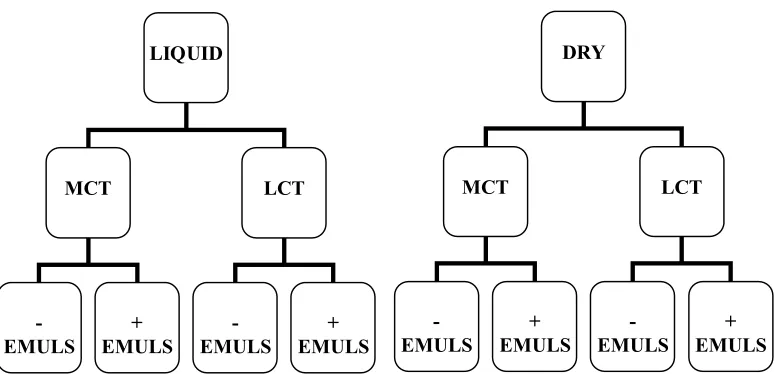
(Figure 1) to determine the effects of diet physical form, fatty acid chain length and

emulsification on fat utilization in the young pig. Treatment groups were arranged in a 2 x 2 x 2

factorial design. Diets were fed in either a liquid or dry form with or without the inclusion of an

emulsified or non emulsified fat (MCT or LCT). All pigs were housed within a conventional,

raised-deck hot nursery (29.2

°

C) at the North Carolina State University Swine Educational Unit

and arranged two pigs per pen (0.91 m by 1.52 m). Piglets received 14 h of light and 10 h of

dark each day. The experiment was conducted in two replicates of 48 pigs each using 24 pens

for each trial.

(41)

encapsulate the supplemental fat with a course emulsion particle size of approximately 5000Ả.

Pigs were given ad libitum access to food and water. The experimental diets were fed either in

dry form (mash) or were mixed with water to form the liquid diet. Liquid diets were

reconstituted with water to 13% dry matter and fed in liquid feeders (Kane Manufacturing

Company Inc., Des Moines, IA). Tetracosane, C36, was added to the diets as the main

digestibility marker (Spectrum, Gardena, CA, Catalog # T2241-ZZ). Co-EDTA (Sigma Aldrich

St. Louis, MO) was also added to a portion of the diets in order to serve as a comparison to the

C36 marker. Co-EDTA was prepared by the procedure described by Uden et al. (1980). The

C36 was blended with the fat sources and emulsifier prior to spray drying and the Co-EDTA was

incorporated as the dry ingredients were mixed.

The growth trial was two weeks in duration and body weights were recorded on days 0, 2,

4, 6, 7, 10, 13, and 14. Pigs fed the liquid diet were fed each morning while dry-fed pigs were

fed as needed. Feed amounts and feed weigh back amounts were recorded at each feeding.

Liquid feeders were cleaned each morning while dry feeders were cleaned on piglet weigh days.

Sample Collections & Laboratory Analyses

One pig per pen was euthanized at day 7 while the second pig was euthanized at day 14

of the trial. On each euthanasia day body weights, blood samples, bile, ileal digesta, jejunal

digesta, ileal morphology and jejunal morphology samples were collected.

(42)

(Appendix Figure 1). Plasma samples and reagents were kept on ice during the assay. Thawed

plasma samples were neutralized prior to performing the assay by adding equal amounts of

plasma and 10% perchloric acid to a tube. The solution was then centrifuged (Sorvall RC-5B

Refrigerated Superspeed Centrifuge, DuPont Instruments, Wilmington, DE) for 10 min at 5000

RPM/min (2516 x g). The supernatant was decanted and adjusted to a pH of 7 by using

potassium hydrogen carbonate. Once a pH of 7 was achieved, the samples were centrifuged

again, and the supernatant was decanted into a clean tube. Samples were chilled on ice for 15

min and then transferred to a 56ºC water bath for 15 min. One milliliter micro-cuvettes with a 1

mm light path were used and the spectrophotometer (DU-640, Beckman Instruments, Fullerton,

CA) was set to read at 546 nm for a total of 40 min at 5 minute intervals. The assay was

performed by adding 40 µl of Reagent 1 (0.025 M NAD in phosphate buffer saline solution, PBS

pH 8.5), 40 µl of Reagent 2 (0.0084M FeCl3 in distilled water then 0.022 M BPS added to FeCl3

solution), 300 µl of plasma (or 300 µl of neutralized perchloric acid for the blank) and 20 µl of

Reagent 3 (0.0098 M PMS in distilled water then 10 µl were diluted with 1.55 ml of distilled

water) into the cuvette. The solution in the cuvette was stirred and the spectrophotometer was

started. After 10 min a constant drift was achieved and 15 µl of β-hydroxybutyrate

dehydrogenase was added to the cuvette and mixed. The enzyme was derived from

Pseudomonas lemoignei in lyophilized powder form (Sigma Chemical Co., St. Louis MO) and

reconstituted with 1.5 ml of water. Thirty min after adding the enzyme the reaction was

complete and a constant drift was achieved. Change in absorbance was calculated by: (A2 –

A1)sample – (A2 – A1)blank. A2 is the absorbance at 40 minutes and A1 is the absorbance at 10 min.

(43)

Appropriate Technical Resources, LLC, Laurel, MD) to a fine powder in order to extract the

lipid from the samples. Samples were subsequently assayed for total lipid content and for fatty

acid profiles. Total lipid was determined using the Folch fat extraction method (Folch et al.,

1957) and was modified as follows. Dry Ileal digesta samples were mixed and then 0.85 g of

sample was weighed out into a 50 ml glass test tube. Next, 0.15 µl of 12 N jydrochloric acid was

added to prevent soap formation and then 20 ml of 2:1 chloroform:methanol was added to the

test tube and homogenized for 1 minute. The homogenized solution was then poured through a

funnel using Whatman Paper 4 into another 50 ml glass test tube. The original 50 ml test tube

was washed with an additional 5 ml of the Chloroform:Methanol mixture, vortexed and poured

through the funnel as well. Five milliliters of 0.9% saline was added to the filtrate which was

then capped and vortexed until the filtrate became a homogeneous solution. Next, the samples

were either held at room temperature for 20 min or were centrifuged for 10 min at 830 x g (4ºC)

to allow for separation of the lipid (organic) phase. The lower phase was transferred into a 25 ml

glass test tube that had been baked (at 104ºC for 2 hours then placed in a dessicator to cool) and

weighed. The sample was dried under nitrogen gas and then baked at 104ºC for 2 hours. After 2

hours the samples were placed into a dessicator to cool and then the test tubes were weighed

again. Total fat was calculated by subtracting the weight of the clean test tube from that same

test tube containing the extracted fat. The dried test tubes containing the lipid were filled with

nitrogen gas, capped and stored at 4ºC until further analysis.

(44)

Torrance, CA; Zebron # ZB-5HT) measured 30 m in length with a 0.25 mm I.D., 0.1 µm film

thickness and maximum temperature rating of 430

°

C. Analysis was performed by using an

HP-5890 gas chromatograph (Agilent Technologies, Santa Clara, CA) with a flame ionization

detector (FID). The oven temperature was programmed to progress from 50

°

C for 1 min to

210

°

C at 15

°

C per min. After 3 min the temperature was increased further to 360

°

C at 15

°

C per

min. All of the samples and standards were chromatographed using a 50:1 split ratio. The

injection temperature was 260

°

C and the FID temperature was set to 400

°

C.

Cobalt analysis of diet and digesta samples, for apparent ileal fatty acid digestibility

calculations, was performed by the Analytical Services Laboratory on the NCSU campus. A dry

ashing procedure was used to determine the amount of cobalt present in the samples (AOAC,

1990). Apparent ileal fatty acid digestibilities were calculated based on the marker-ratio method

previously described by Jagger et al. (1992) and Gatlin et al. (2005).

(45)

Statistical Analysis

Data were analyzed using the GLM procedure of SAS according to a 2x2x2 factorial

randomized complete block design with pen as the experimental unit. For intestinal morphology

measurements, days post weaning (7 versus 14) was modeled as an additional independent

variable. Differences were considered significant when P < 0.05.

RESULTS

Animal Performance

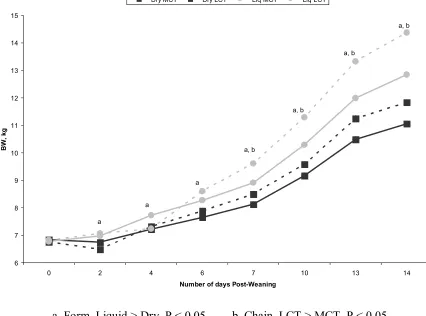
Initial piglet body weights were similar among treatments (Figure 2, Appendix table 1).

Inclusion of the dietary emulsifier did not affect growth performance (P > 0.1; Appendix table

1), so data in figures 2-5 were averaged across this effect. Liquid-fed pigs did not lose weight

after weaning; whereas, piglets fed the dry diet lost weight immediately postweaning (Figure 2).

By the fourth day of the trial, the body weight of the pigs fed the dry diet had rebounded and

their weight had surpassed their day 0 body weight. Beginning on day 2 and continuing to the

end of the trial, the liquid-fed pigs were heavier than the dry-fed pigs (P < 0.05). Overall, on day

14, the dry-fed pigs (11.45 kg) weight approximately 2 kg less than the liquid-fed pigs(13.61 kg),

regardless of triglyceride chain length. During the second week of the trial, LCT-fed pigs were

heavier than the MCT-fed pigs (P < 0.05) such that on day 14, pigs fed LCT had a final body

weight of 13.1kg while those fed MCT weighed 11.96 kg (Figure 2). Accordingly, pigs fed the

liquid LCT (14.37 kg) diet were heaviest at the end of the trial. Furthermore, pigs fed the liquid

MCT diet (12.85 kg) were heavier than those fed dry LCT diet (11.84kg), and pigs fed dry MCT

diet (11.06kg) were lightest.

(46)

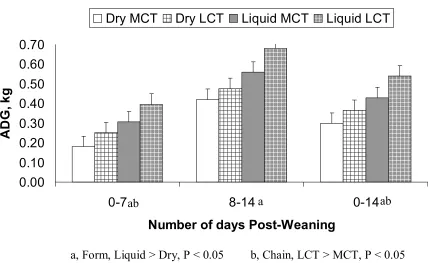
dry-fed pigs (0.49 kg/d vs 0.34 kg/d, respectively). Pigs dry-fed LCT also gained faster than pigs dry-fed

MCT (P < 0.05) during the first week and overall, but not during the second week. Gains were

23% higher for the LCT-fed pigs compared to the MCT fed pigs when the data were averaged

across all 14 days of the trial (0.46 kg/d vs 0.37 kg/d, respectively). Total body weight gains

were highest for the piglets fed the liquid LCT diet followed by those fed the liquid MCT diet,

dry LCT diet and was lowest for piglets fed the dry MCT diet.

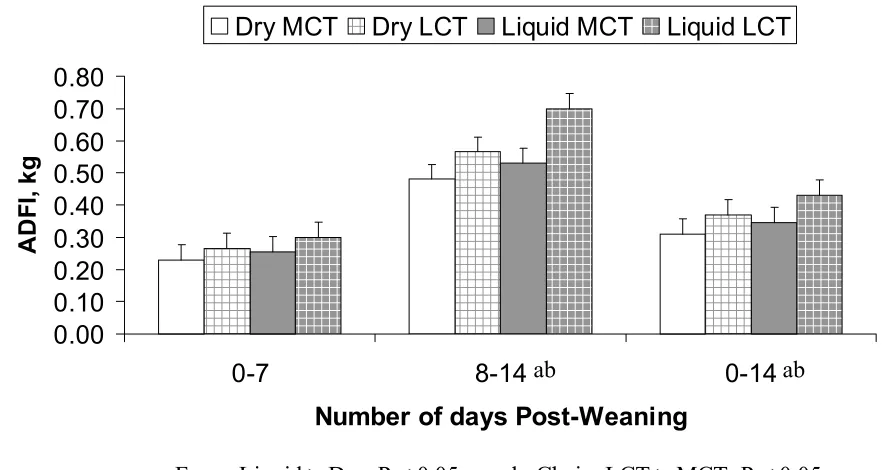
Average daily feed intake (ADFI) was calculated on a dry matter (DM) basis. ADFI was

significantly (P <0.05) affected by chain length for the entire trial with LCT fed pigs eating more

than MCT fed pigs (Figure 4; Appendix Table 1). During the first week of the trial, piglets ate

only 0.29 kg/d of the LCT diet and 0.25 kg/d of the MCT diet. The greatest difference in feed

intake was observed during the second week of the trial when LCT-fed pigs consumed 42%

more feed than the MCT-fed pigs (0.64 kg/d vs 0.45 kg/d, respectively). Overall, ADFI was

increased by 21% when pigs were fed the LCT diet versus the MCT diet (0.40 kg/d vs 0.33 kg/d,

respectively). Diet physical form affected (P < 0.05, liquid > dry) ADFI during the second week

of the trial and when averaged over the entire 14 day trial. Piglets consumed roughly the same

amount of feed during the first week of the trial. During the second week of the trial, piglets fed

the liquid diets consumed 17% more feed than those fed the dry diets (0.62 kg/d vs 0.53 kg/d,

respectively). For the ADFI over the entire 14 day trial, pigs fed the liquid diets consumed 0.39

kg of diet per day while those on the dry diet consumed 0.34 kg/d (15% more liquid vs dry).

(47)

liquid-fed pigs continued to display superior efficiency (P<0.05). Overall, gain:feed was

improved by 29% (P < 0.05) in the liquid fed pigs compared to the dry fed pigs (1.26 v 0.98,

respectively).

Digestibility Marker

Two inert digestibility markers were compared; one being a lipophilic marker (an alkane,

C-36) and the other a mineral-based marker (Co-EDTA). The use of Co-EDTA resulted in a

statistically (P < 0.05) greater digestibility for all fatty acids examined, except for C-8 (Figure 6).

Based on these findings, C-36 was used to compute fat digestibilities for this experiment.

Fat Digestibility

(48)

Small Intestine Morphology

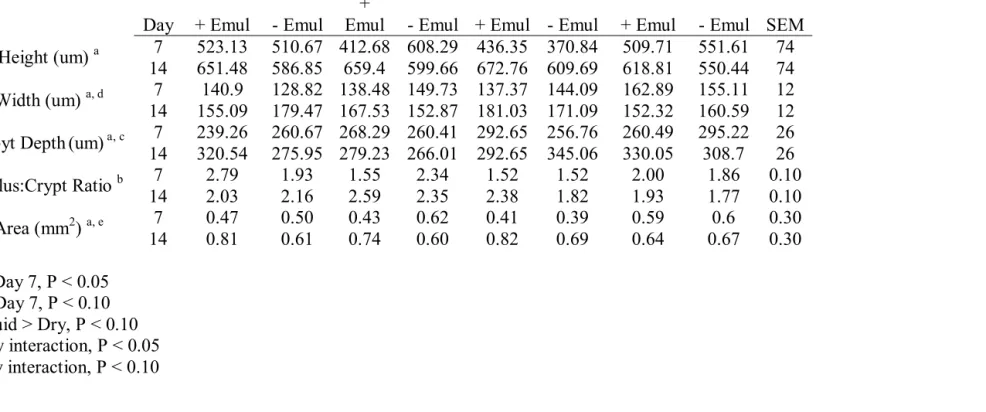
Table 3 shows the effect of diet physical form, fatty acid chain length and emulsification

on jejunal morphology. The villus height, width, crypt depth and the area of the jejunum

increased as the pigs aged (P < 0.05). Diet physical form tended to affect crypt depth (P < 0.10,

liquid > dry). A chain length by age interaction was observed in jejunum villus width (P < 0.05)

and a trend was observed in the jejunum area (P < 0.10).

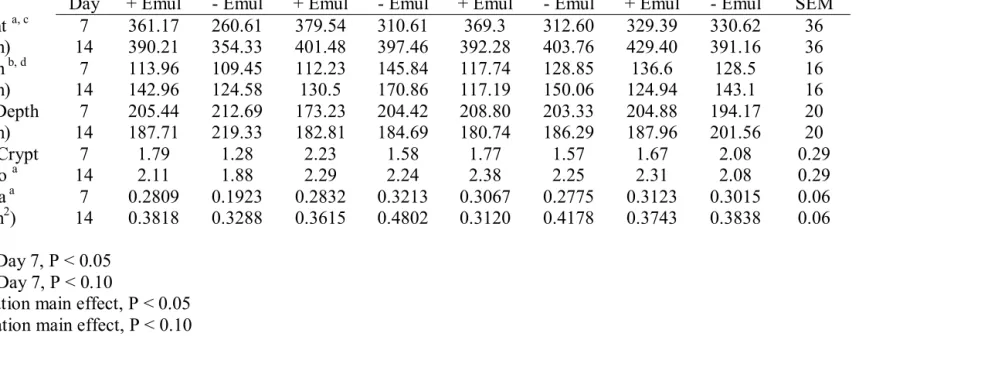
Table 4 shows the effect of diet physical form, fatty acid chain length and emulsification

on morphology of the ileal mucosa. Ileal height, villus to crypt ratio and the area of the villus all

increased as the piglets aged (P < 0.05). Villus width in the ileum also tended to be larger for the

pigs at 14 days of age compared to 7 days of age (P < 0.10).

Plasma Ketone Body Concentration

Pigs fed diets containing MCT had significantly greater circulating levels of

ß-hydroxybutyrate in their plasma compared to the pigs fed the LCT diets (P < 0.0001) (Figure 8).

Pigs fed the dry MCT diet had an elevated ß-hydroxybutyrate concentration than liquid MCT fed

pigs (P < 0.05). However, this effect was reversed in the LCT fed pigs wherein liquid LCT fed

pigs had significantly greater concentrations of plasma ketone body levels than dry LCT fed pigs

(P < 0.05).

DISCUSSION

Growth Performance

(49)

growth performance. Piglets fed the LCT diet showed significant improvements in growth

performance. Dietary fat source (medium vs long) is thought to be a major factor effecting post

weaning growth performance. Fat in the current study was included at 12% of the diet. Eusebio

et al. (1960) and Peo et al. (1957) conducted several weanling pig trials with fat levels ranging

from 0 to 38% of the diet and pigs were weaned at an average age of 17.3 days and 7.9 days,

respectively. In one of the experiments conducted by Eusebio et al. (1960) piglets weaned onto

the diet containing soybean gained significantly less than pigs weaned onto the control diet (no

fat) or the coconut oil diet. Piglets on the control diet with no added fat outperformed piglets

weaned onto a diet containing dietary fat. In another experiment by Eusebio et al. (1957) piglets

that were weaned onto diets containing lard had significantly lower body weights than piglets on

a tallow, soybean or control (no fat) diet. Peo et al. (1957) and Eusebio et al. (1960) reported a

decrease in body weight gain when fat was included above 5% in the diet. On the other hand,

Allee at al (1971) and Sewell and Miller (1965) reported that dietary fat levels as high as 13%

did not significantly affect body weights in piglets weaned at 14 days and 22.7 days,

(50)

Digestibility Marker

In a comparison between C36 and Co-EDTA, the fat digestibility was consistently higher

in the measurements made using Co-EDTA. To our knowledge, this is the first experiment using

C36 as a fat digestibility marker in weanling pigs. Past research has shown that C36 is 100%

recovered in the feces when sprayed onto leaves and stems that were fed to goats (Giraldez et al.,

2006) and close to 100% recovery in pigs (Choct & van Barneveld 1991). Co-EDTA is a

mineral based water soluble marker that does not go through the same digestive processes as fat.

Therefore, it has been suggested that the use of a marker with fat like qualities would be more

accurate for performing fat digestibility studies (Ohajuruka and Palmquist, 1991).

Digestibility

The digestibility of fat can be affected by many factors, such as fatty acid chain length,

the use of an emulsifier or the degree of saturation of the fat. Previous research has shown that

MCT are a more readily available source of energy and can be directly absorbed into the

(51)

acids can also affect the digestibility of fat. A U/S ratio under 1.3 has been shown to

dramatically reduce the digestibility of the fat (Stahly 1984). During the current experiment the

LCT fat source had a U/S ratio of 0.86. Digestibility of saturated LCFA were consistently

greater in pigs fed the emulsified LCT diet. Therefore, emulsifying LCT fats appears to be

beneficial in improving fat digestibility.

Small Intestine Morphology

Major dietary changes have been shown to negatively affect the enzymes of the digestive

system in pigs (Lindermann et al., 1986 and Corring et al., 1978). Along with affecting enzyme

production, changes in small intestine morphology have been observed (Kelly et al., 1991 and

Zijlstra et al., 1996). A decrease in jejunal and ileal villus heights has been reported in newly

weaned pigs (Kelly et al., 1991) and this effect is evident to at least 1 week post weaning

(Zijlstra et al., 1996). Placing piglets on a liquid diet not only eliminates a depression in growth

post weaning it also results in an increase in villi height compared to dry fed or sow reared

piglets (Kelly et al., 1991 and Zijlstra et al., 1996). However, during our experiment diet

physical form did not impact (P > 0.10) jejunal or ileal villus height. Diet physical form only

affected jejunal crypt depths with liquid fed pigs being greater than dry fed pigs (P < 0.10). One

possible explanation for the lack of effect could be that our complex diets containing spray dried

fats was suffice in enhancing intestinal villus heights post weaning. Encapsulating the fat could

emulsify the fat enough to improve post-weaning piglet performance with out the need for

adding additional emulsifiers to the diet.

Plasma Ketone Body Concentration

Figure

Table 1. Diet formulation and calculated composition.
Table 2. Analyzed fatty acid profiles of MCT and LCT diets (% w/w of total fatty acids)
Table 3. Effect of diet physical form, fatty acid chain length and emulsification on jejunal mucosal morphology
Table 4. Effect of diet physical form, fatty acid chain length and emulsification on ileal mucosal morphology
+7

References

Related documents

Table 1.. Figure 3 and Figure 4 demonstrate the effects of suction parameter on temperature and concentration. It is clear that the fluid velocity decreases significantly

Phylogenetic analysis failed to yield species-specific clusters among the L1 elements isolated, and all Oryzomys sequences had numerous private mutations.. Finally, in

In this paper a new approach for block feature based image fusion is implemented using multi wavelet transform and neural networks and a qualitative analysis has been done for

The result of antibiogram of the isolates is shown in the Table-2 .Of the 242 enterobacteriaceae isolated 71 (29.3%) were ESBL producers, 48 of them belonged to Klebsiella

In summary, the IRO is a simple, engaging, and useful assessment tool that occupational therapists, speech-language pathologists, classroom teachers, and reading specialists can

(7), relating the moistu- re content with the dielectric constant and bulk density for TDR moisture measurements in peat deposits from the Biebrza river valley, is

According to the statement of the American Diabetes Association and European Association for the Study of Diabetes guidelines also endorses metformin is the first-line drug for

From the experimental results it can be concluded that the proposed genetic algorithm based on Hidden Markov Models and Fuzzy Levenshtein Distance works well under