Looking for a way out:
Skills development and training and its impact on
aid practices and their development outcomes, with
particular reference to Indonesia and Timor-Leste.
A thesis submitted for the degree of
Doctor of Philosophy
by
Brian Francis Fairman
(MBA, B.Ed, Dip. Ed, B.A.)Faculty of Arts and Education
Victoria University
Doctor of Philosophy Declaration
1, Brian Fairman, declare that the PhD thesis entitled ‘An examination of the role of skills development and training and its impact on aid practices and their development outcomes, with particular reference to Indonesia and Timor-Leste’ is no more than 100,000 words in length including quotes and exclusive of tables, figures, appendices, bibliography, references and footnotes. This thesis contains no material that has been submitted
previously, in whole or in part, for the award of any other academic degree or diploma.
Except where otherwise indicated, this thesis is my own work.
ABSTRACT
This thesis focuses on the emerging problem of education and training interventions in the overseas aid context, and focuses particularly on the current effectiveness of development assistance from the perspective of aid recipients. In particular, whilst significant efforts to measure and evaluate these training interventions have occurred in Indonesia and Timor-Leste, they have met with mixed success, and this is causing some concern in that local needs appear to be overlooked. In this investigation, a careful evaluation of existing training approaches, methodologies and evaluation frameworks has been made, through the eyes of respondents who are intimately concerned with overseas aid programs, in an attempt to suggest explicit improvements that could have significant impacts on training interventions in terms of sustainable skills development in recipient countries, and for improved donor engagement and benefit.
Perspectives on vocational education and training, together with insights regarding the engagement of international agencies and advisors on systems development, have been accessed. To assist this work, an interpretivist approach was used in order to examine the cultural nuances at play, and to uncover the ‘stories’ around this engagement as told by the seventeen
Indonesian and seventeen Timor-Leste respondents, who largely consisted of senior managers, trainers and administrators of development programs. The respondents were between the ages of 25-70, with a reasonable balance of women (1/3) and men (2/3). By taking a semiotic approach to the examination of the elements of development assistance, it was possible to take the stance of asking ‘its not what is included but what is not included’, which, it is
asserted, has revealed more about the interventions and approaches than through more conventional evaluation approaches.
The intent of this study was to more clearly inform practitioners of a range of meaningful approaches and policy directions for training program design and for monitoring and evaluation techniques, and in this respect the results have indicated that encouraging recipient country ownership ensures engagement and this can be achieved through piloting training interventions which have ‘shared ownership models’ of delivery. Providing information on, and sharing information around, evaluation practice and conducting evaluations based upon designed intent would improve development practice.
Acknowledgments
I would like to acknowledge the support I have received from the University, where I worked for nearly a decade, and the same University that allowed me to complete this PhD in almost the exact amount of time.
Helen Hill for getting me started, over a beer and nibbles, and daring to suggest that this journey was my next one, this is apart from her valuable insights into Timor-Leste issues.
Hurriyet Babacan for her support in the early stages, and for getting me through the tangled web of university bureaucracy, and being there at the beginning while I tried to work out whether I had anything to contribute.
There is no doubt persistence pays off, and I owe much to my principal supervisor Margaret Malloch, in keeping me engaged and on the task. I have known Marg for more than a couple of decades, and her perseverance and persistence with me was commendable.
My co-supervisor James Sillitoe, is an institutional stalwart, he has led many PhD candidates through these turbulent thought processes, and he does this with such humility, that the journey is made all that more bearable. I am honoured to have had this experience with Jim.
To my formative teachers and gurus along the way, thank you.
I would like to thank my Indonesian and Timor-Leste colleagues who provided me with some wonderful insights into their worlds, for their openness and honesty in their considered responses to my questioning. I would particularly like to thank Dr Joao Cancio Freitas who not only gave his time, and
encouraged me to carry out this research, he also consented for me to use his ‘insights and experiences’ as the Minister of Education Timor-Leste, in an open and transparent way.
My dear friend David, of many decades, who kept asking, pushing, and
providing ideas, thoughts about directions and friendly critique, many thanks.
Table of Contents
Declaration 2
Abstract 3
Acknowledgements 4
List of Figures and Tables 7
Glossary 7
List of Acronyms 8
Prologue 9
Chapter One: Introduction 13
Research Context 13
Research Aims 21
Chapter Two: Literature Review 25
Part I Emerging issues 26
Part II The skills debate in vocational training 37
Part III Adult learning and vocational training programs 41
Part IV Evaluation practice -‐ is what you want it to be 46
Chapter Three: Conceptual Framework 60
A statement of philosophical background 60
Developing a critical framework 64
Chapter Four: Methodology 68
Methodology and Methods 68
The study context 71
Chapter Five: Findings 84
Introduction: Emergent themes 84
Section One: INDONESIAN FINDINGS 86
Development assistance approaches 87
Skills development and learning styles 92
Training and workplace competencies 96
Management and planning 98
Ability to impact on change 103
Evaluation approaches 107
Imposition of cultural values 111
Section Two: TIMOR-‐LESTE FINDINGS 115
Critiques of evaluation performance-‐working with internationals 124
Management and monitoring and evaluation 129
Imposition of cultural values 135
Chapter Six: Clarifying the problem 139
Articulation of intention and objectives in aid 140
Recognition of stakeholder requirements 149
Acceptance of training methods and evaluations: local input 173
Agreement with planning and management outcomes in training 179
Planning and the relationship between training and managing change 184
Training interventions: individual or institutional 187
Structural issues impacting upon planning and training 194
Training outcomes, options for change 197
Chapter Seven: Moving toward a solution 200
Implementation of training methods and evaluations 200
The Indonesia Australia Specialised Training Projects re-‐evaluated 205
The Timor-‐Leste Skills Training Partnership experiment reviewed 218
Cross-‐cultural communication 224
Sharing program practice 235
Chapter Eight: Conclusion 240
Development Practice Findings 241
Training Intervention Findings 245
Evaluation Findings 247
Meaningful Practice Intervention Model 252
Findings and Recommendations 253
Closing Remarks 256
References 259
Chapter Nine: Appendices 270
Appendix One-‐Interview Questions 270
Appendix Two-‐Ethics Approval 271
Appendix Three-‐ Consent Form 272
Appendix Four-‐ Plain Language Statement of Research 273
Appendix Five-‐Confidentiality exemption-‐ JC Freitas 274
Appendix Six-‐EOI for Hospitality Tourism under ESSP 275
Figures and Tables
Figures:
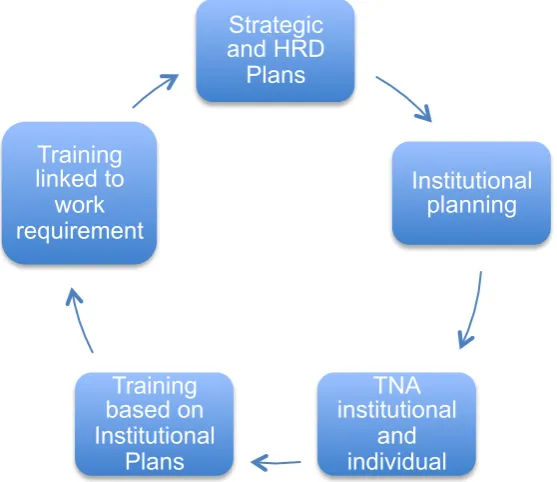
Figure 1. Planning and Training cycle 184
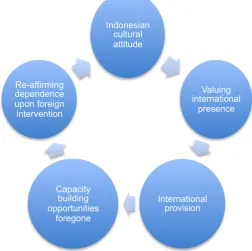
Figure 2. Self-Fulfilling Prophesy of ‘Bule’ Dependence 225
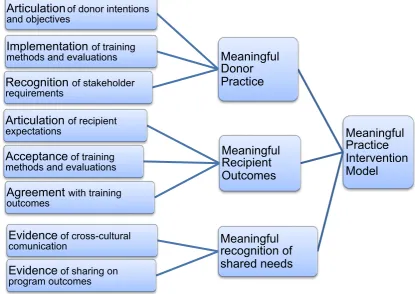
Figure 3. Meaningful Practice Intervention Model. 236
Tables:
Table I. Gender/Ethnic breakdown 77
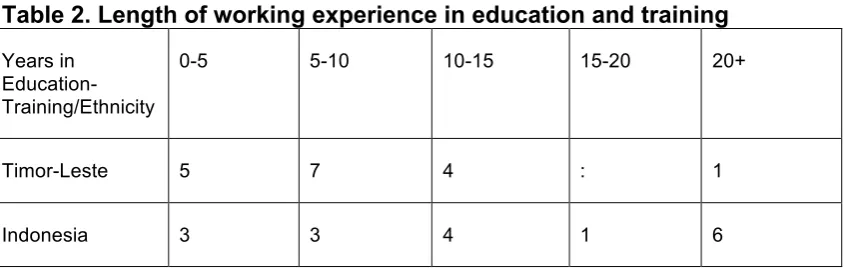
Table 2. Length of working experience in education
and training 77
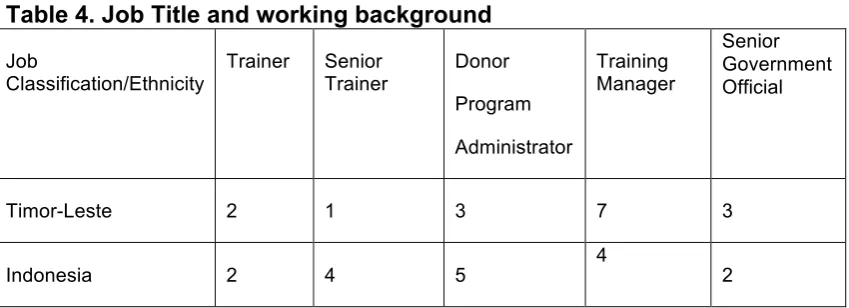
Table 3. Educational background according to country 78 Table 4. Job Title and working background 78
Glossary:
Bule Indonesian for ‘foreigner’
Busan Venue for the 5th High Level Forum on Aid Effectiveness CIV TAA Certificate IV Training and Assessment
Developmentalist Aid and development practitioner Mulae (Malae) Tetum for ‘foreigner’
List of Acronyms
ALP Adult Learning Principals
AusAID Australian Agency for International Development ASEAN Association of South East Asian Nations
CBT Competency Based Training
DFAT Department of Foreign Affairs and Trade ESSP Education Sector Support Program
Fretilin Frente Revolucionária do Timor- Leste Independente
GoI Government of Indonesia
GNI Gross National Income
HRD Human Resource Development
IASTP Indonesia Australia Specialized Training Program ICR Independent Completion Report
ILO International Labor Organisation
INDMO National Labour Force Development Institute, Timor-Leste IPR Independent Progress Report
KKN Corruption Collusion and Nepotism
LAN Institute of Public Administration-Lembaga Administrasi Negara MDG Millennium Development Goals
M&E Monitoring and Evaluation
MoE Ministry of Education Timor-Leste
MOEC Ministry of Education and Culture Indonesia NQF National Qualifications Framework
MSC Most Significant Change MTR Mid Term Review
NGO Non Government Organisation NTT Nusa Tengarah Timor
OECD Organisation for Economic Co-operation and Development RDTL Government of the Republic of Timor-Leste
SBY Susilo Bambang Yudhiyono
SEPFOPE Secretariat of State for Policy Vocational Training and (SEFOPE) Employment
SETNEG Secretary of State-Indonesia STP Skills Training Partnership TA Technical Advisor
TNA Training Needs Assessment
TVET Technical Vocational and Training TVSD Technical Vocational Skills Development UN United Nations
UNTAET United Nations Transitional Administration East Timor
Prologue
This research study originates from my-decade long experience as a manager of aid and development programs at a University in Melbourne, Australia. During this time, I became aware of the apparent ease with which systems and processes dictated the manner and performance of individuals and institutions. These processes, it appeared, were sacrosanct; seldom if ever questioned, poorly understood by those involved yet adhered to unquestionably. But I began to feel that something was not quite right, and I began to reflect on my unease with this situation by recalling my various experiences in this position.
My journey began with a fascination with Indonesia and Timor-Leste some 40 years ago as I travelled through Indonesia on my ‘gap year’, as we have now come to know it. I took an interest in journalism and media analysis, and as a young and very naive photographer I saw before me at the Kupang airport1 a very large collection of Indonesian warplanes on the tarmac with an associated high level on military activity taking place. As I proceeded to board my plane back to Darwin, I was halted by at least three Indonesian TNI soldiers2, with guns raised, demanding my camera. Obviously, I handed over the camera, and as they ripped the film from inside, my career as a budding photojournalist was over, but my life was intact. The day was Saturday December 6 1975, the evening before the Indonesian invasion of Timor-Leste. I was lucky, whereas many Timorese were not.
The impact of this event on me, and the world, was quite profound. Timor-Leste suffered through those dark years as they tried to get their message of the genocide of their people, at the hands of the Indonesian invaders, to the outside world (Chomsky & Herman, 1980). The media played a significant role in this difficulty by turning a blind eye to the events. At this time, as I worked as a media teacher, questions around what is included and what is not
included in our media became a personal and professional narrative. I would
regularly invite alternative voices to be heard in my media classes, in order for my students to discover that the media is a construction of a certain reality. This approach to media analysis, particularly following the work of Stuart Hall from the Birmingham School of Cultural Studies, was critical in forming my own healthy skepticism toward what an image creates, what a text includes, what a program is or is not, and what makes an ‘expert’ or not (Hall, 1983).
Some 20 years after Indonesia’s invasion of Timor-Leste (1995), I was involved in an action meeting called at the Australian Volunteers’ International Office in Fitzroy on a cold wintery Melbourne night. The meeting was called to discuss what actions we could take to help Timor’s cause. Gathered around a white board, the expert facilitator began to write up suggestions from the committed ten or so people who had gathered. The ideas flew around the room; a trivia night, an information stall at the market, a raffle, a book-stall, until a determined and vocal member of the group demanded that we get the Australian military to invade East Timor and rid the Timorese of the Indonesians. This call to arms shocked the facilitator, who refused to put this idea on the whiteboard. This refusal bought cries of discrimination from the forward-thinking disgruntled group member, who then left the room agitated that his ideas weren’t being considered. The ‘think tank’ settled on an information stall outside a local supermarket3.
Sometime later, while I was working in an International Office of a university in Melbourne, I was struck by the many different interpretations being placed upon Aid and Development activities within the University. I became increasingly critical of what I have termed the ‘blind developmentalist’, a person who goes about his/her highly paid work providing ‘expert’ advice to nascent government ministers and development donors, and giving their critique of the lack of ‘professionalism’ in their local counterparts. I listened to, and observed many of these conversations, and indeed may have partaken in a few of these less-than-convivial evenings.
3 Four years later (1999), the Australian Armed forces took UN-‐sanctioned military action to stop the bloodshed in
Rarely, and only once in my working life at the University, did I hear a voice articulating a humanistic and compassionate rationale to engage in development, and this came from the then Chancellor, at a strategic planning conference at the University in 2002. He stated:
If we are not involved in activities such as Timor, then we as a University must question what our purpose is.
I think that this was a key moment in my reflections on the nature and circumstances of the work with which I had become involved. I also drew inspiration from Etherington’s Becoming a Reflexive Researcher, which helped me draw strength from taking a reflexive approach (Etherington, 2004). I consequently came to this research with the view that alternative stories needed to be told, and that not enough was being done to expose the nature and extent of power, corruption, nepotism, and structural flaws in program design, which lead inexorably to a sheer waste of donor money.
Whilst this was the subtext for my working life, it did not always drive my own personal intentions. I concentrated my interest toward the Indonesian and Timor-Leste development activity, as I had direct experience of the development context-poverty and circumstances in these countries. This bias toward these two countries happened to suit my University, and gave me the opportunity to advance my personal interests along with meeting my employer’s expectations. I would argue that this personal experience has influenced my views, impacted upon my understanding, and allowed me to confront my own prejudices.
The rationale for engaging in this research was to help uncover, in the field of International Aid and Development, the choices that are being made either explicitly or implicitly. Key questions which began to form, were, in the course of an Aid Program:
Who decides on the nature of the program? Who is included and involved in the program? What are the chosen outcomes of the program? What are the benefits of the work?
How can we measure these benefits?
How have circumstances changed as a result of our engagement?
Finally, I explicitly recognise that my gender, social class, ethnicity, educational background, culture and ideological influences, have significantly positioned me in relation to this discussion and research. I acknowledge the existence of these influences, even if I am the last to know and recognise what and how these biases and prejudices might manifest in my thinking. This is a position, I argue in this research, is known as our ‘common sense truths’ about the world.
I have applied structuralist narrative in this work, borrowing heavily from cultural theorists, particularly those involved in media and text analysis (Fiske & Hartley, 2003; Hall, 1983; Williamson, 1978). Embedded in this approach is the notion that we can learn more from what is missing in a development context than we can from what is included. As a consequence, programs, project design documents, completion reports and reviews are examined from the perspective of 'what is not included', and I believe that this leads to a more thorough exploration of intent. It is also important to note that, in this approach, a first step in the process of detecting social control and dominant ideology sits with the auteur (in this case the Researcher), and thus the auteur
Chapter One: Introduction
The thesis will be structured as follows, beginning with an introduction to the research context including articulating the research aim, followed by a literature review of current development practice focusing on evaluation and training interventions. The thesis then provides an explanation of the conceptual framework and methodology applied in the study. The findings are defined according to the themes emanating from the Indonesian and Timor-Leste context. The analysis section of the study seeks to clarify the problem, with a view toward moving to a solution, concluding with an approach to development intervention that proposes appropriate and meaningful practice.
Research Context
The debate around aid effectiveness to recipient countries has increased considerably over the past decade (Copestake & Williams, 2014). It has certainly been catalyzed by events surrounding the World Financial Crisis, but is also due, in part, to a growing criticism coming from within the corridors of the World Bank and other donors (Cooper & Walters, 2009; Easterly, 2014). In addition, there has been an equally loud, and more obvious criticism, from aid workers on the front-line, accompanied by voices from recipient countries demanding a greater donor effort regarding harmonization of international donor activities (Boupha, 2007; Fredriksen, 2009; Yumiko, 2009).
development activity (Copestake & Williams, 2014; Easterly & Pfutze, 2008; Hughes, 2009; Riddell, 2012).
In addition, Dambisa Moyo’s ‘Dead Aid’ (2009), has clarified aspects of the debate considerably with her critical analysis of the dependence of African countries on aid, including an argument that there is no direct correlation between donor aid contributions and economic growth. Indeed, it has been suggested that the aid contribution may simply be one mechanism for opening up the African continent to globalization (Ahluwalia, 2001). At the core of this important debate lies the issue of the donor’s ability to improve the impact of development assistance, and Moyo’s account of development assistance provided by the West in Africa is scathing. However others, including Hoebink, Watkins, and King (2009), writing in NORRAG 4 Edition 42 on Aid Effectiveness, disagree with this analysis, and suggest that the ‘evidence’ presented by Moyo to support these claims is seriously wanting.
Governments (both donor and recipient) who are concerned about the ‘effectiveness’ of development assistance, have put in place efforts to measure the effectiveness of aid by creating high level conferences resulting in, for example, the Busan Partnership for Effective Development (OECD, 2011), the Paris Declaration (OECD, 2005) and the Accra Agenda (OECD, 2008). These conferences, orchestrated by the Development Cooperation Directorate of OECD, articulate the need to measure and review aid practices in order to improve efficiencies and to facilitate harmonization of donor practice. In addition, they are attempting to encourage ownership of aid practices by recipient countries, and develop partnerships with all sectors in civil society. An important aim of these movements is to ensure that positive inroads can be made into meeting Millennium Development Goals and the newer Sustainable Development Goals appropriate to the aid context (Copestake & Williams, 2014; Dietrich, 2016; Wilks, 2010).
4 4 NORRAG is the Network for International policies and cooperation in education and training at http://www.norrag.org
It is anticipated that this research will add to the body of knowledge in this important area. Contributions will be made to the academic critiques of development practice, including the perspectives on the monitoring and evaluation of aid frameworks, and to the donor institutions’ reflections on current development practices. The intent of this work is to more clearly inform practitioners of a range of meaningful practice approaches and policy directions for training program design and for monitoring and evaluation techniques. It is further anticipated that this research may uncover a model for more appropriate methods of designing and developing capacity building programs, particularly in Indonesia and Timor-Leste. It has been commented that, too often, training approaches and capacity building programs used by coordinating donor institutions such as World Bank and the Asian Development Bank, have fallen significantly short of their expected goals (Canagarajah, Dar, Nording, & Raju, 2002).
Currently, it is claimed that political economic analysis of the aid sector is underdeveloped (Cooper & Walters, 2009; Copestake & Williams, 2014; Easterly & Pfutze, 2008). In this respect, recent studies suggest that some of the donor interventions, particularly International Monetary Fund and The World Bank’s structural adjustment programs, are in themselves driven by the desire to open up markets (Perkins, 2004). This is done in order to suit the needs of globalization, and, as a result, ‘aid’ has little to do with assisting the recipient population’s needs, and are more to do with stimulating economic development (Ahluwalia, 2001). In addition, there are several studies reporting that tensions exist between the introduction of development programs from multilateral donors and the relatively fragile National Governments, who are attempting to assert their own version of adult education and training. The circumstance of Timor-Leste is an intriguing example of this situation, and it is well described by Boughton in Challenging Donor Agendas in Adult and Workplace Education in Timor-Leste (Cooper & Walters, 2009).
initiatives and to foreground the dominant cultural representations or re-presentations of institutional practices (Johnson, 2004). Further, it is hoped that this perspective will enable the possibility for the introduction of transformatory practices in this area. Kapoor (2008) has examined the postcolonial politics of development in key areas such as ‘governance,’ ‘human rights’ and ‘participation’ to better understand and contest the production of knowledge in developmental activities. In particular, issues such as cultural assumptions, power implications and hegemonic politics have been highlighted (Kapoor, 2008). Further, Kapoor points out how development practitioners and westernized elites and intellectuals are often complicit in this process of neo-colonial knowledge production. He posits that by giving foreign aid or promoting participation and democracy, this act frequently masks institutional biases, together with their underlying economic and geopolitical interests.
Equally, the impact of introducing adult learning principles and frameworks from well-developed international and foreign sources, imposes hegemonic institutional structures on aid recipients, and recently, adult education theorists and writers have explicitly commented on this imposition (Foley, 2004; Griffin, 2011). Hegemonic control, in this context, emerges in the form of shaping the general populace’s consent as being ‘common sense’ (Thwaites, Davis, & Mules, 1994), and this outcome is detected in the ‘common sense truths’ that oppressors and the oppressed take for granted. Further insightful discussion and explanation of the implicit nature of this stance has been persuasively made in Representation (Hall, 1997). The results of this process are that a group of people who are in the ‘developmental care’5 of an aid organization, accept as normal, natural and as needing no explanation, certain conditions and understandings that are actually catering to the interests of a separate group. To make this issue more complex, in this international area, development assistance comes in many guises. It has been suggested that the Organization for Economic Development’s [OECD] Assessment of Higher Education Learning Outcomes
initiative, in fact positions ‘students’ as represented objects through the approach of classifying and marking texts (Shahjahan, Morgan, & Nguyen, 2015) as a means to justify OECD intervention, and also to standardize testing. Although this research has been carried out using a small sample, the intention of this study is to be illustrative of Stuart Hall’s concept of ‘representation’, where he said:
Language does not work like a mirror. Meaning is produced within language, in and through various representational systems which, for convenience, we call ‘languages’. Meaning is produced by the practice, the ‘work’, of
representation. It is constructed through signifying- i.e. meaning-producing-practices (Hall, 1997, p. 28).
These ‘common sense truths’ are the modus operandi of the development practitioner, which means that these international development specialists carry their understandings, knowledge and practice from abroad to the site of aid practice without question, and thus begin to impose their ‘ways of seeing’ (Berger, 1972) or ‘way of life’ (Johnson, 2004) onto their recipient counterparts. It is clear that this phenomenon is a worthy discussion in itself, and has been explored in Kenneth King’s writings on Aid and Education in the Developing World (King, 1991). This methodological framework is at the core of cultural studies, and is what Stuart Hall describes as ‘ideology at work’ (Hall, 1983) or, in the lexicon of Johnson, a ‘way of life’, as is described here:
It (a way of life) includes the meaning-making agency of a social group or an individual, [which is] its self-production. It also includes the cultural forms-discourses, narratives, styles, values -by which a group makes itself culturally, including its ethical preferences. It includes the group’s work around self and others-its psycho-social identifications, disidentifications, aspirations and fantasies. ‘Way of Life’ also includes the means of subsistence, the world of objects and everyday practices that reproduce material life (Johnson, 2004, p. 211).
Relations of domination may be established and sustained by constructing, at the symbolic level, a form of unity which embraces individuals in a collective identity, irrespective of the differences and divisions that may separate them (Thompson, 1990, p. 64).
In this respect, the intensifying flows of money, people, ideas, images, values, and technology across the world, meet with varying and sometimes conflicting responses, and the reality of the twenty-first century is of increased interaction, conflict and struggles over power and resources. Indeed, the processes of globalization create new and complex forms of racism, while perpetuating older forms of racism, dispossession and discrimination. Whilst these processes of globalization may not appear to be racialized in themselves, they do, however, promote and build on colonial structures that have already created racialized and unequal distributions of wealth and power (B. Jones, 2008; Sivanandan, 2006; Winant, 2006). The United Nations (2001) identified five key areas of concern in which racism is manifested in the 21st century:
Trafficking in women and children - often referred to as the “new slave trade”;
Migration and discrimination; Gender and racial discrimination; Racism against Indigenous peoples; Protection of minority rights.
We suggest that an examination of the cross-cultural issues in training interventions may reveal the underpinning racial and cultural biases of the donor practices. The working title of this current research is “Looking for a Way Out”, and whilst this may seem like a rhetorical statement, it is meant to be one of altered perception. How one views the nature of a problem depends upon the position you hold, and whilst some practitioners may be clear about their ideological positions and rationale for engaging in development practice, others are patently less so. In 1983, Stuart Hall in a public address on ‘Ideology in the Modern World’ at Latrobe University, reminded us that when we declare ‘of course’ in our common everyday speech, we are being our most ideological:
The moment you say 'of course' to an ideology, you are in the most ideological bit of it, and the only way of coming out of it is to say not 'of course' at all but 'why of course’ (Hall, 1983).
Hall posited that what is seemingly obvious and ‘common sense’ to us connects directly with our interpretation of the world, because we share with our close acquaintances, common understandings of the way things ‘ought to be’. Thus, in our own cultures, with our own ideologies, things naturally make sense. This approach to making meaning from the world around us, is imbedded in theoretical discourses of cultural studies, and pays homage to writers such as Raymond Williams (1961), Stuart Hall (1983), Roland Barthes (1973) and, more recently, Richard Johnson (2004) and Meaghan Morris (2006).
background. This notion is illustrated in the ‘common sense’ statements which follow:
• Of course, Africa needs development assistance from the West;
• Of course, capacity building requires technical ‘know how’ from the West;
• Of course, international training requires an international expert;
• Of course, competency-based training meets industry requirements;
• Of course, CBT is required in an Indonesian and Timor-Leste context;
• Of course, vocational skills training leads to employment.
Studies have confirmed that there is no causal connection in these above statements (Cooper & Walters, 2009; Easterly, 2014; Moyo, 2011). However, these statements continue to resonate with development practitioners, and are explicitly endorsed by donor institutions (Chowdhury, 2005; The World Bank, 2010). We posit that acknowledging the ideological ‘frames of reference’ used when examining skills development and training and its impact on aid practices, is an essential first step to understanding the complexity of the aid problem. This study will look at a number of examples of aid situations where these ‘frames of reference’ are not made explicit by the writers or authors of monitoring and evaluation reports, and, as such, we will challenge the validity of those reports. This research will further critically examine ‘closed’ evaluation systems, which seem to operate in order to perpetuate their own existence. In addition, we suspect some of the donors’ training programs fall into this category, indicating that there may be little need, nor desire, to change on the part of the donor organisation. If this is so, it implies the existence of a system that benefits those that are fully occupied, employed and engaged in it.
program, and (iv) accepts the need to change and alter practice according to the original design intentions of the aid program. In summary, we assert that attempting to identify a model of meaningful practice with appropriate changes in evaluation and training interventions, will produce an ‘open’ evaluation system, and this is worthy of further examination.
Research Aims
The present study was undertaken to (i) define skills development in an aid and development context, (ii) to evaluate the effectiveness of training interventions, and (iii) to investigate the monitoring and evaluation instruments applied in these training contexts. In essence, the research aimed to:
Define skills development in the context of existing aid practices, the target audiences and the method of delivery, by interviewing Indonesian and Timor-Leste nationals;
Document and critique existing training approaches used in the aid community;
Examine the measures used to determine the success or otherwise of existing training practices;
Explore the methodologies used in both the ‘aid’ and ‘training’ approaches;
Provide an analysis to inform the aid donor community of ‘best practice’ in training and capacity building approaches;
Inform the aid community of possible options for increased effectiveness of aid funding.
550 education projects declared that only half were sustainable (The World Bank, 1990).
Given that training is a significant part of donor engagement in client/recipient countries (The World Bank, 2008), this research seeks to determine what changes could be made to training, including evaluations of training, which could improve the impact of donor interventions in skills development and capacity building in Indonesia and Timor-Leste6. These two countries were chosen for this study because they are two of the biggest recipient countries supported by the Australian Government foreign aid programs; Indonesia accounting for 44.8%, and Timor-Leste accounting for a further 7.1% of the Australian aid commitments to East Asia in 2014 and 2015. Combined, this aid represents more than half the total Australian aid commitment to East Asia of $701 million (Department of Foreign Affairs and Trade, 2015).
It is pertinent to note that these aid and development activities represent an annual $100 billion dollar business, based on developing programs which seek to help the poor around the world (Easterly & Pfutze, 2008). A considerable amount of this money is invested in training interventions in an effort to provide sustainable development. However, we are aware that the measures used to assess the value of these training interventions are open to question, as has been noted by The World Bank’s own Independent Evaluation Group (Carden, 2013; Nelson, 2006; The World Bank, 2008). In this respect, programs to help training recipient communities to manage, develop and ‘own’ the skills development process, may prove to be the most beneficial international aid response by donor governments and multi and bilateral institutions (White, 2005). Through an evaluation of existing training approaches and the methodologies employed in the aid and development sector, (particularly as these relate to Indonesia and Timor-Leste), this research will aim to contribute to a possible way forward for improving donor training and evaluation interventions.
This research adopts, as a conceptual framework, paradigms of learning that are based on the development of capacities that go far beyond the cognitive. Thus knowledge and learning is taken as a change agent that enables ‘know how’ of various kinds and allows the learner to act on that knowledge, as well as to develop ‘awareness of self’ as an agent of change (Foley, 2004; Freire, 1993). Long-term sustainable development outcomes require that capacity be built into the recipient community for ongoing benefits, thus training local communities to manage, develop and own the skills development process, may prove to be the most beneficial international aid response for the recipient countries (Powell, 2001).
We suggest that through a careful evaluation of existing training approaches, methodologies and evaluation frameworks which are currently employed in the aid and development sector, subtle improvements might be found that could have significant impacts on training interventions in terms of sustainable skills development in recipient countries and for improved donor engagement.
The Research Questions
The research aims can be achieved by seeking to make contributions to the understanding of two key questions. These are:
What is the impact of skills development and training on aid practices? What improvements can be made to the evaluation of these practices in order to ensure appropriate and responsive development outcomes?
assistance (Easterly & Pfutze, 2008), the concepts of TVET policy impositions (including Demand-Driven TVET, National Quality Frameworks, and Adult Learning Principles (Allais, 2014; Coles, Keevy, Bateman, & Keating, 2014)), as well as the more generic cross-cultural issues (particularly gender and governance).
Finally, in order to respond to the key research question of ensuring improvements to evaluation practice the research will develop appropriate monitoring and evaluation systems based upon these three basic questions;
Where are we?
Where do we want to go?
What progress is being made? (Powell, 2012, p. 24)
This approach is designed to be different to those that develop and employ monitoring and evaluation systems to justify and mask the impact of donor engagement. These latter approaches are based upon short time lines and narrow definitions of donor success, and look at singular projects rather than system development (Carden, 2013).
The next Chapter, Literature Review, will examine the emerging issues in development practice and provide parameters around the skills debate in vocational training. The literature review will also examine ‘governance and ethical practice’ as this relates to the management and evaluation of training interventions; exploring the academic literature along with commissioned reports to identifying existing practice and possible improvements.
Chapter Two: Literature Review
In Chapter One, it was noted that a significant amount of Australian aid money has been provided for developing countries, in particular Indonesia and Timor-Leste, but that there have been some critical questions emerging about the actual impact of the related development and training practices. In consequence, it was considered that a focus on these practices, and their evaluation, might assist aid agencies to provide more culturally sensitive approaches. This task has been encapsulated in the two research questions which were introduced in Chapter One. These were:
What is the impact of skills development and training on aid practices? What improvements can be made to the evaluation of these practices in order to ensure appropriate and responsive development outcomes?
This review of literature has been provided to assess the scholarly response, to date, of attempts to understand the importance of these issues to development aid, and to consider the strengths and weaknesses of current programs and evaluations in the Indonesian and Timor-Leste areas.
The recognition of this issue of misconstrued development aid has been raised in high profile forums on development effectiveness and assistance held in Rome, Paris, Accra and Busan in 2003, 2005, 2008 and 2011 respectively. These fora have attempted to focus the world’s attention on development issues, both good and bad, and the resolutions of the “Paris Declaration on Aid Effectiveness” (OECD, 2005) highlight this work.
An appreciation of the magnitude of the concern that is felt, world-wide, for this issue, is reflected in (i) the amount of aid that is provided annually for these programs, and (ii) the increasing number of donor nations and organisations that are contributing to the area. Indeed, the range of Western donors, through the OECD’s Development Assistance Committee [DAC]7, coupled with the emergence of other multilateral banks, emerging nations
(BRICS)8, and philanthropic donors, which was the focus of the Busan Partnership agreement, illustrates that international development assistance, as a business enterprise, is yet to reach its zenith (Deutscher, 2009).
It has also been observed that:
The total volume of aid has grown dramatically, driven by: large increases in aid from traditional donors (basically the Western industrialised countries); the emergence of new non–government donors (such as the Bill and Melinda Gates Foundation) and global funds (for example the Global Fund to Fight AIDS, Tuberculosis and Malaria); and the rapid growth in aid from non– traditional donors such as China and Brazil (Farmer et al., 2011, p. 10).
Part I Emerging issues
It has been further noted that any meaningful analysis of skills development and training in a developmental context, needs to include an understanding and acceptance of the enterprise activity and the vested interests by donor and business entities. This first component of Part I Emerging issues ensures the maintenance of their ‘individual’ and ‘collective’ interests (Development Assistance Research Associates, 2009; Easterly, 2008; Perkins, 2004). Following this discussion is a breakdown of the case of Indonesia and Timor-Leste and donor expectations and the impact of the National Quality Frameworks along with issues of development practice including a ‘rights based’ perspective and the impact of new players and partners in development. The final component addresses cultural representations in a development context.
In addition to the overwhelming importance of this business perspective and the associated financial drivers of profit-making business, development assistance is also unavoidably embedded in political, moral, ideological, social and religious contexts (Balthasar, 2000; Cooper & Walters, 2009; National Human Development Report Unit, 2005). Further, Dietrich (2016) has recently mentioned the significant relationships between the political economies of the donors and the impact that this has had on aid policies. It has been identified that each of these ‘value positions’ impact on skills development and training
8 The emerging nations of Brazil, Russia, India, China and South Africa are commonly referred to as BRICS. Other
in specific and identifiable ways (Boughton & Durnan, 2004; R. Shah & Quinn, 2016; Von Kotze).
As a response, this thesis is examining the impact of skills development and training on aid practices with particular reference to Indonesia and Timor-Leste and will do so in the context of these embedded value positions. In this respect, whilst it is true that existing literature indicates that there were some points of difference between Indonesian and Timor-Leste development practices, it has nevertheless been recognized that comparisons between these situations can be made in a skills development context (Alto, 2000; Kingsbury & Leach, 2007).
The cases of Indonesia and Timor-Leste
In recent years, there has been increasing interest in skills development, education and training in a development context, noting that Timor-Leste particularly, and Indonesia to a lesser extent, are countries in the formative years of developing appropriate and relevant systems for managing vocational education and training. These systems are likely to take decades to mature, as was the case in advanced western countries (Hopkins & Maglen, 2000) and the expectation that Timor-Leste can achieve this in in a few years is challenging to say the least (The World Bank, 2004).
Other studies indicate that, at the same time, skills development in a vocational education and training context in Indonesia, have developed rapidly since the late 70s (Alto, 2000; Helmy, 2014; Robinson, 1999). It is claimed that:
There has been massive development of the formal education and training sector in Indonesia over the past 30 years or so. This has seen the number of students rise by 300% from just over 15 million at the beginning of the 1970s, to approaching 50 million students today (Robinson, 1999, p. 13).
Robinson goes on to state that much of this increase in education and training has taken place in the vocational training in secondary schools:
The total number of vocational secondary students in Indonesia grew by more than 60% from the early 1980s to the present time (1997) ...this figure had reached 1.6 million by 1995-6. This represents some 35% of all secondary students in Indonesia, or some 13.6% of the 16-18 year old population (Robinson, 1999, p. 17).
As has been noted in the National Taskforce Report into the development of vocational education and training in Indonesia (MOEC, 1997), in order to improve the development of the TVET system there have been a number of approaches and contributions made. There has been attention given to standards and certification, there has been the engagement of key industries in the training and development arena, and there has been considerable donor assistance provided to support these plans, including that from Australian donor activity in manufacturing and automotive skills development9.
In Indonesia in the mid-1990s, there was an emphasis on the production of high quality teaching and learning materials, which were specifically designed for Indonesia (MOEC, 1997). In addition, early versions of manpower planning (and & National Service, 1966) were re-articulated to determine where the Government of Indonesia should ‘plan’ its vocational educational and training
interventions. However, some literature suggests that this approach was
about ‘picking winners’, in that it placed emphasis on industries that a
9 The Indonesia Australian Partnership for Skills Development (IAPSD) (Hunt, 2012).
Government bureaucracy deemed to be relevant and desirable. Later criticism suggests that this is a ‘planned intervention approach’, and recipient countries should be wary of a development approaches that are supply-driven (Wade, 2009).
The National Quality Frameworks
In respect of the issue of standards and certification, studies which were made of the literature (Allais, 2014; Blackmur, 2015) have revealed that international donors have played a significant role in the development of TVET National Qualifications Frameworks [NQF]. However, the impact of these contributions have not been thoroughly investigated (Keating, 2011; Powell, 2001), and it appears that the Ministry of Education and Culture in Indonesia, with assistance from the German government, supported the development and implementation of a market oriented training system (MOEC, 1997). Stolte (2006) noted that this introduction improved the quality and efficiency of the labour force, and also the competitiveness of companies, the economic sector and industrial regions (Bunning & Zhao, 2006). In a parallel development, the Secretary of State for Policy Vocational Training and Employment [SEPFOPE] in Timor-Leste, with development assistance from the ILO, have developed a particularly ‘Australian version’ of a Timor-Leste National Qualifications Framework10. However, subsequent studies that have examined these donor interventions in setting national frameworks have been somewhat critical of these approaches (Coles et al., 2014; Wade, 2009).
Despite the proliferation of NQFs around the globe, it is claimed that they are becoming increasingly regionalized (Chisholm & Leyendecker, 2008; Coles et al., 2014; Ozga & Jones, 2006). Lugg, writing in Cooper and Walters Learning/Work titled Making Different Equal?, she noted that the more ‘localised’ the nature of an NQF, the greater is its impact and significance:
Local concerns remain significant as borrowed policies become embedded in local contexts… NQFs link the national and the global, weakening boundaries between them, and offering points at which global pressures may be bought to bear in the restructuring of national states. (Cooper & Walters, 2009, p. 55)
Many studies reveal that, in general, industry needs to be involved in the development of education system design and integration with workforce development, standards and certification. If this is not the case, TVET training becomes supply-driven rather than demand-driven (Chowdhury, 2005; Comyn, 2007) which may lead to building physical institutions with little connection with industry needs (Berryman & Coxon, 2010). Others argue that in countries where there is little or no industry, then skills development needs to lean toward civil and community needs, particularly in the case of self-employment (Grierson, 1997), and assist communities to move from sustainable development to sustainable livelihoods (Tikly et al., 2003 ; Von Kotze, 2009).
The development practices
Many commentators have asserted that it is beholden upon the donor community and governments to improve development practices. They argue that the entire aid-effectiveness dialogue should focus on improved development outcomes, predominantly in skills development. In particular, the development practices that require special focus, include flaws in program design, lack of monitoring and evaluation frameworks, the process of measuring outcomes and understanding the meaning of capacity building (Carden, 2013; Fraser, 2008; Nelson, 2006).
Further to this, it has been widely acknowledged in the literature that flaws in development assistance occur, for the most part, around the program design phase and the planned monitoring and evaluation and assessment measures. This was certainly noted by Tapp (2011) in the Study of Australia's approach to aid in Indonesia for the Independent Review of Aid Effectiveness. He commented that:
AusAID Indonesia is good at ensuring evaluations and reviews occur and the quality of some of them is high, though many suffer from a lack of evidence to support findings and recommendations. There is little consistency in their terms of reference, objectives and even in clarifying what they are for and for whom (Tapp, 2011, p. 10).
Although the above review examined the lack of consistency between Terms of Reference and objectives, it has been noted that there are very few studies of the evaluation processes and standards applied in international development (Rutkowski & Sparks, 2014). An analysis of models of evaluation is required to examine the nexus between program design, objectives, outcomes and monitoring and evaluation frameworks, and this lack is one of the key motivations behind the present research.
There is pertinent literature which describes development assistance in terms of the language of ‘capacity building’ (Lockheed, 2009), which is open to criticism in that it delivers training related to direct project implementation, but does not build and strengthen institutional capacity. This leaves a gap when these donors leave the program, particularly when donors have not partnered with local organizations (Wigglesworth, 2016). It is consequently thought that the move away from capacity building to capacity development, and the positioning of the ‘recipients’ in the development process as ‘actors’ reflecting upon their practice and not taking as given western notions of best practice (Saunders, 2006), might provide a more positive and lasting model of aid development.
Rights-based development
Eyben (2013) describes the challenges faced over many decades by major western donors who are concerned about the notion of rights-based development, and the accompanying waste and duplication found in the development sector. This concern has led to the establishment of protocols and procedures for improving ‘aid effectiveness’, and, as a result, the four-yearly UN High Level Forums on Aid Effectiveness from Rome, Paris, Accra and Busan11 were established to correct, or at least harmonize, the aid agenda. The most recent of these forums in Busan, opened up ways to partner with the new and emerging economies of Brazil, Russia, India, China and South Africa (BRICS) and large multi-country philanthropic donors, and not be so ‘western-centric’. As such, these new development partners are
challenging existing donors’ involvement and engagement (Mawdsley, Savage, & Kim, 2014).
Over the decades since the introduction of these High Level Forums, there has been a notable shift in the language of development. Eyben (2013) provides an in-depth assessment of the shift in language and emphasis from the Euro-centric Development Assistance Committee’s origin 50 years ago. This group continued to place ‘conditions’ on development assistance whereas the newer and emerging development assistance players ensure development aid concentrate on economic growth as the purpose of development assistance (Eyben, 2013; Zimmermann & Smith, 2011). It has been commented that these latter models of development assistance, which position ‘economic growth’, ‘infrastructure development’ and ‘access to markets’ as the key to improving the lot of the poor, were very similar to the support given by OECD donors to rising powers (Gore, 2014; Kragelund, 2011).
The new players and partners
The Busan Partnership recognizes the role to be played by new and emerging countries [BRICS] and significant philanthropic donor groups such as the Gates Foundation. Eun Mee and Jae Eun (2013) propose that the Busan partnership acknowledges that these new players, particularly the ASEAN countries, are having a significant impact on development agenda, but the results of this are yet to be measured:
Global development cooperation discourse and activities that had been led by traditional Western donors need to find more effective ways of incorporating new actors and different modalities of development cooperation because the global challenges we face are grave. New development partners can bring to the table lessons, energies and capacities deriving from their own dramatic success in alleviating poverty and attaining development and their visibility as global development actors (Eun Mee & Jae Eun, p. 787).
issues of environment, human rights and gender, lose their traction with recipient governments, a position that is not entirely acceptable to all participants in Busan.
The movement away from ‘aid effectiveness’ to ‘development effectiveness’ heightens the need to examine the notions of ‘transfer’ of skills and ‘knowledge’ to recipient countries and counterparts, with the view and belief that these recipients will (one day) stand-alone (Powell, 2001). Whilst being transparently honorable, sadly the rhetoric does not match the reality on the ground. It is suggested that the first steps in any critical analysis of skills development and training in the form of transference, should begin with questioning and decoding the assumptions that underpin the intentions of the providers. It is further suggested that this line of questioning should begin with questions such as: ‘Whose management systems are involved?’, ‘Whose outcomes are central?’, ‘For what purpose are they sought?’, ‘Whose standards are to be attained, and why have these been chosen, what works and what have we learnt from past success?’, ‘What type of service delivery is to be introduced, and to whom, how and in what context?’, and ‘What incentives exist to ensure success and make donors accountable?’ (Easterly, 2007).
A focus on aid agencies
King (1991) notes that behind the implementation of educational policies of the ‘North’, different conceptions of education and the role of citizen are at work in the ‘South’. Political, moral, social and development approaches, both institutional and economic, broaden this complexity and consequently make skills development and training and the impact on aid practices and development outcomes more complex and difficult to deconstruct.
It is unarguable that donor contributions to vocational development assistance are significant, particularly for skilled workers and technicians, and are central to The World Bank’s support for national programs of human resource development (Middleton, Ziderman, & Adams, 1993). In the case of Timor-Leste’s Ministry of Education, donor offerings managed by The World Bank in the Education Sector Support Program (ESSP) amount to 20% of the Government of Timor-Leste’s budget allocation in education (RDTL, 2011a). The World Bank has a significant investment in the direction of development assistance to the Government of Timor-Leste, it would seem that how this investment is implemented requires further analysis.
In addition to the specific and detailed questions above, in his seminal text on the economics of development, William Easterly in The White Mans’ Burden, posits a rationale for the failings of donor assistance as being related to planning. He claims that big plans and planning from afar, do not address, and cannot address, the issues faced by the poor. Indeed:
Sixty years of countless reform schemes to aid agencies and dozens of different plans, and $2.3 trillion dollars later, the aid industry is still failing to reach the beautiful goal. The evidence points to an unpopular conclusion: Big Plans will always fail to reach the beautiful goal (Easterly, 2007, p. 11).
Easterly (2007) argued that, if the donor offerings were located in the actual ‘on the ground’ country activity, and identified by ‘searchers’12 on the ground, (that is, by affected individuals and organizations), then the development outcomes would match the needs of the indigenous people. Invariably, the development outcomes would therefore be responsive and appropriate:
A Planner thinks he already knows the answers; he thinks of poverty as a technical problem that his answers will solve. A Searcher admits he doesn’t know the answers in advance; he believes that poverty is a complicated tangle of political, social, historical, institutional and technological factors… a Planner believes outsiders know enough to impose solutions. A Searcher believes only insiders have enough knowledge to find solutions, and that most solutions must be home grown(Easterly, 2007, p. 6).
Easterly further argues that much of current donor assistance is ill-directed and lost in the grandiose ideas of the ‘planners’ who sit in their distant positions and develop ‘big plan’ interventions. There is considerable weight to this argument in the Timorese context where players are big (The World Bank) and the bureaucratic structure is small (Ministry of Education).
Even with the presence of significant donor activity, there is a cogent argument put by Dambisa Moyo (2009) that suggests that no amount of development assistance has improved the lives of people on the African continent. Moyo argues that after more than 50 years of aid to Africa, some countries have not changed and indeed some have gone backwards on development indicators. Whilst this is a somewhat contentious and provocative argument, Ms Moyo supports this position with cogent figures and real-life development outcomes:
But has more than $1 trillion in development assistance over the last several decades made African people better off? No. In fact, across the globe the recipients of this aid are worse off, much worse off. Aid has helped make the poor poorer, and growth slower. Yet aid remains a centerpiece of today’s development policy and one of the biggest ideas of our time (Moyo, 2009, p. 14).
Both Moyo and Easterly are not lone voices in this current and uncomfortable expression of aid ineffectiveness (Development Assistance Research Associates, 2009; Shirley, 2005). Academics and practitioners alike are
questioning and confronting the effectiveness of interventions (Copestake & Williams, 2014; Yumiko, 2009), and it appears that VET development in both Indonesia and Timor-Leste warrant the same level of analysis and introspection.
Ideology at work
Tansey (2014) evaluates the legacies of state building, together with its failures and successes, with respect to United Nations interventions in Timor-Leste. He notes the critical role that domestic actors play, which is a reality missed by some in The World Bank but not by others in the Timorese Constitutional IV government. This is partly due to an idea that Western media audiences have grown up on an ideological diet of the West’s role in assisting the poor (Mason, 2011). This has primarily been due to the Western media presentations and representations of the poor, and such a discourse fuels our (western) perceptions and affirms our ideological positions, thus shaping and reinforcing our views of ‘others’. We strongly feel that the ‘language’ of development and how it is ‘packaged’ for donor country audiences, requires further, and more respectful, exploration.
Hall and other cultural theorists (Hall, 1997; Shahjahan et al., 2015) provide a comprehensive way of interpreting and decoding the messages of ‘aid effectiveness’ and ‘skills development’. Whilst cultural theorists have predominantly provided frameworks for interpreting media and media messages in advertising (Williamson, 1978), Roland Barthes (1957) in
Mythologies uses:
Collective representations as sign systems, [and] one might hope to go further than the pious show of unmasking them and account in detail for the mystification which transforms petit-bourgeois culture into a universal nature (Barthes, 1973, p. 9).