Eastern Michigan University
DigitalCommons@EMU
Master's Theses and Doctoral Dissertations Master's Theses, and Doctoral Dissertations, and Graduate Capstone Projects
2019
Mentorship experiences of doctoral students:
Effects on program satisfaction and ideal mentor
qualities
Alicia Apperson
Follow this and additional works at:https://commons.emich.edu/theses
Part of theEducational Leadership Commons, and theHigher Education Commons
This Open Access Dissertation is brought to you for free and open access by the Master's Theses, and Doctoral Dissertations, and Graduate Capstone Projects at DigitalCommons@EMU. It has been accepted for inclusion in Master's Theses and Doctoral Dissertations by an authorized administrator of Recommended Citation
Apperson, Alicia, "Mentorship experiences of doctoral students: Effects on program satisfaction and ideal mentor qualities" (2019).
Master's Theses and Doctoral Dissertations. 968. https://commons.emich.edu/theses/968
Mentorship Experiences of Doctoral Students: Effects on Program Satisfaction and Ideal Mentor Qualities
by Alicia Apperson
Dissertation
Submitted to the College of Education Department of Leadership and Counseling
Eastern Michigan University
in partial fulfillment of the requirements for the degree of
DOCTOR OF PHILOSOPHY in
Educational Leadership
Dissertation Committee: Ronald Williamson, EdD, Chair
Peggy Liggit, PhD Carmen McCallum, PhD
Jaclynn Tracy, PhD
Dedication
This dissertation is dedicated to my family, friends, and colleagues for their support and encouragement throughout this process. To my friends who have endured many stressed out conversations with me, I appreciate you more than you know. To my coworkers, what a blessing you all have been! Your support throughout the past four years has been incredible. Most of all, I dedicate this dissertation to my parents, David and Ruth-Ann. You truly
showed me the meaning of perseverance and strength. Although neither of you went to college, you made sure I understood the value of an education and made it possible for me to earn one, no matter the sacrifices you had to make. I love you both more than there are words and I hope I have made you both proud.
Acknowledgements
I acknowledge those people who have helped me accomplish this unexpected goal. Dr. Ron Williamson, I cannot express my gratitude enough for your incredible guidance. You were the best chair I could have asked for. The way you set expectations and made them attainable while still providing the mentoring I needed was amazing. To my committee members: You provided encouragement and guidance when I was in need. Dr. Peggy Liggit, thank you for being my sounding board and asking the questions I hadn’t thought of. Dr. Carmen McCallum, your guidance with my research at the beginning of this process was the foundation I couldn’t have succeeded without. Dr. Jaclynn Tracy (Dr. T), you altered my entire life journey in 2006. Without you, I wouldn’t be in the position I am or truly know the meaning of mentor. Thank you for your constant support and showing me the kind of person I aspire to be. Finally, thank you to all my friends and family for their unwavering love and support.
Abstract
The road to doctoral completion is often fraught with barriers, self-doubt, and complications. Creighton, Creighton, and Parks (2010, Mentoring & Tutoring: Partnership in Learning, 18(1), 39-52. doi:10.1080/13611260903448342) asserted that mentoring plays a crucial role in the development and success of graduate students, especially those in doctoral programs. The mentorship of doctoral students can also assist in alleviating the attrition rates that are currently estimated to be between 40% and 60%. In this quantitative study, correlational and stepwise regression analyses were conducted to examine the most beneficial qualities
currently enrolled doctoral students find in a mentor and to describe the relationship between the qualities of a mentoring experience and doctoral students’ satisfaction with their program. This study analyzed data collected from currently enrolled doctoral students (n = 339)
through the use of online Facebook and LinkedIn doctoral groups. The findings of this study suggested that higher reported levels of program satisfaction were significantly correlated to mentor satisfaction rates. Further, academic and instrumental mentoring scales were reported by respondents to be most beneficial qualities in a mentor. Findings of this study offered evidence that institutional and department leaders of doctoral programs can implement mentoring programs and, moreover, provide faculty members’ opportunities to build
mentoring of doctoral students into their faculty loads. Leaders everywhere should recognize the importance of mentorship benefits not only to students, but also to program satisfaction, retention, and degree completion.
Table of Contents
Dedication ... ii
Acknowledgements ... iii
Abstract ... iv
List of Tables ... viii
Chapter One: Introduction and Background ... 1
Introduction ... 1
Statement of the Problem ... 3
Purpose of the Study ... 4
Operational Definitions of Terms ... 6
Limitations and Delimitations ... 7
Scope of Study ... 8
Significance of Research ... 8
Summary ... 9
Chapter 2: Literature Review ... 10
Organization of the Literature Review ... 11
Mentoring of Doctoral Students ... 11
Mentorship Characteristics and Practices ... 22
Summary ... 52
Chapter 3: Methods ... 53
Conceptual Framework ... 54
Research Questions ... 55
Research Design and Approach ... 56
Setting and Sample ... 57
Data Collection Process ... 57
Instrumentation... 59 Pilot Study ... 61 Data Analysis ... 62 Summary ... 63 Chapter 4: Findings ... 64 Introduction ... 64 Data Cleaning ... 64
Description of the Sample ... 64
Answering the Research Questions ... 72
Additional Findings ... 79
Summary ... 82
Chapter 5: Discussion and Conclusions ... 83
Discussion of Findings ... 85
Implications for Practice ... 88
Recommendations for Future Research ... 91
Recommendations for Policy ... 95
Recommendations for Practice... 96
Summary ... 98
References ... 100
Appendix A: Invitation and Informed Consent Form ... 116
Appendix B: Eastern Michigan University’s Institutional Review Board Approval ... 118
Appendix C: Adapted Survey Form ... 119
Appendix D: Strategic Tools for Mentorship Quality (Thomas, Willis, & David, 2007) 134 Appendix E: Stages of Doctoral Persistence (Tinto, 1993) ... 135
List of Tables
Table Title Page
1 Frequency Counts for Selected Variables...65
2 Psychometric Characteristics for Summated Scale Scores...68
3 Instrumental Mentoring Items Sorted by Highest Importance Rating...69
4 5 6 7 8 Academic Mentoring Items Sorted by Highest Importance Rating... 69
Psychosocial Mentoring Items Sorted by Highest Importance Rating...70
Career Mentoring Items Sorted by Highest Importance Rating...71
Ratings of Mentor Qualities Items Sorted by Highest Mean...72
Frequency Counts for Qualitative Responses to Most Beneficial about Mentor.... 76
9 Frequency Counts for Qualitative Responses to Most Challenging about Mentor..78
10 Pearson and Spearman Correlations for Satisfaction with Mentor Behavior Scale...79
11 Pearson and Spearman Correlations for Selected Variables with Satisfaction with Doctoral Program...80
12 Prediction of Satisfaction with Doctoral Program Based on Selected Variables: Stepwise Regression...82
Chapter One: Introduction and Background Introduction
A doctoral program is one of the most challenging educational experiences that a student will encounter. Economic, social, and personal barriers can hinder progress toward degree completion (Hwang et al., 2015). Deadlines common in the first phase of coursework fall away at the point that a student reaches doctoral candidacy, leaving some students
unprepared to move from being the learner to being an independent scholar with
responsibility to proceed through the remaining requirements of dissertation writing. It is not uncommon for students to drop out of the academic program at this point; thus, it becomes important to determine how to assist students in both persistence and completion of their doctoral programs
Finding themselves in an environment that is unstructured, doctoral students may become disoriented in their program without the proper guidance and mentoring (Bagak’s, Badillo, Bransteter, & Rispinto, 2015). Sugimoto (2012) noted that the relationship that exists between a doctoral student and his or her dissertation chair or advisor is the most critical element in a student’s doctoral education.
Cochran, Campbell, Baker, and Leeds (2014) estimated that between 40% and 60% of all doctoral students do not persist to graduation. With a high attrition rate, it is paramount that doctoral students find formal or informal support to work toward degree completion. Formal support can be found through mentorship experiences the candidate has had with an advisor or faculty member, such as their dissertation chair. These experiences can provide an avenue for doctoral students to find academic guidance and understanding and can also contribute to a doctoral student finding the personal psychosocial support needed to drive
them toward degree completion. For the purposes of this research, mentorship was defined traditionally as a developmental relationship, in which an experienced person provides both technical (career) and psychosocial support to a less experienced person (Chesler & Chesler, 2002).
In 2015, the National Science Foundation (NSF, 2015) reported that 55,006 research doctoral degrees were awarded between 1995 and 2006. This not only represented the
highest numbers ever reported on the Survey of Earned Doctorates (SED) but also indicated a strong upward trend, increasing on average 3.3% annually. Mentorship support of the large influx of students in graduate education, particularly doctoral degree programs, can lead to higher numbers in both retention and program completion. Bierema and Merriam (2002) acknowledged the benefits of mentoring toward an individual’s academic achievements, career ambitions, and personal development. Brill, Balcanoff, Land, Gogarty, and Turner (2014) added that the rigors of doctoral research that contribute to feelings of isolation, self-doubt, and confusion on behalf of the student can be alleviated through mentorship
experiences.
Finding the right match between doctoral student and mentor can lead to both
technical and personal assistance. Not all mentors will match all students, and it is important to identify attributes in a mentor seen as desirable by doctoral students. Katz and Hartnett (1976) noted that although graduate students see their relationships with faculty as the most important aspect of their graduate experience, faculty may hold different perceptions about the role of mentoring. Olwell (2017) reported that faculty spend only 2% to 6% of their time meeting one-on-one with students due to other usually more pressing commitments. This disconnect between student perception of faculty relationship benefits and the ability of
faculty to meet the perceived need creates a gap in perceptions. Although doctoral candidates may have built relationships with particular faculty members through their
academic coursework, they may discover that those faculty members are not a good match as a mentor. This may be due to the time a doctoral student desires to spend meeting with their faculty mentor or a direct result of the mentor’s work and academic time constraints.
Statement of the Problem
Mentoring plays a crucial role in the development and success of graduate students, especially those in doctoral programs (Creighton, Creighton, & Parks, 2010). Faculty
advisors often have a critical role in the mentorship of aspiring academics and can frequently engage in conversations about topics outside of academic coursework. Whereas research on mentorship has broadened considerably in recent years, little research is extant on the
perceived need of mentorship for doctoral students in particular, and the extent to which that perceived need is met. The problem is compounded by the doctoral candidate’s need to find a compatible mentor with qualities to help him or her to persist through the program.
In a study of doctoral students, Rose (2005) discussed the need for additional research on the relationship between what mentoring was desired and what mentoring was, in fact, received by doctoral students. Although studies have explored the relationship between gender and instances of mentorship, the literature was lacking with regard to the value of mentorship of doctoral students, the effect on program satisfaction, and how the perceived need for mentorship was met or not met.
Several factors contribute to failure of doctoral students to progress toward degree completion. Having time to dedicate to study, dealing with burnout and exhaustion, and experiencing feelings of isolation, which can include lack of support such as mentorship, all
contribute to the high attrition rate in doctoral programs. With a reported 50% of graduate students dropping out of doctoral programs every year, it is important to examine the ability that mentoring has to impact this rate and provide an opportunity to assist doctoral students in the completion of their doctoral degree (Farkas, 2018).
Although the number of students enrolling in doctoral programs is increasing, the number of degrees they attain is not rising; thus, there is a need to refocus the research literature and include issues relating to mentorship and persistence. In this study, the researcher examined this gap through the use of adapted versions of Rose’s (2005) 34 Ideal Mentor Scale, an adapted version of the Survey on Doctoral Education (Golde, 2005), and an adapted version of the First Decade Study drafted by Williamson, Tracy, Molasso, Meirovitz, and Downing (2004).
Purpose of the Study
The focus of this study was to examine the characteristics that doctoral students believed to be desirable qualities in a mentor and the extent to which students believed their relationship with their mentor affected their satisfaction with their doctoral program. Survey data collected and subsequent analysis was used to examine doctoral students’ self-reported perceptions of advantageous mentor qualities and the benefits mentors provide that support students’ motivation to complete the doctoral degree and their satisfaction with their doctoral program. The analysis identified the most desirable mentoring qualities perceived by
doctoral students and noted differences in these qualities by demographic variables of gender, race, and age groups. The following questions were used to guide the research regarding doctoral students’ perceptions of prime mentor qualities and the effectiveness of mentoring in the persistence toward degree completion:
Q1. What are the qualities that are most beneficial in a mentorship relationship with currently enrolled doctoral students?
Q2. What is the relationship between qualities of the mentoring experience and a doctoral students’ satisfaction with their program?
This research filled a gap in current literature by addressing the specific career and psychosocial qualities that currently enrolled doctoral students found in mentors, whether a relationship existed, and the link, if any, between a doctoral students’ mentoring experience and their satisfaction with their program. Although current literature addressed ideal mentor qualities and program satisfaction of graduated doctoral students, it did not look specifically at currently enrolled doctoral students or address program satisfaction from a current student’s point of view. This vantage point differs from that of persons who have completed their doctoral studies, as post-doctoral persons may report satisfaction with the program by virtue of completing it.
Survey tools provided a quantitative framework to view mentorship perceptions, mentorship needs, and trends among doctoral students. Three survey tools gathered data from doctoral students about their perceptions on positive mentorship qualities and whether their mentorship needs were being met as they related to program satisfaction. Adapted versions of the Ideal Mentor Scale (IMS), the Survey on Doctoral Education, and the First Decade Study were used to investigate self-reported beliefs about ideal mentor qualities as well as feelings of social and academic integration and satisfaction with support systems and academic programs.
Goals for responses to surveys. The data gathered included a total of 339 survey responses from students currently enrolled in doctoral degree-granting programs. An
invitation and consent form containing the Google Doc link to participate in the study were disseminated via electronic means on Facebook, LinkedIn, and email, and the link included the Institutional Review Board (IRB) approval form and an adapted survey that included a demographic section, the Ideal Mentor Scale (IMS), the Survey on Doctoral Education, and the First Decade Study on the Google Doc form for participants to complete (see Appendices A, B, and C). The researcher joined a minimum of 16 Facebook groups and three LinkedIn groups to invite participants to complete the survey instrument. Examples of the joined Facebook groups were the American Education Research Association (AERA), American College Personnel Association (ACPA), The National Association for Multicultural Education, Queer PhD Network, Black & Brown @ AERA, and Group of the AERA. In addition, the researcher joined LinkedIn pages that included the Association for the Study of Higher Education (ASHE), American Education Research Association, and the PhD Forum. These sites were visited and posted every third day over a two-week period to raise
awareness among their members to participate in the study. Further details of the research design and data analysis are discussed in the methods chapter of this study.
Operational Definitions of Terms
The following defined and operationalized terms and concepts provide a clearer understanding of their use relative to discussion and findings in this research.
• Attrition: The number of individuals who withdraw from a program of study before completion (2018).
• Doctoral Student: A person successfully admitted into a doctoral program.
• Mentor: A role model, someone the student wants to emulate professionally. In this study, a faculty member.
• Mentoring: A developmental relationship, in which an experienced person provides both technical (career) and psychosocial support to a less experienced person (Chesler & Chesler, 2002).
• Persistence: The act of continuing toward an educational goal, such as earning an advanced degree.
• Socialization: A process through which an individual becomes part of a group, organization, or community (Austin, 2002).
Limitations and Delimitations
Limitations. All studies are limited by elements over which the research has no control and are imposed by the assumptions such as those associated with the phenomenon, research approach, and methods employed. This study was limited by sample size and time. The study was done in a specific time and did not include longitudinal data. The validity of the data gathered is dependent upon the validity and reliability of the instrument used and the assumption of honest and truthful answers provided by bonafide doctoral candidates. The sample comprised students from various programs and institutions, which will limit generalizability in a program or institutional size or design that is not represented in the sample.
Delimitations. Several controls to the current study were imposed by the researcher, including the choice to survey doctoral students through use of online forums such as
Facebook and LinkedIn. In addition, data were gathered from currently enrolled doctoral students in various doctoral degree-granting programs. Finally, the researcher acquired survey responses from 339 doctoral student participants which allowed for a range of responses.
Scope of Study
This study encompassed self-reported data from 339 doctoral students who had been successfully admitted to a doctoral degree program. The survey instruments were distributed to prospective participants through the use of online forums such as Facebook and LinkedIn. As part of various online groups, the researcher requested doctoral students to complete and return the online survey. The online link contained the IRB approval, demographic survey form, Ideal Mentor Scale, Survey on Doctoral Education, and the First Decade Study.
Significance of Research
The findings of this research added to the literature base on mentorship relating specifically to doctoral students, assisted in understanding the need for mentorship from this group’s perspective, and determined how the act of mentoring can contribute to higher levels of persistence and subsequently lower attrition rates for doctoral students in doctoral degree programs.
Research findings suggested that mentoring improves a doctoral student’s success with relation to retention, persistence, and graduation rates (The 7th International Conference, 2012). Pursuing input and insight from current doctoral students regarding their need for mentoring and the attributes they see as beneficial to them allowed for an understanding about support systems within doctoral programs that benefit both students and the departments. In addition to the benefits of student retention and persistence toward completing the doctoral degree, the programs and institutions were able to identify further areas needed to support doctoral students from the beginning of their academic program and began to addressing the high attrition rates in doctoral programs. These high attrition rates coupled with time to completion ranging from 7.7 years to 8.2 years (Spaulding &
Rockinson-Szapkiw, 2012) allowed this research to provide opportunities for improving program retention and graduation rates which, in turn, may reflect on the retention rates of the institution as a whole.
Summary
The mentoring of currently enrolled doctoral students, regardless of their academic program, plays a crucial role in the retention and completion of new academics that will positively impact the professoriate and the academy for generations to come. However, the research literature needs to be expanded to address the specific career and psychosocial mentoring functions that current doctoral students believe to be beneficial in addressing their needs and whether a relationship exists between those qualities and their satisfaction with their doctoral program. This research is important not only for doctoral student development but also can be used by departments and institutions to decrease program attrition and
increase student persistence and completion rates. Utilizing data from currently enrolled doctoral students from a variety of programs allowed the researcher to find common themes relating to mentorship as well as differences between program clusters.
Organization of this document. The introduction, statement of the problem,
research question, and basic elements of this study discussed in Chapter 1 are followed by the literature review of relevant topics in Chapter 2, details of the methods employed in the conduct of the study in Chapter 3, and findings of the data in Chapter 4. Conclusions, implications, recommendations, and ideas for further study compose the final chapter.
Chapter 2: Literature Review
Mentoring plays a crucial role in the success and persistence of graduate students. Faculty advisors often have a central role in the mentorship of students and can frequently have conversations with advisees about topics beyond academic coursework that can include support such as publication advice, evaluation of writing, and even assistance with
mentorship. For the purposes of this research, the terms advisor and mentor were used interchangeably. Several facets of mentorship were examined in this study, including qualities that graduate students perceived as ideal in a mentor, racial and gender differences in mentoring, and the effectiveness of a mentoring experience upon the persistence of students to degree completion.
Organization of the Literature Review
Access to articles and books in the Bruce T. Halle Library on the campus of Eastern Michigan University facilitated the literature review. An emphasis was placed on scholarly journal articles and research on key terms, including mentoring, doctoral student persistence,
mentor relationship, and graduate school. To further assess mentor relationships between doctoral students and faculty mentors, the review also explored the concepts of gender, race, and persistence toward graduation amongst doctoral students.
Mentoring of Doctoral Students
Creighton et al. (2010) cited that mentoring is considered to be most essential to a doctoral student’s success in academia. As McLaughlin (2010) stated, mentoring takes place at three levels in an academic environment, including the relationships between faculty and students (usually doctoral students), between faculty and postdoctoral fellows, and between senior and junior faculty. With a focus on the doctoral student and faculty relationship Nettles and Millett (2006) published a decade-long study that contained survey data of more than 9,000 graduate students enrolled at 21 top research institutions. From this research, the scholars found that more than 30% of all graduate students surveyed did not feel they had a faculty member relationship. However, those who were pursuing degrees in engineering, sciences, mathematics, and education reported having many social interactions with faculty
members. Findings of this extensive survey indicated that a significant mentoring relationship with a faculty member will have a positive effect on a doctoral student’s progress toward degree completion. Further, that doctoral students placed significant importance on the frequency of contact with their mentor.
Identifying faculty mentorship as a form of academic involvement in doctoral
education, Anderson, Cutright, and Anderson (2013) conducted a study designed to examine how doctoral students perceived their experience, how important they believed faculty mentorship was, and if there was a predictive relationship between academic involvement such as faculty mentorship and doctoral education outcomes including degree progress and program satisfaction. Using a sample of 217 doctoral candidates who had completed coursework, passed applicable exams, and who were in the process of completing
dissertations, the researchers developed a survey instrument to measure variables that were pertinent to doctoral candidates’ perceived academic involvement and doctoral outcomes. The instrument consisted of two sub-constructs: faculty mentorship and intellectual
community, each represented by 10 indicators. These 20 indicators were measured by perceived frequency and perceived importance on a 7-point Likert-type scale.
From the survey data, faculty mentors who provided feedback on a project and degree progress were noted more frequently than any of the 10 dimensions of faculty mentorship, and conversely, faculty mentors who had promoted participants’ development as an instructor and had involved them in pre-dissertation research were reported less frequently than any other dimension. In addition, the researchers found that a fair number of
participants stated that they had never experienced one or more of the dimensions of faculty mentorship or intellectual community. These findings were highlighted by 18% of
participants who reported that they had not experienced faculty who assisted with their development as an instructor, and another 20% reported never having been involved with faculty in pre-dissertation research. Few (3%) of survey participants reported never having had a faculty member provide constructive feedback on a project, and only 4% reported never having received feedback on degree progress (Anderson et al., 2013). Throughout this study, participants rated having a faculty mentor who provided constructive feedback and those who provided feedback on their degree progress as the most important dimensions of faculty mentorship.
Kathy Kram (1983) conducted a foundational research study on analysis of the phases of mentorship based on 18 developmental relationships at a large northeastern public utility of 15,000 employees. Kram narrowed the focus of the study to young managers between the ages of 25 and 35, with three or more years of experience in the organization, who were at the first three levels of management, and had not yet advanced to senior top management positions. The random sample resulted in interviews with 15 young managers who met the set criteria. Only three developmental relationships were identified; thus, further
recommendations were sought from personnel staff of other young managers whom they believed had developmental relationships. From these recommendations, several more young managers with mentors were identified resulting in a total of 18 relationships included in the study. Through two interviews with the participants, a conceptual model of the
relationship phases of a mentor/mentee experience was identified.
In her analysis, Kram (1983) stated that a mentor relationship has the ability to enrich career development and psychosocial development of both the mentor and the mentee. Career functions including sponsorship, coaching, protection, exposure-and-visibility, and
challenging work assisted a young manager in learning an organization’s culture and prepared for advancement opportunities. In addition, through psychosocial functions including role modeling, acceptance-and-confirmation, counseling, and friendship, a young manager was supported in developing his or her own sense of competence, confidence, and effectiveness in the managerial role.
Kram (1983) concluded that although these developmental mentor relationship may vary in the length of time, they generally proceed through four predictable, but not entirely distinct, phases, including: initiation; the time a relationship begins; cultivation, during which the range of various functions expands to a maximum; the separation phase, during which the relationship is significantly altered either by organizational context and/or psychological changes for one or both parties; and finally, the redefinition phased, during which the relationship evolves into a new form that is significantly different than before or the relationship ends completely.
Revising Kram’s (1983) mentoring model, Johnson’s (2007) model aligned with the duties higher education faculty performed to mentor students, both graduate and
undergraduate students. The model contained four phases including initiation, cultivation, separation, and redefinition, and showcased the benefits for both mentors and mentees. Later, McCallum and Sule (2014) critically examined and redefined the mentoring process using Johnson’s (2007) model. Through qualitative methods, McCallum and Sule (2014) collected data from 10 graduate students who were in the dissertation phase of their program, and compared the findings with Johnson’s (2007) four-phase mentoring model.
The results added two new phases to the current model: contemplation and reflection. The contemplation phase recognized the background a student brings to graduate school that
can influence their mentorship experience. Reflection was acknowledged to occur at any time during a student’s graduate school experience but typically after being involved in a mentoring relationship for a period of time. The authors asserted that a student will reflect on the support he or she is receiving during this phase and evaluate what mentoring needs are not being met that would assist them being successful in their academic program (McCallum & Sule, 2014).
Types of mentorship. Vital to the success of doctoral students are their advisors and other mentors they encounter throughout their academic journey (Russo, 2011). Whereas mentorship promotes success, it is important to differentiate between the various types of mentorship a student may experience or be searching for. Through a study by Curtin, Malley and Stewart (2016), the relationships between different kinds of mentoring were identified and compared with academic career self-efficacy, interests, and goals. Specifically, the authors identified three types of mentoring support as being career or instrumental,
sponsorship, and expressive or psychosocial mentoring. Career or instrumental mentoring was defined as encompassing direct training in research methods, providing information about content, ethics, and procedures, and ongoing efforts to confirm that the mentee was given opportunities to learn what they need to know (Blake-Beard, Bayne, Crosby, & Muller, 2011). This type of mentorship may provide students with concerted information regarding the types of opportunities available to them in addition to developing a sense of efficacy as they learn to master the skills necessary for success in their chosen fields.
The second type of mentorship noted sponsorship, which includes the active recommendation of the mentee to other individuals, providing them access to the mentor’s professional network as well as advocating on the mentee’s behalf (Ibarra et al., 2010). This
form of mentorship conveys to the mentee that their mentor values their contributions to their chosen field. Lastly, the authors defined expressive or psychosocial mentoring as including encouragement and support as a mentee learns and survives through times of doubt and failure (Blake-Beard et al., 2011). This form of mentorship may provide support to students who are pursuing their goals, whether academic or career, through difficult circumstances.
Socialization. Mentorship of doctoral students may also be understood by using the frame of socialization to describe the doctoral student-faculty member interaction.
Socialization is noted in the literature as a process through which an individual becomes part of a group, organization, or community (Austin, 2002). The process involves learning about the culture of the group or organization, including its values, attitudes, and expectations (Corcoran & Clark, 1984). Doctoral students in particular can experience several socialization processes at the same time, including socialization to the role of graduate student, to the academic life, and to their chosen discipline or field. This socialization process can occur through a variety of venues that often showcase gaps or discrepancies within an academic arena.
With this in mind, Austin (2002) noted research conducted in a four-year
longitudinal, qualitative study that followed graduate students who aspired to be faculty members and who also held teaching assistantships. Through multiple in-depth interviews every six months with participants over four years, researchers asserted that socialization is an ongoing process rather than a result of occasional events. Participants reported a lack of systematic professional development opportunities, which was cited as an absence of being encouraged to use their teaching apprenticeship to perform more complex tasks over time. Students cited wanting supervision and opportunities for conversation with faculty and
insufficient feedback and mentoring by faculty members. Respondents perceived that they had received inadequate information about the basic requirements of graduate school,
including processes, expectations, and guidance on dissertation requirements (Austin, 2002). Participants made recommendations for improved socialization experiences, which included more attention to regular mentoring, and feedback citing placing value on guidance about how to navigate graduate education. This guidance included assistance on how to balance their personal and professional lives and discussion of possibilities for alternative career routes if they chose not to pursue the professoriate. Structured opportunities to meet and talk with peers, regular guided personal reflection, and opportunities to teach diverse courses and develop through increasingly complex tasks were among the top
recommendations made by the participant group.
Through the socialization process doctoral students become aware of and begin to adopt the norms, values, beliefs, and ways of belonging to a particular profession, academic discipline, or the academy in general (Weidman & Stein, 2003; Austin & McDaniels, 2006). Weidman and Stein (2003) suggested three fundamental elements in the academic
socialization process that are central to a student’s socialization experience: (a) knowledge acquisition, (b) investment, and (c) involvement. All of these core components highlighted faculty as key elements to assist students to learn more about the student’s chosen field, offering them guidance, introducing them to the norms of academia, and helping them to develop networks that provide access to necessary resources and information (Austin, 2002; Dixon-Reeves, 2003).
Gardner (2008) asserted that a lack of socialization in doctoral programs will increase the risk for doctoral student attrition. In other words, the less a student perceives that they fit
the expected social patterns of a program, the more likely that student is to not finishing his or her doctoral degree. This circumstance is considered especially applicable to students from underrepresented populations, particularly women and students of color. Initiating a mentoring relationship for these populations can be difficult, especially if they prefer to be mentored by someone who represents a similar racial and gender background. Hu, Thomas, and Lance (2008) researched factors believed to promote the formation of mentoring
relationships. The researchers found that three factors were influential in the initiation of mentorship relationships: (a) the mentor and mentee having a similar race, sex, or age; (b) how the mentee viewed their membership in their social group (defined by race, sex, or age) with regard to how their group had historically been treated by society; and (c) how proactive the student appeared to be in accomplishing goals from the viewpoint of others (this gives the appearance of power in the case of the mentor, or probability for success, in the case of the mentee).
Multiple mentor relationships. Over the course of the mentor relationship, a mentee may need different functions at different times depending on progress into the doctoral program or current experiences. Mentoring can be viewed as a communal process that facilitates individual growth and can counter feelings of isolation (Wunsch, 1994). Jairam and Kahl (2012) suggested that doctoral students may require multiple mentors within their networks to support their experience throughout a doctoral program due to their
complex life roles and learning needs. Earlier, Tierney and Bensimon (1996) argued that it is unrealistic to expect that one individual can meet the variety of a mentee’s needs. The
researchers made a distinction between formal and informal mentoring, asserting that formal mentoring requires two parties to agree to be in a mentoring relationship, whereas informal
mentoring occurs when a less experienced person acquires knowledge through everyday actions, such as informal conversations or lunch breaks.
Lived experiences with mentoring relationships and the connection to progression and program completion were examined by Terry and Ghosh (2015), who conducted in-depth, 45-minute-long interviews with each of 10 EdD graduates, candidates, and students. The researchers found three broad themes in response to how multiple mentor relationships support doctoral student success: (a) accessibility, or being able to access their mentor when they had a question or concern; (b) diverse perspectives, having connections with mentors from their own ethnicity and beyond that would complement the students’ learning; and (c) a wide range of support, indicating having a wide mentor network that offers expertise in multiple areas that the mentee can draw upon given their situational needs at a particular time. In addition, the researchers found that multiple mentor relationships impact the doctoral experience through reducing attrition by providing strategies for navigating
academic systems and coursework, having support from family, and providing strategies for encouragement that assisted the student in realizing they belong, or fit in, to their academic program.
Research on the mentoring of doctoral students identified many benefits, both
psychosocial and technical, such as advantages in job placement, research skills, less intense feelings of isolation, and self-efficacy (Kram, 1983; Rose, 2005). Wunsch (1994) established that both the institution and academic program benefit from the mentoring of doctoral
students through improved student retention, achievement, and degree completion rates. In a study by Noonan, Ballinger, and Black (2007), the definition of a faculty mentor was discussed as well as the mentoring experiences of doctoral students, peer mentors, and
faculty mentors. The researchers reviewed the outcomes of doctoral students’ mentoring experiences. Three individual focus groups comprised four protégés: (a) doctoral students in the first group, (b) four peer mentors in the second group, and (c) eight faculty members in the third group. By asking four guiding questions, the researchers found that each group’s participants used similar words and definitions when labeling mentoring. Respondents described mentoring as both formal and informal and believed that mentors could be found in a variety of roles, including professors, advisors, or peers. Moreover, the responses given in each of the focus groups identified six themes in describing specific mentoring behaviors: (a) relationship, (b) motivation, (c) professional socialization, (d) instruction, (e) opportunity, and (f) procedures. Participants agreed that mentors not only provide direction for classes and the program, but also provide opportunities to network, help students to gain essential skills and knowledge, make them believe they could achieve professional goals, and build a relationship with them to create not only a professional connection but a personal one as well.
After analysis of focus group data to ascertain concrete outcomes attributed to the mentoring experience, the investigators found procedural outcomes, including program admission, knowledge of program procedures, and completion of degrees. Participants discussed learning outcomes, such as professional behaviors and skills, as well as
professional activities, such as teaching and research publications, as direct results of their mentorship experience.
Much emphasis can be placed on the attributes of the mentor; however, it is also important to understand a doctoral student’s motivation to participate in a mentoring relationship. For many doctoral programs, the design and implementation of mentoring
programs is a way for program designers to address student satisfaction with the program and retaining students in the doctoral academy through completion.
Holley and Caldwell (2012) examined the kinds of motivation that impelled doctoral students to participate in a mentoring program, the outcomes of mentoring anticipated by the students, and how mentoring program components could be increased across an institution. Utilizing 10 participants from the Tide Together mentoring program at the University of Alabama, the researchers sought to understand students’ motivation and experiences that were associated with their participation in the formal mentoring program. Data gathered through interviews with student and faculty participants suggested the importance of careful and deliberate selection of faculty members to participate as mentors for doctoral students.
Although participants cited contact with faculty as an important component of the mentoring program, the team-based approach was determined to be most helpful in offering insight into academic norms. Being able to approach not only faculty mentors with questions but to also engage in conversation with their peers about the same issues created balance, and a sense of an inclusive community was created for doctoral students. Moreover, students believed they not only gained a relationship with their mentor, but also that the contacts outside of their academic department allowed them to feel more connected with the
university as a whole. Participants asserted that through the mentorship program, they were able to establish peer networks within the institution that allowed them to share information and develop a sense of camaraderie. As cited by Holley and Caldwell (2012), doctoral students experience their degree programs in a highly discipline-focused environment, but the researchers opined that we should not underestimate the value of doctoral students who also feeling a sense of belonging to the larger institutional community.
Mentorship Characteristics and Practices
According to Bair and Haworth (2004), doctoral students are more likely to persist to graduation and report higher program satisfaction if they engage in a meaningful relationship with a faculty mentor or advisor. With varied literature on mentorship, there has not been unanimity among researchers on what makes a person a mentor. As cited by McLaughlin (2010), no consensus has been found about the definition of a mentor or about the variables that contribute to successful mentoring. The terms advisor and mentor are often used as synonyms; however, they are not always interchangeable (Brill et al., 2014). The two terms can be differentiated by defining an advisor as someone who acts in an official capacity, whereas a mentor is defined as someone who has deeper relationship and serves as a coach throughout the multidimensional process of doctoral education success (Mullen, 2007). To this end, research surrounding the topic has attempted to come to a general agreement about how to delineate the attributes of mentorship and subsequently mentoring students in a positive way.
In an exploratory study conducted through a 30-item online survey, Welton et al. (2014) investigated the mentorship experienced by doctoral students, whether there were differences in gender, and how participating students defined mentorship. Participants were asked about factors that accelerated or hindered their progress and about their perspectives of the quality of mentorship they experienced. Findings indicated that 39% of male and 40% of female doctoral students agreed that having a supportive and actively involved advisor or mentor helped them move forward to degree completion. Conversely, the researchers reported that when participants were asked to identify factors that hindered their progress toward degree completion, 73% of men and 67% of women stated poor or inattentive
advising or mentoring services constrained their program progress. In this same study, participants were asked to report on attributes they believed were important in a mentor. All of the respondent doctoral students strongly agreed that a quality mentor should not only give constructive feedback to the mentee but also encourage research idea-formation, provide professional support, and assist with networking.
Clark, Harden, and Johnson (2000) sought to strengthen the knowledge base of mentor relationships of doctoral students in clinical psychology. The research addressed the prevalence of mentor relationships, mentor functions, gender differences in protégé
experiences, and a variety of other issues related to mentorship from students’ perspectives. Following a sample of 787 doctoral graduates who had completed their degree, researchers found that 66% of participants had a faculty mentor during their doctoral training. The protégés were asked to rate the degree to which they agreed that Kram’s (1988) nine mentoring functions had been present in their mentor relationship. Although Kram’s nine career and psychosocial mentoring functions were endorsed in the mentee’s relationships, the most highly rated functions of direct training, acceptance and support, and role modeling were found to be highly related to a graduate school professor’s customary role.
Negative aspects of mentoring were also discovered, as 25% of participants indicated that their mentor was not as available as they would have preferred, and 14% admitted feeling unable to meet their mentor’s expectations. Also, of the participants surveyed, non-mentored respondents offered several reasons for not having a faculty mentor during graduate school; however, only 7.5% indicated they did not believe they needed a faculty mentor, another 32% stated that they did not believe faculty members had time to mentor them, and 30% advised that mentoring had not been encouraged or provided by their doctoral
programs. In addition, 29% indicated they had not been able to find a compatible mentor among faculty, and 5% reported receiving mentoring from someone outside of their doctoral program (Clark et al., 2000).
Luna and Cullen (1988) and Golde, Bueschel, Jones, and Walker (2009) were among the researchers who found that doctoral students perceived mentorship to be the most
important factor of a high-quality graduate education and experience. Although there are many benefits for doctoral students through mentorship, advantages also exist for the institution and academic program, including improved student retention, dissertation completion, and research productivity rates (Gardner & Barnes, 2007). To this end, Carpenter, Makhadmeh, and Thornton (2015) explored in two separate but related studies, how faculty members of communication departments mentor PhD students through two objectives, which were to articulate the range of functions that describe mentor behaviors and to identify the theoretical structure of the doctoral student faculty mentor paradigm.
To address the objective of articulating the range of attributes that encompass mentor behaviors, Carpenter et al. (2015) surveyed 29 faculty members through an email survey that included open-ended questions about their informal and formal mentoring practices, how they mentored a student throughout their Ph.D. program, and the various ways that they encouraged student development. The second and larger of the two studies sought to identify the theoretical structure of the doctoral student-faculty mentor construct. Using an online questionnaire, 551 faculty members of communication doctoral programs were surveyed. Through both studies, the researchers found indications that mentoring properties
encompassed at least four areas, including career and psychosocial attributes (Kram, 1983) and the functional areas of research and intellectual (Carpenter et al., 2015). The
identification of good mentoring that potentially includes all of these distinct dimensions could help broaden the support systems and programs offered to mentees and to serve as guides for those faculty members aspiring to be mentors.
Barriers that impede a faculty mentor relationship. In a graphic representation adapted from a study by Thomas, Willis, and David (2007), strategic tools illustrated an effective and quality mentoring relationship (See Appendix D). The researchers noted that several strategies must be employed to enhance the mentoring experiences of doctoral students that will lead to improved professional and career development and improve persistence of doctoral students toward degree completion. For many, barriers for both the mentor and the mentee can lead to ineffective mentoring or a loss of the relationship altogether.
McLaughlin (2010) highlighted several barriers for faculty mentors that include many of the tangible and measureable job duties that faculty is expected to complete, including demands for research, teaching loads, and committee work. These expectations often discourage faculty from finding adequate time to serve as an engaged mentor to doctoral students. In addition to the barrier of time to devote to the task of mentoring, learning how to be a good mentor also requires an investment of time and energy; this investment does not bring the same professional prestige of research and publications within the professoriate.
There may not be a sufficient number of faculty to match with doctoral students who desire a faculty mentor relationship. In order for mentor and student pairs to flourish, there needs to be a sufficient number of faculty volunteers and a faculty structure that is
representative of students who seek mentors. Surveys of potential mentees found a strong preference among both female and minority populations for mentors with characteristics
similar to the students’ (McLaughlin, 2010). A level of comfort between mentor and mentee can be established based on familiarity and shared experiences that allow for the relationship to not only be sustainable but also beneficial for both parties involved. With the growing number of women and minority doctoral students, it is essential for diversity in faculty mentors to allow students to be mentored by someone with whom they may identify (McLaughlin, 2010).
The faculty-student mentorship relationship can shape the outcome of a doctoral student’s degree completion. Mentorship activities are often shaped by the needs of the academic program and the needs of students (Ali & Kohun, 2006; Ward, Johnson, & Campbell, 2004). These activities often involve not only teaching but also coaching, and personal and professional advice, depending on the current needs of the student (Dobie, Smith, & Robins, 2010). In addition, students often find this support through building relationships with fellow doctoral students who are experiencing similar situations and have the same issues and concerns regarding the norms and rules of the academy, program completion, and the path toward completing the degree.
To gain insight about how to make doctoral programs more effective, Bagaka’s, Badillo, Bransteter, and Rispinto (2015) conducted a study with a holistic, mixed-methods approach to explore doctoral program practices, including engagement and faculty and peer mentorship practices that enhance doctoral student success. The researchers found features that made doctoral programs more effective involved socialization activities within the program, including personal interaction, which may have involved faculty and students attending events such as conferences together, meeting in groups to discuss research, and having one-on-one guidance to discuss research skills and techniques.
Cockrell and Shelley (2010) found that verbal and nonverbal professional role
modeling by faculty members cannot be substituted by the use of technology or other means. Role modeling showcases mentorship and socialization into the academy by assisting
students to develop their professional skillset and informing students through modeling the norms and social values held by a particular academic profession.
Gender and racial issues. No single mentor will be perfect for every student. Each student possesses different qualities and often seeks mentors or advisors who have qualities to which particular students relate or prefer in someone they choose to help guide them. Bell-Ellison and Dedrick (2008) addressed this issue in their study regarding doctoral student perceptions of the importance of both mentor attributes and mentoring functions. The
researchers examined Rose’s (2005) 34-item Ideal Mentor Scale (IMS) to determine whether male and female doctoral students valued different qualities in their ideal mentor.
Participants were asked to list the three most important things a mentor could do for their protégé. The results showed that the correlations were higher than those found in Rose’s (2005) samples, with the largest correlation being between Integrity and Guidance (r
= .65), followed closely by the correlations between Relationship and Integrity (r = .48), and Relationship and Guidance (r = .39). Although female participants were more likely to rate items relating to acceptance and confirmation as more important than their male counterparts, there is still a need for further research regarding gender and the perceptions of the ideal mentor relative to how those perceptions are impacted by a student’s age, ethnicity, and motivations for obtaining a degree.
The facets and intricacies of mentoring doctoral students are compounded by who is doing the mentoring and who is receiving the mentoring. Gender and racial backgrounds can
influence both the degree to which doctoral students feel they need mentoring and the extent to which they perceive they are or are not receiving mentorship. Whereas much attention has been given to mentoring undergraduate students on college campuses, the same attention is just now being given to graduate students, particularly those who are part of minority populations.
Many minority graduate students experience more extreme feelings of isolation and lack of access to mentors or role-models, which can contribute to lower persistence rates and satisfaction in their doctoral programs (Girves, Zepeda, & Gwathmey, 2005). In a study conducted by Ellis (2000), Black students reported being more dissatisfied with their advisor relationships than their White counterparts. Black students also reported being less likely to have a faculty, whom they considered to be a mentor as an advisor in their home department. With increasing numbers of students enrolling in graduate degree programs, a focus needs to be directed not only to admissions criteria, such as GRE scores and grade point averages, but also to the types of students being admitted. Further, programming strategies are needed to both engage and support students of color as they move through their graduate program and as contributing members to their career areas.
The lack of minority mentorship has been a concern addressed by many researchers, who have asserted that increasing the number of minority students in graduate education is directly related to developing an emerging group of diverse scholars who are equipped to move into faculty roles (Gasman, Gerstl-Pepin, Aderson-Thompkins, Rasheed, & Hathaway, 2004). Including mentoring as part of the faculty-student relationship can offer a greater prospect for students to not only attain the knowledge necessary to complete their degrees but also to gain the insight required to move into the faculty realm (Felder, 2010).
To this end, Felder (2010) conducted research to address the essential components of a positive faculty-student relationship, mentoring practices that hinder doctoral student success for African Americans, and how faculty assisted these students to overcome completion barriers. Using a case study framework, the researchers collected data from a pool of African American graduates who completed doctoral degrees between 1994 and 2005. All of those interviewed agreed that faculty mentoring and support were paramount in promoting the students’ socialization, scholarship, and research and career development following doctoral degree completion. The participants all asserted that meeting often with their faculty mentor was valuable as built their mentoring relationship.
Felder (2010) cited the work of Tinto (1993), who recognized the importance of relationship-building as the first stage of the doctoral process that he termed transition and adjustment. Moreover, participants also noted the relevance of managing the support and advising they received from their faculty mentor and of obtaining support outside of their program. The university doctoral students also discussed their sense of personal agency about their work—with setting their own deadlines, developing expectations about their research abilities, and creating relationships beyond the realm of their academic program. These belief systems acknowledged and supported Tinto’s (1993) second and third stages of doctoral persistence, which were attainment of candidacy and completion of the dissertation.
Respondents believed that mentoring facilitated their socialization and that faculty diversity was an important socialization factor that provided presence and accessibility for mentorship for the African American student. Successful mentor practices were viewed as those that served to deconstruct the myths surrounding the academy (Felder, 2010).
Maher, Ford, and Thompson (2004) researched factors that can affect female doctoral students’ progress to degree attainment and the extent to which the identified factors
remained consistent or differed between women who finished their degree relatively quickly and those who took a longer time. Noting that the survey instrument used was designed by administrative staff linked to the education doctoral program at Stanford University, the researchers mailed the questionnaire to 295 doctoral degree recipients who had been admitted to one of the doctoral programs in the Stanford School of Education between 1978 and 1989. Usable responses were received from160 alumni. After receiving these data, the researchers categorized the participants into early finishers who completed their degree in 4.25 years, average finishers who finished between 4.5 and 6.5 years, and late finishers who finished in 6.75 years or more.
Findings showed that most women who finished their program early reported very few, if any, factors constrained their ability to complete their degree. A small number of women who did not agree stated that they had not encountered the right mentor or advisor. The theme of finding the right fit was again discussed as an emergent theme of needing working relationships with faculty to facilitate students’ progress toward degree. Women labeled as early finishers described faculty members as advocates, removers of road blocks
that were standing in the way of attaining their degree. Early finishers established positive working relationships with faculty that were maintained over the course of their doctoral student career. Conversely, nearly half (47%) of women labeled as late finishers reported that they had received poor advising, and 36% believed that a faculty member had impeded their degree progress.
Holmstrom and Holmstrom (1974) and other researchers argued that the professional development of female graduate students was best advanced by mentors of the same gender. Gibson (2006) noted that female doctoral students often have feelings of isolation and constraint due to existing structures in academia and outside responsibilities, such as family demands and responsibilities. In a study by Gardiner, Enomoto, and Grogan (2000), female doctoral students perceived good mentors as those who demonstrated good communication skills, established a personal connection, allowed opportunities for reflection, and gave specific feedback.
A study conducted by Hayes and Koro-Ljungberg (2011) examined obstacles to mentoring for female doctoral students. Following semi-structured interviews with 10 female doctoral students to continue the discussion about positive mentoring experiences and any that were negative or harmful. Barriers to mentoring female doctoral students emerged as themes following the focus group discussions.
An issue that impacted a participant’s willingness to ask for mentoring in a program that did not have a formal avenue, pertained to the mentor having a lack of time to spend with the student. A participant in the study cited that, faculty would advise students to stop by any time for assistance, but the faculty members were rarely available. This lack of time was also true of the participants, as they also had to balance other commitments. In addition, a mismatch was found between the goals of mentors and mentees. This idea was highlighted in a response given by one of the students, who said she felt as if her mentor would be happy if she never graduated so that she could continue working for the mentor instead of the mentor assisting her in progressing toward degree completion (Hayes & Koro-Ljungberg, 2011).
Students may seek same-gender mentors because they perceive that they will be more comfortable with that person and that the mentor will better understand their needs and situation. In a study by Harden, Clark, Johnson, and Larson (2009), results indicated that male students were significantly more likely than female students to find a same-gender mentor, with 79% of men choosing a male mentor and fewer than half (46%) of women having found a senior female professor to mentor them. This finding supported growing concerns of inadequate numbers of senior female faculty to mentor burgeoning numbers of female doctoral students who seek mentoring relationships. Further, female students who had male mentors reported significantly higher levels of encouragement, support, and acceptance from their mentors than reported by male counterparts. This finding provided strong support for Allen and Eby’s (2004), which indicated that both male and female mentors are more inclined to provide psychosocial support to female students than to male protégés.
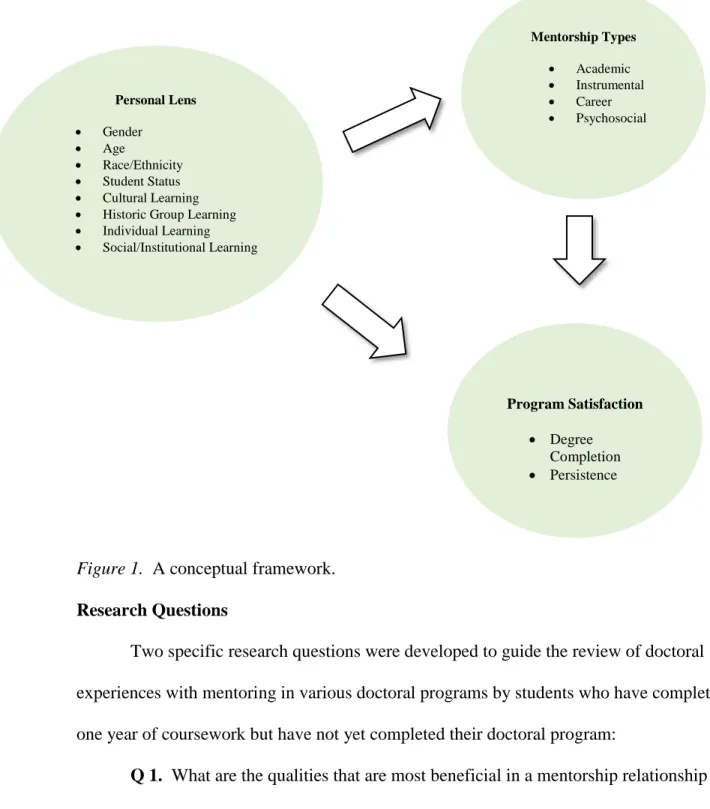
Mentor experiences from the mentees perspective very often take on the personal lens of the mentee. Looking at gender and identity intersections to research mentorship
experiences, Welton, Mansfield, Lee, and Young (2015) conducted a mixed method study to gain personal insight from 12 currently enrolled, female doctoral students and to gather data in a 30-item survey from a sample of 78 currently enrolled doctoral students. Qualitative and quantitative data collection processes sought to discover how graduate students defined mentorship, what mentorship activities they experienced, and whether mentor experiences differed according to gender, race, or other identity factors. The combined data set produced three major themes: (a) students’ perceptions of quality mentoring, (b) experiences with mentoring activities, and (c) subsequent differences in experiences according to intersecting
identity factors. Constructive feedback and professional support highlighted students’ concept of quality mentoring. Further, although participants believed that academic support to sharpen skills and knowledge in preparation for a career was highly promoted, participants did not believe their doctoral programs provided emotional support to them. A noteworthy difference was found between men and women with regard to the location of their mentors, with 81% of men reporting finding a mentor at their university, and only 65% of women experiencing a mentor at their institution
Mismatches regarding mentor and mentee differences in agendas, finding ideal mentor qualities, or mentors to whom a student can relate were at the forefront of a study conducted by Garrett (2006), in which the effects of mentoring on the quality of the doctoral experience were discussed. As part of the literature review, Garrett found a faculty
development program analyzed by Willie, Grady, and Hope in 1991. From this project, 141 faculty members participated in the development program, and 46% of the fellows responded to a questionnaire regarding their social and academic experiences while they attended graduate school. More than 70% of the respondents were graduates of historically Black institutions. However, of those scholars who completed the survey, the Black students who attended primarily White institutions (PWIs) were dissatisfied with the lack of opportunity they perceived they had to work with faculty members and noted the absence of a racially diverse professoriate. Further, only approximately half of the respondents indicated having a mentor, and of those, only half had a mentor at their home institutions.
In 2000, African Americans comprised approximately 12% of the population; only 3.1% of doctoral degrees are awarded to this population. It is imperative to support the doctoral program completion for these students. With this in mind, Garrett (2006)
recommended that universities need to take an aggressive approach to retain qualified African American faculty to mentor incoming cohorts of students. Doing so would lead to a professoriate more representative of the student body and allow more time and space on the schedules of new faculty members to mentor effectively. A final recommendation proposed that universities and tenure boards consider mentoring and advising efforts in both tenure and promotion decisions. This is to say that faculty mentoring should be considered as a
necessary piece of a workload and have as much prestige as research and course load efforts. For some students, ideal mentor qualities can refer to attributes beyond psychosocial and relational. For many students, finding a mentor and building rapport with them can begin simply by finding a faculty advisor that is similar to the student in terms of gender and/or race. These characteristics alone meet certain mentorship needs of graduate students, but needs can vary based on the students’ gender or ethnicity.
Noy and Ray (2012) addressed a central question regarding the paramount
importance of mentorship in graduate school, and whether there is a systematic disadvantage in the perceived support given by faculty to women and students of color in contrast to that given to men and Whites. The researchers also sought to determine the extent to which respondents felt their advisor exhibited six different mentorship dimensions: affective, instrumental, intellectual, exploitative, availability, and respectfulness. These dimensions were examined in relation to the variables of race and gender within the participant group.
The authors found that females perceived that their advisors provided more support than that perceived by their male counterparts. This result coincided with the study done by Bell-Ellison and Dedrick (2008), which cited that women felt that acceptance and