Lack of full market potential exploitation by SMMEs in Botswana
Guruwo Paul T.Marketing Management Lecturer & PhD Candidate, Department of Entrepreneurship, BA ISAGO University, P. Bag 149, Gaborone, Botswana
Email: [email protected] ABSTRACT
The study sought to reveal the reasons behind a high proliferation of foreign Small, Medium and Micro Enterprises (SMMEs) in Botswana contrary to the Government’s effort to support the local industry. A simple random sampling technique was used to gather quantitative data, using structured questionnaires distributed to 30 respondents from six SMMEs in Gaborone, the capital of Botswana. Reference and acknowledgements were made to both previous print and electronic publication literature that contributed to the debate of lack of SMMEs exploitation of their market potential in Botswana. Statistical Package for Social Science (SPSS Version 22), was used to analyze the data which was then interpreted from pictorial presentations of tables, diagrams and graphs. The study showed that most problems affecting local SMMEs from fully exploiting their market potential are associated with failure to compete with international standards. Another factor that was discovered by the study showed an over-reliance of local SMMEs to concentrate on selling their produce to the Government through the Public Procurement and Asset Disposal Board, which sometimes lets them down due to the stringent regulatory measures that are needed. The research made recommendation to the SMMEs to lessen their overdependence on Government initiatives. It was also recommended for local SMMEs to leverage on business culture and skills transfer from their foreign counterparts.
Key terms: Market Potential Exploitation, SMMEs Challenges, Botswana.
INTRODUCTION
This research focused on investigating challenges faced by SMMEs in fully exploiting their market potential in Botswana. SMMEs are a major contributor to any country’s economy since they are a crucial source of citizen’s employment (employ 32% of the total workforce) and contribute about 20% of a nation’s product output (Mutoko, 2014 & Jefferies, 2012). Despite the government of Botswana’s strong support for entrepreneurial skills, policy development and programmes to protect the needs of local SMMES, there still shows a lack of meaningful presence of their produce in the market. Furthermore, the government entered into bilateral and multilateral agreements with numerous unions like, Southern African Customs Union (SACU), Southern African Development Community (SADC), African Growth and Opportunity Act (AGOA) and European Trade Free Association (ETFA) in order to help the businesses access international markets but still these efforts seem to be falling of hard rock. The Economic Diversification Drive (EDD), Public Procurement and Asset Disposal Board (PPADB) were formed to regulate and ease the penetration for domestic marketers. On another perspective entrepreneurial entities like Citizen Entrepreneurial Development Agency (CEDA), Local Enterprises Authority (LEA) and Botswana Investment and Trade Center (BITC) were established to support the industry but still little
Vol.10, No.20, 2018
progress is seen from the industry despite the high growth economy with a long record of comprehensive macroeconomic management and good governance.
LITERATURE REVIEW
Classification of SMMES in Botswana
Small, Medium and Micro enterprises in Botswana are classified into 3 categories which are; Category
Micro enterprises Small enterprises Medium enterprises
Employment level Less than 6 workers Less than 25 workers Less than 100 workers
Annual turnover(in Pulas) Less than P60 000
Between P60 000 and P1 500 000 Between P1 500 000 and P5 000 000 Adapted from :( NUGE, 2012) Classification of SMMES in Botswana.
However, the economy has long been dominated by diamond mining, which currently accounts for a third of the country’s GDP and 80 percent of its export earnings, yet mining employs less than 5 percent of the work force. As a result, unemployment and the rate of poverty have both been persistently high. Vibrant SMMEs would alleviate this pandemic since they form the backbone of the majority of the world’s economies because they have a significance towards employment creation, poverty eradication, and economic diversification (Kongolo, 2010). Thus the government is highly concerned with the failing developing of entrepreneurship especially among youths (Rhodes, 2012).
Nevertheless, SMMEs face noteworthy challenges that threaten their persistence and progression. Mutoko (2014), highlights some of the main problems facing SMMEs in Botswana being, inadequate business expertise, stifled innovativeness, poor planning and/ management thus tremendous efforts are made by the Government and other interested parties like LEA, CEDA, BITC and the Ministry of Trade and Industry to help SMMEs succeed. Even though there are opportunities provided by the government to support and diversify the economy it seems SMMES don’t make an effort to learn more and exploit the programs at hand but most of the time it is caused by the complicated processes of the programs provided. The entrepreneurs lack resources to fulfill the requirements of the service providers and the technical know-how to make their business succeed and little is known about the effectiveness of services rendered to SMMEs by these service provider (Modisane, 2012). However, in spite of the recognized importance, the performance of SMEs in the Botswana’s economy has been very limited (Sentsho et al., 2007).
Entrepreneurship is fundamental for economic growth and employment creation (Heinonen & Hytti, 2016; Minniti, 2008; Parker, 2008). Thus, the argument which has always been put forward by Gnyawali and Fogel (1994), that the common areas to be lectured by the public policy are to foster an enabling environment for entrepreneurs and encouraging the growth of institutions that support entrepreneurial skills. Hinton et al. (2006) identified a number of challenges facing SMEs in Botswana amongst which include poor entrepreneurial culture and access to financial assistance that will enable SMMEs to reach their true potential.
The Government of Botswana has over the years helped businesses to access both domestic and international markets but despite a number of interventions by the Government, problems associated with entrepreneurship development still persist.
SMMEs support initiative made by the Government of Botswana
Market access schemes put forward by the Government of Botswana to empower SMMs include incentives to support local enterprises by purchasing locally produced products.
Specifically, CEDA was established to provide funding for citizen owned businesses and joint ventures operating in/outside Botswana in order to nurture citizen entrepreneurship and empowerment. The government has also entered into bilateral and multilateral trade contracts that would, if exploited, improve entrepreneurs’ access to regional and international markets (Southern African Development Community, 2012; The EFTA States & the SACU States, 2006).
At the regional level, Botswana’s proximity to Africa’s biggest economy (South Africa) and its potential to be used as an exit route through major trading partners such as South Africa and Namibia is cited as one of the greatest advantages (Government of Botswana, 2011a). More importantly, Botswana has signed several trade agreements and arrangements at the regional level in order to facilitate trade. These include, but are not limited to, the Southern African Development Community (SADC), and the Southern African Customs Union (SACU) (MTI, 2009).
METHODOLOGY
A sample of 30 participants from 6 SMMEs was used. These companies had an experience curve ranging from three to eight years from establishment and their major clients range from individual clients, corporate clients and the government. The data was analyzed using SPSS Version 22.
DATA PRESENTATION AND ANALYSIS
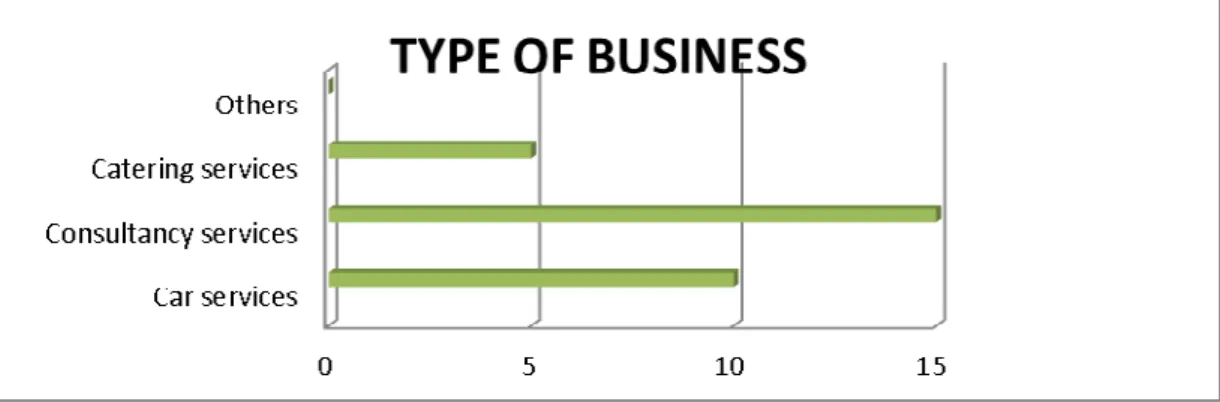
Figure 4.1 Type of Business
The above Figure 4.1, shows major types of businesses operated by Batswana with consultancy services topping the list (50%), followed by car services with 33.3% and catering services with only 15.7%. The figures depict a withdrawal from technical trades with the majority of the respondents preferring to venture into white collar jobs
Vol.10, No.20, 2018
that require less technical acumen. This trend of failing to be utilize hand-on skill is also shown in Figure 4.2 below.
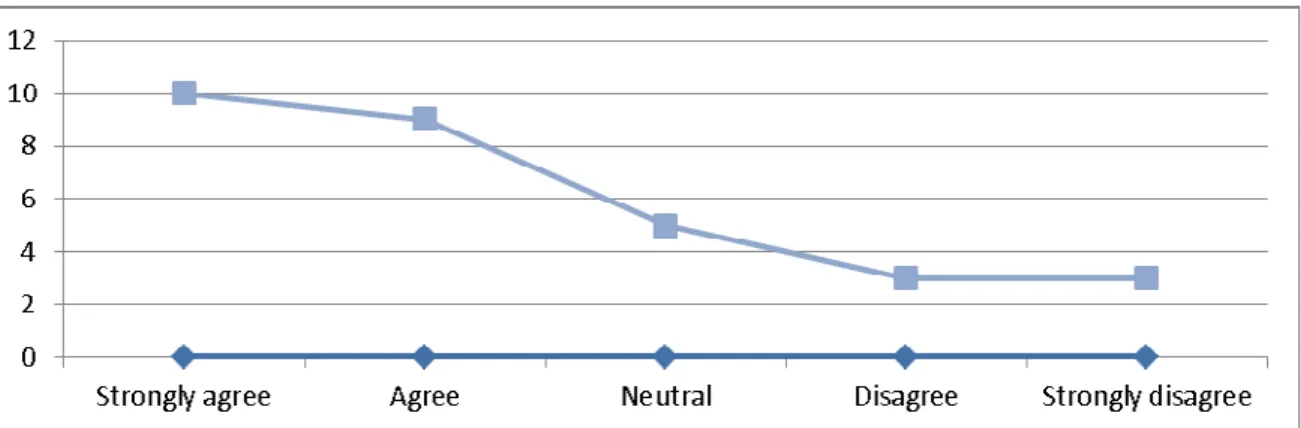
Figure 4.2.The Quality of Services Provided by Service Providers.
Figure 4.2 above depicts a dissatisfaction of customers serviced by local SMMEs a trend which is detrimental to the growth and survival of SMMEs.
CONCLUSION AND RECOMMENDATION
The major findings exhumed by this study attributing the failure by SMMEs to fully exploit their market potential were lack of technical skills to provide quality services that would call for repeat business, overdependence on Government’s initiatives and inadequate business technical skills to run small enterprises. The study also uncovered that most SMMEs are always ready to tap into markets that the Government opens them up to but lack the resilience to stand the completion from their foreign counterparts. A serious lack of the initiative to acquire more information and explore their business potential further was noticed.
SUGGESTIONS FOR FUTURE RESEARCH
This study mainly looked at lack of exploitation of market potential by SMMEs in Gaborone alone. Suggestions for future researches are put forth to explore other geographical areas.
REFERENCES
Acquah, K. B, Mosimanegape, B. (2007). Factors contributing to the performance of Small Business enterprises in Botswana: A case study of Gaborone and Environs. A paper presented at the National Conference on the Informal Sector, GICC, Gaborone, Botswana.
Agrell, J.-O., Bergman, B. D., Hallerby, P., & Ring, K. (1986/2). Developing Entrepreneurs: An Evaluation of Small Scale Industry Development in Botswana 1974-84. 5- 105 25 Stockholm: Swedish International Development Authority.
Audretsch, D., Grilo, I., & Thurik, R. (2007). Explaining entrepreneurship and the role of policy: A framework. In D. B. Audretsch, I. Grilo, & A. R. Thurik (Eds.), Handbook of research on entrepreneurship policy (pp. 1-17). Cheltenham, U.K.: Edward Elgar.
Barney, J. (1991). Firm Resources and Sustained Competitive Advantage. Journal of Management, 17(1), 99-120.
Ferber, A., (2008), Business Research, 2nd Edition, Palgrave McMillian, New York
Government of Botswana. (1999). Policy on small, medium and micro enterprises in Botswana, Government White Paper No.1. Gaborone: Government Printing Press.
Government of Botswana. (2004). Small Business Act, 2003: Act No. 7 of 2004. Gaborone: Government Printer. Malibala, K. (2012). ‘Legal forms of a business structure’, DailyNews, June 25, 2012 no. 119 pg 19.
Modisane,R. (2009)Challenges facing development of SMMEs in Botswana :Stanbic Bank. Available on www. Hotwireprc.com (date accessed, 27/ Feb/2018)
Green, S.L and Tull, B., (1998), Principles of Market Research, 11th Edition, New Jersey, Pearson Prentice Hall 2006
Heinonen, J., Hytti, U., & Cooney, T. M. (2010). The context matters: Understanding the evolution of Finnish and Irish entrepreneurship policies. Management Research Review, 33(12), 1158-1173. doi: doi:10.1108/01409171011092202
Ministry of Finance and Development Planning. (2009). National Development Plan 10: NDP 10 towards 2016 (April 2009 - March 2016) Gaborone: Botswana Government Printer.
Mugwara, D. (2000). Small and medium enterprise policy & strategy: Ministry of Industry & Commerce. Mutoko, R.W., 2014, ‘Challenges of access to markets and opportunities for small, medium, and micro enterprises (SMMEs) in Botswana’, European Scientific Journal 2(2), 28–38.
Mwobobia, F. M., (2012) Empoweing SMMEs in Botswana. Journalof Business and Management Research, Vol. 1, pp. 1-11
Sentsho, J., Maiketso, J.T., Sengwaketse, M., Ndzinge-Anderson, V. & Kayawe, T. 2007. Performance and competitiveness of small and medium sized manufacturing enterprises in Botswana. Bay Publishing (Pty) Ltd, Gaborone.
Silverman, David (1994) Interpreting Qualitative Data, London; Sage.