DOI:10.21276/ijprhs.2018. 2018. 02.39
Fazil Ahmadet al CODEN (USA)-IJPRUR, e-ISSN: 2348-6465
Original Article
Phytochemical and Nephroprotective Activity of
Eclipta prostrata
against Gentamicin Induced
Nephrotoxicity in Wistar Rats
Fazil Ahmad
1, *, Abeer Mohammed Al-Subaie
1, Ahoud Ibrahim Al-Ohali
1, Abdul
Saleem Mohammed
21
College of Applied Medical Sciences in Jubail, Imam Abdulrahman Bin Faisal University-Dammam, Jubail -35816, Saudi Arabia.
2
Nizam Institute of Pharmacy, Deshmukhi, Pochampally (M), Near Ramoji Film City, Nalgonda,TS, India-508284
A R T I C L E I N F O A B S T R A C T
______
1. INTRODUCTION
Gentamicin, an aminoglycoside class of bactericidal antibiotic, is effective against Gram-negative bacteria infections1. However, the clinical use of gentamicin is limited by its major drawback, acute renal failure2. Gentamicin induced nephrotoxicity is characterized by increased levels of serum creatinine and blood urea nitrogen, decreased glomerular filtration rate and morphological alterations 3 4. The Kidneys play an important role in the
International Journal of Pharma Research and Health Sciences
Available online at
www.pharmahealthsciences.net
Received: 23 Apr 2018 Accepted: 29 Apr 2018
The present study was undertaken to evaluate the nephroprotective activity of Eclipta prostratahydroalcoholic leaves extracts against gentamicin induced nephrotoxicity in wistar rats for 8 days. Gentamicin induced nephrotoxicity was well manifested by significant increase in renal parameters like serum uric acid, serum urea, serum creatinine, blood urea nitrogen and weight of kidney. The oral administration of hydroalcoholic leaves extracts of Eclipta prostrata(250mg/kg and 500mg/kg,p.o) along with gentamicin reversed these altered parameters to normal level when compared with standard cystone (5ml/kg; p.o). The histopathological investigation of kidney was also supported nephroprotective activity of Eclipta prostrata.Hence from all the results, it is concluded that Eclipta prostratapossess nephroprotective activity due to its antioxidant property.
Key Words:Gentamicin,Hydroalcoholic, Eclipta prostrata,Nephrotoxicity, Nephroprotectivity.
Corresponding author *
Fazil Ahmad
College of Applied Medical Sciences in Jubail, Imam Abdulrahman Bin Faisal University-Dammam,
Jubail -35816, Saudi Arabia
maintenance of our endocrine, acid-base balance, blood pressure and erythropoiesis. Nephrotoxicity is renal dysfunction that arises as a direct result of exposure to external agents such as drugs and environmental chemicals5. This nephrotoxicity in the form of acute renal failure occurs in 10-30% of patients receiving gentamicin6,7. Although it is generally reversible upon drug discontinuation but it
complicates the patient’s condition, prolongs the hospital
stay and increases the medical expenditure8.
Renal disease is the ninth leading cause of death. Approximately, 19 million adults have chronic renal disease and an estimated 80,000 persons have chronic kidney failure diagnosed annually in India. Recent literature, have shown a prevalence of chronic renal failure of 0.16% and 0.79% in India. Nephrotoxicity is the third most common problem of the renal system with an estimated lifetime risk of 2-5% in Asia, 8-15% in Europe and America and around 20% in the Middle East9.
Eclipta Prostrata (L.)L (family, Asteraceae) is popularly
known as false daisy or Bhingaraj. The plant has been reported to contain phytosterol, β-amyrin, triterpenes such as ecalbatin, echinocystic acid, flavones such as luteolin and coumarin10. The whole plant is used as a stimulant. The flowers are used for their analgesic, antispasmodic, fungicidal, digestive, bactericidal and vulnerary properties. The plant is known to have some important pharmacological activities such as hepatoprotective, antimicrobial, antioxidant, anti-inflammatory, antiviral, immunomodulatory and analgesic activity11. Hence the present study is undertaken to evaluate the nephroprotective effect of these plant against gentamicin induced nephrotoxicity in experimental animal model.
2. MATERIAL AND METHOD
Preparation of plant extract:
Eclipta prostrata leaves were obtained from herbal garden of
Nizam Institute of Pharmacy and were authenticated by botanist.100gram of Eclipta prostrata leaves were shade dried and powdered. Eclipta prostrata extract was prepared by suspending dry leaf powder in water and ethanol in ratio of 1:3 and stirring it overnight at 50°C, followed by filtration under sterile conditions. The filtrate was vacuum dried at 50°C to remove the solvent completely, weighed and reconstituted in distilled water.
Phytochemical Screening
Phytochemical investigation was carried out on hydroalcoholic leaves extract of Eclipta prostrata for detection of various phytochemicals by following standard methods12,13.
Experimental Animals
Wistar rats (150-200 g) of both sexes were obtained from the animal house of Nizam Institute of Pharmacy. Before and during the experiment, rats were fed with standard diet (Gold Moher, Lipton India Ltd). After randomization into various groups and before initiation of experiment, the rats were
acclimatized for a period of 7 days under standard environmental conditions of temperature, and dark/light cycle and relative humidity. Animals described as fasting were deprived of food and water for 16 h ad libitum. All animal experiments were carried out in accordance with the guidelines of CPCSEA and study was approved by the IAEC (Institutional animal ethical committee) with registration no:1330/ac/10/CPCSEA.
Acute Toxicity Testing
The acute oral toxicity was carried out in wistar rats, as per the Organization for Economic Cooperation and Development (OECD) guidelines 425. The dose 2g/kg, was used, which did not show any kind of toxic effects on animals. In this experiment, we have selected 250 mg/kg and 500 mg/kg as test doses.
Gentamicin Induced Nephrotoxicity in Rats14:
The rats of either sex were divided into 5 groups of 6 each. Group I : Vehicle control
Group II : Nephro toxic control(Gentamicin 100 mg/kg) Group III : Eclipta prostrata (250 mg/kg,p.o) + Gentamicin (100 mg/kg)
Group IV : Eclipta prostrata (500 mg/kg,p.o) + Gentamicin (100 mg/kg)
Group V : Standard polyherbal drug cystone (5 ml/kg; p.o) + Gentamicin (100 mg/kg)
Experimental procedure
The gentamicin treated groups received 100 mg/kg/day gentamicin by the intraperitoneal (i.p.) route. Rats in the group I were given sterile saline solution for 8 days. Group II received 100 mg/kg gentamicin i.p alone for for 8 days. Group III received 100 mg/kg gentamicin i.p. and Eclipta
prostrata 250 mg/kg/ p.o. for eight days and Group IV
received 100 mg/kg/ gentamicin i.p. and Eclipta prostrata 500 mg/kg/p.o. for eight days. Group V received 100 mg/kg/ gentamicin i.p. and standard polyherbal drug cystone (5 ml/kg; p.o) for eight days.
After dosing on the 8thday, blood samples were collected via cardiac puncture method at the end of these 24 h. The serum was rapidly separated and processed for determination of serum creatinine, serum uric acid, serum urea and blood urea nitrogen, using commercially available kits of Span Diagnostics. Three rats per group were sacrificed and both kidneys were isolated from each rat. The kidneys were weighed and processed for histopathological examination.
Histopathology of the Kidney
The kidneys were sectioned longitudinally in two halves and were kept in 10% neutral formalin solution. Kidneys were processed and embedded in paraffin wax and sections were taken using a microtome. The sections were stained with hematoxylin and eosin and were observed under a computerized light microscope.
Statistical analysis
3. RESULTS
Results of the preliminary phytochemical investigation on
Eclipta prostrata leaves are shows the presence of
terpenoids, glycosides, alkaloids, sterol, flavonoids, volatile oils and saponins. Animals in Group II (Nephrotoxic group) showed significant increase in serum urea, serum creatinine, serum uric acid, blood urea nitrogen and kidney weight. While extract treated group (Group III -IV) showed significant reduction in above parameters, which were compared with standard cystone treated group (Group V).
Table 1: Effect of Eclipta prostrata on biochemical parameters in gentamicin induced Nephrotoxic rats.
Values are expressed as mean±SEM. n=6 rats in each group
Graph 1: Effect of Eclipta prostrata on Serum urea (mg/ml) in gentamicin induced Nephrotoxic rats
Graph 2: Effect of Eclipta prostrata on Serum creatinine (mg/ml) in gentamicin induced Nephrotoxic rats
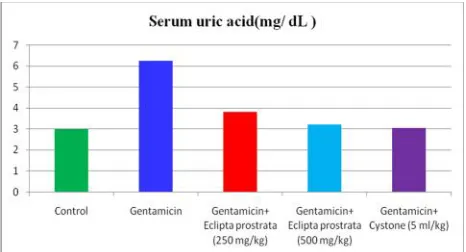
Graph 3: Effect of Eclipta prostrata on Serum uric acid (mg/ml) in gentamicin induced Nephrotoxic rats
Graph 4: Effect of Eclipta prostrata on Blood urea nitrogen (mg/ml) in gentamicin induced Nephrotoxic rats
Graph 5: Effect of Eclipta prostrata on Weight of kidney(g) in gentamicin induced Nephrotoxic rats
4. DISCUSSION
Several phytochemical constituents of Eclipta prostrata have reported, with multiple and diverse pharmacological activities. Oleanolic acid from Eclipta prostrata is known to possess both antidiabetic and anticancer effects. It can directly modulate enzymes connected with insulin biosynthesis, secretion, and signaling15. Many reports have shown that ursolic acid possess anticancer, antioxidant, anti-inflammatory, antiwrinkle, antimicrobial, and hepatoprotective activities16,17. The cardioprotective role of luteolin obtain from Eclipta prostrata has been shown in cardio myocytes following ischemia-reperfusion,
Groups Serum urea (mg/dL)
Serum creatinine (mg/ dL )
Serum uric acid(mg/ dL )
Blood urea nitrogen (mg/ dL )
Weight of kidney (g)
Control 54.2±1.20 1.22±0.32 2.98±0.52 18.24±2.26 0.86±0.68 Gentamicin 95.04±3.12 3.28±0.98 6.25 ±1.24 42.29±2.49 1.40±0.24 Gentamicin+
Eclipta prostrata
(250 mg/kg)
70.26±2.26* 2.12±0.48* 3.82±1.54* 30.98±1.24* 1.22±0.32*
Gentamicin+
Eclipta prostrata
(500 mg/kg)
59.15±4.34**1.48±0.64**3.20±0.42**22.48±1.34**0.98±0.86**
Gentamicin+ Cystone (5 ml/kg)
52.8±2.98**
recommending that the compound can form the basis for preventing and treating cardiovascular illnesses18.
Apigenin obtain from Eclipta prostrata has been described as a chemopreventive agent19. The compound also has anti-inflammatory and antioxidant properties. The compound may also known have a beneficial effect in neurological and cardiovascular disorders20.
In the present research, phytochemical analysis of leaf extract shows the presence of terpenoids, glycosides, alkaloids, sterol, flavonoids, volatile oils and saponins. Nephrotoxicity is a standout amongst the most widely recognized kidney issues and happens when body is presented to a medication or poison21. Various therapeutic agents can unfavorably affect the kidney resulting in acute renal failure, chronic nephritic syndrome and interstitial nephritis22. Exposure to chemical reagents like ethylene glycol, carbon tetrachloride, sodium oxalate and heavy metals such as lead, mercury, cadmium and arsenic also induces nephrotoxicity Provoke acknowledgment of the ailment and suspension of dependable medications are generally the main essential treatment23.
Medicinal plants have nephroprotective properties due to the presence of various complex chemical substances. Early literatures had reported various herbs for the cure of renal disorders. Co-administration of various nephroprotective plants along with different nephrotoxic agents which may attenuate its toxicity.
The term renal failure denotes failure in excretory function of the kidney, leading to retention of nitrogenous waste products in the blood24. In addition there is a failure of regulation of fluid and electrolyte balance along with endocrine dysfunction25. Medicinal plants extracts have been used by traditional medical practitioners for the treatment of kidney disorders for centuries. Gentamicin which is widely used aminoglycoside antibiotic, known to induce nephrotoxicity in man and experimental animals26. Gentamicin induced nephrotoxicity is characterized by significant elevation of urea and creatinine levels in plasma as well as urine, uric acid severe proximal tubular necrosis, renal failure27,28. Several studies have been reported that oxygen-free radicals are considered to be important mediators of gentamicin induced acute renal failure 29, 30. Therefore agents with antioxidant property can be used for the treatment of gentamicin induced nephrotoxicity
In the present study the results summarized in Table 1 show the effect of gentamicin alone and in simultaneous treatment with hydroalcoholic leaces extract of Eclipta prostrata (250 mg/kg)and (500 mg/kg) on the seruml parameters. Gentamicin treatment resulted in significant in significant increase in serum urea, serum creatinine, serum uric acid, blood urea nitrogen and kidney weight. Administration of hydroalcoholic leaves extract of Eclipta prostrata in dose of 250mg/kg and 500mg/kg for 8 days caused had protection from deleterious effect of Gentamicin on above physical parameters. There was less reduction in body weight in
group III and group IV as compared to control group. Phytochemical screening of the extracts revealed the presence of terpenoids, glycosides, alkaloids, sterol, flavonoids, volatile oils and saponins. As per the findings, the secondary metabolite, flavonoids is present in the plant which is antioxidant in nature31. This may be responsible for kidney protective activity. The results show that Eclipta
prostrata protects against gentamicin induced kidney injury.
Where as co-administration of extract with gentamicin showed minimal cellular damage and decrease the tubular congestion and glomerular congestion dose dependently (Table 1 and Figure 3-4). The histopathological study also proved that the Eclipta prostrata extract has nephroprotective activity by having antioxidant property.
Histopathology of kidney:
Group I: shows normal tubules; Group II: Gentamicin (100 mg/kg) treated group shows extensive and marked necrosis of tubule; Group III: Gentamicin + Eclipta prostrata (250 mg/kg) treated group shows limited damage of tubules;, Group IV: Gentamicin + Eclipta prostrata (500 mg/kg) treated group shows slight degenerative change in tubules;, Group V: Gentamicin + standard Cystone shows normal tubular.
5. CONCLUSION
The results of our study showed that treatment with hydroalcoholic extracts of Eclipta prostrata showed significant protection against nephrotoxicity induced by gentamicin treatment. However, daily treatment with Eclipta
prostrata (250mg/kg and 500mg/kg) for 8 days conferred
extract. These findings indicate that Eclipta prostrata extract possesses nephrotoxicity effect due to its antioxidant properties.
6. REFERENCES
1. Al-Qarawi AA, Abdel-Rahman H, Mousa HM, Ail BH, El-Mougy SA. Nephroprotective action of Phoenix
dactylifera in gentamicin-induced nephrotoxicity. Pharm Biol, 2008; 46: 227–230.
2. Erdem A, Gündogan NU, Usubütün A, Kilinç K, Erdem SR, Kara A, Bozkurt A. The protective effect of taurine against gentamicin-induced acute tubular necrosis in rats. Nephrol Dial Transplant 2000; 15: 1175–1182. 3. Soliman KM, Abdul-Hamid M, Othman AI. Effect of
carnosine on gentamicin-induced nephrotoxicity. Med Sci Monit, 2007; 13: BR73–BR83.
4. Balakumar P, Rohilla A, Thangathirupathi A. Gentamicininduced nephrotoxicity: Do we have a promising therapeutic approach to blunt it? Pharmacol Res, 2010; 62: 179–186.
5. Sundararajan R, Bharampuram A, Koduru R. A review on phytoconstituents for nephroprotective activity. Pharmacophore. 2014;5(1):160-82.
6. Kahlmeter G, Dahlager JI: Aminoglycoside toxicity - a review of clinical studies published between 1975 and 1982. The Journal of antimicrobial chemotherapy 1984;13 Suppl A:9-22.
7. Mathew TH: Drug-induced renal disease. The Medical journal of Australia 1992;156(10):724-8.
8. Sande MA, Mandell GL: The aminoglycosides. In: Gilman AG, Rall TW, Nies AS,Taylor, P.Goodman and Gilman's The pharmacological basis of therapeutics, 8th ed. Pergamon Press, New York, 1990;1098- 1115. 9. Priyadarsini G, Kumar A, Anbu J, Ashwini A,
Ayyasamy S. Nephroprotective activity of decoction of
Indigofera tinctoria (avurikudineer) against
cisplatin-induced nephropathy in rats. Inter J Life Sci Pharm Res. 2012;56-62.
10. Chopra R N, Nayar S L and Chopra I C. Glossary of Indian Medicinal plants. New Delhi: Council of Scientific and Industrial Res. 1966, pp: 104.
11. Duan X J, Zhang W W, Li X M and Wang B G, Evaluation of antioxidant property of extract and fraction from red algae, Polysiphonia urceolata. Food chem. 2006; 95: 37-43.
12. Khandelwal K R, Practical Pharmacognosy—
Techniques and Experiments, Nirali Prakashan, 9th edition, 2002.
13. Kokate C K, Purohit A P, and Gokgale S B, Pharmacognosy, Nirali Prakashan, 4th edition, 2002. 14. Lakshmi B V S, Neelima N, and Sudhakar M.
Protective Effect of Bauhinia purpurea on Gentamicin-induced Nephrotoxicity in Rats. Indian Journal Pharma Sciences, 2009 ;Vol 71(5):pp 551-554
15. J. M. Castellano, A. Guinda, T. Delgado, M. Rada, and J. A. Cayuela, “Biochemical basis of the antidiabetic
activity of oleanolic acid and related pentacyclic triterpenes. Diabetes 2013; 62(6): 1791–1799.
16. N. Sultana, Clinically useful anticancer, antitumor, and antiwrinkle agent, ursolic acid and related derivatives as medicinally important natural product. Journal of Enzyme Inhibition and Medicinal Chemistry 2011; 26(5): 642.
17. J. Liu, Pharmacology of oleanolic acid and ursolic acid. Journal of Ethnopharmacology 1995; 49(2): 57–68. 18. X. Tongda, D. Li, and D. Jiang, “Targeting cell
signaling and apoptotic pathways by luteolin: cardioprotective role in rat cardiomyocytes following ischemia/reperfusion. Nutrients 2012; 4(2): 2008–2019. 19. Patel D, Shukla S, and Gupta S. Apigenin and cancer
chemoprevention: progress, potential and promise (review). International Journal of oncology 2007; 30(1): 233–245.
20. S. Shukla and S. Gupta, “Apigenin: a promising
molecule for cancer prevention,”Pharmaceutical Research 2010; 27(6): 962–978.
21. Porter GA and Bennett WM. Nephrotoxic acute renal failure due to common drugs American journal of Physiology, 1981; 241(7): F1-F8.
22. Hoitsma AJ, Wetzels JF and Koene RA. Drug induced nephrotoxicity. Aetiology, clinical features and management, Drug Saf, 1991; 6 (2): 131-147.
23. Paller MS. Drug induced nephropathies Med Clin North Am,1990; 74 (4):909-917.
24. Herfindal, Gourley. Text book of therapeutic drug and disease management. 7th Edn. Charcil Livingstone, London; 2000; 425-36.
25. Barry M, Brenner, Floyd C, Rector. The kidney 6th Ed. Vol I, W.B. Saunders Company, Philadelphia; 2000; 3-67.
26. Humes HD, Weinberg JM. Toxic nephropathies. In The kidney, edited by B.M. Brenner and F.C.Rector, Jr. Philadelphia, PA: Saunders, 1986, 1491-1532.
27. Erdem A et al. The protective effect of taurine against gentamicin induced acute tubular necrosis in rats. Nephrol Dial Transplant. 2009; 15:1175-1182.
28. Laskshmi BV, Sudhakar M. Protective effect of
Zingiber officinale on gentimicin-induced nephrotoxicity in rats. International Journal of Pharmacology. 2010; 6(1):58-62.
29. Walker PD, Barri Y, Shah SV: Oxidant mechanisms in gentamicin nephrotoxicity. Renal failure 1999;21:433-42.
30. Karahan I, Atessahin A, Yilmaz S, Ceribasi AO, Sakin F: Protective effect of lycopene on gentamicin-induced oxidative stress and nephrotoxicity in rats. Toxicology 2005;215:198-204.
gentimicin-induced kidney injury. Asian Pacific Journal of Tropical Biomedicine. 2011; 4(12):969-972
Conflict of Interest: None