Comparative Biochemical Implications of administrations of
extracts of
Scoparia dulcis
and
Loranthus begwensis
in Normal
and Alloxan-induced Diabetic Rats.
1
Aghagboren C. Osaro, 1Uadia O. Patrick and 2Omage Kingsley*
1
Department of Biochemistry, Faculty of Life Sciences, University of Benin, Benin City, Edo State, Nigeria.
2
Department of Biochemistry, School of Basic Medical Sciences, College of Health Sciences, Igbinedion University, Okada, Edo State, Nigeria.
Date Received:
10-Feb-2014
Date of Accepted:
12-Mar-2014
Date Published:
18-Mar-2014
Abstract:
The comparative effects of aqueous extracts of Scoparia dulcis and African Mistletoe (Loranthus begwensis) from two host plants (Cocoa and almond) on biochemical parameters (that are indicators of disorders associated with the diabetic states) in normal and alloxan induced diabetic rat were studied. The rats were treated orally with the extracts at a dose of 500mg/kg/day for six days. Induction of diabetes with alloxan resulted in a significant increase (P<0.05) in plasma creatinine and urea. A significant reduction (P<0.05) in plasma creatinine, urea and ALP resulted from the treatment with the three extracts, as well as a non significant (P > 0.05) reduction in total bilirubin. AST and ALT were not significantly (P > 0.05) increased by the plant extracts. The plant extracts appeared not to be toxic to the tissues at the dose they were administered. Mistletoe and Scoparia dulcis extract appeared to possibly ameliorate the complications associated with diabetes mellitus, offering the possibility of their clinical use in its management. Thus, Scoparia dulcis and African mistletoe (Loranthus begwensis) from the two host plants (cocoa and almond) are relatively safe and effective in the management of disorders associated with the diabetic state.
Keywords:
Alloxan, Diabetic States, Loranthus begwensis, Scoparia dulcis, Transaminases, Urea
Introduction
Alloxan (2,4,5,6 – tetraoxypyrimidine, 5, 6 – dioxyuracil) is synthesized by uric acid oxidation (Lenzen and Panten 1988). Alloxan diabetes has been commonly utilized as an animal model of insulin dependent diabetes mellitus. The most frequently used intravenous dose of this drug to induce diabetes in rates is 65mg/kg (Gruppruso et al, 1990, Boyla et al, 1992). Fasted animals are more susceptible to alloxan (Katsumata et al, 1992, Szkudelski et al, 1998). Increased blood, glucose provides portal protection (Bansal et al, 1980). Alloxan evokes a sudden rise in insulin secretion in the presence or absence of glucose in an in vitro study using isolated islets (Weaver et al, 1996) and perfused pancreas (Klibber et al, 1996). The sudden rise in blood insulin concentration was also observed inviro just after Alloxan injection to rats (Szkudelski et al, 1998). Alloxan induced insulin release is however of shorter duration and is followed
193
progress in the understanding and management of diabetes mellitus, the disease and the complications related to it continue to increase. Therefore, since diabetes is progressing unabated, there is an urgent need to identify indigenous natural sources of new active substances against the disease.
Scoparia dulcis and Loranthus begwensis (African
mistletoe) are both among a wide range of different medicinal plants that has been used as remedy for diabetes mellitus for years in different geographical locations. A number of active principles from Scoparia, Scoparic acid A-D, Scopadulcic A and B, Scopaldulciol and scopadulin have been identified as contributors to the medicinal properties of the plants (Latha and Pari, 2005). Scientific studies has shown that mistletoe posses antihypertensive, antineoplastic, immunostimulant, anticancer, cytotoxic properties. African mistletoe
(Loranthus begwensis) has been found particularly to
posses antidiabetic properties. Mistletoe, a parasitic plant, is peculiar and has been used for years in treating diabetes. Traditionally, it has been used to treat diabetes particularly in places like Nigeria. However, there is dearth of information about the comparative effects of these plants on some serum biochemical parameters that are implicated in diabetic conditions. Thus, the aim of this study was to evaluate the comparative implications of these plants (Scoparia dulcis and Loranthus
begwensis) on some serum biochemical parameters in
diabetic conditions using alloxan-induced diabetic rats as experimental models.
MATERIALS AND METHODS
Experimental Animals
Forty (40) adult Wistar albino rats weighing between 120 – 180 g were obtained from the animal house of the College of Medicine, Ambrose Alli University, Ekpoma, Edo State and used for the study. They were housed in standard disinfected cages in the animal house of the Department of Biochemistry, Faculty of Life Sciences, University of Benin, Benin City Edo State. They were exposed to a 12 hr light/dark cycle, 50 – 60% relative humidity and a temperature of about 300C. The animals were allowed free access to feed (guinea grower’s mash) and tap water, and were treated according to the International guidelines for the care and use of laboratory animals. They were allowed to acclimatize to the new environment for a period of two (2) weeks, after which they were randomized into eight (8) groups of five animals each as follows;
Group A: Normal rats (control) treated with Scoparia
dulcis plant extract.
Group B: Normal rats (control) treated with Loranthus
begwensis (Cocoa mistletoe) plant
extract.
Group C: Normal rats (control) treated with Loranthus
begwensis (Almond mistletoe) plant extract
Group D: Normal rats (control) not treated or induced. Group E: Test rats induced and treated with Scoparia
dulcis plant extract.
Group F: Test rats induced and treated with Loranthus
begwensis (Cocoa mistletoe) plant extract.
Group G: Test rats induced and treated with Loranthus
begwensis (Almond mistletoe) plant extract.
Group H: Test rats induced but not treated.
Experimental Induction of Diabetes
Prior to induction, the fasting blood glucose levels of the experimental animals were determined to establish their basal metabolic status. Diabetes was then induced by administering alloxan intraperitoneally in physiological saline, at a dose of 100mg/kg body weight. This was done twice. Twenty-four (24) hours after the last induction, the fasting blood sugar of the animals was determined and values that were at least twice the basal values were taken to be diabetic.
Plants Extracts
Scoparia dulcis : Fresh (whole) plant of Scoparia dulcis
was collected from local gardens within Benin City. It was identified and authenticated at the department of Plant Biology and Biotechnology, University of Benin. The whole plant was washed and air-dried until a constant weight was obtained. The dried plant was then milled into fine powder and weighed. The powder was then extracted with distilled water by the method of continuous hot extraction for eight (8) hours, using the soxhlet apparatus (Jain, 1968). The extract was concentrated by evaporating the solvent (water) totally to dryness, using a rotavapour apparatus, and weighed.
Loranthus begwensis (African Mistletoe): Fresh leaves
of Loranthus begwensis was collected from host plants;
Cocoa tree (from Ewu, Edo State) and Almond tree (from Delta State). They were identified and authenticated at the department of Plant Biology and Biotechnology, University of Benin. The leaves were washed and air-dried until a constant weight was obtained. The dried leaves were then milled into fine powder and weighed. Each powder was extracted with distilled water by the method of continuous hot extraction for eight (8) hours, using the soxhlet apparatus (Jain, 1968). The extract was concentrated by evaporating the solvent (water) totally to dryness, using a rotavapour apparatus, and weighed.
Administration of Extracts
control (not treated) group given equivalent amount of physiological saline throughout the six days of treatment.
Sample Collection
Fasting blood samples were collected, via the tails of the rats, before inducement of diabetes (basal), 24 hrs after induction to confirm the diabetic status of the rats, and at 48 hrs interval throughout the six days of treatment. The blood samples were analyzed for urea, creatinine, AST, ALT, ALP and Total Bilirubin (lithium heparin bottles), using the spectrophotometric method (with their respective reagent kits from Randox Laboratory Limited, U.K.).
Assay Principles
Urea determination was by Weatherbum 1967 (Urease Berthelot method). Urea in serum was hydrolyzed to ammonia in the presence of urease. The ammonia was then measured photometrically by Berthelot reaction at 546nm. Creatinine was determined by the method of Bartels and Bohmer, 1972. The principle involved the reaction of creatinine in alkaline solution with picric acid to form a coloured complex. The amount of the complex formed was directly proportional to the creatinine concentration. The intensity of the red coloured complex was measured at 492nm. Alanine aminotransferase (ALT) was by the method of Reitman and Frankel, 1957, where ALT was measured by monitoring the concentration of pyruvate hydrazone formed with 2,4 – dinitrophenyl hydrazine at 546nm. Aspartate aminotransferase (AST) was also by the method of Reitman and Frankel, 1957, where AST was measured by monitoring the concentration of oxaloacetate formed with 2, 4- dimtrophenyl hydrazine at 546nm. Bilirubin was determined by the method of Jendrassik and Grof, (1938). The principle involves the reaction of direct (conjugated) bilirubin with diazotized sulphanilic acid in alkaline medium to form a blue colored complex. Total bilrubin was determined in the presence of caffeine, which releases albumin bound bilrubin, by the reaction with diazotized sulphanilic acid and absorbance was read at 578nm. Alkaline phosphatase (ALP) was determined by the method of Rec. GSCC 1972. The principle involves the hydrolysis of P-nitrophenylphosphate to phosphate and P-nitrophenol with the intensity of the yellow colour PNP formed from PNPP determined by ALP action at 405nm.
Statistical Analysis
Data are mean ± standard deviation of five independent determinations. Statistical analysis was by student t-test for unpaired data, at P < 0.05.
RESULTS
Table 1: Effects of extracts of Scoparia dulcis, Almond
mistletoe and Cocoa mistletoe on plasma Urea, Creatinine, AST, ALT, ALP and Total Bilirubin concentrations in normal rats.
Values are expressed as Mean ± SD, n = 5. Different letter superscripts (a, b, c, d) along columns and within groups, are significantly different (P < 0.05). Group A: Normal rats treated with Scoparia dulcis extract. Group B: Normal rats treated with Cocoa mistletoe. Group C: Normal rats treated with Almond mistletoe. Group D: Normal rats and non-treated.
In table 1, urea concentrations in groups B, C and D were not significantly different (P > 0.05) when the baseline (day 0) values are compared with the values at days 2, 4 and 6. However, at day 6, group A showed a significantly (P < 0.05) lower value as compared with day 0. In groups A, B and D, creatinine levels were not significantly different (P > 0.05) when the baseline (day 0) values are compared with the values at days 2, 4 and 6. But in group C, treatment with almond mistletoe resulted in a significantly (P < 0.05) lower values of creatinine at days 4 and 6, when compared with day 0. AST, ALT and ALP were not significantly (P > 0.05) affected by treatment with the different extracts, while total bilirubin were significantly (P < 0.05) reduced in groups A (days 2, 4 and 6, compared with day 0) and D (day 2 compared with day 0).
Table 2: Effects of extracts of Scoparia dulcis, Almond
mistletoe and Cocoa mistletoe on plasma Urea, Creatinine, AST, ALT, ALP and Total Bilirubin concentrations in diabetic rats.
Values are expressed as Mean ± SD, n = 5. Different letter superscripts (a, b, c, d, e) along columns and within groups, are significantly different (P < 0.05). Group E: Diabetic rats treated with Scoparia dulcis. Group F: Diabetic rats treated with Cocoa mistletoe. Group G: Diabetic rats treated with Almond extract. Group H: Diabetic rats not treated.
195
induction of diabetes in all the groups and treatment with the extracts. In groups E, F and H, induction of diabetes and treatment (groups E and F) did not significantly (P > 0.05) affect the values of ALT. But in group G, treatment with the extract (almond mistletoe) resulted in significant (P < 0.05) decreases in ALT values at days 4 and 6, as compared with the value after induction. Induction of diabetes with alloxan resulted in significant (P < 0.05) increases in values of ALP in groups E, F and H, and a
non significant (P > 0.05) increase in group G. However, treatment with the extracts resulted in significant (P < 0.05) decreases in ALP levels in all the groups treated. The levels of total bilirubin were not significantly (P > 0.05) affected in all the groups after induction with alloxan, but treatment with the extracts resulted in significant (P < 0.05) decreases in total bilirubin in groups E (given Scoparia dulcis) and group G (given almond mistletoe).
Group Day Parameters
Urea (mg/dl) Creatinine (mg/dl)
AST (U/L) ALT (U/L) ALP (U/L) Total Bil. (mg/dl)
A
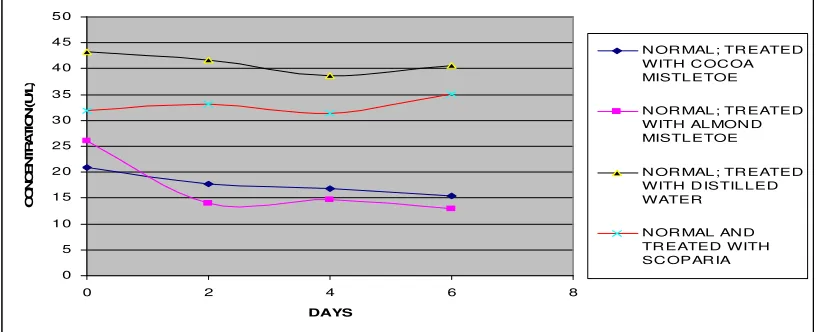
0 45.30 ±7.5a 0.47 ± 0.2a 35.58±11.9a 19.38±4.4a 30.19±9.4a 1.54 ± 0.5a 2 40.00±10.7a 0.50 ± 0.2a 32.20 ± 9.6a 19.80±5.1a 21.19±11.1a 0.71 ± 0.5b 4 40.10 ±7.5a 0.46 ± 0.2a 30.03 ± 7.1a 15.90±5.1a 15.48±12.9a 0.14 ± 0.3c 6 30.40 ±6.1b 0.56 ± 0.3a 31.47±11.9a 15.88±5.6a 16.18±15.7a 0.21 ± 0.3d
B
0 52.45 ±5.0a 0.47 ± 0.2a 20.87 ± 2.7a 14.40±2.7a 31.85 ± 6.6a 0.79 ± 0.4a 2 68.38±14.8a 0.45 ± 0.3a 20.80 ± 4.7a 11.83±1.4a 20.59±11.9a 0.50 ± 0.2a 4 63.15 ±7.9a 0.35 ± 0.1a 21.53 ± 6.7a 14.40±4.6a 21.03 ± 7.6a 0.13 ± 0.2a 6 67.96±26.8a 0.20 ± 0.1a 28.07 ± 7.3a 15.30±6.9a 15.65±11.7a 0.21 ± 0.2a
C
0 47.21 ±1.3a 0.49 ± 0.0a 26.10 ± 7.4a 20.05±3.9a 40.74±27.6a 2.16 ± 1.3a 2 71.15±37.9a 0.42 ± 0.2a 33.25 ± 5.6a 20.00±3.3a 26.06±12.3a 1.16 ± 1.4a 4 65.85 ±2.2a 0.37 ± 0.0b 34.70 ± 4.0a 19.80±1.8a 19.18 ± 7.0a 0.61 ± 0.7a 6 49.41 ±5.0a 0.24 ± 0.0c 40.45±10.5a 20.40±2.3a 17.55 ± 0.9a 0.65 ± 0.7a
D
Table 2: Effects of extracts of Scoparia dulcis, Almond mistletoe and Cocoa mistletoe on plasma Urea, Creatinine, AST, ALT, ALP and Total Bilirubin concentrations in diabetic rats.
Group Day
Parameters
Urea (mg/dl) Creatinine
(mg/dl) AST (U/L) ALT (U/L) ALP (U/L)
Total Bil. (mg/dl)
E
Basal 45.35 ± 7.8a 0.73 ±0.3a 47.6±20.4a 24.32±3.6a 33.9 ±8.0a 1.36±1.2a After
Induction 110.94±25.8
b
2.40 ±0.8b 34.9±18.4a 23.21±6.3a 43.6 ±8.9b 0.74±0.5a
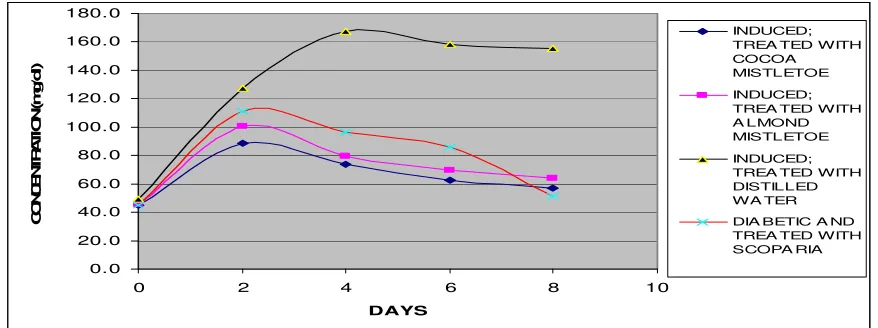
2 96.28 ± 18.5b 1.80 ±1.1b 35.5±17.0a 22.90±5.3a 36.3±10.5b 0.43±0.3a 4 85.93 ± 17.9c 1.20 ±0.5c 38.9±17.0a 21.52±6.8a 26.1±11.8c 0.21±0.2b 6 51.50 ± 18.5d 0.70 ±0.3c 40.1±19.3a 19.63±7.3a 23.8±12.1d 0.41±0.2a
F
Basal 44.89 ± 9.7a 0.63 ±0.3a 32.3±12.6a 17.33±3.2a 29.5 ±8.1a 1.16±0.7a After
Induction 104.70 ±34.2
b
2.48 ±0.5b 30.0±14.8a 23.33±4.2a 51.6±10.2b 1.34±0.9a
2 74.03 ± 33.9b 2.07 ±0.6b 34.7±12.5a 20.15±3.4a 35.5 ±7.6c 1.29±0.7a 4 62.68 ± 14.4b 1.45 ±0.4c 35.9±13.4a 21.73±2.7a 22.9 ±9.9d 0.72±0.6a 6 57.23 ± 20.3b 0.76 ±0.2d 43.7±11.3a 24.05±4.0a 14.7 ±5.7e 0.60±0.2a
G
Basal 46.04 ± 6.6a 0.52 ±0.2a 32.1±6.2a 16.59±5.3a 33.4±12.9a 0.94±0.3a After
Induction 102.00±35.7
b
1.87 ±0.6b 24.6±4.6a 15.45±2.1a 41.0±15.6a 0.99±0.6a
2 79.35 ± 16.5b 0.94 ±0.5b 22.3±5.0a 17.38±3.9a 30.7±17.4a 0.30±0.3a 4 69.30 ± 10.1b 1.05 ±0.4b 19.3±3.1a 19.75±2.5b 23.4±9.0a 0.18±0.2b 6 64.18 ± 6.3b 0.89 ±0.3c 20.5±5.2a 22.78±3.6c 16.4±5.5b 0.01±0.0c
H
Basal 49.03 ± 5.0a 0.48 ±0.1a 43.2±16.6a 23.3±11.2a 40.9±9.3a 1.16±0.2a After
Induction 127.50±38.3
b
1.88 ±0.5b 34.9±9.6a 23.1±14.8a 52.2±10.7b 2.73±2.5a
2 167.01±61.0b 2.06 ±0.2b 28.1±7.2a 18.84±8.6a 46.7±7.3b 2.04±1.0a 4 158.50±36.9b 2.00 ±0.4b 27.9±7.0a 17.24±6.2a 39.5±6.6c 1.65±0.5a 6 155.57±33.9b 1.76 ±0.3b 28.0±10.6a 16.76±7.7a 34.1±4.6d 1.46±0.7a
FIG 1: Effect of Scoparia dulcis extract, almond mistletoe extract and cocoa mistletoe extract on plasma urea
concentration in diabetic rats.
0 0.1 0.2 0.3 0.4 0.5 0.6 0.7 0.8
0 1 2 3 4 5 6 7
DAYS
C
O
N
C
E
N
T
R
A
T
IO
N
(
m
g
/d
l)
NORMA L; TREA TED WITH COCOA MISTLETOE
NORNA L; TREA TED WITH A LMOND MISTLETOE
NORMA L; TREA TED WITH DISTILLED WA TER
197
FIG 2: Effect of Scoparia dulcis extract, almond mistletoe extract and cocoa mistletoe extract on plasma urea
concentration in normal rats.
FIG 3: Effect of Scoparia dulcis extract, almond mistletoe extract and cocoa mistletoe extract on plasma creatinine
concentration in diabetic rats. 0.0
20.0 40.0 60.0 80.0 100.0 120.0 140.0 160.0 180.0
0 2 4 6 8 10
DAYS
C
O
N
C
E
N
T
R
A
T
IO
N
(
m
g
/d
l)
INDUCED; TREA TED WITH COCOA MISTLETOE
INDUCED; TREA TED WITH A LMOND MISTLETOE
INDUCED; TREA TED WITH DISTILLED WA TER
DIA BETIC A ND TREA TED WITH SCOPA RIA
0.0 0.5 1.0 1.5 2.0 2.5 3.0
0 2 4 6 8 10
DAY S
C
O
N
C
E
N
T
R
A
T
IO
N
(
m
g
/d
l)
INDUCED; TREA TED WITH COCOA MISTLETOE
INDUCED; TREA TED WITH A LMOND MISTLETOE
INDUCED; TREA TED WITH DISTILLED WA TER
DIA BETIC A ND TREA TED WITH SCOPA RIA
0 0.1 0.2 0.3 0.4 0.5 0.6 0.7 0.8
0 1 2 3 4 5 6 7
DAYS
C
O
N
C
E
N
T
R
A
T
IO
N
(
m
g
/d
l)
NORMA L; TREA TED WITH COCOA MISTLETOE
NORNA L; TREA TED WITH A LMOND MISTLETOE
NORMA L; NOT TREA TED
FIG 4: Effect of Scoparia dulcis extract, almond mistletoe extract and cocoa mistletoe extract on plasma creatinine concentration in normal rats.
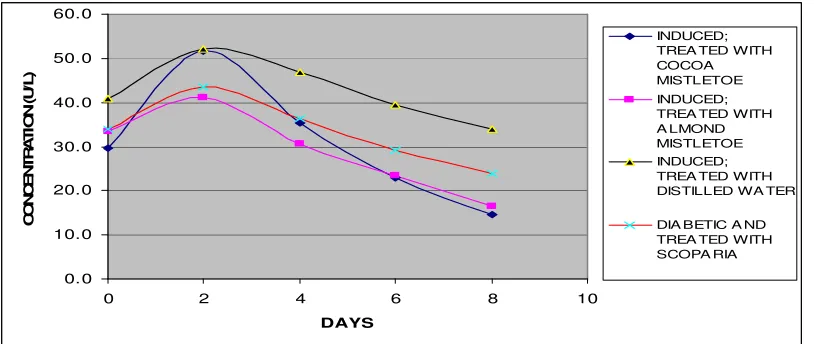
FIG 5: Effect of Scoparia dulcis extract, almond mistletoe extract and cocoa mistletoe extract on plasma AST
concentration in diabetic rats.
FIG 6: Effect of Scoparia dulcis extract, almond mistletoe extract and cocoa mistletoe extract on plasma AST
concentration in normal rats.
0.0 10.0 20.0 30.0 40.0 50.0 60.0
0 2 4 6 8 10
DAYS
C
O
N
C
E
N
T
R
A
T
IO
N
(
U
/L
)
INDUCED; TREA TED WITH COCOA MISTLETOE
INDUCED; TREA TED WITH A LMOND MISTLETOE
INDUCED; TREA TED WITH DISTILLED WA TER
DIA BETIC A ND TREA TED WITH SCOPA RIA
0 5 1 0 1 5 2 0 2 5 3 0 3 5 4 0 4 5 5 0
0 2 4 6 8
DAYS
C
O
N
C
E
N
T
R
A
T
IO
N
(
U
/L
)
N OR MAL ; TR EATED WITH C OC OA MISTL ETOE
N OR MAL ; TR EATED WITH ALMON D MISTL ETOE
N OR MAL ; TR EATED WITH D ISTIL LED WATER
199
FIG 7: Effect of Scoparia dulcis extract, almond mistletoe extract and cocoa mistletoe extract on plasma ALT
concentration in diabetic rats.
FIG 8: Effect of Scoparia dulcis extract, almond mistletoe extract and cocoa mistletoe extract on plasma ALT
concentration in normal rats.
FIG 9: Effect of Scoparia dulcis extract, almond mistletoe extract and cocoa mistletoe extract on plasma ALP
concentration in diabetic rats.
0.0 5.0 1 0.0 1 5.0 2 0.0 2 5.0 3 0.0
0 2 4 6 8 10
DAYS
C
O
N
C
E
N
T
R
A
T
IO
N
(
U
/L
)
IN D U C ED ; TR EATED WITH C OC OA
MISTL ETOE
IN D U C ED ; TR EATED WITH ALMON D MISTL ETOE
IN D U C ED ; TR EATED WITH D ISTIL L ED WATER
D IABETIC AN D TR EATED WITH SC OPAR IA
0 5 10 15 20 25 30 35
0 1 2 3 4 5 6 7
DAYS
C
O
N
C
E
N
T
R
A
T
IO
N
(
U
/L
)
NORMA L; TREA TED WITH COCOA MISTLETOE
NORMA L; TREA TED WITH A LMOND MISTLETOE
NORMA L; TREA TED WITH DISTILLED WA TER
NORMA L A ND TREA TED WITH SCOPA RIA
0.0 10.0 20.0 30.0 40.0 50.0 60.0
0 2 4 6 8 10
DAYS
C
O
N
C
E
N
T
R
A
T
IO
N
(
U
/L
)
INDUCED; TREA TED WITH COCOA MISTLETOE
INDUCED; TREA TED WITH A LMOND MISTLETOE INDUCED; TREA TED WITH DISTILLED WA TER
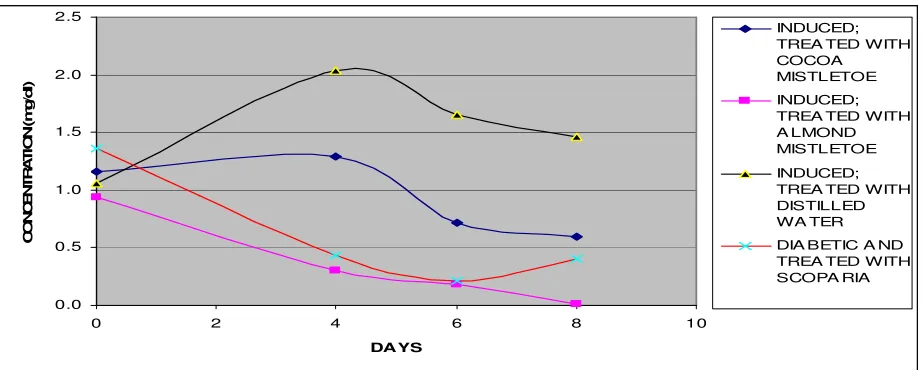
FIG 10: Effect of Scoparia dulcis extract, almond mistletoe extract and cocoa mistletoe extract on plasma ALP concentration in normal rats.
FIG 11: Effect of Scoparia dulcis extract, almond mistletoe extract and cocoa mistletoe extract on plasma total bilirubin
concentration in diabetic rats.
FIG 12: Effect of Scoparia dulcis extract, almond mistletoe extract and cocoa mistletoe extract on plasma total bilirubin
concentration in normal rats. 0
5 10 15 20 25 30 35 40 45
0 1 2 3 4 5 6 7
DAYS
C
O
N
C
E
N
T
R
A
T
IO
N
(
U
/L
)
NORMA L; TREA TED WITH COCOA MISTLETOE
NORMA L; TREA TED WITH A LMOND MISTLETOE
NORMA L; TREA TED WITH DISTILLED WA TER
NORMA L A ND TREA TED WITH SCOPA RIA
0 10 20 30 40 50 60 70 80
0 2 4 6 8
DAYS
C
O
N
C
E
N
T
R
A
T
IO
N
(
m
g
/d
l)
NORMA L; TREA TED WITH COCOA MISTLETOE
NORMA L; TREA TED WITH A LMOND MISTLETOE
NORMA L; TREA TED WITH DISTILLED WA TER
NORMA L A ND TREA TED WITH SCOPA RIA
0.0 0.5 1.0 1.5 2.0 2.5
0 2 4 6 8 10
DAYS
C
O
N
C
E
N
T
R
A
T
IO
N
(
m
g
/d
l)
INDUCED; TREA TED WITH COCOA
MISTLETOE
INDUCED; TREA TED WITH A LMOND MISTLETOE
INDUCED; TREA TED WITH DISTILLED WA TER
201
Scoparia dulcis was effective in lowering urea level in
diabetic rats and in normal rats. Cocoa and Almond mistletoe extracts were effective in lowering urea levels in diabetic rats only. All extracts normalized creatinine levels from their elevated values on induction of diabetes. Almond mistletoe was more effective at lowering creatinine in normal rats than Scoparia dulcis
and cocoa mistletoe. Scoparia dulcis extract did not affect AST activity in diabetic and normal rats, hence the extract may not be toxic to the liver or heart muscle at the dose it was administered. Cocoa mistletoe gradually raised AST activity in diabetic rats while Almond mistletoe did likewise in normal rats. None of the extracts affected the activity of ALT in diabetic and normal rats. Therefore the extracts may not be toxic to the liver. All extracts lowered ALP in diabetic and normal rats but the reduction was only significant in diabetic rats. Cocoa mistletoe significantly lowered ALP from day two, Scoparia dulcis from day four and Almond mistletoe at day six. Scoparia dulcis
significantly lowered plasma bilirubin from day two. It was more effective in lowering bilirubin in normal rats than diabetic rats. Cocoa and Almond mistletoe was not as effective as Scoparia dulcis in lowering total bilirubin in diabetic rats and normal rats.
DISCUSSION
Alloxan induced hyperglycaemic rats were used as a model in studying the effect of Scoparia dulcis and
Loranthus begwensis extracts on some biochemical
parameters in the diabetic, as well as the normal animals (rats). Our earlier studies indicated that induction of rats with alloxan significantly increased the plasma glucose level (Aghagboren et al, 2014). Dunn et al (1943) were the first to confirm the diabetogenic property of alloxan. They studied the effect of its administration in rabbits and reported a specific necrosis of the pancreatic islets. Our earlier studies (Aghagboren et al, 2014) also showed that treatment with Scoparia dulcis and Loranthus
begwensis extracts resulted in significant (p<0.05)
reduction in glucose levels both in diabetic rats and normal rats. Scoparia had been found to have lowering effect on blood glucose (Latha and Pari, 2004).
Our present study on the level of the transaminases in diabetic rats and normal rats treated with the three extracts does not portend the plants to be actually toxic to the liver and heart muscle. Large amount of AST are present the liver, kidneys, cardiac muscles, skeletal muscles and erythrocytes. ALT is found in the liver, skeletal muscle and heart. When there is damage to the cells of the liver, the serum or plasma levels of both enzymes are raised. No hepatotoxic property of mistletoe has been documented (Newall et al, 1996). Thus, comparatively, Scoparia dulcis extract did not affect AST activity in diabetic and normal rats, hence the
CONCLUSION
extract may not be toxic to the liver or heart muscle at the dose it was administered. Cocoa mistletoe gradually raised AST activity in diabetic rats while Almond mistletoe did likewise in normal rats. None of the extracts affected the activity of ALT in diabetic and normal rats. All extracts lowered ALP in diabetic and normal rats but the reduction was only significant in diabetic rats. Cocoa mistletoe significantly lowered ALP from day two, Scoparia dulcis from day four and Almond mistletoe at day six. Alkaline phosphatase (ALP) is an enzyme that is present in practically all tissues (tissues involved in active transport mechanism) and occurs in particularly high levels in the intestinal epithelium, kidney tubules, liver and placenta. The lowering effect of both plant extracts on ALP also shows that the plants (extracts) may be relatively safe at the dose and duration they were administered.
Urea is the major nitrogen containing metabolic product of protein catabolism in humans accounting for more than 75% of the non protein nitrogen eventually excreted by the kidney. Scoparia dulcis was effective in lowering urea level in diabetic rats and in normal rats. Cocoa and Almond mistletoe extracts were effective in lowering urea levels in diabetic rats only. Thus the plant extracts may be relatively safe or protective towards these tissues. Plasma creatinine and urea were lowered by the three plant extracts at the dose they were administered. Obatomi et al, (1996) reported the reducing effect of mistletoe on serum creatinine. Creatinine is formed spontaneously in muscle by the Interconversion of phosphocreatine and creatine, and as a consequence of its mode of excretion by the kidney; its measurement is used almost exclusively in the assessment of kidney function. Creatinine measurement in the diagnosis of kidney disease has advantages over urea measurement. The plasma level of creatinine is relatively independent of protein ingestion, water intake or rate of urine production. All extracts normalized creatinine levels from their elevated values on induction of diabetes. Almond mistletoe was more effective at lowering creatinine in normal rats than Scoparia dulcis and cocoa mistletoe. Therefore, the extracts may not be toxic to the kidney. A rise in the level of bilirubin in the blood (hyperbilirubinaemia) may occur as a result of various metabolic disorders (Tietz, 1976). Scoparia dulcis
Plants extracts that can significantly reduce the blood glucose of a diabetic may also ameliorate some of the disorders in the metabolic state of the diabetic. Medicinal botanicals hold a very promising outcome in the treatment of diabetes mellitus. Results from this study showed that their side effects are minimal. Thus, Scoparia dulcis and African mistletoe (Loranthus begwensis) from the two host plants (cocoa and almond) are relatively safe and effective in the management of disorders associated with the diabetic state.
REFERENCES
Aghagboren C. Osaro, Uadia O. Patrick and Omage
Kingsley. (2014). Comparative Hypoglyceamic Properties
of Scoparia dulcis and Loranthus begwensis as well as their effects on some Biochemical Parameters in Normal and Alloxan-Induced Diabetic Rats. Journal of Pharmaceutical Biology. 4(1): 31 – 40.
Bansal, R., Ahmad, N. and Kidwai, J.R.(1980).
Alloxan-glucose interaction: effect of incorporation of 14C-leucine into pancreatic islets of rats. Acta Diabetol Lat 17: 135-143.
Bartels, H. and Bohmer, M. (1972). Kinetic
determination of creatinine concentration. Clin. Chem. Acta., 37-193.
Boquist, L., Nelson, L. and Lorentzon, R.(1983).
Uptake of labeled alloxan in mouse organs and mitochondria in vivo and in vitro. Endocrinology 113: 943-948.
Boylan, J.M., Brautigan, D.L., Madden, J., Raven, T.,
Ellis, L. and Gruppuso, P.A. (1992). Differential
regulation of multiple hepatic protein tyrosine phosphatases in alloxan diabetic rats. J. Clin. Invest. 90: 174-179.
Dunn, J.S., Sheehan, H.L. and McLethie, N.G. (1943).
Necrosis of islets of Langerhans produced experimentally. Lancet 1:
484-487.
Gruppuso, P.A., Boylan, J.M., Posner, B.I., Faure, R.
and Brautigan, D.L. (1990). Hepatic protein
phosphotyrosine phosphatase. Dephosphorylation of insulin receptor and epidermal growth factor receptors in normal and alloxan diabetic rats. J. Clin. Invest. 85: 1754-1760.
Heikkila, R.E., Winston, B., Cohen, G. and Barden, H.
(1976). Alloxan induced diabetes, evidence for hydroxyl
radicals as a cytotoxic intermediate. Biochem Pharmacol 25: 1085-1092.
Jain, S.K. (1968). Medicinal Plants. National Book Trust,
India. pp 1-216.
Jendrassik , L. and Gróf , P. (1938). Vereinfachte
photometrische Methoden zur Bestimmung des Blutbilirubins. Biochem Zeitschrift. 297:82-9.
Katsumata, K., Katsumata, K. Jr. and Katsumata, Y.
(1992). Protective effect of diltiazem hydrochloride on
the occurrence of alloxan- or streptozotocin-induced diabetes in rats. Horm Metab Res 24:508-510.
Kliber, A., Szkudelski, T. and Chichlowska, J. (1996).
Alloxan stimulation and subsequent inhibition of insulin release from in situ perfused rat pancreas. J Physiol Pharmacol 47: 321-328.
Latha, M. and Pari, L (2004). Effect of an Aqueous
extract of scoparia dulcis on blood glucose, plasma insulin and some polyol pathway enzymes in experimental rat diabetes. Braz. J. Med. Biol. Res. Volume 37 (4): 577-586.
Lenzen, S. and Panten, U. (1988). Alloxan history and
mechanism of action. Diabetologia 31: 337-342.
Nelson, L.D. and Cox, M.M. (2006). Hormonal
Regulation and Integration of Mammalian Metabolism.In: Lehninger Principles of Biochemistry. 4th edition. W.H. Freeman and Company. Pp 881-910.
Newall C. A., Anderson L. A. and Phillipson J. D.
(1996). Herbal Medicines: A Guide for Health-Care
Professionals. London, England: The Pharmaceutical Press:101-103.
Obatomi, D.K., Oye, A. A. A., Jangber, Z. N.,
Temple, V. J. (1996). Metabolic and renal Changes
following the ingestion of African Mistletoe Extract in rats. Wiley Interscience.
Pari, L and Latha, M. (2005). Antidiabetic effect of
scoparia dulcis: Effect on Lipid peroxidation in streptozotocin diabetes. Gen. Physiol Biophys. 24 (1): 13-26.
Rec. GSCC, (1972). Determination of Alkaline
Phosphatase. Z. Clin.Chem.Klin. Biochem, 10:281-291.
Reitman, S. and Frankel, S. (1957). A colorimetric method for the determination of serum glutamic oxalacetic and glutamic pyruvic transaminases. Amer. J. Clin. Pathol.28: 56-63, 1957.
Szkudelski, T., Kandulska, K. and Okulicz, M.
(1998). Alloxan in vivo does not only exert deleterious
effects on pancreatic B cells. Physiol Res 47: 343-346.
Tietz, N.W. (1976). Fundamentals of Clinical
Chemistry. 2nd edn. Saunders Publishing Company, U.S.A. p 1263.
Weatherbum, M. W. (1967). Phenol-hypochlorite
reaction for determination of ammonia. Anal. Chem. 39: 971.
Weaver, C.D., Yao, T.L., Powers, A.C., Verdoorn,
T.A. (1996). Differential expression of glutamate
receptor subtypes in rat pancreatic islets. J. Biol. Chem. 271: 12977 – 12984.
Weaver, D.C., McDaniel, M.L., Naber, S.P., Barray,
C.D. and Lacy, P.E (1978b). Alloxan stimulation and