ScholarWorks
Walden Dissertations and Doctoral Studies Walden Dissertations and Doctoral Studies Collection
2019
Contributors to the Development of Intercultural
Competence in Nursing Students
Esther Zazzi Walden University
Follow this and additional works at:https://scholarworks.waldenu.edu/dissertations Part of theHigher Education Administration Commons,Higher Education and Teaching Commons, and theNursing Commons
This Dissertation is brought to you for free and open access by the Walden Dissertations and Doctoral Studies Collection at ScholarWorks. It has been accepted for inclusion in Walden Dissertations and Doctoral Studies by an authorized administrator of ScholarWorks. For more information, please [email protected].
Walden University
College of Health Sciences
This is to certify that the doctoral dissertation by
Esther Zazzi
has been found to be complete and satisfactory in all respects, and that any and all revisions required by
the review committee have been made.
Review Committee
Dr. Janice Long, Committee Chairperson, Nursing Faculty Dr. Geri Schmotzer, Committee Member, Nursing Faculty Dr. Mattie Burton, University Reviewer, Nursing Faculty
Chief Academic Officer Eric Riedel, Ph.D.
Walden University 2019
Abstract
Contributors to the Development of Intercultural Competence in Nursing Students by
Esther Zazzi
MScN, Cardiff University, 2011
BScN, Kalaidos Fachhochschule Gesundheit, 2008
Dissertation Submitted in Partial Fulfillment of the Requirements for the Degree of
Doctor of Philosophy Nursing
Walden University February 2019
Abstract
Nurses deal more effectively with cultural diversity when they have an ethnorelative orientation toward cultural difference and commonality on the Intercultural Development Continuum, which was the theoretical framework of this study. Scholarly literature shows limited knowledge on what fosters nurses’ intercultural development. Thus, this
quantitative, retrospective study was the first investigation in health care in Switzerland conducted on nursing students’ orientation on the Intercultural Development Inventory (IDI) and the relationship to student demographic variables. The sample for this
secondary data analysis consisted of the IDIresults from nursing students enrolled between 2010 and 2016 at the largest nursing college in Switzerland (N = 3,410) where the systematic integration of the development of intercultural competence into the curriculum began in 2010. Descriptive statistical analysis indicated that the students’ developmental orientation (DO) toward cultural difference and commonality represented a mindset of minimization (M = 86.3, SD = 13.7), whereas the orientation gap between the DO and the students’ perceived orientation (PO) was high (M = 32.5), indicating that students believe they have higher intercultural competence than they have. Chi-square-tests revealed significant relationships between gender, age, and time living in another country and the students’ PO and DO. The paired samples t test demonstrated a higher end of program DO (p = .01) compared to beginning DO scores, suggesting the program provided challenges that met the students’ level of readiness for cultural development. The findings may affect positive social change by providing knowledge on contributors to development of intercultural competence that educators can use.
Contributors to the Development of Intercultural Competence in Nursing Students by
Esther Zazzi
MScN, Cardiff University, 2011
BScN, Kalaidos Fachhochschule Gesundheit, 2008
Dissertation Submitted in Partial Fulfillment of the Requirements for the Degree of
Doctor of Philosophy Nursing
Walden University February 2019
Acknowledgments
I would like to thank my chair, Dr. Janice M. Long, for her professional guidance, very competent advice, qualified support and kind encouragement she has provided within the last months of writing this dissertation.
I would like to thank as well my committee member, Dr. Geri L. Schmotzer, who gave competent advice regarding the content of this dissertation.
All the members of staff at Walden University who taught me throughout the courses and residencies or helped me with getting the literature also deserve thanks as well as all my fellow students from whom I could learn within very inspiring discussions.
In particular, I appreciated highly that Dr. Leslie C. Hussey very supportively guided me through this doctoral journey at the residencies, and Dr. Leilani Endicott inspired me to conduct a secondary data analysis.
A special thank goes to the management of the Nursing College who allowed me to use the data for a secondary data analysis.
I would like to thank also Dr. Mitchell Hammer, President of IDI, LLC, who approved this study and supported it by providing a dissertation research discount on the price of the Qualifying Seminar to use the Intercultural Development Inventory.
Last but not least, I would like to express my gratitude to my husband and son for their continued encouragement and great support. Particularly, they reliably and skillfully helped me with any kind of technical challenge.
i
Table of Contents
List of Tables ... vii
List of Figures ...x
Chapter 1: Introduction to the Study ...1
Introduction ...1
Background ...2
Influencing Factors of the Increasing Diversity in the Swiss Health Care System ... 2
Marginalization and Discrimination Because of Diversity in Health Care ... 6
Summary of Literature on Intercultural Competence ... 8
Problem Statement ...11
Purpose of the Study ...11
Research Questions and Hypotheses ...12
Theoretical Framework for the Study ...14
Nature of the Study ...16
Definitions...16
Assumptions ...18
Scope and Delimitations ...19
Limitations ...20
Significance...20
Contribution to Positive Social Change ... 22
ii
Chapter 2: Literature Review ...25
Introduction ...25
Literature Search Strategy...27
Theoretical Foundation ...29
Origin on the Intercultural Development Continuum (IDC) ... 30
Rationale for the Choice of the IDC and the Theoretical Propositions ... 32
Measurement of the Orientation Toward Cultural Difference and Commonality... 51
The Relation Between the Theory and the Present Study ... 52
Literature Review Related to the Key Variables ...52
Dependent Variable Orientation Toward Cultural Difference and Commonality... 53
Summary and Conclusions ...80
Chapter 3: Research Method ...82
Introduction ...82
Research Design and Rationale ...83
Methodology ...84
Population ... 84
Sample... 85
Procedure for Gaining Access to the Data Set ... 85
Instrumentation and Operationalization of Constructs ... 87
iii Ethical Procedures ...89 Summary ...90 Chapter 4: Results ...92 Introduction ...92 Data Collection ...94
Baseline Descriptive and Demographic Characteristics of the Sample ... 95
Results to Research Question 1...101
Results to Research Question 2...110
Relationship Between the Students’ Age and Their PO ... 112
Relationship Between the Students’ Age and Their Developmental Orientation ... 113
Relationship Between the Students’ Gender and Their Perceived Orientation ... 115
Relationship Between the Students’ Gender and Their Developmental Orientation ... 115
Relationship Between the Students’ Primary Country of Citizenship and Their Perceived Orientation ... 117
Relationship Between the Students’ Primary Country of Citizenship and Their Developmental Orientation ... 118
Relationship Between the Students’ Ethnic Minority Group Affiliation and Their Perceived Orientation ... 119
iv
Relationship Between the Students’ Ethnic Minority Group Affiliation and Their Developmental Orientation ... 120 Relationship Between the Students’ Migration Background and Their
Perceived Orientation... 122 Relationship Between the Students’ Migration Background and Their
Developmental Orientation ... 123 Relationship Between the World Region Students Primarily Lived Up to
Age 18 and Their Perceived Orientation ... 124 Relationship Between the World Region Students Primarily Lived Up to
Age 18 and Their Developmental Orientation ... 125 Relationship Between the Total Amount of Time Students Lived in
Another Country and Their Perceived Orientation ... 127 Relationship Between the Total Amount of Time Students Lived in
Another Country and Their Developmental Orientation ... 128 Relationship Between the Amount of Lessons About Own Culture or Any
Foreign Cultures the Students Had and Their Perceived Orientation ... 130 Relationship Between the Amount of Lessons About Own Culture or Any
Foreign Cultures the Students Had and Their Developmental
Orientation ... 131 Relationship Between the Students’ Previous Education as a Health Care
v
Relationship Between the Students’ Previous Education as a Health Care
Assistant and Their Developmental Orientation ... 134
Summary the Relationships Between Perceived and Developmental Orientation and Demographic Variables ... 135
Results to Research Question 3...136
Difference Regarding Perceived Orientation ... 137
Difference Regarding Developmental Orientation ... 138
Difference Regarding the Orientation Gap ... 139
Results to Research Question 4...140
Summary ...141
Chapter 5: Discussion, Conclusions, and Recommendations ...145
Introduction ...145
Interpretation ...146
Orientation Toward Cultural Difference and Commonality of the Nursing Students ... 146
Relationships Between the Nursing Students’ Orientation and Their Demographic Variables ... 151
Foster the Development of the Orientation Toward Cultural Difference and Commonality of the Nursing Students ... 158
Limitations of the Study...162
Recommendations ...165
vi
Conclusion ...171
References ...174
Appendix A: Approval to Use the IDI ...198
vii List of Tables
Table 1. Keywords, Phrases, and Inclusion Criteria/Exclusion Criteria... 28
Table 2. Seven Subthemes of Diversity by Leonard (2006) ... 50
Table 3. Frequencies for Demographic Variables ... 97
Table 4. Frequencies for Nursing Cohort Data ... 100
Table 5. Perceived Orientation at the Start-Point and End-Point of the Education ... 103
Table 6. Developmental Orientation at the Start-Point and End-point of the Education 104 Table 7. Perceived Orientation of the Students at the Start-Point of the Education ... 105
Table 8. Developmental Orientation of the Students at the Start-Point of the Education ... 106
Table 9. Perceived Orientation of the Students at the End-Point of the Education ... 107
Table 10. Developmental Orientation of the Students at the End-Point of the Education ... 108
Table 11. Orientation Gap Between Perceived Orientation and Developmental Orientation at Start-and End-Point of the Education ... 110
Table 12. Observed and Expected Frequency of the Perceived Orientation for Age ... 113
Table 13. Observed and Expected Frequency of Developmental Orientation for Students’ Age ... 114
Table 14. Observed and Expected Frequency of the Perceived Orientation for Students’ Gender ... 115
Table 15. Observed and Expected Frequency of the Developmental Orientation for Students’ Gender ... 116
viii
Table 16. Observed and Expected Frequency of Perceived Orientation for Students’ Primary Country of Citizenship ... 117 Table 17. Observed and Expected Frequency of Developmental Orientation for Students’ Primary Country of Citizenship ... 118 Table 18. Observed and Expected Frequency of Perceived Orientation for Students’
Ethnic Minority Group Affiliation ... 120 Table 19. Observed and Expected Frequency of the Developmental Orientation for the
Students’ Ethnic Minority Group Affiliation ... 121 Table 20. Observed and Expected Frequency of Perceived Orientation for Students’
Migration Background ... 122 Table 21. Observed and Expected Frequency of Developmental Orientation for Students’ Migration Background ... 123 Table 22. Observed and Expected Frequency of Perceived Orientation for World Region
Students Primarily Lived up to Age 18... 124 Table 23. Observed and Expected Frequency of Developmental Orientation for World
Regions Students Primarily Lived up to Age 18 ... 125 Table 24. Observed and Expected Frequency of Perceived Orientation for Time Students
Lived in Another Country ... 127 Table 25. Observed and Expected Frequency of Developmental Orientation for Time
Students Lived in Another Country ... 128 Table 26. Observed and Expected Frequency of Perceived Orientation for Amount of
ix
Table 27. Observed and Expected Frequency of Developmental Orientation for Amount of Lessons on Culture ... 131 Table 28. Observed and Expected Frequency of Perceived Orientation for Students’
Previous Education as a Health Care Assistant ... 133 Table 29. Observed and Expected Frequency of Developmental Orientation for Students’ Previous Education as a Health Care Assistant ... 134 Table 30. Paired Samples T Test of Perceived Orientation at Start Compared to End of
Education ... 137 Table 31. Paired Samples T Test of Developmental Orientation at Start Compared to End of Education ... 138 Table 32. Paired Samples T Test of Orientation Gap at Start Compared to End of
Education ... 139 Table 33. Number of Students Who Started or Completed Nursing Education ... 162
x List of Figures
Figure 1. Percentages of the permanent foreign population in Switzerland between 1900 and 2016 (Swiss Confederation, 2017a). ... 3 Figure 2. Main languages of the permanent resident population, 1970-2016 (Swiss
Confederation, 2018b). ... 3 Figure 3. The religion of the Swiss population in the years 2014 - 2016 (Swiss
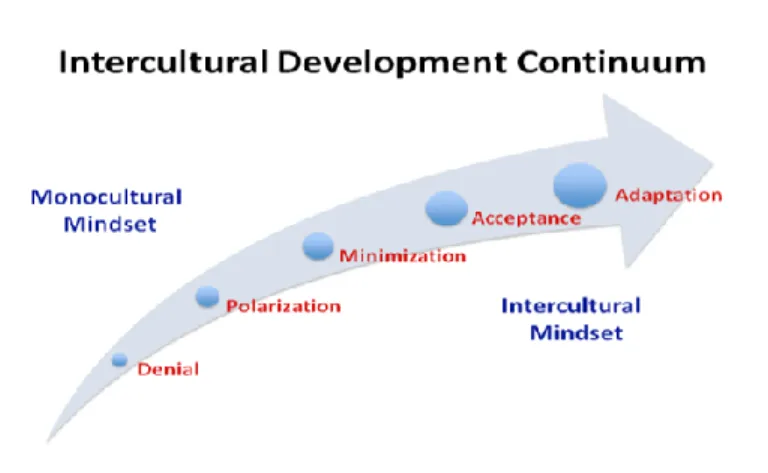
Confederation, 2018c)... 4 Figure 4. The evolution of the religious landscape (Swiss Confederation, 2018d). ... 5 Figure 5. The Intercultural Development Continuum (Hammer, 2012). ... 29 Figure 6. Distribution of the score of perceived orientation at the start-point and the
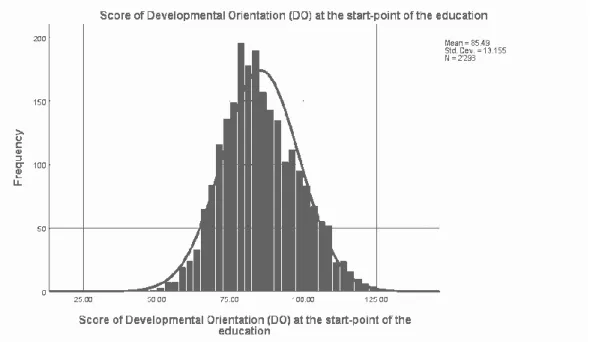
end-point of the education... 103 Figure 7. Distribution of the score of developmental orientation at the start-point and the
end-point of the education. ... 104 Figure 8. Distribution of the score of perceived orientation at the start-point of the
education. ... 106 Figure 9. Distribution of the students’ score of developmental orientation at the
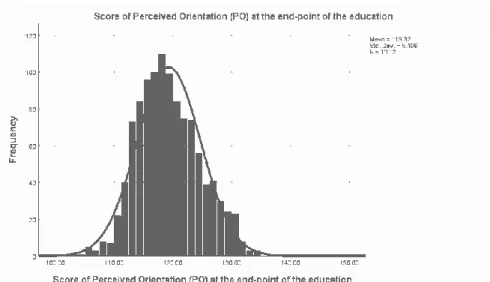
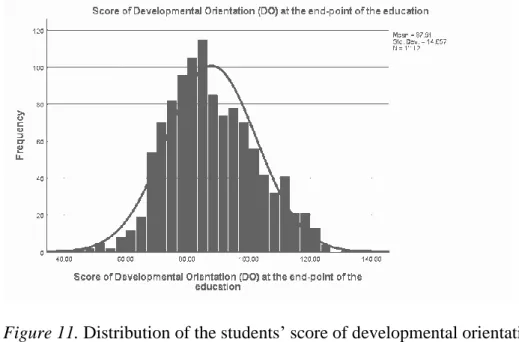
start-point of the education... 107 Figure 10. Distribution of the students’ score of perceived orientation at the end-point of
Chapter 1: Introduction to the Study
Introduction
Diversity within the Swiss health care system is growing as the population
demographics change. According to the International Council of Nursing (2013), “nurses should be culturally and linguistically competent to understand and respond effectively to the cultural and linguistic needs of clients, families, and communities in a health care encounter” (p. 1). Therefore, it is important to understand nursing students’ development of intercultural competence. Researchers have implemented various interventions to foster intercultural competence; however, methodological rigor and uniformity on core components of education interventions, including how they are described and evaluated, has been lacking. Therefore, there was a need to know more about contributors to intercultural competence, particularly within nursing.
Applying a secondary data analysis, this quantitative research study was an investigation into the effect of a specialized program integrated into the curriculum at a Nursing College in Switzerland on the nursing student-cohort’s orientation toward cultural difference and commonality. Furthermore, the relationship between the
individual nursing students’ orientation toward cultural difference and commonality and the demographic factors of the nursing students (age, gender, country of citizenship, ethnic minority group affiliation, migration background, world region having primarily lived up to age 18, total amount of time having lived in another country, having had lessons about own culture or any foreign cultures, and previous education as a health care assistant)was examined. This study may affect positive social change by providing more
knowledge on the contributors to intercultural competence, which nursing educators may use to increase intercultural competence of nursing students.
The study will be introduced in this chapter with background information about the current knowledge on intercultural competence. The problem regarding the need for nurses to deal with the growing diversity in Switzerland will be stated before presenting the purpose of this study. The research questions and hypotheses, as well as the
theoretical framework, will also be outlined. This chapter will also include the nature of the study, definitions, and the assumptions, scope and delimitations, and limitations. Finally, the significance of this study will be explained before a summary.
Background
Influencing Factors of the Increasing Diversity in the Swiss Health Care System Increase of foreign population. Since 1960, the population of Switzerland has increased from just over 5 million inhabitants to over 8 million – a boom mostly driven by immigrants from Europe (Nguyen & Mariani, 2014). Most foreigners residing permanently in Switzerland are European and mainly come from a European Union or a European Free Trade Association member state, with Italian, German, Portuguese and French nationals comprising most foreigners (Swiss Confederation, 2018a). Today, Switzerland has one of the highest percentages of foreign residents in the world – more than one in four people are of foreign origin (Statista, 2018). The percentages of the permanent foreign population in Switzerland between 1900 and 2016 are presented in Figure 1 (Swiss Confederation, 2017a).
Figure 1. Percentages of the permanent foreign population in Switzerland between 1900 and 2016 (Swiss Confederation, 2017a).
Increase of linguistic diversity. Apart from foreign inhabitants with diverse nationalities, Swiss inhabitants need to speak one of the four official languages,
traditionally spoken by Swiss in different regions of the country: German, French, Italian, and Rumantsch (All about Switzerland, 2016). Due to immigration, many individuals do not speak one of the four official languages of Switzerland as their first language (Swiss Confederation, 2018b). The percentages of the main languages of the permanent resident population, 1970–2016 are presented in Figure 2 (Swiss Confederation, 2018b).
Figure 2. Main languages of the permanent resident population, 1970–2016 (Swiss Confederation, 2018b).
Increase of religious diversity. With the freedom of religion as a basic
constitutional right in Switzerland, there is an increasing diversity regarding religions in Switzerland (Swiss Confederation, 2018c). The religion of the Swiss population in the years 2014–2016 are presented in Figure 3 (Swiss Confederation, 2018c).
Figure 3. The religion of the Swiss population in the years 2014–2016 (Swiss Confederation, 2018c).
The population is not restricted to a religious denomination, and Muslim and Islamic communities as well as Christian communities (other than Protestant Reformed and Roman Catholic) have been increasing over the last decades (Swiss Confederation, 2018d). This evolution of the religious landscape in Switzerland is presented in Figure 4 (Swiss Confederation, 2018d).
Figure 4. The evolution of the religious landscape (Swiss Confederation, 2018d).
Increase of elderly chronically-ill patients. There are also changes of
demographics in Switzerland, as the population aged 65 and over increased from 191,593 persons in 1900 to 983,352 in 1990, and it was at 1.52 million in 2016 (Swiss
Confederation, 2017b). According to the Swiss Confederation (2017b), this population group will grow in the coming years, as life expectancy at birth (i.e., the average number of years a person can expect to live) has risen from 76.2 in 1970 to 85.3 for women and from 70.1 to 81.5 for men. As the number of elderly people increases, so does the incidence of chronic diseases and the likelihood of illnesses such as cardiovascular diseases, rheumatism, cancer, or a combination of these conditions (Obsan, 2008). Therefore, the health care system is confronted with challenges to best cope with the increasing numbers of chronically-ill persons (Obsan, 2015; Wurz, 2014).
Diversification of grades in nursing professions and interprofessional
collaborations. Although the changing demands on health care providers has increased, the education regulation of health professions in Switzerland has also changed with transitions in the last few years, especially in the field of nursing (OdASanté, 2017; Swiss Education, 2018). These changes have led to a diversification of grades within the
nursing profession as well as new professional profiles (Mahrer, 2011). For example, there is now a 3-year apprenticeship at the secondary level for the profession of health care assistant (OdaSanté, 2018). This apprenticeship allows young people, 16 or older, to enter the health care system following their standard school curriculum and to graduate after 3 years of vocational education and training. Although not solely educated in the field of nursing, many of these young professionals are integrated into nursing teams, which challenges collaboration, something that is inherent in nursing (Bachmann, 2013; German Medical Science, 2014; University of Bern, 2014). The diversification of grades in the nursing profession and the requirement of collarboration in health care is
accompanied by the diversity in health care providers. In summary, diversity is inherent to Swiss society regarding the increase of the foreign population, linguistic, and religious diversity, meaning there is diversity in the Swiss health care system not only in patients but also in health care providers (Nguyen & Mariani, 2014; Swiss Confederation, 2017a, 2017b, 2018a, 2018b, 2018c; Wurz, 2014).
Marginalization and Discrimination Because of Diversity in Health Care
Diversity may lead to marginalization and discrimination, which may be accentuated in individuals who perceive they are different from the majority, not only
because of ethnicity and language but also factors like age, gender, or disability.
According to the Swiss Red Cross (2018), unreflective generalizations and prejudices by health professionals about individuals or whole groups of people prevent the view of their actual problems, which affects treatment and care. The Institute of Medicine (2002) reported that patients may be put at risk and even die because of health care providers’ lack cultural competence that may lead to delay in treatment or noncompliance with health care regimes. Although health care professionals may not see themselves as overtly racist or neglectful, they could be missing pertinent health care findings due to cultural blindness (Seright, 2007). According to the Federal Office for Public Health (Swiss Confederation, 2018e), health professionals need to be trained to care for migrants living in Switzerland with their specific health-related needs due to their origin or their living situation to ensure quality of care and patient safety.
In terms of nursing education and diversity, research has shown the needs and challenges of students. Schuessler, Wilder, and Byrd (2012) concluded that self-reflection is necessary to be aware of cultural issues and address health care disparities. Similarly, McClimens, Brewster, and Lewis (2014) reported that nursing students struggle with meeting cultural needs of patients such as language, food, and gender.
In addition to education, health care professionals are also influenced by their own backgrounds and upbringing. Their cultural competence depends on their
experiences that influence their perception of diversity and their related behavior such as opinions of their family, friends, and teachers. For example, Swedish and Slovenian health care professionals have exhibited a difference in teamwork, relationships between
professions, and responses to patient problems (Pahor & Rasmussen, 2009). Additionally, Cowan and Norman (2006) reported that migrant nurses from other European Union countries employed in London hospitals were perplexed by the diversity of cultures in the United Kingdom. Health care providers are also influenced by their environment such as the current situation regarding refugees from Syria and elsewhere in Europe (“Migration Crisis,” 2015).
According to Bleich, MacWilliams & Schmidt (2015), diversity has garnered increasing attention in a society that is demographically pluralistic. Research has shown that more than half of the Swiss population are xenophobic, and two-thirds want
foreigners to be better integrated (Cattacin, Gerber, Sardi, & Wegener, 2006; “Racism is also a Reality,” 2016). For example, in her opening speech at the Summer Institute for Intercultural Communication Dr. Janet Bennett showed posters and flyers of a campaign for an immigration initiative against criminal foreigners of Switzerland’s largest political party showing a white sheep kicking a black sheep over the border (Schweizerische Volkspartei SVP, 2010; Swiss Confederation, 2018; The Intercultural Communication Institute, 2016a).
Summary of Literature on Intercultural Competence
The concept of intercultural competence has been explored in the literature for the last five decades (Deardorff, 2015). Several strategies to enhance intercultural
competence in health care providers have been shown in smaller empirical research studies in the last 15 years. Although the findings of the empirical studies reporting the contributors to the proband’s development of intercultural competence by using the
Intercultural Development Inventory (IDI) are similar, the studies vary regarding intervention, duration, design, and scope.
Most researchers have developed their own training program. For example, Halm and Wilgus (2013) developed a training program in a traditional classroom setting focusing on Latino culture, including Spanish language/music, to highlight critical
reflections, cross-cultural practice, and communication standards for culturally competent care. In a different approach, Harder (2018) applied a video and simulations with
manikins to train culturally competent care. There are studies on cultural immersion but also various forms such as in-service session on the end-of-life care (Halm et al., 2012) or a 4-week-international placement (Peying et al., 2012). With such heterogeneity of
interventions, the results may only be compared with consideration.
Researchers have also consistently emphasized the importance of reflection. However, reflection has not been clearly and comprehensively described, so interventions such as journal-writing or analysis of experiences within peer-discussion are
heterogeneous as well. The same needs to be stated for the duration of the interventions and the time being devoted to the participants’ development of the intercultural
competence. Some researchers have allowed a short period of some weeks (e.g., Harder, 2018 or Peying et al., 2012), but other researchers have allowed 3 to 5 years (e.g.,
Huckabee & Matkin, 2012 or Boggis, 2012). There are also considerations of researchers on how sustainable a certain development is. Researchers have debated whether a current intervention may increase participants’ cultural awareness only short term (Halm &
Wilgus, 2013). Therefore, it remains unclear what is needed for an individual to develop further along the Intercultural Development Continuum (IDC) having a lasting effect.
Researchers have investigated with various health care professionals. The only identified studies using the IDI in nursing have been conducted by Halm and Wilgus (2013), Hamre (2012), Harder (2018), Kruse et al. (2014), Larson (2011), and Munoz et al. (2009). Some of them investigated among nursing students, nursing staff, nursing faculty or a mix of them. Bourjolly et al. (2015) and Halm et al. (2012) investigated within multidisciplinary teams including nurses. Furthermore, all studies in the literature review were conducted in the United States, except the study by Peying et al. (2012) that was conducted in Australia and the study by Harder (2018) that was conducted in
Canada. No study using the IDI conducted in other parts of the word such as Europe has ever been published, including in fields outside of health care. Therefore, empirical research about the orientation toward cultural difference and commonality in nursing is limited, particularly in Europe including Switzerland.
Although several research studies have been conducted, the knowledge about what contributes to intercultural competence with health care providers is limited. For instance, Horvat, Horey, Romios, and Kis-Rigo (2014) concluded that “further research is required to establish greater methodological rigor and uniformity on core components of education interventions, including how they are described and evaluated” (p. 2). To foster the intercultural competence among nursing students, nursing educators need more knowledge to better understand the contributors to the development of intercultural competence of nursing students. Therefore, this study was conducted to address a need to
know more about the contributors to the development of intercultural competence, especially in nursing in Switzerland.
Problem Statement
Although several studies have been conducted to identify what contributes to the development of the intercultural competence of nurses or other health care providers, knowledge is still limited. This limitation is related to the heterogeneity of the studies regarding content, scope, duration, design, and interventions. However, studies using the IDI have identified the participants within the developmental stage of minimization, the transition stage between the ethnocentric and the ethnorelative orientation toward difference and commonality. With such an orientation, health care providers minimize cultural differences, meaning they are limited in their ability to deal appropriately with diversity in health care. This study was conducted to address this and other concerns with the cultural competence of health care providers.
Purpose of the Study
The purpose of this quantitative and descriptive cross-sectional study was to identify the orientation toward cultural difference and commonality on the IDC of nursing students in Switzerland and to provide more knowledge about the contributors to the development of their intercultural competence. Accordingly, the effect of a
specialized program integrated into the curriculum at a nursing college in Switzerland on the nursing student-cohorts’ orientation toward cultural difference and commonality and its relationship to the cohorts’ demographic variables was examined. Furthermore, the relationship between the nursing students’ orientation toward cultural difference and
commonality and the demographic variables of the individual nursing students (age, gender, country of citizenship, ethnic minority group affiliation, migration background, world region having primarily lived up to age 18, total amount of time having lived in another country, having had lessons about own culture or any foreign cultures, and previous education as a health care assistant) was examined. This investigation was essential, as educators’ knowledge of how individuals, teams, and organizations can increase intercultural competence can help achieve educational and organizational goals (Hammer, 2015b).
Research Questions and Hypotheses
The following questions and hypotheses led the secondary data analysis: RQ 1: What are the nursing students’ orientation toward cultural difference and commonalityon the Intercultural Development Continuum?
RQ 2: What is the relationship among the nursing students’ demographic variables and the nursing students’ orientation toward cultural difference and commonality?
H0: There is no relationship among the nursing students’ demographic variables
and their stage on the Intercultural Development Continuum.
H1:There is a relationship among the nursing students’ demographic variables and
their stage on the Intercultural Development Continuum.
RQ 3: To what extent does the nursing student-cohorts’ orientation toward cultural difference and commonality as a group differ from the beginning to the end of their education?
RQ 4: What is the relationship between the difference regarding the nursing student-cohorts’ orientation toward cultural difference and commonality at the start-point and end-pont of education and the demographic variables of the cohort (years of
education, year of curriculum, workload, focus of specialization, and location of school)?
H0: There are no differences between the orientation toward cultural difference
and commonality at the start of the nursing education and the orientation toward cultural difference and commonality at the end-point of the nursing education for the nursing student-cohorts according to the various demographics regarding duration of the
education (2, 2.5, 3, or 4 years), year of curriculum (2010 or 2015), workload (full-time or short-time), focus of specialization (physically-ill patients, psychiatry,
pediatrics/obstetrics/gynecology), location of school lessons (head location in a larger city or branch location in a smaller city in a mountainous area).
H1: There is a difference between the orientation toward cultural difference and
commonality at the start of the nursing education and the orientation toward cultural difference and commonality at the end-point of the nursing education for the nursing student-cohorts according to the various demographics regarding duration of the
education (2, 2.5, 3, or 4 years), year of curriculum (2010 or 2015), workload (full-time or short-time), focus of specialization (physically ill patients, psychiatry,
pediatrics/obstetrics/gynecology), location of school lessons (head location in a larger city or branch location in a smaller city in a mountainous area).
The dependent variable was theindividualnursing students’ and the nursing student-cohorts’ orientation toward cultural difference and commonality and was
measured using the IDI (2018a, 2018b). The independent variables were the demographic variables of age, gender, country of citizenship, ethnic minority group affiliation,
migration background, world region having primarily lived up to age 18, total amount of time having lived in another country, having had lessons about own culture or any
foreign cultures, and previous education as a health care assistantand the nursing student-cohorts’ demographics such asduration of the education (2, 2.5, 3, or 4 years),
curriculum (2010 or 2015), workload (full-time or short-time), focus of specialization (physically ill patients, psychiatry, pediatrics/obstetrics/ gynecology), and location of school lessons (head location in a larger city or branch location in a smaller city in a mountainous area). The nursing students at the nursing college completed the IDI (2018a, 2018b) between 2010 and 2016 at the start and the end of their 2, 2.5, 3, or 4-year
education. The data for the dependent variables were provided by the nursing students in response to the 50 items in the IDI. The data for the independent variables were provided by the nursing students in response to additional questions within the IDI.
Theoretical Framework for the Study
The theoretical framework for this study was the IDC, which consists of the orientations toward cultural difference and commonality describing sets of knowledge, attitudes, and skills. The orientations are arrayed along a continuum from the more monocultural mindsets of denial and polarization through the transitional orientation of
minimization to the intercultural or global mindsets of acceptance and adaptation
(Hammer, 2012). The IDC is adapted from the Developmental Model of Intercultural Sensitivity (DMIS) originally proposed by Bennett (1986, 1993, 1998, 2001, 2004, 2009,
2011, 2013), who explained how people experience and engage cultural differences in a continuum of experience extending from ethnocentrism to ethnorelativism.
Ethnocentrism is an individual’s experience of personal culture as central to reality, and ethnorelativism is an individual’s experience of personal and other cultures as relative to context. The developmental movement applies to anything defined as a cultural
difference; it is permanent in one direction, but there may be retreats from some stages (Bennett, 2011).
Additionally, Hammer, Bennett, and Wisemann (2003) used the term intercultural sensitivity to refer to the ability to discriminate and experience the relevant cultural
difference and the term intercultural competence to mean the ability to think and act in interculturally appropriate ways. Greater intercultural sensitivity is associated with greater potential for exercising intercultural competence, which involves adapting behavior to cultural differences (IDI, 2018b, p. 3). Intercultural competence reflects the degree to which cultural difference and commonality in values, expectations, beliefs, and practices are bridged, an inclusive environment is achieved, and specific differences that exist in an individual’s organization are addressed from a “mutual adaptation”
perspective (IDI, 2018b). Shifting cultural perspective and bridging behavior across cultural differences is best achieved by maintaining an adaptation perspective (Hammer, 2012). A more detailed explanations of the theoretical propositions of the IDC by Hammer (2012) based on the DMIS by Bennett (2011) is provided in Chapter 2.
Nature of the Study
This study involved a quantitative and descriptive cross-sectional study design. A secondary data analysis was conducted by using data of nursing students at a nursing college in Switzerland who completed the IDI (2018a, 2018b) between 2010 and 2016 at the start and the end of their 2, 2.5, 3, or 4-year education. This study was an
investigation into the effect of a specialized program integrated into the curriculum at a nursing college in Switzerland on the nursing student-cohorts’ orientation toward cultural difference and commonality and its relationship to the cohorts’ demographic variables. Furthermore, the relationship between the individual nursing students’ orientation toward cultural difference and commonality and the demographic variables of the nursing
students was examined. Statistical analysis methods were applied to identify correlations among the variables as this study was an examination of the contributors to the
development of the intercultural competence of nursing students at a certain time. The results of the IDIthe nursing students’ orientations toward cultural difference and commonalityincluding the stage on the IDCat the start and the end of their 2, 2.5, 3, or 4-year education was identified.
Definitions
Cultural differenceand commonality: This term refers to the concepts of culture
and diversity. This study was based on Bennett’s (2001) definition of culture referring to the subjective culture: “The pattern of beliefs, behaviors, and values maintained by groups of interacting people.” (p. 3). This definition emphasizes the worldview of different cultural groups, which is a prerequisite to deal more effectively with diversity.
Diversity: Based on Hammer (2012) and Leonard (2006), the underlying definition of diversity of this study was broad and included but was not limited to the characteristics (a) race, ethnicity, nationality; (b) circumstances (including educational background, work, geographic home, economic situation, sexual orientation, family; (c) religion; (d) languages; and (e) health status or disabilities.
Educator: All professionals within the tertiary level professional education who contribute to the development or implementation of the nursing education were meant (Swiss Education, 2018). This included professionals who teach but also professionals who decide on the development of the education including the design of the curriculum.
Health care provider: Every professional who directly works with patients within health care (Obsan, 2016). With the term patient, every recipient of health care in all service areas (e.g., hospital, ambulatory, home care, nursing home) were meant (Swiss Confederation, 2018i).
Intercultural competence: The definition of intercultural competence for this study was: “The capability to accurately understand and adapt behavior to cultural difference and commonality” (IDI, 2018b, p. 3). Additionally, it is “the degree to which cultural difference and commonality in values, expectations, beliefs, and practices are effectively bridged, an inclusive environment is achieved, and the specific difference that exists in one’s organization are addressed from a mutual adaptation perspective” (IDI, 2018b, p. 3). This competence is most fully achieved by maintaining an adaptation perspective (Hammer, 2012).
Assumptions
My assumptions about culture, diversity and cultural difference were essential to consider for this study, as they were shaped by my experience working at the nursing college where fostering intercultural competence has been implemented in the curriculum since 2010. Although the faculty of the nursing college have never defined the term
diversity, they defined the term culture in 2010 in relation to the definition of subjective culture by Bennett (1998):
Culture is a dynamic process. Culture includes learned and shared patterns of beliefs, behaviors, and values of groups of interacting people. The group itself define, communicate, maintain, adapt and further develop these patterns of beliefs, behaviors, and values. Cultural values and norms provide an identity for people and offer guidance in various areas of life, e.g., partnership, family, work, leisure, politics, business, health, disease, diet, and age.
It was also essential to consider my theoretical perspective and point of view that influences how I see the world and relationships to parts of the world (Guba & Lincoln, 1994). My research questions demonstrated a postpositivistic theoretical lens perspective. For a postpositivistic paradigm, the aim of inquiry is an explanation, enabling the
prediction and control of phenomena (Guba & Lincoln, 1994). The criterion for progress in this paradigm is the capability of scientists to predict and control improving over time (Hesse, as cited in Guba & Lincoln, 1994). The criterion for progress in the
postpositivistic paradigm was consistent with my ontological and epistemological assumptions. My ontological assumption of worldview was a realist approach, meaning
that “structures creating the world cannot be directly observed” (Wainwright, 1997, p. 1264). However, realism is grounded in the ontological assumption that “there is an objective world that is independent on our beliefs, perceptions, knowledge, theories, and explanations” (Hirani, Richter, & Salami, 2018, p. 138). For my point of view, hidden mechanisms enables us to explain what we experience in the real world, which supported the epistemological assumption that there are multiple ways of knowing. Thus, realistic ontological and epistemological assumptions help to explain and understand social phenomena and state about causal relationships between social phenomena. Therefore, the aim of my research was to show different explanations for reality (Wainwright, 1997, p. 1264).
Scope and Delimitations
This study was focused on the orientation toward cultural difference and
commonality with nursing students at a nursing college in Switzerland. Accordingly, the scope of this study included a sample of the entire population of nursing students at the college in Switzerland. As the nursing college is the largest college of higher education in nursing in Switzerland, with about 400 students to become registered nurses every year, the findings may be generalized to other nursing students at a college of higher education in nursing in Switzerland. However, other colleges have not implemented the
development of the intercultural competence as extensively into their curriculum. Additionally, applying the post facto design investigating into data already collected the sample cannot be considered random (Simon & Goes, 2013); therefore, a generalization of the findings needs careful consideration.
Furthermore, the scope of this study the study was based on the IDC (Hammer, 2012), and the data of nursing students assessed by using the IDI as the measurement instrument (IDI, 2018a, 2018b). The data set consists of a considerable amount of data, which would not have been possible to collect within the scope of this dissertation Therefore, the perspective on the topic was shaped according to the propositions this theoretical framework is based on. As the development of the intercultural competence is complex, other propositions of other theories such as Campinha-Bacote’s (2018) process of cultural competence in the delivery of health care services may have been neglected.
Limitations
The sample for the study consisted of the data collected from the nursing students at a nursing college, which represented a convenience sample. With this approach, the data were included because the students were enrolled at the nursing college between 2010 and 2016. Furthermore, the students completed the IDI within a regular school lesson. At the start of their education, they might not have understood the term culture
although it is explained within the IDI. At the end of their education, the concentration to complete the IDI may have been affected by students’ emotions due to their last day of college with their cohort. However, with identification and description of known biases in the study’s sample, biases may be controlled and readers can evaluate biases. A detailed outline of the threats to validity will be provided in Chapter 3.
Significance
Diversity is inherent in the Swiss health care as the population demographics change. Several factors contributing to Swiss diversification include an increase in
foreign-born permanent residents, an increase in a variety of religious beliefs among the population, and, an aging Swiss population (All About Switzerland, 2016; Swiss
Confederation, 2018a, 2018b, 2018c/, 2018d). With the increase in the population who are over the age of 65 chronic illnesses have become more prevalent (Obsan, 2008, 2015). Diversity is inherent in the Swiss health care system not only with patients but also health providers (Nguyen & Mariani, 2014; Swiss Confederation,
2017a/2017b/2018a/ 2018b/2018c; Wurz, 2014). These factors contribute to a changing demographic in the country and a need for health care agencies and providers to be prepared to meet the health services demands.
Although the changing demands on health care providers have increased, the education regulation of health professions in Switzerland has also changed, especially in nursing (OdASanté, 2017; Swiss Education, 2018). These changes have led to a
diversification of grades as well as new professional profiles (Institute of Nursing Science at the University of Basel, 2018; Mahrer, 2011; OdaSanté, 2018). Nurses need to be prepared to care for an aging, chronically ill, and diverse population in the health care setting. Nurses with a higher level of intercultural competence In addition to education, health care professionals are also influenced by their own backgrounds and upbringing. Their cultural competence depends on their experiences that influence their perception of diversity and their related behavior such as opinions of their family, friends, and teachers. For example, Swedish and Slovenian health care professionals have exhibited a
difference in teamwork, relationships between professions, and responses to patient problems (Pahor & Rasmussen, 2009). Additionally, Cowan and Norman (2006) reported
that migrant nurses from other European Union countries employed in London hospitals were perplexed by the diversity of cultures in the United Kingdom. Health care providers are also influenced by their environment such as the current situation regarding refugees from Syria and elsewhere in Europe (“Migration Crisis,” 2015).
Nurses with an ethnorelative orientation cultural difference and commonality are able to better deal with cultural diversity than nurses in an ethnocentric stage (Hammer, 2012). An increase of the intercultural competence in nurses contributes to positive social change, as nurses are providing health care service for the society and perform better with higher competencies. Therefore, the nursing students’ development of intercultural competence needs to be understood. Accordingly, this quantitative research study was an investigation into the effect on nursing students’ orientation toward cultural difference and commonality and its relationship to the cohorts’ demographic variables as well as demographic factors of the nursing students.
Contribution to Positive Social Change
Fear and insecurity, prejudices, and ethnocentrism are elements that are relevant for the understanding of antihuman attitudes. This statement is consistent with the
ethnocentric developmental stages of intercultural sensitivity (Bennett, 2011). The way to address these attitudes is education and experience of otherness (Cattacin et al., 2006, p. 7). There are two logics against the risk of increasing radical opinions: information and social relations between different people. The informational path is the focus of many campaigns and educational programs in schools. Efforts to create experiences of
part of the population (Cattacin et al., 2006). In this perspective, programs of the revitalization of social relations between difference can address attitudes based on prejudices and a lack of experience. However, these relations between different people depends on the intercultural competence of the involved individuals.
As nursing practice is patient centered, nurses providing culturally competent care can “increase access, improve the quality of care, and improve patient satisfaction,
leading to better health outcomes for culturally diverse groups” (Gallagher & Polanin, 2015, p. 334). Therefore, this study may affect positive social change by providing more knowledge to educators who can help increase intercultural competence by understanding contributors to the development of the intercultural competence of nurses.
Summary
With an aging, chronically ill, and diverse population in the health care setting, diversity in the Swiss health care system is growing. Diversity may lead to
marginalization and discrimination, which may be accentuated in individuals who perceive they are different from the majority, not only because of ethnicity and language but also age, gender, or disability. According to the Swiss Red Cross (2018), unreflective generalizations and prejudices by health professionals about individuals or whole groups of people can lead to issues with appropriate treatment and care. Consequently, nurses are required to deal effectively with diversity to provide appropriate care to patient.
Intercultural competence is not a personal trait but a competence relying on orientation toward cultural difference and commonality. An ethnorelative orientation toward cultural difference and commonality dealing with diversity is most effective (Hammer et al,
2003). The development of mindsets needs to be understood better, and further knowledge is needed to contribute to advance practice. Previous research regarding contributors to the development of intercultural competence particularly on nursing is limited. The results of previous research will be presented within the next chapter.
Chapter 2: Literature Review
Introduction
Diversity is inherent in the Swiss health care as the population demographics change. Several factors contributing to Swiss diversification include an increase in foreign-born permanent residents, an increase in a variety of religious beliefs among the population, and an aging Swiss population (All about Switzerland, 2016; Swiss
Confederation, 2018a, 2018b, 2018c, 2018d). With the increase in the population who are over the age of 65, chronic illnesses have become more prevalent (Obsan, 2008, 2015). These factors all contribute to a changing demographic in the country and a need for health care agencies and providers to be prepared to meet the health services demands. With the changing demands on health care providers, education regulation of health professions in Switzerland has also changed, especially in the field of nursing (OdASanté, 2017; Swiss Education, 2018). For example, demands have led to a diversification of grades in nursing as well as to the development of new professional profiles (Institute of Nursing Science at the University of Basel, 2018; Mahrer, 2011; OdaSanté, 2018).
Collaboration is inherent in nursing (Bachmann, 2013; University of Bern, 2014; German Medical Science, 2014), and diversity is inherent in the Swiss health care system (Nguyen & Mariani, 2014; Swiss Confederation, 2017a, 2017b, 2018a, 2018b, 2018c; Wurz, 2014). Nurses need to be prepared to care for an aging, chronically ill, and diverse population, being culturally and linguistically prepared to meet patients’ needs
competence have more of an orientation toward cultural difference and commonality in an ethnorelative stage on the IDC, which helps them address cultural diversity (Hammer, 2012). Though nursing students’ development of intercultural competence needs to be understood, knowledge is limited. To foster the intercultural competence among nursing students, nursing educators need more knowledge to better understand the contributors to the development of intercultural competence of nursing students. Therefore, this study was conducted to know more about the contributors to intercultural competence, particularly in nursing in Switzerland.
In this chapter, the results of the literature review will be presented. The literature search strategy including key search terms, inclusion/exclusion criteria, and combinations of search terms will be given to provide traceable information to the procedure. The theoretical foundation of this study will be also be described in terms of the origin of the theory, the rationale for the choice of the IDC, and the theoretical propositions. The theoretical propositions will be explained by highlighting the major propositions regarding orientation toward cultural difference and commonality as well as culture, intercultural competence, and diversity including the delineation of related assumptions. The measurement of the key variable orientation toward cultural difference and
commonality and the relation between the theoretical foundation and the present study will also be outlined. The literature review related to the key variables will be structured according to the dependent variable orientation toward cultural difference and
commonality and the independent variables. A summary and conclusion will be provided at the end of this chapter.
Literature Search Strategy
The following library databases were accessed to find relevant articles: Cochrane Database of Systematic Review, CINAHL & MEDLINE Combined Search, Ovid Nursing Journals Full Text, ProQuest Nursing and Allied Health Sources, ProQuest Dissertation and Thesis Global, PubMed, Thoreau Multi-Database Search. The references of the identified articles were consulted in the process of backward chaining (consulting the references of the article) and to forward chaining (consulting the studies that cite this article) to include all relevant articles including the most recent studies. The following combinations of search terms were used to search the databases: Nursing OR nurse OR
nursing student AND/OR intercultural competence OR intercultural OR transcultural
OR cultural OR socio-cultural OR diversity OR diverse population OR Intercultural Development Inventory AND/OR simulation OR study abroad OR teaching OR
education OR teaching intervention OR educational program OR course. In Table 1 the keywords and phrases as well as the inclusion and exclusion criteria that were applied to find the relevant articles are displayed.
Table 1
Keywords, Phrases, and Inclusion Criteria/Exclusion Criteria
Keywords & phrases Inclusion criteria Exclusion criteria
nurses other terms such as nursing, health
professional, health care provider; all other health care providers such as physician, physiotherapist, etc. students within undergraduate or postgraduate nursing education or another health care education;
Health care professionals outside of the scope of clinical practice or education such as managers, politicians, etc.;
incoming nursing students
intercultural competence other terms such as orientation toward cultural difference and commonality;
other terms in place of intercultural such as transcultural,
Culture-related to other issues such as culture of patient safety, culture of civility, improvement culture or culture crash
regarding nursing student’s intercultural competence sociocultural, cultural, culture,
diversity, diverse population, other terms in place of competence such as competency,
communication, sensibility, sensitivity, awareness;
name of measurement instrument Intercultural Development Inventory or model Intercultural Development Continuum or Developmental Model of Intercultural Sensitivity
experiences of implementation of evidence-based practice in clinical practice, etc.
contributors to intercultural competence
any educational intervention including other terms such as teaching intervention, teaching method, education, educational program, course, simulation, study abroad
any other contributors regarding the subjects’ demographic variables such as age, gender, country of citizenship, ethnic minority group affiliation, migration background, world region having primarily lived up to age 18, total amount of time having lived in another country, having had lessons about own culture or any foreign cultures, and previous education as a health care assistant
Studies that are applying interventions based on any other theoretical framework than the model Intercultural
Development Continuum or the Developmental Model of Intercultural Sensitivity or using any other measurement
instrument than Intercultural Development Inventory, apart from studies providing evidence regarding contributors related to the characteristics or experiences within health care provider.
Only articles from peer-reviewed journals were included. The period for the publication of the studies was in 15 years (2003–2018). To obtain a fuller picture of the review topic quantitative, qualitative and mixed method studies were included. There are potential biases within this search. The literature search was limited to published studies, which may be selection bias. Articles in another language than English or German were not retrieved, which may be language bias. However, several databases were consulted to prevent publication bias as much as possible.
Theoretical Foundation
The theoretical foundation for this study was the IDC, which consists of the orientations toward cultural difference and commonality describing sets of knowledge, attitudes, and skills. The orientations toward cultural difference and commonality are arrayed along a continuum from the more monocultural mindsets of denial and polarization through the transitional orientation of minimization to the intercultural or global mindsets of acceptance and adaptation (Hammer, 2012). Figure 5 visualizes this development.
Origin on the Intercultural Development Continuum (IDC)
The IDC is adapted from the DMIS proposed by Bennett (1986, 1993, 1998, 2001, 2004, 2009, 2011, 2013), who explained how people experience and engage cultural differences in a continuum of experience extending from ethnocentrism to ethnorelativism. Ethnocentrism is individuals’ experience of their culture as central to reality, and ethnorelativism is the experience of cultures as relative to context. The developmental applies to anything defined as a cultural difference; it is permanent in one direction, but there may be retreats from some stages (Bennett, 2011).
The DMIS by Bennett (2011) fulfills the criterion that all assertions have been tested through data analysis. The DMIS was created by Bennett over several years of research, revising is between 1986 and 2011 (Bennett, 1986, 1993, 2004, 2013). According to Bennett (2013), his assertions are based on “observations made in both academic and corporate settings about how people become more competent intercultural communicators” (p. 8). He organized these observations into positions along a continuum of increasing sensitivity to cultural difference using concepts from constructivist
psychology and communication theory. This is consistent with grounded theory, which researchers use to develop concepts based on observations and analysis (McEwen & Wills, 2014).
Since the original DMIS was proposed, findings of research using the IDI have both supported the basic tenets of the DMIS and provided a revision of some aspects of its framework (Hammer, 2009, 2011). For example, the IDC by Hammer (2008, 2012) represents the revised theoretical framework. The main revisions to the original DMIS
that are incorporated into the IDC (Hammer, 2012) are related to the minimization identified as a transitional orientation between monocultural and intercultural mindsets and to the integration concerned more with intercultural identity than development. Both revisions will be described in the following paragraphs.
The minimization orientation is identified in the original DMIS formulation as ethnocentric, although IDI research indicates that the minimization orientation is not ethnocentric (i.e., not monocultural). However, minimization is also not ethnorelative (i.e., this mindset is not intercultural/global); its focus on identifying commonalities among diverse groups tends to mask deeper recognition of cultural differences. Thus, minimization is now represented as a transitional orientation between monocultural and intercultural mindsets (Hammer, 2012).
The DMIS identifies denial, defense, reversal, minimization, acceptance, adaptation, and integration as the primary stages of intercultural development. IDI v3 validation confirms denial, polarization (which consists of defense and reversal), minimization, and adaptation as the primary orientations of intercultural competence. Integration, posited in the DMIS as a stage beyond adaptation, is not theoretically related to the development of intercultural competence—the focus of the IDI (Bennett, 2004; Hammer, 2011). Rather, integration as described in the DMIS is concerned with the construction of an intercultural identity rather than the development of intercultural competence (Hammer, 2012). The IDI assesses cultural disengagement, which is the degree to which an individual or group experiences a sense of disconnection or detachment from a primary cultural group (Hammer, 2012, IDI, 2018b). IDI research
shows that this dimension is conceptually located outside the IDC, is not an orientation or dimension of intercultural competence, and is not a dimension of the integration stage identified in the original DMIS (Hammer, 2012).
Rationale for the Choice of the IDC and the Theoretical Propositions
A theory is socially significant when it is about “people experiencing a health condition that currently is regarded as having some practical importance by the general public and members of one or more disciplines” (Fawcett & Garity, 2009, p. 76). Because there is a need to provide health care service in the presence of significant cultural
diversity, the IDCby Hammer (2012) based on the DMIS by Bennett (2011) as a framework to explain how people experience and engage cultural difference is socially significant. A theory is theoretically significant when “the information given in the research report about theoretical significance should tell you that the research focuses on the next meaningful step in the development of a theory about people with a certain health condition” (Fawcett & Garity, 2009, p. 76). The IDCby Hammer provides the knowledge of how cultural difference is being experienced, which is relevant for the experience of people receiving health care and health care providers.
The major theoretical proposition of the IDC(Hammer, 2008, 2012) are the five orientations toward cultural difference and commonality along a developmental
continuum. The main concepts incorporated within the orientations toward cultural difference and commonality are culture, diversity, and intercultural competence that will be outlined in detail in the following sections in comparison to the related assumption of other definition of these concepts. This comparison between the theory’s assumptions and
other theories’ assumptions will demonstrate the rationale for the choice on the IDC (Hammer, 2012) as the theoretical foundation.
Major proposition orientation toward cultural difference and commonality.
Hammer (2012) based the IDC on the DMIS by Bennett (2011), defining the orientation toward cultural difference and commonality as representing the major proposition of the IDC. The five mindsets in the development of intercultural competence represent a person’s orientation toward cultural difference and commonality:
Denial of cultural difference. Denial is an orientation that allows for recognition of more observable cultural differences (e.g., food) but may not involve noticing the deeper cultural difference (e.g., conflict resolution styles) and may involve avoidance or withdrawal from cultural differences (IDI, 2018b). According to Bennett (1986, 1993, 1998, 2001, 2004, 2009, 2011, 2013) and Hammer (2008, 2012), people in this stage are unaware of the cultural difference and do not perceive them. However, they may perceive differences in broad categories such as “foreigner” or “minority.” The constructs
available for perceiving personal culture are more complex than those available for other cultures, and people may be mostly disinterested in intercultural communication.
The polarization of cultural difference. Polarization is a judgmental orientation where people view cultural differences as oppositional. This judgement can take the form of defense as an uncritical view of personal cultural values and practices and a critical view toward other cultural values and practices. It can also take the form of reversal as a critical orientation toward personal cultural values and practices and an uncritical view toward other cultural values and practices (IDI, 2018b). According to Bennett (1986,
1993, 1998, 2001, 2004, 2009, 2011, 2013) and Hammer (2008, 2012), differences between people’s selves or the norms of their group are experienced negatively and are perceived in stereotyped and polarized ways. Cultures are organized into us and them, where typically us is superior, and them is inferior. This point of view can be reversed; however, the point of view is still polarized.
Minimization of cultural difference. Minimization is an orientation that
highlights cultural commonality and universal values and principles that may also mask deeper recognition and appreciation of cultural differences (IDI, 2018b). According to Bennett (1986, 1993, 1998, 2001, 2004, 2009, 2011, 2013) and Hammer (2008, 2012), people try to avoid stereotypes and even appreciate differences in language and culture. However, people assume that their own physical or psychological experiences are shared by people in all culture or that certain basic values and beliefs transcend cultural
boundaries. The stressing of cross-cultural similarity reduces defense, so people are more tolerant of superficial cultural diversity. People view many of their own values as
universal rather than viewing them simply as part of their own ethnicity. Because it includes the masking of dominant culture privilege by a false assumption of equal opportunity, this stage is particularly difficult to pass through.
Acceptance of cultural difference. Acceptance is an orientation where people recognize and appreciate patterns of cultural difference and commonality in their own and others’ cultures (IDI, 2018b). According to Bennett (1986, 1993, 1998, 2001, 2004, 2009, 2011, 2013) and Hammer (2008, 2012), people perceive their own culture as just one of some equally complex point of views. They can shift perspective while still