by
Anthony Ndiripo
Thesis presented in partial fulfilment of the degree of
Doctor of Philosophy (PhD) in Polymer Science at the
University of Stellenbosch
Anthony Ndiripo
PhD Thesis i
Declaration for dissertation
By submitting this thesis electronically, I declare that the entirety of the work contained therein is my own, original work, that I am the sole author thereof (save to the extent explicitly otherwise stated), that reproduction and publication thereof by Stellenbosch University will not infringe any third party rights and that I have not previously in its entirety or in part submitted it for obtaining any qualification.
Anthony Ndiripo December 2018
Copyright © 2018 Stellenbosch University All rights reserved
Anthony Ndiripo
PhD Thesis ii
Declaration for publications
I, Anthony Ndiripo further declare that the research papers titled:1. A Multidimensional Fractionation Protocol for the Oligomer Analysis of Oxidized Waxes (Ndiripo, A.; Pasch, H. Anal. Chim. Acta2018, 1027, 137–148.),
2. Comprehensive Analysis of Oxidized Waxes by Solvent and Thermal Gradient Interaction Chromatography and Two-Dimensional Liquid Chromatography (Ndiripo, A.; Pasch, H.
Anal. Chem.2018, 90, 7626–7634.) and
3. Chemical Composition Fractionation of Olefin Plastomers/Elastomers by Solvent and Thermal Gradient Interaction Chromatography (Ndiripo, A.; Albrecht, A.; Monrabal, B.; Wang, J.; Pasch, H. Macromol. Rapid Commun.2018, 39, 1700703.)
submitted in this dissertation is based on actual and original work carried out by me. I further certify that these research papers have not been submitted and will not be submitted for obtaining any other qualification.
The author and co-authors listed in the manuscripts submitted in this dissertation made the following contributions:
Name Email address Nature of contribution Contribution (%) Candidate Anthony Ndiripo Experimental work Data Analysis Discussion of result Write-up of the manuscripts Addressing reviewers comments 80 Co-author Andreas Albrecht Provided copolymer samples 4 Benjamin Monrabal Experimental work 2 Elena Pomakhina Experimental work 2 Jingbo Wang Provided copolymer samples 2 Harald Pasch Supervision and mentoring
Revision and correction of manuscripts
10
Signature of candidate:……… Date:………./2018
Anthony Ndiripo
PhD Thesis iii
Declaration by co-authors:
1. The declaration above accurately reflects the nature and extent of the contributions of the candidate and co-authors to the four manuscripts in this dissertation,
2. No other authors contributed to the manuscripts in the dissertation besides those specified above, and
3. Potential conflicts of interest have been revealed to all interested parties and that the necessary arrangements have been made to use the materials in the four manuscripts in this dissertation.
Signature Institutional/Industrial
affiliation
Date Declaration with signature in
possession of candidate and supervisor
Borealis Group 30 July 2018 Declaration with signature in
possession of candidate and supervisor
Polymer Char 30 July 2018 Declaration with signature in
possession of candidate and supervisor
Anthony Ndiripo
PhD Thesis iv
Abstract
Polyolefins like all other synthetic polymers have complex microstructures that must be understood in order to predict product performance and adjust catalyst and reactor technologies. Between synthesis and polymer application, characterization techniques act as the visual aid for polymer microstructure. In further conversion processes, products can be modified e.g. via oxidation or grafting which introduces functionality and functionality type distributions (FTD), in addition to the molar mass and chemical composition distributions (MMD and CCD, respectively). Furthermore, the use of multiple reactor and catalyst technologies to produce a given product results in complex mixtures or alloys of polymers with superior properties, but very complex microstructures. These microstructural properties must be defined and if possible, libraries of microstructural data and suitable comprehensive techniques should be established for each type of material.
High-temperature chromatographic techniques have emerged as fast and reliable techniques for polyolefin characterization. High-temperature liquid chromatography (HT-LC) which can be operated using solvent gradient and thermal gradient interaction modes (SGIC and TGIC, respectively) provides interesting alternatives to gas chromatography (GC) for the analysis of low molar mass oxidized waxes. In addition, non-crystallizing elastomers that cannot be characterized using crystallization-based methods such as temperature rising elution fractionation (TREF) and crystallization analysis fractionation (CRYSTAF) can be analysed using the mentioned modes of HT-LC. Polyolefin characterization is enhanced by the hyphenation of multiple techniques as no one method is able to fully define the multiple microstructural distributions. Preparative fractionation has emerged as an indispensable tool that, when coupled to other separation and fractionation techniques, yields a wealth of information on polyolefin microstructure.
The aim of the thesis is to utilize comprehensive HT-LC methods for the separation of complex polyolefin materials such low molar mass oxidized waxes, elastomers, and bimodal high density polyethylene (HDPE). Each type of selected polyolefin material presents a set of specific characterization challenges that must be addressed by HT-LC and/or hyphenation to a suitable preparative fraction technique.
Anthony Ndiripo
PhD Thesis v
Work presented in this study demonstrates the separation of oligomers on porous graphitic carbon (PGC) of oxidized waxes under tailored HT-LC conditions irrespective of oxidation level. However, oxidation levels are shown to affect detector response. As a preparative fractionation technique, solution crystallization fractionation (SCF) is also shown to enhance the separation and identification of smaller oligomers. For the first time, the separation according to polarity of oxidized low molar mass waxes using HT-SGIC and HT-TGIC on silica as the stationary phase is demonstrated under tailored conditions. In addition, the oxidation level is shown to influence the quantities of retained fractions.
Using a set of propylene-ethylene copolymers with increasing comonomer contents, the separation ranges of HT-SGIC and HT-TGIC are compared. In HT-SGIC a linear dependency of elution volume on the ethylene content is obtained for the entire average chemical composition (ethylene content) range. However, with HT-TGIC a linear dependency only is obtained within certain ethylene content limits. From this set of samples, it is also shown that HT-SGIC has a greater separation range (26.8 – 100 mol% ethylene) as compared to that of HT-TGIC (50 – 100 mol% ethylene).
Lastly, preparative TREF is coupled offline to HT-SGIC for the characterization of bimodal ethylene-1-hexene HDPEs. Two model bimodal HDPE samples with similar comonomer contents are compared to a HDPE homopolymer produced with the same catalyst technology. The presence of copolymer fractions in the two samples introduces complexity in the microstructure of the bimodal HDPE. For a detailed analysis of the resins, the use of multiple techniques is shown to provide more information on the bimodal HDPE microstructure. It is also shown that the separation and selectivity of HT-SGIC for the analysis of bimodal HDPEs improves when coupled to a preparative fractionation technique such p-TREF as using this approach the complexity of the materials is reduced. However, the co-elution of low molar mass PE with the copolymer remains an obstacle, which can be overcome.
Anthony Ndiripo
PhD Thesis vi
Opsomming
Poliolefiene, soos alle ander sintetiese polimere, het 'n komplekse mikrostruktuur wat verstaan moet word om produkprestasie te voorspel en om katalisator- en reaktortegnologieë aan te pas. Tussen sintese en die toepassing van polimeer word karakteriseringstegnieke gebruik as visuele hulpmiddel vir die identifisering van polimeer mikrostruktuur. As 'n na-sintese-proses kan produkte deur middel van oksidasie of enting aangepas word. Hierdie prosesse beïnvloed nie net die funksionaliteit en funksionaliteitsverdelings (FTD) van ʼn materiaal nie maar ook die molêre massa en chemiese samestellingverdelings (MMD en CCD onderskeidelik). Die gebruik van meervoudige reaktor- en katalisator-tegnologieë om 'n enkele produk te produseer lei dikwels na komplekse mengsels van polimere met superieure eienskappe en komplekse mikrostrukture. Hierdie ingewikkelde mikrostruktuur eienskappe moet gedefinieer word en, indien moontlik, moet biblioteke van mikrostruktuurdata en geskikte, omvattende tegnieke vir elke tipe materiaal opgestel word.
Hoëtemperatuur-chromatografiese tegnieke het vinnige bekend geword as betroubare tegnieke vir die karakterisering van poliolefien. Hoë-temperatuur vloeistof chromatografie (HT-LC), wat gebruik kan word in die oplosmiddel-gradiënt en temperatuur-gradiënt interaksie modes (SGIC en TGIC onderskeidelik), bied interessante alternatiewe vir gaschromatografie (GC) vir die analise van lae molêre massa geoksideerde wasse. Boonop kan nie-gekristalliseerde elastomere, wat nie
gekarakteriseer kan word deur kristallisasie-gebaseerde metodes soos
temperatuurstygingseluksiefraksionering (TREF) en kristallisasie analise fraksionering (CRYSTAF) nie, gekarakteriseer word met behulp van die genoemde modi van HT-LC. Poliolefien karakterisering word verder versterk deur die inkorporering van verskeie tegnieke aangesien geen enkele metode die volledige mikrostruktuurverdelings volledig kan definieer nie. Preparatiewe fraksionering het ook na vore gekom as 'n noodsaaklik hulpmiddel wat, wanneer gekoppel aan ander skeiding en fraksioneringstegnieke, 'n rykdom van inligting oor poliolefienmikrostruktuur lewer.
Die doel van hierdie proefskrif is om omvattende HT-LC metodes te gebruik vir die skeiding van komplekse poliolefienmateriale soos lae molêre massa geoksideerde wasse, elastomere en bimodale hoëdigtheid poliëtileen (HDPE). Elke tipe geselekteerde poliolefienmateriaal bied 'n stel
Anthony Ndiripo
PhD Thesis vii
spesifieke karakteriseringsuitdagings wat aangepak moet word deur HT-LC en / of die koppeling aan 'n geskikte preparatiewe fraksioneringstegniek.
Werk wat in hierdie proefskrif aangebied word, wys die skeiding van oligomere op poreuse grafitiese koolstof (PGC) van geoksideerde wasse onder geselekteerde HT-LC toestande, ongeag oksidasievlak. Dit word ook gewys dat oksidasievlakke wel die detektorreaksie beïnvloed. As 'n preparatiewe fraksioneringstegniek word kristallisasie-fractionasie (SCF) ook gebruik om die skeiding en identifikasie van kleiner oligomere te verbeter. Vir die eerste keer word die skeiding van geoksideerde lae molêre massa wasse volgens polariteit gedemonstreer deur middel van HT-SGIC en HT-TGIC met silika as die stasionêre fase en geselekteerde toestande te gebruik. Dit word ook gedemonstreer dat die oksidasie-vlak beïnvloed die hoeveelheid materiaal in elke fraksie. Met behulp van 'n stel etileen-propileen kopolimere, met toenemende komonomer inhoud, word die skeidingsgrense van HT-SGIC en HT-TGIC vergelyk. In HT-SGIC word 'n lineêre afhanklikheid van die elusie-volume op die etileeninhoud verkry vir die totale gemiddelde chemiese samestelling (etileeninhoud) van die reeks. By HT-TGIC word egter slegs lineêre afhanklikheid binne sekere grense van etileeninhoud verkry. Uit hierdie stel monsters word ook getoon dat HT-SGIC 'n groter skeidingsgrens het (26.8 - 100 mol% etileen) in vergelyking met HT-TGIC (50 – 100% etileen).
Ten slotte word preparatiewe TREF gekoppel aan HT-SGIC vir die karakterisering van bimodale etileen-1-heseen HDPE. Twee model bimodale HDPE monsters met soortgelyke komonomer inhoud word vergelyk met 'n HDPE homopolymeer wat met dieselfde katalisatortegnologie vervaardig was. Die teenwoordigheid van kopolimeer fraksies in die twee monsters verhoog die kompleksiteit in die mikrostruktuur van die bimodale HDPE. Vir 'n gedetailleerde analise van die harse, word die gebruik van verskeie tegnieke getoon om meer inligting oor die bimodale HDPE mikrostruktuur te verkry. Daar word ook getoon dat die skeiding en selektiwiteit van HT-SGIC vir die analise van bimodale HDPE verbeter wanneer dit gekoppel word aan 'n preparatiewe fraksioneringstegniek soos p-TREF aangesien die kompleksiteit van die materiale verminder word. Die ko-elusie van lae molêre massa PE met die kopolimeer bly egter 'n hindernis, maar dit kan oorkom word.
Anthony Ndiripo
PhD Thesis viii
Dedication
For my beloved mother, Stella, with whom I have to sit down and explain in detail this work. I don’t know what her expectations are until they are not met.
Anthony Ndiripo
PhD Thesis ix
Acknowledgements
My utmost gratitude goes to my supervisor Prof. Harald Pasch for the opportunity to study in his group, mentorship, motivation, guidance and financial support throughout the course of this study. It’s pretty easy to succeed when you are supported and for that I am forever grateful. I undoubtedly have gained an enormous wealth of knowledge and experience from the numerous discussions we had over the course of my study at Stellenbosch University.
My most sincere thanks go to the following: Dr. Andreas Albrecht and Dr. Jingbo Wang (Borealis) for providing samples and for carrying out some of the analytical work; Dr. Elena Pomakhina (Borealis) for the NMR analyses; Dr. Benjamin Monrabal (Polymer Char) for some of the analytical work.
Prof. Albert J. van Reenen for the access to the olefins lab where the preparative fractionation work was carried out.
Dr. Guilaume H. Greyling for translating the abstract into Afrikaans.
All members and staff of the Department of Chemistry and Polymer Science, Mrs Erinda Cooper, Mrs Aneli Fourie, Mr Deon Koen, Mr Jim Motshweni and Mr Calvin Maart.
All members of the Pasch group past and present: for their contributions during our group meetings: Paul, Mawande, Douglas, Zanelle, Ndumiso, Upenyu Lucky, Clement, Guilaume, Helen.
Department of Applied Chemistry Staff at the National University of Science and Technology. Good friends: Nusrat M. Begum and Sifiso Magagula.
National University of Science and Technology (NUST) and the National Research Foundation (NRF) for funding.
Anthony Ndiripo
PhD Thesis x
Table of contents
Declaration for dissertation ... i
Declaration for publications ... ii
Declaration by co-authors: ... iii
Abstract ... iv
Opsomming ... vi
Dedication ... viii
Acknowledgements ... ix
Table of contents ... x
List of figures ... xii
List of tables ... xiv
List of symbols ... xv
List of abbreviations ... xvi
Chapter 1 (General introduction and objectives) ... 1
1.1 Introduction ... 2
1.2 Research hypothesis ... 5
1.3 Objectives and methodology ... 6
1.4 Layout of dissertation ... 7
1.5 References ... 8
Chapter 2 (Theoretical background) ... 11
2.1 Introduction ... 12
2.2 Bimodal high density polyethylene ... 12
2.3 Functionalized polyolefins ... 13
2.4 Elastomers and ethylene-propylene copolymers ... 14
2.5 Characterization of polyolefins ... 16 2.5.1 Crystallization-based techniques ... 17 2.5.2 Chromatographic techniques ... 20 2.5.3 Spectroscopic techniques ... 27 2.5.4 Preparative fractionation ... 28 2.6 References ... 30
Chapter 3 (Experimental details) ... 37
3.1 Reagents and solvents ... 38
3.2 Chromatographic techniques ... 38
3.2.1 High-temperature size exclusion chromatography (HT-SEC) with refractive index detection ... 38
3.2.2 High-temperature size exclusion chromatography (HT-SEC) with infrared detection ... 39
Anthony Ndiripo
PhD Thesis xi
3.2.3 High-temperature liquid adsorption chromatography (HT-LAC) ... 39
3.2.4 High-temperature solvent gradient interaction chromatography (HT-SGIC) ... 40
3.2.5 High-temperature thermal gradient interaction chromatography (HT-TGIC) ... 41
3.2.6 High-temperature two-dimensional liquid chromatography (HT-2D-LC) ... 43
3.2.7 Cross-fractionation chromatography (CFC) ... 43
3.3 Spectroscopic techniques ... 44
3.3.1 Fourier Transform infrared spectroscopy (FTIR) ... 44
3.3.2 Carbon-thirteen nuclear magnetic resonance analysis (13C-NMR) ... 44
3.4 Thermal analysis techniques ... 45
3.4.1 Differential scanning calorimetry (DSC) ... 45
3.4.2 Crystallisation analysis fractionation (CRYSTAF) ... 45
3.5 Preparative fractionation techniques ... 45
3.5.1 Preparative temperature rising elution fractionation (p-TREF) ... 45
3.5.2 Preparative solution crystallization fractionation (p-SCF) ... 46
3.6 References ... 47
Chapter 4 (Results and discussion) ... 48
4.1 Separation and identification of oligomers in oxidized and non-oxidized wax by HT-SGIC and HT-2D-LC ... 49
4.2 Separation of oxidized waxes according to polarity using high temperature solvent and thermal gradient interaction chromatography and HT-2D-LC. ... 62
4.3 Comparing solvent and thermal gradient interaction chromatography for the separation of olefin plastomers/elastomers ... 72
4.4 Characterization of complex multimodal ethylene-1-hexene copolymers using advanced analytical techniques (Ready for submission) ... 79
Chapter 5 (Conclusions and recommendations) ... 92
5.1 Conclusions ... 93
5.2 Recommendations for future work ... 94
Appendix A: Supporting information to Section 4.1 ... 96
Appendix B: Supporting information to Section 4.2 ... 104
Anthony Ndiripo
PhD Thesis xii
List of figures
From Chapter 2
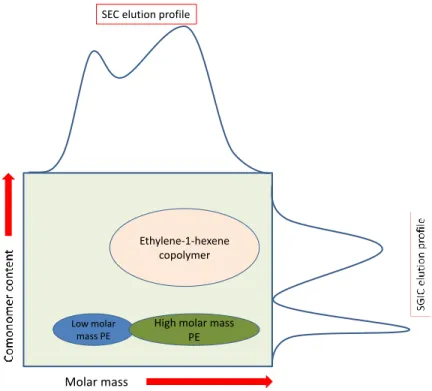
Figure 2.1 A schematic diagram showing the complex multimodal microstructural properties of
bimodal HDPE resins. ... 13
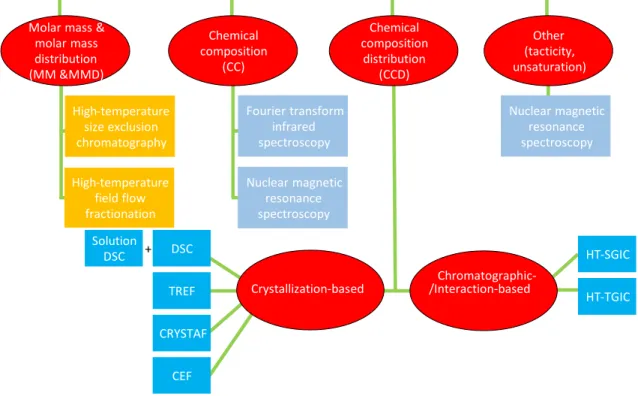
Figure 2.2 A summary of the molecular heterogeneity in polyolefins. ... 16
Figure 2.3 A summary of the different analytical techniques used for the characterization of
polyolefins. ... 17
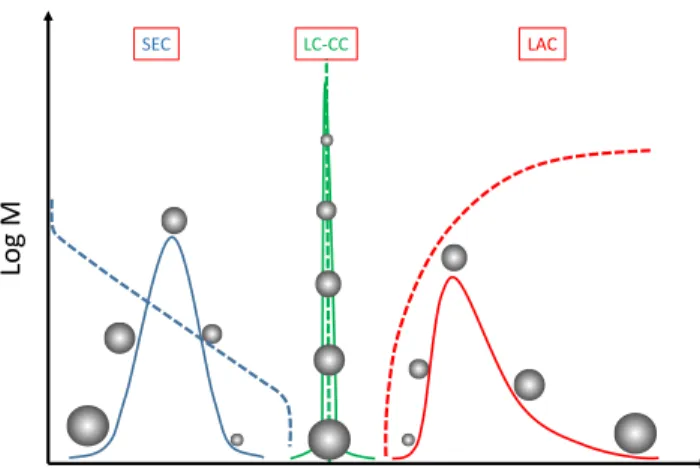
Figure 2.4 Three modes of operation of high performance liquid chromatography. ... 20
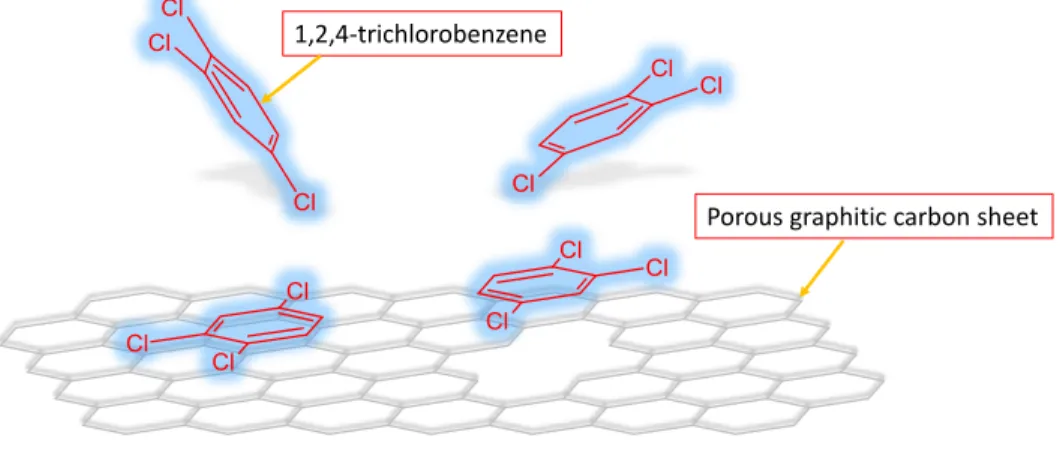
Figure 2.5 A schematic representation of the planar hexagonal structure of a PGC sheet and
desorption promoting TCB molecules. ... 23
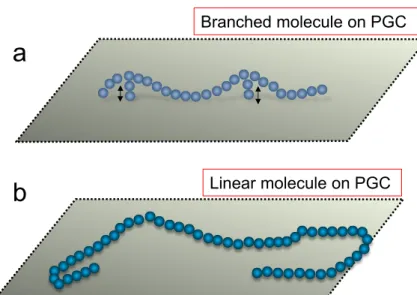
Figure 2.6 Proposed alignment of branched (a) and linear PE (b) molecules on the planar PGC
surface as reported in Ref. 96. ... 24
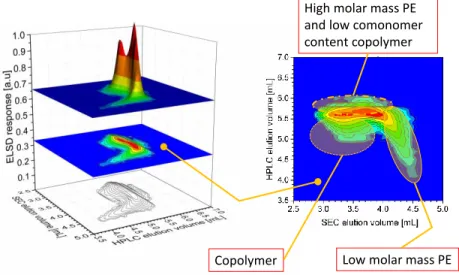
Figure 2.7 Correlation of the chemical composition distribution and molar mass distribution of a
bimodal HDPE resin as obtained from HT-2D-LC separations. ... 27
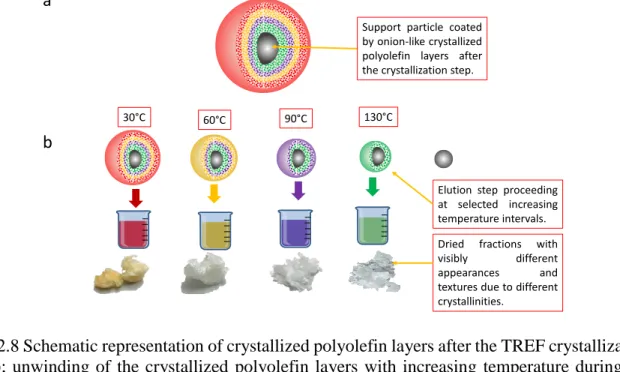
Figure 2.8 Schematic representation of crystallized polyolefin layers after the TREF crystallization
step (a); unwinding of the crystallized polyolefin layers with increase temperature during the elution step (b). ... 28
From Chapter 3
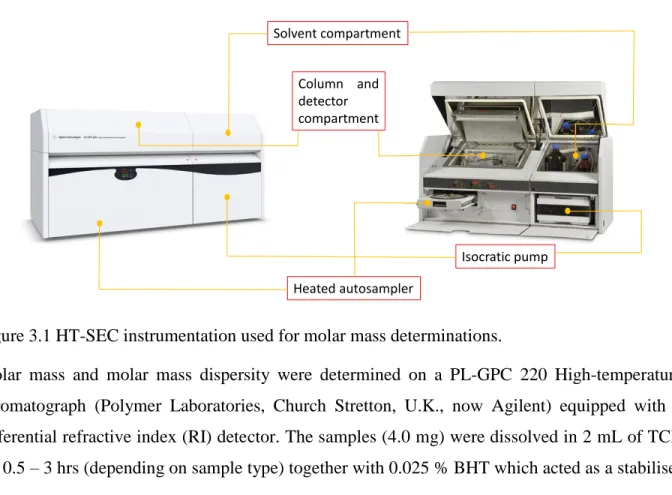
Figure 3.1 HT-SEC instrumentation used for molar mass determinations. ... 38
Figure 3.2 Instrumentation used for HT-LAC experiments in the first and second dimension. ... 40
Figure 3.3 Schematic diagram showing the operating principle of the LC-transform interface. .. 42
Figure 3.4 Temperature profile of CFC analysis. ... 44
Figure 3.5 Illustration of the preparative solution crystallisation fractionation process. ... 47
From Chapter 4
Figure 4.1 An illustration of the importance of the multiple fractionation concept for the separation
and identification of oligomers in wax. ... 49
Figure 4.2 3D contour plot generated from HT-2D-LC analysis of an oxidized wax No. 3 showing
the separation of wax chains in the first dimension according to polarity and in the second dimension according to molar mass. Peak 1 is not retained while peak 2-4 are retained due to oxidized functionality content. ... 62
Anthony Ndiripo
PhD Thesis xiii
Figure 4.3 HT-SGIC elution profiles of ethylene-propylene elastomers showing the linear
dependency of elution volume on ethylene content. ... 72
Figure 4.4 Schematic representation of the complex microstructural nature of a multimodal
Anthony Ndiripo
PhD Thesis xiv
List of tables
From Chapter 2
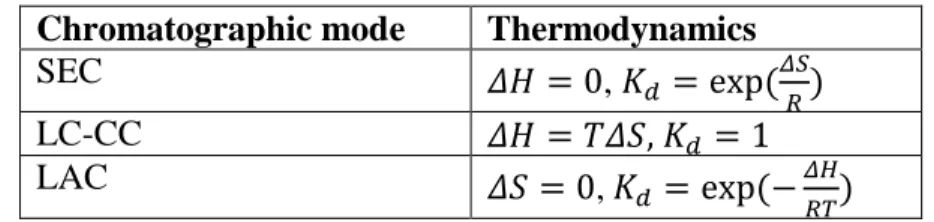
Table 2.1 A summary of the thermodynamics in the three HPLC modes. ... 21
From Chapter 3
Anthony Ndiripo
PhD Thesis xv
List of symbols
ΔG Gibbs free energy
ΔH Change in enthalpic contribution ΔHm Melting enthalpy
ΔS Change in entropic contribution
CMS Concentration of analyte in mobile phase
CSP Concentration of analyte on stationary phase
Kd Partitioning coefficient
Mw Weight-average molar mass
Mn Number-average molar mass
Mp Peak molar mass
Mv Viscosity-average molar mass
Mz Z-average molar mass
R Gas constant T Temperature Tc Crystallisation temperature Tm Melting temperature Ve Elution volume Vh Hydrodynamic volume
Anthony Ndiripo
PhD Thesis xvi
List of abbreviations
2D-LC Two-dimensional liquid chromatography
13C-NMR Carbon-13 nuclear magnetic resonance
ATR Attenuated total reflectance
ATR-FTIR Attenuated total reflectance-Fourier transform infrared BHT 2,6-di-tert-butyl-4-methylphenol
CEF Crystallisation elution fractionation CFC Chromatographic cross-fractionation CRYSTAF Crystallisation analysis fractionation
Ð Dispersity
DSC Differential scanning calorimetry DRI Differential refractive index
ELSD Evaporative light scattering detector EPC Ethylene-propylene copolymer EVA Ethylene-co-vinyl acetate
FTIR Fourier transform infrared spectroscopy GPC Gel permeation chromatography
HDPE High density polyethylene
HPLC High performance liquid chromatography
HT-2D-LC High-temperature two-dimensional liquid chromatography HT-HPLC High-temperature liquid chromatography
HT-SEC High-temperature size exclusion chromatography
HT-SGIC High-temperature solvent gradient interaction chromatography HPer DSC High performance differential scanning calorimetry
IC Interaction chromatography
IR Infrared
LAC Liquid adsorption chromatography
LC-CC Liquid chromatography at critical conditions LDPE Low density polyethylene
LLDPE Linear low density polyethylene
LS Light scattering
MALLS Multi-angle laser light scattering
MM Molar mass
MMD Molar mass distribution NMR Nuclear magnetic resonance
o-DCB/ODCB ortho-Dichlorobenzene
PE Polyethylene
PGC Porous graphitic carbon
PP Polypropylene
PVC Polyvinyl chloride
RI Refractive index
SCB Short chain branching
SCBD Short chain branching distribution SCF Solution crystallization fractionation SEC Size exclusion chromatography
Anthony Ndiripo
PhD Thesis xvii
SF Soluble fraction
SGIC Solvent gradient interaction chromatography TCB 1,2,4-trichlorobenzene
TCE-d2 Deuterated 1,1,2,2-tetrachloroethane
TGIC Thermal gradient interaction chromatography TREF Temperature rising elution fractionation
ZN Ziegler-Natta
Anthony Ndiripo
PhD Thesis 1
Chapter 1
General introduction and objectives
A general overview of the fundamental role of polyolefin characterisation and the various techniques is given. Low molar mass waxes, olefin elastomers and bimodal HDPE are discussed briefly, highlighting the knowledge gaps that exist in their characterization as far as analysis with chromatography is concerned. The work reported in this thesis is condensed into the main objectives. A layout of the thesis is also given.
Anthony Ndiripo
PhD Thesis 2
1.1 Introduction
It is known that polymers in general are complex materials with respect to their microstructure. Polymer microstructure can be expressed as molar mass and chemical composition distribution.1-3 Polymer microstructure is ultimately revealed in the physical and mechanical properties of the material. Therefore, for structure-property relationships to be established, the microstructure of the polymer must be comprehensively revealed and understood.
Polyolefins form a unique class of synthetic polymers and have become virtually indispensable due to their ease of fabrication, application and durability.2,4 Polymerization of olefins produces statistical polymer chains and comonomer insertions which are dependent on the catalyst used and the reactor technology.5 Furthermore, as a further conversion process, polyolefins can be functionalized via grafting or oxidation which makes the materials’ microstructure more complex.6,7 In addition, the ever changing landscape of polymer technology introduces new materials with complex microstructures that must be understood in order to predict end use properties.
A variety of characterization methods is available for the unravelling of the polyolefin microstructure. For molar mass characterization, high-temperature size exclusion chromatography (HT-SEC) is employed with thermodynamically good solvents such 1,2,4-trichlorobenzene (TCB) being employed as mobile phase.8-13 The separation method can be coupled to several detectors
which give chemical composition or branching information as a function of elution volume. However, SEC/HT-SEC only separates according to hydrodynamic volume which may result in the co-elution of branched and linear analogues or functionalized and non-functionalized polymer chains.14-16
Liquid chromatography separation according to chemical composition of polyolefins was only introduced in the early 2000s. The adaptation of equipment and stationary phases capable of handling high operating temperatures made it possible to study polyolefins since they have high dissolution temperatures due to their semi-crystalline nature. Since then, robust sample handling, thermostated column housing and sample detection instrumentation have been built and perfected. Although a lot of work with regard to high-temperature high performance liquid chromatography (HT-HPLC) has been done, a variety of new and established polyolefins are still to be characterized
Anthony Ndiripo
PhD Thesis 3
using the technique. In addition, conditions have to be tailored to obtain the most relevant information regarding specific polyolefin materials. Niche products such as oxidized waxes, functionalized polyethylene copolymers, high comonomer content polyolefin copolymers (elastomers) and bimodal high density polyethylene (HDPE) are complex materials whose microstructure is yet to be fully explored via HT-HPLC.
With regard to oxidized waxes or functionalized polyethylene, polymers are produced that contain various types of functional groups, i.e. carboxylic, carbonyl, hydroxyl, and other oxygen functionalities.17-19 As the properties of a material depend strongly on the chemical composition distribution (CCD) and its correlation to molar mass distribution (MMD), reliable methods are required to characterize the functional groups along the polymer chains. In general, functional group quantification of oxidized waxes can be done by acid number determination, infrared spectroscopy (IR) as well as proton and carbon-thirteen nuclear magnetic resonance spectroscopy (1H NMR, 13C NMR). These methods, however, provide only average functional group concentrations. Column-based separation methods including gas chromatography (GC)20-24 and high temperature liquid chromatography (HT-LC) are powerful methods for the separation of polyolefin oligomers and polymers according to chain length or according to the distribution of functional groups.25,26
The use of GC methods has some limitations concerning the carbon range (up to C30) and concerning the analysis of compounds containing multiple carboxylic acid groups or high molar mass acids. This is due to the fact that the boiling points of these components are higher than the operating temperature of the GC. Accordingly, these compounds cannot be eluted from the GC column since they do not evaporate and move to the gas phase. The use of even higher temperatures in GC may result in the degradation of the waxes. To overcome these limitations, HT-LC seems to be an alternative method for the separation of functionalized waxes. There is promise that HT-LC is capable of separating these materials with regard to the distribution of functional groups along polymer chains.
High molar mass functionalized/polar polyolefins have been extensively studied by Albrecht and Pasch, as well as other groups.25,27-29 Methods of adding polar groups to polyolefin backbones include copolymerizing ethylene with a suitable comonomer using Ziegler-Natta or metallocene catalysts and grafting polar units onto the polyethylene backbone.6,30 Several types of oxygen
Anthony Ndiripo
PhD Thesis 4
containing groups can be added onto the polyolefin backbone. These include maleic anhydride, vinyl acetate, ethyl acrylate, maleic acid, acrylic acid and many others. However, low molar mass waxes have not yet been analyzed using liquid adsorption chromatography at high temperatures. The low oxidation levels/comonomer contents and long crystallizable ethylene sequences prevent the dissolution of functionalized waxes at ambient temperatures in common polar solvents. High temperatures are, therefore, required for the separation and characterization of these materials according to the degree of insertion of polar groups onto the polyethylene backbone.
Due to the fact that HT-HPLC does not rely on the crystallizability of polyolefin materials for separation, but on the interactive forces between analyte and stationary phase, it offers an interesting alternative for the analysis of elastomers/plastomers.31,32 Owing to the high comonomer contents of elastomers, these materials are difficult to characterize using crystallization-based techniques. The high comonomer contents result in lack of detectable crystallizable sequences in melt and high solubility in solution. As a result, melting and crystallization events cannot be detected by differential scanning calorimetry (DSC). In solution, the elastomers either fail to crystallize or co-elute at ambient temperatures when crystallization analysis fractionation (CRYSTAF) or temperature rising elution fractionation (TREF) are used.
HT-HPLC offers an alternative since separation on porous graphitic carbon (PGC) occurs due to interactive forces which are influenced by methylene sequence length rather than sample crystallinity. High-temperature solvent gradient interaction chromatography (HT-SGIC) and high-temperature thermal gradient interaction chromatography (HT-TGIC)33 are two techniques which utilize different approaches for the chemical composition separation of polyolefin samples. HT-SGIC has been extensively employed for the separation and characterization of a variety of polyolefin materials.34-38 However, HT-TGIC is relatively unexplored for polyolefins since its introduction, hence its separation range is rather ambiguous.
Another commercially important and unique material is bimodal high density polyethylene. The resin is produced commercially by combing the microstructural attributes of low molar mass polyethylene (PE) as well as low and high comonomer content high molar mass poly (ethylene-1-alkene) copolymers. State-of-the-art multimodal proprietary technologies are used to produce these bimodal PE resins in a cascade of reactors.5,39,40 These materials have high environmental stress-cracking resistance (ESCR), long-term creep/burst resistance and uniquely high stiffness/impact
Anthony Ndiripo
PhD Thesis 5
balance.41,42 Bulk sample analyses do not provide much information regarding minute differences in the microstructure of these resins especially when the resins have comparable average chemical compositions or are produced batchwise for the same product. Therefore, preparative techniques in combination with advanced analytical techniques are used to probe the composition of selected resins with similar/dissimilar average comonomer contents.
1.2 Research hypothesis
While the analysis of low molar mass waxes by GC is established, its application range is limited when it comes to higher molar masses and in the case that the waxes are oxidized. Therefore, the present research seeks to establish analysis conditions for the separation of oxidized and non-oxidized waxes using high temperature liquid chromatography, thereby answering the following fundamental questions:
1. Can oxidized waxes be separated according to their oligomer length? 2. If so, do they behave differently from non-oxidized waxes?
3. Can a preparative fractionation method enhance the microstructure elucidation of the waxes?
4. Can oxidized waxes be separated and detected using high-temperature liquid adsorption chromatography (HT-LAC)?
5. If so, what are the best chromatographic conditions and do waxes with different oxidation levels show any differences?
6. Can chemical composition separations in the first dimension be adapted for two-dimensional analyses?
7. Can these differences be quantified?
The separation range of HT-SGIC in comparison to crystallization-based techniques such as CRYSTAF is well established for most polyolefin materials. However, the relatively new HT-TGIC has several advantages regarding the use of multiple detectors. Here, the main aim is to compare the two chromatographic techniques for the separation of ethylene-propylene elastomers. The fundamental questions are:
1. What is the separation range of ethylene-propylene elastomers on porous graphitic carbon (PGC) using HT-TGIC?
Anthony Ndiripo
PhD Thesis 6
2. Can the separation range of HT-TGIC be improved by lowering operating temperatures? Bimodal HDPE is a challenging polyolefin material to characterize owing to its complex and multimodal molecular properties. The low comonomer content, broad MMDs and presence of large amounts of low molar mass and high molar mass PE make it a challenging task to characterize bulk samples. In the present work, the main concerns with regard to the characterization of bimodal HDPE are summarized as follows:
1. Is the multiple preparative fractionation concept for the characterization of multimodal ethylene-1-hexene copolymers with crystallization-based methods feasible?
2. If so, what microstructural information is obtained from the coupling of the crystallization-based preparative method to advanced analytical techniques?
3. What other fractionation techniques can be applied to enhance the extraction of microstructural information?
1.3 Objectives and methodology
The first objective of the research work is to utilise the available high temperature chromatographic systems to unravel the microstructure of low molar mass oxidized and non-oxidized waxes. Owing to the low molar mass nature of waxes, conditions have to be tailored in order to allow for the adsorption, separation and detection of the waxes.
In the first part, separation of oligomers in oxidized and non-oxidized waxes is investigated on porous graphitic carbon. Both solvent gradient and thermal gradient modes are used to investigate the different behaviours of the oxidized and non-oxidized waxes. In the second part, separation of waxes according to polarity is investigated using HT-SGIC. For this to be achieved, several solvent combinations are tried at different column conditions. Detector conditions are also tailored to allow for the detection of the low molar mass materials.
The second objective is to compare HT-SGIC and HT-TGIC for the analysis of high comonomer content elastomers/plastomers. The separation ranges of both techniques are compared using a similar sample set.
The third objective is to combine a preparative fractionation technique with advanced analytical techniques for the structural elucidation of bimodal HDPE. Preparative temperature rising elution
Anthony Ndiripo
PhD Thesis 7
fractionation (p-TREF) is used to fractionate bimodal HDPE into several fractions for analysis by SEC-IR, HT-SGIC and comprehensive high-temperature two-dimensional liquid chromatography (HT-2D-LC). A combination of preparative fractionation coupled offline to advanced analytical techniques gives more information regarding the microstructure of bimodal HDPE.
1.4 Layout of dissertation
The dissertation is divided into the following chapters:
Chapter 1
An introduction of the work to be done is given. The knowledge gaps, research hypothesis as well as the main objectives and a brief outline of the dissertation are also given.
Chapter 2
A brief literature review is given in this chapter, focusing on the polymer materials to be analysed as part of the thesis work. A review of the fundamental characterization instruments is given with more emphasis on chromatographic techniques.
Chapter 3
Detailed experimental methods of all the techniques in the thesis work are given in this chapter.
Chapter 4
The results of the study are presented herein. The first section contains results on work on the separation of oligomers in oxidized and non-oxidized waxes. In the second section, findings obtained from the functionality type separations of oxidized waxes are presented. Ethylene-propylene copolymers are used as model samples for the comparison of HT-SGIC and HT-TGIC in the third section. In the last section, a comprehensive report is given on bulk analysis as well as the preparative fractionation and offline analysis of a set of bimodal HDPE samples.
Chapter 5
The research findings of the work reported in Chapter 4 are given in a concise summary and recommendations for future work are presented.
Anthony Ndiripo
PhD Thesis 8
1.5 References
(1) Pasch, H. Adv. Polym. Sci.1997, 128, 1–45.
(2) Pasch, H.; Malik, M. I.; Macko, T. Adv. Polym. Sci.2013, 251, 77–140. (3) Macko, T.; Brüll, R.; Zhu, Y.; Wang, Y. J. Sep. Sci.2010, 33, 3446–3454.
(4) Pasch, H.; Malik, M. I. Advanced separation techniques for polyolefins; Springer: Switzerland, 2014.
(5) Alt, F. P.; Böhm, L. L.; Enderle, H. F.; Berthold, J. Macromol. Symp.2001, 163, 135–144. (6) Chung, T. Prog. Polym. Sci.2002, 27, 39–85.
(7) Prabhu, K.; Macko, T.; Brüll, R.; Remerie, K.; Tacx, J.; Garg, P.; Ginzburg, A. J. Chromatogr. A2016, 1441, 96–105.
(8) Yau, W.; Kirkland, J.; Bly, D. Modern Size-Exclusion Liquid Chromatography, Practice of Gel
Permeation and Gel Filtration Chromatography; John Wiley & Sons: New York, 1979.
(9) Carbognani, L. J. Chromatogr. A1997, 788, 63–73.
(10) Mori, S.; Barth, H. G. Size exclusion chromatography; Springer: New York, 1999. (11) Yoo, S.-H.; Jane, J.-l. Carbohydr. Polym.2002, 49, 307–314.
(12) Striegel, A.; Yau, W. W.; Kirkland, J. J.; Bly, D. D. Modern size-exclusion liquid
chromatography: Practice of gel permeation and gel filtration chromatography; John Wiley &
Sons: New Jersey, 2009.
(13) Podzimek, S. In Light Scattering, Size Exclusion Chromatography and Asymmetric Flow Field Flow Fractionation: Powerful Tools for the Characterization of Polymers, Proteins and
Nanoparticles; John Wiley & Sons: New Jersey, 2011, pp 99–206.
(14) Plüschke, L.; Mundil, R.; Sokolohorskyj, A.; Merna, J.; Sommer, J. U.; Lederer, A. Anal.
Chem.2018, 90, 6178–6186.
(15) Hiller, W.; Hehn, M.; Hofe, T.; Oleschko, K. Anal. Chem.2010, 82, 8244–8250. (16) Pasch, H. Polym. Chem.2013, 4, 2628–2650.
(17) United States, US 6169148 B1, 2001. (18) United States, US6348547 B1, 2002.
(19) de Klerk, A. Ind. Eng. Chem. Res.2003, 42, 6545–6548.
Anthony Ndiripo
PhD Thesis 9
(21) O'Connor, J. G.; Burow, F. H.; Norris, M. S. Anal. Chem.1962, 34, 82–85. (22) Hyötyläinen, T.; Riekkola, M.-L. J. Chromatogr. A2003, 1000, 357–384.
(23) Lawrence, J.; Iyengar, J.; Page, B.; Conacher, H. J. Chromatogr. A1982, 236, 401–403. (24) Heath, D. J.; Lewis, C.; Rowland, S. J. Org. Geochem.1997, 26, 769–785.
(25) Albrecht, A.; Brüll, R.; Macko, T.; Pasch, H. Macromolecules2007, 40, 5545–5551. (26) Albrecht, A.; Heinz, L. C.; Lilge, D.; Pasch, H. Macromol. Symp.2007, 257, 46–55.
(27) Ginzburg, A.; Macko, T.; Malz, F.; Schroers, M.; Troetsch-Schaller, I.; Strittmatter, J.; Brull,
R. J. Chromatogr. A2013, 1285, 40–47.
(28) Malik, M. I.; Pasch, H. Prog. Polym. Sci.2014, 39, 87–123.
(29) Albrecht, A.; Brüll, R.; Macko, T.; Sinha, P.; Pasch, H. Macromol. Chem. Phys.2008, 209, 1909–1919.
(30) Yuan, X.; Matsuyama, Y.; Chung, T. M. Macromolecules2010, 43, 4011–4015.
(31) Phiri, M. J.; Cheruthazhekatt, S.; Dimeska, A.; Pasch, H. J. Polym. Sci., Part A: Polym. Chem. 2015, 53, 863–874.
(32) Phiri, M. J.; Dimeska, A.; Pasch, H. Macromol. Chem. Phys.2015, 216, 1619–1628.
(33) Cong, R.; deGroot, A. W.; Parrott, A.; Yau, W.; Hazlitt, L.; Brown, R.; Cheatham, M.; Miller, M. D.; Zhou, Z. Macromol. Symp.2012, 312, 108–114.
(34) Macko, T.; Brüll, R.; Alamo, R. G.; Stadler, F. J.; Losio, S. Anal. Bioanal.Chem. 2011, 399, 1547–1556.
(35) Chitta, R.; Macko, T.; Brüll, R.; van Doremaele, G.; Heinz, L. C. J. Polym. Sci., Part A: Polym.
Chem.2011, 49, 1840–1846.
(36) Albrecht, A.; Heinz, L.-C.; Lilge, D.; Pasch, H. Macromol. Symp.2007, 257, 46–55.
(37) Cheruthazhekatt, S.; Pijpers, T. F. J.; Harding, G. W.; Mathot, V. B. F.; Pasch, H.
Macromolecules2012, 45, 2025–2034.
(38) Pasch, H.; Heinz, L. C.; Macko, T.; Hiller, W. Pure Appl. Chem.2008, 80, 1747–1762. (39) Ginzburg, A.; Macko, T.; Dolle, V.; Brüll, R. J. Appl. Polym. Sci.2013, 129, 1897–1906. (40) Sun, X.; Shen, H.; Xie, B.; Yang, W.; Yang, M. Polymer2011, 52, 564–570.
Anthony Ndiripo
PhD Thesis 10
(42) Tian, Z.; Chen, K.-R.; Liu, B.-P.; Luo, N.; Du, W.-L.; Qian, F. Chem. Eng. Sci.2015, 130, 41–55.
Anthony Ndiripo
PhD Thesis 11
Chapter 2
Theoretical background
A general overview of the different polyolefin materials studied in the present work is given. Analytical techniques reported in the literature up to now used for the study of microstructural characteristics of complex polyolefins are also presented. The theoretical background of the work is briefly discussed.
Anthony Ndiripo
PhD Thesis 12
2.1 Introduction
Of the synthetic polymers available on the market, polyolefins are by volume the most produced and most used. The huge and ever-growing demand of polyolefins is due to their wide range of applications, excellent cost-to-performance ratio, non-toxicity, chemical resistance, excellent processability and high mechanical strength. This set of advantages has made polyolefin materials virtually part of everyday life.
Polyolefins are available in a large array of classes depending on end-use or monomers used for synthesis. Each class has a set of properties which enable the polyolefin material to perform specific functions. Specific to this work, oxidized waxes, ethylene-propylene copolymers (EPCs) and bimodal high density polyethylene (HDPE) are some of the classes of polyolefins with very different applications, but almost similar starting raw materials. Common to these classes of polyolefins is the ethylene monomer responsible for forming the backbone on which short chain branches, polar/1-alkene comonomers or oxidized functionalities can be introduced. The main polyolefin materials relevant to this work are discussed in the following sections.
2.2 Bimodal high density polyethylene
Polyolefin blends/alloys provide better properties compared to their components as several components with different functions are combined. Bimodal HDPE is an example and it benefits from its complex multimodal microstructure by having the strength and stiffness of HDPE and high-stress-crack resistance and processability of unimodal medium density polyethylene. Several technologies of producing bimodal HDPE are available. In addition, different catalyst technologies are in the market depending on the producers.1-8
Bimodal HDPE resins are typically produced in the following manner: the first reactor is fed with ethylene and hydrogen to produce low molar mass linear PE. After hydrogen is removed, the low molar mass PE is transferred to a second reactor, where a 1-alkene (1-butene or 1-hexene) is added as the comonomer. Here, a high molar mass short chain-branched copolymer component is produced depending on the reactor conditions. Usually, the second reactor is loaded with much less hydrogen to allow the formation of high molar mass polyethylene. A reversed mode wherein the high molar mass component is produced first, followed by a low-molar-mass component is also available.1
Anthony Ndiripo
PhD Thesis 13
The final product is typically characterized by three components. The first is low molar mass PE which aids in processability. The second is high comonomer content copolymer which provides resistance to environmental stress cracking and rapid crack propagation. Lastly, the bulk of the resin is characterized by very low-comonomer high-molar mass PE which provides the backbone properties of the resins such as tensile strength and toughness. Such bimodal HDPE resins find numerous applications in pipes for gas and water distribution.5,9 As a result, the final product has
a complex microstructure with broad molar mass (MMD) and chemical composition distributions (CCD) as illustrated in Fig. 2.1.
Figure 2.1 Schematic diagram showing the complex multimodal microstructural properties of bimodal HDPE resins.
2.3 Functionalized polyolefins
Polyolefins can be modified to introduce other functionalities. The introduction of polar functionalities on the polyolefin backbone has received much attention in the recent past. Polyolefins functionalized with polar groups have better adhesive properties, compatibility with additives and depending on their molar mass, they find a wide range of applications.10-15 Polyolefins can be functionalized via a number of ways. Copolymerization, grafting and oxidation
Molar mass
Ethylene-1-hexene copolymer
Low molar mass PE
High molar mass PE SEC elution profile
Anthony Ndiripo
PhD Thesis 14
are some of the ways of introducing functionalities onto the polyolefin backbone.16-19 For low molar mass PE, oxidation is one the many methods of introducing polar functionalities.
Due to the low molar mass nature of waxes, they are easy to melt and oxidize via bubbling with air, oxygen or ozone.18,20 Usually the residence time determines the level of oxidation. Once
oxidized, a variety of oxygen containing functionalities are obtained. These functionalities range from ketones to aldehydes, carboxylic acids, alcohols and γ-lactones.21-23 The established method
of determining the oxidation level of the oxidised wax is via titration with a base to determine the acid level. The method has several shortcomings. Firstly, functional groups such as ketones and aldehydes may go unaccounted for. Secondly, the technique assumes that all the wax chains have similar types and numbers of functionalities. Oxidation is a statistical process and a distribution of functionalities is obtained for the wax chains present. This means that some polymer chains have more polar functionalities while others may go without oxidation. Such a distribution of functionalities can be defined only with appropriate separation and detection methods.
In certain applications such as the injection moulding of polyvinyl chloride (PVC), non-oxidized and oxidized waxes are used as the internal and external lubricants, respectively. The oxidation level of the wax is crucial to the migration or mobility of the oxidized wax chains towards the outer surfaces of the PVC moulding. The quality of lubricant determines the smoothness of the finished PVC product and hence its price. Oxidized waxes have several other applications which include use in inks, paints, polishes, paper and cloth coatings, wax paper, insulation, lubrication, wax figures and food coatings.24
Such a wide distribution in functionality can be advantageous depending on the application of the wax. The combination of wax chains with significantly different molar masses or chemical compositions provides products with versatile physical, mechanical and processing properties. However, these distributions must always be defined to enable prediction of product performance and distinguishing between batch-to-batch irregularities.
2.4 Elastomers and ethylene-propylene copolymers
The main types of polyolefin materials in the plastics market are polypropylene (PP) and polyethylene (PE). Smaller classes of polyolefins are produced through the copolymerization of ethylene or propylene with a variety of other comonomers. For example, when an
ethylene-Anthony Ndiripo
PhD Thesis 15
propylene copolymer (EPC) is produced in a multistage reactor system, ethylene can be added in different quantities to produce different material grades for different impact polypropylene applications.25-28
Likewise, ethylene can be copolymerised with a variety of 1-olefins to produce linear low density polyethylene (LLDPE) via solution, slurry or gas phase reactor systems. Depending on the amount and type of 1-olefin comonomer, different classes of LLDPEs are produced. The LLDPE classes range from pipe grades (low comonomer content LLDPE) to elastomers (high comonomer content LLDPE). More sophisticated methods of LLDPE production include producing resins which are a blend of several components from different reactors. In such cases, it more likely to end up with a resin with very broad MMDs and CCDs, respectively. Such resins are often termed bimodal HDPE as discussed in Section 2.2.
In cases where the comonomer content is high such that rigid sections of the polymer chains are minimal, plastomers/elastomers are obtained. Polyolefin-based elastomers have received attention in comparison to other types of thermoplastic elastomers. This due to their better chemical resistance, lower density, excellent weatherability and lower cost for elasticity formation.29,30 In addition, they are blended with other brittle polyolefin materials in order to increase impact strength.
The obvious challenge is the characterization of these materials since they cannot be separated or fractionated using classical crystallization-based techniques. For example, with differential scanning calorimetry (DSC), some of the materials do not show melting and crystallization events owing to their very low crystallinities. In crystallization analysis fractionation (CRYSTAF), the polymer chains remain soluble at ambient temperatures and, therefore, cannot be fractionated.31,32
Likewise, analytical and preparative temperature rising elution fractionation (TREF) fail at fractionating these materials.
On the other hand, interaction chromatography at high temperature has been used previously to fractionate elastomers using solvent gradient based methods.31-34 Porous graphitic carbon (PGC), which is used as the stationary phase under the trademark Hypercarb®, allows for the preferential
adsorption and desorption of ethylene-based polyolefins from solution. Therefore, high comonomer content resins can be adsorbed and preferentially desorbed from the stationary phase
Anthony Ndiripo
PhD Thesis 16
according to the comonomer content. The separation mechanisms of the ethylene-based materials using interaction chromatography are described in detail in the following sections.
2.5 Characterization of polyolefins
Polyolefin characterization follows similar trends to the discovery and improvement of new polymerization catalysts. For example, in the early 1960s after the Nobel Prize winning achievement by Ziegler and Natta, an array of characterization techniques were introduced into the field. Numerous techniques aimed at probing the microstructure of the new materials were put to test. With new polymerization methods, catalysts or polymeric materials comes the challenge of understanding their microstructure.
Figure 2.2 Summary of the molecular heterogeneity in polyolefins.
Polyolefin characterization methods to date can be classified according to the mode of action or instrumentation used i.e. crystallization-based, chromatographic or spectroscopic. Very often these methods are used in tandem to obtain more information as a single analysis technique cannot provide comprehensive information regarding the multivariate distributions of the complex polyolefins. The heterogeneity of polyolefins is summarized in Fig. 2.2. Several techniques are now available for the microstructural characterization of polyolefins as summarized in Fig. 2.3.
Chain heterogeneity
Molar mass & molar mass distribution (MM &MMD) Chemical composition (CC) Chemical composition distribution (CCD) Other (tacticity, unsaturation) Dependent on comonomer insertion (which depends on reactor technology and
catalyst) Dependent on
comonomer /comonomer content Dependent on catalyst
type and reactor technology
Dependent on polymerization technique, catalyst
Anthony Ndiripo
PhD Thesis 17
2.5.1 Crystallization-based techniques
Polyolefins can be classified as semi-crystalline materials. More so, polyolefins exhibit distributions in their crystallizability due to differences in chain microstructure. For copolymers and branched polyolefins, these differences can be directly related to their chemical composition although molar mass influences are present in some cases. Several solution-based techniques have been developed as alternatives to the melt-based differential scanning calorimetry. The obvious advantages are that concentration detectors are used with techniques such as CRYSTAF, CEF and analytical TREF. Therefore, amorphous or soluble components that would otherwise go undetected in DSC can be quantified.
Figure 2.3 Summary of the different analytical techniques used for the characterization of polyolefins.
2.5.1.1 Temperature rising elutionfractionation (TREF)
TREF is the oldest solution crystallization-based technique first reported by Desreux and Spiegels.35 The technique was later used to fractionate several semi-crystalline polyolefins by Wild in a number of works.36,37 Several other works reporting the use of TREF are available in literature.
38-47 Since the development of temperature rising elution fractionation (TREF) by Wild, the
technique has become indispensable in the fractionation of semi-crystalline polyolefins. TREF has Fourier transform
infrared spectroscopy Molar mass &
molar mass distribution (MM &MMD) Chemical composition (CC) Chemical composition distribution (CCD) Other (tacticity, unsaturation) High-temperature size exclusion chromatography High-temperature field flow fractionation Nuclear magnetic resonance spectroscopy Nuclear magnetic resonance spectroscopy Chromatographic-/Interaction-based Crystallization-based DSC TREF CRYSTAF HT-SGIC HT-TGIC CEF Solution DSC +
Anthony Ndiripo
PhD Thesis 18
two fundamental steps, namely the crystallization and elution steps. During the crystallization step, a polymer solution is cooled on a support from about 130 °C to ambient temperature. The polymer solution is usually a dilute solution of the polyolefin in solvents such as TCB or xylene. This step is typically done at slow cooling rates of 1 °C hr-1 to allow the polymer to crystallize onto the
support. After that step the crystallized polyolefin is washed off the support using a pre-heated solvent in the elution step. The technique can be used with an on-flow detector to monitor concentration changes as function of temperature (analytical TREF) or fractions can be collected at predetermined elution steps (preparative TREF).
2.5.1.2 Crystallization analysis fractionation (CRYSTAF)
This technique was developed by Monrabal in the early 1990s as a fast alternative to TREF. This was achieved by eliminating the elution step which is present in TREF.48-50 In CRYSTAF the polyolefin is dissolved in a thermodynamically good solvent. Typical solvents are 1,2-dichlorobenzene and 1,2,4-trichlorobenzene (ODCB and TCB, respectively). High dissolution temperatures of up to 160 °C are used. After stabilization of the temperature at 100 °C, aliquots of the polyolefin solution are filtered out and analyzed with a concentration sensitive detector. Commercial instruments are equipped with a concentration detector and five reactors and, therefore, can simultaneously analyze five samples. If a fraction of the polyolefin sample does not crystallize at room temperature, it is quantified as the soluble fraction.
CRYSTAF offers very little information with regard to the CCD of low molar mass polyolefins and elastomers since the majority of these materials remain in solution at ambient temperature. For oxidized waxes, this is also due to the enhanced solvation caused by the presence of polar functionalities. On the other hand, elastomers have very short crystallizable methylene sequences which are easily weakened in solution. Similar challenges are met when TREF is applied to these materials. Apart from co-crystallization effects in CRYSTAF, the operation range with regard to copolymers is limited. Wild and Kelusky analyzed ethylene-co-vinyl acetate copolymers (EVA) with 9 – 42 wt.% VA by TREF and found that copolymers with higher comonomer contents were soluble at ambient temperature.36,37,51 In similar studies, the separation range of
Anthony Ndiripo
PhD Thesis 19
2.5.1.3 Crystallization elution fractionation (CEF)
CEF offers dynamic crystallization and redissolution of the different components of a sample. Therefore, better resolution is obtained in comparison to TREF in which static crystallization is prevalent.54 During the crystallization step, a very slow flow of solvent is maintained. Longer
columns are, therefore, used in CEF to accommodate the dynamic crystallization step. The obvious advantage of CEF is the use of higher cooling rates that result in faster analysis by CEF as compared to TREF and CRYSTAF. Traditionally, TREF analysis required about 100 hrs for completion but developments in the field have reduced the experimental time to about 3 – 4 hrs. On the other hand, CEF analysis only takes about 30 min.55 In addition, it has been shown that CEF is more robust
and is less susceptible to co-crystallization as compared to CRYSTAF.56
2.5.1.4 Differential scanning calorimetry (DSC)
The introduction of DSC in the early 1960s by Watson and O’Neil was a fundamental step in understanding the thermal properties and complex processes in the formation, melting and crystallization of materials.57,58 DSC was later applied to polyolefins and it has become one of the main analytical tools for the fast analysis of polymeric materials. Recent developments have seen the introduction of flash DSC and HyPer DSC which can work with minute amounts of sample and at very fast scanning rates.59-63 However, these methods are more useful when applied in combination to other pre-fractionation and separation methods.
The technique is not applicable to amorphous polyolefins such as elastomers since very few meaningful thermal events such as the glass transition temperature (Tg) can be recorded. However,
with regard to low molar mass waxes, several works have shown the importance of DSC as an analytical tool for characterizing wax blends and modified paraffin waxes.64-67 In comparison to
solution-based techniques, DSC offers more information regarding the microstructure of waxes since thermal events are observed. On the other hand, the low molar mass nature of waxes promotes solubility in TCB/ODCB even at room temperatures.
Anthony Ndiripo
PhD Thesis 20
2.5.2 Chromatographic techniques
Figure 2.4 Three modes of operation of high performance liquid chromatography.
With regard to polyolefin characterization, high performance liquid chromatography (HPLC) has become a powerful, reliable and frequently used tool.43,68-71 Three chromatographic modes are distinguished according to their mechanism of separation as illustrated in Fig. 2.4. The different retention volumes of the separated components are a result of the partitioning equilibrium between the stationary phase and the mobile phase. The equilibrium is expressed by the partitioning coefficient Kd as illustrated in Eq. 1.72,73
𝐾𝑑 = 𝐶𝑆𝑃
𝐶𝑀𝑝 (1)
CSP and CMS are the concentrations of the analyte on the stationary phase and in the mobile phase,
respectively. Kd can be related to the Gibbs free energy (ΔG) of the analyte in the mobile phase
and on the stationary phase using Eq. 2.68,74
𝛥𝐺 = 𝛥𝐻 − 𝑇𝛥𝑆 = −𝑅𝑇𝑙𝑛𝐾𝑑 (2)
where, R = gas constant, T= absolute temperature, ΔH and ΔS are the changes in the enthalpic and entropic contributions, respectively.
Eq. 2 summarises the differences between the enthalpic and the entropic contributions of the Gibbs free energy. The enthalpic and entropic contributions can be manipulated via the choice of the stationary and mobile phases as well as the column temperature. Using the enthalpic and entropic
SEC LC-CC LAC
Log M
Anthony Ndiripo
PhD Thesis 21
contributions, the thermodynamics of the three chromatographic modes can be summarized as shown in Table 2.1.
Table 2.1 Summary of the thermodynamics in the three HPLC modes.
Chromatographic mode Thermodynamics
SEC 𝛥𝐻 = 0, 𝐾𝑑 = exp(𝛥𝑆
𝑅)
LC-CC 𝛥𝐻 = 𝑇𝛥𝑆,𝐾𝑑 = 1
LAC 𝛥𝑆 = 0,𝐾𝑑 = exp(−𝛥𝐻
𝑅𝑇)
The separation of polyolefins is carried out at high temperatures for all the three modes. Hence, the discussion will focus on literature related to the analysis of polyolefins at high temperatures.
2.5.2.1 Size exclusion chromatography (SEC)
Under ideal conditions, SEC separation is achieved with respect to hydrodynamic volume of macromolecules in dilute solution. No adsorptive interactions should exist between the macromolecules and the stationary phase. The separation of macromolecules is, ideally, entropy driven. Thermodynamically good solvents that are used include TCB, ODCB, and to some extent dibutoxymethane75. After injection of the hot polymer solution into a thermostated system, macromolecules are separated according to size/hydrodynamic volume as they enter pores accessible to them, which results in a loss of entropy. The loss in entropy results in the different retention volumes. Larger macromolecules experience a greater loss in entropy and elute first as compared to smaller ones. 76,77
Usually, standards of known molar mass are used to create a calibration curve from which the molar masses of the analyte are estimated. For better molar mass estimation, the analyte and calibrant microstructure must closely resemble each other. However, it is challenging to find calibrants that suit the analyte and in such cases the molar mass values are expressed as relative values, e.g. polystyrene equivalent molar masses. One solution to the mentioned challenge is using a molar mass sensitive online detector such as the multiangle laser light scattering (MALLS) detector, which enables the determination of absolute molar masses.78,79 The only challenge reported in literature with regard to MALLS detection is its application range, which requires molar masses of greater than 10 kg mol-1. Recent publications have, however, argued against this
Anthony Ndiripo
PhD Thesis 22
Recent efforts targeted at getting more out of SEC analysis through the use of online multiple detector systems.81 Each detector added to the series provides more information regarding the microstructure of the sample. Alternatively, the SEC eluent can evaporated leaving the analyte as solid spot using the LC-transform interface followed by offline scanning of the fractions using Fourier infrared spectroscopy (FTIR).82,83 A much easier route is to use an online heated FTIR flow cell.84,85
2.5.2.2 High-temperature high performance liquid chromatography (HT-HPLC)
In HT-HPLC, liquid interaction chromatography (LC) is used to separate macromolecules according to chemical composition. As the name implies, the sample macromolecules must interact with the stationary phase after injection. Enthalpic interactions between the macromolecules and the stationary phase are the major driving force for separation. This is achieved in the presence of a suitable mobile phase and temperature. In most cases, finding the balance between temperature and the suitable solvent is easier said than done.
The main goal of using HT-HPLC is to separate macromolecules according to chemical composition (CC) in order to provide information regarding CCD of the given sample. This information is complementary to the molar mass information obtained by SEC. Still, the effects of molar mass in HT-HPLC separations present a major impediment. Regarding polyolefin analysis, the very first attempts were made by Pasch and Macko who showed the irreversible retention of linear PE and isotactic PP from dilute solution on zeolites as stationary phase.86-88 In another article by Pasch and Heinz, a blend of HDPE and iPP was separated by using silica as stationary phase and a gradient of TCB→ethylene glycol monobutyl ether (EGMBE) via a precipitation/redissolution mechanism.89
Porous graphitic carbon (PGC, available as Hypercarb®) was later discovered as a stationary phase for liquid chromatography of polyolefins. Although the stationary phase had already been used in other studies at ambient temperature, work in high temperature applications was only done less than a decade ago. In cases where information regarding the CCD of functionalized polyolefin macromolecules is required, silica is used as the stationary phase. The stationary phase is available from a number of producers under various tradenames e.g. PerfectSil® or Nucleosil® 14,15,17.