Lancaster University Management School
Working Paper
2004/031
The Impacts of Human Resource Management Practices
and Pay Inequality on Workers' Job Satisfaction
Bradley, Steve; Petrescu, Alina and Simmons, Rob
The Department of Economics Lancaster University Management School
Lancaster LA1 4YX UK
©Bradley, Steve; Petrescu ,Alina and Simmons, Rob All rights reserved. Short sections of text, not to exceed two paragraphs, may be quoted without explicit permission,
provided that full acknowledgement is given.
The LUMS Working Papers series can be accessed at http://www.lums.co.uk/publications/
The Impacts of Human Resource Management Practices and Pay
Inequality on Workers’ Job Satisfaction
Paper presented at the Western Economic Association 79th Annual Conference
Vancouver 2004
Steve Bradley, Alina Petrescu and Rob Simmons
Department of Economics
The Management School
Lancaster University
Lancaster, U.K.
Email: [email protected]
ABSTRACT
In this paper we investigate the relationship between Human Resource Management (HRM) practices and workers’ overall job satisfaction and their satisfaction with pay. To investigate these issues we use British data from the ‘Changing Employment Relationships, Employment Contracts and the Future of Work Survey’ and the ‘Workplace Employment Relations Survey’. After controlling for personal, job and firm characteristics, it is shown that several HRM practices raise workers overall job satisfaction and their satisfaction with pay, but these effects are only significant for non-union members. Satisfaction with pay is higher where performance-related pay and seniority-based reward systems are in place. A pay structure that is perceived to be unequal is associated with a substantial reduction in both non-union members’ overall job satisfaction and their satisfaction with pay. Although HRM practices can raise worker job satisfaction, if workplace pay inequality widens as a consequence then non-union members may experience reduced job satisfaction.
Keywords: Job satisfaction, HRM practices, union members, pay inequality
1. Introduction
The past two decades have witnessed a burgeoning literature on the economics of job
satisfaction.1 There is also a large Human Resource Management (HRM) literature
that emphasises the influence of so-called ‘high-performance workplace practices’ on
job satisfaction and hence employee performance. The HRM literature can be split
into empirical studies, which in the case of the UK are primarily based on the
Workplace Industrial Relations Survey (WIRS) series, and a considerably larger
number of studies that typically rely on case study analyses.2 Relatively few studies
have sought to combine the job satisfaction and HRM literature. One objective of this
paper is therefore to present new empirical evidence on the impact of HRM practices
on workers overall job satisfaction and their satisfaction with their pay. Some authors
claim that HRM practices are a substitute for unionisation, offering management
‘…the prospect of improved performance whilst simultaneously improving workers’
job satisfaction, security and perhaps pay’ (Machin and Wood, 2004). A second
objective of this paper is to investigate whether HRM practices have a different
impact on the job satisfaction of union members as opposed to non-union members.
There is a longstanding interest, especially amongst economists, in the role played by
pay and reward structures in determining worker effort, performance and job
satisfaction. However, the focus of the existing literature has tended to be on the
impact of workers’ own pay or their comparison wage. Little is known beyond
particular cases about the impact of the distribution of pay within a firm on worker
1
See, for example Clark (1996), Oswald (1997), Robie et al (1998), Blanchflower and Oswald (2000), Clark (2001), Gazioglu and Tansel (2003), Bryson, Cappellari and Lucifora (2003) or Nguyen, Taylor and Bradley (2003).
2
performance. This is intriguing because there is a growing literature, which fervently
advocates the implementation of contingent, and implicitly variable, pay structures
that encourage wage dispersion.3 A third objective of this paper is therefore to analyse
the impact of perceived pay inequality on workers’ job satisfaction.
To investigate these issues we analyse two British datasets, the ‘Changing
Employment Relationships, Employment Contracts and the Future of Work Survey’
(CERS), conducted in 2000, and the 1998 Workplace Employment Relations Survey
(WERS). The CERS and the WERS datasets differ in that the former has a larger
proportion of workers from small firms (i.e. those with less than 10 employees),
whereas the WERS excludes establishments with fewer than 10 employees. This
means that WERS excludes 73% of the 1.3 million establishments in the UK (Cully et
al, 1999). However, WERS covers 82% of employees, which means that it is
representative of employees whereas CERS is representative of establishments. These
two datasets can thus be seen as complements in our analysis. To allow a comparison
of the findings from these two datasets we construct a set of covariates that are as
consistent as possible. In terms of HRM practices, we identify the following sets of
variables: work organisation, supervision, employee involvement/voice, recruitment
and selection, training and learning, and pay practices. In addition, we include
variables for the workers’ perception of pay inequality in the workplace and whether
it is unionised. Note that our comparison of the two datasets can only be performed
with respect to the workers’ satisfaction with their pay, since the WERS dataset does
not include a variable for overall job satisfaction.
whereas British research includes Heywood et al (1997), Poole and Jenkins (1998), Whitfield (2000), Addison et al (2000) and Addison et al (2001), Delbridge and Whitfield (2001).
3
The remainder of the paper is broken down as follows. In section 2 we briefly review
the theoretical and empirical literature on job satisfaction and then discuss the
literature on the impact of HRM practices on worker performance. The issue of pay
inequality is also introduced. Section 3 describes the two datasets used in the analysis
together with our econometric methodology. In section 4 we discuss the findings of
our analysis of the impact of HRM practices on workers’ overall satisfaction and that
with pay. This section then examines the differences in outcome between union and
non-union members, followed by a discussion of the impact of pay inequality. Our
conclusions follow in section 5.
2. Job satisfaction and HRM practices: theory and literature
Various theories of job satisfaction have been developed by psychologists and
management scholars. They tend to assign various degrees of importance to sources of
satisfaction, which can be classified as either intrinsic or extrinsic. Intrinsic sources
depend on the individual characteristics of the person, such as attitudes. Extrinsic
sources are situational, and depend on the environment, such as workplace climate.
Theories which rely on extrinsic sources are more typically adopted by economists,
albeit using different terminology, whereas intrinsic sources are more commonly
associated with other social sciences (Luchak, 2003). Extrinsic theories also have
deep roots in the social sciences, and can be traced back, for instance, to Herzberg
(1959)’s hygiene-motivation theories, who develops two distinct sets of factors
influencing motivation and satisfaction. One set of factors is called ‘motivators’ (i.e.,
job factors that are work related). These factors are: recognition, achievement, the
possibility for growth and advancement, the level of responsibility and the nature of
itself, are also important and relate to the conditions that surround doing that job.
These include salary, technical support, company policy and administration, working
conditions, status, job security, and interpersonal relationships among supervisors,
subordinates and peers. As an aside it is interesting to note that this theory suggests
that pay is not a good motivator, consistent with some weak observed effects of pay
practices in the empirical job satisfaction literature.
A further strand of this theoretical literature is known as situational theory, an
example of which is Locke’s value-based theory. According to Clark (1996), this is ‘a
classic reference for the meaning of job satisfaction’. Locke (1976) defines job
satisfaction as ‘a pleasurable or positive emotional state resulting from the appraisal
of one’s job or job experiences’ (Clark 1996, p190). Finally, Hackman and Lawler
(1971) present an alternative facet-based theory of job satisfaction, whereby job
characteristics, such as task variety, autonomy, feedback, identity and task
significance influence motivation and job satisfaction.
Traditionally, economists have embraced job satisfaction with ‘professional
suspicion’ (Freeman, 1978: 135) because it is a subjective variable, and hence it is not
surprising that the study of job satisfaction by economists is ‘still in its infancy’
(Blanchflower and Oswald, 2000, p8). However, the empirical analysis of job
satisfaction either implicitly or explicitly draws on the theoretical models discussed
above, and in so doing job satisfaction is specified as a function of several individual
and job characteristics, and interpreted as a utility function (Clark and Oswald 1996;
Previous research on the determinants of job satisfaction shows that women are more
satisfied with their jobs than men, possibly a reflection of their lower expectations
from work, which may in turn be a consequence of their relatively poor position in the
labour market (Clark 1996, 1997; Groot and Brink, 1999). A U-shaped relationship
between age and job satisfaction has also been observed (Sloane and Ward 2001;
Blanchflower and Oswald 2001), and married workers are more likely to report a
higher level of job satisfaction (Blanchflower and Oswald 2001). More highly
educated workers report lower levels of job satisfaction (Clark and Oswald 1996),
possibly because job satisfaction depends on the gap between outcomes and
aspirations, and the latter increase with the level of education.
In the HRM literature, a few sociological and psychological studies have focused on
the effects of job satisfaction on firm and employee performance. The majority of
these studies are descriptive and often based on case studies (see the reviews in
Purcell 1999 and Ramllal 2003), which means that the findings from this research
cannot be generalised. For instance, Truss 2001 analyses a single firm (Hewlett
Packard), whereas Rigano and Donna 1998 research the experience of one worker.
Economists have also investigated the relationship between HRM practices and
company and worker performance, and suggest that these practices have the potential
to ‘transform’ organisations into being cost-efficient and productive, whilst also
increasing employee well-being. For instance, Huselid (1995) finds that a standard
deviation increase in ‘high-performance work practices’ translates into a seven
percent decrease in turnover, an increase of $2,700 in sales per employee, a $19,000
Some studies by labour economists show that certain HRM practices, such as working
in teams, greater discretion and autonomy in the workplace and various employee
involvement and pay schemes, do motivate workers and hence generate higher labour
productivity (Cully et al, 1999; Boselie et al., 2001). However, overall job satisfaction
need not increase if effort is a ‘bad’ and rational workers aim is to maximise the
returns from the exerted effort.
Reward systems have been analysed predominantly by economists, although there are
relatively few empirical studies (Pfeffer and Langton, 1993). What evidence there is
on the effects of pay and pay practices is mixed. In terms of the relationship between
pay and job satisfaction, Clark and Oswald (1996) show that a workers’ reported level
of well-being is weakly correlated with their income, whereas Belfield and Harris
(2002) find no evidence of such a relationship for those working in higher education.
Other studies show that it is relative income rather than own income that matters
(Hamermesh, 2001; Clark and Oswald, 1996; Shields and Price, 2002).
A wider literature exists on the effects of introducing new pay practices in companies,
although there are few empirical studies and none that address the relationship
between such practices and job satisfaction. The most notable exceptions on the
empirical side are Black and Lynch (2004), Booth and Frank (1999), Cappelli and
Neumark (1999) and Lazear (2000). There are also very few studies that seek to
examine the relationship between the pay distribution within a firm, including the
their job satisfaction.4 An exception is Bloom and Michel (2002) who discuss the
advantages and disadvantages of dispersed and compressed ‘actual’ pay structures.
Dispersed pay structures may induce higher levels of performance as employees have
to work harder to move up the pay ladder. This is consistent with the notion of
promoting the ‘star’ workers in a competitive environment and the provision of
compensating differentials for high-risk jobs. However, dispersed pay systems may
also be linked to workforce instability and higher turnover. The latter effect is in
accordance with the prediction of tournament theory whereby the winners stay with
the company in order to compete in further tournaments, but losers are implicitly
expected to leave or to face truncated careers (Bloom and Michel, 2002). On the other
hand, compressed pay promotes team effort and cooperation by creating a more
egalitarian workplace, which tends to reduce turnover (Beaumont and Harris, 2003).
However, it may discourage effort above a certain minimal necessary level, and may
be perceived as unfair because of being open to free-rider problems. Hence, it is
difficult to sign the effect of the pay distribution within a firm on workers’ job
satisfaction.
3. Data and methodology
We use two British datasets for our empirical analysis. The Changing Employment
Relationships, Employment Contracts and the Future of Work Survey (CERS) was
commissioned by the Policy Studies Institute as part of the Future of Work research
programme. This data was collected between July 2000 and January 2001, and the
4
main aim of the Survey was to identify and describe the key changes in British
employee relations. Two data collection methods were used: interviews and
self-completion questionnaires. The one-hour interviews were personal, paper-based,
conducted in the home, and totalled 2,466. Self-completion questionnaires were
issued together with the interviews and returned by 2,349 respondents, which
represents a 95-percent response rate. Once we omit respondents with missing values
on key variables and the self-employed (334), the sample drops to 1,518. The
Workplace Employment Relations Survey (WERS) contains a much larger sample of
workers (19,890 once we allow for missing data), and has the advantage that
responses are obtained from both employees and their managers.
An advantage of the CERS data is that it contains a question on overall job
satisfaction, which is reported in Table 1. The majority of the respondents to the
survey are satisfied with their job, the modal group being ‘satisfied’. The distribution
of job satisfaction observed in Table 1 is consistent with other British studies and
shows that the reported levels of satisfaction are very high (Blanchflower et al 1993,
Millward et al 1999, Oswald and Gardner, 2001). These results may reflect a
self-selection effect insofar as workers sort themselves into the jobs that they like and quit
those they dislike. However, this explanation over-states workers’ ability to find a
suitable job match. There are very few observations in some categories and hence we
collapse the job satisfaction into five discrete categories (see below).
A drawback of the WERS is that it does not contain an equivalent question on overall
job satisfaction, but instead asks workers about their satisfaction with job autonomy
pay, and hence we also model the determinants of workers satisfaction with their pay.
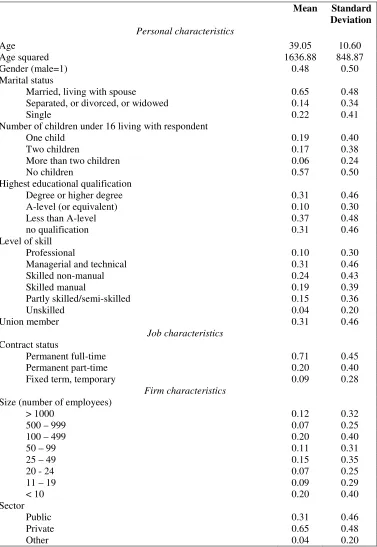
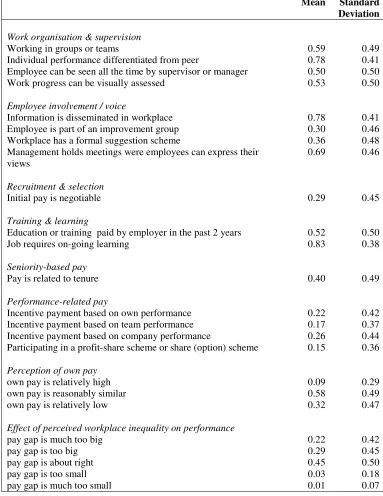
Table 2 compares the means for all covariates for the CERS and the WERS.
Descriptive statistics for all variables constructed from both datasets are shown in
Tables A1 and A2 in the Appendix. Variables for HRM and pay inequality variables
are constructed from the questions listed in Table A3 in the Appendix. Table A2
allows us to compare the sample means for the variables extracted from the two
datasets. It is clear that the CERS has fewer professional workers and more
managerial/intermediate technical workers than the WERS. As noted earlier, there is
also a clear difference between the CERS and WERS in terms of the distribution of
employees by firm size, with the WERS having far more respondents in
medium-sized firms (100-499 employees), and no micro-firms (under 10 employees). In terms
of HRM practices, workers in CERS are less likely to work in teams, get involved in
improvement groups or be in firms that offer profit-related pay. Conversely, workers
in WERS are less likely to be supervised, or work in firms that encourage both
training and skill development. The fact that CERS is representative of establishments
whereas WERS is representative of workers makes an analysis of both datasets
potentially very revealing.
Following the theory and previous literature discussed above, job satisfaction, S, can
be expressed as:5
u INEQUALITY HRM
X
S =ββββ′1111 +ββββ′2 +ββββ′3333 + (1)
5
where X refers to a vector of worker, job and firm characteristics, including whether
the worker is a union member. Worker characteristics include their age, gender,
marital status, number of children, and highest educational qualification, whereas the
job and firm characteristics include the workers occupation/skill level and firm size.
Unlike the previous literature a vector of variables reflecting human resource
management practices, HRM, are included in the model and classified under the
following headings: (i) work organisation, (ii) supervision, (iii) employee
involvement, (iv) recruitment and selection, (v) training and learning, and (iv) pay
practices, including seniority-based pay and performance-related pay. Finally,
INEQUALITY refers to the workers perception of the pay distribution in the firm and
in particular whether is regarded as unequal or not. Hamermesh (2004) has warned
about the inclusion of subjective covariates when the dependent variable is itself
subjective. We defend the inclusion of this particular variable on the grounds that
perception of pay is probably what is most important within a firm. If the distribution
of pay is regarded as unequal and this reduces workers’ job satisfaction then either
management needs to change that distribution by altering its pay practices, or if it is
based on a misperception of the pay distribution then management needs to improve
information flows in the firm.
It is clear from Table 1 that job satisfaction is measured on an ordinal scale, however,
since there is a lack of data on some categories it is necessary to combine them. This
gives the following classification for overall job satisfaction and for satisfaction with
pay:
Y = 5 completely / very satisfied
Y = 3 neither satisfied nor dissatisfied
Y = 2 dissatisfied
Y = 1 completely / very dissatisfied.
The same ordinal scale is adopted for satisfaction with pay in the CERS and the
WERS. Since job satisfaction is an ordinal variable, we estimate an ordered probit
model, which assumes that there is an unobserved random variable, Y*, such that:
,
'
*
β
ε
+
= X
Y ε ~ N[0,1] (2)
The observed counterpart to Y* is the categorical variable Y, ordered as follows:
0 if
0 * ≤µ
Y
1 if
1 *
0 µ
µ <Y ≤
2 if
2 *
1 µ
µ <Y ≤
3 if
3 *
2 µ
µ <Y ≤ (3)
.
.
. =
Y
J if
1 *
−
> j
Y
µ
where µ1,µ2,µ3,...,µJ−1 are the cutpoints, with a constant µ0 =0.Since ε ~ N[0.1]
then
) (
)
(Y j P j 1 Y* j
P = =
µ
− < ≤µ
X X
Y X
P j j
' '
* '
1
(
µ
−β
< −β
<µ
−β
= −
X X
P(
µ
j 1 −β
' <ε
≤µ
j −β
'= −
) (
)
(
µ
j −β
'X −Φµ
j 1−β
'XΦ
= −
where Φis the standard normal distribution function. The likelihood for an individual is then ∏ = ∫ − − − Φ = m j X j X j ij d du u i L 1 ' ' 1 ) ] ) ( ([ β µ β µ (5)
where dij = 1 if the ith observation is in the jth job satisfaction category; i=1,2,…,n
and j=1,2,…,m.
It is difficult to interpret the estimates from the ordered logit model, therefore we
report marginal effects along with the p-value on the underlying coefficient estimates.
4. Results
The effect of HRM practices
We begin by discussing the effect of HRM practices on overall job satisfaction, which
are reported in Panel A of Table 3, and then discuss their effect on satisfaction with
pay. The results in Table 3 show that after controlling for a wide range of personal,
job and firm characteristics (reported in Panel B, Table 3), several HRM practices
have a statistically significant effect on job satisfaction.6
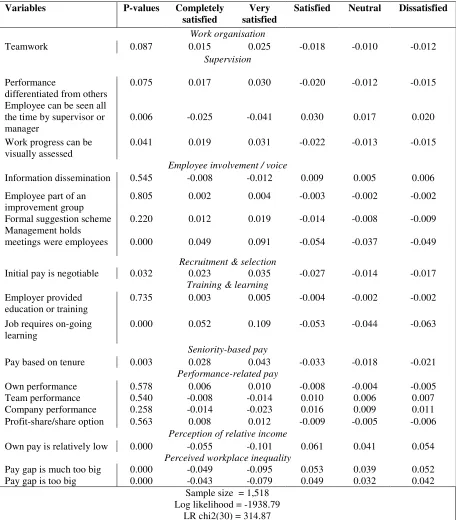
Creating workplaces which embed ‘on-going learning’ has a highly significant effect
on job satisfaction, insofar as it increases the probability of a worker being either
completely or very satisfied by sixteen percentage points (see Training and learning).
This result is consistent with the HRM literature where on-the-job learning figures
6
prominently among practices that enhance employee motivation and commitment. For
instance, Doeringer et al (1998) find that US companies adopting Japanese workplace
practices tend to emphasise ‘social and organisational learning’ and to offer career
employment and high wages. In turn, employees reciprocate by increased effort and
productivity. Interestingly, the provision of employer provided education and training
is insignificant, suggesting that workers prefer continuous on-the-job instruction to
off-the-job training.
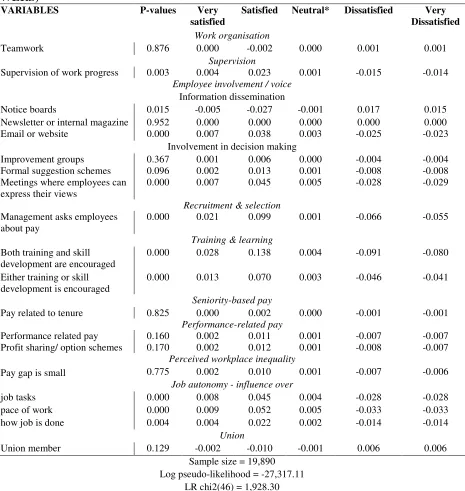
In the model for satisfaction with pay we construct training variables that are
comparable for CERS and WERS (Tables 4 and 5). Firms are classified into those that
offer either training or continuous skill development, those that offer both training and
skill development, which are compared to the base firms that offer neither. For CERS
there is no statistically significant relationship between the training variables and
satisfaction with pay (see Table 4), whereas for WERS workers who receive training
and encouragement do develop skills are more satisfied with their pay (see Table 5).
Furthermore, those workers who work in firms that offer both training and
encouragement to develop skills are more likely to report that they are ‘very satisfied’
or ‘satisfied’ with their pay (compare the marginal effects of 0.17 and 0.08). One
explanation for the difference in our results between CERS and WERS may be the
fact that CERS contains a higher proportion of micro firms, which typically offer very
little training or opportunity for continuous skill development, whereas the WERS
includes more medium-large firms, who tend to offer more training.
Constant direct supervision, where the employee can be seen all the time by a
supervisor or a manager, has a significant negative impact on job satisfaction,
is offset by an increased risk of being dissatisfied (see Supervision, Table 3). In
contrast, the fact that ‘work progress can be visually assessed’ by a supervisor has a
small but positive effect on job satisfaction, increasing the probability of feeling
completely or very satisfied by 5 percentage points. Thus, whereas close supervision
of work is disliked, perhaps because it is associated with a feeling of being controlled,
workers do like some feedback on their performance, suggesting that some monitoring
is actually desirable. These findings are consistent with the view that HRM practices
enhance employee participation, voice and creativity, thereby increasing job
satisfaction, motivation and workplace performance. However, there is no evidence
from CERS that these variables affect satisfaction with pay (see Table 4), whereas in
WERS ‘supervision of work progress’ does have a statistically significant and positive
effect on satisfaction with pay, albeit small in magnitude (see Table 5).
Table 3 shows that teamwork is only significant at the 10% level and although this
kind of practice increases job satisfaction, the effects are quite small (see work
organisation). Working in a team increases the probability of being completely or
very satisfied by only 4 percentage points. The finding that teamwork has little effect
on job satisfaction is interesting because it is often advocated as one of the most
important HRM practices (Osterman 1994, MacDuffie 1995, Pfeffer 1995), and has
been shown elsewhere to have a significant impact on employee productivity,
commitment, and job satisfaction (Griffin 1988, Banker et al 1996, Batt and
Appelbaum 1995). Our results are perhaps in keeping with the behaviour in
organisation literature, which warns of the negative effects of increased pressure from
peers in the team. Barker (1993) speaks of ‘concertive control’, whereby the
management’s supervision is multiplied by peer surveillance. Furthermore, Parker and
effect of Japanese style practices on employee well-being. It is also interesting to note
from Tables 4 and 5 that there is no statistically significant relationship between
teamwork and workers satisfaction with their pay, as one might expect given the
findings that workers are more satisfied when their own progress and performance are
monitored.
Job autonomy is captured in the model for overall job satisfaction in the CERS dataset
by the organisation of work in such a way that individual performance can be
differentiated from that of one’s peers (see Work organisation, Table 3). This variable
has borderline significance and has a modest effect insofar as it increases the
probability of a worker being completely or very satisfied by 4.7 percentage points.
This is a less substantial effect on job satisfaction than has been found for the US7. In
the models of satisfaction with pay, job autonomy is reflected in the worker’s
influence over job tasks, the pace of work and how the job is done. In the CERS, only
influence over the pace of work has a statistically significant effect on satisfaction
with pay (Table 4), whereas in the WERS all three measures of work organisation are
highly significant (Table 5). In general, workers with greater job autonomy are more
satisfied with their pay, and influence over the pace of work is amongst the larger of
the effects. For instance, in the WERS, the marginal effects on this variable sum to
approximately 0.06 for ‘very satisfied’/ ‘satisfied’. In contrast, the equivalent sum for
influence over how the job is done is only 0.026, implying that workers are happier
with their pay when they have more control over their level of effort.
7
See Nguyen, Taylor and Bradley (2003) who focus specifically on the relationship between job autonomy and job satisfaction in Britain. They find that the impact of job autonomy is highly
A set of five variables relates to employee involvement or channels through which
workers can voice their grievances or views (see Table 3). These employee
involvement variables can be placed on a scale from the most passive form of
involvement (information dissemination) to the most engaging form (management
holds meetings with employees). The idea of an employee involvement ‘continuum’
was initially proposed in the Freeman-Lazear model, and has been tested by Addison
et al (2000). However, many of these variables have an insignificant effect on job
satisfaction in our model, the exception being ‘management holds meetings with
employees’. The variable has a very strong effect in raising job satisfaction increasing
the probability of a worker being completely or very satisfied by 15 percentage points.
This finding may reflect a preference amongst workers for a simple and direct channel
of face to face communication with management.
In the models of satisfaction with pay in Tables 4 and 5 the information dissemination
variable is disaggregated, increasing in sophistication from ‘notice boards’ to ‘email
or website’, whereas the same variables are used to reflect employee involvement.
There is some evidence that workers are more satisfied with their pay the more
technologically sophisticated the method of information dissemination used in the
firm. To see this compare the negative effect on the notice board variable with the
positive effect on the email and website variables. With respect to employee
involvement, workers are more satisfied with their pay when they are able to meet and
express their views to managers, and the magnitude of this effect is very similar in the
CERS and the WERS (see Tables 4 and 5, employee involvement / voice).
The effect of involvement in negotiation regarding initial pay raises workers overall
satisfaction with pay (Tables 4 and 5). What is interesting, however, is the finding that
the effect of negotiation over initial pay is larger for overall satisfaction, increasing
the probability of being completely or very satisfied by almost 6 percentage points,
than it is for satisfaction with pay, where it increases this probability by 3 percentage
points. This finding suggests that allowing workers to negotiate over initial pay has
spillover effects insofar as workers are more satisfied with the job as a whole.
The effect of pay practices
Table 3 shows that seniority-based pay mechanisms, such as pay based on tenure,
have a significant positive effect on job satisfaction. This is the traditional type of
payment practice, designed to maximise effort from the firm’s perspective while
minimising risk for the worker. The probability of being ‘completely’ or ‘very’
satisfied is increased by 7 percentage points for workers in these firms. Interestingly,
there is also a positive and statistically significant relationship between ‘pay based on
tenure’ and satisfaction with pay in the CERS (Table 4) but not in the WERS (Table
5). The results for the CERS may come as a surprise to the advocates of the ‘new’
performance related pay practices, given the dramatic decline of seniority-based pay
mechanisms (Ornatowski, 1998). However, there is contrary evidence from our
analysis that workers are more satisfied with ‘new’ pay practices, especially when pay
is related to individual performance. This type of compensation system links rewards
to individual performance by comparing their achievement to the goals set at the
beginning of the year. Thus, although individual, team and company
performance-related pay practices have no statistically significant effect on overall job satisfaction
(see Performance- related pay, Table 3), individual performance-related pay does
increase a workers’ satisfaction with their pay. The effect is larger and more highly
positive in both cases. Similarly, where the firm operates a profit sharing or option
scheme, worker satisfaction with pay is enhanced.
The observed link between individual performance-related pay and satisfaction with
pay is consistent with our earlier findings that workers prefer systems when work can
be visually assessed and differentiated from co-workers. Why then is there no
statistically significant relationship between performance-related pay and overall job
satisfaction? The answer may simply be that workers agree with the principle of
relating effort to rewards but suffer disutility from effort. Furthermore, creating a
performance-pay link that is perceived as fair can be problematic, especially in the
case of subjective performance appraisals where the appraisers may be suspected of
giving biased judgements (Prendergast, 1999).
In keeping with the existing literature on the determinants of workers’ job satisfaction,
our model for overall job satisfaction includes a variable reflecting comparison
income, albeit one based on the workers own perception of their relative pay. Table 3
shows that where workers perceive their own pay to be relatively low this reduces
their overall job satisfaction. This is consistent with existing evidence (Nguyen,
Taylor and Bradley, 2003; Clark and Oswald, 1994). In comparison to the estimated
effects on many of the HRM variables, relative income has a much larger effect,
reducing the probability of being ‘completely’ or ‘very’ satisfied by over 15
percentage points. Thus, although workers are more satisfied with their pay when it is
related to tenure and/or a system of performance-related pay, the ‘level’ of pay or the
Union versus non-union differences in the impact of HRM practices
It is possible that the role of unions within the workplace has been replaced by the
introduction of HRM practices, which have the potential to increase workers’ job
satisfaction and performance and hence offer competing services to those provided by
unions. Although there is some debate about whether this substitution has in fact
occurred (Machin and Wood, 2004), it is still possible that workers are more satisfied
if they can voice their concerns, for instance, via one or more of the HRM practices
rather than indirectly via a union. Some groups of workers, such as the young, may
not see a role for unions in resolving workplace disputes regarding pay and practices
and consequently may not join a union. Therefore, it is appropriate to assess union -
non-union member differences in the effect of HRM practices on their job
satisfaction. We do this by interacting union membership with the statistically
significant HRM practices identified in the previous sections. The estimated models
are otherwise identical, except for the inclusion of these interaction effects.
A general finding is that, for virtually all of the HRM practices, the main effects on
job satisfaction are positive and statistically significant, whereas the interaction effects
between union membership and the HRM practice are either negative or insignificant.
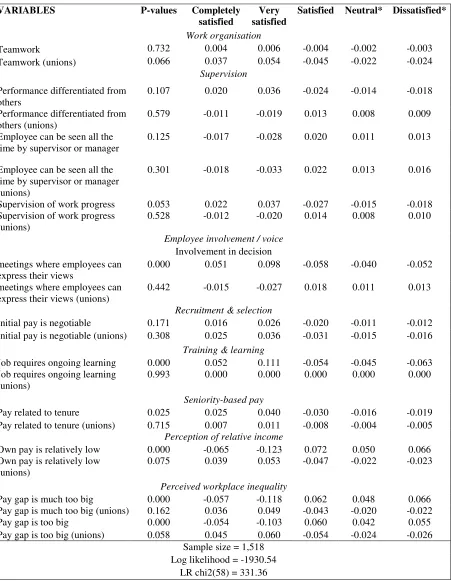
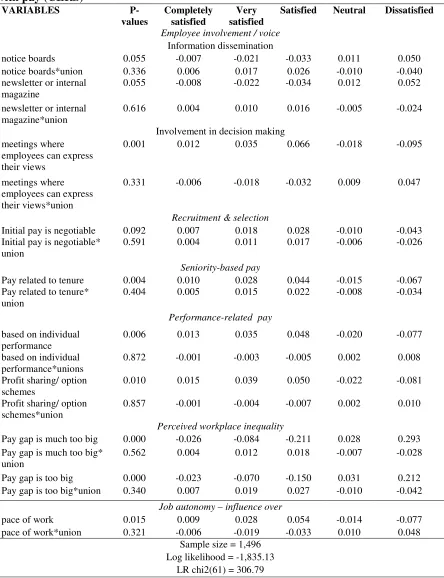
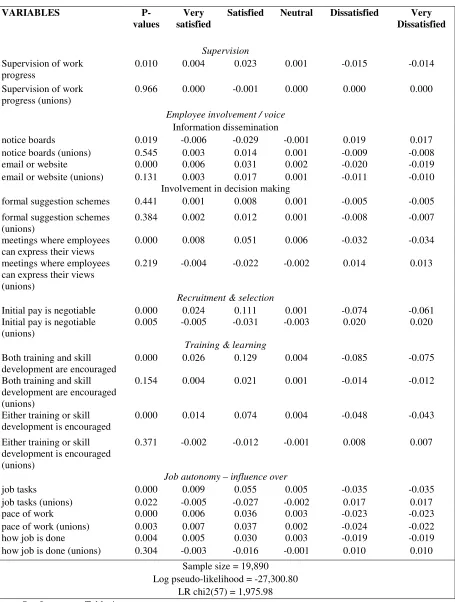
For instance, workers’ overall job satisfaction (Table 6, employee involvement / voice)
and their satisfaction with pay (see Tables 7 and 8) is higher where they can voice
their views via meetings with employers. For satisfaction with pay, the sum of the
marginal effects for the top two satisfaction categories ranges from 0.05 to 0.06. The
effect for union members, reflected by the interaction effect, is negative and
insignificant in both the CERS and the WERS. In terms of skill development, it can be
seen that where the job requires on-going learning (Table 6, Training & learning) or
workers’ overall job satisfaction and their satisfaction with pay is much higher. The
sum of the marginal effects for the two highest categories of overall satisfaction is
0.16 and is 0.15 for satisfaction with, both large effects. In contrast, the equivalent
interaction effect for union workers is not significantly different from zero. It is also
worth noting the positive and statistically significant effects of the
performance-related pay and the profit sharing variables for non-union members in the CERS
(Table 7).
One interpretation of these findings is that HRM practices perform similar functions
for non-union members as unions do for their members through bargaining over pay
and working conditions. Just as unions are able to successfully negotiate over issues
regarding pay and conditions of employment on behalf of workers so HRM practices
play an important role in raising satisfaction with pay for non-union members.
The effect of workplace pay inequality on job satisfaction
As suggested in the review of the literature there is very little evidence on the impact
of the distribution of pay in the workplace on job satisfaction. Workers may be
concerned about inequality in the workplace simply out of a sense of fairness or
natural justice. Alternatively, a highly compressed pay distribution implies that there
is little opportunity for advancement in the firm. There may also be a difference in
attitude regarding workplace pay inequality between union members and
non-members, the former being expected to be more egalitarian.
Table 3 shows that after controlling for an individual worker’s perception of being
low paid, we find that a pay structure that is perceived to be over-dispersed is
These effects are substantial, especially in those firms where the ‘pay gap is much too
big’. In these firms the probability of a worker being ‘completely’ or ‘very’ satisfied
is reduced by 15 percentage points. The equivalent figure for firms where the ‘pay gap
is too big’ is 12 percentage points. A highly dispersed wage structure may therefore
alienate those workers at the lower end of the job-wage hierarchy because they feel
under-valued. It is perhaps for this reason that Pfeffer and Langton (1993) have
suggested that the best system of pay is one that is based on a mixture of seniority,
productivity and credentials. This finding is replicated with respect to workers’
satisfaction with pay in the CERS (see Table 4), whereas in WERS the only variable
we could include is ‘Pay gap is small’ (Table 5). The estimate for this variable is
statistically insignificant.
Tables 6 and 7 report the interaction effects of perceived workplace pay inequality
and union status for the CERS. Our results suggest that it is non-union members who
are least satisfied with respect to perceived pay inequality in the firm. For instance,
the probability of non-union members being ‘completely’ or ‘very satisfied’ is
reduced by 18 percentage points for non-union members when the pay gap in the
workplace is perceived to be ‘much too big’ (Table 6, Perceived workplace
inequality). Where the gap is perceived to be ‘too big’ the effect falls to -0.16, and
notice that the effects for union members are positive and insignificant. With respect
to workers’ satisfaction with pay (Table 7) there is no statistically significant effect of
the pay inequality variables for union members. In contrast, for a non-union member
the probability of being ‘completely’ or ‘very’ satisfied is reduced by 11 percentage
points where the pay gap is perceived to be ‘much too big’, compared to 9 percentage
The findings with respect to perceived pay inequality are interesting insofar as they
suggest that although many HRM practices raise workers’ job satisfaction,
particularly amongst non-union members, there may be a downside. If HRM
practices, especially those related to pay, create a more unequal distribution of pay
within the firm then workers’ job satisfaction can be substantially reduced. Clearly, it
is important to know whether this is sufficient to counter the positive effects of the
HRM practices, and so whether pay inequality reduces worker performance and
increases quit rates. Moreover, it is useful to assess whether the perception of
workplace pay inequality is more important than actual workplace pay inequality. A
case can be made for either variable, and it can be argued that worker perceptions are
more relevant where there is imperfect information in the workplace, which is likely
in larger firms.
5. Conclusion
In this paper we have investigated the effect of HRM practices on workers’ overall
job satisfaction and their satisfaction with pay. After controlling for a large number of
personal, job and firm-related characteristics, we find that HRM practices have a
statistically significant, and in some cases substantial, effect on workers’ overall job
satisfaction and on their satisfaction with pay. Specifically, we find that workers enjoy
on-going learning, job autonomy and working in teams. Close supervision of work is
disliked, but workers enjoy some visual assessment of their performance, suggesting
that some monitoring is desirable. Furthermore, giving workers a ‘voice’ through
employee involvement schemes has a positive effect on job satisfaction. Managers
who hold regular meetings with employees to enable them to express their views
with pay is higher where seniority and individual performance-related schemes are in
place. When we investigate differences in the effect of HRM practices on the job
satisfaction of union members and non-members, we find that many of the effects
positive effects are only important for non-union members, which suggests that HRM
practices are either a threat or an irrelevance to union members.
Finally, a pay structure that is seen as overly dispersed is associated with low levels of
job satisfaction. These effects are large and once again only apply to non-union
members. It can be conjectured that, although HRM practices have a direct positive
effect in raising workers’ job satisfaction, if these policies also raise pay inequality in
the workplace then there may be an offsetting negative effect on satisfaction and
performance. This clearly raises implications for the design and implementation of
HRM practices, particularly with respect to pay and incentive systems. However, it
should be noted that we measure the effect of perceived workplace pay inequality,
rather than actual pay inequality, and it may be that the distribution of pay is
misperceived. The implication would then be that information flows about pay
structure should be improved if managers are concerned with their workers’ job
satisfaction.
References
Addison, J. T. and Belfield, C. R. (2001) Updating the determinants of firm
performance: estimation using the 1998 UK workplace employee relations survey,
British Journal of Industrial Relations, 39 (3), 341-366.
Addison, J. T., Siebert S. W., Wagner, J. and Wei, X. (2000) Worker participation and
firm performance: evidence from Germany and Britain, British Journal of Industrial
Appelbaum, E., Bailey, T., Berg. P. and Kalleberg, A. L. (2000) Manufacturing
advantage: why high performance work systems pay off, Cornell University Press:
Ithaca New York.
Arthur, J. B. (1992) The link between business strategy and industrial relations
systems in American steel mills, Industrial and Labour Relations Review, 45 (3), 488
- 506.
Bailey, T., Berg, P. and Sandy, C. (2001) The effect of high-performance work
practices on employee earnings in the steel, apparel and medical electronics and
imaging industries, Industrial and Labour Relations Review, 54, 525 - 544.
Baker, G., Gibbons, R. and Murphy, K. J. (1994) Subjective performance and
measures in optimal incentive contracts, Quarterly Journal of Economics, 109 (4),
1125 - 1156.
Banker, R. D., Lee, S. Y., Potter, G. and Srinivasan, D. (1996) Contextual analysis of
performance impacts of outcome-based incentive compensation, Academy of
Management Journal, 39 (4), 920 - 948.
Barker, J. (1993) Tightening the iron cage: concertive control in self-managing teams,
Administrative Science Quarterly, 38, 408 – 437.
Batt, R. and Appelbaum, E. (1995) Worker participation in diverse settings: does the
form affect the outcome and if so, who benefits?, British Journal of Industrial
Relations, 33 (3), 353 - 378.
Beaumont, P. B. and Harris, R. I. D. (2003) Internal wage structures and
organizational performance, British Journal of Industrial Relations, 41 (1), 53 - 70.
Black, S. E. and Lynch, L. M. (1997) Beyond the incidence of training, Discussion
Paper No 362, Centre for Economic Performance, London School of Economics,
Black, S. E. and Lynch, L. M (2004) What's driving the new economy: the benefits of
workplace innovation, Economic Journal, 114 (2) F97-F116.
Blanchflower, D. G., Oswald, A. J. and Warr, P. B. (1993) Well-being over time in
Britain and the USA, Paper presented at an Economics of Happiness Conference,
London School of Economics.
Blanchflower, D. G. and Oswald, A. J. (2000) Is the UK moving up the international
wellbeing rankings?, presentation at an NBER Conference.
Blooom, M. and Michel, J. G. (2002) The relationships among organizational context,
pay dispersion and managerial turnover, Academy of Management Journal, 45 (1), 33
- 42.
Booth, A. and Frank, J. (1999) Earnings, productivity, and performance-related pay,
Journal of Labor Economics, 17, 447 – 463.
Boselie, P. and Van der Wiele, T. (2001) Employee perceptions of HRM and TQM
and the effects on satisfaction and intention to leave, ERIM Report Series Research in
Management. Erasmus Research Institute of Management. July.
Bryson, A., Cappellari, L. and Lucifora, C. (2003) Does union membership really
increase job dissatisfaction?, Centre for Economic Performance Discussion Paper No.
569, London School of Economics.
Cappelli, P. and Neumark, D. (1999) Do "high-performance" work practices improve
establishment-level outcomes?, Industrial and Labour Relations Review, 54 (4), 737 –
776.
Clark, A. E. (1996) Job satisfaction in Britain, British Journal of Industrial Relations,
Clark, A. E. (2001) What really matters in a job? Hedonic measurement using quit
data, Labour Economics, 8 (2), 223 - 242.
Clark, A. E. and Oswald, A. J. (1996) Satisfaction and comparison income, Journal of
Public Economics, 61, 359 – 381.
Cully, M., Woodland, S., O’Reilly, A. and Dix, G. (1999) Britain at work: as depicted
by the 1998 Workplace Employee Relations Survey, London: Routledge.
Delaney, J. T. and Godard, J. (2001) ‘An industrial relations perspective on the
high-performance paradigm’, Human Resource Management Review, Vol. 11(4) : 395 -
429.
Delbridge, R. and Whitfield, K. (2001) ‘Employee perceptions of job influence and
organizational participation’, Industrial Relations, Vol. 40 (3): 472 - 489.
Doeringer, P. B., Evans-Klock, C. and Terkla, D. G. (1998) ‘Hybrids or
hodgepodges? Workplace practices of Japanese and domestic startups in the United
States’, Industrial and Labor Relations Review, January.
Easterlin, R. A. (2001) 'Income and happiness: Towards a unified theory', Economic
Journal, Vol 111 (July): 465 - 484.
Eisenhardt, K. M. (1989) ‘Agency theory: an assessment and review’, Academy of
Management Review, Vol. 14 (1): 57 - 74.
Freeman, R. B. (1978) 'Job satisfaction as an economic variable', American Economic
Review, Vol. 68 (2): 135 - 141.
Freeman, R. B. and Lazear, E. P. (1995) ‘An economic analysis of works councils’, in
J. Rogers and W. Streeck (eds.) Works Councils: Consultation, Representation and
Frick, B. and Prinz, J. (2003) ‘Pay inequality and team performance: empirical
evidence from the North American major leagues’, Discussion Paper, University of
Zurich. ISSN 1324 – 0459.
Gazioglu, S. and Tansel, A. (2003) 'Job satisfaction in Britain: individual and related
factors', Department of Economics, Middle East Technical University, Ankara.
Gibbons, R. (1998) 'Incentives in organizations', Journal of Economic Perspectives,
12 (4) : 115 - 132.
Griffin, R. W. (1988) ‘Consequences of quality circles in an industrial setting: a
longitudinal assessment’, Academy of Management Journal, Vol. 31 : 338 – 358.
Hackman, J. and Lawler, E. (1971) ‘Employee reactions to job characteristics’,
Journal of Applied Psychology Monograph, Vol. 55 : 259 – 286.
Herzberg, F., Mausner, B. and Snyderman, B. (1959) The Motivation to Work. New
York: John Wiley.
Heyman, F. (2002) ‘Pay inequality and firm performance: evidence from matched
employer-employee data’, Working Paper Series from Trade Union Institute for
Economic Research, No. 186, http://www.fief.se/library/WP/WP186.pdf
Heywood, J. S., Siebert W. E. and Wei, X. (1997) ‘Payment by results systems:
British evidence’, British Journal of Industrial Relations, 35 (1) : 1-22.
Huselid, M. A. (1995) ‘The impact of human resource management practices on
turnover, productivity, and corporate financial performance’, Academy of
Management Journal, Vol. 38 (3) : 635 – 672
Ichniowski, C., Kochan, T. A., Levine, D., Olson, C., Strauss, G. (1996) ‘What works
Ichniowski, C., Shaw, K., Prennushi, G. (1997) ‘The effects of human resource
management practices on productivity: a study of steel finishing lines’, American
Economic Review, Vol. 87 (3) : 291 - 313.
Kling, Jeffrey (1995) 'High performance work systems and firm performance' ,
Monthly Labor Review, Vol. 118 (5) : 29-36.
Lazear, E. (2000) ‘Performance pay and productivity’, American Economic Review,
Vol. 90: 1346- 1361.
Leigh, D. E and Gill, A. M. (1999) ‘The effect of high-performance workplace
practices on individual workers’ productivity’, The Annual Conference ‘What Skills
Matter in the Economy?’, Feb 26-27 1999, University of British Columbia
Locke, E. A. (1976) ‘The nature and causes of job satisfaction’, in Dunnette, M. D.
(ed.) Handbook of Industrial and Organizational Psychology. Chicago : Rand
McNally.
MacDuffie, J. (1995) ‘Human resource bundles and manufacturing performance:
organizational logic and flexible production systems in the world auto industry’,
Industrial and Labor Relations Review, Vol. 48 (2) : 197- 221.
Machin, S. and Wood, S. (2004) Looking for HRM/Union substitution: Evidence
from British workplaces, LSE CEP Discussion Paper, January.
Millward, N., Forth, J. and Bryson, A. (1999) All Change at Work? London:
Routledge
Nguyen, A. N., Taylor, J. and Bradley, S. (2003) 'Job autonomy and job satisfaction',
Discussion Paper, Economics Department, Lancaster University.
Ornatowski, G. K. (1998) 'The end of Japanese-style human resource management?',
Osterman, P. (1994a) 'How common is workplace transformation and who adopts it?",
Industrial and Labour Relations Review, Vol. 47 (2): 173-87.
Osterman, P. (1994b) 'Supervision, discretion and work organization', American
Economic Review, Papers and Proceedings, Vol. 84 : 380-384
Osterman, P. (2000) 'Work reorganization in an era of restructuring: trends in
diffusion and effects on employee welfare’, Industrial and Labor Relations Review,
Vol. 53 (2) : 179-196.
Oswald, A. (1997) 'Happiness and economic performance', The Economic Journal,
Vol. 107 : 1815 - 1831.
Oswald, A. and Gardner, J. (2001) ‘What has been happening to job satisfaction in
Britain?’, Discussion Paper.
Parker, M. and Slaughter, J. (1988) Choosing Sides: Unions and the Team Concept.
Boston: South End Press.
Pfeffer, J. (1995) ‘Producing sustainable competitive advantage through the effective
management of people’, The Academy of Management Executive; Ada; Feb 1995 :
55-72
Pfeffer, J. and Langton, N. (1993) ‘The effect of wage dispersion on satisfaction,
productivity, and working collaboratively’, Administrative Science Quarterly, Vol. 38
(3) : 382 – 408.
Prendergast, C. (1999) ‘The provision of incentives in firms’, Journal of Economic
Literature, Vol. 36 (1) : 7-63.
Purcell, J. (1999) ‘Best practice and best fit: chimera or cul-de-sac?’, Human
Ramllal, S. J. (2003) 'Measuring human resource management's effectiveness in
improving performance', Human Resource Planning, Vol. 26 (1) : 51 - 63.
Robie, C. and Ryan, A. M. (1998) ‘The relation between job level and job
satisfaction’, Group and Organization Management, Vol. 23 (4) : 470 – 496.
Winter-Ebmer, R. and Zweimüller, J. (1999) 'Intra-firm wage dispersion and firm
performance', Kyklos, Vol. 52 (4) : 555 - 572.
Wood, S. (1999) 'Human resource management and performance', International
TABLES
Table 1 The distribution of overall job satisfaction (CERS)
Frequency Percent
Completely satisfied 230 10.79
Very satisfied 730 34.24
Satisfied 831 38.98
Neither satisfied not dissatisfied 164 7.69
Dissatisfied 117 5.49
Very dissatisfied 26 1.22
Completely dissatisfied 24 1.13
Total 2, 132
[image:34.595.88.395.321.450.2]Note: 10 respondents did not state their level of job satisfaction.
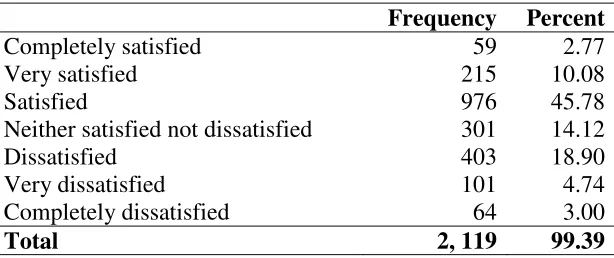
Table 2A The distribution of satisfaction over pay (CERS) Frequency Percent
Completely satisfied 59 2.77
Very satisfied 215 10.08
Satisfied 976 45.78
Neither satisfied not dissatisfied 301 14.12
Dissatisfied 403 18.90
Very dissatisfied 101 4.74
Completely dissatisfied 64 3.00
Total 2, 119 99.39
Note: Out of the 2,132 respondents in the dataset, for 1 respondent, the question was not applicable, and 12 respondents did not state their level of satisfaction with pay.
Table 2B The distribution of satisfaction over pay (WERS)
Frequency Percent
Very satisfied 970 3.43
Satisfied 9,011 31.91
Neither satisfied nor dissatisfied 6,568 23.26
Dissatisfied 7,885 27.92
Very dissatisfied 3,480 12.32
Total 27, 914 98.84
Table 3 (Panel A) The effect of HRM practices and perceived pay inequality on overall job satisfaction (CERS)
Variables P-values Completely satisfied
Very satisfied
Satisfied Neutral Dissatisfied
Work organisation
Teamwork 0.087 0.015 0.025 -0.018 -0.010 -0.012
Supervision
Performance
differentiated from others
0.075 0.017 0.030 -0.020 -0.012 -0.015
Employee can be seen all the time by supervisor or manager
0.006 -0.025 -0.041 0.030 0.017 0.020
Work progress can be visually assessed
0.041 0.019 0.031 -0.022 -0.013 -0.015
Employee involvement / voice
Information dissemination 0.545 -0.008 -0.012 0.009 0.005 0.006
Employee part of an improvement group
0.805 0.002 0.004 -0.003 -0.002 -0.002
Formal suggestion scheme 0.220 0.012 0.019 -0.014 -0.008 -0.009 Management holds
meetings were employees 0.000 0.049 0.091 -0.054 -0.037 -0.049
Recruitment & selection
Initial pay is negotiable 0.032 0.023 0.035 -0.027 -0.014 -0.017
Training & learning
Employer provided education or training
0.735 0.003 0.005 -0.004 -0.002 -0.002
Job requires on-going learning
0.000 0.052 0.109 -0.053 -0.044 -0.063
Seniority-based pay
Pay based on tenure 0.003 0.028 0.043 -0.033 -0.018 -0.021
Performance-related pay
Own performance 0.578 0.006 0.010 -0.008 -0.004 -0.005 Team performance 0.540 -0.008 -0.014 0.010 0.006 0.007 Company performance 0.258 -0.014 -0.023 0.016 0.009 0.011 Profit-share/share option 0.563 0.008 0.012 -0.009 -0.005 -0.006
Perception of relative income
Own pay is relatively low 0.000 -0.055 -0.101 0.061 0.041 0.054
Perceived workplace inequality
Pay gap is much too big 0.000 -0.049 -0.095 0.053 0.039 0.052 Pay gap is too big 0.000 -0.043 -0.079 0.049 0.032 0.042
Sample size = 1,518 Log likelihood = -1938.79
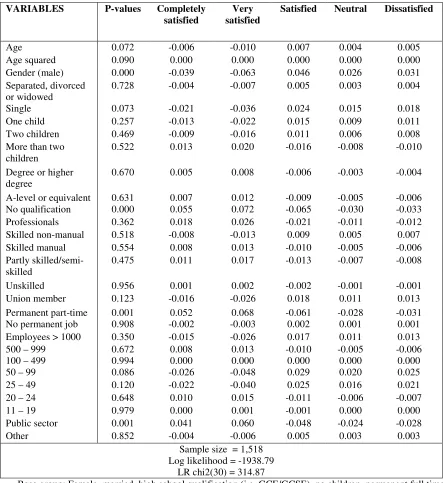
[image:35.595.82.538.112.632.2]Table 3 (Panel B) The effect of personal, job and firm characteristics on overall job satisfaction (CERS)
VARIABLES P-values Completely satisfied
Very satisfied
Satisfied Neutral Dissatisfied
Age 0.072 -0.006 -0.010 0.007 0.004 0.005 Age squared 0.090 0.000 0.000 0.000 0.000 0.000 Gender (male) 0.000 -0.039 -0.063 0.046 0.026 0.031 Separated, divorced
or widowed
0.728 -0.004 -0.007 0.005 0.003 0.004
Single 0.073 -0.021 -0.036 0.024 0.015 0.018 One child 0.257 -0.013 -0.022 0.015 0.009 0.011 Two children 0.469 -0.009 -0.016 0.011 0.006 0.008 More than two
children
0.522 0.013 0.020 -0.016 -0.008 -0.010
Degree or higher degree
0.670 0.005 0.008 -0.006 -0.003 -0.004
A-level or equivalent 0.631 0.007 0.012 -0.009 -0.005 -0.006 No qualification 0.000 0.055 0.072 -0.065 -0.030 -0.033 Professionals 0.362 0.018 0.026 -0.021 -0.011 -0.012 Skilled non-manual 0.518 -0.008 -0.013 0.009 0.005 0.007 Skilled manual 0.554 0.008 0.013 -0.010 -0.005 -0.006 Partly
skilled/semi-skilled
0.475 0.011 0.017 -0.013 -0.007 -0.008
Unskilled 0.956 0.001 0.002 -0.002 -0.001 -0.001 Union member 0.123 -0.016 -0.026 0.018 0.011 0.013 Permanent part-time 0.001 0.052 0.068 -0.061 -0.028 -0.031 No permanent job 0.908 -0.002 -0.003 0.002 0.001 0.001 Employees > 1000 0.350 -0.015 -0.026 0.017 0.011 0.013 500 – 999 0.672 0.008 0.013 -0.010 -0.005 -0.006 100 – 499 0.994 0.000 0.000 0.000 0.000 0.000 50 – 99 0.086 -0.026 -0.048 0.029 0.020 0.025 25 – 49 0.120 -0.022 -0.040 0.025 0.016 0.021 20 – 24 0.648 0.010 0.015 -0.011 -0.006 -0.007 11 – 19 0.979 0.000 0.001 -0.001 0.000 0.000 Public sector 0.001 0.041 0.060 -0.048 -0.024 -0.028 Other 0.852 -0.004 -0.006 0.005 0.003 0.003
Sample size = 1,518 Log likelihood = -1938.79
LR chi2(30) = 314.87
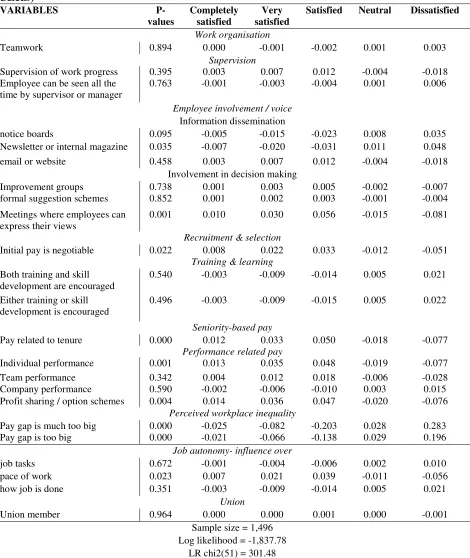
[image:36.595.61.504.109.592.2]Table 4 The effect of HRM practices and pay practices on satisfaction with pay (CERS)
VARIABLES
P-values
Completely satisfied
Very satisfied
Satisfied Neutral Dissatisfied
Work organisation
Teamwork 0.894 0.000 -0.001 -0.002 0.001 0.003
Supervision
Supervision of work progress 0.395 0.003 0.007 0.012 -0.004 -0.018 Employee can be seen all the
time by supervisor or manager
0.763 -0.001 -0.003 -0.004 0.001 0.006
Employee involvement / voice
Information dissemination
notice boards 0.095 -0.005 -0.015 -0.023 0.008 0.035 Newsletter or internal magazine 0.035 -0.007 -0.020 -0.031 0.011 0.048 email or website 0.458 0.003 0.007 0.012 -0.004 -0.018
Involvement in decision making
Improvement groups 0.738 0.001 0.003 0.005 -0.002 -0.007 formal suggestion schemes 0.852 0.001 0.002 0.003 -0.001 -0.004
Meetings where employees can express their views
0.001 0.010 0.030 0.056 -0.015 -0.081
Recruitment & selection
Initial pay is negotiable 0.022 0.008 0.022 0.033 -0.012 -0.051
Training & learning
Both training and skill development are encouraged
0.540 -0.003 -0.009 -0.014 0.005 0.021
Either training or skill development is encouraged
0.496 -0.003 -0.009 -0.015 0.005 0.022
Seniority-based pay
Pay related to tenure 0.000 0.012 0.033 0.050 -0.018 -0.077
Performance related pay
Individual performance 0.001 0.013 0.035 0.048 -0.019 -0.077 Team performance 0.342 0.004 0.012 0.018 -0.006 -0.028 Company performance 0.590 -0.002 -0.006 -0.010 0.003 0.015 Profit sharing / option schemes 0.004 0.014 0.036 0.047 -0.020 -0.076
Perceived workplace inequality
Pay gap is much too big 0.000 -0.025 -0.082 -0.203 0.028 0.283 Pay gap is too big 0.000 -0.021 -0.066 -0.138 0.029 0.196
Job autonomy- influence over
job tasks 0.672 -0.001 -0.004 -0.006 0.002 0.010 pace of work 0.023 0.007 0.021 0.039 -0.011 -0.056 how job is done 0.351 -0.003 -0.009 -0.014 0.005 0.021
Union
Union member 0.964 0.000 0.000 0.001 0.000 -0.001 Sample size = 1,496
Log likelihood = -1,837.78 LR chi2(51) = 301.48
The model also includes controls for age, gender, marital status, educational qualifications, occupation, contract type, firm size and sector.
Table 5 The effect of HRM practices and pay practices on satisfaction with pay (WERS)
VARIABLES P-values Very
satisfied
Satisfied Neutral* Dissatisfied Very Dissatisfied
Work organisation
Teamwork 0.876 0.000 -0.002 0.000 0.001 0.001
Supervision
Supervision of work progress 0.003 0.004 0.023 0.001 -0.015 -0.014
Employee involvement / voice
Information dissemination
Notice boards 0.015 -0.005 -0.027 -0.001 0.017 0.015 Newsletter or internal magazine 0.952 0.000 0.000 0.000 0.000 0.000 Email or website 0.000 0.007 0.038 0.003 -0.025 -0.023
Involvement in decision making
Improvement groups 0.367 0.001 0.006 0.000 -0.004 -0.004 Formal suggestion schemes 0.096 0.002 0.013 0.001 -0.008 -0.008 Meetings where employees can
express their views
0.000 0.007 0.045 0.005 -0.028 -0.029
Recruitment & selection
Management asks employees about pay
0.000 0.021 0.099 0.001 -0.066 -0.055
Training & learning
Both training and skill development are encouraged
0.000 0.028 0.138 0.004 -0.091 -0.080
Either training or skill development is encouraged
0.000 0.013 0.070 0.003 -0.046 -0.041
Seniority-based pay
Pay related to tenure 0.825 0.000 0.002 0.000 -0.001 -0.001
Performance-related pay
Performance related pay 0.160 0.002 0.011 0.001 -0.007 -0.007 Profit sharing/ option schemes 0.170 0.002 0.012 0.001 -0.008 -0.007
Perceived workplace inequality
Pay gap is small 0.775 0.002 0.010 0.001 -0.007 -0.006
Job autonomy - influence over
job tasks 0.000 0.008 0.045 0.004 -0.028 -0.028 pace of work 0.000 0.009 0.052 0.005 -0.033 -0.033 how job is done 0.004 0.004 0.022 0.002 -0.014 -0.014
Union
Union member 0.129 -0.002 -0.010 -0.001 0.006 0.006 Sample size = 19,890