Open Access
R E S E A R C H A R T I C L E
© 2010 Kerachian et al.; licensee BioMed Central Ltd. This is an open access article distributed under the terms of the Creative Commons Attribution License (http://creativecommons.org/licenses/by/2.0), which permits unrestricted use, distribution, and reproduction in any medium, provided the original work is properly cited.
Research article
New insights into the pathogenesis of
glucocorticoid-induced avascular necrosis:
microarray analysis of gene expression in a rat
model
Mohammad Amin Kerachian
1, Denis Cournoyer
1,2,3, Edward J Harvey
4, Terry Y Chow
3, Louis R Bégin
5, Ayoub Nahal
6and Chantal Séguin*
2,3Abstract
Introduction: Avascular necrosis of the femoral head (ANFH) occurs variably after exposure to corticosteroids. Microvascular thrombosis is a common pathological finding. Since systemic thrombophilia is only weakly linked with ANFH, we propose that microvascular vessel pathology may be more related to local endothelial dysfunction and femoral head apoptosis. Corticosteroid effects on the endothelium and resultant apoptosis have been reported. We hypothesize that corticosteroids contribute to a differential gene expression in the femoral head in rats with early ANFH.
Methods: Besides bone marrow necrosis, which is a common sign in ANFH and reported in the early stages, we include the presence of apoptosis in this study as a criterion for diagnosing early disease. Forty Wistar Kyoto (WKY) rats were randomized to either a corticosteroid-treated group or an age-matched control group for six months. After sacrifice, the femoral heads were examined for ANFH. Total mRNA was extracted from femoral heads. Affymetrix exon array (Santa Clara, CA, USA) was performed on 15 selected RNA samples. Validation methods included RT-PCR and immunohistochemistry (IHC).
Results: Although rat exon array demonstrated a significant upregulation of 51 genes (corticosteroid(+)/ANFH(+) VS control), alpha-2-macroglobulin (A2M) gene was particularly over-expressed. Results were validated by RT-PCR and IHC. Importantly, A2M is known to share vascular, osteogenic and cartilage functions relevant for ANFH.
Conclusions: The findings suggest that corticosteroid-induced ANFH in rats might be mediated by A2M. Investigation of A2M as a potential marker, and a treatment target, for early ANFH should be carried out.
Introduction
Avascular necrosis of the femoral head (ANFH) is a dis-abling and progressive condition in young patients, which leads to femoral head collapse and eventual total hip arthroplasty [1,2]. Numerous conditions have been impli-cated in ANFH [3,4]. Unfortunately, there is currently no biomarker to evaluate the activity status or the prognosis of the disease [5]. The pathogenesis of idiopathic ANFH is incompletely understood and therefore predictors of
disease initiation or progression are lacking. Two major limitations in the past have impeded the delineation of the pathophysiology: a lack of understanding of the inter-action between the disease and the coagulation abnor-malities and a lack of suitable animal models. Currently, amongst several pathogenic mechanisms, the vascular hypothesis, (or regional endothelial bed dysfunction) in which local microvascular thrombosis leads to a decrease in blood flow in the femoral head [6], has become more accepted. The fact that ANFH is sometimes seen in twins and in familial clusters suggests that genetic factors are also involved [7-10]. New evidence of increased incidence of ANFH in specific animal models provides further
evi-* Correspondence: [email protected]
2 Department of Medicine, Division of Haematology, McGill University Health Center (MUHC), 1650 Cedar Avenue, Montreal, QC H3G 1A4, Canada
dence of genetic susceptibility [11]. Although observed systemic thrombophilic and hypofibrinolytic coagulation abnormalities in patients with ANFH is increased in some studies compared to controls [12-17], the vast majority of ANFH patients do not demonstrate signifi-cant differences in the levels of thrombotic and fibrin-olytic factors [18,19].
The current pathophysiological model of ANFH postu-lates a multiple hit theory such that with an increasing number of risk factors the chance of ANFH increases [20]. Amongst the many risk factors, glucocorticosteroids (GCs) play the leading role in non-traumatic cases of ANFH [21]. Even when GCs are thought to be the cause a careful history is suggested to identify other risk factors. GCs are the mainstay of therapy in most inflammatory disorders and they are also included in most chemother-apy protocols. Therefore, ANFH is thus a potential major complication for large patient populations. Investigators have proposed both direct and indirect effects of GCs on cells. Indirect and direct mechanisms remain intimately related and often result in positive feedback loops to potentiate the disease processes. However, the direct effects, in particularly apoptosis, have recently been shown to be increasingly important. Suppression of osteoblast and osteoclast precursor production, increased apoptosis of osteoblasts and osteocytes, pro-longation of the lifespan of osteoclasts and apoptosis of endothelial cells (EC) are all direct effects of GC usage [22]. In the present study, we propose that the microvas-cular events could be more related to endothelial dys-function and diffuse femoral head apoptosis. Based on reported data on corticosteroid effects on the endothe-lium and their role in apoptosis, we hypothesized that corticosteroids contribute to a differential gene expres-sion in rats with early ANFH.
In a previous in vivo pilot study, an inbred rat strain susceptible to develop GC-induced ANFH was identified. Here we employed gene profile analysis using this suscep-tible rat strain in order to study the pathogenesis at an early disease stage. Knowledge of the gene expression pattern and the events that contribute to the genesis and progression of ANFH in this rat model could provide a better understanding of the pathogenesis in humans.
Materials and methods
Experimental animals and their maintenance
Forty Wistar Kyoto (WKY) rats (ages four weeks old) were purchased from Charles River Laboratories (Pointe-Claire, QC, Canada). The rats were tagged and housed in plastic cages (two to four animals per cage) under stan-dard laboratory conditions with a 12-hour dark/12-hour light cycle, a constant temperature of 20°C, and humidity of 48%. Food and water were provided ad libitum with a standard rodent diet. The weight of the rats was followed
before and after the implant of a prednisone pellet for the first three consecutive weeks and then every month until the end of the experiment. All experiments were con-ducted under an animal protocol approved by the McGill Animal Care Department.
Glucocorticoid administration
Slow-release prednisone pellets (Innovative Research of America, Sarasota, FL, USA) were implanted subcutane-ously into 24 Wistar Kyoto rats (12 males and 12 females rats) at the age of five weeks. Each pellet was implanted beneath the skin on the lateral side of the neck by surgi-cally making an incision and developing a pocket about 2 cm beyond the incision site. The pellet was placed in the pocket and the incision was sutured. Based on the manu-facturer's instructions the pellet releases a constant dose of the drug subcutaneously. To maintain a constant dos-age during the six-month period of the experiment, sec-ond and third pellet implantations were performed using the same procedure at two and three months respectively. The average dose release from the pellet was equivalent to 1.5 mg/kg/day for the period of six months. The dose of corticosteroids and the duration of treatment were chosen based on clinical experience. For the control group, 16 age-matched Wistar Kyoto (eight males and eight females) rats received placebo pellets (Innovative Research of America) introduced through the same surgi-cal technique.
Histologic examination
The rats were sacrificed with an overdose of ketamine/ xylazine at the age of 30 weeks. Tissue samples were obtained from the proximal femur containing the femoral head. Some samples were put in RNALater (QIAGEN Inc., Mississauga, ON, Canada) for RNA extraction and some samples were fixed for histological examination. Bone samples were fixed in 10% neutral buffered forma-lin, then decalcified in 4% ethylenediamine tetraacetic acid (pH 7.2) (Sigma-Aldrich, St Louis, MO, USA). The specimens were processed routinely and embedded in paraffin. Tissue samples were sectioned parasagitally with a rotary microtome at four to five microns thickness, stained with hematoxylin and eosin and evaluated by light microscopy.
necrosis, and disappearance of marrow cells as well as the nuclear disappearance and hypochromasia of trabecular osteocytes as early signs of ANFH [24]. Early signs of ANFH were also considered when apoptosis occurred in the osteocytes and osteoblasts (Figure 1). Positivity for apoptosis was defined by the authors as more than three osteocytes and/or osteoblasts recognized in a high mag-nification field based on previous studies [25,26]. The experiments were performed in triplicate (×200) (Table 1).
Measurement of apoptosis in undecalcified bone section
Terminal dexoynucleotidyl transferase (TdT) mediated deoxyuridine triphosphate biotin nick end labeling (TUNEL) was used to detect fragmented DNA known to
be associated with apoptotic cell death. TUNEL assay on paraffin-embedded tissue sections was performed with the DeadEnd Colorimetric TUNEL System (Promega, Madison, WI, USA) as recommended by the manufac-turer. Briefly, after deparaffinizing and permibilizing the tissue sections with proteinase K, the slides were incu-bated with the reaction mixture containing recombinant TdT and biotinylated nucleotide for one hour at 37°C inside a humidified chamber. Labelled DNA was visual-ized with horseradish-peroxidase-labelled streptavidin using 3,3'-diaminobenzidine (DAB) as the chromogen. DNase I -treated tissue sections were used as positive controls. Negative controls for the study were sample slides processed using the same procedure but not treated with TdT enzyme. All the slides were
counter-Table 1: Histological findings of avascular necrosis of the femoral head (ANFH) in Wistar Kyoto rats
Sex Treatment No. of rats OA/GC OEL EO LO
Male Placebo 6 2 1 1 1
Male Prednisone 7 5 1 4 1
Female Placebo 5 1 0 1 0
Female Prednisone 12 3 2 1 2
[image:3.595.59.540.96.294.2]The histological findings of an established (late stage) ANFH were defined as empty lacunae. Early signs of ANFH was considered when apoptosis occurred in more than three osteocytes and/or osteoblasts recognized in a high magnification field (×200); EO, number of early stages of osteonecrosis; LO, number of late stages of osteonecrosis; OA/GC, osteocyte apoptosis and/or ghost cell (a denucleated cell with an unstained center where the nucleus has been); OEL, osteocyte empty lacunae.
[image:3.595.55.538.618.701.2]stained with 0.5% methyl green solution (0.5 g ethyl violet (Sigma-Aldrich) in 100 ml sodium acetate buffer, 0.1 M and pH.4.2), cleared, mounted and evaluated by light microscopy.
RNA extraction from rat bone specimens
Total RNA was extracted by an innovative method con-sisting of a combination of TRIzol® Reagent (Invitrogen, Carlsbad, CA, USA) and RNeasy Mini kit (QIAGEN Inc.) followed by DNase I treatment (QIAGEN Inc.). Briefly, femoral head specimens were removed from RNALater and washed thoroughly with diethyl pyrocarbonate (DEPC) -treated phosphate buffer solution (PBS). Femo-ral head specimens were placed in liquid nitrogen. The specimens were ground to a fine powder with a porcelain mortar and pestle. TRIzol®1 ml was then added to each ground femoral head specimen. After vortexing for one minute, the homogenized specimen was incubated for five minutes at room temperature (RT) and 0.2 ml Chlo-roform (Sigma-Aldrich) was added per 1 ml of TRIzol®. After vortex use of 15 seconds the samples were incu-bated for three minutes at room temperature. The sam-ples were then centrifuged at 12,000 × g for 15 minutes at 4°C. The aqueous phase was removed from each sample and one volume of ethanol was added to it and mixed thoroughly. Up to 700 μl of the sample including any pre-cipitate that may have formed was transferred into an RNeasy Mini Spin Column. The column was then pro-cessed according to the RNeasy Mini kit manufacturer instruction. Any Genomic DNA contamination was removed by treating the samples with DNase I. The RNA quality was assessed using RNA 6000 NanoChips with the Agilent 2100 Bioanalyzer (Agilent, Wilmington, DE, USA).
Affymetrix exon arrays
Affymetrix GeneChip®Rat Exon 1.0 ST array interrogat-ing over 850,000 exon clusters within the known and pre-dicted transcribed regions of the entire genome and about one million probe sets was used. Affymetrix exon array was performed on 15 RNA samples of GC-treated and non-treated rats divided in three groups based on histological evaluation: Group 1- Placebo/ANFH(-); Group 2- treated/ANFH(+) and Group 3- GC-treated/ANFH(-), each group consisting of five samples. Biotin-labelled targets for the microarray experiment were prepared using 1 μg of total RNA. Ribosomal RNA was removed with the RiboMinus Human/Mouse Tran-scriptome Isolation Kit (Invitrogen, Eugene, Oregon, USA) and cDNA was synthesized using the GeneChip WT (Whole Transcript) Sense Target Labeling and Con-trol Reagents kit as described by the manufacturer (Affymetrix, Santa Clara, CA, USA). The sense cDNA was then fragmented by uracil DNA glycosylase and
apurinic/apyrimidic endonuclease-1 and biotin-labeled with terminal deoxynucleotidyl transferase using the GeneChip WT Terminal labeling kit (Affymetrix). Hybridization was performed using five micrograms of biotinylated target, which was incubated with the GeneChip Rat Exon 1.0 ST array (Affymetrix) at 45°C for 16 to 20 h. After hybridization, non-specifically bound material was removed by washing and specifically bound target was detected using the GeneChip Hybridization, Wash and Stain kit, and the GeneChip Fluidics Station 450 (Affymetrix). The arrays were scanned using the GeneChip Scanner 3000 7G (Affymetrix). We used Affymetrix Power tools (Affymetrix), R and in-house built Perl scripts to filter the background noise based on the detection above background results that is the detec-tion metric generated by comparing Perfect Match probes to a distribution of background probes. Rat exon array data was analyzed by Dr Daniel Bird from Creative Biomics CD Inc. (Shirley, NY, USA): data were normal-ized based on the Iter-PLIER algorithm by using Affyme-trix Power tools, R and in-house built Perl scripts. The genes with low signal (less than 100) were removed from the study. The differentially expressed genes were detected between three groups (G2 vs G1, G3 vs G2, and G3 vs G1) (P < 0.05, Fold Change (FC) > 1.5) using in house built R script, infer with t-test and adjusted with
Benjamini and Hochberg FDR method [27].
Real-Time Polymerase Chain Reaction (SybrGreen RT-PCR)
Real-time PCR was carried out according to the protocol provided by the manufacturer for the QuantiTect SYBR®Green RT-PCR kit (QIAGEN Inc.). QuantiTect Primer Assays (Rn_A2m_1_SG, Rn_Col2a1_1_SG, Rn_Mia1_1_SG, Rn_Actb_1_SG) were provided by QIA-GEN Inc and a thermal cycler (Prism 7900, Applied Bio-systems, Foster City, CA, USA) was used. The reaction was set up in 10 μl final volume applying the following conditions: cycling 50°C (30 minutes), 95°C (15 minutes) and for 45 cycles the conditions were 94°C (15 sec), 55°C (30 sec) and 72°C (30 sec). For the relative quantification of gene expression, the comparative threshold cycle (ΔCt) method was employed and normalized against β-Actin rRNA, which was measured by the same method. All PCR reactions were performed in triplicate. Control reac-tions were set up lacking reverse transcriptase to assess the level of contaminating genomic DNA.
Immunohistochemical (IHC) study
in 3% H2O2 in distilled water for five minutes. The slides were washed in several changes of distilled water. Antigen was retrieved by incubating the slides in Digest-All™ 3 (Invitrogen Immunodetection, Carlsbad, CA, USA) for 10 minutes. After several washes with PBS the slides were stained using R.T.U. Vectastain®Universal Quick kit (Vec-tor Labora(Vec-tories, Inc., Burlingame, CA, USA) according to the manufacturer's instructions. Several primary anti-bodies were used: 1:200 dilution of mouse anti-rat α-2-macroglobulin globulin monoclonal antibody (clone 129736, R&D Systems, Minneapolis, MN, USA); predi-luted mouse anti-rat collagen type II alpha 1 monoclonal antibody (Abcam Inc, Cambridge, MA, USA) or 1:50 dilution of rabbit anti-rat melanoma inhibitory activity (MIA) polyclonal antibody (Santa Cruz Biotechnology, Santa Cruz, CA, USA). According to the manufacturer's instructions the secondary antibody is a prediluted bioti-nylated antibody manufactured in horse, which recog-nizes rabbit IgG, mouse IgG and goat IgG. The slides were counterstained with 0.5% methyl green solution as described before.
Statistical analysis
Data reported on microarray results utilized in-house Perl scripts with t-test and adjusted with B-H FDR method to examine differentially expressed genes between two groups (P < 0.05, Fold Change (FC) > 1.5). RT-PCR results were given as the mean ± standard error of the mean (SEM). Comparison between groups was made with Student's t-test. For small size samples Mann-Whitney U test was used since normal distribution of data was not assumed. Differences were considered sig-nificant at P-values less than 0.05. Principle component analysis (PCA) was performed using R package to provide a global view of how the various sample groups were related.
Results
Histological and apoptosis findings
Histological findings displayed normal, early and late stages of ANFH based on the presence or absence of osteocytes in the lacunaes (Figure 1a). The use of the TUNEL assay to detect apoptosis showed apoptotic osteocytes were located in the osteonecrotic samples without features of inflammation and visible necrosis, such as hyperemia, round cell infiltration, or lipid cyst formation. There was no appositional bone formation associated with granulation tissue around dead bone in keeping with the early stages of ANFH (Figure 1b, IV-X). When the same TUNEL reaction was performed on con-trol tissue (without prior digestion with DNase), a fewer number of cells (one or two) were labeled (Figure 1b, I-III).
Microarray analysis
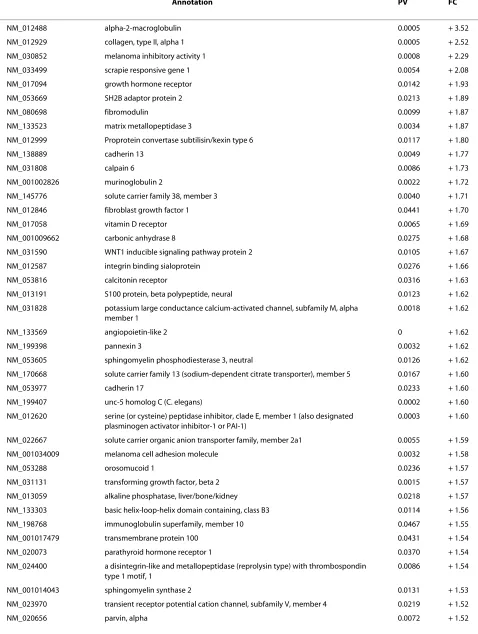
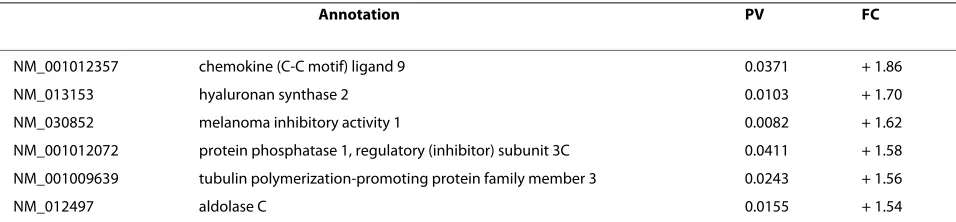
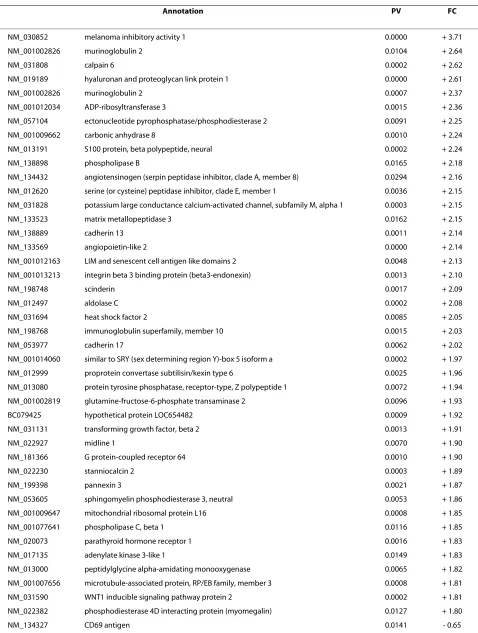
In the Affymetrix analysis, G2 replicates were compared with G1 and G3, separately, and G3 replicates were com-pared with G1 to generate a list of differentially expressed genes. The results were analyzed by a defined set of crite-ria in which the altered expression of a gene must have at least a change of ± 1.5-fold (FC = fold change) and a P -value less than 0.05. These criteria resulted in the identifi-cation of 51 genes with significant modulation in G2 compared with G1 and six genes with significant modula-tion for G3 to G2 (Tables 2 and 3). They also identified 229 genes in G3 versus G1 (Table 4). In this table, only the genes with a change of ± 1.8-fold (FC = fold change) are represented due to the exhaustive list of genes. Although rat exon array demonstrated a significant upregulation of 51 genes when comparing G2 to G1, alpha-2-macroglob-ulin gene was particularly found to be overexpressed when comparing steroid-treated Wistar Kyoto rats which had developed ANFH (G2) to placebo rats (G1) (FC = 3.52, P = 0.0005). Collagen type II alpha-1 (Col2A1) and
Melanoma Inhibitory Activity-1 (MIA) genes were also found to be significantly overexpressed by exon array analysis (FC = 2.52, P = 0.0005 and FC = 2.29, P = 0.0008 respectively). The downregulation of some genes was not considered significant in terms of fold change compared to the upregulated genes; therefore we were able to focus on the genes that were upregulated. Significantly modu-lated genes were categorized into clusters according to their biological functions using DAVID, a functional annotation tool provided by National Institute of Allergy and Infectious Diseases-NIH. Modulated genes were grouped mainly into clusters of skeletal development, ossification and bone remodelling. Other functional classes significantly represented in the steroid-induced avascular necrosis included response to steroid stimulus response, apoptosis, blood vessel morphogenesis, vascu-lature development, cell growth, proliferation and differ-entiation associated genes. In comparison of G3 versus G1, A2M and Col2A1 were not significantly overex-pressed whereas MIA was found to be the most up-regu-lated gene in that group comparison (FC = 3.71, P = 0.00).
Real time PCR Verification of GeneChip Data
Table 2: Differentially expressed genes from comparing Group 2 (G2) versus Group 1 (G1)
Annotation PV FC
NM_012488 alpha-2-macroglobulin 0.0005 + 3.52
NM_012929 collagen, type II, alpha 1 0.0005 + 2.52
NM_030852 melanoma inhibitory activity 1 0.0008 + 2.29
NM_033499 scrapie responsive gene 1 0.0054 + 2.08
NM_017094 growth hormone receptor 0.0142 + 1.93
NM_053669 SH2B adaptor protein 2 0.0213 + 1.89
NM_080698 fibromodulin 0.0099 + 1.87
NM_133523 matrix metallopeptidase 3 0.0034 + 1.87
NM_012999 Proprotein convertase subtilisin/kexin type 6 0.0117 + 1.80
NM_138889 cadherin 13 0.0049 + 1.77
NM_031808 calpain 6 0.0086 + 1.73
NM_001002826 murinoglobulin 2 0.0022 + 1.72
NM_145776 solute carrier family 38, member 3 0.0040 + 1.71
NM_012846 fibroblast growth factor 1 0.0441 + 1.70
NM_017058 vitamin D receptor 0.0065 + 1.69
NM_001009662 carbonic anhydrase 8 0.0275 + 1.68
NM_031590 WNT1 inducible signaling pathway protein 2 0.0105 + 1.67
NM_012587 integrin binding sialoprotein 0.0276 + 1.66
NM_053816 calcitonin receptor 0.0316 + 1.63
NM_013191 S100 protein, beta polypeptide, neural 0.0123 + 1.62
NM_031828 potassium large conductance calcium-activated channel, subfamily M, alpha member 1
0.0018 + 1.62
NM_133569 angiopoietin-like 2 0 + 1.62
NM_199398 pannexin 3 0.0032 + 1.62
NM_053605 sphingomyelin phosphodiesterase 3, neutral 0.0126 + 1.62
NM_170668 solute carrier family 13 (sodium-dependent citrate transporter), member 5 0.0167 + 1.60
NM_053977 cadherin 17 0.0233 + 1.60
NM_199407 unc-5 homolog C (C. elegans) 0.0002 + 1.60
NM_012620 serine (or cysteine) peptidase inhibitor, clade E, member 1 (also designated plasminogen activator inhibitor-1 or PAI-1)
0.0003 + 1.60
NM_022667 solute carrier organic anion transporter family, member 2a1 0.0055 + 1.59
NM_001034009 melanoma cell adhesion molecule 0.0032 + 1.58
NM_053288 orosomucoid 1 0.0236 + 1.57
NM_031131 transforming growth factor, beta 2 0.0015 + 1.57
NM_013059 alkaline phosphatase, liver/bone/kidney 0.0218 + 1.57
NM_133303 basic helix-loop-helix domain containing, class B3 0.0114 + 1.56
NM_198768 immunoglobulin superfamily, member 10 0.0467 + 1.55
NM_001017479 transmembrane protein 100 0.0431 + 1.54
NM_020073 parathyroid hormone receptor 1 0.0370 + 1.54
NM_024400 a disintegrin-like and metallopeptidase (reprolysin type) with thrombospondin type 1 motif, 1
0.0086 + 1.54
NM_001014043 sphingomyelin synthase 2 0.0131 + 1.53
NM_023970 transient receptor potential cation channel, subfamily V, member 4 0.0219 + 1.52
array and 5.85 with RT-PCR). Variations in fold change values between GeneChip and real time PCR might have been due to different methods of normalization and spec-ificity/sensitivity of each method but the trends were the same for the two methods (differences with P-values: 0.005 to 0.0009, Table 5).
Immunohistochemistry
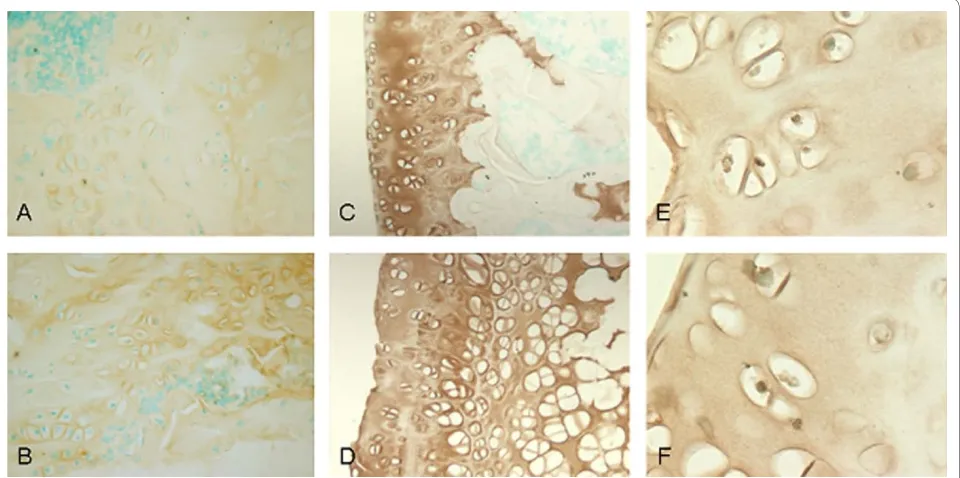
We performed immunohistochemistry staining on the three candidate genes which showed the highest upregu-lation, A2M, Col2A1 and MIA, when comparing G2 to G1. Protein expression of A2M was shown to be increased in rats induced with steroids and developing ANFH (Group 2) as compared to the placebo rats without ANFH (Group 1) thus correlating with the mRNA expression levels from GeneChip analysis and RT-PCR method (Figure 2). Notably, immunohistochemical find-ings for the two other genes of interest (COL2A1 and MIA) failed to show enhanced protein expression.
Discussion
The early events in the pathogenesis of ANFH are incom-pletely understood due to a typically late diagnosis after fracture and collapse of the femoral head. Besides bone marrow changes, evidence has shown that apoptosis is involved in the early stages of steroid-induced
osteone-crosis [26]. Weinstein et al. reported that the number of apoptotic bone cells increased significantly in mice after steroid administration [28]. Recent studies have shown apoptotic cells in clinical and animal models of GC-induced ANFH [26,29,30].
In previous studies, we characterized an inbred rat (WKY) susceptible to develop steroid-induced osteone-crosis [31]. It is possible that this strain of rats has geneti-cally predisposing factors to develop ANFH and additional risk exposures (GC) will facilitate the develop-ment of the disease. In our animal model, prednisone administration enhanced the incidence of the disease in up to 75% (6/8) of the male WKY rats, suggesting it is a suitable model. In the literature, 5 to 15 week-old rats have been used to study non-traumatic ANFH [23,26,32]. In the current study, WKY rats started to receive continu-ous steroid dosage released from the pellets at the age of five weeks for 25 weeks. Harvest at six months showed classical histological signs of early ANFH.
For the Affymetrix GeneChip findings, comparison of G2 versus G1 indicated that multiple pathological reac-tions occurred. According to the functional annotation tool (DAVID), modulated genes in the comparison of G2 and G1 (Table 2) were grouped mainly into skeletal devel-opment, ossification and bone remodelling. Functional clusters of genes were significantly represented by steroid
NM_175578 regulator of calcineurin 2 0.0390 + 1.52
NM_031655 latexin 0.0080 + 1.52
NM_001013218 receptor accessory protein 6 0.0045 + 1.52
NM_001005562 cAMP responsive element binding protein 3-like 1 0.0376 + 1.50
NM_001017496 chemokine (C-X-C motif) ligand 13 0.0140 - 0.55
ENSRNOT00000060250 similar to T-cell receptor alpha chain precursor V and C regions (TRA29) 0.0154 - 0.64
NM_203410 interferon, alpha-inducible protein 27-like 0.0325 - 0.64
NM_001008836 RT1-CE13//RT1 class I, CE13 0.0157 - 0.64
NM_001002280 MAS-related GPR, member X2 0.0021 - 0.66
NM_001008855 RT1 class Ib gene, H2-TL-like, grc region (N3) 0.0350 - 0.67
[image:7.595.62.541.112.254.2](+), positive regulation, (-), negative regulation; FC, fold change; V, P-value.
Table 2: Differentially expressed genes from comparing Group 2 (G2) versus Group 1 (G1) (Continued)
Table 3: Differentially expressed genes from comparing group 3 (G3) versus 2 (G2)
Annotation PV FC
NM_001012357 chemokine (C-C motif) ligand 9 0.0371 + 1.86
NM_013153 hyaluronan synthase 2 0.0103 + 1.70
NM_030852 melanoma inhibitory activity 1 0.0082 + 1.62
NM_001012072 protein phosphatase 1, regulatory (inhibitor) subunit 3C 0.0411 + 1.58
NM_001009639 tubulin polymerization-promoting protein family member 3 0.0243 + 1.56
NM_012497 aldolase C 0.0155 + 1.54
[image:7.595.60.538.621.732.2]Table 4: Differentially expressed genes from comparing Group 3 (G3) versus 1 (G1). Only genes with fold change above 1.8 have been shown
Annotation PV FC
NM_030852 melanoma inhibitory activity 1 0.0000 + 3.71
NM_001002826 murinoglobulin 2 0.0104 + 2.64
NM_031808 calpain 6 0.0002 + 2.62
NM_019189 hyaluronan and proteoglycan link protein 1 0.0000 + 2.61
NM_001002826 murinoglobulin 2 0.0007 + 2.37
NM_001012034 ADP-ribosyltransferase 3 0.0015 + 2.36
NM_057104 ectonucleotide pyrophosphatase/phosphodiesterase 2 0.0091 + 2.25
NM_001009662 carbonic anhydrase 8 0.0010 + 2.24
NM_013191 S100 protein, beta polypeptide, neural 0.0002 + 2.24
NM_138898 phospholipase B 0.0165 + 2.18
NM_134432 angiotensinogen (serpin peptidase inhibitor, clade A, member 8) 0.0294 + 2.16
NM_012620 serine (or cysteine) peptidase inhibitor, clade E, member 1 0.0036 + 2.15
NM_031828 potassium large conductance calcium-activated channel, subfamily M, alpha 1 0.0003 + 2.15
NM_133523 matrix metallopeptidase 3 0.0162 + 2.15
NM_138889 cadherin 13 0.0011 + 2.14
NM_133569 angiopoietin-like 2 0.0000 + 2.14
NM_001012163 LIM and senescent cell antigen like domains 2 0.0048 + 2.13
NM_001013213 integrin beta 3 binding protein (beta3-endonexin) 0.0013 + 2.10
NM_198748 scinderin 0.0017 + 2.09
NM_012497 aldolase C 0.0002 + 2.08
NM_031694 heat shock factor 2 0.0085 + 2.05
NM_198768 immunoglobulin superfamily, member 10 0.0015 + 2.03
NM_053977 cadherin 17 0.0062 + 2.02
NM_001014060 similar to SRY (sex determining region Y)-box 5 isoform a 0.0002 + 1.97
NM_012999 proprotein convertase subtilisin/kexin type 6 0.0025 + 1.96
NM_013080 protein tyrosine phosphatase, receptor-type, Z polypeptide 1 0.0072 + 1.94
NM_001002819 glutamine-fructose-6-phosphate transaminase 2 0.0096 + 1.93
BC079425 hypothetical protein LOC654482 0.0009 + 1.92
NM_031131 transforming growth factor, beta 2 0.0013 + 1.91
NM_022927 midline 1 0.0070 + 1.90
NM_181366 G protein-coupled receptor 64 0.0010 + 1.90
NM_022230 stanniocalcin 2 0.0003 + 1.89
NM_199398 pannexin 3 0.0021 + 1.87
NM_053605 sphingomyelin phosphodiesterase 3, neutral 0.0053 + 1.86
NM_001009647 mitochondrial ribosomal protein L16 0.0008 + 1.85
NM_001077641 phospholipase C, beta 1 0.0116 + 1.85
NM_020073 parathyroid hormone receptor 1 0.0016 + 1.83
NM_017135 adenylate kinase 3-like 1 0.0149 + 1.83
NM_013000 peptidylglycine alpha-amidating monooxygenase 0.0065 + 1.82
NM_001007656 microtubule-associated protein, RP/EB family, member 3 0.0008 + 1.81
NM_031590 WNT1 inducible signaling pathway protein 2 0.0002 + 1.81
NM_022382 phosphodiesterase 4D interacting protein (myomegalin) 0.0127 + 1.80
stimulus response, apoptosis, blood vessel morphogene-sis, vasculature development, coagulation-related, cell growth, proliferation and differentiation associated genes.
The expression of steroid stimulus response genes (A2M, alkaline phosphatase, tissue-nonspecific, trans-forming growth factor beta 2 and potassium large conduc-tance calcium-activated channel, subfamily m, alpha member 1) were, as predicted, altered significantly. Previ-ous in vivo and in vitro models as well as clinical studies showed that steroids induce apoptosis in osteoblasts and osteocytes [30,33-35]. Amongst the 51 differentially regu-lated genes identified in our gene array analysis (Table 2), five genes (S100 protein-beta polypeptide, transforming growth factor-beta 2, vitamin D receptor, unc-5 homolog c (C. elegans) and growth hormone receptor) are in fact components of the apoptosis pathway.
The process of apoptosis can be directly induced by ste-roids but is also related to thrombosis in the blood vessels of the femoral head. In fact, the vascular hypothesis (regional endothelial bed dysfunction) appears to be rele-vant in the pathogenesis of ANFH. Damage or activation of femoral head endothelial cells results in abnormal blood coagulation and thrombi formation [36]. Due to heterogeneity of the phenotype expression between endothelial cells in the body, a local endothelial cell
dys-function can occur where the femoral head endothelial cells react differently to the ANFH risk factors (GCs) than other endothelial cells in the body. In keeping with the theory of endothelial cell activation having a role in ANFH, coagulation-related gene expression in particular
serine (or cysteine) peptidase inhibitor, clade E, member 1
also named plasminogen activator inhibitor 1 (PAI-1), a serine protease inhibitor that is synthesized and released by endothelial cells in the blood, was shown to be signifi-cantly over-expressed in this study. An increase in PAI-1
suppresses the generation of plasmin resulting in hypofi-brinolysis and a relative hypercoagulable state [1]. Decreased fibrinolytic activity, which may be a conse-quence of increased PAI-1, has been described in patients with ANFH [37], although a few studies have reported that there were no significant differences in the levels of thrombotic and fibrinolytic factors [18,19].
Similarly, our findings demonstrate that several genes involved in the dynamic remodelling structure of the femoral head are also shown to be differentially expressed in ANFH (Table 2). Clinically this may be relevant in that if the balance between degradation and repair (bone remodelling) becomes shifted to degradation and bone loss by the effect of GC, a failure of structural integrity at the subchondral region of bone with collapse could occur.
NM_019295 CD5 antigen 0.0114 - 0.65
NM_013121 CD28 antigen 0.0136 - 0.65
NM_031147 cold inducible RNA binding protein 0.0025 - 0.64
NM_001012226 signal transducer and activator of transcription 4 0.0246 - 0.63
NM_001008855 RT1 class Ib gene, H2-TL-like, grc region (N3) 0.0005 - 0.60
NM_001012461 deoxynucleotidyltransferase, terminal 0.0140 - 0.59
NM_173096 myxovirus (influenza virus) resistance 1 0.0186 - 0.59
NM_001009680 2 ' -5 ' oligoadenylate synthetase 1I 0.0039 - 0.58
NM_001008836 RT1 class I, CE13 0.0111 - 0.56
NM_203410 interferon, alpha-inducible protein 27-like 0.0018 - 0.51
[image:9.595.62.541.123.267.2](+), positive regulation, (-), negative regulation; FC, fold change; PV, P-value.
Table 4: Differentially expressed genes from comparing Group 3 (G3) versus 1 (G1). Only genes with fold change above 1.8 have been shown (Continued)
Table 5: Correlation of gene expression comparing Groups 2 (G2) and 1 (G1) as assessed by microarray and real time PCR (P
< 0.005 for all genes)
Annotation Fold Change of a signal
Microarray Real time PCR
NM_012488 alpha-2-macroglobulin 3.52 5.85
NM_012929 collagen, type II, alpha 1 2.52 4.42
[image:9.595.56.538.654.747.2]In the present study, results showed A2M gene expres-sion to be the most significantly upregulated gene when comparing G2 to G1. Correlation was obtained at the microarray, RT-PCR as well as the protein level as dem-onstrated by IHC study results. Most importantly, A2M
was not significantly upregulated when comparing G3 to G1. A2M is a plasma-derived matrix metalloproteinase inhibitor which obstructs cartilage degradation induced by matrix metalloproteinases [38]. The literature sup-ports the role of corticosteroids in the modulation of
A2M [39,40]. In both reports, corticosteroids were shown to enhance A2M levels. A2M is reported as being impli-cated in cartilage degradation [41], and as an osteogenic growth peptide (OGP) - binding protein. Activated A2M
may thus participate in the removal of OGP from the sys-tem [42]. Additional reports suggest inhibition of BMP-1 (bone morphogenic protein-1) by A2M [43]. A2M has been identified on the luminal surface of endothelial cells in sections of normal human arteries and veins [44]. A2M
has also been implicated in hemostasis as a regulator of thrombin [45] and in the development of thromboembo-lism in children [46]. Together, all these findings suggest that A2M shares haemostatic, cartilaginous and osteo-genic properties and may have a potential role in the development of early steroid-induced ANFH. Determina-tion of whether A2M over-expression in our study is either the result or the cause of the apoptosis found in our rats developing early ANFH following administration of steroids, will require further study.
Two other genes of interest, Col2A1 and MIA, were also shown to be over-expressed significantly by microarray analysis and RT-PCR results but immunohistochemical study failed to show an increased cell surface expression of these genes.
[image:10.595.59.539.97.336.2]parison G3 to G2, and in group comparison G3 to G1 is consistent with the phenotypic absence of early ANFH in rats representing G3.
Conclusions
In summary, it is postulated that multiple pathological reactions occur during ANFH. Genetic predisposition contributes to the development of ANFH. There is nor-mally a balance between degenerative and regenerative molecules in the bone environment of the femoral head. GCs may trigger a degenerative process as well as inhibit the repair. In this study, several molecules are signifi-cantly upregulated and could be involved in the patho-genesis of ANFH. However, only A2M gene over-expression has been consistently found at the microarray, RT-PCR and protein level for the three genes showing the most significant upregulation. Besides, A2M was not sig-nificantly upregulated in rats administered steroids but without developing the disease. Thus, A2M seems to be a possible biomarker more of ANFH itself (induced by ste-roids) than a marker of steroids alone. It remains to be determined in which specific pathway (although likely in the endothelial cell activation and/or the apoptosis path-way) and at which level, the effect of this gene occurs in corticosteroid-induced ANFH. Identifying its role within a specific pathway will likely lead to a better understand-ing of the molecular events that follow the administration of corticosteroids and subsequent irreversible necrosis and bone collapse. Obviously, investigation of the use of
A2M as a potential marker for the early warning of ANFH should be carried out.
ArrayExpress accession code: [E-MEXP-2751].
Abbreviations
A2M: alpha-2-macroglobulin; ANFH: avascular necrosis of the femoral head; BMP-1: bone morphogenic protein-1; Col2A1: collagen type II alpha-1; ΔCt: comparative threshold cycle; DAB: 3:3'-diaminobenzidine; DEPC: diethyl pyro-carbonate; EC: endothelial cells; FC: fold change; G1: group 1; G2: group 2; G3: group 3; GCs: glucocorticosteroids; IHC: immunohistochemistry; MIA: Mela-noma Inhibitory Activity-1; OGP: osteogenic growth peptide; PAI-1: plasmino-gen activator inhibitor 1; PCA: principle component analysis; PBS: phosphate buffer solution; RT: room temperature; RT-PCR: real-time polymerase chain reaction; SEM: standard error of the mean; TDT: terminal dexoynucleotidyl transferase; TUNEL: terminal dexoynucleotidyl transferase mediated deoxyuri-dine triphosphate biotin nick end labelling; WKY: Wistar Kyoto.
Competing interests
CS has applied for a provisional patent for A2M (α-2-Macroglobulin) as a diag-nostic assay for Avascular Necrosis of the Femoral Head. The other authors declare that they have no competing interests.
Authors' contributions
All authors participated in the study. MAK made a major contribution to the writing of the manuscript's first draft, and conducted the experiments involved in the study. CS made a major contribution to the design of the study, data interpretation and scientific revision of the manuscript. DC, EJH and TYC made equal contributions to data interpretation and scientific revision of the manu-script. EJH made a major contribution to the editing and grammar of the man-uscript. LRB and AN made major contributions to the histological experiments involved in the study. All authors participated in the manuscript preparation and revision. All authors read and approved the final manuscript.
Acknowledgements
This work has been supported by the Montreal General Hospital Foundation (CS), by the generous research award from Mr John D. Miller (CS) and support from FRSQ Chercheur-Boursier Clinicien Senior (EJH). We thank Dr André Pon-ton at McGill University and Genome Quebec Innovation Centre for perform-ing the GeneChip technology. We thank Dr Daniel Bird from Creative Biomics CD Inc. for performing the rat exon array analysis.
Author Details
1Department of Human Genetics, McGill University Health Center (MUHC), 1650 Cedar Avenue, Montreal, QC H3G 1A4, Canada, 2Department of Medicine, Division of Haematology, McGill University Health Center (MUHC), 1650 Cedar Avenue, Montreal, QC H3G 1A4, Canada, 3Department of Oncology, McGill University Health Center (MUHC), 1650 Cedar Avenue, Montreal, QC H3G 1A4, Canada, 4Division of Orthopaedic Surgery, McGill University Health Center (MUHC), 1650 Cedar Avenue, Montreal, QC H3G 1A4, Canada, 5Division of Anatomic Pathology, Hôpital du Sacré-Coeur de Montréal, 5400 Gouin Blvd, Montreal, QC H4J 1C5, Canada and 6Department of Pathology, McGill University Health Center (MUHC), 1650 Cedar Avenue, Montreal, QC H3G 1A4, Canada
References
1. Aaron RK, Ciombor DM: Coagulopathies and osteonecrosis. Curr Opin Orthop 2001, 12:378-383.
2. Chandler FA: Coronary disease of the hip. 1949. Clin Orthop Relat Res
2001, 386:7-10.
3. Asano T, Takahashi KA, Fujioka M, Inoue S, Okamoto M, Sugioka N, Nishino H, Tanaka T, Hirota Y, Kubo T: ABCB1 C3435T and G2677T/A
polymorphism decreased the risk for steroid-induced osteonecrosis of the femoral head after kidney transplantation. Pharmacogenetics 2003, 13:675-682.
4. Tektonidou MG, Moutsopoulos HM: Immunologic factors in the pathogenesis of osteonecrosis. Orthop Clin North Am 2004, 35:259-263. vii
5. Lafforgue P: Pathophysiology and natural history of avascular necrosis of bone. Joint Bone Spine 2006, 73:500-507.
6. Kerachian MA, Harvey EJ, Cournoyer D, Chow TY, Séguin C: Avascular necrosis of the femoral head: vascular hypotheses. Endothelium 2006, 13:237-244.
7. Nobillot R, Le Parc JM, Benoit J, Paolaggi JB: Idiopathic osteonecrosis of the hip in twins. Ann Rheum Dis 1994, 53:702.
8. Miyamoto Y, Matsuda T, Kitoh H, Haga N, Ohashi H, Nishimura G, Ikegawa S: A recurrent mutation in type II collagen gene causes Legg-Calve-Perthes disease in a Japanese family. Hum Genet 2007, 121:625-629. 9. Chen WM, Liu YF, Lin MW, Chen IC, Lin PY, Lin GL, Jou YS, Lin YT, Fann CS,
Wu JY, Hsiao KJ, Tsai SF: Autosomal dominant avascular necrosis of the femoral head in two Thaiwanese pedigress and linkage to
chromosome 12q13. Am J Hum Genet 2004, 75:310-317.
10. Liu YF, Chen WM, Lin YF, Yang RC, Lin MW, Li LH, Chang YH, Jou YS, Lin PY, Su JS, Huang SF, Hsiao KJ, Fann CS, Hwang HW, Chen YT, Tsai SF: Type II collagen gene variants and inherited osteonecrosis of the femoral head. N Engl J Med 2005, 352:2294-2301.
11. Boss JH, Misselevich I: Osteonecrosis of the femoral head of laboratory animals: the lessons learned from a comparative study of
osteonecrosis in man and experimental animals. Vet Pathol 2003, 40:345-354.
12. Ferrari P, Schroeder V, Anderson S, Kocovic L, Vogt B, Schiesser D, Marti HP, Ganz R, Frey FJ, Kohler HP: Association of plasminogen activator inhibitor-1 genotype with avascular osteonecrosis in steroid-treated renal allograft recipients. Transplantation 2002, 74:1147-1152. 13. Glueck CJ, Fontaine RN, Gruppo R, Stroop D, Sieve-Smith L, Tracy T, Wang
P: The plasminogen activator inhibitor-1 gene, hypofibrinolysis, and osteonecrosis. Clin Orthop Relat Res 1999, 366:133-146.
14. Jones JP Jr: Coagulopathies and osteonecrosis. Acta Orthop Belg 1999, 65(Suppl 1):5-8.
15. Jones LC, Mont MA, Le TB, Petri M, Hungerford DS, Wang P, Glueck CJ: Procoagulants and osteonecrosis. J Rheumatol 2003, 30:783. Received: 12 January 2010 Revised: 16 April 2010
Accepted: 25 June 2010 Published: 25 June 2010
This article is available from: http://arthritis-research.com/content/12/3/R124 © 2010 Amin Kerachian et al.; licensee BioMed Central Ltd.
This is an open access article distributed under the terms of the Creative Commons Attribution License (http://creativecommons.org/licenses/by/2.0), which permits unrestricted use, distribution, and reproduction in any medium, provided the original work is properly cited.
16. Pósán E, Hársfalvi J, Szepesi K, Gáspár L, Batár P, Udvardy M: Increased platelet activation and decreased fibrinolysis in the pathogenesis of aseptic necrosis of the femoral head. Platelets 1998, 9:233-235. 17. Hadjigeorgiou G, Dardiotis E, Dardioti M, Karantanas A, Dimitroulias A,
Malizos K: Genetic association studies in osteonecrosis of the femoral head: mini review of the literature. Skeletal Radiol 2008, 37:1-7. 18. Asano T, Takahashi KA, Fujioka M, Inoue S, Ueshima K, Hirata T, Okamoto
M, Satomi Y, Nishino H, Tanaka T, Hirota Y, Kubo T: Relationship between postrenal transplant osteonecrosis of the femoral head and gene polymorphisms related to the coagulation and fibrinolytic systems in Japanese subjects. Transplantation 2004, 77:220-225.
19. Séguin C, Kassis J, Busque L, Bestawros A, Theodoropoulos J, Alonso ML, Harvey EJ: Non-traumatic necrosis of bone (osteonecrosis) is associated with endothelial cell activation but not thrombophilia. Rheumatology (Oxford) 2008, 47:1151-1155.
20. Schulte CM, Beelen DW: Avascular osteonecrosis after allogeneic hematopoietic stem-cell transplantation: diagnosis and gender matter. Transplantation 2004, 78:1055-1063.
21. Assouline-Dayan Y, Chang C, Greenspan A, Shoenfeld Y, Gershwin ME: Pathogenesis and natural history of osteonecrosis. Semin Arthritis Rheum 2002, 32:94-124.
22. Kerachian MA, Séguin C, Harvey EJ: Glucocorticoids in osteonecrosis of the femoral head: a new understanding of the mechanisms of action. J Steroid Biochem Mol Biol 2009, 114:121-128.
23. Wada M, Kumagai K, Murata M, Yamashita Y, Shindo H: Warfarin reduces the incidence of osteonecrosis of the femoral head in spontaneously hypertensive rats. J Orthop Sci 2004, 9:585-590.
24. Arlet J: A Traumatic Necrosis Of The Femoral Head: General Report In Bone Circulation and Vascularization In Normal And Pathological Conditions New York: Plenum Press; 1993:235-240.
25. Weinstein RS, Nicholas RW, Manolagas SC: Apoptosis of osteocytes in glucocorticoid-induced osteonecrosis of the hip. J Clin Endocrinol Metab 2000, 85:2907-2912.
26. Shibahara M, Nishida K, Asahara H, Yoshikawa T, Mitani S, Kondo Y, Inoue H: Increased osteocyte apoptosis during the development of femoral head osteonecrosis in spontaneously hypertensive rats. Acta Med Okayama 2000, 54:67-74.
27. Benjamini Y, Hochberg Y: Controlling the false discovery rate: a practical and powerful approach to multiple testing. Journal of Royal Statistical Society. Series B (Methodological) 1995, 57:289-300.
28. Weinstein RS, Jilka RL, Parfitt AM, Manolagas SC: Inhibition of osteoblastogenesis and promotion of apoptosis of osteoblasts and osteocytes by glucocorticoids. Potential mechanisms of their deleterious effects on bone. J Clin Invest 1998, 102:274-282. 29. Kabata T, Kubo T, Matsumoto T, Nishino M, Tomita K, Katsuda S, Horii T,
Uto N, Kitajima I: Apoptotic cell death in steroid induced osteonecrosis: an experimental study in rabbits. J Rheumatol 2000, 27:2166-2171. 30. Weinstein RS, Nicholas RW, Manolagas SC: Apoptosis of osteocytes in
glucocorticoid-induced osteonecrosis of the hip. J Clin Endocrinol Metab 2000, 85:2907-2912.
31. Kerachian MA, Cournoyer D, Nahal A, Harvey EJ, Chow TY, Séguin C: Apoptotic cell death in steroid-induced bone disease: A pilot study in rats. Bone 2007, 40:S287.
32. Mihara K, Hirano T: Standing is a causative factor in osteonecrosis of the femoral head in growing rats. J Pediatr Orthop 1998, 18:665-669. 33. Calder JD, Buttery L, Revell PA, Pearse M, Polak JM: Apoptosis--a
significant cause of bone cell death in osteonecrosis of the femoral head. J Bone Joint Surg Br 2004, 86:1209-1213.
34. O'Brien CA, Jia D, Plotkin LI, Bellido T, Powers CC, Stewart SA, Manolagas SC, Weinstein RS: Glucocorticoids act directly on osteoblasts and osteocytes to induce their apoptosis and reduce bone formation and strength. Endocrinology 2004, 145:1835-1841.
35. Jia D, O'Brien CA, Stewart SA, Manolagas SC, Weinstein RS:
Glucocorticoids act directly on osteoclasts to increase their life span and reduce bone density. Endocrinology 2006, 147:5592-5599. 36. Kerachian MA, Cournoyer D, Harvey EJ, Chow T, Séguin C: Isolation and
characterization of human bone-derived endothelial cells.
Endothelium 2007, 14:115-121.
37. Glueck CJ, Glueck HI, Mieczkowski L, Tracy T, Speirs J, Stroop D: Familial high plasminogen activator inhibitor with hypofibrinolysis, a new pathophysiologic cause of osteonecrosis? Thromb Haemost 1993, 69:460-465.
38. Enghild JJ, Salvesen G, Brew K, Nagase H: Interaction of human rheumatoid synovial collagenase (matrix metalloproteinase 1) and stromelysin (matrix metalloproteinase 3) with human alpha 2-macroglobulin and chicken ovostatin. Binding kinetics and identification of matrix metalloproteinase cleavage sites. J Biol Chem
1989, 264:8779-8785.
39. Ramadori G, Knittel T, Schwögler S, Bieber F, Rieder H, Meyer zum Büschenfelde KH: Dexamethasone modulates alpha 2-macroglobulin and apolipoprotein E gene expression in cultured rat liver fat-storing (Ito) cells. Hepatology 1991, 14:875-882.
40. Gordon AH, Limaos EA: Effects of bacterial endotoxin and
corticosteroids on plasma concentrations of alpha 2 macroglobulin, haptoglobin and fibrinogen in rats. Br J Exp Pathol 1979, 60:434-440. 41. Luan Y, Kong L, Howell DR, LLalov K, Fajardo M, Bai XH, Di Cesare PE,
Goldring MB, Abramson SB, Liu CJ: Inhibition of ADAMTS-7 and ADAMTS-12 degradation of cartilage oligomeric matrix protein by alpha-2-macroglobulin. Osteoarthritis Cartilage 2008, 16:1413-1420. 42. Gavish H, Bab I, Tartakovsky A, Chorev M, Mansur N, Greenberg Z,
Namdar-Attar M, Muhlrad A: Human alpha 2-macroglobulin is an osteogenic growth peptide-binding protein. Biochemistry 1997, 36:14883-14888. 43. Zhang Y, Ge G, Greenspan DS: Inhibition of bone morphogenetic
protein 1 by native and altered forms of alpha2-macroglobulin. J Biol Chem 2006, 281:39096-39104.
44. Becker CG, Harpel PC: alpha2-Macroglobulin on human vascular endothelium. J Exp Med 1976, 144:1-9.
45. Cvirn G, Gallistl S, Koestenberger M, Kutschera J, Leschnik B, Muntean W: Alpha 2-macroglobulin enhances prothrombin activation and thrombin potential by inhibiting the anticoagulant protein C/protein S system in cord and adult plasma. Thromb Res 2002, 105:433-439. 46. Beheiri A, Langer C, During C, Krumpel A, Thedieck S, Nowak-Göttl U: Role
of elevated alpha2-macroglobulin revisited: results of a case-control study in children with symptomatic thromboembolism. J Thromb Haemost 2007, 5:1179-1184.
doi: 10.1186/ar3062