AN IMPROVED ARTIFICIAL BEE COLONY ALGORITHM FOR TRAINING
MULTILAYER PERCEPTRON IN TIME SERIES PREDICTION
HABIB SHAH
A thesis submitted in
fulfilment of the requirements for the award of the
Doctor of Philosophy in Information Technology
Faculty of Computer Science and Information Technology University Tun Hussein Onn Malaysia
v
ABSTRACT
ABSTRAK
vii
TABLE OF CONTENTS
TITLE i
DECLARATION ii DEDICATION iii ACKNOWLEDGEMENT iv
ABSTRACT v
ABSTRAK vi
TABLE OF CONTENTS vii LIST OF AWARDS xii LIST OF PUBLICTIONS xiii
LIST OF TABLES xvi
LIST OF FIGURES xviii LIST OF SYMBOLS AND ABBREVIATIONS xx LIST OF APPENDICES xxii
CHAPTER 1 INTRODUCTION 1
1.1 Research Background 1
1.2 Problem Statements 5
1.3 Aims of Research 7
1.5 Significant of Research Contribution 8
1.6 Scope 9
1.7 Thesis Organization 9
CHAPTER 2 LITERATURE REVIEW 10
2.1 Introduction 10
2.2 From Biological to Artificial Neuron 11
2.3 The Working of Artificial Neural Networks 13
2.4 Advantages of Artificial Neural Networks 15
2.5 Learning Algorithms 16
2.6 Backpropagation Algorithm 17
2.7 From Artificial Neural Networks to Swarm Intelligence 21
2.8 Swarm Intelligence 22
2.9 Fundamentals of Swarm Intelligence 22
2.10 Types of Swarm Intelligence 23
2.10.1 Particle Swarm Optimization 24
2.10.2 Ant Colony Optimization 27
2.10.3 Artificial Bee Colony Algorithm 29
2.11 Boolean Function Classification 32
2.12 Time Series Prediction 35
2.13 Chapter Summary 38
CHAPTER 3 RESEARCH METHODOLOGY 39
3.1 Introduction 39
ix
3.3 Boolean Classification 40
3.3.1 Exclusive Or (XOR) Problem 40
3.3.2 3-Bit Parity Problem 41
3.3.3 4-Bit Encoder / Decoder Problem 41
3.4 Time Series Data 42
3.4.1 Earthquake Time Series Data 42
3.4.2 Heat Waves Temperature Time Series Data 42
3.4.3 Water Level Height Time Series Data 43
3.5 Data Pre-processing 43
3.6 Data Partitioning 46
3.7 Neural Networks Structure 47
3.7.1 ANN structure for Boolean Classification 49
3.7.2 ANN structure for Time Series Data Prediction 49
3.8 Training of the Networks 50
3.9 Parameters Setting 52
3.9.1 Backpropagation Algorithm 52
3.9.2 Particle Swarm Optimization 53
3.9.3 Artificial Bee Colony Algorithm 54
3.9.4 Global Guided Artificial Bee Colony Algorithm 55
3.9.5 Improved Gbest Guided Artificial Bee Colony 56
3.9.6 Artificial Smart Bee Colony Algorithm 57
3.10 Model Selection 57
3.11 Performance Matrices 58
CHAPTER 4 THE PROPOSED IMPROVED ARTIFICIAL BEE COLONY
ALGORITHMS 61
4.1 Introduction 61
4.2 Global Guided Artificial Bee Colony Algorithm 62
4.3 Improved Gbest Guided Artificial Bee Colony Algorithm 70
4.4 Artificial Smart Bee Colony Algorithm 77
4.5 Difference Between Proposed Learning Algorithms 86
4.6 Chapter Summary 87
CHAPTER 5 SIMULATION RESULTS 88
5.1 Introduction 88
5.2 Boolean Function Classification 88
5.2.1 Best Average Results on Boolean Classification 89
5.2.1.1 Results on XOR Dataset 89
5.2.1.2 Results on 3-Bit Parity Dataset 91
5.2.1.3 Results on 4-Bit Encoder Dataset 93
5.2.2 Best Single Results on Boolean Classification 95
5.2.2.1 Results on XOR Dataset 96
5.2.2.2 Results on 3-Bit Parity Dataset 97
5.2.2.3 Results on 4-Bit Encoder Dataset 98
5.3 Time Series Prediction 99
5.3.1 Best Average Results on Time series Prediction 99
xi
5.3.1.2 Results on Water Level Height 103
5.3.1.3 Results on Heat Waves Temperature 106
5.3.2 Best Single Results on Time series Prediction 109
5.3.2.1 Results on Earthquake Magnitude 10909
5.3.2.2 Results on Water Level Height 113
5.3.2.2 Results on Heat Waves Temperature 117
5.4 Analysis of Simulation Results 121
5.4.1 Simple Moving Average 121
5.4.2 Mean Absolute Percentage Error 123
5.5 Chapter Summary 125
CHAPTER 6 CONCLUSIONS AND FUTURE WORKS 126126
6.1 Introduction 126
6.2 Main Conclusion Derived From This Study 126
6.3 Contribution of the Research 128
6.4 Future Works 130
6.4.1 Hybridization 130
6.4.2 Industrial Application and Multivariate Data 130
6.5 Summary 132
REFERENCES 133
APPENDIX 156
LIST OF AWARDS
1. Gold Medal in Research Festival 2012: Global Artificial Bee Colony Algorithm for Training Neural Networks.
2. Bronze Medal in Research and Innovation Competition 2011: Hybrid Ant Bee Colony Algorithm for Training Neural Networks.
3. First Position In Research Poster Competition At 3rd International Recognition Seminar 2013:
An Efficient Meta Heuristic Algorithms for Classification and Prediction Tasks.
4. Third Position In Three Minute Thesis (3 Mt) Presentation At 3rd International Recognition Seminar 2013:
An Efficient Meta Heuristic Learning Algorithm for Seismic Prediction.
5. Gold Medal in Research and Innovation Festival 2013: 3G Meta Heuristic Learning Algorithm
xiii
LIST OF JOURNAL PUBLICATIONS
1. Habib Shah, Rozaida Ghazali and Nazri Mohd Nawi“Using Artificial Bee Colony Algorithm for MLP Training on Earthquake Time Series Data Prediction” Journal of Computing (JOC 2011). Vol. 3, Issue 6, pp : 135-142.
2. Habib Shah, Rozaida Ghazali and Nazri Mohd Nawi, “Boolean Function classification using Hybrid Ant Bee Colony Algorithm”. Journal on Computer Science & Computational Mathematics, JCSCM,Vol.2 Issue.11, 2012.
3. Habib Shah, Rozaida Ghazali and Nazri Mohd Nawi, “G-HABC Algorithm for Training Artificial Neural Networks”: International Journal of Applied Metaheuristic Computing.Vol.3, Issue3, pp.1-19. 2012
4. Habib Shah, Rozaida Ghazali and Nazri Mohd Nawi “Global Artificial Bee Colony-Levenberq-Marquardt Algorithm LM) Algorithm for Classification”: International Journal of Applied Evolutionary Computation, IGI (IJAEC) 4(3), pp. 58-74, 2013.
5.
Habib Shah, Rozaida Ghazali and Nazri Mohd Nawi, "Hybrid Global Artificial Bee Colony Algorithm for Prediction Task", Journal of Applied Sciences Research, 9(5), pp. 3328-3337, 2013.LIST OF CONFERENCE PROCEEDINGS
1. Habib Shah, Rozaida Ghazali and Nazri Mohd Nawi, “Hybrid Bee Ant Colony Algorithm (HBAC) for training Multilayer perceptron”, 2nd World IT conference Turkey (WCIT 2011).
2. Habib Shah and Rozaida Ghazali,"Prediction of Earthquake Magnitude by an Improved ABC-MLP," Developments in E-systems Engineering (DeSE), pp. 312-317, 6-8 Dec. 2011.
3. Habib Shah, Rozaida Ghazali and Nazri Mohd Nawi, “Artificial Bee Colony Algorithm for Predicting Tsunami Intensity” Malaysian Technical Universities International Conference on Engineering & Technology, proceeding (MUiCET 2011).
4. Habib Shah, Rozaida Ghazali and Nazri Mohd Nawi, “Artificial Bee Colony Algorithm for Training the Multilayer Perceptron to Predict the Tsunami from Undersea Earthquake Seismic Signals” Post Graduate Seminar 2010 UTHM Proceeding.
5. Habib Shah, Rozaida Ghazali and Nazri Mohd Nawi, “Hybrid Ant Bee Colony Algorithm for classification and Prediction Mission”. Proceeding in Conference on Computer Science & Computational Mathematics Melaka , Malaysia (CCSCM 2012).
xv
7. Habib Shah, Rozaida Ghazali, Nazri Mohd Nawi, and Mustafa Mat Deris, "Global Hybrid Ant Bee Colony Algorithm for Training Artificial Neural Networks Computational Science and Its Applications – ICCSA 2012. In B. Murgante, O. Gervasi, S. Misra, N. Nedjah, A. Rocha, D. Taniar & B. Apduhan (Eds.), (Vol. 7333, pp. 87-100): Springer Berlin Heidelberg.
8. Habib Shah, Rozaida Ghazali and Nazri Mohd Nawi, "Global Artificial Bee Colony Algorithm for Boolean Function Classification", In A. Selamat, N. Nguyen & H. Haron (Eds.), Intelligent Information and Database Systems (Vol. 7802, pp. 12-20): Springer Berlin Heidelberg.
9. Habib Shah, Rozaida Ghazali and Nazri Mohd Nawi, Hybrid Global Artificial Bee Colony Algorithm for Training Artificial Neural Networks, The 15th International Multi Topic Conference (INMIC 2012) Islamabad, Pakistan, Accepted.
10. Habib Shah, Rozaida Ghazali and Nazri Mohd Nawi, Hybrid Guided Artificial Bee Colony Algorithm for Earthquake Time Series Data Prediction, International Multi-Topic Conference (IMTIC' 13), Mehran University, Jamshoro, Sindh, Pakistan, (To be published in spirnger).
11. Habib Shah, Rozaida Ghazali and Nazri Mohd Nawi, Honey Bees Inspired Learning Algorithm: Nature Intelligence Can Predict Natural
LIST OF TABLES
3.1 Details of seismic time series data used 43
3.2 Data partitioning for time series 47
3.3 Artificial neural network structure for Boolean function classification
49
3.4 BP parameters and its values 53
3.5 PSO parameters and its values 54
3.6 ABC parameters and its values 55
3.7 GGABC parameters and its values 56
3.8 IGGABC parameters and its values 56
3.9 ASBC parameters and its values 57
xvii
5.13 Average NMSE for heat waves temperature prediction 107 5.14 Average MAE for heat waves temperature prediction 107 5.15 Average RMSE for heat waves temperature prediction 108 5.16 Best single results for earthquake magnitude prediction 110 5.17 Best single results for water level height prediction 114 5.18 Best single results for heat waves temperature prediction 117 5.19 Average MAPE for earthquake magnitude prediction 124 5.20 Average MAPE results for water level height prediction 124 5.21 Average MAPE results for heat waves temperature
prediction
125
LIST OF FIGURES
2.1 Basic structure of biological neuron 11
2.2 Simple mathematic model for neuron (McCulloch, 1943) 12 2.3 Artificial neuron working model (Stamatios,1996) 14 2.4 Artificial Neural Network with BP learning algorithm 18 2.5 Concept of modification of a searching point by PSO 26 2.6 Input-patterns of two categories (+ and -) in an input-space
of two dimension
33
3.1 A sigmoid with a range between 0 to 1 44
3.2 Heat waves temperature, earthquake and water level height data before and after pre-processing
45
3.3 Learning the time series for prediction with ANN 50
4.1 Weight update using proposed learning algorithms 62
4.2 Flowchart of proposed Global Guided Artificial Bee Colony algorithm
69
4.3 Flowchart of the proposed Improved Gbest Guided Artificial Bee Colony algorithm
76
4.4 Proposed flow chart of Artificial Smart Bee Colony algorithm
85
5.1 Average MSE for XOR classification 89
5.2 Average MAE for XOR classification 90
xix
5.4 Classification accuracy for XOR classification 91
5.5 Average MSE for 3-Bit parity problem 91
5.6 Average MAE for 3-Bit parity problem 92
5.7 Average NMSE for 3-Bit parity problem 92
5.8 Average Classification accuracy for 3-Bit parity problem 93 5.9 Average MSE for 4-Bit Encoder/Decoder problem 94 5.10 Average MAE for 4-Bit Encoder/Decoder problem 94 5.11 Average NMSE for 4-Bit Encoder/Decoder problem 95 5.12 Average classification accuracy for 4-Bit Encoder/Decoder
problem
95
5.13 Average SNR for earthquake magnitude prediction 102 5.14 Average SNR for water level height prediction 105 5.15 Average SNR for heat waves temperature prediction 109 5.16 Prediction of earthquake magnitude by all training
algorithms
111
5.17 Learning curve for earthquake magnitude prediction by all training algorithms
112
5.18 Prediction of water level height by all training algorithms 115 5.19 Learning curve for water level height prediction by all
training algorithms
116
5.20 Prediction of heat waves temperature by all training algorithms
119
5.21 Learning curve for heat waves temperature prediction by all training algorithms
120
5.22 Using moving average for earthquake magnitude prediction
122
5.23 Using moving average for heat waves temperature prediction
123
LIST OF SYMBOLS AND ABBREVIATIONS
j net
a , - Net input activation function for the j th
unit cj - Weighting factor,
D - Dimension
FS - Food Sources
maxIter - Maximum iteration number.
L - lower bound
rand - Random number generator built-in function of Matlab
n - Number of nodes in the output layer
n - total number of input patterns
k
t - Desired output of the kth output unit Ob - Onlookers Bees
k
O - Network output of the kth output unit
j
O - Output of the jth unit
i
O - Output of the ith unit
sik - Current position of agent i at iteration k,
i
T - Predicted data
U - Upper Bound
vik - Velocity of agent i at iteration k,
w - Weighting function, wMax - Initial weight, wMin - Final weight, and
ij
w - Weight of the link from unit i to unit j
jk
w - Weight of the link from unit j to unit k
i
x - Number of input patterns
i
y - predicted patterns
j
- Bias for the jth unit
xxi
τij - Pheromone level of edge (i, j)
k
- Momentum coefficient ACO - Ant Colony Optimization ABC - Artificial Bee Colony ASBC - Artificial Smart Bee Colony AIS - Artificial Immune Systems ANN - Artificial Neural Networks BP - Back-PropagationBDU - Binary Decision Units BCO - Bee Colony Optimization BO - Bee Optimization
CSA - Cuckoo Search Algorithm CS - Colony Size
DABC - Discrete Artificial Bee Colony EC - Evolutionary Computation EP - Evolutionary Programming ES - Evolutionary Strategies EA - Evolutionary Algorithms
FLNN - Functional Link Neural Networks GA - Genetic Algorithms
GABCS - Global Artificial Bee Colony GABC - Guided Artificial Bee Colony
GGABC - Global Guided Artificial Bee Colony GGABC - Gbest Guided Artificial Bee Colony HONN - Higher Order Neural Network HABC - Hybrid Artificial Bee Colony
IGGABC - Improved Gbest Guided Artificial Bee Colony IABC - Improved Artificial Bee Colony
MLP - Multilayer Perceptron MCN - Maximum Cycle Number MSE - Mean Square Error
NMSE - Normalized Mean Square Error NNs - Neural Networks
PSO - Particle Swarm Optimization PNN - Probabilistic Neural networks RNN - Recurrent Neural Network
S.D-MSE - Standard Deviation of Mean Squarer Error SLP - Single Layer Perceptron
LIST OF APPENDICES
1
CHAPTER 1
1 Introduction INTRODUCTION
1.1 Research Background
Though the rapid developments in various fields, life became easy and world is becoming virtually global village. Systems are happening progressively and more complex, whether it is engineering, transportation, communication resources, diseases, foods, power, water distribution and land division. These complexities may be due to the increase in number of components, increased interdependencies among various components, and population. The complexities further increases when these communications are subjected to natural or man-made disasters. According to the Centre for Research on the Epidemiology of Disasters (CRED), 336 natural disasters and 234 technological disasters were reported worldwide in 2011. In the history, these disasters created many problems to human communities.
In the past decade, the fracture of earth, flow of rocks, movements of tectonic plates, heat waves temperature and the high range of sea waves has been focused by geologists, geophysicists and engineers. These sources may be the most important rule in earthquake, weather temperature, water level height and tsunami occurrence called seismic signals or natural hazards. Seismic events, especially earthquakes and tsunami are the most costly natural hazards faced by the nation in which they occur without prior warning and may cause severe injuries. The intensity of occurrence of such event creates disasters and can change human lives, animals as well as other social swarms.
number of deaths caused by natural disasters (31,105) is the fourth lowest of the decade, much lower than the peaks of 2004 (242,010 deaths), 2008 (235,272) and 2010 (297,730). The deadliest natural disaster was the earthquake and subsequent tsunami in Japan in March, which killed 19,846 people. The number of deaths is much lower than those caused by the Indian Ocean tsunami in December 2004 (226,408 deaths) and the earthquake of January 2010 in Haiti (222,570 deaths). In 2011, natural disaster costs (US$ 365.6 billion) were the highest of the decade, accounting for almost 1.5 times the direct losses reported in 2005 (US$ 248 billion, 2011 prices) (Ifrcrcs, 2012).
The disasters caused by seismic events are beyond computation, location, time and intensity of a future seismic events occurrence are accurately predicted, and some appropriate precautionary measures can be carried out in advance. The countless lives in earthquake risk areas can be saved, and the human and economic losses caused by these events can be reduced. Each seismic event is related to a different source process, and its time and spatial distribution could be used as elements of an early-warning system of seismic occurrence (Gutierrez et al., 2009; Suratgar et al., 2008). The predictions of these seismic events are really crucial to our continuation. The data of these occurring events are depending on geographical areas in real time series form. The behavior of seismic time-series data is quite different among the other data, so the prediction of this nature of data is quite challenging for a scientist. In this regard, to predict these events the scientist used to study the grounds of these trials. These grounds can be physical and non-physical parameters such as; water level changes of wells, temperature changes, radon emission changes, climate changes, weather, earthquake and the changes in earth magnetic fields (Donovan, 2012; Lin & Lin, 2010; William, 2011).
3
concentration in the ionosphere were used to apply the infrared waveband of the meteorological satellite in the research of earthquake precursors.
Although several works claimed to provide seismic prediction, according to a specific location area, specific span of time, specific magnitude range and specific probability of occurrence. That is, seismic event prediction should state when, where, how big, and how probable the predicted event is and why the prediction is made. Unfortunately, no general useful method developed to predict (seismic signals accurately) has been found yet (Clarence, 1982). And it may never be possible to predict the exact time when a destructive seismic activity will occur, because when enough strain has been built up, a fault may become inherently unstable, and any small background seismic occurrence may or may not continue rupturing and turn into a large seismic events (Reyes et al., 2013). Although, the great efforts are made and the multiple techniques are developed by different researchers but no successful system has been found yet, (due to having nature behavior of earthquakes). Also, it may never be possible to determine the correct time, magnitude and location of the next damaging earthquake (Tiampo & Shcherbakov, 2012). The researchers reached to the point that classical techniques are not suitable for prediction of seismic events, and computational techniques like Artificial Neural Network (ANN) attracted them to predict the seismic signals through neural intelligence approach (Alarifi et al., 2012; Esteban et al., 2010).
ANN incorporates powerful data modeling and predictor tools that is able to capture and represent complex input/output relationships. ANN is known to have the ability to represent both linear and nonlinear relationships and to learn these relationships directly from the Boolean to time series data. The application of ANN to simulation and/or forecasting problems can now be found in various disciplines. The application of ANN in time-series data prediction has shown improved performance in comparison to statistical methods because of their nonlinear and training capability and universal approximator's ability for complex mapping (Ho et al., 2002; Yümlü et al., 2005). ANN approach has been applied to the comprehensive seismic signal such as earthquake forecasting which obtained satisfying results.
2011). Predictions of seismic event should specify time, intensity, location and probability. However, a statement that does not specify a time or magnitude or a statement that an earthquake will not occur in a particular place or time would be beneficial. ANN technique used by (Lakkos et al., 1994), which was simulated using the XERION software package and the Delta-Bar-Delta as the guidance algorithm to predict the magnitude of an impending earthquake and the geographical location. However, the authors do not clarify the magnitude range of the data used for training and testing.
ANN techniques have been focused by many investigators to explore their potential as a tool for simulation of the performance of systems that are managed by nonlinear large multivariate data and generally unknown interconnections within a noisy and poorly-controllable physical environment. The benefit of this framework is that the ANN provides an advance black-box technique, and the user does not need to know much about the nature of the process being simulated. The most widely used ANN models are the feed forward NNs, also called Multilayer Perceptron (MLP) (Rumelhart, 1986), which perform nonlinear regression and classification. The MLP is one of the earlier network models used for different problems such as classification, forecasting, seismic prediction, image processing and clustering (Adeli & Panakkat, 2009; Bock, 1999; Ghazali et al., 2011). The training algorithms have the important role in ANN output. Many training techniques defined for MLP such as BP and Gradient Descent (GD) algorithm (Jordan & Rumelhart, 1992).
Normally, ANN based BP training algorithm has a good success in solving many complex problems like classification and time series prediction. However, this method has some shortcomings, such as; the dependence of error surface shape, initial values of connection and parameters. Furthermore, MLP using BP for seismic time series prediction task failed to provided less training and testing error (Alhadi et al., 2011; Yue et al., 2004).
5
avoid the BP's trouble of slow convergence speed, trapping local minima and oscillation effects. Furthermore, for getting better accuracy in Boolean function classification and seismic signals prediction, the improved ABC algorithms were used. In this research work, MLP used to train by an improved learning algorithms to predict future values of possibly seismic time series based on past histories and at the same time for Boolean function classification task.
1.2 Problem Statement
Multilayer Perceptron (MLP) is a universal approximator which has been used in various scientific and engineering tasks (Hornik et al., 1989). The performance of MLP depends on its training algorithm, weight values, network topology and activation functions. The most common supervised learning algorithm called BP is used to train the weights in order to provide the network with good mapping capability. BP has high achievement ratio in solving many computational problems such as system controller, classification, prediction, function approximation, mathematical modelling, feature selection and other optimization problems (Drndarevic, 2006; Khan et al., 2008; Qi & Tufts, 1997; Weiyang, 1999).
Despite the general success of the BP algorithm, there are some drawbacks and restrictions that still exist (Ghaffari et al., 2006). These are the existence of temporary local minima resulting from the diffusion performance of the activation function, convergence speed is comparatively slow for network with two or more hidden layers, and some of the adjustments of BP algorithm require complex and costly calculations at each hidden layer and iteration, which offset their faster rates of convergence.
algorithm is computationally complex and might took longer to train MLP than standard BP. Due to these shortcoming in the standard BP, many improvements have been done by researchers to advance the performance of standard BP.
From the last decade, researchers developed an interest in Swarm Intelligence (SI) techniques. These algorithms include Genetic Algorithm, Evolutionary Algorithm (EA), Co-evolutionary Algorithm, Ant Colony Optimization and some other social hybrid algorithms used for training ANN (Blum & Socha, 2005; Carvalho & Ludermir, 2006; Ricardo, 2011). Swarm Intelligence based algorithms have high achievements in various research areas such as clustering (Bharne et al., 2011), prediction task (Ping et al., 2008), classification (Ozturk & Karaboga, 2011), numerical function optimization (Peng et al., 2011) and other mathematical and statistical problems.
Furthermore, for the prediction of seismic signals, researchers used different ANNs models such as Probabilistic Neural Networks (PNN) (Adeli & Panakkat, 2009), Recurrent Neural Networks, Radial-Basis Function (RBF) (Connor et al., 1994; Romano et al., 2009), however no efficient technique has been establish yet for getting high accuracy and less prediction error (Reyes et al., 2013). Due to the random activities of seismic occurrence, it may never be possible to ascertain the exact time, magnitude and location of the next damaging earthquake (Panakkat & Adeli, 2008). These techniques failed to predict the fix location, size and time of seismic occurrence. The swarm based algorithms recently have been famous for prediction of seismic signal prediction such as earthquake magnitude for South California (Shah et al., 2011), volcanoes and so on (Martínez et al., 2011). These techniques used to train ANNs with optimal weight values using the intelligence behaviours of social insects like particles, ant and honey bees.
7
To increase and balance the exploration and exploitation procedures of the standard ABC algorithm, and for improving the efficiency for Boolean function classification and time series prediction task, three improved algorithms called Global Guided Artificial Bee Colony (GGABC), Improved Gbest Guided Artificial Bee Colony (IGGABC) algorithms and Artificial Smart Bee Colony (ASBC) algorithm was developed based on honey bees intelligent behavioral approach. These proposed approaches used to update's weight values and bias for training MLP, to minimize the training error for classification of Boolean functions (XOR, 3 Bit parity and 4 Bit Encoder / Decoder) and time-series prediction (earthquake, heat waves temperature and water level height). In this research work, these three improved approaches are going to be used to overcome the limitations of standard BP and ABC by global guided bees, improved gbest guided bees and smart bees for getting high efficiency for Boolean function classification and time series prediction tasks.
1.3 Aims of Research
1.4 Objectives of the Research
In order to achieve the research aim, a few specific objectives are set as follows:
(i) To implement and simulate the MLP trained with BP and swarm intelligence algorithms, namely the ABC and PSO for the prediction and classification tasks.
(ii) To propose and construct a hybrid GGABC algorithm for increasing exploration in MLP training.
(iii) To propose and construct an improved IGGABC algorithm for increasing exploitation in MLP training.
(iv) To propose a new ASBC algorithm for training the MLP with enough exploitation and exploration process.
(v) To compare and evaluate the performance of the MLP trained with the proposed GGABC, IGGABC and ASBC algorithms against the benchmarked algorithms BP, ABC, GABC and PSO, in terms of their classification error, prediction error, classification accuracy, prediction accuracy and convergence rate.
1.5 Significance of Research Contribution
This research provides the following contributions to knowledge in the fields of swarm intelligence based learning algorithms for ANN. In SI based learning algorithms the performance depends, on exploration and exploitation procedures.
(i) The proposed Global Guided Artificial Bee Colony (GGABC) algorithm used to increase the exploration procedure through global best and guided of neighbor bees, to find the optimal weight values for MLP, which will provide the high performance for Boolean classification and time series prediction.
9
(iii) The new algorithm Artificial Smart Bee Colony (ASBC) used train MLP through smart neighbor bees, to find the optimal weighs values, which will provide the good presentation for Boolean classification and time series prediction.
(iv) The GGABC, IGGABC and ASBC algorithms were used to provide best performance of Boolean functions classification and time series prediction.
1.6 Scope
The potential application of ANN in various applications with various types of learning algorithms is virtually limitless. In order to place boundaries around the vast topic of classification and prediction using these network models and algorithm, this research work covers and is limited to the training and testing of MLP with GGABC, IGGABC and ASBC algorithm, and their performance is benchmarked with the standard BP, ABC, GABC and PSO. All the algorithms used for the classification of XOR, 3 Bit Parity and 4 Bit encoder/decoder operators and the prediction of heat waves temperature, earthquake magnitude and water level height. The ability of the algorithms for training the MLP on both tasks were evaluated using five performance metrics, namely the Squared Error (MSE), Normalized Mean Squared Error (NMSE), Mean Absolute Error (MAE), Root Mean Square Error (RMSE), Mean Absolute Percentage Error (MAPE) accuracy and Signal to Noise Ratio (SNR).
1.7 Thesis Organization
CHAPTER 2
2 Artificial Neural Networks LITERATURE REVIEW
2.1 Introduction
11
2.2 From Biological to Artificial Neuron
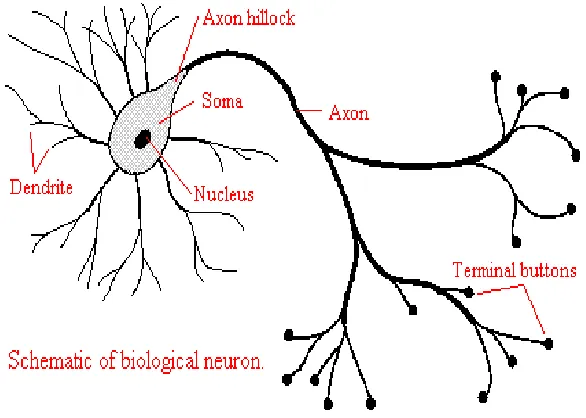
[image:30.612.184.477.317.526.2]The human brain consists of a large number of neural cells that process information. Each cell works like a simple processor and only the massive interaction between all cells and their parallel processing makes the brain's abilities feasible (Byrne, 1991; Giles & Maxwell, 1987). ANN show the parallel processing ability of human brain system, such as Central Processing Unit which is referred to as the computer brain. Simply because their performance is inspired by the way in which human brain process information (Byrne, 1991; Fogel et al., 1966). Figure 2.1 shows the basic structure of the biological neurons.
Figure 2.1: Basic structure of biological neuron (Fraser, 1998)
ANN is also referred to as ―neural nets," ―artificial neural systems," ―parallel distributing processing element‖ and ―connectionist system". ANN information is simulated by using inspiration of human brain’s skill and nature of processing
and send for processing to synapses step. Information is transported between neurons in the form of electrical stimulations along the dendrites. Synapses search the favorable solution with random hidden information. The axon will give a response either good or otherwise. Synapses are the elementary structural and functional units that are subsequent to the interconnection between neurons.
The body of the cell contains the nucleus of the cell and transmits the biochemical alterations necessary to synthesize enzyme. It is typically several microns in diameter (a micron is a millionth of a meter). The signal of most real neurons is chemical, and it consists of spikes, short pulses of electric activity. In ANN, these spikes are replaced by continuing variable xj which may be think of as temporal average pulse.
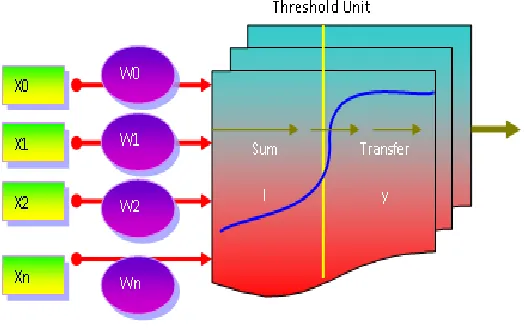
[image:31.612.203.465.409.573.2]The majority of neurons encodes their outputs as a series of brief voltage pulses. A biological neuron may have as many as 10,000 different inputs and may send its output to many other neurons up to 200,000. The ANN also works and developed using human brain processing techniques using the following model (McCulloch & Pitts, 1943). From the Figure 2.2, the inputs which are shown at start node called input node.
Figure 2.2: Simple mathematic model for neuron (McCulloch, 1943)
13
exceed the threshold, no output is produced by the unit. For instance if there are n inputs to the threshold unit with weights w1, w2.... wn and signals x1, x2 ... xn. The activation α
of the unit.
n i i ix w 1 (2.1) ---
The output O of the threshold unit is given by
θ α if 0 θ α if 1
O (2.2) ---
where θ is the threshold and often equal to zero.
2.3 The Working of Artificial Neural Networks
Certainly, ANN can often provide a suitable solution for problems that are generally characterized by nonlinear, high dimensionality, noisy, complex, imprecise, imperfect and/or error-prone sensor data, poorly understood physical and statistical models, and lack of clearly stated mathematical solution or algorithm (Zaknich, 2003). Mostly ANN approaches are capable of solving scientific, electrical engineering, earth knowledge, mathematical and of course statistical tasks (Karaki & Chedid, 1994).
The determination of the network architecture is one of the most important steps in developing a model for a given problem. Although ANN construction has been extensively investigated by various researchers, there is no known procedure or algorithm for this process for the general case. Two approaches have been proposed, namely constructive and destructive methods. In both constructive and destructive methods, the numbers of hidden nodes are considered.
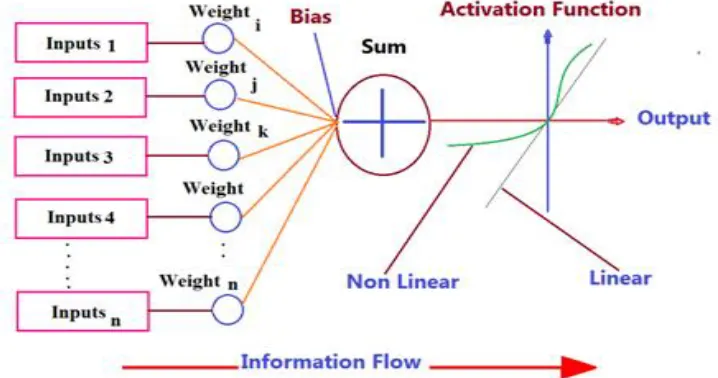
function also called activation function for getting target values. There are different activation or transfer function uses for getting the best target which depends on the output and behaviors of the data. Figure 2.3 shows the universal ANN structure (McCulloch & Pitts, 1943).
Figure 2.3: Artificial neuron working model (Stamatios, 1996)
Each input has an associated weight w, which can be modified in order to model synaptic learning. The unit computes some function f of the weighted sum of its inputs by equation (2.3) as:
n
i i i i
i f wx bias
y
1
(2.3) ---
15
2.4 Advantages of Neural Networks
Depending on the nature of the application and the strength of the internal data patterns a network can generally be expected to train quite well. This applies to problems where the relationships may be quite dynamic or non-linear. ANN provides an analytical alternative to conventional techniques which are often limited by strict assumptions of normality, linearity, variable independence etc. Because an ANN can capture many kinds of relationships it allows the user to quickly and relatively easily model, which otherwise may have been very difficult or impossible to be explained. ANN shows the benefits in some important difficulties (Haykin, 1999). These are:
Neurobiological Analogy: The design of ANN is motivated by analogy with the brain, which shows the fault-tolerant parallel processing which is not only physically possible but fast and powerful (Christodoulou et al., 2012).
Nonlinearity, which is a very important property of ANN especially if the system which ANN tries to model, is naturally nonlinear. ANN performs the best performance for nonlinear problems (Olyaee et al., 2012).
Input Output Mapping: ANN gets input and train with weight values using different algorithms and output as the target. The ANN training methods will try to get the target in supervised or unsupervised learning if the ANN can not find the target; the weights value changes and train repeatedly until it finds another best target value. ANN is a powerful data-modeling approach that is able to capture and represent complex input/output relationships (Lawrence, 1994).
Adaptively: ANN has a built-in capability to adapt their synaptic weights to changes in the environment where they operate. This property leads ANN to human brain processing or thinking properties.
few relations are cracked or a few neurons are not working, the information is still conserved due to the spreading nature of the encoded information. Fault tolerance in ANN computing takes several appearances. The first is an inherent tolerance in the exact computation of the network. The second is tolerance to the inexact mapping of the network for the implementation, including the possible malfunction of portions of the implementation, such as failure of individual units (Panduranga et al., 2007).
2.5 Learning Algorithms
Artificial Neural Networks is based on human brain processing techniques and gets decision using neuron, and it is connection values to find better results. The most significant aspect of ANN is its ability to learn from its environment, and to improve its performance through learning. ANN learns about its environment or a dynamic system through an iterative process of adjustments applied to its weights and biases. One of the most important characteristics in ANN is its knowledge ability, which makes it generally suitable for the computational purpose whose organization is known or unknown. The decision is based on the synapse's learning strategy. The network becomes more ―knowledgeable‖ about its environment after iteration of the learning process. Like
human beings and animals that learn more things. ANN learning is an inferred process which can not be perceived directly, but can be assumed to have happened by observing changes in performance (Zurada, 1992).
17
There are two different types of learning, namely supervised and unsupervised learning, which identifies or creates pattern-class information about the learning outcome. In this case, no desired or target classes are known beforehand, and thus no output information is known a-priori. Meanwhile, a supervised learning deals with the desired set of responses, outputs or classes for given inputs which are known and provided during the learning process. In this case, the neural has to learn the function, mapping or transformation that will produce the desired output for new inputs (Zurada, 1992). Supervised and unsupervised learning can thus be distinguished as follows:
The main principle of supervised learning is to ―guide or practice‖ a network to
print the good behavior of a system. In this case, there is always a need to have a ―training‖ data set. The network topology and the algorithm that the network is trained
with are highly interrelated. In general, a topology of the network is chosen first, and then a proper training approach is used to tune the weights (Brandt & Feng, 1996; Gallant, 1993), which integrates an external teacher, so that each output unit is told what it's required answer to input signals ought to be.
On the other hand, the unsupervised learning uses no external teacher and is based upon only local information. It is also referred to as self-organization, in the sense that it self-organizes data presented to the network and detects their emergent collective properties. This group of network training attempts to cluster around input data without the need for the traditional ―learn by example‖ technique that is commonly used for
ANN. Note that, clustering applications tend to be the most popular type of applications that these networks are normally used.
2.6 Backpropagation (BP) Learning Algorithm
as classification, clustering and prediction on the training set. The major advantage of the BP algorithm over the Least Mean Squared Error (LMSE) and perceptron algorithms is in expressing how an error at an upper (or outer) layer of a multilayer network can be propagated backwards to nodes at lower (or inner) layers of the network.
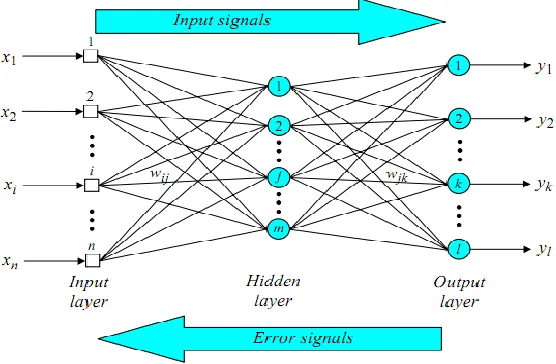
[image:37.612.194.472.337.519.2]BP algorithm presented in three stages for training MLP. Firstly, the feed-forward phase the input signals are propagated through the input and hidden layers of processing elements, generating an output pattern in response to the input pattern presented. Secondly, in Back-forward phase as shown in Figure 2.4 , each output node compares its activation with the desired output based on these differences, the error is propagated back to all previous nodes Delta Rule. Thirdly, weights of all links are computed simultaneously based on the errors that were propagated back. The three layers MLP with BP learning algorithm is shown in the Figure 2.4.
Figure 2.4: Artificial Neural Network with BP learning algorithm
19
function, the most common activation function of a neuron f (x) is a sigmoid function (Wang et al., 2004) as shown below:
j net j e ) net ( f 1
1 (2.4)
where:
𝑛𝑒𝑡𝑗 = 𝑤𝑖𝑗𝑎𝑖,
𝑎𝑖 is the input activation from unit i, and 𝑤𝑖𝑗 is the weight connecting unit i to unit j.
In the next algorithm step, the output signal of the network y is compared with the desired output value (the target). The difference is called error signal of output layer neuron, which is calculated as:
2 2 1
k k k y )t ( E
(2.5)
E = error vector, tnk is the actual output and ynk is the network value. In order to derive
the BP learning rule, chain rule use to rewrite the error gradient for each pattern as the product of partial derivatives. Thus, the error gradient becomes:
wn
E
..
...
w
E
,
w
E
,
w
E
w
E
2 1 0
(2.6)The partial derivative reflects the change in error as a function of the net input; the second partial derivative reflects the effect of a weight change on a change in the net input. By using the chain rule with respect to weight and biases, in the BP algorithm, is determined as follows:
ij i i i i ij w et n et n S S E w E (2.7) where:
wij is the weight from neuron j to i, Si represent the output of neuron and
The weight will update with the gradient rules, learning rate with derivative to minimize the error function as:
(t)
W E ) t ( W ) t ( W ij ij ij
1 (2.8)
where:
Wij (t+1) shows the new weight value,
Wij represents the old weight values and represents the learning rate, which can
control the learning and has important effect on convergence time.
The learning rate is a constant used in error BP learning that affects the speed of learning. The smaller the learning rate, the more steps it takes to get to the stopping criterion. A too large or too small will cause negative inferences to converge . If it is too small, the learning process can be very slow (Knight, 1990). The different combinations of the learning rate and momentum are introduced to try to find the right combination that will allow the solution to escape local minima but not skip over the global solution. To make the learning process more stable, the momentum term is used to the weight changes as:
(t) w(t )
W E ) t ( W ij
ij Δ 1
Δ
(2.9)
where, ΔWij(t)=Wij(t)Wij(t1)and the momentum term represented by,
where the momentum factor 0<<1, usually sets around 0.9 (Wasserman, 1989). Using high learning rate, momentum term can avoid the oscillation.
21
for those non-linearly separable pattern classification problems or complex function approximation problem. A second shortcoming is that the convergence of the algorithm is very sensitive to the initial value. So, it often converges to an inferior solution and gets trapped in a long training time.
There are several approaches developed for recovering and updating BP algorithm for different problems. An improved BP algorithm with stochastic attenuation momentum factor proposed by (Jia & Dali, 1993) and compared with the standard BP algorithm, the algorithm claims to effectively cancel the negative effect on the momentum of a network. However, the calculation of this approach is complex since it uses the correlation matrix in defining the momentum. For evolving convergence speed, an adaptive learning rate and momentum coefficient is proposed (Chien & Bin, 2002). In this proposed technique for fast convergence BP used with Adaptive Learning rate and Momentum factor (BPALM). Thus, from avoiding the local minima trapping problem proposed an improved BP where each training pattern has its own activation functions of neurons in the hidden layer and the activation functions are adjusted by the adaptation of
gain parameters during the learning procedure (Wang,et al., 2004). However, this
approach did not produce good results on large problems and practical applications.
Due to all these problems in BP, for the last decade swarm Intelligence, an artificial intelligence discipline, is concerned with the design of intelligent multi-agent systems, such as ants, termites, fish, birds, bees, and wasps, by taking inspiration from the collective behaviors of social insects and other animal societies used for different combinatorial tasks (Kennedy et al., 1995; Dorigo, 1999; Karaboga et al., 2007). They are characterized by a decentralized way of working that mimics the behavior of the swarm. The researchers have replaced the BP algorithm with SI based learning algorithm in order to avoid local minima and slow convergence problems.
2.7 From Artificial Neural Networks to Swarm Intelligence
techniques. Initially, weights were chosen randomly but with the passage of time researchers started taking an interest to get optimal weight in weight equation.
There are different techniques uses for finding optimal weight values such as BP, and modified version of BP (Nazri et al., 2010), Gradient Descent (Baldi, 1995; Yu & Chen, 1997), Differential Evaluation (DE) (Slowik & Bialko, 2008), Genetic algorithm (GA) (Qiang et al., 2005), Improved BP (Nazri et al., 2010) and other mathematical approaches. While these algorithms have been shown to be an effective method for training ANN, it typically has a slow convergence rate, and is known to suffer from local minima (Nazri et al., 2010). To overcome these limitations, researchers took interested in Swarm Intelligence approaches such as PSO (Kennedy & Eberhart, 1995), Ant Colony Optimization , ABC, Improved ABC algorithm, Hybrid Artificial Bee Colony (Karaboga et al., 2007) and some others hybrid such as BP and Levenberq-Marquardt with ABC algorithm (Bitam et al., 2010; Blum & Socha, 2005; Ozturk & Karaboga, 2011). These learning techniques show that ANN processed to swarm based behaviors in the basic part of ANN. These algorithms are easy to implement and found to be robust compared to the standard BP.
2.8 Swarm Intelligence
Swarm Intelligence (SI) is a recent technique, which deals with natural social insects and artificial systems that composed of many individuals’ agents based on the study of
collective behaviour in decentralized and self-organized systems like the movement and behaviour of natural swarm workers (Bonabeau et al., 1999). The ant colonies, bees and bird flocking that can be effectively applied to computational intelligent systems are the basic agent of SI.
2.9 Fundamentals of Swarm Intelligence
23
to the given environment (Karaboga et al., 2005). Also flexibility and robustness is influenced by self-organization with SI techniques for different task (Abraham et al., 2006). These two fundamentals of SI are discussed below.
1) Self-organization can be defined as a set of dynamical mechanism, which results in structures at the global level through a system by means of interactions among its low-level elements (Bonabeau et al., 1999). Through self-organization, the behavior within the group emerges from collective interactions of all individuals. These mechanisms demonstrate basic guidelines for the interactions between the components within the system. The rules ensure that the interactions are executed based on purely local information without any relation to the global method. The social insects seem to have two key priorities in their life time, finding food and defending against enemies. It seems to be a simple life as compared to human beings
2) Inside a swarm, there are different tasks performed simultaneously by specialized individuals. This kind of phenomenon is called division of workers for given tasks. Simultaneous task performance by cooperating specialized individual is believed to be more efficient than the serial task performance by unspecialized individuals. Division of agents also enables the swarm to respond to changed conditions within the search space. The above two fundamental concepts for the collective performance of a swarm presented are necessary and sufficient properties to obtain environment behavior of SI agent to get optimal solution for given problems.
2.10 Types of Swarm Intelligence Algorithms
algorithm improved by researchers with different new and hybrid strategies (Jun & Xiaohong, 2009; Mohammadi & Jazaeri, 2007). ACO hybrid with BP, LM, PSO, GA and other optimization algorithms for different tasks (Biswal et al., 2011; Jung & Lee, 2003; Xiao et al., 2009).
Researchers have extends standard ABC algorithm to the Modified Artificial Bee Colony (MABC) (Zhang et al., 2011), an Improved Artificial Bee Colony (IABC) (Shah and Ghazali., 2011), PSO-ABC (Tarun et al., 2011), the Global Hybrid Ant Bee Colony (GHABC) algorithm, the Hybrid Artificial Bee Colony (HABC), the Hybrid Artificial Bee Colony (Shah et al., 2010, 2011, 2012), the Discrete Artificial Bee Colony (DABC), a Combinatorial Artificial Bee Colony (CABC), the parallel Artificial Bee Colony (PABC) (Narasimhan, 2009), the Novel Artificial Bee Colony (NABC), Application Artificial Bee Colony (AABC) and many other types of recent improvements for different mathematics, statistical and engineering problems. Undoubtedly, all types of SI are extremely renowned and focused upon by the researchers for further improvement and increasing their applicability to mathematical, statistical and optimization problems. The ACO, PSO and ABC have the highest ratio of interest as compared to other swarms based approaches (Abraham,et al., 2006; Kennedy & Eberhart, 1995). There are many other types of SI approaches, however, the distinguished PSO, ACO, and ABC algorithms are detailed in the following sections.
2.10.1 Particle Swarm Optimization (PSO)
133
REFERENCES
Abraham, A. Guo, H. & Liu, H. (2006). Swarm Intelligence: Foundations, Perspectives and Applications. In N. Nedjah & L. Mourelle (Eds.), Swarm Intelligent Systems Springer Berlin Heidelberg, Vol. 26, pp. 3-25.
Adeli, H. & Panakkat, A. (2009). A probabilistic neural network for earthquake magnitude prediction. Neural Networks, 22(7), 1018-1024.
Ahmad, S. Mohammad. (2011). Weather Temperature Forecasting Using Artificial Neural Network. Journal of Engineering and Development, 15(2).
Ajith, A. Jatoth, R. K & Rajasekhar, A. (2012). Hybrid Differential Artificial Bee Colony Algorithm. Journal of Computational and Theoretical Nanoscience, 9(2), 249-257.
Alarifi, A., S, N,, Alarifi, N & Al-Humidan, S. (2012). Earthquakes magnitude predication using artificial neural network in northern Red Sea area. Journal of King Saud University- Science, 24(4), 301-313.
Alhadi, I., A. A. Hashim, S. Z. M. & Shamsuddin, S. M. H. (2011). Bacterial Foraging Optimization Algorithm for neural network learning enhancement. Paper presented at the Hybrid Intelligent Systems (HIS), 2011.
Alpsan, D., Michael W, T., Ozcan, O., Ah Chung, T. & Dhanjoo, G.(1995). Efficacy of modified backpropagation and optimisation methods on a real world medical
problem. Neural Networks,Elsevier, 8, 945-962.
Asadi, S., Hadavandi, E., Mehmanpazir, F., & Nakhostin, M. M. (2012). Hybridization of evolutionary Levenberg–Marquardt neural networks and data pre-processing for stock market prediction. Knowledge-Based Systems, 35(0), 245-258.
Ashena, R. & Moghadasi, J. (2011). Bottom hole pressure estimation using evolved neural networks by real coded ant colony optimization and genetic algorithm. Journal of Petroleum Science and Engineering, 77(3–4), 375-385.
Attoh, O. & Nii, O. (1999). Analysis of learning rate and momentum term in backpropagation neural network algorithm trained to predict pavement performance. Advances in Engineering Software, 30(4), 291-302.
Awang, M. Khalid, Rahman, M. N, Abdul. & Ismail, M, Ridwan. (2012). Data Mining for Churn Prediction: Multiple Regressions Approach. Computer Applications for Database, Education, and Ubiquitous Computing (Vol. 352, pp. 318-324): Springer Berlin Heidelberg.
Baldi, P. (1995). Gradient descent learning algorithm overview: a general dynamical systems perspective. Neural Networks, IEEE Transactions on, 6(1), 182-195. Beheshti, S. Hashemi, M. Sejdic, E. & Chau, T. (2011). Mean Square Error Estimation
in Thresholding. Signal Processing Letters, IEEE, 18(2), 103-106.
Bergman, D. E. A. (2000). The Determination of Earthquake Parameters. Retrieved 25 november, 2012, from http://www.seismo.com/msop/msop79/par/par.html Bharne, P. K., Gulhane, V. S., & Yewale, S. K. (2011). Data clustering algorithms
based on Swarm Intelligence. Paper presented at the Electronics Computer Technology (ICECT), 2011 3rd International Conference on.
Bhattacharya, B. & Solomatine, D. P. (2005). Neural networks and M5 model trees in modelling water level-discharge relationship. Neurocomput., 63, 381-396.
Bird, P. & Liu, Z. (2007). Seismic hazard inferred from tectonics. California Research Letters, 78(1), 37–48.
135
Biswal, B., Dash, P. K., & Mishra, S. (2011). A hybrid ant colony optimization technique for power signal pattern classification. Expert Systems with Applications, 38(5), 6368-6375.
Bitam, S., Batouche, M., & Talbi, E. g. (2010). A survey on bee colony algorithms. Paper presented at the Parallel & Distributed Processing, Workshops and Phd Forum (IPDPSW), 2010 IEEE International Symposium on.
Blum, C., & Socha, K. (2005). Training feed-forward neural networks with ant colony optimization: an application to pattern classification. Paper presented at the Hybrid Intelligent Systems, 2005. HIS '05. Fifth International Conference on. Bock, H.-H. (1999). Clustering and Neural Network Approaches. In W. Gaul & H.
Locarek-Junge (Eds.), Classification in the Information Age (pp. 42-57): Springer Berlin Heidelberg.
Bonabeau, E., Dorigo, M., & Theraulaz, G. (1999). Swarm Intelligence: From Natural to Artificial Systems, Oxford University Press, NY,.
Botev, E. A., & Glavcheva, R. P. (2003). Modern earthquake monitoring in central Balkan region. Paper presented at the Recent Advances in Space Technologies, 2003. RAST '03. International Conference on. Proceedings of.
Brameier, M. (2009). Data-Mining and Knowledge Discovery, Neural Networks in. In R. A. Meyers (Ed.), Encyclopedia of Complexity and Systems Science (pp. 1812-1826): Springer New York.
Brandt, R. D., & Feng, L. (1996). Supervised learning in neural networks without feedback network. Paper presented at the Intelligent Control, 1996., Proceedings of the 1996 IEEE International Symposium on.
Brown, D., Li, Q., Nyland, E., & Weichert, D. H. (1989). Premonitory seismicity patterns near Vancouver Island, Canada. Tectonophysics, 167(2–4), 299-312. Byrne, J. H. (1991). Introduction to Neurons and Neuronal Networks. Retrieved 25
May, 2013
Carvalho, & Ludermir, T., B. (2006). Particle Swarm Optimization of Feed-Forward Neural Networks with Weight Decay. Paper presented at the Hybrid Intelligent
Systems, 2006. HIS '06. Sixth International Conference on.
Chakraborty, S., & De, D. (2012). Object oriented classification and pattern recognition of Indian Classical Ragas. Paper presented at the Recent Advances in Information Technology (RAIT), 2012 1st International Conference on.
Chan, Tze, H., Chun, T., Lye,, & Chee, W., Hooy,. (2010). Forecasting Malaysian Exchange Rate: Do Articial Neural Networks Work?
Chandra, P, & Singh, Y. (2004). An activation function adapting training algorithm for sigmoidal feedforward networks. Neurocomputing, 61(0), 429-437.
Chauhan, N. C., Kartikeyan, M. V., & Mittal, A. (2012). Soft Computing Methods Soft Computing Methods for Microwave and Millimeter-Wave Design Problems (Vol. 392, pp. 9-23): Springer Berlin Heidelberg.
Chien, C., Yu, & Bin, D., Liu. (2002). A backpropagation algorithm with adaptive learning rate and momentum coefficient. Paper presented at the Neural Networks, 2002. IJCNN '02. Proceedings of the 2002 International Joint Conference on.
Christodoulou, M. S., Zunino, F., Zuco, V., Borrelli, S., Comi, D., Fontana, G. (2012). Camptothecin-7-yl-methanthiole: Semisynthesis and Biological Evaluation. ChemMedChem, 7(12), 2134-2143.
Clarence, R., Allen. (1982). Responsibilities in earthquake prediction, Bulletin of the Seismological Society of America. 2069–2074.
Commerce, U. S. D. Commerce. (2012). National Oceanic and Atmospheric Administration (NOAA). Retrieved 2012, 2012, from http://www.ndbc.noaa.gov/download_data.php?filename=ptat2l2011.txt.gz&dir= data/historical/wlevel/
137
Coulibaly, P., Anctil, F., Aravena, R., & Bobee, B. (2001). Artificial neural network modeling of water table depth fluctuation. Water Resources Researches, 37(4),
885-896.
Craven, M., P,. (1997). A Faster Learning Neural Network Classifier Using Selective Backpropagation. Paper presented at the Fourth IEEE International Conference on Electronics, Circuits and Systems,, Cairo, Egypt.
Curilem, G., Vergara, J., Fuentealba, G., Acuña, G., & Chacón, M. (2009). Classification of seismic signals at Villarrica volcano (Chile) using neural networks and genetic algorithms. Journal of Volcanology and Geothermal Research, 180(1), 1-8.
Daizhan, C. (2009). Input-State Approach to Boolean Networks. Neural Networks, IEEE Transactions on, 20(3), 512-521.
Dasgupta, B., & Schnitger, G. (1993). The Power of Approximating: a Comparison of Activation Functions Paper presented at the Advances in Neural Information Processing Systems, San Mateo, CA. .
David, J., Christini,, Abhijit, K., Srika. R., Eric R. Stutman, Frederick M. Bennett, W Nancy Oriol, F. A., & Lutchen., K. R. (1995). Influence of Autoregressive Model Parameter Uncertainty on Spectral Estimates of Heart Rate Dynamics Annals of Biomedical Engineering, 23.
Davidović., T. (2012). Bee colony optimization for scheduling independent tasks to
identical processors. Journal of Heuristics, 18(4), 549-569.
Donovan, A. (2012). Earthquakes and Volcanoes: Risk from Geophysical Hazards. In S. Roeser, R. Hillerbrand, P. Sandin & M. Peterson (Eds.), Handbook of Risk Theory (pp. 341-371): Springer Netherlands.
Dorigo, M., T. Stützle, (2005). Ant Colony Optimization (2004) MIT Press,Cambridge, MA 300 pp. Artificial Intelligence, 165(2), 261-264.
Dorigo, M. (1992). Optimization, Learning and Natural Algorithms.
Dreyfus, G. (2005). Neural Networks: An Overview Neural Networks (1-83): Springer Berlin Heidelberg.
Drndarevic, D. (2006). Influence of Inputs in Modelling by Backpropagation Neural Networks. Paper presented at the Neural Network Applications in Electrical Engineering, 2006. NEUREL 2006. 8th Seminar on.
Dubois, D. (1998). Boolean Soft Computing by Non-linear Neural Networks With Hyperincursive Stack Memory. In O. Kaynak, L. Zadeh, B. Türkşen & I. Rudas
(Eds.), Computational Intelligence: Soft Computing and Fuzzy-Neuro Integration with Applications (162(0), pp. 333-351): Springer Berlin Heidelberg.
Duch, W., & Jankowski, N. (1999). Survey of neural transfer functions. Neural Computing Application, 2, 163–212.
Elizondo, D. (2006). The linear separability problem: some testing methods. Neural Networks, IEEE Transactions on, 17(2), 330-344.
Esteban, Álvarez, F, Troncoso, A, Justo, J, L, Rubio-Escudero, C, (2010). Pattern recognition to forecast seismic time series. Expert Systems with Applications, 37(12), 8333-8342.
Fahlman, S. (1988). An empirical study of learning speed in backpropagation networks,. Paper presented at the Technical Report CMU-CS-88-162,.
Fogel, L. J., Owens, A. J., & Walsh, M. J. (1966). Artificial Intelligence through Simulated Evolution: John Wiley & Sons
Franco, L. (2006). Generalization ability of Boolean functions implemented in feedforward neural networks. Neurocomputing, 70(1–3), 351-361.
Freitas, A., & Lavington, S. (2000). Data Mining Tools Mining Very Large Databases with Parallel Processing (Vol. 9, pp. 51-57): Springer US.
Gallant, S. I. (1993). Neural Network learning and expert system: MIT press.
Gang, C., Yong,, Yang, F., jie,, & Sun, J., gui,. (2006). A new Particle swam optimization Algorithm. journal of Jilin University, 24(2), 181-183.
139
Gao, W., Liu, S., & Huang, L. (2012). A global best artificial bee colony algorithm for global optimization. Journal of Computational and Applied Mathematics, 236(11), 2741-2753.
Ghaffari, Abdollahi, H. Khoshayand, A. Rafiee-Tehrani, M. (2006). Performance comparison of neural network training algorithms in modeling of bimodal drug delivery. International Journal of Pharmaceutics, 327(1–2), 126-138.
Ghazali, R., Hussain, A., Al-Jumeily, D., & Merabti, M. (2007). Dynamic Ridge Polynomial Neural Networks in Exchange Rates Time Series Forecasting. In B. Beliczynski, A. Dzielinski, M. Iwanowski & B. Ribeiro (Eds.), Adaptive and Natural Computing Algorithms (Vol. 4432, pp. 123-132): Springer Berlin Heidelberg.
Ghazali, R., Hussain, A. J., & Liatsis, P. (2011). Dynamic Ridge Polynomial Neural Network: Forecasting the univariate non-stationary and stationary trading signals. Expert Systems with Applications, 38(4), 3765-3776.
Gilde, C. (1996). Time Series Analysis And Prediction Using Recurrent Gated Experts. Giles, C. L., & Maxwell, T. (1987). Learning, invariance, and generalization in
high-order neural networks. Appl. Opt., 26(23), 4972-4978.
Gopal, S., & Fischer, M. M. (1996). Learning in Single Hidden-Layer Feedforward Network Models: Backpropagation in a Spatial Interaction Modeling Context. Geographical Analysis, 28(1), 38-55.
Gu, W., Yin, M., & Wang, C. (2012). Self Adaptive Artificial Bee Colony for Global Numerical Optimization. IERI Procedia, 1(0), 59-65.
Gudise, V. G., & Venayagamoorthy, G. K. (2003). Comparison of particle swarm optimization and backpropagation as training algorithms for neural networks. Paper presented at the Swarm Intelligence Symposium, 2003. SIS '03. Proceedings of the 2003 IEEE.