© 2017, IRJET | Impact Factor value: 5.181 | ISO 9001:2008 Certified Journal
| Page 1245
Formulation and Evaluation of Floating Tablets Using
Nimesulide as a Model Drug
1
V.Nagamani,
2C.Jhansi
1,2
Department of Chemical Technology, University College of Technology, Osmania University,
Hyderabad, 500007, T.S. India
---***---Abstract-
The aim of this study was to formulate and evaluate floating tablets using Nimesulide as a model drug. Nimesulide Floating tablets were prepared by wet granulation method using polymers (HPMC K4M, HPMC K15M, and Carbapol 934P) by changing drug to polymer ratio as 1:1, 1:1.5, and 1:2. Sodium bicarbonate and citric acid used as generating agents. Lactose used as diluents and PVP K30 used as granulating agent with isopropyl alcohol as solvent. The granules formulated and evaluated for flow properties, and the prepared into tablets and evaluated for physical properties, invitro buoyancy studies, drug content. All the formulations showed the values within the prescribed limit, which indicates that the prepared tablets are of standard quality. It was observed that the gas generated is trapped and protected within the gel, formed by the polymers, thus decreasing the density of the tablet below 1 and tablet becomes buoyant. In the formulations F1 to F6, it was observed that decreasing Floating lag time and the increasing Total floating time as the polymer to drug ratio increases. The higher rate and extent drug release was observed from the formulations prepared by 1:1 ratio (i.e. F1, F4, and F7). The percentage of drug release was less from F7, F8, F9 formulations prepared by Carbapol, due to its high viscosity and less permeability towards water. The prepared tablets were evaluated for uniformity hardness, friability, drug content, in vitro buoyancy studies, dissolution studies the invitro release data were fitted to differentkinetic models. The drug release follows Zero order with R2
value 0.999.
Key words: Bulk density, Carr’s index, Floating tablets,
Formulations, Hausners ratio, Wet granulation
1. INTRODUCTION
Oral route is the most convenient and extensively used route for drug administration. This route has high uncomplaining adequacy, due to painless of supervision. Oral route of supervision has been received more attention in the pharmaceutical field because of the more flexibility in the designing of dosage form than drug delivery design for other routes. Most of the oral controlled drug delivery
© 2017, IRJET | Impact Factor value: 5.181 | ISO 9001:2008 Certified Journal
| Page 1246
1.1
Basic Gastrointestinal tract physiology:It is well renowned that inclination may be used as storage area for sustained-release (SR) dosage forms, both in human and veterinary applications. The stomach is anatomically divided into three parts: fondues, body, and antrum1 (pylorus). The proximal part made of fundus and
body acts as a reservoir for undigested material, whereas the antrum is the main site for mixing motions and act as a pump to accomplish gastric emptying. The process of gastric emptying occurs during fasting as well as fed states; however, the pattern of motility differs markedly in two states. In the fasted states, it is characterized by an interdigestive series of electrical events, which cycle both through stomach and intestine every 2 to 3 hours. This is called the interdigestive myloelectric cycle or migrating myloelectric cycle (MMC).
2. MATERIALS AND METHODS
Materials: Nimesulide, Carbopol 934P, Hydroxy propyl methyl cellulose (K4M, K15M), polyvinylpyrrolidine, Magnesium stearate, Iso propyl alcohol, Lactose, Hydrochloric5 acid, Talc, citric acid and gas generating
agent such as sodium bicarbonate were used as other ingredients. All the materials used in experimental works were obtained from S.D Fine chemicals, Hyderabad, India. All reagents used were of analytical grade.
Methods: Nimesulide Floating tablets2 were prepared by
wet granulation method using polymers (HPMC K4M, HPMC K15M, and Carbapol 934P) by changing drug to polymer ratio as 1:1, 1:1.5, and 1:2. Sodium bicarbonate and citric acid used as generating agents. Lactose used as diluents and PVP K30 used as granulating agent with isopropyl alcohol as solvent. Nimesulide and all other ingredients were weighed separately and passed through sieve no. 25. The active ingredient, HPMC(K4M, K15M), polyvinylpyrrolidine and 50% of the lubricants were mixed together. The mixture was then compacted in a slugging3 machine to form the compacts. The compacts
were then milled and passed through sieve no. 18 followed by sieve no. 60. The particles that retained on sieve no. 60 were taken as granules and those passing through the sieve were fines. The fines were again compacted, milled and sieved through sieve no. 18 and 60. The cycle of compaction- milling- sieving was repeated until the granules and fines were obtained in the ratio of about 60:20. The granules and fines were then mixed together and the remaining ingredients except magnesium stearate were added to it and mixed. The remaining lubricant i.e. magnesium stearate was then added and mixed to the above mixture to form the final blend. The final blend was compressed into tablets using single punch tablet rotary press4.
3. EVALUATION OF FLOATING TABLETS
3.1. Evaluation of Flow Properties of granules before compression:
Angle of repose (Ө):
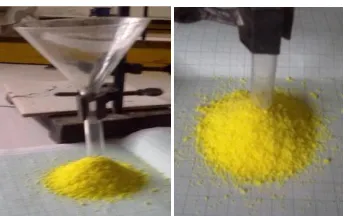
[image:2.612.365.537.270.378.2]The angle of repose of granules was determined by the funnel method. The accurately weighed granules were taken in a funnel. The height of the funnel was adjusted in such a way that the tip of the funnel just touched the apex of the heap of the granules. The granules were allowed to flow through the funnel freely onto the surface. The diameter of the powder cone was measured and angle of repose was calculated using the following equation. Tan θ = h/r Where, h and r are the height and radius of the powder cone respectively.
Fig 1: measuring angle of repose
Bulk density:
Both loose bulk density (LBD) and tapped bulk density (TBD) were determined. A quantity of 2gm of powder from each formula, previously lightly shaken to break any agglomerates formed, was introduced into a 10-ml measuring cylinder. After the initial volume was observed, the cylinder was allowed to fall under its own weight onto a hard surface from the height of 2.5 cm at 2-second intervals. The tapping was continued until no further change in volume was noted. LBD and TBD were calculated using the following formulas LBD = weight of the powder / volume of the packing TBD = weight of the powder / tapped volume of the packing
Carr’s index (%) = [(TBD - LBD) x 100] / TBD
Haussler’s ratio: Hausner’s ratio can be determined by Hausner’s ratio = TBD / LBD
Where, TBD - Tapped Bulk Densities, LBD - Loose Bulk Density
3.2. Evaluation of tablets after compression:
Size of the floating tablets: The thickness and Diameter of each tablet is measured by using vernier calipers. It is measured in mm.
© 2017, IRJET | Impact Factor value: 5.181 | ISO 9001:2008 Certified Journal
| Page 1247
Twenty tablets were prepared in each formulation, weighed individually to check for weight variation. IP limit for weight variation in case of tablets.
Hardness: The hardness of the tablet was determined using a Monsanto hardness tester. It is expressed in Kg / cm2
Friability:
After four minutes of this treatment or 100 revolutions, the tablets are weighed and the weight compared with the initial weight. The loss due to abrasion is a measure of the tablet friability. The value is expressed as a percentage (%).
Drug content:
Tablet containing 40mg of active ingredient (drug) is dissolved in 100ml of 0.1 Hcl (solvent) in volumetric flask and make up to mark. The drug is allowed to dissolve in the solvent. The solution is filtered; 1ml of the filtrate was taken in 50ml of volumetric flask and makes it up to mark with the solvent. The prepared solution was analyzed spectrophotometrically. The content of medicament is expressed in percentage (%)
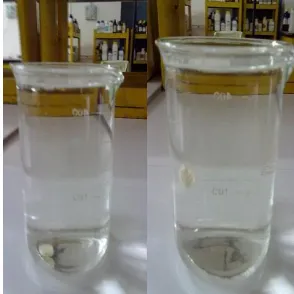
[image:3.612.332.572.162.423.2]3.3. Buoyancy studies: The time required for the tablet to rise to the surface and float was determined as Floating lag time. The duration of time the dosage form constantly remained on the surface of medium was determined as the Total floating time. The in vitro floating behavior of the tablets was studied by placing them in 900 ml of plastic containers filled with 500 ml of 0.1 N HCl. (pH 1.2, 37.5oC). The floating lag times and floating durations of the tablets were determined by visual observation
Fig.2: Floating tablet in 0.1N Hcl showing floating lag time
4. RESULTS AND DISCUSSION
4.1. Results of Pre compression Flow Properties of Granules of Nimesulide:
Table 1. Invitro buoyancy studies for prepared tablets:
S.no Formulation code Buoyancy Lag Time (Sec)
Total Floating Time (Hrs)
1 F1 46 >5
2 F2 33 >5.5
3 F3 20 >6
4 F4 80 >3.5
5 F5 67 >4
6 F6 51 >5
7 F7 132 >3.5
8 F8 120 >3.5
9 F9 94 >4
Table 4. Calculation of cumulative percentage of drug release for different formulations
Time (min)
Cumulative drug release of F1 (%)
Cumulative drug release of F2 (%)
Cumulative drug release of F3 (%)
0 0 0 0
30 9.9 8.1 7.1
60 18.4 19.8 19.5
90 35.4 32.5 29.7
120 47.89 41.85 39.6
150 58.99 53.4 48.3
180 72.5 65.3 58.2
210 83.6 76.05 66.3
[image:3.612.95.242.526.673.2]© 2017, IRJET | Impact Factor value: 5.181 | ISO 9001:2008 Certified Journal
| Page 1248
[image:4.612.334.567.309.479.2]Fig .1: In vitro drug release for the formulations with polymer HPMC K4
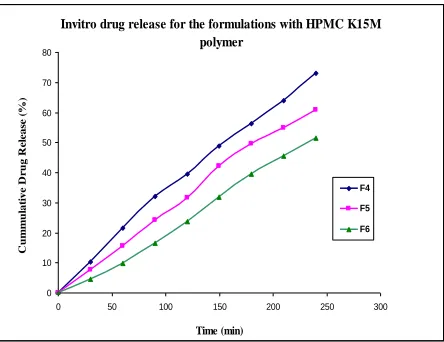
Fig .2: In vitro drug release for the formulations with polymer HPMC K15M
Fig 3: In vitro drug release for the formulations with polymer Carbapol 934P
Fig .4: In vitro drug release for different formulations Fitting of In vitro drug release in Zero order model for
[image:4.612.39.261.512.680.2]different formulations:
Fig .5: Fitting of Zero order model for formulations with HPMC K4M
Fi.6: Fitting of Zero order model for formulations with HPMC K15M
Invitro drug release for formulations with HPMC K4M polymer
0 10 20 30 40 50 60 70 80 90 100
0 50 100 150 200 250 300
Time (Min) C u m m u lat ive D r u g R e le as e ( %) F1 F2 F3
Invitro drug release for the formulations with HPMC K15M polymer 0 10 20 30 40 50 60 70 80
0 50 100 150 200 250 300
Time (min) C u m m u lat ive D r u g R e le as e ( %) F4 F5 F6
Invitro drug release for formulations with Carbapol polymer 0 10 20 30 40 50 60 70 80
0 50 100 150 200 250 300
Time (min) C u m m u la ti v e D ru g R e le a s e ( % ) F7 F8 F9
Invitro Drug Release For Different Formulations
0 10 20 30 40 50 60 70 80 90 100
0 50 100 150 200 250 300
Time (min) C u m m u la ti v e D r u g R e le a s e ( % ) F1 F2 F3 F4 F5 F6 F7 F8 F9
Fitting Zero order model for formulations with HPMC K4M polymer
:R2 = 0.9975 :R2 = 0.9977 :R2 = 0.9963 -20 0 20 40 60 80 100
0 50 100 150 200 250 300
Time(min) C u m m u lat ive D r u g R e le as e ( %) F1 F2 F3
Fitting Zero order kinetics for formulation with HPMC K15M
:R2 = 0.9954
:R2 = 0.9952
:R2 = 0.9956
-10 0 10 20 30 40 50 60 70 80
0 50 100 150 200 250 300
[image:4.612.338.563.519.689.2]© 2017, IRJET | Impact Factor value: 5.181 | ISO 9001:2008 Certified Journal
| Page 1249
Fig.7: Fitting of Zero order model for formulations with Carbapol
Fitting of In vitro drug retained in First order model for different formulations:
Fig .8: Fitting of First order model for formulations with HPMC K4M
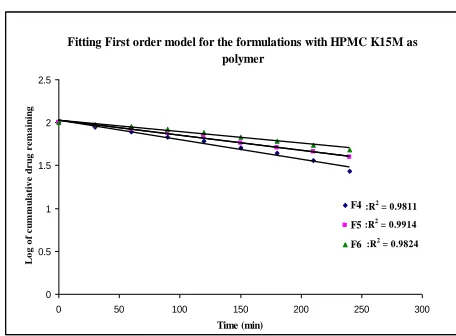
[image:5.612.48.274.327.490.2]Fig .9: Fitting of First order model for formulations with HPMC K15M
Fig.10: Fitting of first order model for formulations with Carbapol
5. CONCLUSIONS
Floating tablets were formulated and evaluated using Nimesulide as model drug (water-insoluble drug), HPMC K4M, HPMC K15M and Carbapol 934P use as polymers, by varying drug to polymer ratio as 1:1, 1:15, and 1:2.
All the formulations were prepared by using wet granulation method, where the concentration of the drug kept constant and concentration of polymers varied. PVP is used as a granulating agent. Lactose is used as a diluent and magnesium Stearate and talc were used as lubricant and glidant respectively. Sodium bicarbonate is used as gas generating agent. Citric acid is used to achieve buoyancy effect under the elevated pH, which results an enhancement in drug release.
The shapes of the tablets of all the formulations were found to be pale yellow, smooth, flat faced circular with no visible cracks.
The tablets prepared with low viscosity grade HPMC K4M (i.e. F1, F2, and F3) exhibited short Floating Lag Time and longer Floating Time, when compared with the formulations containing high viscous grade HPMC K15M(i.e. F4, F5,and F6), and Carbapol 934P(i.e.F7, F8,and F9).
It is concluded that the formulations prepared with low viscous HPMC K4M (F1, F2, and F3) showed desirable buoyancy time.
It is observed that, in all the formulations as the concentration of polymer increases, the amount of drug release was found to be decreased, because the amount of drug binded in the polymer could be more.
The percentage of drug release were found to be more with formulations prepared by 1:1 ratios (i.e. F1, F4 and
Fitting Zero order model for formulations with Carbapol as polymer
:R2 = 0.9685
:R2 = 0.9857
:R2 = 0.9993
-10 0 10 20 30 40 50 60 70 80
0 50 100 150 200 250 300
Time (min) C u m m u la ti v e d r u g r e le a s e ( % ) F7 F8 F9
Fitting First order model for the formulations with HPMC K4M as a polymer
:R2 = 0.9647 :R2 = 0.9535 :R2 = 0.9077 0 0.5 1 1.5 2 2.5
0 50 100 150 200 250 300
Time (min) Lo g o f C u m m u la ti v e D r u g R e m a in in g F1 F2 F3
Fitting First order model for the formulations with HPMC K15M as polymer
:R2 = 0.9811
:R2 = 0.9914
:R2 = 0.9824
0 0.5 1 1.5 2 2.5
0 50 100 150 200 250 300
Time (min) Lo g o f c u m m u la ti v e d r u g r e m a in in g F4 F5 F6
Fitting First order model for formulations with carbapol as polymer
:R2 = 0.9714
:R2 = 0.9512
:R2 = 0.9387 0 0.5 1 1.5 2 2.5
0 50 100 150 200 250 300
[image:5.612.46.274.531.699.2]© 2017, IRJET | Impact Factor value: 5.181 | ISO 9001:2008 Certified Journal
| Page 1250
F7) where as in the case of formulations prepared with 1:2 ratios (i.e. F3, F6 and F9) the percentage of the drug release was found to be less.
It is observed that the percentage of drug release from the formulations prepared by Carbapol 934P (F7, F8, and F9) was found to be less, this may be due to its high viscosity and less permeability of water.
In-Vitro dissolution data was fitted to Zero order kinetics and First order kinetic models to check the release kinetics. The best fit release was achieved with Zero order kinetics.
6. REFERENCES
[1] M. Jaimini et al, have Formulated and Evaluated the
Famotidine Floating Tablets,” vol. 294, Dec. 2001, pp. 2127-2130, doi:10.1126/science.1065467.
[2] A, Yadav et al, have Formulated and Evaluated The
Effervescent Floating Tablet of Amlodipine Besylate,journal of pharmaceutical sciences. Handbook. Mill Valley, CA: University Science.
[3] Vishal G et al, have Formulated and Evaluated the
Floating Tablets of Furosemide (F) by direct compression technique.
[4] J. Name Stand. Abbrev., in press. M. Jaimini et al5, have
Formulated and Evaluated the Famotidine Floating Tablets
[5] D. B. Raju et al Formulated and evaluated the floating
drug delivery system of Metformin Hydrochloride
[6] Kavita.K et al8, have Formulated and Evaluated of
Floating Tablets of RHCL Using Natural and Synthetic Polymers
[7] Ravi Kumar et al, have Formulated and Evaluated of
Effervescent Floating Tablets of Famotidine and designeGangadharappa et al10, have Formulated and
Evaluated in vitro studies of Gastric controlled release Floating Tablets of Atenolol using karaya gum and HPMC as matrix polymers. Atenolol floating tablets
[8] S.K.Sreekanthi et al , have Formulated and Evaluated
studies of Floating Matrix tablets of Nifedipine using Hydroxypropyl methyl cellulose (HPMC K100M
[9] Kantamadav et al,formulation and evaluation of
floating tablets using as isosuprine HCL model drug,vol 2,international journal of pharmacy
[10] Shailaja jadav et al,extractio and prepare floating