APPLICATION OF NON-TRADITIONAL METHOD FOR THE
OPTIMIZATION OF FRICTION CLUTCH
1FAISAL.S. HUSSAIN, 2M.K.SONPIMPLE
1
Lecturer, Department of Mechanical Engineering, Priyadarshini - Polytechnic,Nagpur-440016, Maharashtra State, India.
2Assistant Professor, Department of Mechanical Engineering, Priyadarshini College of Engineering,
Nagpur-440016, Maharashtra State, India.
Email: [email protected] , [email protected]
ABSTRACT
This paper describes the development of evolutionary algorithmfor the optimal design of friction clutch. Powerful evolutionary algorithm such as Genetic Algorithm (GA) is applied for optimum design of friction clutch. The main objective function was to minimize the axial force between clutch plate and pressure plate, using diameter ratio and coefficient of friction as design variable and peripheral velocity as design constraint.The analysis in the present paper is based on understanding the relationship between diameter ratio and the design parameters like inner and outer diameters and peripheral velocity in order to arrive at the optimum design. It is shown that the dimensionless ratio of outer diameter to inner diameter is the most fundamental parameter, controlling all the major designs as well as performance parameters. The optimum design of clutch can be obtained, satisfying the constraint on design, by controlling design variable. The results of GA are compared with conventional optimization technique in order to satisfy the main objective function to minimize the axial force between pressure plate and clutch plate.
Keywords: Friction Clutch , Optimal Design, Genetic Algorithm (GA)
NOTATIONS
Di = Inner Diameter of Friction Surface(mm) Do =Outer Diameter of Friction Surface(mm) F = Normal Force of Clutch Plate Friction
Surface(N) k = Dimensionless Ratio of Inner And Outer
Diameters of Friction Surface n =Number of Friction Surfaces In Clutch N = Clutch RPM p = Normal Pressure on Friction Surface
(N/mm2) pa = Maximum Normal Pressure on Friction
Lining(N/mm2) T = Friction Torque Transmitted by Clutch (N-m) v = Tangential Velocity (m/s2) μ =Coefficient of Friction A = Expected Count B= Probability of Selection
C=Cumulative Probability of Selection D= Random Number between 0 And 1
E=String Number F=True Count in Meeting Pool f(x)= Objective Function F(x)= Fitness Function F*(x)= Average fitness function Ng=Number of Generations Ni =Number of Iterations
1. INTRODUCTION
should be 0.577. It has been shown that the minimization of the axial force between pressure plate and clutch plate should be the objective of optimization and not the maximization of friction torque because friction torque is a pre-specified parameter in clutch design, not a variable. The real variables entering into the design are axial force, peripheral velocity and outer diameter of friction surface. Out of these the axial force is the most logical parameter to be optimized as it directly affects the design of clutch release linkage as well as ease of operation. Peripheral velocity is the two most important constraints on design.The dimensionless ratio of outer diameter to inner diameter is the most fundamental parameter, controlling all the major designs as well as performance parameters. Friction clutchmust be designed for minimum axial force between the pressure plate and clutch plate, while satisfying the constraint on peripheral velocity of outer diameter of friction surfaces. Minimization of the axial force between pressure plate and clutch plate is the objective of optimization using Genetic Algorithm. In order to carry out the optimum design of a friction clutch, it is necessary to understand the dynamics of the problem and the interrelation of the parameters involved in design and analysis. The present work deals with the basic objective to minimize the axial force between clutch plate and pressure plate .The use of non- traditional algorithm with its efficient search and optimization process results in optimal friction clutch design. In this present work, an attempt is made to use genetic algorithm for optimal design process so that we can arrive for the best possible solution. The present study involves the action of GA technique. The output results in this paper work proves that this process of design using non- traditional algorithm is an efficient and effective one.
1.1 Overview Of Present Work :
In this present thesis work, Genetic Algorithm is applied for optimization of single plate dry friction clutch so as to obtain the objective function i.e. minimum axial force between clutch plate and pressure plate. In order to solve this problem using GA, we choose binary coding to represent variables x1 and x2. With 12 bits, solution accuracy is been calculated. Now we have chosen roulette wheel selection, a single point crossover, and a bitwise mutation operator by selecting 24 size populations. The next step is
Evaluation of each string and to find objective function value and fitness function value. Then good string in population is selected to form mating pool. After this process, crossover and mutation phase starts and new population is generated. Then new objective function and fitness function is created and cycle is repeated for number of generation. It is noted that for each generation, there is an improvement in fitness function and average fitness function.
2. FORMULATION OF WORK
2.1 Mathematical Model For Analysis
The analysis of automotive clutch is based on the assumption of uniform rate of wear at any point on the friction surface. The axial force and
friction torque are given by equations (1) and (2). Axial Force, F=1/2ЛpaDi(Do-Di)
F= Л pa Di Do (1-Di/Do) --- (1)
Friction Torque, T= 1/8 n∏μpa Di (Do2–Di2 ) T=1/4 μ F( Do + Di )
T = ¼ μ F Do ( 1+ Di/ Do ) --- (2) In order to understand the effect of geometric
proportions on the design and performance parameters of the friction clutch, it is useful to introduce a dimensionless variable k , as defined
in equation (3) , k =Di/Do --- (3) The equation (2) for friction torque can be
rearranged to obtain the inner diameter of friction lining, Di , as a function of this
dimensionless parameter k. T= 1/8 nЛμpa Di3 (Do2 / Di2 – 1) T= 1/8 n∏μpa Di3 (1 / k2 – 1) --- (4) Di= (8T/n∏μpa)1/3
(k2 / 1- k2 ) --- (5) Now, using the expression for Di , the axial force can be expressed in terms of k, as shown below.
Put Equation (5) in Equation (1), we get, F=1/2 Л pa [(8T/nЛμpa)2/3 (k2 /1- k2)]2/3 (1/k– 1)
--- (6) F= C1 (k2 / 1- k2 )]2/3 (1 / k– 1) --- (7)
Here C1 is a constant, depending upon other pre-specified values and material constant. Using equations (3) and as Do= k Di Do = (8T/n Лμpa)1/3 k (k2 / 1- k2 )1/3 Do= C2 (k2 / 1- k2 )1/3 --- (8) Here C2 is a constant, depending upon other
pre-specified values and material constants.Now, the peripheral velocity of friction surface at
outermost diameter of lining can be written as, Peripheral Velocity, V=ЛDoN/60
constant, depending upon other pre-specified values and material constants . For design purpose, the parameters like friction torque T and angular speed N of the clutch are input parameters because these are known beforehand.
2.2 Quantitative Analysis
Based upon the theoretical model presented in this paper, the graphical variation of various important variables is plotted, on the common base k. The basic data for a four stroke four-cylinder petrol engine of a small passenger car has been used for quantitative analysis. The basic parameters used for quantitative analysis for optimization of friction clutch is shown in Table No.1
Table 1 Parameters for quantitative analysis
PARAMETER VALUE
Design torque, N-m 100 Allowable maximum pressure on
friction lining, N/mm2
2X10⁵
Coefficient of friction 0.35 Number of friction
surfaces
2
Maximum rotational speed, rpm
5500
Peripheral velocity , m/s 50
2.3 Technical Specification of Clutch For Conventional Method
Technical Specification of a Chevrolet Cruze 2000cc, 4 wheeler was taken for calculation. These specifications are shown below.
Table 2 Technical Specification of Clutch
Type Single Plate Dry
disc friction clutch Outer diameter of friction lining
Do(mm)
240
Inner diameter of friction lining Di(mm)
155
Thickness of friction lining t (mm)
8.7 Coefficient of friction surface
(μ)
0.35
With the help of technical specification, following parameters were calculated using conventional method.
Diameter Ratio ( k ) = 0.645
Axial Force ( F) =196.510 x 10³ N Peripheral Velocity (V) = 50m/s
3. OPTIMIZATION OF FRICTION
CLUTCH USING GENETIC ALGORITHM
[image:3.612.296.515.68.481.2]Yes
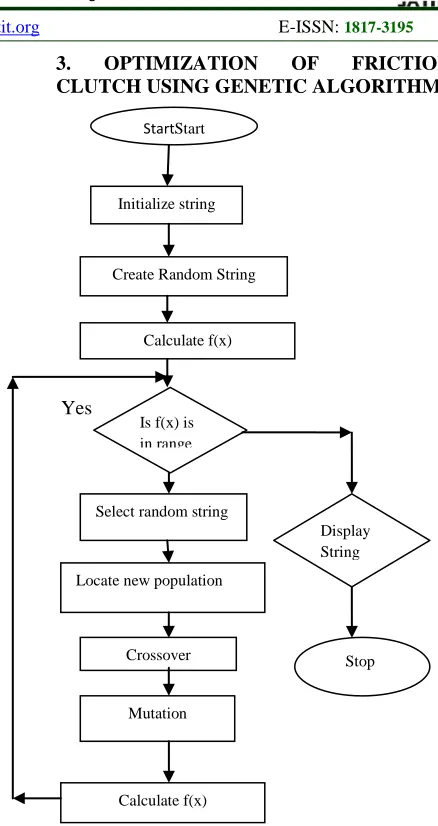
Figure 1 Flow chart representing GA process.
Objective Function: To minimize axial force
between pressure plate and clutch plate Design Variable: Diameter ratio(k), Coefficient
of friction (µ).(i) 0.4< k <0.9 (ii) 0.1< µ<0.5 Design Constraint: Peripheral Velocity(V) As the objective is to minimize the function :-f(x)=f(x1,x2)=1/2 ∏pa [(8T/n∏x2pa)2/3 (x12 / 1- x1
2
)]2/3 (1 / x1– 1) in the interval 0.4< x1< 0.9 , 0.1< x2< 0.5.
3.1 Step 1. Binary Coding To Represent Variable x1 and x2
Chose binary coding , 12 bits for variable x1, x2
total string length = 12+12=24 For 12 bits, solution accuracy is
(Upper limit – initial interval ) /(2 no. of bit-1) Minimum count = 0 and Maximum count = 4096-1=4095
StartStart
Initialize string
Create Random String
Calculate f(x)
Is f(x) is in range
Select random string
Locate new population
Crossover
Mutation
Calculate f(x)
Display String
Step 2. 20 Iterations With Evaluation Of Each String In Population Size String 1 and 2 are coded in order to determine a new objective function (NOF).Average Fitness
Function = Sum of F(x) / No. of Population. Average Fitness Function = 4.8857*10-5 / 20
= 0.00000244 Number population size 12 represents minimum
objective function in phase 1 ( evaluation phase of genetic programming.)
Step 3. Reproduction Of Each String In Population
Evaluation and Reproduction phases on a random population for population size 12 for string 1 and 2 is shown below
Substring 2:111000011000 Substring 1 :110000010011
(Design variable)X1=0.438, X2 =0.677,(NOF) f(x)=197.23KN,fitness function f(X)=5*10-6 Expected count(A)=2.07 Probability of selection (B) =0.103 Cumulative probability of selection (C)=0.625 Random number between 0 and 1(D)=0.388 String number(E)=9 True count in mating pool (F)= 0
For Mating pool ,Substring2:101000011000 Substring 1:110000110001
The action of reproduction operator is clear. Strings are assigned copies exactly equal to the mantissa of the expected count. Thereafter, roulette-wheel selection is implemented which is known as stochastic remainder selection for crossover.
Step 4. Crossover Of String In Population After Reproduction, the population is enriched with good strings from the previous generations but does not have any new strings. Crossover operator is applied to the population to create better strings and is mainly responsible for the search aspect of GA and gives much of their power.
Step 5. Mutation
In the simple GA,mutation is the occasional random alteration of the value of a string position.This means changing from 0 to 1 or vice versa on a bit wise or whole wise. The need for mutation is to keep diversity in the population. Crossover and Mutation operators with
intermediate population for string 1 and string 2 is shown below For Mating pool , Substring2:101000011000
Substring1:110000110001 For intermediate population, Substring2:101000010001
Substring1:110000111000 For Mutation operator, new strings are Substring2:111000010001
Substring1:110100111000
After applying the GA operators, a new set of population is created. They are decoded then and objective function values are calculated. This completes one generation of GA. Such iterations are continued till the termination criteria are achieved. The above process is simulated by computer program with a population size of 20 for number of generations.
4. RESULT AND DISCUSSION :
4.1 Output Of Genetic Algorithm Programming :
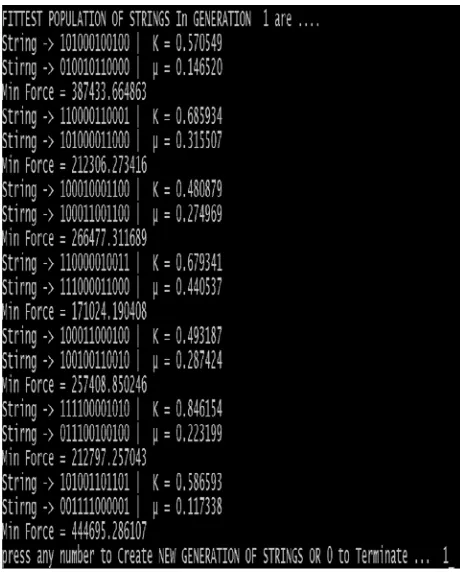
[image:4.612.323.553.406.692.2]The following genetic algorithm output screenshots programming in C++ shows the optimized values obtained are closer and they are much better than the values obtained by the conventional method.
Ng Ni k µ F(x)
KN
F(x) F*x
1 40 0.677 0.438 197.23 0.507 0.244
2 40 0.6786 0.439 196.56 0.508 0.489
3 40 0.7504 0.409 189.850 0.5267 0.6587
4 40 0.822 0.420 137.17 0.728 0.697
By referring the Table 3, we can come into the conclusion that with four number of generation and 160 iterations, the objective function which is to be minimized has a minimum axial force value of 137.178KN with diameter ratio 0.822, coefficient of friction 0.4202 and a fitness function of 0.7289. With reference to the Fig. 2, we have come into the conclusion that as no of generation goes on increasing , fitness function also improves rapidly. It may also be noted that as the objective function( axial force) is minimizing the fitness function goes on improving .Hence we can conclude that minimization of objective function can be achieved by improving the fitness function by performing number of iterations .
Figure 2 Performance of GA
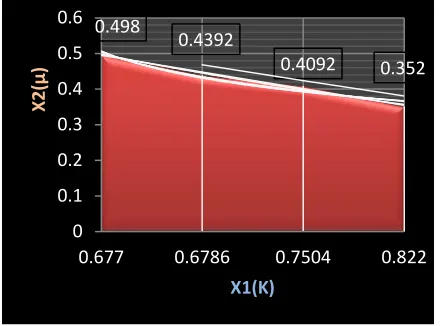
From Fig.3 and Fig.4, we can observe that the average fitness function goes on improving as number of generation goes on increasing. The fitness function F(x) and average fitness function F*(x) will be effectively improved and at some point of generation it will come closer to the value one. Similarly axial force reduces continuously when diameter ratio increases. The rate of decrease is higher for larger values of diameter ratioas show below in Fig.8. A lower value of axial force would lead to overall reduction in weight of the clutch operation linkage, lighter actuating springs, light weight actuation mechanism, ease of operation and comfortable conditions for the operator.Therefore, it is desirable to have the smallest possible value of axial force. This is clearly understood that the need for keeping the value of k as high as possibleHence, we can conclude that average fitness of all the new population has a remarkable improvement as compared to the initial population .
0 0.1 0.2 0.3 0.4 0.5 0.6 0.7 0.8
Fi
tn
ess
Fu
nc
tio
n F(
X)
Figure 3 Performance of Average Fitness Function
Figure 4 Variation of Axial Force
By referring the Table 4 , we can observe that the improvement in the objective function for minimization of axial force is 18.66 % as well as the design constraint has an improvement of 5.56% when compared with the conventional
method.
Table 4 Result Analysis of GA with Conventional Method
Method X1 X2 f(x)
(KN) V (m/s) Conventional 0.64 0.35 196.510 50 GA 0.82 0.42 137.178 47.22
5. CONCLUSION :
The salient conclusions drawn from this analysis are :- Optimal design of friction clutch is closely related to the ratio of inner and outer diameters
of friction surface. The axial force and peripheral velocity are most sensitive to the dimensionless ratio of inner and outer diameters of friction surface.Therefore, the optimum value of k is 0.8 which would result into low axial force along with low outer diameter of friction surface and low peripheral velocity.In this study, the friction clutch design optimization problem is solved efficiently using the non-conventional method (genetic algorithm).The results obtained by GA outperformed the conventional method. The efficiency of non-conventional techniques demonstrated in this study suggests its immediate application to other design optimization problems. Also, GA approach handles the constraints more easily and accurately. Genetic algorithms can be applied to a wide range of problems Their flexibility comes at the cost of more function evaluations. There are many variants of genetic algorithms available, each with its own strengths and weaknesses.
REFERENCES:
[1] R Saravanan, ADwivedi. “Practical Gear Design Optimization using Genetic Algorithm and Simulated Annealing Algorithm”,National Journal of Institution
of Engineers, Vol.82.(July 2001),pp.74-78. [2] ADua , G S Mishra. “An Evolutionary
Computational Technique for Constrained Optimization in Engineering Design”National Journal of Institution of Engineers, Vol.86(October 2005),pp.121-128.
[3] J Srinivas, D K Srinivas, K V J Rao. “Optimum Design of Axial-Flow Gas Turbine Stage using Genetic Algorithms”,National Journal of Institution of Engineers, Vol.85.(January2005),pp.179-187.
[4]K Tripathi., M Agrawal. “Dynamic Modeling of Engagement of Automotive Clutch with Diaphragm Spring”, National Journal of Institution of Engineers, Vol.88.(January 2005),pp.10-16. [5]Steven M. Arnold. “ Design and Optimization
of Composite Gyroscope Momentum Wheel Rings”, NASA Center for Aero Space Information (CASI), Structural Dynamics, and Materials (SDM) Conference cosponsored by the AIAA, , Hawaii, April 23–26, 2007,pp.1-23. 0.244
0.4896
0.6587 0.697
0 0.1 0.2 0.3 0.4 0.5 0.6 0.7 0.8
1 2 3 4
Av
er
ag
e
Fi
tn
es
s F
un
ct
io
n
(F
*X
)
No. of generation (Ng)
0.498 0.4392
0.4092 0.352
0 0.1 0.2 0.3 0.4 0.5 0.6
0.677 0.6786 0.7504 0.822
X2(
μ)
[6]Gábor Renner. “Genetic Algorithms in Computer-Aided Design”, Hungarian Academy of Sciences, Vol.55
(February2007),pp.691-700. [7]Vu Ngoc Pi . “Optimal Calculation of Partial
Transmission Ratios of Four- Step Helical Gearboxes for Getting Minimal Gearbox Length”, World Academy of Science , Engineering and Technology,Vol.37(May 2008),pp.109-112. [8]Mohammad Zulkernine. “ A Software
Implementation of a Genetic Algorithm Based Approach to Network Intrusion Detection”,Sixth International Conference on Software Engineering, Artificial
Intelligence, Networking
(SNPD/SAWN’05).2005 IEEE,pp-25-32. [09] Kalyanmoy Deb. “Optimisation for
Engineering Design- Algorithms and Example”. Prentice Hall of India Private
Limited, New Delhi,1995. [10] S.S.Rao .“Engineering Optimization-
Theory and practice”. New Age International(P)Ltd,New Delhi, 1996. [11] Handout Manuals of General Motors