S T U D Y P R O T O C O L
Open Access
Physical activity as an aid to smoking cessation
during pregnancy (LEAP) trial: study protocol for
a randomized controlled trial
Michael Ussher
1*, Paul Aveyard
2, Isaac Manyonda
1, Sarah Lewis
3, Robert West
4, Beth Lewis
5, Bess Marcus
6,
Adrian H Taylor
7, Pelham Barton
8and Tim Coleman
9Abstract
Background:Many women try to stop smoking in pregnancy but fail. One difficulty is that there is insufficient evidence that medications for smoking cessation are effective and safe in pregnancy and thus many women prefer to avoid these. Physical activity (PA) interventions may assist cessation; however, trials examining these
interventions have been too small to detect or exclude plausible beneficial effects. The London Exercise And Pregnant smokers (LEAP) trial is investigating whether a PA intervention is effective and cost-effective when used for smoking cessation by pregnant women, and will be the largest study of its kind to date.
Methods/design:The LEAP study is a pragmatic, multi-center, two-arm, randomized, controlled trial that will target pregnant women who smoke at least one cigarette a day (and at least five cigarettes a day before pregnancy), and are between 10 and 24 weeks pregnant. Eligible patients are individually randomized to either usual care (that is, behavioral support for smoking cessation) or usual care plus a intervention (entailing supervised exercise on a treadmill plus PA consultations). The primary outcome of the trial is self-reported and biochemically validated continuous abstinence from smoking between a specified quit date and the end of pregnancy. The secondary outcomes, measured at 1 and 4 weeks after the quit date, and at the end of pregnancy and 6 months after childbirth, are PA levels, depression, self-confidence, and cigarette withdrawal symptoms. Smoking status will also be self-reported at 6 months after childbirth. In addition, perinatal measures will be collected, including antenatal complications, duration of labor, mode of delivery, and birth and placental weight. Outcomes will be analyzed on an intention-to-treat basis, and logistic regression models used to compare treatment effects on the primary outcome.
Discussion:This trial will assess whether a PA intervention is effective when used for smoking cessation during pregnancy.
Trial registration:ISRCTN48600346
Keywords:Smoking cessation, Pregnancy, Physical activity, Intervention, Randomized controlled trial
Background
Maternal smoking during pregnancy is the major pre-ventable cause of poor health outcomes for women and their babies. Smoking during pregnancy causes substan-tial harm to mothers and infants, increasing the risks of post-natal depression, miscarriage, stillbirth, prematurity,
low birth weight, perinatal mortality and morbidity, asthma, attention deficit disorder, learning difficulties, and obesity [1-6]. Smoking also presents immediate risks for the mother, including placental abruption [7], as well as the longer-term risks reported for smokers in general. Smoking in pregnancy is a major public health problem in high-income countries; in the USA, 14% of pregnant women smoke throughout their pregnancy [8]; in the UK, 12% of pregnant women smoke [9], although a fig-ure of 40% has been reported in deprived areas [10]. * Correspondence:[email protected]
1
Division of Population Health Sciences and Education, St George’s University of London, Cranmer Terrace, London SW17 ORE, UK
Full list of author information is available at the end of the article
Only around 25% of pregnant smokers stop for even part of their pregnancy, and of these, around two thirds re-start smoking post-natally [11]. The most effective smoking-cessation therapy in non-pregnant smokers is a combination of behavioral support plus nicotine replace-ment therapy (NRT), bupropion, or varenicline [12-14]. However, the safety and efficacy of NRT during pregnancy is not yet known [15], thus many pregnant women are re-luctant to use NRT [16], and other smoking-cessation medications are contraindicated during pregnancy [17]. Behavioral support can increase smoking cessation rates in pregnancy by around 6% [18], and there is a need to identify other non-pharmacological interventions that are effective for smoking cessation during pregnancy.
Pharmaceutical aids for quitting are thought to work mainly through reducing cigarette cravings [14], and there is good evidence that PA moderates these cravings, therefore PA interventions have the potential to aid smoking cessation. A recent systematic review consid-ered the evidence for PA aiding cessation for smokers in general [19]. Most of the 15 randomized controlled trials (RCTs) reviewed were insufficiently powered to detect a meaningful difference between the treatment groups, with seven of the trials having fewer than 25 participants in each treatment arm. Six adequately powered trials compared a group receiving a PA intervention as an ad-junct to behavioral support with a group receiving be-havioral support alone. Three of these studies showed significantly higher smoking abstinence rates in a physic-ally active group versus a control group at end of treat-ment [20-22]. One of these studies also showed a benefit on abstinence for exercise versus control at the 3-month follow-up, and a benefit for exercise of borderline sig-nificance (relative risk (RR) = 2.19, p = 0.05) at the 12-month follow-up [20]. A further study showed sig-nificantly higher abstinence rates for the exercise group compared with control group at the 3-month follow-up, but not at the end of treatment or at the 12-month follow-up [23]. The latter study also found that those with higher levels of exercise adherence were signifi-cantly more likely to achieve abstinence at the end of treatment. The study with the most intensive PA inter-vention (sessions of supervised vigorous intensity exer-cise three times per week) showed the strongest effect on abstinence rates [20]. The other studies entailed PA interventions that were insufficiently intensive to ensure the desired levels of PA. It was concluded that PA levels need to be raised to at least 110 minutes a week to aid long-term abstinence, and supervised exercise sessions on two or more days per week are probably necessary to achieve this aim.
Physical activity could also aid smoking cessation dur-ing pregnancy. Moderate-intensity PA is recommended during pregnancy [24,25], and may represent an attractive
aid to cessation for pregnant smokers who are reluctant to use NRT [16] or who wish to use it as an adjunct to NRT, and who fear post-cessation weight gain or who are concerned about weight and muscle-tone issues during post-partum [26]. Pregnant smokers have been shown to express interest in using PA to help them quit [27], and we have conducted two pilot studies to assess the feasibil-ity of using PA for smoking cessation during pregnancy [28]. In the first study, 10 women recruited from ante-natal clinics attended eight once-weekly sessions combin-ing individual behavioral support for smokcombin-ing cessation with 30 minutes of brisk walking and PA consultations. All the women requested a more extensive PA program; despite this, five women achieved continuous abstinence (validated by carbon monoxide (CO) levels) to the end of pregnancy. In the second pilot, a more intensive interven-tion entailed 22 women receiving 9 weeks of individual smoking cessation support, plus 15 sessions of supervised exercise (brisk treadmill walk or stationary cycling) and PA consultations. Three women maintained continuous (CO validated) abstinence to the end of pregnancy, attending on average 11 of the 14 exercise sessions. All the abstinent women achieved the target of 110 minutes of PA each week. Combining both pilots, 25% of the women (8/32) sustained continuous abstinence to the end of pregnancy. Our pilot work suggests that it is feasible to provide a PA intervention, combining supervised exercise and PA consultations, as an aid to smoking cessation dur-ing pregnancy.
Aim
The aim of this paper is to describe the protocol for an RCT designed to evaluate an intervention for increasing PA as an aid for smoking cessation during pregnancy.
Methods Study design
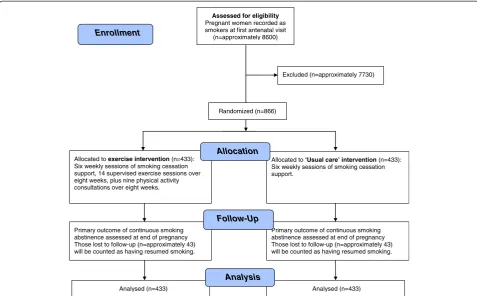
The London Exercise And Pregnant smokers (LEAP) study is a pragmatic two-arm RCT into which pregnant women who smoke are recruited from antenatal clinics in National Health Service (NHS) trust hospitals (see Figure 1 for a flowchart of the LEAP study design). The study will compare the effectiveness on smoking cessation of individual behavioral support for smoking cessation plus a PA intervention, relative to individual behavioral support alone at the end of pregnancy.
Ethics approval
Eligibility criteria
Exercise trials for smoking cessation often target those who report smoking 5 to 10 or more cigarettes a day. However, many pregnant smokers under-report the number of cigarettes they smoke [29], therefore, women are eligible if they report currently smoking at least one cigarette a day and report smoking at least five cigarettes a day before pregnancy. Participants are eligible if they are aged 16 to 50 years, 10–24 weeks pregnant (subject to confirmation that they have had a scan to show a vi-able pregnancy), prepared to quit smoking 1 week after enrolment, and confirm that they are able to walk con-tinuously for at least 15 minutes. Women are excluded if they are unable to complete self-administered question-naires in English (because of lack of resources for trans-lators) or if they report having any medical condition that might be exacerbated by exercise. There are no documented contraindications to moderate-intensity ex-ercise, but if the women have been advised by their doc-tor or midwife not to take exercise during pregnancy, if they have any complications during their pregnancy, or if they have any cautions for taking exercise [24,30], a consultant obstetrician and gynecologist at their hospital will be consulted to check that it is safe for them to par-ticipate. Participants joining the trial are monitored at
each treatment session for cautions to exercise and for adverse events. Those with drug or alcohol dependence will also be excluded as the intervention described here is not sufficiently comprehensive to address the pro-blems of women who have drug or alcohol dependence.
Although NRT is licensed for use in pregnancy, there is mixed evidence on its effectiveness in helping women quit smoking during pregnancy [15], and the most robust trial to date has found no evidence that it is ef-fective [31]. In addition, many pregnant smokers prefer not to use NRT [16]. Allowing participants in the trial to use NRT might create confounding, and therefore, women who indicate that they wish to use NRT at the outset will be excluded. Our pilot work shows that preg-nant smokers are willing to attempt to quit without using NRT as part of a research study [28]. Following the guidelines [17], those women who are unable to stop smoking after their quit day, and who express a clear wish to receive NRT, will be prescribed NRT by their general practitioner (GP). Use of NRT will be monitored throughout the intervention period with the following questions:
Have you used any nicotine replacement therapy (NRT) this week?
Assessed for eligibility Pregnant women recorded as smokers at first antenatal visit
(n=approximately 8600)
Excluded (n=approximately 7730)
Analysed (n=433) Primary outcome of continuous smoking abstinence assessed at end of pregnancy Those lost to follow-up (n=approximately 43) will be counted as having resumed smoking. Allocated to exercise intervention(n=433): Six weekly sessions of smoking cessation support, 14 supervised exercise sessions over eight weeks, plus nine physical activity consultations over eight weeks.
Primary outcome of continuous smoking abstinence assessed at end of pregnancy Those lost to follow-up (n=approximately 43) will be counted as having resumed smoking. Allocated to ‘Usual care’ intervention(n=433): Six weekly sessions of smoking cessation support.
Analysed (n=433)
Allocation
Analysis Follow-Up
Randomized (n=866)
[image:3.595.58.536.89.385.2]Enrollment
If yes, which type of NRT have you mainly used?
How many days, approximately, have you used NRT in the past week?.
In addition, at the end of pregnancy follow-up partici-pants will be asked the following questions:
Besides the help we have given you, have you received any face-to-face support to stop smoking during your pregnancy?
If yes, approximately how many sessions have you attended?.
The subjects’GPs, midwives, and obstetricians will be informed of their patient’s participation in the trial.
Sample size
A Cochrane review suggests that approximately 9% of women who are still smoking at the time of their first antenatal visit will stop smoking with usual care through to the end of their pregnancy, and a further 6% will stop as a result of a smoking cessation program using individual behavioral support [18]. Thus, in our control group we expect a smoking cessation rate of around 15% at the end of pregnancy. Combining our pilot studies, 25% (8/32) of participants in the treat-ment group sustained continuous smoking abstinence to the end of pregnancy. Therefore, in the trial we con-servatively estimate an abstinence rate of 23% at the end of pregnancy in the treatment group, which would be similar to the effect shown for NRT with non-pregnant smokers [14]. We aim to recruit 433 women to each arm to detect the above absolute difference (8%) in smoking cessation rates between the groups at end of pregnancy with a two-sided significance level of 5% and power of 83%. This calculation is based on aχ2 test with Yates correction.
Recruitment
Recruitment for the trial is taking place over a 44-month period, between April 2009 and November 2012, in 13 NHS hospital trusts in London and the south-east of England. During the trial, smoking status for all preg-nant women will be recorded in the hospital computer-ized patient administration system at the first antenatal booking visit, which is typically at 9–14 weeks of gesta-tion. At this time, the midwife will inform all women recorded as smokers that it is the hospital’s policy to telephone them to offer smoking-cessation support. This support would usually be offered by the primary care trust (PCT) stop-smoking advisor, but during the period of recruitment to the study, a trial researcher will tele-phone the women. Those who are interested in receiving help with quitting will be invited to join the trial or be
referred to the PCT. Information for the first antenatal appointment will be accompanied by a flyer inviting women who smoke to join the study. Those women expressing interest in volunteering will be screened for eligibility by a telephone interview, and eligible women will be sent a patient information sheet. As an incentive for recruitment, and to increase attendance rates, all women attending at least 80% of their treatment sessions will be entered into an annual lottery with three annual prizes of £100 shopping vouchers.
Randomization
At the first visit, eligible and consenting patients will be individually randomized to one of the two treatment arms based on a computer-generated pseudo-random code using random permuted blocks of randomly varying size, created by the Nottingham University Clinical Trials Unit (CTU) and held on a secure server. The randomization will be stratified by center, and block randomization will be used to ensure good balance be-tween intervention and control within centers and thus minimize the risk of any ‘center effect’ influencing the outcome. Access to the sequence will be confined to the CTU data manager. Allocation to treatment arms will be in the ratio 1:1, and investigators will access the treat-ment allocation for each participant by means of a
re-mote, secure internet-based randomization system
developed and maintained by the CTU. Allocation will be concealed from the patient until they have completed all baseline assessments. The sequence of treatment allo-cations will be concealed until interventions have all been assigned and recruitment, data collection, and la-boratory analyses are complete.
Interventions
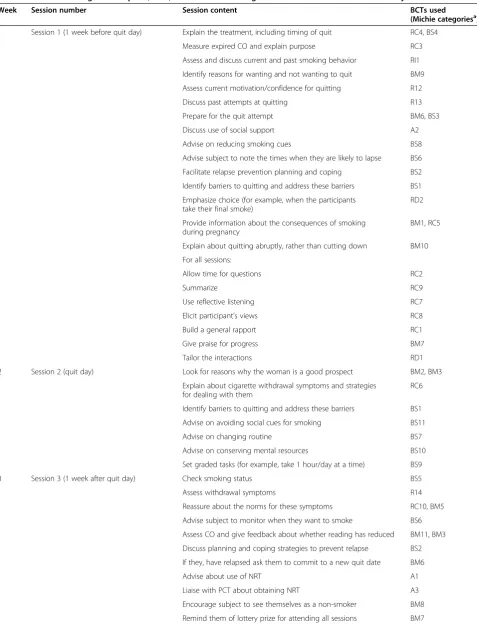
Table 1 Behavior change techniques (BCTs) used in the smoking-cessation consultations in this study
Week Session number Session content BCTs used
(Michie categoriesa)
1 Session 1 (1 week before quit day) Explain the treatment, including timing of quit RC4, BS4
Measure expired CO and explain purpose RC3
Assess and discuss current and past smoking behavior RI1
Identify reasons for wanting and not wanting to quit BM9
Assess current motivation/confidence for quitting R12
Discuss past attempts at quitting R13
Prepare for the quit attempt BM6, BS3
Discuss use of social support A2
Advise on reducing smoking cues BS8
Advise subject to note the times when they are likely to lapse BS6
Facilitate relapse prevention planning and coping BS2
Identify barriers to quitting and address these barriers BS1
Emphasize choice (for example, when the participants take their final smoke)
RD2
Provide information about the consequences of smoking during pregnancy
BM1, RC5
Explain about quitting abruptly, rather than cutting down BM10
For all sessions:
Allow time for questions RC2
Summarize RC9
Use reflective listening RC7
Elicit participant’s views RC8
Build a general rapport RC1
Give praise for progress BM7
Tailor the interactions RD1
2 Session 2 (quit day) Look for reasons why the woman is a good prospect BM2, BM3
Explain about cigarette withdrawal symptoms and strategies for dealing with them
RC6
Identify barriers to quitting and address these barriers BS1
Advise on avoiding social cues for smoking BS11
Advise on changing routine BS7
Advise on conserving mental resources BS10
Set graded tasks (for example, take 1 hour/day at a time) BS9
3 Session 3 (1 week after quit day) Check smoking status BS5
Assess withdrawal symptoms R14
Reassure about the norms for these symptoms RC10, BM5
Advise subject to monitor when they want to smoke BS6
Assess CO and give feedback about whether reading has reduced BM11, BM3
Discuss planning and coping strategies to prevent relapse BS2
If they, have relapsed ask them to commit to a new quit date BM6
Advise about use of NRT A1
Liaise with PCT about obtaining NRT A3
Encourage subject to see themselves as a non-smoker BM8
recognizes the interplay of individual factors (for ex-ample, self-efficacy to quit smoking or increase PA) and social/environmental factors (for example, social sup-port) on health behavior change. For each session that they attend, the women are paid £7 for their travel expenses.
Control group
Those in the control group will receive behavioral sup-port for smoking cessation, which is generally provided via the NHS Stop Smoking Services to pregnant women as part of ‘usual care’. By extracting the elements of the intervention from written manuals and materials pro-vided by the program (see Additional file 1), the contents of the intervention have been classified in accordance with the taxonomy of behavior-change techniques (BCTs) described by Michie and colleagues, and used in individual behavioral support for smoking cessation [35] (Table 1). The researchers delivering the intervention will be trained to NHS Centre for Smoking Cessation and Training standards during a 2-day course [36]. Partici-pants will receive six once-weekly sessions of behavioral support, each session lasting for approximately 20 min-utes. This begins 1 week before the quit date and ends 4 weeks after that date. A pregnancy-specific smoking ces-sation program is used [17], the contents of which are described in Table 1. The intervention incorporates all 43 BCTs for smoking cessation defined by Michie and col-leagues [35], except for the BCT‘provide rewards contin-gent on successfully stopping smoking’, although rewards
will be offered to increase compliance (see Table 3). Con-tinuing support will be offered to women who fail to quit or relapse to smoking.
Treatment group
In addition to behavioral support for smoking cessation, those in the PA group will receive a PA intervention, combining PA consultations and supervised exercise. By extracting the elements of the PA consultation from written manuals and materials provided by the PA pro-gram (see Additional file 2; see Additional file 3), the contents of the PA consultation have been classified in accordance with the taxonomy by Michie and colleagues of behavioral change techniques used to help people change their PA behaviors [37]. The researchers deliver-ing the PA intervention will be trained durdeliver-ing a 2-day course. There are 14 sessions of supervised exercise, twice a week during the first 6 weeks of the intervention, and then once a week for 2 weeks. During the first 6 weeks, when the smoking-cessation support is provided, one of the exercise sessions will be combined with the smoking-cessation support. Following a familiarization session at the first visit, participants will be advised to aim for 30 minutes of continuous treadmill walking
dur-ing each session. Following the guidelines [38],
[image:6.595.57.538.99.193.2]moderate-intensity exercise will be prescribed according to age and current activity levels, and monitored using a polar heart-rate monitor. Intensity of exercise will also be guided by the rating of perceived exertion (RPE) [39] (‘fairly light’ to ‘somewhat hard’) and by the ‘talk test’,
Table 1 Behavior change techniques (BCTs) used in the smoking-cessation consultations in this study(Continued)
4 Session 4 (2 weeks after quit day) onwards Assess CO BM11
Check smoking status BS5
If they are struggling offer further support from PCT A5
Discuss relapse prevention planning and coping strategies for after birth
BS2, BM8
Emphasize importance of not having a single puff BM6
If subject has relapsed, set a new quit date, and review use of NRT A4
CO, carbon monoxide; PCT, primary care trust; NRT, nicotine replacement therapy. a
Michie categories are defined as follows.
Specific focus on the target behavior (B) and maximizing motivation (M).BM1: provide information on consequences of smoking and smoking cessation. BM2: boost motivation and self-efficacy. BM3: Provide feedback on current behavior. BM5: provide normative information about others’behavior and experiences: BM6: prompt commitment from the client there and then. BM7: Provide rewards contingent on effort or progress. BM8: strengthen ex-smoker identity. BM9: identify reasons for wanting and not wanting to stop smoking. BM10: explain the importance of abrupt cessation. BM11: measure CO levels.
Maximizing self-regulatory capacity and skill (BS). BS1: facilitate barrier identification and problem-solving. BS2: facilitate relapse-prevention and coping. BS3: facilitate action-planning/develop treatment plan. BS4: facilitate goal-setting. BS5: prompt review of goals. BS6: prompt self-recording. BS7: advise on changing routine. BS8: advise on environmental restructuring. BS9: set graded tasks. BS10: advise on conserving mental resources. BS11: advise on avoiding social cues for smoking.
Promoting adjuvant activities (A).A1: advise on stop-smoking medication. A2: advise on/facilitate use of social support. A3: adopt appropriate local procedures to enable clients to obtain free medication. A4: ask about experiences of stop-smoking medication that the smoker is using. A5: give options for additional and later support.
General aspects of interaction focusing on delivery of the intervention (RD). RD1: tailor interactions appropriately. RD2: emphasize choice.
General aspects of interaction focusing on information gathering (RI).RI1: assess current and past smoking behavior. RI2: assess current readiness and ability to quit. RI3: assess history of quit attempts. RI4: assess withdrawal symptoms.
which indicates that the intensity of activity is too high if the woman cannot hold a conversation.
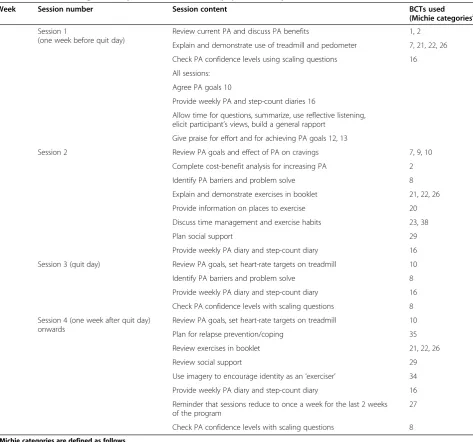
Twice a week for the first week and then once a week (alternating with smoking cessation support), prior to using the treadmill, the women will receive around 20 minutes of PA consultation (total of nine sessions), aimed at increasing PA undertaken outside the super-vised sessions (Table 2). The intervention incorporates 19 of 40 BCTs for increasing PA as defined by Michie et al. [37]. The researcher and participant will work through a booklet incorporating the behavior-change
[image:7.595.60.534.98.540.2]techniques (see Additional file 1). The participants will be encouraged to view exercise as a self-control strategy for reducing cigarette cravings and withdrawal [40], and to maintain any increases in PA after their pregnancy. Following recommendations for pregnancy [24,25], the women will be advised to be active for continuous peri-ods of at least 10 minutes at a time, progressing towards accumulating 30 minutes of activity on at least 5 days of the week. The emphasis will be on brisk walking, which is popular among pregnant smokers [41]. As a further option, a home-based antenatal exercise DVD and Table 2 Behavior change techniques (BCTs) used in the physical activity (PA) consultations
Week Session number Session content BCTs used
(Michie categoriesa)
1 Session 1
(one week before quit day)
Review current PA and discuss PA benefits 1, 2
Explain and demonstrate use of treadmill and pedometer 7, 21, 22, 26
Check PA confidence levels using scaling questions 16
All sessions:
Agree PA goals 10
Provide weekly PA and step-count diaries 16
Allow time for questions, summarize, use reflective listening, elicit participant’s views, build a general rapport
Give praise for effort and for achieving PA goals 12, 13
1 Session 2 Review PA goals and effect of PA on cravings 7, 9, 10
Complete cost-benefit analysis for increasing PA 2
Identify PA barriers and problem solve 8
Explain and demonstrate exercises in booklet 21, 22, 26
Provide information on places to exercise 20
Discuss time management and exercise habits 23, 38
Plan social support 29
Provide weekly PA diary and step-count diary 16
2 Session 3 (quit day) Review PA goals, set heart-rate targets on treadmill 10
Identify PA barriers and problem solve 8
Provide weekly PA diary and step-count diary 16
Check PA confidence levels with scaling questions 8
3 Session 4 (one week after quit day) onwards
Review PA goals, set heart-rate targets on treadmill 10
Plan for relapse prevention/coping 35
Review exercises in booklet 21, 22, 26
Review social support 29
Use imagery to encourage identity as an‘exerciser’ 34
Provide weekly PA diary and step-count diary 16
Reminder that sessions reduce to once a week for the last 2 weeks of the program
27
Check PA confidence levels with scaling questions 8
a
Michie categories are defined as follows.
booklet will be provided. In addition, participants will be given a pedometer (Digi-Walker SW-200; Great Per-formance Ltd, London, UK) for monitoring their daily steps. Pedometers have been shown to increase activity levels in women [42], and are acceptable during preg-nancy [43] and among pregnant smokers [28]. Partici-pants will be asked to log their daily steps, with the therapist calculating a 10% increment every 2 weeks, gradually progressing towards 10,000 steps a day [44].
Baseline data collection
At baseline, demographic characteristics will be recorded, including age, marital status, number of children, highest educational qualification, ethnicity, occupation, weeks of gestation, and history of premature births. Smoking his-tory will also be recorded, including cigarettes smoked per day (now and before pregnancy), urge to smoke [45,46], tobacco withdrawal symptoms [45,46], and Fagerström Test for Nicotine Dependence score [47], as well as the partner's smoking status. Depression will be assessed with the 10-item Edinburgh Postnatal Depression Scale (EPDS) [48]. Physical activity levels in the previous week will be assessed for both groups using the 7-day Physical Activity Interview [49]. The woman’s confidence about taking up regular PA [50] and stopping smoking [51] will also be reported.
Outcome measures Primary outcomes
The primary outcome is self-reported continuous abstin-ence from smoking from the quit date through to the end of pregnancy, validated by either exhaled CO or sal-ivary cotinine levels. This outcome is dichotomous (that is, abstinent or not abstinent). Our definition of continu-ous abstinence allows a total of five cigarettes after the quit day [52,53]. Expired CO levels will be assessed
weekly up to 4 weeks after the quit day and at end of pregnancy using a CO monitor (Smokerlyzer; Bedfont Scientific Ltd, Maidstone, Kent, UK) with a cut-off of <8 ppm [54]. Saliva cotinine levels will be measured at 4 weeks after the quit day and at the end of pregnancy (cut-off level <10 ng/ml) [55]. The aim is to follow-up the woman within 2 weeks of the birth; however, the end-of-pregnancy assessment will be considered valid if recorded between week 36 of pregnancy and 10 weeks after the birth. If a woman’s report of abstinence is dis-confirmed by either her CO or cotinine level, she will be considered as having resumed smoking. All the data will be entered on to an online database held on a secure internet server at the CTU at Nottingham University.
Secondary outcomes
Continuous smoking abstinence will also be assessed at 4 weeks after the quit day and 6 months after the birth. In addition, we will assess continuous smoking abstin-ence with a stricter criteria whereby no cigarettes are allowed after the quit day, at 4 weeks after the quit date, and at the end of pregnancy. Again, self-reports of smoking abstinence will be validated by expired CO and cotinine measurements. Self-reports of smoking status at 6 months after the birth will be reported via telephone and will not be biochemically validated. As an incentive, women who complete the follow-up sessions at the end of pregnancy and at 6 months after the birth will be given a £10 shopping voucher for each of these follow-ups. Table 3 summarizes the various financial incentives offered to the participants.
Many women report that, rather than stopping smok-ing, they reduce their smoking during pregnancy [56,57], and there is some evidence to suggest that a reduction in smoking of 50% or more is associated with increased infant birth weight [58]. Therefore, levels of smoking re-duction will be assessed for those women who relapse. Other secondary outcome measures are: changes in urge to smoke, tobacco withdrawal symptoms, and confi-dence in stopping smoking and in maintaining regular PA. We will also assess changes in depression between baseline, end of pregnancy and 6 months after the birth, as well as changes in maternal weight between baseline, 4 weeks after the quit date, and end of pregnancy.
[image:8.595.57.291.101.266.2]Further self-reports of PA levels (by 7-day recall) will be collected at weeks 1, 4, and 6 after the quit date and at both follow-ups (that is, end of pregnancy and 6 months after birth). To objectively validate self-reported PA levels, 10% of participants in both the treatment group and the control group will wear an accelerometer (GT1M; Actigraph, Pensacola, FL, USA) for seven con-tinuous days during the fourth week after the quit date. Those who record at least 5 days of Actigraph data will be compensated with a payment of £25 shopping Table 3 Financial incentives offered to trial participants
Incentive occasion Maximum financial incentive, GBP
Exercise group Control group
Annual lottery with three prizes of £100afor attending at least 80% of treatment sessions
100 100
£7btravel expenses for each session attended
98 (14 sessions)
42 (6 sessions)
£10afor follow-up at end of pregnancy
10 10
£10afor follow-up at 6 months after birth
10 10
£25aif≥5 days of Actigraph data recorded
25 NA
Total £243 £162
NA, not applicable. a
vouchers. The Actigraph has been shown to be practic-able and valid during pregnancy [59-61]. Duration of treadmill exercise will be recorded, along with attend-ance rates at behavioral support and exercise sessions.
The following perinatal measures will be extracted from patient’s hospital records: (i) antenatal complica-tions, including any admissions and the reasons for the admissions, (ii) gestation at onset/induction of labor (and indication for induction where appropriate), (iii) duration of labor and mode of delivery, (iv) Apgar scores of infants, and where available acid–base status of infants, and rates of transfer to the neonatal intensive-care unit, and (v) birth weight and placental weight.
Cost-effectiveness
From a health-service perspective, we will examine the cost-effectiveness of smoking -cessation support plus ex-ercise relative to smoking-cessation support alone. We will document resources consumed that are related to each intervention. Relevant resources include: cost of personnel, materials, space, equipment, and administra-tive overheads. Data collection methods include: (i) accounting for staff time using time and effort reports, (ii) accounting for computer time, mailing, and program costs using an accounting system that has been created to facilitate real-time aggregation of these costs, (iii) and using interviews with staff to determine the amount of time they devote to tasks related to the program. The benefits of smoking cessation in pregnancy will be mod-eled and not measured. Long-term cessation leads to long-term benefits to the mother, which must be dis-counted appropriately. In ‘normal quitters’ who sustain abstinence for about 6 months, meta-analyses show that half will relapse, while half will become lifetime abstai-ners and enjoy these benefits [62,63]. Based on this, we might expect that most women who stop smoking in pregnancy, usually for at least 6 months, would maintain lifetime abstinence. However, a much higher proportion of women who stop smoking return to it after pregnancy than would be expected in these models, diminishing the benefits to the woman herself from smoking cessa-tion. However, the benefits of smoking cessation in preg-nancy also extend to the fetus, which will be less likely to be born pre-term [18]. This leads to reduced NHS costs and a lower likelihood of complications, such as cerebral palsy and similar health problems. Avoidance of these latter health problems leads to gains in quality-adjusted life years for the baby that must also be included in the utility measure of the decision analytic model. Thus we will use an existing method that has been used for cost-effectiveness modeling for the Na-tional Institute for Clinical Excellence (NICE), updating utility estimates to include the benefits to the fetus. The evidence for this model in measuring the benefits to the
fetus and child will be derived from a systematic review of the effects of smoking cessation in pregnancy on the con-sequences for the fetus and child that is currently being conducted by a team at the University of Nottingham, led by Professor Tim Coleman (co-investigator). The analysis will allow us to calculate incremental cost-effectiveness ratios for smoking cessation support plus exercise com-pared with smoking cessation support alone in terms of cost of treatments per smoker who quits. We will also be able to examine ratios for subgroups; for example, accord-ing to nicotine dependence or age at baseline.
Statistical analysis
We will conduct a descriptive comparison of the base-line characteristics of the two treatment groups. Analysis will be on an intention-to-treat (ITT) basis. Participants who, for any reason, have missing outcome data on the primary outcome or any secondary smoking outcomes, will be assumed to have resumed smoking [55]. Our pri-mary outcome measure, continuous abstinence from smoking from quit date to end of pregnancy, will be compared between treatment groups using logistic re-gression, adjusted for recruitment center only, with stat-istical significance determined by the likelihood-ratio test and with the estimate of effect given as the odds ratio and 95% confidence interval. Our primary analysis will not adjust for any further variables because effect estimates can be sensitive to decisions concerning what variables should be adjusted for and how these are speci-fied. However, we will conduct secondary analyses adjusting for the following variables that are predicted to be related to the outcome: education, nicotine depend-ence, age, and depression. We will analyze other binary smoking outcomes in a similar way.
controlling for any differences between groups in these variables.
We will determine the quantity and distributions of missing data. We will carry out a complete case analysis, and we will compare this with an analysis using multiple imputation to deal with missing values, which assumes data are missing at random, describing any differences in terms of the biases in the data. The exception is smoking outcomes, where those with missing data will be assumed to have resumed smoking [55].
If the intervention is effective, we will use mediation analysis to examine whether there is evidence that the change in PA levels is the likely causal factor in deter-mining smoking abstinence. We will examine the associ-ation between treatment group and change in PA levels, and the association between level of PA and abstinence. Finally, we will include level of PA in a logistic regres-sion model of the association between treatment group and abstinence, with mediation assessed using MacKin-non’s causal steps criteria [64].
Changes to methods since trial enrollment began
Since trial enrollment began on 1 April 2009, the follow-ing important changes to the methods have been made.
1) For the follow-up at end of pregnancy, the valid period for assessment was originally defined as 38 weeks gestation to 2 weeks after the birth. Because there were a number of women who could not be contacted to be followed up during this time frame, the valid period was extended to 36 weeks gestation to 4 weeks after the birth (approved by the research ethics committee on 18 May 2010). However, because there were still a few women being followed up later than 4 weeks after the birth, the valid period was further revised to 36 weeks gestation to 10 weeks after the birth (approved 31 Jan 2012). The aim remains to attempt to follow-up as many women as possible within 2 weeks of the birth. 2) To give the women an incentive to complete the
follow-ups at end of pregnancy and 6 months after the birth, all women who complete these follow-ups will be given a £10 shopping voucher for each of the follow-up sessions attended (approved 18 May 2010). 3) Originally, to be eligible women had to report
smoking at least 10 cigarettes a day before their pregnancy. We found that a good number of women reported smoking five to nine cigarettes a day at this time. Therefore, we extended the eligibility criteria to include women smoking at least five cigarettes a day before pregnancy (approved 15 September 2010). These women are still likely to be dependent on smoking, as there is evidence that women who say they were smoking five to nine cigarettes before
pregnancy are back to smoking 14 cigarettes a day at 18 months post-partum [65].
4) Initially, women had to be between 12 and 24 weeks' gestation to be eligible for the trial. However, since the trial began, most of the hospital trusts began offering earlier antenatal booking appointments (before 12 weeks gestation), and because we wished to recruit the women as early as possible in pregnancy, we revised this to 10 to 24 weeks gestation (approved 31 Jan 2012).
Discussion
Because NHS Stop Smoking Services provide individual behavioral support to pregnant women as a standard treatment, we will be testing an intervention that could be readily introduced into current NHS practice and might be expected to cost less per patient than conven-tional treatments, such as NRT. This study has been designed to address many of the limitations highlighted in previous research examining PA as an aid for smoking cessation [15], by including both supervised exercise and PA consultations, being adequately powered, using a re-mote randomization system to protect concealment of allocation, and adopting an ITT approach to the analysis. If found to be effective, physical activity could be an im-portant alternative or adjunctive treatment for smoking cessation during pregnancy, particularly for women who prefer non-pharmacological interventions. Currently, however, little is known about the mechanisms that might mediate any therapeutic effects of PA on smoking cessation [15]. There are a number of hypothesized bio-logical and psychosocial mechanisms, but it is likely that an effective PA intervention would rely on multiple mechanisms. Future research might identify which par-ticular mechanisms, and any interactions between them, are most important, and determine the optimum type, intensity, and duration of PA required to produce a therapeutic effect.
Current study status
The LEAP trial began recruiting patients in April 2009, and recruitment will close in November 2012. Data col-lection for the primary outcome is due to be completed in July 2013. As of October 2nd 2012, 768 women have been recruited.
Additional files
Additional file 1:Therapist manual for delivering smoking cessation intervention.
Additional file 2:Therapist manual for delivering physical activity intervention.
Abbreviations
BCTs: Behavior Change Techniques; CTU: Clinical trials unit; GP: General practitioner; ITT: Intention-to-treat; LEAP: London Exercise And Pregnant smokers; NICE: National Institute for Clinical Excellence; NRT: Nicotine replacement therapy; NHS: National Health Service; PCT: primary care trust; RCT: Randomized controlled trial; RPE: Rating of perceived exertion.
Competing interests
The authors declare that they have no competing interests.
Authors’contributions
All authors were responsible for the initial protocol, securing funding for the trial, and refinement of the protocol. MU is both the chief investigator and the trial manager. Data analysis will principally be conducted by MU with the assistance of SL. MU wrote the initial draft of the manuscript. All authors contributed to and approved the final manuscript.
Acknowledgements
This research has been conducted independently by St George’s University of London.
It is funded by the Department of Health (DH) as part of the National Institute for Health Research (NIHR) Health Technology Assessment (HTA) program (project number 07/01/14). The views and opinions expressed in this paper are those of the authors and do not necessarily reflect those of the HTA program, NIHR, NHS or the DH. We thank all the patients and staff participating in the trial and also to the members of our trial steering committee (TSC) for their valuable support. We thank all the researchers who have worked on the trial: Ory Bolooki, Janet Brown, Sarah Cleary, Caroline Dixon, Julie Fuller, Gail Harding, Maggie Hart, Tracey Kilbane, Rachel Lex, Zoe Magrath, Ilia Papachristou, Maureen Quin, Beth Steff, Bettina Wanninkhof. We also thank the trial administrator Mary Apps, including for her assistance with preparing this manuscript.
Author details
1Division of Population Health Sciences and Education, St George’s University
of London, Cranmer Terrace, London SW17 ORE, UK.2Department of Primary Care Health Sciences, University of Oxford, Radcliffe Observatory Quarter, Woodstock Road, Oxford OX2 6GG, England.3Division of Epidemiology and Public Health and UK Centre for Tobacco Control Studies, University of Nottingham, Nottingham NG5 1 PB, UK.4Health Behaviour Research Centre, Department of Epidemiology and Public Health, UCL, Gower Street, London WC1E 6BT, UK.5School of Kinesiology, University of Minnesota, Minneapolis MN 55455, USA.6Department of Family and Preventive Medicine, University of California, San Diego, CA 92093-0628, USA.7School of Sport and Health Sciences, Sport and Health Sciences, University of Exeter, Exeter EX1 2 LU, UK.8Health Economics, School of Health and Population Sciences, University of Birmingham, Birmingham B15 2TT, UK.9Division of Primary Care and UK Centre for Tobacco Control Studies, University of Nottingham, Nottingham NG5 1 PB, UK.
Received: 4 April 2012 Accepted: 21 September 2012 Published: 4 October 2012
References
1. Batstra L, Hadders-Algra M, Neeleman J:Effect of antenatal exposure to maternal smoking on behavioural problems and academic achievement in childhood: prospective evidence from a Dutch birth cohort.Early Hum Dev2003,75:21–33.
2. Cnattingius S:The epidemiology of smoking during pregnancy: smoking prevalence, maternal characteristics, and pregnancy outcomes.Nicotine Tob Res2004,6(Suppl 2):125–140.
3. Charlton A:Children and smoking: the family circle.Brit Med Bull1996, 52:90–107.
4. Royal College of Physicians:Smoking and the young. A report of a working party of the Royal College of Physicians. London: RCP; 1992.
5. Wideroe M, Vik T, Jacobsen G, Bakketeig LS:Does maternal smoking during pregnancy cause childhood overweight?Paediat Perinat Epidemiol
2003,17:171–179.
6. Munafò MR, Heron J, Araya R:Smoking patterns during pregnancy and postnatal period and depressive symptoms.Nicotine Tob Res2008, 10:1609–1620.
7. Toivonen S, Heinonen S, Anttila M, Kosma VM, Saarikoski S:Reproductive risk factors, Doppler findings, and outcome of affected births in placental abruption: a population-based analysis.Am J Perinatol2002, 19:451–456.
8. Centers for Disease Control and Prevention (CDC):Trends in Smoking Before, During, and After Pregnancy -Pregnancy Risk Assessment Monitoring System (PRAMS), United States, 31 Sites, 2000–2005.MMWR
2009,58:1–29. Available at: http://www.cdc.gov/mmwr/preview/mmwrhtml/ ss5804a1.htm?s_cid=ss5804a1_e.
9. The NHS Information Centre:Infant Feeding Survey 2010: Early Results. The Information Centre for Health and Social Care; 2011. Available at http://www.ic.nhs.uk/.
10. Shipton D, Tappin DM, Vadiveloo T, Crossley JA, Aitken DA, Chalmers J: Reliability of self reported smoking status by pregnant women for estimating smoking prevalence: a retrospective, cross sectional study.
BMJ2009,339:b4347.
11. Owen L, Penn G:Smoking and pregnancy: A survey of knowledge attitudes and behaviour, 1992–1999. London: Health Development Agency; 1999. 12. Cahill K, Stead LF, Lancaster T:Nicotine receptor partial agonists for
smoking cessation.Cochrane Database Syst Rev2011,2:CD006103. 13. Hughes JR, Stead LF, Lancaster T:Antidepressants for smoking cessation.
Cochrane Database Syst Rev2007,1:CD000031.
14. Stead LF, Perera R, Bullen C, Mant D, Lancaster T:Nicotine replacement therapy for smoking cessation.Cochrane Database Syst Rev2008, 1:CD000146.
15. Coleman T, Chamberlain C, Cooper S, Leonardi-Bee J:Efficacy and safety of nicotine replacement therapy for smoking cessation in pregnancy: systematic review and meta-analysis.Addiction2011,106:52–61. 16. Ussher M, West R:Interest in nicotine replacement therapy among
pregnant smokers.Tob Control2003,12:108–109.
17. National Institute for Health and Clinical Excellence:NICE public health guidance 26: How to stop smoking in pregnancy and following childbirth. London: NICE; 2010.
18. Lumley J, Chamberlain C, Dowswell T, Oliver S, Oakley L, Watson L: Interventions for promoting smoking cessation during Pregnancy.
Cochrane Database Syst Rev2009,3:CD001055.
19. Ussher MH, Taylor A, Faulkner G:Exercise interventions for smoking cessation.Cochrane Database Syst Rev2012,1:CD002295.
20. Marcus BH, Albrecht AE, King TK, Parisi AF, Pinto BM, Roberts M, Niaura RS, Abrams DB:The efficacy of exercise as an aid for smoking cessation in women: A randomised controlled trial.Arch Intern Med1999, 159:1229–1234.
21. Marcus BH, Albrecht AE, Niaura RS, Abrams DB, Thompson PD:Usefulness of physical exercise for maintaining smoking cessation in women.
Am J Cardiol1991,68:406–407.
22. Martin JE, Kalfas KJ, Patten CA, Polarek M, Hofstetter CR, Noto J, Beach D: Prospective evaluation of three smoking interventions in 205 recovering alcoholics: One-year results of project SCRAP-Tobacco.J Consult Clin Psychol1997,65:190–194.
23. Marcus BH, Lewis BA, Hogan J, King TK, Albrecht AE, Bock B, Parisi AF, Niaura R, Abrams DB:The efficacy of moderate-intensity exercise as an aid for smoking cessation in women: a randomized controlled trial.
Nicotine Tob Res2005,7:871–880.
24. American College of Obstetricians and Gynecologists:Exercise during pregnancy and the postpartum period.Obstet Gynecol2003,46:496–499. 25. Royal College of Obstetricians and Gynaecologists:Exercise in pregnancy:
statement 4. London: 2006. Available at: http://www.rcog.org.uk/files/rcog-corp/Statement4-14022011.pdf.
26. Pomerleau CS, Brouwer RJ, Jones LT:Weight concerns in women smokers during pregnancy and postpartum.Addict Behav2000,25:759–767. 27. Ussher M, West R, Hibbs N:A survey of pregnant smokers' interest in
different types of smoking cessation support.Patient Educ Couns2004, 54:67–72.
28. Ussher M, Aveyard P, Coleman T, Straus L, West R, Marcus B, Lewis B, Manyonda I:Physical activity as an aid to smoking cessation during pregnancy: two feasibility studies.BMC Public Health2008,8:328. 29. Graham H, Owen L:Are there socioeconomic differentials in
under-reporting of smoking in pregnancy?Tob Control2003, 12:434.
31. Coleman T, Cooper S, Thornton JG, Grainge MJ, Watts K, Britton J, Lewis S:A randomized trial of nicotine-replacement therapy patches in pregnancy.
N Engl J Med2012,366:808–818.
32. CONSORT Group, Boutron I, Moher D, Altman DG, Schulz KF, Ravaud P: Extending the CONSORT statement to randomized trials of nonpharmacologic treatment: explanation and elaboration.Ann Intern Med2008,148:295–309.
33. Davidson KW, Goldstein M, Kaplan RM, Kaufmann PG, Knatterund GL, Orleans CT, Spring B, Trudeau KJ, Whitlock EP:Evidence-based behavioural medicine: what is it and how do we achieve it?Ann Behav Med2003, 26:161–171.
34. Bandura A:Health promotion by social cognitive means.Health Educ Behav2004,31:143.
35. Michie S, Hyder N, Walia A, West R:Development of a taxonomy of behaviour change techniques used in individual behavioural support for smoking cessation.Addict Behav2011,36:315–319.
36. NHS Centre for Smoking Cessation and Training:NCSCT Training Standard: Learning Outcomes for Training Stop Smoking Practitioners. London: NHS; 2010.
37. Michie S, Ashford S, Sniehotta FF, Dombrowski SU, Bishop A, French DP: A refined taxonomy of behaviour change techniques to help people change their physical activity and healthy eating behaviours: the CALO-RE taxonomy.Psychol Health2011,2:1479–1498.
38. Mottola MF, Davenport MH, Brun CR, Inglis SD, Charlesworth S, Sopper MM: VO2 peak prediction and exercise prescription for pregnant women.Med Sci Sport Exer2006,38:1389–1395.
39. Borg GAV:Borg’s Perceived Exertion and Pain Scales. Champaign. Illinois: Human Kinetics; 1998.
40. Taylor AH, Ussher MH, Faulkner G:The acute effects of exercise on cigarette cravings, withdrawal symptoms, affect and smoking behaviour: a systematic review.Addiction2007,102:534–543.
41. Rodriguez A, Bohlin G, Lindmark G:Psychosocial predictors of smoking and exercise during pregnancy.J Reprod Infant Psyc2000,18:203–233. 42. Rooney B, Smalley K, Larson J, Havens S:Is knowing enough? Increasing
physical activity by wearing a pedometer.Wisconsin Med J2003, 102:31–36.
43. Downs DS, LeMasurier GC, DiNallo JM:Baby steps: pedometer-determined and self-reported leisure-time exercise behaviors of pregnant women.
J Phys Act Health2009,6:63–72.
44. Prochaska JJ, Hall SM, Humfleet G, Munoz RF, Reus V, Gorecki J, Hu D: Physical activity as a strategy for maintaining tobacco abstinence: a randomized trial.Prev Med2008,47:215–220.
45. West R, Russell M:Pre-abstinence smoke intake and smoking motivation as predictors of severity of cigarette withdrawal symptoms.
Psychopharmacology1985,87:334–336.
46. West R, Hajek P:Evaluation of the Mood and Physical Symptoms Scale (MPSS) to assess cigarette withdrawal.Psychopharmacology2004, 177:195–199.
47. Heatherton T, Kozlowski L, Frecker T, Fagerström K:The Fagerström Test for Nicotine Dependence: a revision of the Fagerström Tolerance Questionnaire.Brit J Addict1991,86:1119–1127.
48. Murray D, Cox JL:Screening for depression during pregnancy with the Edinburgh Depression Scale (EPDS).J Reprod Infant Psyc1990,8:99–107. 49. Blair SN, Haskell WL, Ho P, Paffenbarger P, Vranizan KM, Farquhar JW, Wood
PD:Assessment of habitual physical activity by seven-day recall in a community survey and controlled experiments.Am J Epidemiol1985, 122:794–804.
50. Marcus BH, Selby VC, Niaura RS, Rossi JS:Self-efficacy and the stages of exercise behavior change.Res Q Exerc Sport1992,63:60–66.
51. West R, Willis N:Double-blind placebo controlled trial of dextrose tablets and nicotine patch in smoking cessation.Psychopharmacology1998, 136:201–204.
52. Hughes JR, Keely JP, Niaura RS, Ossip-Klein DJ, Richmond RL, Swan GE: Measures of abstinence in clinical trials: issues and recommendations.
Nicotine Tob Res2003,5:13–25.
53. West R, Hajek P, Stead L, Stapleton J:Outcome criteria in smoking cessation trials: proposal for a common standard.Addiction2005, 100:299–303.
54. SRNT Subcommittee on Biochemical Verification:Biochemical verification of tobacco use and cessation.Nicotine Tob Res2002,4:149–159.
55. Etzel RA:A review of the use of saliva cotinine as a marker of tobacco smoke exposure.Prev Med1990,19:190–197.
56. Windsor RA, Orleans CT:Guidelines and methodological standards for smoking cessation intervention research among pregnant women: improving the science and art.Health Educ Q1986,13:131–161. 57. Malchodi CS, Oncken C, Dornelas EA, Caramanica L, Gregonis E, Curry SL:
The effects of peer counseling on smoking cessation and reduction.
Obstet Gynecol2003,101:504–510.
58. Windsor RA, Li CQ, Boyd NR Jr, Hartmann KE:The use of significant reduction rates to evaluate health education methods for pregnant smokers: a new harm reduction behavioral indicator?.Health Educ Behav
1999,26:648–662.
59. Chasan-Taber L, Schmidt MD, Roberts DE, Hosmer D, Markenson G, Freedson PS:Development and validation of a Pregnancy Physical Activity Questionnaire.Med Sci Sport Exerc2004,36:1750–1760. 60. DiNallo JM, Downs DS, Le Masurier G:Objectively assessing treadmill
walking during the second and third pregnancy trimesters.J Phys Act Health2012,9:21–28.
61. Rousham EK, Clarke PE, Gross H:Significant changes in physical activity among pregnant women in the UK as assessed by accelerometry and self-reported activity.Eur J Clin Nutr2006,60:393–400.
62. Etter JF, Stapleton JA:Nicotine replacement therapy for long-term smoking cessation: a meta-analysis.Tob Control2006,15:280–285. 63. Stapleton J:Cigarette smoking prevalence, cessation and relapse.Stat
Methods Med Res1998,7:187–203.
64. MacKinnon DP, Lockwood CM, Hoffman JM, West SG, Sheets V:A comparison of methods to test mediation and other intervening variable effects.Psychol Methods2002,7:83–104.
65. Lawrence T, Aveyard P, Croghan E:What happens to women's self-reported cigarette consumption and urinary cotinine levels in pregnancy?Addiction2003,98:1315–1320.
doi:10.1186/1745-6215-13-186
Cite this article as:Ussheret al.:Physical activity as an aid to smoking cessation during pregnancy (LEAP) trial: study protocol for a randomized controlled trial.Trials201213:186.
Submit your next manuscript to BioMed Central and take full advantage of:
• Convenient online submission
• Thorough peer review
• No space constraints or color figure charges
• Immediate publication on acceptance
• Inclusion in PubMed, CAS, Scopus and Google Scholar
• Research which is freely available for redistribution