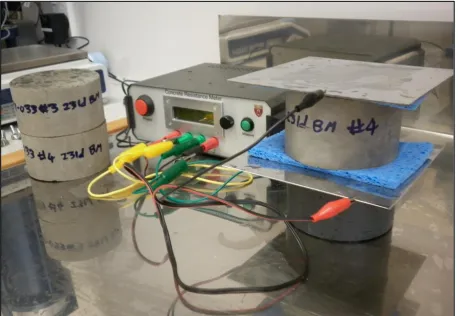
Effective Partial Cement Replacement in
Concrete
Thesis submitted in partial fulfilment of the requirements for the
Degree of
Master of Science in Engineering Geology
at the
University of Canterbury
by
Blair Joseph Mason
Frontispiece
“Man's mind, once stretched by a new idea, never regains
its original dimensions.”
Abstract
Concrete is an integral material in modern infrastructural requirements worldwide. The production of Portland cement is however expensive, energy intensive, and results in globally significant greenhouse gas emissions. Natural pozzolans such as pumice can be used as a partial replacement for Portland cement in concrete, which can reduce production costs and greenhouse gas emissions, and improve concrete performance.
A fluvial pumice deposit which may be suited for use as a natural pozzolan has been identified on the floodplains of the Waikato River. A sample was milled in Germany, and returned to New Zealand in two subsamples. These were tested in concrete, with tests divided into four rounds. The first two rounds established baseline concrete strengths at water/binder (w/b) ratios of 0.6 and 0.5, with pumice replacing cement at 5, 10, 15 and 30%. Round Three assessed the use of high pH mix water (pH=12.9), and Round Four assessed the use of a polycarboxylate superplasticiser, both with 10% pumice.
Pumice is known to retard early concrete strength, however through optimisation of mix design, improvements in concrete strength and durability can be made. Indeed, all 28 day concrete strengths in this research were below Ultracem, however half of these achieved or exceeded Ultracem strengths at 91 days. The use of superplasticiser achieved the best 28 day concrete strengths, and dosage optimisation is expected to yield further improvements.
Concrete durability was tested at w/b=0.5, with 10% and 30% pumice. After prolonged curing (231 days), composite concrete showed substantial improvements in electrical resistivity and resistance to chloride attack, most notably with 30% pumice. Concrete porosity was essentially unaffected.
Table of Contents
FRONTISPIECE ... II
ABSTRACT
... III
TABLE OF FIGURES ... VIII
TABLE OF ABBREVIATIONS ... XI
ACKNOWLEDGEMENTS ... XIII
EFFECTS OF CHRISTCHURCH EARTHQUAKES ... XIV
NOMENCLATURE ... XV
CHAPTER 1
INTRODUCTION ... 1
1.1 Sustainable Production of Portland Cement ... 1
1.1.1 Sustainable Cement Production in New Zealand ... 3
1.1.2 Challenges in the New Zealand Market ... 5
1.1.3 Natural Pozzolans in Construction ... 6
1.2 Thesis Scope ... 7
1.2.1 Concrete Testing ... 7
1.2.2 Thesis Outline ... 7
CHAPTER 2
CEMENT HYDRATION ... 9
2.1 Water/Cement Ratio ... 10
2.2 Heat of Hydration ... 10
2.3 Hydration of Alite and Belite ... 11
2.4 Hydration of Aluminate and Ferrite... 14
2.5 Cement Hydration with Pozzolanic Additives ... 16
2.5.1 Fly Ash ... 17
2.5.2 Ground Granulated Blast Furnace Slag ... 19
2.5.3 Silica Fume ... 19
2.5.4 Natural Pozzolans ... 20
CHAPTER 3
NATURAL POZZOLANS ... 23
3.1 Natural Pozzolans in New Zealand ... 23
3.2 Taupo Pumice ... 24
3.3 Investigation of Taupo Pumice from Horotiu ... 26
3.4 Pozzolanic Activity ... 29
3.5 Particle Fineness ... 31
3.6 Kairiri Farms – Rangiriri ... 32
CHAPTER 4
CONCRETE DURABILITY WITH POZZOLANS ... 35
4.1 Chloride Attack ... 36
4.2 Wet-Dry Cycles ... 37
4.3 Carbonation ... 38
4.4 Sulphate Attack ... 39
4.5 Freeze-Thaw Cycles ... 40
4.6 Electrical Resistivity ... 40
4.7 Porosity and Permeability ... 41
CHAPTER 5
METHOD ... 43
5.1 Milling ... 43
5.2 Pumice Preparation ... 43
5.3 PozzoTech Analysis ... 45
5.4 Scanning Electron Microscopy ... 47
5.5 Reference Cement ... 51
5.5.1 X10-152 ... 51
5.5.2 P11-027 ... 53
5.6 Concrete Preparation ... 54
5.7 Electrical Resistivity ... 57
5.8 Bulk Diffusion ... 58
5.9 Porosity ... 59
CHAPTER 6
CONCRETE MIX DESIGNS ... 61
6.1 Round One ... 61
6.3 Round Three ... 63
6.4 Testing Options ... 64
6.4.1 Improving Pozzolanic Activity ... 64
6.4.2 Concrete Solution pH ... 65
6.4.3 Pumice Micro-Porosity ... 67
6.5 Round Three ... 68
6.6 Round Four ... 68
CHAPTER 7
RESULTS AND DISCUSSION ... 71
7.1 Round One and Two Concrete Strength... 71
7.1.1 Analysis of Pumice Replacement Rate ... 74
7.1.2 Optimisation of Pumice Replacement Rate ... 77
7.2 Round Three Concrete Strength – Influence of High pH Water ... 78
7.3 Round Four Concrete Strength – Influence of Superplasticiser ... 79
7.4 Effects of Pumice Fineness ... 81
7.4.1 Round One and Two ... 81
7.4.2 Round Three ... 82
7.4.3 Round Four ... 82
7.5 Effects of Mix Variations ... 83
7.5.1 Round One and Two Performance Comparison ... 83
7.5.2 Round Three Performance Comparison... 83
7.5.3 Round Four Performance Comparison... 85
7.5.4 10% Pumice Inter-Round Performance Comparison ... 88
7.6 Comparison with New Zealand Studies ... 89
7.7 Concrete Durability ... 89
7.7.1 Porosity ... 90
7.7.2 Electrical Resistivity ... 91
7.7.3 Bulk Diffusion ... 95
7.7.4 Correlation of Durable Properties ... 99
7.8 PozzoTech Analysis ... 101
7.8.1 Pumice Chemical and Mineralogical Properties ... 101
7.8.2 Pozzolanic Reactivity Index ... 103
7.8.3 Pumice Grindability ... 104
7.9 Long Term Strength Development ... 105
7.10 ζ-Potential ... 109
7.11 Workability ... 110
CHAPTER 8
CONCLUSIONS ... 119
8.1 Concrete Strength ... 119
8.2 Concrete Durability ... 120
8.3 Pumice Chemistry and Mineralogy ... 120
8.4 Effect of Pumice Fineness ... 120
8.5 Concluding Statement ... 121
CHAPTER 9
RECOMMENDATIONS ... 123
9.1 Site Investigation ... 123
9.2 Fine Pumice ‘Tail’ ... 124
9.3 Gypsum Addition ... 125
9.4 Chemical Activators ... 125
9.5 XRD-Rietveld Analysis ... 126
9.6 Additional Microscopy ... 126
9.7 Superplasticiser Optimisation ... 127
9.8 Late Strength Development ... 127
9.9 Pozzolan Oversubstitution ... 128
References ... 129
Appendix 1 Pumice XRD – Milled ‘Horotiu Pumice’ ... 137
Appendix 2 Pumice XRD – Milled ‘Rangiriri Pumice’ ... 138
Appendix 3 Pumice XRD – Fresh ‘Horotiu Pumice’ ... 139
Appendix 4 Sand and Aggregate PSD ... 140
Appendix 5 Round One and Two Concrete Properties ... 141
Appendix 6 Round Three and Four Concrete Properties ... 147
Appendix 7 Round One Concrete Strength ... 152
Appendix 8 Round Two Concrete Strength ... 154
Appendix 9 Round Three Concrete Strength ... 156
Appendix 10 Round Four Concrete Strength ... 159
Table of Figures
Figure 1.1: Global cement production and consumption ... 2
Figure 1.2: Ultracem mortar strength ... 4
Figure 1.3: Ultracem concrete strength ... 4
Figure 2.1: Hydration heat evolution of Ordinary Portland Cement. ... 11
Figure 2.2: SEM images of C3S polymorphs at 24 hours hydration ... 12
Figure 2.3: Cement kiln – Holcim NZ Westport Cement Works ... 14
Figure 2.4: Hydration kinetics of pure clinker at ambient temperatures ... 15
Figure 2.5: SEM images of typical pozzolans ... 18
Figure 3.1: Taupo volcanic zone and regional setting ... 25
Figure 3.2: ‘Horotiu pumice’ PSD ... 27
Figure 3.3: ‘Horotiu pumice’ 30MPa concrete strength ... 28
Figure 3.4: ‘Horotiu pumice’ 30MPa concrete performance comparison ... 28
Figure 3.5: Composite concrete strength... 31
Figure 3.6: Pumice outcrop sampled for Loesche milling ... 33
Figure 4.1: Concrete alteration zones in the marine environment ... 38
Figure 5.1: Loesche laboratory mill ... 44
Figure 5.2: Milled pumice SSA and cumulative PSD ... 46
Figure 5.3: Milled pumice PSD ... 46
Figure 5.4: SEM Image 1 – Loesche (3k) pumice with partial vesicle walls ... 48
Figure 5.5: SEM Image 2 – Loesche (6k) pumice tubular vesicles ... 48
Figure 5.6: SEM Image 3 – Fibrous, agglomerated/altered Loesche (6k) pumice ... 49
Figure 5.7: SEM Image 4 – Loesche (6k) pumice at increasing magnification ... 49
Figure 5.8: SEM Image 6 – ‘Horotiu’ vesicle walls and agglomerated/altered particles ... 50
Figure 5.9: SEM Image 5 – Agglomerated/altered ‘Horotiu pumice’ particles ... 50
Figure 5.10: X10-152 Ultracem reference comparison ... 52
Figure 5.11: Ultracem SSA and cumulative PSD ... 52
Figure 5.12: Measuring concrete slump ... 55
Figure 5.13: Freshly moulded concrete cylinders ... 56
Figure 5.14: Concrete resistance meter ... 57
Figure 5.16: Chloride analysis using Metrohm autotitrator ... 59
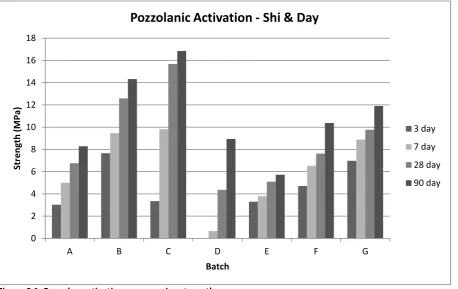
Figure 6.1: Pozzolan activation compressive strength ... 65
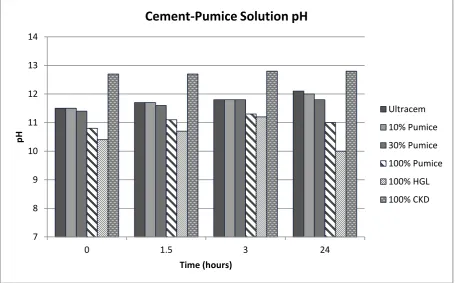
Figure 6.2: Pozzolan solution pH ... 66
Figure 7.1: Round One concrete strength – Loesche (3k) ... 72
Figure 7.2: Round One concrete strength – Loesche (6k) ... 72
Figure 7.3: Round Two concrete strength – Loesche (3k) ... 73
Figure 7.4: Round Two concrete strength – Loesche (6k) ... 73
Figure 7.5: 5% pumice performance comparison ... 74
Figure 7.6: 10% pumice performance comparison ... 75
Figure 7.7: 15% pumice performance comparison ... 76
Figure 7.8: 30% pumice performance comparison ... 77
Figure 7.9: Round Three concrete strength ... 79
Figure 7.10: Round Four concrete strength – Loesche (3k) ... 80
Figure 7.11: Round Four concrete strength – Loesche (6k) ... 80
Figure 7.12: Round Three comparison with high pH reference ... 84
Figure 7.13: Round Three comparison with Ultracem reference ... 84
Figure 7.14: Round Four comparison with superplasticiser reference ... 87
Figure 7.15: Round Four comparison with Ultracem reference ... 87
Figure 7.16: Inter-round 10% pumice performance comparison ... 88
Figure 7.17: Concrete porosity ... 91
Figure 7.18: 10% pumice concrete electrical resistivity ... 92
Figure 7.19: 30% pumice concrete electrical resistivity ... 93
Figure 7.20: 10% pumice concrete resistivity performance comparison ... 94
Figure 7.21: 30% pumice concrete resistivity performance comparison ... 94
Figure 7.22: 28 day chloride ingress ... 98
Figure 7.23: 91 day chloride ingress ... 98
Figure 7.24: 231 day chloride ingress... 99
Figure 7.25: Electrical resistivity vs porosity ... 100
Figure 7.26: Chloride diffusion coefficient vs porosity ... 100
Figure 7.27: Electrical resistivity vs chloride diffusion coefficient ... 101
Figure 7.28: PozzoTech pozzolan reactivity index... 104
Figure 7.30: Round Three and Four cumulative concrete strength ... 107
Figure 7.31: Round Three and Four 28-56 day concrete strength development ... 108
Figure 7.32: Round Three and Four 56-91 day concrete strength development ... 108
Figure 7.33: Round One concrete slump ... 112
Figure 7.34: Round Two concrete slump ... 112
Figure 7.35: Round Three concrete slump ... 114
Figure 7.36: Round Four concrete slump ... 114
Figure 7.37: Round One concrete air entrainment ... 116
Figure 7.38: Round Two concrete air entrainment ... 116
Figure 7.39: Round Three concrete air entrainment ... 117
Figure 7.40: Round Four concrete air entrainment ... 117
Table of Abbreviations
Acknowledgements
As with any large project, the success of this thesis depended on a number of talented and committed people. These include academics, technical experts, laboratory staff, friends and family, each of whom have provided the motivation to succeed. I would like to acknowledge Holcim NZ, who along with TechNZ, have supported this project academically and financially.
The contributions of Professor Jim Cole, Dr Allan Scott, Greg Slaughter and the Holcim Westport laboratory staff are particularly noted, where time, resources, and guidance were provided without hesitation. Special thanks go to my parents, the staff of College House, and all of my friends, each of whom have at some point endured my complaining.
Academic Support:
Dr Allan Scott Greg Slaughter Prof. Jim Cole Michael Rynne
Technical Experts:
Dr Carl Bigley Chris Grimshaw Dr Chris Oze
Dr James Mackechnie Dr Kerry Swanson Neil Hateley Stephen Brown Steven Franc
Technical and Editorial Support:
Brierley Lobb Declan Lennon Duncan Jarvie Dylan Patterson Elizabeth Babonnick Gina Mason
Janelle Ranger Janet Brehaut Jono Claridge Lauren Batt
Effects of Christchurch Earthquakes
On February 22nd 2011, Christchurch was struck by a devastating 6.3 magnitude earthquake, and several thousand subsequent aftershocks. This resulted in a number of changes to this thesis, and some of the methods used.
Concrete testing was initially scheduled to begin in February 2011 at the University of Canterbury Civil Engineering concrete laboratory. With the closure of the University for several weeks, and its staggered re-opening, the decision was made to transfer most concrete testing to the Holcim concrete laboratory in Westport.
This laboratory was chosen for several reasons. Firstly, with large aftershocks expected for months after the main event, the risk of laboratory closure during the year could not be ruled out. This proved important when the University was again briefly closed in June and December due to large aftershocks.
Secondly, familiarity with testing procedures and protocol in the Holcim laboratory provided an opportunity to improve testing efficiency, and variations in methods and equipment could be minimised. Good relationships with laboratory staff meant that once cylinders were cast, they could be broken at appropriate intervals by suitably qualified personnel. It also meant that additional guidance and support was provided, and allowed knowledge of previous pumice-concrete testing to be readily utilised.
Nomenclature
Admixture* A material other than water, aggregate and cementitious materials,
added to concrete to achieve a desired performance modification.
Air entrainment The intentional creation of microscopic air bubbles distributed
throughout a concrete paste.
Binder Any cementitious material, including Portland cement and pozzolans.
Blended concrete A concrete in which cement has been partially substituted with a
pozzolan.
Clinker factor Proportion of clinker per unit of cement.
Cement* Portland cement complying with NZS 3122 or NZS 3123.
Concrete* A mixture consisting predominantly of cement, water and aggregate.
Curing The process by which the moisture content and temperature of
concrete are maintained to facilitate cement hydration.
Fly ash* Material extracted from the flue gases of a coal fired boiler which
complies with AS 3582.1.
Mortar* A mixture consisting predominantly of cement, water and sand.
Oversubstitution Where in a concrete mix, pozzolan is added to replace a portion of
both cement and sand, effectively increasing total binder content.
Paste A mixture of cement and water in its fresh, unhardened, plastic state.
Pozzolan* A siliceous material which when finely ground and in the presence of
water reacts with calcium hydroxide, forming hydration products similar to those of Portland Cement. Such pozzolans shall comply with NZS 3123.
Pumice A deposit dominantly consisting of vesicular volcanic glass of rhyolitic
composition.
Reference cement
Ultracem cement used as a benchmark against which other tests are compared.
Sand* Aggregate passing a 4.75mm sieve.
Slag Calcium silicates and aluminosilicates produced simultaneously with
iron in a blast furnace. Granulated iron blast-furnace slag shall comply with AS 3582.2.
Slump* The amount by which a standard amount of concrete subsides upon
removal from a slump cone. Conducted in accordance with NZS 3112.
Ultracem Holcim General Purpose (GP) cement conforming with NZS 3122.
Water reducer An admixture which disperses cement particles, increasing concrete
fluidity. Its addition will reduce the water required to achieve a given workability.
Workability* A measure of the ease in which concrete paste can be mixed, placed,
compacted and finished.
*
Chapter 1
Introduction
1.1
Sustainable Production of Portland Cement
Cement and concrete are integral in meeting modern society’s infrastructural needs, therefore increasing the sustainability of cement production is of mounting urgency and consequence. Portland cement is produced by burning a blend of calcium carbonate (eg. limestone or chalk) and aluminosilicate (eg. clay or shale) at high temperatures (approximately 1450°C) to form clinker. This is then interground with gypsum, and additional limestone (Bye, 1999).
The terms ‘cement’ and ‘concrete’ are used somewhat interchangeably in general conversation. For purposes of this investigation, the term ‘concrete’ shall refer only to a combination of water, binder, aggregate, and admixtures, either in its fresh (paste) or hardened state. The term ‘cement’ shall refer only to Portland cement, unless otherwise specified.
The cement and concrete industry is subject to a number of challenges in modern markets. In the production of clinker, both the combustion of fossil fuels (coal and oil) and decarbonation of limestone release significant quantities of carbon dioxide (CO2). The
amount of CO2 emitted varies between manufacturing plants and their respective processes,
but can range from 0.6-1 tonnes of CO2 per tonne of clinker (Yousni, et al., 2011).
Consequently, primary issues facing the industry on a global scale include vast thermal energy consumption and CO2 emissions. The Portland cement manufacturing process is
energy intensive, with energy accounting for 30-40% of production costs. Across the industry, this equates to an estimated 2% of global energy consumption, and almost 5% of industrial energy consumption (Szabo, et al., 2006).
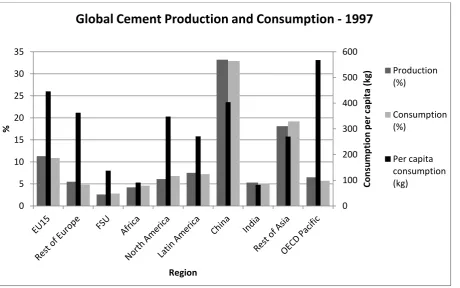
Zealand) as the region with the highest per capita cement consumption, totalling 568kg of cement per person in 1997 (Figure 1.1). This is in contrast with more recent national data, indicating New Zealand’s 2006 cement consumption was approximately 321kg per person1. In reality, per capita consumption will have likely decreased further due to the influences of economic recession and global financial crisis.
International legislation and public attitude continually advance toward improving industrial efficiency and reducing its environmental impact. Improving the sustainability of cement production is therefore a principal focus throughout this investigation. Sustainable development is defined by the World Business Council for Sustainable Development (WBCSD) as “forms of progress that meet the needs of the present without compromising the
1
[image:17.595.73.534.194.482.2]This is based on New Zealand’s 2006 estimated maximum cement producing capacity (1.35 million tonnes), a population of 4.2 million people, and assumes no imports (New Zealand Institute of Economic Research, 2008; Statistics New Zealand, 2011).
Figure 1.1: Global cement production and consumption
EU15 - Austria, Belgium, Denmark, Finland, France, Germany, Greece, Ireland, Italy, Luxembourg, the Netherlands, Portugal, Spain, Sweden and the United Kingdom
FSU – Former Soviet Union
OECD Pacific – Australia, Japan, New Zealand
0 100 200 300 400 500 600 0 5 10 15 20 25 30 35 Con sum p ti on p er cap ita ( kg ) % Region
Global Cement Production and Consumption - 1997
ability of future generations to meet their needs” (Damtoft, et al., 2008). The WBCSD has identified four foci where CO2 emissions can be reduced in the cement industry worldwide.
These are as follows (Lei, et al., 2011):
Improving thermal and electric efficiency
Utilising alternative fuels
Clinker substitution
Carbon capture and storage
The former three initiatives are consistent with the New Zealand cement industry’s current emissions response strategy, while the latter may play a more important role in the future. Although New Zealand emits only approximately 0.2% of total global greenhouse gases, significant efforts are still being undertaken to reduce emissions and address potential climate change (Gray, et al., 2002).
1.1.1
Sustainable Cement Production in New Zealand
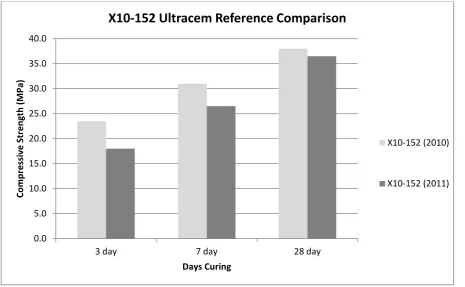
The New Zealand construction industry presents an interesting market situation with unique contests and challenges. New Zealand Portland cement is produced in two locations, namely Westport (Holcim NZ Ltd) and Whangarei (Golden Bay Cement). Due to market influences, New Zealand cement is produced with mortar strengths well in excess of minimum standards specified by New Zealand Standard (NZS) 3122:20092. Consequently, when trialling new materials and methods, it is necessary to target concrete and mortar strengths which conform not only with NZS 3122, but the expectations of the New Zealand market. A selection of Holcim Ultracem mortar strengths are provided in Figure 1.2, and Ultracem concrete strengths are shown in Figure 1.33. Each are the results of testing conducted in Holcim’s Westport laboratory.
Numerous incentives contribute to the addition of supplementary cementitious materials (SCM’s) in the New Zealand concrete market. Of primary significance is the global initiative to reduce energy consumption and greenhouse gas emissions, and associated fiscal
2 Specification for Portland and blended cements (General and special purpose) 3
implications. These are accompanied by increasing fuel costs, excise taxes, public sensitivity to climate change, and the implicit need to universally revolutionise consumptive patterns.
Figure 1.3: Ultracem concrete strength
0 5 10 15 20 25 30 35 40 45 50 Co m p re ssi ve S tr e n gth ( M Pa) Date
30 MPa Ultracem Concrete Strength
3 Day Concrete Strength
7 Day Concrete Strength
28 Day Concrete Strength
Figure 1.2: Ultracem mortar strength
0 10 20 30 40 50 60 70 Co m p re ssi ve S tr e n gth ( M Pa) Date
Ultracem Mortar Strength
7 Day Mortar Strength 7 Day Minimum
Both the New Zealand and global cement industries identify reducing clinker factor4 as presenting the greatest immediate potential to reduce greenhouse gas emissions. Reductions can be achieved using SCM’s such as limestone, fly ash, blast furnace slag or natural pozzolans as partial cement replacements (Gray, et al., 2002).
Greenhouse gas emissions associated with the preparation of raw pumice (primarily drying, milling and transport) are considerably less than those associated with clinker manufacture. Therefore, if significant pumice substitution is successful, an appreciable greenhouse gas reduction can also be achieved. New Zealand is fortunate to possess significant volcanic deposits. Some of these are suited for utilisation as natural pozzolans, and have the potential to significantly reduce the clinker factor of New Zealand cements. The challenge in this research is to prove the viability of Taupo pumice from Rangiriri, Waikato, as a partial cement replacement, whilst maintaining orimproving concrete performance.
1.1.2
Challenges in the New Zealand Market
Incorporating new materials and techniques into the New Zealand cement and concrete market is not without challenges. The New Zealand construction industry has previously demonstrated a reluctance to accept unfamiliar products. Therefore, key stakeholders must be educated and wholly satisfied as to the quality of any new cement before it will gain commercial acceptance. To fully utilise natural resources and minimize environmental impact, it is necessary to not only improve the efficiency by which cement is produced, but the efficiency in which it is consumed. Pumice is not an unproved concrete additive, and has in fact been used as a lightweight concrete aggregate for over 2000 years. In more modern times, pumice aggregates have been combined with Portland cement and water to produce thermal and sound insulating, fire-resistant, lightweight concrete. These have been used in a variety of applications, including roof decks, lightweight floors, prefabricated and in situ masonry (Gunduz, 2008).
The difficulties in achieving both performance and market acceptance were illustrated in a recent endeavour involving Holcim (NZ), where the addition of mineral limestone in General
4
Purpose (GP) cement was increased from 5% to 10%. Facilitating this involved amending NZS 3122, as well as demonstrating to key industry stakeholders that the new product met all performance expectations. Many aspects of this are relevant to the incorporation of pumice into GP or General Purpose Blended (GB) cements throughout New Zealand. NZS 3122 has now been successfully amended, and production of 10% limestone GP cement commenced in April 2011. As such, this research will be conducted using the most modern cement type available.
1.1.3
Natural Pozzolans in Construction
Natural pozzolans have been combined with lime in construction materials since ancient times. The mortar used in historically significant structures such as the Pantheon, Colosseum, Tournai Cathedral and Domitilla Catacombs all contain natural pozzolans (Ozkaya & Boke, 2009). Modern cements and concretes utilise natural pozzolans on the basis that they can enhance certain properties, including strength, permeability, sulphate resistance, and alkali-silica reaction (Turanli, et al., 2004). Pozzolans also have the potential to reduce production costs through reduced clinker factor and greenhouse gas emissions.
Pozzolans include those inorganic materials, either natural or artificial, which harden in water when mixed with calcium hydroxide (lime). Pozzolanic cements have been developed to utilise both industrial and natural materials. These include silica fume, fly ash, blast furnace slag, pyroclastic rocks, diatomaceous earth and agricultural by-products (Hewlett, 1998). Natural pozzolans can be further defined as raw or calcined natural materials which have pozzolanic properties, such as volcanic ash, opaline chert, shales and tuff (Turanli, et al., 2004). The pozzolanic reaction is essentially between reactive, non-crystalline or amorphous silica and lime (South, 2009), and is further explained in Section 2.5.
1.2
Thesis Scope
The cement industry is investigating methods by which cement clinker factor can be reduced, improving production efficiency, concrete performance, and reducing environmental impact. Previous investigations have identified a pumice resource at Rangiriri, Waikato, as having the potential for development as a commercial reserve. This thesis undertakes an investigation of Taupo pumice from Rangiriri as an effective partial cement replacement in GB concrete. This includes extensive concrete strength and durability analyses at various pumice-cement blends, and a range of chemical and mineralogical tests. The influence of particle fineness and the application of concrete admixtures are considered, as are the mechanisms by which natural pozzolans behave in cement. Where appropriate, results are compared with previous investigation of similar pumice from Horotiu.
1.2.1
Concrete Testing
Once adequately milled pumice has been obtained, a range of concrete tests will be conducted using pumice as a partial cement replacement. Pumice replaced cement at 5, 10, 15 and 30% in a series of concrete batches, identifying changes in workability, air entrainment, compressive strength and durability. All tests are benchmarked using an appropriate Ultracem reference concrete.
Testing is divided into four stages, identified as Rounds One, Two, Three and Four. Outcomes of a given round influence the mix design in the subsequent round(s). Additionally, the use of a scanning electron microscope (SEM), thermo-gravimetric analysis (TGA), x-ray fluorescence (XRF) and x-ray diffraction (XRD) are utilised to further establish the chemical and physical nature of the milled pumice, and its interactions in the hydration process.
1.2.2
Thesis Outline
Chapter 2
Cement Hydration
In order to understand the chemistry and behaviour of natural pozzolans in cement and concrete, it is necessary understand fundamental cement chemistry, and the associated hydration reactions. Understanding the kinetic mechanisms of cement hydration is of both practical and academic interest, especially as more complex designs incorporate a wide variety of admixtures. A more complete knowledge of basic hydration mechanisms provides a more rational base for the incorporation of supplementary cementitious materials (Bullard, et al., 2010).
Portland cement clinker consists of four major phases of strength forming compounds. Each compound reacts with water to form different hydration products, gradually filling the voids between aggregate particles, forming a continuous cementitious matrix. Formulae are commonly written as combinations of oxides using cement chemists notation, presented in Table 2.1 (Taylor, 1997), and Table 2.2.
Table 2.1: Cement chemists notation
Notation Formula
C CaO
S SiO2
A Al2O3
F Fe2O3
M MgO
K K2O
SO3
N Na2O
T TiO2
P P2O5
H H2O
CO2
Table 2.2: Summary of strength forming compounds in OPC
Compound Name Formula Notation Weight Fraction (%)
Tricalcium silicate Alite Ca3SiO5 C3S 50-70
Dicalcium silicate Belite Ca2SiO4 C2S 15-30
Tricalcium aluminate Aluminate Ca3Al2O6 C3A 5-10
Tricalcium aluminoferrite Ferrite Ca4Al2Fe2O10 C4AF 5-15
2.1
Water/Cement Ratio
One of the most fundamental properties in determining concrete strength is the water/cement (w/c) ratio. As this research is based upon the partial replacement of cement with a natural pozzolan, the term water/binder (w/b) ratio is used to reflect the composite nature of the total binder.
Concrete compressive strength is a function of the closeness of cement particles as well as cement content (Aitcin, 2000). The w/c ratio is inversely proportional to concrete strength, where lower w/c ratios result in higher strength concretes. This ratio heavily controls paste porosity, and is a key parameter in determining concrete quality (Kharita, et al., 2010).
2.2
Heat of Hydration
The hydration of Portland cement is associated with the liberation of heat, and is therefore a dominantly exothermic process (with a minor intermediate endothermic stage). Cements containing small amounts of K+ in the form of potassium sulphate may display a distinct initial endothermic peak (Figure 2.1) [1]. This occurs immediately after mixing, and is due to the dissolution of potassium sulphate into mix water.
2.3
Hydration of Alite and Belite
The primary strength forming compound created in the clinker phase is alite, which constitutes 50-70% of clinker composition. Alite is a tricalcium silicate (Ca3SiO2 or C3S), and is
the most instrumental strength forming compound in the first 28 days of curing. Pure C3S
contains 73.7% CaO, and 26.3% SiO2, with clinker alites typically containing 3-4% substituent
oxides (Taylor, 1997).
The initial reaction occurs between C3S and water immediately upon wetting, and is
characterised by a large exothermal signature in isothermal calorimetry. Heat is released both by wetting the cement powder and from the dissolution of C3S (Bullard, et al., 2010).
The hydration of alite is complex, and not fully understood. At ambient temperatures, hydration products consist of an amorphous calcium silicate hydrate phase with a CaO/SiO2
ratio <3.0 (C-S-H), and calcium hydroxide. The following reaction is observed (Hewlett, 1998):
Figure 2.1: Hydration heat evolution of Ordinary Portland Cement.
1: K2SO4 dissolution; 2: early stage reaction; 3: dormant period; 4: middle-stage reaction (C-S-H formation)
3CaO.SiO2 + (3+m-n) H2O → nCaO.SiO2.mH2O + (3-n) Ca(OH)2
C3S can exist in several polymorphs (Figure 2.2), dependent on the amount and composition
of substituent ions. At ambient temperatures, only Type 1 (T1) C3S (pure C3S) is formed,
however the presence of other cations such as magnesium, aluminium and other transition metals may stabilise polymorphs, replacing either Ca2+ or Si4+ depending on the size and charge of the ion. Ordinary Portland Cement (OPC) may contain any combination of triclinic, monoclinic and trigonal C3S; however the monoclinic form tends to dominate (Hewlett,
1998; Stewart & Bailey, 1983).
Belite (Ca2SiO4 or C2S) is the second most important strength forming compound in Portland
cement, constituting 15-30% of clinker composition. Pure C2S contains 34.9% SiO2 and 65.1%
Figure 2.2: SEM images of C3S polymorphs at 24 hours hydration
CaO. Clinker belites normally contain 4-6% substituent oxides (dominantly Al2O3 and Fe2O3)
(Taylor, 1997). C2S reacts slowly with water, contributing little to concrete or mortar
strength in the first 28 days, but contributing substantially as it ages.
C2S exists in five polymorphs at regular pressures, and as for C3S, higher temperature
polymorphs cannot be retained at regular cooling temperatures unless stabilised by foreign ions (Taylor 1997). The most common polymorph is β-C2S, which can be stabilised at all
temperatures, including ambient temperatures in the presence of certain substituent ions. β-C2S is often contaminated with γ-C2S, which is also thermodynamically stable at ambient
temperatures (Hewlett, 1998).
Alite and belite are formed above 800ºC, where C3S is preferentially formed by elevating kiln
temperature and increasing the addition of burned lime. A cement kiln at the Westport Cement Works is shown in Figure 2.3. C3S is critical in short term strength development
(days to months), whereas C2S is more important in long term (years) performance (Ylmen,
et al., 2009). Both calcium silicate phases give similar hydration products; an amorphous calcium silicate gel (C-S-H), and crystalline calcium hydroxides. The two phases do however hydrate at significantly different rates, especially during the first 24 hours of curing (Stewart & Bailey, 1983).
The term C-S-H is used to represent amorphous or nearly amorphous calcium silicate hydration products with the general formula CaOx·SiO2·H2Oy where both x and y can vary
2.4
Hydration of Aluminate and Ferrite
Aluminate (Ca3Al2O6 or C3A) comprises 5-10% of clinker composition, and reacts vigorously
with water, rapidly forming hydration products. This phase quickly reduces workability, and instruments early concrete set. The hydration of C3A is therefore controlled by the addition
of gypsum (CaSO4.2H2O or C ), which reacts with C3A to form ettringite. Ettringite is an
intermediate mineral which encases C3A particles, retarding the reaction (Young, et al.,
1998). C3A exists in cubic, orthorhombic and monoclinic polymorphs, again dependent on
the presence and composition of foreign ions (especially Na+). Clinker C3A exists almost
exclusively in the cubic form (Hewlett, 1998; Lee et al., 1982)
In the absence of gypsum, C3A hydrates to form hexagonal crystals (C2AH8 and C4AH19),
which eventually convert to cubic C3AH6, the only thermodynamically stable C3A polymorph
at ambient temperatures. In the presence of gypsum however, the amount of C3A hydrated
in the early stages of curing is significantly reduced, and ettringite (C6A 3H32) and
monosulphate (C4A H12 or C4AH19) are formed instead. These reactions are accompanied by
significant heat release (Figure 2.4) (Hewlett, 1998).
The method by which gypsum retards the hydration of C3A is debatable, with two main
theories. The first, as previously mentioned, is where a protective layer of ettringite (or another mineral) is formed around the aluminate particles, forming an impervious layer and preventing rapid hydration. The second is that retardation is due to the formation of positively charged C3A particles by adsorption of calcium, or the adsorption of sulphate ions,
reducing sites of active dissolution. Under this theory, ettringite has no relationship with the retardation of C3A hydration (Plowman & Cabrera, 1984).
Ferrite (Ca4Al2Fe2O10 or C4AF) forms 5-15% of clinker composition, and reacts similarly to
C3A. Ferrite hydration is also retarded in the presence of gypsum (Taylor, 1997). It was long
thought that the C4AF phase did not contribute to concrete or mortar strength, and this is to
an extent still uncertain. However, with the inclusion of blast furnace slag in many cement Figure 2.4: Hydration kinetics of pure clinker at ambient temperatures
blends worldwide, cements with up to 16.7% C4AF have been successfully used in oil well
and geothermal systems (Fukuhara, et al., 1981).
C3A and C4AF phases also result in the formation of AFt (dominantly ettringite) and AFm
(dominantly monosulphate) phases, each of which are regular constituents of hydrated cement pastes. The AFt phase is formed at the beginning of the hydration process, and is instrumental in preventing early concrete set. However, it is also believed to be responsible for concrete expansion in cements with excessive SO3, or when concrete structures are
exposed to sulphate bearing groundwater. The AFm phase is formed from AFt with additional C3A, C4AF, or free calcium sulphate. Both tend to undergo further changes during
the course of cement hydration to eventually form hydrogarnet phases (Odler & Abrul-Maula, 1984; Taylor, 1997).
Pozzolanic activity in the early ages of the lime-pozzolan reaction is largely dependent on pozzolan surface area, where longer term activity is thought to depend more heavily on the chemical and mineralogical composition of the pozzolan itself. Ca-Al hydrates and amorphous C-S-H gel are generally formed after one day of curing. Aluminate hydrates form later, however their rate of formation is dependent on the pozzolan aluminium content and solubility (South, 2009).
2.5
Cement Hydration with Pozzolanic Additives
The primary reaction in any pozzolanic system involves OH- ions attacking the SiO2 or Al2O3
-SiO2 pozzolan framework. OH- ions combine with pozzolan network forming atoms such as
silicon, breaking bonds between these and oxygen. Consequently, silicate (or other) oxy anions are released from the framework, and may remain in situ or pass into solution. The charges of those which remain are balanced by H+ and metal cations. Reaction products include a C-S-H gel with a low Ca/Si ratio, and the formation of strätlingite, hydrogarnet, or both (Taylor, 1997).
and hydrate composition. The addition of certain pozzolans is known to reduce early strength, and enhance strength at later ages. One of the practical problems associated with their inclusion is reduced heat of hydration, which in turn retards the hydration of C3A and
C4AF, reducing early concrete strength (Plowman & Cabrera, 1984). Reduced heat of
hydration can however be beneficial in some circumstances, such as in the construction of very large concrete structures, where regulated curing temperatures may be required (Beushausen, et al., 2011).
Concrete strength development with natural pozzolans is influenced by both specific surface area (SSA) and chemical composition (eg. SiO2 + Al2O3). Pozzolan glass content and magma
cooling rate also influence reactivity, and therefore concrete strength development (South, 2009). A selection of commonly used pozzolanic materials is briefly explored in the following sections, accompanied by scanning electron microscope (SEM) images in Figure 2.5.
2.5.1
Fly Ash
Fly ash (pulverised fuel ash or PFA) is a by-product of coal fired power generation (extracted from flue gases) and is commonly used as a pozzolanic cement additive. Fly ash is also known to reduce concrete or mortar hydration heat, and retards the hydration of both C3A
and C3AF (Plowman & Cabrera, 1984). The addition of fly ash can increased initial cement
hydration rates, however it retards the dormant and acceleration periods. Retardation effects tend to be higher with higher water to binder (w/b) ratios (Langan, et al., 2002).
It is thought that the retarding mechanisms of fly ash are similar to those of gypsum. Its effectiveness can be explained by the rapid release and dispersion of both SO32- and Ca2+
ions into solution; where its shape and surface properties enable a more efficient distribution of these ions than equivalent gypsum quantities (Plowman & Cabrera, 1984). High lime fly ash has been used in New Zealand cements in the past, and is again noted to significantly retard hydration. This is thought to be caused by its relatively high B2O3 content,
Fly ash (Siddique & Khan, 2011) Ground granulated blast furnace slag (Chandrasekhar, et al., 2002)
Silica fume (Yoon & Yun, 2006) Diatomaceous earth (Stamatakis, et al., 2003)
Milled pumice Rice husk ash (Ferraro & Nanni, 2012)
2.5.2
Ground Granulated Blast Furnace Slag
Ground granulated blast furnace slag (GGBS) is a by-product of the iron and steel manufacturing processes, derived from metallic ore, gangue materials, and lime. Slag is a latent hydraulic binder, and hardens in the presence of alkalis such as calcium hydroxide (a product of Portland cement hydration). The use of slag as a supplementary cementitious material (SCM) results in reduced heat of hydration, increased durability, and increased long term strength, even at replacement levels as low as 10%. Compared to ordinary Portland cement (OPC), slag concretes have enhanced resistance to chloride attack and alkali silica reaction (ASR1), especially at replacement levels of 50% and above. Slag concretes are however more prone to carbonation, and can be more permeable (Beushausen, et al., 2011; Alexander, et al., 2003).
2.5.3
Silica Fume
Silica fume (SF) is a by-product of the industrial production of silicon or silicon alloys, where quartz is reduced in an electric furnace (Taylor, 1997). SF reduces concrete diffusivity by increasing density and reducing porosity, and also by producing a pozzolanic C-S-H gel with a relative diffusivity up to 25 times less than that of OPC. It can improve concrete strength and durability; however increased curing temperatures and autogenous shrinkage must be controlled to reduce early concrete cracking (Bentz, 2000).
A Canadian study by Langan et al., (2002) found that adding SF accelerates cement hydration at high w/b ratios. At low w/b ratios, SF initially retards hydration and prolongs the dormant period, however enhancing hydration at later stages. SF is also reported to enhance concrete tensile strength (Bhanja & Sengupta, 2005).
1
2.5.4
Natural Pozzolans
A range of natural pozzolans may be suited for use as a partial cement replacement, including many volcanic deposits, diatomaceous earths, and agricultural by-products2. Volcanic pozzolans are generally the result of explosive rhyolitic eruptions, which produce highly silicic lava and pyroclastic debris. Diatomaceous earths are sedimentary deposits consisting predominantly of fossilised silicic diatom frustules (external cell walls) (Stefano, et al., 2009). Agricultural by-products include ashes of rice husk, bagasse (sugar cane), and palm oil (Chatveera & Lertwattanaruk, 2009). Chemical and physical properties of individual pozzolans will vary, as will their suitability for use in concrete or mortar.
An Italian study of the addition of Roman natural pozzolan from Segni (volcanic) and Sacrofano (diatomaceous earth) by Collepardi et al., (1978) revealed several changes in C3A
hydration. They noted retarded hydration, particularly with the addition of the diatomaceous earth, and suggested this was the result of pozzolan adsorption onto C3A
grains.
In cement containing the Segni volcanic pozzolan, observations included a reduction in paste stiffness during the first 10-30 minutes of hydration, due to laminar hexagonal hydro-aluminate crystals transforming into cubic C3AH6. The study concluded that in addition to
well known lime-pozzolan reactions, other complex reactions between pozzolanaand C3A (or
its hydration products) also occur (Collepardi, et al., 1978).
Rice husk ash (RHA) is an agricultural by-product, where the husk is used as a fuel source in rice milling and electricity generation. RHA has pozzolanic properties broadly similar to those of SF. When burned under controlled conditions (350-600°C), RHA consists largely of amorphous silica, retaining the cellular microstructure of the original material. RHA was found by Chatveera & Lertwattanaruk (2009) to improve mortar resistance to attack from sodium sulphate, although reducing resistance to magnesium sulphate. The material has a
very high specific surface area (SSA), and can be even more reactive than SF (Chatveera & Lertwattanaruk, 2009; Taylor, 1997).
2.6
Mineralogical Analysis of Cement Hydration
Cement phase mineralogy incorporates a complex series of reactions involving many constituents. The most common method of quantifying phase minerals is using the Bogue calculation, which transforms elemental oxide composition (determined using wet chemical analysis or x-ray fluorescence (XRF)) into hypothetical mineral composition. This assumes stoichiometric phase compositions, and that thermal equilibrium is achieved in the kiln during the manufacturing process. This however tends to overestimate the belite content, and underestimate alite (Hewlett, 1998).
A refinement of this method, the Taylor-Bogue calculation, further accounts for the inclusion of guest-ions, which improves the quantitative prediction of the main clinker phases (Poulsen, et al., 2009). Due to the amorphous nature of the C-S-H gel and its variable stoichiometry, the kinetics of the hydration process can only be directly studied by quantifying the amount of non-reacted C3S as a function of hydration time (Hewlett, 1998).
The suitability of x-ray diffraction (XRD) for quantitatively assessing phase mineralogy of hydrating cement is unclear. When cement is brought into contact with water, soluble solids such as gypsum dissolve and semi-equilibrate with the pore solution. Clinker phases hydrate at different rates, continuously releasing Ca, Si, Al, Fe and hydroxide into solution, eventually precipitating as C-S-H, ettringite, and other hydrate phases (Lothenbach, et al., 2008). Because of their semi-amorphous nature, cement hydration products do not display clear XRD peaks (Kakali, et al., 2000).
Rietveld methodology (line profiling using methods of least squares) is applied, quantification of amorphous phases is also possible. However, given the complex reactions occurring in cement hydration, the method is not straightforward (Hesse, et al., 2011).
Chapter 3
Natural Pozzolans
3.1
Natural Pozzolans in New Zealand
New Zealand is situated on the boundary of the Australian and Pacific tectonic plates; hence it experiences a high level of geological activity. An extensive variety of natural pozzolans are readily available in New Zealand, including include pumice, tuff, breccia, rhyolite, diatomaceous earth, and amorphous silica (Hastie, 2009).
Research into New Zealand’s natural pozzolans dates back to at least 1937, when Henderson investigated 43 natural materials across the country. Pozzolanic activity was determined using a lime absorption test, and it was loosely determined that several local materials presented promising results. Interest in local natural pozzolans was renewed post World War II, when demand for cement in New Zealand exceeded local supply. The addition of natural pozzolans was identified as one way in which this shortage could be overcome. In 1949, the San Francisco symposium on the use of pozzolanic materials in mortars and concrete detailed the advantages of using pozzolanic additives. These included reduced heat generation, improved workability, and improved resistance to expansion and cracking due to alkali-silica reaction (ASR) (Kennerley & Clelland, 1959).
Pumice was used as a concrete additive in the construction of several Tongariro and Waikato Rivers hydro and geothermal power stations until the early 1970’s. In 1985, pumice from Ohaaki was used in the Ohaaki geothermal power station to improve concrete resistance to CO2 and H2S attack. Fly ash from the Genesis Energy coal fired power station at Huntly has
attracted commercial interest, and other large projects such as the Clyde Dam explored the possibility of using calcined marl and oil shale as concrete additives (Kennerley, 1988).
A further investigation into the use of New Zealand’s natural pozzolans in concrete manufacture was undertaken by Milburn NZ Ltd in 1988. This study identified slag, fly ash, silica fume, pumice, diatomite, geothermal silica and amorphous silica as the more commonly available materials. At the time of publishing, all except silica fume were being produced or found naturally within New Zealand (Waelen, 1988).
3.2
Taupo Pumice
The Taupo pumice (formally named the ‘Taupo Lapilli Member of the Taupo Pumice Formation’) is a Holocene pyroclastic unit widely deposited in the Taupo Volcanic Zone (Figure 3.1). The eruption was a multiphase eruptive sequence, consisting of Plinian and Phreatomagmatic volcanism (Walker, 1980). The eruption is dated at 1718 ± 5 years B.P. (Hogg, et al., 2011).
Pumice is a product of explosive volcanism, and consists of highly vesicular silicic to mafic glass foam. Most pumice has a density <1.0g/cm3, and will therefore float on water until it becomes waterlogged. Pumice behaviour in the sedimentary environment is influenced by its low density and buoyancy, and following eruptions, pumice can travel the globe on oceanic currents. Due to its low density, pumice grains are able to travel further in fluvial environments than denser clastic materials with the same grain size (Manville, et al., 1998).
Taupo deposits are generally crystal poor, ranging between 1-15% crystals. Glass composition of Taupo rhyolitic deposits range between 74.6-78.3 wt.% SiO2, 0.6-1.8 wt.%
CaO, and 2.7-4.6 wt.% K2O (Smith, et al., 2005).The most recent Taupo eruption resulted in
the emplacement of approximately 30km3 of pyroclastic density current ignimbrite across a 20,000km2 radially dispersed area. This density current entirely devastated vegetation in the area, the charred remains of which can be seen in the ignimbrite itself (Manville, et al., 2009).
The ignimbrite is entirely non-welded, and is composed of materials with significantly different granulometric and hydrodynamic properties. The bulk of remobilised material consists of pumiceous debris (Manville, et al., 2009). Large volumes of pyroclastic material were eroded and remobilised, which was then deposited in the beds of the Waikato River. Deposits are particularly thick where the river is confined by walls of incised country rock or
Figure 3.1: Taupo volcanic zone and regional setting
Quaternary fluvial terraces. Coarse grained, cross-bedded crystal/lithic rich sands and gravels tend to dominate close to the valley axis, with material fining laterally into more pumiceous sediments (Manville, et al., 2009).
3.3
Investigation of Taupo Pumice from Horotiu
In 1998 an investigation of Taupo pumice was undertaken using a sample from Horotiu, Waikato (hereby referred to as ‘Horotiu pumice’), by Milburn (NZ) (now Holcim (NZ) Ltd). The trial involved milling 80 tonnes of dried pumice through Cement Mill 2 (a ball mill) at the Westport Cement Works, testing a variety of cement-pumice blended concretes (Brown, 2010). Milled ‘Horotiu pumice’ particle size distribution (PSD) is provided in Figure 3.2.
This pumice has similar chemical and physical characteristics to that sampled from Rangiriri, however Horotiu is approximately 30km upstream, closer to source. This may influence material quality, where the downstream material (Rangiriri) may be have undergone more reworking, accumulating more clays and organics (depending on local depositional conditions). These materials are generally deleterious to concrete performance.
Concrete trials were conducted in 1998, adding ‘Horotiu pumice’ to various 17.5MPa, and 30MPa mixes (Brown, 2010). The mixes of greatest interest to this project are the 30MPa concretes listed in Table 3.1. The latter four mixes replaced cement at 20% and 30% respectively, incorporating a 50% oversubstitution1 of pumice. Concrete strengths from these trials are presented in Figure 3.3, where mixed results are recorded. Some mixes return significant reductions in strength at 28 days (10-32%), where others achieve parity or exceed the General Purpose (GP) reference (Figure 3.4). The good performance of the 20% pumice mix with 50% oversubstitution is particularly notable, where the performance of both mixes containing superplasticiser (Euco SP and 1000R SP) are particularly poor (Brown, 2010).
1 In these mixes, additional unmilled pumice was added in place of sand, effectively adding more binder to the
Table 3.1: 1998 ‘Horotiu pumice’ concrete mix descriptions
Mix Description
30MPa Standard 20% Pumice 30% Pumice
20% Pumice + 50% oversubstitution 30% Pumice + 50% oversubstitution
30% Pumice + 50% oversubstitution + Euco SP 30% Pumice + 50% oversubstitution + 1000R SP
X-ray diffraction (XRD) results for pumice from Horotiu and Rangiriri are provided in Appendix 1 and Appendix 2. Of the crystalline material in the ‘Horotiu pumice’ sample, quantitative estimates of 65% albite and 35% calcite have been made.
These estimates are unlikely, as calcite is not expected to form a significant portion (if any) of Taupo pumice. As this pumice was processed in a cement mill, and later handled at a cement packing plant, there is potential for contamination from potentially significant cement residue. Therefore, concrete strengths may be influenced not only by the pumice, but an unknown quantity of cement. This has effectively been interground with the sample, potentially giving artificially high strength results. New XRD analyses of fresh pumice samples from Horotiu (tested as part of this study) support this conclusion, as no calcite was detected in either of the two spot samples (Appendix 3).
Figure 3.4: ‘Horotiu pumice’ 30MPa concrete performance comparison
0% 0%
-50% -40% -30% -20% -10% 0% 10% 20%
3 day 7 day 28 day
Str e n gth Gai n (Co m p ar e d to ap p ro p ri ate r e fer e n ce )
1998 Horotiu Pumice Performance Comparison
20% Pumice
30% Pumice
20% Pumice + 50% oversub
30% Pumice + 50% oversub
30% Pumice + 50% oversub + Euco SP
30% Pumice + 50% oversub + 1000R SP
Figure 3.3: ‘Horotiu pumice’ 30MPa concrete strength
0 5 10 15 20 25 30 35 40 45
3 day 7 day 28 day
Co m p re ssi ve S tr e n gth ( M Pa)
1998 Horotiu Pumice 30MPa Concrete Strengths
30MPa Standard
20% Pumice
30% Pumice
20% Pumice + 50% oversub
30% Pumice + 50% oversub
30% Pumice + 50% oversub + Euco SP
3.4
Pozzolanic Activity
The term ‘pozzolanic activity’ refers to the maximum amount of lime that a pozzolan can combine with, and the rate at which this occurs. The amount of lime combined with pozzolan is controlled by five main factors (Hewlett, 1998):
The nature of the active phases
Their content in the pozzolan
Their SiO2 content
Lime/pozzolan ratio
Length of curing
Hewlett further identifies three factors which determine the combination rate:
Pozzolan Specific Surface Area (SSA)
Water/solid ratio
Temperature
A number of tests for reporting pozzolanic activity have been reported throughout the literature. Direct methods monitor the presence of Ca(OH)2 and its depletion over time as
the pozzolanic reaction proceeds, using either thermo-gravimetric analysis (TGA), x-ray diffraction (XRD) or titration. The Frattini test is a commonly used method, where Ca2+ and OH- concentrations in a solution of Portland cement and the test pozzolan are determined by titration. The saturated lime method is similar, but slaked lime (Ca(OH)2) is used instead
of Portland cement. Indirect methods involve measuring physical properties such as compressive strength, electrical conductivity or heat evolution (Donatello, et al., 2010).
Concrete strength testing has always played an important role in the development of supplementary cementitious materials (SCM’s). Tests have traditionally used mortar; however the correlation between Ultracem mortar and concrete strengths have proved unreliable2.
2
Methods of determining pozzolanic activity (such as the pozzolanic activity index with Portland cement) were heavily scrutinised during the late 1980’s, and following several round-robin studies, changes in the test method were initiated. These included a recommendation that any test conducted at ambient temperatures for less than 28 days was not suitable for assessing the pozzolanic nature of the material, as it only identified how the material performs in concrete. The strength activity index test with lime was controversial due to poor (and somewhat unexplained) inter-laboratory comparability. It was ultimately determined that the method was as much a test of the lime (purity, fineness etc) as it was of the SCM (Lamond & Pielert, 2006).
Given the wide and complex variation in pozzolan types, a generic model of pozzolanic activity is difficult to define, although general trends can be identified. The larger the amount of combined lime-pozzolan, the higher the active phase content, and the lower the content of inert or crystalline phases (eg. quartz, magnetite, sanidine etc). Lime combination is related to the SiO2 content in the active phases, which in volcanic glass ranges between
45-75% (Hewlett, 1998). Pumice from Rangiriri used in this investigation is ~70% amorphous (see Section 7.8.1).
Hewlett (1998) reports that within certain limits, the amount of combined lime increases as the lime/pozzolan ratio increases. Within 28 days, pozzolans containing 50-60% silica are capable of chemically binding with approximately two thirds of the original lime. This varies widely between pozzolans, and at 91 days, lime-pozzolan combination is essentially complete (whereas lime-fly ash combination is quite incomplete).
3.5
Particle Fineness
Particle size distribution (PSD) is a key parameter in both the pozzolan and the cement itself. Increasing fineness generally results in increased early strength gain, and cements with a narrower PSD generally result in higher strength concrete or mortar (Binici, et al., 2007). Zhang & Napier-Mumm (1995) note that although concrete strength increases with cement specific surface area (SSA), cement fineness is more effective at early stages (1-3 days) than at later stages (28 days). They also note that cements with equal SSA may have significantly different PSD.
The amount of hydration products formed at the beginning of curing depends on the solid surface area upon which water can react. Across a range of cement specific surface areas, an increase of 1% in surface area results in approximate strength increases of 2% at 7 days and 1% at 28 days. A study of German cements found that the 0-3μm cement fraction achieved particularly high 1 day strength, and the 3-25μm fraction achieved the highest 91 day strength. The 25-50μm fraction achieved the lowest strength gain up to 28 days, and only after 91 days did this fraction achieve similar strengths to that gained by the 0-3μm fraction. To attain higher 28 day strengths, a higher portion of the 3-25μm fraction was needed. Figure 3.5: Composite concrete strength
(Adapted from Targan et al., 2003) R
NP1 (5% NP)
NP2 (10% NP)
NP3 (15% NP)
NP4 (20% NP)
NP5 (25% NP)
Particles greater than 60μm have only a ‘filling’ effect, and make negligible contributions to concrete strength (Zhang & Napier-Mumm, 1995; Celik, 2009).
Although the correlation is not direct, the water demand for a concrete of a given workability and the apparent reactivity of the pozzolan are both dependent on fineness. Measuring fineness accurately is therefore a key parameter of any study involving particulate matter. The American Society for Testing Materials (ASTM) initially published specifications for determining fineness of SCM’s using Blaine specific surface area (SSA). Debate as to which method should be used led to the mean particle diameter being substituted as the standard test method in 1965, however SSA was reinstated in 1968. This carried the additional requirement of wet sieving, with a limit of 12% retained at 45μm. The percentage retained at this fineness does not measure the fine material that is actually contributing to the concrete strength reactions, but does indicate the amount of fine material present (Lamond & Pielert, 2006).
Specific Surface Area (SSA) is an important property of powdered material, and is a useful indicator of its reactivity. To determine SSA, the cement industry has traditionally used the Blaine method, which measures the time for a specific volume of air to flow through a known volume of compacted powder. This, combined with the materials density is used to calculate SSA (Potgieter & Strydom, 1996).
To determine the fineness (and therefore reactivity) of materials, the cement industry has now moved away from the traditional Blaine surface area measurement, instead opting for laser diffraction particle size analysis. Cements with equal specific surface area may have quite different PSD’s, therefore specific surface area can be a somewhat misleading measure of fineness (Zhang & Napier-Mumm, 1995).
3.6
Kairiri Farms – Rangiriri
Land use is currently divided between dairy farming and crops. The site lies on the floodplains of the Waikato River, 600-700m west of the present main channel with an average thickness of 5-6m (Holcim NZ, 2010). Pumice has been historically mined in small quantities from the Rangiriri site for use as an insulating building material. The outcrop sampled and milled for use in this thesis is shown in Figure 3.6.
Chapter 4
Concrete Durability With Pozzolans
A wide body of literature is available regarding concrete durability with natural pozzolans, with significant variation in results between studies. The nature and composition of pozzolans, whether natural or man-made, is inherently variable. The chemistry and mineralogy of natural deposits depends on factors such as host magma geochemistry and post depositional contamination, where the composition of fly ash and slag will vary between industrial facilities. Therefore, it is not surprising that durability analyses conducted worldwide sometimes appear to contradict each other. This chapter is not intended to present definite conclusions regarding any particular pozzolan, rather presenting a holistic summary of relevant research.
Durable concrete has the ability to resist destructive environmental forces without excessive maintenance. Many factors influence concrete durability and rebar corrosion, including the influence of chloride ion and concrete carbonation, pore solution chemistry, concrete mix design, and curing conditions. In addition, local variations in aggregate type, exposure conditions, and raw material mineralogy can have a significant influence on concrete and rebar corrosion rates (Morris, et al., 2002). Concrete durability is a property not adequately measured using any one test, instead a range of tests are employed to indicate durability parameters (Wong, 2001).
Pozzolans can reduce the susceptibility of concrete to attack from the environment through a reduction in concrete permeability and ion diffusivity. The resistance of concretes to acidic waters can increase, and the diffusion of aggressive ions (eg. chloride) can be reduced. Effects are generally proportional to pozzolan replacement levels (Hewlett, 1998). Additionally, blended concretes made using superplasticiser can be considerably more durable than those made without (Çolak, 2003).