www.wjpr.net Vol 6, Issue 12, 2017. 917
AN OPEN LABELLED CLINICAL STUDY TO ACCESS THE SAFETY
AND EFFICACY OF
SHARBAT-E-EJAZ
A POLYHERBAL UNANI
FORMULATION IN PATIENTS WITH DRY COUGH
Huma Rafiq1*, Sabia2, Towseef Amin Rafeeqi3, Shaista Urooj4 and Shabir Bhat5
1
Research Officer Unani, Deptt. of CCRUM (Ministry of AYUSH), Govt. of India.
2
Junior Research Fellowship Unani, Deptt. of CCRUM (Ministry of AYUSH), Govt. of India.
3
Research Officer Biochemistry, Deptt. of CCRUM (Ministry of AYUSH), Govt. of India.
4
Research Officer Unani, Deptt. of CCRUM (Ministry of AYUSH), Govt. of India.
5
Research Associate Unani, Deptt. of CCRUM (Ministry of AYUSH), Govt. of India.
ABSTRACT
Objective: The study aimed to assess the safety and efficacy of a polyhedral Unani formulation in patients of Dry cough. Background: Cough is a natural reflex expulsive defence mechanism of the body, for
clearing excessive secretions or inhaled irritants from the respiratory
tract. Dry cough, a common presentation of respiratory diseases is the
most common symptom for seeking medical care as it can adversely
effects the quality of life. Since the drugs available in modern medicine
produce varying adverse effects therefore traditional medicines
including Unani medicine are now being seen with an eye of great
interest and hope. Unani medicine claims to possess effective treatment for the management
of dry cough and suggest an array of medicament for the purpose. Herein we have evaluated
the efficacy and safety of Sharbat-e-jaz, one of the potential Unani formulations in patients
with dry cough. Methods: An uncontrolled open labelled clinical study was conducted on 75 subjects with Dry cough of less than 3 weeks duration. The patients were clinically monitored
for safety and efficacy through 2 weeks of treatment written informed consent was taken
prior to the study and case sheets were maintained separately for each patient. Safety was
assessed on pathological and biochemical parameters whereas efficacy was assessed on
Cough Visual Analogue Scale (VAS). Statistical analysis was done by paired students test.
Results: After two weeks of treatment the efficacy of the drug was significant (p < 0.05) in the pre and post treatment VAS scores. The test drug has shows an good anti-inflammatory
Volume 6, Issue 12, 917-926. Research Article ISSN 2277–7105
Article Received on 07 August 2017,
Revised on 28 August 2017, Accepted on 18 Sept. 2017
DOI: 10.20959/wjpr201712-9709
*Corresponding Author Huma Rafiq
Research officer Unani,
Deptt. of CCRUM (Ministry
www.wjpr.net Vol 6, Issue 12, 2017. 918
and anti-allergic effect, soothing the respiratory tract and relieving the symptoms. There was
an significant reduction in VAS score after two weeks of treatment. There was no adverse
effected reported or observed in the studied parameters. Conclusion: The polyherbal formulation was found effective in the management of Dry cough with no side effects
reported.
KEYWORDS: Dry cough, Sharbat-e-jaz, Unani System of medicine, Respiratory diseases.
INTRODUCTION
Cough is an important defence mechanism in the respiratory system that is responsible for
clearing excessive secretions, foreign material and infectious organisms from the airway[1];
Cough is an important defence mechanism in the respiratory system that is responsible for
clearing excessive secretions, foreign material and infectious organisms from the airway.[3] It occurs due to the stimulation of chemoreceptor’s in throat, respiratory passages and stretch
receptors in lungs.[4] cough can be classified into productive (wet)cough and non productive
(dry) cough. Airway[3,4] Dry cough is a common presentation of upper respiratory tract
infections encountered in general practice[4], this type of cough is mostly caused by dry
irritation, dust, smoke or due to oedema and mild secretion in resolving stage of
illness.Asthma,rhinosinusitis and oesophageal reflux is the most common cause of this type
of cough).[3,4]
Many Unani scholars have described this symptom as Surfa yaabis in their classical literatures (A‘zam Khān, 2011, Majūsī, 2010, Jurjānī, 2010). In Arabic language Surfa means
Suāl and in Hindi it is known as Khansi (Jurjānī, 2010). Majūsī, in his book Kāmil al-Sanā‘a
has mentioned about the Surfa Yābis in which phlegm is not coughed up. Surfa Yābis or dry
cough can arbitrarily be defined as a non-productive cough with no expectoration.[5] Its
predisposing factors can be both extrinsic (dust, smoke, fumes, cold air) and intrinsic
(derangement of temperament).[5,6,7]
It may be benign and self limiting but sometimes it can be a warning sign of serious disease.
The socioeconomic effects of cough are absenteeism from work, increased physician
consultation cost, huge cost of prescription medication, and non-prescription medication.[8]
www.wjpr.net Vol 6, Issue 12, 2017. 919
A wide range of disease processes may present with dry cough and definitive treatment
depends on identifying the cause and diagnosis. An increased sensitivity of the cough reflex
can be observed in patients with dry cough.
Symptomatic relief must be considered when the cough interferes with the patient’s daily
activities. The currently available treatment is anti-tussive preparations which are available as
a combination of antihistamines, decongestants and expectorants. The cough suppressants
may produce nausea, vomiting, constipation, tolerance to antitussive, analgesic effects, and
physical dependence.[11]
There is an increasing interest in the use of herbal medicine in health care for its claimed
safety benefits. Herbal products are of interest to many patients and health care practitioners because much of World’s population rely on herbal medicines as part of their primary health
care system. Due to the increasing demand in herbal therapy, an effort has been made to
search for a natural alternative possessing less adverse effects, hence the present study was
planned to provide a safe and effective treatment for dry cough.
MATERIAL AND METHOD
120 patients attending the GOPD of RRIUM, Srinagar during July 2014 to July 2015 were
screened for this open labelled quasi controlled clinical trial. Patients with a history of dry
cough of less than 3 weeks duration in the age group of 18-60 years were included in the
study. Patients suffering from Lower Respiratory Tract Infections including pneumonia, lung
abscess, and acute bronchitis were excluded so were chronic obstructive airway disease
(COAD) like bronchiectasis, pulmonary tuberculosis, pulmonary oedema, interstitial
pulmonary fibrosis, tumours of larynx, bronchi, and lungs. Smokers and patients on
Drug-induced Cough (e.g., ACE Inhibitors) were also excluded.
Approval from the institutional ethical committee was obtained prior to the study. Patients
were registered for the study after taking their written informed consent. A unani
pharmocopoeial formulation Sharbat-e-jaz was given to the patient orally in the dose of 20ml
diluted in 40ml of luke warm water twice a day for 2 weeks. Clinically patients were assessed
www.wjpr.net Vol 6, Issue 12, 2017. 920 Efficacy Assessment
Cough severity was assessed and recorded using a cough visual analogue scale (VAS). The
cough VAS is a vertically marked 10-points (0-9) linear scale which is responsive to changes
in cough severity. (Birring et al, 2003).
Safety Assessment
Safety was assessed on Complete blood count (CBC), Liver Function Test (LFT) and Kidney
Function Test (KFT) done at baseline and end of treatment. Any adverse event in clinical
parameters during the course of treatment was documented.
Trial drug
The trial drug Sharbat-e-jaz is a pharmocopoeial Unani drug containing following
ingredients, (NFUM part 1).
S. No. Ingredients Botanical / Chemical Name Quantity
1. Barg-e-Arusa Adhatoda vasica 500 g 2. Unnab Zyzifus sativa 50 g 3. Sapistan Cordia latifolia 50 g 4. Asl-us-Soos Glycyrrhiza glabra 25 g 5. Tukhm-e-Khatmi Althaea officinalis 25 g 6. Tukhm-e-Khubazi Malva sylvestris 25 g 7. Gul-e-Neelofar Nymphaea alba 25 g 8. Gul-e-Banafsha Viola odorata 25 g 9. Behidana Cydonia oblonga 20 g 10. Kateera Astragalus gummifer 10 g 11. Samag-e-Arabi Acacia arabica 10 g 12. Qand Safaid Saccharaum officinale 1 kg
13. Aab Oxidane (Water) Q.S.
Statistical Analysis
The results were analysed by using students paired test.
Adverse Events
None of the patients experienced any adverse reaction during or after the trial. There was no
significant change in blood pathology or biochemistry of patients.
RESULTS AND DISCUSSION
A total of 120 patients were screened for the study, out of which 27 were excluded as they
were not fulfilling the inclusion criteria.93 were registered for the study out of which 18
www.wjpr.net Vol 6, Issue 12, 2017. 921 Demographic Assessment
The characterization of seventy five subjects evaluated in the present study of different age
group and gender are presented in Table 1.
Table 1: Characteristics of subjects (n=75).
Variable Numbers
Age (Years)* 39.92 ± 12.32 Gender (Male: Female) 32: 43 Urban : Rural 45 : 30 * Values are expressed as Mean ±SD.
During the course of study it was observed that maximum number of cases (20) belonged to
the age group of 41-50years.Various Studies have shown that all types of cough are common
after age of 45years.
Among the total patients 43(51%) were females and 32(42%) were males. It has been
observed that among the patients attending specialist cough clinic centre females exceeds
male in number.[12,13] This is in compliance with our study wherein, dry cough is more
common in females. The high incidence in females can be due to their having more sensitive
cough receptors in females than males as is also shown by various studies[15-17], yet some
studies have attributed this to modular effects of estrogens and progesterone on cough
reflex.[18]
It was observed that urban population (60%) are more affected with cough than rural (40%).
This can be probably due to excessive air pollution in urban environment than rural
environment. Exposure to increasing particulate matter (PM10) is associated with increased respiratory symptoms such as cough, phlegm and sore throat.[19] Excessive exposure to
nitrogen dioxide is also found to be a risk factor for cough as shown in some studies.[20]
Middle income group were the most affected (54%) especially housewives (49%) This could
be due to the fact that. housewives are more exposed to house dust, gas fumes and coal heat
www.wjpr.net Vol 6, Issue 12, 2017. 922 Table 2: Vital parameters of subjects before and after treatment (n=75).
Parameter Before treatment
(Mean ± SD)
After treatment (Mean ± SD)
Body mass index (BMI) 25.10 ± 3.65 25.30 ± 3.91 Temperature (oC) 98.47 ± 0.38 98.47 ± 0.31 Pulse (Beats per minute) 76.44 ± 3.93 76.28 ± 3.45 Blood Pressure (mmHg) 119 ± 10 / 79 ± 8 118 ± 9 / 77 ± 7.00 Respiratory rate (Breaths per minute) 15.80 ± 1.36 15.65 ± 1.51
The vital parameters including body mass index, temperature, pulse, blood pressure and
respiratory rate were evaluated before and after treatment and are presented in Table 2. There
was no statistically significant difference (p > 0.05) observed in the vital parameters before
and after the treatment.
Efficacy Assessment
Table 3: Changes in Visual analogue scale values after treatment (n=75).
Parameter Basel line After
Visual analogue scale
(VAS) values 8.66 ± 1.24 1.96 ± 1.78*
*
Significant difference at p < 0.05 by paired t-test.
The patients studied shows a significant decrease in the frequency and severity of cough on
VAS after 2weeks of treatment. Major improvement was shown in patients on every follow
up after taking the test drug. The change in Visual analogue scale (VAS) values was found
significant (p < 0.05) and is presented in Table 3.
The percentage efficacy with respect to VAS values were found to be 78.24 ± 20.56 %,
whereas the changes in VAS were 6.53 ± 2.13 after treatment in the studied subjects. These
actions could be due to the diverse pharmacological action of the ingredients of the test drug
as shown by various studies.
The main ingredient Barg-e-Arusa (Adhatoda vasica) has been used traditionally in treatment
of respiratory disorders. Both vasicine and vasicione the primary alkaloid of Adhatoda are
well established as therapeutical respiratory agents[22] Extracts of Adhatoda leaves and roots
are useful in treating cough and common cold due to its anti allergic activity.[24] Alkaloid
vascinol.present in its leaves have also proven to have a soothing effect on respiratory
www.wjpr.net Vol 6, Issue 12, 2017. 923
The presence of phytochemical constiuents and pharmacological activities of Unnab (Zyzifus
sativa) and Sapistan (Cordia latifolia) have proved to be very effective in cough
management. The compound ziziphin has a soothing effect on throat. It is believed to modify
immune response and reduces the allergic reaction.[25]
The fruit of Cordia latifolia have been proven to be beneficial in cough[26]) due to its anti
inflammatory and anti allergic effects. Of the other ingredients of the trial drug Asl-us-Soos
(Glycyrrhiza glabra,) is effective due to its constituent glycyrrhizin which reduces the
inflammation of respiratory tract and treats spasmodic cough.
Tukhm-e-Khatmi (Althaea officinalis), Tukhm-e-Khubazi (Malva sylvestris), Gul-e-Neelofar
(Nymphaea alba) and Gul-e-Banafsha(Viola odorata) have been useful in cough since ages
due to its bronchodilator and cough suppressant activity.[27,28,29]
[image:7.595.113.485.377.585.2]Safety Assessment
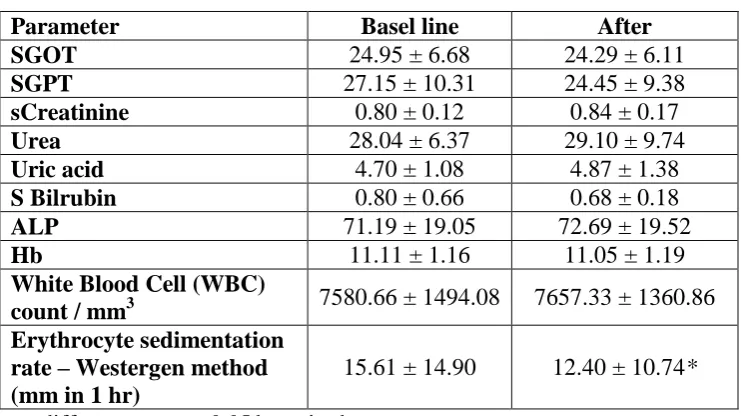
Table 4: Changes in laboratory parameters after treatment (n=75).
Parameter Basel line After
SGOT 24.95 ± 6.68 24.29 ± 6.11
SGPT 27.15 ± 10.31 24.45 ± 9.38
sCreatinine 0.80 ± 0.12 0.84 ± 0.17
Urea 28.04 ± 6.37 29.10 ± 9.74
Uric acid 4.70 ± 1.08 4.87 ± 1.38
S Bilrubin 0.80 ± 0.66 0.68 ± 0.18
ALP 71.19 ± 19.05 72.69 ± 19.52
Hb 11.11 ± 1.16 11.05 ± 1.19
White Blood Cell (WBC)
count / mm3 7580.66 ± 1494.08 7657.33 ± 1360.86 Erythrocyte sedimentation
rate – Westergen method (mm in 1 hr)
15.61 ± 14.90 12.40 ± 10.74*
*Significant difference at p < 0.05 by paired t-test.
There was no statistically significant difference (p > 0.05) observed in laboratory parameters
after the treatment It showed that the test drug have shown no adverse effect on liver and
kidney.
Although a minor change in values of Erythrocyte sedimentation rate (ESR) was observed,
however a statistically significant difference (p < 0.05) in ESR was observed after treatment
(Table 4). This significant change in ESR may be due to the anti-inflammatory and anti
www.wjpr.net Vol 6, Issue 12, 2017. 924 CONCLUSION
The study concluded that dry cough is more common in urban house wives with a mean age
of 39.9years. The predisposing factors for this irritating symptom are various extrinsic
allergens (house dust, gas fumes and coal heat, nitrogen dioxide and particulate matter) and
intrinsic factors (more sensitive cough receptors and presence of oestrogen and progesterone).
The test drug is a good cough suppressant with a potent anti inflammatory and anti allergen
as was demonstrated by Adhatoda, Ziziphin, Cordia latifolia and glycyrrhizin. The drug’s
anti inflammatory property was demonstrated by significant change (p < 0.05) in ESR values.
The drug is safe as no adverse event was reported nor any change was observed in the safety
parameter.
The study had a short study period hence the patients could not be followed up to study the
effect on recurrence of the problem. The study fell short in establishing the time period of its
anti inflammatory effect. These shortfalls can be overcome by conducing post trial
surveillance.
REFERENCES
1. Irwin, R.S., Boulet, L.-P., Cloutier, M.M., et al. Managing Cough as a Defence
Mechanism and as a Symptom: A Consensus Panel Report of the American College of
Chest Physicians. Chest, 1998; 114: 133S-181S.
http://dx.doi.org/10.1378/chest.114.2_Supplement.133.
2. Chung FI, Pavord ID. Prevalence, pathogenesis, and causes of chronic cough. The Lancet,
2008; 391: 1364–74.
3. Irwin, R.S., Boulet, L.-P., Cloutier, M.M., et al. Managing Cough as a Defence
Mechanism and as a Symptom: A Consensus Panel Report of the American College of
Chest Physicians. Chest, 1998; 114: 133S-181S.
http://dx.doi.org/10.1378/chest.114.2_Supplement.133S
4. Chung FI, Pavord ID. Prevalence, pathogenesis, and causes of chronic cough. The Lancet
2008; 391: 1364–74.
5. Majūsi, ‘Ali Ibn ‘Abbās: Kāmil al-Sanā‘a al-Tibbiyya, Vol. I, Central Council for
Research in Unani Medicine, New Delhi, 2010; 490-93.
6. Jurjānī, M Ismail: Zakhīra Khawārizm Shāhī (Urdu Translation), Vol. II, Idāra Kitāb al-Shifā, New Delhi, 2010; 264-268
www.wjpr.net Vol 6, Issue 12, 2017. 925
8. Morice AH, McGreevy L, Pavord I. Recommendations for the management of cough in
adults. Thorax, 2006; 61: 1–24.
9. Irwin, R.S., Boulet, L.-P., Cloutier, M.M., et al. Managing Cough as a Defence
Mechanism and as a Symptom:A Consensus Panel Report of the American College of
Chest Physicians. Chest, 1998; 114, 133S-181S.
http://dx.doi.org/10.1378/chest.114.2_Supplement.133S
10.Mello CJ, Irwin RS, Curley FJ: Predictive values of the character, timing and
complications of chronic cough in diagnosing its cause. Archives of Internal Medicine,
1996; 156(9): 997-1003. 10.1001/archinte.156.9.997
11.Padma L. Current drugs for the treatment of dry cough. Supplement to JAPI, 2013; 61:
9-13.
12.Irwin RS, Boulet LP, Cloutier MM, Fuller R, Gold PM, Hoffstein V, Ing AJ, McCool FD,
O'Byrne P, Poe RH, Prakash UB, Pratter MR, Rubin BK: Managing cough as a defense
mechanism and as a symptom: a consensus panel report of the American College of Chest
Physicians. Chest, 1998; 114: 133S-181S. 10.1378/chest.114.2_Supplement.133S.View
ArticlePubMedGoogle Scholar.
13.Gibson GR: Enalapril-induced cough. Arch Intern Med, 1989; 149: 2701-2703.
10.1001/archinte.1989.00390120061012.View ArticlePubMedGoogle Scholar
14.Fujimura M, Sakamoto S, Matsuda T: Bronchodilator-resistive cough in atopic patients:
bronchial reversibility and hyperresponsiveness. Intern Med, 1992; 31: 447-452.
10.2169/internalmedicine.31.447.View Article Pub Med Google Scholar.
15.Charlton A: Children coughs related to parental smoking. Br Med J (Clin Res Ed), 1984;
288: 1647-1649. 10.1136/bmj.288.6431.1647.View ArticleGoogle Scholar
16.Kwon NH, Oh MJ, Min TH, Lee BJ, Choi DC: Causes andclinical features of subacute
cough. Chest, 2006; 129: l142-l1147.View ArticleGoogle Scholar
17.Irwin RS, Corrao WM, Pratter MR: Chronic persistent cough in the adult: the spectrum
and frequency of causes and successful outcome of specifi c therapy. Am Rev Respir Dis,
1981; 123: 413-417. PubMedGoogle Scholar.
18.Irwin RS, Curley FJ, Frech CL: Chronic cough. The spectrum and frequency of causes,
key components of the diagnostic evaluation, and outcome of specific therapy. Am Rev
Respir Dis, 1990; 141: 640-647. 10.1164/ajrccm/141.3.640.View ArticlePubMedGoogle
www.wjpr.net Vol 6, Issue 12, 2017. 926
19.Vedal S, Petkau J, White R, Blair J: Acute effects of ambient inhalable particles in
asthmatic and nonasthmatic children. Am J Respir Crit Care Med, 1998p; 157:
1034-1043. 10.1164/ajrccm.157.4.9609008.View ArticlePubMedGoogle Scholar.
20.Zemp E, Elsasser S, Schindler C, Künzli N, Perruchoud AP, Domenighetti G, Medici T,
Ackermann-Liebrich U, Leuenberger P, Monn C, Bolognini G, Bongard JP, Brändli O,
Karrer W, Keller R, Schöni MH, Tschopp JM, Villiger B, Zellweger JP: Long-term
ambient air pollution and respiratory symptoms in adults (SAPALDIA study). Am J
Respir Crit Care Med, 1999; 159: 1257-1266. 10.1164/ajrccm.159.4.9807052.
21.Haque RA, Usmani OS, Barnes PJ: Chronic Idiopathic Cough: A Discrete Clinical
Entity? Chest, 2005; 127(5): 1710-1713.
22.Atul Kumar Gangwar,Medicinal uses and pharmacological activity of Adhatoda
vasica,international journal of herbal medicine, 2014; 2(1): 88-91.
23.Dorsch w,Wagner H, New antiasthamatic drugs from traditional medicine,Int Arch
Allergy Appl Immunol, 1991; 94(1-4): 262-5.
24.Patiwa, jk Dwivvedi AD, Singhs,Gupta Rc.Pharmokinetics and in situ absorption studies
of a new anti allergic compound 73/602 in rats.Int j Pharm, 2000; 197(1-2): 213-20.
25.Mahajan R.T., Chopda M.Z. "Phyto-pharmacology of Ziziphus jujuba mill - A plant
review" Mahajan R.T., Chopda M.Z. Pharmacognosy Reviews, 2009; 3(6): 320–329.
26.Khond M, Bhosale JD, Arif T, Mandal TK, Padhi MM, Dabur R. Screening of some
selected medicinal plants extracts for in-vitro antimicrobial activity. Middle-East J Sci
Res, 2009; 4(4): 271–278.
27.C.S Barik,S K Kanungo-A review on therapeutic potential of polyherbal formulation –
International journal of pharmaceutical science and drug research, 2015; 7(3): 211-228.
28.Preeti,Shalini Tripathi –Ziziphus jujube-A phyto pharmacological review-International
journal of research and development in pharmacy and life science, 2014; 3-959-966.
29.Meenakshi parihar, Ankit Chouhan-A REVIEW COUGH AND
TREATMENT-International journal of natural product and research, 2011; 1(!): 9-18.
30.Monika Bansal, Monika Gulati, Sachin Kumar, Anti bacterial, antitussive and anti
oxidant,toxicological evaluation of joshanda lozenges-journal of applied pharmaceutical