Resolving Personal Names in Email Using Context Expansion
Tamer Elsayed,∗Douglas W. Oard,†and Galileo Namata∗ Human Language Technology Center of Excellence and
UMIACS Laboratory for Computational Linguistics and Information Processing (CLIP) University of Maryland, College Park, MD 20742
{telsayed, oard, gnamata}@umd.edu
Abstract
This paper describes a computational ap-proach to resolving the true referent of a named mention of a person in the body of an email. A generative model of mention gener-ation is used to guide mention resolution. Re-sults on three relatively small collections indi-cate that the accuracy of this approach com-pares favorably to the best known techniques, and results on the full CMU Enron collection indicate that it scales well to larger collections.
1 Introduction
The increasing prevalence of informal text from which a dialog structure can be reconstructed (e.g., email or instant messaging), raises new challenges if we are to help users make sense of this cacophony. Large collections offer greater scope for assembling evidence to help with that task, but they pose addi-tional challenges as well. With well over 100,000 unique email addresses in the CMU version of the Enron collection (Klimt and Yang, 2004), common names (e.g., John) might easily refer to any one of several hundred people. In this paper, we associate named mentions in unstructured text (i.e., the body of an email and/or the subject line) to modeled iden-tities. We see at least two direct applications for this work: (1) helping searchers who are unfamiliar with the contents of an email collection (e.g., historians or lawyers) better understand the context of emails that they find, and (2) augmenting more typical social networks (based on senders and recipients) with ad-ditional links based on references found in unstruc-tured text.
Most approaches to resolving identity can be de-composed into four sub-problems: (1) finding a ref-erence that requires resolution, (2) identifying can-didates, (3) assembling evidence, and (4) choosing
∗
Department of Computer Science †
College of Information Studies
among the candidates based on the evidence. For the work reported in this paper, we rely on the user to designate references requiring resolution (which we model as a predetermined set of mention-queries for which the correct referent is known). Candidate identification is a computational expedient that per-mits the evidence assembly effort to be efficiently focused; we use only simple techniques for that task. Our principal contributions are the approaches we take to evidence generation (leveraging three ways of linking to other emails where evidence might be found: reply chains, social interaction, and topical similarity) and our approach to choosing among can-didates (based on a generative model of reference production). We evaluate the effectiveness of our approach on four collections, three of which have previously reported results for comparison, and one that is considerably larger than the others.
The remainder of this paper is as follows. Sec-tion 2 surveys prior work. SecSec-tion 3 then describes our approach to modeling identity and ranking can-didates. Section 4 presents results, and Section 5 concludes.
2 Related Work
The problem of identity resolution in email is a spe-cial case of the more general problem referred to as “Entity Resolution.” Entity resolution is generically defined as a process of determining the mapping from references (e.g., names, phrases) observed in data to real-world entities (e.g., persons, locations). In our case, the problem is to mapmentionsin emails to theidentitiesof the individuals being referred to.
Various approaches have been proposed for en-tity resolution. In structured data (e.g., databases), approaches have included minimizing the number of “matching” and “merging” operations (Benjel-loun et al., 2006), using global relational informa-tion(Malin, 2005; Bhattacharya and Getoor, 2007; Reuther, 2006) and using a probabilistic generative
model (Bhattacharya and Getoor, 2006). None of these approaches, however, both make use of con-versational, topical, and time aspects, shown impor-tant in resolving personal names (Reuther, 2006), and take into account global relational informa-tion. Similarly, approaches in unstructured data (e.g., text) have involved using clustering techniques over biographical facts (Mann and Yarowsky, 2003), within-document resolution (Blume, 2005), and dis-criminative unsupervised generative models (Li et al., 2005). These too are insufficient for our prob-lem since they suffer from inability scale or to han-dle early negotiation.
Specific to the problem of resolving mentions in email collections, Abadi (Abadi, 2003) used email orders from an online retailer to resolve product mentions in orders and Holzer et al. (Holzer et al., 2005) used the Web to acquire information about individuals mentioned in headers of an email col-lection. Our work is focused on resolving personal name references in the full email including the mes-sage body; a problem first explored by Diehl et al. (Diehl et al., 2006) using header-based traffic anal-ysis techniques. Minkov et al.(Minkov et al., 2006) studied the same problem using a lazy graph walk based on both headers and content. Those two re-cent studies reported results on different test collec-tions, however, making direct comparisons difficult. We have therefore adopted their test collections in order to establish a common point of reference.
3 Mention Resolution Approach
The problem we are interested in is the resolution of a personal-name mention (i.e., a named reference to a person)m, in a specific emailem in the given collection of emailsE, to its true referent. We as-sume that the user will designate such mention. This can be formulated as aknown-itemretrieval problem (Allen, 1989) since there is always only one right an-swer. Our goal is to develop a system that provides a list of potential candidates, ranked according to how strongly the system believes that a candidate is the true referent meant by the email author. In this pa-per, we propose a probabilistic approach that ranks the candidates based on the estimated probability of having been mentioned. Formally, we seek to esti-mate the probability p(c|m) that a potential
candi-datecis the one referred to by the given mentionm, over all candidatesC.
We define a mention m as a tuple < lm, em >, wherelmis the “literal” string of characters that rep-resentsmandemis the email wheremis observed.1 We assume thatmcan be resolved to a distinguish-able participant for whom at least one email address is present in the collection.2
The probabilistic approach we propose is moti-vated by a generative scenario of mentioning people in email. The scenario begins with the author of the emailem, intending to refer to a person in that email. To do that s/he will:
1. Select a personcto whom s/he will refer
2. Select an appropriate contextxkto mentionc
3. Select a specific lexical referencelmto refer to
cgiven the contextxk.
For example, suppose “John” is sending an email to “Steve” and wants to mention a common friend “Edward.” “John” knows that he and Steve know 2 people named Edward, one is a friend of both known by “Ed” and the other is his soccer trainer. If “John” would like to talk about the former, he would use “Ed” but he would likely use “Edward” plus some terms (e.g., “soccer”, “team”, etc) for the latter. “John” relies on the social context, or the topi-cal context, for “Steve” to disambiguate the mention. The steps of this scenario impose a certain struc-ture to our solution. First, we need to have a representational model for each candidate identity. Second, we need to reconstruct the context of the queried mention. Third, it requires a computational model of identity that supports reasoning about iden-tities. Finally, it requires a resolution technique that leverages both the identity models and the context to rank the potential candidates. In this section, we will present our resolution approach within that structure. We first discuss how to build both repre-sentational and computational models of identity in section 3.1. Next, we introduce a definition of the contextual space and how we can reconstruct it in
1
The exact position inemwherelmis observed should also be included in the definition, but we ignore it assuming that all matched literal mentions in one email refer to the same identity.
2Resolving mentions that refer to non-participants is outside
section 3.2. Finally, we link those pieces together by the resolution algorithm in section 3.3.
3.1 Computational Model of Identity
Representation: In a collection of emails,
indi-viduals often use different email addresses, multi-ple forms of their proper names, and different nick-names. In order to track references to a person over a large collection, we need to capture as many as possible of these referential attributes in one rep-resentation. We extend our simple representation of identity proposed in (Elsayed and Oard, 2006) where an identity is represented by a set of pair-wise occurrence of referential attributes (i.e., co-occurrence “associations”), and each extracted as-sociation has a frequency of occurrence. The at-tributes are extracted from the headers and saluta-tion and signature lines. For example, an “address-nickname” association < a, n >is inferred when-ever a nicknamenis usually observed in signature lines of emails sent from email address a. Three types of referential attributes were identified in the original representation: email addresses, names, and nicknames. We add usernames as well to account for the absence of any other type of names. Names, nicknames, and usernames are distinguishable based on where each is extracted: email addresses and names from headers, nicknames from salutation and signature lines, and usernames from email dresses. Since (except in rare cases) an email ad-dress is bound to one personal identity, the model leverages email addresses as the basis by mandat-ing that at least one email address must appear in any observed association. As an off-line preprocess-ing step, we extract the referential attributes from the whole collection and build the identity models. The first step in the resolution process is to determine the list of identity models that are viable candidates as the true referent. For the experiments reported in this paper, any identity model with a first name or nick-name that exactly matches the mention is considered a candidate.
Labeling Observed Names: For the purpose of
re-solving name mentions, it is necessary to compute the probabilityp(l|c)that a personcis referred to by a given “literal” mentionl. Intuitively, that probabil-ity can be estimated based on the observed “name-type” of land how often that association occurs in
the represented model. We define T as the set of 3 different types of single-token name-types: first, last, and nickname. We did not handle middle names and initials, just for simplicity. Names that are ex-tracted from salutation and signature lines are la-beled as nicknames whereas full names extracted from headers are first normalized to “First Last” form and then each single token is labeled based on its relative position as being the first or last name. Usernames are treated similarly to full names if they have more than one token, otherwise they are ig-nored. Note that the same single-token name may appear as a first name and a nickname.
Figure 1: A computational model of identity.
Reasoning: Having tokenized and labeled all
names, we propose to model the association of a single-token namel of type t to an identity c by a simple 3-node Bayesian network illustrated in Fig-ure 1. In the network, the observed mention l is distributed conditionally on both the identitycand the name-typet. p(c)is the prior probability of ob-serving the identitycin the collection. p(t|c)is the probability that a name-typetis used to refer toc.
p(l|t, c) is the probability of referring to c by l of typet. These probabilities can be inferred from the representational model as follows:
p(c) = P |assoc(c)|
c0∈C|assoc(c 0
)|
p(t|c) = P f req(t, c)
t0∈T f req(t 0
, c)
p(l|t, c) = P f req(l, t, c)
l0∈assoc(c)f req(l
0
, t, c)
whereassoc(c)is the set of observed associations of referential attributes in the represented modelc.
The probability of observing a mention l given that it belongs to an identityc, without assuming a specific token type, can then be inferred as follows:
p(l|c) =X
t∈T
p(t|c)p(l|t, c)
or nickname and the last is a last name, and compute it accordingly as follows:
p(l1l2|c) ={
X
t∈{f,n}
p(t|c)p(l1|t, c)} ·p(l2|last, c)
where f andn above denotes first name and nick-name respectively.
Email addresses are also handled, but in a differ-ent way. Since we assume each of them uniquely identifies the identity, all email addresses for one identity are mapped to just one of them, which then has half of the probability mass (because it appears in every extracted co-occurrence association).
Our computational model of identity can be thought of as a language model over a set of per-sonal references and thus it is important to account for unobserved references. If we know that a spe-cific first name often has a common nickname (by a dictionary of commonly used first to nickname map-pings (e.g., Robert to Bob)), but this nickname was not observed in the corpus, we will need to apply smoothing. We achieve that by assuming the nick-name would have been observedntimes wherenis some fraction (0.75 in our experiments) of the fre-quency of the observed name. We repeat that for each unobserved nickname and then treat them as if they were actually observed.
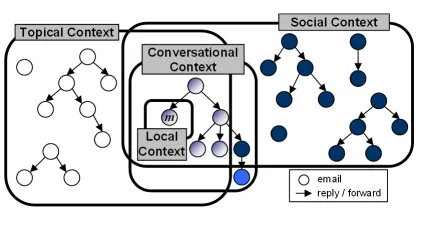
[image:4.612.81.292.447.567.2]3.2 Contextual Space
Figure 2: Contextual Space
It is obvious that understanding the context of an ambiguous mention will help with resolving it.
Fortunately, the nature of email as a conversa-tional medium and the link-relationships between emails and people over time can reveal clues that can be exploited to partially reconstruct that context.
We define the contextual spaceX(m)of a men-tionmas amixtureof 4 types of contexts withλkas the mixing coefficient of contextxk. The four con-texts (illustrated in Figure 2) are:
(1)Local Context: the emailem where the named person is mentioned.
(2) Conversational Context: emails in the broader discussion that includesem, typically the thread that contains it.
(3)Social Context: discussions that some or all of the participants (sender and receivers) ofem joined or initiated at around the time of the mention-email. These might bear some otherwise-undetected rela-tionship to the mention-email.
(4) Topical Context: discussions that are topically similar to the mention-discussion that took place at around the time ofem, regardless of whether the dis-cussions share any common participants.
These generally represent a growing (although not strictly nested) contextual space around the queried mention. We assume that all mentions in an email share the same contextual space. Therefore, we can treat the context of a mention as the context of its email. However, each email in the collection has its own contextual space that could overlap with an-other email’s space.
3.2.1 Formal Definition
We defineK as the set of the 4 types of contexts. A contextxk is represented by a probability distri-bution over all emails in the collection. An emailej belongs to thekth context of another emailei with probabilityp(ej|xk(ei)). How we actually represent each context and estimate the distribution depends upon the type of the context. We explain that in de-tail in section 3.2.2.
3.2.2 Context Reconstruction
In this section, we describe how each context is constructed.
Local Context: Since this is simply em, all of the
probability mass is assigned to it.
Conversational Context: Threads (i.e., reply
reconstruction results in a unique tree containing the mention-email. Although we can distinguish be-tween different paths or subtrees of that tree, we elected to have a uniform distribution over all emails in the same thread. This also applies to threads re-trieved in the social and topical contexts as well.
Social Context: Discussions that share common
participants may also be useful, though we expect their utility to decay somewhat with time. To recon-struct that context, we temporally rank emails that share at least one participant withem in a time pe-riod aroundem and then expand each by its thread (with duplicate removal). Emails in each thread are then each assigned a weight that equals the recip-rocal of its thread rank. We do that separately for emails that temporally precede or follow em. Fi-nally, weights are normalized to produce one distri-bution for the whole social context.
Topical Context: Identifying topically-similar
con-tent is a traditional query-by-example problem that has been well researched in, for example, the TREC routing task (Lewis, 1996) and the Topic Detection and Tracking evaluations (Allan, 2002). Individual emails may be quite terse, but we can exploit the conversational structure to obtain topically related text. In our experiments, we tracked back to the root of the thread in whichem was found and used the subject line and the body text of that root email as a query to Lucene3 to identify topically-similar emails. Terms found in the subject line are dou-bled in the query to emphasize what is sometimes a concise description of the original topic. Subse-quent processing is then similar to that used for the social context, except that the emails are first ranked by their topical, rather than temporal, similarity.
The approaches we adopted to reconstruct the so-cial and topical contexts were chosen for their rel-ative simplicity, but there are clearly more sophis-ticated alternatives. For example, topic modeling techniques (McCallum et al., 2005) could be lever-aged in the reconstruction of the topical context.
3.3 Mention Resolution
Given a specific mention mand the set of identity models C, our goal now is to computep(c|m) for each candidatecand rank them accordingly.
3
http://lucene.apache.org
3.3.1 Context-Free Mention Resolution
If we resolve m out of its context, then we can computep(c|m)by applying Bayes’ rule as follows:
p(c|m)≈p(c|lm) = p(l
m|c)p(c)
P
c0∈Cp(lm|c 0
)p(c0)
All the terms above are estimated as discussed ear-lier in section 3.1. We call this approach “backoff” since it can be used as a fall-back strategy. It is con-sidered the baseline approach in our experiments.
3.3.2 Contextual Mention Resolution
We now discuss the more realistic situation in which we use the context to resolvem. By expand-ing the mention with its context, we get
p(c|m) =p(c|lm, X(em))
We then apply Bayes’ rule to get
p(c|lm, X(em)) = p(c, l
m, X(em))
p(lm, X(em))
where p(lm, X(em)) is the probability of observ-inglm in the context. We can ignore this probabil-ity since it is constant across all candidates in our ranking. We now restrict our focus to the numera-tor p(c, lm, X(em)), that is the probability that the sender chose to refer to c by lm in the contextual space. As we discussed in section 3.2,Xis defined as a mixture of contexts therefore we can further ex-pand it as follows:
p(c, lm, X(em)) =X
k
λkp(c, lm, xk(em))
Following the intuitive generative scenario we intro-duced earlier, the context-specific probability can be decomposed as follows:
p(c, lm, xk(em)) =p(c)
∗p(xk(em)|c)
∗p(lm|xk(em), c) where p(c) is the probability of selecting a can-didate c, p(xk(em)|c) is the probability of select-ingxk as an appropriate context to mentionc, and
p(lm|xk(em), c) is the probability of choosing to mentioncbylmgiven thatxkis the appropriate con-text.
Choosing person to mention: p(c)can be estimated as discussed in section 3.1.
Choosing appropriate context:By applying Bayes’ rule to computep(xk(em)|c)we get
p(xk(em)|c) =
p(c|xk(em))p(xk(em))
p(xk(em))is the probability of choosingxkto gen-erally mention people. In our experiments, we assumed a uniform distribution over all contexts.
p(c|xk(em)) is the probability of mentioning c in
xk(em). Given that the context is defined as a distri-bution over emails, this can be expanded to
p(c|xk(em)) =
X
ei∈E
p(ei|xk(em)p(c|ei))
wherep(c|ei)is the probability that cis mentioned in the emailei. This, in turn, can be estimated us-ing the probability of referrus-ing toc by at least one unique reference observed in that email. By assum-ing that all lexical matches in the same email refer to the same person, and that all lexically-unique refer-ences are statistically independent, we can compute that probability as follows:
p(c|ei) = 1−p(cis not mentioned inei)
= 1− Y
m0∈M(ei)
(1−p(c|m0))
where p(c|m0) is the probability that c is the true referent of m0. This is the same general problem of resolving mentions, but now concerning a related mentionm0 found in the context of m. To handle this, there are two alternative solutions: (1) break the cycle and compute context-free resolution probabil-ities for those related mentions, or (2) jointly resolve all mentions. In this paper, we will only consider the first, leaving joint resolution for future work. Choosing a name-mention: To estimate
p(lm|xk(em), c), we suggest that the email au-thor would choose either to select a reference (or a modified version of a reference) that was previously mentioned in the context or just ignore the context. Hence, we estimate that probability as follows:
p(lm|xk(em), c) =α p(lm∈xk(em)|c)
+(1−α)p(lm|c)
where α ∈ [0,1]is a mixing parameter (set at 0.9 in our experiments), andp(lm|c)is estimated as in section 3.1. p(lm ∈ xk(em)|c)can be estimated as follows:
p(lm ∈xk(em)|c) =
X
m0∈xk
p(lm|lm
0
)p(lm
0
|xk)p(c|lm 0
)
wherep(lm|lm
0
)is the probability of modifyinglm
0
into lm. We assume all possible mentions of c
are equally similar tom and estimatep(lm|lm
0
) by
1
|possible mentions ofc|. p(lm 0
|xk) is the probability of
observinglm
0
inxk, which we estimate by its rel-ative frequency in that context. Finally,p(c|lm0)is again a mention resolution problem concerning the referenceriwhich can be resolved as shown earlier. The Aho-Corasick linear-time algorithm (Aho and Corasick, 1975) is used to find mentions of names, using a corpus-based dictionary that includes all names, nicknames, and email addresses extracted in the preprocessing step.
4 Experimental Evaluation
We evaluate our mention resolution approach using four test collections, all are based on the CMU ver-sion of the Enron collection; each was created by se-lecting a subset of that collection, sese-lecting a set of query-mentions within emails from that subset, and creating an answer key in which each query-mention is associated with a single email address.
The first two test collections were created by Minkov et al (Minkov et al., 2006). These test col-lections correspond to two email accounts, “sager-e” (the “Sager” collection) and “shapiro-r” (the “Shapiro” collection). Their mention-queries and answer keys were generated automatically by iden-tifying name mentions that correspond uniquely to individuals referenced in the cc header, and elimi-nating that cc entry from the header.
The third test collection, which we call the “Enron-subset” is an extended version of the test collection created by Diehl at al (Diehl et al., 2006). Emails from all top-level folders were included in the collection, but only those that were both sent by and received by at least one email address of the form<name1>.<name2>@enron.com were retained. A set of 78 mention-queries were manu-ally selected and manumanu-ally associated with the email address of the true referent by the third author using an interactive search system developed specifically to support that task. The set of queries was lim-ited to those that resolve to an address of the form
<name1>.<name2>@enron.com. Names found in salutation or signature lines or that exactly match
Table 1: Test collections used in the experiments.
Test Coll. Emails IDs Queries Candidates
Sager 1,628 627 51 4 (1-11)
Shapiro 974 855 49 8 (1-21)
Enron-sub 54,018 27,340 78 152 (1-489) Enron-all 248,451 123,783 78 518 (3-1785)
For our fourth test collection (“Enron-all”), we used the same 78 mention-queries and the answer key from the Enron-subset collection, but we used the full CMU version of the Enron collection (with duplicates removed). We use this collection to as-sess the scalability of our techniques.
Some descriptive statistics for each test collection are shown in Table 1. The Sager and Shapiro col-lections are typical of personal colcol-lections, while the other two represent organizational collections. These two types of collections differ markedly in the number of known identities and the candidate list sizes as shown in the table (the candidate list size is presented as an average over that collection’s mention-queries and as the full range of values).
4.1 Evaluation Measures
There are two commonly used single-valued eval-uation measures for “known item”-retrieval tasks. The “Success @ 1” measure characterizes the ac-curacy of one-best selection, computed as the mean across queries of the precision at the top rank for each query. For a single-valued figure of merit that considers every list position, we use “Mean Recip-rocal Rank” (MRR), computed as the mean across queries of the inverse of the rank at which the cor-rect referent is found.
4.2 Results
There are four basic questions which we address in our experimental evaluation: (1) How does our ap-proach perform compared to other apap-proaches?, (2) How is it affected by the size of the collection and by increasing the time period?, (3) Which context makes the most important contribution to the resolu-tion task? and (4) Does the mixture help?
In our experiments, we set the mixing coefficients
λkand the context priorsp(xk)to a uniform distri-bution over all reconstructed contexts.
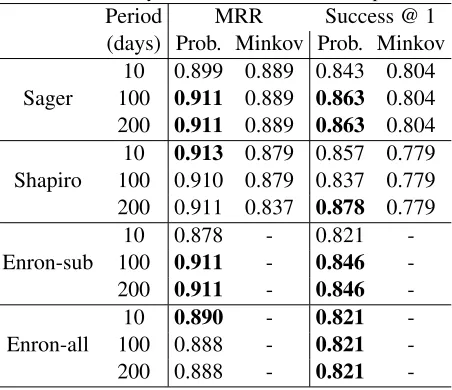
[image:7.612.315.541.79.274.2]To compare our system performance with results
Table 2: Accuracy results with different time periods.
Period MRR Success @ 1 (days) Prob. Minkov Prob. Minkov
10 0.899 0.889 0.843 0.804 Sager 100 0.911 0.889 0.863 0.804
200 0.911 0.889 0.863 0.804
10 0.913 0.879 0.857 0.779
Shapiro 100 0.910 0.879 0.837 0.779 200 0.911 0.837 0.878 0.779
10 0.878 - 0.821
-Enron-sub 100 0.911 - 0.846
-200 0.911 - 0.846
-10 0.890 - 0.821
-Enron-all 100 0.888 - 0.821
-200 0.888 - 0.821
-previously reported, we experimented with differ-ent (symmetric) time periods for selecting threads in the social and topical contexts. Three represen-tative time periods, in days, were arbitrarily chosen: 10 (i.e., +/- 5) days, 100 (i.e., +/- 50) days, and 200 (i.e., +/- 100) days. In each case, the mention-email defines the center of this period.
A summary of the our results (denoted by “Prob.”) are shown in Table 2 with the best results for each test collection highlighted in bold. The table also in-cludes the results reported in Minkov et al (Minkov et al., 2006) for the small collections for comparison purposes.4 Each score for our system was the best over all combinations of contexts for these collec-tions and time periods. Given these scores, our re-sults compare favorably with the previously reported results for both Sager and Shapiro collections.
Another notable thing about our results is that they seem to be good enough for practical appli-cations. Specifically, our one-best selection (over all tried conditions) is correct at least 82% of the time over all collections, including the largest one. Of course, the Enron-focused selection of mention-queries in every case is an important caveat on these results; we do not yet know how well our techniques will hold up with less evidence, as might be the case for mentions of people from outside Enron.
It is encouraging that testing on the largest
col-4For the “Enron-subset” collection, we do not know which
lection (with all unrelated and thus noisy data) did not hurt the effectiveness much. For the three differ-ent time periods we tried, there was no systematic effect.
Figure 3: Individual contexts, period set to 100 days.
Individual Contexts: Our choice of contexts was
motivated by intuition rather than experiments, so we also took this opportunity to characterize the contribution of each context to the results. We did that by setting some of the context mixing-coefficients to zero and leaving the others equally-weighted. Figure 3 shows the MRR achieved with each context. In that figure, the “backoff” curve in-dicates how well the simple context-free resolution would do. The difference between the two small-est and the two largsmall-est collections is immediately apparent–this backoff is remarkably effective for the smaller collections, and almost useless for the larger ones, suggesting that the two smaller collections are essentially much easier. The social context is clearly quite useful, more so than any other single context, for every collection. This tends to support our ex-pectation that social networks can be as informative as content networks in email collections. The topical context also seems to be useful on its own. The con-versational context is moderately useful on its own in the larger collections. The local context alone is not very informative for the larger collections.
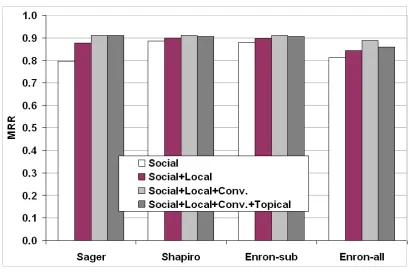
Mixture of Contexts: The principal motivation for
combining different types of contexts is that differ-ent sources may provide complemdiffer-entary evidence. To characterize that effect, we look at combinations of contexts. Figure 4 shows three such context com-binations, anchored by the social context alone, with a 100-day window (the results for 10 and 200 day periods are similar). Reassuringly, adding more con-texts (hence more evidence) turns out to be a
rea-Figure 4: Mixture of contexts, period set to 100 days.
sonable choice in most cases. For the full combi-nation, we notice a drop in the effectiveness from the addition of the topical context.5 This suggests
that the construction of the topical context may need more careful design, and/or that learnedλk’s could yield better evidence combination (since these re-sults were obtained with equalλk’s).
5 Conclusion
We have presented an approach to mention resolu-tion in email that flexibly makes use of expanding contexts to accurately resolve the identity of a given mention. Our approach focuses on four naturally occurring contexts in email, including a message, a thread, other emails with senders and/or recipi-ents in common, and other emails with significant topical content in common. Our approach outper-forms previously reported techniques and it scales well to larger collections. Moreover, our results serve to highlight the importance of social context when resolving mentions in social media, which is an idea that deserves more attention generally. In fu-ture work, we plan to extend our test collection with mention queries that must be resolved in the “long tail” of the identity distribution where less evidence is available. We are also interested in exploring iter-ative approaches to jointly resolving mentions.
Acknowledgments
The authors would like to thank Lise Getoor for her helpful advice.
5This also occurs even when topical context is combined
[image:8.612.80.290.126.247.2]References
Daniel J. Abadi. 2003. Comparing domain-specific and non-domain-specific anaphora resolution techniques. Cambridge University MPhil Dissertation.
Alfred V. Aho and Margaret J. Corasick. 1975. Effi-cient string matching: an aid to bibliographic search. InCommunications of the ACM.
James Allan, editor. 2002.Topic detection and tracking: event-based information organization. Kluwer Aca-demic Publishers, Norwell, MA, USA.
Bryce Allen. 1989. Recall cues in known-item retrieval. JASIS, 40(4):246–252.
Omar Benjelloun, Hector Garcia-Molina, Hideki Kawai, Tait Eliott Larson, David Menestrina, Qi Su, Sut-thipong Thavisomboon, and Jennifer Widom. 2006. Generic entity resolution in the serf project. IEEE Data Engineering Bulletin, June.
Indrajit Bhattacharya and Lise Getoor. 2006. A latent dirichlet model for unsupervised entity resolution. In The SIAM International Conference on Data Mining (SIAM-SDM), Bethesda, MD, USA.
Indrajit Bhattacharya and Lise Getoor. 2007. Collective entity resolution in relational data. ACM Transactions on Knowledge Discovery from Data, 1(1), March. Matthias Blume. 2005. Automatic entity
disambigua-tion: Benefits to NER, relation extraction, link anal-ysis, and inference. In International Conference on Intelligence Analysis, May.
Chris Diehl, Lise Getoor, and Galileo Namata. 2006. Name reference resolution in organizational email archives. InProceddings of SIAM International Con-ference on Data Mining, Bethesda, MD , USA, April 20-22.
Tamer Elsayed and Douglas W. Oard. 2006. Modeling identity in archival collections of email: A prelimi-nary study. In Proceedings of the 2006 Conference on Email and Anti-Spam (CEAS 06), pages 95–103, Mountain View, California, July.
Ralf Holzer, Bradley Malin, and Latanya Sweeney. 2005. Email alias detection using social network analysis. In LinkKDD ’05: Proceedings of the 3rd international workshop on Link discovery, pages 52–57, New York, NY, USA. ACM Press.
Bryan Klimt and Yiming Yang. 2004. Introducing the Enron corpus. InConference on Email and Anti-Spam, Mountain view, CA, USA, July 30-31.
David D. Lewis and Kimberly A. Knowles. 1997. Threading electronic mail: a preliminary study. Inf. Process. Manage., 33(2):209–217.
David D. Lewis. 1996. The trec-4 filtering track. InThe Fourth Text REtrieval Conference (TREC-4), pages 165–180, Gaithersburg, Maryland.
Xin Li, Paul Morie, and Dan Roth. 2005. Semantic inte-gration in text: from ambiguous names to identifiable entities. AI Magazine. Special Issue on Semantic Inte-gration, 26(1):45–58.
Bradley Malin. 2005. Unsupervised name disambigua-tion via social network similarity. In Workshop on Link Analysis, Counter-terrorism, and Security, in conjunction with the SIAM International Conference on Data Mining, Newport Beach, CA, USA, April 21-23.
Gideon S. Mann and David Yarowsky. 2003. Unsuper-vised personal name disambiguation. InProceedings of the seventh conference on Natural language learn-ing at HLT-NAACL 2003, pages 33–40, Morristown, NJ, USA. Association for Computational Linguistics. Andrew McCallum, Andres Corrada-Emmanuel, and
XueruiWang Wang. 2005. Topic and role discovery in social networks. InIJCAI.
Einat Minkov, William W. Cohen, and Andrew Y. Ng. 2006. Contextual search and name disambiguation in email using graphs. In SIGIR ’06: Proceedings of the 29th annual international ACM SIGIR conference on Research and development in information retrieval, pages 27–34, New York, NY, USA. ACM Press. Patric Reuther. 2006. Personal name matching: New test