1
The concept of creativity:
The relationship between usefulness and creativity
Elody Hutten – s1009028
2 Table of Contents
Abstract ... 4
1. Introduction ... 4
2. Exploring creativity and its role in neuroscience ... 7
2.1 The concept of creativity ... 7
2.1.1 Creativity and its research fields ... 7
2.1.2 Defining creativity ... 7
2.2 Experimental designs in neuroscience ... 11
3. Methodology ... 17
3.1 The first experiment ... 17
3.1.1 Participants ... 17
3.1.2 Procedure ... 18
3.1.3 Experimental design ... 18
3.1.4 Task ... 19
3.1.5 Data analysis ... 20
3.2 The second experiment ... 20
3.2.1 Participants ... 20
3.2.2 Procedure ... 21
3.2.3 Experimental design ... 21
3.2.4 Task ... 22
3.2.5 Data analysis ... 22
4. Results ... 24
4.1 The first experiment ... 24
4.2 The second experiment ... 26
4.2.1 Evaluation of the questionnaire ... 26
4.2.2 Descriptive statistics ... 29
4.2.3 The Gaus-Markov assumptions: diagnostic tests ... 33
4.2.4 Regression analysis ... 35
5. Discussion ... 38
5.1 Conclusions ... 38
5.2 Limitations and suggestions for future research ... 41
References ... 42
Appendix A ... 48
3
Appendix C ... 52
Appendix D ... 54
Appendix E ... 55
Appendix F ... 55
4 Abstract
The aim of the current study has been twofold: investigating whether it is possible to design an EEG study in Dutch with respect to creativity and how usefulness is related to the concept of creativity. In order to address these issues, two experiments were conducted. The first experiment was based on the study by Jauk et al. (2012) and included both the Word Association Task and the Alternate Uses Task. The experiment contained three conditions: common, uncommon and useful. These conditions refer to the instructions that participants received before the start of a trial. No actual EEG data was recorded. The second experiment included an online survey during which the responses given by participants on the first experiment were rated with respect to creativity. The results of the current study revealed that the current research design appears to be suitable for an EEG study. Further, the results revealed that the creativity of the responses was lowest when participants received an instruction to think of a common response, highest when they received the uncommon instruction and intermediate when they received an instruction to think of useful responses. Kris (1952) has proposed two phases of the creative process, the inspiration phase (generating new ideas) and the elaboration phase (a logical, practical and realistic process). Based on the aforementioned results, the current study hypothesizes that usefulness is related to the second phase of creativity, the elaboration phase, which is proposed to be more related to convergent thinking as opposed to divergent thinking.
1. Introduction
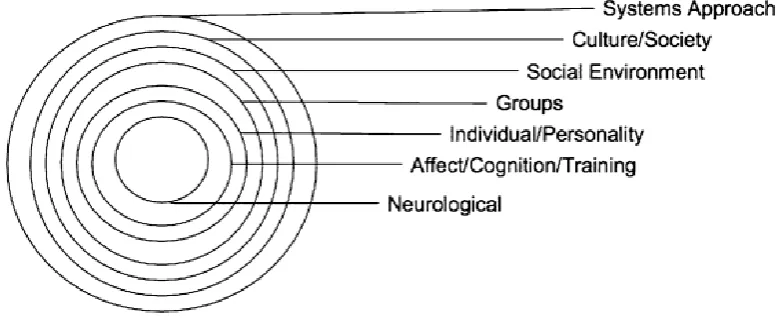
5 individual is obviously embedded in a certain culture for example and can therefore not be researched in isolation.
Figure 1 The concentric circle model as proposed by Hennessy and Amabile (2010). The different circles represent the different research fields related to creativity.
The review paper by Hennessy and Amabile (2010) reveals the diversity of creativity research. The current study, however, will focus on the neurological level of creativity research.
[image:5.595.121.510.151.314.2]6 actually recording EEG, in order to be able to investigate whether the design employed by the current study can actually be used in a real EEG study.
The current study conducted two experiments in sequence. The first experiment conducted during the current study is based largely on the experimental design employed by Jauk, Benedek and Neubauer (2012). In line with Jauk et al. (2012), both the Word Association Task and the Alternate Uses Task was included. The study further included three conditions: before the start of the trial, participants received an instruction to come up with (1) common, (2) uncommon or (3) useful responses. Although the experiment was designed in such a way that it resembles designs used in EEG studies with respect to creativity as closely as possible, no actual EEG recording took place. The second experiment included in the current study was an online survey. This survey included a random selection of word-association pairs that were created during the first experiment. Participants were asked to rate the word-association pairs on their creativity using the creativity scale based on the card sorting studies by both Wolf (2014) and van der Velde, Wolf, Schmettow, and Nazareth (2015). The rating scale employed by the current study is composed of four clusters: innovation, imagination, originality and usefulness. Together, these four clusters were used to generate a creativity score.
The results of the first experiment revealed that the research design by Jauk et al. (2012) including both the Word Association Task and the Alternate Uses Task can be translated to Dutch. Further, it also appeared that the research design of the current study can be used to conduct an EEG study. However, some minor alterations with respect to the response time should be considered. Further, the results of the second experiment revealed that the score on innovation, imagination and originality is lowest in the common condition, highest in the uncommon condition and intermediate in the usefulness condition. The score with respect to usefulness is also lowest in the common condition but no significant difference was found between the uncommon and usefulness condition. Based on these results, the current study hypothesizes that usefulness is related to the second phase of creativity, the elaboration phase, which is proposed to be more related to convergent thinking.
7 2. Exploring creativity and its role in neuroscience
The first section of the literature review will investigate the concept of creativity and will describe what creativity is and how it can be measured. The next section provides a broad overview with respect to the kind of research that has been conducted with respect to creativity. The last section will review the research that has been conducted in the field of neuroscience with respect to creativity.
2.1 The concept of creativity
2.1.1 Creativity and its research fields
Creativity has been studied in a variety of research fields. One of the research fields in which it has been researched is the cognitive sciences. This research field is concerned with finding the cognitive processes that underlie the creative process (Ward, 2006). These cognitive processes are retrieval, combination and analogy for example. Another research field in which creativity has been studied is in the educational domain. The educational research field is mostly concerned with methods that promote creative thinking in pupils and students (Chan, 2013). These studies have become more important due to the fact that organizations are more knowledge intense and drive more on innovation (Sawyer, 2006). Social psychology has also engaged in creativity research. An example is research with respect to motivators of creative behavior like the expectation of an evaluation by other people (Amabile, 1979). Further, research has been conducted whereby the occurrence of a mental illness was linked to creative behavior in the field of psychiatry (Kaufman, 2005). More recently, neurosciences have also become interested in creativity. The remainder of the literature review is concerned with describing the concept of creativity and studies related to creativity that have been conducted in the field of neuroscience.
2.1.2 Defining creativity
8 A difficulty in defining creativity is its relation to intelligence (Batey & Furnham, 2006). For example, intelligence is correlated more strongly to cognitive indicators of creativity like divergent thinking compared to self-reported creativity or creative achievements (Batey, Furnham & Saffiulina, 2010). Such correlations make it more difficult to discriminate intelligence from creativity (more specifically, divergent thinking) and to measure creativity as an isolated construct. Benedek, Jauk, Sommer, Arendasy and Neubauer (2014) conducted a study with respect to the cognitive basis of both creativity and intelligence. In order to be able to measure creativity, as opposed to intelligence, they used the Alternate Uses Test and the Remote Associates Tests since both tests have shown low correlations with intelligence and are thus argued to be good measures of creativity as opposed to intelligence (Wallach, 1971).
In order to be able to gain a better understanding with respect to both creativity and intelligence they investigated what executive functions were used in both creativity and intelligence tasks. The executive functions included in their study were updating (monitoring of incoming information and the revision of working memory), shifting (disengagement of a mental set that has become of little relevance and the engagement in a new mental set) and inhibition (the oppression of dominant, but irrelevant response tendencies). Their results revealed that both creativity and intelligence were predicted by the executive function updating. Further, intelligence was not predicted by shifting and inhibition and creativity was predicted by inhibition but not by shifting as well. An overview of these results can be found in table 1. This study, thus, indicates that the correlation between performance on intelligence tests and the performance on creativity tests can be explained by an executive function both concepts have in common: updating. The difference between creativity and intelligence is that creativity also relies on inhibition as opposed to intelligence.
Table 1 An overview of the executive functions that were tested with respect to both creativity and intelligence. A “+” indicates that this executive function has been found to predict creativity or intelligence and a “-” indicates that this executive function did not predict creativity or intelligence.
Updating Shifting Inhibition
Creativity + - +
Intelligence + - -
[image:8.595.63.525.631.693.2]9 answer and thinking is controlled towards that one solution. In divergent thinking there is more searching going on in different fields and is characterized by the production of a variety of responses (Guilford, 1959). Divergent thinking occurs predominantly in problem solving whereby there is no unique answer. A study by Mölle et al. (1996) already demonstrated that divergent thinking revealed different brain activity patterns compared to convergent thinking. The creative process is supposed to be dependent on divergent thinking as opposed to convergent thinking.
Another distinction was proposed by Mendelsohn (1976). More creative people are hypothesized to rely more on defocused attention compared to focused attention. Defocused attention is associated with higher attentional span which supports the generation of novel ideas by allowing more different concepts to be combined compared to focused attention. Martindale (1999) further argued that all these different classifications of creative thinking (divergent, primary and defocused) are all relatively similar to each other. However, complex creative thinking is supposed to rely not only on the end of the continuum associated with creative thinking (divergent, primary and defocused) but also on the other end (convergent, secondary and focused) (Cropley, 2006).
Further, the creative process can be divided into different phases as proposed by Kris (1952). He suggested that the creative process consists of two phases: the inspiration phase and the elaboration phase. The first phase, inspiration, is concerned with generating creative ideas and is associated with primary cognition processes. During the second phase, the elaboration phase, the constraints of reality are imposed on the ideas that resulted from the inspiration phase in order to facilitate a selection of the initial ideas. The elaboration phase is associated with secondary cognition processes. Primary cognition processes are supposed to be located in the right hemisphere and are associated with states of dreaming, reverie and even psychosis. Secondary cognition processes are supposed to be located in the left hemisphere and are associated with the state of waking consciousness. Hilgard (1962) has characterized secondary processes as logical, practical and realistic. Kris (1952) further hypothesized that creative people are better able to shift between both processes.
10 could be hypothesized that the inspirational phase is more related to the first part of the definition of creativity which refers to the originality or uniqueness of ideas and not so much to the second part of the definition which is related to the usefulness of ideas which arguable could relate more to the elaboration phase of creativity. A review study by Suler (1980) concluded that empirical research has consistently revealed an association between divergent thinking and primary processes. Like mentioned before, Kris (1952) associated the inspiration phase with primary processes and the elaboration phase with secondary processes. Therefore, it can be assumed that divergent thinking can be associated with the inspiration phase due to the fact that both are related to primary processes. If it is assumed that the usefulness aspect of creativity is more related to the elaboration phase of the creative process, usefulness should be related to secondary processes.
More recently, Wolf (2014) investigated the concept of creativity by using card sorting. He found that creativity is composed of eight components (see also van der Velde, Wolf, Schmettow, & Nazareth, 2015):
1. Originality. Creative ideas should be original.
2. Emotion. Creative ideas should evoke an emotional response. 3. Inventiveness. Creative ideas should be novel or refreshing.
4. Process. Creative ideas are not “sudden insight” ideas but are the result of a process that takes time and effort.
5. Intellectuality. Creative ideas are the result of (intelligent) thought and knowledge.
6. Hobby. Creative ideas are not necessarily radical or world changing, but can also manifest itself in everyday craftsmanship.
7. Performance. Creativity can also be artistic and found in arts, poems and music.
8. From thought to practice. Creative ideas should transform from intangible thought to tangible practice.
11 The current study will contribute to the conceptualization of the concept of creativity by investigating whether the usefulness aspect can be included in an experimental design thereby making the first move towards gaining a better understanding of the role of usefulness in the creative process.
2.2 Experimental designs in neuroscience
A difficulty with applying creativity tests in EEG studies is that EEG recording imposes some constraints on the experiment that can be conducted (Fink et al., 2007). Traditional creativity tests mentioned in the previous section often require participants to write down their answers or to make their answers known verbally. Both approaches are, however, less suitable for EEG research due to the fact that muscle movements associated with writing and speaking can cause artifacts in the EEG recordings. So, the use of EEG recordings in a creativity study requires a different signal than writing or speech to determine what kind of idea was thought of and when the idea has come up. This means that the original designs need to be altered in other to suite EEG studies.
An example of such an adjusted creativity study employing EEG is the study by Fink et al. (2007). Their study consisted of four tasks:
1. Insight task. During this task, the participant is asked to give as many different explanations for an unusual, hypothetical situation. An example of an item is “A light in the darkness”.
2. Utopian situations. Participants are asked to put themselves in a utopian situation that will never actually happen and to give as many causes as possible. An example of an item is: “Imagine, there was a creeping plant rising up in the sky. What would you await at the end of this plant?”
3. Alternative Uses. This task requires participants to come with at many unusual uses for a common object. An example of an item is: “brick”.
4. Word ends. Participants are presented with German suffixes that they have to complete originally. An example of an item is: “-der”.
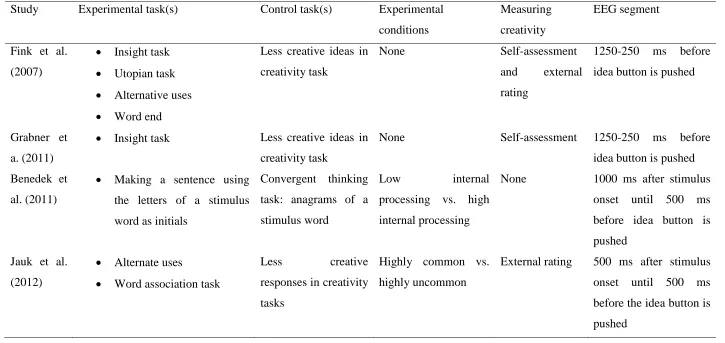
12 asked to push the “idea button” whenever an idea comes to mind. The time interval used during analysis of the EEG recordings is 1250-250 ms before the idea button is pushed. Participants’ performance of the task was scored both by ideational fluency (number of ideas) and the originality of the ideas. Originality was both by self-assessment of the participant and an external rating by six advanced diploma psychology students using a five-point scale. The internal consistency of the ratings was assessed using Cronbach’s Alpha. The internal consistencies that were found are 0.93, 0.92, 0.91 and 0.87 for the four tasks.
A similar approach was adopted by Grabner, Fink and Neubauer (2011). Their experiment consisted of two verbal creativity problems adapted from the Torrance Test of Creative Thinking. These two problems were the same problems as Fink et al. (2007) used in their insight task. The determination of the relevant interval also occurred in line with Fink et al. (2007) by an idea button. The originality of the ideas was scored through self-assessment using a five-point scale only.
Benedek, Bergner, Könen, Fink and Neubauer (2011) used a different approach by choosing a convergent thinking control task instead of less creative responses in a divergent thinking task like Fink et al. (2007) and Grabner, Fink and Neubauer (2011). The divergent thinking task employed by Benedek et al. (2011) and the convergent thinking task consists of the same stimulus: a meaningful, four-letter word. In the divergent thinking task, participants were asked to make a four letter word sentence using each of the letters in the stimulus word as initials. In the convergent thinking task, participants are asked to find an anagram of the stimulus word. Further, two experimental conditions were discerned in both the divergent thinking and the convergent thinking task: low internal processing and high internal processing. In the low internal processing condition, the stimulus remained visible on the screen during the entire task and in the high internal processing condition, the stimulus remained visible for 500 ms and was then masked by ‘XXX’. By discriminating between these conditions, it can be tested whether alpha synchronization is related to internal processing. In line with the other studies mentioned, Benedek et al. (2011) also let participants press a button when they had thought of a response. The interval that was selected for analysis was 1000 ms after stimulus onset until 500 ms before the idea button was pressed.
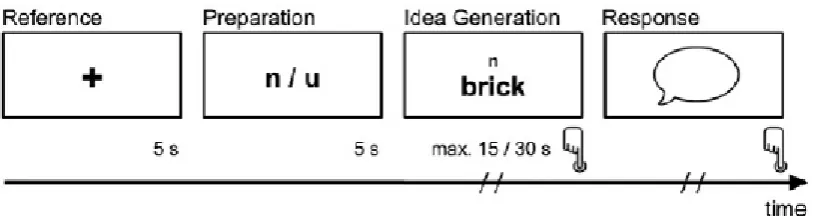
13 AssociationTtask. An example of an item of the Alternate Uses Task provided by Jauk, Benedek and Neubauer (2012) is “brick”. The items used were selected from previous studies by Fink et al. (2009) and Fink et al. (2010). During the Word Association Task, participants were required to name an associated word to a given concept. An example of an item in the Word Association Task provided is the word “mother”. The items for this task were retrieved from both a word association list by Merten (1990) and Merten and Fischer (1999) and from the German word-association norms by Riedinger (1994). Both the Alternate Uses and the Word Sssociation task contained ten items and the order of these items was randomized within the task. Their study also incorporated two conditions: one condition during which participants were instructed to come up with a highly common response or, in the other condition, to come up with a highly uncommon response. The experimental condition was counterbalanced for each item. The originality of these given responses was rated by six raters on a four point scale. The internal validity of these ratings was tested using Cronbach’s alpha.
14
Figure 2 An overview of one task used by Jauk et al. (2012).
The EEG interval that was analyzed was 500 ms after stimulus onset and 500 ms before pressing the idea button. These EEG recordings were analyzed using three within-subject factors: condition (common vs. uncommon), hemisphere (left vs. right) and area (from AF to PO). They also included a between-subject factor: high vs. low creative people. Before the start of the experiment, they subjected their participants to two tests from the “Berliner Intelligenzstrukturtest”: the Anwendungs-Möglichkeiten (Alternate Uses) and Insight-Test and Zeichen-Fortsetzen (Continue Figures). Based on the scores of these tests, participants were divided into either the low or high creativity group.
15
Table 2 An overview of the methodologies applied by different studies. Their studies will be compared based on the creativity task they conducted (experimental task) and the control task. Further the table provides information with respect to conditions added to the experiment. Finally, whether creativity was measured and what interval of the EEG recording was chosen in order to analyze brain responses.
Study Experimental task(s) Control task(s) Experimental
conditions
Measuring creativity
EEG segment
Fink et al. (2007)
Insight task Utopian task Alternative uses Word end
Less creative ideas in creativity task
None Self-assessment
and external rating
1250-250 ms before idea button is pushed
Grabner et a. (2011)
Insight task Less creative ideas in creativity task
None Self-assessment 1250-250 ms before
idea button is pushed Benedek et
al. (2011)
Making a sentence using the letters of a stimulus word as initials
Convergent thinking task: anagrams of a stimulus word
Low internal
processing vs. high internal processing
None 1000 ms after stimulus onset until 500 ms before idea button is pushed
Jauk et al. (2012)
Alternate uses
Word association task
Less creative
responses in creativity tasks
Highly common vs. highly uncommon
[image:15.842.61.786.111.454.2]16 Another problem with EEG studies that have been conducted is that the paradigms and consequently the methodologies used in these studies vary greatly. Not only are there a multitude of tests that can be used to measure creativity but some researcher have also come up with their own experimental design. On top of the wide variety of creativity tests and experimental designs that are available to the researcher, the control task is also of importance: what will you compare creativity to? Some researchers have chosen a state of rest or a more general intelligence task for example. Besides the task the participants have to complete, what is being measured also varies greatly across studies. For example, some researchers rate the creativity of the response given by the participants and others use self-scores of the participants with respect to the creativity of their answers. Another method that is often applied is to count the number of ideas generated by the participants as a proxy for creativity. The consequence of the heterogeneity between studies is that it is difficult to compare the results of the studies due to the different methodologies they apply (Arden et al., 2010).
One of the reasons that different methodologies are applied within similar creativity paradigms might be the applicability of the experimental designs in different nations might be problematic. The studies reveal that certain tasks have been created in Germany and are in German. An example is the Word End Task. It is questionable whether this task can be translated into other languages since it is based on characteristics of the German language and might not be translated easily without the core of the task being lost. The current study will therefore create an experimental design that can be applied in the Netherlands consisting of divergent thinking tasks in Dutch. By evaluating whether experiments which have been designed in German can be translated and applied effectively in Dutch, the current study will contribute to creating more homogeneity in experimental designs in creativity research.
17 Task. The effectiveness of the experimental design will be evaluated by means of observation during each session of the first experiment. So, the first research question becomes:
“To what degree can a German EEG experiment be translated into a Dutch version?”
It is expected that the experimental design by Jauk et al. (2012) can be translated to Dutch successfully due to the fact that the core of the Word Association Task and the Alternate Uses Task is expected to not be dependent on the German language as opposed to the Word End Task. The second part of the research goal will investigate the role of usefulness with respect to the concept of creativity. Therefore, the second research question becomes:
“What is the role of usefulness with respect to the concept of creativity?”
This will be addressed using a second experimental design. The second experiment will consist of an online survey that will include a random selection of word-association pairs that were created during the first experiment. These word-association pairs will be rated with respect to their creativity using a creativity scale based on the study by Wolf (2014) and van der Velde et al. (2015). Based on the study by Wolf (2014) and van der Velde et al. (2015) it is hypothesized that usefulness is not necessarily a component of creativity as opposed to the definition of creativity by Sternberg and Lubart (1996). More specifically, it is hypothesized that the ideas generated by participants in the “useful” condition, will be less creative compared to the ideas presented by participants in the “uncommon” condition.
3. Methodology
3.1 The first experiment
3.1.1 Participants
18 3.1.2 Procedure
Before the experiment started, participants were seated in front of a monitor which would display visual stimuli during the experiment. After an informed consent form was signed (see Appendix A), the participants were provided with the purpose of the study both visually and orally before the start of the experiment. Subsequently, the actual experiment started and participants performed both the Word Association Task and the Alternate Uses Task.
Both the Word Association Task and the Alternate Uses Task started with three test trials in order to familiarize participants with the tasks and the course of the individual trials. Instructions with respect to both tasks were provided separately on the computer screen before the start of the test trial. The instructions that were presented to the participants can be found in Appendix B. The entire session lasted for approximately one hour.
3.1.3 Experimental design
Two types of verbal tasks to measure creativity were used in this study: the Word Association Task and the Alternate Uses Task. The Word Association Task requires participants to find associations to a given concept. During the Alternate Uses Task, participants are asked to find novel uses for everyday objects (Torrance, 1966). Both tasks contained 21 items in total. The items used in the current study can be found in Appendix C and are similar to the items used by Jauk et al. (2012). One of the items used by Jauk et al. (2012) “ahorn” was not used in the current study because the concept is not very common in Dutch. This item was replaced by the word “dennenboom”. Further, two additional words were added to the item list.
19 respect to the Alternate Uses Task is: “common use”, “uncommon use” and “useful use”. Each experimental condition contained seven items per task and the experimental conditions were counterbalanced for every item in order to ensure an equal number of responses. Further, the order of item representation was randomized within tasks.
The responses provided by the participants on the Word Association Task were used as input to the second experiment.
3.1.4 Task
20
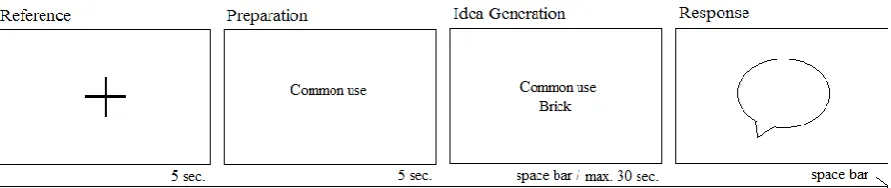
Figure 3 A schematic representation of the trial with respect to the Word Association Task employed by the current study. In the example, the “common” condition and the stimulus word “brick” are displayed.
Figure 4 A schematic representation of the trial with respect to the Alternate Uses Task employed by the current study. In the example, the “common” condition and the stimulus word “brick” are displayed.
3.1.5 Data analysis
The word-association pairs that were created by participants during the Word Association Task were used as input for the second experiment. More specific information with respect to the experimental design of the second experiment will be presented in a later section.
Another goal of the first experiment is to provide insight with respect to whether the previously described research design can be used in an EEG study. In order to be able to evaluate the experimental design, observations were made and recorded by the experimenter.
3.2 The second experiment
3.2.1 Participants
[image:20.595.75.521.231.325.2]21 allowed to take part in the second experiment. The experiment was approved by the ethical committee of the University of Twente.
3.2.2 Procedure
The second experiment consisted of an online survey created in the online survey development environment Qualtrics (Provo, UT). Participants received the link to the survey from the experimenter. The first part of the online survey consisted of the informed consent (Appendix E), several in- or exclusion criteria and the instructions for the experiment (Appendix F). The informed consent consisted of some general information with respect to the task participants were asked to perform and a notification stressing the confidentiality and anonymity. After reading the informed consent, participants could indicate whether they agreed to take part in the experiment. Whenever a participant did not agree to participate in the experiment, he or she was directed automatically to the end of the survey. The exclusion criteria that were included in the survey were native language and age. If the participants’ native language was not Dutch or if he or she was below the age of 18, he or she was also directed towards the end of the experiment. The general introduction to the survey concluded with instructions for the experiment. The entire session lasted for approximately half an hour.
3.2.3 Experimental design
22 Like mentioned before, the items of the online survey consisted of a random selection of word-association pairs created during the Word Association Task of the first experiment. The exclusion of the word-use pairs of the Alternate Uses Task and a random selection of the word-association pairs was chosen to prevent the online survey from becoming too time consuming. The word-association pairs were presented to the participants randomly.
3.2.4 Task
Participants were confronted with a total of 21 word-association pairs which they had to score with respect to their creativity. On the top of the page, the word-association pair was presented with a couple of statements presented below. These statements were based on two card sorting studies by both Wolf (2014) and van der Velde et al. (2015). An overview of these statements and their clusters can be found in Appendix G. These clusters are, respectively, originality, imagination, innovation and usefulness. All statements within the usefulness cluster were always presented to the participant. Within the other three clusters, one statement would always be presented to the participant and the other five would be presented randomly but counterbalanced. This approach was chosen to prevent the survey from becoming too time consuming.
Participants were enabled to rate the word-association pairs with respect to these clusters by presenting them a five-point Likert Scale. The scores are respectively: 1 = “strongly disagree”, 2 = “disagree”, 3 = “neutral”, 4 = “agree” and 5 = “strongly agree”.
3.2.5 Data analysis
23 Further, Ordinary Least Squares (OLS) regression analyses were used to complement the ANOVA analysis due to the fact that a regression analysis can control for covariates. Since the OLS is the best, linear and unbiased estimator when the Gaus-Markov assumptions are satisfied (Brooks, 2008), the following assumptions will be tested: whether the unstandardized residuals are distributed normally and whether there is multicollinearity, heteroscedasticity or autocorrelation. The Gaus-Markov assumptions and whether they hold in the dataset of the current study will be explained in more detail in the result section.
24 dummy variables per variable. So, one dummy variable was entered with respect to the control variable “gender” since this control variable has two categories in total for example.
In conclusion, the regression models that were tested in the current study are:
CRE │ INN │ IMA │ ORI │ USE = α + β1 (CON_2) + β2 (CON_3) + β3 (AGE) + β4 (GEN_1) + β5 (PAR_1) + β6 (PAR_2) + β7 (PAR_3) + β8 (PAR_4) + β9 (PAR_5) + β10 (PAR_6) + β11 (PAR_7) + β12 (PAR_8) + β13 (PAR_9) + β14 (PAR_10) + β15 (PAR_11) + β16 (PAR_12) + β17 (PAR_13) + β18 (PAR_14) + β19 (PAR_15) + β20 (PAR_16) + β21 (PAR_17) + β22 (PAR_18) + β23 (PAR_19) + β24 (PAR_20) + β25 (PAR_21) + β26 (PAR_22) + β27 (PAR_23) + β28 (PAR_24) + β29 (PAR_25) + β30 (PAR_26) + β31 (PAR_27) + β32 (PAR_28) + β33 (PAR_29) + β34 (WOR_1) + β35 (WOR_2) + β36 (WOR_3) + β37 (WOR_4) + β38 (WOR_5) + β39 (WOR_6) + β40 (WOR_7) + β41 (WOR_8) + β42 (WOR_9) + β43 (WOR_10) + β44 (WOR_11) + β45 (WOR_12) + β46 (WOR_13) + β47 (WOR_14) + β48 (WOR_15) + β49 (WOR_16) + β50 (WOR_17) + β51 (WOR_18) + β52 (WOR_19) + β53 (WOR_20) + ε
Overall creativity score (CRE) = sum of the score on the four clusters / # clusters Innovation score (INN) = sum of the score on innovation items / # items
Imagination score (IMA) = sum of the score on imagination items / # items Originality score (ORI) = sum of the score on originality items / # items Usefulness score (USE) = sum of the score on usefulness items / # items Condition 2 (CON_2) = dummy variable for the uncommon condition Condition 3 (CON_3) = dummy variable for the useful condition
4. Results
4.1 The first experiment
25 study does not provide the participant with much space to move around and, thus, to write. By replacing this step in the procedure by a vocalization, participants were provided with the possibility to express their thoughts within the restrains posed by the EEG set-up. Further, when the participants push the space bar, a marker can be placed in the EEG recordings. This marker enables the researcher to identify the EEG recordings that are related to the moment the participant came up with their idea.
However, the observations have also identified some aspects of the research design that might need some further thought. Firstly, the time-out time incorporated in the trial might be too short. In line with the study by Jauk (2012) participants were provided with a maximum of 15 seconds to come up with an association in the Word Association Task and a maximum of 30 seconds to come up with a use in the Alternate Uses Task. During the execution of the experiment, it became clear that participants often had difficulty to come up with an association or a use within the posed time constraint when the “uncommon” instruction preceded the stimulus word. Due to the fact that EEG studies are very time consuming and costly, the time constraints used in the current study might result in too much useless data. The time needed to come up with associations or uses also varied greatly across participants, making it very difficult to make suggestions with respect to more suitable time constraints. Some participants were very quick to come up with ideas and it took them about 15 minutes to complete both tasks while other participants needed more time to associate and needed 60 minutes to complete both tasks.
26 4.2 The second experiment
4.2.1 Evaluation of the questionnaire
This section will contain an evaluation of the items used in the questionnaire. The evaluation will include the calculation of Cronbach’s Alpha as well as an inter-item correlational analysis. Due to the fact that five of the six items of the three clusters were selected randomly and, thus, did not always return to the participant in each word-association pair, these randomly selected items have caused a lot of “missing data” which prevented an analysis of all 22 items with respect to Cronbach’s Alpha. Therefore, only the items that were presented to the participant on all occasions were selected for the current analysis. So, the items that were included in the analysis were the following: “het is innovatief”, “het is fantasievol”, “het is origineel” and “het is nuttig”.
Cronbach’s Alpha is a measure that is used to estimate the internal consistency or reliability of a psychometric test (Cronbach, 1951). The results reveal a Cronbach’s Alpha of 0.71. Nunnally (1978) provides some guidelines with respect to an acceptable level of Cronbach’s Alpha. For a research that is in the early stages it might be time and cost effective to use a Cronbach’s Alpha of 0.70 and higher, however, for basic applied research that investigates differences in mean values for different conditions, a Cronbach’s Alpha of 0.80 and higher is more appropriate. Therefore, the Cronbach’s Alpha of 0.71 of the current creativity survey is at the lower end and might not be appropriate with respect to the design of the current study. However, Cronbach’s Alpha increases to 0.86 if the item with respect to usefulness is deleted.
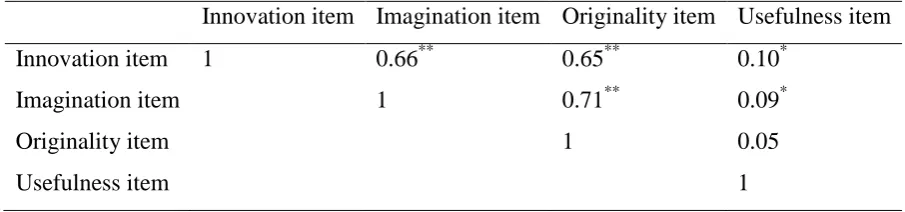
[image:26.595.63.516.648.754.2]Secondly, an inter-item correlation analysis was conducted. The results of this analysis are displayed in table 3. An inter-item correlation of r > 0.8 or r < -0.8 is considered too high since the unique contribution of such items becomes impossible to determine and an inter-item correlation of r < 0.3 or r > -0.3 is considered too low (Field, 2009).
Table 3 The results of the inter-item correlational analysis.
Innovation item Imagination item Originality item Usefulness item
Innovation item 1 0.66** 0.65** 0.10*
Imagination item 1 0.71** 0.09*
Originality item 1 0.05
27 As the table reveals, the inter-item correlation between the innovation, imagination and originality items are good. However, the correlation of these three items with the fourth item, usefulness, is problematic. Two of the three correlations are too low and there is no correlation between the items of originality and usefulness. These low correlations indicate that the usefulness item measures another underlying construct compared to the items related to innovation, imagination and originality. This result could be an indication that usefulness is not necessarily a component of creativity, due to the fact that it appears to measure another underlying factor compared to innovation, imagination and originality.
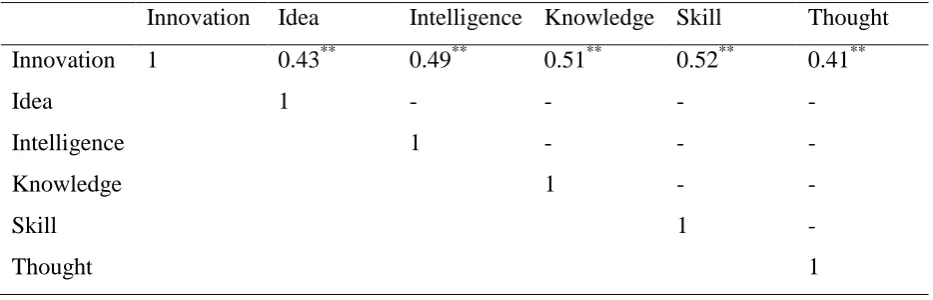
[image:27.595.65.532.380.530.2]Finally, an inter-item correlational analysis was conducted among the items of the different clusters. The results of these correlational analyses are displayed in table 4, 5, 6 and 7 which represent the results of the clusters innovation, imagination, originality and usefulness respectively.
Table 4 The results of the inter-item correlational analysis of the items related to the innovation cluster.
Innovation Idea Intelligence Knowledge Skill Thought
Innovation 1 0.43** 0.49** 0.51** 0.52** 0.41**
Idea 1 - - - -
Intelligence 1 - - -
Knowledge 1 - -
Skill 1 -
Thought 1
28
Table 5 The results of the inter-item correlational analysis of the items related to the imagination cluster.
Imagination Spontaneous Talent Inspiring Passionate Feeling
Imagination 1 0.45** 0.53** 0.54** 0.58** 0.26**
Spontaneous 1 - - - -
Talent 1 - - -
Inspiring 1 - -
Passionate 1 -
Feeling 1
[image:28.595.65.540.423.572.2]Table 5 also reveals that the five randomly presented items correlate significantly and positively with the constant item with respect to the imagination cluster. However, the correlation between the item related to “feeling” and the imagination item is too weak. This result could indicate that both items are measuring different underlying constructs. However, the correlation between the other four randomly presented items and the imagination item is good.
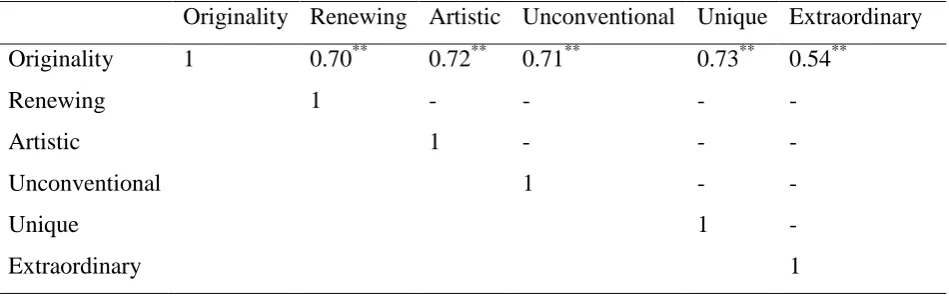
Table 6 The results of the inter-item correlational analysis of the items related to the originality cluster.
Originality Renewing Artistic Unconventional Unique Extraordinary Originality 1 0.70** 0.72** 0.71** 0.73** 0.54**
Renewing 1 - - - -
Artistic 1 - - -
Unconventional 1 - -
Unique 1 -
Extraordinary 1
29
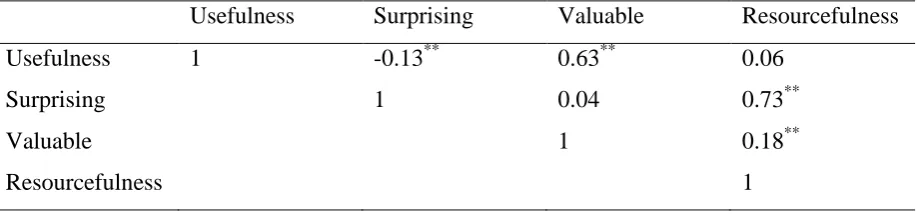
Table 7 The results of the inter-item correlational analysis of the items related to the usefulness cluster.
Usefulness Surprising Valuable Resourcefulness
Usefulness 1 -0.13** 0.63** 0.06
Surprising 1 0.04 0.73**
Valuable 1 0.18**
Resourcefulness 1
Table 7 reveals the results of the correlational analysis between the items related to the usefulness clusters. Of the three items, only the item related to “valuableness” has a good correlation with the usefulness item. The surprise item even has a weak, negative correlation and the item related to resourcefulness is not even significantly correlated to the usefulness item at all. These results indicate that not only the relationship between the usefulness cluster and the other three clusters is problematic, but also the composition of the cluster itself.
In conclusion, the Cronbach’s Alpha and correlational analysis have indicated that the inclusion of “usefulness” in a psychometric test designed to measure creativity is problematic and might indicate that usefulness is not necessarily a component of creativity. However, the representativeness of the analysis with respect to the entire survey is questionable due to the fact that only the items that were presented to participants on all occasions could be included. The inter-item correlational analysis with respect to the items within the clusters further revealed that the usefulness cluster itself is problematic too: only one of the items had a good correlation with the usefulness item. In general, the other clusters (innovation, imagination and originality) revealed good correlations between the items within the clusters.
4.2.2 Descriptive statistics
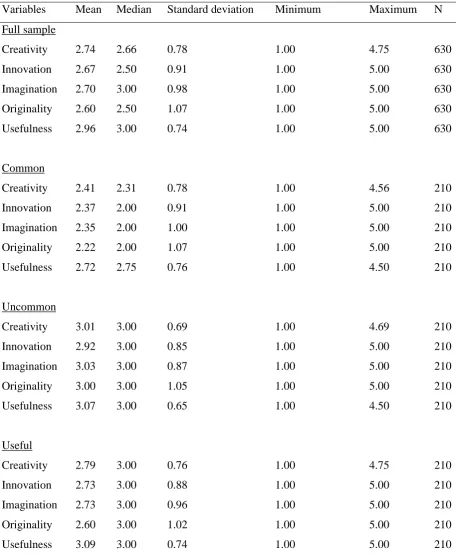
30 5 contains a visual representation of the mean values of the descriptive analysis mentioned before.
The descriptive analyses just described reveal differences between the three conditions with respect to creativity although these differences are not very large. Innovation, imagination and originality are lowest in the common condition, highest in the uncommon condition and in between these two is the usefulness condition. The fourth cluster with respect to creativity, usefulness, behaves somewhat differently. Usefulness is lowest in the common condition and higher in both the uncommon and useful condition whereby usefulness is slightly higher in the usefulness condition compared to the uncommon condition. ANOVA tests reveal that the differences between the three conditions are significant for the score on innovation (F(1,629) = 21.53, p = 0), imagination (F(1,629) = 28.24, p = 0), originality (F(1,629) = 29.67, p = 0) and usefulness (F(1,629) = 17.47, p = 0). However, a specific ANOVA test reveals that the difference in usefulness between the uncommon condition and the usefulness condition is not significant (F(1,419) = 0.04, P = 0.83). These results, indeed, indicate that the ideas in the usefulness condition are less creative compared to the answers provided in the uncommon condition. However, the responses provided in the usefulness condition were still more creative compared to the common condition. However, due to the fact that possible influences of covariates cannot be controlled for in the ANOVA test, the results have to be interpreted with caution.
The effect sizes of the aforementioned ANOVA tests were estimated using eta squared (η2). The results of the analysis reveal the following effect sizes: innovation η2
= 0.064, imagination η2
= 0.083, originality η2 = 0.086, usefulness η2 = 0.053 and creativity η2 = 0.097. According to the guidelines provided by Cohen (1988) with respect to the interpretation of the eta squared, η2 = 0.01 is considered a small effect, η2
31
Table 8 The descriptive statistics with respect to the four creativity clusters and the overall creativity score. Four different samples are presented in the table below: the entire sample and three samples that only contain data from respectively the common, uncommon and useful condition.
Variables Mean Median Standard deviation Minimum Maximum N
Full sample
Creativity 2.74 2.66 0.78 1.00 4.75 630
Innovation 2.67 2.50 0.91 1.00 5.00 630
Imagination 2.70 3.00 0.98 1.00 5.00 630
Originality 2.60 2.50 1.07 1.00 5.00 630
Usefulness 2.96 3.00 0.74 1.00 5.00 630
Common
Creativity 2.41 2.31 0.78 1.00 4.56 210
Innovation 2.37 2.00 0.91 1.00 5.00 210
Imagination 2.35 2.00 1.00 1.00 5.00 210
Originality 2.22 2.00 1.07 1.00 5.00 210
Usefulness 2.72 2.75 0.76 1.00 4.50 210
Uncommon
Creativity 3.01 3.00 0.69 1.00 4.69 210
Innovation 2.92 3.00 0.85 1.00 5.00 210
Imagination 3.03 3.00 0.87 1.00 5.00 210
Originality 3.00 3.00 1.05 1.00 5.00 210
Usefulness 3.07 3.00 0.65 1.00 4.50 210
Useful
Creativity 2.79 3.00 0.76 1.00 4.75 210
Innovation 2.73 3.00 0.88 1.00 5.00 210
Imagination 2.73 3.00 0.96 1.00 5.00 210
Originality 2.60 3.00 1.02 1.00 5.00 210
Usefulness 3.09 3.00 0.74 1.00 5.00 210
32
Figure 5 A visual representation of the descriptive statistics with respect to the mean scores on the four clusters (innovation, imagination, originality and usefulness) as well as the overall creativity score. Further, these mean values were presented for four different samples: the full sample, the common sample, the uncommon sample and the usefulness sample.
The descriptive statistics also include a correlational analysis (table 9). The four clusters (innovation, imagination, originality and usefulness) all reveal positive, significant correlations. These positive correlations can be explained by the fact that the four clusters should be related to the same construct: creativity. The second condition, the uncommon condition, has a positive, significant correlation with the four clusters of creativity. This could be an indication that more uncommon (or more creative) responses are associated with an increase in all four clusters. Consequently, this could be seen as an indication that usefulness is a component of creativity. Further, the third condition reveals a positive, significant correlation with the usefulness cluster. This result seems logical since the third condition required participants to come up with more useful responses.
33
Table 9 Results of the correlational analysis with respect to the variables of the current study.
INN IMA ORI USE CRE CON_2 CON_3 AGE PAR GEN WOR
INN 1 0.63** 0.86** 0.60** 0.86** 0.19** 0.05 0.05 0.02
-0.15**
-0.14**
IMA 1 0.67** 0.56** 0.86** 0.24** 0.02 0.10* -0.03
-0.13**
-0.13**
ORI 1 0.65** 0.88** 0.26** -0.01 0.08* 0.00
-0.20**
-0.17**
USE 1 0.77** 0.11** 0.12** 0.10*
-0.11**
-0.28**
-0.01
CRE 1 0.24** 0.05 0.10* -0.03
-0.22**
-0.14**
CON_2 1 -0.50** 0.00 0.00 0.00 0.00
CON_3 1 0.00 0.00 0.00 0.00
AGE 1 0.29** 0.06 0.00
PAR 1 0.12** 0.00
GEN 1 0.00
WOR 1
The variables that were included in the correlational analysis are: INN = score on the innovation cluster / # items, IMA = score on the imagination cluster / # items, ORI = score on the originality cluster / # items, USE = score on the usefulness cluster / # items, CRE = sum of cluster scores / # clusters, CON_2 = dummy variable for the uncommon condition, CON_3 = dummy variable for the usefulness condition, AGE = age of the participant, PER = categorical variable with respect to the participant number, GEN = categorical variable with respect to gender and WOR = categorical variable for the stimulus word.
4.2.3 The Gaus-Markov assumptions: diagnostic tests
This section will evaluate some important assumptions with respect to the five regression analyses that were conducted in the current study. These assumptions should always be evaluated when an OLS regression analysis is conducted in order to assess the appropriateness of this method with respect to the data.
34 Secondly, the variance of the error terms is assumed to be constant. This assumption is also known as the homoskedasticity assumption. The error terms are not homoskedastic (but heteroskedastic) when the error term is related to any of the independent variables in the regression model or a linear combination of the variables. Due to the fact that IBM SPSS Statistics 20 does not provide an option to perform a heteroscedasticity test, the current study will perform the Glesjer test (1969) manually. This means that five regression analyses were performed that predict the absolute, unstandardized residuals of the five regression models that were explained in the methodology section. The independent variables included in the model are the same as mentioned in the methodology section (including the control variables). So, the Glesjer test for heteroskedasticity investigates whether the predictors of the original regression model have a significant effect on the absolute, unstandardized residuals. The results of these regression analyses reveal some evidence with respect to heteroskedasticity. One of the word dummy variables revealed a significant effect on the absolute residuals with respect to the score on originality. Due to the fact that the degree of heteroskedasticity appears to be relatively mild, the problems associated with a violation of the homoscedasticity assumption remain relatively small (Hayes & Cai, 2007).
The third assumption is that there should be no autocorrelation between the error terms. In the current context, this means that there should be no cross-sectional correlation between the error terms. A test that can be used to detect autocorrelation is the test of Durbin and Watson (1951). A Durbin-Watson test value (DW) of 0 indicates positive autocorrelation, a DW of 4 indicates negative autocorrelation and a DW value of 2 indicates no autocorrelation. The Durbin-Watson values that were found in the current study ranged from 2.09 till 2.21. The DW values found in the current study are relatively close to 2 which indicates that autocorrelation is probably not a problem (the Durbin-Watson test does not provide a p-value).
35 Finally, it is important to check whether there is multicollinearity among the predictor variables. A commonly used measure to estimate multicollinearity is the “Variance Inflation Factor” (VIF) (Theil, 1971). Hair, Anderson, Tatham and Black (1995) have suggested that a VIF of maximally 10 is an acceptable level of multicollinearity. The highest VIF value that was found in the current study is 10.39 which is related to the control variable “age”. However, the correlational analysis of table 9 reveals that the only predictor variables that age is collinear with is another control variable: participant. Since multicollinearity only interferes with the coefficient of the collinear variables, the high VIF of age is not problematic (it is not collinear with the variables of interest: condition 2 and condition 3). The other VIF values are well below 10, with a second highest value of 2.56.
In conclusion, it appears that the data of the current study is suited for an OLS regression analysis. The residuals appear to follow a normal distribution and the risk of heteroskedasticity, autocorrelation and multicollinearity are relatively low.
4.2.4 Regression analysis
Five regression analyses were conducted with five different dependent variables: overall creativity score, innovation score, imagination score, originality score and usefulness score. The independent variables included in the regression models were the same for all five regression models. The results of these regression analyses are presented in table 10. The control variables as described in the methodology section were included in the analyses but were not reported in table 10. The control variables that revealed a significant effect will be mentioned in the current section.
36 original and useful responses compared to the “common” instruction. As can be observed in table 10, the effect of the second condition (uncommon) is bigger on three of the four clusters scores respectively innovation, imagination and originality. However, the effects of both the second and third condition are very similar with respect to the fourth cluster: usefulness. These results are in line with the descriptive statistics that revealed that the responses given in the common condition scored lowest on all four clusters compared to the second and third condition. The uncommon condition revealed the highest scores on three of the four clusters: innovation, imagination and originality. However, no significant difference was found between the second and third condition with respect to the fourth cluster: usefulness. These results seem to confirm the hypothesis that the responses given in the usefulness condition are less creative compared to the responses given in the uncommon condition.
37
Table 10 Results of the regression analyses (N=630). The four different regression analyses have four different dependent variables: overall creativity, innovation, imagination, originality and usefulness.
Beta Standard error t-value p-value
Creativity
CON_2 0.59 0.06 9.52 0.00
CON_3 0.37 0.06 5.98 0.00
Constant 2.57 0.29 8.74 0.00
Adj. R2 0.34
Innovation
CON_2 0.56 0.08 7.23 0.00
CON_3 0.37 0.08 4.78 0.00
Constant 3.30 0.36 9.08 0.00
Adj. R2 0.25
Imagination
CON_2 0.69 0.08 8.53 0.00
CON_3 0.38 0.08 4.74 0.00
Constant 2.13 0.38 5.62 0.00
Adj. R2 0.29
Originality
CON_2 0.77 0.09 8.71 0.00
CON_3 0.37 0.09 4.19 0.00
Constant 1.47 0.42 3.52 0.00
Adj. R2 0.28
Usefulness
CON_2 0.35 0.06 5.90 0.00
CON_3 0.37 0.06 6.14 0.00
Constant 3.36 0.28 11.92 0.00
Adj. R2 0.31
[image:37.595.65.527.93.688.2]38 Finally, the adjusted R2 of the regression models that were analyzed are also displayed in table 10. The adjusted R2 gives an indication with respect to the goodness of fit of the model. More specifically, it reveals how much of the variance in the dependent variable is explained by the predictors in the regression model. Muijs (2004) provides some guidelines with respect to the interpretation of the adjusted R2. According to Muijs (2004), an adjusted R2 between 0.11-0.30 is a modest fit and an adjusted R2 of 0.31-0.5 is a moderate fit. Apparently, the regression model predicting the overall creativity score and the usefulness score is a moderate fit and the other regression models have a modest fit.
5. Discussion
The aim of the current study was twofold: to investigate whether a Dutch EEG study with respect to creativity could be designed and how “usefulness” is related to the concept of creativity. The first part of this section will discuss the first goal, followed by the second goal. Afterwards, the limitations of the current study will be discussed. Finally, some suggestions with respect to future research will be made.
5.1 Conclusions
One of the goals of the current study was to design an EEG study that can be used to further conceptualize the concept of creativity. Like mentioned in the literature review, the research designs applied in different EEG studies with respect to creativity are very diverse which makes it difficult to compare the results. The current study has tried to contribute to more uniformity in this specific field of research by transforming the study by Jauk et al. (2012) into a Dutch version. The suitability of the current research design was evaluated primarily by observations that were made while participants worked on the tasks. An important constraint posed by an EEG study is the lack of movability of the participant (Fink et al., 2007).
39 or her thought. This approach appeared to work relatively well, although some participants forgot to push the space bar before vocalizing their ideas. Due to the fact that a trial whereby the participant forgot to push the spacebar cannot be used for EEG analysis anymore (the marker is not set in these cases) it is of great importance that future EEG research ensures that the participants are aware of the importance of pushing the space bar and are prompted if needed. Another observation that has been made is that several participants had difficulty with coming up with ideas within the time-out that was set within the trials. The consequence thereof is that no primer can be set in the EEG data and, thus, the moment when the participant came up with their idea cannot be recovered afterwards for analysis. So, to prevent that useless data accumulates due to the fact that participants are not able to come up with ideas within the time constraint, future research could consider elongating the time-out set in the idea generation phase within a trial or eliminate the time-out altogether.
Finally, the results obtained with the ANOVA analysis with respect to differences in creativity between the “common” and “uncommon” condition are in line with the results by Jauk et al. (2012), namely that the responses given in the “uncommon” condition were more creative compared to the responses provided in the “common” condition. However, the comparability of the results of both studies is limited due to the fact that the research design of the current study is somewhat different from the research design used by Jauk et al. (2012). Jauk et al. (2012) employed six raters that scored all the responses with respect to how uncommon they are. A problem that might arise is that the raters will compare the responses given by the participant to the same stimulus word with each other causing a word effect. The current study tried to address this issue by giving each rater (the participants of the second experiment) only one response per stimulus word to rate. Further, the way creativity was measured differs between both studies. Jauk et al. (2012) merely looked at how uncommon a response is, while the current study used a more extensive survey to measure creativity. This also limits the comparability of the results.
40 The second aim of the current study was to investigate the relationship between the concepts “usefulness” and “creativity”. A definition of creativity that is often referred to in the literature is the definition by Sternberg and Lubart (1996) who perceive usefulness to be a component of creativity. However, more recent card sorting studies by Wolf (2014) and van der Velde et al. (2015) that investigated the components of creativity did not perceive usefulness to be a component of creativity. In line with the definition by Wolf (2014) and van der Velde et al. (2015), the current study hypothesized that usefulness is not necessarily a component of creativity. More specifically, it is hypothesized that the answers provided in the condition whereby participants are asked to come up with useful responses are less creative compared to the situation whereby participants are asked to come up with uncommon responses. The results of the current study, indeed, confirm the hypothesis that the answers given by participants are less creative when they were asked to come up with useful ideas compared to the situation whereby participants are asked to come up with uncommon ideas. So, at first glance, usefulness indeed does not seem to be a component of creativity.
41 answers provided in the uncommon condition: the ideas generated by divergent thinking in the inspiration phase are also subjected to convergent thinking during the elaboration phase. This second phase, which is dependent on more convergent thinking, is causing the answers provided in the usefulness phase to be less creative compared to the uncommon phase. Similarly, due to the fact that the ideas generated in the usefulness phase are subjected to the creative process is causing them to be more creative compared to the ideas generated in the common condition which are not the result of the creative process.
In conclusion, the current study proposes that usefulness is a component of creativity. However, it is suggested that usefulness is not related to the inspiration phase of creativity which is more related to divergent thinking but to the elaboration phase of creativity which is logical and analytical and more related to convergent thinking. The current study is hereby able to contribute to the conceptualization of creativity by providing an explanation with respect to the relationship between usefulness and creativity and find an explanation for the conflicting definitions provided by Sternberg and Lubart (1996) and Wolf (2014) and van der Velde et al. (2015).
5.2 Limitations and suggestions for future research
42 elaboration phase which requires convergent thinking. Therefore, it might be considered to remove the item with respect to usefulness in future studies. Another argument in favor of removing the usefulness cluster from future research is that the items included in the usefulness cluster do not correlate sufficiently with each other. This is an indication that the items in the usefulness cluster do not measure the same underlying factor. As opposed to the other three clusters (innovation, imagination and usefulness) who do reveal sufficient inter-item correlations for the most part. However, the results with respect to Cronbach’s Alpha and the inter-item correlational analysis between the clusters have to be interpreted with caution due to the fact that only the items that were presented to the participants on all occasions could be included in these analyses. Future research could be conducted in order to properly evaluate the survey used in the current study.
One of the conclusions of the current study was that usefulness is part of the second phase of the creative process which is supposed to be more related to convergent thinking as opposed to the first phase of the creative process which has been proposed to be more related to divergent thinking. However, the current study cannot back these conclusions up with neurological evidence. Future research could try to investigate the conclusions of the current study with respect to usefulness component by replicating the current study in an actual EEG study. Such a research design could investigate whether the neural processes that are related to generating an idea in the usefulness condition differ from the activation patterns that are related to generating ideas in the uncommon pattern. More specifically, it could test whether generating an idea in the usefulness condition is related to activation patterns associated with convergent thinking and whether generating ideas in the uncommon condition is related to activation patterns associated with divergent thinking.
References
Akarakiri, J. B. (1998). Utilisation of creativity and innovation by the practice of new product planning in developing countries. Psychologia: An International Journal, 6(2), 64–80.
Amabile, T.M. (1979). Effects of external evaluation on creativity. Journal of Personality and
Social Psychology, 37, 221-233.
43 A psychometric review. Behavioral Brain Research, 214, 143–156.
Batey, M., & Furnham, A. (2006). Creativity, intelligence, and personality: A critical review of the scattered literature. Genetic, Social and General Psychological Monographs,
132, 355-429.
Batey, M., Furnham, A., & Saffiulina, X. (2010). Intelligence, general knowledge and
personality as predictors of creativity. Learning and Individual Differences, 20, 532-535.
Benedek, M., Borovnjak, B., Neubauer, A.C., & Kruse-Weber, S. (2014). Creativity and personality in classical, jazz and folk musicians. Personality and Individual
Differences, 63, 117-121.
Benedek, M., Jauk, E., Sommer, M., Arendasy, M., & Neubauer, A.C. (2014). Intelligence, creativity, and cognitive control: The common and differential involvement of executive functions in intelligence and creativity. Intelligence, 46, 73-83.
Brooks, C. (2008). Introductory Econometrics for Finance. New York: Cambridge University Press.
Chan, Z.C.Y. (2013). A systematic review of creative thinking/creativity in nursing education.
Nurse Education Today, 33, 1382-1387.
Cohen, J. (1988). Statistical power analysis for the behavioral sciences. Hillsdale: Erlbaum.
Cronbach, L.J. (1951). Coefficient alpha and the internal structure of tests. Psychometrika,
16(3), 297-334.
Cropley, A.J. (2000). Defining and measuring creativity: Are creativity tests worth using?
Roeper Review, 32(2), 72-79.
44 Dietrich, A., & Kanso, R. (2010). A review of EEG, ERP, and neuroimaging studies of
creativity and insight. Psychological Bulletin, 136, 822–848.
Doolittle, J.H. (1990). Creative Reasoning Test. Pacific Grove: Midwest Publications/ Critical Thinking Press.
Durbin, J., & Watson, G.S. (1951). Testing for serial correlation in least squares regression.
Biometrika, 38, 159-171.
Field, A. (2009). Discovering statistics using SPSS. Sage: London.
Fink, A., & Neubauer, A.C. (2006). EEG alpha oscillations during the performance of verbal creativity task: Differential effects of sex and verbal intelligence. International
Journal of Psychophysiology, 62, 46-53.
Fink, A., Benedek, M., Grabner, R.H., Staudt, B., & Neubauer, A.C. (2007). Creativity meets neuroscience: Experimental tasks for the neuroscientific study of creative thinking.
Methods, 42, 68-76.
Glejser, H. (1969). "A New Test for Heteroskedasticity". Journal of the American Statistical
Association, 64(235), 315–323.
Grabner, R.H., Fink, A., & Neubauer, A.C. (2007). Brain correlates of self-rated originality of ideas: Evidence from event-related power and phase-locking changes in the EEG.
Behavioral Neuroscience, 121(1), 224-230.
Guilford, J.P. (1956). The structure of intellect. Psychological Bulletin, 53, 267–293.
Guilford, J.P. (1959). Three Faces of Intellect. American Psychologist, 14, 469–479