warwick.ac.uk/lib-publications
Manuscript version: Author’s Accepted Manuscript
The version presented in WRAP is the author’s accepted manuscript and may differ from the published version or Version of Record.
Persistent WRAP URL:
http://wrap.warwick.ac.uk/109863
How to cite:
Please refer to published version for the most recent bibliographic citation information. If a published version is known of, the repository item page linked to above, will contain details on accessing it.
Copyright and reuse:
The Warwick Research Archive Portal (WRAP) makes this work by researchers of the University of Warwick available open access under the following conditions.
Copyright © and all moral rights to the version of the paper presented here belong to the individual author(s) and/or other copyright owners. To the extent reasonable and
practicable the material made available in WRAP has been checked for eligibility before being made available.
Copies of full items can be used for personal research or study, educational, or not-for-profit purposes without prior permission or charge. Provided that the authors, title and full
bibliographic details are credited, a hyperlink and/or URL is given for the original metadata page and the content is not changed in any way.
Publisher’s statement:
Please refer to the repository item page, publisher’s statement section, for further information.
1 NICE DIAGNOSTIC ASSESSMENT REVIEWS – IS COST-EFFECTIVENESS ANALYSIS HELPFUL OR
NECESSARY?
Abstract Objective
Diagnostic Assessment Reviews (DARs) are part of the work programme of the National Institute of Health and Care Excellence in England to evaluate emergent medical technologies and so ensure timely and consistent adoption within the NHS. New diagnostics have the potential to improve health outcomes and impact positively on NHS resource use. In this paper we reviewed published DARs to assess the quality of economic evidence available to NICE.
Methods
We reviewed 27 DARs that had been published by NICE as of 30 May 2017 by summarising and interpreting the evidence that was used to carry out cost-effectiveness analyses. Common issues and challenges of the assessment process were illustrated.
Findings
DARs differed in the methods and assumptions used to construct economic models, and linkage of economic model and diagnostic findings. Even though some diagnostic technologies were estimated to be cost-effective, they were not always adopted for routine care in the NHS. The majority of DAR economic models relied heavily on assumptions and expert opinion, with considerable uncertainty about the cost-effectiveness of diagnostic testing.
Conclusions
DAR appraisals as commissioned by NICE typically feature varying evidence for diagnostic performance and limited evidence for resource implications and quality of life, often leading to recommendations for further research. Given the process opportunity cost, NICE might consider a two-stage topic selection process, with initial assessment specifying further research and proceeding to full assessment with adequate evidence. Such a process might help NICE signal to diagnostics companies the type of research evidence required.
2 Introduction
Diagnostic Assessment Reviews (DARs) are part of the National Institute for Health and Care
Excellence (NICE) Diagnostics Assessment Programme (DAP) evaluating medical technologies
and guiding the adoption of clinically worthwhile and cost-effective technologies by the
National Health Service (NHS) in England in a timely and consistent manner. Diagnostic
technologies include a diverse range of measurements and tests that are used to evaluate
patients’ conditions.(1) Examples include screening, diagnostic and monitoring tests to rule in
or out specific diseases, to assess persistence or progression over time, to guide additional or
sequential testing or the adjustment of treatment. (1-3)
To establish the performance of a new test reliably it needs to be compared against an
adequate reference standard in a representative population using adequate test accuracy
methods. Additionally, innovative diagnostic technologies may improve health outcomes, but
can come with a net cost to the health service. Such evidence is pivotal to an adequate
assessment of the potential value of any new diagnostic technology. The NICE DAR process
has been described in detail elsewhere and the key steps involved in the DAR process are
shown in Figure 1.(1)
New, potentially promising, emergent diagnostic technologies are not yet part of routine care,
with a poor clinical evidence base, present a common challenge.(1-3) Long-term data on
health and resource impacts may be lacking and may need to be modelled using
epidemiological and other data.(1) For this reason, the NICE DAR process typically involves the
de novo development of economic models to inform the cost-effectiveness analysis. However,
while de novo modelling is challenging, it may be the only way to assess uncertainties and may
3 In this paper, we aim to review and assess the quality of economic evidence used in publicly
reported DARs as part of NICE’s work programme. We highlight some of the common issues
and challenges of the DAR assessment process. We conclude with some recommendations
about how the DAR process might evolve based on the findings from this review.
Methods
We searched the NICE website on 30 May 2017 for published guidance relating to the DAP and
accessed the final Diagnostics Guidance (DG) report for each topic.(4) Our assessment did not
include supporting documentation such as External Assessment Group (EAG) reports, model or
any addenda. Even though some of this information is publically available, some of the
information is confidential and information on the website is redacted. Therefore, to be
consistent across the review process we only considered the final DG report using these as the
basis for analysis, with the focus on cost-effectiveness evidence and recommendations.
Data was extracted using a bespoke template in Microsoft Excel ® which included: disease
area, the technologies and it comparators, stated benefits of the technology, prior
cost-effectiveness evidence, type of economic model developed by the EAG, technology costs, key
outcomes, modelling methods, key assumptions and limitations, results, conclusions and
recommendations by NICE. Data were extracted by one reviewer (HM) and checked by a
second reviewer (JM); any disagreements in data extraction were resolved by discussion.
Extracted data was synthesised narratively as appropriate.
Quality assessment of diagnostic test accuracy studies can be assessed using the recently
4 Test Accuracy Studies: The PRISMA DTA Statement.(5) However, this assessment tool does not
consider economic evidence per se. Instead we have used Consolidated Health Economic
Evaluation Reporting Standards (CHEERS) statement, the preferred tool to assess the quality of
economic evaluation studies.(6)
Findings
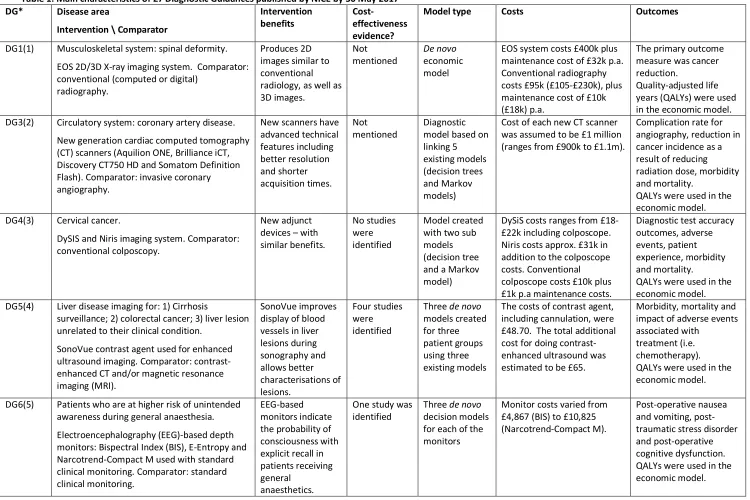
As at 30 May 2017, NICE had published 27 DGs. Table 1 presents a summary overview of the
main characteristics of each DG. DGs covered a wide range of diseases and disease areas
including cancer, circulatory system, musculoskeletal system, liver disease, diarrhoea, allergies,
type 1 diabetes, infections, and pre-eclampsia. The stated benefits of technologies considered
by DGs included: improved imaging; quicker time to test reporting; reduced need for further
testing, clinical consultation or hospital visits; and better information for decision-making and
patient prognosis.
In the following, we present the analysis of the DGs according to six themes: the nature of the
comparator used; use of existing evidence of cost-effectiveness; reporting of methods;
modelling assumptions; reporting of costs and outcomes; and findings and recommendations.
Nature of the comparators
In most cases, the new technology was compared with either the current technology or
current standard clinical assessment, although the numbers of comparator interventions
(range: 1-12) and comparator tests (range: 1-4) per appraisal varied. For example, DG11
compared 12 new technologies for addressing irritable bowel disease or irritable bowel
syndrome that measured faecal calprotectin levels alongside clinical practice and compared
5 blood glucose levels in type 1 diabetics with four different comparators (Table 1).(8) Not all
new technologies that were assessed sought to replace existing practice: in eight DGs, the new
technologies were intended to augment standard clinical practice.(7, 9-15) Identifying a
suitable comparator was sometimes problematic: DG7 reported that there was no direct
comparator for the new technology (16), while for three DGs there were no direct test data
available for some of the new tests.(8, 14, 17) Four DGs reported that the diagnostic
technologies could not be compared with each other.(9, 10, 14, 18)
Use of existing evidence and models of cost-effectiveness
Twenty one DGs were able to access one or more existing studies with cost-effectiveness
evidence (including one abstract (19) and one unpublished study provided by the
manufacturer (20)). There was no relevant cost-effectiveness evidence available for two
DGs(11, 21) while a further four DGs did not record this related information.(16, 22-24) A total
of 18 DGs built de novo economic models(7, 9-17, 19-22, 24-28) while ten DGs developed
economic models based on existing previous models.(8, 18, 23, 29-34) For one DG, a
conceptual model was built to explore diagnostic pathways due to the lack of clinical
effectiveness data.(15)
Reporting of methods used to develop economic models
Methods used to construct economic models and link diagnostic findings, clinical and resource
data varied between DGs and depended on available evidence. Relevant methods were not
always explicitly reported (see Table 2). For fifteen DGs, the evidence for the economic model
was derived from a clinical effectiveness review, supplemented by expert opinion. Nine DGs
explicitly stated that a linked evidence approach was used for modelling. For example,
6 were linked to treatment outcomes and quality-adjusted life years (QALYs). (7, 10, 17, 21, 23,
29)
Modelling assumptions
Reflecting the availability of clinical evidence, various assumptions were required within
economic models, with the number of key assumptions being reported for more recent DGs.
Key model limitations included: lack of clinical evidence or outcomes to estimate model
parameters (17 DGs)(7, 9-12, 15-19, 22, 24, 26, 27, 30-32); lack of sensitivity and specificity for
the new technologies (explicitly identified in 13 DGs)(7, 11, 13, 14, 16, 17, 20-22, 24, 26, 29,
33); there was uncertainty about the assumption that the current practice/technology was an
adequate reference standard (10 DGs)(7, 13, 18, 20, 23, 28-30, 33, 34); lack of evidence on
quality of life and utilities (8 DGs)(11, 12, 15, 20, 21, 25, 30, 33); and, lack of clinical evidence to
quantify patient benefits or preferences (2 DGs).(22, 29)
Reporting of cost and outcomes
Technology costs or per patient/sample test costs were reported in 19 DGs, with the most
expensive being the new generation cardiac CT scanners (approximately £1 million each).(23)
Eight DGs did not report technology costs or per patient/sample test costs.(11, 18, 20, 25, 27,
31, 32, 34) The level of disaggregation with which costs were reported for technologies varied
between DGs. These could include expected lifetime costs, maintenance, laboratory,
disposables and other consumables costs, alongside staff, training and administration costs.
Key clinical outcomes reported included mortality, morbidity, complications or adverse events,
test performance and accuracy outcomes. Some DGs reported clinical outcomes used in the
model within the cost-effectiveness analysis section, while in some instances clinical outcomes
7 Seventeen DGs included some sort of disutility value or decrement to utility values in their
model.(7-9, 11-14, 17-21, 25, 26, 30, 33, 34) All 27 DGs reported the final outcome for the
economic models in terms of quality-adjusted life years.
Findings and recommendations
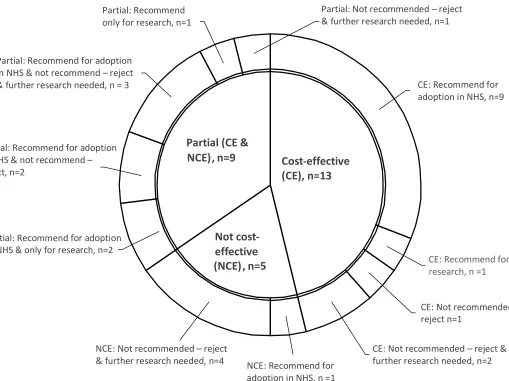
Figure 2 provides an illustration of the overall findings and recommendations issued by
reviewed DGs. This highlights that just under half of the DGs (n=13) found the new
technology/ies to be cost-effective (individually or as a class) while only one-third (n=9)
recommended that the technologies be adopted in the NHS, although the nature of the
recommendations was mixed. Five DGs found that the new technologies were not
cost-effective; of these, one DG recommended the reviewed technology for adoption for one
specific group of patients only.(8) . Even though some technologies were estimated by
modelling to be cost-effective, these were not always recommended by the Diagnostic
Advisory Committee for routine adoption within the NHS, a finding that does not appear to
have changed over time. For example, for DG19, even though the two assessed technologies
were estimated to be cost-effective, the Committee stated that there was “currently
insufficient evidence to recommend their routine adoption in the NHS”.(20) In contrast, in
DG21, even though the technology was not cost-effective it was recommended for adoption in
the NHS: the Committee thought the technology would probably be cost-effective when
changing some of the model assumptions.(8)
Quality assessment
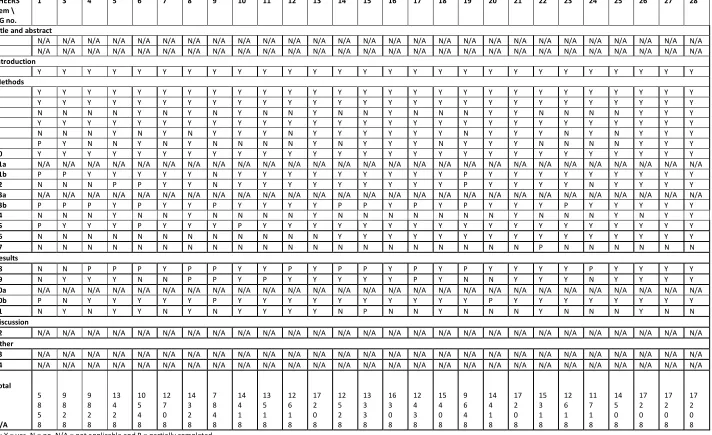
Table 3 presents the number of items from each DG fulfilling each recommendation from the
CHEERS checklist. Among the 24 recommendations for reporting, eight items were not
8 population and subgroups, setting and location, comparators, and choice of health outcomes.
The other items where not consistently reported. For example, only 10 DGs reported the
study perspective and only 13 DGs reported the discount rate for the base-case analyses. The
discrepancies may have been due to the DGs not being reported in the traditional format of an
economic evaluation.
Discussion
The NICE DAR programme aims to evaluate emerging diagnostic technologies, using clinical
and cost-effective evidence, to guide adoption of new technologies within the NHS in England.
We have reviewed 27 completed diagnostic guidance reports.
Superficially, all 27 DARs to date have reported cost/QALY findings with which to inform NICE
decision-making, consistent with stated requirements. However, there is considerable
heterogeneity in methods, availability and use of evidence, as well as instances of the NICE
committee not accepting the (median) findings of cost-effectiveness models mainly due to the
insufficient clinical evidence for new technologies.
A limitation of our review was that it was limited to published Diagnostic Guidance (DG), and
more information and detail might have been obtained from the EAG reports. We did not
include any other information available on the NICE website as this varied between appraisals
– mainly in terms of confidential information redacted and we wanted to take a consistent
approach in our assessment. However, some common challenges are apparent, modelling a
pathway of care, evidenced where possible but substantially reliant on expert opinion and
9 Given the extent of modelling uncertainties, their comprehensive characterisation would tend
to lead to inconclusive findings.
The purpose of our review was an assessment of the fitness for purpose of the NICE Diagnostic
Assessment Reviews, initiated by our own experience completing a review.(28) This did not
extend formally to look at experiences in our countries or whether other contexts face similar
issues. However, the diagnostic evidence and extant cost-effectiveness considered within
DARs was international and not constrained to the NHS setting. Thus the challenges
experienced by NICE are likely to be found more globally, although different health care
systems put different emphasis on the importance of the clinical evidence economic
evaluation.(35)
Diagnostic tests may originate from the largest medical device companies to small venture
capital start-ups and clinician-driven ventures, with consequent variation in capacity to fund
adequate research. It is not clear that the current appraisal process signals to diagnostics
companies the type and depth of research required to inform NICE recommendations.
Although context specific it may be helpful for developers of new tests to be more aware of
the generic needs of cost-effectiveness models. As a first step, diagnostic accuracy studies
should usefully describe the performance and potential of new and existing tests, where an
independent reference standard is available. However, these studies often don’t capture the
comparative costs and outcomes that follow. An adequate test-treat trial, with patients from
the relevant population randomised to new and current diagnostic tests, and capturing costs
and outcomes (ideally generic quality-of-life) may provide the best evidence.(1) This approach
is particularly valuable when identifying an adequate reference standard is problematic.
10 maintenance costs, including staff equipment and site costs and explore plausible
volume-of-use and disease prevalence assumptions.(36-38)
Although the mechanism for topic selection used by NICE has been described, it is unclear how
it is informed. On the basis of past selection assessed in this review, adequate maturation of
evidence does appear influential. While adequate evidence may not guarantee a definitive
answer, an immature evidence base is almost certain to yield uncertain findings. Possibly this
is a legitimate goal for NICE and ‘don’t know yet’ is a helpful policy outcome. A further
complexity for topic selection is the expectation that new diagnostic technologies tend to
evolve, create challenges for evidence requirements, the timing of appraisal and subsequent
adoption decisions. In this respect, NICE may be ‘between a rock and a hard place’ with no
optimal solution.
The inception of the DG pathway was intended as a route for manufacturers to gain rapid and
consistent adoption of new diagnostic tests within the NHS. Since the flow of work through
the DAR work stream has diminished, there may be a perception from manufacturers that the
process isn’t delivering the hoped-for access. From the academic perspective, the substantial
work to construct a cost/QALY model may not feel appropriate or efficient given that findings
may be dominated by the typical clinical uncertainties we have identified. There are
considerable pressures on NICE’s capacity to service its expanding programme of evaluation.
Consequently, full economic analysis might be better reserved for topics where the weight of
clinical evidence passes some threshold. A two stage process might involve an initial
assessment of promising technologies, identifying a research pathway where necessary, with
11 assessment process would assess each of the three domains of performance, cost and
outcome.
Conclusion
NICE recommendations for adoption of new diagnostic are cautious, of 27 assessments, there
were 10 cases of adoption and 9 cases of limited adoption of new diagnostic technologies. The
primary issue, given the opportunity cost of the process, is whether these assessments are
optimally selected or timed. NICE might consider a two-stage topic selection process, with initial
assessment with adequate evidence. Such a process might help NICE signal to diagnostic
companies the type of research evidence required.
Funding: This paper derives in part from a review commissioned by the NIHR HTA Programme
as project number 15/17/03. The views expressed in this report are those of the authors and
not necessarily those of the NHS, the NIHR, NETSCC, the HTA programme or the Department of
12 References
1. National Institute for Health and Care Excellence. Diagnostics Assessment Programme manual. London: National Institute for Health and Care Excellence; 2011. Available from: http://www.nice.org.uk/media/A0B/97/DAPManualFINAL.pdf.
2. Medical Services Advisory Committee. Guidelines for the Assessment of Diagnostics Technologies. Canberra: Commonwealth of Australia; 2005 August 2005].
3. Garfield S, Polisena J, Spinner DS, Postulka A, Lu CY, Tiwana SK, et al. Health technology assessment for molecular diagnostics: practices, challenges, and recommendations from the medical devices and diagnostics Special Interest Group. Value in Health.
2016;19(5):577-87.
4. National Institute for Health and Care Excellence. NICE diagnostics guidance 2017 [cited 2017. Available from: https://www.nice.org.uk/guidance/published?type=dg.
5. McInnes MD, Moher D, Thombs BD, McGrath TA, Bossuyt PM, Clifford T, et al. Preferred Reporting Items for a Systematic Review and Meta-analysis of Diagnostic Test Accuracy Studies: The PRISMA-DTA Statement. JAMA. 2018;319(4):388-96.
6. Husereau D, Drummond M, Petrou S, Carswell C, Moher D, Greenberg D, et al.
Consolidated health economic evaluation reporting standards (CHEERS) statement. Cost Effectiveness and Resource Allocation. 2013;11(1):6.
7. National Institute for Health and Care Excellence. Faecal calprotectin diagnostic tests for inflammatory diseases of the bowel 2013 [cited 2017. Available from:
https://www.nice.org.uk/guidance/dg11.
8. National Institute for Health and Care Excellence. Integrated sensor-augmented pump therapy systems for managing blood glucose levels in type 1 diabetes (the MiniMed Paradigm Veo system and the Vibe and G4 PLATINUM CGM system) 2016 [cited 2017. Available from: https://www.nice.org.uk/guidance/dg21.
9. National Institute for Health and Care Excellence. Depth of anaesthesia monitors – Bispectral Index (BIS), E-Entropy and Narcotrend-Compact M 2012 [cited 2017. Available from: https://www.nice.org.uk/guidance/dg6.
10. National Institute for Health and Care Excellence. Gene expression profifiling and expanded immunohistochemistry tests for guiding adjuvant chemotherapy decisions in early breast cancer management: MammaPrint, Oncotype DX, IHC4 and Mammostrat 2013 [cited 2017. Available from: https://www.nice.org.uk/guidance/dg10.
11. National Institute for Health and Care Excellence. Diagnosing prostate cancer: PROGENSA PCA3 assay and Prostate Health Index 2015 [cited 2017. Available from:
https://www.nice.org.uk/guidance/dg17.
12. National Institute for Health and Care Excellence. Procalcitonin testing for diagnosing and monitoring sepsis (ADVIA Centaur BRAHMS PCT assay, BRAHMS PCT Sensitive Kryptor assay, Elecsys BRAHMS PCT assay, LIAISON BRAHMS PCT assay and VIDAS BRAHMS PCT assay) 2015 [cited 2017. Available from: https://www.nice.org.uk/guidance/dg18.
13 14. National Institute for Health and Care Excellence. PlGF-based testing to help diagnose
suspected pre-eclampsia (Triage PlGF test, Elecsys immunoassay sFlt-1/PlGF ratio, DELFIA Xpress PlGF 1-2-3 test, and BRAHMS sFlt-1 Kryptor/BRAHMS PlGF plus Kryptor PE ratio) 2016 [cited 2017. Available from: https://www.nice.org.uk/guidance/dg23.
15. National Institute for Health and Care Excellence. ImmunoCAP ISAC 112 and Microtest for multiplex allergen testing 2016 [cited 2017. Available from:
https://www.nice.org.uk/guidance/dg24.
16. National Institute for Health and Care Excellence. SeHCAT (tauroselcholic [75 selenium] acid) for the investigation of diarrhoea due to bile acid malabsorption in people with diarrhoea-predominant irritable bowel syndrome (IBS-D) or Crohn's disease without ileal resection 2012 [cited 2017. Available from: https://www.nice.org.uk/guidance/dg7. 17. National Institute for Health and Care Excellence. Integrated multiplex PCR tests for identifying gastrointestinal pathogens in people with suspected gastroenteritis (xTAG Gastrointestinal Pathogen Panel, FilmArray GI Panel and Faecal Pathogens B assay) 2017 [cited 2017. Available from: https://www.nice.org.uk/guidance/dg26.
18. National Institute for Health and Care Excellence. Molecular testing strategies for Lynch syndrome in people with colorectal cancer 2017 [cited 2017. Available from:
https://www.nice.org.uk/guidance/dg27.
19. National Institute for Health and Care Excellence. Fluorouracil chemotherapy: The My5-FU assay for guiding dose adjustment 2014 [cited 2017. Available from:
https://www.nice.org.uk/guidance/dg16.
20. National Institute for Health and Care Excellence. VivaScope 1500 and 3000 imaging systems for detecting skin cancer lesions 2015 [cited 2017. Available from:
https://www.nice.org.uk/guidance/dg19.
21. National Institute for Health and Care Excellence. Adjunctive colposcopy technologies for examination of the uterine cervix – DySIS and the Niris Imaging System 2012 [cited 2017. Available from: https://www.nice.org.uk/guidance/dg4.
22. National Institute for Health and Care Excellence. The EOS 2D/3D imaging system 2011 [cited 2017. Available from: https://www.nice.org.uk/guidance/dg1.
23. National Institute for Health and Care Excellence. New generation cardiac CT scanners (Aquilion ONE, Brilliance iCT, Discovery CT750 HD and Somatom Definition Flash) for cardiac imaging in people with suspected or known coronary artery disease in whom imaging is diffificult with earlier generation CT scanners 2012 [cited 2017. Available from: https://www.nice.org.uk/guidance/dg3.
24. National Institute for Health and Care Excellence. EGFR-TK mutation testing in adults with locally advanced or metastatic non-small cell lung cancer 2013 [cited 2017. Available from: https://www.nice.org.uk/guidance/dg9.
25. National Institute for Health and Care Excellence. Measuring fractional exhaled nitric oxide concentration in asthma: NIOX MINO, NIOX VERO and NObreath 2014 [cited 2017. Available from: https://www.nice.org.uk/guidance/dg12.
26. National Institute for Health and Care Excellence. Therapeutic monitoring of TNF-alpha inhibitors in Crohn’s disease (LISATRACKER ELISA kits, IDKmonitor ELISA kits, and Promonitor ELISA kits) 2016 [cited 2017. Available from:
14 27. National Institute for Health and Care Excellence. High-throughput non-invasive prenatal
testing for fetal RHD genotype 2016 [cited 2017. Available from: https://www.nice.org.uk/guidance/dg25.
28. Freeman K, Mistry H, Tsetsvadze A, Royle P, McCarthy N, Taylor-Phillips S, et al. Multiplex tests to identify gastrointestinal bacteria, viruses and parasites in people with suspected infectious gastroenteritis: systematic review and economic analysis. Health Technology Assessment. 2017;21(23).
29. National Institute for Health and Care Excellence. SonoVue (sulphur hexafluoride microbubbles) – contrast agent for contrast-enhanced ultrasound imaging of the liver 2012 [cited 2017. Available from: https://www.nice.org.uk/guidance/dg5.
30. National Institute for Health and Care Excellence. Intraoperative tests (RD-100i OSNA system and Metasin test) for detecting sentinel lymph node metastases in breast cancer 2013 [cited 2017. Available from: https://www.nice.org.uk/guidance/dg8.
31. National Institute for Health and Care Excellence. Detecting, managing and monitoring haemostasis: viscoelastometric point-of-care testing (ROTEM, TEG and Sonoclot systems) 2014 [cited 2017. Available from: https://www.nice.org.uk/guidance/dg13.
32. National Institute for Health and Care Excellence. Atrial fibrillation and heart valve disease: self-monitoring coagulation status using point-of-care coagulometers (the CoaguChek XS system and the INRatio2 PT/INR monitor) 2014 [cited 2017. Available from: https://www.nice.org.uk/guidance/dg14.
33. National Institute for Health and Care Excellence. Myocardial infarction (acute): Early rule out using high-sensitivity troponin tests (Elecsys Troponin T high-sensitive, ARCHITECT STAT High Sensitive Troponin-I and AccuTnI+3 assays) 2014 [cited 2017. Available from: https://www.nice.org.uk/guidance/dg15.
34. National Institute for Health and Care Excellence. Virtual chromoendoscopy to assess colorectal polys during colonoscopy 2017 [cited 2017. Available from:
https://www.nice.org.uk/guidance/dg28.
35. O'Donnell JC, Pham SV, Pashos CL, Miller DW, Smith MD. Health technology assessment: lessons learned from around the world—an overview. Value in health. 2009;12(s2). 36. Drummond MF, Sculpher MJ, Claxton K, Stoddart GL, Torrance GW. Methods for the
economic evaluation of health care programmes: Oxford university press; 2015.
37. Morris S, Devlin N, Parkin D, Spencer A. Principles of economic evaluation in health care. Economic Analysis in Health Care (2nd ed) Chichester: John Wiley & Sons. 2012:232-50. 38. Gray AM, Clarke PM, Wolstenholme JL, Wordsworth S. Applied methods of
15 Table 1: Main characteristics of 27 Diagnostic Guidances published by NICE by 30 May 2017
DG* Disease area
Intervention \ Comparator
Intervention
benefits Cost-effectiveness evidence?
Model type Costs Outcomes
DG1(1) Musculoskeletal system: spinal deformity. EOS 2D/3D X-ray imaging system. Comparator: conventional (computed or digital)
radiography.
Produces 2D images similar to conventional radiology, as well as 3D images.
Not
mentioned De novo economic model
EOS system costs £400k plus maintenance cost of £32k p.a. Conventional radiography costs £95k (£105-£230k), plus maintenance cost of £10k (£18k) p.a.
The primary outcome measure was cancer reduction.
Quality-adjusted life years (QALYs) were used in the economic model. DG3(2) Circulatory system: coronary artery disease.
New generation cardiac computed tomography (CT) scanners (Aquilion ONE, Brilliance iCT, Discovery CT750 HD and Somatom Definition Flash). Comparator: invasive coronary angiography.
New scanners have advanced technical features including better resolution and shorter acquisition times. Not mentioned Diagnostic model based on linking 5 existing models (decision trees and Markov models)
Cost of each new CT scanner was assumed to be £1 million (ranges from £900k to £1.1m).
Complication rate for angiography, reduction in cancer incidence as a result of reducing radiation dose, morbidity and mortality.
QALYs were used in the economic model. DG4(3) Cervical cancer.
DySIS and Niris imaging system. Comparator: conventional colposcopy.
New adjunct devices – with similar benefits.
No studies were identified
Model created with two sub models (decision tree and a Markov model)
DySiS costs ranges from £18-£22k including colposcope. Niris costs approx. £31k in addition to the colposcope costs. Conventional colposcope costs £10k plus £1k p.a maintenance costs.
Diagnostic test accuracy outcomes, adverse events, patient experience, morbidity and mortality.
QALYs were used in the economic model. DG5(4) Liver disease imaging for: 1) Cirrhosis
surveillance; 2) colorectal cancer; 3) liver lesion unrelated to their clinical condition.
SonoVue contrast agent used for enhanced ultrasound imaging. Comparator: contrast-enhanced CT and/or magnetic resonance imaging (MRI).
SonoVue improves display of blood vessels in liver lesions during sonography and allows better characterisations of lesions. Four studies were identified
Three de novo models created for three patient groups using three existing models
The costs of contrast agent, including cannulation, were £48.70. The total additional cost for doing contrast-enhanced ultrasound was estimated to be £65.
Morbidity, mortality and impact of adverse events associated with
treatment (i.e. chemotherapy). QALYs were used in the economic model.
DG6(5) Patients who are at higher risk of unintended awareness during general anaesthesia. Electroencephalography (EEG)-based depth monitors: Bispectral Index (BIS), E-Entropy and Narcotrend-Compact M used with standard clinical monitoring. Comparator: standard clinical monitoring.
EEG-based monitors indicate the probability of consciousness with explicit recall in patients receiving general
anaesthetics.
One study was
identified Three de novo decision models for each of the monitors
Monitor costs varied from £4,867 (BIS) to £10,825 (Narcotrend-Compact M).
16 DG* Disease area
Intervention \ Comparator
Intervention
benefits Cost-effectiveness evidence?
Model type Costs Outcomes
DG7(6) Chronic diarrhoea associated with: irritable bowel syndrome (IBS); and Crohn's disease without ileal resection.
SeHCAT (tauroselcholic [selenium] acid) test. Comparator: no common direct comparator, instead a protocol of tests and clinical observations was used.
SeHCAT helps diagnose bile acid malabsorption and may reduce the need for further diagnostic tests and clinician visits. Not mentioned (24 studies identified to estimate model parameter values) De novo decision tree and Markov model
A SeHCAT capsule costs £195 and administering the SeHCAT test costs were £186.
Life expectancy, mortality, and utility values obtained from the literature.
QALYs were used in the economic model.
DG8(7) Early invasive breast cancer.
Intraoperative molecular tests: RD-100i OSNA system or the Metasin test. Comparator: post-operative hispathology (a second operation is dependent on waiting for test results).
These tests are designed to be available during surgery to
determine whether other lymph nodes should be removed at the same time.
Two studies were identified
De novo decision tree for diagnostic strategies and a discrete event simulation model for management pathways (based on an existing model)
Unit cost of the RD-100i OSNA system was £350 and the unit cost of histopathology was £472.
Test performance i.e. diagnostic accuracy, anxiety waiting for test results, number of repeat operations and morbidity and mortality.
QALYs were used in the economic model.
DG9(8) Locally advanced or metastatic non-small-cell lung cancer.
Ten epidermal growth factor receptor tyrosine kinase (EGFR-TK) mutation tests: 3 are CE-marked; 5 are laboratory-developed; and 2 are test strategies. Comparator: Sanger or direct sequencing (a screening method of mutation detection).
Patients with positive tumours gain more benefit from treatment with EGFR-TK tests than standard chemotherapy.
Not
mentioned De novo decision and Markov model (based on an existing model)
Test costs were based on the NHS laboratory prices ranged from £130 (Sanger
sequencing or cobas EGFR Mutation Test) to £187.50 (Pyrosequencing).
Progression-free and overall survival, technical performance, and test accuracy.
QALYs were used in the economic model.
DG10(9) Adjuvant chemotherapy decisions for people with early breast cancer.
Two gene expression profiling tests: MammaPrint and Oncotype DX; and two immunohistochemistry tests: IHC4 and Mammostrat, all used in conjunction with current practice. Comparator: standard practice.
Tests measure multiple markers within the tumour and may indicate how the tumour is likely to develop.
Four studies were identified
De novo state transition economic model
Tests costs were:
MammaPrint was £2,675, Oncotype DX was £2,580, IHC4 was £150, and Mammostrat was £1,135.
Test accuracy, predict the risk of an outcome (prognostic ability), clinical utility, morbidity, mortality and adverse events.
17 DG* Disease area
Intervention \ Comparator
Intervention
benefits Cost-effectiveness evidence?
Model type Costs Outcomes
DG11(10) Inflammatory bowel disease (IBD) or irritable bowel syndrome (IBS).
12 tests that measure calprotectin level in stool samples alongside clinical practice: 7 fully quantitative laboratory-based tests, 3 fully quantitative rapid tests and 2 semi-quantitative point-of-care tests (POCTs). Comparator: standard clinical practice.
Faecal calprotectin test results can be interpreted easily using cut-off values and can influence the diagnostic accuracy of the tests. Seven studies were identified De novo economic model
Per patient costs of a fully quantitative laboratory-based tests was £22.79 and a POCT was £24.03. Colonoscopy costs £741.68 per person.
Morbidity and mortality. QALYs were used in the economic model.
DG12(11) Asthma in adults and children.
Fractional exhaled nitric oxide (FeNO) testing using three devices: NIOX MINO, NIOX VERO and NObreath. Comparator: current standard tests.
FeNO testing is a non-invasive marker of asthma airway
inflammation.
Two studies were identified
2 de novo models: decision tree (diagnostic) and Markov model (management)
Marginal per-test costs for all 3 devices were based on information from the manufacturers (not reported in the DG).
Test accuracy and quality of life.
QALYs were used in the economic model.
DG13(12) Detect, manage and monitor haemostasis in patients having cardiac surgery and trauma surgery.
Three viscoelastometric POCT devices (ROTEM, TEG and Sonoclot systems). Comparator: combination of clinical judgement and standard laboratory tests.
Testing helps guide clinicians in selecting appropriate treatments to stop bleeding.
Five studies were identified
Decision model based on a previous model
Costs for the 3 devices included device costs, the costs of extra items and after-care and training costs (not reported in the DG).
Adverse events, complications and red blood cell transfusion. QALYs were used in the economic model.
DG14(13) People with atrial fibrillation or heart valve disease who are at risk of thrombosis. Two POCT self-monitoring coagulators: CoaguChek XS and INRatio2 PT/INR. Comparator: international normalised ratio (INR) testing using laboratory analysers or POCT.
Coagulometers may reduce the
frequency of hospital visits or clinics for patient.
12 studies were identified
De novo Markov model based on a review of previous models
Costs for the different monitoring strategies were based on the manufacturers' and suppliers' prices (not reported in the DG).
Frequency of bleeds or blood clots, morbidity and adverse events. QALYs were used in the economic model.
DG15(14) Diagnosis of acute myocardial infarction. Three high-sensitivity assays: Elecsys Troponin T; ARCHITECT STAT Troponin-I; and AccuTnI+3 troponin I. Comparator: standard testing over 10–12 hours.
New troponin assays have a quicker turn-around time (in minutes rather than hours). Five studies were identified De novo decision and Markov model (based on an existing model)
Average cost of a troponin test (high-sensitivity or standard) to the NHS is £20.
18 DG* Disease area
Intervention \ Comparator
Intervention
benefits Cost-effectiveness evidence?
Model type Costs Outcomes
DG16(15) Continuous infusion 5-fluorouracil (5-FU) chemotherapy to treat many cancers. My5-FU assay to measure the levels of 5-FU chemotherapy in plasma samples. Comparator: body surface area dosing.
My5-FU assay aims to achieve an optimal plasma level of the drug.
One abstract
was identified De novo economic model.
A cost per completed My5-FU assay of £61.03 (which included laboratory costs and community health visitor costs).
Diagnostic accuracy, dose adjustments,
progression-free and overall survival, treatment response rates, toxicity and side effects.
QALYs were used in the economic model. DG17(16) People with suspected prostate cancer.
Two in vitro diagnostic tests: PROGENSA PCA3 assay and Prostate Health Index (PHI)
alongside clinical assessment. Comparator: clinical assessment or clinical assessment plus MRI.
Tests detect specific biomarkers and which can suggest the
presence of cancer.
No studies were identified De novo economic model
Costs for the different diagnostic strategies were informed by literature, existing guidance and companies’ prices (not reported in the DG).
Clinical and analytical validity, and the number of biopsies needed. QALYs were used in the economic model.
DG18(17) Adults and children with suspected sepsis or suspected bacterial infections.
Five procalcitonin tests: ADVIA Centaur BRAHMS PCT assay, BRAHMS PCT Sensitive Kryptor assay, Elecsys BRAHMS PCT assay, LIAISON BRAHMS PCT assay and VIDAS BRAHMS PCT assay in addition to standard clinical practice. Comparator: standard clinical practice without procalcitonin testing.
Procalcitonin testing can help clinicians to guide antibiotic
treatment.
Two studies
were included Two de novo decision tree models
Average unit price for the procalcitonin test was £13.79, based on the list prices of the tests.
Antibiotic related adverse events, mortality, and resource use such as intensive care length of stay. QALYs were used in the economic model.
DG19(18) Diagnosis of skin cancer.
Two imaging systems: VivaScope 1500 and 3000. Comparator: dermoscopy and clinical judgement.
New technologies that can image tissue at a cellular level in real time.
No studies were identified, unpublished study was provided by manufacturer. De novo decision tree and Markov model
Cost of diagnostic assessment with VivaScope after
dermoscopy (not reported in the DG).
19 DG* Disease area
Intervention \ Comparator
Intervention
benefits Cost-effectiveness evidence?
Model type Costs Outcomes
DG20(19) Bloodstream infections such as sepsis. Three molecular tests: LightCycler SeptiFast Test MGRADE, SepsiTest and IRIDICA BAC BSI assay used with clinical assessment.
Comparator: standard care - blood culture alone or blood culture with mass
spectrometry.
Tests can rapidly detect and identify bacterial and fungal DNA that may be in the bloodstream.
Four studies
were included Conceptual decision tree model
LightCycler SeptiFast Test MGRADE £153.67 to £205.54; SepsiTest £108.30 to £149.53; IRIDICA BAC BSI £197.35 to £314.61; MALDI-TOF MS £6.94 to £232.39
Diagnostic accuracy, mortality, duration of stay in intensive care unit or hospital, test failure rates and antimicrobial treatment.
QALYs were used in the economic model. DG21(20) Managing blood glucose levels in people with
type 1 diabetes.
Two tests: MiniMed Paradigm Veo system and the Vibe and G4 PLATINUM CGM System. Four comparators: capillary blood testing or continuous glucose monitoring with continuous subcutaneous insulin infusion or with multiple daily insulin injections.
These systems may improve glucose control and reduce the number of diabetes-related complications and improve quality of life.
Two studies were identified
Based on IMS CORE Diabetes Model (a simulation model)
Costs of the MiniMed Paradigm Veo system and the Vibe and G4 PLATINUM CGM system were £2,962 and £3,195 respectively.
Reduction in HbA1c from baseline and number of severe hypoglycaemic events.
QALYs were used in the economic model.
DG22(21) Crohn’s disease: people whose disease loses response to or responds to tumour necrosis factor (TNF)-alpha inhibitors.
Three index tests: LISA-TRACKER, IDKmonitor, and Promonitor Enzyme-Linked
Immunosorbent Assay (ELISA) kits. Comparator: clinical judgement.
New index tests shows promise for therapeutic monitoring i.e. measuring levels of TNF-alpha
inhibitors.
Four studies were identified
Two de novo
Markov models Per patient costs: LISA-TRACKER - £20.24, IDKmonitor drug level - £21.38 and IDKmonitor antidrug antibodies - £17.22, and Promonitor - £20.00.
Diagnostic accuracy and test performance. QALYs were used in the economic model.
DG23(22) Help diagnose suspected pre-eclampsia in pregnancy.
Four placental growth factor (PIGF) index based tests: Triage PlGF test; Elecsys
immunoassay sFlt-1/PlGF ratio; DELFIA Xpress PlGF 1-2-3; and BRAHMS sFlt-1
Kryptor/BRAHMS PlGF plus Kryptor PE ratio in addition to standard clinical assessment. Comparator: standard clinical assessment alone.
PIGF-based tests in addition to
standard care could result in a faster and more accurate diagnosis of pre-eclampsia. Four studies were identified De novo decision tree model
The list price for a single Triage PlGF test is £40 and for a single Elecsys immunoassay sFlt-1/PlGF ratio is £57.23.
Diagnostic test accuracy and prevalence of pre-eclampsia.
20 DG* Disease area
Intervention \ Comparator
Intervention
benefits Cost-effectiveness evidence?
Model type Costs Outcomes
DG24(23) Allergies including food or skin. Multiplex allergen testing: ImmunoCAP ISAC 112 or Microtest used with standard clinical assessment. Comparator: standard clinical assessment alone.
Multiplex allergen testing allows clinicians to test for multiple allergens at the same time.
Nine studies were identified Conceptual decision tree and Markov model
Test costs include capital, service, maintenance costs, and personnel costs. Minimum and maximum costs: ImmunoCAP ISAC 112 – £154.41 to £284.60 & Microtest - £140.37 to £173.33
Diagnostic accuracy, Long-term outcomes in the model could be QALYs.
DG25(24) Pregnant women who are rhesus-D (D) negative and not sensitised to D antigen. High-throughput non-invasive prenatal testing (NIPT): Comparator: Cord blood typing.
NIPT can help avoid unnecessary treatment with anti-D immunoglobulin. Seven studies were identified De novo decision tree model
Costs include consumables, staffing, equipment, indirect and overhead costs (not reported in the DG). Cord blood typing plus phlebotomy is £7.50.
Diagnostic accuracy, test performance and mortality.
QALYs were used in the model.
DG26(25) Gastroenteritis: diarrhoea and/or vomiting. Three integrated multiplex polymerase chain reaction tests: xTAG Gastrointestinal Pathogen Panel (GPP), FilmArray GI Panel and the Faecal Pathogens B assay. Comparator: syndromic algorithm for routine testing in sporadic cases (conventional testing).
New tests can produce results in a much shorter timeframe.
One study was identified
Five de novo decision tree models
Per sample test costs: Conventional test - £66.18; XTAG GPP - £37.10; and FilmArray GI panel – £93.53.
Diagnostic accuracy and test turnaround times. QALYs were used in the model.
DG27(26) Colorectal cancer due to Lynch syndrome. Tumour testing strategies: microsatellite instability or immunohistochemistry both with and without further testing and
comprehensive mismatch repair. Comparator: No testing. Improved patient outcomes through earlier diagnosis and treatment. Nine studies were identified De novo decision and simulation model (based on an existing model)
Costs included tumour testing, genetic tests and counselling (not reported in the DG).
Outcomes relating to surveillance, treatment and test accuracy. QALYs were used in the model.
DG28(27) Colorectal polys and colorectal cancer. Three virtual chromoendoscopy tests: Narrow Band Imaging (NBI), Flexible spectral imaging colour enhancement (FICE), i-scan.
Comparator: Histopathology.
Real-time interactions, quicker results and management decisions. Two studies were identified De novo decision and state transition model (based on an existing model)
Tests costs not reported in the DG. Costs of colonoscopy with and without
polypectomy were £518 and £600, respectively. Other costs included: surgery, admissions, adverse events and training.
21 *DG2 is not available on the website. DG2 was a review of Elucigene FH20 and LIPOchip for the diagnosis of familial hypercholesterolaemia and guidance was first issued in 2011 and the index tests were not recommended for use in the NHS. The diagnostics guidance was later withdrawn as the companies confirmed that the two index tests were no longer available.
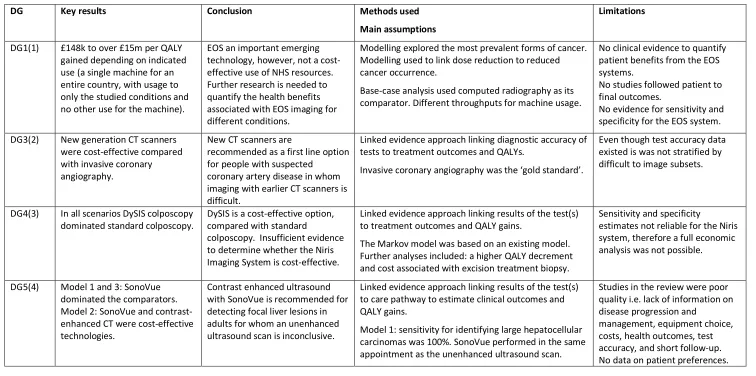
Table 2: Main results and conclusions, methods used, assumptions and key limitations associated with the different Diagnostic Guidance’s
DG Key results Conclusion Methods used
Main assumptions
Limitations
DG1(1) £148k to over £15m per QALY gained depending on indicated use (a single machine for an entire country, with usage to only the studied conditions and no other use for the machine).
EOS an important emerging technology, however, not a cost-effective use of NHS resources. Further research is needed to quantify the health benefits associated with EOS imaging for different conditions.
Modelling explored the most prevalent forms of cancer. Modelling used to link dose reduction to reduced cancer occurrence.
Base-case analysis used computed radiography as its comparator. Different throughputs for machine usage.
No clinical evidence to quantify patient benefits from the EOS systems.
No studies followed patient to final outcomes.
No evidence for sensitivity and specificity for the EOS system. DG3(2) New generation CT scanners
were cost-effective compared with invasive coronary angiography.
New CT scanners are
recommended as a first line option for people with suspected
coronary artery disease in whom imaging with earlier CT scanners is difficult.
Linked evidence approach linking diagnostic accuracy of tests to treatment outcomes and QALYs.
Invasive coronary angiography was the ‘gold standard’.
Even though test accuracy data existed is was not stratified by difficult to image subsets.
DG4(3) In all scenarios DySIS colposcopy dominated standard colposcopy.
DySIS is a cost-effective option, compared with standard
colposcopy. Insufficient evidence to determine whether the Niris Imaging System is cost-effective.
Linked evidence approach linking results of the test(s) to treatment outcomes and QALY gains.
The Markov model was based on an existing model. Further analyses included: a higher QALY decrement and cost associated with excision treatment biopsy.
Sensitivity and specificity
estimates not reliable for the Niris system, therefore a full economic analysis was not possible.
DG5(4) Model 1 and 3: SonoVue dominated the comparators. Model 2: SonoVue and contrast-enhanced CT were cost-effective technologies.
Contrast enhanced ultrasound with SonoVue is recommended for detecting focal liver lesions in adults for whom an unenhanced ultrasound scan is inconclusive.
Linked evidence approach linking results of the test(s) to care pathway to estimate clinical outcomes and QALY gains.
Model 1: sensitivity for identifying large hepatocellular carcinomas was 100%. SonoVue performed in the same appointment as the unenhanced ultrasound scan.
Studies in the review were poor quality i.e. lack of information on disease progression and
22
DG Key results Conclusion Methods used
Main assumptions
Limitations
DG6(5) Patients at high risk of adverse outcomes from anaesthesia, all 3 monitors were cost-effective compared to standard care. Patients at general risk of adverse events from anaesthesia, the BIS and E-Entropy monitors were cost-effective compared to standard care, however, Narcotrend-Compact M dominated standard care.
All three monitors were
recommended as options during any type of general anaesthesia in patients considered at higher risk of adverse outcomes.
Three separate models were developed: 1 for each monitor all with the same model structure but with model parameters varying.
Effect estimates derived for BIS were applied to the other two monitors due to the lack of data.
No direct comparisons of the 3 monitors was performed. No short-term adverse outcomes on quality of life was included in the model.
No robust evidence for the clinical benefits for E-Entropy or
Narcotrend-Compact M monitors.
DG7(6) The results showed that there was considerable uncertainty about the cost-effectiveness of SeHCAT testing for both patient groups.
Insufficient evidence to determine whether SeHCAT is a cost-effective option for diagnosing bile acid malabsorption in the two patient groups and further research is needed.
Model populated with information from systematic review. A survey eliciting expert opinion was done when no evidence was found in the literature. No direct comparator for this test, a protocol of tests and clinical observations was used as the comparator.
No information to estimate transition probabilities in the Markov models other than for all-cause mortality.
There was no clinical validity and test accuracy results for SeHCAT. DG8(7) The long-term model found that
the whole-node OSNA analysis was cheaper and less effective than hispathology.
RD-100i OSNA system is
recommended as an option during breast surgery in people with early invasive breast cancer. The Metasin test is not recommended for people with early invasive breast cancer.
The discrete event simulation model for the long-term management was based on a previous published model.
QALY decrements were estimated for waiting for hispathology results and for having a second separate operation. Hispathology was assumed to be the gold standard (100% sensitivity and specificity).
Heterogeneity in hispathology definitions and how it is performed in the NHS.
Only single-centre observational studies were found in the literature review.
Only unpublished evidence was available for the Metasin test. DG9(8) The results showed that there
was considerable uncertainty about the cost-effectiveness of the 10 different tests where some results indicated that tests where both less effective and less costly.
Five tests are recommended for detecting EGFR-TK mutation. For the other five tests not enough evidence to allow any
recommendations to be made on their use.
Different approaches:
1) comparative effectiveness (progression-free survival and overall survival); 2) linked evidence (test accuracy data) 3) equal prognostic value analysis (assuming no data on 1) and 2)). Test strategies only differed with respect to costs.
The turnaround time was not included in the model. Greater number of assumptions needed due to lack of data on cost and overall survival.
Lack of gold standard for assessing test accuracy, difficulties relating to the different mutation coverage of the various tests, and the uncertainty about the clinical significance of some mutations. Lack of data for 2 tests so not included in the cost-effectiveness analysis (next-generation
23
DG Key results Conclusion Methods used
Main assumptions
Limitations
DG10(9) Oncotype DX was cost-effective compared to current practice. ICH4 was predicted to be dominant compared with current practice.
Oncotype DX is recommended as an option for chemotherapy decisions for people with early breast cancer. MammaPrint, IHC4 and Mammostrat are only recommended for use in research in people with early breast cancer.
Cancer registry data on chemotherapy was used for standard practice. Linked evidence approach linking test results to treatment outcomes and QALY gains. Assumptions included: test reproducibility and the use of risk groups as opposed to a continuous risk score.
No evidence of IHC4 to predict benefit from chemotherapy. Exploratory analyses for
Mammostrat and MammaPrint as evidence base and UK data were limited.
Oncotype DX and IHC4; Mammostrat; MammaPrint cannot be compared directly compared as data from different studies with different patient characteristics and methodologies. DG11(10) Primary care adults comparing
IBD with IBS: faecal calprotectin strategies dominated current practice.
Secondary care paediatrics comparing IBD with non-IBD: prior testing using fully quantitative tests dominated current practice.
Faecal calprotectin is a
cost-effective use of NHS resources. Linked evidence approach linking faecal calprotectin test results to treatment outcomes and QALY gains. Reference standard was histology after endoscopy. Assumed 100% specificity for patients undergoing colonoscopy.
Limited data on the comparative effectiveness of the different tests.
Model did not incorporate how people with indeterminate results would be followed up before receiving a colonoscopy.
Minor adverse events costs were excluded.
DG12(11) FeNO testing in conjunction with existing tests is more cost-effective than when using existing tests alone.
FeNO testing is recommended as an option to help diagnose asthma in adults and children.
Evidence for the model came from systematic review for clinical effectiveness.
Quality of life estimated using an EQ-5D regression model and disutilities associated with asthma were applied. All three tests were assumed to be broadly equivalent.
Lack of evidence on time needed to resolve incorrect diagnoses – values elicited from clinical specialists.
Lack of gold standard for asthma diagnosis.
Absence of a meta-analysis indicated uncertainty around the accuracy of the devices.
DG13(12) For both the cardiac and the trauma models, all devices dominated standard laboratory tests.
ROTEM and TEG systems are recommended during and after cardiac surgery. Sonoclot system only recommended for use in research.
For both the cardiac and trauma models, the models adopted a similar structure to a previous model. No difference in the clinical effectiveness of studies assessing ROTEM and TEG, therefore the systems were assumed to be equivalent.
Lack of evidence to model management of postpartum haemorrhage.
Trauma model structure was subject to uncertainty as it was driven by a decrease in transfusion rather than outcomes and
24
DG Key results Conclusion Methods used
Main assumptions
Limitations
DG14(13) The self-monitoring strategies compared favourably with standard care. The INRatio2 PT/INR monitor dominated standard monitoring and the incremental cost-effectiveness ratio (ICER) for the CoaguChek XS system was £319 per QALY gained compared with standard monitoring.
CoaguChek XS system and InRatio2 PT/INR monitor are recommended for self-monitoring coagulation status in adults and children.
Model populated using data from the clinical effectiveness review, supplemented with expert opinion.
Assumptions included: relative treatment effects were estimated and applied separately for self-testing and self-management, and 67% of standard monitoring was done by nurses.
There was greater uncertainty of clinical benefit for the InRatio2 PT/INR monitor, but it was appropriate to extrapolate from CoaguChek XS system, as they had similar performance in precision and accuracy with regard to time in therapeutic range
measurement.
DG15(14) The ICERs for the high-sensitivity test strategies ranged from £24,019 to £90,725 saved per QALY lost compared with standard testing. Elecsys Troponin T assay and ARCHITECT STAT Troponin-I assay were effective, but the
cost-effectiveness evidence for the AccuTnI+3 assay was not robust.
The Elecsys Troponin T assay and ARCHITECT STAT Troponin-I assay are recommended as options for the early rule out of myocardial infarction. AccuTnI+3 assay only recommended in use for clinical research.
Evidence including test accuracy estimates for the model came from the clinical effectiveness review. Comparator has perfect diagnostic accuracy. Life expectancy, quality of life and costs for people with false-positive results and true negative results is equal. No additional benefit of starting treatment early. A total delay of 3 hours is assumed.
The data available for the
AccuTnI+3 assay itself could not be considered sufficient to determine its diagnostic accuracy.
DG16(15) Both base-case analyses produced ICERs of less than £6,000 per QALY gained for the My5-FU assays.
The My5-FU assay is only
recommended for use in research for guiding dose adjustment in people having fluorouracil chemotherapy by continuous infusion.
Model populated using data from the clinical effectiveness review, supplemented with expert opinion. Overall survival curves differed substantially between the identified studies, therefore two base-case analyses were developed (see DG for more details).
The duration, effect and cost of 2nd-line therapy are independent of 1st-line therapy. Some adverse effects were assumed to have no impact on quality of life and no end of life costs were applied. It was assumed that My5-FU assay effectiveness is similar to
high-performance liquid chromatography.
Uncertainty whether the dose adjustment algorithms would be transferrable between the different cancers.
The studies used did not provide sufficiently robust estimates to determine whether dose
adjustment was clinically effective compared with body surface area dosing.
25
DG Key results Conclusion Methods used
Main assumptions
Limitations
DG17(16) Almost all (except two) of diagnostic strategies are dominated by clinical assessment when sensitivity level is set at 90%.
The PROGENSA PCA3 assay and the PHI are not recommended for use in people having suspected prostate cancer.
Model populated using data from the clinical effectiveness review.
Number of cancers detected is always the same but number of biopsies to detect these cancers differ. Biopsy and its associated complications only have a short-term impact on quality of life. Biopsy is not linked with mortality.
No primary studies collecting disutility values were identified. No meta-analyses were conducted due to the heterogeneity of clinical data and data from a single study was used in the analysis. Uncertainty in the sensitivity and specificity values used in the model.
DG18(17) Base-case analyses showed that procalcitonin testing with standard clinical practice dominates standard clinical practice alone for all populations.
All five procalcitonin tests show promise but there is currently insufficient evidence to
recommend their routine adoption in the NHS.
Model populated with data from the clinical effectiveness review and meta-analysis.
All-cause mortality risks were assumed to be the same for adults as well as children. No disutility for the hospital stay. No costs associated with antibiotic-related adverse events were included.
Insufficient clinical evidence for children with sepsis in an intensive care setting.
Unsure whether the reductions in resource use would be realised in the NHS.
DG19(18) The VivaScope imaging systems were either cost-effective or when including other indications, the systems became the
dominant strategy.
The imaging systems show promise but there is currently insufficient clinical evidence to recommend their routine adoption in the NHS.
Model populated with data from the clinical effectiveness review and supplemented by clinical opinion.
Diagnostic accuracy of VivaScope 3000 was assumed to be equal to that of VivaScope 1500. Excision and biopsy was assumed to be the 'gold standard' for the diagnosis of melanoma.
Lack of data specific to VivaScope 3000 to determine its diagnostic accuracy.
There was uncertainty around and limited data for the utility values.
DG20(19) Base case 1: all interventions were dominated by blood culture.
Base case 2: MALDI-TOF MS produced a positive net benefit compared with blood culture. The LightCycler SeptiFast Test MGRADE dominated
MALDI-TOF MS and blood culture.
Insufficient evidence to
recommend the routine adoption of the three tests in the NHS.
Model populated with data from the clinical effectiveness review and supplemented by clinical opinion. Base case 1: used data from the review & Base case 2: used expert opinion.
30-day mortality rate was the only parameter to affect QALY gain/loss. Negative or failed rapid tests did not affect any of the 4 key outcomes. Blood culture was assumed to be 100% accurate and an imperfect reference standard.
26
DG Key results Conclusion Methods used
Main assumptions
Limitations
DG21(20) The base case results found that the MiniMed Paradigm Veo system and the Vibe and G4 PLATINUM CGM system were not cost-effective when compared with capillary blood testing.
MiniMed Paradigm Veo system is recommended as an option for managing blood glucose levels in people with type 1 diabetes under two conditions (see DG for further information). The Vibe and G4 PLATINUM CGM system shows promise but insufficient evidence to support its routine adoption in the NHS.
Model populated with data from the clinical effectiveness review and supplemented by clinical opinion.
Non-integrated continuous glucose monitoring and continuous subcutaneous insulin therapy, were assumed to be clinically equivalent to that of the Vibe and G4 PLATINUM CGM system due to lack of data.
Comparator - continuous glucose monitoring with multiple daily insulin injections were excluded because of the lack of clinical data.
DG22(21) Second base-case model - testing strategies cheaper but less effective than standard care. First base-case model - testing strategies became more costly and less effective than no-testing strategy.
The tests show promise but there is insufficient evidence to
recommend their routine adoption across the NHS.
Model populated with data from the clinical effectiveness review and supplemented by clinical opinion. Two base-cases with different transition probabilities (1: non-constant hazard; and 2: constant hazard).
Used alternative tests to provide clinical outcomes for the model.
No direct clinical outcome data for the index tests.
Insufficient evidence to link any of the index tests to alternative tests used in the model for the clinical outcomes.
DG23(22) For women before 35 weeks gestation: the PlGF tests dominated standard clinical assessment.
For women between 35 and 37 weeks gestation: the PlGF tests were cost saving compared with standard clinical assessment. There was no difference in QALYs, therefore, ICERs were not calculated.
Triage PlGF and the Elecsys immunoassay sFlt-1/PlGF ratio are recommended to help rule-out suspected pre-eclampsia in some women. DELFIA Xpress PlGF 1-2-3 test and BRAHMS sFlt-1
Kryptor/BRAHMS PlGF plus Kryptor PE ratio are not recommended for routine adoption in the NHS.
Linked evidence approach linking diagnostic test accuracy and prevalence of pre-eclampsia (obtained from literature) to maternal, fetal and neonatal outcomes.
Two different outcomes for pre-eclampsia for the Triage PlGF test and the Elecsys immunoassay sFlt-1/PlGF ratio test were assumed to be the same. Utility scores for birth are assumed to last for 3 weeks.
No head-to-head comparisons of index tests was available. The BRAHMS sFlt-1 Kryptor/BRAHMS PlGF plus Kryptor PE ratio and the DELFIA Xpress 1-2-3 PlGF test were not included in the economic analysis because of insufficient data. Only short-term outcomes included, therefore QALYs are likely to be underestimated. DG24(23) ImmunoCAP ISAC and Microtest
appeared to be cost saving compared with the standard clinical assessment.
Currently insufficient evidence to recommend the routine adoption of the tests.
A conceptual model was developed that showed the data and parameters that are needed.
As no information, assumptions were needed on: proportion of people needing a particular test; accuracy of diagnostic pathways, treatment decision, probability of allergic reactions, probability of remission and probability of dying.
Nine studies identified were all conference abstracts.
No clinical evidence on Microtest as it was a new test.
No studies identified that reported clinical outcomes.
No reference standard.
![Figure 1: Key steps involved in the DAR process [Source: edited from the DAP manual, 2011]](https://thumb-us.123doks.com/thumbv2/123dok_us/9430893.448697/34.595.101.495.108.667/figure-key-steps-involved-process-source-edited-manual.webp)