EFFECTS OF THE AMOUNT OF CONCENTRATE OFFERED IN AN AUTOMATED MILKING SYSTEM ON DRY MATTER INTAKE, MILK YIELD, MILK COMPOSITION, RUMINAL FERMENTATION, AND BEHAVIOUR OF PRIMIPAROUS HOLSTEIN COWS
FED ISO-CALORIC DIETS
A Thesis Submitted to the College of Graduate and Postdoctoral Studies In Partial Fulfillment of the Requirements
For the Degree of Master of Science In the Department of Animal and Poultry Science
University of Saskatchewan Saskatoon
By Keshia Paddick
i
PERMISSION TO USE
In presenting this thesis in partial fulfillment of the requirements for a Master of Science degree from the University of Saskatchewan, I agree that the Libraries of this University may make it freely available for inspection. I further agree that permission for copying of this thesis in any manner, in whole or in part, for scholarly purposes may be granted by the professor or professors who supervised my thesis/dissertation work or, in their absence, by the Head of the Department or the Dean of the College in which my thesis work was done. It is understood that any copying or publication or use of this thesis or parts thereof for financial gain shall not be allowed without my written permission. It is also understood that due recognition shall be given to me and to the University of Saskatchewan in any scholarly use which may be made of any material in my thesis.
Requests for permission to copy or to make other uses of materials in this thesis/dissertation in whole or part should be addressed to:
Head of the Department of Animal and Poultry Science 51 Campus Drive
University of Saskatchewan
Saskatoon, Saskatchewan, S7N 5A8 Canada
OR
Dean
College of Graduate and Postdoctoral Studies University of Saskatchewan
116 Thorvaldson Building, 110 Science Place Saskatoon, Saskatchewan, S7N 5C9
iii
ABSTRACT
The objective of this study was to determine if the quantity of concentrate provided in an automated milking system (AMS) affects dry matter intake (DMI), attendance to the AMS, milk and milk component yield, feeding behaviour, cow activity and ruminal fermentation of lactating dairy cows fed iso-caloric diets. Eight ruminally-cannulated primiparous Holstein cows were used in a replicated 4 × 4 Latin square design with 28-d periods. Cows were housed in a free-stall facility with a guided-traffic (feed-first) flow barn-design. Cows were offered 0.5, 2.0, 3.5, or 5.0 kg/d DM of pellet in the AMS, with an equivalent reduction of the same pellet in the partial mixed ration (PMR). Day 21 to 24 of each treatment period were used for DMI, milking performance, behaviour, and ruminal pH determination, while d 25 to 28 were used for ruminal short-chain fatty acid (SCFA) and ammonia concentrations, as well as total tract digestibility. As imposed, consumption of AMS pellet linearly increased (P < 0.01), equating to 0.50, 2.00, 3.49, and 4.93 kg/d. Correspondingly, the standard deviation in AMS pellet intake among days linearly increased from 0.06 to 0.85 kg/d as the quantity of concentrate in the AMS increased from 0.5 to 5.0 kg (P < 0.01). The PMR DMI decreased linearly with increasing AMS concentrate allocation (P < 0.01), but total DMI (PMR + AMS concentrate) was not affected (25.3 kg/d, P = 0.40). As AMS concentrate allocation increased, the selection against particles retained on an 18-mm sieve linearly increased (P = 0.02) and selection against particles retained on the bottom pan decreased (P < 0.01). Milking frequency (3.22 milkings/d, P = 0.82), milk yield (37.5 kg/d, P = 0.59), milk fat yield (1.43 kg/d, P = 0.46), and milk protein yield (1.22 kg/d, P = 0.42) were not affected; however, milk urea nitrogen concentration decreased linearly with increasing AMS concentrate (P = 0.02). Ruminal pH averaged 6.18 and was not affected by AMS concentrate (P = 0.62). Total ruminal SCFA concentration was greatest when 3.5 kg of concentrate was allocated in the AMS and ruminal ammonia decreased linearly with increasing AMS concentrate (P = 0.01). Time spent lying, the number of lying bouts, and average bout duration were not affected by treatment (P ≥ 0.11). These data indicate that increasing the quantity of concentrate in the AMS increases daily variability in AMS concentrate intake while decreasing PMR intake, and
increasing AMS pellet provision, under isocaloric dietary settings, is not likely to affect voluntary visits to the AMS, milk and milk component yield, or ruminal fermentation.
iv
ACKNOWLEDGEMENTS
I would first like to thank my supervisor, Dr. Gregory Penner, for the opportunity to complete my Masters program at the University of Saskatchewan. Your support and mentorship throughout the entirety of my program has provided me with incredible learning experiences, preparing me for any future endeavours I may choose. I would also like to thank my committee members Drs. Michael Steele and Karen Schwartzkopf-Genswein for your dedication,
recommendations, and ongoing encouragement. To Dr. Timothy Mutsvangwa for acting as both a committee member and chair. To Jim Salfer for acting as my external examiner and Dr. Fiona Buchanan for serving as my chair for the defence. Additional appreciation to Dr. Trevor DeVries for his assistance analyzing my feeding behaviour data and the many recommendations
throughout my writing process. Dr. Peter MacDonald for his help with the R coding for determining meal criterion and to Colleen Walpole for her help with the analysis of the
accelerometer data. A special recognition to my dairy partner-in-crime Silvia Menajovsky for all your guidance throughout the barley project and my experiment. Your support, kindness and humour has been admired.
I would also like to acknowledge Gill Gratton and Team Rumen for all their help
throughout my program and the friendships that will continue beyond my time at U of S. Thank you to Adriane Good for your friendship, sarcastic sass, and motivation to help me finish. To Bethany Baker for her wonderful words of wisdom and humour to help keep me sane. To my sister Kaela, for her supportive phone calls and thoughtful letters of positivity in the mail.
Additional thanks to the Rayner Dairy Research and Teaching Facility for the use of their facilities and cows for the completion of this project. Thank you to the Department of Animal and Poultry Science for providing me both the Graduate Student Department Scholarship and the J.M. Bell Postgraduate Travel Scholarship to help lessen the financial burden and support me through my studies. To the project funding partners, Alberta Livestock and Meat Agency Ltd., Alberta Milk, Saskatchewan Ministry of Agriculture, Agriculture Development Fund, Dairy Farmers of Manitoba, and SaskMilk.
Last, thank you Brandon Eisenreich, for staying by my side and supporting me through all the highs and lows of this journey. To your family for providing me with a loving and welcoming home away from home.
v TABLE OF CONTENTS PERMISSION TO USE ... i ABSTRACT ... iii ACKNOWLEDGEMENTS ... iv TABLE OF CONTENTS ... v
LIST OF FIGURES ... vii
LIST OF TABLES ... viii
LIST OF ABREVIATIONS ... ix
1.0 GENERAL INTRODUCTION ... 1
2.0 LITERATURE REVIEW ... 3
2.1 General Principles of Automated Milking Systems (AMS)... 3
2.2 Motivating Factors Encouraging Cows to Enter the AMS ... 6
2.3 Precision Feeding ... 11
2.3.1 AMS Feeding Recommendations ... 11
2.3.2 Implications of Precision Feeding ... 17
2.4. Transition Cow Feeding with AMS ... 23
2.5. Feeding High Producing Cows Milked with an AMS ... 29
2.6. Late Lactation and Dry Off Feeding with AMS ... 30
2.7. Conclusions ... 30
2.8. Hypotheses ... 31
2.9. Objectives ... 31
3.0 LOCATION OF CONCENTRATE ALLOCATION FOR COWS MILKED IN A GUIDED FLOW AMS ON PMR INTAKE, MILK AND MILK COMPONENT YIELD, RUMINAL FERMENTATION AND COW BEHAVIOUR ... 33
3.1 Introduction ... 33
3.2 Materials and Methods ... 34
3.2.1 Animal Husbandry and Experimental Design ... 34
3.2.2 Feeding Management and Experimental Treatments ... 35
3.2.3 Data and Sample Collection ... 36
3.2.3.2 Feeding behaviour responses ... 39
3.2.3.3 Cow-activity budget responses ... 40
vi
3.2.3.5 Sample Analyses ... 41
3.2.4 Statistical Analysis ... 42
3.3 Results ... 43
3.3.1 Dry Matter Intake and Feeding Behaviour ... 43
3.3.2 Activity Budget... 46
3.3.3 Voluntary Milkings, Milk Yield, and Milk Composition ... 46
3.3.4 Ruminal Fermentation and Digestibility ... 49
3.4 Discussion ... 54
4.0 GENERAL DISCUSSION ... 60
4.1 Novel Research Approach and Results ... 60
4.1.1. Increasing concentrate delivery in the AMS increased the day-to-day variability in AMS concentrate intake ... 60
4.1.2. Increasing the AMS concentrate causes a reduction in PMR intake and alters PMR feeding behaviour ... 61
4.1.3. Increasing the AMS concentrate allocation, while maintaining isocaloric diets, does not affect voluntary attendance or milk and milk component yield. ... 65
4.1.4 The PMR rather than the quantity of concentrate offered in the AMS may have a greater influence on ruminal pH. ... 66
4.2 Inherent Limitations with AMS ... 67
4.2.1 The AMS does not weigh the quantity of concentrate provided and the amount of concentrate offered may not be equal to that consumed. ... 67
4.2.2. Cows do not consume the quantity of AMS concentrate programmed in the computer. ... 68
4.2.3. Conventional management imposes a 24-d, but a 24-h interval may not represent the biological pattern for cows in an AMS. ... 69
4.2.4. Data management in AMS. ... 70
4.3 Industry Applications ... 71
5.0 CONCLUSIONS... 74
vii
LIST OF FIGURES
Figure 2.1. Evolution of amount of concentrate consumed (average over an 8-d period) relative to the amount of concentrate offered (averaged over a 7-d period) in an automatic milking
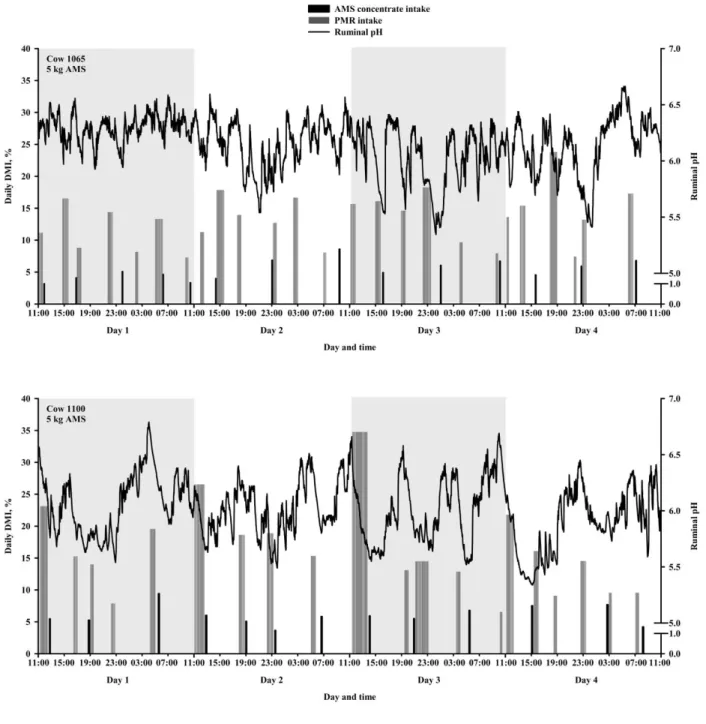
system. Figure sourced from Bach and Cabrera (2017), with permission from the publisher. ... 9 Figure 2.2. Targeted and actual concentrate delivery for cows in AMS feeding systems and their subsequent milk yield. The black bars indicate low AMS concentrate provision in each study and the grey bars indicate the high AMS concentrate provision. The red bar with an arrow indicates the target quantity for the AMS concentrate. Figure adapted from Penner et al. (2017). ... 20 Figure 2.3. Averaged concentrate intake vs. days from calving (first row), averaged daily milk yield vs. days from calving (second row). Averaged milk yield vs. averaged concentrate intake at different days after calving (third row). Upper lines and symbols (o) are multiparous cows and lower lines and symbols (x) are primiparous cows. Farm locations are AH (Aver Heino), BZ (Bosma Zathe), HT (High-tech), and ZV (Zegveld). Figure sourced from André et al. (2010) with permission from publisher. ... 25 Figure 2.4. Fitted individual milk yield response curves vs. concentrate intake/farm. Different lines represent different cows (1=primiparous cows and 2=multiparous cows). Farm locations are AH (Aver Heino), BZ (Bosma Zathe), HT (High-tech), and ZV (Zegveld). Figure sourced from André et al. (2010) with permission from publisher. ... 26 Figure 2.5. Visits of primiparous and multiparous cows to the AMS from 32 American AMS farms. Endres, University of Minnesota, personal communication (2018). ... 28 Figure 3.1. Day-to-day variation in feeding behaviour, visits to the AMS, and ruminal pH for individual cows and between selected cows when fed 0.5 kg of concentrate in the AMS. ... 52 Figure 3.2. Day-to-day variation in feeding behaviour, visits to the AMS, and ruminal pH for individual cows and between selected cows when fed 5.0 kg of concentrate in the AMS. ... 53
viii
LIST OF TABLES
Table 2.1. Example of a feed table used to allocate concentrate (kg as fed/d) in the AMS based on parity and milk production. ... 12 Table 2.2. Representation of pellet allocation quantities and the arising potential concentrate delivery in the AMS based on milking frequency. This example assumes equal inter-milking intervals, consistent milking frequency, a maximum meal size of 2.5 kg/visit, and does not incorporate carry-over concentrate from the previous day. ... 15 Table 2.3. Substitution effect for previous AMS studies that also considered PMR intake.
Substitution effect is defined as the kg of PMR intake reduction in response to a 1 kg (DM basis) increase in AMS concentrate intake. ... 21 Table 3.1. Ingredient and chemical composition of the total diets (PMR + AMS concentrate) used to test whether the location of concentrate provision affects DMI, milk production, ruminal fermentation and cow behaviour ... 37 Table 3.2. Partial mixed ration (PMR) intake, intake of concentrate in the automated milking system (AMS), total DMI, and feeding behaviour of cows fed increasing quantities of
concentrate in the AMS with a concurrent and equal reduction the proportion of concentrate in the PMR. ... 44 Table 3.2 Continued. Partial mixed ration (PMR) intake, intake of concentrate in the automated milking system (AMS), total DMI, and feeding behaviour of cows fed increasing quantities of concentrate in the AMS with a concurrent and equal reduction the proportion of concentrate in the PMR. ... 45 Table 3.3. Milk yield, milking frequency, voluntary attendance, and milk composition for cows fed increasing quantities of concentrate in the automated milking system (AMS) with a
concurrent and equal reduction the proportion of concentrate in the partial mixed ration. ... 47 Table 3.4: Lying budgets of cows fed increasing quantities of concentrate in the automated milking system (AMS) with a concurrent and equal reduction the proportion of concentrate in the partial mixed ration. ... 48 Table 3.5: Average daily rumen fermentation results including rumen pH, ammonia and SCFA concentration from cows fed increasing quantities of concentrate in the automated milking system (AMS) with a concurrent and equal reduction the proportion of concentrate in the partial mixed ration (PMR). ... 50 Table 3.6: Apparent total tract digestibility for DM, OM, CP, NDF, ADF, and starch for cows fed increasing quantities of concentrate in the automated milking system (AMS) with a
concurrent and equal reduction the proportion of concentrate in the partial mixed ration (PMR). ... 51 Table 4.2. Experimental considerations of studies considering both AMS and PMR for
ix
LIST OF ABREVIATIONS
ADF Acid detergent fibre AMS Automatic milking system
aNDFOM Neutral detergent fibre measured using -amylase and sodium sulfite and
subsequently corrected for organic matter content BCS Body condition score
BW Body weight
Ca Calcium
CNCPS Cornell Net Carbohydrate and Protein System CP Crude protein
DIM Days in milk
DM Dry matter
DMI Dry matter intake EE Ether extract
ECM Energy corrected milk F:C Forage-to-concentrate ratio
iNDFOM Indigestible neutral detergent fibre measured using -amylase and sodium sulfite
and subsequently corrected for organic matter content HOT Hepatic oxidation theory
LRCpH Lethbridge Research Centre pH logger MUN Milk urea nitrogen
N Nitrogen
NDF Neutral detergent fibre NDS Nutritional Dynamic System NEFA Non-esterified fatty acid OM Organic matter
P Phosphorus
PMR Partial mixed ration
PSPS Pennsylvania State Particle Size Separator SCC Somatic cell count
x SD Standard deviation
SEM Standard error of the mean TCA cycle Tricarboxylic acid cycle TMR Total mixed ration
1
1.0 GENERAL INTRODUCTION
Since the first installation of the automatic milking system (AMS) 26 years ago, the global adoption rate has increased dramatically (Jacobs and Seigford, 2012). It is believed that AMS have such a quick adoption due to the efficiencies and flexibility in labour for producers when compared to conventional milking systems (Rotz et al., 2003). There are several cow traffic designs that can be integrated with the AMS, including free-flow, guided-flow and forced-flow (Jacobs and Seigford, 2012). Independent of cow traffic design, all facilities equipped with AMS require cows to voluntarily enter the individual milking stall. The motivation for cows to be milked with AMS corresponds to the food reward located inside the AMS (Prescott et al., 1998). Thus, nutritional strategies with the AMS require feeding both a concentrate in the AMS and a partial mixed ration (PMR) at the feed bunk to meet nutrient requirements (Bach and Cabrera, 2017).
The optimal feeding strategy for cows being milked with AMS is still unclear. Industry recommendations suggest supplying upwards of 8.0 kg/d of concentrate in the AMS (DeLaval Inc., 2018; Lely, n.d.; Brouk, 2017; Rodenburg, 2011). Evidently, producers are following these recommendations. In survey-based studies, it was determined that producers were feeding 6.0 kg of concentrate for cows producing 38.0 kg of milk (primarily free-flow barns; Tremblay et al., 2016) and 0.9 to 11.4 kg in free-flow traffic designs or 0.9 to 5.5 kg in guided-traffic designs (Salfer and Endres, 2014). Many recommendations suggest a precision feeding approach, often with the use of feed tables. This approach attempts to provide quantities of concentrate or different concentrates in the AMS that correspond to an individual cow’s milk production (or perhaps DIM), attempting to meet nutrient requirements on an individual basis (Bach and
Cabrera, 2017). The concept of feeding large quantities of concentrates in the AMS is thought to encourage a greater motivation for cows to enter the milking stall, resulting in an increased number of visits per day and daily milk yield. That said, previous research has demonstrated negative implications when feeding large quantities (> 5.0 kg) of concentrate in the AMS (Bach et al., 2007; Halachmi et al., 2005).
Few studies have investigated the impact of AMS feeding strategies on both the AMS concentrate and the partial mixed ration (PMR) intake; however, those that have, demonstrated that when cows are offered greater quantities of concentrate in the AMS, a reduction in PMR
2
intake is observed (Bach et al., 2007; Hare et al., 2018; Menajovsky et al., 2018). Thus, cows are not necessarily consuming a greater total DMI (AMS concentrate + PMR). Further, it is evident in previous studies that when a greater day-to-day quantity of concentrate is provided in the AMS there is greater variability in AMS concentrate intake (Hare et al., personal
communication; Menajovsky et al., 2018). Another challenge when feeding large quantities of concentrate in the AMS is the difficulty with meeting target consumption amounts. Bach et al. (2007) targeted feeding 3.0 and 8.0 kg of concentrate in the AMS; however, only achieved 2.6 and 6.8 kg of concentrate consumed in the AMS, while Halachmi et al. (2005) provided either 1.2 kg/milking or 7.0 kg/d of concentrate in the AMS and achieved 5.2 kg/d in the latter treatment. Hare et al. (2018) and Menajovsky et al. (2018) have demonstrated that achieving target concentrate intakes in the AMS requires greater quantities to be programmed into the AMS computer software. Last, when greater quantities of concentrate are supplied in the AMS, milk and milk component yields and visits to the AMS have not demonstrated a positive
response (Bach et al., 2007; Hare et al., 2018). Thus, previous research findings do not support the current AMS feeding recommendations.
There are some notable limitations with previous AMS studies attempting to determine accurate concentrate recommendations with the AMS. All previous studies have only analyzed 2 quantities of concentrate in the AMS (Bach et al., 2007; Halachmi et al., 2005; Hare et al., 2018; Menajovsky et al., 2018) and thus the direction and severity of response variables have not yet been thoroughly investigated. In addition, only one previous study has examined ruminal
fermentation and total tract digestibility parameters (Menajovsky et al., 2018). The current study attempted to provide an insight to improving AMS feeding management strategies. Specifically, the intention was to determine the effects of feeding varying quantities of concentrate in the AMS under iso-caloric conditions on attendance to the AMS, milk and milk component yield, DMI of the PMR, ruminal fermentation and total tract digestibility.
3
2.0 LITERATURE REVIEW 2.1 General Principles of Automated Milking Systems (AMS)
Since the start of the twentieth century, several advancements in the dairy production industry have occurred including the invention of automated milking machines that have accommodated the growing efficiency of producing larger milk volumes with fewer cows (Jacobs and Siegford, 2012). The concept of automatic milking systems (AMS), also called voluntary milking systems (VMS), or robotic milking systems, originated in the Netherlands in the early 1980’s (Hyde and Engel, 2002); however, the first installation occurred in 1992
(Jacobs, 2011). Since this first installation, AMS have become increasingly popular among dairy farms around the world. By 2011, it was estimated that there were more than 10,000 farms worldwide using AMS (de Koning, 2011). Of these AMS farms, approximately 90% were located in Europe, while an estimated 9% were located in Canada (de Koning, 2010), primarily in Ontario and Quebec (Canadian Dairy Information Center, 2018). Currently, it is estimated that 6.6 % of all dairy herds in Canada are using AMS, with 0.11 % of those being located in
Saskatchewan (Canadian Dairy Information Center, 2018). This translates into 7.5 % of Saskatchewan dairy farms using AMS (Canadian Dairy Information Center, 2018).
There may be benefits of adopting AMS far beyond those of conventional milking procedures (Rotz et al., 2003). Some of these advantages may include increasing production through increasing milking frequency and promoting a more flexible lifestyle for dairy producers (de Koning, 2010). It has also been suggested that AMS may improve cow health, reduce labour, and the routine activities that conventional producers are faced with (Jacobs and Seigford, 2012; Woodford et al., 2015). As AMS continue to advance, it is predicted that the use and efficiencies will continue to grow; triggering the transition from conventional milking systems to become increasingly more common in Canada.
Dairy facilities with AMS require a different type of management strategy than that of conventional parlour or tie-stall milked herds. Facilities with an AMS require cows to voluntarily enter the AMS to encourage frequent milkings and minimize labour associated with handling cows. It should be noted that cows milked with an AMS, do not visit the AMS the same number of times or at the same time of day on a regular basis (Bach et al., 2007). This results in an inconsistent number of daily milking events and milk production could be expected to vary more
4
among days than in conventional milking systems. Encouraging voluntary visits to the AMS is partially accomplished through feeding management (Bach et al., 2007).
Feeding programs with AMS are very different than that of conventional milking systems. Conventional systems in North America usually involve a total mixed ration (TMR) provided in feed bunks where the cows are supplied a feed that is well mixed and balanced to meet all nutrient requirements at a specified daily DMI. In contrast, AMS feeding programs involve the use of a partial mixed ration (PMR) delivered to the feed bunk and a concentrate that is delivered in the AMS. The PMR is designed to supply a portion of the nutritional requirements with the AMS concentrate completing the provision of dietary nutrients to meet requirements. Thus, the ability to meet nutrient requirements depends on accurate predictions of DMI for both the concentrate provided in the AMS and the PMR.
The primary motivating factor encouraging voluntary attendance at the AMS has been determined to be through the provision of concentrate in the AMS and less towards the process of relieving the udder pressure (Prescott et al., 1998). The concentrates provided in the AMS must be highly palatable, thereby enhancing voluntary attendance by creating a rewarding experience for the cows (Jacobs, 2011). Therefore, the more superior the motivation for cows to enter the AMS, the greater probability of AMS attendance (Wagner-Storch and Palmer, 2003; de Jong et al., 2003), resulting in a greater milk yield simply due to a greater number of visits (Prescott et al., 1998; Rodenburg, 2011).
Various feeding programs have been implemented within AMS; however, a consensus over optimal strategies has yet to be achieved. One dominating concept is precision feeding. Precision feeding management strategies attempt to improve productivity and efficiency by adapting nutritional programs to meet individual cow requirements (Cerosaletti et al., 2004; Gehman, 2011), rather than formulating and delivering diets based on herd averages.
Formulating diets based on herd averages generally overestimates nutrient requirements and supply in lower producing cows, while underestimating nutrient requirements and supply for high producing cows. The over and under supply of nutrients leads to inefficiencies with single TMR-based feeding programs (Bach and Cabera, 2017). Precision feeding management
strategies attempt to offer individual cows different quantities or types of concentrate in the AMS based on production, stage of lactation, or parity (Bach and Cabera, 2017). This idea reintroduces
5
the concept of component feeding, where a portion of the nutrients are supplied in separate locations for free-stall herds or separate times within the facility for tie-stall dairy herds.
Originally, component feeding was designed to offer concentrates within the parlour to allow for easier handling of cows at the time of milking, but concentrates were later removed from the parlour because it was recognized that concentrates were not necessary to improve movement of cows toward the parlour (Schingoethe, 2017). Removal of concentrates in the parlour may have initiated the provision of concentrate in automatic feeders within a free-stall pen. Similar to AMS, the concentrate feeders allowed producers to provide quantities of concentrate to
individual cows based on milk production. It has been reported that some producers supplied 1 kg of concentrate in an automatic feeder for every 3 kg of milk produced (Schingoethe, 2017). In addition, component feeding also offered mineral supplement and forage components separately.
Component feeding was a historic way of feeding in parlour-based and tie-stall dairies as the TMR was not designed until 1952 (Harshburger, 1952); however, TMR were not officially introduced in scientific literature until 1966 (McCoy et al., 1966). Since then, TMR-feeding has dominated feeding programs in North America and parts of Europe. Simultaneous with TMR adoption, were observations that component feeding strategies may be disadvantageous relative to TMR including increased risk for insufficient fibre intake, unpredictable changes in the dietary forage to concentrate ratio (F:C), induction of milk fat depression (Coppock, 1977), increased risk for digestive upset particularly during the transition period, and more bouts where cows were off feed (Hernandez-Urdandeta et al., 1976). In contrast, TMR nutritional programs provide cows with fewer opportunities to select for individual components within the diet and
theoretically provide a nutritionally complete and uniform feed (Coppock, 1977). Total mixed ration feeding strategies strive to maintain a constant nutrient composition to encourage milk production and a more accurate understanding of nutrient consumption (Coppock, 1977).
Further, the more stable F:C consumed with a TMR allows for greater stability and efficiency of rumen microbial populations (DeVries et al., 2007). The TMR also allowed for incorporation of the vitamin and mineral component of the diet allowing producers to overcome challenges with vitamin and mineral intake due to unpalatability and poor acceptance of these supplements by cows (Bach and Cabrera, 2017). That said, proper TMR mixing and order of feed ingredient
6
inclusion into the mixer is important for an even distribution of nutritional components (Schingoethe, 2017).
While AMS are relatively new, as stated above, AMS feeding programs can be compared to the older component feeding programs because concentrate is provided in the AMS and PMR is offered at the feed bunk. This concept reintroduces issues associated with component feeding and provides challenges with creating the optimal feeding programs due to the variability of intake of AMS concentrate and substitution of PMR with the AMS concentrate. Controversially, one scientist suggests that as research continues to grow regarding feeding programs with AMS, it may be possible to avoid feeding concentrates in the AMS entirely in the future, allowing for better nutritional management, mimicking what occurred with concentrates in the parlour (Schingoethe, 2017).
2.2 Motivating Factors Encouraging Cows to Enter the AMS
Voluntary attendance is crucial to optimize the labour requirements, milk production, and corresponding economic efficiencies associated with AMS (Bach and Cabrera, 2017).
Attendance to the AMS for individual cows equating to less than 2 visits per day could result in a reduced milk yield due to autocrine feedback inhibition of alveolar milk secretion (Wilde and Peaker, 1990) and potentially an increase in risk for mastitis (Hillerton and Winter, 1992). Thus, maintaining voluntary visits to the AMS is essential.
Cows strongly motivated to voluntarily enter the AMS require fewer alternative rewards such as feed in the AMS (Prescott et al., 1998). There are many hypotheses to suggest that cows receive rewards through the milking procedure. First, milking is believed to relieve the
discomfort that the cow experiences from having a large distended udder (Rathore, 1982). This discomfort and motivation to be milked may be emphasized during early lactation until peak lactation due to the hyperplasia and hypertrophy of mammary cells (Knight and Wilde, 1993) and related high milk yield at this time. Second, cows may be motivated to be milked for psychological reasons (Prescott et al., 1998). The process of being milked may, in some way, satisfy a cow’s natural behaviour to nurse her calf; however, this motivation may decline as lactation progresses simulating the natural weaning process (Phillip, 1993). Last, cows may be motivated to be milked because of the stimulation of oxytocin released during milk let down.
7
Physical stimulation of teats may also cause arousal in some animals (Andersonhunt and Dennerstein, 1995).
Despite these theories suggesting reasons why cows may be stimulated to milk, feed rewards are generally used to promote voluntary attendance to the AMS. Prescott et al. (1998) set out to determine the effects of motivation based on stage of lactation, udder fill, and feed as a reward and how they affect voluntary attendance to an AMS. Results of that study demonstrated that the motivation for cows to be milked without a feed reward was relatively weak, highly variable, and weakly dependant on stage of lactation. High producing cows (early lactation cows) were more motivated to be milked than lower producing cows (late lactation cows) suggesting that
motivations to be milked may be stronger and more rewarding earlier in lactation. In addition, when cows were trailed through a Y-maze every 3.5 h, but not supplied with a feed reward, most high yielding cows and some low yielding cows chose to be milked at this interval, even though only small quantities of milk would likely be stored in the udder at this frequent of interval. The authors hypothesized this response was due to the milking process providing some sort of reward for the cows (tactile teat stimulation, arousal from oxytocin release, or a psychological
satisfaction); however, they noted high motivation variability, suggesting that some cows may find being milked a negative experience. When cows were given the option to receive a feed reward or to be milked, cows chose to eat a concentrate supplied in a feeder at the end of the Y-maze. When high producing cows were supplied with 4 kg of concentrate in an AMS, they attended the AMS more frequently than low producing cows fed 2 kg of concentrate. It was therefore suggested that the level of food reward may influence attendance to the AMS. Though this study only utilized 12 cows, conclusions clearly demonstrated that feed rewards provided in the AMS significantly improved motivation and voluntary attendance.
Providing a concentrate in the AMS increases motivation to visit the AMS; however, determining the amount and type of concentrate to provide within the AMS is more complex. Theoretically, increasing visits to the AMS will allow for a greater consumption of concentrate (Halachmi et al., 2005). A handful of studies comparing different quantities of concentrate in the AMS to determine the effect on AMS visits, milk and milk component yields have been
conducted. For example, Halachmi et al. (2005) offered 1.2 kg of concentrate per milking or 7.0 kg/d of concentrate in the AMS within a guided-traffic barn design. The formulation of PMR in
8
both treatments were identical; therefore, the only change in each treatment was the quantity of concentrate provided in the AMS causing the F:C of the total diet (AMS + PMR) of each treatment to be different. Though significance levels were not outlined in this study, results demonstrated that when greater energy dense diets (PMR + AMS) were supplied, milk
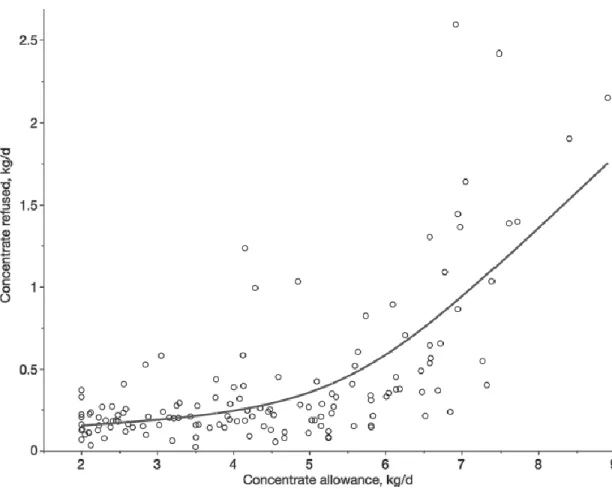
production increased. Despite this, no differences in the number of AMS visits were observed among treatments, suggesting that 1.2 kg/milking of concentrate was sufficient to encourage motivation to enter the AMS. Bach et al. (2007) offered 3.0 or 8.0 kg of concentrate in an AMS under iso-caloric dietary (PMR + AMS) conditions in a free-flow barn design. Authors observed no differences in voluntary attendance to the AMS, milk yield, milk component yield, and fetching concluding that there was no benefit of providing large quantities of concentrate in the AMS. Similarly, Hare et al. (2018) offered 0.5 or 5.0 kg of concentrate in the AMS under iso-energetic dietary conditions in a guided-traffic barn design and reported no differences in visits to the AMS, milk yield, or milk component yield. Most recently, Menajovsky et al. (2018) tested 4 different dietary treatments in a guided-flow traffic design: 1) a low F:C PMR with 6.0 kg of concentrate in the AMS; 2) a low F:C PMR with 2.0 kg of concentrate in the AMS; 3) a high F:C PMR with 6.0 kg of concentrate in the AMS; and 4) a high F:C PMR with 2.0 kg of concentrate in the AMS. In this study, the authors observed no differences among treatments for frequency of milking events; however, with increasing energy density in the total diet (high AMS concentrate or the PMR with a low F:C) a tendency for an increased milk yield was observed. Last, they observed greatest milk protein concentration and a tendency for milk fat concentration to be greatest when 2.0 kg of concentrate was provided in the AMS. Together, these studies suggest that increasing the quantity of concentrate with provided in the AMS will likely not positively influence voluntary attendance to the AMS, milk yield, or milk composition with iso-energetic diets; however, milk yield and milk protein concentration may be increased when using the AMS concentrate to increase the energy density of the diets (AMS + PMR). That said, Menajovsky et al. (2018), demonstrated that these slight increases in milk yield and milk protein concentration may also occur through increasing the energy density of the diet through the PMR. Although the exact quantity of concentrate necessary to maintain AMS attendance is uncertain, it is evident that not all concentrate provided in the AMS is consumed (Bach and Cabrera, 2017). As the quantity of concentrate allowance in the AMS increases, the quantity of concentrate that is refused or not offered in the AMS also increases (Figure 2.1; Bach and Cabrera, 2017).
9
Figure 2.1. Evolution of amount of concentrate consumed (average over an 8-d period) relative to the amount of concentrate offered (averaged over a 7-d period) in an automatic milking system. Figure sourced from Bach and Cabrera (2017), with permission from the publisher.
10
This creates further challenges with optimal feeding strategies associated with the AMS and will be discussed below (2.3.2 Implications of Precision Feeding).
The physical and chemical characteristics of the concentrate provided in the AMS may influence milk production and voluntary attendance to the AMS. The recommended physical form of concentrate is a pellet because it is preferred by cows over mash in the AMS (Spörndly and Ashberg, 2006). A pellet with minimal fines and extreme hardness is optimal because fewer negative effects on intake have been reported with hard pellets (Rodenburg et al., 2004).
However, pellets formulated to be high in starch may influence appetite, feeding related behaviours, ruminal pH, and NDF digestibility in a manner that may negatively influence milk composition, production, and increase the risk of lameness (Oba and Wertz-Lutz, 2011). In AMS herds, minimizing lameness is critical because lame cows visit the AMS less frequently (Bach et al., 2006; Borderas et al., 2008) and increase labour associated with fetching cows (Bach et al., 2007). Miron et al. (2004) observed a tendency for an increased milk protein concentration when cows were offered a high starch concentrate in the AMS, while a concentrate high in digestible fibre increased milk fat yield when provided 8.0 kg of concentrate/d. Alternately, Halachmi et al. (2006) offered 3.0 kg of concentrate in the AMS with pellets that contained 25% starch or 49% starch. Halachmi et al. (2006) observed no differences in voluntary attendance to the AMS, or milk or milk component yields among treatments. These data suggest that when only small concentrate allowances (< 3.0 kg/d) are provided in the AMS, composition has less of an impact on voluntary attendance and milk and milk component yield; however, at higher concentrate allocations, production responses may be influenced. Masden et al. (2010) determined that cows prefer pellets based on a oat mix or a wheat-based pellet over either a corn or barley-based pellet. Flavours may also be used in the pellet composition, but their effectiveness has not been consistent across studies. Migliorati et al. (2010) found that when various flavours were added to pellets, AMS attendance increased, even when low quantities of pellet were offered in the AMS (1.5 to 3.5 kg/d). In contrast, when vanilla or fenugreek were added to AMS pellets, there were no differences in intake, visits to the AMS, or in visit patterns among treatments (Harper et al., 2016). Physical and chemical characteristics of AMS concentrate may
demonstrate direct effects on milking frequency and milk and milk component yield; however, further investigation regarding concentrate form and composition are necessary to fully
11
understand precision management strategies and its relationship with the PMR formulation and cow feeding behaviours.
There is substantial controversy for whether minerals and vitamins should be added to the AMS pellet. Generally, vitamins and mineral supplements are poorly accepted by cows due to low palatability and thus are primarily offered through the PMR. One concern with supplying mineral supplements in the PMR with AMS systems is that as cows increase in milk yield, the concentrate allowance in the AMS also increases; however, mineral intake might not meet requirements because the increase in pellet intake may drive an increase in DMI or that increasing pellet intake in the AMS decreases PMR intake (Bach and Cabera, 2017). For example, as the amount of concentrate provided in the AMS increases, there is a substitution effect decreasing intake of PMR (Bach et al., 2007; Hare et al., 2018; Menajovsky et al., 2018). Therefore, exact concentrate composition still requires further investigation to optimize nutrient delivery, voluntary attendance to the AMS, and milk and milk component yield.
2.3 Precision Feeding
2.3.1 AMS Feeding Recommendations
Current feeding recommendations for AMS begin with the concept of maintaining attendance to the AMS. As the number of AMS visits increases, milk production may correspondingly increase (Tremblay et al., 2016). Motivation to enter the AMS is primarily driven by the feed reward (explained previously in section 2.2; Prescott et al., 1998). Thus, it is perceived that the more concentrate provided in the AMS, the greater the motivation for cows to attend the AMS. The previous suggestion has led to the recommendation of feeding high quantities of concentrate in the AMS (Rodenburg, 2011). Many of these recommendations are upwards of 7.72 kg/d (Rodenburg, 2011), 8.0 kg/d (Lely, n.d.) or even 12.0 kg/d (DeLaval Inc., 2018). These
recommendations are often based on individual farm surveys, failing to represent the industry on a larger scale and failing to implement control populations. Several AMS manufacturers
(DeLaval Inc., Lely, GEA Farm Technologies) have developed AMS feeding strategies, utilizing feed tables (Table 2.1). DeLaval Inc. recommends a default of between 2.27 and 2.72 kg of concentrate in the AMS per visit (Brouk, 2017) equating to approximately 6.8 to 8.2 kg of
concentrate supplied in the AMS per day. Adjustments to this default value are made based on an individual cow’s milk production, and thus up to 12.0 kg of concentrate could be supplied in the
12
Table 2.1. Example of a feed table used to allocate concentrate (kg as fed/d) in the AMS based on parity and milk production.
Production, kg/d
Parity 20 30 40 50 60
Primiparous 5 6 7 8 9
13
AMS/d. Lely (n.d.) recommends supplying between 2.0 and 8.0 kg of concentrate in the AMS/d, again using feed tables to adjust for the differences in milk production. GEA Farm Technologies (2014) suggests a minimum of 0.5 kg/visit with a maximum of 2.0 kg/visit, or a daily maximum of 5.0 to 6.0 kg dependent on milk production. It is believed that offering greater than 2.0 kg of concentrate in the AMS/visit negatively influences ruminal pH dropping it into a critical range for a longer duration (GEA Farm Technologies, 2014). Further, GEA Farm Technologies also suggests that greater than 2.0 kg of concentrate in the AMS per visit will cause cows to visit the AMS less frequently and will not provide sufficient time to consume all the concentrate offerings during the milking event.
Many industry recommendations also include a feeding strategy where the PMR is formulated to balance for 6.0 to 8.0 kg of milk production below the herd average milk
production (Lely, n.d.; DeLaval Inc., 2018; Rodenburg, 2011), or formulating a PMR to account for 80% or 90% of the total DMI and milk production in free-flow systems and guided-flow systems, respectively (Brouk, 2017). However, the basis behind these recommendations is not apparent and recent research has demonstrated high variability in AMS concentrate consumption across days when greater quantities of concentrate are supplied in the AMS (Hare et al., 2018; Menajovsky et al., 2018) thereby challenging these recommendations.
As a result of manufacturer and nutritionist recommendations, the quantity of concentrate supplied in the AMS is highly variable among farms (de Jong et al., 2003, Tremblay et al., 2016). One study examining 10 and 15 AMS farms in the USA and Canada, respectively, demonstrated that 78% of farms offered less than 5.0 kg/cow/d while 22% of farms offered greater than 5.0 kg/cow/d of concentrate in the AMS (de Jong et al., 2003). More recently, when 635 North American Lely AMS farms were analyzed (93% were free-flow), it was determined that for cows producing between 35 and 45 kg of milk per day, 5.6 to 7.1 kg of concentrate was provided in the AMS (Tremblay et al., 2016). However, there was a high degree of variation among farms (average SD = 2.2; Tremblay et al., 2016). That study also demonstrated a negative relationship between milk production and the quantity of concentrate allocation in the AMS. Evidently, farms are generally following the current industry recommendations, despite having limited scientific evidence to evaluate them.
14
Cows can consume TMR or PMR at a rate ranging from 50 to 150 g/min (Bach et al., 2007; Bach et al., 2009; DeVries et al., 2009), while they are able to consume pelleted concentrates at rates ranging from 250 to 400 g/min (Kertz et al., 1981). The average length of AMS milking event (box-time) is about 7 min (Castro et al., 2012) allowing cows to consume a maximum of 2.8 kg of concentrate per visit (Bach and Cabrera, 2017) or possibly even as low as 1.8 kg/visit (GEA Farm Technologies, 2014). If the previously mentioned values are extrapolated, the maximum amount of concentrate that could be consumed/day would average 8.4 kg if cows are visiting the AMS 3 times per day (Deming et al. (2013), 2.8 milkings per day; Wagner-Storch et al. (2003), 2.4 milkings/d; Bach et al. (2009): 2.2 milkings/d). Table 2.2 further illustrates the relationship between the targeted concentrate allocation and maximal concentrate allocation as affected by milking frequency. Thus, recommendations at or above 9.0 kg/d are not likely to be achieved, create a larger discrepancy between the formulated and consumed diet, and do not positively influence milking-related parameters.
There are currently three major options for cow traffic: free-flow; guided-flow; and forced-flow (Ketelaar-de Lauwere et al., 1998; Hermans et al., 2003; Bach et al., 2009). Free-forced-flow systems allow the cows to roam freely throughout the barn visiting the feed bunk and AMS as they choose. Forced-flow systems direct cows in a unidirectional fashion with feed-first or milk-first orientations. The milk-milk-first system refers to a traffic design where cows enter the AMS holding area prior to gaining access to the feeding area where PMR is offered, while the feed-first traffic flow refers to a system where cows enter the PMR feeding area prior to entering the AMS holding area. Guided-flow systems are an amalgamation of free-flow and the forced-flow systems and utilize pre-selection gates to guide cows through the barn. Thus, dependant on a cow’s specific production information and activity, cows are permitted access to different areas of the facility (Jacobs and Seigford, 2012). It should be noted that guided-flow barns still impose a unidirectional movement as cows pass through pre-selection gates to guide them into the holding area prior to entering the AMS or other areas of the barn such as the free-stalls or feed bunk areas. Guided-flow barns are further described as milk-first or feed-first as described previously for forced-traffic barns.
Feeding strategy recommendations with the AMS seem to be dependent on the traffic flow design. Survey data from the University of Minnesota suggest that producers with free-flow
15
Table 2.2. Representation of pellet allocation qduantities and the arising potential concentrate delivery in the AMS based on milking frequency. This example assumes equal inter-milking intervals, consistent milking frequency, a maximum meal size of 2.5 kg/visit, and does not incorporate carry-over concentrate from the previous day.
Target concentrate, kg/d Target concentrate, kg/d Target concentrate, kg/d
3 6 9 12 3 6 9 12 3 6 9 12
Milking Frequency
Required amount offered, kg/milking Potentially offered, kg/milking Maximum offered, kg/d 2.0 1.50 3.00 4.50 6.00 1.50 2.50 2.50 2.50 3.00 5.00 5.00 5.00 2.5 1.20 2.40 3.60 4.80 1.20 2.40 2.50 2.50 3.00 6.00 6.25 6.25 3.0 1.00 2.00 3.00 4.00 1.00 2.00 2.50 2.50 3.00 6.00 7.50 7.50 3.5 0.86 1.71 2.57 3.42 0.86 1.71 2.50 2.50 3.00 6.00 8.75 8.75 4.0 0.75 1.50 2.25 3.00 0.75 1.50 2.25 2.50 3.00 6.00 9.00 10.00
16
AMS facility designs are feeding between 0.91 and 11.36 kg of concentrate in the AMS/cow/d, averaging 5.09 kg (Endres and Salfer, 2016). It was also observed that facilities with free-flowing AMS traffic are balancing the PMR for 4.55 to 13.64 kg below the average production within the herd (Endres and Salfer, 2016). Alternately, the same survey demonstrated that producers have the opinion that feed-first guided traffic AMS facilities are very similar to that of free-flow; however, milk-first guided traffic AMS designs have a very different feeding
philosophy than that of free-flow and feed-first guided traffic-flow barn designs. The perceived differences between feed-first and milk-first guided traffic-flow barns is that the quantity of concentrate to be provided in milk-first AMS is simply offered to entice cows to visit the AMS and the PMR is formulated to offer a greater DMI (Endres and Salfer, 2016). Some believe that in milk-first guided flow systems, the main motivator of cows to enter the AMS is the PMR (Rodriguez, 2013). The main motivating factor for producers to construct guided traffic AMS barns are simply to save on the cost of the AMS concentrate because less of it can be offered in the AMS (Endres and Salfer, 2016). Thus, producers are offering between 0.91 to 5.45 kg of concentrate in the AMS per cow per day, averaging 3.49 kg. The quantity of concentrate offered per visit was denoted to be 0.68 to 1.36 kg (Endres and Salfer, 2016). Similarly, Rodenburg (2011), GEA Farm Technologies (2014), and DeLaval Inc. (2018) recommend providing greater quantities of concentrate in the AMS for free-flow traffic facilities. Brouk (2017), suggests that the composition of the pelleted concentrate supplied in the AMS and composition of the PMR are dependent on cow-traffic design. Under free-flow conditions, a lower protein and energy (from non-forage sources) based PMR is recommended to improve dependency of protein and energy on the AMS pellet, thereby encouraging visits to the AMS. Alternately, under guided-flow designs, greater energy (from non-forage sources) and protein densities in the PMR are recommended and there is less dependency of protein and energy from the AMS concentrate (Brouk, 2017). Rodenburg (2017) even suggests offering alternative feed sources in the AMS under guided-flow barn conditions, rather than the traditional hard concentrate pellet. While this is practiced in industry, there are currently no controlled studies testing this concept.
Irrespective of the barn traffic flow system, the goal of an AMS feeding program is to efficiently meet nutritional requirements while increasing voluntary visits to the AMS (reducing fetching) resulting in an optimum milking frequency and milk yield. It is often conceptualized that greater quantities of concentrate need to be supplied in free-flow AMS traffic-designed
17
facilities because cows require greater rewards in the AMS to encourage motivation (Rodenburg, 2011; Brouk, 2017). Despite the differences in AMS feeding strategies for different traffic-flow, there is no scientific evidence to support that increasing concentrate provision improves milk or milk component yield in guided (Halachmi et al. 2005; Hare et al., 2018; Menajovsky et al., 2018) or free flow (Bach et al., 2007; Trembley et al. 2016) designs. In fact, Tremblay et al. (2016) reported a negative relationship between milk production in free-flow facilities and the quantity of concentrate allocated in the AMS. As such, while small differences may be present in feeding strategies among the cow traffic designs, many concepts including AMS intake variation among days, substitution of PMR for AMS concentrate, and cows increasing their refusals in the AMS as concentrate provision in the AMS increases are relevant irrespective of cow traffic.
2.3.2 Implications of Precision Feeding
In a survey-based study, AMS feeding management was ranked as the number one on-farm challenge (Salfer and Endres, 2018). Four important goals of AMS feeding programs include meeting nutritional needs, maintaining herd health, optimizing milk and milk component yield, and creating labour and economically efficient feed and feed delivery programs (Salfer and Endres, 2018). Precision feeding programs have the potential to improve the productivity and production efficiency by meeting the nutrient requirements on an individual cow basis
(Cerosaletti et al., 2004; Gehman, 2011). As mentioned briefly, TMR feeding programs
associated with parlour milking systems are potentially inefficient because diets are formulated to meet the nutrient requirements at a static level of production; however, some cows may not be meeting their nutrient requirements and others may be receiving more nutrients than they need (Bach and Cabrera, 2017). Though this feeding strategy is simple and time efficient, cows sort their feed throughout the day (Leonardi and Armentano, 2003), altering the TMR composition (Kononoff and Heirichs, 2003). Alternately, precision strategies with the AMS aim to meet the nutrient requirements for each individual cow, with the possibility of increasing the efficiency of production (Bach and Cabrera, 2017). This feeding strategy requires estimating the expected milk yield responses associated with any given concentrate supplementation and the
corresponding change in PMR nutrient intake. Two studies (Maltz et al. 1991; Maltz et al., 1992) evaluated feeding strategies for concentrate supplementation when compared to TMR feeding. These studies included 2 feeding strategies including: 1) 1 kg of concentrate for every 2-kg of milk produced; or 2) accounting for BW changes on top of milk yield (Bach and Cabrera, 2017).
18
Unfortunately, results of both studies were inconclusive at determining individual cow responses to concentrate supplementation.
Milk production changes significantly throughout lactation, in response to different environmental conditions, concentrate composition, and by parity making it challenging to derive predictive models (André et al., 2011). Prototypes predicting production responses of concentrate intake were created and evaluated by both Duinkerken et al. (2003) and André et al. (2010). Utilizing precision feeding strategies may only seem effective when variation across cows is great; however, André et al. (2010) suggests that precision feeding strategies are justified based on individual milk production variation in response to concentrate supplementation from 3 weeks post-partum until late lactation. That said, future research is necessary to thoroughly evaluate the dynamic approach to concentrate feeding throughout the full duration of lactation and include the measurement of roughage intake and substitution rate determination (André et al., 2010).
Another challenge with precision feeding strategies is that most AMS are equipped with only one feed bin. Precision feeding strategies may require two or more feed bins to accommodate different pellet formulations (e.g. energy source and a protein source) or feed ingredients to meet nutrient requirements for cows depending on production, BW, and stage of lactation (Bach and Cabrera, 2017). An alternative approach may be to formulate a different pellet for early lactation cows, compared to the pellet provided throughout the remaining days of lactation. The pellet formulation for early lactation cows may contain expensive ingredients such as rumen protected choline and niacin to reduce the risk of ketosis and high non-esterified fatty acid (NEFA) concentration for fresh cows in a negative energy balance (Pires and Grummer, 2008). The potential advantages of precision feeding strategies to meet nutrient requirements for individual cows can be achieved only if there is precision in predicting nutrient intake and having cows achieve that nutrient intake (Bach and Cabrera, 2017).
Formulating rations for individual cows in an AMS comes with several complications. First, the increase in refused concentrate in the AMS as the concentrate allocation increases causes any unconsumed feed to be either discarded (if AMS is equipped with refusal removal system) or remain in the AMS feeder and be consumed by another cow (Bach and Cabrera, 2017). Inability to measure concentrate refused in the AMS causes an inaccurate representation of the quantity of
19
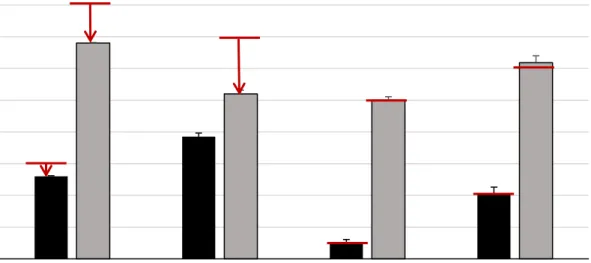
consumed feed by individual cows in the AMS software. Further, achieving the targeted AMS allocation has been demonstrated to be challenging. Bach et al. (2007) targeted 3.0 or 8.0 kg/d of concentrate in the AMS; however, they only achieved 2.6 and 6.8 kg, respectively. Similarly, Halachmi et al. (2005) targeted treatments of 1.2 kg of concentrate per milking event or 7.0 kg/d with the later treatment only achieving 5.2 kg/d (Figure 2.2). To closely achieve the targeted quantities of concentrate in the AMS, a greater amount of AMS concentrate relative to the target should be offered (Hare et al., 2018; Menajovsky et al., 2018). Alternatively, the actual intake can be used within diet re-formulation to ensure that the diet formulated, and diet consumed are similar. It is also important to regularly calibrate the AMS feeder to ensure accurate concentrate quantities are being provided (GEA Farm Technologies, 2014; Brouk, 2017).
Increasing concentrate allocation in the AMS likely will not stimulate DMI. Studies that have monitored PMR and AMS intake consistently report a substitution of PMR for AMS concentrate intake. Bach et al. (2007), Hare et al. (2018), and Menajovsky et al. (2018) reported that for every 1 kg increase in AMS concentrate DMI, PMR DMI was reduced by 1.14, 1.58, and 0.84 kg, respectively. Thus, increasing AMS concentrate did not affect total DMI (Table 2.3). This substitution effect is important to recognize; however, further investigation is necessary to fully understand the direction of the affect because of inconsistencies across studies. The substitution effect has implications on the ability to use feed tables. Feed tables allow for an automatic adjustment of the concentrate offered based on milk production. The use of feed tables to supply AMS concentrate should be used with caution until the substitution effect has been
comprehensively evaluated and is predictable. The limitation with feed tables is because an overall increase in total DMI is not obtained with increasing the quantity of concentrate in the AMS (Bach et al., 2007; Hare et al., 2018; Menajovsky et al., 2018) and thus feed tables may not be sufficiently meeting individual cow nutrient requirements: the primary goal of this feeding strategy. Alternatively, a PMR that closer represents a TMR and utilizes concentrate in the AMS to entice cows to voluntarily enter the AMS may be an appropriate strategy at this time (Salfer and Endres, 2018). In addition, maximum meal sizes/visit with AMS feeders are usually set between 2.0 (GEA Farm Technologies, 2014) and 2.5 (DeLaval Inc., 2018). Thus, cows visiting the AMS 3 times per day are unlikely to be able to consume greater than a feed table formulated value of 8.0 kg/d (Table 2.2).
20
Figure 1.2. Targeted and actual concentrate delivery for cows in AMS feeding systems and their subsequent milk yield. The black bars indicate low AMS concentrate provision in each study and the grey bars indicate the high AMS concentrate provision. The red bar with an arrow indicates the target quantity for the AMS concentrate. Figure adapted from Penner et al. (2017). 0 1 2 3 4 5 6 7 8
Bach et al., 2007 Halachmi et al., 2005
Hare et al., 2018 Menajovsky et al., 2018 A MS C onc entr ate , kg /d 0 5 10 15 20 25 30 35 40 45
Bach et al., 2007 Halachmi et al., 2005
Hare et al., 2018 Menajovsky et al., 2018 Mil k Y ield, kg /d
21
Table 2.3. Substitution effect for previous AMS studies that also considered PMR intake. Substitution effect is defined as the kg of PMR intake reduction in response to a 1 kg (DM basis) increase in AMS concentrate intake.
Study Treatment design Substitution Effect (kg)
Bach et al., 2007 Equal energy densities 1.14
Hare et al., 2018 Equal energy densities 1.58
Menajovsky et al., 2018 High Forage PMR Low Forage PMR
0.78 0.89
22
When considering the available quantity of concentrate in the AMS at a specific visit, many things should be considered. Although the maximum meal size per visit and the target
concentrate allocation are entered into the computer system, the actual quantity of concentrate delivered per visit is dependent on the inter-milking interval and total AMS visits per day for each cow (DeLaval Inc., 2018). In situations where cows attend the AMS less frequently than their previous 7-d average, there is “carry-over” concentrate from the previous day that is available to be allocated the following day in addition to the targeted amount (DeLaval Inc., 2018). Similarly, when cows attend the AMS more frequently than their 7-d average, less concentrate may be available the following day. Thus, greater or lower daily allocations of concentrate relative to the targeted quantity may be provided with infrequent milking intervals and variable milking frequency among days. In addition, infrequent inter-milking intervals within a day may cause different quantities of milk to be stored within the udder (Friggens and Rasmussen, 2001; Larsen et al., 2012) and provide different quantities of concentrate in the AMS across milking events. This “carry-over” effect and the dispense rate of the concentrate into the AMS feeder should be considered when developing feeding programs and therefore, maintaining frequent AMS visits should be targeted to limit the likelihood of over or under achieving the AMS concentrate target.
Feeding consistency of both the PMR and AMS pellet and understanding the goals of the farm are important to optimize utilization with the AMS (Salfer and Endres, 2018). Having consistent DM, mixing, delivery (time and number of deliveries), frequent and regular push-ups, and a palatable PMR are important to stimulate traffic to the AMS. Palatability and consistency of the AMS concentrate are also important factors for regulating AMS traffic (Salfer and Endres, 2018). Poor PMR composition, including poor forage quality and large variation in particle size may reduce palatability and PMR intake. Some suggest that when PMR palatability is poor, it may drive cows to visit the AMS more frequently, increasing their consumption of concentrate in the AMS, however, sorting of the PMR may be increased (Salfer and Endres, 2018). An
increased AMS concentrate intake and PMR sorting may significantly decrease rumination time and increase susceptibility for sub-acute ruminal acidosis (DeVries et al., 2008). Thus, proper management, including storage (Borreani et al., 2018; Miller-Cushon and DeVries, 2017), chop length at harvest (Kononoff and Heirichs, 2003), and DM (Endres and Salfer, 2016) of feeds are important to maintain intake of PMR.
23
2.4. Transition Cow Feeding with AMS
Generally, the transition period for dairy cow refers to a 6-wk interval extending from 3-wk prior to calving until 3 wk post calving. Cows within the transition period experience significant physiological change as they progress from a pregnant and non-lactating state to a non-pregnant lactating state (Drackley, 1999). The transition period requires cows to adapt the new
physiological state, but also to adapt to a new diet, develop a new social hierarchy, and be motivated to voluntarily enter the individual milking stall. In most cases, AMS require cows to perform relatively unnatural behaviours because cows are gregarious animals and often prefer to synchronize their behaviours with smaller groups within a herd (Benham, 1982). Conventional parlours allow for social milking: groups of cows are milked side-by-side. Thus, adjusting a herd from a conventional milking system or individual cows going through physiological changes surrounding the onset of lactation, require special attention to encourage voluntary visits to the AMS.
Various recommendations suggest providing concentrate to fresh cows in the AMS at a rate of 2.0 kg/d, while steadily increasing this quantity daily (Rodenburg, 2011; DeLaval Inc., 2018; Lely, n.d.) or even providing between 1.92 to 3.18 kg/d and increasing by 0.18 to 0.45 kg/d for the first 28 d (Salfer and Endres, 2018). Evidently, AMS feeding management of fresh cows is relatively unexplored and requires substantially more research to derive proper
recommendations. Despite this, it is known that fresh cows are at the greatest risk of exhibiting metabolic diseases (Drackley et al., 1999) and ruminal acidosis (Penner et al., 2007; Penner et al., 2009). Rapidly transitioning fresh dairy cows to a greater diet fermentability does not enhance DMI or milk production (Dieho et al., 2016).
Precision feeding strategies with AMS parallel component feeding strategies that have been previously reported to increase sorting behaviour often reducing the F:C of the total diet and allowing for greater risk of digestive upset in early lactation (Coppock, 1977). A plausible hypothesis for feeding fresh cows (identified as cows 0 to 28 DIM; Salfer and Endres, 2018), may consist of feeding lower quantities of concentrate in the AMS, when compared to mid- lactation cows (Kokkonen et al., 2004). Reducing the quantity of concentrate supplied to fresh cows may lower the likelihood of diet-related metabolic diseases. After the initial 28 d post-partum (or in some recommendations 7 d; André et al., 2010), concentrate in the AMS may
24
increase slowly at a predetermined rate. Early lactation cows (29 to 100 DIM) are often lead fed (Salfer and Endres, 2018). This means that more concentrate is provided in the AMS than is necessary, meeting requirements for greater milk production than current production quantities (Salfer and Endres, 2018). This concept is thought to encourage higher production assuming that nutrient supply helps drive milk production.
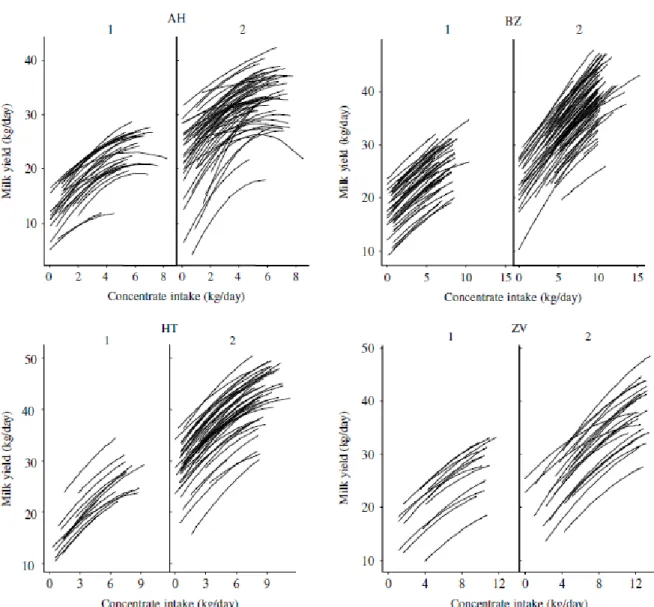
André et al. (2010) attempted to predict individual milk yield variation in response to concentrate intake in transition cows up to 3 wk post-partum. This study analysed data from 4 research herds with AMS, 2 of which were conventionally managed and 1 was an organic farm, and 1 research herd that fed concentrate in a conventional parlour milking system. A total of 5,629 records from 299 cows, comprised of 102 primiparous cows and 197 multiparous cows were used in this study. At calving, 1 to 3 kg/d of concentrate was provided. On 2 farms, concentrates slowly increased linearly over a 2 to 3-week period, until it reached a maximum, based on parity, while the other 2 farms increased concentrate linearly until d 10, where
concentrate supply plateaued. Milk yield continued to increase, despite the concentrate allocation remaining constant (Figure 2.3). A model was developed to predict individual milk yield
variation in response to concentrate intake. The model classified early lactation as a non-linear dynamic system, where daily milk yield and body weight change were response variables and concentrate intake was a controllable variable, linearly increasing from parturition over time. The predictive model considered the increase in milk yield over time following parturition with the fixed effect of parity and random effects of the individual variation in milk yield and the response to concentrate. Figure 2.4 represents the fitted individual milk yield response to concentrate intake by farm and parity within each farm. Model-based predictions for milk yield to concentrate intake in early lactation are not accurate as several parameters and interactions can influence the prediction, including feed utilization, mobilization rate and ensuring sufficient data is available can be challenging (André et al., 2010; Tess and Greer, 1990). This study suggests that an individual dynamic approach is only useful if there is sufficient variation between individual response variables. Although high levels of concentrate are not normally
recommended during the transition period to prevent metabolic and digestive upset (Owens et al., 1998; De Brabander et al., 1999), this study suggest that high concentrate allocations may be applicable with individual and dynamic approach, if milk yield continues to respond,
25
Figure 2.2. Averaged concentrate intake vs. days from calving (first row), averaged daily milk yield vs. days from calving (second row). Averaged milk yield vs. averaged concentrate intake at different days after calving (third row). Upper lines and symbols (o) are multiparous cows and lower lines and symbols (x) are primiparous cows. Farm locations are AH (Aver Heino), BZ (Bosma Zathe), HT (High-tech), and ZV (Zegveld). Figure sourced from André et al. (2010) with permission from publisher.
26
Figure 2.3. Fitted individual milk yield response curves vs. concentrate intake/farm. Different lines represent different cows (1=primiparous cows and 2=multiparous cows). Farm locations are AH (Aver Heino), BZ (Bosma Zathe), HT (High-tech), and ZV (Zegveld). Figure sourced from André et al. (2010) with permission from publisher.
27
with no digestive upset. Despite this consideration, caution should be used for previous outlined explanations regarding the unpredictable substitution affect and intake variabilities with high concentrate allocations.
Heifer management and training on the AMS is also important. Generally, heifers are trained on the AMS post-calving. This process includes trimming hair on the udders and tail, manually bringing cows to the AMS, proper feeder and rear plate placement determination, and calibrating the AMS to locate each individual teat for future AMS milking events for that cow. Usually it takes a few days of fetching heifers to the AMS for them to adapt to attending the AMS on their own. Siewart et al. (2017) analyzed data from 32 American AMS dairy farms and observed that primiparous cows voluntarily attend the AMS less frequently (Figure 2.5; Salfer and Endres, 2018) and thus regular fetching is more important. Primiparous cows should be fetched regularly to improve consistency and prevent early dry off or lower their realized peak milk production and lactation persistency (Salfer and Endres, 2018). Bach et al. (2007)
demonstrated in multiparous cows that when more concentrate was provided in the AMS, fetching was reduced only for cows with low voluntary motivation to the AMS. This study concluded that cows frequently fetched cows are often being fetched for an alternate reason (lameness or illness) rather than lack of motivation to enter the AMS to be milked (Bach et al., 2007). Some recommendations for feeding management with AMS suggest training heifers on the AMS 2 to 3 weeks prior to their first lactation to reduce the number of stressors post-calving (Salfer and Endres, 2018; GEA Farm Technologies, 2014). Allowing heifers to regularly (some suggest 2 to 3 times daily) enter the AMS prior to calving and get used to the location, sounds, surroundings of the machine, and reducing the items to be learned post-calving may improve the transition (Salfer and Endres, 2018). Moreover, it is common perception that primiparous cows are over-dominated or intimidated by multiparous cows (Wierenga, 1990). Primiparous cows may also visit the AMS less frequently and consume less PMR at the feed bunk (NRC, 2001). Thus, it is recommended for herds using AMS, to house primiparous cows separately from multiparous cows (Grant and Albright, 1995). Bach et al. (2006), reported that primiparous cows housed with only other primiparous cows visited the AMS more frequently than when compared to primiparous cows housed with a group containing 70% multiparous cows and 30%
28
Figure 2.5. Visits of primiparous and multiparous cows to the AMS from 32 American AMS farms. Endres, University of Minnesota, personal communication (2018).
0 0.5 1 1.5 2 2.5 3 3.5 1 2 3 4 5 6 7 8 9 10 11 12 13 14 Mil king s/cow /d Month of Lactation Primiparous Multiparous Week of Lactation
29
primiparous cows. Although the results of this study observed greater AMS visits in primiparous cows housed with only other primiparous cows, there was no differences in milk production between cows in the grouping strategies and primiparous cows housed with only other primiparous cows had one more PMR meal per day than primiparous cows housed with
multiparous cows. This study suggests that primiparous cows in a free-flow traffic design may be not be as intimidated by the multiparous cows as once initially believed.
2.5. Feeding High Producing Cows Milked with an AMS
Generally, cows reach peak milk yield between 40 and 70 d post-p