2016
Development of Technological Pedagogical
Content Knowledge (TPACK) in PreK-6 teacher
preparation programs
Wei Wang Iowa State University
Follow this and additional works at:https://lib.dr.iastate.edu/etd
Part of theInstructional Media Design Commons, and theTeacher Education and Professional Development Commons
This Dissertation is brought to you for free and open access by the Iowa State University Capstones, Theses and Dissertations at Iowa State University Digital Repository. It has been accepted for inclusion in Graduate Theses and Dissertations by an authorized administrator of Iowa State University Digital Repository. For more information, please [email protected].
Recommended Citation
Wang, Wei, "Development of Technological Pedagogical Content Knowledge (TPACK) in PreK-6 teacher preparation programs" (2016).Graduate Theses and Dissertations. 15833.
by Wei Wang
A dissertation submitted to the graduate faculty in partial fulfillment of the requirements for the degree of
DOCTOR OF PHILOSOPHY
Co-Major: Education; Human Computer Interaction Program of Study Committee:
Denise A. Schmidt-Crawford, Co-Major Professor Ann D. Thompson, Co-Major Professor
Ana-Paula Correia Amy Hutchison Volker Heigelheimer
Iowa State University Ames, Iowa
2016
TABLE OF CONTENTS
Page
CHAPTER 1 GENERAL INTRODUCTION ... 1
CHAPTER 2 PRESERVICE TEACHERS’ TPACK DEVELOPMENT: A REVIEW OF TPACK LITERATURE ... 12
Introduction ... 13
What is TPACK? ... 14
Historical Development of the TPACK Framework ... 17
Background: Literature Reviews on TPACK ... 19
Methodology ... 22
Results ... 25
Discussion ... 47
Conclusion ... 51
References ... 52
CHAPTER 3 EXAMINATION OF PRESERVICE TEACHERS’ DEVELOPMENT OF TECHNOLOGICAL PEDAGOGICAL CONTENT KNOWLEDGE (TPACK) AFTER COMPLETION OF CONTENT METHODOLOGY COURSES ... 61 Introduction ... 62 Literature Review ... 65 Methodology ... 70 Findings ... 78 Discussion ... 86
Future Implication and Conclusion ... 89
References ... 90
CHAPTER 4 A PREK-6 PRESERVICE TEACHER’S JOURNEY TO DEVELOP TPACK: A CASE STUDY ... 97
Introduction ... 98 Literature Review ... 99 Methodology ... 103 Findings ... 115 Discussion ... 127 Conclusion ... 131 References ... 133
CHAPTER 5 GENERAL SUMMARY ... 140
Summary ... 140
Recommendations for Future Research ... 143
References ... 144
APPENDIX A. IRB MODIFICATION LETTERS AND ORIGINAL APPROVAL LETTER ... 148
APPENDIX B. SURVEY OF PRESERIVCE TEACHERS’KNOWLEDGE OF TEACHING AND TECHNOLOGY ... 151
APPENDIX C. STUDENT FOCUS GROUP INTERVIEW PROTOCOL ... 165
APPENDIX D. INSTRUCTOR INTERVIEW PROTOCOL ... 167
APPENDIX E. TPACK-IN-ACTION OBSERVATION INSTRUMENT ... 169
APPENDIX F. PRESERVICE TEACHER INTERVIEW PROTOCOL ... 175
APPENDIX G. CONSENT FORM FOR PARTICIPANT ... 177
APPENDIX H. TPACK CODEBOOK SAMPLE ... 183
CHAPTER I. GENERAL INTRODUCTION
"Teaching" has long been identified as a complicated matter (Mishra, Spiro, & Feltovich, 1996; Spiro & Jehng, 1990). Numerous measures and studies have investigated the
characteristics of good teaching (Kember et al., 2001; Lee et al., 2015; Ramsden, 1991). Discussions about what a teacher education program can do to successfully prepare teachers to teach in classrooms has been an ongoing topic. The early history of teacher education was primarily focused on teachers’ knowledge of subject matter content (Shulman, 1986). However, the focus later shifted to the effectiveness of general pedagogical methods independent of subject matter content (Cochran, Deruiter, & King, 1993). It was not until the late 80’s when people started to realize the importance of both teachers’ pedagogical knowledge and teachers’ subject matter (content) knowledge and that both were necessary components to good teaching and student understanding (Doyle, 1986; Feiman-Nemser & Buchmann, 1987).
With this recognition of a teacher’s pedagogical knowledge and subject matter (content) knowledge, Shulman (1986, 1987) suggested the concept of pedagogical content knowledge. At the time, this represented a new perspective that contributed to our understanding of teaching and learning. Based on Shulman’s (1986, 1987) definition of pedagogical content knowledge, this knowledge base represents how teachers relate their pedagogical knowledge to their content knowledge for teaching specific students in a school context. Grossman (1990) also defines the knowledge bases for teaching and their interrelationships as the following: “four general areas of teacher knowledge….as the cornerstones of the emerging work on professional knowledge for teaching: general pedagogical knowledge, subject matter knowledge, pedagogical content knowledge, and knowledge of context” (p. 5). Out of the knowledge bases defined, pedagogical
content knowledge (PCK) was anticipated to have the most impact on teachers’ actions in classroom settings. While we know that effective teaching depends on flexible access to well-integrated knowledge from different domains, knowledge of technology has yet emerged as another knowledge domain that requires further attention (Koehler & Mishra, 2009).
Problem Statement
As the result of recognizing the importance of further developing technology knowledge in teachers, teacher preparation programs started to design and teach curriculum with the focus on preparing teachers to use technology in classrooms. Traditionally, most teacher preparation programs offer a stand-alone educational technology course as a part of the preservice teachers’ professional program (Kleiner, Thomas, Lewis, & Greene, 2007; Lambert & Gong, 2010) to fulfill any stated technology requirements. While these educational technology courses typically help increase preservice teachers’ confidence in using technology, they sometimes fall short in promoting the meaningful use and integration of technology integration into preservice teachers’ teaching practices (Wachira & Keengwe, 2011).
In order to address the concern of promoting meaningful technology integration within a teacher preparation program, many researchers agreed that technology training for preservice teachers should be an integrated process that occurs throughout the entire teacher education program (Angeli & Valanides, 2009; Hughes, 2013; Tondeur et al., 2012). To better facilitate the integration process, Mishra and Koehler (2006) developed a conceptual framework called
Technological Pedagogical Content Knowledge (TPACK). This framework emphasizes how technology knowledge, pedagogical knowledge, and content knowledge interact to enhance discipline specific technology learning experiences. Ever since the establishment of TPACK,
numerous researchers have developed related curriculum, texts, professional development modules, and advancements that complement the framework (Archambault, 2016). Recently, research in this area has shifted its focus to using various measurement methodologies to determine teachers’ development of TPACK.
Based on research methodology categories proposed by Gall, Gall, and Borg (2007), five types of TPACK measurements were identified. These measurements include 1) self-report measures (e.g., Archambault & Crippen, 2009; Lee & Tsai, 2010; Schmidt et al., 2009) that focus on survey development, 2) performance assessment rubrics (e.g., Angeli & Valanides, 2009; Harris, Grandgenett, & Hofer, 2010) that focus on analyzing teachers’ lesson plans; 3) open-ended questionnaires (e.g. Robertshaw & Gillam, 2010; So & Kim, 2009) that gather teachers’ written responses to pre-developed questions included in a questionnaire or survey; 4) interviews (e.g., Harris et al., 2012; Mishra, Peruski, & Koehler, 2007; Ozgun-Koca, 2009) that focus on collecting information using a list of various questions; and observations (Hofer, Grandgenett, Harris, & Swan, 2011; Koehler, Mishra, & Yahya, 2007) that investigate teachers’ teaching performances during classroom settings.
While more and more researchers developed instruments to measure teachers’ TPACK development, most studies were designed to investigate a single scenario or course. Only limited studies (Bate, Day, & Macnish, 2013; Hofer & Grandgenett, 2012; Schmidt et al., 2009)
addressed the intention of extending the research conducted into a longitudinal investigation in which teachers’ TPACK development could be examined while completing their preparation program. Chai, Koh and Tsai (2010) also stressed the need and the importance of research to further investigate the development of TPACK using longitudinal data over time. Therefore, it seems worthwhile to explore the potential of collecting data over a longer period of time to
specifically examine how preservice teachers are developing TPACK during their teacher preparation program.
Organization of the Dissertation
This dissertation investigates whether preservice teachers majoring in elementary education or early childhood education, in the context of a teacher preparation program at a higher education institution, develop technological pedagogical content knowledge (TPACK) with the goal of having the capacity to successfully integrate technology while planning
instruction and teaching in PreK-6 classrooms. The dissertation is presented in a non-traditional format including an introduction, three manuscripts prepared for journal publication, and a concluding chapter.
Chapter 1: General Introduction
This first chapter introduces the research topic, presents the statement of the problem investigated, outlines the main purpose of the dissertation and describes the organization of the dissertation chapters.
Chapter 2: Preservice Teachers’ TPACK Development: A Review of TPACK Literature This article represents the literature review section of a traditional dissertation. It includes a review and critique of 88 articles between 2006 to 2015 with a focus specifically on research related to preservice teachers’ development of TPACK. Building upon Shulman’s (1986) pedagogical content knowledge and other prior research studies, Mishra and Koehler (2006) explicitly designed a conceptual framework called TPACK that includes technology as a third domain of knowledge, along with content and pedagogy. Based on the analysis of the literature,
this article examines the development of the TPACK framework with a specific focus on assessing preservice teachers’ TPACK development via five different research methods (self-report, open-ended questionnaire, performance assessment, interview, and observation). Two themes were found from the analysis results revealing the importance of technology integration modeling and the challenges of observing integrated knowledge domains (TCK, TPK).
Chapter 3: Examination of Preservice Teachers’ Development of Technological
Pedagogical Content Knowledge (TPACK) After Completion of Content Methodology Courses
This article examines preK-6 preservice teachers’ development of technological pedagogical content knowledge (TPACK) through triangulated assessments (i.e., survey, interviews and open-ended questions) after completion of a series of required content
methodology courses (required in literacy, math, social studies, and science). Data were collected at multiple times during the teacher preparation program: 1) prior to taking the required
instructional technology class, 2) immediately after completing the required instructional technology class, and 3) after completing the required content methodology courses. Findings suggest that the methodology courses play a critical role in developing preservice teachers’ knowledge in content and pedagogy. Yet, lack of support for technology integration in actual classrooms may result in preservice teachers’ decrease of technology knowledge (TK), technology content knowledge (TCK) and TPACK domains.
Chapter 4: A PreK-6 Preservice Teacher’s Journey to TPACK: A Case Study
This case study investigates how prepared a preservice teacher was to use technology within literacy content instruction during a practicum experience. Data were collected in Spring
semester 2015 from one preservice teacher including survey responses from three data collection points, practicum classroom observations, and a follow-up interview. Findings revealed the preservice teacher was able to successfully integrate technology in her teaching during her practicum experience that demonstrated characteristics from all seven TPACK domains. However, it was possible that modeling from course instructors or supervising teachers and course content consistency might play an important role in preservice teachers’ TPACK development.
Chapter 5: Synthesis and Recommendations
The final chapter of this dissertation summarizes the findings of Chapter 2, 3, and 4 and presents recommendations for research and practical implications in the field of preservice teachers’ TPACK development. Potential limitations are also addressed in applying the alternative views proposed in the articles.
References
Angeli, C., & Valanides, N. (2009). Epistemological and methodological issues for the conceptualization, development, and assessment of ICT–TPCK: Advances in
technological pedagogical content knowledge (TPCK). Computers & Education, 52(1), 154-168.
Archambault, L., & Crippen, K. (2009). K–12 distance educators at work: Who’s teaching online across the United States. Journal of Research on Technology in Education, 41(4), 363-391.
Archambault, L. (2016). Exploring the Use of Qualitative Methods to Examine TPACK. Handbook of Technological Pedagogical Content Knowledge (TPACK) for Educators, 65.
Bate, F. G., Day, L., & Macnish, J. (2013). Conceptualising Changes to Pre-Service Teachers' Knowledge of How to Best Facilitate Learning in Mathematics: A TPACK Inspired Initiative. Australian Journal of Teacher Education, 38(5), n5.
Chai, C. S., Koh, J. H. L., & Tsai, C. C. (2010). Facilitating Preservice Teachers' Development of Technological, Pedagogical, and Content Knowledge (TPACK). Educational
Technology & Society, 13(4), 63-73.
Cochran, K. F., DeRuiter, J. A., & King, R. A. (1993). Pedagogical Content Knowing: An Integrative Model for Teacher Preparation. Journal of Teacher Education, 44(4), 263-272.
Doyle, W. (1986). Classroom organisation and management. In M. C. Wittrock (Ed.), Handbook of research on teaching (pp. 392–431). New York: Macmillan.
Feiman-Nemser, S., & Buchmann, M. (1987). When is student teaching teacher education? Teaching and teacher education, 3(4), 255-273.
Gall, M., Gall, J. & Borg, W. (2007). Educational research: An introduction (8th ed.). New Jersey: Allyn & Bacon.
Grossman, P. L. (1990). The making of a teacher: Teacher knowledge and teacher education. Teachers College Press, Teachers College, Columbia University.
Harris, J., Grandgenett, N., & Hofer, M. (2010, March). Testing a TPACK-based technology integration assessment rubric. In Society for Information Technology & Teacher Education International Conference (Vol. 2010, No. 1, pp. 3833-3840).
Hofer, M., Grandgenett, N., Harris, J., & Swan, K. (2011). Testing a TPACK-based technology integration observation instrument. In C. D. Maddux (Ed.), Research highlights in technology and teacher education 2011 (pp. 39-46). Chesapeake, VA: Society for Information Technology & Teacher Education (SITE).
Harris, J., Grandgenett, N., & Hofer, M. (2012). Testing an instrument using structured interviews to assess experienced teachers' TPACK. In C. D. Maddux, D. Gibson, & R. Rose (Eds.), Research highlights in technology and teacher education 2012 (pp. in press). Chesapeake, VA: Society for Information Technology & Teacher Education (SITE). Hofer, M., & Grandgenett, N. (2012). TPACK development in teacher education: A longitudinal
study of preservice teachers in a secondary MA Ed. program. Journal of Research on Technology in Education, 45(1), 83-106.
Hughes, J. E. (2013). Descriptive indicators of future teachers' technology integration in the PK-12 classroom: Trends from a laptop-infused teacher education program. Journal of Educational Computing Research, 48(4), 491-516.
Koehler, M. J.,Kleiner B., Thomas N., Lewis L., Greene B. (2007). Educational technology in teacher education programs for initial licensure: Statistical analysis report. Washington, DC: U.S. Department of Education, National Center for Education Statistics.
Koehler, M., Mishra, P., & Yahya, K. (2007). Tracing the development of teacher knowledge in a design seminar: Integrating content, pedagogy and technology. Computers &
Education, 49(3), 740-762.
Koehler, M., & Mishra, P. (2009). What is technological pedagogical content knowledge (TPACK)?. Contemporary issues in technology and teacher education, 9(1), 60-70. Lambert, J., & Gong, Y. (2010). 21st century paradigms for pre-service teacher technology
preparation. Computers in the Schools, 27(1), 54-70.
Lee, M. H., & Tsai, C. C. (2010). Exploring teachers’ perceived self efficacy and technological pedagogical content knowledge with respect to educational use of the world wide web. Instructional Science, 38, 1–21.
Mishra, P., & Koehler, M. (2006). Technological pedagogical content knowledge: A framework for teacher knowledge. The Teachers College Record, 108(6), 1017-1054.
Mishra, P., Peruski, L., & Koehler, M. (2007, March). Developing technological pedagogical content knowledge (TPCK) through teaching online. In Society for Information
Technology & Teacher Education International Conference (Vol. 2007, No. 1, pp. 2208-2213).
Mishra, P., Spiro, R. J., & Feltovich, P. J. (1996). Technology, representation, and cognition: The prefiguring of knowledge in cognitive flexibility hypertexts. Advances in discourse processes, 58, 287-305.
Ozgun-Koca, S. A. (2009). The views of preservice teachers about the strengths and limitations of the use of graphing calculators in mathematics instruction. Journal of Technology and Teacher Education, 17(2), 203-227.
Ramsden, P. (1991). A performance indicator of teaching quality in higher education: The Course Experience Questionnaire. Studies in higher education, 16(2), 129-150. Robertshaw, M. B., & Gillam, R. B. (2010, March). Examining the validity of the TPACK
framework from the ground up: Viewing technology integration through teachers’ eyes. In Society for Information Technology & Teacher Education International Conference (Vol. 2010, No. 1, pp. 3926-3931).
Schmidt, D. A., Baran, E., Thompson, A. D., Mishra, P., Koehler, M. J., & Shin, T. S. (2009). Technological pedagogical content knowledge (TPACK) the development and validation of an assessment instrument for preservice teachers. Journal of Research on Technology in Education, 42(2), 123-149.
Shulman, L. S. (1986). Those who understand: Knowledge growth in teaching. Educational researcher, 15(2), 4-14.
Shulman, L. (1987). Knowledge and teaching: Foundations of the new reform. Harvard educational review, 57(1), 1-23.
So, H. J., & Kim, B. (2009). Learning about problem based learning: student teachers integrating technology, pedagogy and content knowledge. Australasian Journal of Educational Technology, 25(1), 101–116.
Spiro, R. J., & Jehng, J. C. (1990). Cognitive flexibility and hypertext: Theory and technology for the nonlinear and multidimensional traversal of complex subject matter. Cognition, education, and multimedia: Exploring ideas in high technology, 205.
Tondeur, J., van Braak, J., Sang, G., Voogt, J., Fisser, P., & Ottenbreit-Leftwich, A. (2012). Preparing pre-service teachers to integrate technology in education: A synthesis of qualitative evidence. Computers & Education, 59(1), 134-144.
Wachira, P., & Keengwe, J. (2011). Technology integration barriers: Urban school mathematics teachers’ perspectives. Journal of Science Education and Technology, 20(1), 17-25.
CHAPTER 2. PRESERVICE TEACHERS’ TPACK DEVELOPMENT: A REVIEW OF TPACK LITERATURE
A paper to be submitted to Journal of Digital Learning in Teacher Education Wei Wang
ABSTRACT
Building upon Shulman’s (1986) pedagogical content knowledge and other prior research studies, Mishra and Koehler (2006) explicitly designed a framework called TPACK that includes technology as a third domain of knowledge, along with content and pedagogy. This literature review examines the development of the TPACK framework with a specific focus on assessing preservice teachers’ TPACK development via five different research methods (self-report, open-ended questionnaire, performance assessment, interview, and observation). A discussion of common themes along with limitations and future directions is provided.
Introduction
While researchers state that technology has become one of the essential components of teaching (Koehler & Mishra, 2009), there are still concerns that teachers do not have enough knowledge about and opportunities to use technology in their classrooms (U.S. Department of Education, 2010). Although teacher education programs recognize the importance of technology integration, these same programs have struggled to find effective program-level and
instructional-level strategies that adequately prepare preservice teachers to integrate technology in their future classrooms (Goktas, Yildirim, & Yildirim, 2008). Typically, teacher preparation programs have required preservice teachers to enroll in one course that focuses on learning about technology (Beck & Wynn, 1998; Gronseth et al., 2010), while others have attempted to infuse technology into other education courses such as educational psychology or teaching methods (Wetzel, Foulger, Buss & Lindsey, 2014; Willis & Mehlinger, 1996). Thus, preservice teachers are expected to naturally transfer the technology knowledge and skills that they acquire from courses in their preparation programs to their future classrooms (Brush et al., 2003). However, merely having preservice teachers complete these courses may not be enough for the knowledge transfer and application of technology integration into their future classrooms to occur. Evidence suggests that preservice teachers still do not feel adequately prepared to effectively use
technology in their classrooms (Kay, 2006; Polly et al., 2010).
These findings suggest that: a) teacher preparation institutions still need to address how preservice teachers are being prepared to use and integrate technology into their programs; and b) teacher preparation programs must work to further develop and incorporate methods that better infuse technology throughout the entire teacher education program and across content areas. In order to address these needs, Tondeur et al. (2011) suggest that rather than focusing on
how to use technology, preservice teachers must learn about how technology can be used for teaching and learning. Niess (2005) recommends that teacher preparation programs develop a multidimensional approach, which concentrates on preservice teachers’ development in teaching a particular subject area (mathematics/science) with technology each semester. More and more, educators agree that technology can no longer be treated as a separate body of knowledge that is isolated from the pedagogical and content knowledge that teachers require. To address this issue, Mishra and Koehler (2006) designed a conceptual framework, Technological Pedagogical
Content Knowledge (TPACK) that provides a common language in talking about teaching, learning, and technology. The framework emphasizes the connections, interactions, affordances, and constraints between and among content, pedagogy, and technology (Mishra & Koehler, 2006). After the conceptualization of TPACK, researchers in the field have tried to incorporate the model in teacher education program and further developed methods to measure the degree of TPACK knowledge development.
This review of literature is organized around the methods and results found using five specific research methodologies most frequently used to measure preservice teachers’ TPACK development. In the following sections four major topics are addressed. First, a brief introduction to TPACK is provided to assist readers in reviewing this conceptual framework related to teacher knowledge and context. Next, the historical development of TPACK is shared along with a synthesis of prior literature reviews around TPACK. Finally, a focused review of literature around preservice teachers’ development of TPACK is presented.
What is TPACK?
Technological Pedagogical Content Knowledge (TPACK) was introduced to the
is required for technology integration (Mishra & Koehler, 2006). TPACK evolved from Shulman’s (1986) theory of pedagogical content knowledge (PCK) and focuses on the need for teachers to skillfully demonstrate their ability to integrate technology within the constructs of content and pedagogical domains. TPACK can be perceived as a teacher’s intuitive
understanding for teaching subject-specific content with appropriate pedagogical methods and selected technologies. It is well understood that teaching is a complex cognitive activity that requires teachers to draw upon several types of knowledge (Koehler & Mishra, 2009). TPACK serves as a useful conceptual framework for thinking, analyzing, and evaluating what teachers must know to integrate technology into teaching, but ultimately it must be understood as a framework for ways in which teachers might best develop this integrated knowledge (Baran et al., 2011). To date, researchers have stressed the importance of teachers having a solid
conceptual understanding of the interactions that occurs among technology, pedagogy, and content when planning instruction (Harris & Hofer, 2011; Koehler & Mishra, 2005). Some even further elaborate on how this understanding can lead to more effective teaching in classrooms (Hughes, 2005; Neiss, 2005; Zhao, 2003). This framework provides a critical perspective with which to view technology integration in classroom settings. Highlighting the integrated knowledge domains (such as TCK, TPK, PCK and TPACK) provides a model that reflects the complexity of the multifaceted lens of teacher knowledge that is needed to understand and define this framework.
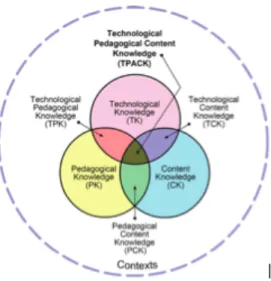
The TPACK framework consists of seven components (see Figure 1). Definitions for each component follow:
● Technology knowledge (TK): Knowledge about different technologies, including both low-tech and high-tech technologies.
● Content knowledge (CK): Knowledge about the actual subject matter to be taught. ● Pedagogical knowledge (PK): Methods and processes of teaching a subject matter. ● Pedagogical content knowledge (PCK): The content knowledge that deals with the
teaching process (Shulman, 1986).
● Technological content knowledge (TCK): Knowledge of how technology can create new representations for specific content.
● Technological pedagogical knowledge (TPK): Knowledge of how different technologies can be used in teaching, and to understand that using technology may affect how teachers teach.
● Technological pedagogical content knowledge (TPACK): Knowledge required by teachers when integrating technology into their teaching in any content subject area. (Schmidt et al., 2009b, p. 125).
Figure 1. The TPACK framework illustration is adopted from http://tpack.org. Reproduced by permission of the publisher, © 2012 by tpack.org.
Historical Development of the TPACK Framework
Historically, teacher education programs have focused on developing a teacher candidate’s content knowledge (Veal & MaKinster, 1999) and his/her general pedagogical development in classroom practices (Ball & McDiarmid, 1990). Shulman (1986) considered treating these two knowledge domains separately as a problem. He then used this as a turning point to propose the idea of pedagogical content knowledge. Shulman argued that having
knowledge of subject matter and general pedagogical strategies does not adequately characterize good teachers. He suggested that a teacher needs to master pedagogical content knowledge in order to become an expert teacher in a particular content field. However, this does not just stop here. When technology became more available, teachers and researchers started to realize the importance of technology use in the educational field and its impact on content and pedagogy respectively. Thus, teachers are expected to acquire the knowledge needed to be effective technology-using educators (CEO Forum, 1997).
There have been several attempts by researchers over the years to incorporate technology with Shulman’s ideas of pedagogical content knowledge (PCK). Pierson (1999) first proposed a theoretical model of technology integration based on her synthesis to include technological knowledge with Shulman’s framework called “technological-pedagogical-content knowledge” (p. 224). Based on this model, Pierson (2001) claimed that meaningful use of technology can only happen when a teacher views technology use as an integral part of the learning process.
Later, Margerum-Leys and Marx (2002) suggested that using computer technology may help increase students’ performance. However, they also pointed out that in order to skillfully utilize instructional technology in classrooms, teachers are required to have comprehensive and multi-directional knowledge. These researchers examined the construct of teacher knowledge of
educational technology through the lens of Shulman’s model of teachers’ knowledge- content knowledge, pedagogical knowledge, and pedagogical content knowledge. Using Shulman’s model to analyze the collected observational data, a new “knowledge set” was revealed and was coupled with the practice of educational technology. Margerum-Lyes and Marx referred to this new knowledge set as “Pedagogical Content Knowledge of Technology” (p. 446).
Niess (2005) stated in her study that it has been challenging to ask teacher candidates to teach from an integrated knowledge structure when teaching content-specific matters. Niess then emphasized the importance for preservice teachers (especially future science and mathematics teachers) to develop an overarching conception of their subject matter with respect to technology and what it means to teach with technology. Niess identified this specific teachers’ knowledge base as “a technology PCK (TPCK)” (p. 510) and described it as when technology becomes an integral component of teaching.
Building upon these prior research studies, Mishra and Koehler (2006) designed a framework that includes technology as a third domain of knowledge, along with content and pedagogy; further developing these ideas into a visual conceptual framework that depicts necessary teacher knowledge. Initially, the framework was recognized as TPCK, but was later renamed TPACK for ease of pronunciation and to capture the representation of the three knowledge domains as a “Total PACKage” instead of three isolated domains (Thompson & Mishra, 2008, p. 38). Again, this framework suggests that content, pedagogy, and technology knowledge are equally important in developing meaningful teaching in a particular context. In addition, the TPACK framework emphasizes the importance of preparing teachers to make sensible choices while using technology when teaching specific content to a target group of learners. It is worth noting that this framework does not require one single pedagogical
orientation; it embraces using a variety of pedagogical approaches of teaching and learning (Harris & Hofer, 2011).
Background: Literature Reviews on TPACK
Four specific literature reviews focused on TPACK research were conducted and
published between 2011 and 2013. The purpose of these literature reviews is to provide scholars in the field with an overview of how the framework has evolved, how can it be used in different contexts related to teachers’ development of TPACK and what are the research methods that are used in measuring TPACK (See Table 1).
One review specifically examined the development of the TPACK framework with a particular focus on assessing TPACK in the context of preservice teacher preparation programs (Abbitt, 2011). This review also provides an overview of the instruments and methods as well as the challenges and the implications of the uses of related TPACK-based evaluation.
Table 1.
Summaries of Past TPACK Literature Reviews
Authors Year of Studies Included
Number of
Studies Study Focus Category Used
(Abbitt, 2011) 2005-2010 91 · Highlighting emerging instruments and methods used
· Challenges, purposes, and potential uses of the tools for TPACK-based evaluation for preservice teacher preparation experiences
· Development of the TPACK Framework
· Challenges of Measuring TPACK
· Developing a Self-Reporting Measure
· Performance-Based TPACK Measures (Koehler, Shin
& Mishra, 2012)
2006-2010 66 · Identifying empirical studies that utilized TPACK assessments
· Investigating how each measure address the issues of validity and reliability
· Self-Report Measures
· Open-End Questionnaire
· Performance-Based Assessments
· Interviews
Table 1. (Continued)
(Voogt et al., 2013)
2005-2011 55 · Investigating the theoretical basis and the practical use of TPACK
· The Development of the Concept · Views on TK
· The Development of TPACK in Subject Domains
· TPACK and Teacher Beliefs
· Measuring (student-) teachers’ TPACK (Chai, Koh &
Tsai, 2013)
2003-2011 74 · Aiming to consolidate the collective emerging trends, findings, and issues generated in TPACK research
· Basic data analysis: · General publication trend · Site of studies
· Types of journals
· Findings from the research method analysis: o Theoretical papers
o Worked examples o Data driven research o Artifacts evaluation o Software development
o Case studies of students and teachers’ practices and perception
o Intervention studies o Document analysis o Survey studies o Instrument validation · Findings from content analysis:
o The pedagogy employed or advocated o The content knowledge
o The technology involved in TPACK research o The possible pathways to foster TPACK
Koehler et al. (2012) further investigated 141 instruments included in 66 studies that focused on measuring TPACK knowledge development. Five major approaches (i.e., self-report measures, open-ended questionnaires, performance assessments, interviews and observation) were identified to be the commonly used measurement methods used in TPACK focused studies. In this analysis, it is clear that open-ended questions and instrumentation were used less often in TPACK-related studies given the complexity of data coding and analysis needed. Another major finding discussed at length by Koehler and others were issues related to how validity and
reliability were addressed in this collection of studies.
Chai et al. (2013) agreed that various research methods employed in TPACK-focused research have generated positive results in enhancing teachers’ capability to integrate ICT (Information and Communications Technology) into instructional practice. These authors
suggest there are still many potential gaps where the TPACK framework might be used to guide deeper change in education. To be specific, they suggest more development and research of technological environments based on TPACK; more examination of students’ learning
conception with technology; and cross-fertilization of TPACK with other theoretical frameworks related to the study of technology integration.
Finally, Voogt et al. (2013) in their review of literature ascertain that is difficult to locate studies related to teachers’ TPACK development in subject area domains. This review found two major categories of research and scholarly focus underpinning the literature: 1) studies
discussing and refining the theoretical basis of TPACK, and 2) studies addressing practical issues of measurement and teachers’ professional development. This research group concluded that teacher knowledge about TPACK and beliefs about pedagogy and technology are intertwined.
Findings from past literature reviews focusing on TPACK provide clear evidence that the study of TPACK is extended across various contexts throughout education as researchers
examine the development of teacher knowledge in specific domains. Of the four prior literature studies mentioned, three investigated TPACK in a variety of contexts including higher education and K-12 environments, and with both inservice and preservice teachers. Although Abbitt’s review (2011) highlights the instruments and methods used for specifically studying preservice teachers’ TPACK development, additional methods and instruments have since been developed and used. Therefore, it is worth investigating the current state of preservice teachers’ TPACK development in the literature. In the following sections, this review of literature provides a systematic synthesis of how preservice teachers’ development of TPACK has been measured and reported in the literature. The methodology used to conduct this review of literature focusing on the studies involving preservice teachers’ TPACK development is shared next.
Methodology
This review of literature seeks to understand what the TPACK research community has done to investigate the development of preservice teachers’ TPACK while being enrolled in their teacher preparation programs. The research questions guiding this literature review are:
What Technological Pedagogical Content Knowledge (TPACK) do preservice teachers develop while completing their teacher preparation program?
What research methodologies have been used to measure preservice teachers’ development of TPACK?
In order to help identify articles that address these research questions, an explanation of the search procedures used to locate the articles and the inclusion criteria are described next.
Search Procedures
The search for articles was conducted in three scientific databases (i.e. Education Resources Information Center (ERIC), PsycINFO and Mendeley TPACK Research Group) during September 2015 and was limited to peer-reviewed articles published between (January) 2006 and (September) 2015. The keywords employed were “technological pedagogical content knowledge” and “TPACK or TPCK”. After cross-checking the reference lists in these data sources, a master reference list of articles addressing specifically preservice teachers’ development of TPACK was created. A total of 501 articles were identified after the initial search process.
Once all of the manuscripts using the sampling procedures described above were collected, the following inclusion criteria items were utilized to evaluate each research study:
a. The purpose of the study was to measure TPACK (teacher’s knowledge); b. The study involved preservice teachers;
c. The study is empirical research (quantitative and/or qualitative); d. The study is written in English;
e. The study is published between 2006 and (September) 2015.
Out of the 501 articles identified during the initial search process, a total of 88 studies met the inclusion criteria stated above (see Table 2). Thus, 413 studies were excluded from the analysis for the following reasons:
a. The study was grounded in the TPACK framework but did not measure teachers’
development of TPACK;
b. The participants of the study were not preservice teachers;
c. The article only described conceptual/theoretical understanding around TPACK; d. The author could not retrieve the actual text due to lack of access to both electronic
and/or hard copies of the article.
Table 2.
Characteristics of the (N=88) studies in the review
Category Number of Studies Percentage
Source of the studies Journal articles 85 96.6% Conference proceedings 3 3.4% Year of publication 2007 1 1% 2008 1 1% 2009 7 8% 2010 7 8% 2011 15 17% 2012 16 18% 2013 29 33% 2014 12 14%
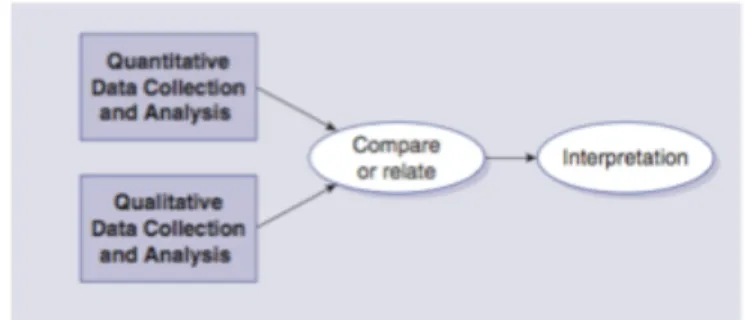
While many TPACK studies have utilized research methods that include collecting self-report data from preservice teachers using surveys (Chai, Koh, & Tsai, 2010; Koehler & Mishra, 2005; Sahin, 2011; Schmidt et al., 2009), other research methodologies have emerged and are used to systematically examine the development of preservice teachers’ TPACK. Adapted from a recent synthesis of the research literature around TPACK (Gall, Gall, & Borg, 2007; Koehler, Shin, & Mishra, 2012), a total of five categories of research methods were identified as being used to document preservice teachers’ TPACK development (see Figure 2): 1) self-report measures (i.e., Likert scale), 2) open-ended questionnaires (i.e., written responses from questionnaire questions), 3) performance assessments (i.e. rubric, performance task, create artifact, lesson plan, content analysis, and reflections), 4) interviews (i.e., oral responses), and 5) observations (i.e., taking field notes, video recording a lesson). Moreover, the researcher focused on finding recurring patterns or keywords from the articles from each category. After identifying the recurring patterns and keywords, the researcher categorized them as themes. Each category has a least one to three themes identified. It is also worth noting that over time, researchers interested in investigating TPACK began to utilize more than one research methodology to understand how preservice teachers develop their TPACK. When conducting research that involves mixed methods measurement for TPACK development, researchers typically use two or more data sources for data analysis. Thus, some studies included in this review were conducted using both quantitative (i.e. survey) and qualitative methodology (i.e. observation, open-ended questions, interview, performance rubric or artifacts). It was typical in these studies that the data gathered using multiple measures were collected to triangulate the results. Since many of the studies the author reviewed implemented multiple measures to assess TPACK, the author double-counted or triple-counted each study if two or more types of TPACK measures were
used. As a result, there are five studies that utilized the mixed method in self-report
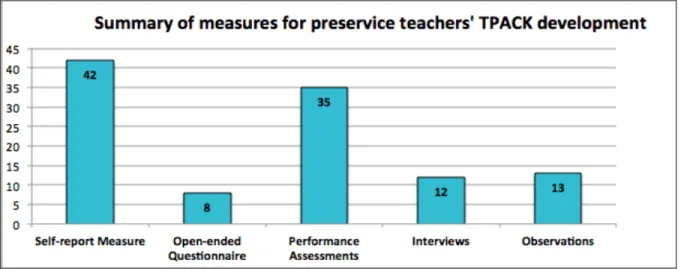
measurement; twenty-three studies that utilized the mixed method in performance assessment measurement; three studies that utilized open-ended questionnaire measurement; eight studies that utilized the mixed method in interview measurement, and eight studies that utilized the mixed method in observation measurement.
In the following section, a synopsis of these five research methodologies categories follows.
Figure 2. Articles in each measurement category used to document preservice teachers’ TPACK development.
Results
In this section, a synopsis of the five research methodologies categories (self-report measure, open-ended questionnaire, performance assessment, interview, and observation) is provided. In addition, a summary of the result of preservice teachers’ TPACK development is also provided for each category.
Self-report Measures
Self-report measures typically use instruments with questions where participants rate their self-perceived knowledge related to the technology, pedagogy, and technology domains and the interplay between each domain. In most studies, specific groups of preservice teachers are surveyed and the selected self-report measures usually include multiple sub-scales aligned to some or each TPACK domain (e.g., TK, PK, CK, PCK, TPK, TCK, TPACK). Based on the analysis, there are 42 studies identified in this literature review that used the self-report measure as a method to measure preservice teachers’ development of TPACK (see Table 3). Effect size is considered to be important method used in Meta-analyses with quantitative measures (Fritz, Morris, & Richler, 2012). Self-report measures typically utilize a survey instrument as the method for measuring the outcomes. And, the survey is one the most used quantitative
instruments in educational research. Therefore, there is a need to include effect size to ensure the same method can allow researchers to develop a more generally interpretable, quantitative description of the size of an effect. An effect size describes the size of observed effects that is independent of the possibly misleading influences of sample size. Studies with different sample sizes but the same basic descriptive characteristics (e.g., distributions, means, standard
deviations) will differ in their statistical significance values but not in their effect size estimates. Effect sizes can also allow the comparison of effects in a single study and across studies in either formal or informal meta-analyses. It was worth noting that in 42 studies examined for this
review, only 9 studies contain information about effect size calculation for quantifying the effectiveness of particular interventions.
Table 3.
Major themes in self-report measure category
Authors & Year Number of Studies
Findings
1 (Chai et al., 2011; Chai et al., 2013; Han et al., 2013; Horzuma, 2013; Hughes, 2013; Pamuk, 2012; Semiz & Ince, 2012; Tokmak et al., 2013; Young et al., 2013)
9 Effective modeling from teacher education program can enhance preservice teachers’ TPACK development.
2 (Kaya et al, 2013; Rohaan et al., 2012; Zhan et al., 2013)
3 Teaching experience may impact preservice teachers’ TPACK development.
3 (Kabakci Yurdakul et al., 2014; Koh et al., 2013; Meriç, 2013)
3 Technological Knowledge (TK) has strong correlation with TPACK development.
Note. 1) The asterisk (*) represents studies that utilize more than one method. 2) Only included some major studies that represented each finding.
While first generation TPACK research focused on defining the seven constructs of TPACK, the second generation of studies have shifted to focusing on using the framework to examine teachers’ knowledge of integrating technology, hence, TPACK, to facilitate and
enhance their teaching and whether such knowledge develops through technology interventions. Building on the history of using survey methodology to examine teachers’ knowledge with regards to technology integration, researchers began designing survey instruments to assess teachers’ TPACK. Although several survey instruments were developed to examine inservice and preservice teachers’ TPACK (Archambault & Crippen, 2009; Jamieson-Proctor et al., 2007; Lee & Tsai, 2010), Schmidt et al. (2009) followed with a validation study for a survey (Survey of Preservice Teachers’ Knowledge of Teaching and Technology) specifically designed for
preservice teachers who were majoring in elementary or early childhood education. The internal consistency reliability (coefficient alpha) for this survey ranged from .75 to .92 for the seven TPACK subscales. Within a pre- and post-survey design, Schmidt et al. (2009) reported that after completing an introductory instructional technology course statistically significant gains were found in all seven knowledge domains among 87 preservice teachers, with the largest growth in the areas of TK, TCK, and TPACK.
Further article analysis for this review revealed that the original Schmidt et al.’s (2009) TPACK survey instrument underwent numerous adaptations by researchers based on the nature of phenomena on which each study focused. Descriptive information concerning those changes was given and categorized with respect to retained items, added items, removed items, adapted items or subject focus, Likert scale used, and the final number of items covered by the adapted surveys. For example, in the Chai et al.’s study (2010), the Schmidt et al. survey was changed from a 5-point Likert scale to a 7-point scale. And the CK related questions were changed to incorporate subject matter that Singapore preservice teachers would typically be required to teach. The Chai et al. survey was validated using factor analyses and the preservice teachers’ TPACK perceptions before and after their ICT course were examined. The results reveal statistically significant gains with good effect sizes larger than 0.60 (Cohen, 1969). Regression analysis further revealed that technological knowledge, pedagogical knowledge, and content knowledge were all significant predictors of preservice teachers’ development of TPACK, with pedagogical knowledge having the largest impact. Another study, Kaya & Dag, 2013, translated the Schmidt et al. TPACK Survey (2009) into Turkish language and then investigated its factor structure through exploratory and confirmatory factor analysis. The participants were 352 elementary preservice teachers from three large universities in northwestern Turkey. Cronbach
Alpha reliability coefficients of subscales ranged between 0.77 and 0.88. Exploratory factor analysis results showed that the factor structure of the Turkish version of the survey was similar to the original version. According to the confirmatory factor analysis results, the goodness of fit indices indicated a good model fit. Based on the results, it was concluded that the Schmidt et al. TPACK Survey is a reliable and valid measure for use with Turkish preservice teachers.
While some studies continued to adapt existing instruments, some researchers designed additional survey instruments to further investigate TPACK. Sahin (2011) developed a survey consisting of seven subscales representing the TPACK model’s seven knowledge constructs. The instrument initially included 60 items but was reduced to 47 items after expert evaluation. Then, exploratory factor analysis (EFA) was conducted to examine the construct validity and the factor structure of the survey. The EFA results show the survey items for each subscale successfully measure each TPACK knowledge construct. The internal consistency scores for each subscale calculated are determined as 0.93 for TK, 0.90 for PK, 0.86 for CK, 0.88 for TPK, 0.88 for TCK, 0.92 for PCK, and 0.92 for TPACK. Results demonstrated Sahin’s TPACK survey is a valid and reliable measure.
With the overarching goal of helping Australian Education Institutions to implement the national Teaching Teachers for the Future (TTF) intervention to all preservice teacher education programs, Jamieson-Proctor et al. (2013) developed and validated a survey instrument related to TPACK. The TTF TPACK Survey instrument developed for the TTF Project was informed by earlier work on the measurement of TPACK and ICT integration in classrooms (Jamieson-Proctor & Finger, 2009; Jamieson-(Jamieson-Proctor, Watson, Finger, Grimbeek & Burnett, 2007). The development of this particular instrument was guided by the TTF Research and Evaluation Working Group and incorporated additional items with the intent to extend an earlier developed
TPACK Confidence Survey (TCS) (Albion, Jamieson-Proctor & Finger, 2010), in order to meet the particular needs of the TTF project. The data collected were subject to a battery of
complementary analysis procedures using both the pre (N=12,881) and post (N=5,809)
preservice teacher data. In this study, exploratory factor analysis was conducted to examine how the twenty-four items were measured. Two factor loadings (confidence and usefulness) were identified with Cronbach's Reliability Coefficient of .99 and .98. It was recommended by the developers that this instrument would help explore current theoretical frameworks with respect to the teacher knowledge bases required when using ICT in the curriculum.
Various existing survey instruments provide a straightforward and useful self-reporting measure of TPACK for use with preservice teachers. However, another trend from the analysis shows an additional focus for investigating specific subject matter in preservice teachers’ TPACK development. For example, Lin et al. (2013) explored science teachers' perceptions of technological pedagogical content knowledge (TPACK) addressing their perceptions of the affordances of technology application in instruction. A total of 222 preservice and inservice science teachers in Singapore were surveyed. Structural equation model analysis was utilized to examine the TPACK model involving the seven domains. The result of this study confirmed all the correlations between the latent variables of the seven-factor TPACK model were identified as significant. Besides, the science teachers’ TPACK was highly correlated with their TCK (.83), TPK (.76), and TK (.70). The results may suggest that science teachers who perceive
self-confidence in the synthesized knowledge of technology, pedagogy, and content possess a similar level of confidence in the knowledge involved with emerging technologies.
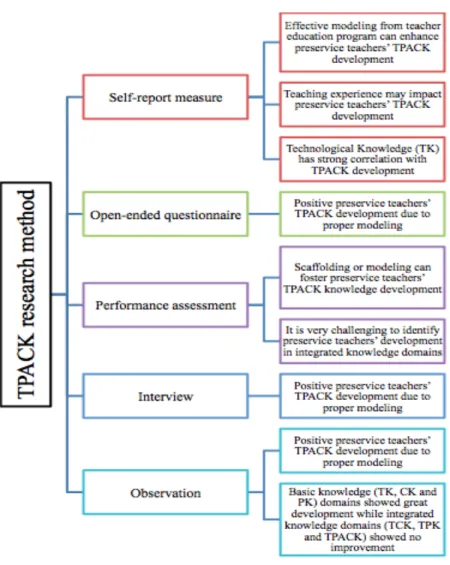
Analysis of the results from the TPACK studies that used the self-report measure as a research methodology revealed three major themes. The first theme is about how effective
modeling from teacher educators can enhance preservice teachers’ TPACK development. It was understood that with various opportunities to observe how to use technology in the courses offered by the teaching in teacher preparation program can enhance TK-related knowledge (Horzuma, 2013; Tokmak et al., 2013; Young et al., 2013). On the other hand, Semiz and Ince (2012) specified the risks of negatively impacting preservice teachers’ TPACK development if teacher educators provided poor technology integration modeling. It was also revealed in both the studies of Chai et al. (2013) and Pamuk (2012) that although preservice teachers all showed development in their core knowledge domains (TK, CK, and PK), without sufficient teaching experience, preservice teachers had difficulties developing integrated knowledge domains. It was recommended by the authors that teacher preparation programs will need to provide
opportunities to demonstrate how to integrate technology effectively in teaching.
The second theme that emerged from the analysis is how teaching experience may impact preservice teachers’ TPACK development. Rohaan et al. (2012) indicated that more experience in teaching technology related knowledge during classes will stimulate the development of preservice teachers’ PCK, which will again lead to more confidence in teaching and more
positive attitudes. Both Kaya et al. (2013) and Zhan et al. (2013) confirmed the same hypothesis, but also pointed out that lack of teaching experience may greatly affect preservice teachers’ overall TPACK development. Specifically, with sufficient amount of teaching experience, preservice teachers’ will enhance their PCK and TPACK development.
The third theme that emerged from the analysis is that TK has a strong correlation with TPACK development. The research results from Meriç’s study (2013) are parallel to what Chuang and Ho (2011) say in that TK knowledge is necessary for TPACK knowledge, but it does not guarantee TPACK. Kabakci Yurdakul et al. (2014) specified similar research findings;
the structural regression model demonstrated that technology usage (TK) had direct influence on TPACK competencies. In the other words, the technology usage phase and level were significant predictors of TPACK competency.
Open-ended Questionnaires
Open-Ended Questionnaires typically ask preservice teachers to respond to different types of questions (prompts) regarding their overall experiences in instructional technology courses with an emphasis on TPACK development or their teaching experiences. There are 8 research studies reviewed that used an open-ended questionnaire format for gathering data from preservice teachers (see Table 4).
Table 4.
Major themes in open-ended questionnaire category
Authors & Year Number of Studies
Findings
1 (Valtonen et al., 2011) 1 There was limited TK, PK and TPK development from first-year preservice teachers.
2 (Mouza et al., 2014) 1 Positive TCK development helps situate preservice teachers to teach in specific discipline.
3 (Calik et al., 2013; Kennedey-Clark, 2011; Tokmak, 2013*)
3 There was positive preservice teachers’ TPACK development due to proper modeling.
4 (Robertshaw & Gillam, 2010)
1 Preservice teachers improved in TK, TCK, PCK and TPACK knowledge development.
Table 4. (continued)
5 (Ozgun-Koca, 2009*) 1 TK knowledge increased significantly and has positive impact on TPACK development.
6 (So & Kim, 2009*) 1 Preservice teachers understood the importance of TK and PK, but they did not translate it into TPACK development. Note. The asterisk (*) represents studies that utilize more than one method.
A typical example can be found in So and Kim’s (2009) study about the relationship between TPACK and practice in a study with preservice teachers. The questionnaire they used for this study contains five demographic items (gender, age, teaching experience, types of teaching subject and school, and Problem-Based Learning (PBL) exposure) and five open-ended items on perceptions of PBL (pedagogy) and ICT (technology). The questionnaire was
developed to identify participants’ understandings, misconceptions, and difficulties in integrating both ICT and PBL in classrooms. For example, one of the research questions states, “What do you see as the main strength and weakness of integrating ICT tools into your PBL lessons?” Thus, in the creation and development process of open-ended questionnaires, questions should be created for assessing the overall experience of the respondents. Two coders identified types and frequencies of common themes that emerged from preservice teachers’ responses to the five open-ended items in this survey. For the purpose of this study, the representations of content knowledge were evaluated in relationship to the pedagogical and technological designs in the rubric.
Similar to the previous study, Tokmak et al. (2013) focused on preservice teachers’ opinions about their communication experience via e-mail and chat programs. The open-ended questions included in the questionnaires for this study focused on what the preservice teacher took into account while communicating both synchronously and asynchronously; whether there
was a change in terms of procedure while communicating on the Internet and face-to-face; what difficulties they met during communicating on the Internet versus face-to-face; and what they gained from this activity. The study revealed that preservice teachers gained essential
competencies in instructional material design. Moreover, the results expressed that preservice teachers gained experience in incorporating TPACK into their future teaching practices.
Analysis of the results from the TPACK studies that used open-ended questionnaires as a research methodology revealed one major theme: modeling by course instructor contributed to preservice teachers’ TPACK development. By following proper guidelines or demonstrations from course instructors, preservice teachers learned how they could effectively integrate
educational technologies into coursework or teaching with specific content related ideas. In Calik et al.’s study (2013), constant demonstrations of how to use technology in content from the content-specific course instructor (in chemistry) significantly enhanced senior science preservice teachers’ TPACK in a chemistry elective course and practicum. Kennedy-Clark (2011) also stated the need for establishing a proper modeling structure for preservice teachers who are typically inexperienced in pedagogy and content area knowledge, so that it can promote effective technology integration in actual classrooms.
Preservice teachers from other individual studies showed various growth in TPACK development. For instance, preservice teachers showed improvement in TK, PCK, TCK and TPACK (Robertshaw & Gillam, 2010), while another study reported that when preservice teachers showed a significant increase in TK that may contribute to the overall development of TPACK (Ozgun-Koca, 2009). However, it was also understood that despite the fact most preservice teachers were recognized as being digital natives (Prensky, 2001), they may not be able to recognize the connection between technology and teaching right away (Voltonen et al.,
2011). Even though preservice teachers acknowledge the importance of using technology and effective pedagogical approaches, most still have difficulty developing pedagogically sound, and content-specific teaching approaches with effective technology integration (So & Kim, 2009). Based on the written responses from preservice teachers, researchers were able to see initial responses regarding technology integration in teaching. However, more in-depth written reflections and artifacts are needed to monitor the changes.
Performance Assessments
Performance-based measures are another popular research method used in studies focusing on preservice teachers’ TPACK development (Koehler, Shin & Mishra, 2012). This specific method typically develops ways to assess TPACK by using artifacts (Abbitt, 2011), or by completing a task, or a product resulting from some type of performance (Gall et al., 2007). Some TPACK performance assessments consist of scenario or problem-based questions that require a solution (Graham, Tripp & Wentworth, 2009). There are 35 studies identified in this literature review that used performance assessment as a method to measure preservice teachers’ development of TPACK (see Table 5).
Table 5.
Major themes in performance assessment category
Authors & Year Number of Studies Findings
1 (Angeli & Valanides, 2013; Agyei & Voogt, 2012; Graham et al., 2009; Jang & Chen, 2010; Kramarski et al., 2010; Meagher et al., 2011; Mouza &
Karchmer-Klein, 2013*)
14 Scaffolding or modeling can foster preservice teachers’ TPACK knowledge development.
Table 5. (continued) 2 (Graham et al., 2012;
Hosseini & Tee, 2012*; Kopcha et al. , 2014*; Pamuk, 2011)
7 It is very challenging to identify preservice teachers’ development in integrated knowledge domains.
Note. 1) The asterisk (*) represents studies that utilize more than one method. 2) Only included some major studies that represented each finding.
Three major rubric tools have been developed to date to assess teachers’ TPACK
development and technology integration. Harris, Grandgenett, and Hofer (2010) adapted a rubric from the Technology Integration Assessment Instrument (Britten & Cassady, 2005) to assess preservice teachers’ TPACK. In a validation study, experienced educators each had rated fifteen lesson plan documents that targeted various content areas and grade levels from the same course for a two-year period using an adapted rubric instrument. The raters provided ratings ranging from one to four (four being the best) for the specified categories such as “Curriculum Goals & Technologies,” “Instructional Strategies & Technologies,” “Technology Selections,” and “Fit.” Based on the acknowledgment of the instrument being validated and reliable with Cronbach’s Alpha calculated as .91 and internal consistency calculated as .90, it was later widely used in other studies with different contexts as well (Hofer & Grandgenett, 2012; Kopcha et al., 2014). Typically, this validated rubric is used for evaluating such performance-based activities such as designing a project plan, writing a lesson plan or creating a portfolio. In Hofer and Grandgenett’s (2012) study, the rubric was used to assess the lesson plans developed by 17 preservice teachers enrolled in an eleven-month secondary Masters of Arts Education program. Results revealed that with lesson-related scaffolding during the classes, preservice teachers demonstrated significant knowledge in technological pedagogical knowledge (TPK) and technological pedagogical content knowledge (TPACK) in their developed lesson plans, but only limited growth in technological content knowledge.
In 2012, another performance-based assessment was designed to assess teachers’
integration of self-regulated learning (SRL) while infusing technology into a TPACK classroom context. The tool reflects all three knowledge components’ dynamic interactions with SRL and test instrument's validity and reliability as a practical tool for measuring effects of teacher education (Kohen & Kramarski, 2012). The TPCK-SRL scheme was used to assess nine
preservice teachers’ lesson design, collected before and after taking a course on TPCK Teaching and Learning Methods. Results from the posttest lesson designs revealed specific, qualitative TPCK-SRL descriptions that referenced TPACK components and SRL considerations (what, how, when, and why to infuse technology), thus providing content validity for the scheme.
Koh (2013) later shared a validated rubric to analyze 55 Singaporean preservice teachers’ lesson activities to determine the strengths and weaknesses of the preservice teachers’ TPACK for meaningful learning with ICT in practice. The study describes the conception, validation, and implementation of a rubric for assessing ICT lesson activities with respect to the dimensions of meaningful learning with ICT. Findings suggest that the ICT module was successful in
developing the preservice teachers' TPACK for meaningful learning with ICT for the active dimension. However, other dimensions (constructive, authentic, intentional, and cooperative) were rated at lower levels of development. This result could be connected to insufficient exposure to such kinds of advanced learning experiences (e.g., utilized specific approach for subject matter with technology) as preservice teachers, given that Singaporean classroom
practices are largely teacher-centric and focused on information acquisition for exam preparation (Gao, et al., 2009; Hogan & Gopinathan, 2008; Lim & Chai, 2008).
Some TPACK studies reviewed used performance assessments such as reflections to assess teachers’ TPACK development. Norton (1994) emphasized the importance of including
reflective journals and reflective experiences as part of a preservice teacher’s professional development during a teacher preparation program. By writing reflective journals, preservice teachers could then identify teaching problems and improve their teaching skills (Ekiz, 2006). When reflecting upon one’s experiences becomes a habit of mind, conscious teaching occurs (Freese, 1999; Kincheloe et al., 1999; Larrivee, 2000). Koh and Divaharan (2011) assessed 74 preservice teachers’ individual course reflections. The results revealed that these preservice teachers predominantly developed Technological Knowledge (TK) and Technological Pedagogical Knowledge (TPK). The authors suggest more emphasis on subject-focused
pedagogical modeling, product critique, and peer sharing may better develop preservice teachers’ Technological Content Knowledge (TCK) and TPACK. Maeng et al. (2013) utilized a similar research design to investigate preservice secondary science teachers’ technology-enhanced inquiry instruction and their developing TPACK. A reflective paper was used to investigate whether preservice teachers’ TPACK changed at all during this intervention. Results from preservice teachers’ reflection journals revealed that participants perceived the value of using technologies and believed educational technology can support and facilitate non-experimental and experimental inquiry experiences. Participants developing TPACK was evidenced by their selective and appropriate use of technology.
Analysis of the results from the TPACK studies that used performance assessment measures as a research methodology revealed two major themes. The first theme is scaffolding or modeling can foster preservice teachers’ TPACK knowledge development. Kramarski et al. (2010) described the complexity for preservice teachers to develop their understanding about TPACK. Therefore, it was recommended that a focus on teaching about the interactions among technology, content, and pedagogy is needed. Mouza and Karchmer-Klein (2013) also shared
that preservice teachers may not have a deep understanding of pedagogy when they first started the program. As a result, they may need to acquire more classroom experiences with technology integration modeling or teaching tryouts (Agyei & Voogt, 2012) or instructional design tasks (Angeli & Valanides, 2013) before they can exhibit a more sophisticated integration of TPACK.
Not only can modeling from instructors of the teacher preparation program be influential, there are also studies indicating peer mentor feedback and field instructors can play a major role. In Jang and Chen’s study (2010), it was revealed that through peer coaching and online
discussion, preservice teachers could exchange their ideas and opinions when they had questions about the course. These strategies provided preservice teachers with an avenue to receive instant feedback and learn related pedagogical content knowledge with technology. The mentors’ approach and involvement indicated their potentially strong impact on the development of preservice teachers’ TPACK. Then, it was important that preservice teachers were provided with authentic opportunities to experiment with teaching approaches. On the other hand, both Graham et al. (2009) and Meagher et al. (2011) stated the impact field experience and field instructor can have. Graham et al. (2009) further explained the negative impact when field instructors do not have the concept of TPACK, preservice teachers could potentially be discouraged to use
technology because of the experience. The finding highlighted the importance of providing good models of technology use to the field instructors as well as to the teacher candidates.
The second theme emerged from the analysis is the challenge to identify the development in integrated knowledge domains. Pamuk (2011) pointed out that while preservice teachers may have demonstrated some degree of knowledge in technology, pedagogy, and content, their ability to use knowledge bases and their attempts to create new knowledge bases, like TPK, were