SPEAKING UP: IS SPEAKING OR LISTENING RELATED TO HEALTH CARE ERRORS?
Julia Kane
A dissertation submitted to the faculty at the University of North Carolina at Chapel Hill in partial fulfillment of the requirements for a degree of Doctor of Philosophy in the School of Nursing.
Chapel Hill 2018
Approved by:
Linda Beeber
Michael Gilchrist
Steve May
Celeste Mayer
© 2018 Julia Kane
ABSTRACT
Julia Kane: Speaking Up: Is Speaking or Listening Related to Health Care Errors? (Under the direction of Linda Beeber)
Communication issues have been recognized as a contributing factor in the majority
of health care errors. Failure to share critical information or concerns with other health care
professionals is one type of communication issue, and for years health care professionals
have been told to “speak up” when they have information or concerns to address this. What is
meant by “speak up” has not been clear, as it has been defined and operationalized in many
different ways. A literature review was conducted to explore the meaning of “speak up,” and
187 articles were evaluated for usage of the term speaking up and related synonyms. A mixed
methods study was conducted at a large academic medical center, utilizing survey data to
identify units with high and low levels of speaking up behaviors and then interviews were
conducted with nurses to explore how they define and operationalize speaking up. This led to
a description of the phenomenon of speaking up for medical surgical nurses at one hospital.
Results from the study and the literature review also indicate that most health care
professionals do speak up when they see an issue, indicating we need to examine issues
around raising concerns beyond encouraging people to do it. Definitions from the literature
and from interviews were examined for similarities and differences and a new definition for
speaking up for patient safety is presented. Recommendations for future research, including
To my children, Conlan, Garrett, and Meghan. Thank you for leaving mom alone to think
ACKNOWLEDGEMENTS
Many, many thanks to my committee for staying with me on my long journey to
TABLE OF CONTENTS
LIST OF TABLES ... ix
LIST OF FIGURES ...x
I. INTRODUCTION ...1
Background ...1
II. LITERATURE REVIEW ...12
Purpose and Methodology ...13
PRISMA and Covidence ...15
The Matrix Method ...17
Results ...18
Types of Articles ...19
Populations and Areas of Interest ...21
Definitions, Synonyms, and Operationalizations ...23
Interventions to Increase Speaking Up Behaviors ...36
Instruments Used to Measure Speaking Up Behaviors ...46
Discussion ...49
Article Sources, Types, and Focus ...50
Populations and Clinical Specialties of Interest ...52
Conclusions ...55
III. STUDY METHODS ...57
Phase 1: Quantitative Data for Purposive Sampling ...57
Phase 2: Qualitative Interviewing ...60
IV. RESULTS ...66
Participants ...67
The Phenomenon of Speaking Up ...68
Role of Nurse ...68
Identifying the Problem ...70
Bringing the Problem to Someone Who Can Address It ...71
Providing Recommendations ...74
Success Versus Failure ...75
The Emotions of Speaking Up ...77
External Influences on Speaking up Behaviors ...80
Defining Speaking Up for Patient Safety ...84
Conclusions ...86
V. CONCLUSIONS...88
Defining Speaking Up for Patient Safety ...88
What is Known ...92
Clinical Tools for Speaking Up ...93
Measurements of Speaking Up ...94
APPENDIX A: FIFTEEN MOST FREQUENTLY USED SYNONYMS FOR
SPEAKING UP ...99
APPENDIX B: HOSPITAL SURVEY ON PATIENT SAFETY ...100
APPENDIX C: FLYER ...108
APPENDIX D: INTERVIEW GUIDE ...109
Table
1 Literature Review Search Terms ... 14
2 Populations Defined ... 22
3 Definitions of Speaking Up from Articles ... 24
4 Definitions of Whistleblowing from Articles ... 26
5 Other Synonym Definitions from Articles ... 27
6 Operationalizations of Speaking Up and Whistleblowing ... 31
7 Interventions Reported ... 37
8 HSOPSC Translations and Modifications ... 47
9 Units of Interest for Speaking Up Study—HSOPSC Rankings ... 67
10 Emotions around Speaking Up ... 78
Figure
1 PRISMA flowchart for Speaking Up review ... 16
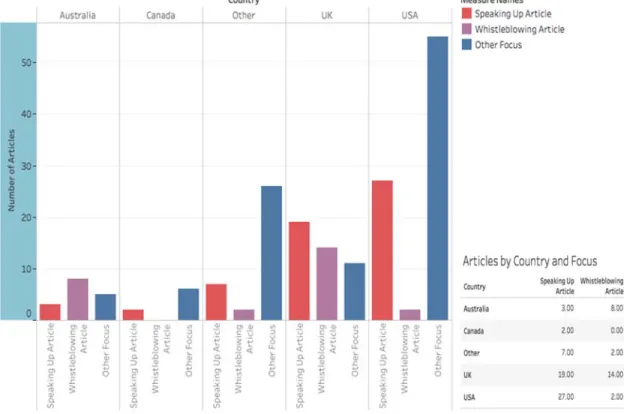
2 Articles by country and focus ... 20
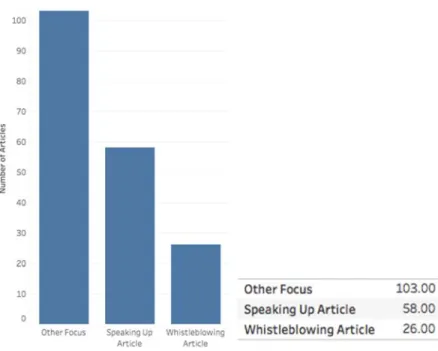
3 Article focus—speaking up, whistleblowing, other ... 21
CHAPTER 1
INTRODUCTION
The importance of effective, timely communication to patient safety has been well
recognized since the publication of To Err is Human in 1999 (Kohn, Corrigan, & Donaldson,
2000; Wachter, 2012). One of the commonly discussed ways to improve communication in
healthcare revolves around the phrase speak up. Patients and healthcare providers are told
they need to speak up and ask questions if they see something unsafe (Maxfield, Grenny,
Lavandero, & Groah, 2011; Wachter, 2012). Nurses are told in campaigns like “Silence
Kills” and in teamwork trainings that they need to speak up if they see something that
endangers patients (Maxfield et al., 2011; Spruce, 2014). But what is speaking up? Most of
the discussion around speaking up ends with just telling providers to do it, without clearly
defining it or providing tools to do so. Silence and ineffective speaking up are even grouped
together by some studies or treated as the same thing, further clouding what exactly speaking
up entails (Maxfield et al., 2011). My aim with this dissertation is to conduct a literature
review of the concept of speaking up and to explore through qualitative inquiry how nurses
are defining and operationalizing speaking up in the hospital setting, specifically
medical-surgical units.
Background
The publication To Err is Human brought to light the seriousness of errors in
for Healthcare Research and Quality (AHRQ) Patient Safety Net defines healthcare error as
“An act of commission (doing something wrong) or omission (failing to do the right thing)
that leads to an undesirable outcome or significant potential for such an outcome” (PSNet,
n.d.a). To Err is Human estimated healthcare errors killed just under 100,000 people each
year in the United States, a number that would have made healthcare errors the fifth leading
cause of death in the United States in 1999 (Kohn et al., 2000; Hoyert, Arias, Smith, Murphy,
& Kochanek, 2001). More recent studies find the number of deaths even higher, with
reported estimates that errors kill between 100,000 and 400,000 plus patients each year in the
United States, a number that moves healthcare errors to the third leading cause of death in
recent years (James, 2013; Makary & Daniel, 2016). There is no recent estimate of morbidity
from medical error; the Institute of Medicine estimated it to be as many as a million people in
1999 (Abbasi, 2016).
The large range of estimates for morbidity and mortality from healthcare errors comes
primarily from the lack of data. Most error reporting is entirely voluntary. Only half of U.S.
states have some system of mandated error reporting, but only a small number of events are
reportable, and even within these systems, underreporting is common (Abbasi, 2016). Since
2012, The Centers for Medicare & Medicaid Services (CMS) will not pay for about two
dozen errors, referred to as “never events” (Galewitz, 2011). Never events are defined by the
AHRQ as “adverse events that are unambiguous, serious, and usually preventable. While
most are rare, when never events occur, they are devastating to patients and indicate serious
underlying organizational safety problems” (PSNet, n.d.c). This change to reimbursement
errors it does not mean they are not reporting them, even in states with mandatory reporting.
In 2012 the Office of Inspector General found that only 14% of errors with Medicare
beneficiaries was captured by hospital error reporting systems, and of those, less than 1%
were reported to state systems (Abassi, 2016; Office of Inspector General, 2012). Even the
Joint Commission (JC), an independent, not for profit organization that accredits over 21,000
health care organizations and programs in United States, does not mandate reporting of errors
by its members (Joint Commission, 2016a). The Joint Commission encourages reporting of
sentinel events, which they define as “A sentinel event is an unexpected occurrence involving
death or serious physical or psychological injury, or the risk thereof. Serious injury
specifically includes loss of limb or function” (Joint Commission, 2013, p. SE-1). Although
all sentinel events are not errors, and vice versa, a review of sentinel events reported to JC in
2014 found that errors were the primary cause identified in the majority of cases (Joint
Commission Online, 2015). So, although data on sentinel events could lead to better statistics
about patient safety and healthcare errors, reporting is voluntary, and only 764 events were
reported to JC in 2014 (Joint Commission Online, 2015). With the current estimates of
patient deaths well into the hundreds of thousands, it is doubtful 764 is the actual total of
sentinel events in JC hospitals.
The data we do have come from voluntary reporting, retrospective studies of patient
files, malpractice case records, and from the mandatory reporting systems that are in place in
some states and the CMS. But clearly the data are incomplete. Most error reports will never
be seen by anyone outside of the occurring location’s risk management department, and
many errors are never reported at all (Classen et al., 2011; Makary & Daniel, 2016).
reports that are published often come from the state mandated error reporting networks, e.g.,
Pennsylvania, or closed malpractice cases (Abbasi, 2016; Blanco, Clarke, & Martindell,
2009). Some hospitals also participate in voluntary error reporting networks, like the
National Perinatal Information Center (NPIC), which compiles and analyzes data for its
member hospitals, including adverse outcomes data (NPIC, n.d.). Although the NPIC
occasionally publishes articles from the data it collects, the data are not publicly available.
This is common for collectives and individual hospitals, which makes it difficult to get a
clear picture of errors. With reporting still mostly voluntary and mandatory reporting only in
place for certain conditions, underreporting of healthcare issues is clearly an issue. As Robert
Wachter, MD states, “My own feeling is we don’t really know the number of deaths from
medical errors. The fact that we are still not able to measure the extent of the problem or
easily know whether we’re making progress is a problem” (as cited in Abassi, 2016, p. 699).
The fact that communication plays a large role in medical errors has been widely
acknowledged (Joint Commission, 2013; Wachter, 2012). Communication refers to all
exchanges of information that occur, whether verbal or written. This includes face-to-face
exchanges, telephone conversations, and written and electronic orders. Communication
failures between healthcare providers are a common contributing factor in a majority of
medical errors, with multiple studies finding this problem in over 80% of errors reviewed
(Haig, Sutton, & Whittington, 2006; Nadzam, 2009; Wachter, 2012). Communication is
consistently among the top three causes of medical errors and is identified as a contributing
factor in almost all cases (Nadzam, 2009; Wachter, 2012). The JC has had communication in
patient safety issues, miscommunication at handoffs, failure to relay test results to the proper
provider, and poor documentation (J. L. Classen, 2010; Crico Strategies, 2015; Maxfield et
al., 2011). A review of over 23,000 malpractice cases from 2009 to 2013 found
communication was a factor in 30% of the cases, of which 88% resulted in medium to high
severity injuries, including death (Circo Strategies, 2015). These cases incurred $1.7 billion
in losses for the healthcare and insurance companies, and 57% of the cases were related to
provider-to-provider communication (Circo Strategies, 2015). That 57% accounted for 73%
of the incurred losses, and among nursing cases, 72% related to provider-to-provider
communication (Circo Strategies, 2015). The top communication error was
miscommunication about the patient’s condition (Circo Strategies, 2015). Clearly
communication plays a major role in healthcare errors. The reasons and conditions behind
communication errors are complex and complicate addressing these issues.
The Joint Commission has identified improving communication between healthcare
staff as a patient safety goal again for 2018 (Joint Commission, 2018). Nurses play a key role
in healthcare communication, as they are often responsible for relaying important
information about the patient to other healthcare providers and spend the most time at the
bedside (AHRQ, 2012). Difficulties in communicating between disciplines can be made even
worse by the differences in training, terminology, and hierarchal issues (Makary et al., 2006;
Mackintosh & Sandall, 2010; Manojlovich, 2010). Language and terminology differences
result from the differences in how healthcare professionals are trained. Education in
healthcare is often siloed, where little to no interaction occurs between the professions during
training (Dayton & Henriksen, 2007). This makes it common for professionals to have little
challenge the actions of others on the healthcare team (Buckley, Laursen, & Otarola, 2009;
Dayton & Henriksen, 2007). The perceived difference in knowledge is also often cited as a
barrier, especially among nurses and junior physicians (Fackler, Chambers, & Bourbonniere,
2015; Maxfield et al., 2011; Szymczak, 2016). Even in cases where these providers see an
error occurring or disagree with a plan of care, they will often remain silent if they feel they
do not have enough expertise to challenge what is occurring (Fackler et al., 2015; Lyndon et
al., 2012; Maxfield et al., 2011).
Hierarchy issues also impact interprofessional communication. A nurse or physician’s
perception of their power in a situation, often related to the hierarchical structure of the
healthcare system, greatly influences their willingness to voice concerns or give any input at
all (Fackler et al., 2015; Lyndon et al., 2012; Maxfield et al., 2011; Sutcliffe, Lewton, &
Rosenthal, 2004). A study found that 12% of obstetric nurses and physicians would not speak
up about an issue to a perceived superior even if they perceived a high probability of major
harm coming to the patient (Lyndon et al., 2012). A survey of surgeons found that close to
50% would not welcome input or correction from a junior member of the operating room
staff, believing the decisions of the leader should not be questioned (Wachter, 2012). A
review of 444 surgical malpractice claims found that of those where communication
breakdown resulted in patient harm, 74% of cases involved status asymmetry between the
sender and receiver (Greenberg et al., 2007). Clearly the steep hierarchy often found in
healthcare systems can negatively impact communication and patient safety.
Disrespectful behavior is also found to impact communication in healthcare.
others, and 46% reported the disrespect interfered with communication (Maxfield et al.,
2011). Lucian Leape and colleagues discussed the widespread culture of disrespect as “a
substantial barrier to progress in patient safety,” identifying six categories of disrespectful
behavior (Leape et al., 2012, p. 845). Four of the six categories identified have been shown to
impact communication between healthcare professionals: disruptive behavior; humiliating,
demeaning treatment of nurses, residents, and students; passive-aggressive behavior; and
passive disrespect (Johnson, 2009; Leape et al., 2012; Maxfield et al., 2011; Rosenstein &
O’Daniel, 2005; Sutcliffe et al., 2004). All of these have been reported to interfere with
communication, from making the actual process less effective to people avoiding
communication with disrespectful providers (Johnson, 2009; Leape et al., 2012; Maxfield et
al., 2011).
Although multiple barriers to communication in healthcare have been identified, the
importance of open communication at all levels and among all providers to patient safety has
also been made clear. Retrospective reviews of errors and near misses indicate the
importance of any healthcare provider voicing their concern. A near miss is defined as “an
event or situation that did not produce patient injury, but only because of chance. This good
fortune might reflect robustness of the patient or a fortuitous, timely intervention” (PSNet,
n.d.b). An analysis of wrong site surgery near misses and actual occurrences at 97
Pennsylvania hospitals from August 2007 to August 2008 found a significant difference
between near misses and errors when a staff member communicated their concern (Blanco et
al., 2009). In fact, the voicing of concerns by staff members and acknowledgement of those
concerns accounted for the most significant differences between near misses or errors, with
(Blanco et al., 2009). Another study involving interviews with 26 physician residents from a
variety of specialties found that the most common issue cited for the 70 errors reported was
communication, with the interviewees expressing that many could have been prevented with
improved communication (Sutcliffe et al., 2004). This is a common finding in studies looking
at errors retrospectively; lab results and orders are not communicated properly, information
about the patient is not shared, and input from all professionals is not valued (Arora, Johnson,
Lovinger, Humphrey, & Meltzer, 2005; Gawande, Zinner, Studdert, & Brennan, 2003;
Greenberg et al., 2007; Johnson, 2009; Maxfield et al., 2011; Rothschild et al., 2005;
Sutcliffe et al., 2004). As one resident put it,
If I felt like I could actually communicate with that group of attendings I would have tried, but I didn't feel like it would useful to me. And all it would have done would be to inflame the relations between me and that attending and the patient still would have ended up getting [inappropriate treatment]. (as cited in Sutcliffe et al., 2004, p. 189)
Nurses also expressed similar feelings and stories:
We tried to stop the doctor (plastic surgeon) and he said the permit was wrong. The patient was already asleep and he proceeded to do the wrong side against what the patient had verified, which had matched the permit. We could not get any support from the supervisor or anesthesiologist. . . . We felt
absolutely powerless to being an advocate for the patient. (as cited in Maxfield et al., 2011, p. 5)
It is evident in the literature that communication needs to be improved in healthcare,
including increasing the voicing of concerns and the valuing of input from all professionals.
One way that is often discussed in the healthcare literature to increase these behaviors is by
encouraging speaking up.
Speaking up has become a popular catch phrase in healthcare, especially in relation to
aware of the risky or deficient actions of others within health care teams in a hospital
environment” (Okuyama, Wagner, & Bijnen, 2014, p. 1). Speaking up is mentioned in many
other articles, but no definition or even description of what it entails is offered (Beyea, 2008;
Lyndon et al., 2012; Maxfield et al., 2011). Most authors discuss the importance of speaking
up for patient safety without any definition or operationalization of the term. There are data
which indicate that speaking up behaviors are important and lead to safer care (Blanco et al.,
2009; Sutcliffe et al., 2004). But research reports also vary as to the definition of speaking
up. The two quotes above illustrate two common scenarios around speaking up in patient
safety—the resident chose not to speak at all, and the nurses spoke up but were ignored by
other providers (Maxfield et al., 2011; Sutcliffe et al., 2004). Both were used as examples of
not speaking up, although clearly the nurses did voice their concerns.
Equating ineffective speaking up with silence is especially problematic. Silence in the
work place, or employee silence, is a different concept altogether from speaking up. Defined
as “the intentional withholding of information by employees from others,” this is the direct
opposite of the definition of speaking up (Johannesen, as cited in Tangirala & Ramanujam,
2008, p. 39). Using both silence and ineffective speaking up as examples of a lack of
speaking up further indicates the confusion surrounding this concept.
Some team training programs also contain tools for providers to voice their concerns,
such as TeamSTEPPS CUS (TeamSTEPPS® 2.0, 2012). CUS, which stands for Concerned,
Uncomfortable, and Safety, teaches nurses to raise concerns with the person TeamSTEPPS
refers to as the “decisionmaker,” often physicians, by using three statements in order: “I’m
concerned, I’m uncomfortable, This is a safety issue”; each one is supposed to indicate to the
TeamSTEPPS, 2014). The use of the word concern is problematic. It is defined as “relate to;
be about” or “worry; make anxious” when used as a verb (Concern, n.d.) Therefore, when a
nurse is expressing concern about a decision, she or he is saying the decision makes them
worried or anxious. This is not the same as indicating they believe the decision is wrong or
that they disagree. The CUS system also relies on the receiver knowing the importance of the
use of the words, which requires they have received and retained TeamSTEPPS training.
Even though team training is widely regarded as important to improving patient safety and
reducing error, issues remain in terms of implementation and retention, and large numbers of
healthcare providers have never had any formal team training (Salas & Rosen, 2013; Weller,
Boyd, & Cumin, 2014). Even those that have completed the training at some point will lose
the skills if they are not practiced and reinforced (Salas & Rosen, 2013). The goal of this
dissertation is therefore to look at speaking up as a standalone concept. Investigators have
reported that speaking up alone can improve patient outcomes and prevent errors (Blanco et
al., 2009; Sutcliffe et al., 2004). By achieving a better understanding of speaking up, this
dissertation may also help improve teamwork trainings by clarifying issues around speaking
up and identifying effective behaviors.
Speaking up for patient safety has been shown to improve outcomes for patients,
turning what could have been fatal errors into near misses (Blanco et al., 2009). But the lack
of clarity about the definition of speaking up and how to do it, along with issues like
disrespectful behavior and steep authority gradients, has led to providers who are hesitant to
do so (Lyndon et al., 2012; Sutcliffe et al., 2004). The available evidence is also unclear as to
care from speaking up that is ignored. This dissertation will attempt to gain a greater
understanding of these issues around speaking up. The aims of this dissertation are to:
1. Understand the definition and operationalization of speaking up by healthcare
professionals in hospital settings through a comprehensive literature review.
2. Examine how nurses are defining and operationalizing speaking up in their work.
3. Explore the situational and environmental factors that affect the speaking up and
silence behaviors of nurses.
4. Describe the emotional and psychological impacts on nurses who speak up.
Clearly understanding and defining a concept is key, and is a necessary, preliminary step to
CHAPTER 2
LITERATURE REVIEW
A thorough literature review is the first step in addressing any research problem. A
clear understanding of what is already known on a topic is needed before undertaking
research in that area. Garrard (2017) defines a literature review as
an analysis of scientific materials about a specific topic that requires the reviewer to
carefully read each of the studies to evaluate the study purpose, determine the
appropriateness and quality of the scientific methods, examine the analysis of the
questions and answers posed by the authors, summarize the findings across the
studies, and write an objective synthesis of the findings. (pp. 4–5)
Other types of reviews, such as integrative, systematic, and meta-analysis, share the basic
framework of design that a literature review has, but they have different methodology and
purpose, mostly looking to synthesize the results from multiple intervention studies and offer
conclusions and recommendations (Garrard, 2017; Moher et al., 2009). The literature review
used in this project provided a foundation for the empirical investigation. As full
understanding of the use of the concept of speaking up for patient safety in healthcare was
the goal, this review included all articles that discussed speaking up for patient safety, even if
Purpose and Methodology
This literature review was conducted utilizing Preferred Reporting Items for
Systematic Reviews and Meta-Analyses (PRISMA) guidelines and the Covidence online
literature review management system (Moher et al., 2009; www.covidence.org). The analysis
was done utilizing Garrard’s matrix method for health science literature reviews (Garrard,
2017). The purpose of this review was twofold: first, to examine the language of speaking up
to gain a clearer picture of how healthcare workers were defining and discussing speaking
up, and second, to explore how speaking up for patient safety was being operationalized in
healthcare, including any intervention studies that have been done. In order to present a clear
and usable description of the concept of speaking up, the limits for this search were much
broader. Any article that discussed speaking up, or related search terms (Table 1), was
included. The only limits placed on the search were: written in English language and
published since 1999. No dissertations/theses were included. The year 1999 was chosen
because that was the year To Err is Human was published, resulting in increased awareness
of issues around patient safety and interest in addressing these issues. The year 1999 is often
used to mark the beginning of the modern patient safety movement (Wachter, 2012).
Four different databases were searched, PubMed, CINAHL, PsychoInfo and
Communication/Mass Media Complete. Table 1 shows all the search terms used, repeated in
each database. The different terms were selected from prior readings on speaking up and
discussions with other healthcare professionals. Results were imported into a digital
reference library (RefWorks) and repeats were removed. This left 1,212 studies to be
Table 1
Literature Review Search Terms
Source/Search Terms Number of Studies Found PubMed—Limited to 1999-2017, English, humans
Speak* up and patient safety 115
Voic* concerns and patient safety 58
whistleblowing and patient safety 65
MeSH Term- Patient safety and advoca* 139
And rais* concerns 71
And report* concerns 147
And address* concerns 174
Communication openness and patient safety 42
Share views and patient safety 5
Share concerns and patient safety 56
Sharing concerns and patient safety 41
Announc* concerns and patient safety 12
Confront* and patient safety 136
Question authority and patient safety 12
Speak* up and medical error 74
CINAHL, PsychInfo, Communication and Mass Media Complete, 1999-2017, human, English
Speak* up and patient safety 54
Voic* concerns and patient safety 10
whistleblowing and patient safety 17
Patient safety and advoca* 305
And rais* concerns 123
And report* concerns 88
And address* concerns 68
Communication openness and patient safety 32
Share views and patient safety 3
Share concerns and patient safety 2
Sharing concerns and patient safety 1
Announc* concerns and patient safety 0
PRISMA and Covidence
The 2009 PRISMA guidelines addressed issues with quality in systematic reviews
and meta-analyses (Moher et al., 2009). The guidelines were a revision of the 1996 Quality
of Reporting of Meta-analyses, or QUOROM, Statement (Moher et al., 2009). The guidelines
consist of a 27-item checklist of “items to include when reporting a systematic review or
meta-analysis” (Moher et al., 2009, p. 266). For this review, the guidelines used were those
concerning the search and selection of articles for review. The full electronic search strategy
is presented in Table 1, including any limits, so that others can repeat the search. A PRISMA
flowchart, indicating how articles were selected for review, was generated for this project as
well. This allowed for a clear picture of the article selection process, including exclusion and
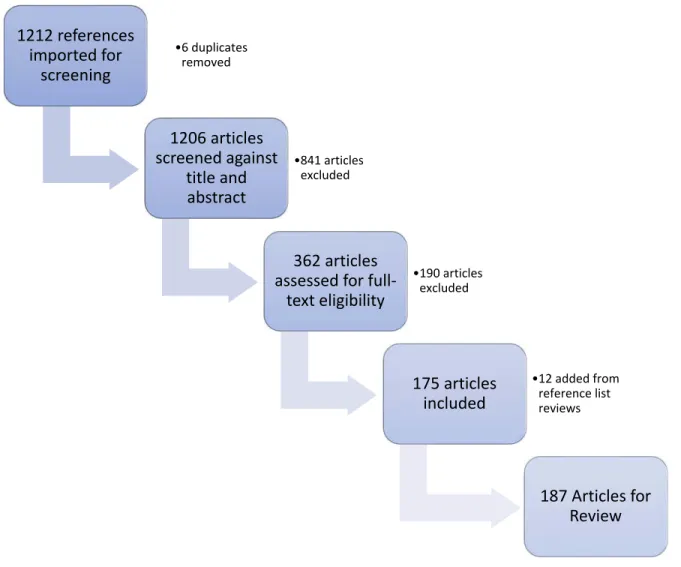
inclusion reasons and numbers of articles screened at each level. Figure 1 is the PRISMA
flowchart.
The Covidence online literature review management website was used for this review
(www.covidence.org). Covidence is an online service that is designed to make the production
of high-quality literature reviews faster and easier (www.covidence.org/about-us). In 2015
Cochrane partnered with Covidence to make them the standard production platform for
Cochrane Reviews (www.covidence.org/about-us). Covidence allows for easy collaboration
between reviewers and streamlines much of the literature review process. Searches were
conducted across multiple databases and resulting articles compiled into an Excel
spreadsheet, which was then imported into Covidence. The articles were then screened at the
Figure 1. PRISMA flowchart for Speaking Up review.
One reviewer had to be the primary author, and the other reviewer could be any of the
four healthcare and research professionals (three Registered Nurse PhDs and one MD), who
volunteered to work on this project. The system flags any disagreements in decisions to
include or exclude and must be reviewed by primary author before moving on. Inclusion and
exclusion criteria are also posted to the website and can be easily reviewed at any time by
reviewers. All articles were reviewed for any mention of speaking up for patient safety or any
of the identified synonyms in Table 1. Some articles used the term speaking up but were 1212 references
imported for screening
•6 duplicates removed
1206 articles screened against
title and abstract
•841 articles excluded
362 articles assessed for full‐
text eligibility
•190 articles excluded
175 articles included
•12 added from reference list reviews
topics such as labor disputes or referred to speaking up by patients or family members. After
review was completed at the title and abstract levels, the full texts of the remaining articles
were uploaded into Covidence. Articles were then reviewed at the full text level by two
reviewers. After this process was complete, the remaining articles were utilized for this
literature review. Extraction and analysis of the articles was done using Garrard’s Matrix
Method.
The Matrix Method
Garrard’s Matrix Method is a structured way of organizing a literature review
(Garrard, 2017). The method is used to approach literature reviews in a systemic and
organized way, using a folder system composed of four primary folders: paper trail,
documents, review matrix, and synthesis (Garrard, 2017). The paper trail folder is used to
document the search of the literature. Garrard (2017) utilizes some of the PRISMA
guidelines in this step, emphasizing the importance of keeping and sharing a detailed,
reproducible search history and the flowchart to show exclusion and inclusion decisions
(Table 1 and Figure 1). This folder also includes notes about the search, including notations
about meetings with librarians or other experts, keywords, and a chronological record of the
search. Both the PRISMA guidelines and Garrard emphasize the importance of the literature
search being reproducible, and the paper trail folder is designed to make it easy for the author
to summarize and report their search techniques and results (Garrard, 2017; Moher et al.,
2009). For this literature review, my paper trail folder was in the form of Word documents
with my detailed search history and limits, combined with the article review and selection
process being completed on Covidence. Covidence tracks the reviewers’ decisions,
are made. The second folder of the Matrix Method is the documents folder and is for storing
the articles selected for the literature review. The articles for this literature review that
required full text review were uploaded into Covidence to allow access by all reviewers.
Garrard’s Review Matrix Folder is where the key part of this method, the matrix, is
utilized (Garrard, 2017). The review matrix is a table created to facilitate extraction of the
information needed from the articles to fulfill the purpose of the literature review. Some
headings are common to all reviews for identification purposes, such as article title, authors,
and publication year. Other column headings can be tailored to the literature review’s
purpose. For this review, one such heading was if and how speaking up was defined by the
author(s). Another heading is how speaking up is operationalized. Columns can be reviewed
and altered as needed during the review process, but the key is to ensure they reflect the
purpose of the literature review (Garrard, 2017). A column dealing with the type of
article/study is also common, along with one evaluating the rigor and value of the article. The
matrix generated for this review was in the form of a large Excel spreadsheet. The final
folder for Garrard’s method is the Synthesis Folder, and it is where the written synthesis of
the review of the literature is kept. For this review, the synthesis focused on how healthcare
professionals’ speaking up for patient safety was being defined and operationalized,
exploring differences and similarities between the articles. The synthesis also looks at all the
language being used as synonyms for speaking up, both through narrative analysis and by
generating a word cloud, a graphic representation of text frequency (www.wordclouds.com).
Results
used and the number of articles returned from each term. All articles were imported into
RefWorks, and then 722 duplicates were removed. The remaining 1,212 articles were
imported to an Excel spreadsheet and then uploaded to Covidence.org. The articles were then
reviewed at the title and abstract level by the author and at least one other reviewer. If there
was any disagreement among reviewers as to whether to include or exclude at this level, the
article was included for full text review. A total of 841 were excluded at the title and abstract
level, and 6 more duplicates were found, leaving 359 articles for full text review. The full
text of these 359 articles was uploaded into Covidence and reviewed by at least two
reviewers. Any disagreements at this point as to inclusion were discussed and the author
made the final decision. After full text review, 175 articles were included in the study.
Another 12 articles were added from reference list reviews, making the final total of articles
for this literature review 187. Figure 1 is the PRISMA flowchart, including exclusion reasons
at the full text level.
Types of Articles
Articles came primarily from the United States (85 articles) and the United Kingdom
(44), with Australia (16) and Canada (8) accounting for the most other articles outside of
those two countries, with 34 articles coming from a variety of other countries (Figure 2).
Articles were evaluated for focus, defined here as what the primary topic of the article was.
This was decided by evaluating the title, abstract, aim, and/or content of the article. A total of
103 articles had a focus other than speaking up, and 84 were focused on speaking up or
whistleblowing (Figure 3). Of the 187 articles, 110 can be broadly classified as studies. This
includes qualitative, quantitative, case, or mixed methods studies, retrospective reviews, and
non-studies, and included opinion pieces, topic review/recommendation articles, continuing
education texts, literature reviews, theory articles, and news reports. Of the 110 study
articles, 26 were intervention studies. Two articles were about the same intervention, so 25
total interventions were reported. Within the 25 interventions, only 16 were related to
increasing speaking up behaviors. Of those 16 studies, only 10 had increasing speaking up as
a study aim; no studies looked to increase whistleblowing.
Figure 3. Article focus—speaking up, whistleblowing, other.
Populations and Areas of Interest
Because of the wide variety of article types in this literature review, population is
defined in two ways, either the study population or the targeted audience. If an article was a
study of any sort the population is the study population, i.e. those that completed the
intervention or survey. In articles that were not studies, the population was defined as the
targeted audience, based on article title and content or journal. For analysis purposes, discrete
populations were grouped into larger categories, which are defined in Table 2. The largest
population was All, with studies that included the entire unit of interest’s population or the
audience was all healthcare professionals. The second most common was nurses, followed by
nurses and providers, providers, and students. The majority of articles were not aimed at a
specific area of the hospital or healthcare, with 113 articles classified as dealing with all
areas. The next most common area of interest was perioperative, with 32 articles focused on
articles focused on them, with obstetrics and critical care having the most (8 and 6,
respectively).
Table 2
Populations Defined
Population Definition
ALL (77 articles) For study articles this means the study population included all members of the unit or hospital of interest. For example, in studies completed in the OR this would include surgeons, anesthesia providers, nurses, scrub techs, and any perfusion technologists or other specialists.
For non-study articles this would include articles aimed at healthcare professionals in general, such opinion articles published in the Joint Commission Journal on Quality and Patient Safety.
NURSES (58 articles) Any study article with nurses as the population or non-study article with nurses as the intended audience as indicated by article title and content or journal.
NURSES & PROVIDERS
(14 articles) Any study article with nurses and providers as the population or non-study article with nurses and providers as the intended audience as indicated by article title and content or journal. Providers include physicians and mid-level
providers such as nurse practitioners and physician’s assistants.
PROVIDERS (21 articles) Any study article with providers as the population or non-study article with providers as the intended audience as indicated by article title and content or journal. Providers include physicians and mid-level providers such as nurse practitioners and physician’s assistants.
STUDENTS (17 articles) Any study or non-study article with students as the population of interest. Students include all healthcare professions’ students.
A majority of articles were aimed at all health professionals (Figure 4). Nurses were
discussions. Almost half (44%) of the non-study articles had all as their intended audience,
and another 39% were aimed at nurses specifically. The majority (76%) of studies included
nurses in the study population. This literature review did not specifically target nurses and
“nurse” was not used as a search term (Table 1). Though CINAHL (the nursing literature
database) was one of the four databases, the other three databases were not nursing specific.
Figure 4. Number of articles by population and country. Australia, Canada, Other Countries,
UK, and USA for each population (group). Color shows details about Australia, Canada,
other countries, UK, and USA.
Definitions, Synonyms, and Operationalizations
Fifteen articles provided definitions of speaking up (Table 3). There was overlap in
definitions for whistleblowing, with a total of 14 definitions identified (Table 4). Some
authors offered definitions for synonyms of speaking up, eight of which are presented in
Table 5. All synonyms used by authors were collected in the synonyms column of the matrix
and then imported into a word cloud generator (www.wordart.com). In order to clearly show
the use of terms all tenses and uses were changed to current singular. For example, raising a
concern, raising concerns, and a concern was raised, were all changed to raise concern. The
word cloud is presented in Appendix A. “Speak up” was used twice as often as the next most
common term, “raise concern.” The top 15 terms with their frequency are listed in Appendix
A, along with the word cloud.
Table 3
Definitions of Speaking Up from Articles
Article Definition
Dayton & Henriksen, 2007, p. 35
No reference Speak up (that is, initiate a message) to draw attention to the situation before harm is caused.
Eichhorn 2013, p. 114
No reference Speaking up to power—preventing a situation where one member of a perioperative team recognizes a clear and present danger or a potential danger to patient but is inhibited from calling attention to the danger because of a sociocultural inequality, intimidation, fear of reprisal (such as job loss), or simply being ignored.
Fagan, Parker, & Jackson 2016, p. 2346
No reference
Assertive communication in clinical situations that requires immediate action through questions, statements of opinion or information with appropriate persistence aiming for resolution.
Law & Chan, 2015, p. 1838
Attributed to Sayre et al., 2012
An individual using his/her voice to convey to someone in higher authority specific information that might make a difference to patient safety.
Table 3
Cont.
Article Definition
Nembhard, Labao, & Savage, 2015, p. 226
Attributes Morrison, 2011
Also Voice—Discretionary communication of ideas, suggestions, concerns, or opinions about work-related issues with the intent to improve organizational or unit functioning
Okuyama et al., 2014, p. 1 Eppich 2015, p. 84
Eppich attributes to Okuyama et al., 2014
Okuyama et al., 2014 attributes to Leonard, Graham, & Bonacum, 2004 and Lyndon et al., 2012.
The raising of concerns by healthcare professionals for the benefit of patient safety and care quality upon recognizing or becoming aware of the risky or deficient actions of others within healthcare teams in a hospital environment
Raemer, Kolbe, Minehart, Rudolph, & Pian-Smith, 2016, p. 530
Attributed to Okuyama et al., 2014
To raise concerns about risky or inappropriate actions of other team members
Sayre 2012a, p. 458
Attributed to a “working paper” by Detert and Edmondson, 2005.
Using one's voice to make known to someone-with positional power or authority to take action-specific information or knowledge that is privately held.
Sayre 2012b, p. 1
Attributed to a “working paper” by Detert and Edmondson, 2006.
(dates different in two Sayre publications)
Using voice to make specific information that is privately held know to someone- with positional power or authority—to take action.
Schwappach & Gehring, 2014a Schwappach & Gehring, 2014c Schwappach 2015
Szymczak 2016
Schwappach attributes to Premeaux & Bedian, 2003 and Lyndon et al., 2012.
Szymczak attributes to Schwappach & Gehring, 2014c
Assertive communication in clinical situations that require (immediate) action through questions or statements of opinion or information with appropriate persistence until there is a clear
resolution to prevent error or harm from reaching the patient.
Ahern & McDonald, 2002, p. 305 Jackson et al., 2010, p. 34 Kelly & Jones, 2013, p. 183 Andrew & Mansour, 2014, p. 312
Andrew & Mansour (2014) and Jackson et al. (2010), attribute to Ahern & McDonald, 2002 Kelly & Jones (2013) attribute to McDonald & Ahern, 2000, p. 314
Table 4
Definitions of Whistleblowing from Articles
Article Definition
Bolsin, Faunce, & Oakley, 2005, p. 613 Black, 2011, p. 27
Black (2011) attributes to Bolsin et al., 2005
The attempt, in good faith and in the public interest, to disclose and resolve in a reasonable and non-vexatious manner, but in the face of significant institutional or professional opposition, a significant deficiency in the quality or safety of health care. Bolsin, Pal, Wilmshurst, & Pena, 2011, p. 278
Kelly & Jones, 2013, p. 182
Kelly & Jones attribute to Bolsin et al., 2011
A whistleblower is defined as a person raises concern about wrongdoing.
Duffy, McCallum, Ness, & Price, 2012, p. 177 escalating concerns
Firtko & Jackson, 2005, p. 2 The reporting of information to an individual, group, or body that is not part of an organization’s usual problem-solving strategy.
Jackson et al., 2014, p. 240
Attributed to Near & Miceli, 1985 A process whereby a current or former member of an organization discloses practices believe to be illegal, immoral or illegitimate, to those who may be able to effect change.
Johnstone, 2004, p. 15
Attributed to Boatright, 1993, p. 133
The voluntary release of non-public information, as a moral protest, by a member or a former member of an organization outside the normal channels of communication to an appropriate audience about illegal or immoral conduct in the organization or conduct in the organization that is opposed in some significant way to the public interest.
Kelly & Jones, 2013, p. 183 Jones & Kelly, 2014a, p. 710
Jones & Kelly attributed to Miceli & Near, 1984, p. 689; Kelly & Jones attributed to Miceli & Near, 2002, p. 689
Disclosure by organization members (former or current) of illegal, immoral or illegitimate practices under the control of their employers, to persons or organizations that may be able to effect action.
Jones & Kelly, 2014b, p. 987
Attributed to Lewis, 2006 Internal or external disclosure by employees (and former employees) of malpractice, illegal acts, or omissions at work.
Jones, 2015, p. 67
Attributed to Bolsin et al., 2011
A person who raises concern about a perceived wrongdoing (interchangeable with raises concerns).
Mansbach & Bachner, 2010, p. 483
Table 4
Cont.
Article Definition
Mansbach, Melzer, & Bachner, 2012, p. 307
Attributed to Miceli, Near, & Dworkin, 2008, p. 8 The disclosure by organization members (former or current) of illegal, immoral, or illegitimate practices under the control of their employers to persons or organizations that may be able to effect action. The objective of the disclosure is to stop the harmful behavior and to prevent such conduct in the future.
McCutcheon, 2015, p. 125 When an employee or former employee raises
concerns regarding a misconduct issue in the workplace. Officially it is known as ‘making a disclosure in the public interest.’
Rodulson, Marshall, & Bleakley, 2015, p. 3 Attributed to The British Medical Association website accessed in 2015
Where an employee, former employee or member of an organisation raises concerns to people who have the power and presumed willingness to take corrective action. In most cases, the individual is unable or unwilling to raise their concerns locally either through concern for their own role or because they have raised the concern previously and no action was taken.
Table 5
Other Synonym Definitions from Articles
Article Definition
Lockett et al., 2015, p. 561 Peer to peer accountability is a process of “speaking up” when one observes a peer doing something not according to acceptable practice or standards.
Lyndon, 2008, p. 13
Attributed to Preston, 2003 Assertive communicationpersistence until there is a clear resolution. —stating concerns with Lyndon & Kennedy, 2010, pp. 24–25
(1) attributed to Thomas, Sexton & Helmreich, 2004, p. i59, (2) to Preston, 2003
Assertive communication—(1) an individual provider asserts their opinion (through questions or statements of opinion) during critical times OR (2) individuals speak up and state their information with appropriate persistence until there is a clear
resolution. Lyndon et al., 2012, p. 2
Attributed to Simpson & Knox, 2003; Leonard et al., 2004; Preston, 2003
Assertive communication—speaking up and stating concerns with persistence until these is a clear resolution
Table 5
Cont.
Article Definition
Patterson, Pace, & Fincham, 2013, p. 132
HSOPSC study- Not how HSOPSC defines CO. Communication Opennessfreedom to disclose errors among colleagues within a —characterized by a less punitive environment
Pian-Smith et al., 2009, p. 85
Collaborative inquiry attributed to Argyris, Putnam, & Smith, 1985; Friedman, 2001; Torbert, 2004
Collaborative Inquiry combined with Advocacy Collaborative inquiry—public testing of
conclusions and reasoning, inquiry into alternative points of view, and seeking to enhance free and informed choice.
Advocacy—a statement that describes the trainee’s opinion or position
Volp, 2006, p. 4
Attributed to Brower, 1982, p. 141 Advocacypromotes the rights of, or attempts to change systems —one who defends, pleads the cause of or on behalf of an individual or group
A majority of definitions shared a common theme of calling attention to a patient
safety issue that needed immediate or prompt attention. The definitions varied in terms of
who the intended audience of the speaking up is and the focus of speaking up. Okuyama et
al. (2014) included a phrase in their definition about speaking up “upon recognizing or
becoming aware of the risky or deficient actions of others” and also limited the location to
“within healthcare teams in a hospital environment” (p. 1). This specificity contrasts with
Martinez et al. (2015), whose broader definition of speaking up as “stating concerns (e.g.,
filing a report, sharing concerns with a supervisor or speaking directly with the individual(s)
involved) rather than saying nothing” (p. 672). Okuyama et al. (2014) definition has very
clear conditions in terms of not only when an issue should be raised (“upon recognizing or
becoming aware”), but also what type of issue (“the risky or deficient actions of others”), and
the location for speaking up (“within healthcare teams in a hospital environment”), whereas
of speaking up, it is left to the reader to define the meaning. The term “whistleblowing” has
similar limitations in the literature, as some of these definitions vary as to detail about how
the concerns are raised. Johnstone (2004) offers an extremely detailed definition of
whistleblowing, including that it is a “release of non-public information, as a moral protest,”
that is done “outside the normal channels of communication” about “illegal or immoral
conduct” or conduct that is “opposed in some significant way to the public interest” by “a
member or former member of an organization” (p. 15). In contrast, Bolsin et al. (2011) define
a whistleblower as “a person who raises concern about wrongdoing” (p. 278).
Whistleblowing is also defined as both internal and external in terms of organization, with
internal referring “reporting wrongdoing to an authority within the organization” and external
reporting “to an outside agency, such as the police, a professional organization, or the press”
(Mansbach & Bachner, 2010, p. 484). This the clearest difference between definitions of
speaking up and whistleblowing, as speaking up is never explicitly situated externally.
Due to the wide variety of types of articles and language used around speaking up,
operationalizations of speaking up and whistleblowing were challenging to pull from the
literature. For this paper, operationalization was defined as “the process by which a
researcher defines how a concept is measured, observed, or manipulated within a particular
study. This process translates the theoretical, conceptual variable of interest into a set of
specific operations or procedures that define the variable’s meaning in a specific study”
(Operationalization, n.d., para. 1). Very few articles explicitly stated operationalizations,
even those exploring speaking up as a behavior. If an operationalization was not explicitly
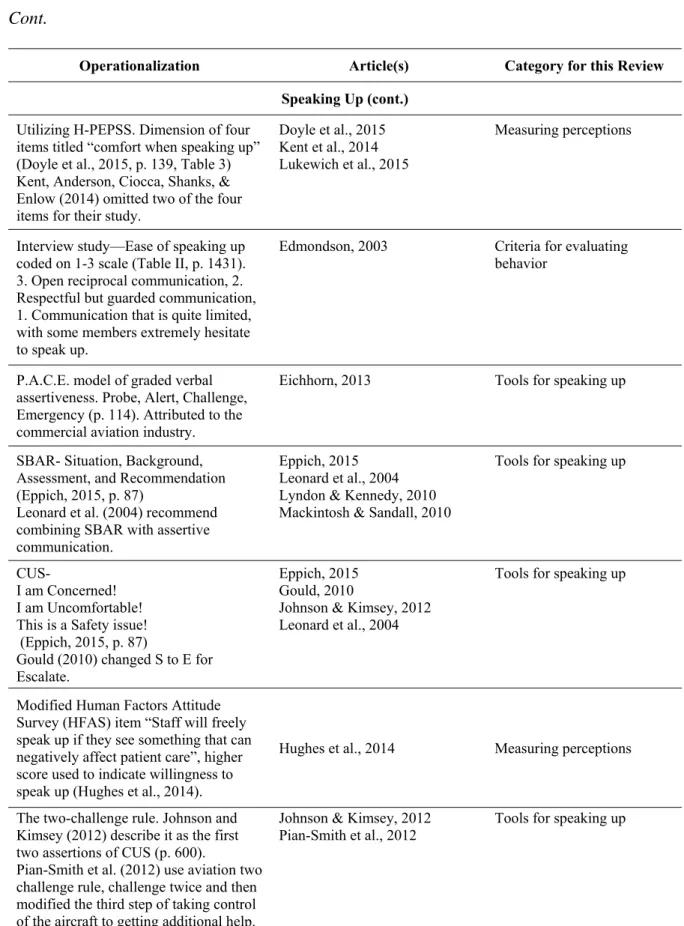
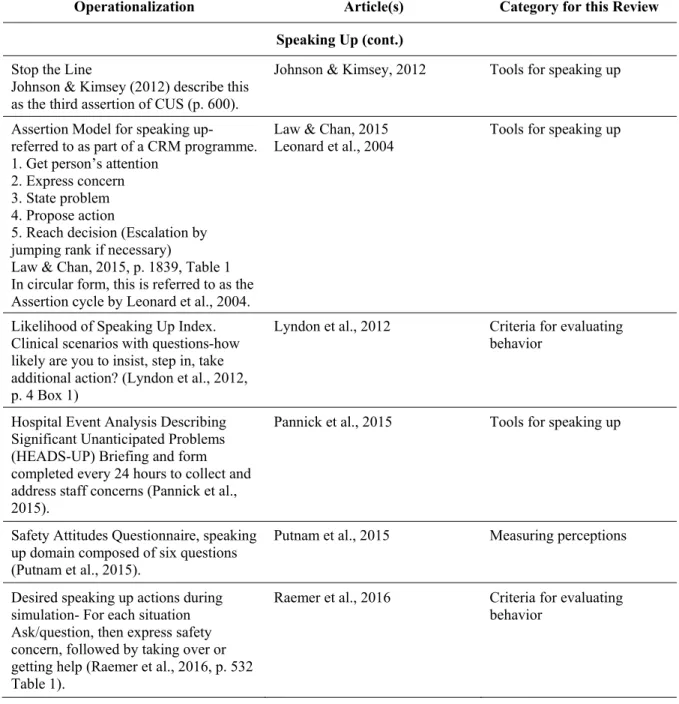
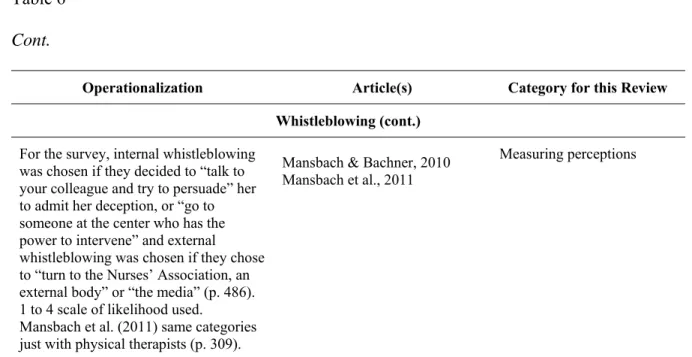
instrument wordings and suggested speaking up tools. Table 6 reviews the
operationalizations found in the articles.
Twenty-two operationalizations were pulled from the articles; 19 were
operationalizations of speaking up and three of whistleblowing (Table 6). The
operationalizations fell primarily under measured perceptions of speaking up and
whistleblowing or were tools to increase speaking up behaviors. Seven of the
operationalizations were survey items that measured perceptions of willingness to speaking
up or blow the whistle (Bowman, Neeman, & Sehgal, 2013; Dendle et al., 2013; Doyle,
VanDenKerkhof, Edge, Ginsburg, & Goldstein, 2015; Hughes et al., 2014; Mansbach &
Bachner, 2010; Putnam et al., 2015; Raemer et al., 2016; Reader, Flin, Mearns, &
Cuthbertson, 2007). For example, Dendle et al. (2013) surveyed physicians about their
“willingness to prompt” other doctors to perform hand hygiene, using the terms to “ask” or
“remind” (pp. 72–73). Responses were then reported in the article as “Willingness of medical
staff to ‘speak up’ if a doctor does not perform HH (hand hygiene)” (Dendle et al., 2013, p.
73). Of the remaining 14 operationalizations, eight were tools for speaking up. The CUS (I
am Concerned, I am Uncomfortable, This is a Safety issue) tool was the most commonly
referenced, though Gould (2010) changed the S to an E for ‘escalate.’ Only Johnson and
Kimsey (2012) reported actually teaching CUS. The other articles referred to the CUS tool as
a recommendation or possible intervention (Eppich, 2015; Gould, 2010; Leonard et al.,
2004). The Situation Background Assessment Recommendation (SBAR) tool was discussed
but not used as an intervention (Eppich, 2015; Leonard et al., 2004; Lyndon & Kennedy,
reported to be taught in their intervention) and provided outcomes related to their use. The
one written speaking up tool, Hospital Event Analysis Describing Significant Unanticipated
Problems (HEADS-UP), was described but no data about its use was available (Pannick et
al., 2015). The other tools discussed were mentioned as recommendations or suggestions for
interventions (Table 6).
Table 6
Operationalizations of Speaking Up and Whistleblowing
Operationalization Article(s) Category for this Review
Speaking Up “The student was considered to have
spoken up if she or he refused to cut the tissue, clearly stating that a burn is needed before a cut; or if the student refused to cut the tissue and asked the surgeon about the need to burn before cutting” (p. 1004).
Barzallo et al., 2014 Criteria for evaluating behavior
“A member of the surgical team raised a specific concern about possible wrong site surgery at any point before incision” (p. 218).
Blanco et al., 2009 Criteria for evaluating behavior
Utilizing HSOPSC. Communication Openness composite defined as “staff freely speak up if they see something that may negatively affect a patient and feel free to question those with more authority” (Sorra et al., 2016, p. 3).
Bowman et al., 2013 Bump et al., 2015
Burstrom, L., Letterstal, A., Engstrom, M. L., Berglund, A., & Enlund, 2014
El-Jardali, Sheikh, Garcia, Jamal, & Abdo, 2014 Fan et al., 2016
Khater, Akhu-Zaheya, Al-Mahasneh, & Khater, 2015 Mayer et al., 2011
Mazur et al., 2015 Nie et al., 2013 Patterson et al., 2013
Measuring perceptions
Three Color Flag System of Speaking Up Behaviors
Table 1, p. 183
Though examples of best responses are given, not a broad operationalization
Craig & Banja, 2010 Tools for speaking up
Survey, perceived willingness to ask
Table 6
Cont.
Operationalization Article(s) Category for this Review
Speaking Up (cont.)
Utilizing H-PEPSS. Dimension of four items titled “comfort when speaking up” (Doyle et al., 2015, p. 139, Table 3) Kent, Anderson, Ciocca, Shanks, & Enlow (2014) omitted two of the four items for their study.
Doyle et al., 2015 Kent et al., 2014 Lukewich et al., 2015
Measuring perceptions
Interview study—Ease of speaking up coded on 1-3 scale (Table II, p. 1431). 3. Open reciprocal communication, 2. Respectful but guarded communication, 1. Communication that is quite limited, with some members extremely hesitate to speak up.
Edmondson, 2003 Criteria for evaluating behavior
P.A.C.E. model of graded verbal assertiveness. Probe, Alert, Challenge, Emergency (p. 114). Attributed to the commercial aviation industry.
Eichhorn, 2013 Tools for speaking up
SBAR- Situation, Background, Assessment, and Recommendation (Eppich, 2015, p. 87)
Leonard et al. (2004) recommend combining SBAR with assertive communication.
Eppich, 2015 Leonard et al., 2004 Lyndon & Kennedy, 2010 Mackintosh & Sandall, 2010
Tools for speaking up
CUS-
I am Concerned! I am Uncomfortable! This is a Safety issue! (Eppich, 2015, p. 87)
Gould (2010) changed S to E for Escalate.
Eppich, 2015 Gould, 2010
Johnson & Kimsey, 2012 Leonard et al., 2004
Tools for speaking up
Modified Human Factors Attitude Survey (HFAS) item “Staff will freely speak up if they see something that can negatively affect patient care”, higher score used to indicate willingness to speak up (Hughes et al., 2014).
Hughes et al., 2014 Measuring perceptions
The two-challenge rule. Johnson and Kimsey (2012) describe it as the first two assertions of CUS (p. 600).
Pian-Smith et al. (2012) use aviation two
Johnson & Kimsey, 2012
Table 6
Cont.
Operationalization Article(s) Category for this Review
Speaking Up (cont.)
Stop the Line
Johnson & Kimsey (2012) describe this as the third assertion of CUS (p. 600).
Johnson & Kimsey, 2012 Tools for speaking up
Assertion Model for speaking up- referred to as part of a CRM programme. 1. Get person’s attention
2. Express concern 3. State problem 4. Propose action
5. Reach decision (Escalation by jumping rank if necessary)
Law & Chan, 2015, p. 1839, Table 1 In circular form, this is referred to as the Assertion cycle by Leonard et al., 2004.
Law & Chan, 2015
Leonard et al., 2004 Tools for speaking up
Likelihood of Speaking Up Index. Clinical scenarios with questions-how likely are you to insist, step in, take additional action? (Lyndon et al., 2012, p. 4 Box 1)
Lyndon et al., 2012 Criteria for evaluating behavior
Hospital Event Analysis Describing Significant Unanticipated Problems (HEADS-UP) Briefing and form completed every 24 hours to collect and address staff concerns (Pannick et al., 2015).
Pannick et al., 2015 Tools for speaking up
Safety Attitudes Questionnaire, speaking up domain composed of six questions (Putnam et al., 2015).
Putnam et al., 2015 Measuring perceptions
Desired speaking up actions during simulation- For each situation Ask/question, then express safety concern, followed by taking over or getting help (Raemer et al., 2016, p. 532 Table 1).
Table 6
Cont.
Operationalization Article(s) Category for this Review
Speaking Up (cont.) Local survey, two scales dealing with
speaking up—“Communication openness between nurses and doctors” and Communication openness within groups” defined as “the extent to which ICU nurses and doctors/ team members within a group (e.g., between doctors) can speak openly with one another without fear of negative repercussions or misunderstanding” (Reader et al., 2007, p. 349, Table 2).
Reader et al., 2007 Measuring perceptions
Whistleblowing
Conditions for it to be Whistleblowing-
An individual performs an (unauthorized) action or series of actions intended to make information public
the information is made a matter of public record
the information is about possible or actual, non-trivial wrongdoing in an organization
the individual who performs the action is a member or former member of the organization
Also, usually made to someone with the power to either make change or exert pressure on those with that power. (Johnstone, 2004, p. 15).
Johnstone, 2004
Attributed to Vinten, 1994, pp. 256-257
Criteria for evaluating behavior
The process of whistleblowing:
Discovery—the wrongdoing is observed Evaluation—the wrongdoing is
evaluated as wrong or illegal
Decision—to report the wrongdoing, or not. Reaction to the whistleblowing Evaluation of the reaction
(Kelly & Jones, 2013, p. 184).
Kelly & Jones, 2013 Attributed to Bjorkelo et al., 2011
Table 6
Cont.
Operationalization Article(s) Category for this Review
Whistleblowing (cont.)
For the survey, internal whistleblowing was chosen if they decided to “talk to your colleague and try to persuade” her to admit her deception, or “go to someone at the center who has the power to intervene” and external whistleblowing was chosen if they chose to “turn to the Nurses’ Association, an external body” or “the media” (p. 486). 1 to 4 scale of likelihood used.
Mansbach et al. (2011) same categories just with physical therapists (p. 309).
Mansbach & Bachner, 2010 Mansbach et al., 2011
Measuring perceptions
The remaining articles operationalized speaking up or whistleblowing in order to
evaluate whether or not it was done, categorized as criteria for evaluating behavior in Table
6. As an example, Blanco et al. (2009), in their retrospective review of operating room errors
and near misses gave credit for speaking up if “A member of the surgical team raised a
specific concern about possible wrong site surgery at any point before incision” (p. 218). In
contrast, study participants in Barzello-Salazar et al. (2014) “were considered to have spoken
up if they questioned the instruction and did not cut” (p. 1001). Barzello-Salazar et al. (2014)
required action beyond speech for the participant to have spoken up; Blanco et al. (2009)
only required the speech act itself. Of the seven articles that operationalized speaking up or
whistleblowing in order to evaluate whether or not it was done, four counted the speech act
itself (Blanco et al., 2009; Edmondson, 2003; Johnstone, 2004; Kelly & Jones, 2013), and
three required an action beyond speech (Barzello-Salazar et al., 2014; Lyndon et al., 2012;
Interventions to Increase Speaking Up Behaviors
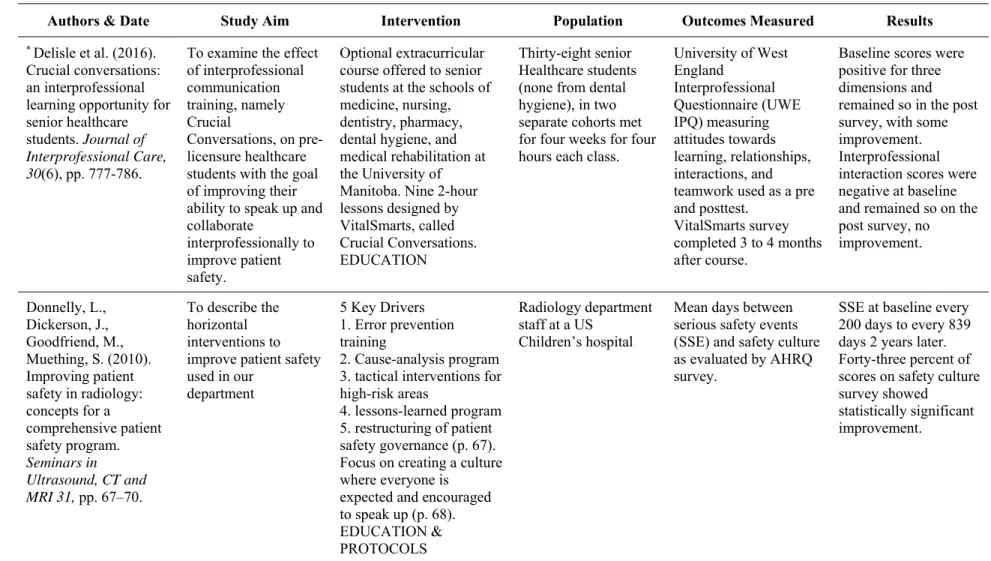
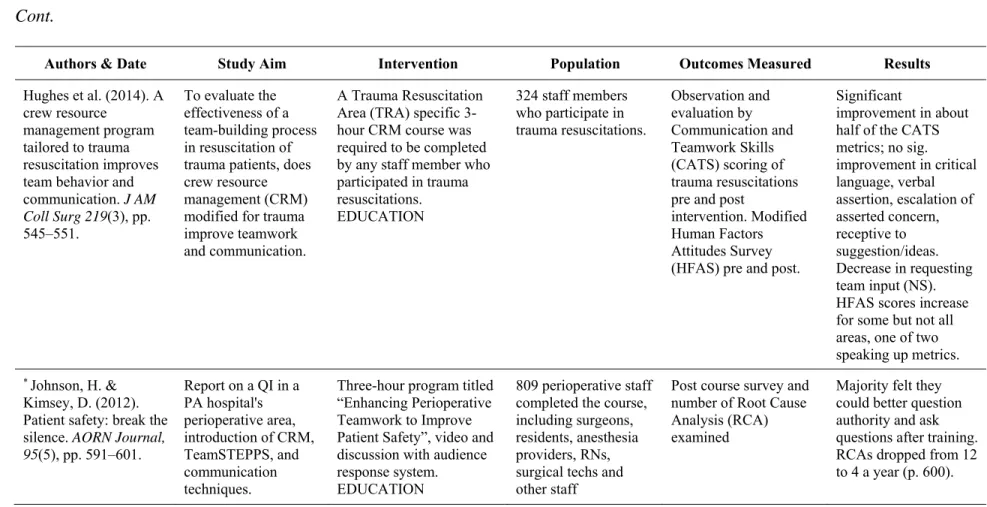
Although 26 intervention studies were found in this literature review, only 16 of the
interventions were even peripherally related to increasing speaking up behaviors. The other
ten were interventions that were not aimed at speaking up behaviors (e.g., Burstrom et al.’s
(2014) study on changing the order of triage in EDs in Sweden). Table 7 lists the 16
interventions related to speaking up behaviors, along with population, outcomes measured,
type of intervention, and results. This includes studies that did not have increasing speaking
up behaviors as an aim or that spent little time discussing speaking up. Only ten studies
clearly had increasing speaking up behaviors as an aim of their intervention (see Table 7
note). Of outcomes reviewed, only seven studies of the 16 studies had outcomes related to
patient safety directly; the majority looked at perceptions or responses in a simulated
environment. Of those seven, five were not testing an intervention aimed at speaking up
behaviors; only two studies examined speaking up behavior interventions and actual patient
safety indicators for outcomes (Johnson & Kimsey, 2012; Pannick et al., 2015).
Only one intervention study specifically aimed to increase speaking up behaviors had
practicing nurses as the study population (Sayre et al., 2012a, 2012b). Of the remaining nine
studies, one sampled nursing students, four involved physicians and/or medical students,
three involved all unit providers in mental health, perioperative, and medical-surgical units,
and the remaining study used a variety of healthcare students. (Ashton, 2014;
Barzallo-Salazar et al., 2014; Delisle, Grymonpre, Whitley, & Wirtzfeld, 2016; Johnson & Kimsey,
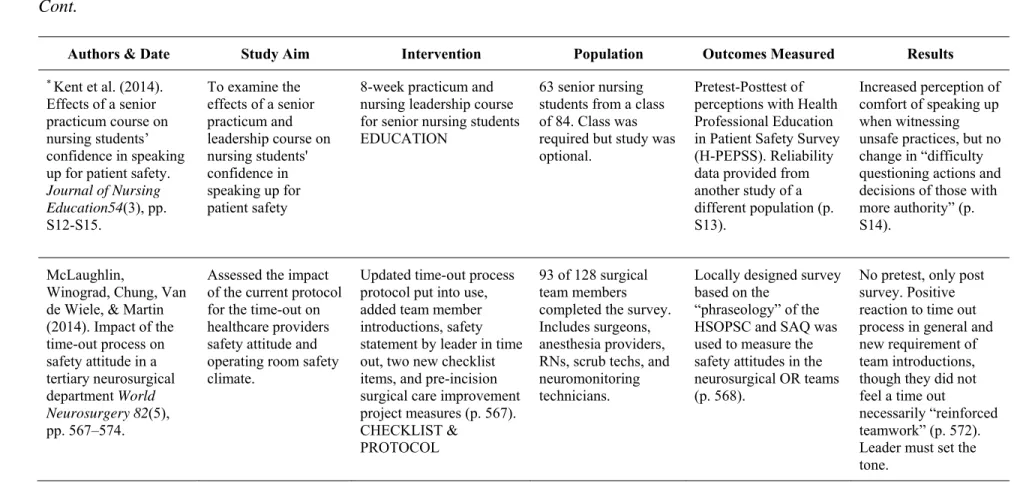
2012; Kent et al., 2014; O’Connor, Byrne, O’Dea, McVeigh, & Kerin, 2013; Pannick et al.,
37
Table 7
Interventions Reported
Authors & Date Study Aim Intervention Population Outcomes Measured Results
* Ashton, S. 2014. Leadership walkrounds in mental health care.
Nursing Times, 110(23), pp. 21-23.
QI report- Patient safety walkrounds enable staff to raise concerns with senior executives. Their use in one mental health trust led to
improvements in safety and care.
The “executive team” conducts scheduled unit walkrounds two times a month, allowing “staff to raise concerns with senior executives before
incidents occur” (p.21) LEADERSHIP INVOLVEMENT
Inpatient mental health unit staff
Unclear. The article mentions improvements, but no expected
outcomes are listed beyond allowing concerns to be raised and demonstrating visible commitment to safety issues.
Reports completion of 90% of identified “actions”, some examples give on p. 22. Unclear how measured for many, like “physical healthcare for inpatients has been improved” (p. 22).
* Barzallo-Salazar et al. 2014. Influence of surgeon behavior on trainee willingness to speak up: a randomized controlled trial. Journal of the American College of Surgery, 219(5), pp. 1001-1007.
To determine if surgeon's behaviors can encourage or discourage trainees from speaking up when they witness a surgical mistake.
Medical students were randomized to either an “encouraged” or “discouraged” group assisting in a simulated surgical case. The surgeon proceeded to give an incorrect instruction to cut during the simulation. Students were judged to have spoken up “if they questioned the instruction and did not cut” (p. 1001). ENCOURAGEMENT & SIMULATION
55 medical students Whether or not the student spoke up. They also measured
personality bias with two validated
personality tests before simulation.