A risk scoring system for resource-limited settings
By
James Nugent
A Master’s Paper submitted to the faculty of the University of North Carolina at Chapel Hill
in partial fulfillment of the requirements for the degree of Master of Public Health in
the Public Health Leadership Program
Chapel Hill
2012
[Signature]
Advisor [Printed name]
Date
[Signature]
Second Reader [Printed name]
Predicting mortality in HIV-infected children initiating highly active antiretroviral therapy: A risk
scoring system for resource-limited settings
Background: Access to highly active antiretroviral therapy (HAART) among HIV-infected children in
sub-Saharan Africa is increasing. WHO estimated that 387,500 children were receiving HAART in this region at the end of 2010. Recent studies have demonstrated that children starting HAART in resource-poor countries can achieve similar outcomes to children in resource-rich countries. However, mortality rates remain higher in resource-poor countries, especially during the first six months of therapy. Despite scaled-up HAART programs, no prognostic models predicting risk of death are available for children initiating HAART in resource-limited settings. Current clinical prediction tools for HIV-infected children are derived from pre-HAART data and therefore cannot predict mortality in children on HAART. The purpose of this study was to develop a mortality risk scoring system for HAART-naïve, HIV-infected children beginning therapy in a resource-limited setting. In addition, we have conducted a systematic review of the literature identifying the risk factors associated with early mortality and the causes of early death in children initiating HAART (Appendix).
Methods: Observational data were collected and analyzed from HIV-infected children initiating HAART
Results: By April 2012, 1005 children had initiated HAART with 3017.4 child-years of follow-up (median 30.8 months on HAART). One hundred children (10.0%) died at a median of 5.3 months post-HAART initiation, yielding a mortality rate of 3.3 deaths (95% CI: 2.7-4.0) per 100 child-years. The final multivariable model included female gender, anemia, severe malnutrition, presence of HIV symptoms, low total lymphocyte count, and age greater than 5 years. These determinants were highly predictive of mortality (C-statistic=0.81). The discriminative ability of our model was comparable to existing pediatric AIDS survival scores that do not account for HAART (C-statistic=0.84).
Conclusions: Mortality risk among children starting HAART in this resource-limited setting can be
Introduction
Human immunodeficiency virus (HIV) infection disproportionately affects children in the
poorest parts of the world. There are 3.4 million children living with HIV and more than 90% of
these children live in sub-Saharan Africa.1 Highly active antiretroviral therapy (HAART) has
reduced mortality substantially, with 90% of adults and children alive one year following
HAART initiation.2-4 While untreated adults survive an average of 10 years after
seroconversion,5,6 more than half of untreated infants die by two years of age.6-9 Yet only 23%
of therapy-indicated children are currently receiving HAART, compared to 51% of adults.1
Nevertheless, access to HAART for HIV-infected children is increasing, which is vital as
diagnostics improve and treatment guidelines expand.10-13 The World Health Organization
(WHO) estimated that 456,000 children were receiving HAART in low- and middle-income
countries at the end of 2010, compared to 127,000 in 2006.1 Recent studies have demonstrated
that children starting HAART in resource-poor countries can achieve similar outcomes to
children in resource-rich countries.14,15 However, mortality remains higher in resource-poor
countries, especially during the first six months of treatment.16,17 Despite scaled-up HAART
programs, no prognostic models predicting risk of death are available for children initiating
HAART in resource-limited settings. Current clinical prediction tools for HIV-infected children
are derived from pre-HAART data and therefore cannot predict mortality in children on
HAART.18,19
The purpose of this study was to develop a mortality risk scoring system for
significant predictors of mortality will help clinicians target modifiable risk factors that are not
addressed by HAART.
Methods
Study population. The source of data for this study was a comprehensive HIV care and
treatment program serving children and family members at Kalembe Lembe Pediatric Hospital
and Bomoi Health Care Center in Kinshasa, Democratic Republic of the Congo (DRC). Clinical
and laboratory follow-up, cotrimoxazole prophylaxis, treatment of opportunistic and common
infections, psychosocial support, and HAART were provided free of charge to the children. The
population for this analysis was the HIV-infected, HAART-naïve children who started HAART
between December 2004 and April 2012.
Procedures. At the initial HIV care visit, data were collected on age, weight, height, WHO
clinical stage, CD4 cell count and percentage, hemoglobin, and commonly diagnosed
opportunistic infections. The decision to initiate HAART was made at each clinic visit based on
physician assessment and both national and WHO guidelines.10-13 The parents or guardians of
HAART-eligible children were counseled for adherence; HAART was initiated as soon as one
week after the visit in which the child became eligible, and children were followed monthly or
when they required medical attention. Children not yet eligible for HAART were reassessed at
three month intervals or when in need of medical attention. HIV infection was confirmed by
CD4 percentage and count were measured at the enrollment visit and every six months
thereafter at the DRC National AIDS Reference Laboratory. Viral load was not routinely
assessed because of infrequent availability of the assay. Standard first-line treatment was triple
therapy consisting of zidovudine (AZT) or stavudine (d4T), lamivudine (3TC), and nevirapine
(NVP) or efavirenz (EFV). Single drug substitutions in case of toxicity included d4T for AZT or
AZT for d4T, 3TC for abacavir (ABC) or ABC for 3TC, and NVP for EFV/nelfinavir (NLF) or
EFV/NLF for NVP. Children who withdrew from care or could not be located by three tracking
attempts after a missed visit were classified as lost to follow-up. Children who were lost to
follow-up were censored at the date of last clinic visit.
All parents or guardians of children signed informed consent for participation. Children
older than 12 years of age assented and children older than 8 years of age received an
information sheet about the study before enrollment. The data analysis was approved by the
Institutional Review Board of the University of North Carolina at Chapel Hill.
Statistical analysis. Total time of follow-up was calculated using the date of the last
registered clinic visit. Time to mortality was assessed for subjects from the date of HAART
initiation to the date of death. Mortality rates overall, at 90 days of therapy (including day 90),
and after 90 days of therapy were calculated with 95% confidence intervals. These time points
are consistent with prior convention.20
Cox proportional hazards models were constructed to assess associations between
mortality and demographic and clinical characteristics at time of HAART initiation. Children
who were alive on 31 March 2012 were right-censored for the survival functions and Cox
at the three month visit after initiating HAART were right-censored in the 90-day mortality
model. Survival functions were estimated using the Kaplan-Meier product-limit method and
survival function homogeneity was assessed using the log-rank test.
Associations between mortality and 11 covariates thought to be important correlates of
mortality after HAART initiation were identified using Cox proportional hazards regression
(Table 3). Hemoglobin, severity of immunodeficiency, and total lymphocyte count (TLC) were recorded from the most recent laboratory visit prior to the start of HAART. Hemoglobin was
dichotomized at a cut-off value of 9 g/dl, below which children in low-income countries are
considered to have significant iron deficiency anemia.21 Severity of immunodeficiency was
calculated according to WHO guidelines using CD4 count or percentage and age at HAART
initiation.10 TLC was collapsed into 2 categories (<1200 cells/µl and ≥1200 cells/µl) because
TLC less than 1200 cells/µl is considered a good predictor of disease severity in the absence of
CD4 count.22 Age was stratified into 3 categories (<2 years, 2-5 years, ≥5 years) to reflect
current WHO treatment guidelines.13 Weight-for-age z-score (WAZ) and height-for-age z-score
(HAZ) at HAART initiation were calculated using 1978 National Center for Health Statistics
standards, as these standards gave the most consistent results throughout all age groups in
comparison to the 2000 Centers for Disease Control standards.23 Malnutrition was defined as
WAZ less than -2 standard deviations (SDs) below the median and severe malnutrition as WAZ
less than -3 SDs.20,23 Stunting and severe stunting were defined as HAZ less than -2 SDs and
less than -3 SDs, respectively.24 HIV-related symptoms or conditions included one or more of
the following: Kaposi’s sarcoma, oral or esophageal candidiasis, severe weight loss, tuberculosis,
fever or diarrhea lasting one month or more, lymphocytic interstitial or Pneumocystis jirovecii
or HIV encephalopathy, or HIV-associated nephropathy.15 HIV-related symptoms were
considered present if recorded within one month of HAART initiation. Each variable was
represented using indicators with the least severe level as the referent category. The
characteristics of children between each age group were compared using the chi-squared test for
proportions and the Kruskal-Wallis and Wilcoxon Rank-Sum tests for median CD4 counts and
percentages (Table 1). Differences between age groups were considered significant at p<0.05. Unadjusted hazard ratios (HRs) were calculated using simple Cox proportional hazards
models for each variable. All variables were included in the original multivariable Cox
proportional hazards model. The final multivariable model was fit using backward selection to
eliminate non-significant variables at p<0.10. The proportional hazards assumption was tested
by examining Schoenfeld residuals for each variable in the final model in order to identify any
independent variables significantly correlated with death event times.25 In multivariable
analysis, only subjects with complete data were included. In univariate analysis, subjects were
included if they had complete data for the covariate of interest. No data were imputed.
Scoring system. To develop the clinical prediction rule, each variable in the multivariable
Cox proportional hazards model received a predictor score. As in prior published convention,
HRs with a magnitude greater than or equal to 1 and less than 4 received a score of 1 point, HRs
greater than or equal to 4 and less than 6 received a score of 2 points, and HRs greater than or
equal to 6 received a score of 3 points.18,19 Referent categories received a score of 0 points.
Predictor scores were summed to obtain an overall mortality risk score for each child beginning
HAART. Kaplan-Meier curves were stratified by total risk score to examine survival among
techniques using 250 resamples with replacement.26 Bootstrap-corrected 95% CIs were
calculated for each variable included in the final model. Performance of the model was
measured by Harrell’s C statistic.27 A C statistic of 0.5 indicates that the model has no ability to
discriminate between children who lived and children who died, while a C statistic of 1.0
indicates that the model has perfect discriminative ability. Statistical analyses were conducted
using StataSE 12.0 software (StataCorp LP, College Station, TX).
Results
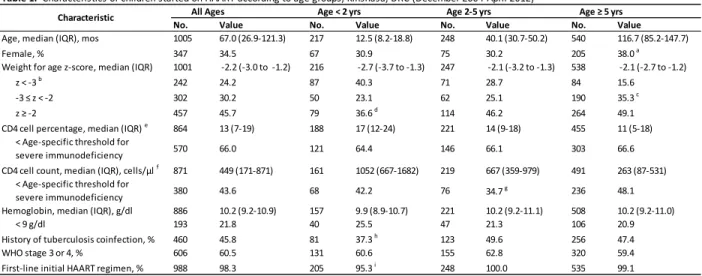
Characteristics of children on HAART. By April 2012, 1005 children had initiated HAART
with 3017.4 child-years of follow-up on HAART. Demographic and clinical characteristics of
these children are described in Table 1. At HAART initiation, 544 children (54.1%) were malnourished, and 242 (24.1%) were severely malnourished. The median CD4 percentage was
13% [interquartile range (IQR): 7-19%] and the median CD4 count was 449 cells/µl (IQR:
171-871). Children older than five years had lower CD4 counts and percentages than the other age
groups. At the start of HAART, 988 children (98.3%) received first-line therapy. Fifteen
children (1.5%) started on second-line therapy consisting of d4T/3TC/NLF, ABC/didanosine
(ddI)/NLF, AZT/ddI/NLF, or a lopinavir/ritonavir-based regimen (ABC/ddI/LPV/r). At the date
of HAART initiation, 986 children (98.1%) were receiving cotrimoxazole (CTX) prophylaxis,
Mortality. Median follow-up time on HAART was 30.8 months (IQR: 11.8-58.4). One
hundred children (10.0%) died at a median of 5.3 months (IQR: 1.0-21.8) post-HAART
initiation, yielding an overall mortality rate of 3.3 deaths per 100 child-years (95% CI: 2.7-4.0)
(Table 2). Forty-three of the 100 deaths occurred within 90 days of HAART initiation (mortality rate in the first 90 days of HAART: 18.1 deaths per 100 child-years; 95% CI: 13.4-24.4) and 51
deaths occurred within 6 months of HAART initiation. The mortality rate after 90 days of
HAART was 2.1 deaths per 100 child-years (95% CI: 1.6-2.7). Children older than five years
had the highest overall [3.7 deaths per 100 child-years (95% CI: 2.9-4.7)] and 90-day [22.7
deaths per 100 child-years (95% CI: 15.8-32.6)] mortality rates. Of the 1005 children initiating
HAART, 113 (11.2%) were lost to follow-up, 4 (0.4%) transferred care to another clinic, 17
(1.7%) voluntarily withdrew from the study, and 6 (0.6%) were deactivated for poor adherence.
No. Value No. Value No. Value No. Value
Age, median (IQR), mos 1005 67.0 (26.9-121.3) 217 12.5 (8.2-18.8) 248 40.1 (30.7-50.2) 540 116.7 (85.2-147.7)
Female, % 347 34.5 67 30.9 75 30.2 205 38.0 a
Weight for age z-score, median (IQR) 1001 -2.2 (-3.0 to -1.2) 216 -2.7 (-3.7 to -1.3) 247 -2.1 (-3.2 to -1.3) 538 -2.1 (-2.7 to -1.2)
z < -3 b 242 24.2 87 40.3 71 28.7 84 15.6
-3 ≤ z < -2 302 30.2 50 23.1 62 25.1 190 35.3 c
z ≥ -2 457 45.7 79 36.6 d 114 46.2 264 49.1
CD4 cell percentage, median (IQR) e 864 13 (7-19) 188 17 (12-24) 221 14 (9-18) 455 11 (5-18)
< Age-specific threshold for
severe immunodeficiency 570 66.0 121 64.4 146 66.1 303 66.6 CD4 cell count, median (IQR), cells/µl f 871 449 (171-871) 161 1052 (667-1682) 219 667 (359-979) 491 263 (87-531)
< Age-specific threshold for
severe immunodeficiency 380 43.6 68 42.2 76 34.7
g 236 48.1
Hemoglobin, median (IQR), g/dl 886 10.2 (9.2-10.9) 157 9.9 (8.9-10.7) 221 10.2 (9.2-11.1) 508 10.2 (9.2-11.0)
< 9 g/dl 193 21.8 40 25.5 47 21.3 106 20.9
History of tuberculosis coinfection, % 460 45.8 81 37.3 h 123 49.6 256 47.4
WHO stage 3 or 4, % 606 60.5 131 60.6 155 62.8 320 59.4
First-line initial HAART regimen, % 988 98.3 205 95.3 i 248 100.0 535 99.1
Table 1. Characteristics of children started on HAART according to age groups, Kinshasa, DRC (December 2004-April 2012)
a Significantly different from proportion of children 24-59 months b Proportion of children in each age group is significantly different c,d,h,i
Significantly different from proportion of children in other age groups
g Significantly different from proportion of children ≥60 months
All Ages Age < 2 yrs Age 2-5 yrs Age ≥ 5 yrs Characteristic
Univariate assessment of mortality risk. Univariate associations between demographic and
clinical characteristics and both 90-day and overall mortality are shown in Table 3. HIV-related symptoms, anemia, CD4 count below the threshold for severe immunodeficiency, CD4 percent
below the threshold for severe immunodeficiency, severe malnutrition, severe stunting, WHO
clinical stage 3 or 4, and low TLC were significantly associated with both 90-day and overall
mortality. Age and gender were not significantly associated with mortality in the univariate
analysis.
Multivariable assessment of mortality risk. In multivariable analysis, female gender
(p=0.083), HIV-related symptoms (p=0.002), anemia (p=0.042), age more than five years
(p=0.002), severe malnutrition (p<0.001), and low TLC (p<0.001) were associated with overall
mortality at a significance level of p<0.10 (Table 3). In the 90-day mortality model, presence of HIV-related symptoms was no longer associated with mortality after adjusting for other risk
factors. WHO clinical stage 3 or 4 (p=0.0102) was significantly associated with 90-day
mortality in the multivariable model.
No. Deaths Follow-up, child-years
Mortality rate per 100 child-years (95%CI)
All children
Overall 999 a 100 3017.4 3.3 (2.7-4.0)
Within 90 d 999 43 237.8 18.1 (13.4-24.4)
After 90 d 910 57 2779.6 2.1 (1.6-2.7)
Children aged <2 yrs
Overall 216 18 525.6 3.4 (2.2-5.4)
Within 90 d 216 7 51.0 13.7 (6.5-28.8)
After 90 d 192 11 474.6 2.3 (1.3-4.2)
Children aged 2-5 yrs
Overall 246 17 737.7 2.3 (1.4-3.7)
Within 90 d 246 7 58.9 11.9 (5.7-24.9)
After 90 d 225 10 678.8 1.5 (0.8-2.7)
Children aged ≥5 yrs
Overall 537 65 1754.1 3.7 (2.9-4.7)
Within 90 d 537 29 127.9 22.7 (15.8-32.6)
After 90 d 493 36 1626.2 2.2 (1.6-3.1)
a Six children were censored on the date of HAART initiation and therefore contributed 0 child-time
Derivation of scoring system. The six determinants associated with overall mortality in the
final Cox proportional hazards model were used to create the mortality risk scoring system. For
each variable in the final Cox proportional hazards model, the HR received a mortality risk score
(Table 4). Female gender, age≥5 years, presence of HIV-related symptoms or conditions, severe anemia, and severe malnutrition were scored as 1. Low TLC was scored as 2. Each child
initiating HAART was assigned a total risk score based on the individual’s risk factor profile.
By this method, a male child initiating HAART at age 10 months with a WAZ of -3.5, a
hemoglobin of 8 g/dl, a TLC of 2000 cells/µl, and no HIV-related symptoms within the last
month would have a score of 2: 0 (male) + 0 (age<5 years) + 1 (WAZ<-3) + 1 (hemoglobin<9
g/dl) + 0 (TLC ≥1200 cells/µl) = 2. This total score distinguished children with a poorer
prognosis, as reflected by the Kaplan-Meier survival curves for the higher risk scores compared
to those for the lower risk scores plotted in Figure 1. The median total score at the start of
Univariate HR (95% CI) p value
Multivariate HR (95% CI) p value
Univariate HR (95% CI) p value
Multivariable HR (95% CI) p value Age group
<2 yrs 217
2-5 yrs 248 0.9 (0.3-2.5) 0.796 0.7 (0.4-1.5) 0.394
≥5 yrs 540 1.7 (0.7-3.8) 0.228 3.1 (1.4-7.3) 0.007 1.3 (0.7-2.1) 0.390 3.2 (1.5-6.6) 0.002
Gender
Male 658
Female 347 1.6 (0.9-3.0) 0.109 2.1 (1.1-4.2) 0.028 1.1 (0.8-1.7) 0.570 1.7 (0.9-3.1) 0.083
HIV symptoms or conditions
Symptoms present 218 2.2 (1.0-5.0) 0.048 2.7 (1.7-4.4) <0.001 2.5 (1.4-4.6) 0.002
Symptoms absent 408
WHO clinical stage
Stage 1 or 2 396
Stage 3 or 4 606 5.1 (2.0-13.0) 0.001 4.6 (1.4-15.4) 0.012 2.2 (1.4-3.5) 0.001
CD4 cell count
Above threshold 491
Below threshold (for severe immunodeficiency) 380 2.4 (1.2-4.7) 0.013 3.3 (2.1-5.3) <0.001
CD4 cell percentage
Above threshold 294
Below threshold (for severe immunodeficiency) 570 2.6 (1.1-6.3) 0.031 2.1 (1.2-3.6) 0.007
History of tuberculosis
Present 460 1.5 (0.8-2.7) 0.195 1.3 (0.9-1.9) 0.232
Absent 545
Hemoglobin
<9 g/dl 193 2.0 (1.0-3.9) 0.046 1.4 (0.7-2.8) 0.400 1.7 (1.1-2.7) 0.018 1.9 (1.0-3.4) 0.042
≥9 g/dl 693
Weight for age z-score
<-3 242 5.6 (3.0-10.5) <0.001 6.4 (3.1-13.2) <0.001 3.4 (2.3-5.0) <0.001 3.4 (1.8-6.5) <0.001
≥-3 759
Height for age z-score
<-3 252 2.7 (1.5-5.0) 0.001 1.6 (1.1-2.5) 0.022
≥-3 748
Total lymphocyte count
<1200 cells/µl 74 5.8 (3.0-11.5) <0.001 4.3 (2.1-8.8) <0.001 5.1 (3.1-8.4) <0.001 4.3 (2.2-8.4) <0.001
≥1200 cells/µl 707
Table 3. Factors associated with 90-day and overall mortality in children starting HAART, Kinshasa, DRC (December 2004-April 2012)
Characteristic No.
HAART was 2 (IQR: 1-3). In a Cox proportional hazards model in which the total score was
fitted as a continuous covariate, there was a 132% (95% CI: 89%-185%) increase in mortality
risk per one unit increase in total score. The final model had good discriminative ability, with a C
statistic of 0.81.
Figure 1. Kaplan-Meier survival plot of the mortality risk scoring system including gender, presence of HIV-related symptoms, age≥5 years, severe anemia, severe malnutrition, and low TLC within the study population (n=1005).
Multivariate HR Mortality risk score
Age group
≥5 yrs 3.2 1
Gender
Female 1.7 1
HIV symptoms or conditions
Symptoms present 2.5 1
Hemoglobin
<9 g/dl 1.9 1
Weight for age z-score
<-3 3.4 1
Total lymphocyte count
<1200 cells/µl 4.3 2
Table 4. Mortality risk scoring system for children initiating HAART,
Kinshasa, DRC (December 2004-April 2012)
0 .0 0 0 .2 5 0 .5 0 0 .7 5 1 .0 0 S u rv iv a l d is tri b u ti o n f u n c ti o n
0 20 40 60 80
Months from HAART initiation
total score = 0 total score = 1 total score = 2 total score = 3 total score = 4 total score = 5 total score = 6
C-statistic = 0.81
Discussion
Increasing access to HAART for HIV-infected children in sub-Saharan Africa requires
that clinicians be able to predict prognosis in children beginning therapy. Since mortality rates
are highest within the first 90 days of initiating HAART, it is critical that clinicians identify risk
factors associated with early mortality. Our study describes factors that place children at
increased risk for early mortality and develops a scoring system to assess overall prognosis in
children with multiple risk factors.
We found that female gender, severe malnutrition, low TLC, severe anemia, and age
greater than five years were significantly associated with mortality, both overall and during the
first 90 days of HAART. The presence of HIV-related symptoms was significantly associated
with overall mortality, while WHO clinical stage was a significant predictor of early mortality.
Our results are consistent with previous studies in African pediatric cohorts showing that female
gender, HIV symptoms, low weight-for-age z-score, WHO clinical stage, anemia, and low TLC
are strongly associated with mortality after HAART initiation.8,23,28-34
One interesting finding from our study was the increased risk of mortality in children
older than five years after controlling for other risk factors. At the time of HAART initiation,
children in this age group had significantly lower CD4 counts and percentages. Severity of
immunodeficiency, which accounts for age-related differences in CD4 values, was greater in this
age group but not significantly greater. In contrast, several studies of HIV-infected children in
sub-Saharan Africa have found that age less than three years is significantly associated with
mortality.20,28,34,35 As in our study, in which 53.7% of children were in the oldest age group,
age of five years, 62-89% of untreated, HIV-infected children have died in other African
cohorts.9,36,37 Children who survive beyond five years without HAART may have slower disease
progression on HAART, resulting in lower mortality rates in this age group.
Our study, however, found age over five years at the start of HAART to be significantly
associated with mortality. Delayed HIV diagnosis may contribute to the increased mortality rate
in this age group. Antibody-based assays for HIV diagnosis perform poorly in infants and
virological assays were not yet widely available at the start of our study.38 Therefore,
HIV-exposed children often enter treatment programs at older ages in sub-Saharan Africa when they
are presenting with advanced disease. In our study, children in the oldest age group had the
lowest median CD4 percent (11%) and CD4 count (263 cells/µl), placing them at increased risk
for poor immunologic response on HAART.39 Three cohort studies in developed countries have
observed that younger children initiating HAART are more likely to experience longer-term and
faster increases in CD4 percent.40-42 The increased mortality risk seen in younger children in
other resource-limited settings suggests that these children may not be achieving the same
immunological response on HAART.3,20,28,34,35 Older children are more likely to experience
virological failure and drug resistance on HAART.43-45 Improved understanding of mortality risk
factors in older children on HAART is needed as more perinatally-infected children survive into
adolescence, a time period when HIV-infected patients are often non-adherent.45,46
We observed high early mortality in this resource-limited setting (mortality rate during
the first 90 days of HAART: 18.1 deaths per 100 child-years), consistent with prior studies.15,20,23
Early mortality rates on HAART differ between resource-rich and resource-poor countries. In a
meta-analysis using adult data, the adjusted HR of mortality comparing low-income to
large cohort study comparing South African and Swiss patients initiating HAART found adjusted
HRs of mortality of 5.90 during months 1-3 and 1.77 during months 4-24, reflecting the higher
background mortality in South Africa.48 Comorbidities left untreated in resource-poor countries,
including invasive bacterial, mycobacterial, or fungal infections, may contribute to increased
mortality in these settings. Immune reconstitution inflammatory syndrome (IRIS), estimated to
occur in 11.5 to 19.0% of children initiating HAART, is another possible factor.49-51 Children in
resource-poor settings are at particularly high risk for IRIS because of the increased prevalence
of IRIS-associated infections in these areas. Pediatric HAART programs in low-resource
settings also face structural challenges such as inadequate access to safe water, food, and quality
health care, funding shortages, and interrupted supply chains for HIV drugs and diagnostics.1,13,23
Prognostic models for children starting HAART must account for these disparities
between resource-rich and resource-limited countries, as older age and increased disease severity
at the time of HAART initiation in sub-Saharan Africa prevent direct comparison with children
in resource-rich countries. The Pediatric AIDS Severity Score (PASS) is a severity staging
system that predicts mortality in HIV-infected children using baseline CD4 percentage, Centers
for Disease Control and Prevention disease category, body mass index, neuropsychological
score, general health rating, and symptoms score.19 The Simple PASS uses alternatives to CD4
percentage and HIV RNA levels to predict mortality in resource-limited settings where these
laboratory values may not be available.18 However, the Simple PASS was developed in a
U.S.-based cohort of HIV-infected children and therefore has limited generalizability to sub-Saharan
Africa. In addition, PASS was derived from a prospective cohort study including only those
children enrolled prior to the use of HAART (pre-1996).52 With increasing availability of
children less than two years of age irrespective of disease status,13 a risk scoring system is
needed to predict mortality in children initiating HAART.
Our mortality risk score was highly predictive of mortality, with a C statistic of 0.81.
The discriminative ability of our model was comparable to PASS (C statistic=0.84). This
scoring system can be used by clinicians to assess a child’s risk of death after HAART initiation
based on clinical history and simple laboratory assays. Identifying predictors of mortality may
also help clinicians target modifiable risk factors, like anemia and malnutrition, that are only
partially addressed by HAART.53-59 External validation of this model within pediatric
HIV-infected cohorts in other resource-limited settings is needed to confirm its utility in assessing
prognosis.
Our study has several limitations. HIV-related symptoms data were absent for patients
initiating HAART after 2010. Data for hemoglobin, TLC, CD4 count, and CD4 percentage were
also missing for many patients. WHO clinical stage was recorded at each clinic visit but often
evaluated in detail only at the initial enrollment visit. Nevertheless, this complete case analysis
describes predictors of mortality in a large cohort of HIV-infected children in sub-Saharan
Africa. It is possible that some of the 113 children (11.2%) lost to follow-up may have died, as
seen in other African pediatric cohorts.29,30 However, active tracking of children who missed
appointments decreased the likelihood that children who were classified as lost to follow-up had
actually died. The high mortality rate during the first 90 days of HAART (18.1 per 100
child-years, 95% CI: 13.4-24.4) and the comparatively lower rate of loss to follow-up (5.5 per 100
child-years, 95% CI: 3.2-9.4) during this high risk time period suggest that these children were
In conclusion, mortality risk among children starting HAART in this resource-limited
setting can be evaluated using a simple scoring system incorporating several readily available
factors. As more HIV-infected children are now eligible for HAART at the outset of care and
treatment programs continue to scale up, this scoring system, following external validation, can
help clinicians predict prognosis and counsel patients and families about expected outcomes and
Appendix
Early mortality in HIV-infected children initiating highly active antiretroviral treatment in resource-poor settings: A systematic review
Introduction
Most deaths in HIV-infected children on highly active antiretroviral therapy (HAART)
occur within the first 90 days of initiating treatment.2,15,20,23,28,32,34 Observational studies of
HIV-infected children beginning HAART have found that 37 to 99 percent of all deaths occur during
the first 90 days of treatment.32,60 Several pediatric cohort studies have assessed predictors of
overall mortality in HIV-infected children beginning antiretroviral therapy.3,8,23,28-34 However,
predictors of early mortality within the first three months of HAART initiation have been
insufficiently documented in these children.
More than 90 percent of the 1200 new pediatric HIV infections each day occur in
resource-limited settings.13 Yet only 23 percent of children in need of therapy are currently
receiving it.1 Disparities persist among children receiving treatment. HIV-infected children on
ART in resource-poor countries suffer higher mortality rates than children in resource-rich
countries, especially during the first three months of treatment.47,48,61
Higher mortality in resource-poor countries can be partly explained by lower initial CD4
counts and more advanced clinical stage. Immune reconstitution inflammatory syndrome (IRIS),
estimated to occur in 11.5 to 19.0 percent of children initiating HAART, may also contribute to
the increased mortality risk in these areas.49-51 Children in resource-poor settings are at
However, limited reporting on cause-of-death has prevented IRIS from being accurately
quantified in these populations.
Given the disproportionate early mortality burden carried by children in resource-limited
settings and the potential contribution of IRIS to these early deaths, a systematic review of the
literature is needed to better define the risk factors associated with mortality during the critical
90-day period following ART initiation. Current efforts to develop a clinical prediction rule
identifying those children who are at highest risk for early mortality after starting HAART will
benefit from such a review. In order to evaluate the role of IRIS in these early deaths, we need to
determine which deaths might be associated with immune reconstitution. Therefore, a
systematic review is also needed to describe reporting of causes of death within the first 90 days
of HAART initiation. This systematic review seeks to answer two key questions (KQ): (1) What
are the risk factors associated with mortality in HAART-naïve, HIV-infected children during the
first 90 days after HAART initiation in resource-poor settings? (2) What are the causes of death
among HAART-naïve, HIV-infected children who die within the first 90 days of initiating
HAART in resource-poor settings?
Methods
Data Sources and Selection
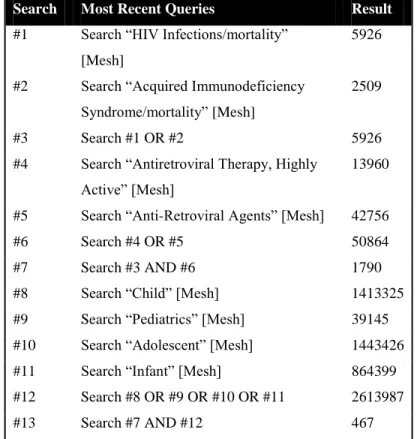
We searched the MEDLINE® database from inception to 1 February 2012 using Medical
Subject Headings (MeSH) as search terms with the full search strategy presented below in Figure
reference lists of pertinent narrative reviews and studies on this topic to look for any relevant
citations that might have been missed by our database searches.
Search Most Recent Queries Result
#1 Search “HIV Infections/mortality”
[Mesh]
5926
#2 Search “Acquired Immunodeficiency
Syndrome/mortality” [Mesh]
2509
#3 Search #1 OR #2 5926
#4 Search “Antiretroviral Therapy, Highly
Active” [Mesh]
13960
#5 Search “Anti-Retroviral Agents” [Mesh] 42756
#6 Search #4 OR #5 50864
#7 Search #3 AND #6 1790
#8 Search “Child” [Mesh] 1413325
#9 Search “Pediatrics” [Mesh] 39145
#10 Search “Adolescent” [Mesh] 1443426
#11 Search “Infant” [Mesh] 864399
#12 Search #8 OR #9 OR #10 OR #11 2613987
#13 Search #7 AND #12 467
Figure 1. Search strategy for MEDLINE using MeSH terms as available.
Study Selection
We reviewed cohort studies conducted in resource-poor settings that examined the effect
of HAART on mortality in HIV-infected, HAART-naïve children or assessed predictors of
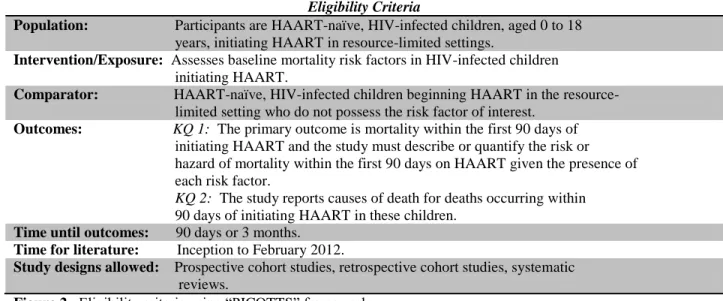
mortality in these children. We developed eligibility criteria (inclusion and exclusion criteria)
with respect to patient populations, interventions, comparisons, outcomes, settings, study
Eligibility Criteria
Population: Participants are HAART-naïve, HIV-infected children, aged 0 to 18 years, initiating HAART in resource-limited settings.
Intervention/Exposure: Assesses baseline mortality risk factors in HIV-infected children initiating HAART.
Comparator: HAART-naïve, HIV-infected children beginning HAART in the resource- limited setting who do not possess the risk factor of interest.
Outcomes: KQ 1: The primary outcome is mortality within the first 90 days of initiating HAART and the study must describe or quantify the risk or hazard of mortality within the first 90 days on HAART given the presence of each risk factor.
KQ 2: The study reports causes of death for deaths occurring within 90 days of initiating HAART in these children.
Time until outcomes: 90 days or 3 months. Time for literature: Inception to February 2012.
Study designs allowed: Prospective cohort studies, retrospective cohort studies, systematic reviews.
Figure 2. Eligibility criteria using “PICOTTS” framework.
All 471 titles and abstracts identified through searches were reviewed for eligibility
against our inclusion and exclusion criteria by a single reviewer (JN). The 39 studies marked for
possible inclusion underwent full-text review by the single reviewer to determine the final
studies to be included in this systematic review. All results were imported into EndNote X5®
for tracking and management.
Data Extraction and Data Management
Data from studies that met our inclusion criteria were abstracted into standard evidence
tables using Microsoft Excel® software. The evidence tables contained relevant information
from each article, including baseline characteristics of study populations, settings, intervention,
primary outcomes, incidence of mortality within the first 90 days of therapy, and important
predictors of early death.
Articles that met our inclusion criteria were critically appraised and assigned a quality
rating by a single reviewer (JN). To assess internal validity, we used standardized criteria based
on USPSTF guidelines (ratings: good, fair, poor) and the University of York Centre for Reviews
and Dissemination.62,63 Four internal validity categories (quality of study design, quality of
exposure measurement, quality of outcome assessment, and quality of statistical analysis) and
one external validity category were used to grade risk of bias and generalizability, respectively,
for each included study.63 Good quality studies require a grade of good in at least four of the five
quality categories with no grades of poor. Fair quality studies require a grade of good in at least
one of the five quality categories with no grades of poor. Poor quality studies have a fatal flaw
(defined as a methodological shortcoming that leads to a very high risk of bias) in one or more
categories.
Grading Strength of Evidence
We graded the overall strength of the body of evidence (ratings: high, moderate, low, or
insufficient) using established methodological criteria which incorporate four key domains: risk
of bias (which includes aggregate quality), consistency, directness, and precision of the
evidence.64
Results
Study Selection
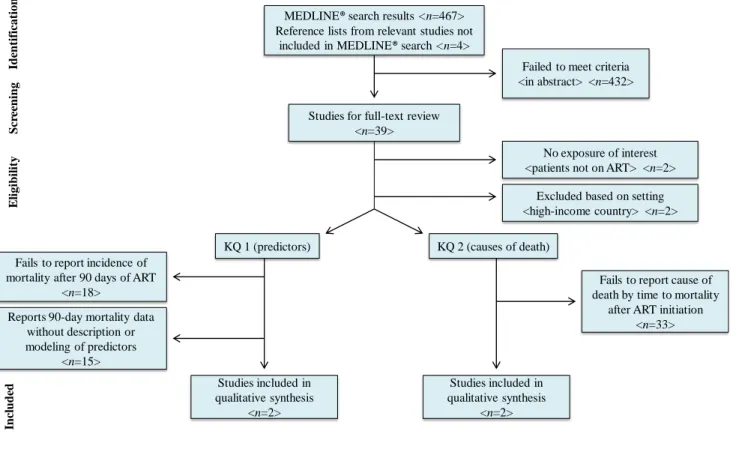
The flowchart for the study selection process is presented below. A total of 471 abstracts
and titles were screened. Of this total, 467 studies were obtained from MEDLINE® and an
screening, 432 articles were excluded because they failed to meet the inclusion criteria. We
proceeded to full-text review for the remaining 39 articles for each of the key questions. For KQ
1 (predictors), 37of the 39 articles were excluded for failing to meet inclusion criteria—failure to
report 90-day mortality data (n=18), failure to describe or model predictors of 90-day mortality
(n=15), exclusion based on setting (n=2), and exclusion because children did not receive
HAART (n=2). For KQ 2 (causes of death), 37 of the 39 articles were excluded for failing to
meet inclusion criteria—failure to report causes of death within the first 90 days of treatment
(n=33), exclusion based on setting (n=2), and exclusion because children did not receive
HAART (n=2). Two published articles from two studies were included for KQ 1 and two
MEDLINE®search results <n=467> Reference lists from relevant studies not
included in MEDLINE®search <n=4>
Failed to meet criteria <in abstract> <n=432> Studies for full-text review
<n=39>
No exposure of interest <patients not on ART> <n=2>
Excluded based on setting <high-income country> <n=2>
KQ 1 (predictors) KQ 2 (causes of death) Fails to report incidence of
mortality after 90 days of ART <n=18>
Reports 90-day mortality data without description or modeling of predictors
<n=15>
Studies included in qualitative synthesis
<n=2>
Fails to report cause of death by time to mortality
after ART initiation <n=33>
Studies included in qualitative synthesis
<n=2>
Id en tif icat ion S cr ee n in g E ligi b il it y In cl u d ed
Figure 3. Search and selection of studies for review.
Study Characteristics
Key Question 1
Tables 1a and 1b show the study characteristics of the two studies included in the
systematic review for KQ 1 and KQ 2, respectively. For KQ 1, both articles were cohort studies
conducted in resource-limited settings. Bong et al used retrospective data from Mzuzu Central
Hospital, north Malawi to identify the risk factors associated with mortality within 3 months of
Thailand, Malaysia, India, Indonesia, and Cambodia in order to describe the characteristics of
those children who die within 90 days of starting HAART.60,65 Of the 439 children on ART in
Bong et al, 49 children had died by the end of the study in September 2006. Thirty-five of those
49 deaths (71%) occurred within 3 months of initiating HAART. Of the 1752 children on ART
in Lumbiganon et al, 115 children had died as of March 2009. Forty-three of those 115 deaths
(37%) occurred within 3 months of initiating ART. Bong et al uses multivariable Cox
proportional hazard models in order to determine which baseline characteristics predict early
mortality. Unlike Bong et al, Lumbiganon et al does not create a multivariable model of
predictors of death within 3 months of ART. Instead, Lumbiganon et al offers a description of
the baseline characteristics possessed by those 43 children who die within the first 3 months of
treatment.
Key Question 2
The Lumbiganon et al study was also included for KQ 2 because it reported causes of
death within 90 days of starting HAART. Causes of death were extracted from existing clinic
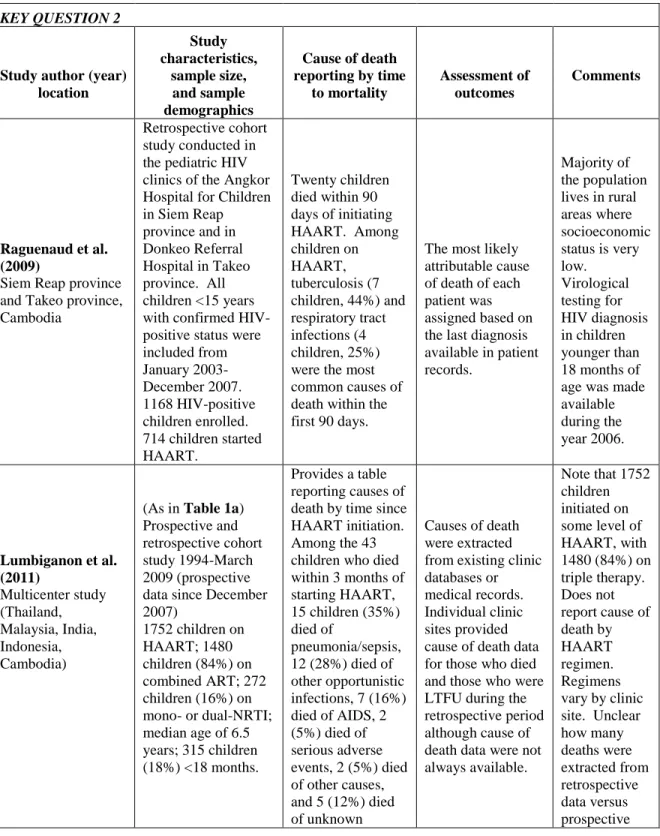
databases or medical records. Raguenaud et al performed a retrospective cohort study in two
pediatric HIV clinics in Cambodia from January 2003 to December 2007.66 A total of 714
children started on HAART in this study, with 20 deaths occurring in the first 90 days of
treatment. The study assigned causes of death for 16 of the 20 children who died within 90 days
of initiating HAART. The most likely attributable cause of death of each patient was assigned
KEY QUESTION 1 Study author (year) location Study characteristics, sample size, and sample demographics
Measurement of risk factors
Assessment of treatment outcomes and
risk factors associated with early death
Comments
Bong et al. (2007) Mzuzu Central Hospital, north Malawi
Retrospective cohort study July 2004-September 2006 439 children on ART; 50% male; median age of 6 years; 37 children (8%) in highest risk age group (<18 months) therefore a survivor bias is possible that may lead to an underestimate of mortality.
Baseline clinical assessment included nutritional
evaluation and measurement of CD4 count and percentage. Seven clinical and
demographic factors were included in initial univariate analysis to build multivariate model. Characteristics monitored and recorded on HAART treatment master cards and the HAART register. Does not describe at what time
laboratory values were measured with respect to the date of CD4 initiation.
35 children (71%) died in the first 3 months on HAART. WHO clinical stage 4 (HR=5.5), severe wasting (HR=2.9), and CD4 cell count (HR=2.1) significantly associated with death within 3 months in multivariable Cox proportional hazard model.
6-week run-in period requiring 95% drug adherence improves efficacy but limits effectiveness. Multivariate model built using
independent variables that were significant at the P<0.05 level in univariate analysis. Guardians received pre-HAART counseling and education about how to administer split tablets.
Lumbiganon et al. (2011) Multicenter study (Thailand, Malaysia, India, Indonesia, Cambodia) Prospective and
retrospective cohort study 1994-March 2009 (prospective data since December 2007)
1752 children on HAART; 1480 children (84%) on combined ART; 272 children (16%) on mono- or dual-NRTI; median age of 6.5 years; 315 children (18%) <18 months.
Frequency of clinic visits and laboratory testing depends on the clinic's standard practice patterns. Quality assurance measures to check data against the medical record for accuracy. Seven baseline
characteristics were included in the descriptive statistics. Laboratory values from within 3 months before (all tests) and 1 month after HAART
43 children (37.3%) died in the first 3 months on HAART. Provides descriptive statistics of characteristics of the 43 children who died within 90 days of starting ART. Of the 43 children, 25 children (58.1%) were ages 5-12; 19 children (44.2%) had baseline CD4%<5%; 23 children (53.5%) had WHO clinical stage 4 disease; median weight-for-age z-score was -5.1.
initiation (except for CD4) were used as baseline values.
Table 1a. Study characteristics (KQ 1).
KEY QUESTION 2
Study author (year) location Study characteristics, sample size, and sample demographics
Cause of death reporting by time
to mortality
Assessment of outcomes
Comments
Raguenaud et al. (2009)
Siem Reap province and Takeo province, Cambodia
Retrospective cohort study conducted in the pediatric HIV clinics of the Angkor Hospital for Children in Siem Reap province and in Donkeo Referral Hospital in Takeo province. All children <15 years with confirmed HIV-positive status were included from January 2003-December 2007. 1168 HIV-positive children enrolled. 714 children started HAART.
Twenty children died within 90 days of initiating HAART. Among children on HAART, tuberculosis (7 children, 44%) and respiratory tract infections (4 children, 25%) were the most common causes of death within the first 90 days.
The most likely attributable cause of death of each patient was assigned based on the last diagnosis available in patient records.
Majority of the population lives in rural areas where socioeconomic status is very low. Virological testing for HIV diagnosis in children younger than 18 months of age was made available during the year 2006.
Lumbiganon et al. (2011) Multicenter study (Thailand, Malaysia, India, Indonesia, Cambodia)
(As in Table 1a) Prospective and retrospective cohort study 1994-March 2009 (prospective data since December 2007)
1752 children on HAART; 1480 children (84%) on combined ART; 272 children (16%) on mono- or dual-NRTI; median age of 6.5 years; 315 children (18%) <18 months.
Provides a table reporting causes of death by time since HAART initiation. Among the 43 children who died within 3 months of starting HAART, 15 children (35%) died of
pneumonia/sepsis, 12 (28%) died of other opportunistic infections, 7 (16%) died of AIDS, 2 (5%) died of serious adverse events, 2 (5%) died of other causes, and 5 (12%) died of unknown
Causes of death were extracted from existing clinic databases or medical records. Individual clinic sites provided cause of death data for those who died and those who were LTFU during the retrospective period although cause of death data were not always available.
causes. One of the deaths due to pneumonia/sepsis was suspected IRIS.
data.
Table 1b Study characteristics (KQ 2).
Risk of Bias within Studies
Key Question 1
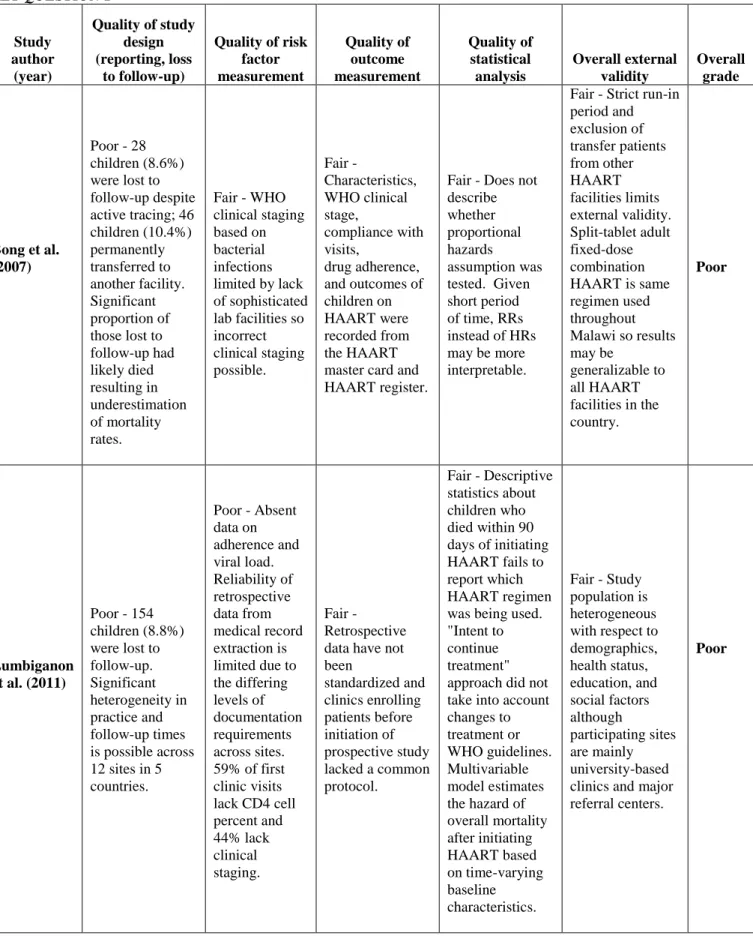
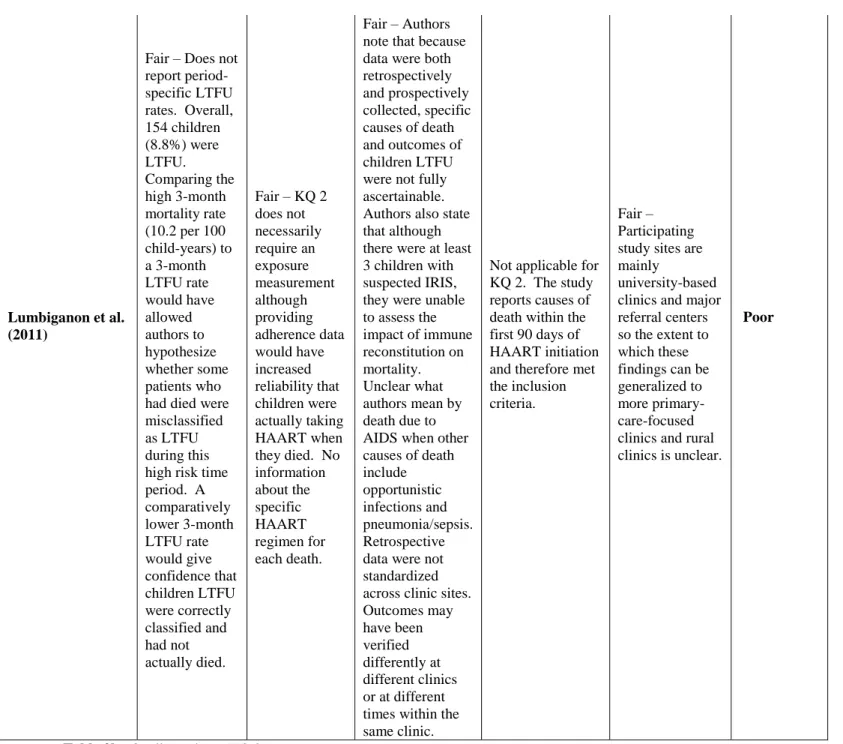
Tables 2a and 2b display quality ratings evaluating the internal validity and external
validity of the studies included in the systematic review for KQ 1 and KQ 2, respectively. For
KQ 1, both studies received an overall grade of poor. In general, pediatric HIV cohort studies in
resource-poor settings have been limited by small sample sizes, significant loss to follow-up, and
limited diagnostic tools.2,23 In Bong et al, nearly 9 percent of patients were lost to follow-up and
an additional 10 percent transferred care. The article does not offer any reassurance that those
patients lost to follow-up are not systematically different from those patients who remained in
the study, thereby introducing selection bias and limiting internal validity.
Additionally, Bong et al calculates adjusted hazard ratios in order to measure the
association between baseline risk factors and mortality within three months of initiating
HAART. But over such a short period of time, risk ratios, rather than hazard ratios, may be more
appropriate. Although there are several methodological problems with hazard ratios, in general,
most of these problems would be mitigated over a short period of time like 90 days.67 The three
month hazard ratio, a period-specific hazard ratio, is the weighted average of even smaller
period-specific hazard ratios. Three months is a short enough period of time that the three month
hazard ratio should capture the potentially time-varying magnitude of an early mortality effect
that would not be captured in an average hazard ratio calculated over years of follow-up.
bias. The hazard is the instantaneous risk evaluated among those who have not yet had the event
in question. For example, at day 89, the hazard ratio measures the instantaneous risk of death
given a certain independent variable among those children who have not yet died. But the
population at day 89 is quite different than the population at day 1. In particular, the population
at day 89 has fewer children at the very high risk of death experienced on day 1. Compared to
the baseline population, the population at day 89 suffers from selection bias. Therefore, the
period-specific hazard ratio may still be time-varying because of built-in selection bias. A useful
clinical prediction tool predicts early mortality given a set of baseline characteristics at a specific
point in time. Although certainly difficult, one alternative method that overcomes these
problems would be appropriately adjusted survival curves.67,68 Overall, the Bong et al study is
poor because it suffers from loss to follow-up and a high risk of selection bias and has only fair
generalizability given a strict run-in period excluding less compliant patients.
Lumbiganon et al also suffers from significant loss to follow-up (8.8%) without
describing the characteristics of those children who lack primary outcome data. The study is a
combination of retrospective and prospective cohort data across 12 sites in 5 countries. Clinics
enrolling patients before the start of the prospective study in December 2007 did not share a
common protocol and therefore retrospective data cannot be standardized, making comparison
difficult. In addition, Lumbiganon et al only provides descriptive statistics about the children
who died within the first 90 days of initiating HAART. The multivariable model measures risk
factors associated with increased hazard of overall mortality but not the period-specific 90-day
mortality that is most relevant when predicting future death based on time-varying factors. The
study does have fair external validity because the study population is sufficiently heterogeneous
grade for this study is poor because of its reliance on retrospective data that has not been
standardized across study sites, significant loss to follow-up making it susceptible to selection
bias, and its failure to analyze period-specific mortality in the multivariable model.
Key Question 2
In Lumbiganon et al, the authors note that because the data were both retrospectively and
prospectively collected, specific causes of death and outcomes of children LTFU were not fully
ascertainable. At least three children had suspected IRIS; however, the impact of immune
reconstitution on mortality was unclear. In addition, the study attributes 7 of the 43 early deaths
to AIDS without explaining how death due to AIDS differs from death due to opportunistic
infection (12 deaths) or pneumonia/sepsis (15 deaths). A total of 154 children (8.8%) were
LTFU, raising the possibility that some deaths may have been misclassified as LTFU.
In Raguenaud et al, not all causes of death were reliably ascertained as 4 out of the 20
early deaths did not have a known cause. Nevertheless, the authors state that the level of error in
attributing cause of death was limited because the study occurred in a large referral center with
medical doctors performing all consultations. The study used active tracing to limit LTFU
KEY QUESTION 1
Study author
(year)
Quality of study design (reporting, loss
to follow-up)
Quality of risk factor measurement Quality of outcome measurement Quality of statistical analysis Overall external validity Overall grade
Bong et al. (2007)
Poor - 28 children (8.6%) were lost to follow-up despite active tracing; 46 children (10.4%) permanently transferred to another facility. Significant proportion of those lost to follow-up had likely died resulting in underestimation of mortality rates.
Fair - WHO clinical staging based on bacterial infections limited by lack of sophisticated lab facilities so incorrect clinical staging possible. Fair - Characteristics, WHO clinical stage, compliance with visits, drug adherence, and outcomes of children on HAART were recorded from the HAART master card and HAART register.
Fair - Does not describe whether proportional hazards
assumption was tested. Given short period of time, RRs instead of HRs may be more interpretable.
Fair - Strict run-in period and exclusion of transfer patients from other HAART facilities limits external validity. Split-tablet adult fixed-dose combination HAART is same regimen used throughout Malawi so results may be
generalizable to all HAART facilities in the country.
Poor
Lumbiganon et al. (2011)
Poor - 154 children (8.8%) were lost to follow-up. Significant heterogeneity in practice and follow-up times is possible across 12 sites in 5 countries.
Poor - Absent data on adherence and viral load. Reliability of retrospective data from medical record extraction is limited due to the differing levels of documentation requirements across sites. 59% of first clinic visits lack CD4 cell percent and 44% lack clinical staging. Fair - Retrospective data have not been standardized and clinics enrolling patients before initiation of prospective study lacked a common protocol.
Fair - Descriptive statistics about children who died within 90 days of initiating HAART fails to report which HAART regimen was being used. "Intent to continue treatment" approach did not take into account changes to treatment or WHO guidelines. Multivariable model estimates the hazard of overall mortality after initiating HAART based on time-varying baseline characteristics.
Fair - Study population is heterogeneous with respect to demographics, health status, education, and social factors although participating sites are mainly university-based clinics and major referral centers.
Poor
KEY QUESTION 2 Study author (year) location Quality of study design (reporting, loss to
follow-up) Quality of exposure measurement Quality of outcome measurement Quality of statistical analysis Overall external validity Overall grade
Raguenaud et al. (2009)
Fair - Large cohort of children on HAART. LTFU was low (1.8%) for children on HAART. For children who were not treated, LTFU was higher (22%) so there were likely more unreported deaths in the untreated group. Used an active tracing system for children on HAART who failed to attend a clinic appointment in order to reduce LTFU.
Not applicable for KQ 2 although no data on adherence. Patients and caregivers received at least three HAART-preparation counseling sessions before starting treatment to maximize adherence.
Fair - Not all causes of death were reliably ascertained. Nevertheless, given that both HIV programs were situated within provincial referral hospitals and that medical doctors performed all consultations, the authors believe that the level of error in attributing cause of death was limited.
Lumbiganon et al. (2011)
Fair – Does not report period-specific LTFU rates. Overall, 154 children (8.8%) were LTFU. Comparing the high 3-month mortality rate (10.2 per 100 child-years) to a 3-month LTFU rate would have allowed authors to hypothesize whether some patients who had died were misclassified as LTFU during this high risk time period. A comparatively lower 3-month LTFU rate would give confidence that children LTFU were correctly classified and had not actually died.
Fair – KQ 2 does not necessarily require an exposure measurement although providing adherence data would have increased reliability that children were actually taking HAART when they died. No information about the specific HAART regimen for each death.
Fair – Authors note that because data were both retrospectively and prospectively collected, specific causes of death and outcomes of children LTFU were not fully ascertainable. Authors also state that although there were at least 3 children with suspected IRIS, they were unable to assess the impact of immune reconstitution on mortality. Unclear what authors mean by death due to AIDS when other causes of death include opportunistic infections and pneumonia/sepsis. Retrospective data were not standardized across clinic sites. Outcomes may have been verified differently at different clinics or at different times within the same clinic.
Not applicable for KQ 2. The study reports causes of death within the first 90 days of HAART initiation and therefore met the inclusion criteria.
Fair – Participating study sites are mainly
university-based clinics and major referral centers so the extent to which these findings can be generalized to more primary-care-focused clinics and rural clinics is unclear.
Poor
Table 2b. Quality ratings (KQ 2).
Synthesis of Results
Key Question 1
For KQ 1, Bong et al found that WHO clinical stage 4 disease, severe wasting (defined as
age threshold) were significantly associated with early mortality by 3 months after starting
treatment. Lumbiganon et al observed that among the 43 children who died in the first 3 months
of ART (37.3% of all deaths), 25 children (58.1%) were ages 5-12, 19 children (44.2%) had
baseline CD4%<5%, 23 children (53.5%) had WHO clinical stage 4 disease, and the median
weight-for-age z-score was -5.1. Although Lumbiganon et al does not calculate the
period-specific risk of death in a multivariable model as in Bong et al, the results of the study are
consistent with the findings in Bong et al. Overall, the high early mortality and identified risk
factors in the children in both studies are similar to those found in adults and to those found in
pediatric studies measuring predictors of overall mortality.3,8,23,28-34
Key Question 2
In Lumbiganon et al, the leading causes of mortality during the first three months of
HAART were tuberculosis (7 children, 44%) and respiratory tract infections (4 children, 25%).
There were three patients with suspected IRIS in Lumbiganon et al; however, the impact of
immune reconstitution on mortality in these patients was unclear. Among the 43 children who
died within three months of starting HAART in Raguenaud et al, the most common causes of
death were pneumonia/sepsis (15 children, 35%), opportunistic infections (12 children, 28%),
and AIDS (7 children, 16%).
Overall Grade of Evidence
Key Question 1
The overall grade of the evidence describing risk factors associated with early mortality
is low. Conducting observational pediatric HIV studies in low-income countries without
HAART programs outside well-equipped settings that make studying pediatric cohorts in these
settings extremely difficult. It is also likely that genetic, dietary, and social differences among
patient populations, as well as differences in general health care access, local medical practices,
and concurrent medicines and illnesses, influence clinical outcomes in resource-poor settings.2
Nevertheless, the two studies are consistent in terms of which baseline characteristics predict
early mortality in HAART-naive, HIV-infected children beginning treatment. The small sample
size in Bong et al resulted in wide confidence intervals around the adjusted HR point estimates
which detract from precision. One similar pediatric HIV cohort study excluded from the
systematic review reported 99 percent of deaths occurring during the first 90 days after HAART
initiation with deceased children being younger, more malnourished, and presenting with lower
CD4 counts.32 The consistency between these three studies and other studies of predictors of
overall mortality after HAART initiation in children should give us confidence in the reliability
of these findings. Overall, there is weak, but growing, evidence indicating that malnutrition,
WHO clinical stage 4 disease severity, and low CD4 count are the most important predictors of
early death in children initiating HAART and therefore should be used to identify those children
most in need of increased medical attention.
Key Question 2
The overall grade of the evidence is insufficient to draw conclusions about the causes of
early death in children initiating HAART. As HAART becomes much more widely available in
resource-limited settings, IRIS has emerged as an important complication of HAART.49 Without
improved cause-of-death reporting, the contribution of IRIS to early mortality in children
References
1. World Health Organization. Global HIV/AIDS Response: Epidemic update and health
sector progress towards universal access. Geneva, Switzerland: World Health
Organization;2011.
2. Hetherington S. Commentary: understanding the benefits of pediatric anti-retroviral treatment in resource-limited settings. The Pediatric infectious disease journal. Jan
2009;28(1):41-42.
3. Collins IJ, Jourdain G, Hansudewechakul R, et al. Long-term survival of HIV-infected children receiving antiretroviral therapy in Thailand: a 5-year observational cohort study.
Clinical infectious diseases. Dec 15 2010;51(12):1449-1457.
4. Low risk of death, but substantial program attrition, in pediatric HIV treatment cohorts in Sub-Saharan Africa. Journal of acquired immune deficiency syndromes. Dec 15
2008;49(5):523-531.
5. Morgan D, Mahe C, Mayanja B, Okongo JM, Lubega R, Whitworth JA. HIV-1 infection in rural Africa: is there a difference in median time to AIDS and survival compared with
that in industrialized countries? AIDS. Mar 8 2002;16(4):597-603.
6. Prendergast A, Tudor-Williams G, Jeena P, Burchett S, Goulder P. International perspectives, progress, and future challenges of paediatric HIV infection. Lancet. Jul 7
2007;370(9581):68-80.
7. Newell ML, Coovadia H, Cortina-Borja M, Rollins N, Gaillard P, Dabis F. Mortality of infected and uninfected infants born to HIV-infected mothers in Africa: a pooled
8. Obimbo EM, Mbori-Ngacha DA, Ochieng JO, et al. Predictors of early mortality in a cohort of human immunodeficiency virus type 1-infected african children. The Pediatric
infectious disease journal. Jun 2004;23(6):536-543.
9. Taha TE, Graham SM, Kumwenda NI, et al. Morbidity among human immunodeficiency virus-1-infected and -uninfected African children. Pediatrics. Dec 2000;106(6):E77.
10. World Health Organization. Antiretroviral Therapy for HIV Infection in Adults and
Adolescents: Recommendations for a Public Health Approach - 2006 rev. Geneva,
Switzerland: World Health Organization;2006.
11. World Health Organization. Antiretroviral Therapy for HIV Infection in Infants and Children: Towards Universal Access: Recommendations for a Public Health Approach.
Geneva, Switzerland: World Health Organization;2007.
12. World Health Organization. Antiretroviral Therapy for Infants and Children: Report of the WHO Technical Reference Group, Paediatric HIV/ART Care Guideline Group
Meeting. Geneva, Switzerland: World Health Organization;2008.
13. World Health Organization. Antiretroviral Therapy for HIV Infection in Infants and
Children: Toward Universal Access. Geneva, Switzerland: World Health
Organization;2010.
14. Sutcliffe CG, van Dijk JH, Bolton C, Persaud D, Moss WJ. Effectiveness of antiretroviral therapy among HIV-infected children in sub-Saharan Africa. The Lancet infectious
diseases. Aug 2008;8(8):477-489.
15. Edmonds A, Yotebieng M, Lusiama J, et al. The effect of highly active antiretroviral therapy on the survival of HIV-infected children in a resource-deprived setting: a cohort
16. Peacock-Villada E, Richardson BA, John-Stewart GC. Post-HAART outcomes in pediatric populations: comparison of resource-limited and developed countries.
Pediatrics. Feb 2011;127(2):e423-441.
17. De Baets AJ, Ramet J, Msellati P, Lepage P. The unique features of pediatric HIV-1 in sub-Saharan Africa. Current HIV research. Jun 2008;6(4):351-362.
18. Patel K, Weinberg GA, Buchacz K, McIntosh K, Dankner WM, Seage GR, 3rd. Simple Pediatric AIDS Severity Score (PASS): a pediatric severity score for resource-limited
settings. Journal of acquired immune deficiency syndromes. Dec 15 2006;43(5):611-617.
19. Seage GR, 3rd, Buchacz K, Weinberg GA, Patel K, McIntosh K, Dankner WM. The Pediatric AIDS Severity Score (PASS): a multidimensional AIDS-severity adjustment for
pediatric HIV infection. Journal of acquired immune deficiency syndromes. Dec 15
2006;43(5):603-610.
20. Bolton-Moore C, Mubiana-Mbewe M, Cantrell RA, et al. Clinical outcomes and CD4 cell response in children receiving antiretroviral therapy at primary health care facilities in
Zambia. JAMA. Oct 24 2007;298(16):1888-1899.
21. Lutter CK. Iron deficiency in young children in low-income countries and new
approaches for its prevention. The Journal of nutrition. Dec 2008;138(12):2523-2528.
22. World Health Organization. Scaling up antiretroviral therapy in resource-limited
settings: Guidelines for a public health approach. Geneva, Switzerland: WHO;2002.
23. Callens SF, Shabani N, Lusiama J, et al. Mortality and associated factors after initiation of pediatric antiretroviral treatment in the Democratic Republic of the Congo. The