RESILIENCE AND VULNERABILITY FACTORS ASSOCIATED WITH EXPERIENCING INTIMATE PARTNER VIOLENCE BY MULTIPLE ABUSIVE PARTNERS AMONG U.S.
WOMEN: A MIXED METHODS STUDY
Cara Jeannine Person
A dissertation submitted to the faculty at the University of North Carolina at Chapel Hill in partial fulfillment of the requirements for the degree of Doctor of Philosophy in the Department of Health
Behavior in the Gillings School of Global Public Health.
Chapel Hill 2018
Approved by:
Kathryn E. (Beth) Moracco J. Michael Bowling
©2018
ABSTRACT
Cara Jeannine Person: Resilience and Vulnerability Factors Associated with Experiencing Intimate Partner Violence by Multiple Abusive Partners Among U.S. Women: A Mixed Methods
Study
(Under the direction of Kathryn E. (Beth) Moracco)
Background: Intimate partner violence (IPV) is a preventable public health problem that affects over 35% of U.S. women. While 27-86% of survivors have experienced IPV by multiple abusive partners (MAPs), few studies have examined what makes some survivors more
vulnerable to experiencing MAPs, or whether they have specific domestic violence (DV) service and social support needs. This dissertation addresses these knowledge gaps by: 1) determining associations between initial abusive relationship (IAR) resilience and vulnerability factors and experiencing IPV by MAPs and 2) exploring how IPV by MAPs survivors have accessed and utilized services, social support, and engaged other coping strategies.
Methods: Using a mixed methods approach, in Study 1, I analyzed National Intimate Partner and Sexual Violence Survey (NISVS) data (n = 16,507) using multivariate logistic regression and moderation analysis methods. In Study 2, I conducted in-depth interviews with IPV by MAPs survivors (n = 20) and analyzed the data by employing thematic analysis and interpretive coding methods.
Results: NISVS analyses indicated that 15.6% of women who experienced physical and/or sexual IPV experienced IPV by MAPs (n = 405). These women experienced more
their IARs were more likely to experience IPV by MAPs as they got older (OR: 1.02, p <.05). Interviews revealed that IPV by MAPs survivors sought help from formal and informal sources and that: 1) negative initial encounters with service providers made them less likely to seek help in a subsequent relationship; 2) positive initial encounters, often after multiple abusive
relationships, helped them leave their abusers; and 3) receipt of mixed reactions to disclosures of abuse from informal sources were common.
ACKNOWLEDGEMENTS
I am so thankful to everyone who has supported me through this process as I worked to complete my PhD. It was truly a journey and I had no idea how it would change my life along the way. Over these past few years I have had the opportunity to work in Zambia and travel as far away as Australia and this coming October, to South Africa to present my research. I have been able to work with so many great researchers (professors, students, staff members, and community members) who have a love for the discipline of public health and a desire to improve the health of the public.
I am grateful to have been able to participate and serve as a leader in school organizations that provided an opportunity to engage with scholars outside of my home department of Health Behavior (HB) such as the Gender-based Violence Research Group, Minority Student Caucus, Minority Health Conference Committee, and the Student Health Action Committee. I am thankful for the support of Kathy Woods and the Institute for Minority Excellence (IME), Dr. Carmen Samuel Hodge and Sistahdocs, the Gillings School of Global Public Health, the Office of Student Affairs, the UNC Graduate School, and the HB Department Office Staff. The financial support from the following people/organizations helped me to complete my degree: American Association of University Women, UNC IME, UNC Graduate School, UNC Department of HB, UNC Injury Prevention Center, Society for Multivariate Experimental Psychology, and the Jamie Kimble Foundation for Courage.
study. I am thankful for the active role each person took in mentoring me as I worked on my dissertation and I am thankful for the insightful written and verbal feedback from all of my committee members as I worked to finalize this document. Many thanks to Dr. Rebecca Macy from the School of Social Work who utilized her expertise conducting studies involving survivors of intimate partner violence to guide me in my research. I appreciate Dr. J. Michael Bowling and Dr. H. Luz McNaughton Reyes for the many hours each one of them spent with me going over National Intimate Partner and Sexual Violence Survey (NISVS) results and tables while helping me determine the best way to analyze, interpret, and present my data. I am
extremely grateful for Dr. Susan Ennett who encouraged me to always look at the big picture of my research and I thank her for challenging me with questions about the meaning of my results. Many thanks to Dr. Suzanne Maman who helped me to narrow the focus of my qualitative study and ask the right questions to address my study objectives. I am eternally grateful to my
academic advisor turned dissertation chair, Dr. Beth Moracco, for all of her patient guidance as I worked through my dissertation. From our first meeting at the UNC Admitted Student Day to our last coffee shop meeting, I am thankful for all of the hours spent discussing my ideas, helping me plan out my study, connecting me with her network of experts in the field and other resources, reviewing my writing, and for encouraging me to do my best work throughout the process. As I told her from the beginning, I always want my research to matter and to help people and I am appreciative of all of the input from each committee member to help me reach that goal.
Odum Institute. I enjoyed working with him as we figured out how to navigate through NISVS data.
I am grateful for the willingness to promote my study and assist with recruitment by all of the domestic violence and social service agencies and businesses around North Carolina. I am grateful to all of the persons who shared the study information through social media and for the online recruitment platforms that allowed me to reach a diverse group of study participants. I am thankful for my Expert Reviewers/Consultants: Julie Owen, Abigail Shapiro, and Cassidy Johnson who volunteered their time to review my qualitative study documents and to the
Domestic Violence Advocates who allowed me to interview them about the problem of intimate partner violence by multiple abusive partners in preparation for this study. I am also appreciative of the time spent by my pilot testers helping me prepare my study materials and my co-coder helping me prepare my qualitative data analysis.
I am also thankful for my classmates and fellow students who were there to participate in writing groups, review my drafts of just about everything, and to be a listening ear. This process of academic, professional, and social growth was made better by the people who surrounded me during my time at UNC and I am thankful to each person for the contribution to my experience.
TABLE OF CONTENTS
LIST OF TABLES... xv
LIST OF FIGURES ... xvi
LIST OF ABBREVIATIONS ... xvii
CHAPTER 1: INTRODUCTION, STUDY OVERVIEW, AND SPECIFIC AIMS ... 1
Intimate Partner Violence ... 1
Intimate Partner Violence by Multiple Abusive Partners ... 2
CHAPTER 2: BACKGROUND AND LITERATURE REVIEW... 6
Intimate Partner Violence ... 6
Consequences of Intimate Partner Violence ... 7
Data Sources for Measuring Intimate Partner Violence... 10
An Ecological Perspective on Intimate Partner Violence Prevention... 11
Risk and Protective Factors Associated with Experiencing Intimate Partner Violence ... 12
Relational Level Risk Factors for Experiencing IPV ... 13
Community/Neighborhood Level Vulnerability Factors for Experiencing IPV ... 13
Intimate Partner Violence by Multiple Abusive Partners ... 14
Individual Level Risk Factors (and Consequences) Associated with Experiencing IPV by MAPs ... 15
Relational Level Risk Factors Associated with Experiencing IPV by MAPs ... 17
Protective Factors for Experiencing IPV by MAPs ... 18
The Concept of Resilience and Factors Associated with Experiencing IPV ... 20
Gaps in IPV by MAPs Research ... 24
CHAPTER 3: THEORETICAL FRAMEWORKS AND CONCEPTUAL MODEL ... 26
Theoretical Frameworks ... 26
Theoretical Limitations ... 26
Theoretical Frameworks Used in this Study... 27
The Concept of Resilience ... 27
The Theory of Intersectionality ... 28
The Transactional Model of Stress and Coping... 31
Conceptual Model Description ... 32
CHAPTER 4: STUDY DESIGN AND METHODS ... 35
Position of the Researcher ... 35
Study 1: Research Questions, Hypotheses, Study Design, and Research Methods ... 37
Research Aims, Research Questions, and Hypotheses ... 37
Study Design and Research Methods ... 39
The NISVS Dataset ... 40
NISVS Recruitment and Data Collection Procedures ... 41
Study Participants ... 42
NISVS Measures ... 43
Quantitative Analysis ... 51
Dataset Training ... 51
Effective Sample Size and Power Analysis ... 52
Missing Data Analysis... 53
Data Cleaning and Preparation ... 54
Quantitative Study Limitations ... 58
Study 2: Qualitative Examination of Coping Methods, including Service and Support Use by Women Who Have Experienced IPV by MAPs ... 59
Research Aim and Thematic Questions ... 60
Instrument Development ... 60
Sampling and Qualitative Analysis Recruitment ... 62
Data Collection Procedures ... 64
Qualitative Data Analysis ... 67
Qualitative Study Limitations ... 69
CHAPTER 5: RESILIENCE AND VULNERABILITY FACTORS ASSOCIATED WITH EXPERIENCING INTIMATE PARTNER VIOLENCE BY MULTIPLE ABUSIVE PARTNERS: FINDINGS FROM THE 2010 NATIONAL INTIMATE PARTNER AND SEXUAL VIOLENCE SURVEY (NISVS) ... 71
Introduction/Background ... 71
Intimate Partner Violence ... 71
Intimate Partner Violence by Multiple Abusive Partners ... 72
Demographic Risk Factors for Experiencing IPV by MAPs ... 74
Initial Abusive Relationship Risk Factors for Experiencing IPV by MAPs ... 75
Use of Services and Social Support as Protective Factors for Experiencing IPV by MAPs ... 77
Hypotheses... 80
Methods ... 80
National Intimate Partner and Sexual Violence Survey (NISVS) Data ... 80
NISVS Recruitment and Data Collection Procedures ... 81
Ethical Considerations ... 82
NISVS Measures Used in Study ... 82
Analytic Sample ... 86
Missing Data Analysis... 87
Statistical Analysis Methods... 87
Results ... 89
Sample Characteristics ... 89
Multivariate Logistic Regression Results ... 91
Discussion ... 94
Limitations ... 99
Conclusions ... 100
CHAPTER 6: SURVIVING IPV BY MAPS: EXPERIENCES WITH COPING THROUGH TRAUMA BY SEEKING HELP AND SOCIAL SUPPORT ... 102
Introduction ... 102
Intimate Partner Violence ... 102
Intimate Partner Violence by Multiple Abusive Partners ... 103
Coping Efforts Among Survivors of IPV ... 104
Current Study ... 106
Methods ... 106
Sampling and Recruitment ... 107
Data Collection Procedures ... 107
Data Analysis ... 109
Results ... 110
Study Participant Characteristics ... 111
Experiences Navigating Domestic Violence-related Services ... 112
Experiences Navigating Informal Social Support from Family and Friends ... 118
Interactions with Service Providers ... 125
Interactions with People in the Survivor’s Social Network ... 127
Long-term Coping Methods ... 128
Implications for Interventions and Research ... 129
Limitations ... 130
Conclusions ... 131
CHAPTER 7: DISCUSSION AND CONCLUSIONS ... 132
Summary of Study Findings ... 132
Study Strengths ... 134
Population of Interest ... 134
Population-based National Data ... 136
Mixed Methods ... 137
Study Limitations ... 137
NISVS Dataset ... 137
Measurement ... 138
Qualitative Sample ... 140
Implications for Research ... 140
Implications for IPV by MAPs Interventions ... 142
Implications for Policies on IPV Prevention ... 144
Conclusions ... 145
APPENDIX A: TABLE OF FACTORS ... 146
APPENDIX B: PARTICIPANT CONSENT FORM ... 152
APPENDIX C: PARTICIPANT DEMOGRAPHICS SURVEY ... 156
APPENDIX D: PARTICIPANT INTERVIEW GUIDE ... 160
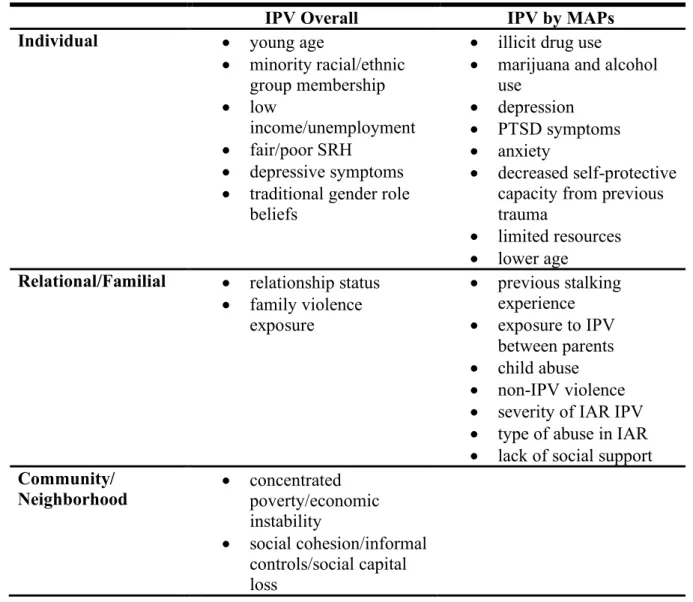
LIST OF TABLES
Table 2.1: Summary of Factors Associated with Experiencing Intimate Partner
Violence and IPV by MAPs ... 20 Table 5.1: Characteristics of U.S. Women Who Have Experienced Physical
and/or Sexual Intimate Partner Violence by One Partner or MAPs, NISVS 2010
(n=2,594) ... 90 Table 5.2: Results of Multivariate Logistic Regression: Resilience and
Vulnerability Factors Predicting IPV by MAPs Among U.S. Women, NISVS
LIST OF FIGURES
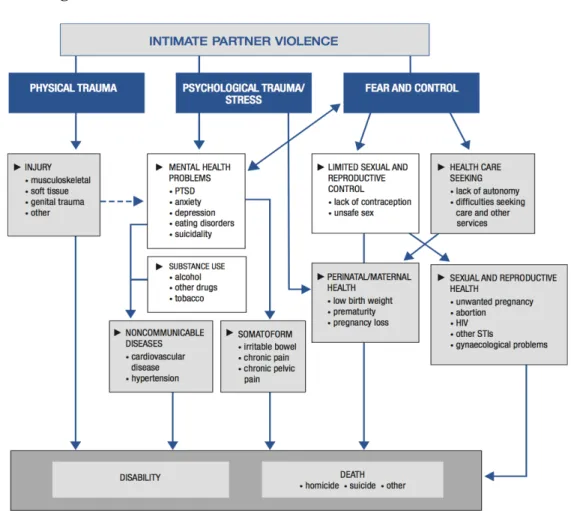
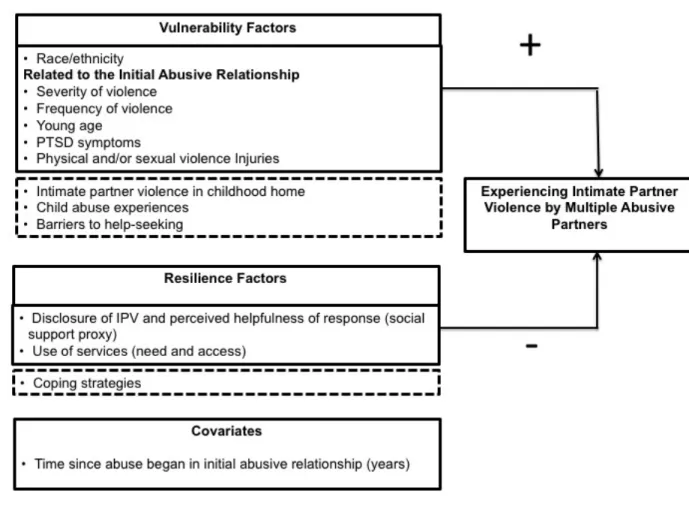
Figure 2.1: Health Effects of Intimate Partner Violence ... 8 Figure 3.1: Analytic Conceptual Model - Experiencing IPV by MAPs ... 33 Figure 4.1: Quantitative Analytic Conceptual Model - Experiencing IPV by
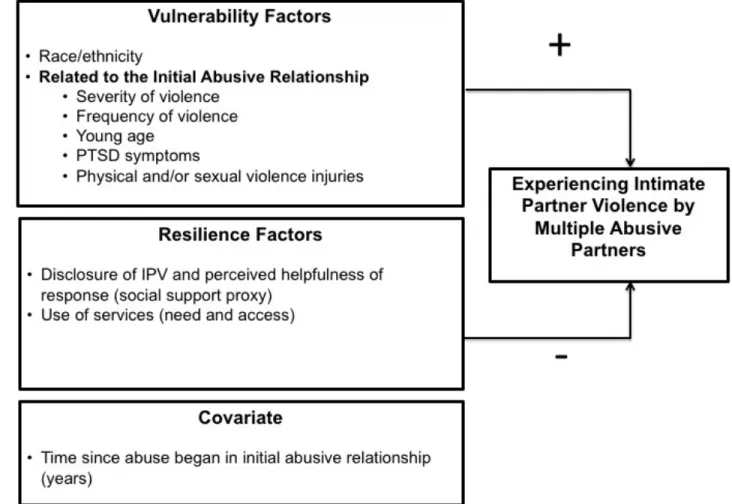
MAPs ... 39 Figure 4.2: Quantitative Analytic Conceptual Model for Moderation Analyses-
Experiencing IPV by MAPs ... 58 Figure 5.1: Predicted Probabilities of Experiencing IPV by MAPs Associated with
LIST OF ABBREVIATIONS BRFSS Behavioral Risk Factor Surveillance System CDC Centers for Disease Control and Prevention
DV Domestic Violence
DVPO Domestic Violence Protective Order IAR Initial Abusive Relationship
ICPSR Inter-university Consortium for Political and Social Research IPV Intimate Partner Violence
IPV by MAPs Intimate Partner Violence by Multiple Abusive Partners IRB Institutional Review Board
MAPs Multiple Abusive Partners
NCCADV North Carolina Coalition of Domestic Violence NIJ National Institute of Justice
NISVS National Intimate Partner and Sexual Violence Survey NVAWS National Violence Against Women Survey
PTG Post-traumatic Growth
PTSD Post-traumatic Stress Disorder SRH Self-rated Health
TMSC Transactional Model of Stress and Coping
US United States
CHAPTER 1: INTRODUCTION, STUDY OVERVIEW, AND SPECIFIC AIMS Intimate Partner Violence
Intimate partner violence (IPV) is a pattern of abusive behavior that includes physical and sexual violence, stalking, and psychological aggression by a current or former intimate partner (Breiding, Basile, Smith, Black, & Mahendra, 2015). It is a preventable, global, social, and public health problem that results in detrimental physical, mental, and reproductive health consequences (Basile, Arias, Desai, & Thompson, 2004; Black, 2011; World Health
Organization, 2013a). Globally, lifetime prevalence of IPV victimization (physical and sexual) among women is 30% and in the United States (U.S.), it is 35.6% (Black et al., 2011; World Health Organization, 2013b). In addition to the negative consequences for individuals, IPV costs the U.S. $4.1 billion in direct costs for medical and mental health care, and $858.6 million in indirect costs from lost productivity annually (National Center for Injury Prevention and Control, 2003).
IPV has historically been known as domestic violence (DV), but in order to include intimate relationships that do not involve a shared household or children in common, and to conform to language used by the Centers for Disease Control and Prevention (CDC) (Centers for Disease Control and Prevention, 2012), IPV was the term used for this dissertation study.
study, survivor was primarily used instead of the term victim, except for descriptions of research studies that referenced the term victim or when describing experiences of victimization.
Intimate Partner Violence by Multiple Abusive Partners
A substantial proportion of women have experienced IPV by more than one intimate partner, i.e. multiple abusive partners (MAPs). According to studies with local samples, between 27-86% of women who have experienced IPV have experienced intimate partner violence by multiple abusive partners (IPV by MAPs), but few studies have focused on this population of survivors (Black, 2011; Iverson et al., 2013; Jaquier & Sullivan, 2014; Stein, Grogan-Kaylor, Galano, Clark, & Graham-Bermann, 2016). The CDC’s National Intimate Partner and Sexual Violence Survey (NISVS) indicates that 20.9% of women experiencing IPV (specifically, rape, physical violence, and/or stalking) have been abused by two partners, and 8.3% have been abused by three or more partners(Black et al., 2011).
Understanding this population is important because previous research, albeit limited, has indicated that women who have experienced IPV by MAPs report higher rates of negative mental and physical health problems than women with one abusive partner (Carrington-Walton, 2014; Cole, Logan, & Shannon, 2008; Coolidge & Anderson, 2002). However, these studies often are not generalizable to the larger population and cannot provide evidence about what factors related to initial experiences with IPV make some women more vulnerable to IPV by MAPs than others. These knowledge gaps contribute to a potential disparity in meeting the needs of this population compared with women who have experienced one abusive relationship. Not addressing these needs may lead to continued negative physical and mental health consequences from abuse, and their associated individual and societal costs.
& Goodman, 2005; Iverson et al., 2013; Krause, Kaltman, Goodman, & Dutton, 2008).
Furthermore, no studies have used a national population-based sample to study the phenomenon of IPV by MAPs except for one dissertation study that used National Violence Against Women Survey (NVAWS) data from 1995-1996 (Carbone-Lopez, 2006).Accordingly, knowledge about factors associated with experiencing IPV by MAPs and about whom is most vulnerable to IPV by MAPs is limited. In addition, there is a lack of research on the use of services and social support for women experiencing IPV by MAPs. In order to effectively direct services for survivors and to inform secondary IPV prevention efforts, factors associated with experiencing IPV by MAPs need to be identified.
The purpose of this dissertation was to identify resilience and vulnerability factors, specifically modifiable factors, for women who experience IPV by MAPs. This mixed methods dissertation is comprised of quantitative analyses of population-based survey data from the NISVS dataset, and qualitative interviews with survivors of IPV by MAPs, and has three specific aims:
Aim 1: To determine the associations between vulnerability factors (race/ethnicity, severity and frequency of IPV, age, and post-traumatic stress disorder (PTSD) symptoms or injuries) related to the initial abusive relationship (IAR) and the likelihood of
experiencing IPV by MAPs
Aim 2: To determine associations between resilience factors (use of services, disclosure of abuse and helpfulness (proxy for social support)), related to the IAR and the likelihood of experiencing IPV by MAPs
strategies; b) how helpful they found the services and social support they accessed; and c) what types of services or methods of support they believe would be most helpful
The conceptual model for this study draws on concepts, theories, and frameworks from the fields of sociology and psychology, including the concept of resilience (Dutton & Greene, 2010; Luthar, Cicchetti, & Becker, 2000; Southwick, Bonanno, Masten, Panter-Brick, & Yehuda, 2014), the Theory of Intersectionality (Crenshaw, 1991; Kelly, 2011; Nixon & Humphreys, 2010; Sokoloff & Dupont, 2005), and the Transactional Model of Stress and Coping (TMSC) (Lazarus & Cohen, 1977). The conceptual model delineates the proposed relationships among study variables.
This dissertation employed a two-part mixed-methods design to obtain more
comprehensive information about experiencing IPV by MAPs (Creswell, 2015; Curry, 2015; Teddlie, 2009). First, I analyzed quantitative data from the 2010 NISVS (n = 2,594 women who are IPV survivors) to identify potential resilience and vulnerability factors associated with experiencing IPV by MAPs. Second, I conducted interviews with IPV by MAPs survivors (n = 20) and analyzed the qualitative data to delve deeper into their experiences, and coping
strategies, including use of services and social support.
Study findings expanded the sparse knowledge base about the experiences of women who have experienced IPV by MAPs. These findings provide researchers with information on who is most at risk for experiencing IPV by MAPs, based on their IAR experiences. The study findings may also improve the ability of service providers and DV Advocates to meet the needs of women experiencing IPV by MAPs by helping them create more appropriate services. Finally, the results from this study can inform practitioners who are tasked with developing interventions for
service and DV agencies. These interventions may lead to the reduction of IPV by MAPs and a decrease in negative social and health consequences suffered by survivors.
This dissertation is divided into seven chapters. Chapter one contains an overview of the study and specific aims. Chapter two includes the background and literature review, which details current studies on factors associated with IPV, consequences of IPV, and the use of services and social support related to experiencing IPV. This chapter also includes a review of literature on experiencing IPV by MAPs.Chapter three provides an overview of the sociological and psychological theoretical concepts and frameworks that informed the conceptual model for this study, along with a description of the study conceptual model. Chapter four is comprised of the study design, research questions, hypotheses, data sources, and methods, specifically the quantitative analysis methods used in Study #1 and the qualitative analysis methods used in Study #2 to address the research questions and associated hypotheses. Chapter five presents a manuscript with findings from Study #1, which addresses Aims #1 and #2 through an analysis of resilience and vulnerability factors on the likelihood of experiencing IPV by MAPs. Chapter six presents a manuscript with findings from Study #2, which addresses Aim #3 through a
CHAPTER 2: BACKGROUND AND LITERATURE REVIEW Intimate Partner Violence
IPV is a preventable social and public health problem that is recognized as a violation of human rights worldwide (Nations, 1996). It is defined by the World Health Organization (WHO) as behavior within an intimate relationship that causes physical, sexual or psychological harm, including, physical aggression, sexual coercion, psychological abuse, and controlling behaviors (2012). CDC describes IPV as occurring between “current and former spouses and dating partners” and it includes physical and sexual violence, threats of violence, and emotional abuse, such as isolation and intimidation (2012). IPV affects women and men of all demographic
profiles, but this study focused on violence against women because they bear the larger burden of abuse (Black et al., 2011; Tjaden & Thoennes, 2000).
Globally, 30% of women have experienced IPV (physical or sexual) in their lifetimes. The rates of IPV in the U.S. are also substantial, with more than 35.6% of women (42.4 million), reportedly raped, physically assaulted, or stalked by an intimate partner in their lifetimes (Black et al., 2011; World Health Organization, 2013b). State-specific lifetime rates of physical and sexual IPV range from 19.5% in Puerto Rico to 35.0% in Nevada (Breiding, 2008). In addition to physical and sexual violence, IPV includes controlling behaviors and emotional and
IPV can also include economic abuse when a woman is denied access to money or her ability to obtain and sustain employment is hindered (Adams, Sullivan, Bybee, & Greeson, 2008). In addition, the abuser may threaten her with harm or threaten to harm him or herself by committing suicide. Another tactic abusers use is to isolate their intimate partners, which limits their access to friends and family and possible support systems (O’Leary, 2001). Often, abusers deny or minimize the severity of violence or even blame their partners for their displays of abusive behavior. Some abusers may use their male privilege to manipulate traditional gender roles and others may use children as pawns in their efforts to control their partners (Domestic Abuse Intervention Programs, 1984; O’Leary, 2001). Furthermore, an abuser may try to exert control over a woman’s reproductive health by not allowing her access to family planning methods or by refusing to use forms of contraception, such as condoms (Domestic Abuse
Intervention Programs, 1984; World Health Organization, 2013b). Whether abusers use physical violence or more controlling behaviors as manipulation tactics, they inflict untold harm on their intimate partners.
Consequences of Intimate Partner Violence
IPV can have lasting negative effects on a woman’s physical, mental, and reproductive health. It has been associated with conditions such as chronic pain, activity limitations,
or continuous violence (Macy et al., 2009). As indicated by WHO’s (2013b) model of pathways and health effects of IPV, there are multiple direct and indirect intersecting pathways through which IPV can affect a woman’s health (pg. 8) (Figure 2.1).
Figure 2.1: Health Effects of Intimate Partner Violence
health outcomes due to IPV-related stress. Furthermore, research has shown that elevated levels of stress due to experiencing IPV can indirectly affect a woman’s risk of having a compromised immune system, which may lead to chronic illness and disability. Stress may also increase a woman’s risk of negative birth outcomes, such as having low birth weight babies and
experiencing premature births. Finally, experiencing fear and control may put a woman at greater risk of sexual and reproductive health issues, such as becoming infected with HIV and sexually transmitted infections (World Health Organization, 2013b).
In addition to the health-related consequences of experiencing IPV, survivors are more likely to engage in negative health behaviors such as risky sexual activity or excessive smoking, drinking alcohol, or taking prescription medications (Centers for Disease Control and
Prevention, 2012; Coker, 2007; World Health Organization, 2013b). The use and abuse of these substances may be a way for victims to cope with IPV or attempt to obtain relief from the violence. Due to health issues related to IPV experiences, women are often in need of more social and clinical services; including, housing, health care, and legal aid assistance (Black, 2011; Breiding et al., 2014). However, barriers to accessing services may be exacerbated by fear of repercussions from the intimate partner and feelings of shame due to experiencing an abusive relationship (World Health Organization, 2013b).
housing instability or becoming dependent on government assistance (Pavao, Alvarez, Baumrind, Induni, & Kimerling, 2007; Tolman & Rosen, 2001).
Ultimately, the effects of IPV can be deadly. Globally, WHO estimates that
approximately 38% of all murdered women were killed by an intimate partner (2013b). Recent CDC estimates indicate that 55.3% of U.S. homicides against women are IPV-related (Petrosky, 2017), ranking the U.S. first among the 25 wealthiest countries with a homicide rate of
1.2/100,000 persons (approximately 1,500 murders) occurring annually (Black, 2011).
Oftentimes, violence against intimate partners is never reported to law enforcement out of fear of retaliation, feelings of shame, or the belief that police officers will not be able to help; therefore, the prevalence of IPV is likely higher than statistics indicate (Gover, Welton-Mitchell, Belknap, & Deprince, 2013; Tjaden & Thoennes, 2000).
The repercussions from IPV can extend beyond the intended victim to her children, other family and friends, and the larger community to cause health, financial, and social welfare-related issues. Children who live in homes where IPV is occurring have an increased risk of exhibiting behavioral problems and experiencing emotional, physical, and sexual abuse (Holt, Buckley, & Whelan, 2008). Women who experience abusive relationships may also fear “putting others in the middle”, because the abusive relationship may bring harm to supportive family members and friends (Beaulaurier, Seff, Newman, & Dunlop, 2006; Fugate, Landis, Riordan, Naureckas, & Engel, 2005; Wilson & Laughon, 2015).
Data Sources for Measuring Intimate Partner Violence
people to collect information on health-related topics; however, states are allowed to choose whether they include IPV-related questions, which limits the amount of data collected (Centers for Disease Control and Prevention, 2013). NVAWS was a one-time survey conducted by CDC and the National Institute of Justice (NIJ) in 1995-1996 with 16,000 respondents to understand experiences with violence, consequences suffered, and use of medical services and involvement with the criminal justice system. NVAWS used behaviorally specific questions to ask about violence, including rape, physical assault, and stalking (Tjaden & Thoennes, 2000). In addition, the annual National Crime Victimization Survey is conducted by the U.S. Census Bureau for the Bureau of Justice Statistics to characterize victimizations experienced in the past six months (Bureau of Justice Statistics, 2014).
CDC and NIJ collaborated in 2010 to create and conduct the NISVS, an annual,
population-based survey, to determine the prevalence and incidence of IPV, sexual violence, and stalking, and the impact of violence, including the health consequences associated with these experiences (Black et al., 2011). Details about NISVS data are described in Chapter 4.
An Ecological Perspective on Intimate Partner Violence Prevention
As noted by WHO (2005), viewing IPV through a public health lens indicates that factors influencing IPV are multilevel and thus require multilevel responses. Although IPV has
CDC and WHO have adopted an ecological approach to studying factors influencing IPV perpetration and victimization using The Ecological Model for Understanding Violence, which describes individual, relational, community, and societal factors related to violence (Centers for Disease Control and Prevention, 2015; Krug, Mercy, Dahlberg, & Zwi, 2002). The individual level encompasses biology and personal history affecting behavior, and the relational level asserts that certain characteristics of relationships with peers, family members, and intimate partners increase the risk of violence victimization or perpetration. The community level represents the context in which people live, work, and play. Levels of income inequality, acceptable social norms around the use of violence, and a lack of social services may influence risk of IPV at the community level. The final level is the societal level where cultural norms may identify violence as an acceptable method of conflict resolution and perpetuate beliefs of male dominance (World Health Organization, 2005; World Health Organization & London School of Hygiene and Tropical Medicine, 2010). This model addresses the intersection of risk factors across multiple levels of the social ecology where comprehensive interventions could be used to decrease IPV.
Risk and Protective Factors Associated with Experiencing Intimate Partner Violence Extant literature has examined multilevel factors that may increase risk for IPV
victimization. Numerous demographic and psychosocial factors have been associated with experiencing IPV such as being young (18-24 years), being a member of a minority racial or ethnic group, having low income, having fair or poor self-rated health (SRH), or experiencing food or housing insecurity (Breiding, Basile, Klevens, & Smith, 2017; Breiding, 2008;
Relational Level Risk Factors for Experiencing IPV
Factors related to characteristics of the relationship, abusive partners, and the woman’s community surroundings have also been associated with a higher risk of experiencing physical or sexual IPV (Capaldi, 2012; Cunradi, 2009). At the relational level, women who are divorced or separated from their partners were found to have the highest risk of experiencing IPV (Capaldi, 2012; Hazen & Soriano, 2007). An alternative explanation for this finding is that women who have experienced IPV may be more likely to get divorced or separated.
Some familial-level risk factors have shown a direct impact on an individual’s long-term risk of experiencing IPV; namely experiencing child abuse and neglect or witnessing violence in the childhood home. These experiences can hinder emotional and behavioral development and limit one’s ability to form healthy intimate relationships as an adult (Capaldi, 2012; Holt et al., 2008; Linder & Collins, 2005; Renner & Whitney, 2012; Slashinski, Coker, & Davis, 2003). Community/Neighborhood Level Vulnerability Factors for Experiencing IPV
At the community level, risk factors for higher IPV rates include a high prevalence of low-income persons, unemployed persons, and female-headed households in the community (Hetling & Zhang, 2010). Shaw and McKay’s (1942) Social Disorganization Theory
hypothesizes that neighborhood structures such as clustering of poverty and frequent movement of residents in and out of the neighborhood, reduce social cohesion and informal control of negative behaviors such as perpetration of IPV (Frye, 2007).Social cohesion, which is based on shared responsibility; informal social control, which represents collective reactions to negative and positive behaviors; and personal attitudes toward IPV are all part of neighborhood
intimate relationships and women may be less likely to report acts of IPV (Browning, 2002; Cunradi, 2009).
Weissman posits that economic instability may cause a community to have weakened social controls due to a lack of social capital, and that these areas of social disorganization are associated with higher rates of IPV (2007). She further asserts that the lack of job security in a community can lead to anxiety and stress that precedes increased violent behavior against family members (Weissman, 2007). Overall, the decline of neighborhood social capital, detached attitudes about IPV, and low resource neighborhoods may affect a woman’s risk of experiencing IPV (Table 2.1).
Intimate Partner Violence by Multiple Abusive Partners
Research indicates that some women experiencing IPV victimization may have decreased self-protective capacity or increased vulnerability from previous abuse or trauma, which may cause them to become withdrawn, less likely to seek help, and more vulnerable to a continued or subsequent abusive relationship, or exploitation by future perpetrators (Bender, Cook, & Kaslow, 2003; Classen, Palesh, & Aggarwal, 2005; Cole et al., 2008; Coolidge & Anderson, 2002;
Messman-Moore & Long, 2003). Not all women experience continued IPV; however, local studies estimate that a substantial proportion of women in the U.S. who have experienced IPV have been abused by at least two partners (27% to 86%) (Cole et al., 2008; Iverson et al., 2013; Jaquier & Sullivan, 2014; Stein et al., 2016). According to the NISVS, 20.9% of women
may increase vulnerability to experiencing IPV by MAPs and to address these risk factors through focused secondary IPV prevention efforts and improved intervention services.
Risk and protective factors associated with experiencing IPV by MAPs have not been thoroughly explored. Furthermore, few studies have delineated between women who are abused multiple times by one person (IPV revictimization) and women who are abused by multiple partners. Consequently, we lack data on what factors make some women more susceptible to experiencing IPV by MAPs than others (Cattaneo & Goodman, 2005; Kuijpers, van der Knaap, & Lodewijks, 2011).
Individual Level Risk Factors (and Consequences) Associated with Experiencing IPV by MAPs
Despite limited research, a few studies have examined the effects of demographics such as race/ethnicity, income, and age on likelihood of experiencing IPV by MAPs with mixed results. Some longitudinal and cross-sectional studies have found that being young at the time of abuse was predictive of experiencing IPV by MAPs (Testa, 2003). Another study found that being younger on average when compared with other women in the study was predictive of having experienced IPV by MAPs (Alexander, 2009). Other studies have found no effect based on age (Cole et al., 2008; Coolidge & Anderson, 2002); however, some studies have measured current age at the time of the survey and others measured age based on time of abuse. This measurement difference may account for some of these disparate results. The association
status was associated with experiencing IPV by MAPs; however, another study found that having social security as a source of income was predictive of IPV by MAPs. (Vatnar & Bjorkly, 2008). This finding could be indicative of age rather than socioeconomic status. The differences
between these study findings may be due to one study framing income as an indicator of financial security through employment and the other study examining the effect of “supported” income in the form of social security.
Women who have experienced IPV by MAPs experience negative physical and mental health problems at higher rates than women who have been abused by a single partner, as well as women who have not been abused (Cole et al., 2008; Coolidge & Anderson, 2002; Jaquier & Sullivan, 2014). Women who have been abused experience high rates of PTSD in general (Iverson et al., 2013); however, those who experience IPV by MAPs experience even greater rates of PTSD (Bogat, Levendosky, Theran, Von Eye, & Davidson, 2003). Additionally, researchers have found that women with MAPs who had PTSD symptoms, reported higher psychopathology (including higher scores on clinical self-defeating, dependent, paranoid, depression scales) than women with PTSD symptoms who had one abusive partner (Coolidge & Anderson, 2002). Despite the inability of researchers to determine whether higher rates of psychopathology experienced were the residual effects of enduring an abusive relationship or whether it was a preexisting issue, due to the cross-sectional study design, they did conclude that women with MAPs experienced more mental health issues (Coolidge & Anderson, 2002).
Another study that examined risk of IPV by MAPs found that women who used illicit drugs were two times more likely to experience PV by a new partner within 12 months (Cole et al., 2008; Ørke, Vatnar, & Bjørkly, 2018).
Relational Level Risk Factors Associated with Experiencing IPV by MAPs
Women who have experienced IPV by MAPs are also burdened by more lifetime traumas than women who have been abused by one partner. For example, they are more likely to have been victims of physical assault or sexual violence or to be stalked by a non-intimate partner (Cole et al., 2008; Stein et al., 2016). Another difference between women victimized by MAPs and those with one partner is their exposure to violence in their childhood homes. Studies indicate that women with MAPs have experienced higher rates of child abuse (physical, sexual, and emotional) than women with one abusive partner (Alexander, 2009; Carrington-Walton, 2014; Cole et al., 2008; Stein et al., 2016; Vatnar & Bjorkly, 2008). These women are also more likely to have witnessed IPV between their parents (Alexander, 2009; Carrington-Walton, 2014; Vatnar & Bjorkly, 2008), which had an even greater effect on their risk of experiencing IPV by MAPs than having been abused as a child (Vatnar & Bjorkly, 2008).
Finally, limited research using local studies has found that women with MAPs have experienced worse IPV in their IARs than women with one abusive partner (Ørke et al., 2018). Studies have examined the effects of experiencing severe IPV on the likelihood of experiencing IPV by MAPs. A longitudinal study found that after 12 months, women who experienced more severe IPV in their baseline relationships were more likely to experience IPV by a new partner (Testa, 2003). Similarly, another study found that on average, women with MAPs had
previous IPV experience. The researcher found that women who previously experienced methodical and severe abuse were less likely to be in a current abuse relationship (Carbone-Lopez, 2006). Although these results contradict other studies on risk of experiencing IPV by MAPs, the majority of studies have found IPV severity to be a predictive factor.
Another factor researchers have studied between women with MAPs and those with one abusive partner is the type of abuse experienced in current relationships at the beginning of the study or in previous relationships. One study with a sample of women who were seeking
domestic violence protective orders (DVPOs) found that women who reported experiencing IPV by a new partner at follow up were more likely to have experienced stalking by a previous partner. They were also more likely to have experienced psychological and physical abuse and threats of sexual abuse or rape (Cole et al., 2008) (Table 2.1). Analyzing types of abuse
experienced, IPV severity level and frequency, and consequences of abuse such as sustained injuries or mental health issues, may provide information on the overall extent of abuse a woman has experienced and provide some insight into her risk of vulnerability to IPV by MAPs.
Protective Factors for Experiencing IPV by MAPs
studies have examined the effects of DVPOs and risk of IPV by MAPs, obtaining a DVPO does indicate use of DV-related services that may help to prevent future IPV.
Table 2.1: Summary of Factors Associated with Experiencing Intimate Partner Violence and IPV by MAPs
The Concept of Resilience and Factors Associated with Experiencing IPV
Trauma survivors vary greatly in how they respond to trauma (Rutter, 2012), and these differences are important to examine because identifying factors or contexts within which people respond to adverse events that promote healing and resilience may inform interventions to support survivors. With recent shifts in research from focusing on the negative consequences of experiencing trauma to more positive coping mechanisms (Cobb, Tedeschi, Calhoun, & Cann, 2006; Tedeschi & Calhoun, 1996; Valdez & Lilly, 2015), concepts such as resilience and
IPV Overall IPV by MAPs
Individual • young age
• minority racial/ethnic group membership
• low
income/unemployment • fair/poor SRH
• depressive symptoms • traditional gender role
beliefs
• illicit drug use
• marijuana and alcohol use
• depression • PTSD symptoms • anxiety
• decreased self-protective capacity from previous trauma
• limited resources • lower age
Relational/Familial • relationship status • family violence
exposure
• previous stalking experience • exposure to IPV
between parents • child abuse • non-IPV violence • severity of IAR IPV • type of abuse in IAR • lack of social support Community/
Neighborhood • concentrated poverty/economic instability
posttraumatic growth (PTG), which represents improvement in cognitive and emotional
functional beyond the level prior to experiencing trauma (Calhoun & Tedeschi, 2003; Crann & Barata, 2015; Tedeschi & Calhoun, 1996), are at the forefront of new research that explores the experiences of trauma survivors.
Resilience has been used in various fields to describe, conceptualize, and study the post-traumatic recovery process to provide an understanding of the complex range of responses people exhibit to trauma. Although the concept of resilience is used broadly, it has primarily been conceptualized in three ways as: a pre-existing trait (being resilient), a process (becoming resilient), or an outcome of positive adaptation (achieving resilience) (Southwick et al., 2014). Resilience has been viewed as a personal trait that is influenced by a person’s environment and that determines how that person responds post trauma (Greene, 2014; Rutter, 1987; Wagnild & Young, 1993) and as the process of being able to harness resources (e.g., biological,
psychological, structural, and cultural) to sustain well-being within the context of violence and health (Panter‐Brick & Leckman, 2013).
Characterizing resilience solely as an inherent trait seemingly relegates people who do not easily “bounce back” after experiencing trauma to being considered failures and puts the onus on the victim to respond in a prescribed, “positive” manner. In addition, use of this
resilience definition ignores the influence of factors such as access to services or receipt of social support, that can enhance or detract from one’s ability to heal from and even grow from a
traumatic experience (Anderson, Renner, & Danis, 2012; Humphreys, 2003; Jose & Novaco, 2015).
al., 2000). For example, resilience has been defined as a stable trajectory of healthy functioning after a highly adverse event, and as the ability to learn from a traumatic experience and move forward in a positive manner (Bonanno, 2004) or as a “process to harness resources to sustain well-being” (Panter‐Brick & Leckman, 2013). Often associated with “overcoming”, resilience has been defined by the American Psychological Association as the process of adapting well in the face of adversity, trauma, tragedy, threats, or even a significant source of stress; and it is used to describe the positive way people respond to traumatic situations (2017b). Finally, resilience has been used to identify when someone has a positive psychological outcome after experiencing trauma (Rutter, 2006).
Although there are ongoing debates about the definition and even utility of the term resilience (Kaplan, 2005), some researchers have concluded that resilience involves multiple components: pre-existing protective characteristics (e.g., personality, social factors), the process one goes through to adapt post trauma (e.g., spirituality, coping mechanisms), and outcomes of the experience (e.g., lack of psychological symptoms (i.e., PTSD)) (Dutton & Greene, 2010). Characterizing resilience as a multi-pronged concept that can be innate, cultivated, and achieved after experiencing a traumatic event addresses limitations of current definitions by including aspects of different perspectives in one definition. In this dissertation, factors that can enhance resilience are examined to illustrate their impact on a woman’s’ vulnerability to experiencing IPV by MAPs.
Resilience and IPV Research
that may influence their levels of resilience (Riley, 2013). These studies highlight two different perspectives regarding conceptualizing resilience in the IPV literature where: 1) resilience is portrayed as recovery after the traumatic experience of IPV, or 2) as sustainability with continued growth and even enhancement of function after IPV.
Similar to other traumatic events, IPV survivors may respond to their abuse by being: 1) negatively impacted and unable to prosper, 2) able to overcome and maintain a seemingly
normal life, or 3) able to overcome and prosper (similar to the concept of PTG). IPV differs from resilience research focused on other traumatic events because IPV is often ongoing and causes expected, continued trauma (Riley, 2013). As noted by Crann & Barata (2015), the process of becoming resilient after experiencing IPV is ever-changing and complex and may include some duration of adversity.
coping abilities. Alternatively, it could have the opposite effect by increasing her ability to seem less affected by future stressful events (Carlson, 1997).
Gaps in IPV by MAPs Research
All of these studies demonstrate that there are multiple systemic, socioeconomic, and psychological factors that influence a woman’s risk of experiencing IPV by MAPs (Cole et al., 2008) as well as her ability to cope with the resulting trauma. Despite evidence that a high percentage of women experience IPV by MAPs and recognizing that these women suffer more extreme consequences of IPV, there are significant gaps in existing literature on factors that directly influence risk of experiencing IPV by MAPs. A large proportion of studies on IARs have focused on health issues as the outcome variable instead of abuse by another partner. Another limitation is that studies often use small DV shelter-based or community samples that limit the ability to generalize study findings to the larger population. Finally, few studies have delineated between revictimization within the same relationship and experiencing IPV by MAPs (Cattaneo & Goodman, 2005; Kuijpers et al., 2011).
Consequently, researchers do not fully understand what influences their risk of
experiencing IPV by MAPs or their methods of coping with abuse. Researchers also do not know if needs, access to, and use of services and support differ for this population than for women with one abusive partner. These knowledge gaps contribute to an inability to meet the needs of this population, which may lead to continued suffering and physical and mental health consequences. Further study is warranted to understand the relationship between IAR factors and the use of social support and services in predicting IPV by MAPs to help direct DV and social services (Cattaneo & Goodman, 2005).
CHAPTER 3: THEORETICAL FRAMEWORKS AND CONCEPTUAL MODEL Theoretical Frameworks
A variety of theoretical frameworks drawn from psychology, sociology, and public health have been used to investigate factors associated with experiencing and perpetrating IPV
(Lawson, 2012). I used the concept of resilience, the Theory of Intersectionality, and the TMSC to guide this study (American Psychological Association, 2017a; Crenshaw, 1991; Glanz & Schwartz, 2008).
Theoretical Limitations
There are no theories that can fully explain IPV victimization or perpetration. Some studies fail to demonstrate a link between traditional gender norms and IPV perpetration (Campbell, 1992; Sorenson & Telles, 1991). The feminist perspective (Bell & Naugle, 2008; Kelly, 2011) and Ecological Framework for Violence Against Women (VAW) (Heise, 1998) do not explain why some women are IPV perpetrators in a male-dominated society, why some men with strict traditional gender role beliefs do not perpetrate IPV, and why IPV occurs in same sex relationships. In addition, Albert Bandura’s Social Learning Theory (Bell & Naugle, 2008) does not explain how some children who grow up in abusive homes do not become victims or
perpetrators of violence, or how people who do not come from a violent childhood home end up in abusive relationships. Historically, IPV theories do not account for differences in cultural backgrounds, which may have a great influence on a woman’s choices, options, habits, and beliefs related to intimate relationships. No single theory fully explains the multilevel
been used to explain IPV including feminism, power, and social learning theories, concluded that they all lacked empirical support. The authors noted, “to date, there is still no well-defined, comprehensive contextual theory that offers a framework for identifying proximal variables likely to be associated with IPV episodes” (Bell & Naugle, 2008). Despite empirical evidence that experiencing previous IPV enhances a woman’s risk for IPV by MAPs (Cole et al., 2008) and the proposal of several models to explain the effect of child sexual abuse on IPV risk based on lack of support and coping styles, there is no empirically validated theoretical model for experiencing IPV by MAPs (Gold, Sinclair, & Balge, 2000; Grauerholz, 2000; Messman & Long, 1996).
Theoretical Frameworks Used in this Study
This dissertation study used the concept of resilience (American Psychological
Association, 2017a), the Theory of Intersectionality (Crenshaw, 1991), and components of the TMSC (Lazarus & Cohen, 1977) to inform the conceptual model and help explain the influence of multiple factors on a women's susceptibility to IPV by MAPs.
The Concept of Resilience
For this study, resilience was defined as the process people go through to heal from experiences with traumatic events, which may involve the use of external resources, support, and the use of time. This definition most closely aligns with Dutton & Greene (2010) and Luthar, Cichetti, & Becker’s (2000) descriptions of resilience as a process related to positive adaptation despite adversity that may vary according to the event experienced, the individual and
environment, and the influence of the traumatic event. Lack of access to resources and a harmful or unsupportive environment may hinder a person’s ability to heal from and overcome traumatic events, leaving the person more vulnerable to future trauma.
Furthermore, a paradigm shift is occurring where researchers and practitioners are using a strengths-based approach to address problems faced by clients/patients (Greene, Galambos, & Lee, 2003; Panter‐Brick & Leckman, 2013; Southwick et al., 2014) by focusing on their strengths and resources instead of deficits (Xie, 2013). As indicated by Humphreys (2003), studying resilience in IPV survivors may help empower them to realize their own strengths and provide a foundation upon which to build interventions to decrease their vulnerability to future IPV (pg. 148).
The purpose of this dissertation is to identify resilience and vulnerability factors that may affect a woman’s likelihood of experiencing IPV by MAPs and to examine factors that may enhance resilience. In this study, I used the concept of resilience to identify factors such as use of services and social support that may be considered resilience-enhancing to examine whether there are certain types of interactions with service providers or people in a woman’s social network that help to increase the resilience of IPV survivors. Furthermore, I used the concept of resilience to guide my qualitative analysis about factors that have influenced survivors’
experiences with IPV by MAPs. The Theory of Intersectionality
Intersectionality is a theory that not only highlights the influence of multilevel factors on a woman’s risk for various health and social ills, but also describes the power dynamics
class, and other social groups that may increase these risks. Drawing from the position of Black Feminist Scholar, Patricia Hill Collins, Ursala Kelly (2011) states:
Intersectionality is a body of knowledge that is driven by the pursuit of social justice and seeks to explain the processes by which individuals and groups in various oppressed social positions, such as gender, race, ethnicity, class, age, sexual orientation, disability status, and religion result in inequitable access to resources, which in turn results in societal inequities and social injustice. (pg. E43)
Intersectionality has its roots in the Black Feminist Movement, which started as a way to combat both racism in the Women’s Movement dominated by white women and sexism in the Civil Rights Movement dominated by African American/Black men (Crenshaw, 1991). Using an Intersectionality framework allows researchers to understand how structural inequalities can influence IPV risk and how the influence of a woman’s oppressed social identify can influence her response to experiencing IPV (Kelly, 2011). For example, this theory has expanded to describe the overlapping issues of other socially constructed identities that combat the
essentialism of the Women’s Movement by including women who identify as immigrants. As portrayed in the updated diagram of the Power and Control Wheel, there are multiple “systems of oppression” that affect a woman’s experience with IPV (Chavis & Hill, 2008). For example, an immigrant woman with a low education level, limited English proficiency, low income, and no local family support does not have the same resources available as a highly educated, financially stable, white American woman with extensive social networks.
incorporate Intersectionality into research studies by using various approaches based on how social variables are categorized for the purpose of analysis. Anticategorical complexity is a way of “deconstructing analytical categories” and challenging the use of socially constructed
categories such as gender, which has evolved to include more than two groups. New ethnography practices are used to conduct work with this approach. Second, the intracategorical approach focuses on lived experiences and uses an individual’s social location as a point of reference to a larger group or society. Common methods include conducting case studies and narratives. Third, the intercategorical approach, acknowledges that there are unequal relationships between
established social groups. For example, a study comparing race and gender would make cross comparisons between all combinations of race and gender, not just the single variables of race and gender. Common practices with the intercategorical approach include analysis of more subgroup categories and multilevel interactions (McCall, 2005).
Despite a lack of definitive analysis methods or focus on intrapersonal factors, Intersectionality provides a lens through which I have incorporated societal position and contextual factors into my analysis of IPV by MAPs. It highlights the fact that a woman experiencing IPV who has a certain demographic and cultural profile has a unique standpoint, which influences her risk of IPV, her experiences with IPV, and her ability to cope and seek help during and after the abuse. The Theory of Intersectionality is a way to explain that abuse affects women of every race and ethnicity, yet it is known that some women have additional
status as marginalized persons (e.g., minorities, immigrants, persons of low income levels, and disabled persons).
In this dissertation, I enlisted an intercategorical approach in the quantitative analysis to make cross comparisons between subgroups based on variables such as race/ethnicity and education level. I used the Theory of Intersectionality to inform my questions in the qualitative study on the construct of family background because childhood home environment (Alexander, 2009) and neighborhood environment (Beyer, Wallis, & Hamberger, 2015) are contextual factors that may be associated with a woman’s IPV experiences. I also recruited a demographically diverse group of women for my interviews in order to include participants with varied perspectives and backgrounds.
The Transactional Model of Stress and Coping
Lazarus & Cohen's (1977) TMSC, which portrays how stressors affect health, defined stressors as “demands made by the internal or external environment that upset balance or
homeostasis, thus affecting physical and psychological well-being and requiring action to restore balance or equilibrium” (Glanz & Schwartz, 2008). Coping self-efficacy, which is the belief that a person has in his or her ability to cope with external stressors, influences how well he or she exhibits coping behaviors and performs health behaviors, such as exercising or stopping cigarette smoking (Pisanti, 2012). Coping efforts are shaped by personality traits. For example, people who practice emotional regulation may try to change the way they feel about a stressor by seeking social support or alternatively, deny the problem, which leads to additional distress. Having a positive outlook on a potentially stressful situation may influence a woman’s emotion-focused coping effort strategies (Glanz & Schwartz, 2008).
factor in the “stay-leave decision-making process” (Lerner & Kennedy, 2000), as well as the process of dealing with the consequences of IPV that may affect aspects of a survivor’s life. More specifically, a woman who has experienced IPV and has high coping self-efficacy to deal with the consequences of her abusive relationship may have less distress (Benight & Bandura, 2004). For example, a study on IPV and depression and anxiety symptoms found that
disengagement coping, such as avoidance and wishful thinking, fully mediated the relationship between psychological IPV and depression and anxiety symptoms (Calvete, Corral, & Estévez, 2008). In addition, a study using data from the Chicago Women’s Health Risk Study found that most women engaged in problem-focused coping and that the coping methods they chose were based on their experiences with abuse (e.g., harassment and severity) and the resources available to them (e.g., employment and support network) (Sabina & Tindale, 2008).
In this dissertation, the TMSC guided my inquiry into the use of internal coping strategies and help-seeking behaviors exhibited by IPV by MAPs survivors (Glanz & Schwartz, 2008). In addition, the TMSC informed questions about specific types of coping methods, including active coping, problem solving, and information seeking (Glanz & Schwartz, 2008). This model
illustrates some of the internal (e.g., coping self-efficacy) and external (e.g., access to services) factors that may influence how a woman responds to a stressful situation such as an abusive relationship.
Conceptual Model Description
below represents the relationships among variables that were analyzed with quantitative analysis methods and explored through qualitative analysis methods. The constructs in the solid line boxes were analyzed in both the quantitative and qualitative analyses, and constructs in the dotted line boxes were only analyzed in the qualitative analysis.
Figure 3.1: Analytic Conceptual Model - Experiencing IPV by MAPs
The resilience factors that were analyzed included use of services and social support related to the IAR. I also analyzed the influence that these resilience factors have on the
CHAPTER 4: STUDY DESIGN AND METHODS Position of the Researcher
In this study, I sought to expand the focus on IPV prevention to be more inclusive of women who have experienced IPV by MAPs. My research interest lies in understanding who is more likely to experience IPV by MAPs in order to improve prevention services and
interventions. Although my life experiences do not mirror those of the women in DV support groups I have facilitated or of the women I have counseled on DV crisis lines, I wanted to ensure that I tell their stories accurately, while identifying factors that may influence risk of
experiencing IPV by MAPs. Kimberlé Crenshaw’s (1991) discussion of Structural
Intersectionality and battering correlate with problems I witnessed when volunteering at a DV shelter (pg. 2). The overlapping issues of poverty, unemployment, and lack of education seemed to hinder some women from being able to progress beyond violent relationships. Crenshaw’s (1991) statement that interventions need to be conscious of these intersecting structures of dominance resonates with my approach to studying experiences with IPV by MAPs (pg. 3).
the researcher and study participant (Grbich, 2007). My overall mixed methods approach is dialectical pragmatism, which puts forth the argument that a researcher can integrate “perspectives and values of multiple paradigms and communities of practice” in a study (Johnson, 2012).
Since my position as the researcher was both influential to the construction of knowledge and in the analysis of the study data, I attempted to remain conscious of the beliefs and attitudes I have about IPV and gender roles in intimate relationships by taking reflexive notes and memoing throughout the analytic process (Guba & Lincoln, 2005). Although I am an outsider in that I have never experienced an abusive relationship, I tried to use my experiences working with women who have experienced IPV to provide an environment where study participants felt comfortable sharing their personal experiences with a sensitive topic.
My overarching dissertation research question is: What makes some women more
vulnerable to experiencing IPV by MAPs? To answer this question, I employed a two-part mixed
methods design based on the explanatory sequential model (Creswell, 2015), where I analyzed quantitative data from the NISVS (n=16,507 respondents) to identify potential resilience and vulnerability factors associated with experiencing IPV by MAPs. For Aims #1 and #2, I used a positivist perspective and utilized logistic regression and moderation analysis methods.
Subsequently, using a constructivism/interpretivism standpoint, I collected and analyzed qualitative data from survivors of IPV by MAPs (n=20 interviewees) through one-on-one interviews, coding, and theory-building (Starks & Trinidad, 2007). For Aim #3, the qualitative analysis was guided by grounded theory methods to code survivor interview data (Strauss, 1990). I used thematic analysis of qualitative data to delve more deeply into study participants’
from the analysis of NISVS data. The quantitative and qualitative analysis processes were both sequential and iterative. The interview questions were informed by NISVS analysis findings and the interviews were used to probe on individual experiences with IPV that could not be
understood by analyzing variables in the NISVS dataset, such as survivors’ use of internal coping strategies and help-seeking behaviors. The information obtained from the interviews allowed me to gain more extensive information on experiences of IPV by MAPs survivors and helped explain some of the factor relationships identified in the quantitative analysis (Creswell, 2015; Curry, 2015; Teddlie, 2009). Termed “mixed research” by Lisa Pearce (2016), due to a mixing of philosophical positions in addition to methods, this dissertation was guided by Jennifer Greene’s assertion that:
Mixed method inquiry is an approach to investigating the social world that ideally
involves more than one methodological tradition and thus more than one way of knowing, along with more than one kind of technique for gathering, analyzing, and representing human phenomena, all for the purpose of better understanding (Johnson, Onwuegbuzie, & Turner, 2007, p. 119)
Study 1: Research Questions, Hypotheses, Study Design, and Research Methods Research Aims, Research Questions, and Hypotheses
Research Aim #1: To determine the associations between vulnerability factors (related to the IAR) and the likelihood of experiencing IPV by MAPs
RQ1: How do vulnerability factors related to the IAR (severity and frequency of IPV, age at first IPV, PTSD symptoms or injuries) or personal characteristics (race/ethnicity) influence the likelihood of experiencing IPV by MAPs?
H1.1: Women who reportbeing a member of a racial/ethnic minority group are more likely to report experiencing IPV by MAPs than women who do not report being a member of a racial/ethnic minority group.
Research Aim #2a: To determine associations between resilience factors (related to the IAR) and the likelihood of experiencing IPV by MAPs
RQ2a: How do resilience factors related to the IAR (disclosure of IPV and helpfulness (proxy for social support), use of services) influence the likelihood of experiencing IPV by MAPs?
H2.0a: Women who report disclosing IAR IPV to a family member, friend, police officer, doctor/nurse, psychologist/counselor, or crisis line responder and being helped are less likely to report experiencing IPV by MAPs than women who do not report disclosing IAR IPV and being helped. H2.1a: Women who report using legal, healthcare, victim’s advocate, crisis hotline, or housing services due to their IARs are less likely to report experiencing IPV by MAPs than women who do not report accessing these services.
Research Aim #2b: To determine whether resilience factors have a moderating effect on the relationship between vulnerability factors and the likelihood of experiencing IPV by MAPs
Research Aim #3: To gain a better understanding of: a) how women who have experienced IPV by MAPs have accessed and utilized services and social support, and engaged in other coping strategies; b) how helpful they found the services and social support they accessed; and c) what types of services or methods of support they believed would be most helpful
RQ3.0: How do women who have experienced IPV by MAPs describe their experiences seeking and using services and support; and RQ3.1: explain their self-care strategies?
Study Design and Research Methods
The conceptual model displayed below represents the relationships that were analyzed with quantitative analysis methods.
The NISVS Dataset
Study data are from the NISVS, a NIJ and CDC-funded U.S. population-based survey conducted to meet the following objectives: 1) determine the prevalence and characteristics of sexual violence, stalking, and IPV, 2) determine who is most likely to experience these forms of violence, 3) determine the patterns and impact of the violence experienced by specific
perpetrators, and 4) determine the health consequences of these forms of violence. The survey instrument was informed by the NVAWS (Tjaden & Thoennes, 2000) with subsequent input on items from subject matter experts, practitioners, and advocates to improve content validity. To improve the accuracy and quality of the survey instrument, cognitive testing was conducted to determine how well participants understood the survey questions. The NISVS cross-sectional dataset differs from other IPV-related surveys because it is the first national IPV survey to include questions about specific violent behaviors such as, types of sexual violence experienced other than rape and control of reproductive health, to further understand the public health burden of violence (Black et al., 2011). This dataset has the ability to connect specific behaviors to individual perpetrators and to identify sequential time periods when abusive relationships occurred. These features of the data allowed for analysis of IPV by MAPs. The use of cross-sectional data did not permit causality inference; however, NISVS data allowed for some determinations of temporality based on age-specific questions about abusive relationships.