IMPLEMENTATION AND EFFECTS
OF GRADUATED SANCTIONS FOR JUVENILE OFFENDERS
Valerie A. Cooley
A dissertation submitted to the faculty of the University of North Carolina at Chapel Hill in partial fulfillment of the requirements for the degree of Doctor of Philosophy in the
Department of Public Policy.
Chapel Hill 2009
ii ABSTRACT
Valerie Cooley: Implementation and Effects of Graduated Sanctions for Juvenile Offenders (Under the guidance of Dennis K. Orthner, Ph.D.)
Graduated sanctions are a key feature of state juvenile justice policy. Federal funding to states is contingent upon use of graduated sanctions for juveniles. Every state has adopted aspects of graduated sanctions models, yet limited information exists regarding the
implementation or effectiveness of graduated sanctions as a policy intervention. Nationally, approximately 90% of delinquent youth are supervised within their local communities, so a system of graduated sanctions depends upon local efforts to develop and sustain community-based sanctions.
North Carolina is one of many states that enacted juvenile justice reforms based upon a graduated sanctions model. Using data from 93 counties, this study examined the
implementation of community-based sanctions and the effects of sanctions continuums on county-level juvenile crime rates and custody rates. The implementation analysis showed implementation variability. Most counties did not implement a full continuum of sanctions as idealized by the state model. Counties with fewer financial resources had lower
implementation levels, but regression analysis revealed that political factors had the greatest effect on implementation.
iii
examine the effects of community-based sanctions on policy outcomes. Selection effects were controlled using fixed effects models and propensity score matching.
iv
To the men in my life.
In memory of my Dad, whose love gave me the courage to believe I could do anything. My husband, whose unconditional love gives me courage to admit I cannot do everything.
v
ACKNOWLEDGEMENTS
A dissertation is both a goal and a process. I want to thank my dissertation committee for their ongoing support. I could not have reached my goal and would not have learned so
much along the way without any one of them. Many people from the North Carolina Department of Juvenile Justice and Delinquency Prevention provided help in data collection.
vi
TABLE OF CONTENTS
LIST OF TABLES………..………...viii
LIST OF FIGURES………..…ix
ABBREVIATIONS………...………x
Chapter I. INTRODUCTION………..1
Accountability in Juvenile Justice………..2
Federal Support for Graduated Sanctions………..…...4
References……….…..8
II. IMPLEMENTATION OF COMMUNITY-BASED SANCTIONS………11
Sanctions Policy in Juvenile Justice……….12
Policy Implementation………..16
Data and Model Specification………...……22
Methodology……….27
Results……….………..29
Discussion and Conclusions……….35
References……….41
III. COMMUNITY-BASED SANCTIONS AND JUVENILE CRIME………...….50
Juvenile Crime and Sanctions for Delinquency………51
Evaluations of Graduated Sanctions………...………..55
vii
Data……….………..60
Methodology……….65
Results………….………..68
Discussion and Policy Implications………..72
References……….…77
IV. COMMUNITY-BASED SANCTIONS OR SECURE CUSTODY …………...90
Punishment for Juvenile Offenders………...………91
Federal and State Sanctions Policy………...………93
Alternative Explanations for Punishment……….94
Research Design and Methodology………..………98
Results……….105
Discussion and Policy Implications………...……….111
References………...………118
V. SUMMARY AND CONCLUSIONS……….130
Study Limitations………130
Lessons Learned and Policy Implications………...………133
References………...………138
viii
LIST OF TABLES Table
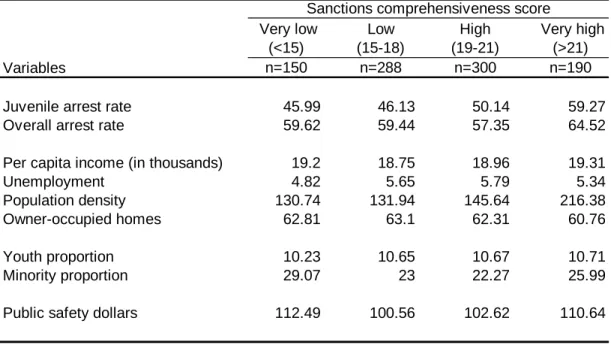
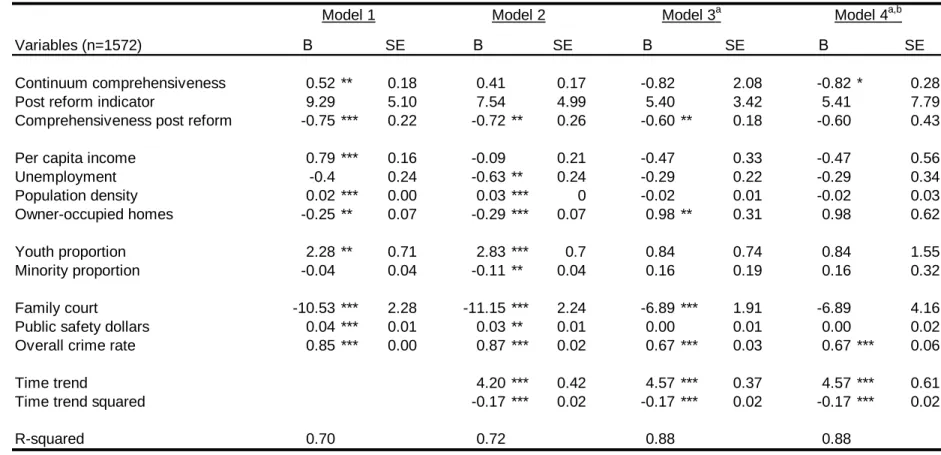
2.1 Description of sanctions implementation by socioeconomic indicators…... 46 2.2 Sample descriptive statistics………...………..…..47 2.3 OLS regression results predicting implementation score……….…...….48 2.4 Logistic regression results predicting availability of sanctions components.….49 3.1 Description of county sanction continuums………...……….…83 3.2 Descriptive statistics before and after juvenile justice reform……….…...84 3.3 Mean differences in counties by sanctions comprehensiveness in the
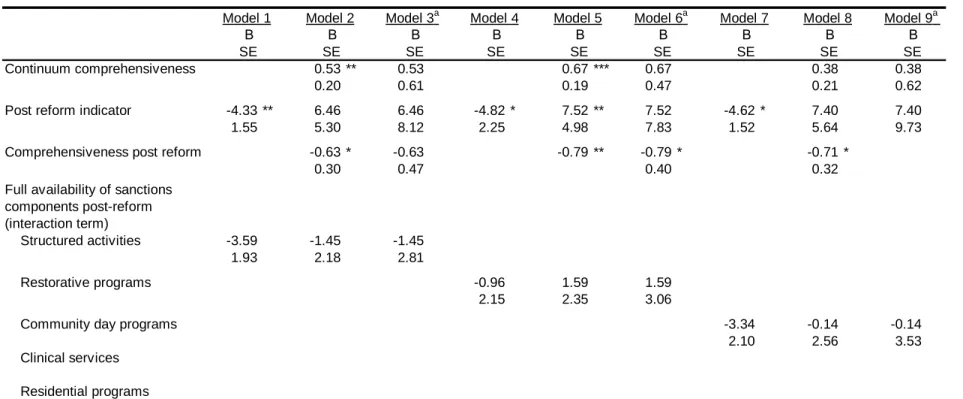
pre-reform period……….………..….…85 3.4 Regression analysis results predicting county-level juvenile crime rates……...86 3.5 Estimated effects of individual sanctions components on county-level
juvenile crime rates………..………..……….87 4.1 Descriptive statistics by geographic region………...……123 4.2 Mean scores from pre-reform time period by implementation category…...…124 4.3 Logit model results for predicting selection into high implementation group..125 4.4 Correlation coefficients for crime variables and variables
ix
LIST OF FIGURES Figure
x
ABBREVIATIONS
FBI Federal Bureau of Investigation JCPC Juvenile crime prevention council
CHAPTER 1 INTRODUCTION
2
Despite the legislative policy shift toward punitive strategies in the 1990s, some researchers and juvenile justice professionals continued to argue for the appropriateness and effectiveness of a rehabilitative emphasis in juvenile justice. Scott and Grisso (1998) and others (Grisso & Schwartz, 2000; Steinberg & Haskins, 2008) have emphasized
developmental differences between adults and juveniles in decision-making capacity,
suggesting that the use of similar punitive policies is inappropriate. Intervention research has challenged the pervading belief that no interventions effectively reduce delinquency (Howell, 2003). Reviews of juvenile justice evaluations have identified many effective interventions based upon rehabilitative premises (Herrenkohl, Chung, & Catalano, 2004; Lipsey, 1999; Lipsey & Wilson, 1998; Loeber & Farrington, 1998). Meta-analyses of program evaluations have found that rehabilitative programs can effectively reduce juvenile crime, especially when multiple services are provided in a noninstitutional setting over an extended period of time (Lipsey, 1992; Lipsey & Wilson, 1993).
In addition, one study showed that public support for legislation emphasizing punitive approaches for juveniles was based upon misinformation and faulty assumptions (Schiraldi & Soler, 1998). A more recent study indicated that the general public favors rehabilitative as opposed to punitive strategies to address juvenile delinquency (Krisberg & Marchionne, 2007).
Accountability in Juvenile Justice
3
The framework emphasizes the notion of accountability as a central tenet in justice policy (Bazemore & Clinton, 1997; Bazemore, Umbreit, Klein, Maloney, & Pranis, 1997). Accountability has been defined as the assurance of consequences for admitted or adjudicated offenses that prompts juveniles to take responsibility for the delinquent act (Griffin, 1999). Some critics argue that accountability has simply become a euphemism for a punitive model of juvenile justice (Howell, 2003). Proponents suggest, however, that it incorporates rehabilitative goals of competency development (Beyer, 2003; Matese, 1997) and reintegration with the community (Bazemore & Clinton, 1997; Bazemore et al., 1997) so that youth can become productive members of society. In practice, accountability may be manifested in punitive approaches that emphasize consequences, but theoretically the concept holds the promise of merging two contrasting philosophies of juvenile justice. Within the framework of accountability, the use of immediate consequences may serve to incapacitate offenders who pose a risk to safety, deter further crime, increase awareness of the effects of one’s actions, and teach pro-social beliefs and skills (Griffin,1999; Matese, 1997).
4
crime emphasizes both accountability, associated with immediate consequences for delinquent acts, and rehabilitation (Wilson & Howell, 1993).
Federal Support for Graduated Sanctions
In 1998, the federal government provided 250 million dollars in block grants to states who adopted accountability-based programs as a part of the juvenile justice system (Parent & Barnett, 2003). Subsequent legislation continued to provide funding for states, though the allocation decreased in later years (Beyer, 2003). A central tenet of the block grant legislation was state use of graduated sanctions to increase accountability of juvenile offenders. Adoption of graduated sanctions was one of four federal requirements states had to meet to be eligible for funding. The legislation defined graduated sanctions as a
systematic range of sanctions, available to an offender for every offense committed, in which sanctions become progressively more severe with each subsequent offense. Though the block grants could be used by states for a variety of funding priorities, almost three quarters of the funding was spent on developing or strengthening systems of graduated sanctions (Parent & Barnett, 2002).
Graduated sanctions were emphasized in another key piece of federal juvenile justice legislation. The Juvenile Justice and Delinquency Prevention Act of 2002 promoted the use of graduated sanctions as a strategy to reduce juvenile crime. Title II, governing juvenile justice programs, and Title V, for local delinquency prevention programs, of the Act
5
justice has declined, so it is significant that the largest blocks of remaining federal funds specifically promote the use of graduated sanctions.
The federal administration endorsed graduated sanctions as a key feature of an effective crime reduction strategy referred to as the Comprehensive Strategy for serious, violent, and chronic offenders (Wilson & Howell, 1993). Subsequently, the Guide for
Implementing the Comprehensive Strategy was developed to encourage and strengthen
implementation efforts by states and local municipalities (Howell, 1995). Two key
components provide the foundation of the Comprehensive Strategy. The first is a network of prevention and early intervention programs to prevent delinquency. The other is a system of graduated sanctions, including rehabilitative treatment services, in order to halt the
progression of offending behavior.
The Office of Juvenile Justice and Delinquency Prevention (OJJDP) provided funding to three initial pilot sites in 1996 to implement graduated sanctions as a part of the
Comprehensive Strategy (Coolbaugh & Hansel, 2000). Since that time, six states were selected as demonstsration states and received intensive training and technical assistance for implementation (Matese & Tuell, 1998). The Juvenile Sanctions Center (2005) has also supported state and local adoption of graduated sanctions. Fifteen demonstration sites have implemented and evaluated systems of graduated sanctions in order to determine effective policies and practices. Several states have followed the blueprint of the Comprehensive Strategy in order to develop a continuum of graduated sanctions (Howell, 2003; Mondoro, Wight, & Tuell, 2001).
6
funding did not initiate this trend, but the federal financial incentives and administrative initiatives seem to have strengthened and institutionalized a trend already begun by states. Initial applications for Juvenile Accountability Incentive Block Grants indicated that 77% of states already met the eligibility requirement for graduated sanctions. Those that did not meet the criterion submitted a detailed plan to indicate changes to bring the state juvenile justice system into compliance (Parent & Barnett, 2003). Every state has applied for and received funds from this program in every year it has continued (Development Services Group, 2002), indicating widespread adoption of graduated sanctions across states.
Federal legislative and administrative initiatives emphasize the use of graduated sanctions as a key strategy for addressing juvenile crime. Federal funding for juvenile justice promotes the utilization and every state has adopted some type of system of graduated
sanctions. This strategy is the predominant and underlying model for juvenile justice policy development. Despite the prevalence, definitive conclusions about the effect of graduated sanctions as a systemic intervention have not been reached (Wiebush, 2002).
7
North Carolina State Data Center was used to create a longitudinal database to examine the effects of community-based sanctions on both juvenile crime rates and juvenile custody rates.
8
REFERENCES
Bazemore, G., & Clinton, T. (1997). Developing delinquent youths: A reintegrative model for rehabilitation and a new role for the juvenile justice system. Child Welfare, 76, 665-717.
Bazemore, G., Umbreit, M., Klein, A., Maloney, D., & Pranis, K. (1997). Balanced and restorative justice for juveniles: A framework for juvenile justice in the 21st century. Washington, DC: Office of Juvenile Justice and Delinquency Prevention.
Bernard, T. (1992). The cycle of juvenile justice. England: Oxford University Press. Beyer, M. (2003, April). Best practices in juvenile accountability: Overview. JAIBG
Bulletin. Washington, DC: Office of Juvenile Justice and Delinquency Prevention.
Butts, J., & Mears, D. (2001). Reviving juvenile justice in a get-tough era. Youth and Society,
33, 169-198.
Consequences for Juvenile Offenders Act of 2002, H.R. 2215, 107th Cong. (2002). Coolbaugh, K., & Hansel, C. J. (2000, March). The Comprehensive Strategy: Lessons
learned from the pilot sites. Juvenile Justice Bulletin. Washington, DC: Office of Juvenile Justice and Delinquency Prevention.
Development Services Group, (2002). Status of the states: Implementation of the JAIBG
Program. Washington, DC: Office of Juvenile Justice and Delinquency Prevention,
Training and Technical Assistance Division.
Griffin, P. (1999, September). Developing and administering accountability-based sanctions for juveniles. JAIBG Bulletin. Washington, DC: Office of Juvenile Justice and Delinquency Prevention.
Griffin, P., Torbet, P. M., & Szymanski, L. (1998). Trying and sentencing juveniles as adults: An analysis of state transfer and blended sentencing laws. Washington, DC: Office of Juvenile Justice and Delinquency Prevention.
Grisso, T. & Schwartz, R. G. (Eds.). (2000). Youth on trial: A developmental perspective on
juvenile justice. IL: University of Chicago Press.
Herrenkohl, T. I., Chung, I. J., & Catalano, R. F. (2004). Review of research on predictors of youth violence and school-based and community-based prevention approaches. In P. Allen-Mears & M. W. Fraser (Eds.), Intervention with children and adolescents: An
9
Howell, J. C. (Ed.). (1995). Guide for implementing the Comprehensive Strategy for Serious,
Violent, and Chronic Offenders. Washington, DC: Office of Juvenile Justice and
Delinquency Prevention.
Howell, J. C. (2003). Preventing and reducing juvenile delinquency: A comprehensive
framework. Thousand Oaks, CA: Sage Publications.
Hutchings, V. L. & Valentino, N. A. (2004). The centrality of race in American politics.
Annual Review of Political Science, 7, 383-408.
Jensen, J. & Howard, M. (1998). Youth crime, public policy, and practice in the juvenile justice system: Recent trends and needed reforms. Social Work, 43, 324-334. Juvenile Crime Control Act of 1997, H.R. 3, 105th Cong. (1997).
Juvenile Justice and Delinquency Prevention Act, as amended, of 2002, Pub. L. 107-273,
§116 Stat. 1758. (2002).
Juvenile Sanctions Center (2005, June). First Monday: Monthly newsletter on sanctions and
services. Reno, NV: National Council of Juvenile and Family Court Judges, Juvenile
Sanctions Center, Training and Technical Assistance Division. Retrieved March 18, 2007 from http://www.ncjfcj.org/images/stories/delinquency/june%202005.pdf
Krisberg, B., & Marchionna, S. (2007, February). Attitudes of US voters toward youth crime and juvenile justice. Focus: Views of the National Council on Crime and
Delinquency. Oakland, CA: National Council on Crime and Delinquency. Retrieved
February 27, 2008 from http://www.nccd-crc.org/nccd/pubs/zogby_feb07.pdf Lipsey, M. W. (1992). Juvenile delinquency treatment: A meta-analytic inquiry into the
variability of effects. In T.D. Cook et al. (Eds.), Meta-analysis for explanation (pp. 83-127). New York: Russell Sage Foundation.
Lipsey, M. W. (1999). Can rehabilitative programs reduce the recidivism of juvenile offenders? An inquiry into the effectiveness of practical programs. Virginia Journal
of Social Policy and the Law, 6, 611-641.
Lipsey, M. W., & Wilson, D. B. (1993). The efficacy of psychological, educational, and behavioral treatment: Confirmation from meta-analysis. American Psychologist, 48, 1181-1209.
Lipsey, M. W. & Wilson, D. B. (1998). Effective interventions with serious juvenile offenders: A synthesis of research. In R. Loeber & D. P. Farrington (Eds.), Serious
and violent juvenile offenders: Risk factors and successful intervention (pp. 313-345).
10
Loeber, R. & Farrington, D. P., (Eds.). (1998). Serious and violent juvenile offenders: Risk
factors and successful interventions. Thousand Oaks, CA: Sage Publications.
Matese, M. A. (1997, March). Accountability-based sanctions. OJJDP Fact Sheet #58. Washington, DC: Office of Juvenile Justice and Delinquency Prevention.
Matese, M. A. & Tuell, J. A. (1998, September). Update on the Comprehensive Strategy for serious, violent and chronic offenders. OJJDP Fact Sheet #83. Washington, DC: Office of Juvenile Justice and Delinquency Prevention.
Mondoro, D. M., Wight, T., & Tuell, J. A. (2001, May). Expansion of OJJDP’s
Comprehensive Strategy. OJJDP Fact Sheet Number #18. Washington, DC: Office of Juvenile Justice and Delinquency Prevention.
Omnibus Crime Control and Safe Schools Act of 1998, Pub.L. No.105-119. (1998). Parent, D. & Barnett, L. (2003). Juvenile Accountability Incentive Block Grant Program
national evaluation: Final report. Washington, DC: National Institute of Justice.
Puzzanchera, C. M. (2003, September). Delinquency cases waived to criminal court, 1990-1999. OJJDP Fact Sheet #04. Washington, DC: Office of Juvenile Justice and Delinquency Prevention.
Sarri, R., Shook, J.J., Ward, G., Creekmore, M., Alberston, C., Goodkind, S., et al. (2001).
Decision-making in the juvenile justice system: A comparative study of four states.
Ann Arbor: University of Michigan, Institute for Social Research.
Schiraldi, V. & Soler, M. (1998). The will of the people? The public’s opinion of the Violent and Repeat Juvenile Offender Act of 1997. Crime and Delinquency, 44, 590-618.
Scott, E., & Grisso, T. (1998). Evolution of adolescence: A developmental perspective on juvenile justice reform. The Journal of Criminal Law and Criminology, 88, 137-189. Twenty-first Century Justice Appropriations Bill of 2002. P.L. 107-273. §116 Stat. 1758.
(2002).
Wiebush, R., (Ed.). (2002). Graduated sanctions for juvenile offenders: A program model
and planning guide. Reno, NV: Juvenile Sanctions Center, National Center for
Juvenile and Family Court Judges.
CHAPTER 2
IMPLEMENTATION OF COMMUNITY-BASED SANCTIONS
Since the mid-1990s, the federal government has financially and administratively supported state adoption and development of graduated sanctions for juvenile offenders. All states utilize graduated sanctions for juveniles, including a comprehensive array of
community-based sanctions and services available for juvenile offenders who demonstrate various levels of risk and need. Only those juveniles with the most serious offenses, who pose the highest risk of re-offending, are sentenced to secure facilities typically managed by the state. Most juveniles are placed in their communities and are subject to mandated sanctions and services provided by local government and social service agencies. Local communities, therefore, have significant responsibility for developing and implementing graduated sanctions for juveniles.
12
this study was to compare local implementation of sanctions with state-level legislative and administrative expectations regarding the law and to describe implementation variability across counties. Using Matland’s (1995) ambiguity-conflict model of policy implementation as a framework, the evaluation also identified factors affecting implementation at the local level.
Sanctions Policy in Juvenile Justice
Federal Support for Graduated Sanctions
Legislatively, the federal government strengthened the state adoption and development of graduated sanctions for juveniles through financial incentives from the Juvenile Accountability Incentive Block Grant program (Omnibus Crime Control and Safe Schools Act, 1998; Parent & Barnett, 2003; Twenty-first Century Justice Appropriations Act, 2002). Administratively, the federal OJJDP endorsed the use of graduated sanctions as a key feature in an overall juvenile crime reduction strategy referred to as the Comprehensive Strategy for serious, chronic, and violent juveniles (Wilson & Howell, 1993). In federal legislative and administrative documents, graduated sanctions are described as an array of sanctions, available for every offense, that are sure, immediate, consistent, individualized, and community-based. Sanctions should escalate with subsequent and more serious offenses (Howell, 1995; Twenty-first Century Justice Appropriations Act, 2002).
13
Hansel, 2000; Howell, 2003; Matese & Tuell, 1998; Mondoro, Wight, & Tuell, 2001). State and local cooperation are important to ensure such comprehensiveness. In order to more carefully examine the role of local communities, it is helpful to focus on juvenile sanctions policy in one state.
North Carolina’s Juvenile Justice Reform Act of 1998
Similar to efforts in many states, North Carolina passed comprehensive juvenile justice reform in the late 1990s (Juvenile Justice Reform Act, 1998; Mason, 1999). The newly created North Carolina Department of Juvenile Justice and Delinquency Prevention (NC DJJDP) assumed responsibility for several substantial changes that took effect in July of 1999. Guided in part by the Comprehensive Strategy (Howell, 1995) and a graduated
sanctions model developed by the Juvenile Sanctions Center (Wiebush, 2002), North Carolina reforms contained three graduated sanctions policy components—a decision-making structure, information management, and a comprehensive array of services and sanctions. The implementation of the components relies on efforts by both the state and local government.
14
guidelines reforms in many states (Mears, 2002). The mechanisms aid consistency in sentencing statewide while providing the opportunity to individualize particular sanctions and services for youth. Though the information is gathered by court counselors employed by the NC DJJDP, actual sanctions decisions are made by district judges elected in non-partisan elections every four years.
The grid and the assessments underlie the decision-making component of graduated sanctions. The NC DJJDP also developed and manages a statewide information system on juvenile offenders to fulfill the second component of graduated sanctions policy. The third component involves the development and oversight of an array of community-based services and sanctions.
The Juvenile Justice Reform Act mandated the creation of local JCPCs in every county in North Carolina to assume responsibility for community-based sanctions.
15
The ideal continuum of sanctions and services spans multiple service program types and various supervisory levels for local youth. Some programs are available for all youth in the community and others are targeted to at-risk or court-involved youth. The funding sources for the programs are varied and may include state sources, private donations, and local school budgets. Program areas include restorative services, such as restitution and community service. Clinical and assessment services are provided by multiple private agencies to address mental health, substance abuse, and family therapy needs. Structured activities may include a wide range of programs such as volunteer or non-profit organizations like Boy Scouts and Girl Scouts, faith-based programs, mentoring, or sports activities. Community structured-day programs are typically either alternative schools or day reporting centers that provide supervision specifically for court-involved youth. Residential programs include a few NC DJJDP programs specifically for juvenile offenders and private programs that also serve youth referred by families or other state agencies.
16
Policy Implementation
Policy Implementation in Criminal and Juvenile Justice
In the past, the federal government showed concern about implementation of justice policy following a large influx of money into criminal justice policy innovations in the 1970s (Ellickson & Petersilia, 1983). Disillusioned with seemingly ineffective innovations, policy makers wanted to examine ways to ensure successful implementation. Criminology scholars also recognized the importance of implementation to identify the actual workings of
proposed programs and policies, produce information about challenges to policy reform, and to correctly interpret evaluation results (Krisberg, 1980). Since that time, scholars have examined implementation of law-enforcement strategies to address gangs (Winfree, Lynskey & Maupin, 1999), hate crime legislation (Haider-Markel, 2002), drug policy in California (Percival, 2004), and major crime reduction legislation in England and Wales (Maguire, 2004). Multiple factors were identified that influence implementation of criminal justice legislation including political climate, conflicting policy goals, multi-actor collaboration, tractability of the problem, funding, staff training, organizational capacity, and timeframes.
Studies specific to the juvenile justice system have also focused on implementation. Holsinger and Latessa (1999) identified the levels in a state sanctions continuum and
17
programs (Goei, Meyer, & Roberto, 2003; Mihalic & Irwin, 2003) all indicated that
implementation did not always occur as planned or expected. These studies demonstrated the wide range of factors that may influence implementation including multi-actor cooperation, leadership and staff capacity, ideological norms of the implementers, staff continuity, and community support.
Implementation evaluations may stand alone to help ensure the quality of programs and policies, but attention to implementation is also important as an adjunct to impact or outcome evaluations (Rossi et al., 2004). Without full implementation, it is impossible to make definitive decisions about policy effectiveness (Corbett & Lennon, 2003). A past study of an adolescent drug use intervention showed that levels of implementation affected youth outcomes (Pentz et al., 1990). More recently, Mears and Kelly (2002) found that recidivism outcomes for juveniles were more related to the implementation variability across sites than individual characteristics of the offenders. Burke and Pennell (2001) studied the
implementation of the sanctions component of the Breaking Cycles program in San Diego and identified specific program components that contributed to its effectiveness.
Criminologists have called for more attention to implementation in evaluations (Mears & Kelly, 2002). Lemley (2001) particularly recommended the use of a policy implementation framework in implementation studies.
Literature on Policy Implementation
18
unresolved disconnect between policy intentions and policy implementation remains, which may be increasingly important to understand given the policy shift to the states (O’Toole, 2000). The broader literature on governance (Lynn, Heinrich, & Hill, 2001) incorporates aspects of implementation research and is enlivening its study (Hill & Hupe, 2002) These reviews acknowledge the contribution of both “top-down” theories that emphasize
characteristics of policy design and bureaucrat compliance and “bottom-up” theories that emphasize the important role of local discretion by policy implementers. Such acceptance, however, further adds to the excessive number of variables that have been found to influence policy implementation, making it difficult to study empirically.
Efforts at synthesis provide theoretical frameworks in which to analyze policy
implementation by suggesting groupings of variables expected to influence implementation. Winter (1990) suggested examining variables associated with phases or levels of policy development which he describes as characteristics of the policy formation process,
organizational and interorganizational behavior, street-level behavior, and the response of the policy target group as well as societal changes that may affect the target group. Goggin, Bowman, Lester, and O’Toole (1990) focused specifically on communication patterns between levels of government and organizational capacity that entails resources, degree of fragmentation, and training. The governance literature also supports the use of multilevel theoretical models that include characteristics of the broader environment, clients, the key intervention, organizational structures, and key leaders or managers (Heinrich, Hill, & Lynn, 2004).
19
every variable that may possibly affect implementation (O’Toole, 2000). Many policy scholars agree, however, that implementation research needs to move toward theory validation using empirical methods (Goggin et al., 1990; Heinrich et al., 2004; Saetren, 2005). The conflict-ambiguity model of policy implementation (Matland, 1995) narrows the range of possible influences by suggesting that certain variables are most important within specific policy contexts.
The Ambiguity-Conflict Model of Policy Implementation
Matland (1995) proposed a method for choosing which sets of variables are most applicable to specific policy situations based upon characteristics of ambiguity and conflict. Policy ambiguity relates to the clarity of either the policy goals or means for achieving the goal. Policy conflict characterizes the level of congruence among the various participants involved in policy implementation regarding both policy goals and means. Based upon these two characteristics, Matland proposed four classifications of policy situations. Different sets of variables are expected to influence implementation within each category. Low policy ambiguity and low conflict reflect an administrative implementation model, which is largely dependent upon available local resources including funding and staffing. Political
20
occurs with high policy ambiguity and conflict. Local coalition strength is expected to determine implementation outcomes.
21
Policy Implementation in North Carolina
The relationship between the state and local implementers in North Carolina seems to align with Matland’s (1995) administrative model of policy implementation. One central agency, the NC DJJDP, oversees the implementation of juvenile justice policy with clear legislative mandates and administrative policies that govern specific policy outputs as well as roles and responsibilities of those involved in implementation (Juvenile Justice Reform Act, 1998; Mason, 1999; NC DJJDP, 2006). Agency staff have shown a high compliance rate in all three components of graduated sanctions policy. In decision-making, for example, only 2% of youth involved in the state juvenile justice system in the years 2004-2005 were not assessed for risk of recidivism and needs.
The NC DJJDP also oversees the activities of the county-based JCPCs that are given the specific responsibility for ensuring a locally-based continuum of services and sanctions. In order for counties to obtain funding from the state, the local councils must comply with specific procedures regarding composition of the council, frequency of meetings, assessment process, and reporting documents (NC DJJDP, 2006). All councils filed the necessary reports and received funding from the state. Although council members are not necessarily employees of the state juvenile justice agency, consultants employed by the state oversee all council activities. Centralized authority, clear procedures, and high compliance within the North Carolina system suggest characteristics of low ambiguity as well as low policy conflict that constitute an administrative model of policy implementation (Matland, 1995). As such, it was expected that local resources would have the greatest effect on county-level
22
The state-local partnership in juvenile justice is organized such that local JCPCs have discretion to determine the most pressing needs of the county and adapt community sanctions accordingly. Such discretion adds an element of policy ambiguity that may result in more variability between counties, as expected in an experimental paradigm of policy
implementation. In such a case, local resources would be expected to affect outcomes as similar to an administrative paradigm. In addition, however, the belief systems of staff members might also influence implementation outcomes in an experimental policy situation. Despite high compliance with NC DJJDP mandates, the local councils are comprised of varied actors from different agencies. Conflict may arise around the specific decisions regarding the programs that constitute the sanctions continuum. An element of conflict may reflect Matland’s political model of implementation (1995), so it was important to consider political affiliation of leaders and the community in the analysis.
Data and Model Specification
Using cross-sectional county-level data from North Carolina, this study examined the variability of community-based sanctions continuums mandated by state juvenile justice reform. Overall implementation levels and specific sanctions components were described and compared to a state-level model for the sanctions continuum. The study also identified local factors that affected implementation, giving particular attention to local financial resources.
Data and Sample
Each of 100 counties in North Carolina has a JCPC that is required to conduct an assessment of available services within the county in a process entitled Continuum Building.1
1
23
A JCPC consultant, employed by the NC DJJDP, oversees the assessment process in several counties within a given region. A standardized annual report is produced by each council as the final result of the assessment process. Assessment reports are available to the public and were obtained from the JCPC consultants. Assessment reports for the planning years 2006-2007 and 2006-2007-2008, which represent the state of services at of the end of 2005 and 2006 respectively, constituted the basis of the administrative data used in the implementation analysis. These years were chosen due to the availability of data and to allow for a five-year period following the adoption of the Juvenile Justice Reform Act to give sufficient time for full implementation.
The annual report provides information on all services available for juvenile offenders in the county across multiple levels of supervision. In addition, each program is rated in regard to the availability and accessibility of services in the community. Appendix A contains an example report. This information was quantified to develop measures of
implementation for use in data analysis. Of 100 counties in the state, 93 provided assessment reports. The remaining seven counties, from one of four geographic regions, did not provide reports despite repeated requests, due in part to a vacant JCPC consultant position. In
24
A database was developed with additional county-level demographic, economic, and political variables. All data are available to the public through the North Carolina State Data Center, which compiles information from various state and federal agencies.
Implementation Measures
The key outcome variable is a measure of overall implementation of the continuum of services and sanctions expected in each county. Administrative data were converted into quantitative scores of implementation that reflect the comprehensiveness or completeness of the local continuum of sanctions. Administrative reports describe services in six different program categories across five levels of supervision for offenders. Two of the program types, assessment services and clinical services, were collapsed resulting in five program types which include structured activities, restorative services, clinical services, structured community day programs, and residential programs. The first level of supervision, prevention services for at-risk youth, is not considered in this analysis as the focus of the evaluation is graduated sanctions for juvenile offenders. In addition, the fourth level of supervision, secure confinement, is the responsibility of the state and is not considered in this analysis. The three remaining levels represent immediate sanctions, intermediate sanctions, and aftercare services provided upon release from residential facilities. Restorative services are not typically provided post-release, so the measurement of the completeness of the continuum is based upon fourteen components of the continuum that represent the expected five program types across three different levels of supervision excepting post-release restorative services.
25
in the county. In addition, indicators of full availability of services are used for each of the five program types in order to assess variability in specific components of juvenile sanctions policy. The first column of Table 2.1 shows the descriptive statistics for the implementation measures.
Explanatory Variables and Statistical Model
Based upon Matland’s model of policy implementation (1995), the implementation outcome was regressed on variables representing local financial resources and additional control variables. All explanatory variables were for the year prior to the implementation year. Counties with fewer financial resources were expected to have lower implementation levels. Key explanatory variables included county revenue per capita, state funding
26
Other juvenile justice evaluations have found that the ideological positions of key leaders (Bazemore, 1993; Goodstein & Sontheimer, 1997; Terry-McElrath & McBride, 2004) and community support for interventions (Mihalic & Irwin, 2003) may affect
implementation. Past studies of crime policy have shown that Republicans, as compared to Democrats, tend to favor more punitive policies such as secure custody (Smith, 2004; Yates & Fording, 2005). In order to control for the level of support from the community and juvenile justice leaders, the percent of registered voters who are Democratic and an indicator of whether or not the District Attorney is Democratic were included in the model. Counties with a Democratic majority of voters and a Democratic District Attorney may be more likely to support community-based sanctions and have higher implementation.
Bottom-up policy formation involves local implementers who exercise discretion and alter policy to fit local needs (Brodkin, 1990; Palumbo & Calista, 1990). In order to assess whether counties with higher levels of implementation are responding to the needs of local youth, the percentages of system-involved youth in each county with high and medium needs and high and medium risk of recidivism were included. The state provides this information to counties for deliberate consideration in developing the sanctions continuum. The
27 Methodology
Descriptive analysis was used initially to examine means and standard deviations of implementation scores across all counties. Counties were then classified into categories of high and low resources based upon their position above or below the median score on three socioeconomic measures. In addition, groups were developed based upon the state
designation for the mandated match for state funds to JCPCs. Population density was used separately to designate the counties as high or low density. Bivariate analysis provided an initial assessment of whether or not financial resources affected implementation of
community-based sanctions. To assess differences in specific policy components, proportion tests were conducted to compare the groups in terms of full availability of specific services such as residential or clinical programs.
Several preliminary steps were taken to specify the ordinary least squares (OLS) regression models used to identify predictors of implementation level. Due to the likelihood of correlation within the groupings of explanatory variables, particularly the local resources measures of interest, initial analysis included Pearson correlations between explanatory variables and calculation of variability inflation factors (VIFs). Per capita income, in
28
variables into one measure, but they did not improve the models. In addition, though correlated, many of the socioeconomic variables measure different aspects of county resources. The state’s designation of the proportional match expected from the counties for the JCPCs is based upon multiple economic indicators and can represent an overall measure of economic strength. The final analysis, therefore, excluded per capita income from the statistical models. Percent of youth with high and medium risk of recidivism and high and medium needs were also highly correlated (r = .6), but did not have VIFs of concern. The inclusion of both variables did not negatively affect the model fit or statistical significance of either variable in the models. Given the direct mandate to use the information in planning, it seemed important to include both variables as controls.
The implementation data were gathered from two separate years. An indicator variable was used to control for the effect of a greater time lag on the data collected for the 2007-2008 implementation year. It was not statistically significant in any model, so for simplicity the estimated coefficient is not reported. The 93 counties in the sample are nested within 37 judicial districts, and autocorrelation likely exists between counties within one district. The cluster sizes vary, including some districts comprised of only one county. Clustered robust standard errors were used to adjust the correlation matrices in order to ensure accurate standard errors. Though multilevel models could also be used to address clustering effects, the relatively small number of clusters and the focus of the research guided the decision to use the more simple option of clustered robust standard errors. Robust
29
In addition to the OLS regression models used to examine predictors of the extent of implementation, logistic regression was also used to analyze effects on implementation of particular continuum components. The dichotomous indicators of full availability for each of the five different program types were used as the outcome variables in subsequent models. Control variables were the same. The lag variable and clustered robust standard errors were used as in the OLS models.
Results
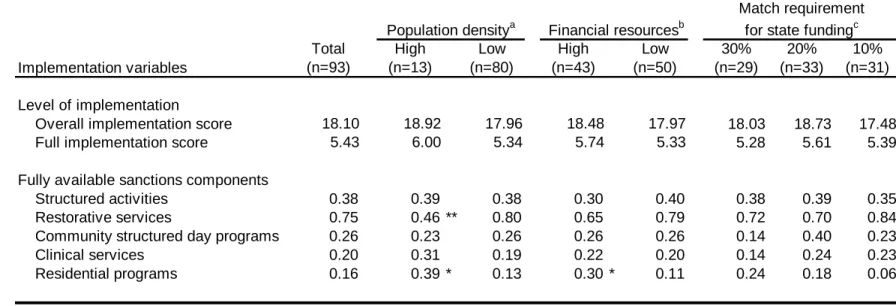
Descriptive analysis showed that counties did not implement the full continuum of community-based sanctions. Table 2.1 shows the mean scores on implementation measures for the full sample. The mean on a scale from 0, for no services at all, to 28, for full
availability of all programs at all levels, was 18. Only one county had a perfect score with full implementation of all continuum components. No others had full availability of services across even one supervisory level. Variability did exist in the availability of services by program type. Restorative services, which most commonly include teen court and restitution, were the most available services as 75% of counties had sufficient services for all youth. Assessment reports indicated that most of the restorative programs were funded by the state, so the additional support may explain the prevalence of the programs. Only 16% of counties had full availability of residential programs.
Bivariate Analysis
30
counties required to make only a 10% match of state funds, indicating fewer economic resources, had a lower mean implementation score than either of the other two groups.
The effects of population density or financial resources were not consistent when examining the availability of specific sanctions components. These comparisons are also shown in Table 2.1. Availability of structured activities did not vary much between counties. Most counties had multiple and diverse programs within this category, but the relatively low proportion of fully available services indicates they were insufficient for the needs of local youth or difficult to access. A smaller proportion of highly densely populated counties had full availability of restorative services as compared to the low density group. The small number of counties without restorative services and the small sample of high density counties may help explain the seeming contradiction. The few counties without full availability in the high population density group tended to have a high number of services in that program category, but they were not all fully available. More densely populated counties had greater availability of both clinical and residential services. The difference between population density groups in available residential programs was statistically significant. Similarly, the counties with higher financial resources also had significantly greater availability of
residential programs. Such programs are the most costly component of the sanctions continuum, so variation in local financial resources may have the greatest impact on residential programs.
OLS Regression Results
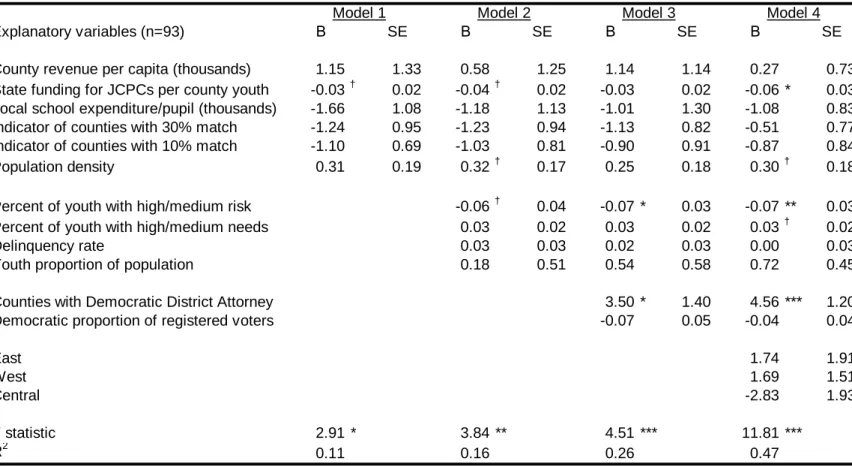
Table 2.3 shows the results for the first and subsequent regression models. A
31
the financial resource variables to predict implementation level, indicated that only state funding for JCPCs had a statistically significant effect on implementation, but the effect was in the opposite direction than expected. The effect was not substantively large. The mean amount of JCPC funding per youth was 35 dollars with a standard deviation of 16. A 32 dollar per youth increase in funding, the difference between a county one standard deviation below and one above the mean, would decrease the implementation score by 1. The change in score represents the loss of a partially available program or decreased availability of a program that had been fully available. The indicator for counties with only a 10% match requirement was negative and significant at the p=.12 level, giving weak support to the notion that counties with fewer resources have lower implementation levels. Population density had a positive effect on implementation at the p = .11 level; a result indicating that less densely populated counties may have access to fewer resources. The F statistic was significant for the overall model, but only 11% of the variability was explained. The low R2 suggested that other factors were important to explain differences in implementation.
When the discretionary variables were introduced into the second model, as shown in Table 2.3, the model fit improved and additional variability was explained. Population density became a significant and positive predictor of implementation. Similar to results of the bivariate analysis, more densely populated counties had higher implementation levels. The effect of JCPC funding remained negative and significant with a slightly larger
32
substantive effect. A county with 20% more of the youth population at high or medium risk would have an estimated decrease of 1.2 points on the implementation score. A lack of services could conceivably contribute to increased risk factors, but the risk data are from the year prior to implementation. Other factors, especially unobservable influences such as attitudes about crime and crime control, could influence both. A punitive stance toward juvenile justice may favor the use of secure custody rather than community-based services, especially in an area with a high proportion of youth at high risk of recidivism.
The political variables had the biggest impact on implementation as seen in the third model of Table 2.3. The overall model fit improved and explained an additional 10% of variability. A Democratic District Attorney, a key leader in the local juvenile justice system, increased the implementation score by 3.5 points as compared to a Republican. This result reflected the findings of studies that have shown Republicans tend to take a more punitive stance toward crime and may not be as supportive of community-based sanctions. The relationship between JCPC funding and implementation level remained the same.
33
with high and medium needs had a positive and significant effect on implementation, possibly reflecting the bottom-up argument that local implementers use discretion based upon local needs. Slightly more than a 30% change in the youth population would be necessary to see a 1 point change in the sanctions continuum. The effect of a Democratic District Attorney increased in magnitude. Counties with Democratic leadership in the local juvenile justice system had, on average, an increase of 4.5 in the implementation score compared to counties with a Republican District Attorney. Substantively, this reflects a difference of two fully available sanctions components such as clinical services and residential programs. .
Interaction Effects
34
safety and ideological responses may vary the most with this population of offenders. Those are also the youth most likely to be removed from the community. By specifically
controlling for the interaction of the District Attorney and the proportion of youth at high and medium risk, the influence of a supportive leader may be even greater for the majority of youth who are served in the community.
Regional interactions were introduced specifically with the discretionary variables related to local youth including youth crime rate and proportion of youth with high and medium risk and needs. Such variables helped to assess whether regional differences represented attitudes regarding responses to juvenile delinquency and at-risk youth. The introduction of the interactions did not affect many models. The interaction of the west indicator and risk variable, however, was statistically significant and positive. The magnitude of the negative risk coefficient that was found in all models was decreased specifically for the western region.
Logistic Regression
The logistic regression models showed some support for the effect of political
variables. Table 2.4 lists the models predicting likelihood of available sanctions components. The residential programs component was excluded from the table because the model only explained 17% of variability and was only statistically significant at the p < .05 level. No variables were statistically significant predictors of available residential services. Since only 16% of counties have fully available residential services, this policy component had the least variability. In general, the models predicting availability of a particular sanctions component did not explain as much of the variability as the models predicting overall sanctions
35
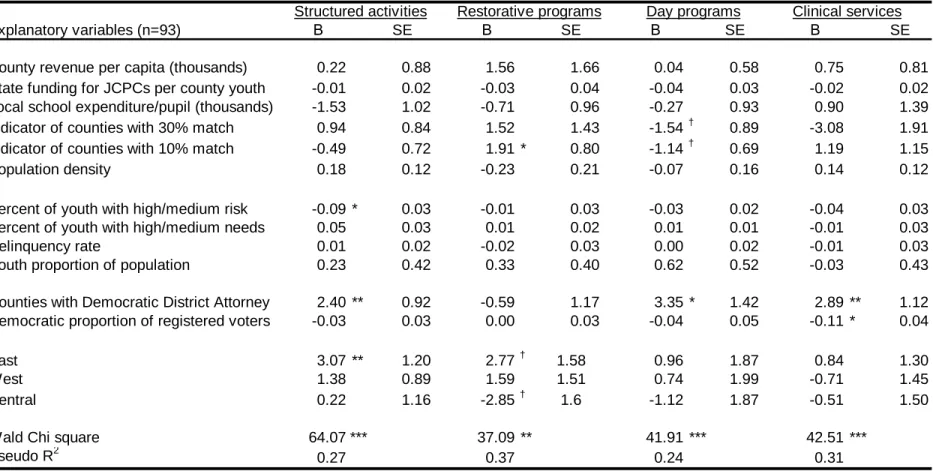
The first model in Table 2.4 indicates that counties with a Democratic District Attorney and located in the eastern region are much more likely to have fully available structured activities. In addition, an increase of 1% in the proportion of high and medium risk offenders decreases the likelihood of fully available services by 9%. Except for the regional effect, this parallels the findings for overall implementation. Counties in the east are more likely and counties in the central region are less likely to have fully available
restorative services as shown in the second model. The few counties with multiple
restorative programs that are not fully available are mostly found in the central region and may help explain this finding. Both clinical services and community structured day programs were much more likely, 15 and 28 times more likely respectively, to be fully available in counties with a Democratic District Attorney.
When the models were run including the overall implementation score, it was a significant predictor in all models except clinical services and other variables became insignificant. Variables used in this analysis to explain policy implementation may have a greater effect on overall implementation than the more specific planning involving different policy components. Other factors not included in this analysis, such as organizational characteristics of the JCPCs or specific attitudes of personnel, may have a greater influence on particular implementation choices.
Discussion and Conclusions
Despite clear legislation and a centralized Department of Juvenile Justice and Delinquency Prevention in North Carolina, the implementation of community-based sanctions for juveniles does not coincide with the idealized continuum of sanctions
36
implementation of state policy does not always conform to expectations and is not uniform across local units of government (Bazemore, 1993; Goodstein & Sontheimer, 1997). Considerable variability existed in both the overall extent of implementation and the
particular components of sanctions components. This finding is significant in and of itself as a reminder that policy implementation is an important aspect of policy-making. The state should continue to provide support to local communities to address gaps in services.
Local Discretion in Implementation
The variability in sanctions did not seem to be the result of discretionary choices by local councils to meet the particular needs of local youth. Sanctions were not more extensive in counties with more youth or higher juvenile crime rates. Proportion of youth at risk of recidivism did have a relationship with implementation level, but not in the hypothesized direction. Though risk and needs data were explicitly provided for county consideration in the development of a sanctions continuum, higher levels of risk did not predict more services. In fact, a 10% decrease in the proportion of youth with a high or medium risk of recidivism increased the implementation score by a little more than half a point. Given the high
37
custody to address juvenile crime and not rely on community-based options. Either explanation underscores the importance of state efforts to support the development and implementation of community-based sanctions.
Political Factors in Implementation
The conflict-ambiguity model of policy implementation (Matland, 1995) is a helpful paradigm for identifying the most likely factors to influence policy implementation. The prediction that local resources would have the greatest effect on implementation of
community-based sanctions was only weakly supported, and political influences showed the greatest effect. The policy situation may be more correctly classified as a political or
experimental model. A model of political implementation arises in situations of high conflict and low ambiguity. Despite one centralized authoritative agency and high levels of
compliance within the NC DJJDP, crime in general is a politically contentious issue and may arouse conflict. The conflict may be related to differences among local actors involved in the decision-making process rather than the state-local relationship. On the other hand, the discretion granted to local councils contributes to a policy situation of high ambiguity. In such a case, local resources and normative beliefs of implementers influence implementation.
Though political party affiliation is a broad categorization for an ideological belief system, the large positive effect of a Democratic District Attorney suggests the important role of ideology and normative belief in the implementation of crime policy. Though Democratic voters had an influence on implementation in one model, the persistent effect of a
38
(Goei et al., 2003; Mihalic & Irwin, 2003; Terry-McElrath & McBride, 2004). Democratic leadership increased the likelihood of residential and clinical services but not restorative services. Such differences may reflect preferences for specific strategies to address juvenile crime. Regional effects on the availability of particular sanctions components may also reflect attitudinal differences about appropriate responses to juvenile crime, and the findings lend tentative support to the idea that normative belief may influence implementation outcomes. Other studies have shown Republicans tend to take a more punitive strategy toward crime (Smith, 2004; Yates & Fearing, 2005). This study provides additional support by showing that Democratic leaders support rehabilitative, community-based sanctions options for juveniles.
Further research assessing attitudes and beliefs of key juvenile justice leaders and members of the JCPCs would help illuminate whether normative beliefs are the mechanisms through which political affiliation and regional effects influence implementation outcomes. North Carolina has committed itself to using evidence-based practice within the juvenile justice system. Validated risk and needs assessment tools, for example, are used to guide dispositional decision-making and service planning. A research-based policy framework provides a point of reference to examine and discuss normative beliefs about effective juvenile justice practice. Building consensus about appropriate strategies to address juvenile crime among council members, state juvenile justice staff, and the general public may help reduce conflict and improve the implementation of community-based sanctions in the state.
Economic Resources and Implementation
39
through political orientation of a community. Additional models tested the mediating effects of socioeconomic variables and found that neither per capita income, child poverty,
unemployment, nor welfare population were significant or altered the significance and magnitude of the political variables. Additionally, demographic variables including median age and minority proportion did not mediate the effects of the political variables. Bivariate analysis indicated a difference in implementation based upon county-level resources.
Although political variables had a substantively larger effect on implementation, multivariate analysis showed some of the resource variables did affect implementation.
State funding for JCPCs had a negative effect on overall implementation levels. The data for JCPC funding were from the year prior to implementation data, but if
implementation is static over time the relationship may be explained by greater funding going to counties who do not have existing services and sanctions. Funding was specifically requested for targeted programs for the following year, so it seems more likely that funding affected implementation. Greater state dollars may reduce incentives to provide local investment in sanctions. Counties considered to have the greatest economic disadvantage were only required to produce a 10% match to state funding. Those counties were less likely than the others to have full availability of community day programs. Alternative schools are one of the programs within that category and these programs would require local support and financial commitment. On the other hand, the counties with a 10% match were more likely to have restorative services which were typically funded by the state.
40
sanctions options, so it may be helpful to examine whether or not some funds should be targeted specifically to rural areas. One limitation of this study is that it assumed an underlying relationship between funding and other resource variables such as staff training and organizational capacity. Other more precise measures of resources may yield different results.
The influence of financial resources on implementation is unclear. To understand the relationship between state funding and local sanctions implementation, more specific
41
REFERENCES
Bazemore, G. (1993). Formal policy and informal process in the implementation of juvenile justice reform. Criminal Justice Review, 18, 26-45.
Bernard, T. (1992). The cycle of juvenile justice. England: Oxford University Press. Brodkin, E. Z. (1990). Implementation as policy politics. In D. J. Palumbo & D. J. Calista
(Eds.), Implementation theory and practice: Towards a third generation (pp.107-118). Glenview, IL: Scott, Foresman/Little, Brown.
Burke, C., & Pennell, S. (2001). Breaking Cycles evaluation: A comprehensive approach to youthful offenders. San Diego, CA: San Diego Association of Governments. Chapin, T. (2007). Local governments as policy entrepreneurs: Evaluating Florida’s
“Concurrency Experiment”. Urban Affairs Review, 42, 505-532.
Coolbaugh, K., & Hansel, C. J. (2000, March). The Comprehensive Strategy: Lessons learned from the pilot sites. Juvenile Justice Bulletin. Washington, DC: Office of Juvenile Justice and Delinquency Prevention.
Corbett, T., & Lennon, M. C. (2003). Implementation studies: From policy to action. In M.C. Lennon & T. Corbett (Eds.), Policy into action: Implementation research and welfare
reform (pp.1-14). Washington, DC: The Urban Institute Press.
Criminal Justice Policy Council. (2001). The impact of progressive sanction guidelines:
Trends since 1995. Report prepared for the 77th Texas Legislature. Austin, TX. Ellickson, P. & Persilia, J. (1983). Implementing new ideas in criminal justice. Santa
Monica, CA: The Rand Corporation.
Goei, R. C., Meyer, G., & Roberto, A. J. (2003). An assessment of violence prevention and intervention programs in Michigan: Policy and programmatic insights and
implications. Criminal Justice Policy Review, 43, 306-321.
Goggin, M. L., Bowman, A., Lester, J. P., & O’Toole, L. J., Jr. (1990). Studying the dynamics of public policy implementation: Toward a third-generation approach. In D. J. Palumbo & D. J. Calista (Eds.), Implementation theory and practice: Towards a
third generation (pp.181-198 ). Glenview, IL: Scott, Foresman/Little, Brown.
Goodstein, L. & Sontheimer, H. (1997). The implementation of an intensive aftercare program for serious juvenile offenders: A case study. Criminal Justice and Behavior,
42
Haider-Markel, D. P. (2002). Regulating hate: State and local influences on hate crime law enforcement. State Politics and Policy Quarterly, 2, 126-160.
Heinrich, C. J., Hill, C. J., & Lynn, L. E. (2004) Governance as an organizing theme for empirical research. In P.W. Ingraham & L. E. Lynn (Eds.), The art of governance:
Analyzing management and administration (pp. 3-19). Washington, DC: Georgetown
University Press.
Hill, M. & Hupe, P. (2002). Implementing public policy. Thousand Oaks, CA: Sage Publications.
Holsinger, A. M. & Latessa, E. J. (1999). An empirical evaluation of a sanction continuum: pathways through the juvenile justice system. Journal of Criminal Justice, 27, 155-172.
Howell, J. C. (Ed.). (1995). Guide for implementing the comprehensive strategy for serious,
violent, and chronic offenders. Washington, DC: Office of Juvenile Justice and
Delinquency Prevention.
Howell, J.C. (2003). Preventing and reducing juvenile delinquency: A comprehensive
framework. Thousand Oaks, CA: Sage Publications.
Hutchings, V. L., & Valentino, N. A. (2004). The centrality of race in American politics.
Annual Review of Political Science, 7, 383-408.
Jennings, E. T. & Ewart, J. G. (2000). Driving caseloads down: Welfare policy choices and administrative action in the states. In. C. J. Heinrich & L. E. Lynn (Eds.),
Governance and performance: New perspectives (pp. 109-139). Washington DC:
Georgetown University Press.
Juvenile Justice Reform Act of 1998. North Carolina S.L. 1998-202. (1998).
Juvenile Sanctions Center (2005, June). First Monday: Monthly newsletter on sanctions and
services. Reno, NV: National Council of Family and Juvenile Court Judges, Juvenile
Sanctions Center, Training and Technical Assistance Division. Retrieved March 29, 2007 from http://www.ncjfcj.org/images/stories/delinquency/june%202005.pdf
Krisberg, B. (1980). Utility of process evaluation: Crime and delinquency programs. In M. W. Klein & K. S. Teilmann (Eds.), Handbook of criminal justice evaluation. Beverly Hills, CA: Sage Publications.
Krisberg, B., Litsky, P., & Schwartz, I. (1984). Youth in confinement: Justice by geography.
Journal of Research in Crime and Delinquency, 21, 153-181.
Lemley, E. C. (2001). Designing restorative justice policy: An analytical perspective.
43
Lynn, L. E., Heinrich, C. J., & Hill, C. J. (2001). Improving governance: A new logic for
empirical research. Washington, DC: Georgetown University Press.
Maguire, M. (2004). The Crime Reduction Programme in England and Wales: Reflections on the vision and reality. Criminal Justice, 4, 213-237.
Mason, Janet. (1999). Juvenile justice reform: Delinquent and undisciplined juveniles under
North Carolina’s new juvenile code. NC: University of North Carolina at Chapel
Hill, Institute of Government.
Matese, M. A. & Tuell, J. A. (1998, September). Update on the Comprehensive Strategy for serious,violent and C\chronic offenders. OJJDP Fact Sheet #83. Washington, DC: Office of Juvenile Justice and Delinquency Prevention.
Matland, R. E. (1995). Synthesizing the implementation literature: The ambiguity-conflict model of policy implementation. Journal of Public Administration Research and
Theory, 5, 145-175.
Mears, D. P (1998). Evaluation issues confronting juvenile justice sentencing reforms: A case study of Texas. Crime and Delinquency, 44, 443-464.
Mears, D. P. (2002). Sentencing guidelines and the transformation of juvenile justice in the twenty-first century. Journal of Contemporary Criminal Justice, 18, 6-19.
Mears, D. P. (2006). Exploring state-level variation in juvenile incarceration rates. The
Prison Journal, 86, 470-490.
Mears, D. P., & Kelly, W. R. (2002). Linking process and outcomes in evaluating a statewide drug treatment program for youthful offenders. Crime and Delinquency, 48, 99-115. Mihalic, S.F., & Irwin, K. (2003). Blueprints for violence prevention: From research to
real-world settings--factors influencing the successful replication of model programs.
Youth Violence and Juvenile Justice, 1, 307-329.
Mondoro, D. M., Wight, T., & Tuell, J. A. (2001, May). Expansion of OJJDP’s Comprehensive Strategy. OJJDP Fact Sheet #18. Washington, DC: Office of Juvenile Justice and Delinquency Prevention.
Mortimer, M. J., & McLeod, S. D. (2006). Managing Montana’s Trust Land old-growth forests: Practical challenges in implementing scientific policy. Administration and
Society, 38, 447-471.
North Carolina Department of Juvenile Justice and Delinquency Prevention. (2006). JCPCs and JCPC Program Policies. Retrieved January 28, 2008 from