Evolution of Telomeres in
Schizosaccharomyces pombe
and Its Possible
Relationship to the Diversification of
Telomere Binding Proteins
Regina Sepsiova1, Ivona Necasova2,3, Smaranda Willcox4, Katarina Prochazkova1, Peter Gorilak1, Jozef Nosek5, Ctirad Hofr2,3, Jack D. Griffith4, Lubomir Tomaska1*
1Department of Genetics, Comenius University in Bratislava, Faculty of Natural Sciences, Ilkovicova 6, 842 15, Bratislava, Slovak Republic,2Chromatin Molecular Complexes, Central European Institute of
Technology, Masaryk University, Brno, CZ-62500, Czech Republic,3Laboratory of Functional Genomics and Proteomics, National Centre for Biomolecular Research, Faculty of Science, Masaryk University, Brno, CZ-62500, Czech Republic,4Lineberger Comprehensive Cancer Center, University of North Carolina at Chapel Hill, Chapel Hill, North Carolina, 27599, United States of America,5Department of Biochemistry, Comenius University in Bratislava, Faculty of Natural Sciences, Ilkovicova 6, 842 15, Bratislava, Slovak Republic
Abstract
Telomeres of nuclear chromosomes are usually composed of an array of tandemly repeated sequences that are recognized by specific Myb domain containing DNA-binding proteins (telomere-binding proteins, TBPs). Whereas in many eukaryotes the length and sequence of the telomeric repeat is relatively conserved, telomeric sequences in various yeasts are highly variable.Schizosaccharomyces pombeprovides an excellent model for investigation of co-evolution of telomeres and TBPs. First, telomeric repeats ofS.pombediffer from the canoni-cal mammalian typeTTAGGGsequence. Second,S.pombetelomeres exhibit a high degree of intratelomeric heterogeneity. Third,S.pombecontains all types of known TBPs (Rap1p [a version unable to bind DNA], Tay1p/Teb1p, and Taz1p) that are employed by various yeast species to protect their telomeres. With the aim of reconstructing evolutionary paths leading to a separation of roles between Teb1p and Taz1p, we performed a comparative analysis of the DNA-binding properties of both proteins using combined qualitative and quantitative bio-chemical approaches. Visualization of DNA-protein complexes by electron microscopy revealed qualitative differences of binding of Teb1p and Taz1p to mammalian type and fis-sion yeast telomeres. Fluorescence anisotropy analysis quantified the binding affinity of Teb1p and Taz1p to three different DNA substrates. Additionally, we carried out electropho-retic mobility shift assays using mammalian type telomeres and native substrates (telomeric repeats, histone-box sequences) as well as their mutated versions. We observed relative DNA sequence binding flexibility of Taz1p and higher binding stringency of Teb1p when both proteins were compared directly to each other. These properties may have driven replace-ment of Teb1p by Taz1p as the TBP in fission yeast.
a11111
OPEN ACCESS
Citation:Sepsiova R, Necasova I, Willcox S, Prochazkova K, Gorilak P, Nosek J, et al. (2016) Evolution of Telomeres inSchizosaccharomyces
pombeand Its Possible Relationship to the Diversification of Telomere Binding Proteins. PLoS ONE 11(4): e0154225. doi:10.1371/journal. pone.0154225
Editor:Edward J Louis, University of Leicester, UNITED KINGDOM
Received:September 2, 2015
Accepted:April 11, 2016
Published:April 21, 2016
Copyright:© 2016 Sepsiova et al. This is an open access article distributed under the terms of the
Creative Commons Attribution License, which permits unrestricted use, distribution, and reproduction in any medium, provided the original author and source are credited.
Data Availability Statement:All relevant data are within the paper and its Supporting Information files.
Introduction
Telomeres are specialized nucleo-protein structures protecting the ends of linear DNA chro-mosomes against degradation and inappropriate DNA recombinational repair thus ensuring chromosome stability [1–4]. Nuclear telomeres are composed of an array of repetitive sequences and share several basic characteristics. One common feature is that their double-stranded regions are recognized by a special class of telomere-binding proteins (TBPs) charac-terized by the presence of at least one Myb domain that mediates their DNA binding [4,5]. Two Myb domains are required for high-affinity binding of TBPs to telomeric DNA (e.g. [6]). When a protein (such as mammalian TRF1 and TRF2) contains only a single Myb domain then it binds to the telomeric DNA as a homodimer.
The importance of TBPs for telomere functions is underlined by the effects of their absence on the stability of chromosomal ends. For example, overexpression or downregulation of either TRF1 or TRF2 results in profound effects on telomere (and genomic) stability (reviewed in [4]). Such results indicate that during their evolution the DNA-binding properties of TBPs were finely tuned to fulfill their functions.
Although the overall organization of nuclear telomeres in ascomycetous yeasts is similar to that of other eukaryotes, individual yeast species exhibit a remarkably high degree of variability in the sequence and length of the telomeric repeats. For example, the repeat units are often very long (>20 bp compared with the 6 bpTTAGGGrepeat in mammals), sometimes heteroge-neous (e.g. inSaccharomyces cerevisiaeorSchizosaccharomyces pombe), and not always GC-rich [7–9]. Even closely related species likeCandida parapsilosis,C.orthopsilosisandC. metap-silosisexhibit differences in the sequences of their telomeric repeats underlining a relatively high frequency of nucleotide substitutions [7]. This extraordinary variability in the sequence of the telomeres poses an important question: how are the TBPs able to“keep up”in the evolu-tionary race with their cognate ligands?
There are three possible solutions to this problem, as recently suggested by Steinberg-Nei-fach and Lue [9]: (i) combinatorial recognition of the target site (exemplified by recognition of a complex telomere repeat sequence ofCandida parapsilosisby heterodimers of Cdc13A and Cdc13B [10]); (ii) flexibility of the recognition surfaces of the DNA-binding proteins to adopt alternative conformations; and (iii) duplication of the recognition protein and functional spe-cialization. The possibility (ii) is supported by studies of TBPs from a large group of ascomyce-tous yeasts employing Rap1p as the major TBP protein (reviewed in [9]). In contrast to its mammalian homologue containing a single Myb domain displaying a weak binding to DNA [11] (but see also [12]), Rap1p inSaccharomyces cerevisiaecontains two DNA-binding domains (DBDs) [13,14]. Their special feature is that they exhibit a high flexibility in recogniz-ing a relatively wide range of sequences [15–18]. Thus, divergence of telomeric repeats in this group of yeasts is allowed as long as they fit into the flexible DNA pocket of Rap1p.
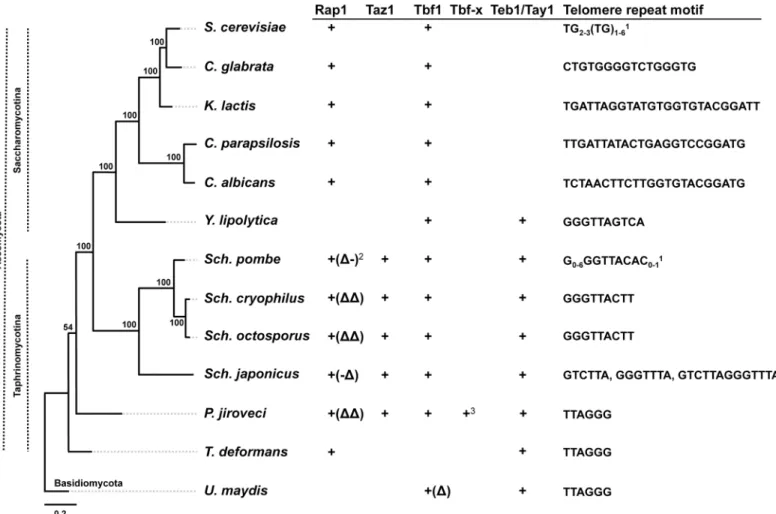
The possibility (iii) of co-evolution of telomeric repeats and TBPs, i.e. expansion of the rep-ertoire of TBPs by duplication and specialization, can be addressed by investigation of telomere protection in yeast species, where Rap1p does not play a role at telomeres (Fig 1). Which pro-teins act as TBPs in these cases? One potential candidate would be Tbf1p that was shown to bindTTAGGG-like repeats in subtelomeric regions ofS.cerevisiaeand is present in most asco-mycetes (Fig 1). However, although it can serve as a TBP inS.cerevisiaewith humanized telo-meres [19,20], its role at native yeast telomeres is unlikely. Rather, in addition to its binding in subtelomeres, Tbf1p serves as a transcription factor for essential genes such as those encoding ribosomal proteins [21].
Yarrowia lipolyticadoes not contain any putative Rap1p homologue and its telomeres are bound by Tay1 protein [22]. Tay1p contains two Myb domains that mediate its high-affinity
Youth and Sports of Czech Republic (http://www. msmt.cz/?lang=2) [LH13054 to CH]. The funders had no role in study design, data collection and analysis, decision to publish, or preparation of the manuscript.
binding toY.lipolyticatelomeric repeats. Remarkably, the affinity of Tay1p to mammalian telomeric repeats is higher than to its native telomeres [6]. This is most likely a result of a func-tional evolution. Tay1p is a homologue of TBP in the basidiomyceteUstilago maydis, which has a mammalian type of telomeric repeats at the ends of its nuclear chromosomes [23]. As in U.maydis, Tay1p seems to be the only TBP inY.lipolytica. In addition, Tay1p probably also acts as a transcription factor for essential genes since the deletion ofTAY1gene seems to be lethal [22].
Interestingly,S.pombeand its closely related species contain a Tay1 homologue (Teb1p, also called SpX, Mug152,SpTay1) [24,25] that retained its function as an essential transcription factor, but apparently lost its role as a TBP, at least in vegetatively growing cells [26].S.pombe cells have a Rap1p homologue, but the protein apparently does not bind to DNA [27]. As in Fig 1. Distribution of various types of TBPs in phylogenetically distant yeast species.Whereas Tbf1p is present in most species, there is no evidence that it binds to telomeresin vivo. In ascomycete species the major TBP is Rap1p possessing two Myb-like DNA-binding domains (DBD) (Table 2). The exceptions areY.lipolyticathat apparently does not contain a Rap1p homologue,S.pombeRap1p that associates with telomeres via protein-protein interactions [27] andS.japonicus,S.cryophilus,S.octosporusandP.jirovecihomologues that lack one or both DBDs. InY.lipolyticaas well as in the basidiomyceteU.maydis, the TBP is represented by Tay1p [6,22]. InS.pombe, the role of Tay1p homologue (Teb1p) at telomeres was taken over by Taz1p, a protein whose occurrence is limited toSchizosaccharomycesandPneumocystisspp. AsS.pombecontains genes encoding all proteins employed as TBPs in yeasts it represents a suitable model for studying the evolution of telomere-binding proteins. The telomeric DNA motifs are from [7,41,48–52]. 1Telomeric repeats are heterogeneous inS.cerevisiae,S.pombeandS.japonicus;2(Δ), (Δ-), (-Δ) or (ΔΔ) indicate that corresponding proteins possibly lack DBD, DBD-1, DBD-2 or both DBDs, respectively (see alsoTable 2).3Tbf-x is an additional Tbf1-like protein encoded by theP.jirovecigenome. The phylogeny was calculated from concatenated multiple sequence alignments of conserved mitochondrial proteins (i.e. Atp6-8-9-Cob-Cox1-2-3) by the maximum likelihood algorithm and LG (Le-Gascuel) amino acids substitution model implemented in the PhyML program [53]. Bootstrap values (out of 100 replicates) are shown above or below the corresponding branches.
other yeast species, the role ofSpTbf1p at telomeres is questionable, although its overproduc-tion leads to a slight increase in the length of telomeric restricoverproduc-tion fragments [28]. Instead, fis-sion yeasts feature another TBP called Taz1p [29,30]. Taz1p is similar to TRF1 and TRF2 in having a single Myb domain and binding to telomeres as a homodimer [24,25,31], but it does not seem to be a structural counterpart of the mammalian TBPs [32].
S.pomberepresents an excellent model to investigate the evolutionary path(s) leading to expansion and specialization of TBPs. It exhibits all three proteins (Rap1p, Tay1p/Teb1p and Taz1p) that are employed as TBPs in yeast species belonging to distinct phylogenetic lineages. Based on its position on the phylogenetic tree (Fig 1) we hypothesize that ancestors of Schizo-saccharomycesspp., just likeY.lipolytica, employed Tay1p/Teb1p as their TBPs. We speculate that the transition from mammalian toS.pombetype telomeric repeats was accompanied by the emergence of Taz1p that became specialized for telomeric functions. On the other hand, Teb1p retained functions related to the internal parts of the genome. In this study we use a combination of several quantitative and qualitative approaches to investigate the biochemical properties that might be responsible for diversification of these two proteins in fission yeast.
Materials and Methods
Purification of Teb1 protein from
Escherichia coli
The entire open reading frame (ORF) for Teb1p was amplified fromS.pombecDNA using primers Teb1_6HN_F and Teb1_6HN_R (S1 Table). The resulting PCR fragment was cloned into pEcoli-Nterm 6xHN vector (Clontech) according to the instructions of the vector supplier resulting in the plasmid p6HN-Teb1 (seeS1 Figfor details about construction of expression vectors). As the preliminary experiments indicated that a large fraction of the recombinant protein is present in the insoluble material (data not shown), we fused 6HN-Teb1 coding sequence with a recognition site forPreScissionprotease followed by the ORF for glutathione-S-transferase (GST) (S1 Fig). Namely, the 3' end ofteb1+(233 bp without stop codon) was amplified using the primers fwMug152 and rvMug152nostop (S1 Table) and 1 unit of Phusion High-Fidelity DNA Polymerase (Thermo Scientific). The resulting PCR product was digested with restriction endonucleasesEcoRI (the restriction site is present within the PCR product) andSalI (the restriction site is provided by the primer rvMug152nostop) (S1 Fig). The sequence for GST and recognition site for PreScission protease were amplified from the plas-mid pGEX-6P-1 (GE Healthcate Life Sciences) using the primers fwSalIppsiteGSTstart and rvGSTstopNotI (S1 Table) and 1 unit of Phusion High-Fidelity DNA Polymerase (Thermo Sci-entific). The resulting PCR product was digested with restriction endonucleasesNotI andSalI (the restriction sites are provided by the primers). Both digested PCR products were then ligated into the p6HN-Teb1 digested withEcoRI andNotI as illustrated byS1 Fig. The resulting plasmid (p6HN-Teb1-GST) encoding full-length (with an exception of the first methionine, i.e. amino acids 2–390) tagged Teb1p was verified by DNA sequencing (Microsynth), then transformed into BL21-Gold(DE3)pLysS cells and the transformants were grown on LB plates containing 100μg/ml ampicillin and 34μg/ml chloramphenicol. The cells were then inoculated into 30 ml of LB media containing 100μg/ml ampicillin and 34μg/ml chloramphenicol and cultivated overnight (15 hours) at 37°C at 225 rpm. The cells were centrifuged for 5 min at 3,000 rpm (Sorvall RT 7 Plus rotor) at 25°C, washed once with LB, inoculated into 1 liter of LB containing 100μg/ml ampicillin and 34μg/ml chloramphenicol and cultivated at 37°C at 275 rpm until theA600reached a value of 0.6. The culture was cooled to 28°C, followed by addition
200 ml of ice-cold phosphate-buffered saline and the pellet was frozen at -20°C. The pellet was thawed on ice (30–45 min) and resuspended in a final volume of 30 ml of buffer A (20 mM HEPES-NaOH (pH 7.5), 150 mM NaCl, 10 mM 2-mercaptoethanol) containing 1x Complete™ (EDTA-free) (Roche), 10 mM MgCl2, 100 U of DNase I (Applichem) and 2μg of PureLink
RNase A (Invitrogen). Lysozyme (Sigma-Aldrich) was added to a final concentration of 1 mg/ ml and the suspension was incubated for 15 min on ice with occasional shaking. The cells were broken by sonication (5 x 30 sec at a setting of 6 (Branson Sonifier 450)). Each cycle of sonica-tion was followed by 1 min incubasonica-tion on ice. Triton X-100 was added to a final concentrasonica-tion of 0.1% (v/v). The suspension was sonicated one more time for 30 seconds and incubated for additional 15 min on ice. The insoluble material was pelleted by 30 min centrifugation at 12,000 rpm at 4°C (F21-8x50y in Sorvall RC 6+). The supernatant was mixed with 0.5 ml of a bed volume of glutathione-agarose (Sigma) equilibrated with 1 x 10 volumes of buffer A. The whole suspension was transferred to a 50 ml Falcon tube and incubated for 60–90 min rocking at 4°C. The beads were then washed 1 x 10 volumes of buffer A, followed by addition of Pre-Scission protease (GE Healthcare) in buffer B (50 mM Tris-HCl (pH 7.5), 150 mM NaCl, 1 mM EDTA, 1 mM DTT) and incubated for 2 hours on ice. The beads were then transferred into a column and the cleaved proteins were eluted with 6 washes of 1 ml of buffer B.
Purification of Taz1 protein from
E
.
coli
The ORF encoding Taz1p was amplified from genomic DNA ofS.pombe(thetaz1+gene does not contain any intron) using the primers Taz1_6HN_F and Taz1_6HN_R (S1 Table) and cloned into pEcoli-Nterm 6xHN vector (Clontech) according to the instructions of the vector supplier resulting in the plasmid p6HN-Taz1 (S1 Fig) encoding full-length (with an exception of the first methionine, i.e. amino acids 2–663) Taz1 and containing 6HN affinity tag on N-ter-minus (Fig 2A). The plasmid was transformed into BL21-Gold(DE3)pLysS cells and the trans-formants were grown on LB plates containing 100μg/ml ampicillin and 34μg/ml
chloramphenicol. The cells were then inoculated into 30 ml of LB media containing 100μg/ml ampicillin and 34μg/ml chloramphenicol and cultivated overnight (15 hours) at 37°C at 225 rpm. The cells were centrifuged for 5 min at 3,000 rpm (Sorvall RT 7 Plus) at 25°C, washed once with LB, inoculated into 1 liter of LB containing 100μg/ml ampicillin and 34μg/ml chlor-amphenicol and cultivated at 37°C at 275 rpm until theA600reached a value of 0.7–0.8. The
culture was cooled to 28°C, followed by addition of IPTG (final concentration 1 mM) and culti-vation for additional 3 hours at 28°C. The bacterial cells were then harvested by centrifugation for 15 min at 5,000 rpm at 4°C (F10-6x500y rotor in Sorvall RC 6+), washed once with 200 ml of ice-cold phosphate-buffered saline and the pellet was frozen at -20°C. The pellet was thawed on ice (30–45 min) and resuspended in a final volume of 30 ml of buffer B (20 mM HEPES--NaOH (pH 7.5), 300 mM NaCl, 1 mM DTT) containing 1x Complete™(EDTA-free) (Roche), 10 mM MgCl2, 100 U of DNase I (Applichem) and 2μg of PureLink RNase A (Invitrogen).
Triton X-100, followed by 1 x 10 volumes of buffer B. The beads were then transferred into a column and the bound proteins were eluted with 6 washes of 1 ml of elution buffer (20 mM HEPES-NaOH (pH 7.5), 300 mM NaCl, 500 mM imidazole (pH 7.7)).
The fractions containing purified proteins were pooled and loaded onto 5 ml PD MidiTrap G-25 columns (GE Healthcare) pre-washed 3 times with buffer C (50 mM Na-phosphate buffer (pH 7.0), 50 mM NaCl). The presence and purity of the proteins were verified by 10%
SDS-PAGE [33] stained with Coomassie Brilliant Blue R-250. Concentrations of proteins were determined by the Bradford assay (Bio-Rad), and proteins were used immediately or stored in 100μl aliquots at -80°C for longer period.
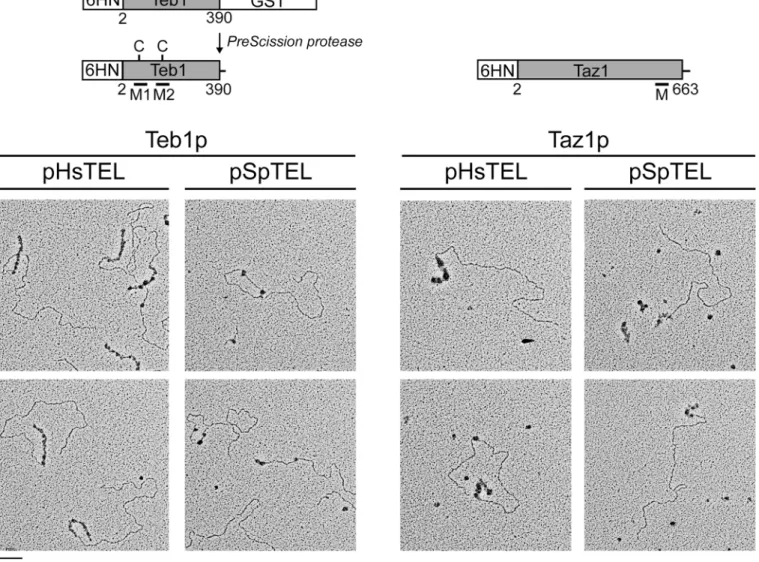
Fig 2. Electron microscopic analysis of the binding of Teb1p and Taz1p to model mammalian and fission yeast telomeres.(A) Schematic
representation of the proteins used in all experiments. 6HN-Teb1 was produced in a fusion with GST, purified on glutathione-agarose and GST was removed by cleavage byPreScissionProtease (the arrow indicates a position of the protease recognition site). Both proteins are represented by their full-length sequences (lacking the first methionine) fused with a 6HN tag at the N-terminus. The numbers below the rectangles indicate the range of amino acids from Teb1p and Taz1p present in the recombinant proteins. C, two cysteine residues located in Myb-1 (M1) and Myb-2 (M2) domain of Teb1p, respectively, that may be involved in mediating inhibitory effect of reducing agents on binding of Teb1p to SpTEL (see below). Note that Taz1p contains a single Myb domain (M) a it carries nine cysteine residues (not shown) and in contrast to Teb1p reducing agent is required for efficient DNA-binding. (B) Linearized plasmids carrying either mammalian (HsTEL) orS.pombe(SpTEL) telomeres at one end were incubated with purified Teb1p or Taz1p and the DNA-protein complexes were visualized by EM as described in Materials and Methods.
Electron microscopy
Plasmid pRST5 carrying about 576 bp of mammalian telomeric repeats [34] was digested with BsmBI andNotI resulting in linear DNA fragments containing the repeats at one end of the molecule. Plasmid pSpTEL-NAT was prepared by cloning a ~300 bp segment of the plasmid pNSU70 (kindly provided by Dr. Julie Cooper, Cancer Research UK, London) carrying native S.pombetelomeric tract [35], see alsohttp://www.pombase.org/status/telomeres) into the pBlueScript II SK vector next to theBsmBI site. Digestion of the plasmid withBsmBI yielded linear DNA fragments containing nativeS.pombetelomere at one end. Both plasmids were gel purified using Zymoclean Gel DNA recovery kit (Zymo Research). The Teb1p-DNA-binding reactions for electron microscopy were performed in 50μl of HNE buffer (20 mM HEPES--NaOH pH 7.5, 1 mM EDTA-HEPES--NaOH pH 8.0, 100 mM NaCl) containing 2 ng/μl of DNA. The Taz1p-DNA-binding reactions were identical except that they were performed in HNE buffer containing 0.1 mM DTT (HNED). The reactions were carried out at room temperature for 15 min, followed by addition of 10μl of 1.2% (v/v) glutaraldehyde and incubation at room tem-perature for additional 6 min. To remove the unbound proteins and fixative, the samples were diluted to 50μl in HNE buffer and passed over 2 ml columns of 6% agarose beads (ABT Inc., Burgos, Spain) equilibrated with TE buffer (10 mM Tris-HCl, pH 7.4, 0.1 mM EDTA-NaOH). Aliquots of the fractions containing the complexes were mixed with a buffer containing sper-midine and adsorbed onto copper grids coated with a thin carbon film glow-charged shortly before sample application. Following adsorption of the samples for 3 min, the grids were dehy-drated through a graded ethanol series and rotary shadowcast with tungsten at 10−7torr [36] Samples were examined in an FEI T12 TEM equipped with a Gatan 2kx2k SC200 CCD camera.
DNA substrates and electrophoretic-mobility shift assay (EMSA)
For EMSA, oligonucleotides SpTEL_A, SpTEL-M1_A, SpTEL-M2_A, SpTEL-M3_A, HsTEL_A, HisBox_A, HisBoxMut_A, HisBoxFlank_A, HisBoxFlank3'_A, HisBoxFlank5'_A, HisBoxFlankPart_A, respectively (S1 Table), were radioactively labeled using T4 polynucleo-tide kinase (Life Technologies) and [γ32P]ATP. The labeled oligonucleotides were then mixed with non-labeled complementary oligonucleotides (S1 Table) in a molar ratio 1:3. The mixtures were incubated at 95°C for 5 min and cooled slowly to room temperature to allow DNA annealing. The unincorporated [γ32P]ATP was removed from the DNA by gel filtration using Probe Quant G-50 MicroColumns (GE Healthcare). Purified recombinant proteins at concen-trations from 0.05 to 4.5μM were mixed with the corresponding DNA substrate (15 nM) and incubated for 10 min at room temperature in 10μl HNE (Teb1) or HNED (Taz1) buffer. Sam-ples were electrophoretically separated in 5% (v/v) polyacrylamide gels in 0.5x TBE buffer (45 mM Tris-borate, 1 mM EDTA-NaOH pH 8.0). DNA and DNA-protein complexes were visual-ized after exposing the gels to storage phosphor screens (Kodak) for 24–72 hours using Per-sonal molecular imager FX (BioRad).
Fluorescence anisotropy
Edison, NJ) equipped with a thermostable cell holder and magnetic stirrer. Samples were excited with vertically polarized light at 494 nm and both vertical and horizontal emissions were recorded at 520 nm. The integration time was 1 s; dsDNA probes (2 nM) were titrated at 25°C with Taz1 (8μM) in HNED buffer. Fluorescence anisotropy measurements of binding of Teb1 to dsDNA probes were the same as for Taz1p except that the experiments were carried out using the HNE buffer. Teb1 binding to SpTEL was measured at 37°C, HsTEL and
HisBox were titrated at 25°C. A fixed delay of 120 s was set between each protein aliquot addi-tion and start of the measurement to allow the binding reacaddi-tion to reach equilibrium. This delay was sufficient, as no further change in anisotropy was observed. Each data point is an average of three measurements. The experimental binding isotherms were analyzed by non-lin-ear least squares regression in SigmaPlot 11 software (Systat Software) using a single-site bind-ing model accordbind-ing to [38] and confirmed by numerical approach using DynaFit software [39].
Results
Two earlier reports provided important yet only partial characterization of Teb1p and Taz1p binding to DNA [24,25]. The main limitation of these studies is that they employedin vitro translated versions of the proteins or crude protein extracts, thus precluding precise quantifica-tion of DNA binding. In addiquantifica-tion, it was not possible to exclude interference of other proteins present in the extracts with the DNA binding. Furthermore, while the earlier study [25] indi-cated that Teb1p binds toS.pombetelomeresin vitro(although with lower affinity than to mammalian telomeres), Spink et al. [24] reported that Teb1p does not bind to the fission yeast telomeric probe at all. To resolve these conflicting issues and to obtain a detailed view on the DNA-binding properties of Teb1p and Taz1p, we purified recombinant full-length versions of the proteins and assessed their binding to a battery of DNA substrates using three different approaches, namely electron microscopy (EM), electrophoretic mobility shift assays (EMSA) and fluorescence anisotropy (FA).
Electron microscopy visualization of Teb1p and Taz1p binding to model
mammalian and
S
.
pombe
telomeres
Electrophoretic mobility shift assays and fluorescence anisotropy reveal
the differences in requirements of Teb1p and Taz1p for DNA binding
It is important to note that the cloned native telomere [35] used for construction of SpTEL--NAT contains noTTAGGGrepeat and the occurrence of mammalian type telomeric repeat in S.pombetelomeres is less than 1% [40]. On the other hand,TTAGGGrepeats are present in internal parts ofS.pombechromosomes including regulatory regions 5’upstream of several protein-coding genes. Of special interest are promoters of genes encoding canonical histones, each carrying the sequenceAGGGTTAGGGTT(t/g)tgat(further HisBox), where the under-lined sequence corresponds to two mammalian telomeric repeats. The whole genome ChIP-chip experiments indicated that the HisBox mediates binding of Teb1p to all promoters of canonical histonesin vivo[26]. Thus, we could compare the preferences of Teb1p and Taz1p to HsTEL (the substrate recognized by both proteins), SpTEL (in vivosubstrate for Taz1p) and HisBox (in vivosubstrate for Teb1p).
First, we optimized the conditions for binding of both proteins to DNA. As indicated above, the presence of a reducing agent (DTT or 2-mercaptoethanol) was required for binding of Taz1p, whereas this was inhibitory for the DNA binding activity of Teb1p to SpTEL although the affinity to HsTEL and HisBox was only marginally affected (data not shown). Teb1p con-tains two cysteine residues (Cys-70 and Cys-161) and it is possible that they may be involved either in dimerization of the protein or they may directly participate in DNA binding to non-preferred substrates (such as SpTEL) as they are located within the Myb-1 and Myb-2 domain, respectively (Fig 2A). We also tried to replace sodium chloride with lithium chloride to destroy potential secondary DNA structures, but we did not observe any difference in binding (data not shown). Based on these results we employed HNE buffer for Teb1p and HNED buffer for Taz1p (seeMaterials and Methods) in both EMSA and fluorescence anisotropy experiments.
When we used HsTEL and SpTEL DNA probes in EMSA, the results corroborated the EM data. Both proteins bound equally well to HsTEL. On the other hand, whereas Taz1p bound strongly to SpTEL, Teb1p exhibited significantly weaker binding to this substrate (Fig 3). Again, as in the case of the native telomere, the SpTEL probe does not contain aTTAGGG motif, which seems to facilitate Teb1p binding to DNA. To test this hypothesis, we employed a HisBox probe containing two mammalian telomeric repeats (see above). Although this DNA sequence was bound by both proteins, it is clear that Teb1p starts shifting the DNA probe at lower concentrations indicating that it exhibits a higher affinity for this substrate.
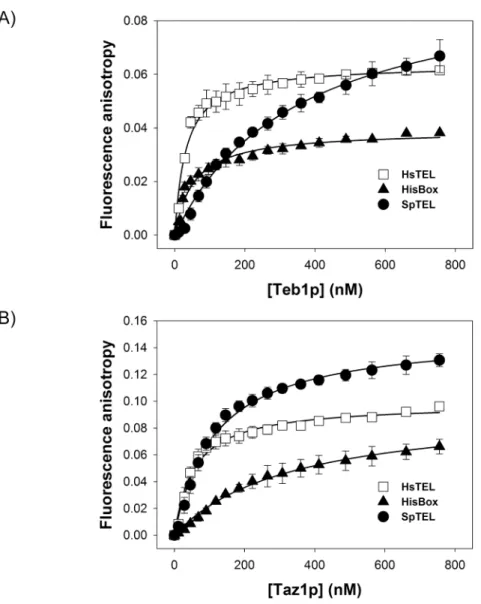
To assess the DNA-binding properties of Teb1p and Taz1p quantitatively, we measured dis-sociation constants (KD) corresponding to Teb1p or Taz1p binding to HsTEL, SpTEL and HisBox by fluorescence anisotropy (FA) (Fig 4andTable 1). If the solution contains only free fluorescently labeled DNA molecules, the FA is relatively low, owing to the fast rotational rear-rangement of DNA molecules. If the protein aliquots are added to the solution of labeled DNA, a bulky slower-rotating protein—DNA complex is formed and the anisotropy value increases. We used HsTEL, SpTEL and HisBox (labeled with FAM) as DNA substrates for Teb1p and Taz1p binding assays. The anisotropy change described the extent of Teb1p and Taz1p binding to telomeric DNA duplex. The equilibrium isotherms were recorded and binding affinity was quantified by a fitting analysis (seeMaterials and Methodsfor details).
Teb1p requires the presence of two mammalian type telomeric repeats
for efficient binding, whereas Taz1p seems to be a more flexible
DNA-binding protein
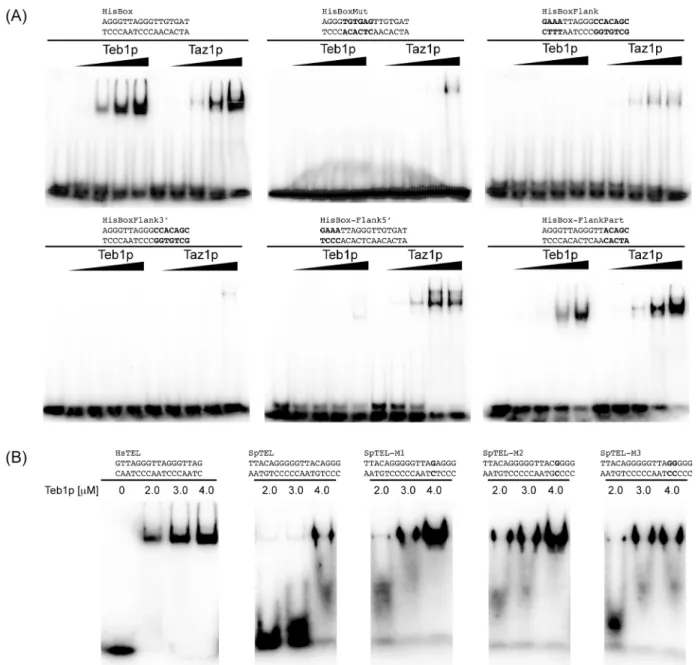
The fact that both Teb1p and Taz1p bind HisBox (although with different affinities) enabled us to define the nucleotide sequence requirements of the two proteins to this DNA substrate. To this end we tested five different variants of HisBox (Fig 5A). First, we replaced the central TTAGGGsequence by its scrambled version (TGTGAG; HisBoxMut). This change resulted in a complete loss of binding of Teb1p, while Taz1p was able to bind the probe only at the highest concentration. Interesting differences were observed when the centralTTAGGGsequence was retained and the 5' or 3' flanking sequences were mutated. Whereas for Teb1p the flanking sequences at both the 5' and 3' sides of theTTAGGGwere needed for efficient binding, Taz1p required that only the 3' flanking sequence be preserved. Almost complete restoration of Teb1p binding was achieved when the 3' flanking sequence contained a TT sequence indicating that the minimal Teb1p recognition sequence seems to correspond to two mammalian type telo-meric repeats (configured as5'-AGGGTTAGGGTT-3').
We also tested for the minimal changes in SpTEL that would result in a more efficient bind-ing of Teb1p. We have prepared three different versions of SpTEL (M1-M3) that instead of the sequence5'-TTACAG-3'contain a repeat unit nearly identical (5'-TTAGAG-3'in M1 and5'-TTACGG-3'in M2), or identical (5'-TTAGGG-3'in M3) to mammalian telomeric repeat (Fig 5B). In agreement with the results presented above (Fig 3), unlike the HsTEL probe, SpTEL sequence is a poor substrate for Teb1p. Interestingly, a single substitution within the target sequence (M1, M2) resulted in a more efficient binding of the protein. However, the DNA-protein complex seems to be unstable as judged by its migration during electrophoresis (Fig 5B). This indicates that to achieve efficient and tight binding Teb1p is relatively strict in its requirements for the target DNA sequence.
Fig 3. Comparison of the binding of Teb1p and Taz1p to mammalian telomeres, fission yeast telomeres and HisBox using EMSA.The indicated radioactively labeled DNA probes were incubated with increasing concentrations (indicated above the lanes) of Teb1p or Taz1p and DNA (15 nM) and DNA-protein complexes were separated by electrophoresis in 5% polyacrylamide gels as described in Materials and Methods.
Discussion
In this study we employed purified recombinant Taz1p and Teb1p in three types of DNA-bind-ing assays (EMSA, fluorescence anisotropy, electron microscopy) and quantitatively assessed their DNA-binding properties thus enabling their comparative biochemical analysis. Our Fig 4. Fluorescence anisotropy analysis of the DNA binding properties of Teb1p and Taz1p.
Fluorescence anisotropy measurements of binding of Teb1p (A) and Taz1p (B) to FAM labeled DNA probes were performed as described in Materials and Methods. SpTEL (closed circle), HsTEL (open square), HisBox (closed triangle).
doi:10.1371/journal.pone.0154225.g004
Table 1. Parameters of binding of Teb1 and Taz1 proteins toS.pombetelomere (SpTEL), mammalian telomeres (HsTEL) andS.pombehistone box (HisBox).
SpTEL HsTEL HisBox
KD[nM] Ka[106M-1] KD[nM] Ka[106M-1] KD[nM] Ka[106M-1]
Teb1 380±30 2.6±0.2 31±5 34±5 53±6 20±2
Taz1 115±9 8.7±0.7 54±5 19±2 380±50 2.6±0.4
results confirm that both Teb1p and Taz1p exhibit relatively high affinity to mammalian type telomeres, but only Taz1p binds well the fission yeast native telomere (Fig 3) [24,25]. Our data (Fig 4) indicate that Teb1p is more strict in its requirements forTTAGGG-like repeats, which is illustrated by the results of the EMSA experiments with variants of the HisBox and SpTEL probes (Fig 5). It seems that similar toS.cerevisiaeRap1p [15–18], Taz1p is more flexible in terms of recognition of the target DNA. This is most likely caused by the relatively large degree of heterogeneity ofS.pombetelomeric repeats, differing in both length and sequence. This flex-ibility is probably also responsible for the fact that Taz1p binds to HisBox and exhibits less strict requirements for the regions flanking the centralTTAGGGsequence (Fig 5A). Fig 5. Teb1p binds effectively to a narrow range of DNA sequences.(A) Teb1p and Taz1p exhibit different requirements for binding to HisBox.
Concentrations of the proteins are as inFig 3. (B) Modified versions of SpTEL as substrates for Teb1p. The indicated radioactively labeled DNA probes were incubated with indicated concentrations of the protein and DNA (15 nM) and DNA-protein complexes were separated by electrophoresis in 5%
polyacrylamide gels as described in Materials and Methods. Substituted nucleotides are highlighted in bold.
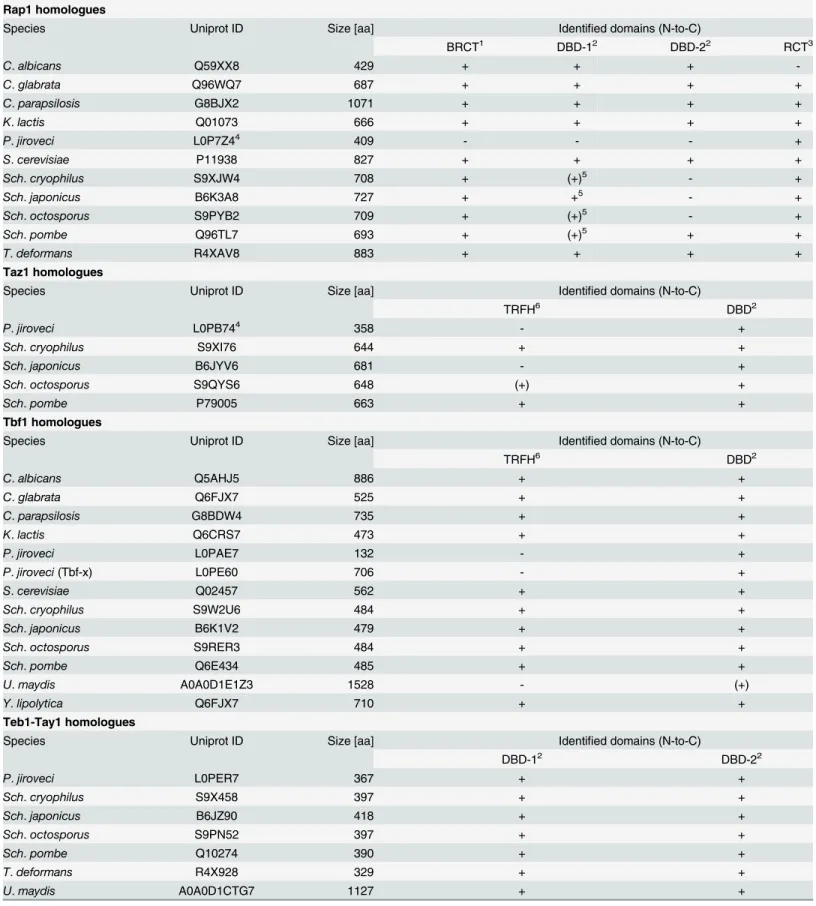
Table 2. List of putative telomere-binding proteins identified byin silicoanalysis of the corresponding fungal genomes (see alsoFig 1).
Rap1 homologues
Species Uniprot ID Size [aa] Identified domains (N-to-C)
BRCT1 DBD-12 DBD-22 RCT3
C.albicans Q59XX8 429 + + +
-C.glabrata Q96WQ7 687 + + + +
C.parapsilosis G8BJX2 1071 + + + +
K.lactis Q01073 666 + + + +
P.jiroveci L0P7Z44 409 - - - +
S.cerevisiae P11938 827 + + + +
Sch.cryophilus S9XJW4 708 + (+)5 - +
Sch.japonicus B6K3A8 727 + +5 - +
Sch.octosporus S9PYB2 709 + (+)5 - +
Sch.pombe Q96TL7 693 + (+)5 + +
T.deformans R4XAV8 883 + + + +
Taz1 homologues
Species Uniprot ID Size [aa] Identified domains (N-to-C)
TRFH6 DBD2
P.jiroveci L0PB744 358 - +
Sch.cryophilus S9XI76 644 + +
Sch.japonicus B6JYV6 681 - +
Sch.octosporus S9QYS6 648 (+) +
Sch.pombe P79005 663 + +
Tbf1 homologues
Species Uniprot ID Size [aa] Identified domains (N-to-C)
TRFH6 DBD2
C.albicans Q5AHJ5 886 + +
C.glabrata Q6FJX7 525 + +
C.parapsilosis G8BDW4 735 + +
K.lactis Q6CRS7 473 + +
P.jiroveci L0PAE7 132 - +
P.jiroveci(Tbf-x) L0PE60 706 - +
S.cerevisiae Q02457 562 + +
Sch.cryophilus S9W2U6 484 + +
Sch.japonicus B6K1V2 479 + +
Sch.octosporus S9RER3 484 + +
Sch.pombe Q6E434 485 + +
U.maydis A0A0D1E1Z3 1528 - (+)
Y.lipolytica Q6FJX7 710 + +
Teb1-Tay1 homologues
Species Uniprot ID Size [aa] Identified domains (N-to-C)
DBD-12 DBD-22
P.jiroveci L0PER7 367 + +
Sch.cryophilus S9X458 397 + +
Sch.japonicus B6JZ90 418 + +
Sch.octosporus S9PN52 397 + +
Sch.pombe Q10274 390 + +
T.deformans R4X928 329 + +
U.maydis A0A0D1CTG7 1127 + +
The stringency of Teb1p binding toTTAGGG-like sequences may be the main reason for its replacement by Taz1p in fission yeast.Y.lipolyticatelomeric repeats (5'-GGGTTAGTCA-3') also differ from the canonicalTTAGGGand Tay1p exhibits about 5-fold lower affinity to its native telomeres than to mammalian type repeats [6]. However, the DNA-binding properties of Tay1p seem to be still suitable for performing the functions as a TBP. On the other hand, the fact that the occurrence ofTTAGGGrepeats is extremely rare inS.pombemay have been one of the driving forces for replacement of Teb1p by the more flexible Taz1p. Recently, it was shown that Taz1p is not a structural counterpart of mammalian TRF1 and TRF2 [32]. It is possible that the evolution of complex telomeric repeats characteristic forSchizosaccharomycesspp. such asS.pombe,S.cryophilus,S.japonicusorS.octosporus(Fig 1, [41]) was made possible by thede novoorigin of the Taz1p-encoding gene as a result of a recruitment of a Myb domain by a protein that was able to form homodimers. Such a gene could have been already present in the ancestral lineage asPneumocystis jiroveciseems to contain a Taz1p homologue, although it is considerably shorter than inSchizosaccharomycesspp. (Fig 1andTable 2). The distribution of various TBPs on the phylogenetic tree also supports our hypothesis [6] that the ancestral genomes accumulated precursors of various types of TBPs possibly via the neutral evolutionary ratchet [42] involving gene and domain duplications followed by their specialization (or loss) in distinct lineages [43].
Naturally, there is still the possibility that Teb1p might retain some of its functions at telo-meres, although its biochemical propertiesin vitrodo not support this hypothesis ([24,25] and this study). In addition, ChIP-chip data yielded no enrichment of telomeric DNA in Teb1p-immunoprecipitates [26]. Furthermore, temperature-sensitive mutants in theteb1+gene exhib-ited no changes in telomere length [26]. On the other hand, Teb1p might complement or sub-stitute for Taz1p under special circumstances. We investigated (by both EMSA and FA) whether Teb1p interferes with the binding of Taz1p to SpTEL, but we observed no detectable effect (data not shown). Another possibility stems from the observation that theteb1+gene is up-regulated during meiosis [44], when telomeres undergo relatively dramatic changes [45– 47]. Finally,taz1-mutants lacking Taz1p exhibit extremely long and heterogeneous telomeres [29] and the protein composition of telomeric chromatin in these cells is not known. We have shown that Teb1p can, although weakly, bind to nativeS.pombetelomeres. It is possible that when provided with a 10-fold increase in the number of telomeric repeats, Teb1p could recog-nize telomeres intaz1-mutants. When we combined the temperature-sensitiveteb1mutation [26] withtaz1-, the double mutants exhibited telomeres indistinguishable from the singletaz1 -mutant indicating that Teb1p does not play a major role at telomeres intaz1-cells (data not shown). However, we have not yet analyzed telomeres by means other than measuring lengths of telomeric restriction fragments, so this possibility is still not fully excluded.
Table 2. (Continued)
Y.lipolytica Q6C9I6 406 + +
1BRCT—breast cancer susceptibility protein C-terminal domain
2DBD—DNA-binding domain; DBDs predicted with a low confidence are shown in parentheses 3RCT—Rap1 C-terminal domain (protein interacting domain)
4note thatSch.pombeRap1 (and possibly its orthologues from otherSchizosaccharomycesspp.) does not bind telomeric DNA, but it associates with telomeres via protein-protein interactions (Kanoh and Ishikawa, 2001).
5only partial sequence is available in the UniProt database; note thatP.murinaRap1 homologue possesses a BRCT domain 6TRFH—Telomere repeat-binding factor homology (dimerisation domain)
Even if we did not identify telomeric functions for Teb1p, the main significance of this study is that it provides a very useful platform for investigation of evolutionary paths leading to expansion of the repertoire of TBP in yeasts. If we assume that the ancestor ofS.pombe con-tainedTTAGGG-like repeats and Tay1p/Teb1p as the TBP, we could try to reconstruct the evo-lutionary path leading to division of labor between flexible Taz1p and stringent Teb1p fulfilling their roles at telomeres and in internal parts of the genome, respectively.
Supporting Information
S1 Fig. Scheme for construction of vectors used to express (A) Teb1p and (B) Taz1p in Escherichia coli.For detailed description seeMaterials and Methods. Sequences of the primers used for PCR are listed inS1 Table.
(PDF)
S1 Table. List of oligonucleotides. (PDF)
Acknowledgments
We thank Filip Tomaska for technical assistance with the EM experiments, and members of our laboratories for discussions. This work was supported in part by the Slovak grant agencies APVV (0035–11 (L.T.) and 14–0253 (J.N.)), VEGA (1/0311/12 and 1/0052/16 (L.T.) and 1/ 0333/15 (J.N.)); National Institutes of Health Grants ES013773 and GM31819 (J.D.G.), the Czech Science Foundation [GACR P205/12/0550 to C.H.] and the Ministry of Education, Youth and Sports of Czech Republic [LH13054 to C.H.]
Author Contributions
Conceived and designed the experiments: RS CH JDG LT. Performed the experiments: RS IN SW KP PG LT. Analyzed the data: RS IN SW PG JN CH JDG LT. Contributed reagents/materi-als/analysis tools: IN SW KP JN CH JDG LT. Wrote the paper: LT. Manuscript editing: RS IN SW KP PG JN CH JDG.
References
1. de Lange T (2005) Shelterin: the protein complex that shapes and safeguards human telomeres. Genes Dev 19: 2100–2110. PMID:16166375
2. de Lange T (2009) How telomeres solve the end-protection problem. Science 326: 948–952. doi:10. 1126/science.1170633PMID:19965504
3. McEachern MJ, Krauskopf A, Blackburn EH (2000) Telomeres and their control. Annu Rev Genet 34: 331–358. PMID:11092831
4. Palm W, de Lange T (2008) How shelterin protects mammalian telomeres. Annu Rev Genet 42: 301– 334. doi:10.1146/annurev.genet.41.110306.130350PMID:18680434
5. Lewis KA, Wuttke DS (2012) Telomerase and telomere-associated proteins: structural insights into mechanism and evolution. Structure 20: 28–39. doi:10.1016/j.str.2011.10.017PMID:22244753
6. Visacka K, Hofr C, Willcox S, Necasova I, Pavlouskova J, Sepsiova R et al. (2012) Synergism of the two Myb domains of Tay1 protein results in high affinity binding to telomeres. J Biol Chem 287: 32206– 32215. doi:10.1074/jbc.M112.385591PMID:22815473
7. Gunisova S, Elboher E, Nosek J, Gorkovoy V, Brown Y, Lucier JF et al. (2009) Identification and com-parative analysis of telomerase RNAs from Candida species reveal conservation of functional ele-ments. RNA 15: 546–559. doi:10.1261/rna.1194009PMID:19223441
9. Steinberg-Neifach O, Lue NF (2015) Telomere DNA recognition in Saccharomycotina yeast: potential lessons for the co-evolution of ssDNA and dsDNA-binding proteins and their target sites. Front Genet 6: 162. doi:10.3389/fgene.2015.00162PMID:25983743
10. Steinberg-Neifach O, Wellington K, Vazquez L, Lue NF (2015) Combinatorial recognition of a complex telomere repeat sequence by the Candida parapsilosis Cdc13AB heterodimer. Nucleic Acids Res 43: 2164–2176. PMID:25662607
11. Li B, Oestreich S, de Lange T (2000) Identification of human Rap1: implications for telomere evolution. Cell 101: 471–483. PMID:10850490
12. Arat NO, Griffith JD (2012) Human Rap1 interacts directly with telomeric DNA and regulates TRF2 localization at the telomere. J Biol Chem 287: 41583–41594. doi:10.1074/jbc.M112.415984PMID: 23086976
13. Buchman AR, Lue NF, Kornberg RD (1988) Connections between transcriptional activators, silencers, and telomeres as revealed by functional analysis of a yeast DNA-binding protein. Mol Cell Biol 8: 5086–5099. PMID:3072472
14. Shore D, Nasmyth K (1987) Purification and cloning of a DNA binding protein from yeast that binds to both silencer and activator elements. Cell 51: 721–732. PMID:3315231
15. Lieb JD, Liu X, Botstein D, Brown PO (2001) Promoter-specific binding of Rap1 revealed by genome-wide maps of protein-DNA association. Nat Genet 28: 327–334. PMID:11455386
16. Pina B, Fernandez-Larrea J, Garcia-Reyero N, Idrissi FZ (2003) The different (sur)faces of Rap1p. Mol Genet Genomics 268: 791–798. PMID:12655405
17. Rhodin Edso J, Gustafsson C, Cohn M (2011) Single- and double-stranded DNA binding proteins act in concert to conserve a telomeric DNA core sequence. Genome Integr 2: 2. doi:10.1186/2041-9414-2-2 PMID:21235754
18. Yu EY, Yen WF, Steinberg-Neifach O, Lue NF (2010) Rap1 in Candida albicans: an unusual structural organization and a critical function in suppressing telomere recombination. Mol Cell Biol 30: 1254– 1268. doi:10.1128/MCB.00986-09PMID:20008550
19. Brevet V, Berthiau AS, Civitelli L, Donini P, Schramke V, Géli V et al. (2003) The number of vertebrate repeats can be regulated at yeast telomeres by Rap1-independent mechanisms. EMBO J 22: 1697– 1706. PMID:12660175
20. Henning KA, Moskowitz N, Ashlock MA, Liu PP (1998) Humanizing the yeast telomerase template. Proc Natl Acad Sci U S A 95: 5667–5671. PMID:9576941
21. Hogues H, Lavoie H, Sellam A, Mangos M, Roemer T, Purisima E et al. (2008) Transcription factor sub-stitution during the evolution of fungal ribosome regulation. Mol Cell 29: 552–562. doi:10.1016/j. molcel.2008.02.006PMID:18342603
22. Kramara J, Willcox S, Gunisova S, Kinsky S, Nosek J, Griffith JD et al. (2010) Tay1 protein, a novel telo-mere binding factor from Yarrowia lipolytica. J Biol Chem 285: 38078–38092. doi:10.1074/jbc.M110. 127605PMID:20923774
23. Sanchez-Alonso P, Guzman P (2008) Predicted elements of telomere organization and function in Usti-lago maydis. Fungal Genet Biol 45 Suppl 1: S54–62. doi:10.1016/j.fgb.2008.04.009PMID:18514000
24. Spink KG, Evans RJ, Chambers A (2000) Sequence-specific binding of Taz1p dimers to fission yeast telomeric DNA. Nucleic Acids Res 28: 527–533. PMID:10606652
25. Vassetzky NS, Gaden F, Brun C, Gasser SM, Gilson E (1999) Taz1p and Teb1p, two telobox proteins in Schizosaccharomyces pombe, recognize different telomere-related DNA sequences. Nucleic Acids Res 27: 4687–4694. PMID:10572167
26. Valente LP, Dehe PM, Klutstein M, Aligianni S, Watt S, Bähler J et al. (2013) Myb-domain protein Teb1 controls histone levels and centromere assembly in fission yeast. EMBO J 32: 450–460. doi:10.1038/ emboj.2012.339PMID:23314747
27. Kanoh J, Ishikawa F (2001) spRap1 and spRif1, recruited to telomeres by Taz1, are essential for telo-mere function in fission yeast. Curr Biol 11: 1624–1630. PMID:11676925
28. Pitt CW, Valente LP, Rhodes D, Simonsson T (2008) Identification and characterization of an essential telomeric repeat binding factor in fission yeast. J Biol Chem 283: 2693–2701. PMID:17977837
29. Cooper JP, Nimmo ER, Allshire RC, Cech TR (1997) Regulation of telomere length and function by a Myb-domain protein in fission yeast. Nature 385: 744–747. PMID:9034194
30. Cooper JP, Watanabe Y, Nurse P (1998) Fission yeast Taz1 protein is required for meiotic telomere clustering and recombination. Nature 392: 828–831. PMID:9572143
32. Deng W, Wu J, Wang F, Kanoh J, Dehe PM, Inoue H et al. (2015) Fission yeast telomere-binding pro-tein Taz1 is a functional but not a structural counterpart of human TRF1 and TRF2. Cell Res 25: 881– 884. doi:10.1038/cr.2015.76PMID:26088418
33. Laemmli UK (1970) Cleavage of structural proteins during the assembly of the head of bacteriophage T4. Nature 227: 680–685. PMID:5432063
34. Stansel RM, de Lange T, Griffith JD (2001) T-loop assembly in vitro involves binding of TRF2 near the 3' telomeric overhang. EMBO J 20: 5532–5540. PMID:11574485
35. Sugawara NF (1988) DNA sequences at the telomeres of the fission yeast S. pombe. PhD thesis, Har-vard University, 464 pp.
36. Griffith JD, Christiansen G (1978) Electron microscope visualization of chromatin and other DNA-pro-tein complexes. Annu Rev Biophys Bioeng 7: 19–35. PMID:78683
37. Janouskova E, Necasova I, Pavlouskova J, Zimmermann M, Hluchy M, Marini V et al. (2015) Human Rap1 modulates TRF2 attraction to telomeric DNA. Nucleic Acids Res 43: 2691–2700. doi:10.1093/ nar/gkv097PMID:25675958
38. Heyduk T, Lee JC (1990) Application of fluorescence energy transfer and polarization to monitor Escherichia coli cAMP receptor protein and lac promoter interaction. Proc Natl Acad Sci U S A 87: 1744–1748. PMID:2155424
39. Kuzmic P (1996) Program DYNAFIT for the analysis of enzyme kinetic data: application to HIV protein-ase. Anal Biochem 237: 260–273. PMID:8660575
40. Leonardi J, Box JA, Bunch JT, Baumann P (2008) TER1, the RNA subunit of fission yeast telomerase. Nat Struct Mol Biol 15: 26–33. PMID:18157152
41. Rhind N, Chen Z, Yassour M, Thompson DA, Haas BJ, Habib N et al. (2011) Comparative functional genomics of the fission yeasts. Science 332: 930–936. doi:10.1126/science.1203357PMID: 21511999
42. Lukes J, Archibald JM, Keeling PJ, Doolittle WF, Gray MW (2011) How a neutral evolutionary ratchet can build cellular complexity. IUBMB Life 63: 528–537. doi:10.1002/iub.489PMID:21698757
43. Lustig AJ (2016) Hypothesis: Paralog formation from progenitor proteins and paralog mutagenesis spur the rapid evolution of telomere binding proteins. Front Genet 7: 10. doi:10.3389/fgene.2016.00010 PMID:26904098
44. Mata J, Lyne R, Burns G, Bahler J (2002) The transcriptional program of meiosis and sporulation in fis-sion yeast. Nat Genet 32: 143–147. PMID:12161753
45. Jin Y, Uzawa S, Cande WZ (2002) Fission yeast mutants affecting telomere clustering and meiosis-specific spindle pole body integrity. Genetics 160: 861–876. PMID:11901107
46. Klutstein M, Fennell A, Fernandez-Alvarez A, Cooper JP (2015) The telomere bouquet regulates mei-otic centromere assembly. Nat Cell Biol 17: 458–469. doi:10.1038/ncb3132PMID:25774833
47. Nimmo ER, Pidoux AL, Perry PE, Allshire RC (1998) Defective meiosis in telomere-silencing mutants of Schizosaccharomyces pombe. Nature 392: 825–828. PMID:9572142
48. Cisse OH, Almeida JM, Fonseca A, Kumar AA, Salojarvi J, Overmyer K et al. (2013) Genome sequenc-ing of the plant pathogen Taphrina deformans, the causal agent of peach leaf curl. MBio 4: e00055–13. doi:10.1128/mBio.00055-13PMID:23631913
49. Guzman PA, Sanchez JG (1994) Characterization of telomeric regions from Ustilago maydis. Microbiol-ogy 140: 551–557. PMID:8012578
50. Kinsky S, Mihalikova A, Kramara J, Nosek J, Tomaska L (2010) Lack of the catalytic subunit of telome-rase leads to growth defects accompanied by structural changes at the chromosomal ends in Yarrowia lipolytica. Curr Genet 56: 413–425. doi:10.1007/s00294-010-0310-6PMID:20549213
51. McEachern MJ, Blackburn EH (1994) A conserved sequence motif within the exceptionally diverse telo-meric sequences of budding yeasts. Proc Natl Acad Sci U S A 91: 3453–3457. PMID:8159768
52. Hiraoka Y, Henderson E, Blackburn EH (1998) Not so peculiar: Fission yeast telomere repeats. Trends Biochem Sci 23: 126. PMID:9584612