www.ijper.org
HPTLC Method Development and Validation of
Antidiabetic Marker Compound from Polyherbal
Formulation
Shrikrishna Madhukar Nandanwadkar*, Vinayak Shivamurthi Mastiholimath, Soniya Ramdas Surlaker
KLE’U College Of Pharmacy, Belagavi, Karnataka Nehru Nagar 590010, INDIA.
ABSTRACT
The objective of this research work was to develop a simple, rapid and reliable HPTLC method for standardization of anti-diabetic polyherbal formulation and to carry out validation of Trigonelline in formulation. Development of method was carried out by using Quercetin, Gallic Acid, Curcumin and Trigonelline as bioactive markers reported to have an anti-diabetic activity. Chromatographic analysis was performed using silica gel 60 F254 TLC plate, CAMAG Linomat 5 applicator and solvent system consisting of Isopropyl Alcohol: Ammonia: Acetone in the ratio 1:1:1. Densitometry scanning was performed under reflectance absorbance mode at 254 nm and 366 nm to identify the spots. Rf value of the marker compounds Quercetin, Gallic Acid, Curcumin and Trigonelline was found to be 0.66, 0.42, 0.81 and 0.34 respectively. Validation of Trigonelline was carried out in formulation as per ICH guidelines in terms of Linearity, Precision, Repeatability, Specificity, Robustness, LOD, LOQ and Accuracy. No analytical method has been reported so far associated with a polyherbal formulation containing Quercetin, Gallic acid, Curcumin and Trigonelline focusing on anti diabetic activity. Thus this method can be used for routine quality control of raw material as well as formulation containing Trigonelline as one of its component.
Key words: Polyherbal formulation, Marker Compounds, HPTLC Method development, Validation.
DOI: 10.5530/ijper.50.4.18 Correspondence:
Shrikrishna Madhukar Nandanwadkar,
Department of Quality Assurance, KLE’U College of Pharmacy, Nehru Nagar, Belagavi, Karnataka-590010, INDIA.
Phone no: 9148828095 E-mail: wadkar1252@gmail. com
INTRODUCTION
Diabetes mellitus is a chronic metabolic disorder which results in disturbances of carbohydrate, protein and lipid metabolism due to either a lack of insulin secretion (type 1) or increased cellular resistance to insulin (type 2). Type 2 diabetes mellitus is one of the world’s most common chronic diseases associated with changing lifestyles and characterized by hyperglycemia, peripheral resistance to the insulin action, and eventual destruction of insulin producing- β cells.1
High blood glucose promotes insulin release from the – β cells of the islets. Insulin stim-ulates the uptake of glucose from the blood by different tissues such as muscle, kidney and adipose, promotes the storage of glucose
Submission Date : 29-06-2016
Revision Date : 31-08-2016
Accepted Date : 23-09-2016
in the liver as glycogen, and inhibits lipolysis in adipose tissue. The resulting depletion of blood glucose by the action of insulin in turn promotes the secretion of glucagon from the – β cells in the pancreatic islets, which stimulates glycolysis in the liver and release of glucose back into the blood.2 It is one of the refractory diseases identified by Indian Council of Medical Research for which an alternative medicine is a need for the treatment.3
glinides but they produce several disadvantages like weight gain, hepatotoxicity, metabolic acidosis, gas-trointestinal problems and also these products are not easily accessible and affordable as they are expensive in developing countries. Because of these disadvantages with the available treatments, there is a need for more safe and more effective approaches. Therefore the pres-ent study was based on Polyherbal formulation whose major ingredients include Emblica Officinalis, Curcuma Longa and Trigonella foenum graceum.
In Ayurveda, drug formulation based on use of more than one drugs, to achieve extra therapeutic effective-ness, is known as polypharmacy or polyherbalism. Effectiveness, safety, cheap, ubiquity and better acceptance has made Polyherbal formulations an ideal treatment of choice, ensuring higher compliance by the patients and excellent therapeutic effect.4
Emblica Officinalis fruit delays the glucose entry in the
blood by interfering with absorbtion of glucose in the gut. Thus, sudden spike in blood glucose levels post meal is prevented. Studies on some of its important constituents (including gallic acid, gallotanin, ellagic acid and corilagin), have shown to possess anti-diabetic effects through their antioxidant and free radical scavenging properties. It regulates carbohydrate metab-olism, to help the body to respond well to insulin, thereby reducing the blood sugar level.5 A study
con-ducted on streptozocin-induced diabetic rats concluded that quercetin, a flavonoid with antioxidant properties brings about the regeneration of the pancreatic islets and increases insulin release in streptozocin-induced diabetic rats; thus exerting its beneficial antidiabetic effects. However, it may be of little value in normo-glycemic animals.6 Emblica Officinalis may be used as a
supportive therapy for diabetics as, being the polyphenols and a mixture of phytochemicals it can act as a hypolipi-demic agent reducing the risk of cardiovascular compli-cations in diabetics.7 Curcuma Longa and curcumin (active
ingredient of Curcuma Longa) aid in preventing and delaying the progression of pathology of Type-2 DM and improve the β-cell functions of pancreas (indicated by an increased HOMA- b and reduced C-peptide). Adiponectin levels are significantly increased by inter-vention of curcumin. {Adiponectin – anti-inflammatory cytokine, known to play a positive role in Type-2 DM. Higher the adiponectin, lower the risk of Type-2 DM}.8
Curcuminoids are proved to be effective in maintaining the activities of antioxidant enzymes like superoxide dismutase, catalase and glutathione peroxidase at higher levels thereby lowering lipid peroxidation. Curcuma longa posseses antioxidant properties due to presence of curcumin and its three derivatives (demethoxy curcumin,
bisdemethoxy curcumin and diacetyl curcumin) in it. Emblica officinalis in combination with curcuma longa, shows significant hypolipidemic activity, it is effective in the long term treatment of diabetes.9 Trigonella foenum
graceum seeds being high in soluble fibre, lowers blood
sugar by slowing down digestion and absorption of carbohydrates. Several clinical trials showed that these seeds can improve most metabolic symptoms associ-ated with both Type 1 and Type 2 diabetes in humans by lowering blood glucose levels and improving glucose tolerance.10 Trigonelline is an important bioactive
marker, alkaloid in nature and mainly found in Trigonella
foenum graceum seeds with estrogenic, anti-diabetic, and
anti-invasive properties.11 Its administration to alloxan-induced diabetic rats in a study helped to protect β-cells from death and damage and also decreased blood glucose, cholesterol, and TGs in diabetic rats.12
Herbal medicines are composed of products from natural origin like plant materials, parts of plant or in combination so they are likely to suffer from quality control issues such as undetected adulteration, substi-tution, contamination, shortcuts during manufacturing process, batch to batch and composition variation. Many other conditions including habitat, season in which it grows, harvesting conditions, method of storage, environmental hazards and pharmaceutical processing
makes it difficult to standardise a finished product of
reproducible quality. This creates a challenge in estab-lishing quality control standards and the standardiza-tion of finished herbal products but modern analytical techniques are expected to help in circumventing this problem.4
HPTLC is a modern adaptation (Semi-automatic) of conventional TLC with advanced separation efficiency and detection limits. In the recent years, advancement of chromatography and spectral fingerprints plays an important role in the quality control of complex herbal medicines. Chemical fingerprints obtained by chroma-tographic techniques are strongly recommended for the purpose of quality control of herbal medicines, since they might represent appropriately the chemical integrities of the herbal medicines and its products and therefore be used for authentication and identification of herbal plant. HPTLC is more efficient, faster method and the results are more reliable and reproducible. In combination with digital scanning profiling, HPTLC also provides accurate and precise Rf values. It provides a record of the separation in the form of chromatograms with fractions represented as peaks with defined parameters including absorbance (intensity), Rf, height and area.13
clean-up, simultaneous application of several samples using small quantity of mobile phase and repeated detection of the chromatogram with the same or different parameters possible.14
Therefore an effort was made through this research work to develop a suitable chromatographic analytical method like HPTLC using marker compounds such as Quercetin ,Gallic acid, Curcumin and Trigonelline which are well reported to have anti diabetic activity and standardised the Polyherbal formulation which was developed in our institute.
MATERIAL AND METHODS
Instrumentation
HPTLC Camag Linomat V applicator, Camag twin trough TLC chamber, Camag TLC Visualiser, Camag winCATS Software and Hamilton syringe (100 µl) Standards and Chemical/Reagents
All chemicals and reagents including Methanol, Isopropyl Alcohol, Ammonia, Acetone, were of E-Merck and of analytical grade. Standard Quercetin and Gallic acid was procured as gift sample from Fluka Germany and Loba Chemie Pvt, Ltd respectively .Curcumin was procured from Himalaya Pvt Ltd Banglore and Trigo-nelline Hydrochloride was purchased from Natural remedies manufacturing company Banglore.
Preparation of Standard Solution for identification/ chromatographic fingerprinting
Solution of all the marker compounds i.e Quercetin, Gallic Acid and Trigonelline hydrochloride was prepared by dissolving 10 mg in 10 ml of IPA (1000 μg/ml). This stock solution was used to make calibration curves of the respective markers. From the stock solution a concentration of 1 µg/ml was prepared and was used for further analysis.
Solution of marker compounds i.e Curcumin was prepared by dissolving 1 mg in 50 ml of IPA (20 μg/ml). This stock solution was used to make calibration curves of the respective marker. From the stock solution a concentration of 1 µg/ml was prepared and was used for further analysis. (Figure 1,2,3,4,5)
Preparation of sample (Tablet formulation)
Five tablets were weighed and the average weight of the tablets was determined. Three tablets were crushed and a equivalent of average weight of powder was weighed and transferred in 50 ml volumetric flask. About 20 ml of diluent IPA was added and kept for sonication (15 min) and the volume was made up with diluent upto 50 ml. Sample was filtered through watmann filter paper.
5ml of this solution was transferred in 10ml volumetric flask and volume was made up with diluents
Chromatography
Chromatography was performed on 20 x 10 cm aluminium backed silica gel 60 F254 HPTLC plates (Merck, Darmstadt,Germany). Before use, the plates were washed with methanol and dried in an oven at 50ºC for 5 min. Samples were applied as 8mm bands by means of Camag Linomat V sample applicator equipped with a 100 µl syringe (Hamilton,USA),the distance between the bands was 20 mm. Ascending development of the plate, migration distance 80mm,was performed at 25 ± 2ºC with Isopropyl Alcohol:Ammonia: Acetone (1:1:1 v/v/v) as mobile phase in a Camag twin-trough chamber previously saturated for 15 min. The average development time was 20 min. Densitometric scanning was then performed with a Camag TLC scanner 4 equipped with winCATS Software at 265 nm; the slit dimensions were 6.00 x 0.45 mm.
RESULTS AND DISCUSSION
Optimised mobile phase
The optimised solvent system comprising of Isopropyl Alcohol: Ammonia; Acetone in the ratio 1:1:1 helped in achieving very compact spots at the Rf of 0.66, 0.42, 0.81 and 0.34 for Quercetin, Gallic Acid, Curcumin and Trigonelline Hydrochloride respectively.
Preparation of Standard Stock Solution
Accurately weighed 10 mg of standard Trigonelline Hydrochloride was dissolved in 10 ml of IPA in volu-metric flask to make up the volume and solution was sonicated for 10 mins in sonicator to obtain 1 mg/ml solution (1000 µg/ml).
Wavelength determination
The standard solution of Trigonelline Hydrochloride was scanned in the range of 190-400 nm against mobile phase as a blank. Trigonelline Hydrochloride showed maximum absorbance at 265 nm and 269 nm. So the wavelength selected for the determination of Trigonel-line Hydrochloride was 265 nm as it was confirmed by certificate of analysis. (Figure 6)
Validation of Trigonelline Hydrochloride Linearity
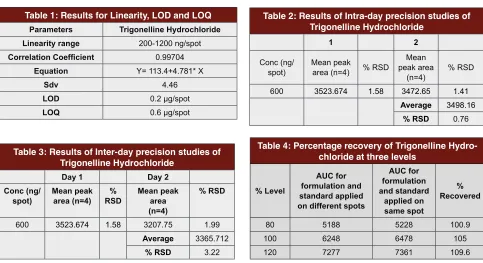
Table 1: Results for Linearity, LOD and LOQ
Parameters Trigonelline Hydrochloride
Linearity range 200-1200 ng/spot
Correlation Coefficient 0.99704
Equation Y= 113.4+4.781* X
Sdv 4.46
LOD 0.2 µg/spot
LOQ 0.6 µg/spot
Table 2: Results of Intra-day precision studies of Trigonelline Hydrochloride
1 2
Conc (ng/
spot) Mean peak area (n=4) % RSD
Mean peak area
(n=4) % RSD
600 3523.674 1.58 3472.65 1.41
Average 3498.16
% RSD 0.76
Table 3: Results of Inter-day precision studies of Trigonelline Hydrochloride
Day 1 Day 2
Conc (ng/
spot) Mean peak area (n=4) RSD% Mean peak area (n=4)
% RSD
600 3523.674 1.58 3207.75 1.99
Average 3365.712
% RSD 3.22
Table 4: Percentage recovery of Trigonelline Hydro-chloride at three levels
% Level
AUC for formulation and standard applied on different spots
AUC for formulation and standard applied on same spot % Recovered
80 5188 5228 100.9
100 6248 6478 105
120 7277 7361 109.6
by diluting with the diluent to obtain final concentration of 200-1200 ng/spot. The plates were developed, dried and scanned as described above. The calibration curve was constructed by plotting the mean peak area (Y-axis) against the concentration (ng/spot) (X-axis) of Trigo -nelline Hydrochloride. The calibration plot showed the correlation coefficient (r2=0.9970) and the equation 113.4+4.781* X ( Table 1, Figure 7,8,9,10)
Sensitivity
The sensitivity of measurement of trigonelline hydro-chloride by the use of proposed method was estimated in terms of Limit of detection (LOD) and Limit of Quantification (LOQ). LOD and LOQ was determined by standard deviation method. The LOD and LOQ for trigonelline hydrochloride were 795.13 ng and 2385.39 ng respectively. (Figure 11,12)
Accuracy
Accuracy was performed in triplicate by spiking the pure drugs of the standard concentration of trigonelline hydrochloride (1 mg/ml) with the formulation at three different levels (80,100,120 %) and comparing the area’s obtained with those of the formulation and standard applied separately at the same level (80,100,120%). When these solutions were analyzed the recoveries were found to be within acceptable limits. (Table 4).
Specificity
The specificity of the method was ascertained by analyzsing standard drug and sample. The spot for
trigonelline hydrochloride in sample was confirmed by comparing the Rf and spectra of the spot with that of standard. The peak purity of trigonelline hydrochloride was assessed by comparing the spectra at three different levels, i.e peak start, peak apex and peak end position of the spot.
Precision
The precision of the analytical method was studied by analysis of multiple sampling of homogenous sample. The precision is expressed as standard deviation or relative standard deviation. The precision of this method was demonstrated by intra-day and inter-day variation studies. Intra-day precision was determined in 4 replicates of the standard solutions at a concentration level of 0.6 µg/spot for Trigonelline hydrochloride carried out twice on the same day. The results of repeat-ability were expressed in terms of relative standard deviation (% RSD).Inter-day precision was done by repeating the same procedure but carried out on two different days(Table 2, Table 3).
Robustness
-Figure 1: Fingerprinting profile of formulation with standards at 254 nm on 20x10 TLC plate.
Figure 2: Fingerprinting profile of formulation with standards at 366 nm on 20x10 TLC plate.
Figure 3: Chromatogram for formulation showing presence of all standards in formulation.
Figure 4: 3D chromatogram for formulation with standard compounds.
Figure 5: 3D chromatogram for formulation with standard compounds.
Figure 7: Image documentation of Trigonelline Hydrochloride with formulation at 254 nm.
Figure 8: HPTLC linearity profile of trigonelline hydrochloride.
Figure 9: Spectral confirmation of trigonelline hydrochloride on all tracks.
Figure 10: HPTLC spectrums of Trigonelline Hydrochloride at different concentrations.
Figure 11: Limit of Detection Profile of Trigonelline Hydro-chloride.
ration, solvent composition, spots/band alignments, separation, evaluation and solvent front. Thus the method developed and validated was found to be robust.
CONCLUSION
From the present study, it is concluded that the proposed method, the HPTLC method developed is a newer tech-nique for simultaneous fingerprinting of markers such as Quercetin, Gallic acid, Curcumin and Trigonelline from polyherbal formulation containing Amla, Haldi and Methi as the results are visible as well as method is linear,specific, reproducible, rugged, robust, precise and cost effective when compared with HPLC and other chromatographic methods. Results of validation param-eters conclude that the analytical method is suitable for its universal use.
ABBREVIATIONS USED
HPTLC: High Performance Thin Layer Chromatogra-phy; TLC: Thin Layer Chromatography; ICH: Interna-tional Conference on Harmonisation; LOD: Limit of Detection; LOQ: Limit of Quantification; Rf: Reten-tion factor; Type -2 DM: Type-2 Diabetis Mellitus; HOMA-b: Hemostatic Model Assesment of beta-cells; TGs: Triglycerides; % RSD: Percent Relative Standard Deviation; AUC: Area Under Curve; IPA: Isopropyl Alcohol.
REFERENCES
1. Leixuri A, Noemi A, Teresa M, Gracia A. Beneficial Effects of Quercetin on Obesity and Diabetes. The Open Nutraceuticals J. 2011;4:189-98. http:// dx.doi.org/10.2174/1876396001104010189
2. Susanj Z. Type 2 Diabetes and Glycemic Response to Grapes or Grape Products. J Nutr. 2009;139(9):17945-18005.
3. Pal SR, Wal P, Pal Y, Sachan S, Kumar D, Tiwari S. A review article on: The usage of herbal medicines in the treatment of diabetes. EJPMR. 2016;3(6):201-4.
4. Parasuraman S, Thing GS, Dhanraj SA. Polyherbal formulation: Concept of ayurveda. Phcog Rev [serial online] 2014;3;8(16):73-80. Available from: URL: http://www.phcogrev.com/text.asp?2014/8/16/73/134229
5. Singh J. Medicinal Plants: Amla (Amalaki) Indian Gooseberry (Emblica Officinalis/ Phyllanthus Emblica) [online]. 2015 [cited 2015 Oct 8]. Available from: URL: https://www.ayurtimes.com/amla-amalaki-indian-gooseberry-emblica-officinalis-phyllanthus-emblica
6. Vessal M, Hemmati M, Vasei M. Antidiabetic effects of quercetin in streptozocin-induced diabetic rats. Comp Biochem Physiol C Toxicol Pharmacol. 2003;135C(3):357-64. http://dx.doi.org/10.1016/S1532-0456(03)00140-6 7. Walia K, Boolchandani R. Role of Amla in Type 2 Diabetes Mellitus-A Review.
Res J Recent Sci. 2015;4(3):31-5
8. Ramys R. Type 2 Diabetes Mellitus [online].2015 [cited 2015 Oct 6].Available from: URL: https://drraghuramys.wordpress.com/2015/02/08/haridra- turmeric-series-5-anti-diabetic-property-of-curcuma-longa-modern-and-ayurveda-views-part2/
9. Faizal P, Suresh S, Augusti KT. A study on the hypoglycemic and hypolipidemic effects of an ayurvedic drug rajanyamalakadi in diabetic patients. Indian J Clin Biochem. 2009;24(1):82-7 http://dx.doi.org/10.1007/s12291-009-0014-1; PMid:23105812 PMCid:PMC3453461
10. Fenugreek and Diabetes [online] [cited 2015 Sep 3].Available from: URL: http://www.diabetes.co.uk/natural-therapies/fenugreek.html
11. Yoshinari O, Sato H, Igarashi K. Anti-diabetic effects of pumpkin and its components, trigonelline and nicotinic acid, on Goto-Kakizaki rats. Biosci Biotechnol Biochem. 2009;73:1033-41. http://dx.doi.org/10.1271/bbb.80805; PMid:19420712
12. Subramoniam A. Anti-Diabetis Mellitus Plants. In:John Sulzyeki. Plants with Anti-Diabetes Mellitus Properties.Boca Raton: CRC Press, Taylor and Francis Group. 2016.412 http://dx.doi.org/10.1201/b19653-3
13. Kamboja A, Salujab AK. HPTLC finger print profile of extracts from dried aerial parts of Ageratum conyzoides L. in different solvents. Asian J of Pharm Sci. 2011;6(2):82-8.
14. Gantait A, Barman T, Mukherjee KP. Validated method for estimation of curcumin in turmeric powder. Indian J Tradit Know. 2011;10(2):247-50.
• Diabetes Mellitus is the world’s largest endocrine disease involving metabolic disorder of carbohydrate, fat and protein. According to the WHO projections, the prevalence of diabetes is likely to increase by 35%. Therefore an effort was made to develop HPTLC method for polyherbal formulation containing Amla
(Emblica Officinalis), Haldi (Curcuma Longa) and Methi (Trigonella foenum graceum) which are known to
posses anti-diabetic activity as per literatue review.
• The HPTLC procedure was optimized by carrying out many trials, but best elution, followed by tank satura-tion of 15 min with 10 min plate equilibrium, was selected as optimized solvent system which comprised of Isopropyl Alcohol: Ammonia: Acetone in the ratio 1:1:1(v/v/v).
• Chromatographic fingerprinting with marker compounds such as Quercetin, Gallic Acid, Curcumin and Trigo-nelline Hydrochloride showed good resolution at Rf of 0.66, 0.42, 0.81 and 0.34 respectively.
• Validation was carried as per ICH guidelines for Trigonelline Hydrochloride with same solvent system in ratio of 1:1:1 and 265 nm was taken as the optimised scanning wavelength.
• The linearity range was found to be between 200-1200 ng/spot. Calibration curve was described by the equation Y=113.4 + 4.781 * X with r2=0.9970.
• LOD and LOQ were found to be 0.2µg/spot and 0.6 µg/spot, respectively.
Shrikrishna Madhukar Nandanwadkar: Research Scholar (P.h.D), Department of Quality Assurance, KLE’U College of Pharmacy, Nehru Nagar, Belagavi, Karnataka, INDIA.
About Authors
Vinayak Shivamurthi Mastiholimath: H.O.D and Professor, Department of Quality Assurance, KLE’U College of Pharmacy, Nehru Nagar, Belagavi, Karnataka, INDIA.
Soniya Ramdas Surlaker: Research Scholar (M.Pharm), Department of Quality Assurance, KLE’U College of Pharmacy, Nehru Nagar, Belagavi, Karnataka, INDIA.
• The recovery at 80 %, 100 %, 120 % were found to be 100.9,105, 109.6 .This limits indicated method proposed was accurate.
• Precision studies on the intra-day and inter-day variation were carried out. The low % RSD indicated the method was precise for the analysis.
• Robustness of the method was obtained by small deliberate changes in mobile phase composition and volume, saturation time, Rf and solvent front.