World Maritime University
The Maritime Commons: Digital Repository of the World
Maritime University
World Maritime University Dissertations Dissertations
2000
Implications for Cote D'Ivoire in the
implementation of "new public management"
principles, with special reference to the maritime
administration
Mariko Mamadou
World Maritime University
Follow this and additional works at:http://commons.wmu.se/all_dissertations Part of thePublic Administration Commons
This Dissertation is brought to you courtesy of Maritime Commons. Open Access items may be downloaded for non-commercial, fair use academic
Recommended Citation
Mamadou, Mariko, "Implications for Cote D'Ivoire in the implementation of "new public management" principles, with special reference to the maritime administration" (2000).World Maritime University Dissertations. 52.
WORLD MARITIME UNIVERSITY
Malmö, SWEDEN
IMPLICATIONS FOR COTE D’IVOIRE
OF THE IMPLEMENTATION
OF “NEW PUBLIC MANAGEMENT” CONCEPT,
WITH SPECIAL REFERENCE TO THE MARITIME
ADMINISTRATION
By
MAMADOU MARIKO
Côte d’Ivoire
A dissertation submitted to the World Maritime University in partial fulfilment of the requirements for the award of the degree of
MASTER OF SCIENCE
In
MARITIME ADMINISATRATION AND ENVIRONMENTAL PROTECTION
2000
DECLARATION
I certify that all the material in this dissertation that is not my own work has been identified, and that no material is included for which a degree has previously been conferred on me.
The contents of this dissertation reflect my own personal views, and are not necessarily endorsed by the University.
………
………
Supervised by:
Name: ………..
Office: ………..
World Maritime University
Assessor:
Name: ………..
Office: ………..
Institution/organization: ………..
Co-assessor:
Name: ………..
Office: ………..
ACKNOWLEDGEMENTS
I wish to thank my supervisor, Professor D. HODGSON, whose lectures, handouts, guidance and personal experience in management issues made this paper possible. I am particularly grateful to him for his patience and the accuracy of his advice.
I would like to extend my sincere gratitude to my sponsor, the International Transport Federation, and the University staff, the distinguished officials of organisations that I have visited in Europe and Canada, and all those who contributed to the achievement of my training.
Thanks to all.
DEDICATION
ABSTRACT
Title of the Dissertation:
Implications for Côte d’Ivoire of the Implementation of the New Public Management, with Special Reference to the Maritime Administration.
Degree: MSc
The quest for better way for providing public services has become a permanent process throughout the world. In this perspective, the concept of New Public Management initiated in OECD countries during the early 1980’s appears as an alternative for improving efficiency of public administrations.
This paper intends to highlight weaknesses of public administration in Côte d’Ivoire through identification of shortcomings, and to outline proposed set of actions involved by the implementation of New Public Management principles that can help at strengthening it responsiveness.
As a part of the public sector and therefore concerned with the process, the maritime administration is subject to a special reference, and alternatives for desirable basic structure and action plans are provided.
TABLE OF CONTENTS
DECLARATION ii
ACKNOWLEDGEMENT iii
DEDICATION iv
ABSTRACT v
TABLE OF CONTENT vi
LIST OF TABLES xii
ABBREVIATIONS xiii
CHAPTER 1: Introduction 1
CHAPTER 2: Features of the Public Administration 3
2-1 Basic facts about the State of Côte d’Ivoire 3
2-1-1 Growth tendencies 3
2-1-2 The burden of the long term debt 4
2-1-3 Governance environment 4
2-1-4 The regional co-operation policy 5 2-1-5 Importance of the maritime sector 6
2-1-5-1 Port activities 6
2-1-5-2 Offshore drilling activities 8 2-1-5-3 Environmental issues 9 2-1-5-4 Human resource development 9
2-2 The government 10
2-3 The decentralised structures 11
2-3-1 Organisation 11
2-3-2 Limits of power conferred 12
2-4 The civil service 13
2-4-1 The Civil Service Code 13 2-4-2 Appraisal of the machinery 15 2-5 The role of State owned companies 15 2-5-1 Reasons for their development 16 2-5-1-1 The State: the main investor 16 2-5-1-2 Exercising sovereignty 16 2-5-1-3 The development of social programs 17 2-5-2 Inadequacies in the rationale for State-owned companies 17
2-5-2-1 The context 18
2-5-2-2 Overstaffing 19
CHAPTER 3: Identification of Impediments 27
3-1 The bureaucratic model 27
3-1-1 A systematic division of labour 27
3-1-2 Hierarchy 27
3-1-3 Strict rules 28
3-1-4 Impersonal fulfilment of duties 28 3-1-5 Technical qualifications 28 3-1-6 Stability and permanence 28 3-2 Attitude of civil servants 29 3-2-1 Concept of exercising authority 29
3-2-2 Corruption 30
3-2-2-1 Forms of corrupt practices 30 3-2-2-1-1 Corruption through public procurement 30 3-2-2-1-2 Corruption through taxation regime 32 3-2-2-1-3 Corruption of controlling bodies 32 3-2-2-1-4 Arrogance of officials 33 3-2-1-1-5 Passive corruption of decision-makers 33 3-2-2-1-6 Use of public assets for private gain 33 3-2-2-2 The consequences of corrupt practices 34 3-2-2-3 International mobilisation against corruption 34 3-3 The lack of accountability and transparency 35
3-4 The controlling function 36
3-4-1 The internal control 36
3-4-2 The external control 36
3-6 Development of the maritime administration 40
3-6-1 Structural cohesion 40
3-6-2 Human resource management 41
CHAPTER 4: The concept of the New Public Management 42
4-1 The context 42
4-1-1 The background 42
4-1-2 The Organisation for Economic Co-operation and
Development 43
4-2 Principles of the New Public Management 43 4-2-1 Redefinition of government’s role 44 4-2-2 Introduction of effective management in governmental units 44 4-2-3 Focus on clients’ satisfaction 45 4-2-3-1 Dynamic Administration-Citizen interface 45 4-2-3-2 Greater citizens’ involvement 45 4-2-4 Use of information technologies 46
4-2-5 Quality management 46
4-3 Is New Public Management a panacea? 47
CHAPTER 5: The challenge for performance 49
5-1 Clarifying public finances 49 5-1-1 The nature of the fiscal system 50 5-1-2 Lack of viable database on taxpayers 50 5-1-3 The contribution basis 51 5-1-4 The use of the budget 51
5-2 Downsizing structures 53
5-3 Development and dissemination of values 54
5-3-1 Professional values 54
5-3-2 Ethical values 55
5-4 Leadership of senior officials and implementation of management rules 56 5-4-1 A good understanding of the raison d’être 57 5-4-2 A rational organisational system 57 5-4-3 The implementation process 58 5-4-3-1 The payment of incentives 59
5-4-3-2 Job enrichment 59
5-4-4 The controlling function 60 5-5 The use of information technologies 60
5-6 Clientele management 62
5-7 Conducting reform of the civil service 62 5-8 Proposals for a new philosophy of rendering maritime services 63 5-8-1 Structural arrangements 64 5-8-2 Staffing the organisation 65 5-8-3 Updating the legal and regulatory framework 66 5-8-4 Creating the dynamic of relationship with users 66 5-8-5 Pro-active behaviour of senior officials 67 5-8-5-1 Employment of seafarers 67 5-8-5-2 Development of projects 68 5-8-6 Implementation of international conventions 68 5-8-6-1 Hiring qualified Port State Control Officers 69 5-8-6-2 Training of existing personnel 69 5-8-6-3 Appointment of a permanent representative at the IMO 71 5-8-6-4 Certification of seafarers under STCW Convention 71 5-8-6-5 Prevention of marine pollution under MARPOL 71 5-8-6-6 Casualty investigation under SOLAS/MARPOL/
CHAPTER 6: Summary and conclusions 75
BIBLIOGRAPHY 78
APPENDIX A: Examples of mission statements 80 APPENDIX B: Annex 4 of the African MOU 81 APPENDIX C: Articles 1, 8 and 12 of the OECD Convention on Corruption
LIST OF TABLES
LIST OF ABBREVIATIONS
CMEAOC-TM: Conférence Ministérielle des Etats de l’Afrique de
l’Ouest et du Centre sur les Transports Maritimes
COMARCO: Compagnie Maritime de Côte d’Ivoire
ENA: Ecole Nationale d’Administration
F CFA: Franc de la Communauté Financière Africaine
JICA: Japanese International Co-operation Agency
MARAD: Maritime Administration
MLTD: Maritime and lagoon Transport Directorate
NMP: New Public Management
PMAD: Port and Maritime Affairs Directorate
RCI: Republic of Côte d’Ivoire
SITRAM: Société Ivoirienne de Transport Maritime
SIVOMAR: Société Ivoirienne d’Opération Maritime
SYSCOA: Système Comptable Ouest Africain
SYMICOM: Syndicat des Marins Ivoiriens au Commerce
SYMAPECI: Syndicat des Marins Pêcheurs de Côte d’Ivoire
SF: Switzerland Franc
ULCC: Ultra Large Crude Carrier
UEMOA: Union Economique et Monétaire de l’Ouest Africain
CHAPTER 1
INTRODUCTION
When the Republic of Côte d’Ivoire (RCI) was granted national sovereignty in 1960, the public administration was heavily under influence of the circumstances inherited from colonisation. Its organisational system and its practices were based on the bureaucratic model.
During the two decades following the independence of the State, the economy of the country grew sharply. The liberal economic system chosen by the government combined with strong export-oriented agricultural policies produced positive results. All sectors were concerned with this prodigious development which led some economists to address it as the “Ivorian miracle”.
The government engaged itself in a wide program of investment in social and economic infrastructures. Confident in its capacity to reimburse, it borrowed massive sums of money and went on injecting public funds into the economy. This strong state interventionism policy resulted in the creation of a very large public sector that appeared unsatisfactory.
In the early 1970’s, the international prices of the two main export commodities (cocoa and coffee) dropped down to half of their value. The combination of this factor with the effects of over borrowing caused deterioration in the economic situation. The crisis highlighted the need for fundamental change.
The dissertation proposes to outline implications for the country of the implementation of new public management principles taken as an alternative for increasing performance. For this purpose, the different aspects of the public administration are analysed to highlight weaknesses in relation with the structure and practices, and behaviour of civil servants. The literature on the new public management is reviewed and, in the light of the analysis of its principles, proposals are made on the way public authorities can develop alternatives aiming at an increased responsiveness. A particular emphasis is put on the maritime administration.
CHAPTER 2
FEATURES OF THE PUBLIC ADMINISTRATION IN THE RCI
Guy Peters defined public administration in his book “The future of Governing: four emerging models” as an institution designed to exercise collective control and influence over the society and economy for which it has been given responsibility. The way it is set up and the way officials perform duties evolving out of this responsibility may be subject to different interpretations. However, the World Bank has given in the 1997 World Development Report, some basic governmental tasks that even a weak State should strive to get right. These tasks are a foundation of law, a benign policy environment including macro-economic stability, investing in people and infrastructure, protection of the vulnerable and protection of the environment. This Chapter proposes to analyse the public administration in Côte d’Ivoire through arrangements made by political authorities.
2-1 Basic facts about the State of Côte d’Ivoire
2-1-1 Growth tendencies
Following the crisis of the early 1970’s, a recovery phase began in 1991 when the government accepted a World Bank / International Monetary Fund program of fiscal austerity and market liberalisation including state withdrawal from the production of goods and services.
led to a strong growth in trade surplus (from USD 734 million in 1993 to 1.86 billion in 1996). The stimulus provided increased foreign aid and investment flows. Meanwhile, the government undertook rigorous macro-economic policies and the privatisation of state owned companies. The GDP growth rate was 7.1 in 1995, 6.8 in 1996 and 7.0 in 1997. Government revenue rose form F CFA 847 billion in 1994 to 1,348 in 1997.
2-1-2 The burden of the long term debt
In 1980, the aggregate amount of the long-term debt of the country reached USD 19.07 billion equivalent to 211% of the GNP. The performance recorded during the recovery phase enabled the country to get back on track with official creditors, both bilateral (Paris Club and London Club) and multilateral (IMF and World Bank), by signing in 1998 a new three-year Enhanced Structural Adjustment Facility Program (ESAF). This program opened the door for the country’s eligibility to the debt cancellation initiative called the Highly Indebted Poor Countries Initiative (HIPC). The public sector debt had dropped from USD 16.2 billion to 12.0 billion by the end of 1998. If reforms required by the IMF are fully implemented, the HIPC initiative is expected to provide additional cancellation of debt, and reduce the level to 9.1 billion in 2001.
2-1-3 Governance environment
However, the political dialogue is much freer than prior to 1990 particularly because of the opposition press that voices its criticism against the regime.
The judiciary system has some major weaknesses. Though the separation of powers is asserted in the constitution, the power of the President of the Republic to appoint officials of the judiciary system virtually subordinates it to the executive. Moreover, experts have found that it is unpredictable and slow.
2-1-4 The regional co-operation policy
Côte d’Ivoire is a member of the West African Economic and Monetary Union (UEMOA) and the Economic Community of West African States (ECOWAS) and is a signatory of the Lome Convention.
The objectives of the UEMOA are to co-ordinate the economic, financial and structural policies of Francophone countries through the following measures:
- adoption of a common accounting system called SYSCOA which introduces a unique book keeping system;
- establishment of a regional Stock Exchange;
- institution of a customs union for the harmonisation of customs regulations and business law practices.
2-1-5 Importance of the maritime sector
With 550 km of coastline and a lagoon belt around the City of Abidjan, Côte d’Ivoire had a natural predisposition to develop its maritime sector.
2-1-5-1 Port activities
The country has two ports located in Abidjan and San-Pedro in the Southwest. Both are owned entirely by the State.
95% of the foreign trade of the country is moved by sea. As a developing country, with an economy that is based on agricultural production, Côte d’Ivoire needs to export industrial crops and to import equipment for its basic infrastructure. The status conferred to the port of Abidjan after the decision to re-structure the state-owned companies led to it having more management autonomy. The Abidjan Port Authority is seen as a reference with regard to performance.
In 1998, the total traffic of goods reached 15,441,220 tonnes representing a growth of 9.6% compared with 14,089,802 tonnes recorded the previous year (Table 1A and 1B). The main products handled are petroleum, chemicals, food products, general cargoes and building materials. The fishing harbour offers a basic support infrastructure for the operation of tuna ships, shrimp ships, trawlers and refrigerated ships.
About 40 private companies are operating in the port area as forwarding agencies, ship handlers or ship agents. There are also ship repair facilities offering slipways of 350 tons and floating docks with a lifting capacity of 10,000 tons.
Towage services have been privatised and are carried out by 5 tugs having engine powers ranging from 1,500 to 2,720 HP.
Table 1A: Evolution of the traffic of goods in tonnes (trading port)
Import Export
Total
1995 7,399,429 4,173,441
11,572,870
1996 7,895,403 5,465,82313,361,226
1997 8,714,289 5,039,67913,753,968
1998 9,971,722 5,101,86815,073,590
Table 1B: Evolution of the traffic of goods in tonnes (fishing harbour)
Import Export
Total
1995 314,409 80,149
394,558
1996 314,261 74,146
388,407
1997 281,662 54,172
335,834
1998 325,253 42,377
367,630
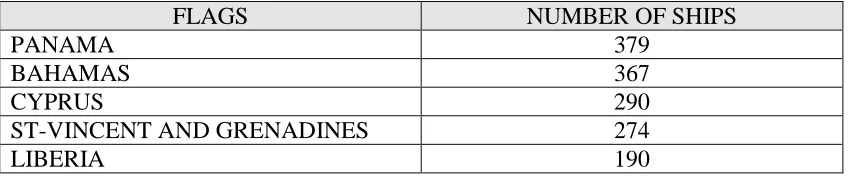
Table 1C: Distribution of ships according to main flags (Abidjan 1998)
FLAGS NUMBER OF SHIPS
PANAMA 379
BAHAMAS 367
CYPRUS 290
ST-VINCENT AND GRENADINES 274
LIBERIA 190
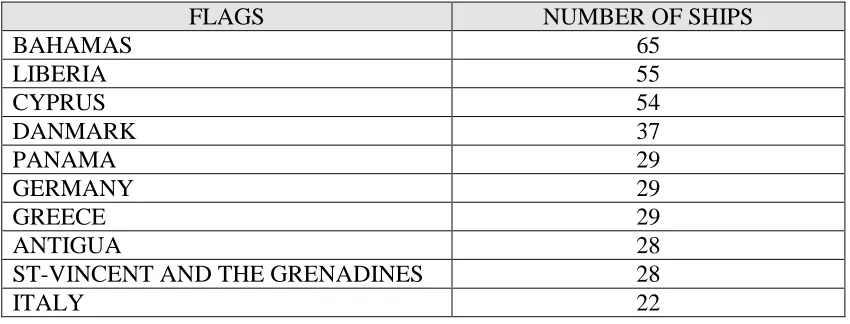
Table 1D: Distribution of ships according to main flags (San-Pedro 1998)
FLAGS NUMBER OF SHIPS
BAHAMAS 65
LIBERIA 55
CYPRUS 54
DANMARK 37
PANAMA 29
GERMANY 29
GREECE 29
ANTIGUA 28
ST-VINCENT AND THE GRENADINES 28
ITALY 22
Source: San-Pedro Port Authority – Annual Report (1999)
The second port of the country is located in the Southwest. The installation of the basic infrastructure was motivated by the need to stimulate the development in this region. 523 ships called at the port and 1,074,312 tonnes of good were handled in 1998.
2-1-5-2 Off-shore activities
Abidjan-Azito and is almost self-sufficient for oil needs. The geology is still promising and these products are likely to become significant ones in the national economy.
2-1-5-3 Environmental issues
Administrative authorities of Côte d’Ivoire take the threat of oil pollution seriously. The country is located in the Gulf of Guinea that is near the pathway of VLCC and ULCC engaged in oil trade between the Middle East and Europe via the Cape of Good Hope. Moreover, the port of Abidjan has its own installations that accommodate oil tankers of any tonnage for their loading and unloading operations in relation to the national refinery.
The land-based threat to the environment is mainly due to the use of fertiliser in agriculture and the concentration of indigent populations on the coastline.
To tackle the problem, the government has made special arrangements that will be analysed in Chapter 2.
2-1-5-4 Human resource development
With the development of the maritime sector, there has been a continuing need to supply qualified personnel either to man the national fleet or to run ancillary shipping businesses.
In the context of regional co-operation with other African states, a Maritime Academy was established in 1975 to train young people interested in a career at sea. 2,150 officers have been trained in this institution since its establishment.
2-2 The government
2-2-1 Principles guiding the composition
The first government that emerged from elections in 1960 opted for the single ruling party system despite the political pluralism asserted in the constitution. The former President, Felix HOUPHOUET-BOIGNY, declared that competing political parties would reflect the strong feelings of belonging to ethnic groups and undermine national unity. That was true to a certain extent since the majority of the population was uneducated. In fact, it became clear very early that the President did not accept any form of opposition. Meanwhile, he was progressively concentrating all powers in his hands: the power to appoint ministers, senior officials and managers of State owned companies and the power of policy making.
The President has always advocated the role of people’s education as a major factor of development. In preparing for the replacement of French advisors, he sent successive groups of students to European Universities to acquire the basic knowledge. When this intelligentsia returned home, the President had a difficult equation to solve: to create conditions for their immediate integration in the development process or to create a breeding ground for opposition movements.
2-2-2 The sociological factors
It is generally accepted that setting up a Government with regard to the number of Departments and their functions follows four principles:
1) the functional principle 2) the process principle 3) the clientele principle 4) the area principle
Nevertheless, it is a common practice in developing countries and particularly in Côte d’Ivoire that the President decides first the number of persons to appoint. Then the sharing of governmental functions among ministries follows after. Since the President is not legally required to give any justification for his choice, political observers assume that he is bound by the need to ensure equitable representation of geographical regions and ethnic groups that showed more support during elections.
The size of the Government has always fluctuated following the President’s will. The highest level was reached in 1985 when the President appointed forty ministers while the state was going through a major economic crisis.
It is understandable that a Government set up on the above basis cannot obey any clear principle of rational organisation. As a consequence, it happened that functions traditionally devolved to a particular ministry were parcelled out to fit the size of the Government. The example of the Ministry in charge of Maritime Affairs illustrates indubitably this fact and will be analysed in Chapter 3.
2-3 Decentralised structures
2-3-1 Organisation
is held twice a year to review administrative, social and economic problems, to adopt the budget and to formulate development policies. The issues are submitted to the Prefect for approval and then handed over to the Minister of Interior. The Sub-prefecture Council is a forum of discussion where elected officials, heads of public agencies, social groups and individuals known for their active participation in local affairs assist the sub-prefect in performing his duties.
In fact, decentralisation supposes autonomous elected sub-national governments capable of taking binding decisions in at least some policy areas. It is particularly helpful to strengthen national unity when the country is divided along geographic or ethnic lines. This has been experienced in South Africa, Uganda, Sri Lanka, India, and Bosnia and in many other countries. In the context of Côte d’Ivoire, it is more suitable to address the issue within the concept of “Deconcentration”. Deconcentration is the process by which the Central government increases the autonomy of staffs in regional offices without removing the hierarchical link.
2-3-2 Limits of power conferred
2-4 The Civil Service
2-4-1 The Civil Service Code
The first task of the Government was to provide the public administration with a legal framework. It came up with a law that was adopted by the parliament in 1961. This text, which was inspired by the French model, became the basic document regulating the status of civil servants in their relationship with the State. The concept of “Administrative corps” was introduced, designating bodies of State officials with responsibilities for specific sets of activities. For each body, details about the background required, training, appointment, remuneration and appraisal were determined by decrees.
Ladipo ADAMOLEKUN, a Nigerian writer, in his book “Public Management: A Nigerian and Comparative Case” has made a good analysis of the French Civil Code as adopted by most of the former African colonies. He found that basically, this Code meets the three principles of the management role concerned with human resources:
• personnel utilisation through selection, training and deployment;
• personnel motivation covering remuneration, job design and satisfaction
• personnel protection in relation to working conditions, safety and welfare services.
superiors and, most of the time, influence their decisions, more attention should be paid to personality appraisal.
In the light of the provisions of the Code, it appeared also that people with a background not listed in the law but having an expertise needed to function in public administration were to be appointed as temporary civil servants. Moreover, the implementation of the Code was made through decrees, ministerial orders and other administrative decisions. As a consequence, the different positions and their related duties and remuneration were extremely regulated. It could not be otherwise since the civil servant is in a legal relationship with the State. Any change in his status, whatever the extent, needs a modification of the relevant regulation.
Another important characteristic is that the Code provides civil servants with protection while on duty, against both physical aggression and liability. This latter provision referred to as “civil servant anonymity” has been of importance in determining attitudes of workers in the public sector.
In early 1985, the Minister of the Civil Service declared that weaknesses in the Code decried by unions and users would be taken into account in the program of reform initiated by the government.
In fact, when the new law was introduced in 1995, it was not a fundamental shift. However, it brought two major modifications. The first concerned the designation of administrative corps. The new formulation was seen as an open file that integrated existing and new specialisations (computer engineering, chemistry, and environmental sciences…).
2-4-2 Appraisal of the machinery
Citizens see the public administration as a huge machine for which the Government dedicates 33% of the annual national budget. The growth rate of the civil service staff was 8.75% between 1964 and 1986 and the total number of employees was 115,000 in 1986 and 118,000 in 1991. Since the implementation of restrictive measures taken in the context of negotiations with the World Bank, there has been a slight decline followed by relative stability. The wage bill is still important and seems to fluctuate with the annual budget.
Following the bureaucratic model principle, the Code gives power to the superior to appraise performance of immediate subordinates. It is clear that the efficiency of such an organisation will depend on the extent to which the civil servants are individually conscious of the role they have to play. A new era is opening up with the multiplicity of consumers’ associations acting as a reminder. Civil servants are more and more required to perform their duties with regard to the massive resources allocated to them. This matter is analysed in more detail in Chapter 5.
2-5 The role of State-owned companies
As stated earlier, the growth of the economy was mainly based on the processing of agricultural crops. Initiatives taken by some foreign investors, composed principally of French businessmen, were concentrated on the export of goods with little added value.
2-5-1 Reasons for the development of State-owned companies
The Minister of the Economy asserted in 1970, during an interview with the local press, that this policy had three objectives:
1- to substitute for the low level of national private investment; 2- to maintain full sovereignty over sectors considered to be strategic; 3- to develop social programs for vulnerable populations.
2-5-1-1 The State: the main investor
Very few nationals were involved in creating companies due to the lack of savings and the fear of business risks. When analysing the reasons that prevent under-developed countries from making economic progress, the French writer Jean-Marie ALBERTINI asserted in his book “Les Mecanismes du Sous-developpement”, that they are “prisoners” of a vicious circle: They cannot save enough money to invest because they have low incomes. They have low incomes because there is not enough money invested.
Moreover, nationals with the minimum capital needed to start, chose to invest in less risky and smaller sized businesses. Therefore, there were no growth-induced effects for the national economy. People running such businesses were active in local road transport, constructing and hiring apartments unit after unit and management of restaurants. Generally they had also to face the burden of caring for a large family. The combination of the above economic and sociological factors nullified most of the appeal of participating in the national economic growth.
2-5-1-2 Exercising sovereignty
sea and air transport were ruled by State-owned companies. In fact, it appears that these businesses needed huge capital and infrastructure that could not be separated from national public equipment. In most cases, companies operating in these sectors were originally integrated in the development plans of economic infrastructures at the national level.
2-5-1-3 The development of social programs
The agricultural sector has played an important role in the development of the national economy. However, farmers have been kept away from growth-induced benefits since they were limited to producing raw materials that were subject to price fluctuations. At the same time, the exodus of rural people towards urban areas, and the important immigration flows, served to increase the pressure on the social needs of the country. To tackle the problem, the government decided to set up companies providing goods and services to these targeted populations. The range of products covered construction, urban transport, credit system, agricultural support services, etc.
By the end of 1980, about one hundred State-owned companies had been created. Following the one-man policy-making rules, the appointment of managers was based on very partisan considerations. Consequently, the bad results of these companies led the Government to dedicate huge sums of money to subsidising their operations.
2-5-2 Inadequacies in the rationale for State-owned companies
To illustrate the weaknesses in the management of State-owned companies, the author proposes to analyse the example of the National Shipping Company (SITRAM) created in 1976, but which went bankrupt in spite of all the support and encouragement offered to her by the administrative system.
2-5-2-1 The context
Most African countries have experienced dependence on ship owners of developed countries during the first decade following their accession to national sovereignty. To correct this dependence, there was a need to free their economy from the monopolistic position of European shipping companies practising very high freight rates. On the other hand, it was imperative for them to ensure regular returns for any investment because starting a local shipping business required huge sums of money.
The Liner Shipping Conference System gave to them, at least in the beginning, the opportunity to get more control over the carriage of their foreign trade.
Negotiations for setting up the Code for Liner Shipping Conferences started in 1973 under the auspices of the UNCTAD, but it was only in 1983 that the Code entered into force on the 40/40/20 basis. For its part, Côte d’Ivoire ratified it in 1977.
- the Far East West Africa Freight Conference (FEWAC)
- the Mediterranean Europe West Africa Conference (MEWAC) - the United Kingdom West Africa Line Joint Service (UKWAL).
An important characteristic of the Ivorian economy is that 55% of exports are composed of agricultural products and their commercialisation is totally monitored by the Government. The strong investment policy adopted led the State to be the main importer of equipment. By making all the above arrangements, the Government had created the conditions for SITRAM to play an important role as a sea carrier in the sub-region and to become one of the biggest companies.
The development of the company grew sharply from 1977 to 1985 since its fleet was new and the Board of Directors allowed the borrowing of money from international financial markets under a State guaranty.
The decline noticed during the following years was due to management errors and a combination of external factors.
2-5-2-2 Over staffing
It is generally accepted in the shipping industry that the manning rate for positions should not exceed 1.75. SITRAM had a rate of 3.00, one of the highest in the shipping business. In 1986, the total number of workers reached 1168, among them 810 seafarers. Managers appointed from Abidjan to head local offices of the company in Europe did not have enough knowledge of shipping market conditions, and could not compete efficiently in collecting freight for the company.
2-5-2-3 Management short-sightedness
2-5-2-4 Lack of competitiveness
In 1985, computerisation was limited to the treatment of wages and accounting in general. None of the ships were fitted with equipment suitable for dealing with loading plans, bills of lading and container tracking. There was no plan to renew the fleet, which remained the same until the company started to sell them unit after unit.
2-5-2-5 Political interference and attitude of workers
Very often unofficial extra living costs incurred by Government officials on visits to Europe were supported by the company through the budget item “Advertising”. It appeared also that, due to a lack of strong disciplinary rules, crewmembers were not conscientious in their duties. While interviewing a former engineer officer, the author noted that in 1984, the M/V AGBOVILLE lost two hours at the port of Bordeaux because one third of the crew was still shopping. Of course towage, pilotage and other port dues were billed taking into account these extra hours.
Furthermore, crew unions exercised strong powers within the company and their claims led to increased social costs.
2-5-2-6 Inadequate policy
2-5-2-7 Open competition
SITRAM was not well prepared to compete with well-established shipping companies. Relying on the viability of the Code, the management staff had no real strategy to face any change in the market. Meanwhile, more and more countries denounced the Code and outsiders become more and more penetrating. From a level of 5-10% in 1970, they reached 20-50% of the freight carried in 1985.
During the same period, SITRAM had to face complaints from its traditional customers. For example the Banana and Pineapple Exporters Association (OCAB) found that it was cheaper to charter their own ships from the international market. They succeeded in 1993 after a decision on liberalisation was taken by the Government.
The combination of all these factors led SITRAM to record a decline on its turnover.
During negotiations with the World Bank, the Government agreed to liberalise maritime transport in successive steps: bulk and refrigerated cargoes were partially liberalised in October 1994, non-conference general cargo fully in May 1995 and all remaining traffic in December 1996.
In May 1995, the decision was taken to dissolve SITRAM. The case is still pending before the court for the payment of workers’ rights.
2-6 The maritime administration
administration has gone through different phases, following development strategies adopted by the President of the Republic.
2-6-1 Historical background
In 1960, the Maritime Administration was a department within the Ministry of Transport and Telecommunications. The Director had under his authority a handful of civil servants whose duty was to keep updated the registry of ships and seafarers. He was assisted by French advisors in the drafting of the Merchant Marine Code and its related implementation decrees. The strong export-oriented policy adopted by the Government led the maritime sector to record a sharp growth. With its economy hampered by heavy freight rates, Côte d’Ivoire joined the discussions on the Liner Shipping Conference System within the UNCTAD in 1973. The President appointed, in 1975, a young Navy officer as Minister of Marine to assist the Government in defining the objectives to be achieved.
The Ministry was staffed so as to meet the requirement of dealing with port activities and related matters, off shore drilling, environmental issues, training and international co-operation.
In 1990, the State was engaged in negotiations with the World Bank. The economy was in the recovery stage after the crisis of the 1980’s. One of the requirements of the World Bank for supplying financial assistance was downsizing the public administration. For its part, and as a result of restrictive measures taken by the newly appointed Prime Minister, the Maritime Administration was concentrated within two departments attached to the Ministry of Transport and Equipment. This basic structural organisation has been kept up to the present time.
2-6-2 Organisation and functions
1) The Port and Maritime Affairs Directorate (PMAD) The Divisions within this Department are:
- Port and littoral affairs
- Seafarers’ education and administration - Seafarers’ health
- Maritime safety
The Divisions include Sections in charge of specific tasks. Among them there is Ship Inspection and Maritime Labour Inspection. These Inspections are the technical bodies in charge of implementing the standards regarding safety of navigation and seafarers working conditions.
By far the most important functions devolved to the PMAD are to formulate integrated development plans for the littoral, to ensure safety of navigation by implementing relevant regulations and to ensure efficient management of the human resources needed by the shipping industry. For that purpose, port development, pollution issues, and training and employment of seafarers are the major concerns
2) The Maritime and Lagoon Transport Directorate (MLTD) It includes four Divisions:
- Co-operation
- Maritime Transport Auxiliaries - Merchant Fleet
- Lagoon Transport and Leisure Navigation
The Maritime and Lagoon Transport Directorate (MLTD) formulates shipping policy and proposes options to the government for strategic planning. These actions aim to ensure:
- the regular availability of carrying capacity;
- the economic role of the shipping industry in connection with the whole economy.
The MLTD is also in charge of drafting all legal instruments related to the practices of the shipping business. It proposes to the Government options for strategic actions in order to ensure protection of national interests at sea and to develop relationships with the international maritime community.
The two Directors are members of the ministerial cabinet and have direct access to the Minister. The personnel are composed of graduates from the Maritime Affairs Advanced School at Bordeaux in France. At the intermediate and lowest levels, people in charge of the day-to-day duties have been trained to acquire the basic knowledge for administrative tasks.
From the above, it is apparent that there is a lack of personnel with sea going experience to assess technical problems. This is a major concern for the departments since sea going captains don’t show any enthusiasm to join the civil service.
An important characteristic of the maritime administration in Côte d’Ivoire is that it no longer has any role to play in the provision of services. Furthermore, some traditional functions are run by different Ministries as a consequence of parcelling out governmental duties. These matters will be analysed in Chapter 3.
2-6-3 Relationship with the maritime service users
2-6-3-1 Relationship with professionals
There are a number of activities concerning people who wish to set up a shipping company, a fishing company, an offshore drilling company, or to establish a local branch of the above organisations, that require a licence.
Procedures are usually described in a ministerial order, and require from the requestor the submission of an application including documents that will be checked to ensure conformity with:
- the regulations on the identity and domicile of the promoters and their solvency - the safety requirements for the equipment to be used
- the extent to which the local manpower will be used - the payment of fees
The process starts up at the reception desk of the PMAD, and ends up with another ministerial order conferring authorisation to start the business. Between the two, the record may be examined from a political point of view, particularly when it involves a partnership with foreign operators.
2-6-3-2 Relationship with individuals
At that level, the tasks concern:
- seafarers’ registration and the implementation of the disciplinary regime - the settlement of disputes between users
- the request for temporary use of part of the littoral.
2-6-4 Overview of the co-operation policy
The co-operation policy of the maritime administration follows the trend of the national objectives set up by the government about this matter.
Côte d’Ivoire is member of the Ministerial Conference of West and Central African States on Maritime Transport (CMEAOC-TM) established since 1975. The organisation aims to institutionalise a co-operation basis between member States for safety of navigation and the promotion of foreign trade in the sub-region from Mauritania to Angola.
The 6th session of the organisation held in Abidjan during the 5th and 6th of August 1999 came up with several Resolutions:
- Resolution NO 176/6SE/99 encouraging members to take any relevant initiative to get prepared for the entry into force of the African MOU.
- Resolution No 177/6SE/99 related to the establishment of a Technical Committee in charge of preparing the framework for an effective co-operation between maritime administrations in the sub-region.
- Resolution No 178/6SE/99 on the administrative, financial, technical and pedagogic situation of Maritime Academies established under the auspices of the organisation.
CHAPTER 3
IDENTIFICATION OF IMPEDIMENTS
3-1 The bureaucratic model
As in most of the former French colonies, the public administration in Côte d’Ivoire has inherited principles and methods that are based on guidance originally provided to French organisations and that are structured in a very bureaucratic way.
Academics and scholars have found it difficult to provide an adequate definition of “bureaucracy”. However, it is generally accepted that the concept refers to an organisational system with the following basic characteristics.
3-1-1 A systematic division of labour
Official duties are distributed in a fixed manner through a systematic division of labour. Employees are instructed to deal with specific tasks, which represent given steps in the program execution process. They tend to fulfil segmental roles over which they have no personal judgement and control.
3-1-2 Hierarchy
3-1-3 Strict rules
All operations are guided by abstract rules. Employees have to follow regulations strictly, either for what they have to do or for the way they have to do it. Their capacity to adapt to changes is consequently limited. Furthermore, they tend to adjust themselves to performing routine tasks since the predictability of the work does not allow any room for initiative.
3-1-4 Impersonal fulfilment of duties
In a bureaucratic environment, an official is not seen as an individual but rather as an actor of the administrative machinery. From this point of view he tends to establish mechanical relationships with clients. Moreover, the official acts under anonymity and cannot therefore feel accountable for the work assigned to him.
3-1-5 Technical qualifications
Officials are recruited trained and appointed based on their technical qualifications. An assessment of these qualifications is made through examinations, and through verification that the official has the necessary diplomas. Some scholars think that it is the breeding ground for elitism. They consider that staffing an organisation should be based on technical competence.
3-1-6 Stability
Organisations set up on the basis of the bureaucratic model are characterised by a heavy hierarchical structure. The environment within these organisations, by influencing aspects such as procedures, control and strict internal discipline prescribed by rules, undermines initiatives that could enhance productivity.
3-2 Attitudes of civil servants
In any organisation, whether in the public or private sector, human resource management is a critically important parameter in the achievement of the goals assigned. Ladipo Adamolekun asserted in his book “Public Administration in Africa: A Nigerian and Comparative Case” that it is the quality and development of human resources that gives any organisation its competitive edge (p.86).
Quality of personnel and their development are to be seen as the way to ensuring employee’s commitment for achieving goals through an organisational culture, devolved responsibility and empowerment.
In the context of public administration, the success of any management technique regarding the efficiency of personnel depends on the individual ability of each employee to cope with what he is expected to do.
3-2-1 Concept of exercising authority
was previously solely at the discretion of the superior. Since 1990, and following a ministerial decision, the subordinate has been allowed to consult his marking sheet and to express any objection. According to a study carried out by the Ministry of Civil Service, the average mark raised from 2.3 to 4.1 out of a scale from 1 to 5.
It appears that most of officials involved in marking would prefer to undertake it anonymously. This situation demonstrates the lack of communication and consultation that would normally help at enhancing team spirit between the two parties.
3-2-2 Corruption
Corruption is defined as dishonesty or illegal behaviour by people in positions of authority or power. Corrupt practices, consisting of the use of power conferred by legal status, or resources for which management responsibility is given, are pernicious phenomena since they are related to the ethical dimension of human behaviour.
3-2-2-1 Forms of corrupt practices
3-2-2-1-1 Corruption through public procurement
that is to say not justified by any provision of goods and services at all, or it may over value the goods and services. An agreed percentage of the sum taken from the Treasury is then paid back to the Director usually in cash.
This form of corruption concerns also bribery in the allocation of procurement contracts. In this case, one competing supplier, who generally has neither the best goods nor the lowest prices, initiates of the corrupt act.
The lack of sufficient qualified personnel to ensure an efficient control, and the great number of procurement contracts let by the 135 Departments within the Central administration has led to this corruption being developed to a very large scale.
Expenditures associated with purchasing consumable goods and repair services are very difficult to track by State Inspectors. They are not in position to determine the performance of an engine, or the extent of damage to materials. Hiring an expert for these tasks would be a long and expensive process.
By far, the most spectacular case of corrupt practice in public procurement is the so-called “Scandal of 18 billion F CFA (US$ 30 million)”. The European Commission allocated this amount to the country to support a structural adjustment program in public health and administrative decentralisation in 1992.
While being interviewed by Radio France International, Mr ARRION Michel, the Director for Development at the European Commission asserted that his team had been alerted by the absence of any improvement in the sectors concerned six years after the beginning of the program. The audit conducted later revealed inappropriate invoicing practices, false invoices and illegal transfer of money to private bank accounts. For example, as it appears on the document attached in Appendix F, a dressing kit valued 200 F CFA (US$ 0.30) has been billed 3,000 F CFA (US$ 5.0).
3-2-2-1-2 Corruption through the taxation regime
Another breeding ground for corrupt practices stems from the taxation regime’s exoneration policy. To ensure the promotion of companies operating in some strategic sectors, the Government had taken the decision to exonerate them from the payment of import/export levies and to reduce taxes on their net benefits. In return for money, the corrupt civil servant would grant the benefit of this measure to a company that did not meet the relevant requirements. The analysis of public finances by the World Bank subsequently pointed out weaknesses related to the low level of tax incomes. It is indubitable that the above practice contributed to the serious situation at the Treasury.
3-2-2-1-3 Corruption of controlling bodies
The practice consists of turning a blind eye toward the breach of regulations. Instead of requiring corrective measures from the wrongdoer or applying fines that should normally go to the Treasury, the corrupt civil servant will ignore the breach in return for money. Two aspects need to be considered as a result of such an attitude: - the danger that the population is exposed to when they are consumers of the good
or service concerned ;
- the weakening of the regulatory regime leading eventually to anarchy.
3-2-2-1-4 Arrogance of Officials
It happens that a State inspector may be arrogant while conducting port state control. In fact, in this case, the abuse of the power conferred to him would not be for money. He would deliberately impose administrative harassment on the crew by requiring special working conditions, using rough language, being rude and showing over confidence in his knowledge about legal instruments to be implemented. It is clear that the crew of any ship calling at a port expects to get enough resting time and to be treated with regard to their psychological state after an expedition at sea.
3-2-2-1-5 Passive corruption of decision-makers
This form of corruption occurs at all levels of the hierarchy during procedures for analysing a request submitted by a user of the public service. Though it is highly regulated, the public administration does not provide any regulatory constraint for the civil servant to be bound by a time frame within which he has to fulfil his duties. To accelerate the process, the customer may offer money to the corrupt civil servant who controls the decision-making process. It is therefore appealing for the corrupt civil servant to delay his decision deliberately in order to create conditions for corruption.
The lack of transparency that is dealt with in subsequent chapters contributes to increase the cases of passive corruption.
3-2-2-1-6 Use of public assets for private gain
themselves from the payment of fees when consuming goods or services produced by a public body. In these two cases the victim is the entire society through the taxes people pay for the existence of the state.
3-2-2-1-7 The consequences of corrupt practices
When resources allocated for purchasing the goods and services needed to run an organisation are diverted to serve private interests, efficiency is clearly reduced. It is common to hear employees invoking the lack of equipment to justify immobility within the public administration, even though budget lines have been provided with adequate funds. At the level of the maritime administration, the implementation of safety measures involves unilateral decisions by maritime technical staff. Corruption by controlling bodies is difficult to tackle, since for a ship owner who is given that alternative, it is cheaper to pay money to a corrupt agent than make the necessary expenditures to achieve full compliance.
From the above, it is clearly imperative for the maritime administration to promote ethical values and to disseminate them, with the objective of creating more awareness of the consequences of these practices on safety.
3-2-2-2 International mobilisation for combating corruption
Transparency International is a non-governmental organisation dedicated to increasing government accountability and curbing international and national corruption. In its 1999 report on the level of corruption world wide called “Corruption Perceptions Index”, the organisation ranked Côte d’Ivoire at the 75th position out of 99 countries. Côte d’Ivoire was granted the Index 2.6 in a scale from 10.0 (highly clean country) to 0.0 (highly corrupt country).
pressure to ensure fairness in administrative practices, and responsibility in the use of resources transferred. For instance, they adopted on the 21st of November 1997, a
Convention on Combating Bribery of Foreign Public Officials in International
Transactions that entered into force on 15th of February 1999. The Convention may help particularly to clear allocation of procurement contracts from illegal practices. Another positive step taken in the battle against misuse of funds coming from public loans or donations is the decision of the Japanese International Co-operation Agency (JICA) not to put cash money at the disposal of the government that is being aided. The new system adopted consists of monitoring the investment operations directly from Tokyo. For this purpose, the JICA usually appoints a private Japanese company that then opens a branch-office in the country concerned, and all the expenses are made through this structure.
3-3 The lack of accountability and transparency
In management, accountability and transparency are usually viewed as the tools needed to confirm standards for performance evaluation at the level of individuals and units within the organisation. Accountability is someone’s answerability for his actions and decisions.
According to the writer D. Olowu in the book "Public Administration in Africa", accountability supposes a clear definition of responsibility of the person concerned, the existence of a reporting mechanism, and a system of review, rewards and sanctions. Accountability cannot be enforced without transparency, that is to say the independent access to information about the way the organisation is run.
A manager who is responsible for performing a particular task should be bound to report the result to the person with authority to review that task. He should be given rewards or sanctions depending on the level of performance. In the absence of such a mechanism, the efficiency of the public administration is hampered at three levels:
- quality control cannot be implemented;
- officials do not account for the use of the public resources assigned to them.
The situation described above has led officials to limit their actions and decisions to what is stipulated in the rules and procedures within the organisation. Worse, it encourages impersonal treatment of responsibility, and results in mechanical relationships with users. It appears also that the misuse of public funds is always associated with corrupt practices.
3-4 The controlling function
The control exercised over officials within the public administration in Côte d’Ivoire has two main forms: internal and external control.
3-4-1 Internal control
Following the principles of the bureaucratic model, each civil servant supervises and controls his subordinates in the hierarchy of the organisation. At the top level the Ministerial Cabinet exercises control. However, the standing situation within the public administration in Côte d’Ivoire is such that senior officials appointed as the Heads of Directorates carry out both policy-making and implementation duties. Consequently, the control exercised by a structure that is external to both processes is rendered inefficient, since the Cabinet members have no direct influence or control over programs and activities. Officials have, de facto, too much power concentrated in their hands and any error in the long term policy may have serious consequences.
3-4-2 External control
and quality and quantity of goods purchased. However, there are not enough State inspectors to meet the requirements for efficient control. Moreover, the staff needs to be familiar with the technical aspects of the goods and services purchased by each Directorate to make an accurate judgement as to the suitability of any operation.
3-5 First attempts to reform the civil service
In the context of the structural adjustment programs supported by the International Monetary Fund and the World Bank in 1985, the government was requested to reduce both the size and costs of the civil service and to improve its efficiency. For this purpose, the following measures were then taken.
3-5-1 Reducing the number of civil servants
The decision was taken to freeze recruitment in 1985. Concretely there was no replacement of staff leaving the service due to death, retirement or dismissal. Moreover, the decision was taken to reduce the number of foreign advisors and to dismiss daily-paid workers whose number reached 16,000.
In spite of these measures, the number of civil servants continued to rise from 115,000 in 1986 to 118,000 in 1991. This may be attributed to the fact that there was an exemption statement in the decision, and the Administrative Reform Commission set up for this purpose had to examine requests on a case by case basis. Finally, the exemption became the rule because the arguments developed by each Department on its human resource management was judged convincing enough to justify flexibility. This led ultimately to the failure of the program.
3-5-2 Privatisation of state owned companies
exchange. Economic austerity was a precondition for assistance granted by international creditors, and to meet these conditions, the government had to withdraw from the production of goods and services. About 100 companies had been privatised by 1989, and for those remaining, measures were taken that would make them operate more efficiently through more management autonomy, increased accountability and reduced governmental supervision. In certain instances, this operation has been a success, particularly for the Abidjan Port Authority. However, the process has slowed down because of difficult negotiations with private operators. Additionally, some companies on the privatisation list were in very bad condition and the burden of social measures for dismissed workers was judged to be too heavy. That is why there are still some 20 companies for which the government is looking for partners. Some, like the national air company (Air Ivoire) have been kept operating by the injection of subsidies. In some other cases (National Shipping Company SITRAM) any action proved to be useless and the structure finally went bankrupt in 1995.
3-5-3 Voluntary leave program
3-5-4 Performance-based salary
Unions of civil servants came together and opposed the project of instituting a performance-based salary in the public administration. The decision had been announced in 1998 by the government but, for the first year, it was intended to allocate only enough funds for 20,000 workers out of the 95,000 civil servants. The arguments developed by unions were mainly the following:
- there was no legal basis for that decision since the civil service Code provided a progression in the remuneration scale by seniority;
- the criteria for designation of the beneficiaries were not established;
During preliminary discussions, unions strongly opposed the implementation of this measure that was seen as unfair.
In Switzerland, a similar reform had been initiated. It did work in the Province of Zurich but in Neuchâtel, Lausanne and Geneva, civil servants are still complaining even though the measure started to be effective on the 1st of October 1999. Based on the assessment of the immediate superior, the civil servant is allocated SF 500 for a medium performance, SF 1000 for a good performance and SF 1500 for a very good performance. The assessment consists of an appraisal covering 12 consecutive months, and an annual evaluation interview.
Unions are sceptical about the issue with regard to the capacity of authorities to pay the corresponding amount of money if everybody has a good performance. For their part, authorities are inviting unionists to consider the benefits of evaluation interviews that create more dynamics between superiors and subordinates instead of focusing on the salary dimension.
3-6 Development of the maritime administration
3-6-1 Structural cohesion
As is the situation in most countries, maritime administration is part of the Ministry of Transport, and is large enough to cover the basic functions related to the use of the sea and the exploitation of its resources. In Côte d’Ivoire, these functions have been parcelled out among a number of different Departments. The reason is the multiplicity of Departments within the Government that leads to the transfer of some functions even when inappropriate. This is also typical of situations where democratic practices are not observed, and poses problems of co-ordination, conflict of interest, and extra costs, as well as acting to the detriment of the customers. The following example, related to fisheries, illustrates the complexity of the problem. When a new fishing company is being set up, maritime officials will check the vessels with reference to safety regulations. For its part, the Ministry of Agriculture and Fisheries will analyse the fishing gear and assess their effect on the marine ecosystem. Then, the prospective investor needs to apply to the Ministry of Scientific Research through the Oceanographic Research Centre, for the issue of a fishing licence, which will depend on the result of fish stock surveys undertaken yearly. These long procedures may discourage potential operators.
On the other hand, this arrangement may reflect certain positive aspects in some specific cases through the efficient use of existing equipment and competent personnel. For example, the Navy is in charge of Search And Rescue co-ordination and oil spill response because the naval equipment and qualified personnel are already available in this structure.
3-6-2 Human resource management
Maritime transport is being diversified in response to technological evolution in this sector. Consequently, the maritime administration should be prepared to implement regulations regarding modern trends in safety and environmental protection. For this purpose, there is a need to hire qualified personnel who are thoroughly conversant with emerging developments in navigation. As it is, officials in charge of fulfilling these duties have an administrative background and cannot deal with technical matters. It is urgent that the necessary steps be taken in order to render it possible to recruit master mariners, and to create an attractive working environment for them.
CHAPTER 4
THE CONCEPT OF THE NEW PUBLIC MANAGEMENT
The recession that followed the growth in the 1970’s led academics and scholars to develop strategies on reforming the public sector in order to stimulate a new economic take off. In the member countries of the Organisation for Economic Co-operation and Development (OECD), they came up with the New Public Management (NPM) principles that aim at bringing back citizens’ trust in their public institutions.
4-1 The context
4-1-1 The background
4-1-2 The Organisation for Economic Co-operation and Development
The OECD is made up of 29 member countries. Its objectives are to create a forum to discuss, develop and perfect economic and social policy. Member countries representing an economic power constituting 65% of world goods and services seek answers to common problems and work to co-ordinate domestic and international issues. The core of original members has expanded from Europe and North America to include Japan, Australia, New-Zealand, Finland, Mexico, the Czech Republic, Hungary, Poland and Korea.
The Paris-based Secretariat of the organisation collects data, monitors trends, analyses and forecasts economic development, research, social changes and evolving patterns in trade, technology, environment, taxation and a wide range of activities considered to be major concerns of political leaders.
4-2 Principles of the New Public Management
4-2-1 Redefinition of government’s role
It appeared that in periods of strong growth, large public sectors were created to meet the need for monitoring the trends in the economy. Attempts to maintain these structures and programs resulted in a loss of control over public expenditures and the accumulation of a massive public debt.
The State should not be seen as an engine of growth. It is expected to provide an enabling environment for private sector economic activities by implementing appropriate economic policy reforms and providing the necessary regulatory framework. Therefore, NPM aims at reducing the size of the government by transforming public institutions into small and simple organisational units and decentralising through the transfer of power to local governmental structures. Public administration needed to find new ways of producing and delivering services through privatisation, sub-contracting and partnership with different levels of sub-national governments, volunteer organisations and private entities.
4-2-2 Introduction of effective management in governmental units
One important issue regarding NPM is the separation between policy-making and implementation. In public organisations, officials must be given more freedom and flexibility to develop entrepreneurship, creativity and risk taking when executing their programs. The NPM has borrowed the market model and business principles in putting officials in an environment of competition. Consequently, there is a need to suppress any form of State monopoly, to reduce political control over administrative units and to grant them more autonomy.
4-2-3 Focus on clients’ satisfaction
Mohamed Charih and Lucie Rouillard stated in page 39 of the above mentioned book that:
The new public management constitutes an attempt to transform a fundamental
dialectical relationship – that between the state and the citizens – into a
relationship between a producer of services (the administration) and consumers
(the citizens). Satisfaction of the needs of these consumers as identified by
participation, consultation and the new marketing techniques is the ultimate goal
of the administration.
Client satisfaction remains the key focal point of reformers of public service delivery. Scholars developing the idea of NPM propose a set of actions that aim at meeting customers’ expectations.
4-2-3-1 Dynamic administration-citizen interface
Provision of public services must be made through organised structures able to perform duties in the most productive way. For that purpose, central governments should create, strengthen, monitor and assist local units, which will be granted the capacity to undertake development activities. These units are expected to identify core activities and eliminate all unnecessary ones. Where it is suitable, activities will be shifted to agencies, private operators or volunteer organisations for which the central government may provide financial support, or ensure technical supervision.
4-2-3-2 Greater citizens’ involvement
By means of service delivery surveys and an analysis of customers’ complaints and potential customers’ comments, officials are required to determine clients’ expectations, to identify indicators of service delivery performance and to set targets for future performance.
4-2-3-3 Use of information technologies
The public sector must respond to and assimilate evolving technology. The use of information technologies aims at facilitating the delivery of public services and at improving internal processes within organisations, since information is a vital resource. From a simple telephone call to electronic commerce on-line, governmental units must be able to cope with the client. Direct accessibility to shared databases through electronic mail or the Internet can lead to a widespread collaboration between geographically dispersed organisations. It also gives to clients self-service opportunities on government service delivery programs.
4-2-3-4 Quality management
Total Quality Management principles aim at reviewing all activities within the organisation, to ensure that they are optimally directed at satisfying clients’ expectations and to minimise wastes and rework. In this process, quality is built into each set of actions in order to make the output conform to clients’ requirements and to prevent errors.
Total Quality Management implies commitment and involvement of the entire workforce. For this purpose, each employee must be considered as an expert, the only person that can work at identifying and analysing obstacles to improving work processes at the level of his position, and that knows how to do the work right the first time.