Volume 2, No. 2, Mar-Apr 2011
International Journal of Advanced Research in Computer Science
RESEARCH PAPER
Available Online at www.ijarcs.info
Survey on Improvisation of Medium Access Protocol for Wireless Sensors Networks
B Naga Naveen
*
SCSE, VIT University,Vellore, India. [email protected]
Prof. K Manikandan
SCSE, VIT University, Vellore, India [email protected]
Prof. T Purusothaman
Govt College of Technology Coimbatore, India, [email protected]
Abstract: Wireless sensor networks (WSNs) have become an on move research area for the researchers, Wireless sensor network’s performance is strictly related to the medium access mechanism. To achieve low power operation, several MAC protocols already proposed for WSN. The aim of this project is to survey and analyze the most energy efficient MAC protocol in order to categorize them and to compare their performances work with their limited and non replenish able energy resources. Energy efficiency is one of the main design objectives for these sensor networks. In this paper, we present the challenges in the design of the energy efficient medium access control (MAC) protocols for the wireless sensor network. We describe several MAC protocols for the WSNs bringing out their strength and weakness wherever possible. Finally, we discuss the future research directions in the MAC protocol design.
Keywords: Energy Efficiency, Medium Access Control, Wireless Sensors Networks.
I. INTRODUCTION
Wireless sensor networks (WSNs) are used in a wide range of applications to capture, gather and analyze live environmental data. It typically consists of a large number of battery-powered sensor nodes scattered over an area of interest and forming a multi-hop communication network. Sensor networks (sensor-nets) have emerged as one of the Dominant technology trends of this decade (2000-2010)[1].Sensors and actuators, wireless communications and embedded Computing are not new concepts but it is the recent low-cost, large-scale integration of computation, communication and Sensing into "wireless sensor networks”.
As an emerging technology, wireless sensor networks (WSNs) have a wide range of potential applications including environment monitoring, smart spaces, medical systems and robotic exploration. Performance analysis and optimization of WSNs, especially medium access control (MAC) protocols, have attracted much research interests. As sensor nodes are generally battery-operated, to design a good MAC protocol for WSNs, the first attribute that has to be considered is energy efficiency [2] .Other important attributes (such as throughput and delay) are generally the primary concerns in traditional wireless ad hoc networks, but in WSNs they are secondary.MAC protocols are of two types: random access and time division multiple access (TDMA). Modifications to the standard random access scheme seek to reduce a node’s useless radio activities such as idle channel listening, overhearing packets not intended for it, and packet transmission collisions.
These Wireless Sensor Networks have severe resource constrains and energy conservation is very essential. The sensor node’s radio in the WSNs consumes a significant amount of energy. Substantial research has been done on the design of low power electronic devices in order to reduce energy consumption of these sensor nodes. Because of hardware limitations further energy efficiency can be
achieved through the design of energy efficient communication protocols. Medium access control (MAC) is an important technique that ensures the successful operation of the network. One of the main functions of the MAC
protocol is to avoid collisions from interfering nodes. The classical IEEE 802.11 MAC [3] protocol for wireless local area network wastes a lot of energy because of idle listening.
II. MAC PROTOCOL
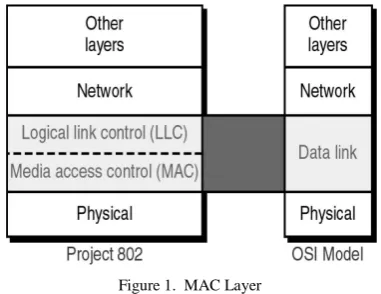
[image:1.595.342.533.514.661.2]The Mac (Medium Access Protocol) Protocol comes under data link layer in OSI basic reference model.
Figure 1. MAC Layer
Many reasons related to MAC paradigms lead to energy waste and WSN life reduction, such as:
a. Idle listening: a node doesn’t know when will be receiving a frame so it must maintain permanently its radio in the ready to receive mode.[5]
b. Collisions: A collision can occur when a node receives two signals or more simultaneously from different sources that transmit at the same time.[6]
d. Protocol Overhead: can have several origins as the energies lost at the time of transmission and reception of the control frames.
e. Overmitting: occurs when a sensor node sends data to a recipient who is not ready to receive them.
[image:2.595.39.277.176.282.2]f. Packets size: The size of the messages has an effect on the energy consumption of the emitting and receiving nodes. g. Traffic fluctuation: The fluctuations of the traffic load can lead to the waste a node’s energy reserves. Therefore, the protocol should be traffic adaptive [7].
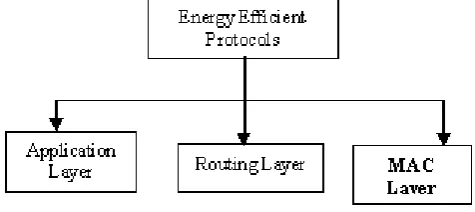
Figure 2. Distribution of Mac Layer in Energy Efficient Protocols.
III. PROPERTIES OF A WELL-DEFINED MAC PROTOCOL.
To design a good MAC protocol for wireless sensor networks, the following attributes must be considered [4]. The first attribute is energy efficiency. We have to define energy-efficient protocols in order to prolong the network lifetime.
Other important attributes are scalability and adaptability to changes. Changes in network size, node density, and topology should be handled rapidly and effectively for successful adaptation. Some of the reasons behind these network properties
Changes are limited node lifetime, addition of new nodes to the network, and varying interference, which may alter the connectivity and hence the network topology. A good MAC protocol should gracefully accommodate such network changes. Other important attributes such as latency, throughput, and bandwidth utilization may be secondary in sensor networks. Contrary to other wireless networks, fairness among sensor nodes is not usually a design goal, since all sensor nodes share a common task.
A wide range of MAC protocols defined for sensor networks are described briefly by stating the essential behavior of the protocols wherever possible. Moreover, the advantages and disadvantages of these protocols are presented. MAC protocols for WSNs must guarantee efficient access to the communication media while carefully managing the energy budget allotted to the node. The latter is typically achieved by switching the radio to a low-power mode based on the current transmission schedule.
According to channel access policies, most of the existing protocols fall in two categories [8].
1) Contention-based 2) TDMA-based protocols.
IV. CONTENTION-BASED MAC
Contention-based MAC protocols are mainly based on the Carrier Sense Multiple Access (CSMA) or Carrier Sense Multiple Access / Collision Avoidance (CSMA/CA). The main idea is listening before transmitting. The purpose of listening is to detect if the medium is busy, also known as
carrier sense. The typical contention based MAC protocols are S-MAC, T-MAC, DMAC, TEEM, UMAC and BMAC.
A. Sensor-MAC
As a slotted energy-efficient MAC protocol, S-MAC is a low-power RTS-CTS protocol for WSNs inspired by 802.11. S-MAC includes four major components: periodic listening and sleeping, collision avoidance, overhearing avoidance, and message passing. After the sleep period, the nodes wake-up and listen whether communication is addressed to them, or they initiate communication themselves. This implies that the sleep and listen periods should be (locally) synchronized between nodes. Each active period is of fixed size, with a variable sleep period. The length of the sleep period dictates the duty cycle of S-MAC [9]. At the beginning of each active period, nodes exchange synchronization information. Following the SYNC period, data may be transferred for the remainder of the active period using RTCTS. The advantages of S-MAC are energy waste caused by idle listening is reduced by sleep schedules and time synchronization overhead may be prevented by sleep schedule announcements. Although S-MAC achieves low power operation, it doesn’t meet simple implementation, scalability, and tolerance to changing network conditions. As the size of the network increases, SMAC must maintain an increasing number of neighbours’ schedules or incur additional overhead through repeated rounds of resynchronization. In S-MAC, a node that has more data to send can monopolize the wireless radio channel. This is unfair for other nodes that have short packets to send but need to wait for the completion of the transmission of the long packet.
Many other MAC protocols have been proposed recently which are based on, or inspired by, MAC. S-MAC requires some nodes to follow multiple sleep schedules causing them to wake up more often than the other nodes.
B. Time out -MAC
As the SMAC protocol does not work well when the traffic load fluctuates. To overcome this problem, the TMAC protocol introduces the timeout value to finish the active period of a node [2]. If a node does not hear anything within the period corresponding to the time-out value, it allows the node to go into sleep state. T-MAC, in variable workloads, uses one fifth the power of S-MAC. In homogeneous workloads, TMAC and SMAC perform equally well. T-MAC suffers from the same complexity and scaling problems of S-MAC. Shortening the active window in T-MAC reduces the ability to snoop on surrounding traffic and adapt to changing network condition.
C. DMAC
The DMAC could be summarized as an improved Slotted Aloha algorithm in which slots are assigned to the sets of nodes based on a data gathering tree. During the receive period of a node, all of its child nodes have transmit periods and contend for the medium. It can achieve very good latency compared to other sleep/listen period. However, collision avoidance methods are not utilized in DMAC [10]. Hence, when a number of nodes that have the same schedule try to send to the same node, collisions will occur.
D. UMAC
sleeping after transmission. The scheme does not assign the same duty cycle for nodes, and each node can be assigned different periodically listen and sleep schedules with different duty cycle [11]. Utilization based tuning of duty- cycle reflects to different traffic loads of every node in a network. Such variation corresponds to the diversity of performed tasks by a particular node and its location. Selective sleeping after transmission avoids the above energy wastage. A node should go to sleep “selectively”. When transmission is finished, a node checks if it is at scheduled sleep time, and goes to sleep if it’s at scheduled sleep time. It does not introduce additional delays, since traffic is not expected to this node. In consequence, the proposed protocol improves energy efficiency as well as end-to-end latency.
E. Traffic Aware Energy Efficient MAC (TEEM)
TEEM makes two important modifications over the existing SMAC protocol: firstly by having all nodes turn off their radios much earlier when no data packet transfer is expected to occur in the networks, and secondly by eliminating communication of a separate RTS control packet even when data traffic is likely to occur. The listen period In TEEM consists of Sync data and Sync data. The first part of the listen period in TEEM contains data while the other part contains no data. Both parts are used for synchronization. Each node will listen in the first Sync data part of its listen period whether someone has data to transfer or not. If there is no data in the Sync data part then it will send its own sync packet in the Sync data part. The TEEM protocol [12] combines the Sync and RTS packets into one packet called Sync RTS. Whenever a node wants to communicate with another node, it sends the Sync RTS packet in its Sync data part. The destination node receives the packet and starts the communication, while the other nodes synchronize themselves with a Sync RTS packet and go into sleep mode. TEEM MAC is a good choice in small networks because there are fewer chances of retransmission.
F. Berkeley Media Access Control (B-MAC)
B-MAC uses clear channel assessment (CCA) and packet back offs for channel arbitration, link layer acknowledgments for reliability, and low power listening (LPL). B-MAC makes local policy decisions to optimize power consumption, latency, throughput, fairness or reliability. To achieve low power operation, BMAC [13] employs an adaptive preamble sampling scheme to reduce duty cycle and minimize idle listening (an adaptive rate scheme). B-MAC supports on the- fly reconfiguration and provides bidirectional interfaces for system services to optimize performance, whether it is for throughput, latency, or power conservation. By comparing B-MAC to S-MAC, we see that BMAC’s flexibility results in better packet delivery rates, throughput, latency, and energy consumption than SMAC.
V. TDMA-BASED MAC
Although random access achieves good flexibility and low latency for applications with low traffic loads, deterministic scheduling is actually the most effective way of eliminating the sources of energy waste. With perfect scheduling, only one transmitter-receiver pair would be active during each transmission period, therefore, reducing collision and eliminating idle-listening and overhearing. Use of TDMA is viewed as a natural choice for sensor networks because radios can be turned off during idle times in order to conserve energy However, deterministic TDMA
scheduling1 requires a large overhead in order to maintain accurate synchronization between sensors and to exchange local information, such as the network topology and the communication pattern. Furthermore, the latency increases linearly with the total number of sensors sharing the channel since TDMA assigns a separate timeslot to each transmitting sensor.
A. EYES MAC
The TDMA-based EMACs protocol [14] divides time into time slots, which nodes can use to transfer data without having to content for the medium or having to deal with energy wasting collisions of transmissions. A node can assign only one slot to itself and is said to control this slot. After the frame length, which consists of several time slots, the node again has a period of time reserved for it. A time slot is further divided in three sections: Communication Request (CR), Traffic Control (TC) and the data section. In the CR section other nodes can do requests to the node that is controlling the current time slot. Nodes that have a request will pick a random start time in the short CR section to make their request. The controller of a time slot will always transmit a TC message in the time slot. When a time slot is not controlled by any node, all nodes will remain in sleep state during that time slot. The time slot controller also indicates in its TC message what communication will take place in the data section. If a node is not addressed in the TC section nor its request was approved, then the node will resume in standby state during the entire data section. The TC message can also indicate that the controlling node is about to send an omnicast message. After the TC section the actual data transfer takes place.
B. Lightweight MAC
This protocol is based on ideas of the EMACs. LMAC protocol [15] takes into account the physical layer properties. The intension of the protocol is to minimize the number of transceiver switches, to make the sleep interval for sensor nodes adaptive to the amount of data traffic. During its time slot, a node will always transmit a message which consists of two parts: control message and a data unit. The control message has a fixed size and is used for several purposes. It carries the ID of the time slot controller, it indicates the distance of the node to the gateway in hops for simple routing to a gateway in the network, it the control data will also be used to maintain synchronization between the nodes and therefore the nodes also transmit the sequence number of their time slot in the frame. The transmission of the control data is carefully timed by the nodes, although we do not assume that the nodes have clocks with high accuracy. All neighboring nodes will put effort in receiving the control messages of their neighboring nodes. When a node is not addressed in that message or the message is not addressed as an omnicast message, the nodes will switch off their power consuming transceivers only to wake at the next time slot. If a node is addressed, it will listen to the data unit which might not fill the entire remainder of the time slot. Both transmitter and receiver(s) turn off their transceivers after the message transfer has completed.
C. Advanced Medium Access Control (A-MAC):
the time slot for nodes within the cluster, the AMAC protocol uses distributed technique where node selects its own time slot by collecting its neighborhood information. The protocol uses the supplied energy efficiently by applying a scheduled power down mode when there is no data transmission activity. The protocol is structured into several frames, where each frame consists of several time slots. Each node transmits a beacon message at the beginning of its time slot, which is used for two purposes as synchronization signal and neighbor information exchanges. By using this message, the controlled node informs which of its neighboring nodes will be participating in the next data session. The intended nodes need to stay in listening mode in order to be able to receive the intended packet, while other nodes turn to power down mode until the end of current time slot. The time slot assignment in A-MAC is divided into four states; initial, wait, discover and active. A new node that enters a network starts its operation in initial state where node listens to the channel for its neighbor’s beacon message in order to synchronize with the network. Node starts synchronization when it receives a beacon message from one of its neighbors and adjusts its timer by subtracting the beacon received time with beacon transmission time. Node remains in this state for a Listen
Frame frames in order to find the strongest beacon signal. Before entering the wait state, node randomly chooses a
number of waiting frame. Node enters the discover state when the waiting counter expired and start collecting its neighborhood information by listening for its neighboring node’s beacon messages for a period of a Listen-Frame frames. Node enters active state when it successfully selects a time slot. Node enters sleep mode in two scenario. First, after transmitting a beacon message and no more data packet scheduled to be transmitted. Compared to LMAC, AMAC allows node to transmit to multiple destinations. TDMA requires strict synchronization among users and a centralized control to coordinate the use of the channels. Benefitting from the extra coordination, it is easier for TDMA to achieve the users’ QoS demands. In addition, the coordination also allows TDMA to achieve better throughput under heavy traffic loads.
D. Z-Mac (A Hybrid Protocol)
Z-MAC is a hybrid Mac for wireless sensor networks that combines the strengths of TDMA and CSMA while off setting their weaknesses. Like CSMA, Z-MAC achieves high channel utilization and low-latency under low contention and like TDMA, achieves high channel utilization under high contention and reduces collision among two-hop neighbors at a low cost. A distinctive feature of Z-MAC [17] is that its performance is robust to synchronization errors, slot assignment failures and time-varying channel conditions; in the worst case, its performance always falls back to that of CSMA.
VI. COMPARISONS OF MAC PROTOCOLS
So we are taking some of the above Mac Protocols to compare its energy efficiency and latency and throughput. So we are done the simulation work on Ns-2 (Network Simulator). Such as IEEE802.11, SMAC, BMAC, TMAC. Here in this paper we compared between IEEE802.11 and S-Mac Protocols for the Energy consumption.
From the fig 3 we came to know that S-Mac shows better performance than the IEEE802.11 in case of energy consumption from the source nodes. The message arrival period from the nodes initially same up to 4 sec than the
[image:4.595.348.507.113.272.2]sudden increment of the energy take place in the IEEE802.11, but in Sensor Mac protocol it slightly increases so from the figure 3 we can suggest that S-Mac gives better performance than the IEEE802.11 in energy Consumption.
[image:4.595.348.520.324.482.2]Figure 3. Measured energy consumption in energy nodes.
Figure 4. Measured energy consumption in Intermediate nodes.
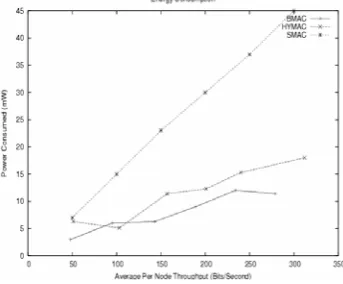
It is also compared the energy consumption from the intermediate node than the result appeared to be same as message passes from the source node to the intermediate nodes. So from figure 3 and figure 4, S-Mac has good energy conserving properties comparing with IEEE802.11. So know we compared the energy consumption and power consumption between the three Mac protocols such as S-Mac, B-Mac, and Z-Mac.
[image:4.595.351.523.617.759.2]VII. CONCLUSION
Recently several medium access control protocols for the wireless sensor network have been proposed by the researchers. However, no protocol is accepted as standard. This is because the MAC protocol in general will be application specific. Therefore, there will not be one standard MAC protocol for the WSNs. Moreover, there is difficulty in adapting to the changes in the network topology because of the addition and deletion of nodes.
The contention based (CSMA) have low latency and high throughput. However, it still suffers from the collisions. So from the figure 5 it shows that Z-Mac is showing the better performance than B-Mac and S-Mac.
VIII. FUTURE WORKS
In the recent years a large number of medium access control (MAC) protocols for the wireless sensor network have been published by the researchers. Most of the work on the MAC focuses primarily on the energy efficiency in the sensor network [18]. However, still a lot of work has to done in the other areas at the MAC layer. So far we had compared the few Mac protocols in energy consumption, and we had to compare the entire Mac Protocols in areas such as security issues and nodes mobility.
IX. REFERENCES
[1] I Akyildiz,W. Su, Y. Sankarasubramaniam and E. Cayirci: A Survey on Sensor Networks, IEEE Communication Magazine, pp. 102-114 (August 2002). [2] T. V. Dam and K. Langendoen, “An adaptive energy-efficient MAC protocol for wireless sensor networks,” SenSys ’03, Los Angeles, CA, Nov. 2003.
[3] IEEE Standard 802.11. Wireless LAN Medium Access Control (MAC) and Physical Layer (PHY) Specifications (1999).
[4] W. Ye, J. Heidemann, and D. Estrin, “Medium Access Control with Coordinated Adaptive Sleeping for Wireless Sensor Networks,” IEEE/ACM Trans. Net., vol. 12, no. 3, June 2004, pp. 493–506.
[5] Cano, C. Bellalta, B.Sfairopoulou, A.Barcelo “A low power listening MAC with scheduled wake up after transmissions for WSNs vol-14 pp.221-223 ISSN-7798 April 2009.
[6] V. Bharghavan, A. Demers, S. Shenker, and L. Zhang, “Macaw: A media access protocol for wireless lans,” in Proceedings of the ACM SIGCOMM Conference, 1994. [7] Haigang Gong, Ming Liu, Yinchi Mao, Li-jun Chen,
and Li Xie “Traffic Adptive MAC Protocol for Wireless Sensor Network” X.Lu and W.Zhaoc(Eds): ICCNMC
2005, LNCS 3619, pp.1134-1143,2005 Springer-Verlag Berlin Heidelberg 2005.
[8] Li De-liang Peng Fei, “Energy-efficient MAC protocols for Wireless Sensor Networks”, INFORMATION AND COMMUNICATIONS TECHNOLOGIES , Beihang University, Beijing,100083 , Mar 2009 .
[9] Wei Ye, John Heidemann and Deborah Estrin. An Energy-EfficientMAC Protocol for Wireless Sensor Networks, In Proceedings of the 21st International Annual Joint Conference of the IEEE Computer and Communications Societies (INFOCOM 2002), New York, NY, USA, June, 2002.
[10] C. B. Robert Vilzmann. A survey on MAC protocols for ad hoc networks with directional antennas. In Proceedings of 11th EUNICE Open European Summer School, 2005.
[11] Yang Shih-Hsien, Tseng Hung-Wei, Wu Eric Hsiao-Kuang, et al. “Utilization based duty cycle tuning Mac protocol for wireless sensor networks. Global Com’05. IEEE, Nov.28-Dec.2,2005,6:3258-3262.
[12] Changsu Suh, Young-Bae Ko, “A Traffic Aware, Energy Efficient MAC protocol for Wireless Sensor Networks”, IEEE 2005.
[13] Joseph Polastre, Jason Hill, David Culler. Versatile Low Power Media Access for Wireless Sensor Networks, In Proceedings of the Second ACM Conference on Embedded Networked Sensor Systems (SenSys’04), November 3-5, 2004.
[14] T.Nieberg, S.Dulman, P.Havinga, L.van Hoesel and J.Wu, “Collaborative Algorithms for Communication in Wireless Sensor Networks”, Ambient Intelligence: Impact on Embedded Systems, Kluwer Academic Publishers, ISBN 1-4020-7668-1, November 2003 [15] L.F.W. van Hoesel and P.J.M. Havinga, “A Lightweight
Medium Access Protocol (LMAC) for Wireless Sensor Networks: Reducing Preamble Transmissions and Transceiver State Switches”, In 1st International Workshop on Networked Sensing Systems (INSS 2004), June 2004.
[16] Jae-Hyun Kim, Ho-Nyeon, Seog-Gyu Kim "Advances Mac Protocol with Energy-Effiency for wireless sensor networks. C.Kim(Ed): ICON 2005, LNCS 3391, pp.283-292, 2005 Springer-Verlag Berlin Heidlberg 2005.
[17] Injong Rhee, Ajit Warrier, Mahesh Aia and Jeongki Min “ZMAC: a Hybrid MAC for Wireless Sensor Networks SenSys’05, November 2–4, 2005, San Diego, California, USA.Copyright 2005 ACM.