''Para o hem de
Timor''
1
EAST TIMOR HUMAN RESOURCE
DEVELOPMENT PROGRAMME
RESEARCH REPORT
February, 1999
Oxfam GB
FTS 1 "Reis Cardalac" 1998.
TIMOR-LESTE COLL. 338.959
87
ACKNOWLEDGEMENTS
('
' u
·
' ..
.. .
u
\
11TY
-I : \ ,., 0 r-' • • . ) ( "' I\ • ) ,_. 1vd\l· h11 h.il.; ,~,::.inU;A.1..
u1
..
11
:>...
,6
G--
·~ .::. !..~/--: 0 L: r ~ v 0T
R E
E
T
FlTZRO"(, VIC.
3065
95"9·~'
oxr.:
P
The Oxfam research team would like to express special thanks for the work of the East Timorese research team members (Angelina, Elisabeth, Francisco and Mise), Gilman dos Santos, Florentino Sarmiento and the staff of ETADEP, Paul Valentin, Nicola Frost and Oxfam support staff in Oxford, Rizal Malik and the staff at Oxfam Y ogyakarta, Salina and the East Timorese teachers, all at Yayasan Fokupers, Armandina Gusmao, Armindo Maia, Aurelio Guterres, Reis Cadalac,
Gabrielle Samson, John Taylor, Rui Gomes, and Peter Carey.
A special thanks to the community members from Pitelite, Fatubesse, Dam Sala, Gariwai, Matibou and Luca who gave us their thoughts and valuable time.
Many thanks to many colleagues who helped immensely to develop the research - Antonio de Concei9ao at CARE; Maria Ximenes Dias, Jose Manuel and Alipio from P.A.S.; Maria Lourdes;
Benjamin Corte Real; Dr Domingos Souza; Rudolfo at Biahula; Rogelio and Dino at CARIT AS Dili; Aniceto Guterres, Yayasan Hak; Filomeno and Abel Ximenes from Yakril/STIE; Bonifacio Correia and Carlos Bento at POSKUD; Paulo da Costa Amaral at Yayasan Halarai; Horacio and Suno from Bina Lestari Sejahtera; Bishop Monsieur Basilio Nascimento; the Salesians Fathers & Sisters; the Cannosian Sisters, Carmelite & Franciscan Sisters; the Jesuit Fathers; Father Rolando at Kristal, the parish priests all over East Timor, Manuel Abrantes at Justi<;a e Paz; Father
Domingos Sequiera; Manuel Viegas and Sister Josephine of the Mary MacKillop Institute, Gil and Nuno in Jakarta, BAPPEDA; the ICRC; Lansell Taudevin at AUSAID, Elizabeth and Rui Exposto,
Kirsty Sword and David Odling-Smee.
The team would like to thank DFID, Bangkok and Gordon Saggers, DFID officer, British Embassy, Jakarta for their assistance.
Many thanks to Joaqim, Joao and Geraldo from the Turismo who made a special effort to make us feel "a vontade".
Oxfam Research Team Francisco Alvarez Lucy Baker
Maria Jose Belo da Silva Keryn Clark
Francisco Guterres Elisabeth Lino de Araujo
Maria Angelina Lopes Sarmiento
CONTENTS 1.
2.
3. 4.5.
6. 7. 8. Executive Summary IntroductionAim of Human Resource Development Research
Context Research Methodology
5.1
5.2
5.2.1
5.2.2
5.2.3
Preparatory ActivitiesField Research Methodology
Visits to relevant organisations, individuals and institutions Workshops with key informants
Field work in local communities
Research Findings 6.1 6.2 6.2.1 6.2.2
6.2.3
6.3
6.3.1
6.3.2
6.3.3 6.4What is the general situation in East Timor?
Sectoral Situation Analysis Livelihood
Health Education
Review of Civil Society, Public and Private Sector Civil Society
Public Sector Private Sector
Lessons from other human resource development initiatives.
Human Resource Development Strategy
Conclusions Annexes: 1.
2.
3.4.
5.
Agencies and Organisations that met with Field Researchers Synopses of the workshops conducted
Communities visited
NGOs, agencies and their interventions
Strategic Aims for Human Resource Development Programme
Bibliography Page 3 4 4 5 6 6 7 7 7 8 9 9 10 10 14 17 21 21 22
22
23
24 26 27 2830
32
35
361. EXECUTIVE SUMMARY
This report presents the aims, methodologies and findings of the Oxfam research project on Human Resource Development in East Timor. The research is in the context of a broader Oxfam GB involvement in East Timor, and of the work of the wider NGO community worldwide. The focus of the research was on Human Resources in the sectors of health, education, livelihoods and civil society. The methodology used included desk studies, a field visit and consultation with a variety of stakeholders - local organisations, the Catholic Church, communities and government departments.
After 450 years of rule by the Portuguese, and a brief period of independence, East Timor was invaded by Indonesia at the end of 1975. Since then, a state of conflict has prevailed, resulting in a high military presence, forced resettlement of large numbers of people and numerous human rights violations. East Timor is deeply impoverished, with poverty being manifested in poor livelihoods, health and education. There has been some investment in physical infrastructure, although the human resource capacity is extremely weak in all sectors and at all levels.
The findings of the research can be summarised as follows:
• Human skills and capacities necessary for East Timorese to take charge of their own development are extremely weak. There is a very limited number ofEast Timorese with skills as practitioners or policy makers in almost all areas. Complex reasons for this are linked to the annexation of East Timor, long term conflict and inappropriate development approaches.
• The "social" aspect of human resource development reveals a complex relationship between people's livelihoods, their health and education opportunities. There is a need for equality of access to services, especially for East Timorese women, who the research has shown, are also particularly affected by financial insecurity.
• Although public and private organisations expressed the need for strengthening human resources, they currently have inadequate means to provide the necessary level of development. This applies to tertiary educational institutions, secular and church organisations and government departments that provide key social services to communities.
• There is little qualitative research available on livelihoods, health and education. The need for further analysis of the cultural contexts, motivations and values of the East Timorese is evident. • An effective human resource strategy will require co-ordination of initiatives and collaboration with practitioners and planners at all levels, particularly the government. In addition, co-ordination of development programmes both within and outside of East Timor is essential to ensure complementary programmes that have the greatest impact on improving lives.
The analysis of findings led to the development of an HRD strategy, which has a multi-pronged approach:
• a community based human resource development programme; • capacity building for local NGOs and institutions;
• support for a co-ordinated approach to improve the human resource base through institutional development of training institutions in collaboration with government departments
• co-ordination of appropriate research into specific aspects of human resource development.
While it is worthwhile working towards strengthening human skills and capacity, this has to take place alongside efforts to seek a resolution of the political status of East Tim or. Thus this report recommends that Oxfam should continue engaging in advocacy, research, information gathering and exchange in collaboration with other organisations and governments towards this end.
2. INTRODUCTION
This document is the report of the research undertaken by the Oxfam research team from 23 November until 19 December 1998 for the purpose of developing a Human Resource Development Programme in East Timor. A proposal regarding Human Resource Development has been submitted to DFID.
Oxfam GB has been engaged in activities relating to East Timor over the past 3 years, with a dual approach - support for local NGOs in small-scale social development projects, and support for lobbying and information distribution initiatives. In 1998, Oxfam, CAFOD and CIIR developed a joint interagency strategy on East Timor. The key issue was that "diplomatic initiatives, support
for human rights and development projects cannot be separated and should be addressed together"2. Within this strategy, Oxfam agreed to "support grass-roots development projects inside East Timor which build up people's skills, awareness and capacities ... so theTimorese people can be equipped to accommodate whatever future change may entail."3
Through these various forms of engagement, Oxfam has observed the following:
• minimal strategic planning exists to ensure the future capacity of the East Timorese to take charge of their own affairs, in the event of gaining autonomy and independence.
• the security situation has resulted in little development of community leadership outside the Catholic Church. In contrast, there is an emerging secular leadership by theCNRT and within the student organisations.
• a danger of the few existing NGOs being overwhelmed by unco-ordinated donor funding. • a thorough gender analysis of the situation is lacking as are planning and strategies to
overcome gender imbalances in human resource development.
As a result of this analysis, Oxfam GB submitted an initial proposal to the Department for International Development of the UK Government to undertake research on the development of a human resource development (HRD) programme.
3. THE AIM OF THE HUMAN RESOURCE DEVELOPMENT RESEARCH
The aim of the research was to provide data from which to develop a sustainable human resources development programme. The programme will work to improve the capacity of East Timorese to take charge of their own development through optimal use of available support and to strategically direct all aid efforts to the greatest benefit of the East Timorese people.
Throughout the research, our understanding of the term Human Resources was: people being skilled in specific activities which are necessary for society to be able to function and develop properly and for people's well being. Using this definition, human resources include technicians, professionals, managers, development workers, nurses, teachers, health educators, volunteers etc.
In order to maximise effectiveness and to draw most profitably on Oxfam's own experience we have narrowed our focus to the "social aspect" or the grass-root development issues. Obviously, other issues, not dealt with in our research, will need to be addressed for East Timar to be effective
2 Joint CIIR - CAFOD - OXF AM East Timor Strategy, 1998. Pg 6. 3 Joint CIIR - CAFOD - OXF AM East Timor Strategy, 1998. Pg 6.
as an autonomous or independent territory. These include areas such as economic sustainability, public administration and legal systems4
•
The terms of reference for this initial phase of the Human Resource Development Project are:
1. To identify useful lessons from other countries and territories which have had similar
initiatives.
IL To assess the available resources and viable mechanisms that exist in East Timor.
iii. To consult and arrive at an agreement with East Timorese stakeholders regarding aims, scope and programme options.
iv. To undertake the design phase and initial preparation of a gender sensitive programme and proposal.
v. To identify and make recommendations on a suitable management structures for programme implementation.
vi. To prepare a proposal to DFID following consultation with key stakeholders and sectoral experts.
vii.To identify a project exit strategy.
The research undertaken involved networking with other interested organisations and academics; identifying useful lessons from other peoples who have had similar initiatives (i); and consulting with East Timorese stakeholders including community members, local organisations, teachers, health workers, academics (ii,iii). As a part of the research, Oxfam is developing a strategy for Human Resource Development; the next stage of the Human Resource Development Programme is to design and prepare a proposal for a gender sensitive human resource development programme (iv), identifying appropriate management structures and a possible exit strategy (v,vi,vii), consulting with East Timorese organisations, the wider Oxfam organisation5
and other organisations involved in East Timor. The proposal will then be submitted to DFID. Oxfam is keen to share the results of the research with other organisations and bodies working for or in East Timor in the hope of developing complementary programmes.
4. CONTEXT
On 7 December 1975, after more than 450 years of Portuguese colonial rule, East Timor was invaded by Indonesian troops; on the 17 July 1976 it was forcibly annexed as the 27th province of the Republic of Indonesia. Since 1975 a state of conflict has prevailed, with the majority of East Timorese rejecting Indonesian rule. This has resulted in a high military presence, forced resettlements of large numbers of people, and other human rights violations.
Colonial rule had left East Timor in a poor state with regard to public and private infrastructures, with deficient educational standards and minimal administrative skills. The period since 1976 has seen investment by the Indonesian government in development efforts. As in the rest of Indonesia, investment has concentrated on physical infrastructure in urban centres, with more than 30% of the development budget spent on large scale projects, such as construction, transport and communication. 6
East Timor is extremely poor, with 82.32% of all villages (including those inDili) in the territory being officially classified as desa tertinggal "impoverished villages". (BAPPEDA 19977). Criteria
4 Further information in this area is available in "East Timor: Prospects for an independent economy" CIIR 5 Community Aid Abroad, NOVIB, Oxfam NZ, Oxfam Belgium, Oxfam Ireland, Oxfam Canada to name a few. 6 East Timor: prospects for an independent economy. Pg.ii. Timor Link 1998 No 43.
determining an "impoverished village" are low calorific intake, malnutrition m children, occurrence of disease, inadequate diet, no drinking water & bad sanitary conditions.
Socio-Economic Indicators8
• 48% of the indigenous population (estimated indigenous population 615,000) live under the poverty line.
• 52.8% of children under 5 years are malnourished and 10% of adults suffer from anemia and Vitamin A deficiency.
• Infant Mortality rate is 57 per 1000 live births
• Life Expectancy - 48.4 years for women, 46.7 years for men.
Many of the problems relating to health and education discussed in this report are directly linked to conditions of poverty, insecure livelihoods and conflict. In addition to social and environmental problems, one of the main questions facing East Tim or today, is that the territory remains seriously underdeveloped in terms of human resources in all areas particularly in specialised positions. However there are a number of East Timorese students and graduates currently living overseas,
who have indicated enthusiasm to return to East Timor given future opportunities. Their presence would provide East Timor with increased human resources, provided the challenges of their reintegration into East Timorese society are met.
" Human resources is one of the main problems in East Timor, the old education system that only rendered service to a small percentage of local East Timorese and the prolonged civil war have resulted in the limited number of skilled local indigenous"9
Throughout the field research, communities, local NGOs, and professionals alike, continually referred to the fact that a political solution to the East Timor situation is essential for any initiatives of human resource development to have a far-reaching impact. It is imperative that prospects for peace and reconciliation are considered seriously during the development of the project proposal.
5. RESEARCH METHODOLOGY
5.1 Preparatory activities
A project manager was recruited for the programme in early September 1998. The preparatory phase involved a literature study and networking with relevant stakeholders. A comparative study of experiences in human resource development of other peoples who have recently achieved or are calling for autonomy or independence was carried out'0
• An initial visit was made to East Timor in
October 1998 by the project manager, where he contacted local and national Government, East Timorese NGOs, the Catholic Church and other key individuals and organisations.
A multi-disciplined research team with experience in conflict situations, grassroots development, capacity building and language skills worked together in Oxford, to review literature, meet with specialists in various aspects of East Timor and to develop the methodology for the fieldwork. In
8 BAPPEDA dan Statistik 1992; Statistik Timor Timur 1994; BAPPEDA 1991; Facts from the Annual Health Report 1996, Regional Health Department of East Timor; The 1996 World Population Report.
9
Yayasan ETADEP, Strengthening Institutional Development In East Timor, 1994, Pg 2.
10 see Empowerment, self-government and development: the cases of Eritrea, Namibia, Romania and the Arctic. A literature study commissioned by OXF AM.
East Timor four East Timorese researchers from different areas of expertise joined the team 11 •
Three sectors were identified as being essential to the current and future development of human resources in East Timor - health, education and livelihoodsl2. The development of civil society,
and specifically the capacity of the local NGO sector, was seen as a potential means of managing human resource development projects.
5.2 Field Research Methodology
It must be emphasised that this research takes a qualitative approach, and does not attempt to present a statistical overview, or to be an exhaustive study. The number of study sites was limited because of time and logistical constraints. However, we feel that the results present a valuable
sample of the range of conditions and issues facing the East Timorese, and also represent a variety
of perspectives and priorities.
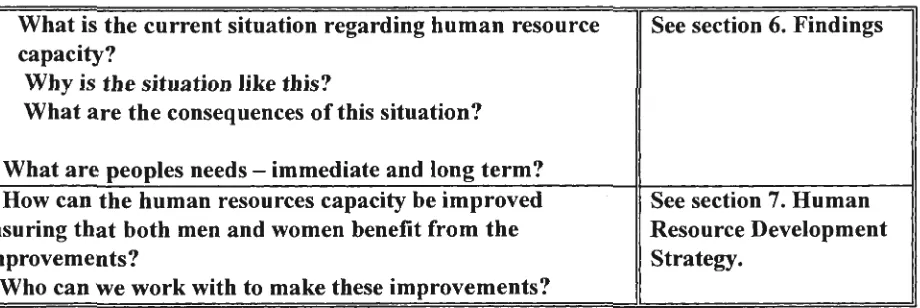
The issues that were being addressed in the field research are presented in Table 1:
Table 1. - Human Resource Development Research Issues
1. What is the current situation regarding human resource See section 6. Findings capacity?
-
Why is the situation like this?-
What are the consequences of this situation?2. What are peoples needs - immediate and long term?
3. How can the human resources capacity be improved See section 7. Human ensuring that both men and women benefit from the Resource Development
improvements? Strategy.
- Who can we work with to make these improvements?
5.2.1 Consultation with relevant organisations, individuals and institutions
In Jakarta and Dili, visits were made to organisations, individuals and institutions with the objective of learning from their experience of human resource capacity in the relevant areas,
discussing future needs and limitations. These included local NGOs, civil society movements, the Catholic Church, government authorities, missionaries, groups of teachers, health workers,
agricultural technicians, a variety of schools, health posts and hospitals in rural and urban areas, agricultural and technical colleges, the University of East Timor and the Polytechnic (see Annex I). On completion of the field research, initial findings and recommendations were discussed with a selected group of stakeholders.
5.2.2 Workshops with key informants
Two workshops were held with the objective of creating a debate on the current situation, both
general and in terms of human resources (HR), and possible HR development. One workshop was
held with NGOs, secular and church organisations, the other with a group of Timorese primary
school teachers (see Annex 2 for synopses of the workshops).
11
A smaller team from Oxfam paid a second visit to East Tim or in March 1999. This was in order to consult organisations and individuals on the appropriateness and scope of the proposal drafted. The team also met with staff at the Oxfam Indonesia office, and with DFID representatives in Jakarta and Bangkok.
12 Livelihood is defined as means by which a household obtains basic needs - food, shelter, education, health - for the purposes of the research we looked at either subsistence agriculture or income earning activities (agriculture or other).
5.2.3 Field work in local communities
Six communities were visited in various regions of East Timar (see Annex 3 and map). These visits were relatively brief, and excluded the South Western region, due to the limited time. Although the villages differed in terms of agricultural base and history, many of the issues and priorities identified were similar. Meetings were held with small groups within the community, with women's groups, teachers, farmers etc. Participatory techniques such as focus groups, mapping, matrices, calendars, and drawings were used to involve the community members. As can be expected people were at times hesitant about speaking openly, although other groups opened up and discussions became very animated.
6. RESEARCH FINDINGS
In presenting the findings, the report will initially look at the general situation in East Timor, and then at the situation for each of the sectors - health, education and livelihood. The findings also detail the human resource needs identified in the research. The second part of the findings considers the available resources and the viability of civil society, the public and private sector as channels for those.
6.1 What is the general situation in East Timor?
It became clear in the early phase of the research, that it would be difficult and unrealistic to isolate the specific topic of the study from broader social, economic and political issues.
Social, Economic and Political Issues
Social
• Trauma: years of conflict have resulted in widespread trauma and stress among the population.
The research team did not focus on the psychological impact of conflict. However in discussions with teachers, the church, nurses and many other groups, the effect of trauma on society, especially the younger members was often raised as a limiting factor to their development. Thus any human resource development programme should inherently consider psychosocial needs.
• Cultural Identity: as with trauma from conflict, the importance of the East Timorese
maintaining their cultural identity was raised on numerous occasions. It appeared that there has been a recent strengthening of East Timorese cultural awareness amongst the youth, which the Church has been supporting through several initiatives. However, in general, local cultural aspects are poorly served by the existing education system.
• Dependency: the issue of a 'dependency mentality' was raised, although its existence was also denied by various people. The divergence of opinion centres on whether a long period of rule by others has undermined people's capacity for pro-active thought.
• Gender: observation and discussions with informants indicated that profound gender
inequalities exist in East Timor. They manifest themselves in all spheres of life: from access to material and other resources, especially education, to political participation, and the burden that women shoulder in their exposure to private and public forms of violence (most acute during conflict). Illiteracy rates for women are 70% compared with 40% for men.13
"Women in East Timor have traditionally born heavy responsibilities for both household and agricultural labour. Evidence suggests that these responsibilities have become more onerous as a result of the unrest and dislocation due to the invasion" 14
13 Bappeda, Dan Statistik 1992.
14 From One Day to Another, Violations of Womens Reproductive and Sexual Rights in East Timor, Miranda Sissons,
1997, ETHRA Inc.
Economic
• Poverty: as has been indicated, East Timor is an extremely poor and deprived region. Both the
field research and the secondary sources show that there has been a long term economic
marginalisation of the East Timorese15
. They have poor access to markets, limited control of
primary resources, and poorly developed skills to increase productivity. Some sources 16 have quoted unemployment as being as high as 82%.
• Land access: resettlement schemes implemented without compensation since the Indonesian
annexation have resulted in a confused and conflictual situation, where a large number of
people have lost control over ancestral lands. It is "estimated that 80% of villagers have been
resettled in one way or another" 17. In addition, East Timorese have been encouraged to sell off their coffee plantations. Access to land and related resources was raised as a key issue which both explains the current levels of poverty, and which is likely to limit the development of agriculture in East Timorese in the future.
Political
• Continuing conflict: during the research, the conflict and the presence of the Indonesian
Armed Forces was continually raised as the root cause of many of the problems (not only those relating to human resource capacity). On many occasions, people expressed the opinion that for any programme on Human Resource Development to have a positive impact there would need to be a resolution of the current conflict.
• Urgency: there is a sense of "urgency", expressed in discussions with communities, church
representatives and with groups of teachers and health workers. People are more concerned with the short term solutions to immediate needs for food, adequate housing, employment and medicines than with the longer term interventions often associated with human resource development.
6.2 Sectoral Situation Analysis
6.2.1 LIVELIBOOD
It is estimated that approximately 80% of East Timorese are involved in agriculturel8. A great number of rural East Timorese are dependent on subsistence agriculture, with a smaller number involved in small scale cash crops or small livestock ventures to supplement the family economy.
Farming techniques such as slash and bum are used and are blamed for the soil degradation that is now resulting in low productivity. There is little diversity in crops and a high dependence on climatic conditions; the current drought situation especially in the east of the territory has had a severe effect on maize production. There has been little support in terms of extension and other agricultural inputs, however NGOs working in agriculture are able to provide examples of small scale community successes in areas such as crop diversification, agro-forestry, small livestock
production and irrigation, some of which have involved women's groups19
•
15 Long term marginalisation is evident in other areas of Indonesia specifically the outer archipelago provinces such as
Maluku, Nusa Tenggara Timur, and lrian Jaya.
16 Statistik Timor Timur, 1994.
17 http:\\www:easttimor.com/html/indonesianization.html. Pg 1.
18 Bappeda 1 996 - ???
19 see Farol an ETADEP publication; CARE, ARPAPET(AUSAID).
Access to land is a complex issue20 in East Timor. People are unwilling to clear and work land where the ownership is unclear, particularly around the resettlement villages (East Timorese
resettled from the mountains to the lowlands). Security issues are also a deterrent to farming lands
outside the immediate village area. The result has been over-farming of the limited land available. "Transmigration" (a government programme of migration from Indonesian provinces to East Timor) tended to focus on the rice growing areas in south west of East Timor and land was given on "the pretext of teaching the East Timorese better farming techniques"2l without any compensation to East Timorese landholders.
There is little evidence of farmers' cooperative groups - "East Timorese farmers are individualistic in the way they work their land." .22 Discussions with farmers and with local organisations working on agricultural programmes revealed limited access to and knowledge of markets as factors
affecting the development of cash crops.
Coffee growing represents a potential source of income both at national and household levels. State control of coffee production (during the Portuguese times) has given way to a
near-monopoly by a small number of companies. This, alongside discrepancies in coffee prices, neglect
of the production techniques resulting in a loss of productivity and poor access to markets has resulted in a severe loss of income to East Timorese23. Other cash crops, such as sandalwood,
cocoa and cashew nuts, have experienced a similar fate.
In a village of 3000 people located around a large coffee factory in the coffee growing area of Ermera, community members, described their situation. During the Portuguese times people
gathered the coffee from their land. They were paid according to the quantity that they sold to
the factory controlled by the "Sociedade de Cafe". After 1975, the coffee plantations were taken over by a company owned by an Indonesian General, and the villagers were employed
on a daily rate to pick coffee on those lands. The company encouraged people from other areas
of the East Tim or to come and work as coffee pickers, thus reducing the work available and salaries paid to the villagers. Seasonal calendars showed that the coffee picking time, spread
over 3-4 months in the Portuguese times, was now reduced to one month as a result of outside
labour and reduced production from neglected plantations. In October 1998, due to the economic crisis the coffee factory was closed. There are very few alternative means of earning an income in the village. Many young men have left the village, and women described supporting their families by illegally selling coffee and vanilla that is produced on what are their ancestral lands.
There is limited development in forestry and fishing. Despite the enormous potential offered by
the considerable coast line, the fishing industry is mainly controlled by non-EastTimorese. Large
tracts of forests have been destroyed as a result of the conflict and for transmigration purposes. Other forested areas are inaccessible due to relocation of indigenous villages and insecurity in those areas.
20 Observers of East Timor believe that the current violence in the south west could be linked to land issues.
21 Aditjondro, In the Shadow of Mount Ramelau, 1994 page 63.
22 East Timor: the impact of intergration. Prof Mubyart et al. p. 15.
23 Aditjondro estimates the total loss of income to East Timorese coffee growers between 1977 and 1992 to be
approximately RP 132 billion as a result of integration - In the Shadow of Mount Ramelau, 1994 p. 45.
Livestock numbers fell drastically during the first few years of integration, with profound negative
effects on livelihood24
• Rice production declined due to the lack of bullocks to till the land (in 1976
there were 90,600 buffalo, this number had dropped to 24,600 in 198025). The lack of financial and personal security has meant it has been difficult for villagers to restock. Agricultural colleges and local organisations have referred to limited expertise in livestock production.
An increasing number of East Timorese are moving to small towns and to the capital Dili. There
has been an emergence of small enterprise, however due to limited access to markets and to the
control exercised by Indonesian migrants over all aspects of commerce26 there appear to be few opportunities for East Timorese to derive a living from this type of production.
In all these areas of production and income earning activities, there is a distinct division oflabour
between men and women. A combination of factors: cultural constraints, responsibility for
household and other reproductive activities, and extreme vulnerability to sexual and other forms of
violence, result in women having a considerable work burden while at the same time being unable
to control productive inputs and activities, and enjoy their benefits.
" women have had to take over as head of the household and make a livelihood to cater for
the family's basic needs, as well as taking on additional jobs, along with their children, for
productive purposes outside the home"27
24
Tr~ditionall~ livestock ?wnership is an indicator of wealth and social status, with village heads often having had large
holdmgs and livestock bemg killed for ceremonial purposes.
25 Aditjondro, In the Shadow of Mount Ramelau, 1994 page 45.
26 Timor Link, 1998.
27 Aditjondro, In the Shadow of Mount Ramelau, 1994 page 45.
I
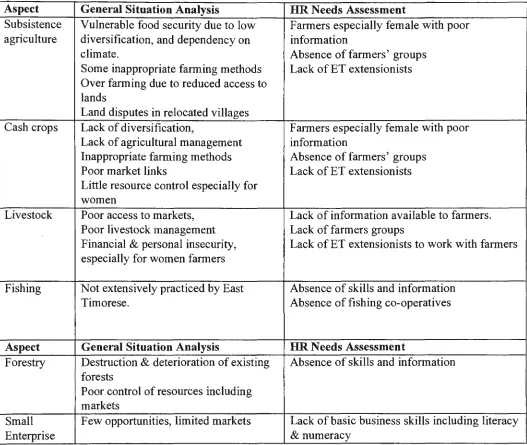
Table 1 summarises the situation described and extracts the implications for human resources.
Table 1: Livelihood Situation Analysis & Human Resource Needs Assessment
Aspect General Situation Analysis HR Needs Assessment
Subsistence Vulnerable food security due to low Farmers especially female with poor
agriculture diversification, and dependency on information
climate. Absence of farmers' groups
Some inappropriate farming methods Lack of ET extensionists
Over farming due to reduced access to lands
Land disputes in relocated villages
Cash crops Lack of diversification, Farmers especially female with poor
Lack of agricultural management information
Inappropriate farming methods Absence of farmers' groups
Poor market links Lack of ET extensionists
Little resource control especially for women
Livestock Poor access to markets, Lack of information available to farmers.
Poor livestock management '
Lack of farmers groups
Financial & personal insecurity, Lack of ET extensionists to work with farmers
especially for women farmers
Fishing Not extensively practiced by East Absence of skills and information
Timorese. Absence of fishing co-operatives
Aspect General Situation Analysis HR Needs Assessment
Forestry Destruction & deterioration of existing Absence of skills and information
forests
Poor control of resources including markets
Small Few opportunities, limited markets Lack of basic business skills including literacy
Enterprise &numeracy
The research revealed entire areas for which little detailed information was available. In order to tackle the many livelihood problems of East Timor, it is essential that research, based on the understanding and opinions of local people, is carried out on the following topics:
• subsistence farming methods;
• livestock management;
• forestry: markets, appropriate means for resource allocation, the environmental impact of forestry projects and timber-related activities;
• fishing: markets, the environmental impact of increased fishing;
• small enterprises: market opportunities;
• gender division of labour and of benefits for all branches of production.
• livelihood strategies: how existing strategies can be strengthened - focus on rural and urban/peri-urban populations.
6.2.2 HEALTH
Health and social development indicators for East Timor are significantly lower than Indonesian averages and reflect poverty and environmental problems along with the limitations of the current health system.
Health Status Indicators28
• Leading Causes of Death: in Health Posts - Tuberculosis 15.98%; Malaria 13.06%; Pneumonia 9.7%; in hospitals stillbirths 16.33%, tuberculosis 11.11%; Diarrhea 7.7%.
• Rates of diarrhea for 1-4 age groups - registered in health posts ( 11.25% ); in hospitals (26.64%)
• Malaria rates for 1-4 age groups - registered in health posts (12.36%); in hospital (9.99%) • Infant mortality rate - 5711000 live births.
• Child Mortality - 60.2/1000 live births • Maternal Mortality 5/1000 live births
• Approximately 40% of the population have access to potable water. • Approximately 3 5% of the population use latrines.
Discussion with health practitioners revealed that preventable diseases are prevalent, with malaria often being reported as the most common illness29. Poor environmental health conditions were apparent in most communities visited, where women mentioned distance to water points, poor living conditions30 and poor nutrition as problems they experienced. In addition to physical health problems, trauma from years of conflict and the threat of abuse were often raised as having a profound effect on health and well being. The link between livelihood, poverty and conflict, and people's perception of their health were emphasised in the discussions with women's groups.
"As in all other regions of the world, the health status of the population varies according to gender. East Timorese women ... have very high maternal mortality rates and at the same time, it is reported that limited maternal care and lack of access to family planning facilities in most parts of the island, is paralleled by aggressive population control measures. Rape and sexual abuse are common in East Timor. The consequences on the physical and mental health of women are considerable and remain largely undocumented and untreated."31
Community health is predominantly limited to healthcentres and posts, with very few examples of health promoters as a part of community life. Clinics were poorly attended due to a lack of medicines, poor inter-personal skills of staff, and a lack of trust of the perceived "Indonesian"
health service. Women's discussion groups consistently revealed a lack of knowledge of causes of preventable illnesses and of preventive measures. Rural communities make extensive use of traditional herbal and other remedies, and where possible the health services provided by the Church to rural communities.
28 "Facts from Annual Health Report 1996, Regional Health Department of East Timor.
29 In some villages, further discussions revealed that diarrhoea was thought of as a reasonably normal occurance, thus not described as an illness. In some groups women reported that all of their children had suffered from diarrhoea in the past 2 weeks (Daru Sala & Pitelite)
30 Living conditions generally referred to clothing and housing.
31 Aditjondro, 1997, Violence by the State Against Women - Report to the UN Special Rappotteur on Violence against Women.
The Catholic Church, with support from CARITAS, is a major force in the health sector, providing
an alternative to state health services, especially in the treatment of tuberculosis32
• The Church is
mainly involved in curative interventions although in a few cases women's church discussions
have included health issues. BIAHULA, CARE and the ICRC, who are implementing water supply projects, have had some experience with community hygiene education and all mentioned
this as an area where future interventions are needed.
In a village in the district of Baucau, mothers spoke of the distance to health services - the
nearest health post was 30 minute walk away, the nearest hospital in the town of Baucau, a
three hour walk or a bus trip which is generally beyond their means. Health facilities regularly
do not have medicines, thus health posts are generally closed and they must make the journey to the hospital. The women explained how they are treated disrespectfully by the hospital or health centre staff, they often have difficulty understanding the procedures and Bahasa Indonesia. The women expressed a deep distrust of providers who are non East Timorese. As a result, mothers often use traditional medicine and means, to care for themselves and their families. Drawings representing different health issues were shown to the women, which resulted in extremely animated discussions about access to health services and health education. They showed a keen interest in learning more.
Compounding the community-based health issues, there is a severe lack of Timorese human resource capacity as health providers. Estimates are a total of 23 East Timorese doctors (of which 5 are female), 39 academy nurses (32 male, 7 female); 806 auxiliary nurses (564 male, 242
female), 404 midwives and 35 environmental health promoters (27 male, 8 female)33_ Indonesian
public servants are also working in healthcare, however due to the recent tension in the territory, reports are that many Indonesians, fearful of the future, are leaving East Timor.
32 Tuberculosis was consistently nominated as a major illness in both urban and rural area. It is closely linked to poverty conditions, however current interventions are generally at the treatment level rather than a "control programme" which would involve education and looking at the cause. During our visit there was a large meeting of organisations involved in TB treatment which looked at all aspects including a co-ordinated TB control programme.
33 Figures dated July 1998, Regional Health Department, East Timor.
Table 2 summanses the health situation described and extracts the implications for human resources.
Table 2: Health Situation Analysis & Human Resource Needs Assessment
Aspect General Situation Assessment Human Resource Needs Assessment
Environmental High levels of tuberculosis, malaria, Little community management of
health. diarrhea, skin and respiratory illnesses environmental health - water, sanitation,
due to poor living conditions. health education.
Links between health issues and livelihood.
Community Lack of health education. Lack of Poor knowledge on causes of illness and
based health knowledge on causes of illness. promotion of good health.
care. Absence of medical drugs. Little capacity (economic or other) to
High incidence of preventable illness - improve health & sanitation practices.
malaria, diarrhea. Poor access to health services (incl.
Trauma due to conflict. medication)
Limited community based interventions related to trauma and its consequences.
Curative health Poor motivation of providers. - Little capacity at MoH level for
system and Access to health services: distance, cost essential drugs management & district
care. and trust health care management.
Absence of medical drugs. - Few East Timorese doctors and other
Absence of trained East Timorese in all health specialists and technicians
areas - doctors, specialists, senior -Little capacity to research and
nurses, technicians. implement public health (e.g.
malaria/dengue fever control) programmes .
- Poor integrated maternal child health care programme.
BAPPEDA and UNICEF produce numerous health statistics providing some quantitative information on the health system. Very little qualitative research is available on health practices and access to health services (community based or other). A reliable health information system is a
basic requirement for the development and planning of health programmes and services. During
the research, the team noted the need for research and consultation with communities on:
16
Access to health services.
Community health and sanitation practices and other community managed initiatives (e.g. community drug boxes)
the appropriateness (acceptance) of CHWs and TBAs. support to mental health, trauma and counseling initiatives.
6.2.3 EDUCATION
"one of the most important problems for East Timor is that the young people are not
prepared for the future - they do not have opportunities or altematives34"
The education system in East Tim or has suffered years of neglect. In the colonial times, education beyond primary level was primarily accessible to those of higher social status - the Portuguese,
mixed race or other children from privileged families. Under the Indonesian system, education continues to be poor with statistics indicating that a large number of school-age children (discussions reveal that especially girls) are not attending school.
Education Statistics -199635
• 47.44% of the population is illiterate.
• 66.8% of children attend junior and elementary schoo!36. (total students number 170,401 -population aged between 5 - 14 years is 255,091).
• 19.8% of pupils attend secondary school37 (total senior high students number 16,053-population aged between 15 - 19 years is 80,898).
Discussions with community groups, rural teachers and a workshop in Dili with East Timorese teachers focused on the various reasons why children and youth are not receiving an adequate education. The following issues were raised.
The Indonesian curriculum introduced into East Timorese schools in 1975, is often described as being inappropriate for Timorese children and youth. History, culture and language teaching bear little relation to its own environment. The curriculum is described as "unrealistic", resulting in high failure rates, not only for East Timorese but for students throughout Indonesia. Standards are often lowered at the end of the year in order to achieve pass rates set by the government. The majority of teachers in higher education are Indonesian, which creates difficulties, for example, the low motivation of teachers, and disciplinary problems with older students. Violence in schools,
among students and directed at teachers is reported as commonplace.
Many teachers felt that teaching methods could be more imaginative and the idea of activity-based and child-centred.teaching was welcomed for teachers of earlier classes. Most informants stressed that many of the problems encountered in higher education, both in terms of achievements and behaviour of students, can be clearly attributed to the poor education they receive in the early years. The discouragement teachers feel in not having the opportunity, the resources and the skills to adopt more innovative teaching methods, reinforces the de-motivation already caused by poor infrastructure, pay and career prospects, as well as the overall political situation.
34 Dr Domingos Souza, Masters in Education, Dili 1998.
35 East Timor in Figures, Bappeda 1996.
36 Junior & elemmentary schools include state & private.
37 Senior high includes state & private run secondary schools and colleges (technical, vocational etc)
On the island of Atauro, a project aimed at early learning for children is being implemented.
Youth living on the island have been trained as pre-school assistants and work with the
children using activity-based learning materials. Reports from this project indicate that these
pre-school children have shown a positive response to this form of learning.
Parents often criticised the quality of teachers. Many of the Indonesian teachers recruited to work
in East Timor have only recently graduated or are unable to obtain employment in other areas. The
teachers' colleges in East Timor only train to Diploma 2 level, thus for junior and secondary
school, teachers must continue their studies outside East Timor.
"We have many schools in East Tim or. The Indonesian government has built lots of buildings,
the problem is the lack of quality of education and the lack of quality of teachers"
East Timorese teacher.
Statistics indicate the student teacher ratio to be about 20: I, a reasonable figure. The main problem is the spread of teachers over the territory. Many schools in rural areas have very few teachers, as teachers are unwilling to live in remote places38.
The socio-economic status of East Timorese families has a strong impact on education. Costs of
education are high relative to household earnings, and in many cases the work that children carry
out form a part of those household earnings. Poor and malnourished children are reported as
having concentration problems, resulting in little progress in their studies. Girls are at a special disadvantage in education. When very young, they may be kept from school to help mothers in households and other tasks. Later, the education of girls may be sacrificed more readily due to economic constraints of the family. Problems of distance are aggravated by cultural norms which limit girls' movements and which see their future as devoted to the family. Such problems are reflected in the gender disparities in all levels and types of education.
The effect of trauma on the education of East Timorese youth was mentioned on numerous occasions. "Youth has a trauma of war, they are frustrated, intolerant, violent and aggressive39." The effect of trauma can manifest itself in a variety of ways: disinterest, aggression, insolence and fear are a few.
In a village near Viqueque, primary school teachers explained that children often missed days
of school or dropped out completely. Reasons given were that children were helping parents
with the household or agricultural tasks, or because parents were reluctant to send them to
school without them having something to eat. The school's records registered this situation and
the fact that girls are particularly affected. The teachers were frustrated at the content of the
curriculum, which was totally irrelevant to the experiences of the children, unstimulating
didactic methods in a language not used in the home. Further education built on these very
shaky foundations, gave rise to unmotivated students and in some cases violence in schools.
38 In the village ofFatubesse, Ermera, villagers quoted I teacher for a school of600 students.
39 Quote from an East Timorese teacher, Dili, December 1998.
There is limited access to secondary and tertiary education due to high fees relative to income levels and the distance involved - this is especially the case for women who are expected to be caring for their family. For East Timorese to study elsewhere in Indonesia is far more costly than to study at one of the institutions in East Timor. The fact that the majority of students will find it difficult to get employment after completing their studies40 was also believed to be a deterrent to further studies.
Both the University of East Timor (UNTIM) and STIE (the school of economics) suffer from severe underfunding. UNTIM receives no Indonesian government funding and the majority of funds come from student fees, with some funds from international universities and governments.
Although STIE receives some government funding, it is seeking further funding from overseas universities. Both UNTIM and STIE emphasised the need for international recognition. A number of technical colleges have identified similar problems:
• lack of funding;
• high dropout rates for students due to cost of studying: • low level of female students and lecturers:
• lack of interest due to difficulty in obtaining employment; • lack of facilities and education materials;
• the need for technical and professional support to redesign training courses.
During the visit, the University and colleges were often closed due to the regular demonstrations that students were generally participating in - this undoubtedly is having a negative effect on their education.
40 In 1992 - of 791 University graduates, 172 were employed, the other 619 were without work - BAPPEDA - Statistik Timor Timur 1994 this is linked to the idea "that to gain employment you need to have money or connections -generally East Timorese have neither".
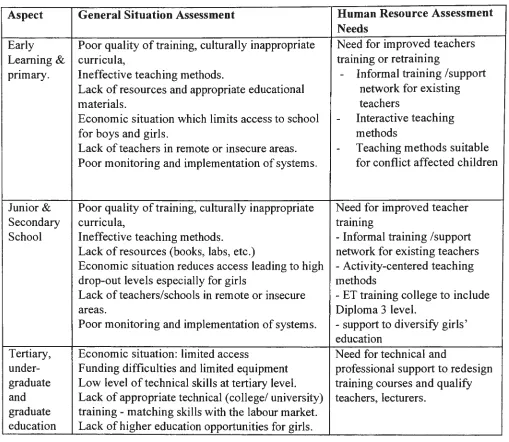
Table 3 summarises the above comments on education and details the human resource needs.
Table 3: Education Situation Analysis & Human Resource Needs Assessment
Aspect General Situation Assessment Human Resource Assessment
Needs
Early Poor quality of training, culturally inappropriate Need for improved teachers
Leaming & curricula, training or retraining
pnmary. Ineffective teaching methods. - Informal training /support
Lack of resources and appropriate educational network for existing
materials. teachers
Economic situation which limits access to school - Interactive teaching
for boys and girls. methods
Lack of teachers in remote or insecure areas.
-
Teaching methods suitable Poor monitoring and implementation of systems. for conflict affected childrenJunior & Poor quality of training, culturally inappropriate Need for improved teacher
Secondary curricula, training
School Ineffective teaching methods. - Informal training /support
Lack of resources (books, labs, etc.) network for existing teachers Economic situation reduces access leading to high - Activity-centered teaching
drop-out levels especially for girls methods
Lack of teachers/schools in remote or insecure -ET training college to include
areas. Diploma 3 level.
Poor monitoring and implementation of systems. - support to diversify girls' education
Tertiary, Economic situation: limited access Need for technical and
under- Funding difficulties and limited equipment professional support to redesign graduate Low level of technical skills at tertiary level. training courses and qualify and Lack of appropriate technical (college/ university) teachers, lecturers.
graduate training - matching skills with the labour market. education Lack of higher education opportunities for girls.
In order to tackle the many education issues in East Timor, it is essential that research, based on the understanding and opinions of East Timorese - students, teachers and academics, is carried out in the following areas:
• early learning & primary school. (for example on Atauro Is). • trauma-associated learning difficulties.
• access to education - especially for girls.
• appropriate tertiary and graduate courses (for example - Diploma 3 for teachers). • means to improve access to both women and men to further education.
• efficient resource improvement & management of tertiary & graduate institutions.
6.3. CIVIL SOCIETY, PUBLIC & PRIVATE SECTOR
6.3.1 Civil Society
Civil society41 in East Timor has had limited opportunity to develop. A highly centralised government and the presence of the Indonesian military has made it difficult fororganisations and individuals to implement initiatives that involve people, especially the empowerment of people. The Catholic Church, the resistance movement and a small number of organisations have been able to operate despite these constraints. Recently, there has been an increase in local NGOs and organisations implementing programmes to improve the lives of East Timorese including promotion of basic rights, although the extent to which these new initiatives will develop remains to be seen.
Civil society is divided along several lines: East Timorese and foreign (government and supra-national); church and secular organisations. It is essential that all organisations are involved in sound, effective co-ordination to direct aid in an appropriate manner. During the field visit,
discussions on establishing a forum through which activities can be co-ordinated were underway amongst local NGOs. More recently there have been recommendations for the establishment of a multi-tiered donor forum.
The following is a brief situation analysis of civil society in East Timor today
• Local NGOs: there are many vibrant although unconnected initiatives, with an increase over the past year in the number of local NGOs. The research team was impressed at the achievements of local NGOs given the difficult circumstances. It is expected that with an increase in donor interest in East Timor there will be a growth in the pressures on existing NGOs and a demand for new, local organisations. NGOs expressed an interest in learning more about gender issues in programme design and management along with other areas of programme management. There are a limited number of international agencies42 working through local NGOs or directly in East Timor.
• Religion: the Catholic Church is a key element of East Timorese society, with an estimated 80% practicing Catholics. Since 1975, the church has occupied a key position between the government and the people. At the community level it has been described as "the unofficial authority", with parish priests and catechists in most villages performing religious duties and also often being called on to decide matters. In terms of development the church is very much involved in social assistance projects - generally in the area of health and education, and with some initiatives in the livelihood sector. In addition, it was obvious that the Church, and especially the religious orders active throughout the territory, enjoyed the full trust of the population. At a higher level, members of the church play a major role in attempts to resolve the conflict. The church has a clear hierarchy of leadership, thus most of their initiatives are implemented in a top-down manner and with a fairly conventional understanding of gender matters. The Protestant Church also supports a number of health posts in the territory.
• Communication and the media: The local media has increased to three local newspapers. The Catholic Church operates a radio station, however programmes only reach the population around Dili. Among the more educated sector, broadcasts in Portuguese and English are available, as are electronic means of communication. However, for the majority of the
41 For the purpose of the research civil society was defined as those organisations, individuals and unofficial groups of people (e.g. groups within communities) not linked to the government or military that are in some way involved in democratic processes for the development of a nation.
42 CARE, ICRC, AUSAID, CAA, Australian, Norwegian & Swedish Caritas, CAFOD, CIIR, HIVOS and others,
population a degree of isolation is an obstacle to receiving information concerning all aspects of their lives.
• Human Rights, conflict resolution: Along with the Commission for Justice and Peace (linked to the Catholic Church), a number of new organisations that have been established with the aim of monitoring and improving the human rights situation in the territory. Yayasan Hak is involved in legal rights and support to political prisoners and Fokupers in the promotion of women's rights, specifically against violation of women and support to women who have suffered. Other independent women's organisations are emerging, in recognition of the particular vulnerability of women to instances of abuse and violence. In addition a variety of student groups have been established and are currently extremely active and vocal regarding resolution of the conflict in East Tim or.
• Community Organisation - the "Kepala desa" (village chief) in many cases is appointed by the administration rather than elected by the village; existing women's groups and other associations are normally organised by the state. It was interesting that at a ceremony for the inauguration of a waterpoint, no women from the village were in attendance.
6.3.2 The Public Sector
Development projects have tended to focus on physical infrastructure at the expense of investment in people - the teachers, health workers, agricultural extension workers etc. As a result there is a lack of motivation by the government workers. Many are non-Timorese, possibly only working in East Tim or as there is little employment elsewhere. This lack of motivation manifests itself in poor service provision, which results in alienation of the service users.
Due to the East Asian economic crisis, the government is facing serious funding problems, thus areas where the government has previously been able to provide assistance (for example the supply of medicines) are not being serviced.
In many countries where human resource development programmes have been implemented the approach is to work together with the government who normally are the current and future policy makers in the various sectors and for the country or territory as a whole. Due to the unclear political situation in East Timor, a flexible approach will need to be taken to human resource development initiatives.
6.3.3 The Private Sector
As mentioned in the "Context" section of this report, the private sector is limited in scope and generally controlled by non-Timorese. In terms of HRD for social development, organisations of the private sector that are relevant are:
• University of East Timor (UNTIM), STIE (a private economic college that is hoping to receive University status), the secular technical colleges. The difficulties facing these institutions are detailed in the "Education" sector of this report.
• small companies promoting "fair trade" opportunities.
6.4 Lessons from other human resource development initiatives
A study was commissioned by Oxfam GB from the Department of Educational Studies and Consultancy at Nuffic in the Netherlands. The study looked at four experiences - Namibia, Eritrea, the Arctic people and Romania. The useful lessons for the East Timor situation can be summarised as follows:
• in a situation where there is a vacuum of human resource capacity (e.g. following liberation in Eritrea and Namibia) there is a need to build an efficient central administration that could develop its own capacity to generate and manage policy.
• capacity building needs to take place in connection with a number of activities, such as political and economic reform, stimulation of various sectors (health education, agriculture, community development etc.) and the initiation of appropriate development programmes.
• the importance of divisions in society - those who worked and lived under the previous government; those who were freedom fighters and those who have returned from exile or as refugees. Tension between these groups is a possibility and means of conflict resolution to minimise this risk are important.
• the importance of education in both the economic and social sector; the potential danger of economic growth without an improvement in the social situation.
• where there is high illiteracy, a low standard of education and enrollment rates and sharp gender disparities, major steps must be taken in terms of addressing education at the formal and non-formal level.
• shortages of skilled workers - teachers, nurses, doctors, engineers, administrators etc. - were
addressed in different ways. In Eritrea this was through crash courses; in other countries43
students were given scholarships to study abroad. In any case, improving the capacity of local tertiary institutions is an important long-term need.
43 After Portuguese independence in I 975, Angola & Mozambique sent large numbers of students to study in Cuba and the Soviet Union as doctors, agronomists, engineers etc due to a complete lack of tertiary education facilities in their own countries. In addition Cubans (due to language similarity) and in some case Eastern Europeans were employed in the Angolan & Mozambican schools and training colleges.
7. HUMAN RESOURCE DEVELOPMENT STRATEGY
The research reveals a number of areas that need to be addressed. Some of these areas are beyond
the scope of Oxfam. In addition to a proposal that focuses on the "social aspects" of human
resource development, Oxfam intends to develop a broader based "options paper" containing information on planned and existing development initiatives by other agencies, along with recommendations in other areas mentioned in this report.
This research has analysed: - the situation in East Timor
- the nature of civil society, public and private institutions44
- lessons learned from comparable experiences elsewhere
From this analysis we have identified the following issues:
• Poverty in East Timor is manifested in poor health, poor education and poor livelihood, all of which are complex and inter-linked issues, and greatly inhibit the capacity of local people to take advantage of human resource development initiatives. This is particularly true for women whose traditional role is made more difficult through distinct gender differences both as recipients of the services but also as carriers of these human resources.
• Although the physical infrastructure for both education and health services exists, there is a limited number of East Timorese people with skills as practitioners or planners in almost all areas of the education and health service. With the departure of Indonesian personnel following the deterioration of the political conditions, the human resource situation in these sectors, along with others, will be critical.
• Access to further education, including scholarships, is limited and suffers from little
coordination. There is a need to develop the capacity of local tertiary institutions in parallel with the urgent need in East Timor for graduates in health, education, agriculture, engineering, economics etc.
• East Timorese civil society has shown a commitment to and aspirations for the development of East Timor. Although in an ideal position to be a leading player in future strategies, to maximise this potential, civil society needs support in co-ordination and institutional strengthening.
• The research revealed large areas for which little information was available. In particular, some of the cultural aspects of access to services are not fully understood.
As a result of these issues the research team identified strategic aims (see annex 6) from which the following multi-level strategy for human resource development in East Timor is proposed.
1. A community based and managed human resource development programme designed to be integrated with other community development interventions. This would encompass the strengthening of human resource capacity and civil society at the community level in the area of livelihood, health, education.
2. A capacity building programme for local NGOs and associations. This would focus on all areas of institutional strengthening and programme management with special attention to developing
44 as organisations, individuals or bodies through which interventions can be channeled.
and implementing gender sens1t1ve programmes, and improving the capacity of local organisations to support the strengthening of human resource development within communities and special groups within those communities.
3. Support a co-ordinated approach to improving the human resource base in the areas of health, education and agriculture, involving institutional development of training facilities, administration of the scholarship programme and advisory role for relevant government departments.
4. Co-ordination with other organisations on appropriate research into specific elements of programme design, for example agricultural practices, alongside a deeper understanding of related cultural issues.
Many of the interventions mentioned are directed at communities, localNGOs and church based organisations. Generally when strengthening the human resource capacity, governments play a key role, as they are the current and future policy makers. In East Timor, with the situation at a crossroads, very different scenarios could unfold. There may be major changes in the government structure in the possibility of the establishment of a transitional government. Thus plans forHRD within the government departments or in collaboration with those departments need to be flexible and innovative.